Showing posts with label Edward I. Show all posts

Wednesday, 20 July 2016

The Expulsion of the Jews from England

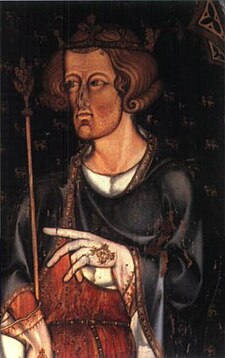
A man in half figure with short, curly hair and a hint of beard is facing left. He wears a coronet and holds a sceptre in his right hand. He has a blue robe over a red tunic, and his hands are covered by white, embroidered gloves. His left hand seems to be pointing left, to something outside the picture.

On 18 July 1290, a cataclysmic event took place that was to have far-reaching consequences. King Edward I ordered the expulsion of the Jews from England. Only in 1657, a total of 367 years later, were the Jews permitted to return to England. The Edict of Expulsion has usually been interpreted as the inevitable culmination of worsening persecution against the Jews. 

By 1290, the Jews were an accepted presence in English society, although Christians viewed them with ambivalence. Economically, Jews could enjoy great influence. Loans with interest were permitted between Jews and non-Jews, contrary to English practice which expressly forbade usury, which was regarded by the Church as a heinous sin. While Jews could benefit from lending money at high rates of interest, they were also vulnerable to the whims of the king, who could levy heavy taxes on them without summoning Parliament. Their reputation as extortionate moneylenders, whether deserved or not, could make them unpopular among their Christian fellows. 

In wider society, as W.D. Rubinstein has noted, anti-Jewish attitudes were prevalent. These stemmed from, and were encouraged by, negative images of the Jew as a diabolical figure that preyed on innocent Christian children. Jews were vulnerable to accusations of ritual murders; most notably, William of Norwich (d. 1144) and Little St. Hugh of Lincoln (d. 1255). Walter Laqueur opined that: 'There have been about 150 recorded cases of blood libel... that resulted in the arrest and killing of Jews throughout history, most of them in the Middle Ages. In almost every case, Jews were murdered, sometimes by a mob, sometimes following torture and a trial'.

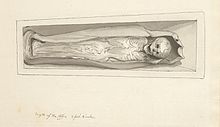
Saint William of Norwich.jpgHugh of Lincoln body.jpg
Above: William of Norwich (left) and Little St. Hugh of Lincoln (right).

Hostility to the Jews occasionally erupted in violence and bloodshed. Massacres occurred in 1189 and 1190; in York, over 100 Jews were massacred while hiding in a tower. The situation gradually worsened as, less than thirty years later, in 1218, Jews were required to wear a marking badge. Over the course of the thirteenth-century, Jews were heavily taxed. In 1275, King Edward I issued a statute that placed a number of restrictions on the Jews in England, in which he outlawed the practice of usury. Later, the king charged the Jews with failing to follow the Statute of Jewry, and he ordered their expulsion from the country in July 1290.

Only in the seventeenth-century were Jews officially permitted to return to England. The widely anti-Semitic attitudes that characterised medieval and early modern Europe, as a whole, did not disappear in modern times. The Holocaust, which claimed the lives of roughly 6 million Jews, built on and was encouraged by anti-Jewish propaganda that had existed on the Continent for hundreds of years.

Saturday, 31 January 2015

January 1265: The First English Parliament

Simon Leicester.jpg
Above: Simon de Montfort, Chartes Cathedral.

In January 1265 (the 20th, to be exact), England's first parliament in history met. The parliament was held until mid-March and was instigated by Simon de Montfort, who famously led the rebellion against King Henry III. Montfort is regarded today as one of the progenitors of modern parliamentary democracy by virtue of the fact that his parliament featured representatives of the shires and boroughs alongside the aristocracy and clergy. As Dominic Sandbrook notes, the 1265 parliament therefore 'posed a potent challenge to the king's monopoly of power'. Although Montfort cannot be termed a democrat in the modern sense of the word, he may potentially be seen 'as the accidental godfather of parliamentary democracy'.

Following his victory over the king at the Battle of Lewes during the Second Barons' War, Montfort realised that he needed support from a range of groups: not just the knights and nobility, but the town burgesses too. Although Montfort was killed at the Battle of Evesham later that year, his decision to invite burgesses to parliament, alongside knights, was taken on board by Edward I upon his succession. This had become normal by the fourteenth-century, and the gathering had become known as the House of Commons. Thus, Montfort is regarded as the founder of the Commons.

Henry III funeral head.jpg
Above: Henry III, king of England from 1216 to 1272.

In the words of historian F.W. Maitland, the events of January 1265 transformed parliament 'from an occasion into an institution'. As Nicholas Vincent explains: 'Parliament's authority rested upon popular respect. Should it lose that respect, even today, then it forfeits all authority'. Because of Montfort's actions, parliament can celebrate 750 years of debate. Historians have viewed the January 1265 parliament as a populist and tactical move on Montfort's behalf in an attempt to garner further support with which to strengthen his position: thus Jeffrey Hamilton describes this parliament as 'a very partisan assembly, not some sort of proto-democratic representative body'. Anachronism, then, needs to be avoided in analysing the nature of the 1265 parliament. The parliament was primarily concerned with enforcing the Provisions of Westminster, including placing restrictions on the nobility and promising judicial assistance to those suffering the unfairness of feudal lordship. 

In 1965, Parliament presented a loyal address to the British monarch, Elizabeth II, marking the 700th anniversary of Montfort's parliament. This year, Parliament planned a programme of events entitled "Parliament in the Making", including events to mark the 750th anniversary of the 1265 parliament. On 20 January 2015, "Democracy Day" was broadcast by the BBC to coincide with the 750th anniversary, consisting of live discussions and debate about the nature of parliamentary democracy. In all respects, then, the calling of the January 1265 parliament represented a turning point in English history. Parliament in thirteenth-century England was not the same as its twenty-first century equivalent, but Montfort's actions were unprecedented and helped to instil the principle of parliamentary democracy, which prevails to this day. 

Saturday, 21 June 2014

19 June 1312: the Death of Piers Gaveston

Guy de Beauchamp.jpg
Above: the Earl of Warwick stands triumphant over the dead body of King Edward II's favourite, Piers Gaveston, first earl of Cornwall.

On 19 June 1312, the first earl of Cornwall, Piers Gaveston, was illegally put to death at Blacklow Hill near Warwick. He had been condemned to death by disaffected nobles, including the earl of Warwick, the earl of Lancaster, the earl of Hereford, and the earl of Arundel, for violating the terms of the Ordinances. Two Welshmen subsequently ran him through with a sword and then beheaded him. As Richard Cavendish claims in a 2012 article: Piers 'flew too high and paid the penalty'.

Piers was the son of a Gascon knight and had been born around 1284, who was loyal to the father of Edward II, Edward I. Piers became a member of the royal household at a young age and consequently met the future king there. Chroniclers described him as handsome, athletic, and well-mannered. Edward I had, reputedly, been impressed by Piers' conduct and martial skills and wanted him to serve as a model for his young son, the heir to the throne. Piers however came into conflict with the king, when a dispute occurred between the treasurer Walter Langton and the prince. Enraged, Edward I banished Piers and a host of other men from the prince's household. He was later exiled, but returned when Edward II acceded to the throne in 1307. 

Historians have puzzled endlessly about the exact nature of Piers' relationship with Edward II. Piers was extremely close to the king. Although Cavendish terms it 'an extremely close friendship', he betrays a misunderstanding of medieval knowledge of sexual affairs, by suggesting that, although both Edward and Piers later fathered children with their spouses, they might have engaged in a bisexual affair with one affair. Scholars such as Kim Phillips and Barry Reay have convincingly demonstrated that modern notions of sexuality, including homo- and bisexuality, did not exist as such in the medieval period. 


Above: Edward II controversially made his favourite, Piers Gaveston, earl of Cornwall in 1307.

Chroniclers, however, speculated about Piers engaging in sex with the king. The Annales Paulini confirmed that Edward adored Gaveston 'beyond measure', while the Chronicle of the Civil Wars of Edward II suggested that, when he first saw Gaveston, the king felt such love for him that he 'tied himself to him against all mortals with an indissoluble bond of love'. The contemporary Vita Edwardi Secundi opined that 'I do not remember to have heard that one man so loved another... our king was... incapable of moderate favour'. Robert of Reading bluntly stated that Edward II enjoyed 'illicit and sinful unions'. In short, the wealth of evidence available supports J.S. Hamilton's suggestion that 'The love that the King felt for Piers Gaveston has been described as greater than the love of women. It still seems more likely that it was also stronger than the love of brother'.

Writers such as Lisa Hilton and Ian Mortimer have suggested that it is by no means certain that Edward engaged in sexual relations with Piers Gaveston (or other male favourites, for that matter), and Pierre Chaplais controversially argued that their relationship was probably closer to sworn brotherhood rather than a sexual relationship. As Phillips and Reay state, it is impossible to label either man homo- or bisexual, as popular writers, including Alison Weir, sometimes to do, as understandings of sexuality were extremely different in the medieval period. While it seems convincing that Edward and Piers had a sexual relationship, and perhaps loved one another, it is impossible to term either man 'non-heterosexual'.


Above: a representation of King Edward II.

In August 1307, Edward made Piers the earl of Cornwall, a decision which antagonised the barons, who resented Piers' foreign origins. When the king left England in early 1308 to marry the twelve-year old French princess Isabella, he appointed Gaveston regent in his place. When the king returned, he pointedly ignored his new bride in favour of Gaveston, who sat next to him at the coronation banquet. Eventually, disaffected barons forced the king's hand, and he was forced to exile the unpopular Gaveston in May 1308. 

Despite this, Edward continued to reward his favourite, and he was appointed Lieutenant of Ireland. Inn some respects Gaveston enjoyed success in Ireland, fortifying the town of Newcastle McKynegan, for example. Eventually, when he felt that his nobles had perhaps mellowed towards Gaveston, Edward II recalled his favourite. By February 1310, however, some earls refused to attend parliament as long as Gaveston was present, so affronted were they by his arrogance and intimacy with the king. In November 1311, by which time the king had been forced to accept the Ordinances issued by the earls, Piers had again been exiled from England.

However, Gaveston returned at Christmas and was reunited with Edward in January 1312, probably at Knaresborough. The archbishop excommunicated Gaveston in March, and the barons decided to obtain hold of Gaveston once and for all. Eventually, he was executed on 19 June outside of Warwick. His body was left on the ground for some time, before Dominican friars brought it to the city of Oxford and it was eventually buried at the Dominican prior at Langley, following the securing of a papal absolution for Piers in January 1315 (he had, as noted, been excommunicated). The king reacted with anger and heartbreak at news of his favourite's (and possibly, lover's) death, but circumstances did not allow him to seek vengeance with the earls.