Showing posts with label anne of cleves. Show all posts

Friday, 24 September 2021

Katherine Howard or Anne of Cleves?


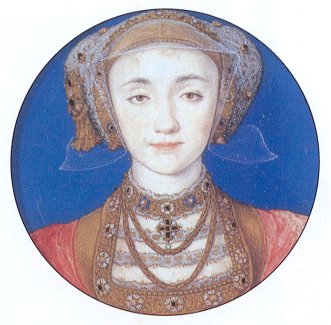
Above: Portrait of a Lady, perhaps Katherine Howard; Royal Collection Trust

A portrait miniature in the Royal Collection Trust, dating to circa 1540, has for some time been identified as a likeness of Katherine Howard, fifth queen consort of Henry VIII, who was beheaded in 1542. There are two versions of the miniature; the second version is held in the Buccleuch Collection, and was originally owned by Thomas Howard, earl of Arundel. The sitter has customarily been identified as Queen Katherine based on her jewellery; the necklace, in particular, appears to be the same as that worn by Jane Seymour, the king's third wife, in the portrait created of her in 1536-7 (see below). 


Above: Portrait miniature of Katherine Howard (?), Buccleuch Collection

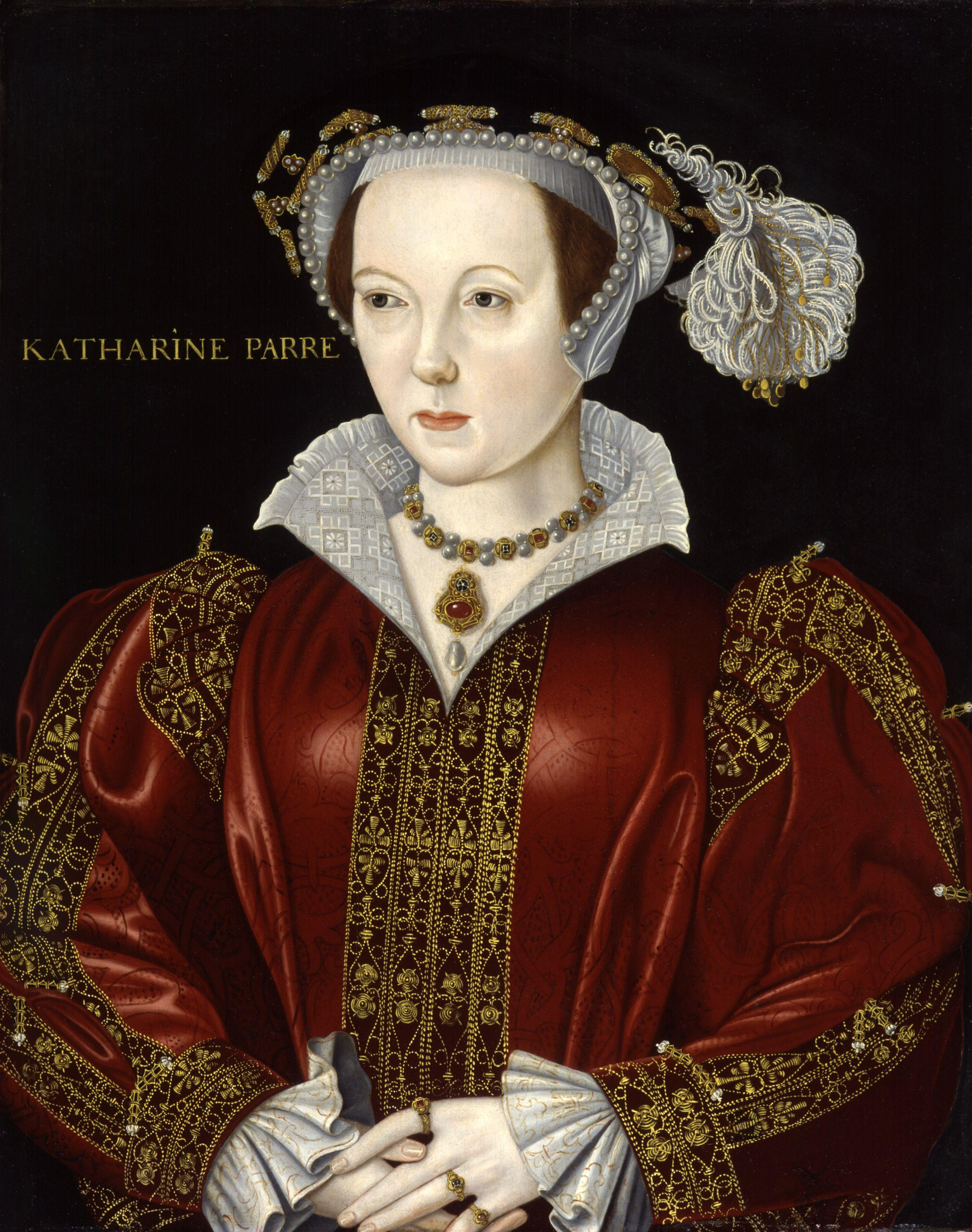
The item of jewellery in question also appears to have been passed to Katherine Parr, sixth wife of Henry VIII, when she married the king in the summer of 1543. Given the jewel's appearance in portraits of the king's third and sixth wives, thus identifying it as property of the queen consort, it would make sense that the sitter in Holbein's miniature (and in the version housed in the Buccleuch Collection) was also a Tudor queen consort of England. In 1540, Katherine Howard became queen of England when she married Henry VIII at Oatlands Palace on 28 July 1540, in doing so displacing the king's fourth wife, Anne of Cleves - and yet Anne was also, briefly, queen consort in the year 1540, from January to July.

Above: Jane Seymour and Katherine Parr, third and sixth wives of Henry VIII

The Holbein miniature in the Royal Collection Trust was described in 1660-61, during the Restoration, as 'A small peice Inclineing of a woman after ye Dresse of Henry ye Eights wife by Peter Oliver'. The sitter in the miniature, however, was not formally identified at that point. By 1735-40, however, the version in the Buccleuch Collection (above) had been named as a likeness of Katherine Howard, an identification subsequently associated with the miniature in the Royal Collection Trust. Interestingly, when the Buccleuch version was identified during the eighteenth-century, it was also mooted as a portrait of Henry VIII's younger sister, Mary Tudor, queen consort of France (1496-1533). The costume, however, which dates to the 1540s, clearly rules out Henry's sister - who was also the grandmother of Lady Jane Grey - as the sitter in the portrait.

Unfortunately, the sitter's age was not inscribed on the portrait, which might have been helpful in assisting modern identifications of the sitter's identity. While Katherine has been the most popular candidate for the miniature, other sitters have also been proposed: chiefly, Lady Margaret Douglas, niece of Henry VIII and grandmother of James I of England, and Mary, Lady Monteagle, who served in the household of Jane Seymour.

Although Lacey Baldwin Smith, who published a biography of Katherine in 1961, did not discuss the miniature in his account of the queen's life, and thus offered no opinion as to whether or not it depicted her, Katherine's modern biographers have, by and large, accepted the miniature as a likeness of her, including myself, Josephine Wilkinson, Joanna Denny and Gareth Russell. Denny was, perhaps, the most strident; responding to Susan James' theory that the miniature depicts Margaret Douglas, Denny asserted that 'this does not explain why she [Margaret] is wearing the royal jewels.' Katherine's love of jewellery and fine clothing was recorded by contemporaries: the unknown Spanish author of The Chronicle of Henry VIII, for example, noted that 'the King had no wife who made him spend so much money in dresses and jewels as she did, who every day had some fresh caprice.' Alongside receiving jewels as presents from her besotted husband, Katherine made gifts of them to her female attendants and to her royal relatives, including her stepdaughters Mary and Elizabeth. 

In his study of the six wives of Henry VIII, published in 2003, Dr David Starkey opined that the miniature is indeed a likeness of Katherine Howard, based on the inventory of her jewellery given to her when she married the king in July 1540. Starkey concluded that 'it can even be dated as a wedding portrait.' Specifically, the jewels given to Katherine that appear in the Holbein miniature include an 'upper biliment' or trimming for a French hood, 'of goldsmith work enamelled and garnished with 7 fair diamonds, 7 fair rubies and 7 fair pearls'; a 'square' necklace 'containing 29 rubies and 29 clusters of pearls being 4 pearls in every cluster' and an 'ouch', or pendant, 'of gold having a very fair table diamond and a very fair ruby with a long pearl hanging at the same'. The pendant also appears in portraits of Jane Seymour and Katherine Parr, as previously noted. Sir Roy Strong, at that time director of the National Portrait Gallery, also drew attention to the fact that the sitter wears the same jewel that appears in Holbein's portrait of Jane Seymour, thus suggesting that the miniature it is a likeness of Katherine Howard. Starkey may be incorrect, however, in suggesting that the portrait was undertaken in the summer of 1540; while she may have been misled in believing the miniature to be a likeness of Margaret Douglas, Susan James offered the convincing theory that the portrait was painted in the autumn or winter based on the style of the sitter's costume. Denny may, therefore, be more accurate in concluding that the portrait was 'very likely painted during her [Katherine's] first winter as queen'.

The costume itself, in which the sitter wears a French hood, may also lend itself to an identification with Katherine Howard. The French ambassador Charles Marillac, who observed the new queen while he was in attendance at court, wrote in September 1540, two months after her wedding, that 'she and all the Court ladies dress in French style'.

But was Katherine's portrait ever painted during her brief reign as queen? While I offer an extended discussion of her portraiture in my book Katherine Howard: Henry VIII's Slandered Queen, it is interesting to note curator and art historian Brett Dolman's suggestion that 'Catherine [Howard] left no documentary proof that her portrait was ever painted during her lifetime, and, perhaps, we are searching for the impossible.' In my book, I discuss other portraits associated with Katherine, including perhaps the most famous, now housed in the Toledo Museum of Art; it was formerly identified as a likeness of Henry VIII's fifth queen but is now generally agreed to be a portrait of Jane Seymour's younger sister Elizabeth, daughter-in-law of the king's chief minister Thomas Cromwell.

Dolman's recognition that Katherine may never have been painted during her brief queenship is significant in light of the recent suggestion made by art historian Franny Moyle, that the Holbein miniature is not a likeness of Katherine Howard, but a portrait of Anne of Cleves, Katherine's predecessor, who, as noted earlier, was also briefly queen consort of England in 1540, the year in which the portrait seems to have been painted. Moyle's theory is based on several pieces of evidence. Firstly, she notes that Holbein mounted the miniature on the four of diamonds, a playing card that Moyle believes to be significant, since Anne of Cleves was Henry VIII's fourth wife. Art historian Roland Hui, however, has challenged this point, however, in noting that a five of diamonds card appears on the back of Holbein's portrait of Jane Small (now housed in The Victoria and Albert Museum). Hui also clarified that 'part of a king' served as the backing to a miniature of Henry Brandon, the short-lived son of Henry VIII's favourite Charles, duke of Suffolk. In and of itself, therefore, the four of diamonds on the back of Holbein's miniature would not seem sufficient grounds on which to identify the sitter as Anne of Cleves.

Above top: Portrait of a Lady, perhaps Katherine Howard; Royal Collection Trust
Above below: Anne of Cleves, 1539
Historian Franny Moyle believes that both miniatures show the same sitter.

Moyle also argues that the sitter in the Holbein miniature shows an 'uncanny likeness' to Holbein's portrait of Anne (above), painted in 1539, shortly before her marriage to Henry VIII. Moyle draws attention to both sitters sharing a 'soporific expression', as well as distinctive heavy eyelids and thick eyebrows. Moreover, Moyle notes that the contemporary chronicler Edward Hall, who was an eyewitness to events at Henry VIII's court, described Anne the Sunday after her wedding as 'appareiled after the Englishe fassyon, with a Frenche whode [hood], whiche so set forth her beautie and good visage, that euery creature reioysed [rejoiced] to behold her.' Based on Hall's remark, Moyle suggests that, aware of Henry's initial lack of enthusiasm, Anne consciously set aside the - to English court observers, unfashionable - clothing that she had brought with her from Cleves and instead adopted the more stylish French dress favoured at court, in an attempt to please her husband. Taking this further, Moyle argues that the Holbein miniature was painted in the winter of 1540, perhaps in February, in order for the king to 'see a version of Anne that was more appealing.' 

As noted earlier in this post, Dolman concluded that there is no documentary evidence that Katherine Howard's portrait was painted during her short tenure as queen. Equally, there is no evidence that Anne of Cleves sat for Holbein in the early months of 1540 wearing a French hood in an attempt to secure favour from her unenthusiastic husband, who had thus far failed to consummate their union; indeed, the marriage was annulled just months later, in July, having never been consummated. While Moyle is correct that Anne is a credible candidate for the sitter in the Holbein miniature on the grounds that there were two queen consorts in 1540, of which she was one, other elements of Moyle's argument are problematic. 

Firstly, Moyle suggests that the Holbein miniature is unlikely to depict Katherine because it 'doesn't look like a child bride'. Katherine's date of birth is unknown. My research, which will be published in a forthcoming issue of The Royal Studies Journal, and expands on the arguments put forth in my book Katherine Howard: Henry VIII's Slandered Queen, indicates that she was born probably in 1523 or 1524, making her sixteen or seventeen when she married Henry VIII in 1540, while recent research suggests that Anne of Cleves was born on 28 June 1515, making her a few months short of her twenty-fifth birthday in January 1540 when her wedding took place at Greenwich Palace. Few historians today would characterise Katherine as 'a child bride', especially given how divergent early modern attitudes to childhood (and the life cycle, in general) were from modern perceptions of youth and adolescence. Interestingly, however, the unknown Spanish chronicler did characterise Katherine as 'a mere child', and the religious activist Richard Hilles identified her as a 'young girl' while describing the king's disaffection with Anne and his growing passion for Katherine. Either way, as noted earlier in this post, Holbein did not identify the sitter's age in the miniature, so it is impossible to ascertain how old the woman in the miniature was when she sat for the portrait. This arguably makes it pointless to speculate as to whether the sitter was 'a child bride' or not, as we have no way of knowing.

Secondly, Moyle indicates that the miniature, which apparently does not depict a beautiful woman, is more likely to portray Anne of Cleves, who was described by contemporaries as being 'of medium beauty', rather than Katherine Howard, whose beauty was said to be 'ravishing'. Conceptions of beauty in the sixteenth-century were, of course, very different to those prevalent in the twenty-first century Western world. Perhaps more to the point, surviving descriptions of both queens' physical charms are more complex than Moyle's belief would suggest. In the quotation of above, the chronicler Hall specifically drew attention to Anne's 'beautie and good visage'. The Cleves envoys, when arguing against a sea voyage to England in 1539 in the midst of preparations for Anne's wedding to the king, warned that a sea voyage would harm Anne's 'young and beautiful' appearance. While visiting Cleves, the English ambassadors reported widespread praise of Anne's beauty 'as well for the face, as for the whole body, above all other ladies excellent.' It was said that her beauty excelled that of Christina, duchess of Milan - another candidate for Henry VIII's hand in marriage - 'as the golden sun excelled the silver moon.' In December 1539, the lord admiral reported from Calais that he had heard reports of Anne's 'excellent beauty', which he perceived 'to be no less than was reported in very deed'. Clearly, then, it is somewhat misleading to suggest that Anne's beauty was widely reported as only 'medium'.

Likewise, reports of Katherine Howard's physical appearance were rather more complex than has been suggested. There is a widespread assumption among historians that she was the most attractive of Henry VIII's six consorts; her biographer Baldwin Smith noting in 1961, for example, that 'legend has it that she [Katherine] was Henry's most beautiful queen.' The unknown Spanish chronicler recorded that Katherine 'was more graceful and beautiful than any lady in the Court, or perhaps in the kingdom.' In his Metrical Visions, George Cavendish, who served in the household of Cardinal Wolsey, asserted that Katherine was 'floryshyng in youthe with beawtie freshe and pure'. By contrast, the French ambassador Marillac, who had described Anne of Cleves as being 'of medium beauty' and being neither as beautiful nor as young as everyone had been led to believe, depicted Katherine as a woman of mediocre beauty when he met her in the autumn of 1540. As Retha Warnicke has argued, 'a reasonable inference is that he [Marillac] considered Anne at least as pleasing in appearance as Katherine.' Arguably, it is problematic to identify the sitter in the Holbein miniature on the basis of differing, and somewhat contradictory, reports of the respective physical appearances of Anne of Cleves and Katherine Howard.


Above: Mary, Lady Monteagle (1510-before 1544) c. 1538-40, Royal Collection Trust

Finally, Moyle's belief that the sitter in the Holbein miniature is the same as that in Holbein's portrait of Anne created in 1539 due to shared physical features is also questionable. While both sitters do possess heavy eyelids and thick eyebrows, Anne does not appear to have had a double chin, while the sitter in the Holbein miniature does. It is also uncertain, mostly because Anne is facing the viewer, whether she shared the unknown sitter's nose. Perhaps most importantly of all, Anne's hair was described by the chronicler Hall on her wedding day as follows: 'hangyng downe, whych was fayre, yelowe and long'. The unknown sitter in the Holbein miniature does not have blonde hair, as Anne was said to have; instead, the colour can be described as auburn or light brown. 

The portrait above is a likeness of Mary, Lady Monteagle (1510-before 1544), and is held by the Royal Collection Trust. The daughter of Charles Brandon, duke of Suffolk by his second wife, Anne Browne, Mary served in the household of Queen Jane Seymour, who presented her with gifts of jewellery as a sign of favour. Before 1527, Mary married Thomas Stanley, 2nd Baron Monteagle. On the basis of jewels given to her by Jane Seymour, it is sometimes asserted that the sitter in the Holbein miniature is Mary, Lady Monteagle, especially given notable similarities between her facial features and those in the Holbein miniature. Arguably, there are greater similarities between the sitters in these two portraits than there are between the Holbein miniature and Holbein's portrait of Anne of Cleves. If one were to position Mary's portrait next to the Holbein miniature, a case could be made that they display one and the same sitter.


The above portrait is now thought to depict Elizabeth Cromwell, sister of Jane Seymour and daughter-in-law of Thomas Cromwell (who was executed in 1540), but it was identified as a likeness of Katherine Howard in 1898 and received support from historians including David Starkey; in recent decades, however, its identification with Katherine has been convincingly and overwhelmingly challenged by historians. Nevertheless, on the basis of the sitter's jewellery and physical appearance, some writers continue to believe it depicts Katherine; for example, Alison Weir suggests that the portrait is 'probably of Katherine Howard, by Hans Holbein, at Toledo, Ohio'. While the sitter in the Toledo portrait does not necessarily display the heavy eyelids or thick eyebrows in the Holbein miniature, some have perceived similar physical features between the sitter in the Toledo portrait and the sitter in the Holbein miniature. Yet these alleged facial similarities are ungrounded if the portrait depicts Elizabeth Cromwell.

To conclude, the Holbein miniature of c. 1540, displayed at the top of this post, almost certainly depicts a queen consort of England in that year, of whom there are only two candidates: Anne of Cleves and Katherine Howard. Some historians have posited reasons for identifying an alternative candidate as the sitter - for example, Lady Margaret Douglas or Mary, Lady Monteagle - but these theories are far less convincing. Moyle's belief that the miniature is a likeness of Anne of Cleves undertaken in the early months of 1540 is interesting, but further research is necessary before it can be conclusively identified as a portrait of Anne during her six-month tenure as queen consort. The arguments given in this post, however, indicate that Moyle's theory is somewhat problematic. While, as Dolman recognises, there is no documentary evidence that Katherine Howard's portrait was painted during her queenship, there is also no evidence that Anne sat for a portrait wearing a French hood in the period after her wedding. The physical charms of both women were described by contemporaries in more complex ways than is sometimes recognised, and both women were described as wearing French attire, which in and of itself is insufficient to use as evidence for the sitter's identity. Perceptions of beauty, both in the sixteenth-century and now, are subjective, and perceived similarities in facial features between the Holbein miniature and Holbein's portrait of Anne undertaken in 1539 are also subjective, especially since the unknown sitter in miniature has also been thought to bear similarities in appearance to other sitters, notably Mary, Lady Monteagle and (probably) Elizabeth Cromwell. Perhaps the greatest drawback to the argument favouring Anne as the sitter, however, is the chronicler Hall's statement that Henry VIII's fourth queen had blonde hair: the sitter in the Holbein miniature clearly does not. The weight of evidence, then, would seem to lean more in favour, even if slightly, of Katherine Howard. 

Saturday, 14 November 2020

The Tudor Consorts 1485–1547


Seven women held the office of consort in the period 1485–1547, one of whom as the wife of the first Tudor king, Henry VII, and the following six as the wives of his son and successor, Henry VIII. The consorts are Elizabeth of York, Katherine of Aragon, Anne Boleyn, Jane Seymour, Anne of Cleves, Katherine Howard and Katherine Parr. These women have long fascinated scholars and the general public alike, with articles, books, films, television shows and even a musical about their dramatic, and in some cases tragic, lives. This article sets out to provide a brief overview of each consort, with further reading included for those who wish to learn more about the life in question. Briefly, however, it is worth noting that Retha M. Warnicke's Elizabeth of York and Her Six Daughters-in-Law (2017) is the only extant study of Tudor queenship in this period, and provides an illuminating and in-depth study of Tudor queenship in the period 1485–1547, offering facts not usually available in other works. Alison Weir (1991), Antonia Fraser (1992), David Starkey (2004) and David Loades (2010) have all written works about Henry VIII's six queens.


Elizabeth of York, consort of Henry VII
Born: 11 February 1466, Westminster Palace, London, England
Died: 11 February 1503, Tower of London, London, England (aged 37)
Father: Edward IV 
Mother: Elizabeth Wydeville
Tenure as queen consort of England: 1486–1503 (17 years, 1 month)
Coronation: 25 November 1487

Elizabeth of York was the eldest child of the first Yorkist king, Edward IV, and his consort Elizabeth Wydeville. She was born on 11 February 1466 at Westminster Palace, but had no expectation of ruling England in view of prevailing attitudes to female succession alongside the birth of a number of sons to her parents, including the eldest, Edward (born in 1470). During her childhood, she was briefly betrothed to the Dauphin Charles, son of the king of France, but the marriage did not take place. In 1483, Elizabeth's father died and her uncle, Richard of Gloucester, seized the throne resulting in the deposition of her brother. He and his younger brother, also named Richard, were placed in the Tower of London but their subsequent fate remains a mystery. Elizabeth and her sisters sought sanctuary alongside their mother, but resided at their uncle's court when he reached an agreement with their mother, the dowager queen. Rumours circulated that King Richard intended to marry his niece Elizabeth, in view of reports that Queen Anne was unable to bear children and was in poor health. Some evidence suggests that Elizabeth may have been interested in this match, but the king publicly denied it. Instead, Lady Margaret Beaufort, mother of Henry Tudor, earl of Richmond, who possessed a somewhat obscure claim to the English throne, schemed with Elizabeth Wydeville for the marriage of Henry to Elizabeth of York. Beautiful, virtuous and pious, Elizabeth became queen of England in January 1486 when she married Henry following his defeat of Richard III at the Battle of Bosworth. Historians have shown that there is no evidence for later allegations of conflict between Elizabeth and her somewhat domineering mother-in-law Lady Margaret. The king and queen had several children, but only four survived to adulthood: Arthur, Margaret, Henry and Mary. Arthur died in April 1502 at the age of fifteen and his mother died ten months later, on her thirty-seventh birthday at the Tower of London, shortly after giving birth to a short-lived daughter Katherine. She was buried at Westminster Abbey and was joined there by her husband when he died seven years later. Elizabeth's only surviving son, Henry, succeeded his father as king of England in 1509 and her two surviving daughters Margaret and Mary became queen consorts of Scotland and France, respectively.

Further reading:
- Amy Licence, Elizabeth of York: the Forgotten Tudor Queen (2013)
- Alison Weir, Elizabeth of York: the First Tudor Queen (2013)
- Arlene Okerlund, Elizabeth of York (2009)


Katherine of Aragon, first consort of Henry VIII
Born: 16 December 1485, Archiepiscopal Palace of Alcala de Henares, Alcala de Henares, Kingdom of Castile
Died: 7 January 1536, Kimbolton Castle, Cambridgeshire, England (aged 50)
Father: Ferdinand II of Aragon
Mother: Isabella I of Castile
Tenure as queen consort of England: 1509–1533 (23 years, 11 months)
Coronation: 24 June 1509

The youngest daughter of Ferdinand II of Aragon and Isabella I of Castile, Katherine (born in 1485) was betrothed to Arthur, Prince of Wales, eldest son of Henry VII and Elizabeth of York, in childhood and was thus educated as befitted a queen consort of England. A devout Roman Catholic, Katherine studied a range of subjects including philosophy, theology, history, arithmetic and classical and canon law, and learned languages such as French and Latin. She also acquired experience in domestic skills such as embroidery and sewing. In the summer of 1501, the fifteen-year-old Katherine travelled to England to wed Arthur and their wedding took place at St Paul's Cathedral in November. Whether the young couple consummated their union or not has remained a subject of controversy for the last five hundred years. Tragically, Arthur died the following spring at Ludlow Castle on the borders of Wales, where Katherine was residing with him. Subsequently the English and Spanish monarchs arranged that Katherine would marry Arthur's younger brother, Henry, now heir to the English throne. Ferdinand's procrastination over paying the remainder of his daughter's dowry, however, led to the marriage being postponed while Katherine lived in difficult conditions at Durham House in London. When Henry VII died in 1509, his eighteen-year-old son elected to marry Katherine and the couple were crowned at Westminster Abbey in June. Katherine presided over a court of culture and learning and was appointed regent of England when her husband went to war with France in 1513. When the Scots invaded that year, the queen ordered Thomas Lovell to raise an army in the Midlands and the English army triumphed at the Battle of Flodden. 

During her marriage, Katherine was pregnant at least six times but only one child survived, Mary (born in 1516). Like many of his contemporaries, Henry doubted whether a female could successfully rule England and by 1527 believed that his marriage to Katherine had displeased God by virtue of their lack of surviving sons. He was also in love with Anne Boleyn, who served in Katherine's household. The king argued that Katherine's marriage to Arthur in 1501 had been consummated, thus making her subsequent union with Henry invalid according to Biblical law. The queen, however, claimed that she and Arthur had never consummated their marriage. The struggle for an annulment of the Aragon marriage endured for six years, but in 1532 or 1533 Henry married Anne Boleyn in secret and in May, Archbishop Cranmer pronounced the Aragon marriage null and void, rendering the queen's daughter Mary illegitimate and unable to succeed her father. By then banished from court, Katherine resided in a range of residences including The More, Ampthill Castle and Buckden Towers, before spending the final years of her life at Kimbolton Castle, where she died on 7 January 1536, perhaps of cancer, having never accepted her husband's decision to annul their marriage. She was buried at Peterborough Abbey (now Cathedral); her daughter Mary became England's first queen regnant in July 1553.

Further reading:
- Garrett Mattingly, Catherine of Aragon (1941)
- Giles Tremlett, Catherine of Aragon: Henry's Spanish Queen (2010)
- Amy Licence, Catherine of Aragon: An Intimate Life of Henry VIII's True Wife (2016)


Anne Boleyn, second consort of Henry VIII
Born: Between 1500 and 1507 probably at Blickling Hall, Norfolk or Hever Castle, Kent, England
Died: 19 May 1536, Tower of London, London, England (aged 28–36)
Father: Thomas Boleyn, earl of Wiltshire
Mother: Lady Elizabeth Howard
Tenure as queen consort of England: 1533–1536 (3 years)
Coronation: 1 June 1533

The most famous of Henry VIII's six wives, Anne Boleyn was born between 1500 and 1507. The majority of modern historians favour a birth date of circa 1501, but evidence from her daughter's lifetime supports the later birth date, especially in view of prevailing court customs that decreed that maidens of honour did not receive instruction in languages. It is also questionable why the ambitious Thomas Boleyn would have been content for his daughter to remain unmarried between 1523 and 1527 if she were as old as twenty-seven in the latter year. Anne is thought to have been born at Blickling Hall in Norfolk or perhaps Hever Castle in Kent, although some of her later relatives believed that she had been born in London. Whether she was older or younger than her sister Mary and brother George continues to remain controversial. If born in 1507, Anne was probably the youngest surviving child. In 1513, she was sent to the court of Margaret of Austria in the Low Countries; traditionally thought to have served as a maiden of honour, as noted earlier it was not the custom for maidens to receive an education while they were fulfilling her duties. The following year, Anne wrote a letter to her father in poor French, indicating that she could not speak the language and so would not have been capable of fulfilling the duties of a maiden of honour. Perhaps she initially resided in the royal nursery and served as a maiden at a later date. In 1514, she attended Henry VIII's sister Mary when she married Louis XII of France and later served Claude of France, wife of Francois I. Anne acquired a thorough knowledge of French culture and developed her talents in dancing, music and singing. Her evangelical faith may also have originated in France. In 1521 or 1522, she returned to England to wed James Butler to settle a dispute between the Boleyn and Butler families concerning the earldom of Ormond, but the marriage never took place. Anne fell in love with, and hoped to marry, Henry Percy, heir to the earldom of Northumberland, in 1523, but the couple were prevented from marrying due to the wishes of the king and Cardinal Wolsey and Anne was banished from court, remaining at Hever until 1526 or 1527, when she returned probably in the capacity of maiden of honour to Katherine of Aragon. 

Contemporaries described her as being of medium height, with long dark hair, brown or black eyes and a swarthy complexion. Her detractors slandered her as being deformed, while others noted her beauty and elegance. In 1531 she was described as being both 'young' and 'good-looking'; such references to Anne's youth in the late 1520s and early 1530s provide further evidence of a birth in 1507, rather than as early as 1500/1. In 1527, Henry fell passionately in love with the sophisticated and charming Anne, and proposed marriage to her. The couple, however, wed only in late 1532 or early 1533 on account of the long struggle to annul the Aragon marriage. Anne was crowned queen on 1 June 1533, already pregnant, and gave birth to her only surviving child, Elizabeth, on 7 September. Two further pregnancies resulted in a probable stillbirth (in 1534) and in a miscarriage (in 1536). The king and queen's relationship was stormy, punctuated by periods of bitter quarrels and subsequent reconciliation. Many of the king's subjects refused to accept Anne as queen and she was regularly slandered as a whore or prostitute. The marriage was also never recognised in Europe as valid. 

Anne exerted significant influence at court, especially in advancing the evangelical faith, and was outspoken on political and religious matters. Despite her influence, the royal couple's lack of a son endangered Anne's security. The queen's precarious position worsened in early 1536 when her husband fell in love with her attendant Jane Seymour. In May, four months after a miscarriage, Anne was accused of treason, adultery and incest with five men, including her brother, and was imprisoned in the Tower of London. Historians continue to debate the reasons for the queen's downfall; suggestions include that a coup was masterminded by Thomas Cromwell to remove Anne and her 'faction' from power; that her husband had grown to hate her and was desperate to marry Jane; that she actually was guilty of the charges; that she gave birth to a deformed foetus, convincing her husband that she was a witch; and that her own incriminating behaviour and conversations in the spring of 1536 created a climate of suspicion and distrust of her loyalty to the king. Irrespective of the reason, most historians believe that she and the men accused with her were not guilty of the charges. All were found guilty and the men were executed on 17 May, the date on which Anne's marriage to Henry was annulled, probably on account of his earlier liaison with the queen's sister Mary. Anne was beheaded within the walls of the Tower of London two days later, the first English queen to suffer execution, and her remains were interred at the Tower chapel of St Peter ad Vincula. Her daughter, Elizabeth, became queen of England in 1558.

Further reading:
- Eric Ives, The Life and Death of Anne Boleyn (2004)
- Retha M. Warnicke, The Rise and Fall of Anne Boleyn (1989)
- G. W. Bernard, Anne Boleyn: Fatal Attractions (2010)
- Susan Bordo, The Creation of Anne Boleyn (2013)
- Alison Weir, The Lady in the Tower: The Fall of Anne Boleyn (2009)


Jane Seymour, third consort of Henry VIII
Born: About 1509 probably at Wolfhall, Wiltshire, England
Died: 24 October 1537, Hampton Court Palace, London, England (aged about 28)
Father: Sir John Seymour
Mother: Margery Wentworth
Tenure as queen consort of England: 1536–1537 (1 year, 5 months)
Coronation: Never crowned

On 30 May 1536, Jane Seymour became the third wife of Henry VIII when she married him at Whitehall Palace in London. The eldest daughter of Sir John Seymour and Margery Wentworth, Jane was probably born in about 1509, for twenty-nine female mourners are alleged to have participated in her funeral procession, suggesting that when she died, she had been in her twenty-ninth year. The imperial ambassador also described her as being over 25 in 1536. Jane is thought to have served Katherine of Aragon as a maiden of honour, but the evidence is patchy and it is uncertain when she arrived at court. She later attended Anne Boleyn, although she is thought to have remained loyal to the former queen. There is little, if any, evidence for the oft-repeated assertion that Jane revered Katherine of Aragon and later modelled her queenship on that of Katherine's. She received a traditional education as a child, in which she learned skills such as embroidery, housewifery, sewing and needlework, but she was never described as possessing linguistic or musical ability. Jane may have been betrothed to William Dormer, but if so, the marriage took place and by early 1536, at the age of twenty-seven, Jane remained unwed. Henry VIII began courting her that year, perhaps with a view to taking her as his mistress, but Jane, who seems to have been coached by her family, refused the king's proposal. The turbulence of the Boleyn marriage, and the king's lack of sons by the queen, coupled with his interest in Jane, sealed Anne's fate and led to Jane becoming queen of England in May 1536. She was described as being pale and fair, but not beautiful, and while some observers praised her good sense and placid nature, others thought that she was haughty. Jane was never crowned queen due to an outbreak of plague in the capital. Her household was conservative in dress and behaviour, and she exerted little political influence, although she did intercede for the king's daughter Mary and father and daughter were reconciled in 1536. When Jane did attempt to speak out for the abbeys, which the king planned to dissolve in order to seize their revenues, she was brutally warned not to meddle in political matters if she wished to avoid the fate of her predecessor. 

In early 1537, the queen conceived a child and on 12 October, at Hampton Court Palace, she gave birth to the king's much-desired son, who was named Edward. Tragically, Jane died twelve days later at the age of about 28, perhaps of puerperal fever or an infection from a retained placenta. She was buried at St George's Chapel, Windsor, and her husband was interred there next to her when he died in 1547. 

Further reading:
- Pamela Gross, Jane, the Quene (1999)
- Elizabeth Norton, Jane Seymour: Henry VIII's True Love (2009)


Anne of Cleves, fourth consort of Henry VIII
Born: June 1515 in Dusseldorf, Duchy of Berg, Holy Roman Empire
Died: 16 July 1557, Chelsea Old Manor, London, England (aged 42)
Father: John III, duke of Cleves
Mother: Maria of Julich-Berg
Tenure as queen consort of England: 1540 (6 months)
Coronation: Never crowned

Jane Seymour's death in 1537 led Henry VIII and his chief minister Thomas Cromwell to seek a bride from one of the royal houses of Europe. Various candidates were proposed, including Marie of Guise and Christina of Denmark, but the king's desire for an alliance with Cleves - in view of England's isolation and the threat from France and Spain, who were then allies - led him to favour a match with Anne, daughter of John III, duke of Cleves. Anne had initially been betrothed to Francis of Lorraine. Her education was traditional in nature, but she does not seem to have acquired instruction in music and was not viewed as being sophisticated. She was described by observers as attractive, with long fair hair and with a tall, slim build. In 1539 she departed for England in readiness for her marriage to Henry, whom she met for the first time at Rochester Abbey on New Year's Day 1540. The king and a few of his attendants adopted a courtly love convention in which they visited Anne in disguise. Henry was disappointed with Anne, perhaps because she had allegedly 'regarded him little' since she may not have known who he was on account of his disguise. The king also complained that she was 'nothing so fair as she hath been reported', but it is a myth that he described her as a Flanders mare, a claim which dates from a later period. The couple married at Greenwich Palace on 6 January 1540, but the marriage was never consummated and Anne was never crowned. By the spring of that year, Henry was passionately in love with Anne's maiden of honour, Katherine Howard, and international politics, namely the renewal of conflict between France and Spain, meant that the Cleves alliance was no longer welcome or necessary. The king believed that Anne was not legally his wife on account of her earlier precontract to Francis of Lorraine. The marriage was annulled in July and Thomas Cromwell, who had helped to arrange the Cleves marriage, was executed for treason. Anne received a generous settlement; her properties included Richmond Palace and Hever Castle. It is a myth that she was the luckiest of Henry VIII's six queens, for she would not have viewed the situation that way: Anne hoped to be reinstated as queen and when Henry married for the final time to Katherine Parr, she was described as being disappointed and disparaged the new queen's appearance. In some sense Henry was Anne's protector and, after his death, her life became increasingly complicated. She experienced conflict between her servants in her household and confided to her brother that she felt like a stranger in England. When her stepdaughter Mary became queen of England in 1553, Anne congratulated her and participated in the queen's coronation procession. She seems to have lost royal favour the following year on account of her close association with her other stepdaughter Elizabeth, who was implicated in Wyatt's Rebellion, and because she was thought to have intrigued on Elizabeth's behalf during the rebellion. Anne died on 16 July 1557 at Chelsea Old Manor, probably of cancer, and was buried at Westminster Abbey. 

Further reading:
- Heather Darsie, Anna, Duchess of Cleves: The King's Beloved Sister (2019)
- Retha M. Warnicke, The Marrying of Anne of Cleves. Royal Protocol in Early Modern England (2000)
- Elizabeth Norton, Anne of Cleves: Henry VIII's Discarded Bride (2009)


Katherine Howard, fifth consort of Henry VIII
Born: Between 1523 and 1525 probably in Lambeth, London, England
Died: 13 February 1542, Tower of London, London, England (aged 17–19)
Father: Lord Edmund Howard
Mother: Joyce Culpeper
Tenure as queen consort of England: 1540–1541 (1 year, 4 months)
Coronation: Never crowned

Katherine Howard was the youngest wife of Henry VIII. She was a younger daughter of Lord Edmund Howard and Joyce Culpeper, and was the granddaughter of Thomas, second duke of Norfolk and a niece of Thomas, third duke of Norfolk. She and Anne Boleyn were first cousins, for Anne was the daughter of Edmund's sister Elizabeth. Katherine's date of birth is unknown, but contemporary - albeit fragmentary - evidence indicates that she was born between 1523 and 1525. Certainly she was a teenager when she captivated the ageing king in late 1539 or early 1540. At some point between 1531 and 1536, Katherine was sent to reside in the household of her step-grandmother Agnes, dowager duchess of Norfolk. She began receiving music lessons in 1536, perhaps with a view to serving as maiden of honour to Anne Boleyn or Jane Seymour. That she only began receiving music lessons that year is a further clue to her age, for if born as early as 1520/1 these surely would have taken place earlier with a view to acquiring a place in the queen's household. In the midst of these lessons her music master Henry Manox seduced her, although the two did not have sexual intercourse. She later noted that Manox had beseeched her to grant him sexual favours 'at the flattering and fair persuasions of Manox, being but a young girl'. By 1538, Katherine was involved in a liaison with Francis Dereham, a secretary to the dowager duchess, and rumours circulated in the household that the two hoped to marry. Dereham, born between 1506 and 1509, was then aged between twenty-nine and thirty-two, and Katherine was aged between thirteen and fifteen. It is possible, though uncertain, that Dereham coerced her. By 1539, however, their relationship had ended on account of Katherine's appointment to the household of Anne of Cleves. 

An unknown Spanish chronicler later described Katherine as the most beautiful woman in the kingdom. She was elegant, charming and generous, although other contemporaries described her as willful and imperious. Upon her arrival at court, Henry VIII fell headily in love with the teenaged Katherine and the two married on 28 July 1540 at Oatlands Palace. Katherine fulfilled her duties as queen successfully, acting as a patron and intercessor on a number of occasions, and court observers described the king's hope that his new queen would bear a son. Rumours circulated throughout Katherine's queenship that she was pregnant, but if so, she never gave birth to a living child. Like Jane Seymour and Anne of Cleves, Katherine was never crowned, although it was rumoured that she would be crowned in York during the royal couple's progress to the north of England. By the spring of 1541, however, Katherine's life became complicated. Her former suitor Dereham arrived at court, hoping to serve in her household, and soon began boasting of his former relations with the queen. Dereham's aggressive and possessive attitude towards Katherine placed both individuals in danger. At the same time, Katherine began secretly meeting with Thomas Culpeper, a favoured courtier, with the aid of Lady Rochford, sister-in-law to Anne Boleyn. Culpeper was described as handsome but he had a dark reputation as an alleged rapist.

Traditionally, the queen and Culpeper are thought to have had a sexual affair, but both parties denied it. A letter written by Katherine to Culpeper probably in July 1541, usually described as a love letter, instead indicates that she desired him to keep his promise to her, but it remains uncertain what she was referring to. Perhaps the couple were in love, but it is also possible that in a climate of tension and intrigue at court, in which Dereham had recklessly boasted of his former liaison with the queen, that Culpeper had learned of Katherine's background and used it against her in order to win favours and attention. In support of this theory is the fact that Katherine gave him gifts and met with him regularly while chaperoned by Lady Rochford. It is possible that the promise which Katherine referred to in her letter concerned Culpeper's promise not to reveal her past to the king. She also warned him to beware revealing their meetings during his confessions to priests in case Henry VIII, by virtue of his position as head of the Church in England, somehow learned of their liaisons. Irrespective of the nature of their meetings, Katherine behaved recklessly since contemporary customs warned women not to meet secretly with men who were not their husbands. It is also questionable why she did not learn from the experiences of her cousin and predecessor Anne Boleyn, whose allegedly indiscreet conversations had led to her downfall and execution in 1536.

In November 1541, Archbishop Cranmer learned of Katherine's past when John Lascelles, whose sister Mary had resided in the dowager duchess of Norfolk's household alongside Katherine, revealed that the queen had been involved with two men prior to her marriage to the king. The queen and her household were subsequently investigated and the privy councillors eventually learned of her secret meetings with Culpeper in the spring and summer of that year. The distraught king refused to see Katherine and moved away from court. In December, Dereham and Culpeper were executed for treason and in February of the following year, Katherine and Lady Rochford were beheaded at the Tower of London, having been found guilty of treason by an Act of Attainder, thus denying them the right to stand trial. Contrary to popular belief, the queen was not found guilty of adultery but was indicted for intending to commit adultery with Culpeper, which constituted a treasonous offence. Both women were praised for their godly conduct on the scaffold, in which they praised the king and beseeched onlookers to pray for them. After the executions, their remains were interred at the chapel of St Peter ad Vincula. Katherine was aged seventeen to nineteen years when she was executed. 

Further reading:
- Conor Byrne, Katherine Howard: Henry VIII's Slandered Queen (2019)
- Gareth Russell, Young and Damned and Fair: The Life and Tragedy of Catherine Howard at the Court of Henry VIII (2017)
- Josephine Wilkinson, Katherine Howard: The Tragic Story of Henry VIII's Fifth Queen (2016)
- Retha M. Warnicke, Wicked Women of Tudor England (2012)
- Lacey Baldwin Smith, A Tudor Tragedy: The Life and Times of Catherine Howard (1961)

Katherine Parr, sixth consort of Henry VIII
Born: 1512 probably in Blackfriars, London, England
Died: 5 September 1548, Sudeley Castle, Gloucestershire, England (aged 36)
Father: Sir Thomas Parr
Mother: Maud Green
Tenure as queen consort of England: 1543–1547 (3 years, 6 months)
Coronation: Never crowned

Katherine was the eldest daughter of Sir Thomas Parr and Maud Green, and was probably born in the summer of 1512 in Blackfriars, London. Her father was a favoured companion of Henry VIII and her mother served in the household of Katherine of Aragon, for whom Katherine Parr was probably named. Katherine acquired an excellent education, which included the learning of languages such as French and Latin, and in 1529, aged seventeen, she married Sir Edward Burgh of Gainsborough, Lincolnshire. Her husband died in 1533 and Katherine probably resided for a time at Sizergh Castle in Westmorland with the Dowager Lady Strickland, the widow of Katherine's cousin Sir Walter Strickland. The following year, Katherine married for the second time to John Neville, Baron Latimer, and acted as stepmother to his two children John and Margaret. In 1537, during the Pilgrimage of Grace, Katherine and her stepchildren were held hostage by the rebels at Snape Castle in Yorkshire. Her husband had been compelled the previous autumn to join the rebellion, and had been threatened with violence if he refused. However, Latimer's involvement in the rebellion led the king and Cromwell to suspect him of being a traitor, and it is possible that Katherine's brother William and their uncle (also named William) intervened for his life as a result. In 1543, Latimer died and at the age of thirty-one, Katherine was once more a widow.

She seems to have fallen in love with Sir Thomas Seymour, brother of the late Queen Jane, but while residing at court, she caught the attention of Henry VIII and the couple were married at Hampton Court Palace on 12 July of that year. Katherine's later correspondence indicates that she had not willingly agreed to marry the king, but felt that God had called her to be queen of England in order to advance true religion. It is a myth that she acted as a nursemaid to her ageing and infirm husband. Katherine was an educated, cultured and elegant queen consort who was known for her love of art, music and fashion. Like Katherine of Aragon, she was made regent of England in 1544 when the king left England to campaign in France. Katherine became close to her three stepchildren Mary, Elizabeth and Edward, and scholars have conjectured that her influence on Elizabeth, in particular, was significant. Katherine possessed a devout religious faith and wrote a number of religious works including The Lamentation of a Sinner (published after her husband's death). She enjoyed reading and discussing scripture with the ladies of her Privy Chamber. However, her adherence to the reformed faith led the conservatives at court, masterminded by Bishop Stephen Gardiner and Lord Wriothesley, to plot against her. Her own outspoken views increasingly alienated the king, and rumours began circulating that Henry planned to marry for the seventh time to the queen's friend Katherine, duchess of Suffolk. Whether there was any truth to these rumours remains uncertain.

In the summer of 1546, shortly after the burning of the heretic Anne Askew, who was thought to have links to some of the queen's ladies-in-waiting, a warrant was drawn up for the queen's arrest on charges of heresy. Fortunately for Katherine, a servant caught sight of the warrant and warned her in time. She convinced the king of her loyalty by claiming that she had only discussed religion with him as a distraction from the suffering caused by his ulcered leg. Henry VIII died on 28 January 1547 and his wife, now queen dowager, retired from court. The queen's swift remarriage to Thomas Seymour, probably in that spring, caused a scandal. In particular, her stepdaughter Mary was reported to be displeased by Katherine's actions. The dowager queen also experienced conflict with the Lord Protector on account of her jewels, since he and his wife argued that Katherine was no longer entitled to wear them.   

In the spring of 1548, Katherine conceived a child for the first time. However, her husband's reckless behaviour with her stepdaughter Elizabeth, who was residing with her stepmother, created a scandal in the household, and Elizabeth was dismissed as a result. On 30 August, the dowager queen gave birth to a daughter, Mary, but Katherine died only six days later from puerperal (or childbed) fever. Her daughter is thought to have died in infancy. Katherine was buried at St. Mary's Chapel in the grounds of Sudeley Castle, and remains the only English queen buried on private ground. Thomas Seymour was executed for treason the following March.

Further reading:
- Susan James, Kateryn Parr: The Making of a Queen (1999)
- Linda Porter, Katherine the Queen: The Remarkable Life of Katherine Parr (2010)
- Susan James, Catherine Parr: Henry VIII's Last Love (2010)

The Tudor Consorts
This article has sought to provide a brief biography of each of the seven Tudor consorts, alongside offering a list of recommended works for readers interested in learning more about them. Their lives continue to remain fascinating for modern audiences.

Friday, 12 August 2016

Uncrowned Consorts 1066-1558


After the Norman Conquest of 1066, it became customary for the king's consort to be crowned, either alongside him or at a later date. In Anglo-Saxon England, it had not been usual for the queen to be crowned. However, William the Conqueror signalled a break with the past when he assented to the coronation of his wife, Matilda of Flanders, alongside him on Christmas Day 1066. Thereafter, the wife of the king was usually honoured with a coronation. 

As J. L. Laynesmith notes, the medieval coronation enhanced the quasi-religious nature of the royal dynasty and manifested a 'dynasty-bound divine right'. It conveyed divine favour while promising prosperity for the dynasty, provided that the king and his consort obey God's laws and govern their people equitably and justly. For the queen consort, the coronation was concerned with her role as an integral part of her husband's public body. Thus the coronation, as Laynesmith suggests, offered the consort 'a richer sense of her divinely ordained role'. 

Given that the majority of English queens in the period 1066-1558 were foreign-born, it was customary for the consort to be crowned after her arrival in England and subsequent marriage to the king. Indeed, no Englishwoman was crowned queen until Elizabeth Wydeville in 1465. The coronation, from the consort's perspective, functioned as a celebration of the ruling king's dynasty and more broadly demonstrated the wealth and magnificence of the realm which she had arrived in. 

However, not all consorts in the five hundred years after the Conquest were crowned, for a variety of reasons. These were complex in nature and included political troubles, financial difficulties, and domestic insurrection or rebellion that prevented the king from dedicating the time and expenses required to furnish his consort with a coronation. Whether or not a lack of coronation affected the consort's claim to legitimacy is a significant question that cannot always be answered straightforwardly, but it will be seen that at least in some cases, the consort felt slighted by the absence of this ceremony.

Margaret of France, second consort of Edward I
(1279-1318), consort 1299-1307


Margaret of France was the second wife of Edward I of England (1239-1307) and married the sixty-year-old on 8 September 1299 in Canterbury. The king's first wife, the beloved Eleanor of Castile, had died in 1290. Edward was desirous of achieving peace with France, which would enable him to more effectively pursue his wars with Scotland (France's traditional ally). It was agreed that Edward's son and namesake would marry Isabella, daughter of Philip IV of France, while the English king himself would marry Philip's sister, Margaret. The new queen was never crowned, although she did appear on public occasions wearing a crown and used the royal title in letters and documents. Margaret was queen for a short period, but she enjoyed some success in intercession and is credited with maintaining stable relations between her husband and her stepson (the future Edward II). Margaret was also revered for her piety and favoured the Franciscan order. She also fulfilled the queen's primary duty by giving birth to two sons: Thomas of Brotherton and Edmund of Woodstock (the latter was executed during the reign of his nephew, Edward III). Margaret died in 1318, aged about thirty-nine. She was the first uncrowned consort since the Norman Conquest, and was queen for less than eight years, but she enjoyed notable successes. 

Isabelle of France, second consort of Richard II
(1389-1409), consort 1396-1399


Traditionally, Richard II's second consort is said to have been crowned on or about 8 January 1397, but unusually, there is no extant evidence of the coronation festivities. If her coronation did take place, it must have been very low-key and this may partly be because of the hostility generated by Richard's choice of bride. The new queen was only seven years old and would be unable to bear children for some years to come. Given the uneasy political climate, it could be said that Richard had not chosen particularly wisely, although the marriage was designed to cement peaceful relations between England and France. If the coronation took place, it was apparently unworthy of being recorded for posterity; some historians doubt whether it actually took place. If it did not, Isabelle was only the second consort in over three hundred years not to be honoured with a coronation. 

Henry VIII's consorts (1536-1547)

Related image

After his failed marriages to Katherine of Aragon and Anne Boleyn, Henry VIII elected not to honour any of his subsequent four wives with a coronation. In two cases, evidence suggests that coronation festivities were planned but did not take place. Jane Seymour, his third consort, most likely would have been crowned had she lived after giving birth to her only son, the future Edward VI. Court observers reported that the king wished for Jane to be crowned in October 1536, six months after her marriage, but rumours of plague alongside insurrection in the north of England prevented the ceremony from taking place. The coronation could, and did, celebrate the queen's fertility, thus legitimising the king's dynasty. Had Jane survived the birth of Edward in October 1537, it seems reasonable to suppose that her grateful husband would have arranged for her coronation, but her unexpected death prevented this from coming to fruition. 

Henry's belief that Anne of Cleves was not his wife prevented her from receiving a coronation, while his final consort, Katherine Parr, was not favoured with a coronation for reasons that remain unclear. However, it is possible that Henry did consider crowning his fifth wife, Katherine Howard. The royal couple departed on a northern progress in the summer of 1541, partly because Henry was determined to ensure the north's obedience to him following recent rebellion in the area, and partly because he hoped to meet his nephew, James of Scotland, at York. One ambassador reported that Henry intended to have Katherine crowned at York, which would have marked a break with the past given that both Katherine of Aragon and Anne Boleyn, not to mention the medieval consorts, had been crowned in London. The coronation did not take place, perhaps because Henry was waiting for his consort to provide him with an heir. She did not, of course, and her execution the following year prevented her from being crowned.

Guildford Dudley, consort of Jane 
(c. 1537/8-1554), consort 1553


Whether Lady Jane Grey should in truth be referred to as Queen Jane I of England continues to be disputed by modern historians, but if she was rightful queen, as Eric Ives argues, then her husband Guildford Dudley should be viewed as her consort. Guildford, who was probably younger than his wife, most likely would have been crowned alongside his wife had Mary Tudor not successfully seized the crown from Jane and had the young couple imprisoned in the Tower of London. Contrary to popular belief, there is no evidence of animosity or dislike between Jane and Guildford and the young noblewoman continued to refer to herself as Lady Jane Dudley even while imprisoned. When Guildford requested to see Jane before their executions on 12 February 1554, Jane refused because the sight of one another would 'increase the misery in both, and bring much more suffering'. Fifteen or sixteen when he was beheaded, Guildford Dudley was the first male consort since Geoffrey of Anjou, husband of the Empress Matilda.

Philip II of Spain, consort of Mary
(1527-1598), consort 1554-1558

Portrait of King Philip II of Spain, in Gold-Embroidered Costume with Order of the Golden Fleece.jpg

Mary I's husband, Philip II of Spain, was never crowned. It is clear that he personally resented his wife's decision not to arrange for his coronation, because it confirmed that his wife took precedence at least in governing England. This absence of a coronation was part of a broader curtailing of Philip's powers and influence in Mary's realm. Philip was made king by an Act of Parliament stipulating that he 'shall aid her Highness... in the happy administration of her Grace's realms and dominions'. It is possible that the decision not to crown Philip was at least partly a result of the widespread antipathy to Mary's choice of a husband who was both Catholic and Spanish. 


In the period 1066-1558, the consort expected to be crowned alongside her husband (or more rarely, his wife). It was unusual for the consort not to be honoured with a coronation and usually, if the ceremony did not take place, it was due to extraordinary circumstances. These circumstances included political troubles, as in the case of Philip II; domestic insurrection and rebellion, as Jane Seymour and Guildford Dudley discovered, the latter being deposed alongside his wife; and the king's decision to wait for his consort to prove her fertility, as occurred with Henry VIII's later consorts. In the case of Margaret of France, it is unknown why her husband neglected to provide her with a coronation, although evidence suggests that she appeared wearing a crown on public occasions, a privilege denied to the other uncrowned consorts. Whether the consort accepted the absence of a crowning or not depended on their personality. No evidence survives for how Henry's later consorts felt, or perhaps Isabelle of France. Nor do we know whether Guildford Dudley minded, but given that his wife was also not crowned before she was deposed, it is unlikely that he had much say in the matter. But evidence suggests that Philip resented what he perceived as the curtailing of his rights in England; the absence of a coronation confirmed his supplication to Mary, at least in her own realm.

Sunday, 25 October 2015

The Stereotyped Six Wives: Four: 'A Lady of Right Commendable Regard'


Anne of Cleves, fourth wife of Henry VIII of England
Lifetime: 22 September 1515 - 16 July 1557
Reigned: January 1540 - July 1540 (6 months)
Pregnancies: 0

In this new six-part series, I will be reexamining the lives and personalities of Henry VIII's six wives, seeking to portray their lives realistically in a process that discards prevailing stereotypes. Much scholarly work has been done on Henry's reign in recent decades, affording fresh insights into the politics and achievements of the period. Understandably, widespread interest in Henry's marital affairs remains unabated. Yet stereotypes continue to bedevil our knowledge of the wives of this most enigmatic king.

On 6 January 1540, Henry VIII married his fourth wife, Anne of Cleves, at Greenwich Palace. The briefness of Anne's time as queen - six months - has left us only with scarce information about her character, her interests and the nature of her queenship. In popular culture she continues to be viewed as the 'Flanders Mare', an unattractive, unappealing woman who lacked the courtly accomplishments prized at Henry's court. The traditional story views Anne as celebrating her escape from the increasingly bloated Henry and considers that her fate rendered her the most fortunate of Henry's wives. However, the surviving evidence - much in Anne's own words - tells a very different tale of hope, disappointment and sorrow. Anne continued to regard herself as the rightful queen of England, which is perhaps understandable given her impressive lineage; after Katherine of Aragon, she was the most nobly born of Henry's consorts. Her relations with her successor Katherine Howard were perhaps more complex than usually believed and she was allegedly contemptuous of Henry's marriage to Katherine Parr. The French ambassador reported that Anne was much loved by her English subjects; sadly for Anne, this love was not shared by Henry VIII.

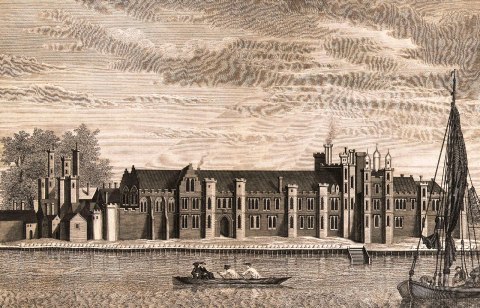
Above: Greenwich Palace. Anne of Cleves married Henry VIII there on 6 January 1540.

Anne was born on 22 September 1515, the daughter of Johann, duke of Cleves, and his wife Maria. The duchy of Cleves, located in the Holy Roman Empire, was of economic and military significance and was an important cultural centre. Anne's father employed musicians and showed favour to humanist scholars. Anne's mother was responsible for overseeing her education, which placed an emphasis on needlework and reading and writing in German. Shortly before her twelfth birthday, Anne was betrothed to Francois, heir to the duchy of Lorraine. This marriage would have enabled Anne to become a duchess, a position of prime political and social significance, enhancing her prestigious lineage and extending her family's power outwards. 

However, Anne was destined not to wed Francois. Within months of Jane Seymour's death, Henry VIII's privy councillors began considering foreign brides for their ageing monarch. Early on, Anne was considered as a candidate for Henry's hand. Christopher Mont, who served in the household of Thomas Cromwell, reported that everyone at the court of Cleves praised Anne's beauty: 'one said that she excelled the Duchess [of Milan] as the golden sun did the silver moon'. She was also reportedly demure and virtuous. In the summer of 1539, Henry VIII's court painter Hans Holbein arrived in Cleves to paint Anne. Nicholas Wotton, the resident English ambassador, confirmed that Holbein's representation of Anne was accurate. Other observers commented on Anne's physical attractiveness. The notion that Anne of Cleves was ugly, or even physically disfigured, is a later myth. Only in the following century did Bishop Burnet suggest that she was a 'Flanders mare'.


Above: The miniature that persuaded Henry VIII of Anne's beauty. 

Modern research has indicated that it was largely Henry VIII, rather than Cromwell, who was enthusiastic for the alliance with Cleves. In the face of combined Franco-Imperial hostility, marrying Anne appeared a shrewd move. In October 1539, the marriage treaty between England and Cleves was signed and Anne departed for England the following month. On 31 December, she arrived at Rochester in stormy weather, and the following day was greeted by the man who was to become her husband. Henry's behaviour, in greeting Anne in disguise, was not unusual: as Warnicke has explained, he was simply following the prevailing custom of Renaissance monarchs. However, the meeting did not go as expected. Upon sight of Anne, the king doubted that she was truly a virgin. He based his judgement on 'the looseness of her breasts and other tokens', an accepted sixteenth-century understanding of virginity. At the time, contemporaries followed Castiglione's belief that 'outward beauty is a true sign of inner goodness' and 'for the most part the ugly are also evil'.

Maidens were expected to have slim figures, thus Anne's fuller figure caused Henry to worry that, perhaps, his prospective bride was no virgin. The ambassador of Cleves' failure to deliver a copy of the Lorraine contract fuelled the king's concerns. As Warnicke suggests, because Henry believed that Anne was truly the wife of Francois, she 'had therefore been symbolically deprived of her maidenhead'. Anne's ambassadors, however, informed Cromwell that she was not Francois' wife and promised to have a copy of the contract sent to England. Two days later, Anne became Henry's wife. She had been publicly greeted by Henry some days earlier at Blackheath Common in a lavish welcome attended by the nobility of the land. The chronicler Hall referred to her impressive dress and her long golden hair. Contemporaries were impressed by their new queen's dignity and gracious nature, and de Marillac, the resident French ambassador, reported that she was much-loved by her English subjects, who esteemed her as the kindest queen they had ever had.

Anne's kind nature, however, was not sufficient to win the heart of Henry VIII. Believing her to be Francois' wife, he was later to admit that he had failed to consummate his new marriage. Far from being ignorant, as she is often depicted, Anne endeavoured to communicate with Cromwell about her marital difficulties. Cromwell informed the earl of Rutland, Anne's lord chamberlain, to behave more pleasantly towards Henry, perhaps hoping that her gracious behaviour would encourage the king to consummate the marriage. It was to no avail. The king suffered relative impotence with her. As Warnicke has noted: 'contemporary medical experts, who were unaware of psychogenic sexual dysfunction, blamed witchcraft for causing relative impotence'.

Above: Thomas Cromwell. He was executed on 28 July 1540, merely weeks after the annulment of Anne's marriage. 

Henry's failure to consummate his union caused Anne dismay and concern. As noted, she had communicated to Cromwell her concerns about the king's behaviour. Shrewdly, she maintained her dignity and performed her queenly functions with success. She accompanied her husband to Westminster in February by barge and was festively greeted by the Londoners. Anne enjoyed warm relations with her stepchildren, as displayed by her decision to order her stepson Edward a bonnet; while the seeds of her long friendship with Mary Tudor were sown. At her coronation in October 1553, Mary provided Anne with a prominent place in the procession, sitting alongside her other stepdaughter Elizabeth. 

Although she was respected and loved by her subjects, Anne's position was perilous. Her last public appearance alongside her husband was at the May Day celebrations, and shortly afterwards she learned of Henry's growing infatuation with her maid-of-honour Katherine Howard. In June, Anne revealed to Harst, the Cleves ambassador, that the king's council had requested her removal to Richmond Palace, and she admitted to him that she feared that Katherine of Aragon's fate would become her own.

Anne consented to the annulment of her marriage, but it is hardly likely that she consented happily. Her ambassador later reported that she had screamed and cried loudly, thus breaking his heart. Her settlement was generous: she was granted possession of Richmond and Bletchingley Manor for life (and later Hever Castle); precedence over all of Henry's subjects except himself, his children and his new wife; and the allowance of 8000 nobles for the maintenance of her household. However, her correspondence with Cleves was censored, thus dishonouring her. 

How Anne felt about Henry's hasty marriage to her former attendant Katherine Howard is not known. Six months later, at the New Year celebrations, Anne was invited to court and publicly greeted the new queen, who later bestowed upon her the gift of a ring and two small dogs. It is often assumed that Anne bore no ill-will towards Katherine, but the truth is perhaps more complex. As Elizabeth Norton has suggested: 'Despite her acquiescence, Anne always believed herself to be the legitimate wife of the king and the true queen. In spite of this she was, first and foremost, a survivor and, if the price of that survival was a denial of her status in exchange for a life of opulent retirement, she was prepared to play along, even if that meant accepting a new lower status beside her former maid, Queen Catherine Howard'.

More likely, Anne was biding her time. The annulment of her marriage, in her eyes, had brought great shame upon herself and her family. Her correspondence with her family was heavily censored and her position remained, to put it mildly, highly ambiguous. Even the king's subjects were uncertain how to view the former queen. Rumours spread that Anne had been delivered of a son in the summer of 1541, which indicates that some, at least, continued to view her as Henry's true wife. Chapuys reported that she was delighted at the news of Katherine Howard's downfall, probably because she viewed it as indicative of her return to queenship. She was to be highly disappointed. Henry married Katherine Parr, rather than Anne, and the former queen was reportedly in great despair at the news. She allegedly made negative remarks about the new queen's appearance.


It is simplistic and probably erroneous to view Anne of Cleves as lucky, the most fortunate of Henry's wives. She herself did not view her situation that way. Not only had Henry publicly dishonoured her by annulling her marriage and marrying her attendant, but her situation as the king's 'sister' was uncomfortably ambiguous. When Henry failed to correspond with her she reportedly became melancholy. Anne later informed her brother that she felt like a stranger in England and longed to return to Cleves.

Moreover, her financial situation experienced strain following Henry's death. In 1547 Edward VI's council confiscated her manors of Bletchingley and Richmond, leading her to request her brother's assistance. Her situation remained unresolved when Mary succeeded her brother on the throne. Anne's final years were further troubled by household disputes. She died shortly before her forty-second birthday, on 16 July 1557, at her manor of Chelsea, and was later buried at Westminster Abbey. Authors, writing in memory of her, praised her gentleness, her household management, and her piety.

Anne of Cleves was a popular queen, much respected by her subjects, and has usually been viewed in modern times as the unattractive but kindly fourth wife of Henry VIII, who had the luckiest fate of all his wives. While it might appear that way today, Anne herself did not regard her situation so positively. She longed to be queen of England and was greatly distressed when Henry married Katherine Howard and, later, Katherine Parr. As Norton suggests, she continued to regard herself as the rightful queen and believed the annulment of her marriage had inflicted shame and dishonour upon her. Marriage was the primary vocation of sixteenth-century women, in particular royal women, and thus the annulment was viewed as a failure, a perversion of Anne's destiny and a slur upon her womanhood. She longed to return to her home country, believing herself an anomaly in England. This kindly, virtuous woman, who was reportedly attractive, has been much maligned and misrepresented in modern times. Perhaps of all of Henry's queens, Anne of Cleves remains the most stereotyped. This is a pity, for the evidence suggests that she was popular, much-praised, and in her short tenure as queen, she enjoyed success in her queenly role.