Showing posts with label warwick. Show all posts

Sunday, 1 May 2016

'Now Take Heed What Love May Do'


The exact date on which King Edward IV married Elizabeth Wydeville is uncertain, but traditionally they are held to have married on, or about, 1 May 1464. In literature, Mayday had long been associated with romance, chivalry and passion. The selection of the date was appropriate, because Edward's marriage to Elizabeth appears to have been a love match. 

The marriage took place in circumstances of secrecy. Elizabeth's mother Jacquetta attended - and perhaps arranged the match - as did an unnamed priest. Two gentlewomen also attended. Contemporary writers and chroniclers later wrote, variously, that Elizabeth had enchanted the young king under an oak tree; that she had defended herself with a dagger when he attempted to force himself upon her; or that he threatened her with a dagger. 

Edward has been criticised by modern historians for selecting Elizabeth as his bride. However, there were good reasons to marry her. Firstly, she was undoubtedly fertile. She had already produced two sons in her first marriage, and she herself had thirteen siblings. Clearly, from Edward's perspective, Elizabeth came from good stock and would be able to produce sons, which was the primary duty of the medieval queen. Secondly, as later events would show, Elizabeth was beautiful, intelligent, charismatic, pious and ambitious. Thirdly, she was descended from the ducal house of Luxembourg, and could in theory offer her husband a prestigious foreign alliance. Fourthly, she had been married to a Lancastrian knight and the Wydevilles had traditionally supported the Lancastrian regime, so marriage to Elizabeth offered Edward the opportunity to heal the divisions between the warring houses of Lancaster and York.

On the other hand, Edward's choice was surprising to his contemporaries, because Elizabeth was not a foreign princess; marriage to a French princess would have been more profitable both for Edward and for his kingdom. The earl of Warwick had been negotiating for the king to wed Bona of Savoy. By marrying an English widow, Edward failed to consolidate his position, which was a risky policy given that he was a usurper. The situation in England remained precarious, and marriage to a foreign princess would have offered the promise of foreign military and diplomatic support, in the wake of further conflict and bloodshed. Secondly, the marriage alienated Warwick, who had supported Edward until that point. There is no evidence that the nobility as a whole resented the Wydevilles, but they were certainly disliked by Warwick, and he was a dangerous enemy to have, as events were to prove. 

In defying convention, Edward behaved exactly like his future grandson Henry VIII, who married four English women, at least two for love. King Edward has often been viewed as a serial womaniser, and indeed it is possible that he was actually married to Eleanor Talbot before marrying Elizabeth Wydeville. The king could not have known it, but his previous involvement with Eleanor was to jeopardise his marriage to Elizabeth. In Richard III's reign, the Wydeville marriage was declared invalid and the children of Edward and Elizabeth were declared illegitimate and unfit to succeed. 

In September 1464, Edward finally admitted that he had married Elizabeth. She was crowned queen on 26 May 1465, and gave birth to their first child, a daughter named Elizabeth, in February 1466. The marriage seems to have been a successful one. Elizabeth demonstrated her suitability to be queen and was praised for her constancy and modest behaviour, particularly during the troubles of 1470. Ultimately, it was their daughter Elizabeth's fate to be queen of England as the wife of Henry VII. 

Saturday, 21 June 2014

19 June 1312: the Death of Piers Gaveston

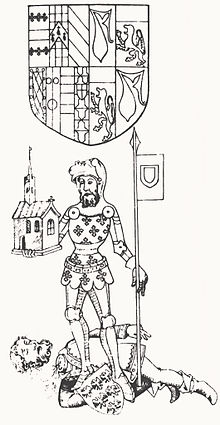
Guy de Beauchamp.jpg
Above: the Earl of Warwick stands triumphant over the dead body of King Edward II's favourite, Piers Gaveston, first earl of Cornwall.

On 19 June 1312, the first earl of Cornwall, Piers Gaveston, was illegally put to death at Blacklow Hill near Warwick. He had been condemned to death by disaffected nobles, including the earl of Warwick, the earl of Lancaster, the earl of Hereford, and the earl of Arundel, for violating the terms of the Ordinances. Two Welshmen subsequently ran him through with a sword and then beheaded him. As Richard Cavendish claims in a 2012 article: Piers 'flew too high and paid the penalty'.

Piers was the son of a Gascon knight and had been born around 1284, who was loyal to the father of Edward II, Edward I. Piers became a member of the royal household at a young age and consequently met the future king there. Chroniclers described him as handsome, athletic, and well-mannered. Edward I had, reputedly, been impressed by Piers' conduct and martial skills and wanted him to serve as a model for his young son, the heir to the throne. Piers however came into conflict with the king, when a dispute occurred between the treasurer Walter Langton and the prince. Enraged, Edward I banished Piers and a host of other men from the prince's household. He was later exiled, but returned when Edward II acceded to the throne in 1307. 

Historians have puzzled endlessly about the exact nature of Piers' relationship with Edward II. Piers was extremely close to the king. Although Cavendish terms it 'an extremely close friendship', he betrays a misunderstanding of medieval knowledge of sexual affairs, by suggesting that, although both Edward and Piers later fathered children with their spouses, they might have engaged in a bisexual affair with one affair. Scholars such as Kim Phillips and Barry Reay have convincingly demonstrated that modern notions of sexuality, including homo- and bisexuality, did not exist as such in the medieval period. 


Above: Edward II controversially made his favourite, Piers Gaveston, earl of Cornwall in 1307.

Chroniclers, however, speculated about Piers engaging in sex with the king. The Annales Paulini confirmed that Edward adored Gaveston 'beyond measure', while the Chronicle of the Civil Wars of Edward II suggested that, when he first saw Gaveston, the king felt such love for him that he 'tied himself to him against all mortals with an indissoluble bond of love'. The contemporary Vita Edwardi Secundi opined that 'I do not remember to have heard that one man so loved another... our king was... incapable of moderate favour'. Robert of Reading bluntly stated that Edward II enjoyed 'illicit and sinful unions'. In short, the wealth of evidence available supports J.S. Hamilton's suggestion that 'The love that the King felt for Piers Gaveston has been described as greater than the love of women. It still seems more likely that it was also stronger than the love of brother'.

Writers such as Lisa Hilton and Ian Mortimer have suggested that it is by no means certain that Edward engaged in sexual relations with Piers Gaveston (or other male favourites, for that matter), and Pierre Chaplais controversially argued that their relationship was probably closer to sworn brotherhood rather than a sexual relationship. As Phillips and Reay state, it is impossible to label either man homo- or bisexual, as popular writers, including Alison Weir, sometimes to do, as understandings of sexuality were extremely different in the medieval period. While it seems convincing that Edward and Piers had a sexual relationship, and perhaps loved one another, it is impossible to term either man 'non-heterosexual'.


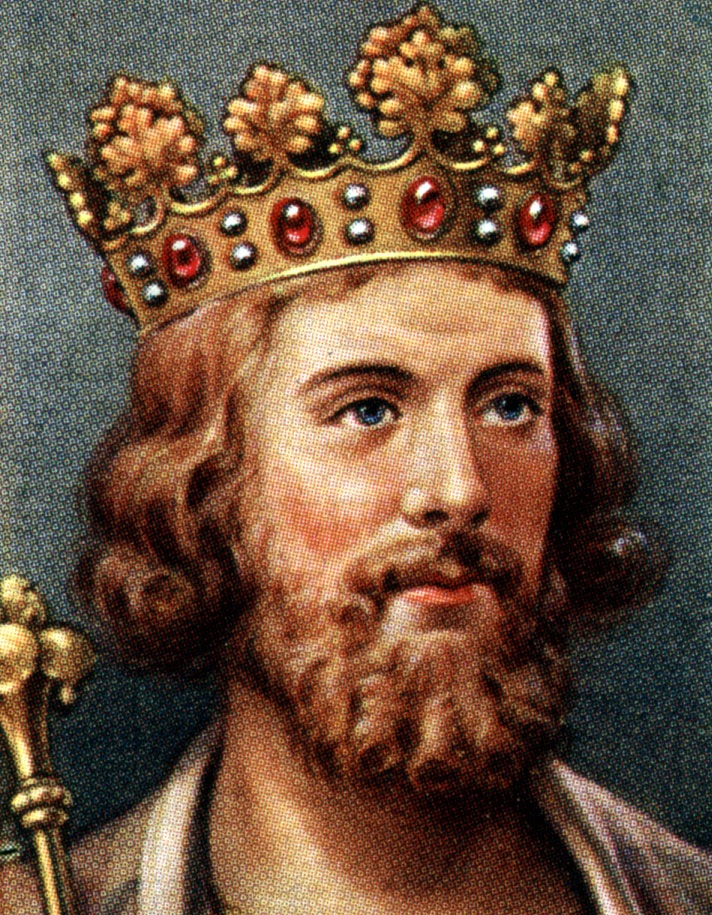
Above: a representation of King Edward II.

In August 1307, Edward made Piers the earl of Cornwall, a decision which antagonised the barons, who resented Piers' foreign origins. When the king left England in early 1308 to marry the twelve-year old French princess Isabella, he appointed Gaveston regent in his place. When the king returned, he pointedly ignored his new bride in favour of Gaveston, who sat next to him at the coronation banquet. Eventually, disaffected barons forced the king's hand, and he was forced to exile the unpopular Gaveston in May 1308. 

Despite this, Edward continued to reward his favourite, and he was appointed Lieutenant of Ireland. Inn some respects Gaveston enjoyed success in Ireland, fortifying the town of Newcastle McKynegan, for example. Eventually, when he felt that his nobles had perhaps mellowed towards Gaveston, Edward II recalled his favourite. By February 1310, however, some earls refused to attend parliament as long as Gaveston was present, so affronted were they by his arrogance and intimacy with the king. In November 1311, by which time the king had been forced to accept the Ordinances issued by the earls, Piers had again been exiled from England.

However, Gaveston returned at Christmas and was reunited with Edward in January 1312, probably at Knaresborough. The archbishop excommunicated Gaveston in March, and the barons decided to obtain hold of Gaveston once and for all. Eventually, he was executed on 19 June outside of Warwick. His body was left on the ground for some time, before Dominican friars brought it to the city of Oxford and it was eventually buried at the Dominican prior at Langley, following the securing of a papal absolution for Piers in January 1315 (he had, as noted, been excommunicated). The king reacted with anger and heartbreak at news of his favourite's (and possibly, lover's) death, but circumstances did not allow him to seek vengeance with the earls. 

Sunday, 16 March 2014

The Death of Anne Neville, Queen of England

Image result for richard iii

On this day in history, 16 March 1485, Queen Anne Neville of England died aged twenty-eight at Westminster Palace. According to legend, the day she died saw an eclipse which was viewed by the superstitious as an evil omen of her husband Richard III's imminent fall from grace. Although rumours credited the king with poisoning his consort as part of his schemes to marry his niece Elizabeth of York, reports indicated that he had wept at her funeral. She was buried at Westminster Abbey, having reigned as queen for only two years.

Anne was the second daughter of Richard Neville, earl of Warwick, and Anne Beauchamp, the daughter of the thirteenth earl of Warwick. She was born at Warwick Castle and most likely spent her formative years growing up in Warwick. Her family fortunes were splendid: the Nevilles exercised considerable influence in the northern parts of England and later became loyal adherents to the House of York. At Middleham Castle in Yorkshire, Anne and her sister Isabel became acquainted with the two younger brothers of Edward IV: George (later duke of Clarence) and Richard (later duke of Gloucester). 


Above: Middleham Castle.

In 1469, Isabel Neville married George, thus integrating the Nevilles into the royal family, for George was the younger brother of the Yorkist king Edward IV. The following year, aged fourteen, Anne herself was married but to the Lancastrian heir, Edward of Westminster, rather than to a Yorkist prince. This occurred as a result of her father's schemes, for the disaffected Warwick, resentful of the Woodville family (a Woodville was married to the king) had decided to switch sides and support the defeated Lancastrians in an attempt to attain financial and political power. Anne perhaps resided in the household of the vanquished English queen Margaret of Anjou in the immediate aftermath of her marriage, but at the Battle of Tewkesbury in 1471 the Lancastrian prince was defeated and killed and Anne left a widow aged fifteen.

Because Clarence was married to Anne's sister, he took it upon himself to take custody of both Anne and her mother and attained possession of the dead Warwick's possessions in the north. Anne was deprived of her inheritance as part of these greedy endeavours, and it is possible that he even sought to prevent her remarrying. Sometime between 1472 and 1474, however, Anne took it upon herself to seek marriage with Clarence's younger brother, Richard duke of Gloucester, who has traditionally been regarded as both more loyal and closer to King Edward than the ambitious Clarence. Whether Anne directed these plans as an ambitious attempt to regain her inheritance, or whether the alliance with Richard was based on love, is impossible to say.

The newly married couple resided chiefly in the north, where loyalty to the Nevilles was strong. Perhaps in 1473, and by 1476, Anne delivered a son, Edward, who became heir to the dukedom of Gloucester and a potential claimant to the throne; although the birth of two sons to King Edward meant that it looked virtually uncertain that either Edward or his father or uncle would acquire the throne.

Having been a Princess of Wales and later a Duchess of Gloucester, in 1483 Anne became a queen. Gloucester usurped the throne in the summer of 1483 and Anne was crowned alongside her husband at Westminster Abbey. Whether she had any knowledge of matters pertaining to the Princes in the Tower is uncertain, although novels such as The Kingmaker's Daughter explore such issues imaginatively. Anne's queenship, however, was not to prove happy. In 1484 her only son died and it is perhaps significant that she seems to have had no other pregnancies, although she may have experienced miscarriages or stillbirths. As Michael Hicks remarks: "Anne seems to have been a particularly insignificant queen, perhaps because she suffered from ill health". Certainly, in contrast to the active and auspicious queenships of the charismatic Margaret of Anjou and Elizabeth Woodville, Anne appears a shadowy and perhaps ineffectual consort.

At Christmas 1484 court rumours credited that Richard was engaging in an affair with his eighteen-year old niece Elizabeth, daughter of Edward IV and later, wife of Henry VII. Rumours that the king would set aside Queen Anne in favour of the younger and more attractive Elizabeth were rampant. Following Anne's death, Richard publicly denied any intention of marrying his niece.

Saturday, 13 July 2013

Jacquetta of Luxembourg


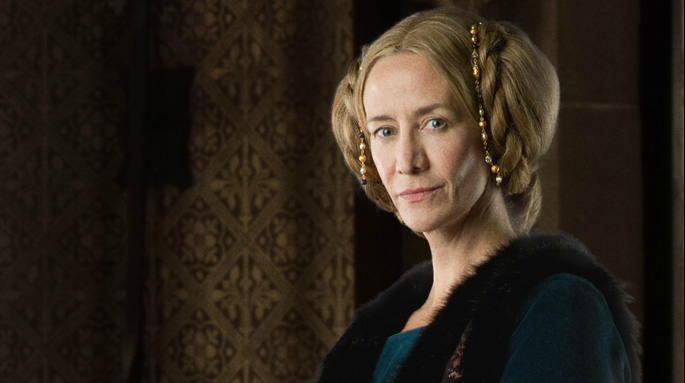
Above: Janet McTeer as Jacquetta Woodville in The White Queen (2013).
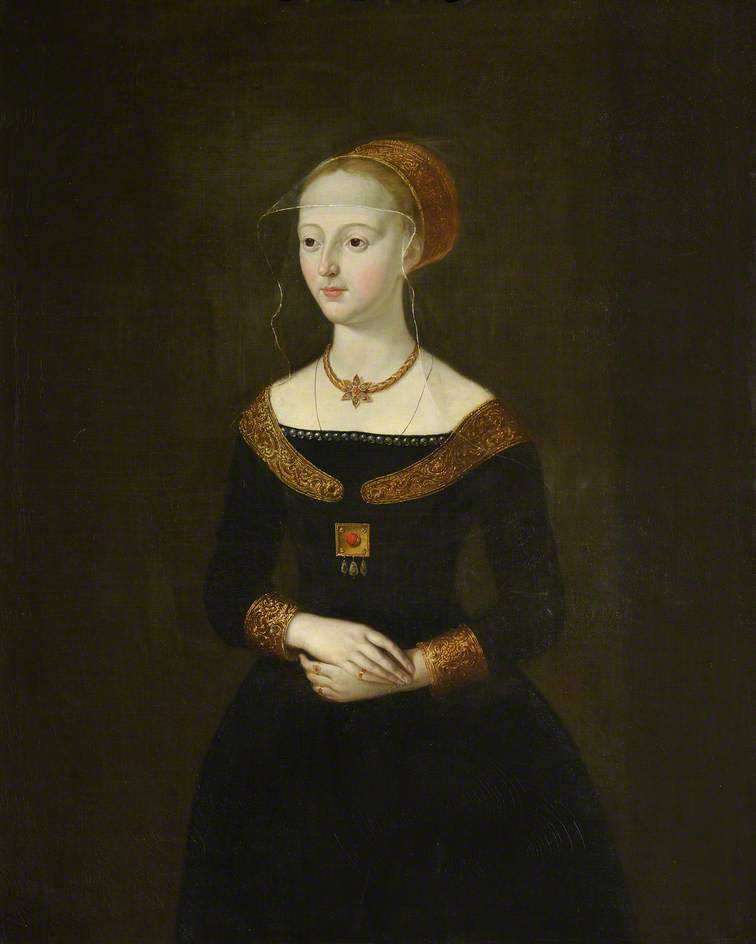
Portrait of Queen Elizabeth Woodville.

The BBC television series The White Queen, based on three of bestselling fictional novelist Philippa Gregory's novels set in the times of the Wars of the Roses, has sparked much greater interest in the extraordinary lives of royal English women who lived in context of ferocious battles, murder, bloodshed, and treachery. The TV series, of course, is horrendously inaccurate, with critics noting the appearance of zips on dresses, modern stair-rails, and quick to rage against the very modern language. I personally cannot understand why these medieval women do not wear headdresses and instead walk around dressed like prostitutes!

Queen Elizabeth Woodville, of course, was a notorious woman who was adored by her husband, Edward IV, much praised for her beauty, fairness and other qualities, but loathed by English nobles who perceived her to be arrogant, cold, ruthless, and vain. However, the life of Elizabeth's mother, Jacquetta of Luxembourg, is perhaps even more astounding than that of her eldest daughter.

Portrayed by Janet McTeer in the television series, Jacquetta had lived a life of almost unimaginable luxury and privilege before she married into the Woodville family. Perhaps born around 1416, Jacquetta was the eldest of nine children born to Pierre of Luxembourg, count of St. Pol, Conversano and Brienne and vicomte of Lille, and his wife Marguerite, daughter of the duke of Andrea. In 1433, aged seventeen, she married John duke of Bedford, who was uncle to the infant king of England, Henry VI. Thus, having been born into the European aristocracy, Jacquetta married essentially into the English royal family, cementing further her family's illustrious prestige and lineage. This marriage was not a love match, for the duke was aged around 27 years older than his new bride and had previously been married already. Instead, it was a marriage made by politics, to suit prevailing English interests in French lands at the time.

However, Jacquetta's husband John died only two years after the marriage, leaving her a widow aged 19, without children. She was, however, left extremely rich, for she was entitled to a third of her husband's lands and annuities. Just two years later, in 1437, Jacquetta married again, to her social inferior Sir Richard Woodville, who was not at all wealthy or highly ranked. Since she had, a year previously, agreed that she could not marry again without the consent of King Henry VI, she was forced to pay £1000 as a royal pardon for her transgression. This marriage clearly seems to have been a love match, for Jacquetta was willing to sacrifice her wealth, her lineage and royal connections in marrying a humble squire. Further evidence of the passionate love between them can be seen in the fact that she bore Richard at least 14 children.


Above: Were Jacquetta and her daughter Elizabeth witches, as The White Queen so controversially suggests?

Jacquetta and her new husband spent the first few years of their marriage in France, for Jacquetta was negotiating there to secure her dower lands, while Richard served there. They dwelled at Grafton, Northamptonshire, as their main English residence following their return. Their first daughter, Elizabeth Woodville, was born around 1437, and was followed by a further seven girls and seven boys, including Anthony and John. Elizabeth would prove like her mother to be extremely fertile.

In 1444, Jacquetta participated in the retinue which brought the new queen, Margaret of Anjou, to England, and it seems that the two became close friends. Jacquetta and her Woodville family were, initially, Lancastrians who supported Henry VI's regime, for the Woodvilles had been connected with the duke of Bedford, uncle to the king. However, several years later, the political and dynastic troubles which came to be known as The Wars of the Roses transformed Jacquetta's life forever. At the Battle of Towton, her husband and eldest son were arrested and imprisoned in the Tower of London, although they were later released. At this point, the Woodville family probably transferred their allegiance to the Yorkists.

Most infamously, Elizabeth, Jacquetta's eldest daughter, allegedly seduced the new Yorkist king, Edward IV, in 1464, leading him to marry her since she had, apparently, refused to become his concubine. Later stories dramatically suggested that she had held a dagger to her throat and promised to kill herself were he to attempt to use force on her. Regardless of the circumstances, Edward married Elizabeth at the Woodville's family home at Grafton on 1 May 1464, with only Jacquetta, a priest, and two gentlewomen present. This, of course, transformed the Woodville's fortunes. Jacquetta's husband became Earl Rivers and treasurer of England, while her children were married into the English nobility, causing much resentment and anger among other nobles. For instance, her 20-year old son John was, shockingly, married to Katherine Neville, the elderly dowager duchess of Norfolk, who was at least in her late 60s. Katherine Woodville married the young Duke of Buckingham, who was apparently furious, believing his new wife to be grossly inferior to himself.

Jacquetta and Elizabeth have often been linked in the public consciousness with witchcraft and sorcery. The White Queen supports these allegations, in both the TV series and in the book, by suggesting that both women engage in witchcraft to fulfil their ambitions - thus sorcery is practised to make Edward fall in love with and marry Elizabeth; to change the outcomes of battles; to wreak vengeance on enemies. Certainly, at the time rumours of witchcraft were linked to the new queen and her family. Contemporaries found it scarcely credible that their Yorkist king had married a woman so far beneath him, who had no royal blood and was, in fact, from a Lancastrian family. Richard III, brother-in-law to Elizabeth, and the Earl of Warwick both insinuated that Jacquetta and Elizabeth had inflicted sorcery on the king, rendering his marriage invalid. Thomas Wake, a Northamptonshire esquire, claimed in 1469 that Jacquetta had brought about the marriage of Edward and Elizabeth by witchcraft, having found two lead figures, one for the king and one for the queen. Jacquetta, however, when brought to trial proved her innocence and the case against her collapsed.

As with earlier medieval women such as Joan of Navarre and Eleanor duchess of Gloucester, witchcraft was often used to irrevocably damage the reputations of powerful women. There is no evidence to suggest that Elizabeth and Jacquetta were witches. Jacquetta's family was linked to Melusina, a water goddess or 'serpent woman'. However, there is no conclusive evidence to show that Elizabeth or Jacquetta strongly celebrated their links with such a legend, despite Philippa Gregory's claims to the contrary. While Jacquetta did own a copy of the ancestral romance Melusine, other fifteenth-century ladies did too, which hardly suggests that she was unique.

The main reason why Elizabeth was believed to be a witch was because other nobles could not believe that she, a mere gentlewoman of no social standing, was genuinely worthy of the king of England and had caused him to fall in love with her by natural means. Certainly, Edward's cousin and former supporter the earl of Warwick was furious, for he had been negotiating for Edward to marry a foreign princess, who was believed to be far worthier of Edward. Warwick personally resented and hated the Woodvilles, mainly because, by virtue of their relatives marrying almost all the other nobles, there were no suitable nobles left for his two daughters Isabel and Anne to marry.

The marriage between Edward and Elizabeth culminated in Warwick's defection to the Lancastrian cause, resentful of his loss of influence and power with the rise of the queen's family. He married his eldest daughter Isabel to the king's younger brother George duke of Clarence, who had become similarly angered and hostile towards his brother. Matters came to a head when Warwick left England, accompanied by his wife, his two daughters and his new son-in-law, and journeyed to visit the former queen Margaret of Anjou, promising his support of her and allegiance to the Lancastrian cause. Agreeing that his younger daughter Anne should marry Margaret's son Edward of Lancaster, a new alliance was struck up by which it was agreed that the Lancastrian king, Henry VI, should be returned to the English throne, and Edward IV forcibly removed from it.

Meanwhile, Jacquetta's personal influence with Queen Elizabeth remained firmly entrenched. She participated in her daughter's coronation, and in 1466 took part in Elizabeth's churching following the birth of her first child, the future Elizabeth of York. Misfortune overtook her, when her husband Richard and her son John were executed in 1470 on the orders of Warwick, who had returned to England in an attempt to restore Henry VI to the throne. Edward IV escaped to Europe, leaving his young wife to seek sanctuary in Westminster Abbey where, accompanied by her mother, she gave birth to the future Edward V in November 1470.

Jacquetta did not long survive the brutal deaths of her husband and son, dying on 30 May 1472, aged around 56. Where she was buried is unknown. She was an immensely powerful and wealthy woman who had been born into European royalty, marrying into the English royalty in her teens before becoming, by virtue of her second marriage, the mother of England's queen and thus grandmother of a later queen, Elizabeth of York, and great-grandmother of Henry VIII.

Rather than being a scheming and ambitious woman who only relied on witchcraft and sorcery to bring about her triumphs, it is likely that Jacquetta was, as Lucia Diaz Pascual intriguingly writes: 'a formidable woman who understood how to navigate the corridors of power and was capable of great resilience, strength, and determination to achieve her objectives'.