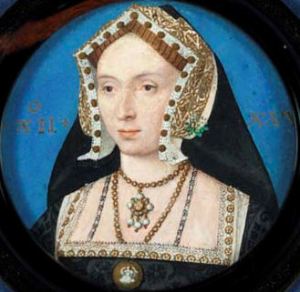
Above: A fictional depiction of Alice Perrers attending the deathbed of her lover, King Edward III.
History abounds with the names of those who enchanted kings and became their mistresses. They were the stars at the centre of royal courts, they basked in favour, they were present at every social gathering, dazzling and enchanting onlookers, captivating observers and inspiring awe, envy, devotion and hatred. Whether for a night or a month, a year or a decade, these women were privy to their royal lovers' secrets and enjoyed informal influence at the heart of power. Whether they were motivated by wealth, ambition, love or goodwill, or whether they were coerced, depends entirely on circumstance.
One royal mistress who has traditionally been seen as motivated solely by blind, grasping ambition, is the legendary lover of Edward III, one of England's greatest medieval kings: Alice Perrers. For the last decade of the ageing king's life, Alice was his confidant, his bedfellow, his friend and his companion. She became a byword for promiscuity, arrogance, and greed. Loathed by commons and courtiers alike, but beloved of the king, Alice's story exemplifies the dazzling opportunities presented to those who captured the heart of their monarch.
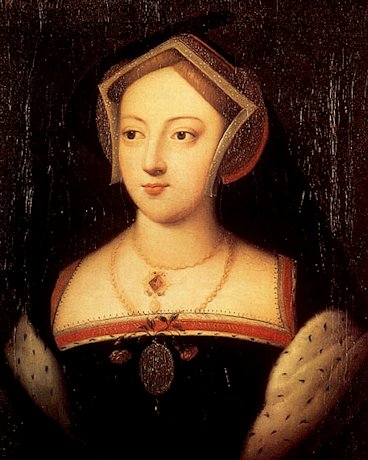
Above: An artistic rendition of the relationship between Edward and Alice.
Alice's origins were humble, and at her birth no-one could have guessed that she would one day become mistress of a king. Her birth date is unknown, although it has been suggested that she was born around 1348. She was probably the daughter of Sir Richard Perrers of Hertfordshire, who was thrown into prison in 1350 (when his daughter may have been only two years of age) and outlawed nine years later, following a dispute with the abbey of St. Albans. Given-Wilson contends that the Perrers family's hostile relations with the abbey could account for the virulent hatred later directed towards Alice in the chronicle of Thomas Walsingham, who was chronicler at St. Albans. He disparaged her, describing her as ugly and claimed that she only enchanted Edward through sorcery and magic: a common explanation in the Middle Ages for beautiful women who captured the heart of kings. Elizabeth Wydeville is an obvious example of this.
At an unknown date, Alice arrived at court and served in the household of Queen Philippa of Hainault, the respected and matronly queen of Edward III. Around 1364, when she may have been only sixteen years of age (the king was fifty-two), she seems to have become Edward's lover. For the next five years, their relationship was secret and veiled. Only when Philippa died in 1369 did Alice's affair with the king become more conspicuous, and it aroused bitter envy and hatred at court. Alice acquired numerous favours from the king and she soon became an extremely wealthy lady. Her doting lover bestowed upon her property and even jewels belonging to the late queen. She became known as 'The Lady of the Sun' and courtiers were expected to behave respectfully towards her.
Alice's power soon became legendary, and it is possible that she inspired fear. She engaged in a series of enfeoffments-to-use and other land transactions, and Walsingham reported that Alice 'had such power and eminence in those days that no-one dared to prosecute a claim against her'. How credible this assertion is cannot be known with certainty. Alice may have been ambitious, she may have been grasping, she may even have been a calculating and cold-hearted opportunist who manipulated the ailing king into granting her unheard of wealth and status at a court that brimmed with spite and loathing of her. But it is also true that it was common practice for high-status women to be attacked as a way of besmirching the name of kings. No-one would have dared to attack Edward III; the easiest way of criticising him was through slandering his mistress. Hostile allegations directed against Alice, therefore, should be taken with a pinch of salt. In any case, who can blame her if she did take advantage of Edward's devotion? She was of humble birth and experienced limited opportunities. Being the king's mistress offered her access to wealth, luxury and security that she probably never dreamed she would ever have the luck of possessing.
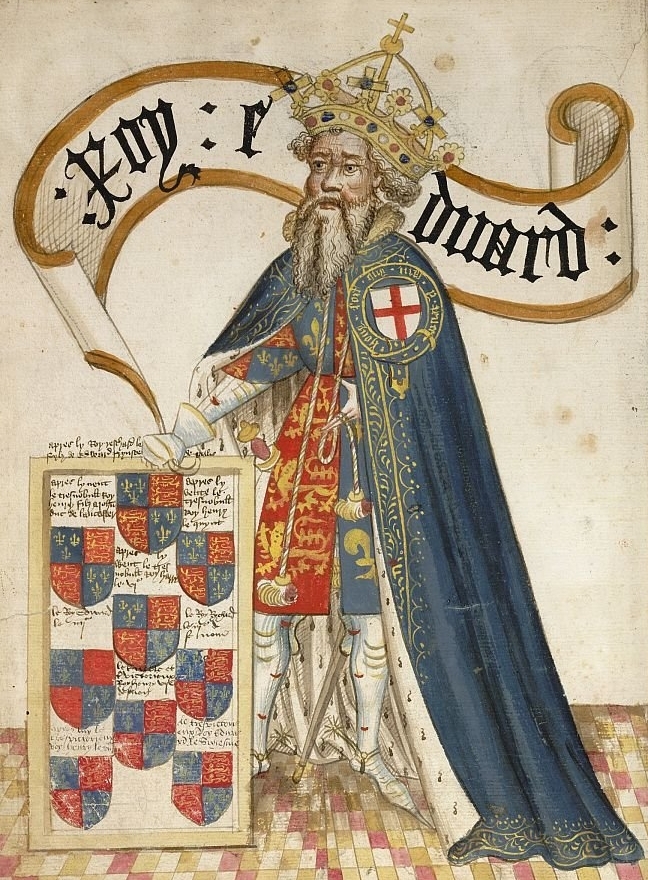
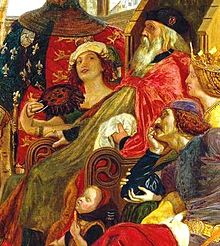
Above: King Edward III.
Alice attracted scandal and caused controversy during her years at the centre of English politics. At the Good Parliament of 1376, it came to light that she was not, in fact, a single woman. Some years previously, she had been married to Sir William Windsor, a Westmorland knight. Alice was subsequently banished from court as part of the reforms instituted by those hostile to the way the country was being run. At a later date, she returned. Her besotted royal lover had been pining for her. She remained with him until his death in 1377, when Walsingham claimed that she coldly seized the rings from her royal lover's fingers. Alice had three children by Edward III: John de Southeray (1364-83), who married Mary, half-sister of Henry Lord Percy; Jane; and Joan.
Later that year, in the new reign, Alice was accused in Parliament of corruption. Although she asserted her innocence, she was found guilty, and was convicted and sentenced to banishment from the kingdom and forfeiture of all her lands and goods. Evidence from inquisitions confirms that she held land in 15 counties: an insight into the extraordinary power and position Alice had acquired during her years as the king's mistress. Alice was clearly a resourceful and determined woman, for she refused to go down without a fight. She spent the remaining years of her life trying to recover as much as possible of what she had been deprived of in the 1377 Parliament. Her husband initially helped her, but his death in 1384 brought new problems, both because he died in debt to the crown and because he had enfeoffed all his lands to a group of trustees, rather than to his wife. The trustees refused to let Alice have the lands, claiming that it had been her late husband's wish that the lands go to his nephew, John Windsor. Alice fell into bitter conflict with John, and sent several petitions to Parliament. She was briefly successful in 1393 when John was imprisoned, but he was later released, and she recovered only a few small manors that were of little worth. She was clearly resentful that her nephew by marriage had 'usurped' her lands. Alice died in the winter of 1400-1, her will being proved in February of 1401.
Alice Perrers was a woman who caused considerable controversy. We lack details surrounding the most basic aspects of her life: her birth date, her appearance, her personality. Most of what we know about her derives from hostile sources that viewed her as to blame for Edward III's mismanagement in the later years of his long reign. She was defamed as arrogant, power-hungry, ruthless, greedy, acquisitive and grasping. How true this assessment is cannot be known with certainty. She occupied an important place in the literature of the age. It has been suggested that she served as the living prototype of the Wife of Bath in Geoffrey Chaucer's The Canterbury Tales, and less favourably, William Langland's Lady Mede - a selfish, materialistic and immoral high-status woman - in Piers Plowman may have been based on her. But perhaps Alice has been too quickly condemned and too easily reviled. She may have been an opportunist, but it is understandable why she took advantage of Edward III's devotion. She was not of high birth and would have been well aware that her opportunities in life were limited. Who can blame her if she became enamoured with power and dazzled by riches? Most other women of her social standing probably would have done the same. Alice Perrers is well known as one of the most famous royal mistresses, but her reputation remains decidedly unfavourable: perhaps, in this age, we should afford her the benefit of the doubt and view her actions somewhat less moralistically and somewhat more sympathetically.