Showing posts with label africa. Show all posts

Sunday, 23 February 2014

Sexualities and Homophobia in Contemporary Africa


Copyright: http://forcechange.com/69693/demand-investigation-into-torture-and-murder-of-gay-rights-activist/.

I decided to write this article after coming across a thought-provoking piece written by Michael Mumisa for the Guardian (19 February 2014), entitled "It is homophobia, not homosexuality, that is alien to traditional African culture" (the piece can be accessed here: http://www.theguardian.com/commentisfree/2014/feb/19/homophobia-homosexuality-traditional-african-culture).

The central premise of Mumisa's piece is his claim that homosexuality has always existed in Africa and is not, contrary to African belief, a "Western imposition". He argues that: "the history of sexuality in traditional African societies has always been characterised by diversity in sexual practices and traditions". Homosexuality itself is not new - rather, what is new is the campaign for LGBT rights in Africa. This occurs, of course, in context of increasingly repressive measures against LGBT individuals. In Uganda, not only is homosexuality illegal, but President Museveni recently decided to sign the Anti-Homosexuality Bill introduced by Parliament - which would make homosexual acts punishable by life imprisonment. Nigeria's Archbishop Peter Akinola is at the forefront of campaigns against gay rights, and has enlisted the support of US churches opposed to the ordination of gay bishops.

Nigeria's Anglican Archbishop Peter Akinola (R) is embraced by congregants during the investiture of the Right Rev. Martyn Minns as the missionary bishop of the Convocation of Anglicans in North America (5 May 2007)
Above: Archbishop Peter Akinola opposes gay rights.

Beliefs in Africa that homosexuality is unnatural, offensive to God, and perhaps most notorious of all, a Western "disease" or "evil", seem fairly widespread. The president of Ghana, John Atta Mills, claimed in November 2011, for example, that homosexuality would never be legalised in Ghana and condemned the UK for reportedly seeking to legalise it in Ghana. He argued that homosexuality would "destroy the moral fibre of society".

In South Africa, gruesome stories of lesbians facing corrective rape have scandalised and horrified the world for years. Although South Africa has been deemed "the Rainbow Nation" in regards to its progressive constitution and support of LGBT rights, the reality for lesbians in particular has in modern times been overwhelmingly negative. The brutal rape and murder of footballer Eudy Simelane in 2008 is perhaps the most famous example of the appalling possibilities lesbians in South Africa face today.


Above: Footballer Eudy Simelane was murdered for her sexuality in 2008.

But Mumisa has a good case in claiming that alternative sexualities, whether homosexual, bisexual, or lesbianism, have always existed in Africa. Marc Epprecht, in his article 'The 'Unsaying of Indigenous Homosexualities in Zimbabwe: Mapping a Blindspot in an African Masculinity' (1998), convincingly argued that sexual relations have always existed between men in Zimbabwe, as attested to by material culture (e.g. Bushmen paintings). Homosexual relations between men flourished during the colonial era. Mumisa, perhaps controversially, concludes his article by suggesting that "the language of "othering" now used to discuss and describe gay communities in Africa is a remnant of colonialism"; and in view of Epprecht's suggestion that homosexual behaviours flourished in Zimbabwe before and up to the colonial era, he may have a strong case.

Whatever happens, it is likely that Africans, dwelling in pious and religious societies (whether Islam, Christianity, or indigenous religions), will continue to regard homosexuality with suspicion and intolerance, perceiving it to be a "Western" imposition that threatens to weaken the societies in which they live. But one can hope that, one day at least, LGBT individuals in African countries will experience and enjoy the legal rights and social freedoms and equalities they deserve.



Monday, 3 February 2014

Fashion, Gender, and Government Control in Uganda

Short dresses for sale on the roadside near Kabalagala in Kampala, Uganda
Copyright: Amy Fallon for The Guardian.

It is possible that in December, the Ugandan government will pass a law banning the miniskirt. Women who wear the miniskirt in public could face arrest if they refuse to cover up. Government officials have suggested that the anti-pornography bill, in which the proposed ban of the miniskirt has been included, will outlaw 'provocative' female clothing alongside censoring film and TV and restricting Internet use.

The era of director Idi Amin witnessed the banning of short skirts by degree, and if the bill is made law, these skirts will once more suffer this fate. Many Ugandans, however, oppose the idea, inspiring a Twitter hashtag #SaveMiniSkirt. Simon Lokodo, Uganda's ethics and integrity minister, argued that women who wear revealing clothing invite sexual violence and assault: "We know people who are indecently dressed: they do it provocatively and sometimes they are attacked. An onlooker is moved to attack her and we want to avoid these areas".

The proposed bill suggests that anyone found guilty of abetting pornography faces a 10m shillings (£2,515) fine and/or a maximum of 10 years in jail. The likes of Madonna and Beyonce will be banned from television due to their "provocative" attire and dance routines. Lokodo defended this by stating: "Certain intimate parts of the body cannot be opened except for a spouse in a private place". Sam Akaki, international envoy of Uganda's opposition Forum for Democratic Change, criticised the proposed bill, suggesting that it "will discriminate people on the basis of gender".


Above: the likes of Beyonce could be banned from Ugandan television.

Rita Aciro Lakor, executive director of Uganda Women's Network, opined that the issue centres more on control of women in a patriarchal society: "It's about going back to controlling women. They'll start with clothes".

One is similarly reminded of Jacob Zuma's trial in 2009 in South Africa amidst discussions of female fashion, gender, and immorality. Lokodo argued that women invite rape and sexual assault through the clothes they choose to wear - similarly, Zuma suggested that he believed that the rape victim had invited him to engage in sex with her because of her kanga clothing and her 'suggestive' position. The key argument in the trial centred on the expectation in Zulu culture that a man fulfil the desires of a woman if he interprets her being 'aroused'. Zuma's followers argued that women usually fabricate stories of rape as a means of accessing money and power. Unsurprisingly, the rape victim was accused and denigrated as a manipulative seductress, serial rape accuser, and a pathological liar.

Richard Waller (2006) has suggested that fashion is a means of allowing youths, particularly in African urban spaces, to construct their own identities and values. Fashion promotes individuality. If the miniskirt is banned in Uganda, it will be interesting to see how Ugandan women refashion their sense of self and their ideas of individuality. Will they use other items of clothing to convey a sense of their personality, their identity, and their personal makeup; or will the loss of this garment signify a male appropriation of what 'proper' female sexuality and conduct is believed, or even supposed, to encompass?

Sunday, 24 February 2013

Consumerism and Society: Freedom and Happiness or Corruption and Superficiality?


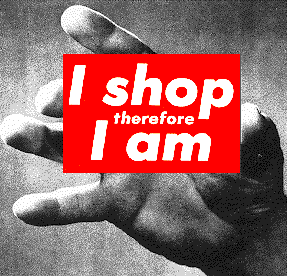
There are many fundamental social, economic and cultural forces shaping our world today, often interlinked in complex ways, and consumerism is surely and obviously one of them. A process which actively encourages the purchase of goods and services, does consumerism allow a person to convey their freedom through buying luxuries or does it disturbingly represent superficial and materialist societies who care for nothing more than their citizens' pleasures, worse still when poverty and economic instability continues to rule in less developed areas?

Consumerism is an international phenomenon with ancient roots, with people purchasing goods and buying materials in ancient societies in Rome, Egypt and Babylon. Consumer society, as we know it, first emerged in the seventeenth century, at a time when economic expansion was often linked with religious upheaval and social developments. The developing middle class, arguably first 'developed' during this period, embraced new and exciting ideas about luxury and consumption, leading to the rise of luxury goods such as sugar, tea, and coffee, brought in from the New World. This intensified in later centuries, eventually meaning that 'by 1920, most people [Americans] had experimented with occasional installment buying'. The term 'conspicuous consumption' originated in the early twentieth century, associated with Thorstein Veblen, an American sociologist and economist.  He identified the rapid processes of consumption as unnecessary, a superficial, if very obvious, means of displaying status and power in society and ensuring that class differences remained fixed. Consumerism was closely linked with European industrialisation from 1750 onwards, with the rise of new technologies and correspondingly improving living standards of the mass population. This led to a 'consumer' revolution in the period 1850-1914 in mass marketing, witnessing the opening of department stores and ubiquity of branded goods. 

Consumerism, as a controversial if highly visible phenomenon in both Western and Eastern societies, has generated astonishingly emotional responses, ranging from widespread delight to mass protests and vocal outrage. According to Peter Stearns, consumerism encountered doubts particularly in c1900; 'truly in the twentieth century... do mass protests against consumerism emerge', interestingly enough often outside the West. In the eighteenth century, consumerism was identified by hostile and concerned critics as being a cause of illness and decay, while others argued that luxury had the potential to 'drive a nation into decline'; views which are very startling to twenty-first century observers. Furthermore, consumerism was attacked by political and social groups as varied as the Nazis, socialists, anti-Semites, labour leaders and intellectuals during the 1920s, while anti-Americanism correspondingly increased, almost certainly because the USA served - and, from the perspective of some, continues to serve as - a symbol of consumerism on a global scale. 

Stearns suggests, however, that attacks on consumerism gradually receded in Western societies after the Second World War, but this is an interesting point. It's possible to argue that many remain hostile to all that is associated with consumerism - just look at Christmas. It's not only Christians who point out that this festival has lost its religious sense in every way, but even others with no religious perspective identify this worrying dilemma. As has been written: 'Christmas is a time of mass consumption... Christmas shopping is the cultural ritual through which we transform mundane, lifeless commodities into personal, meaningful gifts'. James G. Carrier, a scholar who has studied gift giving during the holiday season, wrote: 'The thing given at Christmas is a material object, usually a commodity bought in a crowded, garishly decorated store... on the one hand it is a commodity purchased for money in an impersonal transaction, and on the other it is a gift given to express affection in a personal relationship'. It's clear, therefore, that consumerism is highly complex and can be interpreted in multiple and diverse ways. Does it allow and express warmth, familial affection, and love for friends and neighbours, or is it an entirely self-centred and selfish enterprise which has destroyed traditional values?

Of course, it's interesting to study the development of consumerist societies over the last decade or so and consider how the general public have responded to it. While the USA is closely associated with consumption, emerging in the early twentieth century, this does not at all mean that it's been warmly embraced by all American citizens as a welcome aspect of life. Business leaders, for instance, according to Lisbeth Cohen, identified entitled consumers as a threat, since they were able to secure protections in the market place and leverage in government. Issues of race, class and gender were intertwined, since there was undoubtedly hostility towards the increasing influence of black women as consumers while African Americans became increasingly mobilised as consumers during the 1930s. During this period, too, thousands of American women joined together to protect their families from declining living standards and forms of exploitation in the market place, thus making an important contribution to the development of a consumerist society. Linking this with gender, consumerism profoundly impacted upon modern femininity in interwar Britain and America, with women enjoying a degree of freedom through buying and using corsets, cars, and cigarettes; according to Tinkler and Warsh important symbols of modernity and meaning that women became located 'at the heart of consumer culture'. Cigarettes became more popular and available from the 1880s and by the 1930s it was more and more fashionable for middle- and upper-class women to smoke as a pastime. This, also, along with cars, was seen to offer a woman freedom in breaking with gender norms and inequalities associated with gender relations which had characterised the preceding century.

On some level, consumerism has to be appreciated in allowing forms of freedom in the modern world. We are able to utilise consumption to be creative, through our use of fashion, music, our hobbies, our lifestyle, our holidays, our modes of travel, our living conditions... the list goes on. It could be argued that consumerism fosters and encourages unrivalled creativity. On the other hand, it surely reveals and exacerbates class tensions and inequalities, for consumerism is experienced very differently by different social groups in different regions. The examples provided evidence how gendered and race-related consumption is. Issues of poverty and inequality are fundamental to modernity, particularly today when one considers the appalling living conditions in societies in Africa, Asia and even some parts of the Americas and Europe. Yes, citizens are able to enjoy unprecedented freedom, but what does this mean for our societies? Trentmann has suggested that by the end of the nineteenth century there was widespread anxieties about 'the erosion of nation, culture, and social hierarchy by the commercial world', and while we may interpret the effects of consumerism in a very differing way, it cannot be denied that consumerism encourages materialism, competition, and above all, selfishness. A cliche and perhaps overused example, yes - but consider Christmas. Or even Valentine's Day. I was shocked to read that the average American spends over $100 on a Valentine's present for their loved one! Is this really necessary? Surely love is priceless and can be demonstrated more intimately in a less materialist fashion. A ubiquitous and fundamental part of the modern world - but that doesn't necessarily mean that consumerism is entirely welcome or advantageous.