Showing posts with label freedom. Show all posts

Friday, 15 November 2013

Lady Gaga and the Politics of Burqa

Credit: Daily Mail
Above: Lady Gaga and the burqa.

The burqa forms extremely controversial attire in Western societies today. Although many Muslim women believe that it is an essential part of their religious and social identity, it has been attacked by critics as being a means of oppressing women within society. In 2011, it was reported that 66% of the British population believe that the burqa should be banned in all public places, while they were banned in France that same year, justifying this decision by saying: 'given the damage it produces on those rules which allow the life in community, ensure the dignity of the person and equality between sexes, this practice, even if it is voluntary, cannot be tolerated in any public place'.

Lady Gaga's song, 'Aura', released from her latest album ARTPOP, thus comes at an unsettling time in terms of burqa identity and gender issues of freedom and oppression. In the words of commentator Alyssa Rosenberg, the lyrics to this song 'are... politically disconcerting'. Concerning the burqa, they are as follows:

'I'm not a wandering slave, I am a woman of choice
My veil is protection for the gorgeousness of my face',

'Do you wanna peak underneath the cover?
Do you wanna see the girl who lives behind the aura, behind the aura?'

'She wears burqa for fashion
It's not a statement as much as just a move of passion'.

Yet, as Carmen Rios scathingly opines, 'instead of exploring the stories of Muslim women who wear burqas because they are... 'women of choice', she instead chooses to celebrate... the burqa by completely missing the actual point in exchange for making the religious garb sexy, edgy, acceptable to a broad audience of racist Islamophobic people'. In other words, Gaga is anti-Muslim through her portrayal of the burqa: 'instead of giving insight into a heritage that already exists, she superimposes her own desires - to be seen as sexual in a specific way - onto women who never asked for it'. A religious and cultural tradition is 'reduced' to 'a sexual ploy'.

One lady from Pakistan took to personally writing to Gaga expressing her disappointment with the track, claiming that the song 'sends the wrong message'. She questioned why Gaga, who had, in her opinion, done so much to empower young girls to love their own bodies, then went on to encourage women to sexualise the clothes that covered said bodies. By inviting men to 'peak underneath the cover', Umema from Pakistan argued that Gaga was arguing that 'if a woman shows signs of refusal, she is just being titillating and playing hard to get; that she secretly wants to be pursued and seduced'. This is dangerous, because it 'perpetuates violence against women'. Burqas are used to 'defy the male gaze', not to invite lust. To claim otherwise, Umema concluded, is 'insensitive and oversimplified'.


On the other hand, Myriam Francois Cerrah, writing for The Independent, completely disagreed with these negative opinions and claimed that 'Aura' actually emancipates Muslim women. Cerrah criticised the fact that Gaga was being condemned for allegedly 'supporting the patriarchy and insulting those women who are forced to wear the garb in question'. The burqa represents different things to different religions and cultures - whether piety, neo-feminism, or something else. Therefore Cerrah applauded Gaga's act of subverting 'the monopoly on meaning typically associated with the face veil as the evil imposition of male domination'. Passive and voiceless women are given a 'confident sexual identity and power', which could account for why the song has produced such shock and controversy: 'How dare a burqa-clad woman also be a confident sexual being?' One Muslim woman went so far to call the song 'amazing and uplifting'.

Alongside her other music and actions, Gaga's latest track 'Aura' has produced significant controversy. Some accuse her of recording it as a relentless money-making, attention-grabbing exercise, while others suggest she genuinely seeks to liberate Muslim women. By and large, responses to the track have been heavily negative. One wrote: 'Lady Gaga has decided to insult Muslims with her new song' after her 'exploitation of the gay community'. Others call her 'fake'. Whether Gaga really cares about the identity and culture of Islam, or whether she seeks merely to grab attention and controversy once more, is difficult to say. One thing's for sure - it's impossible to truly get behind Gaga's 'aura' as she seeks to remain controversial in music.

Sunday, 24 February 2013

Consumerism and Society: Freedom and Happiness or Corruption and Superficiality?


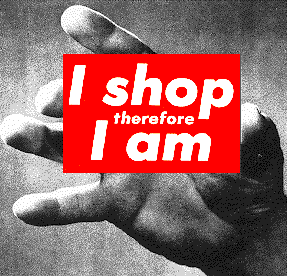
There are many fundamental social, economic and cultural forces shaping our world today, often interlinked in complex ways, and consumerism is surely and obviously one of them. A process which actively encourages the purchase of goods and services, does consumerism allow a person to convey their freedom through buying luxuries or does it disturbingly represent superficial and materialist societies who care for nothing more than their citizens' pleasures, worse still when poverty and economic instability continues to rule in less developed areas?

Consumerism is an international phenomenon with ancient roots, with people purchasing goods and buying materials in ancient societies in Rome, Egypt and Babylon. Consumer society, as we know it, first emerged in the seventeenth century, at a time when economic expansion was often linked with religious upheaval and social developments. The developing middle class, arguably first 'developed' during this period, embraced new and exciting ideas about luxury and consumption, leading to the rise of luxury goods such as sugar, tea, and coffee, brought in from the New World. This intensified in later centuries, eventually meaning that 'by 1920, most people [Americans] had experimented with occasional installment buying'. The term 'conspicuous consumption' originated in the early twentieth century, associated with Thorstein Veblen, an American sociologist and economist.  He identified the rapid processes of consumption as unnecessary, a superficial, if very obvious, means of displaying status and power in society and ensuring that class differences remained fixed. Consumerism was closely linked with European industrialisation from 1750 onwards, with the rise of new technologies and correspondingly improving living standards of the mass population. This led to a 'consumer' revolution in the period 1850-1914 in mass marketing, witnessing the opening of department stores and ubiquity of branded goods. 

Consumerism, as a controversial if highly visible phenomenon in both Western and Eastern societies, has generated astonishingly emotional responses, ranging from widespread delight to mass protests and vocal outrage. According to Peter Stearns, consumerism encountered doubts particularly in c1900; 'truly in the twentieth century... do mass protests against consumerism emerge', interestingly enough often outside the West. In the eighteenth century, consumerism was identified by hostile and concerned critics as being a cause of illness and decay, while others argued that luxury had the potential to 'drive a nation into decline'; views which are very startling to twenty-first century observers. Furthermore, consumerism was attacked by political and social groups as varied as the Nazis, socialists, anti-Semites, labour leaders and intellectuals during the 1920s, while anti-Americanism correspondingly increased, almost certainly because the USA served - and, from the perspective of some, continues to serve as - a symbol of consumerism on a global scale. 

Stearns suggests, however, that attacks on consumerism gradually receded in Western societies after the Second World War, but this is an interesting point. It's possible to argue that many remain hostile to all that is associated with consumerism - just look at Christmas. It's not only Christians who point out that this festival has lost its religious sense in every way, but even others with no religious perspective identify this worrying dilemma. As has been written: 'Christmas is a time of mass consumption... Christmas shopping is the cultural ritual through which we transform mundane, lifeless commodities into personal, meaningful gifts'. James G. Carrier, a scholar who has studied gift giving during the holiday season, wrote: 'The thing given at Christmas is a material object, usually a commodity bought in a crowded, garishly decorated store... on the one hand it is a commodity purchased for money in an impersonal transaction, and on the other it is a gift given to express affection in a personal relationship'. It's clear, therefore, that consumerism is highly complex and can be interpreted in multiple and diverse ways. Does it allow and express warmth, familial affection, and love for friends and neighbours, or is it an entirely self-centred and selfish enterprise which has destroyed traditional values?

Of course, it's interesting to study the development of consumerist societies over the last decade or so and consider how the general public have responded to it. While the USA is closely associated with consumption, emerging in the early twentieth century, this does not at all mean that it's been warmly embraced by all American citizens as a welcome aspect of life. Business leaders, for instance, according to Lisbeth Cohen, identified entitled consumers as a threat, since they were able to secure protections in the market place and leverage in government. Issues of race, class and gender were intertwined, since there was undoubtedly hostility towards the increasing influence of black women as consumers while African Americans became increasingly mobilised as consumers during the 1930s. During this period, too, thousands of American women joined together to protect their families from declining living standards and forms of exploitation in the market place, thus making an important contribution to the development of a consumerist society. Linking this with gender, consumerism profoundly impacted upon modern femininity in interwar Britain and America, with women enjoying a degree of freedom through buying and using corsets, cars, and cigarettes; according to Tinkler and Warsh important symbols of modernity and meaning that women became located 'at the heart of consumer culture'. Cigarettes became more popular and available from the 1880s and by the 1930s it was more and more fashionable for middle- and upper-class women to smoke as a pastime. This, also, along with cars, was seen to offer a woman freedom in breaking with gender norms and inequalities associated with gender relations which had characterised the preceding century.

On some level, consumerism has to be appreciated in allowing forms of freedom in the modern world. We are able to utilise consumption to be creative, through our use of fashion, music, our hobbies, our lifestyle, our holidays, our modes of travel, our living conditions... the list goes on. It could be argued that consumerism fosters and encourages unrivalled creativity. On the other hand, it surely reveals and exacerbates class tensions and inequalities, for consumerism is experienced very differently by different social groups in different regions. The examples provided evidence how gendered and race-related consumption is. Issues of poverty and inequality are fundamental to modernity, particularly today when one considers the appalling living conditions in societies in Africa, Asia and even some parts of the Americas and Europe. Yes, citizens are able to enjoy unprecedented freedom, but what does this mean for our societies? Trentmann has suggested that by the end of the nineteenth century there was widespread anxieties about 'the erosion of nation, culture, and social hierarchy by the commercial world', and while we may interpret the effects of consumerism in a very differing way, it cannot be denied that consumerism encourages materialism, competition, and above all, selfishness. A cliche and perhaps overused example, yes - but consider Christmas. Or even Valentine's Day. I was shocked to read that the average American spends over $100 on a Valentine's present for their loved one! Is this really necessary? Surely love is priceless and can be demonstrated more intimately in a less materialist fashion. A ubiquitous and fundamental part of the modern world - but that doesn't necessarily mean that consumerism is entirely welcome or advantageous.