Showing posts with label edward v. Show all posts

Thursday, 14 April 2016

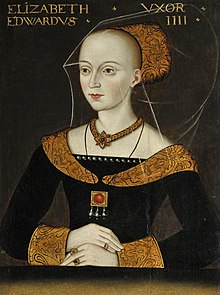
The Children of Edward IV and Elizabeth Wydeville


The marriage between the first Yorkist king, Edward IV, and Elizabeth Wydeville was highly controversial in the fifteenth-century. There were doubts over its legitimacy, and some modern historians believe that Edward's first marriage to Lady Eleanor Butler rendered the Wydeville marriage invalid. This blog post does not seek to explore whether Edward's marriage to Elizabeth was valid or not. Rather, it is concerned with the offspring of the Wydeville marriage. 

Queen Elizabeth proved to be a fertile bride. In nineteen years of marriage, she gave birth to ten children: seven daughters and three sons. All of the sons died young, and two of the daughters did not live to adulthood. The eldest child, Elizabeth, became Queen of England in the summer of 1485, when she married Henry VII, the first Tudor king. Her brother was Edward V, who had been imprisoned in the Tower of London with his younger brother Richard when their uncle, the duke of Gloucester, usurped the throne in 1483. Mystery surrounds the fates of the 'Princes in the Tower', as they came to be known. Most modern historians believe that they were likely dead by the autumn of 1483. 

Queen Elizabeth Wydeville was close to her children, particularly her eldest daughter Elizabeth. This blog post explores the lives of the children of King Edward IV and Queen Elizabeth. 

Elizabeth of York (1466-1503)

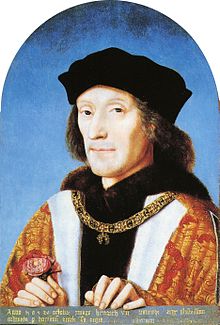
The eldest child of King Edward and Queen Elizabeth was a daughter. She was born at Westminster Palace on 11 February 1466, and was named for her mother. While young, Elizabeth was briefly betrothed to George Neville, first duke of Bedford. This was not the match that the king and queen had envisaged for their eldest daughter, but the match was proposed with a view to continuing the friendship between the house of York and the Neville earls of Warwick. When George's father joined forces with his brother, the 'Kingmaker' duke of Warwick, the betrothal was called off. In 1475, in alliance with Louis XI of France, King Edward arranged a betrothal between his daughter and Charles, the French dauphin. It would have been a splendid marriage for Elizabeth, had it have gone ahead, and it would have enabled her to become Queen of France. However, it was not to be. Elizabeth's father died in 1483, and following the accession of her uncle Richard, Elizabeth accompanied her mother into sanctuary, with her other siblings. A year later, Elizabeth left sanctuary with her sisters, and they arrived at court. It is likely that they resided in the household of Queen Anne. Rumours of the queen's imminent demise fuelled speculation that King Richard was planning on marrying his niece. Whether Elizabeth truly considered marrying Richard is a mystery, and has been furiously debated by historians. It is entirely likely that she did scheme to marry her uncle, but ultimately his death at Bosworth in 1485 compelled her to honour her prior agreement to marry Henry Tudor, who had become king. 

Elizabeth and Henry, to all appearances, enjoyed a warm and loving marriage. Elizabeth gave birth to seven children; three of them survived to adulthood. She appears to have been a popular queen consort and was praised for her acts of intercession. Mystery surrounds much of Elizabeth's life. We do not know the true nature of her relations with her resourceful mother-in-law, Lady Margaret Beaufort. Nor do we know whether she really believed that her younger brothers had been murdered. Whether she loved Henry or not, she was a dutiful wife and a loving mother to their children. She died in 1503, on her thirty-seventh birthday. Her son, who later became Henry VIII, was said to have been devastated by her death.

Mary of York.JPG
Mary of York (1467-1482)

Mary was the second child of Edward and Elizabeth. She was born on 11 August 1467 at Windsor Castle. Very little is known about her. There were rumours during her childhood that she would marry John, the Danish king. In 1480, at the age of thirteen, she became a Lady of the Garter alongside her younger sister Cecily. Mary died on 23 May 1482 at the age of fourteen. She was buried at St. George's Chapel at Windsor Castle, where her parents would later be buried. Her early death meant that Mary did not experience the drama of the following year, when her father died, her brother was deposed and her uncle became king.

Cecily of York (1469-1507)

Cecily of York's life is one of drama. The events of her life suggest that she seems to have been a strong-minded, impulsive woman. Cecily was born at Westminster Palace on 20 March 1469, and was likely named after her grandmother, the duchess of York. At the age of seven, she was betrothed to the future James IV of Scotland. Cecily would have grown up believing, at least for a time, that it was her destiny to be Queen of Scotland. However, it was not to be. In 1482, when Cecily was thirteen, she was betrothed to Alexander Stewart, duke of Albany. However, the death of Edward IV the following year put paid to any hopes Cecily may have had of marrying Albany. On her uncle Richard III's orders, she and her siblings were declared illegitimate, on the grounds that the marriage of Edward and Elizabeth Wydeville was invalid. However, Richard knew that Cecily remained attractive as a prospective bride. To counter this, he arranged for her to marry Ralph Scrope of Upsall, a younger brother of Richard's supporter Thomas Scrope. It was surely not a match that Cecily had desired; given that she had been betrothed at one time to the heir to the Scottish crown, it is entirely possible that she was bitterly disappointed, perhaps even resentful. 

Henry VII's accession, however, changed Cecily's fortunes. The Scrope marriage was annulled and, two years after Richard III's death, Cecily remarried. Her second husband was John Welles, first Viscount Welles, who was a maternal half-brother of Lady Margaret Beaufort and was, therefore, half-uncle to Henry VII. Again, it was probably not the match that Cecily had wanted, but it is possible that the couple were happy. They had two daughters, Elizabeth and Anne, both of whom died young. Viscount Welles died in around 1498. 

It is in the aftermath of her second husband's death that we are able to gain an insight into Cecily's personality. One commentator reported that she chose to marry for a third time for 'comfort': perhaps she sought love, or stability. Her third husband was an obscure Lincolnshire esquire, Thomas Kyme. It seems to have been a love match. However, Cecily was reckless in failing to secure Henry VII's consent to the marriage, which she was required to do, as a member of the royal family. The king was furious and banished his sister-in-law from court. Lady Margaret, who appears to have been fond of Cecily, interceded for her and some of Cecily's lands were restored to her. Cecily died in 1507 at the age of thirty-eight, and she was buried at Hatfield, Hertfordshire. 
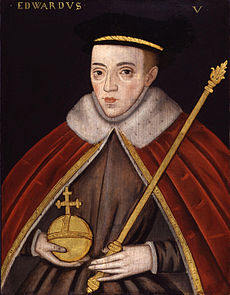
King Edward V from NPG.jpg
Edward V (1470-1483?)

The eldest son of King Edward and Queen Elizabeth was born on 2 November 1470 in Westminster Abbey. The queen had sought sanctuary after the Lancastrians had forced the king to flee his realm. However, King Edward emerged victorious and the prince was brought out of sanctuary. He was created Prince of Wales the following year. Prince Edward was reputedly learned, diligent, and dignified.

The birth of a son to the royal couple was highly important: it brought security to them, and offered the promise of future prosperity as well as the continuation of the dynasty. However, it was not to be. When he was only twelve years old, Prince Edward became King Edward V, upon the unexpected death of his father. However, his uncle Richard seized the throne. Edward was lodged in the Tower of London alongside his younger brother Richard, duke of York. Like his siblings, the new king was declared illegitimate and unfit to succeed to the throne. 

Mystery surrounds Edward's fate. Contemporaries speculated a great deal about what had happened to him. Some outright accused King Richard of murdering him and his brother. Others believed that the king had died in the Tower from illness. The majority of modern historians believe that Edward was dead by late 1483, which if true would mean that he never reached his fourteenth birthday (and possibly not his thirteenth). Edward V is one of the shortest reigning monarchs in English history.

Richard of Shrewsbury.jpg
Richard, duke of York (1473-1483?)

Richard was born on 17 August 1473 in Shrewsbury, and may have been named for his grandfather Richard, duke of York; alternatively, he may have been named for his uncle, Richard, duke of Gloucester. At the age of four, Prince Richard married the five-year-old Anne Mowbray, countess of Norfolk, at Westminster in January 1478. This appears utterly bizarre to modern readers. The marriage occurred on account of the king's determination to secure the Mowbray estates. Anne died in 1481, and her estates should have passed to William, Viscount Berkeley and to John, Lord Howard. However, an act was passed in 1483 that granted the Mowbray estates to Prince Richard for his lifetime, and to his heirs, if he had any, when he died. The whole episode was an example of King Edward IV's capacity for rapacity and ruthlessness when it came to acquiring greater wealth.

The declaration made in the spring of 1483, following Edward IV's death, that the children of the Wydeville marriage were illegitimate on account of their father's previous marriage to Lady Eleanor Talbot, rendered Prince Richard a bastard. The prince was escorted to the Tower of London, to join his brother, Edward V. Most historians believe that Richard was killed on the orders of King Richard; others suggest that he was put to death, but on another individual's orders: possibly Henry Tudor; possibly the duke of Buckingham; or possibly Lady Margaret Beaufort. 

However, others believe that Richard escaped abroad. One line of thought posits that the pretender Perkin Warbeck, who was a menace to Henry VII, was actually Richard, duke of York, come back to claim his inheritance.

The Daughters of Edward IV.jpg
Anne of York (1475-1511)

Anne was born on 2 November 1475 at Westminster Palace. In the summer of 1480, her father signed a treaty agreement with Maximilian I, duke of Austria, and it was agreed that Anne would marry the duke's eldest son Philip. This would have been a most prestigious marriage for Anne, for it would have enabled her to become duchess of Burgundy. Following Richard III's accession, the nine-year-old Anne was betrothed to Thomas Howard (later the uncle of Anne Boleyn and Katherine Howard) in 1484. Even after Richard's death, Howard remained eager to marry Anne. They married at Westminster Abbey on 4 February 1495. None of their children survived. 

Anne was close to her sister Queen Elizabeth, and like her sister Cecily, she played an important role in court ceremonies. She carried the chrisom at the christenings of her nephew Arthur, in 1486, and niece Margaret in 1489. Anne died on 23 November 1511 and was buried at Thetford Priory in Norfolk. Later, her body was moved to the Church of St Michael the Archangel in Framlingham.
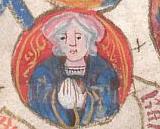
Katherine of York.jpg
Katherine of York (1479-1527)

Aside from her sister Elizabeth, Katherine of York made the best marriage of any of the York children. She was born on 14 August 1479 at Eltham Palace. In childhood, Katherine had been betrothed to Juan, the heir to the kingdoms of Castile and Aragon (he was the older brother of Katherine of Aragon). Upon Henry VII's accession, Katherine was betrothed to James Stewart, duke of Ross. The same agreement envisaged marrying Katherine's mother, the dowager queen Elizabeth Wydeville, to James III of Scotland. These plans came to nothing, and in 1495, the same year her sister Anne married Howard, Katherine married William Courtenay, earl of Devon. 

Again, it may not have been the marriage that Katherine had wanted, but it ensured that she was a countess. They had three children: Henry (who was executed in 1539 for plotting against Henry VIII); Edward (who died young); and Margaret (who married Henry Somerset, earl of Worcester). Her husband died in 1511. Following his death, Katherine swore a voluntary vow of chastity in the presence of the bishop of London. She was reportedly favoured by her nephew Henry VIII, who 'brought her into a sure estate'. Katherine died on 15 November 1527 at Tiverton Castle, the last of Edward IV's children to die.

BrigĂ­daYork01.JPG
Bridget of York (1480-1517)

Bridget was the youngest child of King Edward and Queen Elizabeth. She was born on 10 November 1480 at Eltham Palace. It is likely that Bridget was named after St. Bridget of Sweden. It seems that the king and queen decided, while Bridget was still young, that their youngest daughter would follow a religious life. At an unknown date between 1486 and 1492, when she was between the ages of six and twelve, Bridget was entrusted to Dartford Priory in Kent. Her sister, Queen Elizabeth of York, continued to write to her and send messengers. Bridget attended the funeral of her mother, Elizabeth Wydeville, in 1492. She died in 1517, and in some respects is the most obscure of Edward IV's daughters.

Children who died young
Margaret of York (born and died 1472)
George, duke of Bedford (1477-1479)

Margaret of York was born on 10 April 1472 at Winchester Castle in Hampshire. She was likely named for her aunt, Margaret, duchess of Burgundy. Tragically, Margaret died at the age of only eight months, on 11 December 1472. She was buried in Westminster Abbey.

George of York was born in March 1477 at Windsor Castle. The following year, he was created duke of Bedford. The dukedom of Bedford had long been associated with the royal family. That same year, George was appointed lord lieutenant of Ireland. He died in 1479 at the age of two, perhaps from plague, and was buried in St George's Chapel at Windsor Castle, where his parents were later buried. 

Wednesday, 9 April 2014

9 April 1483: The Death of Edward IV


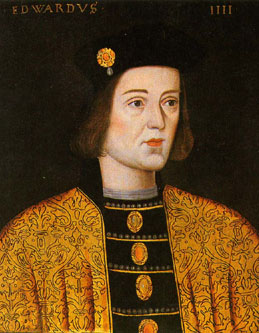
Above: Edward IV, king of England (1442-1483).

On this day in history, 9 April 1483, King Edward IV of England died. He had been king of England for twenty-two years, barring a six month period when his predecessor, Henry VI, briefly resumed his kingship. The first Yorkist king of England, Edward's first reign (1461-70) was marred by violence and continuing political and dynastic tensions as a result of Edward's unpopular marriage to Elizabeth Woodville, his fallout with the 'Kingmaker' earl of Warwick, and the continuing threat from the Lancastrians. But his second period of kingship, 1471-83, was comparatively more successful and can be termed a period of peace as the threat from the Lancastrians fell away following the death of Henry, the defeat of his controversial queen Margaret of Anjou and the death of their prince Edward of Westminster in battle.

Edward had been born in 1442 in Rouen, France; the second child of the third Duke of York, Richard Plantagenet, and his resourceful wife Cecily Neville. Edward was the eldest of four sons who survived to adulthood. The fifteenth century was a turbulent and violent period as English dynastic politics became increasingly uncertain and faction-driven as a result of the Lancastrian king Henry VI's ineptitude. The loss of English possessions in France, so hard-won by his much-famed father Henry V, were viewed with consternation and outrage in England, and the nobles, led by York, became increasingly vocal in their demands for the king's unpopular advisers, including the earl of Suffolk and later the duke of Somerset, whom they blamed for England's mounting crises, to be removed from power.


Above: Edward IV's coat of arms.

Edward was a handsome and energetic young man, famed for his good looks and personality. He was 6'4 and as a result was England's tallest king. In the 1450s, he came to play an increasingly important role in his family's dynastic conflict with the Lancastrians. His father, the duke of York, asserted his claim to the English throne in 1460, but he died at the Battle of Wakefield later that year. As a result, his claim passed to his teenage son, Edward. Edward's position in the mounting conflicts therefore became increasingly pivotal. In alliance with his kinsman the Earl of Warwick, Edward defeated the Lancastrians in several battles, including the bloodiest battle fought on English soil, Towton, in March 1461. Edward, at the age of nineteen, became king shortly afterwards.

ElizabethWoodville.JPG
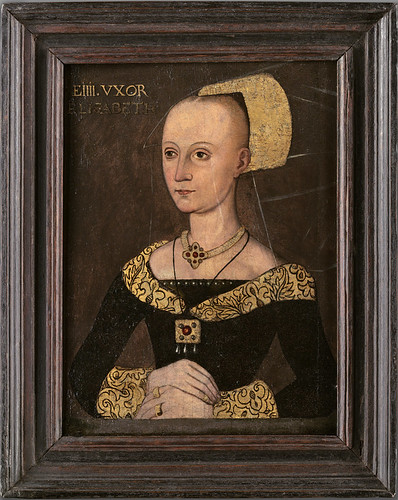
Above: Edward's queen, Elizabeth Woodville.

However, Edward's reign did not begin particularly well due to the development of conflict with his former erstwhile ally, the Earl of Warwick. Following Edward's accession to the throne, the Earl had negotiated with the French king for Edward to marry his daughter, Anne of France, in an alliance that would enhance England's prestige and allow it to play a major role in European politics. However, Edward disrupted these plans by marrying the commoner Elizabeth Woodville, a Lancastrian widow in her late twenties. This misalliance outraged the earl and caused some consternation at court. It is possible that the king's mother, the formidable Cecily Neville, disapproved of the match. Most historians believe that the King was infatuated with Elizabeth, whose beauty was legendary, although there were, unsurprisingly, rumours that she had ensnared him by use of the black arts.

The new marriage caused hostility amongst the nobility, who resented the Woodville's lowborn origins. Worst of all, Elizabeth had numerous siblings, who were quickly married off to the most powerful nobles in attempts to bolster their power and enhance their prestige. This further alienated the earl of Warwick, who had hoped to marry his two daughters and heiresses Isabel and Anne to nobles. Warwick eventually turned against the king, acting in alliance with Edward's younger brother George duke of Clarence, who had come to resent his brother's policies. Warwick eventually captured the king following the Yorkist defeat at the Battle of Edgecote Moor in July 1469, but because he did not attain the support he had hoped for, the earl was forced to release Edward in September. The king sought reconciliation with his brother and Warwick, rather than executing or imprisoning them as traitors. Warwick, however, sailed to France and allied himself with his former enemy Margaret of Anjou, acting together with the support of the French king. The alliance was cemented by the marriage of Warwick's second daughter, Anne, to Margaret's son, the Lancastrian heir Edward of Westminster.


Above: Richard III, younger brother of Edward IV.

Following Edward's defeat in 1470, the Lancastrian king Henry VI, who had briefly fell into insanity in the late 1450s, was restored to the throne. Edward, however, managed to attain support from the duke of Burgundy, who was married to his younger sister Margaret. Edward returned to England and obtained the support of his people as he steadily moved through the country unopposed. His brother George returned to his side, having been alienated by his unfavourable fortunes following Henry's readeption. The Yorkist king entered London unchallenged, taking Henry VI prisoner. Warwick was defeated at the battle of Barnet in 1471, and the Lancastrian prince was killed at the battle of Tewkesbury that same year. Henry VI was almost certainly murdered at the Tower of London in May 1471, and his shamed and humiliated wife Margaret was forced to seek sanctuary in France. No longer were the Lancastrians, in the persons of Henry and Margaret, a threat to the victorious Yorkist dynasty.

Edward's second half of his reign, comprising twelve years, were peaceful. He faced no more rebellions and sired ten children by his wife Elizabeth, whom he enjoyed a loving and affectionate relationship with, although like many men in this age he took mistresses, including the beautiful Jane (or Elizabeth) Shore. Edward became increasingly gluttonous, however, and his weight expanded during the later years of his reign. Dynastic tragedy did occur, for George was executed in 1478 on grounds of treason. On 9 April 1483, less than three weeks before his forty-first birthday, he died. He had named his younger brother Richard (whom he seems to have trusted more than the disgraced George) as Lord Protector during the reign of his successor Edward V, who was a minor. There is uncertainty surrounding the exact cause of Edward's death, although both pneumonia and typhoid have been suggested.

Edward was an extremely popular and successful king. He outshone his predecessor, the saintly if ineffectual Henry VI, and appeared similar to the glorious Henry V. Later, similarities would be drawn between the first Yorkist king and his grandson Henry VIII. He was a spectacular military commander - he was never defeated in battle. His reign saw the restoration of law and order in England that had been notably absent in the conflict-riven reign of his predecessor. Edward managed his finances well and ensured stability in his household. His court was praised as "the most splendid in all Christendom", as the reports of contemporary ambassadors attest. He was interested in fashion and architecture, and knew how to project images of himself as a godly monarch. He was also interested in literature and education - more than forty of his books survive today. To all intents and purposes, Edward enjoyed a successful and prosperous reign. The Yorkist dynasty would, however, be marred by the haunting disappearance of his two sons Edward and Richard. To this day, no-one knows for certain what happened to those two little boys.

File:Princes.jpg
Above: the Princes in the Tower. What happened to Edward IV's sons?

Sunday, 14 July 2013

The Princes in the Tower


The fate of the two Princes in the Tower, the eldest sons of Edward IV and his queen Elizabeth Woodville, is one of the greatest mysteries in history. Shrouded in controversy and mystery, historians and researchers fiercely disagree as to who was responsible for their deaths; debating as to whether both princes died; whether one, or both, in fact survived; and, unsurprisingly, this scandal has impacted profoundly on those associated with it, including two English kings, Richard III and Henry VII.

This article will examine the events which led to Richard III's accession and will explore the fate of the two Princes, considering the main suspects for their murders - if, that is, they were even murdered at all. The surviving evidence is intriguing, but entirely contradictory, and one has to take into account the political, social and dynastic bias of the writer, whether it was a Tudor apologist bent on demonising Richard, or a contemporary observer writing in a foreign country, detached from English events.

It was a shock for everyone when Edward IV died aged forty-one in April 1483, allegedly of a fever. This Yorkist king's reign had seen comparative peace and tranquillity in England following the dynastic troubles which had plagued the 1460s and 1470s, known by the later name Wars of the Roses. Edward had fathered at least 8 children with his queen Elizabeth, of whom his eldest son, Edward, aged twelve, had been heir and now England's king. However, the fact that the new king was a minor spelt trouble for contemporaries, for the rule of minor kings led inevitably to greater factional conflict and fierce rivalry over control of the child king. This, perhaps, may have greatly influenced the actions of both Edward's mother and his uncle, Richard duke of Gloucester.

In May 1483 the new king arrived in London for his coronation, weeks after the death of his father, and was accommodated in the royal residence of the Tower of London, while his younger brother Richard resided in sanctuary with his mother the queen and several of his sisters. They had journeyed there after hearing alarming news which suggested that Elizabeth's brother-in-law, Richard of Gloucester, had intercepted the king's journey from Ludlow in Wales and had seized the king's uncle Anthony Woodville and the queen's youngest son by her first marriage Richard Grey.

It seems certain that Richard of Gloucester feared for his own future, for the Woodvilles were powerful, greedy and notoriously intolerant. He may also have genuinely believed that his brother Edward's marriage to Elizabeth was invalid, for he claimed that it had been brought about by witchcraft and sorcery, and also suggested that Edward had in fact been previously precontracted to one Eleanor Butler, which meant that Elizabeth Woodville was never his lawful wife. Consequently, their children were illegitimate and not fit to inherit the throne of England. By this thinking, then, Richard of Gloucester was England's rightful king.

It is essential to critically examine later Tudor propaganda, which alleged that Richard III was a monster and a murderer. I, personally, do not believe that the moment King Edward died, Richard, as a scheming and essentially evil character, decided to seize the throne of England and murder his nephews. I believe that he genuinely feared the Woodvilles and, consequently, was scared for his own future, and it is entirely possible that he did believe that his brother's marriage to Elizabeth was invalid by reason of his earlier pre-contract. If this was true, then Richard was entitled to be king of England, as shocking as it may seem.

As Sarah Gristwood writes in her book Blood Sisters (2012):

"The majority of historians from Vergil and More onwards have believed that Richard III murdered his nephews; and thanks largely to Shakespeare, it has become the accepted view among many who care nothing for history. A vocal minority are utterly convinced he was not guilty, while propounding various alternative versions of the boys' fate. Others again believe it is virtually impossible to be certain, which makes it wrong to declare Richard guilty. In that uncertainty the writer's most honourable option is simply to present both the few known facts, and the relevant theories".

Contemporary historians fiercely and angrily dispute who killed the Princes in the Tower - as Gristwood says, most continue to believe, subscribing to persuasive Tudor propaganda, that it was their evil uncle, the hunchbacked and deformed Richard III (although the recent excavation at Leicester somewhat disproves this). Others, however, suggest it was someone entirely different. So what is the 'truth', if that can even ever be recovered?

One needs to put the events in context. Having seized the throne, Richard ordered it to be preached by a Dr Shaa at St Paul's Cross that Edward IV's marriage was invalid, rendering all his children (including his daughters living in sanctuary) illegitimate. By all accounts, what we know is that the Princes were last seen, for certain, playing in the grounds of the Tower in the summer of 1483 (the younger prince, Richard, having been sent out of sanctuary by a very reluctant Queen Elizabeth to join his brother in the Tower). Dominic Mancini stated that both princes 'were withdrawn in the inner apartments of the Tower proper, and day by day began to be seen more rarely behind the bars and windows, till at length they ceased to appear altogether'. In 1674, ominously, two skeletons were discovered under the staircase leading to the chapel within the Tower of London, and in 1933 the grave was opened (the two bodies having been buried, on the orders of Charles II, in Westminster Abbey), and the skeletons were determined to be those of two young children, aged about seven to eleven and eleven to thirteen. The two princes, if they died in 1483, would have been aged 12 and 10. Moreover, the fact that they were buried in Westminster Abbey, where royals were traditionally buried, indicates that, at least in the seventeenth century, the king and others believed the bodies to be of the princes.

So, firstly, it would be wise to consider the main suspect: Richard III. Some have argued that he had no need to kill his nephews, for he had already had them declared illegitimate - since they were bastards, neither could inherit the throne, so why should he need to have them dead when they were safely imprisoned? But, as historian Amy Licence notes: '... the princes' royal blood made them dangerous claimants to the throne, to whom many of their father's former staff would prove unfailingly loyal... Richard may have hoped that the problem of the two little boys may simply have disappeared. They did, but the problem didn't.'

Those who believe that Richard had no need to kill his nephews are somewhat misguided, for one needs only to consider the bloodshed of the Wars of the Roses to understand just why he may have felt he would only be secure with both boys dead. While they were alive and imprisoned, they would always be the focus for future rebellions which aimed to restore either boy to the throne as the rightful king, and one only needs to look at the example of Richard's brother Edward, who had had King Henry VI killed on his orders, obviously not feeling secure enough about his own claim to the throne. Edward had also had his own brother George duke of Clarence executed for treason - family connections did not prevent execution. It is possible that Richard ordered a loyal servant to dispose of his two princes, as suggested in Shakespeare's play. The suspect, for a long time, has been Sir James Tyrell, for he is known to have made a confession in 1502 which admitted that he had killed the two princes. This Tyrell was actually in London in the late summer and early autumn of 1483, when the boys were last seen alive for certain. Moreover, Licence suggests that, when Richard discovered that a loyal servant, perhaps Tyrell, had murdered both boys, he may have visited Canterbury Cathedral soon afterwards to make his peace with God, as a highly religious man.

There is evidence to suggest that Tyrell was the murderer of the princes, although since it was produced much later by observers writing in the Tudor age and thus hostile to Richard, it must be regarded as suspect. Polydore Vergil, who loathed Richard, claimed that Tyrell 'rode sorrowfully to London' to commit the deed on the orders of King Richard, while Richard himself later spread rumours of his nephews' deaths in the hope that it would discourage future rebellion. Thomas More, who vilified Richard to a shocking degree, also claimed that Tyrell had murdered the boys on Richard's orders, before confessing to his crime in the reign of Henry VII.

It seems that the most compelling reason to believe Richard was guilty of his nephews' deaths was the simple fact that he never publicly produced them, to prove that they were still alive, and to counter rumours which spoke of their murders. Furthermore, Richard promised the safety and security of the princes' sisters, but he gave no such assurances for their brothers, which suggests that they had been done away with by this time. Henry VII, when he acceded to the throne, accused the former king of "shedding of Infants blood" in a Bill of Attainder brought against the dead Richard, which probably directly accuses him of the Princes' murders. The Danzig Chronicle of 1483 alleged that 'Later this summer [1483] Richard the king's brother seized power and had his brother's children killed, and the queen secretly put away'. The French chancellor Guillame de Rochefort, in a speech on 15 January 1484, recounted how Edward IV's sons 'have been put to death with impunity, and the royal crown transferred to their murderer by the favour of the people'.

Many modern historians, including Alison Weir, Michael Hicks, and David Starkey, agree that Richard was the culprit. Further rumours alleged: Richard 'put to death the children of King Edward, for which cause he lost the hearts of the people. And thereupon many gentlemen intended his destruction'. The major problem is, however, that much of the surviving evidence which suggests Richard was the culprit was produced in the Tudor age, when Richard was vilified as a tyrant and a monster, and was therefore hardly objective. For instance, the historian Bernard Andre, writing in the sixteenth century, claimed: 'the entire land was convulsed with sobbing and anguish. The nobles of the kingdom, fearful of their lives, wondered what might be done against the danger. Faithful to the tyrant [Richard] in word, they remained distant in heart'. Philippe de Commines categorically confirmed that Richard III was responsible for the princes' deaths.

The fifteenth century was a troubled age, comprised of dynastic conflict, murder, treason and betrayal. Richard III would not have been unusual had he put to death his own relatives. Let us consider the fact that there were at least 5 other monarchs around this time who did the same thing:

Edward IV - put to death his own brother, George duke of Clarence, and probably ordered Henry VI's murder.
Henry VII - put to death his wife's relatives Edward earl of Warwick and Edmund earl of Suffolk.
Henry VIII - executed the 'White Rose' faction (members of the Pole family); also executed 2 of his queens.
Mary I - executed her own cousin, Lady Jane Grey.
Elizabeth I - executed her cousin and rival Mary Queen of Scots.

It would not have been unusual if Richard had ordered the murder of his 2 nephews. I do not subscribe to the Tudor propaganda which presents Richard as evil, deformed, corrupt and ungodly. But I do think that, in this period, a person did not have to be evil to commit an act of murder.

However, there might be other evidence which intriguingly suggests that Richard was not, in fact, the culprit for the murders of his nephews. Some have suggested that it was, in fact, Margaret Beaufort, mother of Henry VII. She would clearly have had a motive, for if the two princes were to die, then her son would have an even stronger claim to the English throne. He was betrothed to their sister Elizabeth of York, yet if they remained alive, they would both have a greater claim to be king than he would, even if he were to marry their sister. The seventeenth-century antiquary George Buck apparently read 'in an old manuscript book' how it was believed that Margaret and her friend Bishop Morton 'conspiring the deaths of the sons of King Edward and some others, resolved that  these treacheries should be executed by poison and by sorcery'. Helen Maurer, a historian, also favours Margaret as the culprit.

However, Buck was one of Richard III's earliest and most vocal defenders, and so would have claimed that it was someone from the enemy camp who had committed such a shocking deed. It is also noteworthy, as Weir notes, that Richard's own relatives never accused Margaret of murdering the princes - Margaret of York, his elder sister and former Duchess of Burgundy, who loathed Henry VII, never accused Margaret, while she was not even named by other contemporaries. Furthermore, we do not even know Margaret's whereabouts during the summer of 1483 for certain - she may not have been in London at the time. Margaret also, at this time, was probably in a secret alliance with Queen Elizabeth, plotting to marry her son Henry to Elizabeth's daughter, and if Margaret was simultaneously planning to murder Elizabeth's sons, it is inconceivable that the Queen would have co-operated and worked together with Margaret.

Was the murderer in fact Henry Tudor, future king of England? He was not actually residing in England in the summer and autumn of 1483, instead being a fugitive in Brittany as he plotted to usurp the throne from Richard with the aid of his mother. Gristwood seems to believe that he may possibly be responsible:

'If Henry were to bolster his own genealogically weak claim with that of Elizabeth of York, he needed the princes dead. If the whole family were declared illegitimate, then Elizabeth had no claim. If they were legitimate, her brothers' claim would take precedence over hers for as long as they lived. What is more, while the assumption of Richard's guilt depends on a posthumous reputation for savagery it was Henry VII (and later Henry VIII) who would, one by one, eliminate all the rival Yorkist line with chilling efficiency'.

Gristwood certainly had a point, for Henry VII would later order the executions of the nephew of Richard, Edward earl of Warwick, and also had executed Perkin Warbeck, a pretender (but whom, some believe, may actually have been the younger of the two Princes). Henry VIII was similarly ruthless in the 1530s. However, no surviving source material from the time actually suggests that Henry was believed to be the culprit. True, Tudor historians would hardly have dared to have challenged their king and accused him of murder, but no foreign sources written on the Continent connected Henry Tudor with the Princes' murders. Even Margaret of Burgundy, who continually plotted against him, never accused him of her nephews' deaths.
Some actually believed that Henry avenged the princes' deaths. The Crowland Chronicler, for instance, wrote how 'the children of King Edward' had been 'avenged' at Bosworth in 1485 through Henry's victory and Richard's death.

Furthermore, Henry's only real opportunity to murder the two Princes would have been on his accession in 1485, for he had been dwelling in Europe prior to that. By all accounts, however, the two boys were last seen in the autumn of 1483 - almost 2 years previously. It is, admittedly, possible that Henry ordered one of his servants or a loyal supporter to travel to England and commit the deed, but there is no evidence of this.

Others suspect that it was Richard's former supporter, the Duke of Buckingham, who had the Princes murdered. The contemporary Historical notes of a London citizen stated that 'King Edward the Vth, late called Prince of Wales and Richard Duke of York, his brother... were put to death in the Tower of London by the vise [advice] of the Duke of Buckingham' (although this does not actually mean that Buckingham himself killed the princes). The private secretary to the king of Portugal, Alfonso V, recounted how '...after the passing away of king Edward in the year of 83, another one of his brothers, the Duke of Gloucester, had in his power the Prince of Wales and the Duke of York, the young sons of the said king his brother, and turned them to the Duke of Buckingham, under whose custody the said Princes were starved to death'. Yet Buckingham had left the court on progress at Gloucester in early August, travelling to his residence, before leading a rebellion in Wales - there is no evidence that he was in London at the time.

Buckingham had become increasingly disaffected with Richard and had rebelled against him in the autumn of 1483, before being executed on 2 November. However, the rebellion may have been aimed at actually freeing the princes - so why would he then have killed them? But this becomes murkier when one considers that Buckingham himself had royal blood (he had also been the husband of one of Elizabeth Woodville's younger sisters, who he resented). Yet, as Weir notes, Richard never accused Buckingham of murdering his nephews before his execution for treason, which would have been a crime, and which he surely would have done if evidence had come forth suggesting Buckingham was responsible, thus deflecting from the rumours which linked Richard with their deaths. Moreover, The Great Chronicle suggested that rumours of the Princes' deaths did not circulate in London until Easter 1484, which if true, meaning that the Princes were still alive at the end of 1483, removes the possibility of Buckingham's culpability, for he had been executed in November 1483.

Overall, the evidence thus far seems to indicate that the traditional assumption that Richard was the culprit is probably correct. However, some revisionist historians believe that one, or both, of the Princes actually survived. A visitor from Silesia in 1484, Nicolaus von Popplau, recorded: 'many people say - and I agree with them - that they are still alive and kept in a very dark cellar', but of course, they might have been killed shortly afterwards. One might question, furthermore, how Poppau and 'many people' knew specifically that the princes were alive and kept in a cellar. Vergil reported rumours which suggested that they had been exiled to 'some secret land'. Historians such as David Baldwin believe that the younger prince, Richard Duke of York, actually survived, and became a bricklayer in Essex. Yet his evidence has not proved compelling.

Audrey Williamson, author of The Mystery of the Princes, suggested that Elizabeth Woodville left sanctuary because she was promised by Richard that both, or her younger son, would be allowed to join her and live with her. Williamson believes that the younger Prince may have later dwelt at Gipping Hall in Suffolk, along with other royal children. More intriguingly, this was the seat of the Tyrell family, whom Tudor historians believed was responsible for their deaths. But as has been stated, if either, or both of, the princes was sent to Gipping Hall, 'someone would surely have got to know about it... It is likely that several of those who served the Queen could have recognised her sons. Thus it would have been virtually impossible to keep the existence of the Princes a secret, especially in the face of rumours of their deaths'.

Other historians have suggested that one of the pretenders in the reign of Henry VII, Perkin Warbeck, may actually have been the younger prince, Richard. Throughout the 1490s, Warbeck invaded England, hoping to gain support for 'his' crown, supported by many European powers including Margaret of Burgundy, the Scottish king, and King Maximilian I. Margaret personally tutored Warbeck in the ways of the Yorkist court - of course, if this was actually her nephew, it explains her actions; but it is more likely that she knew he was an imposter but supported his venture against her sworn enemy Henry VII. Warbeck was reported to resemble Richard of York in his appearance (although one might question when anyone had last seen Richard alive, especially since he had only been a child of 10, whereas Warbeck was somewhat older). However, Warbeck later confessed to being an imposter, being of Flemish origin. This is somewhat confirmed by the fact that many of the family ties he recounted in his later confession have been backed up by the municipal archives of Tournai.

Certainly, by the autumn of 1483, it is likely that the elder prince was dead. Evidence suggests that he had been gravely ill, possibly suffering osteomyelitis, a bone disease. More seems to suggest that he may have suffered depression. Possibly, then, he died of natural causes, but his murder cannot be ruled out. It is significant that no pretenders ever claimed to be him - instead, it was his younger brother they chose to represent.

The evidence put forward here indicates that it is impossible to be certain what happened. Rumours are often untrustworthy, the evidence is contradictory, and much of it was compiled significantly later, in the age of the Tudors, by those hostile to Richard III and his legacy. However, it seems likely that both Princes died in the Tower by the end of 1483. Theories of one Prince's survival, or indeed both, are not convincing and do not put forward compelling evidence. For me, the most convincing evidence which suggests that both died within the Tower was the discovery of two corpses in 1674, clearly of children, who were about the same age as the Princes would have been. The only problem, of course, is the sex - they were not definitively known to be male. But then, who else could they be?

We will never know for certain just what happened to the Princes. But, taking everything into account, I would still tentatively put Richard as the culprit, believing that both boys were dead by the end of 1483. At least five other monarchs put to death people who they feared would take the succession from them. His own brother, Edward, ordered his brother George's execution. Henry VIII executed 2 of his wives, and several maternal relatives. His two daughters, Mary and Elizabeth, each executed a fellow queen and cousin. I do not think Richard was evil or corrupt, as Shakespeare presents him. But I think that he strongly wanted to be King of England. He was aware of his brother's popularity, and knew that, as long as his 2 nephews lived, they would always have the stronger claims to the throne, and would always be the focus for rebellion and dissent against his regime. Their deaths were necessary, even if he regretted them.