Showing posts with label henry tudor. Show all posts

Tuesday, 28 January 2014

28 January - Tudor Life and Tudor Death of Two Kings

File:Portrait of King Henry VIII.jpg
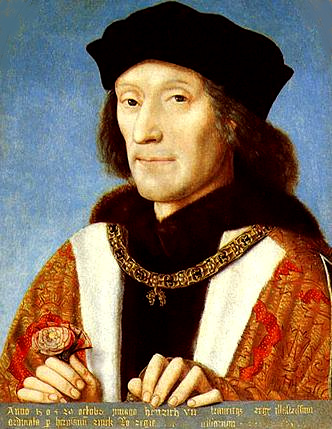
Left: Henry VII (1457-1509).
Right: Henry VIII (1491-1547).

28 January was a highly significant date for the first two Tudor monarchs, Henry VII and his second son Henry VIII. It marked the birthday of the Tudor dynasty's first monarch, in 1457, and ninety years later, it would be on 28 January that Henry VIII died, ending his turbulent 38-year reign. It's perhaps a touch ironic that these two milestones occurred on exactly the same day.

Henry Tudor was born on 28 January 1457 at Pembroke Castle, the only son of Edmund Tudor, earl of Richmond, and his formidable wife Lady Margaret Beaufort, who was barely thirteen when she gave birth to Henry. Edmund had died three months before his son's birth as a result of plague, a lethal killer in late medieval and early modern Europe. Margaret devoted her whole life to promoting the cause of her son, whom she believed to be England's rightful king. Loyal Lancastrians, the eclipse of Henry VI meant that Margaret became obsessed with the idea of her son resurrecting the rightful Lancastrian line in the person of his kingship. Eventually, her ambition came to fruition, and in 1485, at the age of 28, Henry Tudor became king of England after defeating Richard III, the last Yorkist king, at the Battle of Bosworth. He took to wife Elizabeth, daughter of Edward IV, with whom he sired at least seven children, four of whom lived to adolescence (his eldest son Arthur died at fifteen). In 1509, after a reign characterised by dynastic tragedy, political instability and the threat of renewed civil war, Henry died aged 52. He did, however, successfully allow the crown to pass to his son Henry without the outbreak of pretenders laying claim to it. An uncontested succession had not been experienced in England hitherto since 1422.

Henry VIII had been born in 1491. He was extremely close to his mother Queen Elizabeth, and her death in 1503, when the young prince was not yet twelve, appears to have severely affected him psychologically. His relations with his father were, famously, less cordial, and were at times overtly hostile. In 1509, just before his eighteenth birthday, he succeeded to the throne of England, and took to wife Katherine of Aragon, the former consort of Arthur. Her inability to provide a male heir, however, and the king's passion for Anne Boleyn led him to seek an annulment of his first marriage and a remarriage to the alluring Anne. Although this indeed came to pass, it inflicted the English Reformation on the people of England and was characterised by much bloodthirst and destruction in the wake of Thomas Cromwell's reforms. Mary and Elizabeth were born to Henry by his first two wives; and Jane Seymour finally provided the king with his long desired male heir in 1537, Edward. Three short marriages followed; although the king did manage to enjoy a peaceful and fairly untroubled final marriage to Katherine Parr. In 1547, at the age of fifty-five, Henry VIII died. Despite his military shortcomings, marital disasters, and difficult political decisions, Henry has remained one of England's most enigmatic and famous kings, and was extremely popular among his subjects. His children, particularly Elizabeth, delighted in him; although Mary may have been less close to her father than her two younger siblings. Henry's death paved the way for his nine-year old son Edward's succession, who was to die, tragically, before his sixteenth birthday in 1553.

Thus 28 January was a monumental day for the Tudor ruling dynasty. It began with an extremely difficult birth in a secluded castle in Wales, endured by a thirteen-year old girl who would prove unable to bear any more children. The child's father was not absent, having died months earlier. Ninety years later, in an exceptionally different political, religious and dynastic climate in England, that king's son died at the age of fifty-five, leaving behind a controversial legacy of religious turmoil, dynastic bloodshed, and personal charisma which continues to prove irresistible to modern audiences today.

Thursday, 22 August 2013

The Battle of Bosworth


Although the Wars of the Roses - known in the fifteenth century as the Cousins' War - had been raging intermittently and violently for the last 30 years, encompassing horrific battles at Towton, Barnet and Tewkesbury and more minor skirmishes across the country, the Battle of Bosworth on this day in history, 22 August 1485, was unquestionably the most significant battle of the lot. The Wars had seen three usurpations (Edward IV usurping Henry VI; Henry usurping Edward; and Richard III usurping Edward V), and Bosworth threatened a fourth usurpation: that of the relatively unknown Henry Tudor, earl of Richmond, who prepared to face England's controversial king, Richard III.

For many years the exact location of the Battle was controversially debated and questioned by both archaeologists and historians. Danny Williams, in 1974, developing the research of eighteenth-century historians, theorised that Richard's army gathered on the western slopes of Ambion Hill and marshes on the southern slopes, while Henry Tudor's forces approached from Whitemoors. The Stanley forces arrived from Near Coton. Williams suggested that the forces clashed west of Ambion Hill, near Shenton, where the Yorkist king eventually died.

However, Peter Foss (1985) disagreed with Williams' conclusions and believed that the battle occurred on low lying ground, Redesmore, which was situated between Ambion, Dadlington, Stoke Golding, Upton and Shenton. Richard's army assembled on a ridge southwest of Ambion Hill while Henry's troops gathered on Fenn Lane; the Stanley forces, meanwhile, gathered at Stoke Golding and Dadlington. Foss placed the actual battle north of Stoke Golding, on Fenn Lane. Michael K Jones, writing in 2002, disagreed, placing Henry's camp at Merevale since the Crowland Chronicle reported that Henry Tudor had provided compensation to Mancetter, Witherley, Atterton and Fenny Drayton for damage caused to crops during the battle. He put Richard's army between Merevale and Ratcliffe Culey. Jones concluded that the actual battle occurred in the area south and east of Ratcliffe Culey.

These conclusions were undermined by the 2010 archaeological survey funded by the Heritage Lottery Fund, using metal detecting, in which Glenn Foard, a Battlefields Trust archaeologist, located evidence to provide the true location of the battle: "the site, never before suggested as the battlefield, straddles the Roman road known as the Fenn Lane, near Fenn lane farm. It is three kilometres south-west of Ambion Hill and a kilometre west of the site suggested by Peter Foss." A silver gilt-boar, Richard's badge, was discovered, probably worn by a knight in the king's retinue during the battle. Silver coins belonging to Charles of Burgundy and the largest collection of round shot found on a medieval battlefield were also discovered.

Richard III had endured a controversial and difficult reign since first usurping the throne 2 years previously, following the premature death of his elder brother Edward IV. Whether Richard was ultimately responsible or not for the deaths of his two nephews, the 'Princes in the Tower', his unlawful usurpation of the Crown had caused scandal and outrage in England. While Richard had been successful in restoring law and order, and enacted successful financial and legal reforms, he continued to face rebellion and threats during his brief reign. These were headed by Henry Tudor, the young earl of Richmond who had been groomed by his uncle Jasper Tudor, with the assistance of Henry's ambitious and notorious mother Margaret Beaufort, with the intention of, one day, making him King of England. In promising to marry Elizabeth of York, daughter of Edward IV, once he had become king of England, Henry was able to enjoy support from English Yorkists, many of whom were disaffected with Richard and desired his usurpation.

Henry had first attempted to invade England in 1483, during the Duke of Buckingham's rebellion against King Richard, but stormy weather frustrated his attempts. However, Henry refused to give up, and on 7 August 1485 successfully arrived on the south-west coast of Wales, determined to claim his crown. Henry gathered crucial support on his journey through the country, although the support and allegiance of his mother's husband, Thomas Stanley, and his family proved less certain, even during the battle itself. As Henry was to recognise, their support was essential to his cause.

Richard, however, refused to renounce his throne without a fight, and mustered his own troops, which vastly outnumbered those of the Tudor pretender. He intercepted Henry's army south of Market Bosworth in Leicestershire in late August. John Howard, duke of Norfolk, and Henry Percy, earl of Northumberland, were among several powerful nobles who supported Richard's cause and served in his army. By contrast, Henry was able to rely on the support of John de Vere, earl of Oxford. Wary of the Stanleys, Richard took Lord Strange, son of Thomas Stanley, as hostage for his father's support during the battle.

The Yorkist army, which probably numbered around 10,000, assembled on the battlefield, with Norfolk's group of spearmen assembled on the right flank, protecting the cannon and 1,200 archers. Richard's group, encompassing 3000 infantry, formed the centre. Northumberland's 4000 men, most of them mounted, guarded the left flank. In contrast, Henry probably had fewer than 1000 English men in his army; historian John Mackie suggested in 1983 that 1800 French mercenaries, led by Philibert de Chandee, formed the core of the Tudor army. John Mair, writing in c1520, argued that many of the force were Scottish. In total, Henry's army encompassed some 5000 men. The earl of Oxford commanded his army and retired to the rear with his bodyguards.

During the battle, Richard's army held sway for much of it, and a Yorkist victory appeared inevitable during the early stages. Henry's troops were harassed by Richard's cannon as they sought to manoeuvre around the marsh. Norfolk's men and contingents of Richard's group advanced, with arrows attacking both sides as they advanced. Norfolk's men fled the field as Oxford's men proved steadier in hand-to-hand combat. Crucially, Northumberland's men refused to assist Richard's forces when the King sought to engage their help, recognising his army's weaknesses. Why Northumberland refused to help has been debated by modern historians.

Richard himself decided to attack Henry's group after witnessing Henry's departure to the Stanleys. While Richard killed Henry's standard-bearer William Brandon, and managed to unhorse Edward IV's former standard-bearer John Cheyne, Richard was defeated by the crucial decision of Sir William Stanley, kin to Henry Tudor, to lead in his men to fight at Henry's side. The king's group was outnumbered and surrounded by enemies. Richard's banner man Sir Percival Thirwell lost both his legs but, admirably, managed to hold the Yorkist banner aloft until he was hacked to death. Richard's horse was mired in the soft ground, forcing him to fight on foot. While his followers offered him horses in order to escape, the king refused. Although, as contemporary chroniclers agree, Richard fought valiantly to the end, he was overwhelmed by the numbers of Welsh spearmen around him and was killed on the battlefield. Richard's forces disintegrated on news of his death - the duke of Norfolk was killed, while Northumberland and his men, who had refused to intercede on Richard's behalf, fled north.

Although there is no evidence to support the legend that Richard's crown was eventually found in a hawthorn bush, Richard's circlet itself was found and brought to Henry, who was crowned King on Crown Hill, near the village of Stoke Golding. The Yorkist king's corpse was stripped naked and strapped across a horse, before being brought to Leicester and openly exhibited in a church to prove his death. The corpse was eventually placed in an unmarked tomb in Greyfriars Church. Discovered in 2012, it is possible that Richard's body will be reinterred in York Minster. Since he was extremely popular in the North, where he exercised formidable power, enjoyed widespread loyalty and because his family were the Yorkists, this would be a fitting place for him to be buried.

Henry eventually married the nineteen-year old Elizabeth of York, ending the bloody feud between the Yorkists and Lancastrians and ushering in a new ruling house, the Tudors, who would rule England for 118 years, bringing in alternatively peace, prosperity, bloodshed, rebellion, and murder. Henry VII actively presented the Battle of Bosworth as a symbol for a new beginning for England, hiring chroniclers such as Polydore Vergil to portray the Tudors in the best possible light. For many, Bosworth symbolises the end of the medieval period and the beginning of 'modernity'.


Sunday, 14 July 2013

The Princes in the Tower


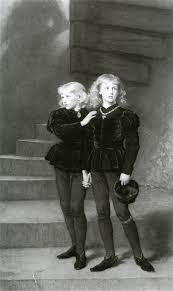
The fate of the two Princes in the Tower, the eldest sons of Edward IV and his queen Elizabeth Woodville, is one of the greatest mysteries in history. Shrouded in controversy and mystery, historians and researchers fiercely disagree as to who was responsible for their deaths; debating as to whether both princes died; whether one, or both, in fact survived; and, unsurprisingly, this scandal has impacted profoundly on those associated with it, including two English kings, Richard III and Henry VII.

This article will examine the events which led to Richard III's accession and will explore the fate of the two Princes, considering the main suspects for their murders - if, that is, they were even murdered at all. The surviving evidence is intriguing, but entirely contradictory, and one has to take into account the political, social and dynastic bias of the writer, whether it was a Tudor apologist bent on demonising Richard, or a contemporary observer writing in a foreign country, detached from English events.

It was a shock for everyone when Edward IV died aged forty-one in April 1483, allegedly of a fever. This Yorkist king's reign had seen comparative peace and tranquillity in England following the dynastic troubles which had plagued the 1460s and 1470s, known by the later name Wars of the Roses. Edward had fathered at least 8 children with his queen Elizabeth, of whom his eldest son, Edward, aged twelve, had been heir and now England's king. However, the fact that the new king was a minor spelt trouble for contemporaries, for the rule of minor kings led inevitably to greater factional conflict and fierce rivalry over control of the child king. This, perhaps, may have greatly influenced the actions of both Edward's mother and his uncle, Richard duke of Gloucester.

In May 1483 the new king arrived in London for his coronation, weeks after the death of his father, and was accommodated in the royal residence of the Tower of London, while his younger brother Richard resided in sanctuary with his mother the queen and several of his sisters. They had journeyed there after hearing alarming news which suggested that Elizabeth's brother-in-law, Richard of Gloucester, had intercepted the king's journey from Ludlow in Wales and had seized the king's uncle Anthony Woodville and the queen's youngest son by her first marriage Richard Grey.

It seems certain that Richard of Gloucester feared for his own future, for the Woodvilles were powerful, greedy and notoriously intolerant. He may also have genuinely believed that his brother Edward's marriage to Elizabeth was invalid, for he claimed that it had been brought about by witchcraft and sorcery, and also suggested that Edward had in fact been previously precontracted to one Eleanor Butler, which meant that Elizabeth Woodville was never his lawful wife. Consequently, their children were illegitimate and not fit to inherit the throne of England. By this thinking, then, Richard of Gloucester was England's rightful king.

It is essential to critically examine later Tudor propaganda, which alleged that Richard III was a monster and a murderer. I, personally, do not believe that the moment King Edward died, Richard, as a scheming and essentially evil character, decided to seize the throne of England and murder his nephews. I believe that he genuinely feared the Woodvilles and, consequently, was scared for his own future, and it is entirely possible that he did believe that his brother's marriage to Elizabeth was invalid by reason of his earlier pre-contract. If this was true, then Richard was entitled to be king of England, as shocking as it may seem.

As Sarah Gristwood writes in her book Blood Sisters (2012):

"The majority of historians from Vergil and More onwards have believed that Richard III murdered his nephews; and thanks largely to Shakespeare, it has become the accepted view among many who care nothing for history. A vocal minority are utterly convinced he was not guilty, while propounding various alternative versions of the boys' fate. Others again believe it is virtually impossible to be certain, which makes it wrong to declare Richard guilty. In that uncertainty the writer's most honourable option is simply to present both the few known facts, and the relevant theories".

Contemporary historians fiercely and angrily dispute who killed the Princes in the Tower - as Gristwood says, most continue to believe, subscribing to persuasive Tudor propaganda, that it was their evil uncle, the hunchbacked and deformed Richard III (although the recent excavation at Leicester somewhat disproves this). Others, however, suggest it was someone entirely different. So what is the 'truth', if that can even ever be recovered?

One needs to put the events in context. Having seized the throne, Richard ordered it to be preached by a Dr Shaa at St Paul's Cross that Edward IV's marriage was invalid, rendering all his children (including his daughters living in sanctuary) illegitimate. By all accounts, what we know is that the Princes were last seen, for certain, playing in the grounds of the Tower in the summer of 1483 (the younger prince, Richard, having been sent out of sanctuary by a very reluctant Queen Elizabeth to join his brother in the Tower). Dominic Mancini stated that both princes 'were withdrawn in the inner apartments of the Tower proper, and day by day began to be seen more rarely behind the bars and windows, till at length they ceased to appear altogether'. In 1674, ominously, two skeletons were discovered under the staircase leading to the chapel within the Tower of London, and in 1933 the grave was opened (the two bodies having been buried, on the orders of Charles II, in Westminster Abbey), and the skeletons were determined to be those of two young children, aged about seven to eleven and eleven to thirteen. The two princes, if they died in 1483, would have been aged 12 and 10. Moreover, the fact that they were buried in Westminster Abbey, where royals were traditionally buried, indicates that, at least in the seventeenth century, the king and others believed the bodies to be of the princes.

So, firstly, it would be wise to consider the main suspect: Richard III. Some have argued that he had no need to kill his nephews, for he had already had them declared illegitimate - since they were bastards, neither could inherit the throne, so why should he need to have them dead when they were safely imprisoned? But, as historian Amy Licence notes: '... the princes' royal blood made them dangerous claimants to the throne, to whom many of their father's former staff would prove unfailingly loyal... Richard may have hoped that the problem of the two little boys may simply have disappeared. They did, but the problem didn't.'

Those who believe that Richard had no need to kill his nephews are somewhat misguided, for one needs only to consider the bloodshed of the Wars of the Roses to understand just why he may have felt he would only be secure with both boys dead. While they were alive and imprisoned, they would always be the focus for future rebellions which aimed to restore either boy to the throne as the rightful king, and one only needs to look at the example of Richard's brother Edward, who had had King Henry VI killed on his orders, obviously not feeling secure enough about his own claim to the throne. Edward had also had his own brother George duke of Clarence executed for treason - family connections did not prevent execution. It is possible that Richard ordered a loyal servant to dispose of his two princes, as suggested in Shakespeare's play. The suspect, for a long time, has been Sir James Tyrell, for he is known to have made a confession in 1502 which admitted that he had killed the two princes. This Tyrell was actually in London in the late summer and early autumn of 1483, when the boys were last seen alive for certain. Moreover, Licence suggests that, when Richard discovered that a loyal servant, perhaps Tyrell, had murdered both boys, he may have visited Canterbury Cathedral soon afterwards to make his peace with God, as a highly religious man.

There is evidence to suggest that Tyrell was the murderer of the princes, although since it was produced much later by observers writing in the Tudor age and thus hostile to Richard, it must be regarded as suspect. Polydore Vergil, who loathed Richard, claimed that Tyrell 'rode sorrowfully to London' to commit the deed on the orders of King Richard, while Richard himself later spread rumours of his nephews' deaths in the hope that it would discourage future rebellion. Thomas More, who vilified Richard to a shocking degree, also claimed that Tyrell had murdered the boys on Richard's orders, before confessing to his crime in the reign of Henry VII.

It seems that the most compelling reason to believe Richard was guilty of his nephews' deaths was the simple fact that he never publicly produced them, to prove that they were still alive, and to counter rumours which spoke of their murders. Furthermore, Richard promised the safety and security of the princes' sisters, but he gave no such assurances for their brothers, which suggests that they had been done away with by this time. Henry VII, when he acceded to the throne, accused the former king of "shedding of Infants blood" in a Bill of Attainder brought against the dead Richard, which probably directly accuses him of the Princes' murders. The Danzig Chronicle of 1483 alleged that 'Later this summer [1483] Richard the king's brother seized power and had his brother's children killed, and the queen secretly put away'. The French chancellor Guillame de Rochefort, in a speech on 15 January 1484, recounted how Edward IV's sons 'have been put to death with impunity, and the royal crown transferred to their murderer by the favour of the people'.

Many modern historians, including Alison Weir, Michael Hicks, and David Starkey, agree that Richard was the culprit. Further rumours alleged: Richard 'put to death the children of King Edward, for which cause he lost the hearts of the people. And thereupon many gentlemen intended his destruction'. The major problem is, however, that much of the surviving evidence which suggests Richard was the culprit was produced in the Tudor age, when Richard was vilified as a tyrant and a monster, and was therefore hardly objective. For instance, the historian Bernard Andre, writing in the sixteenth century, claimed: 'the entire land was convulsed with sobbing and anguish. The nobles of the kingdom, fearful of their lives, wondered what might be done against the danger. Faithful to the tyrant [Richard] in word, they remained distant in heart'. Philippe de Commines categorically confirmed that Richard III was responsible for the princes' deaths.

The fifteenth century was a troubled age, comprised of dynastic conflict, murder, treason and betrayal. Richard III would not have been unusual had he put to death his own relatives. Let us consider the fact that there were at least 5 other monarchs around this time who did the same thing:

Edward IV - put to death his own brother, George duke of Clarence, and probably ordered Henry VI's murder.
Henry VII - put to death his wife's relatives Edward earl of Warwick and Edmund earl of Suffolk.
Henry VIII - executed the 'White Rose' faction (members of the Pole family); also executed 2 of his queens.
Mary I - executed her own cousin, Lady Jane Grey.
Elizabeth I - executed her cousin and rival Mary Queen of Scots.

It would not have been unusual if Richard had ordered the murder of his 2 nephews. I do not subscribe to the Tudor propaganda which presents Richard as evil, deformed, corrupt and ungodly. But I do think that, in this period, a person did not have to be evil to commit an act of murder.

However, there might be other evidence which intriguingly suggests that Richard was not, in fact, the culprit for the murders of his nephews. Some have suggested that it was, in fact, Margaret Beaufort, mother of Henry VII. She would clearly have had a motive, for if the two princes were to die, then her son would have an even stronger claim to the English throne. He was betrothed to their sister Elizabeth of York, yet if they remained alive, they would both have a greater claim to be king than he would, even if he were to marry their sister. The seventeenth-century antiquary George Buck apparently read 'in an old manuscript book' how it was believed that Margaret and her friend Bishop Morton 'conspiring the deaths of the sons of King Edward and some others, resolved that  these treacheries should be executed by poison and by sorcery'. Helen Maurer, a historian, also favours Margaret as the culprit.

However, Buck was one of Richard III's earliest and most vocal defenders, and so would have claimed that it was someone from the enemy camp who had committed such a shocking deed. It is also noteworthy, as Weir notes, that Richard's own relatives never accused Margaret of murdering the princes - Margaret of York, his elder sister and former Duchess of Burgundy, who loathed Henry VII, never accused Margaret, while she was not even named by other contemporaries. Furthermore, we do not even know Margaret's whereabouts during the summer of 1483 for certain - she may not have been in London at the time. Margaret also, at this time, was probably in a secret alliance with Queen Elizabeth, plotting to marry her son Henry to Elizabeth's daughter, and if Margaret was simultaneously planning to murder Elizabeth's sons, it is inconceivable that the Queen would have co-operated and worked together with Margaret.

Was the murderer in fact Henry Tudor, future king of England? He was not actually residing in England in the summer and autumn of 1483, instead being a fugitive in Brittany as he plotted to usurp the throne from Richard with the aid of his mother. Gristwood seems to believe that he may possibly be responsible:

'If Henry were to bolster his own genealogically weak claim with that of Elizabeth of York, he needed the princes dead. If the whole family were declared illegitimate, then Elizabeth had no claim. If they were legitimate, her brothers' claim would take precedence over hers for as long as they lived. What is more, while the assumption of Richard's guilt depends on a posthumous reputation for savagery it was Henry VII (and later Henry VIII) who would, one by one, eliminate all the rival Yorkist line with chilling efficiency'.

Gristwood certainly had a point, for Henry VII would later order the executions of the nephew of Richard, Edward earl of Warwick, and also had executed Perkin Warbeck, a pretender (but whom, some believe, may actually have been the younger of the two Princes). Henry VIII was similarly ruthless in the 1530s. However, no surviving source material from the time actually suggests that Henry was believed to be the culprit. True, Tudor historians would hardly have dared to have challenged their king and accused him of murder, but no foreign sources written on the Continent connected Henry Tudor with the Princes' murders. Even Margaret of Burgundy, who continually plotted against him, never accused him of her nephews' deaths.
Some actually believed that Henry avenged the princes' deaths. The Crowland Chronicler, for instance, wrote how 'the children of King Edward' had been 'avenged' at Bosworth in 1485 through Henry's victory and Richard's death.

Furthermore, Henry's only real opportunity to murder the two Princes would have been on his accession in 1485, for he had been dwelling in Europe prior to that. By all accounts, however, the two boys were last seen in the autumn of 1483 - almost 2 years previously. It is, admittedly, possible that Henry ordered one of his servants or a loyal supporter to travel to England and commit the deed, but there is no evidence of this.

Others suspect that it was Richard's former supporter, the Duke of Buckingham, who had the Princes murdered. The contemporary Historical notes of a London citizen stated that 'King Edward the Vth, late called Prince of Wales and Richard Duke of York, his brother... were put to death in the Tower of London by the vise [advice] of the Duke of Buckingham' (although this does not actually mean that Buckingham himself killed the princes). The private secretary to the king of Portugal, Alfonso V, recounted how '...after the passing away of king Edward in the year of 83, another one of his brothers, the Duke of Gloucester, had in his power the Prince of Wales and the Duke of York, the young sons of the said king his brother, and turned them to the Duke of Buckingham, under whose custody the said Princes were starved to death'. Yet Buckingham had left the court on progress at Gloucester in early August, travelling to his residence, before leading a rebellion in Wales - there is no evidence that he was in London at the time.

Buckingham had become increasingly disaffected with Richard and had rebelled against him in the autumn of 1483, before being executed on 2 November. However, the rebellion may have been aimed at actually freeing the princes - so why would he then have killed them? But this becomes murkier when one considers that Buckingham himself had royal blood (he had also been the husband of one of Elizabeth Woodville's younger sisters, who he resented). Yet, as Weir notes, Richard never accused Buckingham of murdering his nephews before his execution for treason, which would have been a crime, and which he surely would have done if evidence had come forth suggesting Buckingham was responsible, thus deflecting from the rumours which linked Richard with their deaths. Moreover, The Great Chronicle suggested that rumours of the Princes' deaths did not circulate in London until Easter 1484, which if true, meaning that the Princes were still alive at the end of 1483, removes the possibility of Buckingham's culpability, for he had been executed in November 1483.

Overall, the evidence thus far seems to indicate that the traditional assumption that Richard was the culprit is probably correct. However, some revisionist historians believe that one, or both, of the Princes actually survived. A visitor from Silesia in 1484, Nicolaus von Popplau, recorded: 'many people say - and I agree with them - that they are still alive and kept in a very dark cellar', but of course, they might have been killed shortly afterwards. One might question, furthermore, how Poppau and 'many people' knew specifically that the princes were alive and kept in a cellar. Vergil reported rumours which suggested that they had been exiled to 'some secret land'. Historians such as David Baldwin believe that the younger prince, Richard Duke of York, actually survived, and became a bricklayer in Essex. Yet his evidence has not proved compelling.

Audrey Williamson, author of The Mystery of the Princes, suggested that Elizabeth Woodville left sanctuary because she was promised by Richard that both, or her younger son, would be allowed to join her and live with her. Williamson believes that the younger Prince may have later dwelt at Gipping Hall in Suffolk, along with other royal children. More intriguingly, this was the seat of the Tyrell family, whom Tudor historians believed was responsible for their deaths. But as has been stated, if either, or both of, the princes was sent to Gipping Hall, 'someone would surely have got to know about it... It is likely that several of those who served the Queen could have recognised her sons. Thus it would have been virtually impossible to keep the existence of the Princes a secret, especially in the face of rumours of their deaths'.

Other historians have suggested that one of the pretenders in the reign of Henry VII, Perkin Warbeck, may actually have been the younger prince, Richard. Throughout the 1490s, Warbeck invaded England, hoping to gain support for 'his' crown, supported by many European powers including Margaret of Burgundy, the Scottish king, and King Maximilian I. Margaret personally tutored Warbeck in the ways of the Yorkist court - of course, if this was actually her nephew, it explains her actions; but it is more likely that she knew he was an imposter but supported his venture against her sworn enemy Henry VII. Warbeck was reported to resemble Richard of York in his appearance (although one might question when anyone had last seen Richard alive, especially since he had only been a child of 10, whereas Warbeck was somewhat older). However, Warbeck later confessed to being an imposter, being of Flemish origin. This is somewhat confirmed by the fact that many of the family ties he recounted in his later confession have been backed up by the municipal archives of Tournai.

Certainly, by the autumn of 1483, it is likely that the elder prince was dead. Evidence suggests that he had been gravely ill, possibly suffering osteomyelitis, a bone disease. More seems to suggest that he may have suffered depression. Possibly, then, he died of natural causes, but his murder cannot be ruled out. It is significant that no pretenders ever claimed to be him - instead, it was his younger brother they chose to represent.

The evidence put forward here indicates that it is impossible to be certain what happened. Rumours are often untrustworthy, the evidence is contradictory, and much of it was compiled significantly later, in the age of the Tudors, by those hostile to Richard III and his legacy. However, it seems likely that both Princes died in the Tower by the end of 1483. Theories of one Prince's survival, or indeed both, are not convincing and do not put forward compelling evidence. For me, the most convincing evidence which suggests that both died within the Tower was the discovery of two corpses in 1674, clearly of children, who were about the same age as the Princes would have been. The only problem, of course, is the sex - they were not definitively known to be male. But then, who else could they be?

We will never know for certain just what happened to the Princes. But, taking everything into account, I would still tentatively put Richard as the culprit, believing that both boys were dead by the end of 1483. At least five other monarchs put to death people who they feared would take the succession from them. His own brother, Edward, ordered his brother George's execution. Henry VIII executed 2 of his wives, and several maternal relatives. His two daughters, Mary and Elizabeth, each executed a fellow queen and cousin. I do not think Richard was evil or corrupt, as Shakespeare presents him. But I think that he strongly wanted to be King of England. He was aware of his brother's popularity, and knew that, as long as his 2 nephews lived, they would always have the stronger claims to the throne, and would always be the focus for rebellion and dissent against his regime. Their deaths were necessary, even if he regretted them.


Friday, 8 March 2013

Winter King - the Dawn of Tudor England & Henry VII


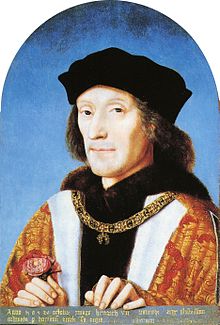
I recently read Thomas Penn's highly acclaimed first historical study, Winter King: the Dawn of Tudor England (Penguin, 2011), a witty and compelling account of the reign of King Henry VII (1457-1509) from the middle years of his reign to its dark and complex end in 1509. Known to all Tudor lovers as the first Tudor, the king who defeated history's arch-villain King Richard III in battle at Bosworth, it seems possible to suggest that Henry remains the most mysterious, perhaps even to an extent the forgotten, Tudor, often eclipsed by his glamorous and energetic son Henry VIII and his enigmatic granddaughter Elizabeth I. Yet, like those other misunderstood Tudors Edward VI and Mary I, Henry VII's story is highly remarkable, and although he was certainly disliked for his meanness, corrupt methods of ruling and lack of charisma and charm - points often addressed in Penn's book - I'd argue that Henry VII was ultimately a very capable king who withstood every danger posed to his throne and ultimately established the conditions for a successful succession at his death.

Memorialised by the seventeenth-century biographer Francis Bacon as a 'dark prince', Henry Tudor was born on 28 January 1457 (incidentally the date his son died 90 years later) to Edmund, 1st earl of Richmond and a member of the Welsh Tudor family, and Margaret Beaufort, a formidable, religious and educated woman who was Countess of Richmond and later Derby. Margaret was only 13 when she gave birth to Henry, and the pregnancy so crippled her that it left her unable to bear any more children. Incidentally, Edmund died of plague the previous winter, leaving his 13-year widow heavily pregnant with their only son. At that time, the dynastic and political conflict known as The Wars of the Roses had just broken out, and Edmund as a Lancastrian had been taken prisoner by Yorkist forces. Margaret was taken under the arm of her brother-in-law Jasper  to Pembroke Castle, where she gave birth to Henry. A series of events would see Henry becoming the Lancastrian claimant for the throne, undoubtedly influenced by his mother's ambition and ruthless nature.

Henry Tudor had royal blood due to the fact  that his grandfather Owen Tudor had married the former queen consort Catherine of Valois, widow of Henry V, some years previously. However, their marriage was viewed by some as being illegal; while this was intensified by the fact that  the Beauforts had been identified as being illegitimate and unfit to inherit the throne. Thus, while Henry certainly had royal blood, these two facts meant that his claim to the throne was weak, at best. 

The Wars of the Roses famously resulted in the bloody deaths of the notoriously inept king Henry VI, who was probably mad, and his son Edward Duke of Lancaster in battle, which meant that Henry Tudor, by virtue of this dynastic conflict, became the prime Lancastrian claimant and a serious rival to the Yorkists, who had succeeded through their king Edward IV and later Richard III. Although Lady Margaret's fourth husband, Lord Stanley, was a Yorkist, she became increasingly influential by 1483 in promoting her twenty-six year old son Henry's claim to the throne following Edward IV's death and the mysterious deaths of his sons Edward V and Richard prince of Wales. Henry had spent his childhood in Europe, residing in both France and Brittany. Margaret began plotting with various political figures disaffected by the recent events leading to the usurpation of Richard, including Edward IV's widow and former queen Elizabeth Woodville. It is clear that Margaret was heavily ambitious for her son and was intent on making him king. This formidable woman would be at the centre of power throughout Henry's reign as king. When rebellions broke out in England in the autumn of 1483, led by the disaffected Duke of Buckingham (formerly Richard's staunch supporter), Henry seized the opportunity to invade, but a series of storms meant that the rebellion collapsed. Storms blew Henry back to Normandy; but at Christmas Henry vowed to marry Elizabeth of York, daughter of Edward and Elizabeth, and consequently disaffected Yorkists swore allegiance to Henry.

In 1485, after attaining greater support including from the earl of Oxford, Henry managed to gain support in money, ships and men from the French king Charles VIII which spurred him to seek the English crown once more. Landing in England in early August, Henry marched across Wales where he obtained substantial support. Richard, however, had amassed much greater support from Englishmen, meaning that he had the upper hand when the two armies met at Bosworth on 22 August. Yet the strong fighting of the earl of Oxford, who supported Henry, and the reluctance of Richard's supporters such as the earl of Northumberland to participate on the king's side, led to a shifting of momentum from the king to the pretender. The Stanleys, who were of course Henry's relatives, proved decisive in intervening on Henry's side, leading to Richard's demise. Henry was proclaimed king shortly after. 

However, as Penn wittily and dramatically makes clear in his book, Henry VII's accession as king only led to further instability caused by the dynastic problems of the English royal family. Many did not recognise him as king; while the Yorkists only swore to support him because of his marriage to their relative, Elizabeth. However, Elizabeth brought some security to English dynastic politics through bearing the king's son, Arthur, in September 1486, and proved to be a fertile bride in bearing Princess Margaret (1489), Henry (1491), and Mary (1496), as well as a host of other royal children who tragically died as either infants or newborns. Despite this, several rebellions developed which caused the English king considerable alarm. Lambert Simnel, a boy who was claimed by Yorkists to be the Earl of Warwick (Edward IV's nephew), was crowned King Edward VI in Dublin in 1487, before the King managed to defeat the rebel forces led by John de la Pole, earl of Lincoln (himself a royal claimant) at the battle of Stoke. Simnel, a mere child, was not killed but put to work in the king's kitchens.

Nonetheless, Perkin Warbeck's rebellion in the 1490s was an entirely different story, for this pretender attained far greater support than Simnel had ever achieved, including from royal European figures such as Margaret of York. Claiming to be Richard, the younger of the Princes in the Tower, Penn makes clear that his attempted invasions in 1491 and 1495 severely compromised any political stability Henry VII could hope to enjoy. Landing in Cornwall in 1497, Warbeck's rebellion fell apart and he was later executed with the hapless and simple Earl of Warwick at the Tower of London in 1499. These executions undoubtedly took place because of Henry's desire for his thirteen-year old heir Prince Arthur to marry the Spanish princess Katherine of Aragon, and the Spanish monarchs had expressed some concern about the continuing presence of pretenders in England which might jeopardise their daughter's security. Katherine, apparently, felt guilt for their deaths, later declaring that her marriage had been made in blood.

Penn emphasises how these pretenders severely troubled Henry; a problem which was worsened beyond all proportions with the premature death of his heir Arthur in 1502, just months after his lavish - but controversial - marriage to the Spanish Infanta Katherine. These problems intensified with the death of his beloved queen, Elizabeth, in 1503 on her 37th birthday, days after giving birth to a daughter Katherine who also died shortly afterwards. Henry, however, was intent on preserving the Spanish alliance in face of French threats to England, and in view of this it was arranged that his second son, Prince Henry, would marry Katherine when he became of age. However, the death of Katherine's influential mother Isabella of Castile wrecked the Spanish alliance, with the prince days before his fourteenth birthday ordered to renounce his vow to marry Katherine. One can only feel pity for this destitute Spanish princess, who by all accounts lived in poverty-stricken conditions following her failed marriage in 1502.

Personal problems almost certainly contributed to increasingly harsh measures in the early 1500s. This is, ultimately, what made Henry VII notorious, which Penn dramatically details in Winter King. I came away from this book realising just how threatened Henry was due to dynastic problems, and the real sense of fear he had about the succession (ironically, as his son would share some thirty years later). The Court of Star Chamber was used mercilessly to deal with troublesome nobles, a process later extended to the notorious Council Learned in the Law and the probably illegal use of bonds and recognisances, which placed heavy amounts of money on nobles which they would be bound to pay if they disobeyed the king's rule or plotted treason. Other nobles were forced to act as guarantors, something they must have heartily disliked. The king's eminent financial officials, Edmund Dudley and Richard Empson, became figures of hatred during this time, as they ruthlessly enforced the king's unpopular policies. Unsurprisingly, on his accession Henry VIII bowed to popular demand and ordered the executions of these hated ministers.

1502 and afterwards saw the king's worsening ill health, above all the king's declining eyesight and his struggle to write. He began to suffer periodic illness, especially from 1507 when he fell sick each year in the spring. Lady Margaret sprang into action during these times of crisis, ready to secure the mechanisms of succession for her grandson Henry if her son were to die. There was a growing feeling during Henry VII's last decade that he was becoming increasingly rapacious and greedy, epitomised by the discontent felt by Thomas More, a promising lawyer later beheaded by Henry VIII for his opposition to the Boleyn marriage. The nobility, such as Buckingham and Northumberland, greatly resented the king's heavy-handedness and mistrust, feeling that they weren't enjoying the political power and presence in the kingdom which they felt was theirs by hereditary right. Henry can justly be viewed as suspicious, even paranoid, but after the unstable reign of Henry VI and the problems experienced in the reigns of Edward IV and Richard III, one can understand his mistrust of the nobility and desire to undermine any power they felt they enjoyed.

Although Penn's book only deals with Henry VII's in a colourful manner, mainly the years after 1501, his points do suggest that Henry's foreign policy was successful, particularly in his desire to maintain the Spanish alliance and protect England from the threat of France. His daughter Margaret was married at 13 to the Scottish king, a policy which strengthened Tudor influence outside of England, and his youngest daughter Mary was betrothed to the heir to  the Holy Roman Empire, Charles (Mary later became Queen of France aged 18, during her brother's reign). 

However, one is left with the unmistakeable sense from Winter King that Henry VII's reign was plagued by succession troubles, political instability, financial corruption and mutual resentment between the king and his nobles. Can Henry VII's reign be termed a success? I would say, ultimately yes, because his son successfully acceded to the throne in a bloodless succession in 1509, but it's undeniable that this was also a matter of luck. Henry faced a series of pretenders, rebellions and questions of loyalty from a variety of men throughout his reign, meaning he never enjoyed any peace. These problems were, of course, worsened by the premature death of his son Arthur and the tragic loss of Queen Elizabeth. Margaret, the king's mother, was a key political figure in helping the king try to maintain some security at court and in his kingdom. 

Henry undoubtedly lacked the charisma and magnificence of his son Henry VIII, or the glamour of his granddaughter Elizabeth I. In a way, he can be compared to the other 'forgotten' Tudors, Edward VI (a child king who died aged 15) and Mary I (a detested monarch). Misunderstood by contemporaries and historians, Henry is shrouded in mystery, a complex figure who comes across in Penn's book as being dark, highly intelligent, suspicious, fearful, shrewd and ruthless in desiring to maintain his rule at all costs. Lady Margaret emerges as an enigmatic and powerful player at court, while the king's able advisers and financial officials take centre stage in this book. What I also enjoyed was the attention paid to the foreign merchants and scholars who the king favoured, mostly Italians. A well-written, insightful book, Winter King emphasises in compelling detail the darkness and corruption of Henry VII's life and reign, something we frequently overlook in our desire to glorify in Henry VIII's reign and his legion of wives. But this book is essential reading for anyone interested in the first Tudor, who was, ultimately, able to preserve his dynasty and ensure his son's succession - but only by the skin of his teeth.