

Above: Negative depictions of George Boleyn were offered in both The Tudors (left) and The Other Boleyn Girl (right).
My research focuses on the maligning and misrepresentation of high-status women in late medieval and Tudor England, examining the gendered dimension and motivations for attacking prominent women. However, it was not only women who were defamed and maligned, but men too. One outstanding example of this is George Boleyn, lord Rochford, whose posthumous reputation has been notorious. He is frequently depicted as a rapist, homosexual, heretic, womaniser, abuser or coward - and, often, all of these are mixed together. This has resulted in what could be termed the black legend of George Boleyn. However, this popular understanding of George has little basis in historical evidence.
How did this black legend come about? It is difficult to separate the defamation of George from the character assassination of his entire family. The Boleyns have, in popular culture, become synonymous with greed, treachery, political ambition and ruthlessness, although modern historians recognise that they were typical of the period in which they lived in and were no worse than other noble families. But this has not prevented novelists, film-makers, and directors from slandering the Boleyns. Thomas Boleyn, a respected diplomat and talented linguist in his day, has been caricatured as an ambitious, grasping egotist. His daughter Mary has become synonymous with bawdiness and prostitution, although another line of thought has cast her as the innocent, vulnerable victim of her merciless family. Queen Anne Boleyn has suffered the most, being reduced to a scheming manipulator, a nymphomaniac, or a homewrecker - and frequently, the three are mixed together. George Boleyn then is, like other members of his family, a victim of the abuse directed at the Boleyns.

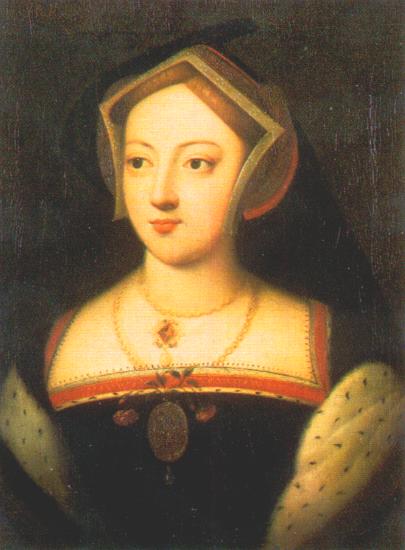
Above: Anne (left) and Mary (right), the sisters of George.
Modern historians have been fairly appreciative of George Boleyn's significance, particularly in the English Reformation. In 1531, he was one of several crown officials who assisted Henry VIII in his claim to be supreme head of the English Church. Like his sister Anne, George owned a number of French evangelical works. He turned two of them into presentation copies for his sister, which were based on the works of Jacques Lefevre d'Etaples. These texts stressed the necessity of having a living faith in Christ in order to attain salvation, rather than relying on good works and on the rituals of the established Church. George wrote a dedicatory letter to his sister in one of the texts, "The Epistles and Gospels for the Fifty-Two Weeks of the Year", in which he addressed Anne as 'her most loving and friendly brother'. He also assured her that he loved her. These texts testify to both George's devout religion and his close relationship with Anne.
Later, George's execution speech in 1536 confirmed his prominent involvement in religious reform at Henry VIII's court. He referred to himself as 'a great reader and mighty debater of the Word of God, and one of those who most favoured the Gospel of Jesus Christ.' The Imperial ambassador Eustace Chapuys frequently accused the Boleyns of being 'more Lutheran than Luther himself', and it seems plausible that, when Anne became queen, her brother assisted her in advancing evangelical reform at court. Their father, also passionate about religious reform, was probably also involved. Joseph S. Block has written that George's interest and passion for religious reform was motivated not only out of desire to assist his sister, but 'was a guiding light in his life'.
George's interests, however, extended beyond religion. His biographers Claire Ridgway and Clare Cherry note that he was a talented poet and linguist. George also enjoyed an excellent diplomatic career, a point often overlooked especially in popular depictions of him. For example, in 1529 he was knighted and led an embassy to France at an unusually young age (if he was born around 1504, he would have been only twenty-five or so years of age: a point which indicates that there was already considerable confidence in his abilities). Soon after, George became Viscount Rochford. In 1533, he again travelled to France where he informed the French king about Henry VIII's marriage to Anne and was able to secure Francois I's support in the struggle against the papal denunciation of Henry's annulment of his first marriage. Further embassies followed later that year and in 1534, and in June 1534, George was rewarded for his diplomatic successes: he was promoted to Baron of the Cinque Ports.
Around the end of 1524, he married Jane Parker, the daughter of Henry lord Morley. George's marriage to Jane has more often than not been portrayed as a vicious, tempestuous and abusive union. Alison Weir describes their relationship as "unhappy" and asserts that Jane testified against her husband at the time of his downfall in spring 1536 because she was revolted and disgusted by his sexual practices. This idea was originally put forward by academic historian Retha Warnicke, who suggested that not only was George promiscuous, but guilty of sodomy with several men too. Perhaps unsurprisingly, this salacious notion has become enshrined in popular culture and has hugely influenced the prevailing view of George. In Philippa Gregory's novel The Other Boleyn Girl, George Boleyn is a promiscuous, unhinged and sexually disturbed man who not only has an affair with Francis Weston, but is strongly suggested to have slept with his sister Anne, resulting in the birth of a deformed child and accusations of witchcraft and incest that send both of them to the scaffold. In the television series The Tudors, George is portrayed in a darker light as a serial abuser, who sexually assaults his innocent wife on their wedding night. He also enjoys a sexual relationship with Mark Smeaton. The Tudors provided the most manipulative, abusive, violent and cruel portrayal of George Boleyn to date. Hilary Mantel's Wolf Hall and Bring Up the Bodies presents George more as an arrogant, shallow dandy or fop who shamefully cries at his trial and, during his lifetime, is concerned with nothing more than the pursuit of luxury and decadence. The television series Wolf Hall similarly presents his relationship with Jane as abusive, in which he treats her violently and with contempt.
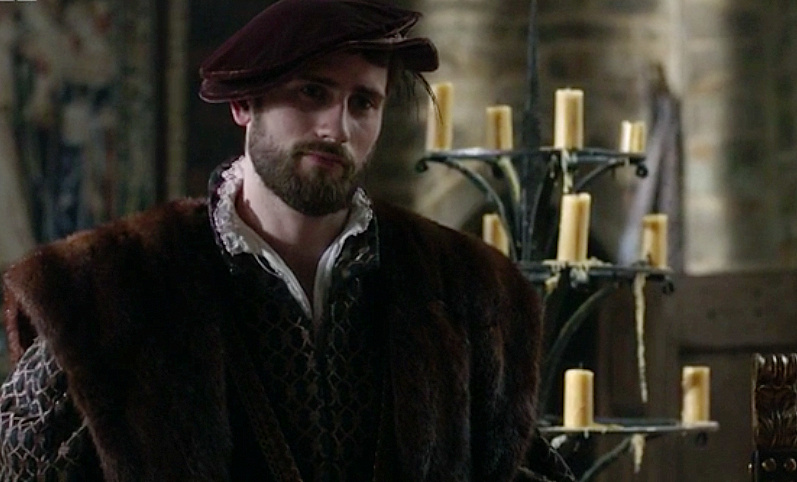
Above: George Boleyn in Wolf Hall.
There is no evidence for any of this, and we cannot know the truth of George and Jane's marriage. Their childlessness has frequently been cited as conclusive evidence of their marital unhappiness, but it is equally possible that either partner suffered from infertility, or perhaps there were other problems that we just do not know about. In the absence of evidence, it is unfair and contrary to historical practice to speculate negatively about their relationship. Contrary to legend, Jane was not the 'principal accuser' of her husband in the wake of his downfall in 1536, and she may have been coerced into providing testimony, in what must have been a terrifying and traumatic experience for her. Jane has traditionally been presented as jealous and hurt by George's close relationship with his sister Anne, in which he neglected and mistreated his wife in favour of spending time with his more attractive and accomplished sister. Again, there is no evidence for this. Perhaps Jane was jealous of Anne, perhaps she hated her, perhaps she did love George and was hurt by his treatment of her. Alternatively, and equally validly, perhaps she enjoyed a good relationship with her sister-in-law and perhaps she was treated well by George. We cannot say, and as stated, it is unfair and fruitless to speculate.
George was implicated in Anne Boleyn's downfall in the spring of 1536, and he was one of five men sentenced to death for committing adultery with her and plotting to murder Henry VIII (and, in his case, incest). While the majority of modern historians reject these charges entirely, and present all six as innocent of adultery and treason, several writers have speculated that George was guilty of 'unnatural' sexual offences, primarily sodomy and buggery. His sexual partners have been identified as Mark Smeaton and, perhaps, Francis Weston, both of whom were also accused of adultery with the queen and executed. As noted above, the notion of George Boleyn as a homosexual has gained credence in popular culture, and it is almost impossible to read a novel, watch a film, or view a play about him that does not subscribe to this prevailing view of him as a lover of men. However, as with his relationship with his wife, there is no evidence for this. George did provide Smeaton with a manuscript attacking the institution of marriage, but it is reading far too much into this to infer from this alone, in the absence of any other evidence, that George and Smeaton were lovers. George Cavendish, who served Cardinal Wolsey, later described George as 'my life not chaste, my living bestial, I forced widows, maidens I did deflower': in other words, identifying him as a serial womaniser, rather than a sodomite. However, Cavendish was a hostile and prejudiced writer with a clear agenda: to blacken the name of the Boleyns, whom he blamed for the downfall of his master. The famed Tudor poet Sir Thomas Wyatt, who knew George personally, lamented that, had George 'not been so proud, for thy great wit each man would thee bemoan'.
It is disturbing to realise that George Boleyn's posthumous reputation has been more negative than it was in his own lifetime. Since his death, he has been subjected to vitriolic attack, shameful slander and, in short, character assassination. In his lifetime, observers alleged that his chief vices were pride, arrogance and, from the perspective of religious conservatives, heresy. However, with the exception of Cavendish, none of them accused him of sexual lechery, and his intimate, loving relationship with Anne was cruelly distorted and misrepresented in 1536 as an incestuous relationship in order to get rid of them both. George Boleyn was a talented linguist, a renowned poet, and above all, a principal exponent of religious reform. He occupied a central place in English politics in the late 1520s and most of the 1530s, and was actively involved in several embassies on the Continent. His contemporaries were in awe of his talents and appreciated his significance. Controversy about George centres on his sexual preferences and on his relationship with his wife Jane. In the absence of any evidence that their relationship was unhappy, or that his sexual behaviour was anything but conventional, George should be given the benefit of the doubt, and should instead be admired and respected for his talents and skills.


