Showing posts with label margaret tudor. Show all posts

Tuesday, 18 October 2016

18 October 1541: The Death of Queen Margaret

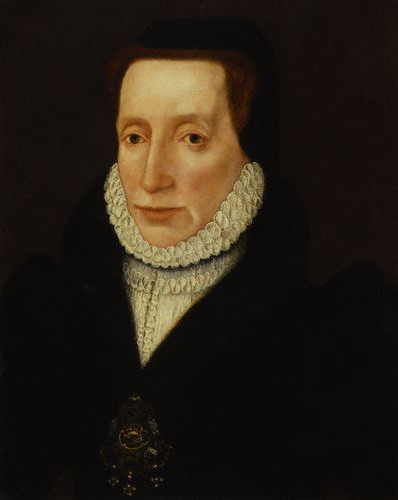
Margaret Tudor.jpg

On 18 October 1541, Margaret Tudor, Queen Dowager of Scotland, died at Methven Castle. She was six weeks shy of her fifty-second birthday. Margaret was the elder sister of King Henry VIII of England, and was the eldest daughter of Henry VII and Elizabeth of York. In 1503, at the age of thirteen, Margaret married James IV of Scotland at Holyrood Abbey. Only one of their six children survived infancy: the future James V of Scotland. Margaret's husband was slain at the Battle of Flodden in 1513. She married twice after his death. Her second husband was Archibald Douglas, sixth earl of Angus; by him, she gave birth to a daughter, Lady Margaret Douglas, in 1515. Her third husband was Henry Stewart, Lord Methven.

Above: Methven Castle. Margaret died here in 1541.

Margaret's last years were not necessarily happy ones. Her son, who became king in 1513, differed with her over foreign policy, for Margaret favoured close ties with England, her home country, whereas James elected to renew the French alliance. Margaret seems to have hoped that England and Scotland would unite in marriage, as she had done by marrying James IV. It was anticipated that her son would marry Mary, daughter of Henry VIII, and Margaret's niece. This was fated never to take place, and James V went on to marry Madeleine of France in 1537.

Margaret was particularly unhappy in her third marriage, to Lord Methven. She regularly wrote to Henry VIII complaining of Methven's love affairs and her debts. Margaret wished to divorce her husband, but she was blocked in doing so by her son. In late 1537, she attempted to escape to Berwick, but was intercepted. Madeleine of France had died earlier that summer, and James went on to marry Mary of Guise, by whom he had a daughter, Mary Queen of Scots.

It is clear that Margaret was lonely during her final years. She had little influence with her son, and her relationship with her husband was acrimonious. Henry VIII refused to invite her to England and was content to ignore her. At Methven Castle, the dowager queen suffered a stroke. She asked that her valuables should go to her daughter Margaret Douglas, but James ignored his mother's wish and her goods reverted to the crown. She was buried in St. John's Abbey in Perth. 

Although Margaret's marriage to James IV, ultimately, failed to secure peace between the warring kingdoms of England and Scotland, her great-grandson James VI of Scotland's accession to the throne of England in 1603 brought the conflict between the two kingdoms to a close.

Thursday, 8 October 2015

8 October 1515: The Birth of Lady Margaret Douglas

Margaret Douglas.jpg
Today is the five-hundredth anniversary of the birth of Lady Margaret Douglas, daughter of Archibald Douglas and Margaret Tudor, former queen of Scotland. On 8 October 1515, at Harbottle Castle in Northumberland, the former queen was delivered of a 'fair' and healthy daughter, named Margaret after her mother. The day after her birth, Margaret Douglas was hastily baptised 'with such provisions as couthe or mought be had in this baron and wyld country', according to the northern Lord Dacre. Margaret Tudor was ill following the birth, which suggests the delivery might have been difficult, but she departed with her daughter the following spring to the court of her brother Henry VIII at Greenwich Palace, where Margaret Douglas resided in the royal nursery. In June 1517, the former queen and her daughter returned to Scotland.

Harbottleruin2.jpg
Above: The ruins of Harbottle Castle, where Margaret Douglas was born in 1515.

Lady Margaret Douglas has proven to be a popular subject among historians in recent times. Early this year, Mary McGrigor published a biography of her entitled "The Other Tudor Princess: Margaret Douglas, Henry VIII's Niece". Then Sylvia Barbara Soberton charted Margaret's life alongside her friends Mary Howard and Mary Shelton in her book "The Forgotten Tudor Women". Finally, Alison Weir's biography of Margaret Douglas, entitled "The Lost Tudor Princess", was published last week. Why Lady Margaret has suddenly intrigued historians is uncertain, but the likeliest reason is because of her extraordinary life. Replete with tragedy, scandal and love, Margaret was the daughter of a former queen of Scotland, the niece of Henry VIII and the granddaughter of Henry VII, the first Tudor king. She had a claim to the English throne and, it was rumoured, was strongly favoured by her cousin Queen Mary I to succeed her as queen upon her death. Eventually, of course, Queen Mary chose her younger sister Elizabeth to succeed her, but her fondness of her cousin Margaret is apparent in the fact that she considered choosing her as her successor.

Above: Lady Margaret's parents, Margaret Tudor (left) and Archibald Douglas, sixth Earl of Angus (right).

At an early age, Lady Margaret discovered that her parents' marriage was volatile and uneasy. In 1518, Margaret Tudor learned that her husband was keeping a mistress and violently quarrelled with him. The earl abruptly seized her daughter from her and took her to his fortress of Tantallon in Haddingtonshire before departing with her to France, then to England, and then finally to Scotland. Margaret Douglas' aunt Mary Tudor, youngest sister of Henry VIII, came to her rescue in 1530, when Margaret was aged fifteen, and invited her to London. She resided at Beaulieu on the orders of her uncle Henry VIII. 

Margaret was a great success at the English court. She was described as being 'beautiful and highly esteemed', and was close to the king's first daughter Mary. She also enjoyed good relations with her uncle's second wife Anne Boleyn. Margaret fell in love with the queen's uncle Thomas Howard and was engaged to him, but the furious king sent the couple to the Tower of London upon discovering their relationship. Margaret also resided at Syon Abbey, finally being released in late October 1537; unfortunately Thomas Howard had already died while imprisoned in the Tower. Margaret was declared illegitimate by the king following the birth of his son Edward. She then went on to serve both Anne of Cleves and Katherine Howard. Margaret foolishly fell in love with Queen Katherine's older brother Charles and was again incarcerated at Syon and Kenninghall for her 'lightness'. The couple's love was short-lived and was probably brought to a close by the queen's execution early in 1542. The following year, Margaret attended her uncle's wedding to Katherine Parr at Hampton Court Palace. In 1544, she married Matthew Stuart, earl of Lennox, at the age of twenty-eight. The following year, she gave birth to Henry Stuart, lord Darnley (who wed the Scottish queen Mary in 1565). She later gave birth to a second son, Charles Stuart.

Susan E. James proposed that a miniature painted by Holbein c. 154o, thought to depict Katherine Howard, actually portrayed Margaret Douglas, countess of Lennox. While I gave credence to James' theory in my biography of Katherine, I have since come to doubt that identification. More probably, the miniature is of the queen. However, the portrait above might depict Lady Margaret Douglas, of which three versions survive. In her biography of Margaret, Weir claimed that the portrait cannot depict Lady Margaret because it is a portrait of Katherine Howard. 

However, there are sound reasons to doubt this identification. The portrait was, according to the Toledo Museum of Art (which houses a copy of the portrait), painted between 1535 and 1540. It was therefore not definitively painted in 1540 as Weir claims. The Toledo Museum of Art reports that the painting belonged to the Cromwell family for centuries, making it possible, but not certain, that the sitter was a member of that family, perhaps Elizabeth Cromwell (younger sister of Queen Jane Seymour and married to Thomas Cromwell's son). Lady Margaret was in her twenty-first year between October 1535 and October 1536 at a time when, according to observers at court, she was much favoured by the king and his courtiers for her beauty and charm. The age of the sitter in the portrait is also difficult to reconcile with evidence of Katherine Howard's youth; most modern historians are now fairly certain that she was only seventeen or so when she became queen, rather than twenty-one or so. (See Warnicke, 2012; Byrne, 2014; Licence, 2014).

There are further reasons to doubt Weir's theory. The version of the portrait housed in the National Portrait Gallery in London dates from the late seventeenth century, many decades after Katherine's execution in 1542. There are no sound reasons why the disgraced queen would have featured as a sitter decades after her death. However, it is entirely possible that Lady Margaret Douglas would have been regarded as a subject deserving of representation in the following century. James I of England became king in 1603. He was the son of Mary Queen of Scots and Lord Darnley and, as such, was the grandson of Lady Margaret Douglas. James was proud of his lineage and appreciated his English ancestry as factoring importantly in the events that led to his becoming king of England. Revering his grandmother's memory, it is surely more plausible that the king would have approved continuing artistic depictions of her in portraiture; it is not likely that approval would have been given to the expense and time spent on painting the disgraced fifth wife of his great-great-uncle. 


It has been asserted that the portrait depicts Queen Katherine because the sitter is adorned in jewellery that belonged to the queen. However, the king's wife was able to exercise the privilege of allowing favoured women at court to wear her jewellery. Jane Seymour, for example, is known to have made gifts of her jewellery to her lady-in-waiting Mary, Lady Monteagle. Lady Margaret Douglas was the king of England's niece and the highest-ranking woman in the land immediately after the queen and his two daughters. Highly favoured at court, close to both the king and queen, Lady Margaret might well have been painted by Holbein around this time wearing royal jewels. 

Thus it is entirely possible that this portrait depicts Lady Margaret. In her article on Margaret's life, Rosalind K. Marshall described her appearance thus: 'she had heavy-lidded, deep-set eyes, a long nose, broad jaw, and fairly thin lips', and was both 'lively and attractive'. All of these attributes can be seen in the portrait. A favourite of Henry VIII until her misalliances caused him to doubt her loyalty, it is likely that Margaret sat for Holbein who, as the Toledo Museum recognise, had been employed by the king since at least 1533.

Thursday, 14 August 2014

Margaret Tudor: the Forgotten Tudor?


Above: Margaret Tudor, queen of Scotland.
(accessed: http://www.nndb.com/people/074/000095786/).

Henry VIII tends to outshine all of his siblings, for obvious reasons. Even so, most people, thanks to The Tudors' brazen portrayal, have some knowledge of his younger, impetuous sister Mary Tudor, who married first the king of France and later her brother's best friend, Charles Brandon, duke of Suffolk. Henry's elder brother Arthur Tudor, heir to the throne until his death at fifteen, is generally known for being the first husband of Henry's first wife, Katherine of Aragon. Controversy raged as to whether Arthur and Katherine had consummated their marriage. 

But few are generally aware of Henry's elder sister, Margaret Tudor, who, like her younger sister Mary, was a queen. Margaret's life, in fact, was every bit as tumultuous and volatile as that of her younger brother. Her marriages and politics significantly shaped the future of both Scotland and of England. She was the grandmother of Mary Queen of Scots and the great-grandmother of James VI of Scotland and I of England. Her actions, in fact, played some part in the later union with England which was to result in the Act of Union in 1707. It might then be asked, how is it that Margaret remains so obscure a figure?


Above: Margaret's parents, Henry VII (left) and Elizabeth of York (right).

Margaret Tudor was the second child of Henry VII and Elizabeth of York, who had married in 1486. She was born on 28 November 1489 at Westminster Palace in London. Although her father surely hoped for a second son, royal daughters were extremely useful because, through their marriages to foreign powers, they allied their countries with powerful states in prestigious unions. She spent her early years at her father's favourite place, Sheen, near the Thames (the palace was later renamed Richmond Palace), until a fire caused the royal nursery to be moved to Eltham. Margaret at an early age learned to play the lute, clavichord and to dance, traditional skills associated with feminine royalty. She also studied Latin and French, and pursued archery. It is likely that Queen Elizabeth ensured that her daughter also learned the traditional female skills of embroidery, sewing, and housewifery. 

Henry was determined to bolster the prestige of the Tudor crown, particularly because pretenders continued to threaten its security. The Yorkist threat remained, meaning that the Tudor dynasty remained fragile. At the same time, England sought to achieve harmony with its northern neighbour, for the two had customarily experienced hostile and suspicious relations with one another. In view of these factors, it is unsurprising that the Tudor king arranged for his eldest daughter Margaret to marry James IV, King of Scots, a man sixteen years her senior. On 24 January 1502, the marriage treaty between England and Scotland was concluded. Henry promised a £10,000 dowry for his daughter's hand, while the Scottish king swore his bride would receive £1000 Scots per annum alongside lands and castles affording a further income of £6000 each year.

Above: James IV of Scotland, first husband of Margaret Tudor.

In February 1503, the royal family was plunged into tragedy with the death of the queen and Margaret's mother, Elizabeth of York, at the Tower of London aged thirty-seven. How Margaret felt is unknown, but at just thirteen years of age, it is reasonable to believe it impacted severely upon her. Nonetheless, preparations for her journey to Scotland continued, and on 8 July she commenced her journey north, her retinue led by the Earl of Surrey. The formal marriage service took place in Holyroodhouse on 8 August 1503. As historians have conjectured, Margaret may have found it discomfiting that her husband had seven bastard children, housed in her own dower castle of Stirling, and continued to visit his mistress Janet Kennedy. 

Margaret's most important role as queen was to produce a male heir to safeguard the dynasty, and she duly did so in 1507, but the prince, named James for his father, died at Stirling in February 1508. A daughter born in July of that year died the same day. Like her sister-in-law Katherine of Aragon, Margaret experienced some tragedies in childbirth, but she was later to produce a healthy son. On 11 April 1512, aged twenty-two, Margaret gave birth to James, who later became James V, on his father's death at the Battle of Flodden on 9 September 1513. 

Margaret was, according to her husband's will, to serve as regent, provided that she did not remarry. Four nobles headed a council to assist her in governing the realm. On 6 August 1514, less than a year after her first husband's death, Margaret remarried. Her husband was Archibald Douglas, sixth earl of Angus, the greatest Scottish magnate. Because of this decision, Margaret renounced her position as regent of the realm. Margaret's decision was perhaps regarded as impetuous and foolish, but she perhaps sought a measure of security and stability, being as she was a young widow with an infant son, alone in a foreign realm. 

Above: Mary Stuart, queen of Scotland, was the granddaughter of Margaret Tudor.

The council subsequently invited John Stewart, cousin to the late king, to become regent. Margaret was distrusted, for her husband was extremely unpopular with the other magnates, and because she was rumoured to favour England over her adopted realm. Margaret deeply distrusted and resent Stewart, duke of Albany, and encouraged her brother, Henry of England, to restore her authority by force. On 30 September 1515, desperate and disillusioned, the former queen fled to England, in a move that strikingly foreshadowed that of her granddaughter Mary Stuart some fifty years later. Both queens sought refuge and assistance in England. 

On 7 October, the heavily pregnant queen gave birth to a daughter, Margaret Douglas. The ordeal nearly killed her and left her very weak. When she lay seriously ill at Morpeth, her second son Alexander died in December of that year. On 3 May 1516, Margaret arrived in London and met her brother for the first time in thirteen years, since she had left for Scotland in summer 1503. She remained in England for over a year, separated from her husband, while the Scottish council promised to send the jewels after her and to pay her rents. While she received her jewels, her revenues were not in fact restored, forcing the humiliated queen to seek money from Cardinal Thomas Wolsey.

In May 1517, Margaret journeyed back to Scotland, having been promised in advance that she would be treated well and would not be arrested, nor would her company be. However, her marriage to Angus was coming under increasing strain. Her husband had taken a mistress while Margaret had resided in England, and he had taken the queen's rents from Methven and Ettrick Forest. When she discovered her husband's affair, Margaret begged Henry to let her return to England. He refused, and urged her to return to her husband. Because of this, coupled with Scottish diplomatic politics in which closer links were sought with France as a means of securing both powers in the case of an English invasion, Margaret had become a marginal figure in Scotland by 1519. 


Above: Margaret's younger brother, Henry VIII, king of England.

Conflicts between Albany and the Scottish nobles persisted, especially due to Albany's detainment in France. In December 1521, Albany returned to Edinburgh and was warmly welcomed by Margaret, who hoped that he would restore her revenues and help her obtain an annulment of her unsuccessful marriage to Angus. Henry VIII became aware of rumours that his sister was Albany's mistress and rebuked her in a letter, causing the indignant Margaret to write an emotional reply to his 'sharp and unkind letter'. Albany banished Angus and his brother George to France, and even gathered an army in September for the purpose of invading England; although the memory of Flodden deterred him from pursuing this course. Eventually, a truce was achieved. 

When Albany left again for France in 1524, Margaret won the support of the Hamiltons, a powerful Scottish noble family, headed by the second earl of Arran. A coup was achieved which brought to an end Albany's regency and on 26 July of that year, invested Margaret's twelve-year old son James with full royal authority. Margaret's government met with hostility and suspicion, however, for it was perceived that the queen lacked good counsel, and the duke of Norfolk wrote to Wolsey of how unpopular Margaret had become, as a result. Margaret continued to urge Albany, who resided abroad, to help her seek a divorce from Angus, who troubled her. She had determined to marry Henry Stewart, her treasurer. The Pope finally annulled the marriage in March 1527, on the grounds of Angus' pre-contract to Lady Jane Stewart. Soon afterwards, the infatuated Margaret married Henry Stewart, and acknowledged him as her husband for the first time about April 1528. Angus retaliated by arresting Stewart and confining him, but James V expelled not just Angus, but his own family, from government. Henry was created Lord Methven and the Douglases were found guilty of treason. Margaret, however, was furious when her brother sheltered Angus in England.

Margaret's relations with her son were complex, especially because of conflict regarding foreign policy. Margaret favoured closer relations with her home country, England, and encouraged her son to marry his cousin, Mary Tudor, daughter of Henry VIII and Katherine of Aragon. James, however, renewed the French alliance. The queen's hopes of an Anglo-Scottish alliance were dashed when her son married Madeleine of Valois in 1537.

James V of Scotland2.jpg
Above: James V of Scotland, son of Margaret Tudor.

Margaret's personal difficulties with her husbands continued, for Lord Methven had taken a mistress by the mid-1530s, causing her to send a stream of letters to Henry VIII and his ministers complaining. He had so wasted her revenues that she was 8000 marks in debt. She sought to divorce him but was unsuccessful, although she did try to escape to Berwick in autumn 1537 before being intercepted. Queen Madeleine had died in July of that year, and her son, who continued to favour an alliance with France, married Marie of Guise, whom Henry VIII had shown some interest in as a prospective bride after the death of his third consort, Jane Seymour. 

Margaret's final years were unsuccessful, lonely and unhappy. On 18 October 1541, aged fifty-one, she died after experiencing a stroke at Methven Castle. Her son did not arrive in time, although his mother had requested his presence at her deathbed. She was buried in St John's Abbey in Perth. 

Richard Glen Eaves writes of Margaret thus:

'It is difficult to gain a clear impression of Queen Margaret, in terms either of her personality or of her impact on events... It seems clear that her years in Scotland were generally unhappy. She was only twenty-three when her first husband was killed, her two subsequent marriages both failed utterly, and she had limited contact with both her son in Scotland and her daughter in England... But in one respect she was undeniably a successful queen, for it was from her first marriage that there sprang the line that eventually united England and Scotland'.


Friday, 8 March 2013

Winter King - the Dawn of Tudor England & Henry VII


I recently read Thomas Penn's highly acclaimed first historical study, Winter King: the Dawn of Tudor England (Penguin, 2011), a witty and compelling account of the reign of King Henry VII (1457-1509) from the middle years of his reign to its dark and complex end in 1509. Known to all Tudor lovers as the first Tudor, the king who defeated history's arch-villain King Richard III in battle at Bosworth, it seems possible to suggest that Henry remains the most mysterious, perhaps even to an extent the forgotten, Tudor, often eclipsed by his glamorous and energetic son Henry VIII and his enigmatic granddaughter Elizabeth I. Yet, like those other misunderstood Tudors Edward VI and Mary I, Henry VII's story is highly remarkable, and although he was certainly disliked for his meanness, corrupt methods of ruling and lack of charisma and charm - points often addressed in Penn's book - I'd argue that Henry VII was ultimately a very capable king who withstood every danger posed to his throne and ultimately established the conditions for a successful succession at his death.

Memorialised by the seventeenth-century biographer Francis Bacon as a 'dark prince', Henry Tudor was born on 28 January 1457 (incidentally the date his son died 90 years later) to Edmund, 1st earl of Richmond and a member of the Welsh Tudor family, and Margaret Beaufort, a formidable, religious and educated woman who was Countess of Richmond and later Derby. Margaret was only 13 when she gave birth to Henry, and the pregnancy so crippled her that it left her unable to bear any more children. Incidentally, Edmund died of plague the previous winter, leaving his 13-year widow heavily pregnant with their only son. At that time, the dynastic and political conflict known as The Wars of the Roses had just broken out, and Edmund as a Lancastrian had been taken prisoner by Yorkist forces. Margaret was taken under the arm of her brother-in-law Jasper  to Pembroke Castle, where she gave birth to Henry. A series of events would see Henry becoming the Lancastrian claimant for the throne, undoubtedly influenced by his mother's ambition and ruthless nature.

Henry Tudor had royal blood due to the fact  that his grandfather Owen Tudor had married the former queen consort Catherine of Valois, widow of Henry V, some years previously. However, their marriage was viewed by some as being illegal; while this was intensified by the fact that  the Beauforts had been identified as being illegitimate and unfit to inherit the throne. Thus, while Henry certainly had royal blood, these two facts meant that his claim to the throne was weak, at best. 

The Wars of the Roses famously resulted in the bloody deaths of the notoriously inept king Henry VI, who was probably mad, and his son Edward Duke of Lancaster in battle, which meant that Henry Tudor, by virtue of this dynastic conflict, became the prime Lancastrian claimant and a serious rival to the Yorkists, who had succeeded through their king Edward IV and later Richard III. Although Lady Margaret's fourth husband, Lord Stanley, was a Yorkist, she became increasingly influential by 1483 in promoting her twenty-six year old son Henry's claim to the throne following Edward IV's death and the mysterious deaths of his sons Edward V and Richard prince of Wales. Henry had spent his childhood in Europe, residing in both France and Brittany. Margaret began plotting with various political figures disaffected by the recent events leading to the usurpation of Richard, including Edward IV's widow and former queen Elizabeth Woodville. It is clear that Margaret was heavily ambitious for her son and was intent on making him king. This formidable woman would be at the centre of power throughout Henry's reign as king. When rebellions broke out in England in the autumn of 1483, led by the disaffected Duke of Buckingham (formerly Richard's staunch supporter), Henry seized the opportunity to invade, but a series of storms meant that the rebellion collapsed. Storms blew Henry back to Normandy; but at Christmas Henry vowed to marry Elizabeth of York, daughter of Edward and Elizabeth, and consequently disaffected Yorkists swore allegiance to Henry.

In 1485, after attaining greater support including from the earl of Oxford, Henry managed to gain support in money, ships and men from the French king Charles VIII which spurred him to seek the English crown once more. Landing in England in early August, Henry marched across Wales where he obtained substantial support. Richard, however, had amassed much greater support from Englishmen, meaning that he had the upper hand when the two armies met at Bosworth on 22 August. Yet the strong fighting of the earl of Oxford, who supported Henry, and the reluctance of Richard's supporters such as the earl of Northumberland to participate on the king's side, led to a shifting of momentum from the king to the pretender. The Stanleys, who were of course Henry's relatives, proved decisive in intervening on Henry's side, leading to Richard's demise. Henry was proclaimed king shortly after. 

However, as Penn wittily and dramatically makes clear in his book, Henry VII's accession as king only led to further instability caused by the dynastic problems of the English royal family. Many did not recognise him as king; while the Yorkists only swore to support him because of his marriage to their relative, Elizabeth. However, Elizabeth brought some security to English dynastic politics through bearing the king's son, Arthur, in September 1486, and proved to be a fertile bride in bearing Princess Margaret (1489), Henry (1491), and Mary (1496), as well as a host of other royal children who tragically died as either infants or newborns. Despite this, several rebellions developed which caused the English king considerable alarm. Lambert Simnel, a boy who was claimed by Yorkists to be the Earl of Warwick (Edward IV's nephew), was crowned King Edward VI in Dublin in 1487, before the King managed to defeat the rebel forces led by John de la Pole, earl of Lincoln (himself a royal claimant) at the battle of Stoke. Simnel, a mere child, was not killed but put to work in the king's kitchens.

Nonetheless, Perkin Warbeck's rebellion in the 1490s was an entirely different story, for this pretender attained far greater support than Simnel had ever achieved, including from royal European figures such as Margaret of York. Claiming to be Richard, the younger of the Princes in the Tower, Penn makes clear that his attempted invasions in 1491 and 1495 severely compromised any political stability Henry VII could hope to enjoy. Landing in Cornwall in 1497, Warbeck's rebellion fell apart and he was later executed with the hapless and simple Earl of Warwick at the Tower of London in 1499. These executions undoubtedly took place because of Henry's desire for his thirteen-year old heir Prince Arthur to marry the Spanish princess Katherine of Aragon, and the Spanish monarchs had expressed some concern about the continuing presence of pretenders in England which might jeopardise their daughter's security. Katherine, apparently, felt guilt for their deaths, later declaring that her marriage had been made in blood.

Penn emphasises how these pretenders severely troubled Henry; a problem which was worsened beyond all proportions with the premature death of his heir Arthur in 1502, just months after his lavish - but controversial - marriage to the Spanish Infanta Katherine. These problems intensified with the death of his beloved queen, Elizabeth, in 1503 on her 37th birthday, days after giving birth to a daughter Katherine who also died shortly afterwards. Henry, however, was intent on preserving the Spanish alliance in face of French threats to England, and in view of this it was arranged that his second son, Prince Henry, would marry Katherine when he became of age. However, the death of Katherine's influential mother Isabella of Castile wrecked the Spanish alliance, with the prince days before his fourteenth birthday ordered to renounce his vow to marry Katherine. One can only feel pity for this destitute Spanish princess, who by all accounts lived in poverty-stricken conditions following her failed marriage in 1502.

Personal problems almost certainly contributed to increasingly harsh measures in the early 1500s. This is, ultimately, what made Henry VII notorious, which Penn dramatically details in Winter King. I came away from this book realising just how threatened Henry was due to dynastic problems, and the real sense of fear he had about the succession (ironically, as his son would share some thirty years later). The Court of Star Chamber was used mercilessly to deal with troublesome nobles, a process later extended to the notorious Council Learned in the Law and the probably illegal use of bonds and recognisances, which placed heavy amounts of money on nobles which they would be bound to pay if they disobeyed the king's rule or plotted treason. Other nobles were forced to act as guarantors, something they must have heartily disliked. The king's eminent financial officials, Edmund Dudley and Richard Empson, became figures of hatred during this time, as they ruthlessly enforced the king's unpopular policies. Unsurprisingly, on his accession Henry VIII bowed to popular demand and ordered the executions of these hated ministers.

1502 and afterwards saw the king's worsening ill health, above all the king's declining eyesight and his struggle to write. He began to suffer periodic illness, especially from 1507 when he fell sick each year in the spring. Lady Margaret sprang into action during these times of crisis, ready to secure the mechanisms of succession for her grandson Henry if her son were to die. There was a growing feeling during Henry VII's last decade that he was becoming increasingly rapacious and greedy, epitomised by the discontent felt by Thomas More, a promising lawyer later beheaded by Henry VIII for his opposition to the Boleyn marriage. The nobility, such as Buckingham and Northumberland, greatly resented the king's heavy-handedness and mistrust, feeling that they weren't enjoying the political power and presence in the kingdom which they felt was theirs by hereditary right. Henry can justly be viewed as suspicious, even paranoid, but after the unstable reign of Henry VI and the problems experienced in the reigns of Edward IV and Richard III, one can understand his mistrust of the nobility and desire to undermine any power they felt they enjoyed.

Although Penn's book only deals with Henry VII's in a colourful manner, mainly the years after 1501, his points do suggest that Henry's foreign policy was successful, particularly in his desire to maintain the Spanish alliance and protect England from the threat of France. His daughter Margaret was married at 13 to the Scottish king, a policy which strengthened Tudor influence outside of England, and his youngest daughter Mary was betrothed to the heir to  the Holy Roman Empire, Charles (Mary later became Queen of France aged 18, during her brother's reign). 

However, one is left with the unmistakeable sense from Winter King that Henry VII's reign was plagued by succession troubles, political instability, financial corruption and mutual resentment between the king and his nobles. Can Henry VII's reign be termed a success? I would say, ultimately yes, because his son successfully acceded to the throne in a bloodless succession in 1509, but it's undeniable that this was also a matter of luck. Henry faced a series of pretenders, rebellions and questions of loyalty from a variety of men throughout his reign, meaning he never enjoyed any peace. These problems were, of course, worsened by the premature death of his son Arthur and the tragic loss of Queen Elizabeth. Margaret, the king's mother, was a key political figure in helping the king try to maintain some security at court and in his kingdom. 

Henry undoubtedly lacked the charisma and magnificence of his son Henry VIII, or the glamour of his granddaughter Elizabeth I. In a way, he can be compared to the other 'forgotten' Tudors, Edward VI (a child king who died aged 15) and Mary I (a detested monarch). Misunderstood by contemporaries and historians, Henry is shrouded in mystery, a complex figure who comes across in Penn's book as being dark, highly intelligent, suspicious, fearful, shrewd and ruthless in desiring to maintain his rule at all costs. Lady Margaret emerges as an enigmatic and powerful player at court, while the king's able advisers and financial officials take centre stage in this book. What I also enjoyed was the attention paid to the foreign merchants and scholars who the king favoured, mostly Italians. A well-written, insightful book, Winter King emphasises in compelling detail the darkness and corruption of Henry VII's life and reign, something we frequently overlook in our desire to glorify in Henry VIII's reign and his legion of wives. But this book is essential reading for anyone interested in the first Tudor, who was, ultimately, able to preserve his dynasty and ensure his son's succession - but only by the skin of his teeth.