Showing posts with label elizabeth of york. Show all posts

Saturday, 14 November 2020

The Tudor Consorts 1485–1547


Seven women held the office of consort in the period 1485–1547, one of whom as the wife of the first Tudor king, Henry VII, and the following six as the wives of his son and successor, Henry VIII. The consorts are Elizabeth of York, Katherine of Aragon, Anne Boleyn, Jane Seymour, Anne of Cleves, Katherine Howard and Katherine Parr. These women have long fascinated scholars and the general public alike, with articles, books, films, television shows and even a musical about their dramatic, and in some cases tragic, lives. This article sets out to provide a brief overview of each consort, with further reading included for those who wish to learn more about the life in question. Briefly, however, it is worth noting that Retha M. Warnicke's Elizabeth of York and Her Six Daughters-in-Law (2017) is the only extant study of Tudor queenship in this period, and provides an illuminating and in-depth study of Tudor queenship in the period 1485–1547, offering facts not usually available in other works. Alison Weir (1991), Antonia Fraser (1992), David Starkey (2004) and David Loades (2010) have all written works about Henry VIII's six queens.


Elizabeth of York, consort of Henry VII
Born: 11 February 1466, Westminster Palace, London, England
Died: 11 February 1503, Tower of London, London, England (aged 37)
Father: Edward IV 
Mother: Elizabeth Wydeville
Tenure as queen consort of England: 1486–1503 (17 years, 1 month)
Coronation: 25 November 1487

Elizabeth of York was the eldest child of the first Yorkist king, Edward IV, and his consort Elizabeth Wydeville. She was born on 11 February 1466 at Westminster Palace, but had no expectation of ruling England in view of prevailing attitudes to female succession alongside the birth of a number of sons to her parents, including the eldest, Edward (born in 1470). During her childhood, she was briefly betrothed to the Dauphin Charles, son of the king of France, but the marriage did not take place. In 1483, Elizabeth's father died and her uncle, Richard of Gloucester, seized the throne resulting in the deposition of her brother. He and his younger brother, also named Richard, were placed in the Tower of London but their subsequent fate remains a mystery. Elizabeth and her sisters sought sanctuary alongside their mother, but resided at their uncle's court when he reached an agreement with their mother, the dowager queen. Rumours circulated that King Richard intended to marry his niece Elizabeth, in view of reports that Queen Anne was unable to bear children and was in poor health. Some evidence suggests that Elizabeth may have been interested in this match, but the king publicly denied it. Instead, Lady Margaret Beaufort, mother of Henry Tudor, earl of Richmond, who possessed a somewhat obscure claim to the English throne, schemed with Elizabeth Wydeville for the marriage of Henry to Elizabeth of York. Beautiful, virtuous and pious, Elizabeth became queen of England in January 1486 when she married Henry following his defeat of Richard III at the Battle of Bosworth. Historians have shown that there is no evidence for later allegations of conflict between Elizabeth and her somewhat domineering mother-in-law Lady Margaret. The king and queen had several children, but only four survived to adulthood: Arthur, Margaret, Henry and Mary. Arthur died in April 1502 at the age of fifteen and his mother died ten months later, on her thirty-seventh birthday at the Tower of London, shortly after giving birth to a short-lived daughter Katherine. She was buried at Westminster Abbey and was joined there by her husband when he died seven years later. Elizabeth's only surviving son, Henry, succeeded his father as king of England in 1509 and her two surviving daughters Margaret and Mary became queen consorts of Scotland and France, respectively.

Further reading:
- Amy Licence, Elizabeth of York: the Forgotten Tudor Queen (2013)
- Alison Weir, Elizabeth of York: the First Tudor Queen (2013)
- Arlene Okerlund, Elizabeth of York (2009)


Katherine of Aragon, first consort of Henry VIII
Born: 16 December 1485, Archiepiscopal Palace of Alcala de Henares, Alcala de Henares, Kingdom of Castile
Died: 7 January 1536, Kimbolton Castle, Cambridgeshire, England (aged 50)
Father: Ferdinand II of Aragon
Mother: Isabella I of Castile
Tenure as queen consort of England: 1509–1533 (23 years, 11 months)
Coronation: 24 June 1509

The youngest daughter of Ferdinand II of Aragon and Isabella I of Castile, Katherine (born in 1485) was betrothed to Arthur, Prince of Wales, eldest son of Henry VII and Elizabeth of York, in childhood and was thus educated as befitted a queen consort of England. A devout Roman Catholic, Katherine studied a range of subjects including philosophy, theology, history, arithmetic and classical and canon law, and learned languages such as French and Latin. She also acquired experience in domestic skills such as embroidery and sewing. In the summer of 1501, the fifteen-year-old Katherine travelled to England to wed Arthur and their wedding took place at St Paul's Cathedral in November. Whether the young couple consummated their union or not has remained a subject of controversy for the last five hundred years. Tragically, Arthur died the following spring at Ludlow Castle on the borders of Wales, where Katherine was residing with him. Subsequently the English and Spanish monarchs arranged that Katherine would marry Arthur's younger brother, Henry, now heir to the English throne. Ferdinand's procrastination over paying the remainder of his daughter's dowry, however, led to the marriage being postponed while Katherine lived in difficult conditions at Durham House in London. When Henry VII died in 1509, his eighteen-year-old son elected to marry Katherine and the couple were crowned at Westminster Abbey in June. Katherine presided over a court of culture and learning and was appointed regent of England when her husband went to war with France in 1513. When the Scots invaded that year, the queen ordered Thomas Lovell to raise an army in the Midlands and the English army triumphed at the Battle of Flodden. 

During her marriage, Katherine was pregnant at least six times but only one child survived, Mary (born in 1516). Like many of his contemporaries, Henry doubted whether a female could successfully rule England and by 1527 believed that his marriage to Katherine had displeased God by virtue of their lack of surviving sons. He was also in love with Anne Boleyn, who served in Katherine's household. The king argued that Katherine's marriage to Arthur in 1501 had been consummated, thus making her subsequent union with Henry invalid according to Biblical law. The queen, however, claimed that she and Arthur had never consummated their marriage. The struggle for an annulment of the Aragon marriage endured for six years, but in 1532 or 1533 Henry married Anne Boleyn in secret and in May, Archbishop Cranmer pronounced the Aragon marriage null and void, rendering the queen's daughter Mary illegitimate and unable to succeed her father. By then banished from court, Katherine resided in a range of residences including The More, Ampthill Castle and Buckden Towers, before spending the final years of her life at Kimbolton Castle, where she died on 7 January 1536, perhaps of cancer, having never accepted her husband's decision to annul their marriage. She was buried at Peterborough Abbey (now Cathedral); her daughter Mary became England's first queen regnant in July 1553.

Further reading:
- Garrett Mattingly, Catherine of Aragon (1941)
- Giles Tremlett, Catherine of Aragon: Henry's Spanish Queen (2010)
- Amy Licence, Catherine of Aragon: An Intimate Life of Henry VIII's True Wife (2016)


Anne Boleyn, second consort of Henry VIII
Born: Between 1500 and 1507 probably at Blickling Hall, Norfolk or Hever Castle, Kent, England
Died: 19 May 1536, Tower of London, London, England (aged 28–36)
Father: Thomas Boleyn, earl of Wiltshire
Mother: Lady Elizabeth Howard
Tenure as queen consort of England: 1533–1536 (3 years)
Coronation: 1 June 1533

The most famous of Henry VIII's six wives, Anne Boleyn was born between 1500 and 1507. The majority of modern historians favour a birth date of circa 1501, but evidence from her daughter's lifetime supports the later birth date, especially in view of prevailing court customs that decreed that maidens of honour did not receive instruction in languages. It is also questionable why the ambitious Thomas Boleyn would have been content for his daughter to remain unmarried between 1523 and 1527 if she were as old as twenty-seven in the latter year. Anne is thought to have been born at Blickling Hall in Norfolk or perhaps Hever Castle in Kent, although some of her later relatives believed that she had been born in London. Whether she was older or younger than her sister Mary and brother George continues to remain controversial. If born in 1507, Anne was probably the youngest surviving child. In 1513, she was sent to the court of Margaret of Austria in the Low Countries; traditionally thought to have served as a maiden of honour, as noted earlier it was not the custom for maidens to receive an education while they were fulfilling her duties. The following year, Anne wrote a letter to her father in poor French, indicating that she could not speak the language and so would not have been capable of fulfilling the duties of a maiden of honour. Perhaps she initially resided in the royal nursery and served as a maiden at a later date. In 1514, she attended Henry VIII's sister Mary when she married Louis XII of France and later served Claude of France, wife of Francois I. Anne acquired a thorough knowledge of French culture and developed her talents in dancing, music and singing. Her evangelical faith may also have originated in France. In 1521 or 1522, she returned to England to wed James Butler to settle a dispute between the Boleyn and Butler families concerning the earldom of Ormond, but the marriage never took place. Anne fell in love with, and hoped to marry, Henry Percy, heir to the earldom of Northumberland, in 1523, but the couple were prevented from marrying due to the wishes of the king and Cardinal Wolsey and Anne was banished from court, remaining at Hever until 1526 or 1527, when she returned probably in the capacity of maiden of honour to Katherine of Aragon. 

Contemporaries described her as being of medium height, with long dark hair, brown or black eyes and a swarthy complexion. Her detractors slandered her as being deformed, while others noted her beauty and elegance. In 1531 she was described as being both 'young' and 'good-looking'; such references to Anne's youth in the late 1520s and early 1530s provide further evidence of a birth in 1507, rather than as early as 1500/1. In 1527, Henry fell passionately in love with the sophisticated and charming Anne, and proposed marriage to her. The couple, however, wed only in late 1532 or early 1533 on account of the long struggle to annul the Aragon marriage. Anne was crowned queen on 1 June 1533, already pregnant, and gave birth to her only surviving child, Elizabeth, on 7 September. Two further pregnancies resulted in a probable stillbirth (in 1534) and in a miscarriage (in 1536). The king and queen's relationship was stormy, punctuated by periods of bitter quarrels and subsequent reconciliation. Many of the king's subjects refused to accept Anne as queen and she was regularly slandered as a whore or prostitute. The marriage was also never recognised in Europe as valid. 

Anne exerted significant influence at court, especially in advancing the evangelical faith, and was outspoken on political and religious matters. Despite her influence, the royal couple's lack of a son endangered Anne's security. The queen's precarious position worsened in early 1536 when her husband fell in love with her attendant Jane Seymour. In May, four months after a miscarriage, Anne was accused of treason, adultery and incest with five men, including her brother, and was imprisoned in the Tower of London. Historians continue to debate the reasons for the queen's downfall; suggestions include that a coup was masterminded by Thomas Cromwell to remove Anne and her 'faction' from power; that her husband had grown to hate her and was desperate to marry Jane; that she actually was guilty of the charges; that she gave birth to a deformed foetus, convincing her husband that she was a witch; and that her own incriminating behaviour and conversations in the spring of 1536 created a climate of suspicion and distrust of her loyalty to the king. Irrespective of the reason, most historians believe that she and the men accused with her were not guilty of the charges. All were found guilty and the men were executed on 17 May, the date on which Anne's marriage to Henry was annulled, probably on account of his earlier liaison with the queen's sister Mary. Anne was beheaded within the walls of the Tower of London two days later, the first English queen to suffer execution, and her remains were interred at the Tower chapel of St Peter ad Vincula. Her daughter, Elizabeth, became queen of England in 1558.

Further reading:
- Eric Ives, The Life and Death of Anne Boleyn (2004)
- Retha M. Warnicke, The Rise and Fall of Anne Boleyn (1989)
- G. W. Bernard, Anne Boleyn: Fatal Attractions (2010)
- Susan Bordo, The Creation of Anne Boleyn (2013)
- Alison Weir, The Lady in the Tower: The Fall of Anne Boleyn (2009)


Jane Seymour, third consort of Henry VIII
Born: About 1509 probably at Wolfhall, Wiltshire, England
Died: 24 October 1537, Hampton Court Palace, London, England (aged about 28)
Father: Sir John Seymour
Mother: Margery Wentworth
Tenure as queen consort of England: 1536–1537 (1 year, 5 months)
Coronation: Never crowned

On 30 May 1536, Jane Seymour became the third wife of Henry VIII when she married him at Whitehall Palace in London. The eldest daughter of Sir John Seymour and Margery Wentworth, Jane was probably born in about 1509, for twenty-nine female mourners are alleged to have participated in her funeral procession, suggesting that when she died, she had been in her twenty-ninth year. The imperial ambassador also described her as being over 25 in 1536. Jane is thought to have served Katherine of Aragon as a maiden of honour, but the evidence is patchy and it is uncertain when she arrived at court. She later attended Anne Boleyn, although she is thought to have remained loyal to the former queen. There is little, if any, evidence for the oft-repeated assertion that Jane revered Katherine of Aragon and later modelled her queenship on that of Katherine's. She received a traditional education as a child, in which she learned skills such as embroidery, housewifery, sewing and needlework, but she was never described as possessing linguistic or musical ability. Jane may have been betrothed to William Dormer, but if so, the marriage took place and by early 1536, at the age of twenty-seven, Jane remained unwed. Henry VIII began courting her that year, perhaps with a view to taking her as his mistress, but Jane, who seems to have been coached by her family, refused the king's proposal. The turbulence of the Boleyn marriage, and the king's lack of sons by the queen, coupled with his interest in Jane, sealed Anne's fate and led to Jane becoming queen of England in May 1536. She was described as being pale and fair, but not beautiful, and while some observers praised her good sense and placid nature, others thought that she was haughty. Jane was never crowned queen due to an outbreak of plague in the capital. Her household was conservative in dress and behaviour, and she exerted little political influence, although she did intercede for the king's daughter Mary and father and daughter were reconciled in 1536. When Jane did attempt to speak out for the abbeys, which the king planned to dissolve in order to seize their revenues, she was brutally warned not to meddle in political matters if she wished to avoid the fate of her predecessor. 

In early 1537, the queen conceived a child and on 12 October, at Hampton Court Palace, she gave birth to the king's much-desired son, who was named Edward. Tragically, Jane died twelve days later at the age of about 28, perhaps of puerperal fever or an infection from a retained placenta. She was buried at St George's Chapel, Windsor, and her husband was interred there next to her when he died in 1547. 

Further reading:
- Pamela Gross, Jane, the Quene (1999)
- Elizabeth Norton, Jane Seymour: Henry VIII's True Love (2009)


Anne of Cleves, fourth consort of Henry VIII
Born: June 1515 in Dusseldorf, Duchy of Berg, Holy Roman Empire
Died: 16 July 1557, Chelsea Old Manor, London, England (aged 42)
Father: John III, duke of Cleves
Mother: Maria of Julich-Berg
Tenure as queen consort of England: 1540 (6 months)
Coronation: Never crowned

Jane Seymour's death in 1537 led Henry VIII and his chief minister Thomas Cromwell to seek a bride from one of the royal houses of Europe. Various candidates were proposed, including Marie of Guise and Christina of Denmark, but the king's desire for an alliance with Cleves - in view of England's isolation and the threat from France and Spain, who were then allies - led him to favour a match with Anne, daughter of John III, duke of Cleves. Anne had initially been betrothed to Francis of Lorraine. Her education was traditional in nature, but she does not seem to have acquired instruction in music and was not viewed as being sophisticated. She was described by observers as attractive, with long fair hair and with a tall, slim build. In 1539 she departed for England in readiness for her marriage to Henry, whom she met for the first time at Rochester Abbey on New Year's Day 1540. The king and a few of his attendants adopted a courtly love convention in which they visited Anne in disguise. Henry was disappointed with Anne, perhaps because she had allegedly 'regarded him little' since she may not have known who he was on account of his disguise. The king also complained that she was 'nothing so fair as she hath been reported', but it is a myth that he described her as a Flanders mare, a claim which dates from a later period. The couple married at Greenwich Palace on 6 January 1540, but the marriage was never consummated and Anne was never crowned. By the spring of that year, Henry was passionately in love with Anne's maiden of honour, Katherine Howard, and international politics, namely the renewal of conflict between France and Spain, meant that the Cleves alliance was no longer welcome or necessary. The king believed that Anne was not legally his wife on account of her earlier precontract to Francis of Lorraine. The marriage was annulled in July and Thomas Cromwell, who had helped to arrange the Cleves marriage, was executed for treason. Anne received a generous settlement; her properties included Richmond Palace and Hever Castle. It is a myth that she was the luckiest of Henry VIII's six queens, for she would not have viewed the situation that way: Anne hoped to be reinstated as queen and when Henry married for the final time to Katherine Parr, she was described as being disappointed and disparaged the new queen's appearance. In some sense Henry was Anne's protector and, after his death, her life became increasingly complicated. She experienced conflict between her servants in her household and confided to her brother that she felt like a stranger in England. When her stepdaughter Mary became queen of England in 1553, Anne congratulated her and participated in the queen's coronation procession. She seems to have lost royal favour the following year on account of her close association with her other stepdaughter Elizabeth, who was implicated in Wyatt's Rebellion, and because she was thought to have intrigued on Elizabeth's behalf during the rebellion. Anne died on 16 July 1557 at Chelsea Old Manor, probably of cancer, and was buried at Westminster Abbey. 

Further reading:
- Heather Darsie, Anna, Duchess of Cleves: The King's Beloved Sister (2019)
- Retha M. Warnicke, The Marrying of Anne of Cleves. Royal Protocol in Early Modern England (2000)
- Elizabeth Norton, Anne of Cleves: Henry VIII's Discarded Bride (2009)


Katherine Howard, fifth consort of Henry VIII
Born: Between 1523 and 1525 probably in Lambeth, London, England
Died: 13 February 1542, Tower of London, London, England (aged 17–19)
Father: Lord Edmund Howard
Mother: Joyce Culpeper
Tenure as queen consort of England: 1540–1541 (1 year, 4 months)
Coronation: Never crowned

Katherine Howard was the youngest wife of Henry VIII. She was a younger daughter of Lord Edmund Howard and Joyce Culpeper, and was the granddaughter of Thomas, second duke of Norfolk and a niece of Thomas, third duke of Norfolk. She and Anne Boleyn were first cousins, for Anne was the daughter of Edmund's sister Elizabeth. Katherine's date of birth is unknown, but contemporary - albeit fragmentary - evidence indicates that she was born between 1523 and 1525. Certainly she was a teenager when she captivated the ageing king in late 1539 or early 1540. At some point between 1531 and 1536, Katherine was sent to reside in the household of her step-grandmother Agnes, dowager duchess of Norfolk. She began receiving music lessons in 1536, perhaps with a view to serving as maiden of honour to Anne Boleyn or Jane Seymour. That she only began receiving music lessons that year is a further clue to her age, for if born as early as 1520/1 these surely would have taken place earlier with a view to acquiring a place in the queen's household. In the midst of these lessons her music master Henry Manox seduced her, although the two did not have sexual intercourse. She later noted that Manox had beseeched her to grant him sexual favours 'at the flattering and fair persuasions of Manox, being but a young girl'. By 1538, Katherine was involved in a liaison with Francis Dereham, a secretary to the dowager duchess, and rumours circulated in the household that the two hoped to marry. Dereham, born between 1506 and 1509, was then aged between twenty-nine and thirty-two, and Katherine was aged between thirteen and fifteen. It is possible, though uncertain, that Dereham coerced her. By 1539, however, their relationship had ended on account of Katherine's appointment to the household of Anne of Cleves. 

An unknown Spanish chronicler later described Katherine as the most beautiful woman in the kingdom. She was elegant, charming and generous, although other contemporaries described her as willful and imperious. Upon her arrival at court, Henry VIII fell headily in love with the teenaged Katherine and the two married on 28 July 1540 at Oatlands Palace. Katherine fulfilled her duties as queen successfully, acting as a patron and intercessor on a number of occasions, and court observers described the king's hope that his new queen would bear a son. Rumours circulated throughout Katherine's queenship that she was pregnant, but if so, she never gave birth to a living child. Like Jane Seymour and Anne of Cleves, Katherine was never crowned, although it was rumoured that she would be crowned in York during the royal couple's progress to the north of England. By the spring of 1541, however, Katherine's life became complicated. Her former suitor Dereham arrived at court, hoping to serve in her household, and soon began boasting of his former relations with the queen. Dereham's aggressive and possessive attitude towards Katherine placed both individuals in danger. At the same time, Katherine began secretly meeting with Thomas Culpeper, a favoured courtier, with the aid of Lady Rochford, sister-in-law to Anne Boleyn. Culpeper was described as handsome but he had a dark reputation as an alleged rapist.

Traditionally, the queen and Culpeper are thought to have had a sexual affair, but both parties denied it. A letter written by Katherine to Culpeper probably in July 1541, usually described as a love letter, instead indicates that she desired him to keep his promise to her, but it remains uncertain what she was referring to. Perhaps the couple were in love, but it is also possible that in a climate of tension and intrigue at court, in which Dereham had recklessly boasted of his former liaison with the queen, that Culpeper had learned of Katherine's background and used it against her in order to win favours and attention. In support of this theory is the fact that Katherine gave him gifts and met with him regularly while chaperoned by Lady Rochford. It is possible that the promise which Katherine referred to in her letter concerned Culpeper's promise not to reveal her past to the king. She also warned him to beware revealing their meetings during his confessions to priests in case Henry VIII, by virtue of his position as head of the Church in England, somehow learned of their liaisons. Irrespective of the nature of their meetings, Katherine behaved recklessly since contemporary customs warned women not to meet secretly with men who were not their husbands. It is also questionable why she did not learn from the experiences of her cousin and predecessor Anne Boleyn, whose allegedly indiscreet conversations had led to her downfall and execution in 1536.

In November 1541, Archbishop Cranmer learned of Katherine's past when John Lascelles, whose sister Mary had resided in the dowager duchess of Norfolk's household alongside Katherine, revealed that the queen had been involved with two men prior to her marriage to the king. The queen and her household were subsequently investigated and the privy councillors eventually learned of her secret meetings with Culpeper in the spring and summer of that year. The distraught king refused to see Katherine and moved away from court. In December, Dereham and Culpeper were executed for treason and in February of the following year, Katherine and Lady Rochford were beheaded at the Tower of London, having been found guilty of treason by an Act of Attainder, thus denying them the right to stand trial. Contrary to popular belief, the queen was not found guilty of adultery but was indicted for intending to commit adultery with Culpeper, which constituted a treasonous offence. Both women were praised for their godly conduct on the scaffold, in which they praised the king and beseeched onlookers to pray for them. After the executions, their remains were interred at the chapel of St Peter ad Vincula. Katherine was aged seventeen to nineteen years when she was executed. 

Further reading:
- Conor Byrne, Katherine Howard: Henry VIII's Slandered Queen (2019)
- Gareth Russell, Young and Damned and Fair: The Life and Tragedy of Catherine Howard at the Court of Henry VIII (2017)
- Josephine Wilkinson, Katherine Howard: The Tragic Story of Henry VIII's Fifth Queen (2016)
- Retha M. Warnicke, Wicked Women of Tudor England (2012)
- Lacey Baldwin Smith, A Tudor Tragedy: The Life and Times of Catherine Howard (1961)

Katherine Parr, sixth consort of Henry VIII
Born: 1512 probably in Blackfriars, London, England
Died: 5 September 1548, Sudeley Castle, Gloucestershire, England (aged 36)
Father: Sir Thomas Parr
Mother: Maud Green
Tenure as queen consort of England: 1543–1547 (3 years, 6 months)
Coronation: Never crowned

Katherine was the eldest daughter of Sir Thomas Parr and Maud Green, and was probably born in the summer of 1512 in Blackfriars, London. Her father was a favoured companion of Henry VIII and her mother served in the household of Katherine of Aragon, for whom Katherine Parr was probably named. Katherine acquired an excellent education, which included the learning of languages such as French and Latin, and in 1529, aged seventeen, she married Sir Edward Burgh of Gainsborough, Lincolnshire. Her husband died in 1533 and Katherine probably resided for a time at Sizergh Castle in Westmorland with the Dowager Lady Strickland, the widow of Katherine's cousin Sir Walter Strickland. The following year, Katherine married for the second time to John Neville, Baron Latimer, and acted as stepmother to his two children John and Margaret. In 1537, during the Pilgrimage of Grace, Katherine and her stepchildren were held hostage by the rebels at Snape Castle in Yorkshire. Her husband had been compelled the previous autumn to join the rebellion, and had been threatened with violence if he refused. However, Latimer's involvement in the rebellion led the king and Cromwell to suspect him of being a traitor, and it is possible that Katherine's brother William and their uncle (also named William) intervened for his life as a result. In 1543, Latimer died and at the age of thirty-one, Katherine was once more a widow.

She seems to have fallen in love with Sir Thomas Seymour, brother of the late Queen Jane, but while residing at court, she caught the attention of Henry VIII and the couple were married at Hampton Court Palace on 12 July of that year. Katherine's later correspondence indicates that she had not willingly agreed to marry the king, but felt that God had called her to be queen of England in order to advance true religion. It is a myth that she acted as a nursemaid to her ageing and infirm husband. Katherine was an educated, cultured and elegant queen consort who was known for her love of art, music and fashion. Like Katherine of Aragon, she was made regent of England in 1544 when the king left England to campaign in France. Katherine became close to her three stepchildren Mary, Elizabeth and Edward, and scholars have conjectured that her influence on Elizabeth, in particular, was significant. Katherine possessed a devout religious faith and wrote a number of religious works including The Lamentation of a Sinner (published after her husband's death). She enjoyed reading and discussing scripture with the ladies of her Privy Chamber. However, her adherence to the reformed faith led the conservatives at court, masterminded by Bishop Stephen Gardiner and Lord Wriothesley, to plot against her. Her own outspoken views increasingly alienated the king, and rumours began circulating that Henry planned to marry for the seventh time to the queen's friend Katherine, duchess of Suffolk. Whether there was any truth to these rumours remains uncertain.

In the summer of 1546, shortly after the burning of the heretic Anne Askew, who was thought to have links to some of the queen's ladies-in-waiting, a warrant was drawn up for the queen's arrest on charges of heresy. Fortunately for Katherine, a servant caught sight of the warrant and warned her in time. She convinced the king of her loyalty by claiming that she had only discussed religion with him as a distraction from the suffering caused by his ulcered leg. Henry VIII died on 28 January 1547 and his wife, now queen dowager, retired from court. The queen's swift remarriage to Thomas Seymour, probably in that spring, caused a scandal. In particular, her stepdaughter Mary was reported to be displeased by Katherine's actions. The dowager queen also experienced conflict with the Lord Protector on account of her jewels, since he and his wife argued that Katherine was no longer entitled to wear them.   

In the spring of 1548, Katherine conceived a child for the first time. However, her husband's reckless behaviour with her stepdaughter Elizabeth, who was residing with her stepmother, created a scandal in the household, and Elizabeth was dismissed as a result. On 30 August, the dowager queen gave birth to a daughter, Mary, but Katherine died only six days later from puerperal (or childbed) fever. Her daughter is thought to have died in infancy. Katherine was buried at St. Mary's Chapel in the grounds of Sudeley Castle, and remains the only English queen buried on private ground. Thomas Seymour was executed for treason the following March.

Further reading:
- Susan James, Kateryn Parr: The Making of a Queen (1999)
- Linda Porter, Katherine the Queen: The Remarkable Life of Katherine Parr (2010)
- Susan James, Catherine Parr: Henry VIII's Last Love (2010)

The Tudor Consorts
This article has sought to provide a brief biography of each of the seven Tudor consorts, alongside offering a list of recommended works for readers interested in learning more about them. Their lives continue to remain fascinating for modern audiences.

Tuesday, 31 May 2016

31 May 1443: The Birth of Lady Margaret Beaufort


On 31 May 1443, Lady Margaret Beaufort was born at Bletsoe Castle in Bedfordshire. She was the daughter of John Beaufort, duke of Somerset, and Lady Margaret Beauchamp. Through her father, Margaret was a descendant of Edward III. Less than a year after his daughter's birth, the duke of Somerset died in suspicious circumstances while on campaign abroad. Some of his contemporaries believed that he had committed suicide, a heinous sin in the eyes of fifteenth-century individuals. Margaret probably did not learn of her father's death until she was older, but the knowledge that he may have killed himself would have brought shame and dishonour both to herself and to her family.

Shortly afterwards, Margaret's wardship was granted to the king's favourite, William de la Pole, first duke of Suffolk. As the heiress to her father's fortunes, Margaret was a highly valuable commodity. In early 1444, when she was less than three years old, Margaret was married to the duke's son John de la Pole. Occasionally, highborn children were married while still in infancy. Later, Edward IV's son Richard married Anne Mowbray when he was four years old and she five. Other evidence indicates that Margaret may actually only have married John in 1450, the year in which Suffolk was murdered. Irrespective of its date, the marriage was annulled in 1453 and Henry VI granted Margaret's wardship to his half-brothers Edmund and Jasper Tudor. 

Eddytudor.jpg
Above: Edmund Tudor, earl of Richmond.

On 1 November 1455, when she was twelve years old, Margaret was married to the king's twenty-four year-old half-brother Edmund Tudor, earl of Richmond. Usually when girls were married at a young age, consummation of the marriage was delayed until a later date. Edmund, however, elected to consummate his marriage immediately. At the age of thirteen, Margaret fell pregnant. Her husband, however, was not to learn the outcome of her pregnancy, for he died while in captivity at Carmarthen in November 1456, perhaps of plague. Two months later, his widow gave birth to her only child, Henry Tudor, at Pembroke Castle. Evidence suggests that the birth was a difficult one, and Margaret may have been physically and mentally scarred by the experience. A year after the birth of her son, the widowed countess remarried. Her husband was Sir Henry Stafford, son of the duke of Buckingham. Evidence suggests that their marriage was a happy one. 

Above: Pembroke Castle. Margaret gave birth to her son Henry there.

In 1461, the castle was captured by the Yorkists, and the infant Henry was placed in the custody of William Herbert, earl of Pembroke. Henry later departed for the Continent in the company of his uncle Jasper. The year her son departed for France, Margaret's husband died at the Battle of Barnet. 1471 was a tumultuous year. The Lancastrian king Henry VI was probably murdered in the Tower of London by the victorious Yorkists, and his only son Edward of Westminster was slain at Tewkesbury. Margaret, whose status had naturally inclined her to support the Lancastrian cause, dutifully made a show of supporting the new Yorkist dynasty. She understood that her son, Henry Tudor, was the only Lancastrian claimant still alive. Edward IV, understandably, was determined to gain custody of Henry. In a bid to protect both herself and her son's future, Margaret outwardly supported the house of York. 

A year after her husband's death, Margaret married for the last time, to Thomas Stanley. This marriage enabled Margaret to reside at court, and she appears to have enjoyed amicable relations with both the king and queen, later serving as godmother to one of their daughters. However, Edward IV's unexpected death in 1483 and the usurpation of Richard III changed Margaret's life forever. Margaret initially signalled her support of the new regime by carrying Anne Neville's train at her coronation, but she wholeheartedly supported the duke of Buckingham's rebellion against Richard III, perhaps with the backing of Edward IV's widow Elizabeth Wydeville. The rebellion was legitimated by rumours that Edward IV's sons had been murdered, perhaps on the orders of Richard III. It was agreed that, if the rebellion succeeded, Henry Tudor would marry Edward IV's daughter Elizabeth of York. However, the rebellion failed and Buckingham was executed. Margaret was stripped of her titles and estates and placed under house arrest; she was fortunate to escape with her life.

Above: Thomas Stanley, husband of Margaret Beaufort.

Despite this setback, Margaret continued to scheme for her son's accession. Evidence suggests that she had been content to support Edward IV and desired no more than her son's attainment of the earldom of Richmond. However, Margaret may have believed that Richard III was a usurper and perhaps viewed him as guilty of the murder of his nephews. It may have been this that encouraged her to press for Richard's deposition and his replacement with her son. At Bosworth in 1485, Henry Tudor defeated Richard and the final Yorkist king was slain. It was a moment of triumph for Margaret. Her son duly married Elizabeth of York, but Margaret's influence was considerable during her son's reign. Known as 'My Lady the King's Mother', Margaret held property independently from her husband, and she administered justice in the king's name at several courts. 

Margaret was revered for her education and her piety. In 1502, she founded the Lady Margaret's Professorship of Divinity at the University of Oxford, and three years later founded Christ's College, Cambridge. St John's was founded in 1511. She was politically astute, intelligent and resourceful. Historians have debated the nature of relations between Margaret and her daughter-in-law Elizabeth of York, but irrespective of their true feelings towards each other, the two women cooperated and worked together for much of Henry's reign. Margaret's death in 1509 followed that of her only son, for whom she had schemed and worked to ensure his accession to the throne. Lady Margaret Beaufort deserves to be remembered for her considerable successes. 

Above: Henry VII, son of Margaret. 

Thursday, 14 April 2016

The Children of Edward IV and Elizabeth Wydeville


The marriage between the first Yorkist king, Edward IV, and Elizabeth Wydeville was highly controversial in the fifteenth-century. There were doubts over its legitimacy, and some modern historians believe that Edward's first marriage to Lady Eleanor Butler rendered the Wydeville marriage invalid. This blog post does not seek to explore whether Edward's marriage to Elizabeth was valid or not. Rather, it is concerned with the offspring of the Wydeville marriage. 

Queen Elizabeth proved to be a fertile bride. In nineteen years of marriage, she gave birth to ten children: seven daughters and three sons. All of the sons died young, and two of the daughters did not live to adulthood. The eldest child, Elizabeth, became Queen of England in the summer of 1485, when she married Henry VII, the first Tudor king. Her brother was Edward V, who had been imprisoned in the Tower of London with his younger brother Richard when their uncle, the duke of Gloucester, usurped the throne in 1483. Mystery surrounds the fates of the 'Princes in the Tower', as they came to be known. Most modern historians believe that they were likely dead by the autumn of 1483. 

Queen Elizabeth Wydeville was close to her children, particularly her eldest daughter Elizabeth. This blog post explores the lives of the children of King Edward IV and Queen Elizabeth. 

Elizabeth of York (1466-1503)

The eldest child of King Edward and Queen Elizabeth was a daughter. She was born at Westminster Palace on 11 February 1466, and was named for her mother. While young, Elizabeth was briefly betrothed to George Neville, first duke of Bedford. This was not the match that the king and queen had envisaged for their eldest daughter, but the match was proposed with a view to continuing the friendship between the house of York and the Neville earls of Warwick. When George's father joined forces with his brother, the 'Kingmaker' duke of Warwick, the betrothal was called off. In 1475, in alliance with Louis XI of France, King Edward arranged a betrothal between his daughter and Charles, the French dauphin. It would have been a splendid marriage for Elizabeth, had it have gone ahead, and it would have enabled her to become Queen of France. However, it was not to be. Elizabeth's father died in 1483, and following the accession of her uncle Richard, Elizabeth accompanied her mother into sanctuary, with her other siblings. A year later, Elizabeth left sanctuary with her sisters, and they arrived at court. It is likely that they resided in the household of Queen Anne. Rumours of the queen's imminent demise fuelled speculation that King Richard was planning on marrying his niece. Whether Elizabeth truly considered marrying Richard is a mystery, and has been furiously debated by historians. It is entirely likely that she did scheme to marry her uncle, but ultimately his death at Bosworth in 1485 compelled her to honour her prior agreement to marry Henry Tudor, who had become king. 

Elizabeth and Henry, to all appearances, enjoyed a warm and loving marriage. Elizabeth gave birth to seven children; three of them survived to adulthood. She appears to have been a popular queen consort and was praised for her acts of intercession. Mystery surrounds much of Elizabeth's life. We do not know the true nature of her relations with her resourceful mother-in-law, Lady Margaret Beaufort. Nor do we know whether she really believed that her younger brothers had been murdered. Whether she loved Henry or not, she was a dutiful wife and a loving mother to their children. She died in 1503, on her thirty-seventh birthday. Her son, who later became Henry VIII, was said to have been devastated by her death.

Mary of York.JPG
Mary of York (1467-1482)

Mary was the second child of Edward and Elizabeth. She was born on 11 August 1467 at Windsor Castle. Very little is known about her. There were rumours during her childhood that she would marry John, the Danish king. In 1480, at the age of thirteen, she became a Lady of the Garter alongside her younger sister Cecily. Mary died on 23 May 1482 at the age of fourteen. She was buried at St. George's Chapel at Windsor Castle, where her parents would later be buried. Her early death meant that Mary did not experience the drama of the following year, when her father died, her brother was deposed and her uncle became king.

Cecily of York (1469-1507)

Cecily of York's life is one of drama. The events of her life suggest that she seems to have been a strong-minded, impulsive woman. Cecily was born at Westminster Palace on 20 March 1469, and was likely named after her grandmother, the duchess of York. At the age of seven, she was betrothed to the future James IV of Scotland. Cecily would have grown up believing, at least for a time, that it was her destiny to be Queen of Scotland. However, it was not to be. In 1482, when Cecily was thirteen, she was betrothed to Alexander Stewart, duke of Albany. However, the death of Edward IV the following year put paid to any hopes Cecily may have had of marrying Albany. On her uncle Richard III's orders, she and her siblings were declared illegitimate, on the grounds that the marriage of Edward and Elizabeth Wydeville was invalid. However, Richard knew that Cecily remained attractive as a prospective bride. To counter this, he arranged for her to marry Ralph Scrope of Upsall, a younger brother of Richard's supporter Thomas Scrope. It was surely not a match that Cecily had desired; given that she had been betrothed at one time to the heir to the Scottish crown, it is entirely possible that she was bitterly disappointed, perhaps even resentful. 

Henry VII's accession, however, changed Cecily's fortunes. The Scrope marriage was annulled and, two years after Richard III's death, Cecily remarried. Her second husband was John Welles, first Viscount Welles, who was a maternal half-brother of Lady Margaret Beaufort and was, therefore, half-uncle to Henry VII. Again, it was probably not the match that Cecily had wanted, but it is possible that the couple were happy. They had two daughters, Elizabeth and Anne, both of whom died young. Viscount Welles died in around 1498. 

It is in the aftermath of her second husband's death that we are able to gain an insight into Cecily's personality. One commentator reported that she chose to marry for a third time for 'comfort': perhaps she sought love, or stability. Her third husband was an obscure Lincolnshire esquire, Thomas Kyme. It seems to have been a love match. However, Cecily was reckless in failing to secure Henry VII's consent to the marriage, which she was required to do, as a member of the royal family. The king was furious and banished his sister-in-law from court. Lady Margaret, who appears to have been fond of Cecily, interceded for her and some of Cecily's lands were restored to her. Cecily died in 1507 at the age of thirty-eight, and she was buried at Hatfield, Hertfordshire. 

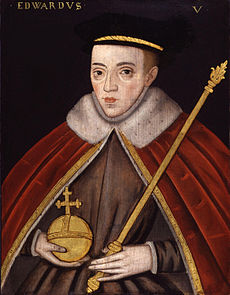
King Edward V from NPG.jpg
Edward V (1470-1483?)

The eldest son of King Edward and Queen Elizabeth was born on 2 November 1470 in Westminster Abbey. The queen had sought sanctuary after the Lancastrians had forced the king to flee his realm. However, King Edward emerged victorious and the prince was brought out of sanctuary. He was created Prince of Wales the following year. Prince Edward was reputedly learned, diligent, and dignified.

The birth of a son to the royal couple was highly important: it brought security to them, and offered the promise of future prosperity as well as the continuation of the dynasty. However, it was not to be. When he was only twelve years old, Prince Edward became King Edward V, upon the unexpected death of his father. However, his uncle Richard seized the throne. Edward was lodged in the Tower of London alongside his younger brother Richard, duke of York. Like his siblings, the new king was declared illegitimate and unfit to succeed to the throne. 

Mystery surrounds Edward's fate. Contemporaries speculated a great deal about what had happened to him. Some outright accused King Richard of murdering him and his brother. Others believed that the king had died in the Tower from illness. The majority of modern historians believe that Edward was dead by late 1483, which if true would mean that he never reached his fourteenth birthday (and possibly not his thirteenth). Edward V is one of the shortest reigning monarchs in English history.

Richard of Shrewsbury.jpg
Richard, duke of York (1473-1483?)

Richard was born on 17 August 1473 in Shrewsbury, and may have been named for his grandfather Richard, duke of York; alternatively, he may have been named for his uncle, Richard, duke of Gloucester. At the age of four, Prince Richard married the five-year-old Anne Mowbray, countess of Norfolk, at Westminster in January 1478. This appears utterly bizarre to modern readers. The marriage occurred on account of the king's determination to secure the Mowbray estates. Anne died in 1481, and her estates should have passed to William, Viscount Berkeley and to John, Lord Howard. However, an act was passed in 1483 that granted the Mowbray estates to Prince Richard for his lifetime, and to his heirs, if he had any, when he died. The whole episode was an example of King Edward IV's capacity for rapacity and ruthlessness when it came to acquiring greater wealth.

The declaration made in the spring of 1483, following Edward IV's death, that the children of the Wydeville marriage were illegitimate on account of their father's previous marriage to Lady Eleanor Talbot, rendered Prince Richard a bastard. The prince was escorted to the Tower of London, to join his brother, Edward V. Most historians believe that Richard was killed on the orders of King Richard; others suggest that he was put to death, but on another individual's orders: possibly Henry Tudor; possibly the duke of Buckingham; or possibly Lady Margaret Beaufort. 

However, others believe that Richard escaped abroad. One line of thought posits that the pretender Perkin Warbeck, who was a menace to Henry VII, was actually Richard, duke of York, come back to claim his inheritance.

The Daughters of Edward IV.jpg
Anne of York (1475-1511)

Anne was born on 2 November 1475 at Westminster Palace. In the summer of 1480, her father signed a treaty agreement with Maximilian I, duke of Austria, and it was agreed that Anne would marry the duke's eldest son Philip. This would have been a most prestigious marriage for Anne, for it would have enabled her to become duchess of Burgundy. Following Richard III's accession, the nine-year-old Anne was betrothed to Thomas Howard (later the uncle of Anne Boleyn and Katherine Howard) in 1484. Even after Richard's death, Howard remained eager to marry Anne. They married at Westminster Abbey on 4 February 1495. None of their children survived. 

Anne was close to her sister Queen Elizabeth, and like her sister Cecily, she played an important role in court ceremonies. She carried the chrisom at the christenings of her nephew Arthur, in 1486, and niece Margaret in 1489. Anne died on 23 November 1511 and was buried at Thetford Priory in Norfolk. Later, her body was moved to the Church of St Michael the Archangel in Framlingham.

Katherine of York.jpg
Katherine of York (1479-1527)

Aside from her sister Elizabeth, Katherine of York made the best marriage of any of the York children. She was born on 14 August 1479 at Eltham Palace. In childhood, Katherine had been betrothed to Juan, the heir to the kingdoms of Castile and Aragon (he was the older brother of Katherine of Aragon). Upon Henry VII's accession, Katherine was betrothed to James Stewart, duke of Ross. The same agreement envisaged marrying Katherine's mother, the dowager queen Elizabeth Wydeville, to James III of Scotland. These plans came to nothing, and in 1495, the same year her sister Anne married Howard, Katherine married William Courtenay, earl of Devon. 

Again, it may not have been the marriage that Katherine had wanted, but it ensured that she was a countess. They had three children: Henry (who was executed in 1539 for plotting against Henry VIII); Edward (who died young); and Margaret (who married Henry Somerset, earl of Worcester). Her husband died in 1511. Following his death, Katherine swore a voluntary vow of chastity in the presence of the bishop of London. She was reportedly favoured by her nephew Henry VIII, who 'brought her into a sure estate'. Katherine died on 15 November 1527 at Tiverton Castle, the last of Edward IV's children to die.

BrigídaYork01.JPG
Bridget of York (1480-1517)

Bridget was the youngest child of King Edward and Queen Elizabeth. She was born on 10 November 1480 at Eltham Palace. It is likely that Bridget was named after St. Bridget of Sweden. It seems that the king and queen decided, while Bridget was still young, that their youngest daughter would follow a religious life. At an unknown date between 1486 and 1492, when she was between the ages of six and twelve, Bridget was entrusted to Dartford Priory in Kent. Her sister, Queen Elizabeth of York, continued to write to her and send messengers. Bridget attended the funeral of her mother, Elizabeth Wydeville, in 1492. She died in 1517, and in some respects is the most obscure of Edward IV's daughters.

Children who died young
Margaret of York (born and died 1472)
George, duke of Bedford (1477-1479)

Margaret of York was born on 10 April 1472 at Winchester Castle in Hampshire. She was likely named for her aunt, Margaret, duchess of Burgundy. Tragically, Margaret died at the age of only eight months, on 11 December 1472. She was buried in Westminster Abbey.

George of York was born in March 1477 at Windsor Castle. The following year, he was created duke of Bedford. The dukedom of Bedford had long been associated with the royal family. That same year, George was appointed lord lieutenant of Ireland. He died in 1479 at the age of two, perhaps from plague, and was buried in St George's Chapel at Windsor Castle, where his parents were later buried. 

Thursday, 26 November 2015

Queen Elizabeth of York and the Tower of London


Several Tudor queens are associated with the Tower of London. Elizabeth of York, Katherine of Aragon and Anne Boleyn all resided there the night before their coronations at Westminster Abbey, as did the Tudor queens regnant Mary I and Elizabeth I. More ominously, Anne Boleyn and Katherine Howard met their deaths at the Tower of London; both wives were executed on charges of treason within the walls of the Tower. A third queen (although her royal title has, and continues to be disputed), Lady Jane Grey, was also beheaded within the Tower. However, one Tudor queen's death at the Tower of London has tended to be forgotten in modern times. We remember the grim demises of Anne Boleyn, Katherine Howard and Jane Grey at the Tower, but we often forget that Queen Elizabeth was the first Tudor queen to die at the royal fortress. She, however, was not executed, but died following complications in childbirth. 

Elizabeth of York was the eldest daughter of Edward IV and Elizabeth Wydeville. She was born on 11 February 1466 at the Palace of Westminster, and became queen of England following her marriage to the first Tudor king, Henry VII. Elizabeth's life was tumultuous. She had been born a princess of England and grew up in expectation of a glorious future; she perhaps believed that it was her destiny to marry a European prince. When her brother Edward was born in 1470, the infant Elizabeth would have acknowledged that it would be unlikely that she would rule England, unlikely even in the capacity of queen consort. However, everything changed for Elizabeth in the year 1483, when she was seventeen. Following Edward IV's unexpected death, Prince Edward was proclaimed Edward V, but his uncle Richard of Gloucester seized him and his younger brother Richard of York, and had them incarcerated in the Tower of London. Rumours of both princes' disappearances began to circulate, and by the autumn of that year it was believed that they were dead. What truly happened to Edward and Richard can never be known with certainty, and it is a mystery as to whether or not Elizabeth ever learned of their fate. Both during and after her lifetime, it was rumoured that she had schemed to marry her uncle Richard of Gloucester, now Richard III, but he denied ever considering marrying her. Shortly before her twentieth birthday, Elizabeth became queen of England as the wife of Henry VII, and she gave birth to four surviving children: Arthur (born in 1486); Margaret (born in 1489); Henry, the future Henry VIII (born in 1491); and Mary (born in 1496). She gave birth to a daughter, Katherine, in February 1503, but the child was sickly and did not long survive. The queen died nine days later, on her thirty-seventh birthday.

Above: A contemporary drawing of the Tower of London. 

The Tower of London occupied a central presence in the life of Elizabeth of York. For her, it was associated with triumph (she was crowned there in November 1487); tragedy (she died there in 1503); childbirth; mystery and a lack of fulfillment (her brothers had allegedly disappeared after being imprisoned there). Perhaps Elizabeth's most abiding memory of the Tower, during her lifetime, was the day of her coronation in the winter of 1487. At the age of twenty-one, the attractive, fair-haired daughter of York fulfilled her glorious destiny: she became queen of England as the wife of the first Tudor king. Not only did she follow in her mother's footsteps, the footsteps of another Queen Elizabeth, but she had fulfilled her father's ambition that the Yorkist dynasty should reign triumphant. Elizabeth, of course, was not a queen regnant, and her husband was especially keen to demonstrate that his accession had united the houses of York and Tudor, rather than representing a Yorkist triumph. 

However, everyone - including, first and foremost, Elizabeth - knew that without his wife's impeccable credentials and her Yorkist symbolism, Henry VII would not have enjoyed a triumphant accession to the throne of England. Elizabeth was vitally important in strengthening her husband's claim, and in crowning her as queen, Henry showed his recognition of his wife's dynastic importance. On that chilly day in November, the young Elizabeth sat in triumph, fiercely proud of her lineage and determined to honour her dynasty to the best of her ability. In all likelihood, for her, the Tower was a glorious setting for the occasion. It was a palace, as well as a fortress, and while its association with the disappearance of her younger brothers two years earlier represented it as dark and forbidding, for Elizabeth its positive features were probably more on show that day. 

Whether the queen ever learned of her brothers' fate is uncertain, but if she did not, then the Tower of London surely symbolised mystery, perhaps premature death, perhaps premature ending of hope, a lack of fulfillment. During her youth and teenage years, she was educated to view her younger brother as the next king of England upon her father's death. Richard III's triumph had snuffed out the possibility of that happening, and Elizabeth was suddenly elevated to a new position as a result of her uncle's ambitions. 


The Tower of London was, finally, for Elizabeth, a scene of tragedy, a setting of death. On 11 February 1503, the queen died on her thirty-seventh birthday, days after giving birth to a daughter. The Tower was associated with triumph and glory when monarchs were crowned there, but it could also be represented as dark, gloomy and associated with death. Elizabeth's death occurred at a time of coldness, darkness, and icy winter. She was the first Tudor queen to die at the fortress, but she would not be the last. However, while Anne Boleyn, Katherine Howard and Jane Grey lost their lives at the Tower at the hands of the executioner as traitors to the Crown, Queen Elizabeth was posthumously represented as a virtuous, learned and pious woman who had died performing a good service, an act that was symbolically identified as the holy, divinely ordained duty of queens: childbirth. Today, the ghosts of Anne and Jane, in particular, are believed to haunt the Tower in sorrow, unhappiness and desolation. Whether the ghost of Elizabeth of York is ever glimpsed at the Tower is a question that is almost never considered, but given her positive reputation, her dynastic achievements and her love and loyalty to her family, it perhaps seems unlikely. 

Thursday, 22 October 2015

The Stereotyped Six Wives: One: 'A Great and Strong-Laboured Woman'


Katherine of Aragon, first wife of Henry VIII of England
Lifetime: 16 December 1485 - 7 January 1536
Reigned: June 1509 - May 1533 (23 years, 11 months)
Pregnancies: 6 
Stillborn daughter: January 1510
Prince Henry: 1 January 1511 - 23 February 1511 
Stillborn son: September 1513
Stillborn son: November 1514
Mary I of England: 18 February 1516 - 17 November 1558
Stillborn daughter: November 1518

In this new six-part series, I will be reexamining the lives and personalities of Henry VIII's six wives, seeking to portray their lives realistically in a process that discards prevailing stereotypes. Much scholarly work has been done on Henry's reign in recent decades, affording fresh insights into the politics and achievements of the period. Understandably, widespread interest in Henry's marital affairs remains unabated. Yet stereotypes continue to bedevil our knowledge of the wives of this most enigmatic king. 

This first blog post examines the incredible life of Queen Katherine of Aragon, Henry's first wife. Married to Henry at the age of twenty-three, Katherine was both a princess of Spain and a queen of England. Her tenure as Henry's consort included notable achievements. Katherine successfully fulfilled the queenly role of intercessor and was an acknowledged ambassador for her home country. Her considerable achievements as queen are usually overlooked in the divorce crisis that concerned only the final six years of her reign. She was Queen of England for almost 24 years and was a noted patron of the Renaissance in England. An examination of the sources concerning Katherine indicate that she was learned, charismatic, shrewd and formidable. Often depicted as the innocent, virtuous foil to the scheming Anne Boleyn, reality is rather different.


As the youngest daughter of the formidable 'Catholic Kings' Ferdinand and Isabella, who jointly ruled the Spanish kingdoms of Castile and Aragon, Katherine was expected to make an excellent marriage, but it was probably not anticipated at her birth that she would marry into the English royal family. At the time of Katherine's birth on 16 December 1485 at the Archbishop's Palace at Alcala de Henares, the Tudors had been on the English throne for less than four months. A newly established dynasty with a fairly weak claim to the throne, the Tudors were not regarded with especial confidence or admiration by other rulers in Europe. Ferdinand and Isabella, who had already ruled Spain for several years by this point, were shrewd and confident rulers and could be forgiven for regarding King Henry VII with wariness. Perhaps they wondered how long he would hold the turbulent throne. Given that England had been in a state of dynastic turmoil since the mid fifteenth-century, they could have been forgiven for thinking this.

Katherine was educated by a clerk in holy orders, Alessandro Geraldini. The Dutch humanist Erasmus later recorded that the princess was 'imbued with learning, by the care of her illustrious mother'. She learned languages (though not English, and she only acquired a knowledge of French several years later); canon and civil law; theology; philosophy; history; and arithmetic, but was also brought up with an excellent knowledge of skills deemed appropriately feminine: housewifery; embroidery; lacemaking; and music. At a time when the Renaissance was beginning to develop across Europe, the Spanish monarchs likely placed great emphasis on their daughter acquiring musical talent. As queen, Katherine was to enjoy participating in masques and dances. Perhaps most importantly, Katherine was brought up with an intense devotion and loyalty to the Roman Catholic Church. Her parents had determinedly enforced the Roman faith across their dominions, finally expelling Jews and Moors who refused to convert. Not for nothing were Ferdinand and Isabella granted the title Catholic Monarch by the satisfied pope Alexander VI. From an early age, Katherine came to regard any religion that was antithetical to the Roman faith as heresy. Given the determination with which her parents sought to expel heretics from their kingdoms, it is highly likely that Katherine was imbued with a passionate hatred of what she perceived as heresy and an instinctive intolerance for heretics. 

Above: Ferdinand of Aragon and Isabella of Castile, the parents of Katherine of Aragon. Their active rule, which involved the determined expulsion of heresy from their kingdoms, likely had a significant influence on Katherine, inspiring her to regard heresy with revulsion while encouraging her to revere and loyally serve the Roman Catholic Church.

The influence of Katherine's parents on their daughter's development should not be underestimated. Their shared, active rule would have signalled to Katherine that a queen could exercise tremendous influence alongside her husband in ruling a kingdom. Katherine was not brought up in England, revering the queenly model in place there: a compliant, devoted and virginal wife and mother. While she was brought up to regard these qualities as essential to successful rulership, she would also have learned that a queen consort could be active, even militant, in working alongside her husband to successfully rule. As a young girl, Katherine of Aragon's model of queenship was one that was active, determined and militant. It was also one that was fiercely intolerant of threat, whether religious or political, and one that was grounded in loyalty to one's lineage and devotion to one's faith. 

Katherine grew to be both beautiful and charming. She was reputedly tiny in height, probably less than five foot tall, and her hair was long and auburn in colour. Sir Thomas More, who was to become Katherine's close friend and admirer, wrote in her praise: 'There is nothing wanting in her that the most beautiful girl should have. Everyone is singing her praises'. She was also learned and intelligent, with an interest in the burgeoning Renaissance movement and a devotion to the Roman Catholic Church: in short, she appeared the perfect queen consort for a young king. Aware of this, and determined to extend Spanish power outwards into Europe to diminish the hostile influence of France, Ferdinand and Isabella decided to marry their youngest daughter into England. She was betrothed to the English king's eldest son Prince Arthur. Given that interest in the match had first been mooted in the spring of 1488, when Katherine was only two years of age and her betrothed not yet two, it is unsurprising that Katherine came to regard herself as divinely appointed by God to be England's queen. It was her destiny. With a fierce devotion to the Catholic faith, combined with a deep-seated loyalty to her lineage, it must be borne in mind that Katherine regarded herself from infanthood as the Queen of England. Only in death could God could take that title from her. 

Even at an early age, then, Katherine was never the submissive, silent and passive consort presented in Victorian historiography and even in some modern works of history. She was an energetic, determined and resourceful woman who was appointed by God to rule England. While she would have learned from her mother that a queen's primary task was to provide male heirs with which to secure the dynasty's continuation, her mother's example also educated her daughter to believe that a queen's role in the politics of the kingdom was as important as that of her husband. Her role was active, not passive. Indeed, it is questionable whether Katherine actively cultivated a submissive ideal of womanhood that was later associated with her successor, Jane Seymour, so it is perhaps surprising that she is often identified with this role. As will be seen, she perhaps reacted more negatively and forcefully to Henry VIII's infidelities than is often assumed, and she certainly was not averse to losing her temper publicly. 

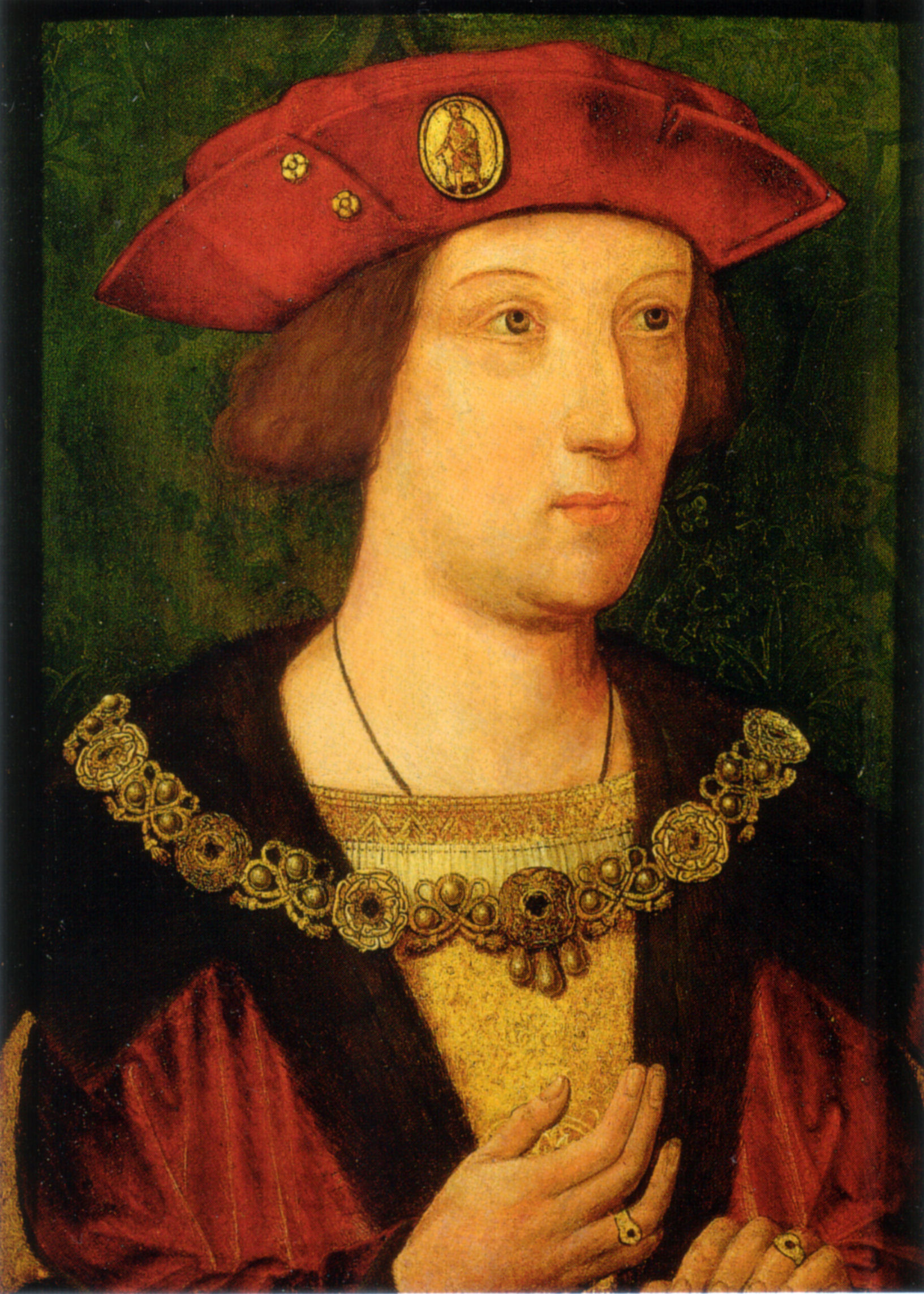
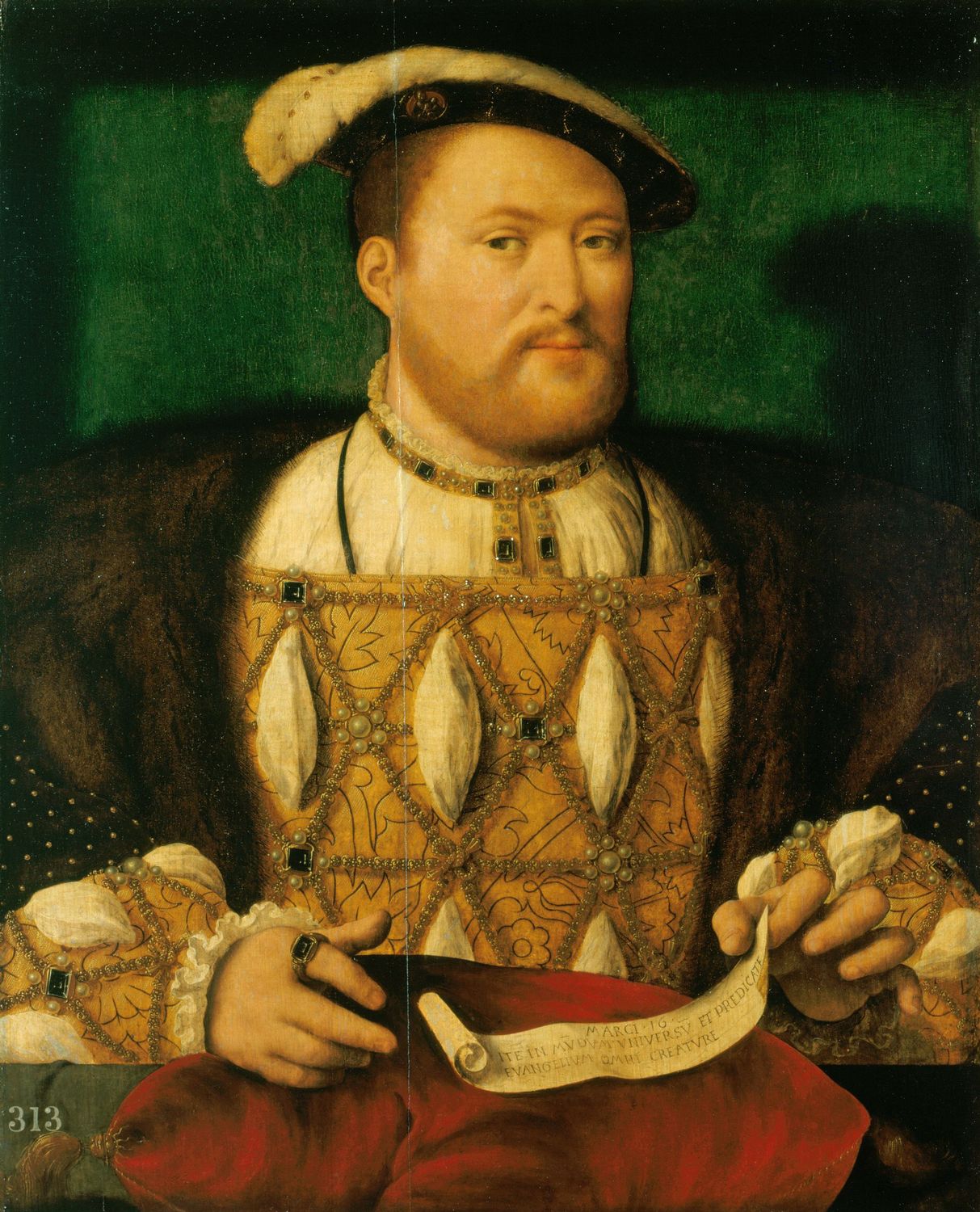
Brothers: Arthur, Prince of Wales (left) and Henry, Prince of Wales (right); later Henry VIII. Both men married Katherine of Aragon.

In November 1501, at the age of fifteen, Katherine of Aragon wed Arthur Tudor, prince of Wales, at St. Paul's Cathedral in London. Katherine was acquainted with her new family around this time. She reportedly enjoyed warm relations with her mother-in-law Queen Elizabeth of York, the shrewd and kindly wife of Henry VII, and she undoubtedly regarded her bridegroom's grandmother, Lady Margaret Beaufort, with respect. Like Katherine's mother Isabella of Castile, Lady Margaret was a determined and active woman who ruled her estates vigorously and exercised considerable influence at court. Contemporary ambassadors whispered rumours that she even held her daughter-in-law, the Queen of England, in subjection. Katherine would have learnt from this state of affairs that a royal woman's power and influence at the English court was potentially considerable. She may also have considered Elizabeth's situation and determined that no woman would ever oust her from a position of influence, whether that woman was family or not.

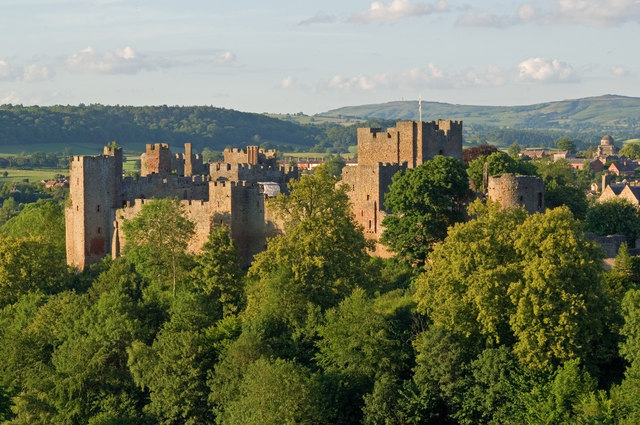
After their marriage, the prince and princess of Wales (as Katherine was now known) were sent to reside at Ludlow Castle, Arthur's ceremonial centre of power in the Welsh Marches. Traditionally, it has been argued that Katherine's marriage to Arthur was not consummated and, when the prince tragically died in the spring of 1502, the princess was left a virgin widow. However, David Starkey recently suggested that the marriage was indeed consummated. Certainly no-one at the time doubted that it had. When her marriage was threatened in 1527 by Henry VIII's determination to remarry, Katherine had every reason to lie. Not only was her position as queen endangered, but her daughter's future could be jeopardised were the princess to become a bastard. Moreover, Arthur was not the unhealthy, sickly teenager of popular legend, but a vigorous youth. Katherine's mother would have educated her about the necessity of consummating a union, to prevent doubts arising as to its legitimacy. The Catholic Church taught that a marriage could be annulled on the grounds of non-consummation, as the failed union of Henry VIII and Anne of Cleves was to prove. Given both her pride and loyalty to her lineage, and her intense devotion to her Roman Catholic faith, it seems unlikely that Katherine failed to consummate her marriage to Arthur.

Ludlow Castle from Whitcliffe, 2011.jpg
Above: Ludlow Castle in Wales, where Katherine probably consummated her marriage to Arthur, Prince of Wales.

Whether Katherine truly loved her first husband is uncertain, but her determination to become Queen of England did not die with her husband in April 1502. During her seven years of widowhood, Katherine continued to exert a forceful and vigorous presence in European politics. She regularly wrote to her parents, especially her father following the death of her mother in late 1504. Katherine informed Ferdinand that she had 'no other hope or comfort in this world' unless he wrote to her regularly. The evidence of her letters indicates that she sought to influence her father's policy, as seen in her insistent determination to have the Spanish ambassador de Puebla expelled for the 'pain and annoyance' which he had caused her, perhaps principally on account of his failure to promote her wellbeing and interests at court. She also pressured Henry VII, her father-in-law, to remember 'his daughter' and to remember that 'it will reflect dishonour upon his character if he should entirely abandon' her. Katherine's entreaties were genuine, but were also calculating. She sought to remind the English king of her position as princess of Spain and, thus, her central importance in European affairs as a prospective consort to a foreign ruler. She surely rejoiced upon learning that she was betrothed to her former husband's younger brother Henry Tudor, but whether she knew of his decision to revoke his promises to her is unknown. Certainly it would not have altered her firm belief that she would one day rule England as its queen. 

Her health, however, soon became a matter of concern. Historian Giles Tremlett has speculated that the princess may have suffered from an eating disorder, although it is unwise to refer it as such in the modern sense of the term. Certainly Katherine's zeal for fasting and abstinence was famed across Europe. The Pope himself became so concerned that he issued a missive instructing that if Katherine's 'devotions and fasting' were 'thought to stand in the way of her physical health and the procreation of children', then they could be 'revoked and annulled by men'. Katherine's desire to fast is highly indicative of the importance she placed on loyally and devotedly serving the Roman Catholic faith. In her eyes, alongside her destiny as Queen of England, it was the fundamental reason for her existence. 

Even as her fortunes experienced strain, during these years Katherine's belief in her God-given destiny as Queen of England remained rock-solid. If anything, the experience of adversity hardened her and accustomed her to fighting for what she regarded as her birthright. Moreover, the experience of success positioned her to regard her cause as just, certain of triumph. That success came in the summer of 1509 when, following Henry VII's death, the teenaged Henry VIII of England chose to wed Katherine. He was reputed to regard her with 'singular love', but it is also equally likely that he wished to preserve the Spanish alliance in the face of French hostility. The Tudor claim to the throne remained fragile, as the lingering fear of the White Rose proved.


Above: Katherine of Aragon's only surviving child, Mary, born in 1516.

It is unfortunate that Katherine of Aragon tends to be regarded in popular culture as dowdy and dull, given that she was beautiful, elegant and sophisticated in her early years as England's queen. She dressed exquisitely and was reputed to be 'a ceremonious woman in her attire'. Alongside her handsome, auburn-haired husband, Katherine represented a triumphant figure presiding over the cultured English court. God certainly seemed to smile on their union, as were the people at large who rejoiced 'in the possession of such a King'. Katherine immediately became pregnant and was delivered of a stillborn daughter in January 1510. Yet Henry was not overly concerned, writing to his father-in-law Ferdinand of the 'joy and felicity' which he had experienced in marrying the charming Katherine. 'In high health, with the greatest gaiety and contentment that ever there was', it is hardly likely that the queen was overly concerned too. She had triumphed after years of hardship and adversity, and was supremely confident that God favoured her and would reward her devotion to the faith with the birth of sons. 

Despite the success of their marriage, Katherine's father had reputedly been unfaithful to his wife, and Katherine would likely have learned from an early age that kings were accustomed to taking lovers. However, that does not mean that she regarded extramarital liaisons with approval or even acceptance. Given her devout adherence to Roman Catholicism, it is rather more likely that she regarded adulterous affairs with horror and revulsion. So when Henry took Lady Anne Hastings as his lover within a year of marrying Katherine, it is not entirely surprising that the queen was said to be highly 'vexed' with her husband. She confronted him about his seduction of her lady-in-waiting and was to later show a marked disapproval of his decision to award his bastard son Henry Fitzroy with two dukedoms. While Katherine did not cause tantrums, she certainly did not necessarily acquiesce to Henry's extramarital affairs submissively or ignorantly. It is far too simplistic to interpret her behaviour in this light, as the majority of historians have done. An energetic, shrewd and determined consort, and mindful of her admirable lineage, she perhaps rationalised that such affairs were beneath her. Her primary duty was to bear sons, and if she did so, then no lady-in-waiting, no matter how beautiful or sophisticated, could threaten her. 

Above: Mary Boleyn, mistress of Henry VIII. While we have no direct evidence for Queen Katherine's opinion of the woman who supplanted Bessie Blount in her husband's affections, it seems too simplistic to view Katherine as submissively ignoring Henry's adulterous affairs. 

Aside from the royal couple's failure to have a healthy son, Katherine's queenship was largely triumphant. She enjoyed notable achievements that have often been overlooked in the focus on the 'great matter'. Not only was she a loyal ambassador of her homeland, but she was her husband's chief advisor and confidant during his early years as king. In the summer of 1513, while campaigning in France, Henry accorded his wife the supreme honour of granting her the position of regent in England. Katherine, who was well aware that the queen's role could be active and forceful rather than silent and submissive, took on this position with enthusiasm. When the Scots invaded in the autumn, she energetically mustered her troops and rallied her forces. Katherine herself declared to her husband that she was 'horribly busy with making standards, banners and badges' for the cause. The queen travelled to Buckingham and urged the English forces to victory. They were inspired by Katherine's enthusiasm and courage and resoundingly defeated the Scots at Flodden on 9 September 1513. Triumphant, Katherine wrote to her husband: 'To my thinking, this battle hath been more than should you win all the crown of France'. She also hoped that Henry would shortly return to England because of the 'joy' it would bring both her and his subjects. Katherine's confidence has often been interpreted negatively by historians, who view her as crowing and inconsiderate of Henry's feelings, in seeming to accord her victory more importance than his own triumphs in France. However, Katherine would not have regarded it that way. Her mother had been as active, as militant and as successful as her father, and Katherine would have seen no reason why she could not achieve the same greatness that Isabella had. Moreover, the English queen was pregnant during these events and although the stillbirth of her son barely a week later would have caused her sorrow, she perhaps tempered this loss with the knowledge that God had continued to smile on her by granting her an unforgettable victory on the battlefield.

Because she regarded her queenship as active and a position to be approached with consideration and respect, Katherine took on the duties of her role with enthusiasm and diligence. She was a noted intercessor and earned considerable popularity in England for her success in this sphere. Following the aftermath of the May Day riots in 1517, when the London apprentices had violently turned on the foreigners of the city, the queen begged her husband with tears in her eyes to 'spare the apprentices' from execution. Willingly, Henry acceded to her request. This incident provides further evidence of Henry's love for his wife. He later admitted during the annulment proceedings that 'if I were to marry again, I would chose her above all women' for her 'gentleness, humility and buxomness'. Katherine's influence at court extended to matters of religion; she was also known to be charitable and provided alms for the poor. Presenting herself carefully as submissive, virtuous and pious, her husband and close friends were aware that she was vigorous, determined and resourceful, particularly when it came to a crisis.

By the spring of 1527, Katherine experienced her first real crisis as queen. Eighteen years on the throne had enabled her to grow into a confident, shrewd and experienced queen who was more than comfortable in affairs of state and promoting the interests of her homeland. She had watched as Henry's lovers had come and gone. Although she did not regard his affairs with approval, and had reacted furiously when his bastard by Bessie Blount had been granted unprecedented honours in 1525, Katherine shrewdly remained calm. She had witnessed her father's infidelities and continued to believe that, since God had ordained for her to become queen, she would remain Henry's wife until the day she died. In 1516, she had given birth to her only surviving daughter Mary. Katherine exercised undoubted influence in her daughter's education, for she was determined to ensure that her daughter was an active and successful queen just as her mother and grandmother had been. The Spanish humanist Juan Luis Vives had been appointed as her tutor, and Mary was brought up to be a virtuous Christian maiden. Katherine's devotion to the Catholic faith grounded her approach to her daughter's upbringing, and Mary's intense piety was undoubtedly instilled in her from birth by her formidable mother.

Above: Peterborough Cathedral, where Katherine was buried in 1536.

Katherine's queenship had been active, resourceful, even militant. She had always been at the centre of politics and had never shied from exerting influence in matters of state. During the annulment crisis, Katherine refused to accept that she was no longer Queen. As she perceived it, she had been educated from the age of two to regard herself as England's queen. No earthly being, even her husband, could take it from her. Only God could by calling her to Heaven. It was her destiny to be Queen, just as it was her daughter Mary's destiny someday to be Queen in her mother's place. By daring to put her aside, Henry was endangering not only his immortal soul but the wellbeing of England. Several modern historians have interpreted Katherine as disloyal to English interests, but she was in fact highly concerned with England's future and interpreted Henry's selfish desires as grossly antithetical to the future harmony of England. 

She had been groomed from birth to regard heresy as mortally dangerous. It was an infection, a blight on the kingdom and a warning from God. The annulment was heretical, for it was closely associated with the reformed religion. Katherine and her supporters, including the Spanish ambassador Eustace Chapuys, were united in their belief that the reformed faith was Lutheran heresy and offensive to God. Katherine's parents had militantly stamped out heresy in their dominions and their daughter was determined to do the same in her adopted home. In no sense could she have stepped aside for her husband. Not only was he, in her eyes, endangering her position as queen and threatening their daughter's future, but he was tacitly granting acceptance to newfound heresy and thus calling into question the very foundations of society, as proven by the favour he bestowed on the Boleyns, whom Katherine knew were inferior to her in birth. By preferring them to Katherine, whose lineage was prestigious and renowned across Europe, Henry's behaviour ran dangerously close to questioning God's will. 

Katherine's behaviour during her years of widowhood (1502-9) had been resourceful, energetic and determined. She had not remained silent, but had issued urgent letters to her father, ambassador, friends and her aloof father-in-law Henry VII, demanding for her wellbeing to be respected and her fortunes to be restored. As then, her role during the annulment crisis was formidable. She magnificently rose to the challenge presented her and upbraided Henry at the Blackfriars court in the summer of 1529 for daring to put her aside, asking him how she had offended him and daring him to assert that he had not found her a virgin at their marriage. All the evidence demonstrates, from her position as Princess of Wales to a threatened Queen of England, that Katherine of Aragon responded magnificently to a threat. Her offensive was calculating and determined. Not only was she fighting for her daughter's future, but for her country's wellbeing. 

Above: Margaret of Anjou, queen of England.

Margaret of Anjou, the courageous wife of Henry VI, had been described as 'a great and strong-laboured woman, for she spareth no pain to sue her things to an intent and conclusion to her power'. The same might in fairness be said of Katherine of Aragon. The first wife of Henry VIII was perhaps the toughest and was certainly the one who felt most confident in taking on her husband and reminding him of his responsibilities as king. She had not reacted submissively to his extramarital affairs, but had dared to reproach him for his affairs with Anne Hastings and Anne Boleyn, and when he promoted his bastard son's interests to the detriment of his legitimate daughter's position, she protested so vigorously that she was punished with the removal of several of her ladies-in-waiting. 

In popular culture, Katherine continues to be perceived as the virtuous and silently suffering foil to the scheming, manipulative Anne Boleyn. This interpretation is both skewed and inaccurate, and marks a betrayal of Katherine's memory, failing to understand the real woman for who she truly was. Katherine was a determined, passionate adherent of the Roman Catholic faith and viewed other religious persuasions as dangerous heresy that required elimination at all cost. She was a courageous defender of the country's interests and was prepared to lead her troops, valiantly urging them on to destroy England's enemies. An energetic, stubborn and formidable queen, she was capable of deceit. She had probably lied about the consummation of her first marriage, perhaps lied about her pregnancy in 1510 to her father, and was capable of bloodthirstiness - as her desire to send her husband the brutally mangled body of James IV proves. Yet she was also interested in the Renaissance, was unswervingly loyal to her friends and relations, and was deeply concerned to promote the welfare of her people. It is misleading to regard Katherine as a perfect saint, a wronged wife and a silently suffering mother. She, like Margaret of Anjou, was 'a great and strong-laboured woman' who never once shied away from promoting her interests at all costs, while valiantly fighting to destroy all threats to her position, whether religious, political or dynastic.