Showing posts with label Leanda de Lisle. Show all posts

Friday, 12 February 2016

Remembering Lady Jane Grey


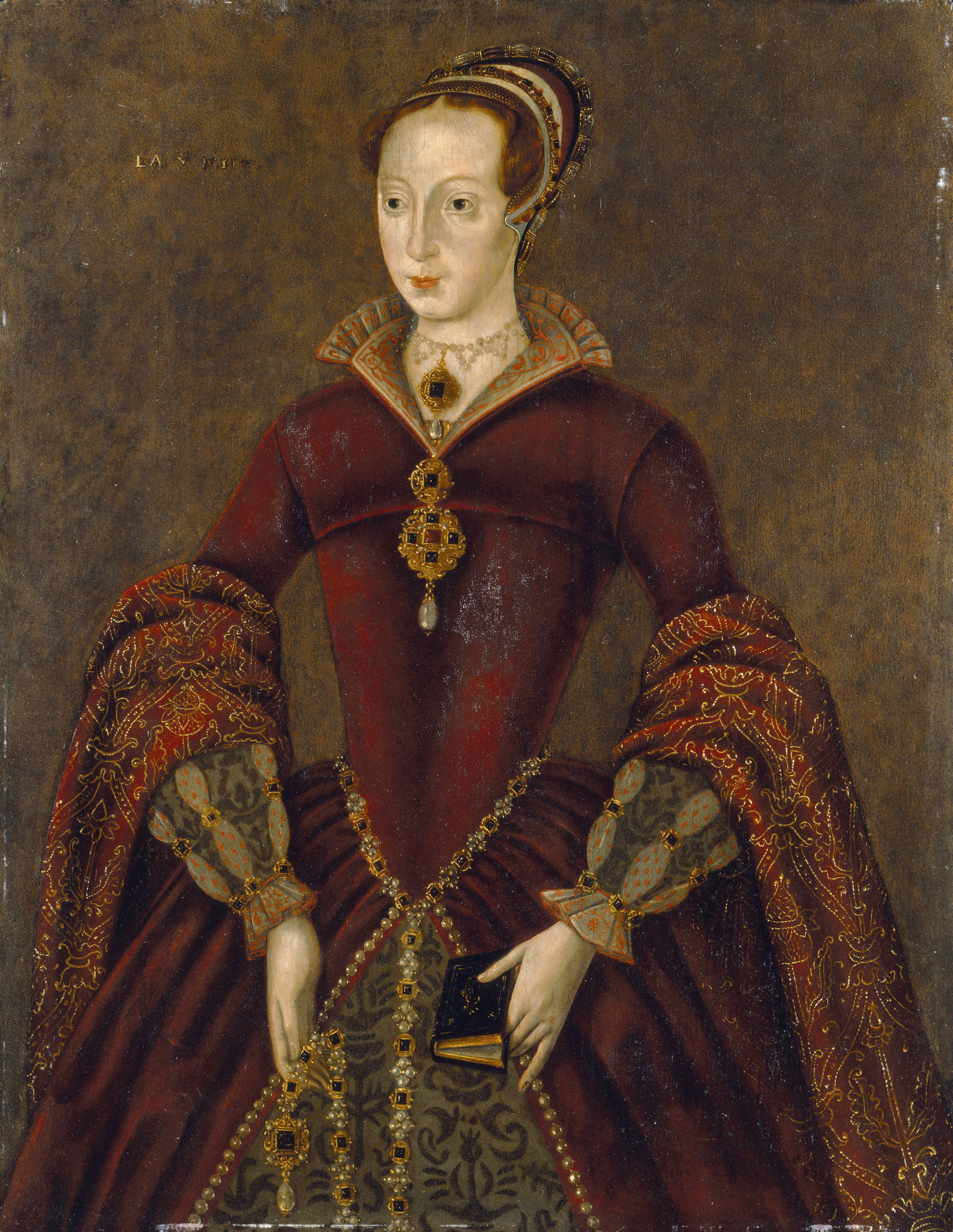
On 12 February 1554, Lady Jane Grey was executed within the walls of the Tower of London. Three months earlier, she and her husband Guildford Dudley had been found guilty of high treason. They had unlawfully usurped the throne from the rightful queen, Mary I. Traditionally, historians presented Lady Jane as an unwilling innocent, a much wronged young girl who had no desire whatsoever to be Queen of England. Recent research has disproved this legend. In actuality, Lady Jane was an intelligent, stubborn and resilient woman who was fiercely devoted to her Protestant faith. She regarded herself as appointed by God to rule England, and she likely regarded her Catholic cousin Mary Tudor as ungodly, even abominable in the eyes of God. He had chosen Jane to be Queen, and she believed it was her destiny to be sovereign of England.

Having been selected as Edward VI's heir, Jane was proclaimed queen in July 1553. As is well known, Jane's regime collapsed within days, and Mary was declared queen on 19 July. Jane's trial followed in November, and although she and her husband were found guilty, Queen Mary showed no desire to have them put to death. However, the outbreak of rebellion in early 1554, motivated by dislike of Mary's decision to marry Philip of Spain, coupled with the decision to reinstate the medieval heresy laws, sealed Jane's fate. Her own father was involved in the plot against the queen, and he followed Jane to the scaffold a few days after her own death. A courageous and resourceful young woman, Jane accepted her fate and bravely prepared for death.

Above: The traditional view of Lady Jane Grey, as portrayed in Paul Delaroche's nineteenth-century painting, as a wronged innocent.

Guildford Dudley was executed on the morning of 12 February 1554 on Tower Hill, where his father, the duke of Northumberland, had died the previous August. Guildford was himself still a teenager, perhaps no more than nineteen years old, and has been the victim of notable slanders. Modern historians have usually depicted him as a snivelling, weak-willed and vicious adolescent, loathed by Jane, but Leanda de Lisle's research questions whether this portrayal is accurate, as no contemporary source describes Guildford in such a negative way. Whatever the truth of Guildford's character, his end was tragic. Like Jane, he was the victim of his father's plotting, and he duly resigned himself to his fate. His wife was confronted by the sight of her husband's headless corpse, the fabric stained with his blood, returning on a cart from Tower Hill. She knew that her own demise was imminent.

Shortly afterwards, around ten in the morning, Lady Jane Grey walked out of her apartments and mounted the scaffold that had been built within the walls of the Tower. Onlookers commented on her braveness and her piety. Two versions of her scaffold speech survive, both of which confirm that she acknowledged that she was to die under the law, having been condemned by it. She confirmed that she had offended the queen and had behaved unlawfully. Most importantly, particularly for her posthumous reputation, Jane proclaimed that she died a true Christian woman, and looked to be saved only by Christ's mercy. This confirmed her commitment to the Protestant faith, for Catholics traditionally believed that good works also played an important part in one's salvation. She then asked the onlookers to pray for her.

Above: Queen Mary I, who ordered her cousin Lady Jane Grey's execution in February 1554.

Lady Jane's female attendants then helped her off with her gown and gave her a handkerchief to use as a blindfold. Groping about in the dark, she could not find the scaffold, and cried, "Where is it? What shall I do?" Someone came forward to guide her and she rested her head upon the block. Mercifully, she was decapitated with one blow, probably just a few months short of her seventeenth birthday. Her remains were interred in the nearby chapel of St. Peter ad Vincula. With her passing, Lady Jane Grey's story became the stuff of legend. In Protestant works, most notably John Foxe's Book of Martyrs, she was depicted as a pious, virtuous Protestant maiden who had died for her faith, condemned by the cruel Catholic tyrant, Mary I. Victorian historians depicted her as an innocent victim of her grasping, scheming family, and portrayed Jane's mother, Lady Frances Brandon, as a tyrannical woman and an abusive mother. Modern historians have usually followed this version of events. But modern research has demonstrated that reality was more complex. Lady Jane Grey was far more than merely an innocent child, and there is no contemporary evidence to suggest that Frances was cruel to her daughters.

Lady Jane Grey remains, in many respects, a mystery. Her beheading was the first of several calamities to befall the Grey family. Her father followed her to the scaffold only eleven days after her own death; like her, he was executed as a traitor to his queen. In spite of this, Jane's mother, Frances, remained close to Queen Mary, and her younger daughters Catherine and Mary were resident at court. However, Elizabeth I's accession proved to be the final undoing of the Grey family. While she did not behead either of the Grey sisters, as Mary had done, Elizabeth had both Catherine and Mary Grey imprisoned for their clandestine marriages, and the distraught Catherine died in 1568 while still in her twenties, deprived of her husband and children. Mary followed her to the grave ten years later, her own husband having predeceased her. Lady Jane Grey's story has been represented as a great tragedy, but her younger sisters were as much victims of their birth as she was.

Monday, 1 December 2014

A Biography of Lady Catherine Grey

Lady Katherine Grey
I am very excited to announce that my next book, if all goes well, will be a biography of Lady Catherine Grey, the beautiful and enigmatic younger sister of Lady Jane. Catherine's life was every bit as tragic and turbulent as that of her older sister. She was exposed to violence, brutality and heartbreak at an early age, and she herself died young, at the age of only 27. She was favoured by Protestants during the early years of Elizabeth I's reign as a viable successor to the throne, and in different circumstances, could very well have become queen of England upon Elizabeth's death. 

I am aware that Leanda de Lisle has written an excellent study of the three Grey girls. Leanda is a fine historian who writes beautifully, and I am looking forward to reading her work on Catherine. However, there has, as yet, been no individual biography of Catherine herself, which is surprising given her dynastic importance in the 1560s, as well as the personal turbulence and tragedy of her own life. I am very much looking forward to researching Catherine's life in depth, and I am excited to share with you all the fruits of this research. 

My first book was a biography of Katherine Howard, wife of Henry VIII. That covered much more familiar territory, and so I believe this project on Catherine Grey will take considerably longer. In view of this, it is unlikely that the biography will be published any time soon, but I am hoping that one day, in the not too distant future, readers will be able to enjoy my biography of Catherine Grey. 

Thursday, 11 September 2014

The Wars of the Roses: A Tudor Construction?


Historian Dan Jones has published an interesting article in the October 2014 edition of BBC History Magazine claiming that the Wars of the Roses, the dynastic conflict between the royal houses of Lancaster and York in the mid-to-late fifteenth century, might have been a Tudor construction invented by that dynasty to consolidate and legitimise their rule. Some historians have supported this approach. K. B. McFarlane argued years before that there was no such thing as the 'Wars of the Roses'. This period of history has become ever more popular with the success of Philippa Gregory's "Cousins' War" novels (and the BBC television adaptation of one novel, The White Queen). But is Jones right to claim that the Wars of the Roses was, effectively, invented by the Tudors to explain their success in attaining the throne? Is the traditional interpretation of the conflict, so vividly described in Shakespeare's plays, 'misleading, distorted, oversimplified and - in parts - deliberately false'?

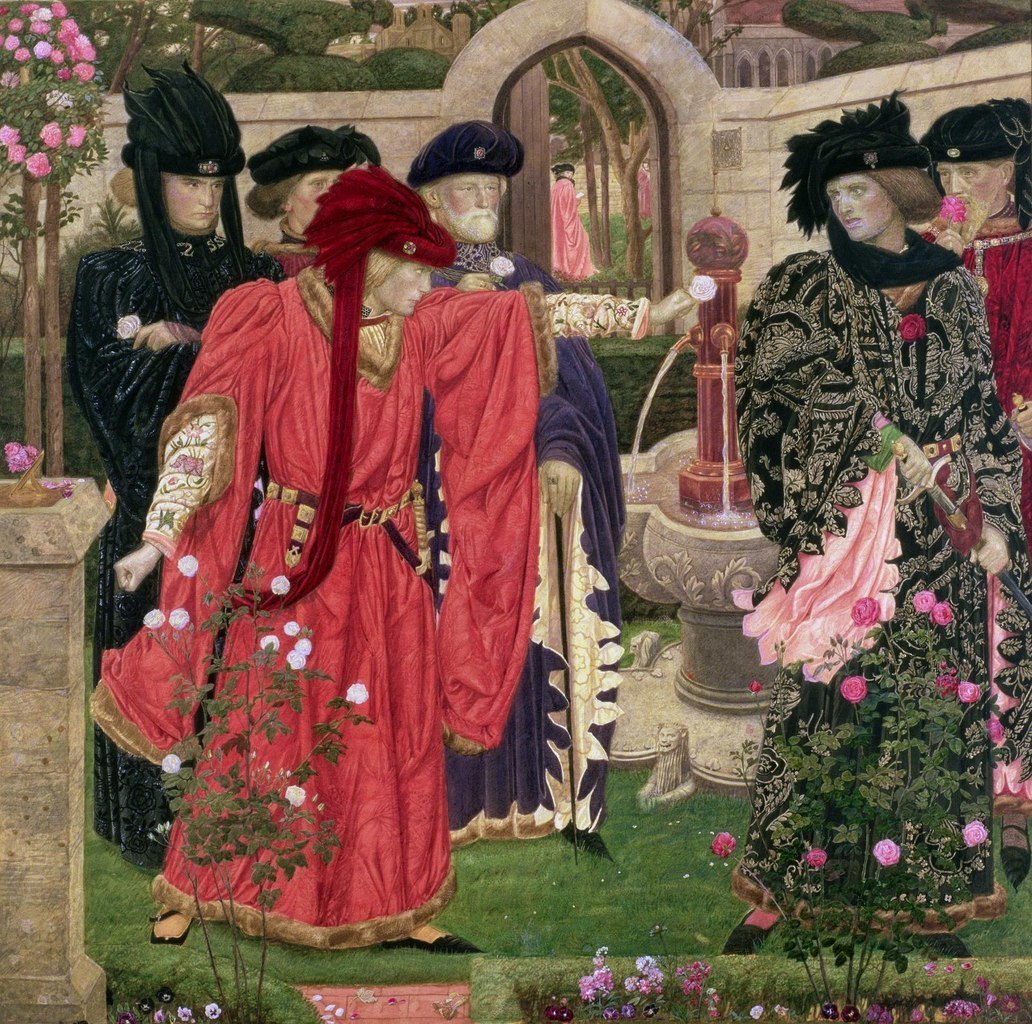
To start with, the term 'Wars of the Roses' certainly does not date from the time of the conflict. Sir Walter Scott seems to have coined it in his novel Anne of Geierstein, published in 1829. Scott in turn came up with the name having read Shakespeare's play Henry VI Part 1, specifically a scene in which a number of noblemen and a lawyer in the gardens of the Temple Church select red or white roses to demonstrate their loyalty to the Lancaster or York house, respectively. Jones is probably correct in suggesting that the Lancastrians never actually used the red rose as a badge during the period of conflict. As Adrian Ailes comments, Henry VII's decision to combine the red and white roses as a symbol of the end of conflict between Lancaster and York 'was a brilliant piece of simple heraldic propaganda'. 

Leanda de Lisle, however, recently suggested that the term 'Wars of the Roses' actually originated long before the publication of Scott's novel in 1829. She mentions that historian David Hume referred to 'the wars between the two roses' in his work of 1762, while more than a hundred years earlier the conflict was described as 'the quarrel of the two roses'. Lisle interestingly notes that Edward IV made extensive use of the white rose as a badge representing the House of York, for it was believed to have been the badge of Edward's ancestor Roger Mortimer, the supposed 'true' heir of Richard II before his right was 'usurped' by Henry IV. Perhaps most intriguingly of all, Lisle dismisses claims that the conflict should instead be known as 'the Cousins' War'.


Above: did the Wars of the Roses really involve the red rose of Lancaster competing for the throne against the white rose of York?

Jones' argument that the Wars of the Roses was an invention of the victorious Tudors hinges on the suggestion that it is a myth that the wars erupted because 'there were too many men of royal blood clustering around the crown, vying for power and influence over a weak-willed king'. Yet, in histories of the conflict that I have read, it is argued that conflict broke out firstly because of Henry VI's incompetence as a king, and secondly because of military disasters in France. England lost all the territories it had conquered and was left only with Calais (later won back by the French in 1558). Jones argues, fairly, that the 1420s saw no serious unrest and speculates that Henry VI's weak kingship did not ultimately result in dynastic conflict until he experienced insanity in 1453. This is correct. In stating this point, why does Jones seem to imply that historians have traditionally viewed the roots of the conflict as occurring as early as the 1420s/30s? To me, it was Henry VI's madness in 1453 that instigated the conflict. His illness allowed Richard duke of York to seize the reins of government, leading to conflict and rivalry with Henry's queen, Margaret of Anjou. Jones speculates that Henry VI's forced decision to disinherit his own son Prince Edward in 1460 in favour of the Yorkists was the point at which 'the wars became dynastic'. Surely this is stating the obvious: beforehand, conflict between York and Edmund Beaufort, duke of Somerset, occurred because both men were fighting for control of the king and the greater power and influence at court. But at some point, York seems to have concluded that he would make a stronger and more efficient king than the incapacitated Henry VI.


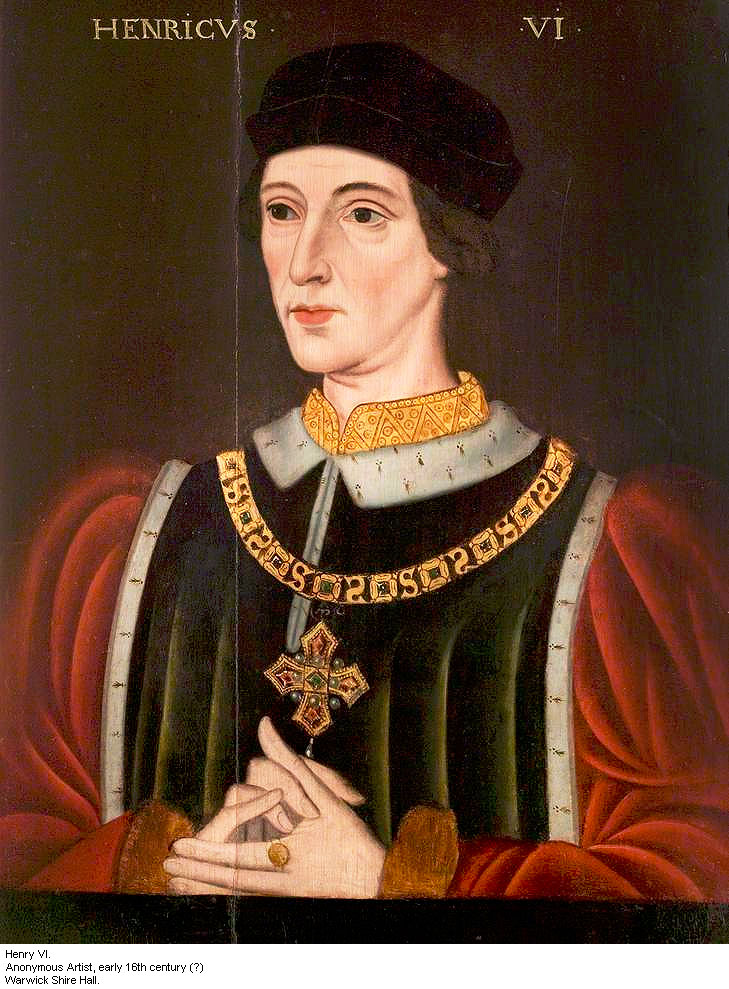
Above: Henry VI, house of Lancaster (left).
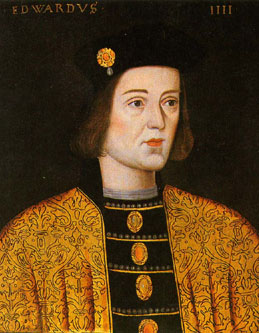
Edward IV, house of York (right).

In dividing the conflict into four phases, Jones' conclusions do not suggest that the Wars of the Roses was necessarily a Tudor invention. Rather, it indicates that the term 'Wars of the Roses', itself, is not perhaps the most helpful or effective way of characterising this period of dynastic conflict, especially given the fact that neither house probably employed their rose as the most prominent badge to represent their claim. The Tudors' decision to incorporate the red and white roses into what became the Tudor rose - achieved by Henry VII's marriage to Elizabeth of York in 1486 after his victory at Bosworth - was undoubtedly propaganda at its most effective, indicating that they had brought unity, harmony and sound rule to England after thirty years or so of political, governmental and dynastic unrest. But I remain unconvinced by Jones' claim that the Wars of the Roses should be considered a construction of the victorious Tudors. If anything, I came away from his article more convinced than before that it was a period of dynastic conflict, in which rival families sought to obtain the throne. Maybe they were not neatly separated into Lancaster and York, that is fair enough. But after 1460, there was certainly concerted rivalry between those loyal to Henry VI and the Lancastrians, and those who favoured Edward IV and the Yorkists, that blossomed due to increasing determination to obtain the throne and achieve peaceful governance after years of serious unrest.