Showing posts with label Mary Grey. Show all posts

Friday, 12 February 2016

Remembering Lady Jane Grey


On 12 February 1554, Lady Jane Grey was executed within the walls of the Tower of London. Three months earlier, she and her husband Guildford Dudley had been found guilty of high treason. They had unlawfully usurped the throne from the rightful queen, Mary I. Traditionally, historians presented Lady Jane as an unwilling innocent, a much wronged young girl who had no desire whatsoever to be Queen of England. Recent research has disproved this legend. In actuality, Lady Jane was an intelligent, stubborn and resilient woman who was fiercely devoted to her Protestant faith. She regarded herself as appointed by God to rule England, and she likely regarded her Catholic cousin Mary Tudor as ungodly, even abominable in the eyes of God. He had chosen Jane to be Queen, and she believed it was her destiny to be sovereign of England.

Having been selected as Edward VI's heir, Jane was proclaimed queen in July 1553. As is well known, Jane's regime collapsed within days, and Mary was declared queen on 19 July. Jane's trial followed in November, and although she and her husband were found guilty, Queen Mary showed no desire to have them put to death. However, the outbreak of rebellion in early 1554, motivated by dislike of Mary's decision to marry Philip of Spain, coupled with the decision to reinstate the medieval heresy laws, sealed Jane's fate. Her own father was involved in the plot against the queen, and he followed Jane to the scaffold a few days after her own death. A courageous and resourceful young woman, Jane accepted her fate and bravely prepared for death.

Above: The traditional view of Lady Jane Grey, as portrayed in Paul Delaroche's nineteenth-century painting, as a wronged innocent.

Guildford Dudley was executed on the morning of 12 February 1554 on Tower Hill, where his father, the duke of Northumberland, had died the previous August. Guildford was himself still a teenager, perhaps no more than nineteen years old, and has been the victim of notable slanders. Modern historians have usually depicted him as a snivelling, weak-willed and vicious adolescent, loathed by Jane, but Leanda de Lisle's research questions whether this portrayal is accurate, as no contemporary source describes Guildford in such a negative way. Whatever the truth of Guildford's character, his end was tragic. Like Jane, he was the victim of his father's plotting, and he duly resigned himself to his fate. His wife was confronted by the sight of her husband's headless corpse, the fabric stained with his blood, returning on a cart from Tower Hill. She knew that her own demise was imminent.

Shortly afterwards, around ten in the morning, Lady Jane Grey walked out of her apartments and mounted the scaffold that had been built within the walls of the Tower. Onlookers commented on her braveness and her piety. Two versions of her scaffold speech survive, both of which confirm that she acknowledged that she was to die under the law, having been condemned by it. She confirmed that she had offended the queen and had behaved unlawfully. Most importantly, particularly for her posthumous reputation, Jane proclaimed that she died a true Christian woman, and looked to be saved only by Christ's mercy. This confirmed her commitment to the Protestant faith, for Catholics traditionally believed that good works also played an important part in one's salvation. She then asked the onlookers to pray for her.

Above: Queen Mary I, who ordered her cousin Lady Jane Grey's execution in February 1554.

Lady Jane's female attendants then helped her off with her gown and gave her a handkerchief to use as a blindfold. Groping about in the dark, she could not find the scaffold, and cried, "Where is it? What shall I do?" Someone came forward to guide her and she rested her head upon the block. Mercifully, she was decapitated with one blow, probably just a few months short of her seventeenth birthday. Her remains were interred in the nearby chapel of St. Peter ad Vincula. With her passing, Lady Jane Grey's story became the stuff of legend. In Protestant works, most notably John Foxe's Book of Martyrs, she was depicted as a pious, virtuous Protestant maiden who had died for her faith, condemned by the cruel Catholic tyrant, Mary I. Victorian historians depicted her as an innocent victim of her grasping, scheming family, and portrayed Jane's mother, Lady Frances Brandon, as a tyrannical woman and an abusive mother. Modern historians have usually followed this version of events. But modern research has demonstrated that reality was more complex. Lady Jane Grey was far more than merely an innocent child, and there is no contemporary evidence to suggest that Frances was cruel to her daughters.

Lady Jane Grey remains, in many respects, a mystery. Her beheading was the first of several calamities to befall the Grey family. Her father followed her to the scaffold only eleven days after her own death; like her, he was executed as a traitor to his queen. In spite of this, Jane's mother, Frances, remained close to Queen Mary, and her younger daughters Catherine and Mary were resident at court. However, Elizabeth I's accession proved to be the final undoing of the Grey family. While she did not behead either of the Grey sisters, as Mary had done, Elizabeth had both Catherine and Mary Grey imprisoned for their clandestine marriages, and the distraught Catherine died in 1568 while still in her twenties, deprived of her husband and children. Mary followed her to the grave ten years later, her own husband having predeceased her. Lady Jane Grey's story has been represented as a great tragedy, but her younger sisters were as much victims of their birth as she was.

Friday, 8 January 2016

Elizabeth's Heir: Margaret Stanley, Countess of Derby


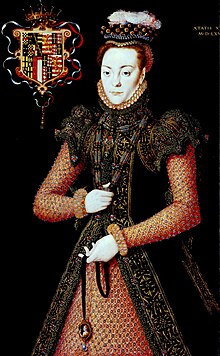
Image result for eleanor brandon
Above: A portrait thought to be of Lady Margaret Stanley, countess of Derby or her mother Lady Eleanor Brandon.


In recent years there has been an explosion of interest in the Elizabethan succession and, in particular, the extraordinary lives of Lady Jane, Catherine and Mary Grey. These women were, according to the will of Henry VIII, to inherit the throne of England in the event that Elizabeth I died with no heirs. Lady Jane was executed in 1554 for her role in seizing the throne unlawfully from the rightful queen, Mary I. As is well known, the fearful Elizabeth reacted furiously to news of the clandestine marriages of Catherine and Mary, and punished them both accordingly. Both Grey sisters were imprisoned, and Catherine's two sons by Edward Seymour, earl of Hertford, were declared illegitimate. Both sisters died fairly young, even by the standards of the time (Catherine was twenty-seven and Mary thirty-three). Their lives were undoubtedly highly tragic, but the public at large regarded the Greys as the rightful successors to Elizabeth, particularly in the wake of intensified concerns regarding Mary Queen of Scots.

After the deaths of Jane, Catherine and Mary, and the bastardisation of Catherine's sons, Elizabeth I's heir was, according to Henry VIII's will, Margaret Stanley, countess of Derby. The countess has received far less attention, both from academic historians and popular writers, regarding her role as a claimant to the English throne. However, Margaret's life was every bit as tragic, as tumultuous and as unpredictable as that of her Grey cousins. 

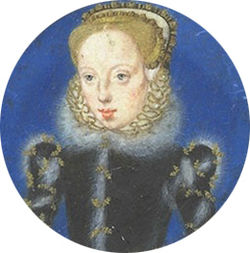
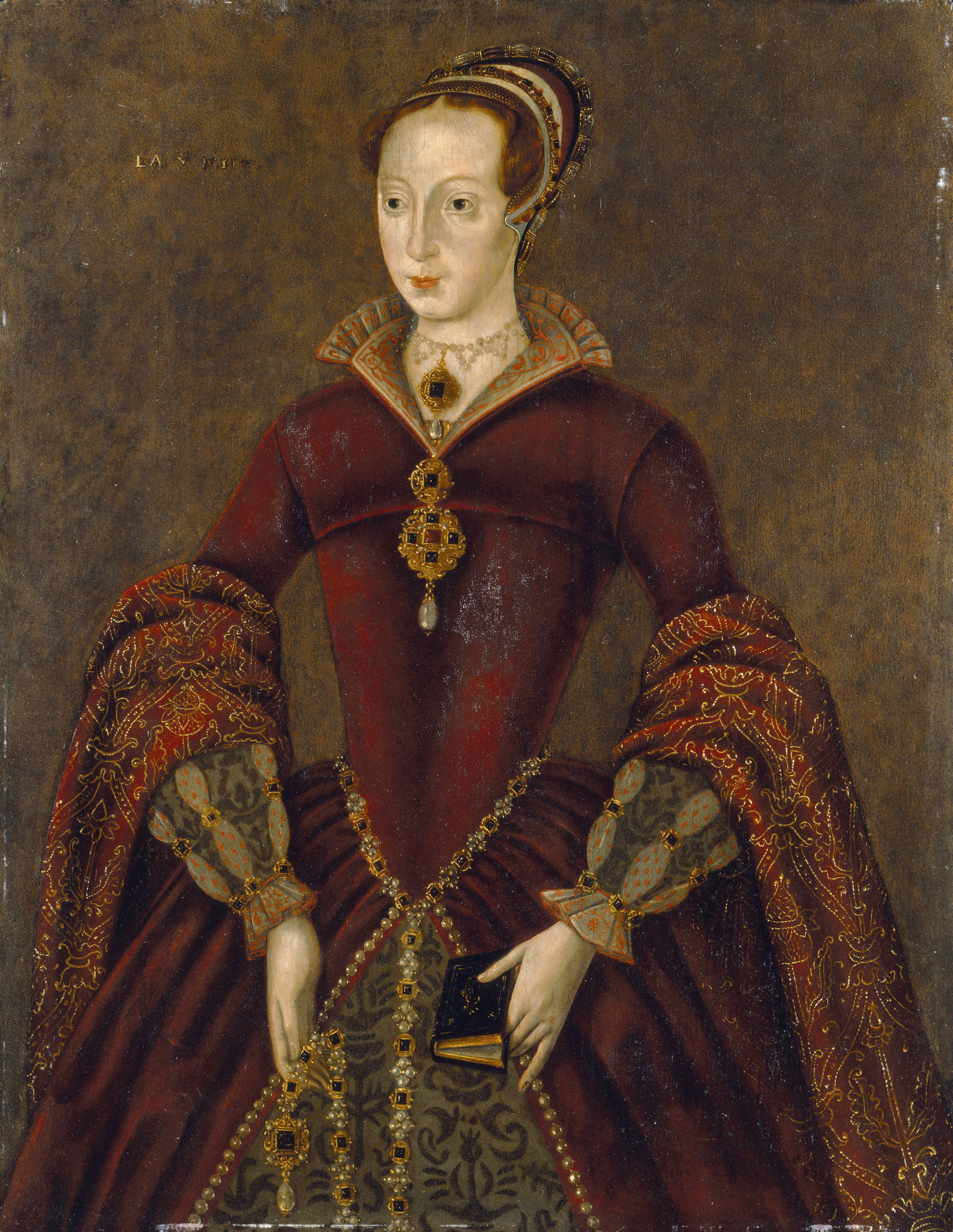
Above: Margaret's cousins: Jane, Catherine and Mary Grey (left to right).

Margaret was the daughter of Lady Eleanor Brandon, who was in turn the youngest daughter of Mary Tudor and Charles Brandon, duke of Suffolk. Eleanor was Henry VIII's niece and granddaughter of Henry VII. Her daughter Margaret, therefore, was Henry VIII's great-niece. She was born in 1540, the same year her cousin Catherine Grey was born. Her mother had married Henry Clifford, earl of Cumberland. He came from a respected northern family and the union between Brandon and Clifford meant that Margaret Stanley grew up amidst considerable luxury and wealth. Until her mother gave birth to a son, she was heiress to the Cumberland title. Eleanor did give birth to two sons, Henry and Charles, but both died in childhood.

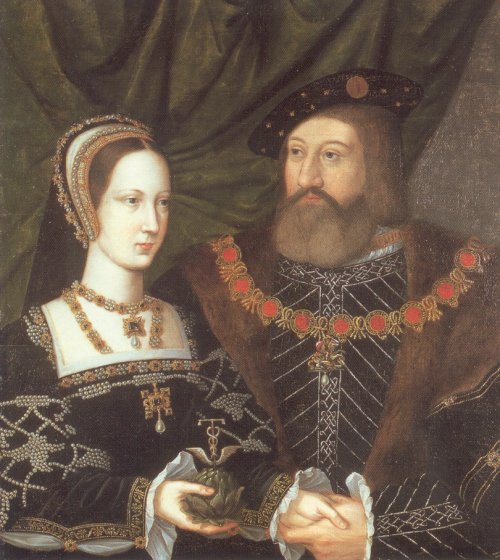
Above: Margaret Stanley's grandparents, Mary Tudor and Charles Brandon, duke of Suffolk. 

From an early age, Margaret was educated to view herself as a most important lady. She would have been proud of her position as Henry VIII's great-niece. Her cousins Jane, Catherine and Mary Grey were erudite, educated and opinionated young women, and like them Margaret was aware of her important position within the Tudor dynasty. There is no surviving evidence that her parents provided her with as remarkable an education as that enjoyed by her cousins, but undoubtedly she would have been brought up with skills regarded as fundamental in Tudor gentlewomen: needlework; embroidery; dancing; music; hunting; good manners; reading; and writing. 

When Margaret was seven years old, her mother died. That was a tumultuous year, given that Henry VIII also died at the age of fifty-five. Margaret first came to play an important role in political events in 1552, when the Duke of Northumberland proposed that the twelve-year-old marry his youngest son Guildford. The marriage came to nothing, and Guildford instead married Margaret's sixteen-year-old cousin Jane Grey. There were later rumours voiced at court that Margaret was to marry instead Northumberland's brother Andrew, but again the match came to nothing, perhaps because Margaret's father had voiced opposition. 

The year 1553 was a turning point for Margaret and her family. The young Edward VI had died while still a teenager. The determined king had refused to countenance the possibility of either of his sisters succeeding him, because he believed that both were illegitimate. Instead, he willed the crown to go to the heirs of Lady Jane Grey. Because Lady Jane had not yet given birth to children, she herself became queen upon his death. Margaret's cousin was now first lady in the land. However, she was dethroned and executed seven months later by Mary I. 

How Margaret felt about her cousin's brutal execution is unknown, but it is possible that she did not give much thought to it. Five days earlier, the fourteen-year-old had married Henry Stanley, earl of Derby. It was a highly significant marriage. Stanley, who was nine years Margaret's senior, was a kinsman of Queen Anne Boleyn and Queen Katherine Howard (his maternal grandfather was Thomas Howard, duke of Norfolk). The marriage took place at Whitehall and was attended by Queen Mary. The couple seem to have experienced a volatile marriage, for the countess later confirmed that there were 'breaches and reconciliations' between herself and Stanley. They had four children together: Edward, Ferdinando, William, and Francis.

Above: Henry Stanley, earl of Derby, husband of Margaret Clifford.

How Margaret regarded her dynastic position during the reigns of Mary I and Elizabeth I cannot be known with certainty, but she was surely aware that she had a strong claim to the throne if her cousins Mary and Elizabeth died without heirs. During these years, the countess occupied an important place at court, although she spent much of her time on her estates in childbirth. In the early 1560s, however, Margaret's life was changed forever. 

Her cousin Catherine Grey clandestinely married Edward Seymour, earl of Hertford, in late 1560. Hertford was of royal blood (he was the nephew of Queen Jane Seymour and son of the Lord Protector). Catherine subsequently fell pregnant, and was forced to inform Elizabeth I of what had happened. The queen was understandably furious: not only were her councillors pressuring her to name a successor in the event that she did not marry and provide an heir herself, but she seems to have personally disliked and feared Catherine. Elizabeth was well aware that Catherine was regarded by English Protestants (and some Catholics) as her heir, and in falling pregnant Catherine had strengthened her claim. The irate queen ordered her cousin's imprisonment in the Tower of London, and her husband was recalled from Europe and incarcerated there as well. The stricken Catherine, who was only twenty-one, gave birth to their first son Edward at the Tower in the autumn of 1561.

Elizabeth never forgave Catherine. She almost certainly remembered the treachery of the Greys in the reign of Mary I, and she remembered that she had been a figurehead for rebellion during her sister's reign. Elizabeth viewed her Grey cousins with suspicion and fear, and was determined to prevent their succession in the wake of her death. Catherine remained under house arrest at a succession of different houses until her untimely death in January 1568 at the age of twenty-seven, leaving two young sons and a bereaved husband. Only a few years previously, Catherine's younger sister Mary had also been incarcerated for her clandestine marriage to Thomas Keyes, a Sergeant Porter. With her disgrace and death in 1578, Margaret Stanley's dynastic importance increased tenfold. 

According to Henry VIII's will, Margaret Stanley was her cousin Elizabeth's heir. Despite the urgent entreaties of her Privy Councillors and her own passionate love for Robert Dudley, earl of Leicester, Elizabeth refused to marry. Historians have endlessly debated about the reasons behind her decision. Undoubtedly these reasons were political, psychological and personal. Regardless, Elizabeth's decision not to marry caused considerable uncertainty in England about who would succeed upon her death. Margaret's great-uncle, King Henry, had nominated her as her cousin's heir, and it is entirely likely that, by the late 1570s, the countess had began to view herself as a possible future Queen of England.

Above: Mary Queen of Scots, Lady Margaret Stanley's kinswoman and potential rival claimant. Some historians have suggested that Queen Elizabeth always preferred the claim of the Scottish queen to the claim of the descendants of Mary duchess of Suffolk.

However, any potential ambitions for the crown that Lady Margaret had were to remain unfulfilled. The countess landed herself in deep trouble and caused her own ruin through her rash actions. In 1579, just a year after the death of her cousin and potential rival Lady Mary Grey, Margaret was accused of sorcery and arrested. She had allegedly used sorcery to predict how long Elizabeth would live, and there were even rumours that she had plotted to poison her cousin. Furthermore, she had allegedly spoken out about the queen's proposed marriage to the Duke of Alencon because it threatened her own position as Elizabeth's heir. Like her cousins Catherine and Mary Grey, the countess was punished with house arrest. Her fellow accused William Randall, whom the countess claimed was her physician, was executed. No charges were brought against Margaret, but she was banished from court. She wrote highly emotional letters to Elizabeth, claiming that she was in a 'black dungeon of sorrow and despair'. If she hoped for forgiveness and a return to royal favour, she was to be sorely disappointed.

In 1596, Lady Margaret died at the age of about fifty-six. Her sons Edward and Francis had died in childhood, and her second son Ferdinando, who had inherited the earldom of Derby, had died two years earlier. Ferdinando's son, Lady Anne Stanley, was Margaret's heiress presumptive upon the countess's death. The will of Henry VIII stipulated that Anne Stanley was Elizabeth's heir following the death of her grandmother Margaret, but the queen preferred the claim of Mary Queen of Scots' son James VI, and upon her death in 1603 James duly became King James I of England.

Much of the life of Margaret Stanley, countess of Derby, remains shadowy and elusive. It is not difficult to understand why historians have focused their attention on her Grey cousins, because greater evidence survives for their lives, and their status as claimants to the throne was more viable than Margaret's claim. It is usually forgotten that, upon the death of Mary Grey in 1578, Margaret Stanley was heir to the throne according to the will of Henry VIII. Her disgrace in 1579 seems to indicate that she was a highly ambitious woman who was determined to enforce her claim as Elizabeth's heir. Realising that her cousin would never marry and give birth to heirs, Margaret seems to have hoped and dreamed that she would one day become Queen herself. It was not to be. The disgraced countess never recovered her place at court, for she had invited the suspicion and hostility of Queen Elizabeth, who was never particularly warm towards the descendants of Mary, duchess of Suffolk at the best of times. The queen's antipathy to her Brandon kin was demonstrated in her decision to appoint Mary Queen of Scots' son James her successor upon her death, rather than Margaret Stanley's granddaughter Anne Stanley, despite the fact that Anne was, according to Henry VIII's will, the rightful heir. 

Tuesday, 16 December 2014

Frances Grey, Duchess of Suffolk: History's Scapegoat?


Above: A portrait identified by some as Frances Grey, duchess of Suffolk.

History remembers Lady Jane Grey, the so-called 'nine days queen', as an innocent teenager brutally sacrificed on the altar of ambition, greed and political treachery. This interpretation runs concurrently with the belief that Jane's family, the Greys, and her Dudley in-laws, were mercilessly ambitious, cold-hearted, scheming and brutal in their quest for power and position. In particular, Jane's mother, Frances Grey, duchess of Suffolk, is usually presented as the mother from hell: physically abusive, she allegedly took delight in bullying her young daughter and treating her with calculated cruelty. But is there any evidence for this dark view of Frances Grey?


High-born Tudor women were prone to misrepresentation and character assassination in their own lifetimes and have been savagely condemned up until the present day. Prominent examples include Anne Boleyn and Anne Stanhope, duchess of Somerset. Frances Grey is a notable example of this trend. Yet, as historical fiction writer Susan Higginbotham notes: 'the real Frances Grey bears no resemblance to the lurid tales about her. Only in our own time has she become a controversial and loathed figure'. Indeed, in her own lifetime, the Duchess of Suffolk was a respected, popular and influential woman who occupied a central place at court. Who then, exactly, was the real Frances Grey, niece of Henry VIII, mother of Lady Jane Grey and wife of the Duke of Suffolk?


Suffolk, Charles Brandon, 1st Duke of, Viscount Lisle

Above: Frances's parents: Charles Brandon, duke of Suffolk (left), and his wife Mary Tudor, formerly queen consort of France (right).

Frances Brandon was born on 16 July 1517 at Hatfield, Hertfordshire, the seat of the bishops of Ely. She was the eldest daughter of Henry VIII's close friend and brother-in-law Charles Brandon, duke of Suffolk, by his wife Mary Tudor, younger sister of the king. Frances grew up and was educated at Westhorpe in Suffolk. In the spring of 1533 at Suffolk House in London, sixteen-year-old Frances married Henry Grey, marquis of Dorset. Her mother died at the end of June that same year. Frances served as principal mourner at her funeral in July. It is impossible to know how close she had been to Mary, but Frances surely mourned her mother's death. 


After four years of marriage, Frances gave birth to her first daughter, Jane, probably in the spring of 1537 (although Jane's exact date of birth is not known). In novels such as Alison Weir's Innocent Traitor (2006), the ruthlessly ambitious Grey parents react with disappointment and anger to the birth of a daughter, but it is unlikely that this would have been the case in reality. The birth of a daughter might have been disappointing, but Frances was only twenty years old and had many years of childbearing ahead of her. As historian Eric Ives correctly notes, the Grey parents were not in the public eye when their first daughter was born, and neither Jane's date nor her place of birth have been recorded, much less her parents' response to her birth. In August 1540, a second daughter, Catherine, followed, and five years later, Mary was born in 1545. That same year, Frances's father, Charles Brandon, died. 


Frances occupied an important place at court during these years. At this time, she attended Queen Katherine Parr, who was her aunt by marriage. She enjoyed a close relationship with Lady Mary, eldest daughter of Henry VIII. Frances's relationship with Queen Katherine is significant, because the queen famously enjoyed close relations with Jane Grey, Frances's eldest daughter. Jane lived in the household of Katherine Parr following the death of Henry VIII, but upon Katherine's death in 1548 Jane returned to her family home at Bradgate in Leicestershire to live with her parents.


Above: Frances's eldest daughters: Jane (left) and Catherine (right).

Frances's relations with her eldest daughter have been, to say the least, controversial. Cultural depictions present Frances as a bullying and cruel mother who treated Jane harshly and mercilessly, physically beating her into submission. This antipathy towards Frances, which stemmed from a belief that she was a poor mother, first emerged in the eighteenth-century, at the same time in which Lady Jane Grey was cast as an innocent martyr and angelic figure, incapable of sin. As Higginbotham notes, however, it was the thirteen-year-old Jane's complaint about her parents to her tutor Roger Ascham in 1550 that has caused the greatest damage to Frances's reputation. Jane complained:


For when I am in presence either of father or mother; whether I speak, keep silence, sit, stand, or go, eat, drink, be merry, or sad, be sewing, playing, dancing, or doing any thing else; I must do it, as it were, in such weight, measure, and number, even so perfectly, as God made the world; or else I am so sharply taunted, so cruelly threatened, yea presently sometimes with pinches, nips, and bobs, and other ways (which I will not name for the honour I bear them) so without measure misordered, that I think myself in hell...


Higginbotham suggests that 'the impact of Ascham's recollection on Frances's reputation simply cannot be understated', for historians and novelists have used this quote from Jane to construct an image of the Grey parents as abusive and tyrannical monsters who inflicted misery on their daughters. Yet, as Frank Prochaska noted, 'Ascham may have 'overblown' Jane's comments to create additional support for his argument that teachers should not take on the role of parents and use corporal punishment to motivate their students to study' (Warnicke). Undoubtedly, Ascham may have exaggerated or even distorted what Jane actually said about her parents. Moreover, as Warnicke notes, it is significant that Ascham's account was published only after the deaths of both Jane and her parents, when he felt it was safe to do so. 


Thus, Frances has been characterised as a cruel and abusive mother, and her daughter Jane an innocent and sinless victim of her mother's wrath and hatred. But Alison Plowden is right to point out that Jane's complaints about her parents may actually reflect 'the attitude of a priggish, opinionated teenager, openly scornful of her parents' conventional, old-fashioned tastes'. It is surely going too far to use this 'evidence' to construct such a dark view of Frances Grey, without any other supporting evidence. In fact, the Duchess appears to have been a well-respected and popular figure in society, and there is no evidence that her relations with her younger daughters Catherine and Mary were difficult or problematic. 


Moreover, even if Jane's parents did discipline her, it seems to be going too far to characterise Jane as the victim of 'child abuse', as some historians and novelists have. In early modern England, parents were admonished to use corporeal punishment as last resort. Lloyd deMause, an American psychologist, famously put forward the suggestion in his The History of Childhood (1974) that 'the further back in history one goes, the lower the level of child care, and the more likely children are to be killed, abandoned, beaten [and] terrorized'. Other noted scholars, such as Lawrence Stone and Philippe Aries, have provided evidence in support of this. Therefore, even if Jane was physically disciplined by Frances, it does not mean that Frances was 'a child abuser' or 'a bad mother'. To condemn her as such is to apply modern values to a premodern society that had very different views and understandings of childhood.


Above: A portrait for centuries identified as a depiction of Frances Grey (left) and her second husband Adrian Stokes (right), but which actually shows Lady Mary Dacre and her son Gregory Fiennes.

Belief in Frances's supposedly cruel nature has been encouraged by a portrait thought to depict Frances alongside her second husband, Adrian Stokes, whom she married in 1555. The female figure appears greedy, unattractive, grasping and uncaring. Historians have utilised the picture as 'evidence' of the Duchess's unfavourable character. Hester Chapman, believing that the portrait depicted Frances, commented that the woman appears 'greedy', 'actively cruel' and 'coldly indifferent'. Yet the portrait is not of Frances at all, but of Lady Mary Dacre. 


Above: A depiction of the execution of Lady Jane Grey. Frances Grey pleaded with Queen Mary to show mercy for both her daughter and husband.

1553 was a momentous year for the Grey family. In May of that year, sixteen-year-old Jane wed Guildford Dudley, a younger son of the Earl of Warwick, and twelve-year-old Catherine married Henry Herbert, son of the earl of Pembroke. Traditionally, it has been assumed that the reluctant Jane was physically beaten by her parents until she agreed to marry Guildford. Only continental sources put forward this story, and as such were probably reflecting sensational rumour rather than fact. English sources make no mention of any coercion. Jane was a member of the aristocracy, and would have been well aware that her marriage was politically motivated to benefit and enhance her family. When writing to Mary Tudor later on, Jane did not blame her parents.


Scholars have debated endlessly about whether the Greys allied with the Dudleys in a conspiracy to usurp the throne from Mary Tudor and replace her with the Protestant Jane. Evidence compellingly indicates that Edward VI, determined to prevent the Catholic Mary from becoming queen, masterminded a 'devise' which proposed that his Protestant cousin Jane succeed to the throne, in place of his illegitimate sisters Mary and Elizabeth. Following Edward's death on 6 July, Jane was proclaimed queen, although a lack of support for her cause amidst the remarkable disorganisation of her regime meant that she was swiftly deposed by Mary, whom many regarded as the rightful queen. Jane was imprisoned in the Tower alongside her husband and her father-in-law Warwick (now duke of Northumberland).


Frances had traditionally enjoyed a close relationship with Queen Mary, and certainly pleaded for her husband's freedom, and perhaps also for that of her imprisoned daughter. On 22 August 1553, Northumberland was executed on Tower Hill. Jane and her husband were found guilty of high treason in November, although the queen was inclined to mercy and intended to spare both from execution. Frances continued to reside at court. How she felt about her daughter's plight can only be imagined. Given the flawed and distorted nature of the 'evidence' for her relations with Jane, it is impossible to tell what the real nature of the relationship between the two was like, but Frances surely experienced considerable emotional turmoil and distress.


Jane almost certainly would have been spared, had it not been for the outbreak of Wyatt's Rebellion in early 1554, an uprising seeking to prevent the queen's planned marriage to the Catholic prince, Philip of Spain. The involvement of Jane's father, the duke of Suffolk, sealed Jane's fate. On 12 February, the sixteen-year-old was put to death on Tower Green, shortly after her husband Guildford's execution on Tower Hill. Eleven days later, Frances's husband was beheaded. In the space of less than two weeks, Frances had lost both her husband and eldest daughter. Her grief, distress and pain can only be imagined. 


Frances was now placed in a very difficult position. She pleaded with the queen for clemency, and was allowed to remain at court with her two daughters. Catherine and Mary were respectively thirteen and nine years old when they lost their sister and father. These devastating events must have overshadowed their childhoods and caused both of them considerable emotional pain and torment. In March 1555, the thirty-eight year old Frances remarried. Because Frances had royal blood, that her second husband, Adrian Stokes, was merely her master of the horse, seems to indicate that her remarriage was motivated not by political ambition, but by love. Alternatively, it has been suggested that Frances deliberately chose Stokes as her second husband in a shrewd attempt to ensure that any children she had with her second husband would be too lowborn to be viewed as potential claimants to the throne. Frances remained on good terms with Queen Mary, who allowed her to reside at Richmond, while Catherine and Mary served as maids of honour to their cousin the queen. Frances had a daughter, Elizabeth, by her second husband, who died in 1556.


On 20 November 1559, Frances died at forty-two years of age. She was buried at Westminster Abbey. Her second daughter Catherine acted as chief mourner. Adrian erected a tomb with a recumbent figure in Frances's memory. Frances's funeral was actually the first Protestant service at the abbey after the reconstitution of its chapter. The inscription on Frances's grave reads (in Latin):


Nor grace, nor splendour, nor a royal name,

Nor widespread fame can aught avail; 
All, all have vanished here.
True worth alone Survives the funeral pyre and silent tomb. 

As Higginbotham relates, Frances Grey, duchess of Suffolk, was not a controversial woman in her own lifetime. She was respected, revered and liked. She has been more slandered in modern times than she ever was in her lifetime. As historian Leanda de Lisle notes, however:


'Since the eighteenth century she [Frances] has been used as the shadow that casts into brilliant light the eroticised figure of female helplessness that Jane came to represent. While Jane is the abused child-woman of these myths, Frances has been turned into an archetype of female wickedness; powerful, domineering and cruel.'


It is time to separate fact from fiction in the turbulent, extraordinary life of Frances Grey, duchess of Suffolk. We lack  evidence for how she felt; how she interacted with her daughters; what her relationship with her husband Henry Grey was like. It seems unfair to condemn and disparage her, when there is no evidence to support this negative treatment. Frances was an esteemed and respected figure in her lifetime, and although she may certainly have experienced difficult relations with her eldest daughter, Lady Jane Grey, it seems to be going much too far to view Frances as an abusive mother who cruelly tyrannised her children. If anything, Frances deserves our sympathy and compassion for enduring a life replete with suffering.