Showing posts with label childhood. Show all posts

Sunday, 18 August 2013

A Formative Childhood?: A Comparison of the Reigns of Mary Stuart & Elizabeth Tudor


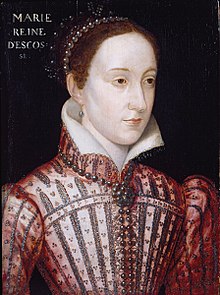
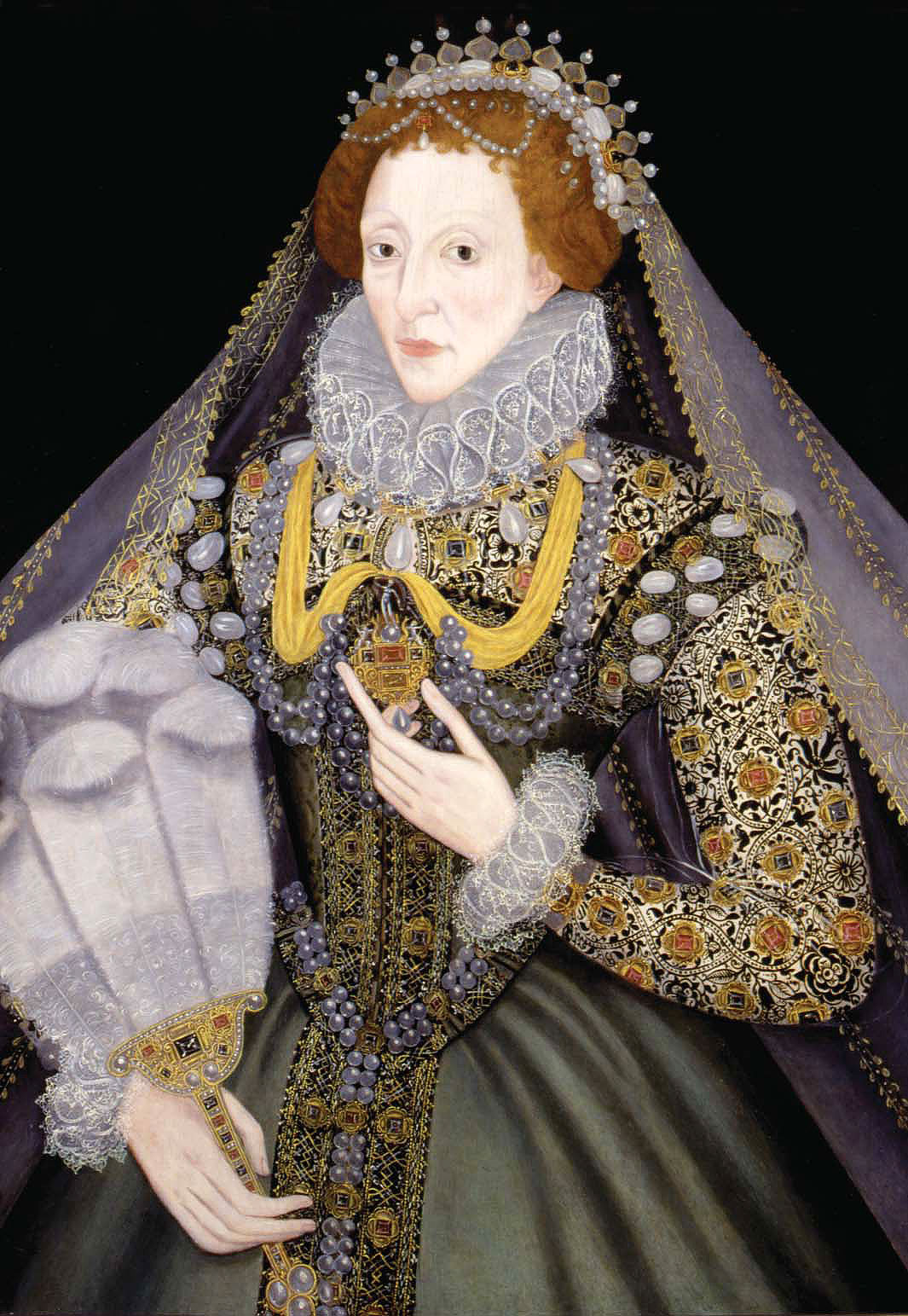
Above: queens, cousins, rivals. Mary Stuart, queen consort of France and queen regnant of Scotland (left) and Elizabeth Tudor, queen regnant of England (right).

Being a queen regnant in sixteenth-century Europe was no easy task. Prevailing misogynistic notions questioned whether women, as the inferior sex, had the right to rule over their male superiors. John Knox, the vehement Scottish Protestant preacher, opined in his The first blast of the trumpet against the monstrous regiment of women, attacking the rule of female monarchs such as Mary Tudor and Mary of Guise and published in 1558, that female rule was contrary to Biblical law. He bitterly concluded: 'For their [women's] sight in ciulie regiment, is but blindnes: their strength, weakness: their counsel, foolishenes: and judgement, phrenesie, if it be rightlie considered'. In view of this, the experiences of the queens regnant Mary Stuart, queen of Scotland, and Elizabeth Tudor, queen of England, should be considered in light of the customary expectations of figures such as Knox. 

Modern psychologists often suggest that childhood experiences are formative in governing later choices, actions and motives. Alfred Adler believed that people develop desires and drives during the childhood phase which later affects adulthood. Ann Smith concluded, in her article published by Psychology Today, that 'our own childhood experiences, which include parents, combined with our own personalities, our reaction to siblings and peers and the context of our lives send us off on a path with a particular set of beliefs and patterns that have a huge impact on our future relationships'. Although the psychology of queen regnants such as Mary and Elizabeth, living four hundred years ago, can only be guessed at, it is credible that the childhood experiences of these two queens, which were vastly different, dictated significantly their later actions and beliefs, particularly in relation to queenship and authority.


Above: John Knox's The first blast of the trumpet (1558) was aimed at attacking female rulers such as Mary Stuart and Mary Tudor (right). 

Both women descended from the first Tudor king, Henry VII, who had attained the crown of England through his defeat of the last Yorkist king, Richard III, at the Battle of Bosworth in August 1485. Elizabeth Tudor's birth had only been brought about by the annulment of her father's first marriage and his subsequent marriage to Anne Boleyn in 1533, with her birth occurring in September of that year. This marriage and the accompanied break with the Roman Church proved highly significant in European politics, particularly later on in the sixteenth century, for Catholic powers such as France and Spain viewed Henry VIII's divorce as illegal and his remarriage void, rendering his second daughter Elizabeth a bastard with no right to accede to the throne of England. Mary Stuart, by contrast, was the grand-niece of Henry VIII since she was the daughter of the Scottish king, James V (nephew of Henry), and his French queen Mary of Guise. Her line of descent and her claim to the English throne came through Henry's eldest sister Margaret Tudor, second child of Henry VII.

Elizabeth Tudor's childhood was extremely complex and must be viewed as, at best, topsy turvy. For the first three years of her life, she had occupied a central place in her father's affections as the heir to his throne following the bastardisation of her elder sister Mary. Besotted with his new wife Anne, the English king continued to hope, however, that she would bear him the much longed-for son to succeed Henry on the throne of England. Like most European rulers, Henry adhered to prevailing ideas that female rulers were unacceptable and contrary to God. This idea had, of course, provided the context for the annulment of his first marriage and his belief that his daughter Mary was illegitimate. Elizabeth enjoyed the luxury and splendour befitting an English princess, with her own household and servants, but because this occurred in the first three years of her life it is questionable to what extent she remembered or fully appreciated these luxurious early years.

In 1536, before her third birthday, Elizabeth's fortunes changed dramatically with her mother's loss of favour and eventual execution on charges of treason, adultery, and incest. While most historians firmly believe in Anne's innocence, her daughter was presumably shattered by the news of her mother's death, although at two years old how much she understood of the situation was very limited. Historians such as Sarah Gristwood and Maria Perry question how closely Elizabeth had bonded with her mother, for she had never resided with her. Following the custom of sixteenth century royal practice, Elizabeth had been nourished by a wet nurse and had been assigned her own household at Hatfield. Her visits to court had been relatively infrequent. Perhaps, as John Neale suggests, Elizabeth's 'emotional life was unaffected by her mother's fortunes'.

But this is slightly dubious. Following her mother's execution, Elizabeth was also, like Mary, declared a bastard, no longer in line to the English throne. Her title of princess was stripped from her, and it is probable that her father, by virtue of who her mother was, viewed her with considerable disfavour for a time. Probably Henry neglected Elizabeth in the immediate aftermath of her mother's death, for in the late summer of 1536 her governess Lady Bryan was forced to beg Cromwell for new clothes for the toddler. Later that year, however, she had returned to court and the Cardinal du Bellay observed the king's affection for his youngest daughter. By all accounts, during her life Elizabeth revered her father's memory and proudly proclaimed her parentage. By contrast, she is said to have mentioned Anne Boleyn's name only three times in her seventy-year long life. Does this indicate suspicion or even hostility towards her mother, who had been executed for the foulest of crimes? Historians such as Alison Weir think not, believing that she may have, as queen, commissioned George Wyatt to write a secret defence of her mother.

Although Elizabeth was probably not severely affected personally in the immediate aftermath of this event, it is likely that her mother's execution 'must have overshadowed Elizabeth's childhood. Over the years, guarded revelations, gossip, rumour and innuendo... and the growing awareness of her bastard status, must have caused the maturing Elizabeth recurring distress and enduring insecurities, and certainly affected her emotional development' (Weir, 2009). The executions of both Katherine Howard (1542) and Lady Jane Grey (1554, by her sister Queen Mary) likely caused Elizabeth considerable distress, bringing back painful memories of her own mother's brutal end. But how did these early childhood experiences govern Elizabeth's decisions and choices as a ruler?

For one thing, as Antonia Fraser suggests, she learned from a very early age to hide her true feelings. Although Elizabeth was notoriously prone to fits of anger, distress, and annoyance, her own personal feelings regarding, for instance, personages such as Anne and her cousin Mary Stuart, queen of Scots, remain mysterious, as do her personal feelings for Robert Dudley, earl of Leicester and her lifelong suitor. Wisely, Elizabeth chose not to become embroiled in plots against her sister Queen Mary, although she was imprisoned in the Tower of London for a time. When Thomas Seymour tried to seduce her in 1549 during the reign of her brother Edward as a means of pursuing power at court, Elizabeth wisely refused to have nothing to do with him, and at the news of his execution she noted his 'very little judgement'. 
In other ways, too, the impact of Elizabeth's early childhood experiences can be clearly discerned. She was notoriously touchy about her status, and reacted furiously to allegations that she was a bastard and thus no rightful queen of England. 

Elizabeth's reign was characterised by her caution and indecisiveness. She sought to placate foreign powers such as Spain while cautiously supporting fellow Protestants in the Netherlands, who sought to free themselves from the tyranny of the Spanish monarchy. Nevertheless, she did not seek to invade Scotland or France as a means of asserting her authority as her father, Henry VIII, sought to do. Her own horror of bloodshed and her desire for clemency can also be explained as a result of her personal aversion to the bloody experiences of her youth. Famously, she spent weeks, even months, agonising over her duty to sign the death warrant of Mary Stuart, and unlike her Catholic sister, refused to instigate a full scale Holocaust of religious deviants during her throne. Notwithstanding this, English Catholics were, of course, harshly persecuted from the 1570s on in light of the menacing threat of Spain and, to a lesser extent, France.

But above all the impact of Elizabeth's childhood can most illuminatingly be seen in her attitudes to marriage and her decision to remain unmarried as England's Virgin Queen. Her father had not prioritised her marriage in her youth, although suggestions of a betrothal to the son of the French king had surfaced during her early years. Later, when Mary Tudor sought to marry Elizabeth to the duke of Savoy, Elizabeth personally refused, on grounds of her decision, already made in her early twenties, to remain single, a decision which revolted her unhappily married sister. Why she chose to do so can only be guessed at, although most historians attribute her momentous decision to the bloody experiences of marriage suffered by her mother Anne and her stepmother Katherine Howard. Potentially, the death in childhood of two of her stepmothers, Jane Seymour and Katherine Parr, also influenced Elizabeth's aversion to marriage, for she may have come to associate the married position with an early death, pain, even bloodshed. Others argue that she feared the loss of both personal and political power if she had to give way to a husband, while some contended that she refused to marry because she was physically unable to bear children.

In her illuminating article 'Why Elizabeth I Never Married', Retha Warnicke suggests that political issues were far more important, for 'every British queen regnant who married soon discovered that her husband and his family complicated her life politically'. The unsuccessful marriages of three other queen regnants at this time, Lady Jane Grey, Mary Tudor and Mary Stuart, probably influenced Elizabeth's marital beliefs. Jane's Dudley in-laws were unpopular, while Mary Tudor's Spanish husband was so hated that a popular rebellion was directed against him in 1554. Mary Stuart's second marriage to Henry lord Darnley had, of course, ended in his brutal murder, attributed by hostile individuals to the Scottish queen herself. Her third husband brutally raped her and left her alone in a hostile Scotland. In view of Warnicke's arguments, it is extremely likely that both Elizabeth's childhood experiences and the experiences of later queen regnants in relation to marriage governed her momentous decision to remain unmarried.

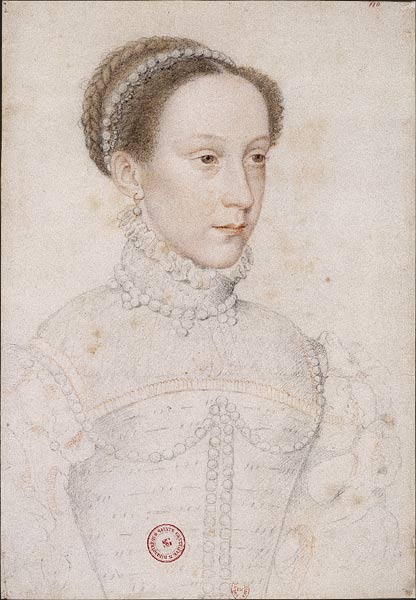
Above: Queens Elizabeth Tudor and Mary Stuart in their youth.

It is clear that Queen Elizabeth's personal views and decisions regarding foreign policy, marriage, and the shedding of bloodshed were strongly governed by her formative childhood experiences. Is the same notion true for Mary Stuart, queen regnant of Scotland and, at one stage, queen consort of France? As second cousin to the English queen, Mary Stuart had enjoyed a far different childhood to Elizabeth. While Mary as dauphiness of France was to enjoy a life of luxury and splendour similar to that of the English princess before the execution of her mother, beforehand her birth in 1542 to the Scottish king James V occurred at a time of political and foreign difficulties in Scotland. The hostility of Henry VIII, directed in continuing invasions of Scotland, was worsened by the death of James six days after his daughter's birth. At 6 days old, therefore, Mary Stuart became queen of Scotland. Her mother, Queen Mary, became regent of Scotland during her daughter's minority, but her French lineage and her Catholic faith rendered her an unpopular figure to Scottish Protestants. It is significant that the Scottish Reformation occurred from this time.

The hostile misadventures of the English king encouraged the Scottish dowager queen's decision to send her infant daughter to the land of her own birth, France, where she would be brought up by her Guise relatives and groomed for a splendid marriage to the French dauphin, Francois, who would day accede to the crown of France. Although, like Elizabeth, Mary's infant years had been traumatic and complex, during her adolescence she enjoyed a life of luxury and fulfilment as a princess of France. She grew into a tall, striking, charming woman who enjoyed poetry, music, and dancing, and who sought personal satisfaction in outdoor physical exercise. While she was of the Catholic faith, during her teenage years she was not devout. However, the year 1558 was significant for Mary and the course of her life. Aged fifteen at the time, Mary's position in Europe was immeasurably strengthened by the death of her cousin Queen Mary Tudor, ruler of England, in November. Because Catholic powers, as mentioned, identified Elizabeth as a bastard, in the eyes of Europe, Mary Stuart was now the rightful queen of England. Elizabeth's Protestant faith rendered her a heretic, and her illegitimacy was proclaimed to be a pressing reason why she should never accede to the crown of England. Accordingly, Mary and her French husband, whom she had married in April of that year in Paris, began using the royal arms of England alongside those of France and Scotland and it was ordered that they should be referred to as the king and queen of France, Scotland and England.

Mary's childhood and adolescence had encouraged her to believe that, by virtue of her excellent lineage and her Catholic faith, she was the rightful queen of England. But her future became uncertain in 1560 when, aged only seventeen, the French dauphin died prematurely. No longer queen consort of France, Mary decided to return home to Scotland as its queen regnant, although not after considering a second marriage alliance with a powerful nation such as Spain. Once in Scotland, Mary's political decisions and choices as queen are intriguing in view of her childhood experiences. Her religious policy was famously fair and liberal, for although she was a Catholic, the Scottish Reformation had progressed so extensively that she quickly discerned that it would be unwise to press for Catholicism to become the state religion. Her own mother had faced mounting hostility in view of her Catholic faith, culminating in an invasion. Wisely, Mary learned from her childhood experiences in accordance with the political and religious situation prevailing in Scotland. Like Elizabeth in the early years of her reign, who famously desired not 'to make windows into men's souls', Queen Mary sought peace and stability in a kingdom which was slowly experiencing increasing inner tensions. She may also have been influenced by the religious violence in France between Catholics and Huguenots during her childhood. As Fraser contends, she seems to have had a personal aversion to bloodshed and violence, like her cousin Elizabeth.

Mary's beliefs regarding marriage and motherhood were significantly different to those of Elizabeth, most likely because of her own childhood experiences in that regard. While Elizabeth may have equated motherhood and marriage with bloodshed and an early death, Mary's acquaintance with the fertility of the French royal family, coupled with her own maternal feelings, meant that marriage was a promising prospect for her. She also regarded it as essential in order to preserve dynastic and political stability in Scotland. Unlike Elizabeth, who feared the loss of her authority through marriage, Mary naturally desired a strong ruling hand to aid her in her queenship. In view of this, in 1565 Mary, having fallen in love with the dashing but volatile Henry Stewart, lord Darnley, chose to marry once more. Her choice, aside from his own personal failings, was a wise one, for Henry had royal blood by virtue of being the son of Lady Margaret Douglas, niece of Henry VIII as the daughter of Margaret Tudor. Since Mary Stuart was the granddaughter of Margaret Tudor, she was first cousin to Lord Darnley.

Mary's political decisions and views were dictated entirely by her childhood experiences in France. There, absolutism reigned, and the monarchy was entirely respected with its due reverence. By contrast, the Scottish monarchy was beset with difficulties in view of increasing religious conflict among the Scottish lords. They were violent and sought only to pursue their own interests. Abduction and rape of rich widows was commonly used as a means of achieving power and greater wealth. It was therefore impossible for Mary to appreciate the tensions and resentment prevalent among her nobility. Despite her religious tolerance, her Catholic faith rendered her unacceptable to hostile Protestants such as John Knox and her brother, the earl of Moray. Her husband, Lord Darnley, soon proved to be a disastrous choice as consort. Immature, jealous and easily manipulated, he was soon embroiled in a plot to kill Mary's beloved secretary Riccio, who was blamed for causing the Queen's disillusionment with her second husband. Less than a year after Riccio's brutal end, Darnley himself had been murdered, his strangled body found at Kirk o'Field. His house had been blown up in a plot to kill him, probably governed largely by the Earl of Bothwell who subsequently abducted the Scottish queen and raped her. Their marriage ceremony followed shortly afterwards. Mary now totally lost any support she had formerly enjoyed from the nobility. Viewing her as an adulteress and whore, they imprisoned her at Lochleven, and forced her to abdicate in favour of her infant son James. Months later, she managed to escape to England, where she would endure 19 years of imprisonment before Queen Elizabeth signed her death warrant, when evidence gradually but quickly emerged that Mary had been involved in a number of plots against her. Mary's life came to an end at the hands of the executioner's axe in Fotheringhay Castle in February 1587.

While Elizabeth's decisions were governed by caution and indecision, Mary's have often been considered reckless and impulsive, although her early religious policies were tolerant and well-considered. She also sought to pursue a policy of conciliation with the nobility, in order to avoid bloodshed and violence at the Scottish court. Both women were influenced supremely by their childhood experiences. In relation to marriage, Elizabeth shrunk from the prospect due to her own psychological views and her political awareness, while Mary's association of marriage with lineage and power, formed at the court of France, governed her decisions to remarry once in Scotland. Both women pursued strong alliances with European powers as a means of strengthening their positions politically and personally; Elizabeth because of the experiences of her father and sister in their reigns and because of England's own insecurities; and Mary because she was aware that Scotland's conflict could only be assuaged by the helping hand of a loyal Catholic ally. Both women also sought conciliating religious policies since both had a horror of bloodshed and violence. But in the most important decisions, it seems clear that Elizabeth was both more politically astute and more aware of the importance of her people's opinions. Consequently, she refused to marry Robert Dudley in 1560 following the mysterious death of his wife because she was aware that she was implicated by some in Amy Robsart's death; she refused to go to war with fellow Protestants because she feared England's loss of security at the hands of hostile powers such as Spain; and she refused to suffer the loss of her virgin status. Elizabeth was understandably reluctant to place her political and personal authority in doubt were she to marry an overbearing husband. Her own sister's example had demonstrated such a risk. 

By contrast, Mary Stuart's decision to marry Darnley appears singularly misguided even if, at the time, it was considered a strong alliance. But her own decision to marry Bothwell scandalised her people and alienated her nobility, although it seems hardly fair to blame Mary since he had both abducted and raped her and it is certain that she had very little choice. But the belief that she was a constant schemer and plotter against the English queen, whatever the truths of it, and the association of her name with murder blackened her reputation irretrievably. Unlike Elizabeth, who at an early age by virtue of her childhood experiences became cautious and indecisive, Mary was more impulsive and reckless by virtue of the fact that her childhood had not prepared her in the same manner for a successful queenship. Her sense of absolutism political sense and her views regarding marriage were significantly different to those of Queen Elizabeth.

Queen regnants faced hostility and suspicion in the sixteenth century, when it was believed that women were inferior to men and as such had no right to rule over them. The example of Queen Elizabeth proved that a woman could rule successfully, while that of Mary Stuart indicated the difficulties a female ruler faced by virtue of her gender. Both women's childhoods dictated their decisions later in life and their own personal characteristics, but while Elizabeth has been generally praised as a successful ruler and perhaps even England's greatest monarch, Mary has often been condemned, as a result of her political and religious decisions, as a failure, notwithstanding the prevailing image of her as a religious martyr or tragic figure.


Wednesday, 21 November 2012

The birth and childhood of Katherine Howard, queen of England

In his biography of Queen Katherine Howard, published in 1961, Professor Lacey Baldwin Smith suggested what would seem to have been a plausible date of birth for Katherine Howard, the fifth queen of Henry VIII. After carefully analysing the evidence, in particular using the likely date of marriage of Katherine’s parents and her subsequent place in the order of children born to Edmund and Joyce Howard, as well as relying upon the dispatches of Charles de Marillac, French ambassador during Katherine’s reign as queen, Smith asserted that a birth date of circa 1521 was plausible.[1] This date of birth has been subsequently accepted by the majority of modern historians who frequently refer to Katherine being a girl of nineteen at the time of her marriage to Henry VIII. However, not all historians have been convinced by Smith’s arguments; Joanna Denny, in her popular biography on the life and reign of Katherine Howard, argued that 1525 was a likelier date of birth. Primarily, the 1521 date has been put forward on the basis of the French ambassador’s dispatches, which referred to Katherine being aged eighteen during the time of her relationship with Francis Dereham in about 1538-9. It will be argued here, however, that the 1521 birth date is based upon an inaccurate reading of the French ambassador’s dispatches – and that he actually referred to the queen in 1541.[2]
Unlike Denny, who relied overwhelmingly on the fact that Katherine had been omitted from a family will made by Sir John Legh in 1524, yet had been included in a later edition made by his wife in 1527[3], this will rely upon comments made by a Spanish citizen in around 1540, the evidence of a portrait which has strong evidence in suggesting it depicts Queen Katherine during 1540-1541, and numerous contemporary remarks made on the queen’s age that a birth date of 1524, as opposed to 1520-1521, is more likely. A correct reading of the French ambassador Marillac’s comments, made in the context of Queen Katherine’s fall, will show that he meant that the queen was in her thirteenth year at the time of her first sexual relationship, ie. in 1536. Furthermore, contemporary attitudes to childhood and adolescence will be analysed in order to place the numerous comments about the queen’s age in a coherent context which further supports a later birth date, and advance a wider understanding of social mores in early modern England.
In order to initially establish a plausible date of birth for Katherine, it would seem logical to consider the likely date of her parents’ marriage. This remains an area of mystery for modern historians. Agnes Strickland, the popular Victorian historian, asserted that Katherine’s father, Lord Edmund Howard, a younger son of Thomas Howard, Earl of Surrey and later Duke of Norfolk, had been a bachelor nobleman who had escorted Princess Mary Tudor, sister of the future Henry VIII, to France for her marriage to King Louis of France in the autumn of 1514.[4] However, as James Gairdner recognised in his Dictionary of National Biography entry on the queen, there is neither evidence that Lord Edmund accompanied the Princess to France, or that he was a bachelor nobleman, compounded by the fact that Strickland does not cite her sources.[5] This unlikelihood is further developed by the fact that Edmund Howard was hardly a favourite of Henry VIII; in fact, he appears to have been largely excluded from royal favour throughout his career.[6] Thus it remains questionable why he would be accorded such an honour as to accompany the King’s beloved sister to France, unless he were amongst the King’s inner circle. On the other hand, Baldwin Smith suggested that Lord Edmund married his wife, Jocasta Culpeper, after 1514 because beforehand, it would have been unlikely that ‘Edmund, merely as the third son of the Earl of Surrey, could have snared such an eminently respectable and affluent lady’.[7] Since Jocasta was a wealthy and prosperous lady of some standing in Kent – she was co-heir of Sir Richard Culpeper of Aylesford, Kent – this would appear to be a plausible conclusion to make. What is clear from this is that both Edmund and Jocasta were already in their mid-thirties at their marriage in circa 1514-15, a highly late age at which to marry in an era in which girls frequently married as young as twelve and boys were regarded capable of matrimony at fourteen; Katherine Howard’s uncle and Edmund’s brother, Thomas Howard, was himself of the opinion that a girl ‘who strikes the fire of full fourteen, today [is] ripe for a husband’.[8] Gairdner recognised this and commented on the unlikelihood of a marriage as late as 1514 because ‘it is not in itself a very probable thing that he [Edmund] waited till he was over thirty-five to marry a woman who was over thirty.’[9] This rests on the conclusion that Edmund was born in c. 1478 and Jocasta in approximately 1480, as Denny suggested. On the basis of Strickland’s conjecture, in conjunction with Baldwin Smith’s theory on the marriage date, it would seem logical to conclude that the Howards married not before 1514 but certainly before c.1517-18.
Having established a plausible date of marriage, the historian must now consider where Katherine herself fitted into the birth order of the children begotten by her parents. To begin with, it is unclear how many natural children Edmund and Jocasta had.[10] Jocasta had married in around 1496, at the age of sixteen, to Ralph Legh, who was a relative of her stepfather. She certainly had issue with him, but historians have long since supposed that the five or so children she had with Ralph came under the ten ‘starving’ children Edmund was claiming in 1527, whom he accepted as his own.[11] This would seem unlikely. Genealogical tables suggest that Isabel Leigh – nee Baynton – was the eldest daughter of Jocasta’s union with Ralph, born around 1496-7; thus at the time of her mother’s death in the mid to late 1520s, she would have been aged in her early thirties. However, even Isabel’s birthdate is in dispute. She married Edward Baynton on 18 January 1531 and had three children with him; thus, she would have been circa 35 at marriage and around 40 when her son, Henry, was born in 1536, which does not seem plausible that the eldest daughter of a prosperous union would have remained unwed until her mid thirties. Baldwin Smith referred to the ‘hapless confusion’ of how many children Jocasta had with Ralph and were then looked after by Edmund after Ralph’s date in about 1509-10.
 Lord Edmund wrote in 1527 to Cardinal Wolsey that he was ‘utterly undone’ by the fact that he had to bring up ten starving children without sufficient means in which to do so.[12]Antonia Fraser suggested that the couple had six children together[13], while other historians’ estimates range between four and ten. Evidence will be put forward to compellingly suggest that Edmund and Jocasta had some six children in around thirteen years of marriage, of which Katherine was the youngest. Firstly, in a will of 1524 made by Sir John Legh, the father-in-law of Edmund Howard, reference was made to the sons of the marriage: Charles, Henry and George. Charles was a prominent nobleman whose influence increased with the rise to power of his sister Katherine; he became famous for an ill-fated relationship with the king’s niece, Lady Margaret Douglas. His early influence at court would seem to indicate that he was the eldest son of the union, born perhaps around 1515-16. Although it has been incorrectly stated that Henry Howard died young[14], there is no evidence to suggest this, and there exists evidence to suggest that, like Charles, he was awarded a knighthood by the king. He married Anne, but which Anne is unclear. Like both his brothers, Henry’s influence increased considerably following his sister’s extraordinary marriage to the king. George Howard was certainly born before 1524, as he was referred to in the will made by Sir John Legh in that year[15]; he was the only one of Katherine’s three brothers to prosper in the long-term in the aftermath of her execution in 1542, acquiring a knighthood in 1547 and various offices in the following decade. It has been established by several historians that he was the youngest of the three sons born to Edmund and Jocasta.[16] Retha Warnicke suggested that George, like his youngest sister Katherine, was brought up by Agnes, dowager Duchess of Norfolk in the early 1530s, spending his childhood there as a result of his father’s escape abroad.[17] Prominent in the reigns of Edward, Mary and Elizabeth, he died in 1580[18], comparatively the most successful – in the long term – of the surviving Howard siblings. If we date Charles’ birth to around 1515 – supporting this is the fact that Lady Margaret Douglas, his lover, was born in October of that year, making it likely that he was close to her in age – it would logically follow that Henry was born the following year or so, with George born in approximately 1519.[19] Genealogical tables which identify George Howard as being born in 1525 are clearly incorrect[20]because, as has been noted, he was mentioned in his grandfather’s will in 1524.
Unlike the Howard sons, of whom there is little evidence in terms of their respective marriages, ample evidence exists of the marriage alliances made by Jocasta's daughters which exists to provide plausible conjectures for their respective dates of birth. Margaret was Jocasta's daughter by her marriage with Ralph Legh and married Thomas Arundel by settlement dated 20 November 1530.[21] This opposes other claims made that she married him in either 1531 or 1533.[22] Since, legally, girls had to be at least twelve years of age in order to marry – Jocasta, Katherine Howard’s mother, herself married in her mid teens, while one historian would argue that the sister of Anne Boleyn married at just twelve[23] – we can therefore date Margaret’s birth to no later than c.1518. Some evidence exists, however, to suggest that she was in fact born in around 1515 in Tisbury, Wiltshire, where she later died.[24] 
Mary Howard married Edmund Trafford who had been born in 1526; Denny suggests in 1532, but since she also claims that Mary married Edward Baynton – confusing her with her half-sister, Isabel – this date is impossible since Edmund would have been only six years old.[25] Further complications arise out of the fact that Mary was ‘claimed’ by both Howard and Legh families.[26] Yet the fact that Mary Howard was mentioned in the will of her grandmother Isabel in 1527 would convincingly argue that she was the daughter of Edmund and Joyce Culpeper. Since her husband Edmund was born in 1526, Mary must have been close in age to him, as recorded by the History of Parliament. The fact that it was her sister Katherine who was selected to serve Anne of Cleves, and the probability that she was still unmarried during her sister's reign as queen, indicates that Mary was younger than Katherine, and was probably born in 1525.
Where does this leave Katherine Howard? The evidence would seem to suggest the following birth order for the five surviving Howard children from the union of Edmund and Jocasta in circa 1514-15: Charles, Henry, George, Katherine and Mary. Some historians would no doubt raise eyebrows at the fact that ‘only’ five children resulted from a union which lasted thirteen years until at least the mid 1520s – Starkey claimed that Jocasta was dead by the late 1520s[28], which is borne out by the fact that Edmund remarried in around 1528. The other five children of the ten children Edmund was claiming in 1527 would therefore, reasonably, seem to be the four children from Jocasta’s first marriage with Ralph. It is also plausible that Jocasta suffered miscarriages; these and stillbirths were common enough for the time – Jocasta’s niece by marriage, Anne Boleyn, would suffer two; while Katherine of Aragon, the first wife of Henry VIII, suffered at least six. No doubt historians further raise eyebrows at the fact that a forty-four year old woman was still conceiving children; yet this should not be seen as particularly remarkable; the Spanish ambassador Eustace Chapuys referred to women at the age of fifty-one who were conceiving children, while Thomas Cromwell, the king’s secretary, admitted to Chapuys that his own mother had been fifty-one when she had given birth to him in 1485.[29]
Strickland, having considered the evidence, surmised that Katherine could not have been born before 1521-22, if she was one of the younger  children of the union.[30] This has generally been followed by most modern historians, who have misinterpreted the evidence of the French ambassador Marillac’s exchanges and an erroneous portrait of ‘Katherine’ to suggest the Queen was born in around 1521. Yet the frequent references to the youth of the queen – made from notables such as the Protestant theologian Bullinger to the Queen who Katherine displaced, Anne of Cleves – as well as a possible portrait of c1540-1 portraying the queen does not support this date. Furthermore, historians have frequently relied on Marillac’s dispatches without viewing his dispatches critically. Marillac did not refer to the queen being eighteen years of age during her relationship with Dereham in the period 1538-1539 (which he cannot have known anyway because the only evidence which supports this date is Katherine’s own confession, which does not appear to have been made accessible to the public) but as eighteen when she was experiencing an affair with Dereham. Since the government accused her of carrying on her “abominable” affair with Dereham after her marriage, and the fact that Katherine was initially abused by Henry Manox in 1536-7 may have meant that Marillac confused information relating to Manox which he in fact believed to be related to Dereham, a correct reading of the dispatches therefore suggests a 1524 birth date.[31]

Attitudes to marriage provide telling insights into when Henry's fifth consort might have been born. Barbara J. Harris, in her study English Aristocratic Women 1450-1550 (Oxford, 2002), discovered that forty-one aristocratic females from a sample of fifty-three were sixteen or younger when they married; only three were aged 21 or more. If aristocratic girls were, on average, married between 13 and 16, it seems likely that Katherine would fall into that pattern being a daughter of the brother to the duke of Norfolk. Her mother had married while a teenager and her sister Margaret married in 1530 aged around fifteen. When she married the king in the summer of 1540, Katherine might have been about fifteen or sixteen. In view of these aristocratic customs, and recorded comments about her respective youth, it is certain that she was still a teenager. If born between 1523 and 1525, she must have been aged from fifteen to seventeen; with sixteen a probable age.
A Spanish observer in the 1540s, who recorded his findings in a document known as ‘The Chronicle of Henry VIII’ – or the so-called ‘Spanish Chronicle’ – suggested that the queen was not above fifteen when she married Henry VIII in 1540.[32] This has been often rejected by modern historians, because the ‘imagination [of the author] is considerably better than his facts’ and could substantially be said to be ‘garbled street gossip, strongly laced with the picaresque’.[33] G.W. Bernard claimed that the Chronicle was created much later than the events it describes, in the reign of Elizabeth I, by Spanish Catholics hostile to her.[34]However, in context of this, it would seem difficult to argue why Catholics, even Spanish Catholics, would be hostile to Katherine and so misrepresent her rise to power and marriage to the king. She herself was Catholic – albeit she was not notably pious or devout – and came from the principal Catholic family of England. One problem with this evidence is that it describes Katherine as about fifteen, while claiming she was in the service of Mary Tudor, the daughter of Henry VIII, in the aftermath of Jane Seymour’s death.[35] This clearly is not true – she had not been at court in the service of Mary in 1537-8; she was appointed a maid of honour to the German Queen Anne of Cleves in the winter of 1539. Furthermore, the marriages to Henry VIII are reversed; instead of being the king’s fifth queen consort, Katherine is instead his fourth, with Anne succeeding as opposed to preceding her.
On the basis of this, the evidence supplied by the ‘Spanish Chronicle’ in relation to the queen’s age is therefore tenuous. Yet in context of the numerous comments made about the queen’s age, a birth of little older than fifteen in 1539-40 does not seem impossible; in fact, it becomes very plausible. The Protestant theologian Bullinger in Zurich was informed by the merchant Richard Hilles that ‘the King’s affections were alienated from the lady Anna [of Cleves] to that young girl Katherine Howard’.[36] [my italics] Before proceeding, we might ask ourselves what a ‘young girl’ was in mid-Tudor England. As has been noted, girls were able to marry at the age of twelve; Katherine’s own uncle believed a fourteen-year old girl was ready, or ‘ripe’, for a husband. There does not seem to have been a concept of childhood at this time, hence why children could be tried and executed – they were seen as adults. A popular historian decisively refuted a later birthdate for Katherine, claiming that puberty occurred later in Tudor England[37], which is nonsensical, to say the least. Since girls could marry at twelve and were able to bear children within a few years – Lady Margaret Beaufort, mother of Henry VII, bore him at the age of thirteen, while Warnicke claimed that Mary Boleyn became the King’s mistress at the age of around sixteen[38] – this would seem to suggest that puberty occurred earlier, rather than later. It seems questionable why Hilles would describe Katherine as a ‘young girl’ if she was only five years younger than Anne, as modern historians often suggest.
Anne of Cleves, in the wake of Katherine’s fall in the autumn of 1541, herself referred to Katherine as a ‘child’.[39] Much of the Queen’s behaviour during her short reign could be said to have been explained by an immature girl who was too young to be involved in royal politics. The Spanish observer suggested that her cruel treatment of Princess Mary was because of her youth – she was ‘too young’ to maintain a queenly dignity over her stepdaughter, likening her to a ‘mere child’.[40] Although of course it may have resulted from a plea for mercy from her husband, Katherine frequently referred to her ‘youth’ during her fall: ‘I trust your most benign nature will have some respect unto my youth, my ignorance, my frailness…’ She also, in the same letter, referred to herself as a ‘young girl’ at the time of her relationship with Dereham some two or three years previously.[41] George Cavendish, a former servant of Cardinal Thomas Wolsey, alluded to Katherine’s youth no fewer than ten times; this consistent repetition of her youth would seem to indicate that the queen was exceptionally young at her marriage to Henry VIII.[42] Collectively, it would seem astonishing that a variety of well-placed observers, ranging from the king’s rejected fourth wife to an English merchant, would emphasise Katherine Howard’s youth were she no more than four or five years younger than the royal noblewoman, Anne of Cleves, she had displaced. Since her uncle, the duke of Norfolk, expressed the opinion that fourteen-year-old girls were of an age to marry and bear children, this could indicate that his niece Katherine had only somewhat recently surpassed that age, leading to observers commenting upon her remarkable youth.
There is further evidence to indicate a 1524 birth date. In the autumn of 1539, as Henry VIII prepared to marry for the fourth time to the German princess Anne of Cleves, Katherine’s uncle, the Duke of Norfolk, secured appointments for three of his nieces as maids of honour to the new queen as her household was built up, ready for her expected arrival in the winter of 1539 in what must be interpreted as family politics in Henry VIII’s court.[43] These nieces included Katherine, her cousin Katherine Carey, daughter of Mary Boleyn, and Mary Norris, daughter of Henry Norris, who had been executed in 1536 with Anne Boleyn. Their birth dates are significant in providing evidence of Katherine’s own age at appointment. Katherine Carey was born almost certainly in the spring of 1524[44], making her fifteen years old when she was selected by Thomas Howard as a maid-of-honour to the future queen; while Mary Norris was even younger, having been born in 1526. Thus, two of the new queen’s maids of honour were aged thirteen and fifteen at appointment which was fairly usual – the Emperor Maximilian had written earlier in the century that a maid-of-honour was usually aged thirteen or fourteen at appointment.[45] It therefore becomes far less likely that Katherine Howard was born as early as 1519-21. Had she been born in those years, she would have been aged between eighteen and twenty at appointment as a maid-of-honour – it is not impossible that she would have been aged in her later teens, but the fact that she was appointed as a maid-of-honour in the autumn of 1539 along with two young cousins does not tend to support an early birth date. It should be remembered here that Katherine’s cousin was Anne Boleyn, queen consort of Henry VIII, who had been in power from 1533 to 1536. Katherine, as traditionally modern historians would seek to suggest, would have been aged thirteen to fifteen in those years; quite possibly as old as seventeen, if one accepts the 1519 birth date (resulting largely from a questionable portrait identification, which will be discussed in detail). The Duke of Norfolk, as an ambitious nobleman who strongly desired developing the influence of his family at court, would surely have endeavoured to have appointed Katherine to her cousin’s household some years earlier than that of 1539. The reason he did not is almost certainly because Katherine was too young – she seems to have been nine at the time of Anne’s marriage and coronation, and twelve at her execution.
The identification of portraits has been critical in assessing the age of Henry VIII’s fifth queen. In 1898, a portrait was identified as Katherine Howard, because it dates from the late 1530s-early 1540s. The picture portrays a twenty-one year old woman, dressed in black – which has been described as funeral attire, which Katherine of course had no occasion to wear, or black merely to demonstrate the lady’s status and wealth – with a serious expression bordering on matronly subservience. Her eyes are dark and her chin is prominent, with a large nose. Three versions exist of this portrait, which in itself serves to demonstrate this lady’s importance, as she was obviously in high demand as a sitter. Her hair is reddish-brown, with pale skin. How does this appearance correspond with contemporary descriptions of Katherine? The French ambassador Marillac – who has already been noted as a questionable observer – met the queen in 1540, and described her as ‘small and slender’, with a ‘delightful countenance’. This does not match up with the appearance of the sitter. Her frame and height appears larger than ‘small and slender’. Her countenance does not seem ‘delightful’ with neither an expression of youthful happiness or mischievous flirtatiousness, characteristics usually associated with the queen. The portrait would seem to represent Katherine Howard as it was identified by David Starkey as her in 2008. The lavish costume and expensive jewellery proclaim a royal status, reinforced by the dignified, almost superior expression of the sitter. Yet the fact that the sitter wears royal jewels does not automatically mean that it is Katherine. The dress of the sitter suggests that it originates from the late 1530s or early 1540s; particularly in terms of the French hood which evolved from that worn by Anne Boleyn in the early 1530s. More to the point, in the late 1530s there were other notable royal women at court of a similar age: Mary Tudor, daughter of Henry VIII; Lady Margaret Douglas, daughter of Queen Margaret and niece of Henry VIII, Frances Brandon, niece of Henry VIII and married to Henry Grey in 1533, and her sister Eleanor. Any one of these women could have been the sitter in this portrait. Lady Antonia Fraser, in her 1992 biography, argued that the portrait depicted the younger sister of Jane Seymour, Elizabeth.[46] Yet this is unlikely. The sitter does not bear any resemblance to Jane, although Fraser argues otherwise; furthermore, since Elizabeth is generally believed to have been born between 1511 and 1513, she would have been aged twenty-one in 1532-1534, considerably before her sister came to prominence. As recognised by Weir she was not an important enough person to wear such expensive costume or merit wearing royal jewels, as the mere daughter of a knight. Mary Tudor was aged twenty-one in 1537, Lady Margaret in 1536-7, Frances Brandon in 1538 and her sister Eleanor in 1540. Yet because Lady Margaret appears to have been in disgrace in 1536-7, due to her ill-natured liaison with Thomas Howard, this perhaps makes her less likely to have been the sitter, if she was banished from court at that time. The similarity in facial features between Frances Brandon and one version of the portrait formerly identified as Katherine could suggest it actually depicts Frances. There is no confirmed portrait of Eleanor Brandon, so we cannot know for certain what she looked like; Mary Tudor seems, from the basis of a portrait of her in 1544, to have been more slender and fairer than the sitter in the ‘Katherine Howard’ portrait. Both the portrait of Frances and the one thought to be of Katherine have a similarly prominent nose, pale skin, round chin and auburn hair. Since Frances appears to have been a favourite of her uncle Henry VIII, and was aged twenty-one in 1538, when the costume worn by the sitter was both fashionable and a symbol of high status, this could, tentatively, be said to depict the future mother of Lady Jane Grey, as opposed to the fifth queen of Henry VIII.
Having, then, considered portraiture as a means of assessing Katherine Howard’s true age, this will also be looked at in supporting the argument that she was aged sixteen or seventeen when she became Queen of England in the summer of 1540. There exists a portrait in the New York Museum of Metropolitan Art, entitled ‘Portrait of a Young Woman: Style of Hans Holbein the Younger’, English and dated between 1540 and 1550. The portrait depicts a young girl, in the seventeenth year of her life, with pale skin, reddish-blonde hair, dark blue eyes, a small chin and curved lips. Her expression suggests both mischievousness and yet royal superiority. The lavish costume proclaims her highborn status; her expensive jewellery confirms that she is one of the most important ladies at the English court. As Starkey recognised in his identification of a portrait as Jane Grey: “It would be unusual for someone [of evident youth] to sit for a miniature unless they had very high status.”[47] Therefore, the youth of this sitter strongly suggests she must have been very important to warrant being painted. The portrait has, more to the point, been attributed to the early 1540s; Susan E. James and Jamie S. Franco have gone as far to suggest it depicts Katherine Howard. Both the locket and the gold setting for the cameo seem to have been designed by Holbein, perhaps to flatter the young queen. The costume belongs to approximately 1540. The continental dress conforms to what we know of the fashion worn by Katherine Howard; at his visit to court in 1540, the French ambassador Marillac stated that she and her ladies wore the most fashionable French fashions. If we are able, moreover, to date it to approximately 1540, this effectively discounts the other English royal ladies as candidates for the sitter: Mary Tudor would have been twenty-four in 1540, Lady Margaret twenty-five, Frances Brandon twenty-three, and Eleanor Brandon twenty-one. It is unlikely to belong later to the decade because fashions had once more evolved by 1550, as seen in portraits of contemporary English noblewomen. Furthermore, the portrait bears a strong resemblance to a sketch done of Katherine by Holbein, perhaps around the time she became Queen. Henry VIII lavished expensive jewellery on his ‘rose without a thorn’, particularly at Christmas 1540 when Katherine received ‘a square containing 27 table diamonds and 26 clusters of pearls’, a brooch constructed of 33 diamonds and 60 rubies with an  edge of pearl, and a ‘muffler of black velvet furred with sables containing 38 rubies and 572 pearls’.[48] The Queen appears to have adored brooches, particularly one given by her by the King to mark the Feast of All Saints. The brooch in the portrait is singularly prominent, a symbol of powerful status. There is therefore a strong case to be made that this portrait depicts Queen Katherine sometime in 1540-41.
Further evidence of the queen’s likely age is the letter she composed to Thomas Culpeper in the spring of 1541, at the beginning of their liaison. It is appallingly spelt and written, reflecting Katherine’s lack of education which reflected the values of a society which disapproved of the education of women. The handwriting is extremely bad, like that of a young child; a comparison with the letter written by her cousin, Anne Boleyn, at the age of thirteen in 1514 reveals how elementary Katherine’s writing was. It is neither refined nor
elegant, and would support the argument that she was aged around seventeen as opposed to twenty-one or twenty-two, which was an age at which her calligraphy would have been expected to have been somewhat more refined.
In conclusion, taking the collective evidence into account, it seems impossible to date Katherine Howard’s birth to a date as early as 1519-21. The identification of a portrait as her in 1898 seems to have been made incorrectly, at a time when false identifications were notorious (for instance, see the numerous erroneous identifications of portraits as Anne Boleyn). The costume does proclaim a royal lady, but the appearance of the sitter does not match the descriptions we have of Katherine, either as the small and slender girl – to the point of being ‘diminutive’ – suggested by the French ambassador or the most beautiful girl in the kingdom extravagantly described by the Spanish author of the ‘Chronicle of Henry VIII’. I have suggested here that it depicts Lady Frances Brandon, niece of Henry VIII and mother of Jane Grey. The French ambassador’s comment of Katherine being eighteen at the time of her relationship with Francis Dereham has often been cited as evidence that Katherine was born in 1521, but an accurate reading of Marillac’s dispatches disproves this argument by instead suggesting a 1524 birth. Although historians have been dismissed the Spanish chronicler as erroneous and inaccurate – which to some extent is true – he appears to have been informed when he described the Queen as fifteen in 1539-40, when she attracted the attentions of Henry VIII. On the basis of his comments, the likelihood of a portrait depicting the Queen as seventeen in 1540-41, the birth order of her siblings and the numerous comments made about her youth by several different observers, a 1524 birth date seems likely. Aristocratic customs and early modern attitudes to youth clarify this and indicate that it is probably virtually certain that the queen was born about 1524, married Henry VIII aged about sixteen, and was executed before her eighteenth birthday. This article should hopefully have led historians to reconsider their theories surrounding the queen’s youth, while providing a central context for Katherine Howard’s career.
* This essay is part of a series detailing the career of Katherine Howard, which I intend to one day publish in a full length study of the queen. I wish to pay tribute and give thanks to Professor Retha M. Warnicke, who generously emailed me her chapter on Katherine Howard from “Wicked Women” which assisted me in my study of the queen’s downfall in 1541-2. I would also like to praise Professor David Starkey for his thought-provoking account of the queen’s downfall, see “Six Wives: The Queens of Henry VIII” (Vintage, 2004), which has led me to reconsider why Queen Katherine fell from power in 1541. Readers will notice that my footnotes are incomplete; I intend to complete these shortly.
This article is copyright and no part may be reproduced without prior permission of the author.

iI

[1] L. Baldwin Smith “A Tudor Tragedy: The Life and Times of Catherine Howard” (London, 1961), p41. See also ‘Appendix’, pp. 194-6.
[2] I wish to pay tribute to Professor Retha M. Warnicke of Arizona State University for pointing this out to me. See R. M. Warnicke, ‘Katherine Howard’, in “Wicked Women of Tudor England: Queens, Aristocrats, Commoners (Queenship and Power” (Palgrave Macmillan, 2012), pp. 45-77.
[3] J. Denny, “Katherine Howard: A Tudor Conspiracy” (Portrait, 2005), p. 8. However this approach is problematic since, as Baldwin Smith recognised, male relatives often excluded their female dependents from wills in attaining property or land. See Baldwin Smith, ‘Appendix’, pp. 194-6.
[4] See A. Strickland “Lives of the Queens of England”, vol III (1840-1848).
[5] J. Gairdner, ‘Catherine Howard’, Dictionary of National Biography, 1885-1900, Vol. 09 (1887). http://en.wikisource.org/wiki/Catherine_Howard_(DNB00) (last accessed 21 November 2012)
[6] For a fuller discussion, see Baldwin Smith “A Tudor Tragedy” pp. 34-41.
[7] Baldwin Smith “A Tudor Tragedy”, pp. 40-41.
[8] Cited by Baldwin Smith “A Tudor Tragedy”, p. 45, p. 50.
[9] Gairdner, ‘Catherine Howard’.
[10] This problem has been recognised by Baldwin Smith “A Tudor Tragedy”, pp.40-41. For other views, see A. Fraser “The Six Wives of Henry VIII” (Phoenix, 2009) , D. Starkey “Six Wives: The Queens of Henry VIII” (Vintage, 2004), and J. Denny “Katherine Howard”, pp. 6-8.
[11] See A. Weir “The Six Wives of Henry VIII” (Vintage, 1992), J. Denny “Katherine Howard”, pp. 6-8, and Baldwin Smith “A Tudor Tragedy”, see ‘Appendix’, pp. 194-6.
[12] Cited by Baldwin Smith “A Tudor Tragedy”.
[13] A. Fraser “Six Wives”.
[14] A. Weir “Six Wives”
[19] This opposes the claim on http://www.tudorplace.com.ar/HOWARD1.htm#Edmund%20HOWARD%20%28Sir%291 that he was born c1525.
[27] See his letter to Wolsey, 1527.
[44] This refutes claims that she was born in 1529; if she was, she would have been only eleven years old at appointment, which was younger than the expected thirteen or fourteen.
[47] http://www.telegraph.co.uk/news/uknews/1544576/The-true-beauty-of-Lady-Jane-Grey.html
[48] L.P. XVI 1389, cited by Baldwin Smith ‘A Tudor Tragedy’ p136