Showing posts with label elizabeth tudor. Show all posts

Friday, 5 September 2014

5 September 1548: The Death of Queen Katherine Parr

On this day in history, 5 September 1548, the former queen of England Katherine Parr died aged thirty-six at her home, Sudeley Castle, in Gloucestershire. It was a sad and tragic end to an extraordinary life and, in particular, provided a closing chapter to one woman's remarkable journey from minor gentry to queenship to comfortable nobility. Katherine's fate mirrored that of countless medieval and Tudor women: she died of puerperal fever shortly after giving birth to her first and only daughter, Mary. Tragically, her young daughter probably lived to be no more than two years old, although her exact fate is unknown. 

In spring 1782, Katherine's coffin was discovered by some ladies visiting the castle. They discovered the inscription which read:
"Here lyeth Queen Katheryne Wife to Kinge
Henry the VIII and
The wife of Thomas
Lord of Sudely high
Admy… of Englond
And ynkle to Kyng
Edward VI".

Katherine was unique in many ways: she was the first Protestant queen of England, she was the first English queen to publish books, she was the most married English queen (with four husbands in all), and perhaps most fortunately, she was the only one of Henry VIII's wives to 'survive' him (although the rejected Anne of Cleves actually survived all his wives, dying in 1557, nine years after Katherine Parr). Indeed, it is this which most people tend to remember about Katherine: she 'survived' her husband. Others believe she was an old nursemaid who dutifully and compassionately attending to the ailing and irascible Henry VIII in his old age. This is very far from the truth. Katherine was an educated, principled, pious and charitable woman who also loved fine clothing and jewellery, adored dancing, had a strong romantic streak, and was kind and loving to her family and friends. She was admired during her own lifetime and has legions of admirers to the present day, including Camilla, duchess of Cornwall. In many respects, Katherine was an excellent candidate for the position of queen of England.

Biographer Linda Porter believes that Katherine's influence was particularly important with her three royal stepchildren: Mary Tudor (who was only four years younger than her), Elizabeth, and Edward. She brought them to court and established loving and close relationships with all three. Although some of Henry's other queens, namely Anne of Cleves and Katherine Howard, had also attempted to bring the royal family together, it was Katherine Parr who provided a mother figure for Elizabeth and Edward, who had been cruelly deprived of their mothers at a very early age (Elizabeth's mother was beheaded when she was not yet three, while Edward's mother had died from puerperal fever only twelve days after his birth). To Mary, who had also suffered the loss of her mother in a humiliating and dragged-out annulment battle, Katherine was a warm and supportive companion, although the two experienced a more strained relationship after Henry VIII's death and Katherine's remarriage to Thomas Seymour. 

Katherine's life was truly extraordinary. Born in 1512 (historian Susan James, who published an academic study of the queen, thought that she was probably born in about July or August of that year), Katherine's family was respected northern gentry, and she appears to have been named after Katherine of Aragon who was, of course, the first wife of Katherine Parr's future husband, Henry VIII (Maud Parr, her mother, was a close favourite of Katherine of Aragon at court). She was later married for the first time in 1529 to Edward Borough in Lincolnshire, but her husband died only four years later, leaving Katherine widowed - not for the first time - aged twenty-one.

A year later her second husband was Lord Latimer, a man twenty years older than her with two children of his own. Katherine became, as with the Tudor children, a warm stepmother. She resided at Snape Castle in Yorkshire. Lord Latimer was a conventional Catholic, and historians such as David Starkey, aware that Katherine Parr later as queen developed strong reformist tendencies that we would now associate with Protestantism, have questioned whether she, too, was a traditional Catholic in these years, or whether she had already began to develop reformist ideas and beliefs that set her up in conflict to her conservative husband. The north of England was conservative as a whole, and in 1536 the most threatening rebellion of Henry VIII's reign, the Pilgrimage of Grace, occurred. Terrifyingly, Katherine herself and her stepchildren were seized as hostages in their own home. Cromwell later blackmailed Lord Latimer due to his involvement, even if unwilling, in the rebellion. Later, the couple departed for London, where they were living when Lord Latimer died in spring 1543.

Above: a family painting of Henry VIII sitting with his son, Edward, flanked by his two daughters: Mary to the left, and Elizabeth to the right. The queen who sits with Henry is his third wife Jane Seymour, although, painted as it was in 1544, his wife at that time was Katherine Parr.

Henry VIII's previous wife Katherine Howard had been executed in February 1542, and by spring 1543 the ageing king had still not remarried. At some point, he became attracted to the widowed Katherine Parr, and proposed marriage to her. Katherine felt doubt and discomfort. She appears to have been in love with Thomas Seymour, brother of the late queen Jane, at this point. But after much soul-searching, as she later admitted, she felt it was God's will that she marry the king. She perhaps also felt it would provide an excellent opportunity for her to bring about further reform within the church. On 12 July 1543, she became the sixth wife of Henry VIII at Hampton Court Palace.

While the king may not have passionately adored Katherine Parr, as he did Anne Boleyn, he does appear to have respected her deeply and to have felt genuine affection for her. Katherine, on her part, worked hard to be an effective and successful queen consort. Evidence of Henry's admiration and affection for his wife can be found in the fact that, in 1544, when he departed for France for war, he appointed her Regent. None of his other wives, with the exception of Katherine of Aragon in 1513, enjoyed this prestigious honour. Katherine was clearly ambitious. The following year, she began publishing religious works which outlined her reformist views that were bordering on the radical. Indeed, Katherine soon found herself in a position of danger when in 1546, if the martyrologist John Foxe is to be believed, the conservatives at court instigated a plot to accuse the queen of heresy. Anne Askew, who was associated with the queen, was burned at the stake in July 1546. Katherine supposedly discovered news of the plot and, falling into panic and distress, pleaded for forgiveness from the king and convinced him of her innocence. Luckily for her, she was successful. 

In January 1547, the king died aged fifty-five. We cannot know what Katherine felt, but only three months later she married for the fourth time to Thomas Seymour. This may have been a love match, but perhaps the dowager queen also felt she required a helpmate and strong man to support her. Since Seymour was uncle of the new king, Edward VI, it can be argued, as Linda Porter credibly did, that she regarded marriage to him as strengthening her hand and ensuring her continuing political relevance in the kingdom. Although her stepdaughter Elizabeth and the future queen Lady Jane Grey came to reside in her household, Katherine had to battle the Lord Protector Edward Seymour, elder brother of her husband and thus her brother-in-law, for control of her dower estates. 

What happened next has been shrouded in controversy, but it appears Thomas Seymour began a flirtation - some would call it abuse - with the thirteen-year old Elizabeth. Unbeknownst to Katherine, he had actually, before marrying Katherine, petitioned both Mary Tudor and Elizabeth for marriage, and later even considered marrying the nine-year old Jane Grey. Clearly, Seymour was an ambitious, perhaps even unscrupulous man, who desired greater political influence and power. What he was doing with Elizabeth cannot now be known for sure. Undoubtedly, it brought scandal to Katherine's name, and she banished Elizabeth from her household in spring 1548. Rumours circulated that Elizabeth was delivered of a child in secrecy, the offspring of Thomas Seymour.

At this time, Katherine was pregnant. At a time when most Tudor noblewomen married about twenty and, in some cases, in their teens (Katherine herself had been only in her seventeenth year when she married for the first time), Katherine, at thirty-five, was rather old to be expecting her first child. This is evident in numerous letters written by her friends and relatives, who anxiously warned her of the risks of childbirth and offered soothing and comforting messages and advice. After a difficult pregnancy, Katherine gave birth not to the much-desired son but to a daughter, who was named Mary, on 30 August 1548. Only six days later, between two and three in the morning, she herself died, only thirty-six. Supposedly, she had reprimanded her husband beforehand for his ill-treatment of her, probably referring to the scandal with Elizabeth, but this story cannot be corroborated.

Katherine Parr's end was tragic. But her life was extraordinary and deserves to be remembered, admired, even celebrated. She was a successful and diligent queen consort who brought family stability and a measure of much-needed dignity and calmness to court, following the king's previous marital scandals. For perhaps the first time, Henry VIII and his three children enjoyed, under Katherine's influence, a degree of harmony and closeness with one another. Katherine Parr was far more than merely the 'survivor' of a much-married monarch. 

Sunday, 17 November 2013

Mary I's Death and Elizabeth I's Accession


Above: Sisters and queens. Mary I (left) and her sister Elizabeth I (right).

On this day in history, Thursday 17 November 1558, Queen Mary I of England died, probably of influenza, at St James' Palace in London. Her infamous and unsuccessful reign had lasted five extraordinary but bitter years, encompassing religious fervour, political turmoil and a greater involvement of England in international politics. Today, England remembers her by the infamous epithet 'Bloody Mary'. Her chief biographer, Professor David Loades, concedes that her reign was ultimately a 'failure'. Certainly, she has been eclipsed by her successful and brilliant younger sister Elizabeth, who succeeded to the English throne on Mary's death.

Having married Philip of Spain in 1554 - and so eventually becoming, by marriage, Queen of Spain - Mary had believed herself to be pregnant shortly after, but what eventually turned out to be a traumatic and humiliating phantom pregnancy in 1555 exposed her to scorn and left the Tudor succession in continued uncertainty. In March 1558, the year of her death, Mary expected the birth of a child, and made preparations in her will for the succession of her child to the throne of England. Nothing came of the so-called pregnancy, and by all accounts Mary had been the only person to believe in its existence. Her health began to slowly decline following that.

As both Loades and Anna Whitelock point out, from May 1558 Mary's health gradually worsened, and she suffered a fever in August. An influenza epidemic swept across London in the late autumn and claimed not only Mary's life but also that of her confidant, Reginald Pole archbishop of Canterbury. It has been conjectured that she might have been suffering from uterine cancer. On the day of her death, Mary stated that angels in the guise of children appeared to her, leading some historians to draw a tragic link between this and Mary's own strong desire to have children, a desire she never realised. She also spoke of how the word 'Calais' would be found imprinted on her heart; alluding to the national and international humiliation which England had endured following the loss of Calais, the only English stronghold in France, earlier that year, which had culminated in intensified dislike of the queen. Early on the morning of 17 November, the queen of England passed away in a lonely and abandoned court. Her contemporaries had long before flocked to Elizabeth's residence, to pay homage to the new queen.

Elizabeth was at her childhood residence of Hatfield when news of Mary's death and her subsequent accession reached her. Allegedly, although some doubt has been cast on this story, according to romantic legend Elizabeth was seated under an old oak tree, reading a book, when the councillors brought news. Sinking to her knees, she proclaimed in Latin in what has become immortalised: 'This is the Lord's doing, it is marvellous in our eyes'. Her godson, John Harington, however claimed that she actually made a speech confiding her sorrow in her sister's death and her amazement at God's decision to appoint her to the position of Queen. She asked her lords to help her in the business of ruling the country and promised her goodwill.

Mary's funeral took place on 14 December, and she was buried at Westminster Abbey, although her mother's body (Katherine of Aragon) was not moved there from Peterborough Cathedral as she had beseeched Elizabeth to do. Eventually, that tomb would be shared with Elizabeth, who died forty-five years later in 1603. The Latin inscription on the tomb translates as: 'Consorts in realm and tomb, here we sleep, Elizabeth and Mary, sisters, in hope of resurrection'.


Above: Mary and Elizabeth.

Unless Lady Jane Grey is included, Mary I was England's first ruling queen. She was expected to uphold the duties of kingship, embodied in the body politic, while symbolising her position as a woman with her own natural body. Her reign had lasted five bitter years, and one might consider how different her reign might have been if only the circumstances had been different. For one thing, she succeeded to the crown aged 37, old by the standards of the day to consider a first marriage and children. She was running on little time in terms of producing a Catholic heir to safeguard the faith so dear to her heart. One might wish that Henry VIII had married off his eldest daughter in her youth, particularly because of her desire to bear children, something which, tragically, she was never able to do.

Many of Queen Mary's decisions were doubtful; most infamously, her religious policies meant she became an unpopular and hated queen in a country where religious persecution was viewed as alien and un-English. But her desire to ingratiate England to a much greater degree in Europe can be applauded. Usually known as 'the Spanish Tudor', Mary's decision to marry Philip II of Spain has often been unfairly criticised, but her desire to align England with the most powerful and influential nation in Europe should be viewed as a shrewd and positive move designed to improve her country's security and bolster its international standing. Far from being the selfish, self-centred and out of touch monarch she is usually presented as in regards to this, Mary actually demonstrated a remarkably close consideration of her subjects' needs and best interests

By contrast, Elizabeth's accession on 17 November 1558 was to inaugurate a supposed 'Golden Age'; a prosperous, successful and godly reign entirely different to that of her hated sister. But in terms of understandings about monarchy and related issues of gender, Elizabeth undoubtedly owed a great deal to her elder sister. Mary was England's first ruling queen, not Elizabeth. Mary alone shouldered that burden in a country which had never experienced female rule in so definitive a sense; something Henry VIII had worked determinedly and bloodthirstily to avoid his whole reign. By being England's second queen regnant, Elizabeth was able to fully recognise and appreciate in a shrewd sense why her sister had failed, what she had done well, and what she was able to appropriate. Celebrated for her numerous speeches, it is actually very likely that Elizabeth drew strong inspiration from Queen Mary's given speeches. Consider the speech Mary gave in the wake of Wyatt's rebellion at the Guildhall in 1554, and this will be seen to have been the case.

Queen Mary, even by the standards of her time, was still relatively young at her death - she was forty-two years of age. She reigned the shortest out of all the Tudors, sitting on the throne for even less time than that of her teenage brother Edward VI. She had come to the throne amidst great controversy, opposition and hostility, intensified in the reign of King Edward on account of her Catholic faith. Her ability to dislodge the Duke of Northumberland, and with him Queen Jane, from power speaks volumes to her sense of purpose, her determination, her courage, and her faith. She was certainly not successful and prosperous in the way her sister Elizabeth I was. But Elizabeth had what Mary always lacked during her reign: time and youth. As one historian suggests, it would be more fruitful to compare Mary's reign with the first five years of Elizabeth's reign, since comparing a 5-year reign with that lasting 45 years will, inevitably, draw unfair and unrealistic conclusions.

Sisters, rivals, enemies - the relationship between Mary and Elizabeth was complicated, devastating and psychologically unstable. To the very end, Mary fought against appointing her younger sister her successor, a woman she continued to regard as a heretic and a bastard. But with the death of Queen Mary, Elizabeth's succession was to mark a spectacular and never before seen phase in England's history, forever immortalised as the 'Golden Age'. Where Queen Mary is 'Bloody Mary', Queen Elizabeth is 'Gloriana'.

Sunday, 18 August 2013

A Formative Childhood?: A Comparison of the Reigns of Mary Stuart & Elizabeth Tudor


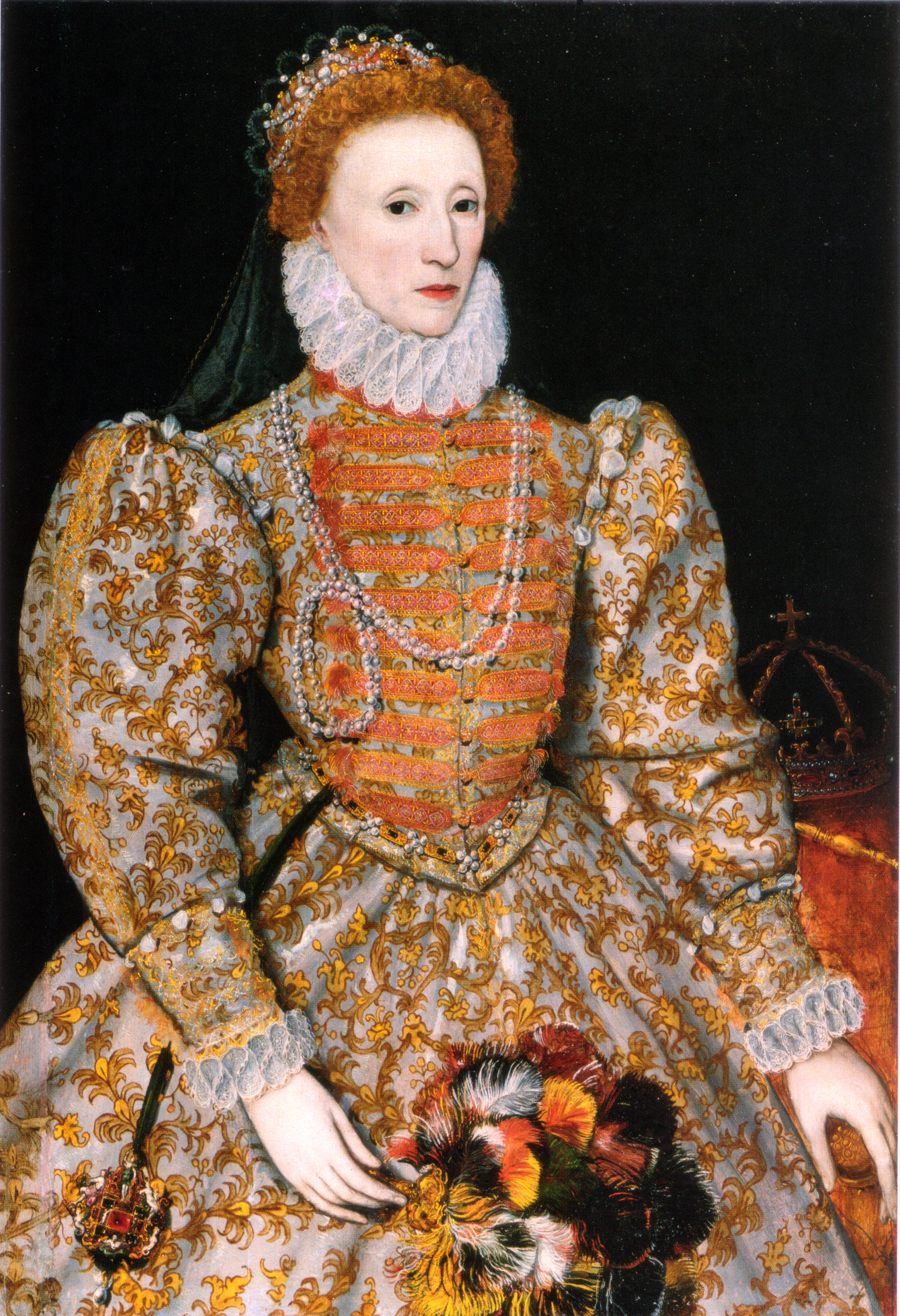
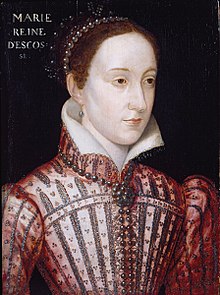
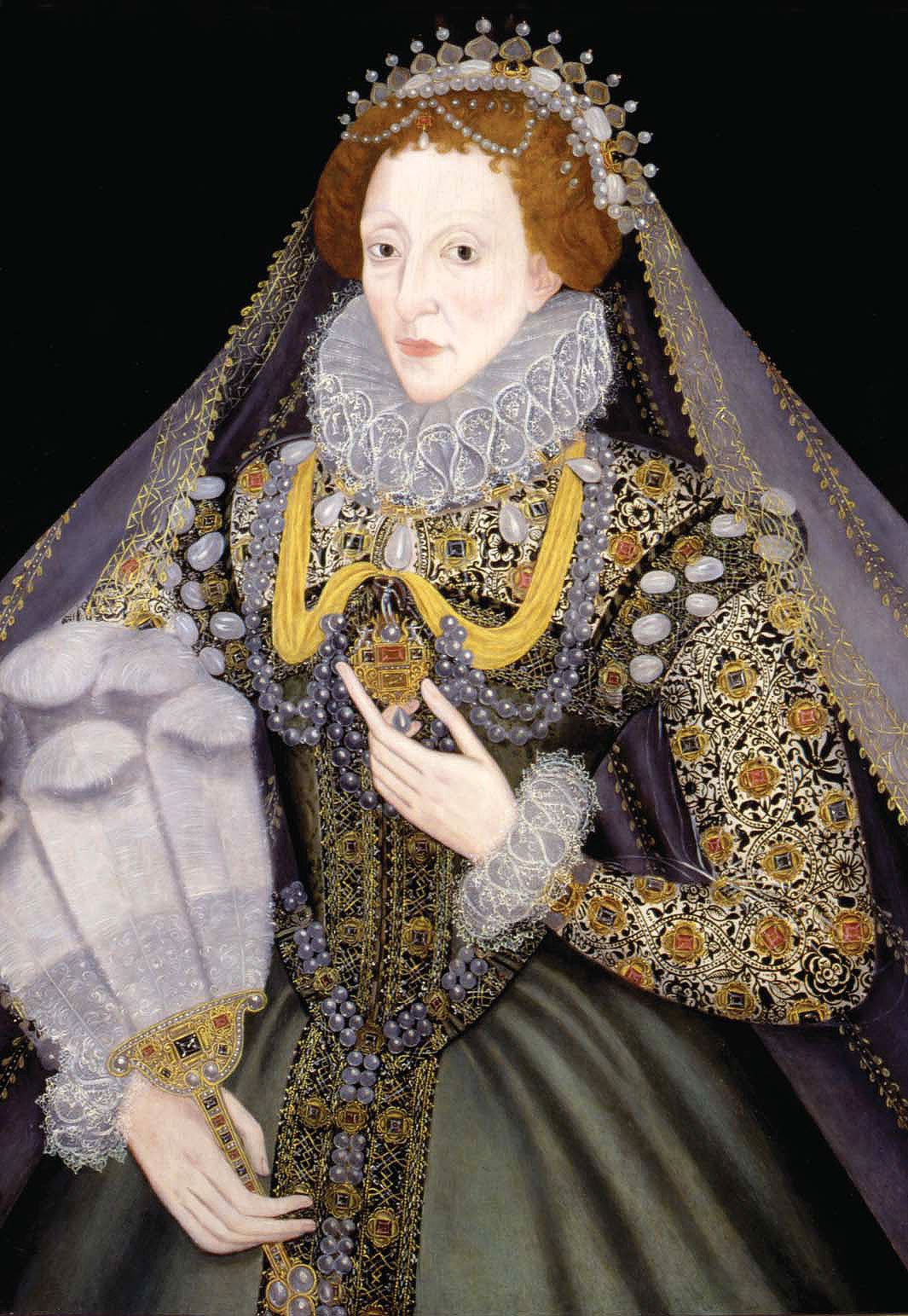
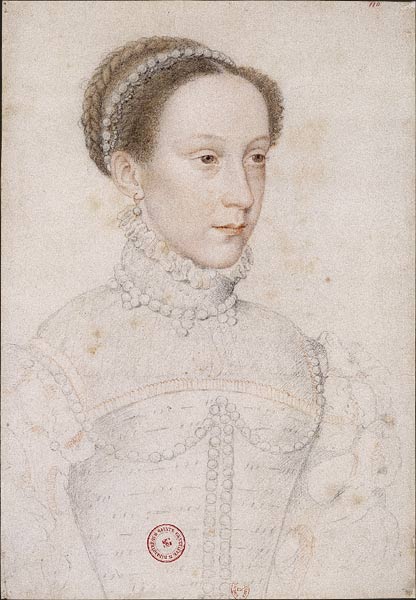
Above: queens, cousins, rivals. Mary Stuart, queen consort of France and queen regnant of Scotland (left) and Elizabeth Tudor, queen regnant of England (right).

Being a queen regnant in sixteenth-century Europe was no easy task. Prevailing misogynistic notions questioned whether women, as the inferior sex, had the right to rule over their male superiors. John Knox, the vehement Scottish Protestant preacher, opined in his The first blast of the trumpet against the monstrous regiment of women, attacking the rule of female monarchs such as Mary Tudor and Mary of Guise and published in 1558, that female rule was contrary to Biblical law. He bitterly concluded: 'For their [women's] sight in ciulie regiment, is but blindnes: their strength, weakness: their counsel, foolishenes: and judgement, phrenesie, if it be rightlie considered'. In view of this, the experiences of the queens regnant Mary Stuart, queen of Scotland, and Elizabeth Tudor, queen of England, should be considered in light of the customary expectations of figures such as Knox. 

Modern psychologists often suggest that childhood experiences are formative in governing later choices, actions and motives. Alfred Adler believed that people develop desires and drives during the childhood phase which later affects adulthood. Ann Smith concluded, in her article published by Psychology Today, that 'our own childhood experiences, which include parents, combined with our own personalities, our reaction to siblings and peers and the context of our lives send us off on a path with a particular set of beliefs and patterns that have a huge impact on our future relationships'. Although the psychology of queen regnants such as Mary and Elizabeth, living four hundred years ago, can only be guessed at, it is credible that the childhood experiences of these two queens, which were vastly different, dictated significantly their later actions and beliefs, particularly in relation to queenship and authority.


Above: John Knox's The first blast of the trumpet (1558) was aimed at attacking female rulers such as Mary Stuart and Mary Tudor (right). 

Both women descended from the first Tudor king, Henry VII, who had attained the crown of England through his defeat of the last Yorkist king, Richard III, at the Battle of Bosworth in August 1485. Elizabeth Tudor's birth had only been brought about by the annulment of her father's first marriage and his subsequent marriage to Anne Boleyn in 1533, with her birth occurring in September of that year. This marriage and the accompanied break with the Roman Church proved highly significant in European politics, particularly later on in the sixteenth century, for Catholic powers such as France and Spain viewed Henry VIII's divorce as illegal and his remarriage void, rendering his second daughter Elizabeth a bastard with no right to accede to the throne of England. Mary Stuart, by contrast, was the grand-niece of Henry VIII since she was the daughter of the Scottish king, James V (nephew of Henry), and his French queen Mary of Guise. Her line of descent and her claim to the English throne came through Henry's eldest sister Margaret Tudor, second child of Henry VII.

Elizabeth Tudor's childhood was extremely complex and must be viewed as, at best, topsy turvy. For the first three years of her life, she had occupied a central place in her father's affections as the heir to his throne following the bastardisation of her elder sister Mary. Besotted with his new wife Anne, the English king continued to hope, however, that she would bear him the much longed-for son to succeed Henry on the throne of England. Like most European rulers, Henry adhered to prevailing ideas that female rulers were unacceptable and contrary to God. This idea had, of course, provided the context for the annulment of his first marriage and his belief that his daughter Mary was illegitimate. Elizabeth enjoyed the luxury and splendour befitting an English princess, with her own household and servants, but because this occurred in the first three years of her life it is questionable to what extent she remembered or fully appreciated these luxurious early years.

In 1536, before her third birthday, Elizabeth's fortunes changed dramatically with her mother's loss of favour and eventual execution on charges of treason, adultery, and incest. While most historians firmly believe in Anne's innocence, her daughter was presumably shattered by the news of her mother's death, although at two years old how much she understood of the situation was very limited. Historians such as Sarah Gristwood and Maria Perry question how closely Elizabeth had bonded with her mother, for she had never resided with her. Following the custom of sixteenth century royal practice, Elizabeth had been nourished by a wet nurse and had been assigned her own household at Hatfield. Her visits to court had been relatively infrequent. Perhaps, as John Neale suggests, Elizabeth's 'emotional life was unaffected by her mother's fortunes'.

But this is slightly dubious. Following her mother's execution, Elizabeth was also, like Mary, declared a bastard, no longer in line to the English throne. Her title of princess was stripped from her, and it is probable that her father, by virtue of who her mother was, viewed her with considerable disfavour for a time. Probably Henry neglected Elizabeth in the immediate aftermath of her mother's death, for in the late summer of 1536 her governess Lady Bryan was forced to beg Cromwell for new clothes for the toddler. Later that year, however, she had returned to court and the Cardinal du Bellay observed the king's affection for his youngest daughter. By all accounts, during her life Elizabeth revered her father's memory and proudly proclaimed her parentage. By contrast, she is said to have mentioned Anne Boleyn's name only three times in her seventy-year long life. Does this indicate suspicion or even hostility towards her mother, who had been executed for the foulest of crimes? Historians such as Alison Weir think not, believing that she may have, as queen, commissioned George Wyatt to write a secret defence of her mother.

Although Elizabeth was probably not severely affected personally in the immediate aftermath of this event, it is likely that her mother's execution 'must have overshadowed Elizabeth's childhood. Over the years, guarded revelations, gossip, rumour and innuendo... and the growing awareness of her bastard status, must have caused the maturing Elizabeth recurring distress and enduring insecurities, and certainly affected her emotional development' (Weir, 2009). The executions of both Katherine Howard (1542) and Lady Jane Grey (1554, by her sister Queen Mary) likely caused Elizabeth considerable distress, bringing back painful memories of her own mother's brutal end. But how did these early childhood experiences govern Elizabeth's decisions and choices as a ruler?

For one thing, as Antonia Fraser suggests, she learned from a very early age to hide her true feelings. Although Elizabeth was notoriously prone to fits of anger, distress, and annoyance, her own personal feelings regarding, for instance, personages such as Anne and her cousin Mary Stuart, queen of Scots, remain mysterious, as do her personal feelings for Robert Dudley, earl of Leicester and her lifelong suitor. Wisely, Elizabeth chose not to become embroiled in plots against her sister Queen Mary, although she was imprisoned in the Tower of London for a time. When Thomas Seymour tried to seduce her in 1549 during the reign of her brother Edward as a means of pursuing power at court, Elizabeth wisely refused to have nothing to do with him, and at the news of his execution she noted his 'very little judgement'. 
In other ways, too, the impact of Elizabeth's early childhood experiences can be clearly discerned. She was notoriously touchy about her status, and reacted furiously to allegations that she was a bastard and thus no rightful queen of England. 

Elizabeth's reign was characterised by her caution and indecisiveness. She sought to placate foreign powers such as Spain while cautiously supporting fellow Protestants in the Netherlands, who sought to free themselves from the tyranny of the Spanish monarchy. Nevertheless, she did not seek to invade Scotland or France as a means of asserting her authority as her father, Henry VIII, sought to do. Her own horror of bloodshed and her desire for clemency can also be explained as a result of her personal aversion to the bloody experiences of her youth. Famously, she spent weeks, even months, agonising over her duty to sign the death warrant of Mary Stuart, and unlike her Catholic sister, refused to instigate a full scale Holocaust of religious deviants during her throne. Notwithstanding this, English Catholics were, of course, harshly persecuted from the 1570s on in light of the menacing threat of Spain and, to a lesser extent, France.

But above all the impact of Elizabeth's childhood can most illuminatingly be seen in her attitudes to marriage and her decision to remain unmarried as England's Virgin Queen. Her father had not prioritised her marriage in her youth, although suggestions of a betrothal to the son of the French king had surfaced during her early years. Later, when Mary Tudor sought to marry Elizabeth to the duke of Savoy, Elizabeth personally refused, on grounds of her decision, already made in her early twenties, to remain single, a decision which revolted her unhappily married sister. Why she chose to do so can only be guessed at, although most historians attribute her momentous decision to the bloody experiences of marriage suffered by her mother Anne and her stepmother Katherine Howard. Potentially, the death in childhood of two of her stepmothers, Jane Seymour and Katherine Parr, also influenced Elizabeth's aversion to marriage, for she may have come to associate the married position with an early death, pain, even bloodshed. Others argue that she feared the loss of both personal and political power if she had to give way to a husband, while some contended that she refused to marry because she was physically unable to bear children.

In her illuminating article 'Why Elizabeth I Never Married', Retha Warnicke suggests that political issues were far more important, for 'every British queen regnant who married soon discovered that her husband and his family complicated her life politically'. The unsuccessful marriages of three other queen regnants at this time, Lady Jane Grey, Mary Tudor and Mary Stuart, probably influenced Elizabeth's marital beliefs. Jane's Dudley in-laws were unpopular, while Mary Tudor's Spanish husband was so hated that a popular rebellion was directed against him in 1554. Mary Stuart's second marriage to Henry lord Darnley had, of course, ended in his brutal murder, attributed by hostile individuals to the Scottish queen herself. Her third husband brutally raped her and left her alone in a hostile Scotland. In view of Warnicke's arguments, it is extremely likely that both Elizabeth's childhood experiences and the experiences of later queen regnants in relation to marriage governed her momentous decision to remain unmarried.


Above: Queens Elizabeth Tudor and Mary Stuart in their youth.

It is clear that Queen Elizabeth's personal views and decisions regarding foreign policy, marriage, and the shedding of bloodshed were strongly governed by her formative childhood experiences. Is the same notion true for Mary Stuart, queen regnant of Scotland and, at one stage, queen consort of France? As second cousin to the English queen, Mary Stuart had enjoyed a far different childhood to Elizabeth. While Mary as dauphiness of France was to enjoy a life of luxury and splendour similar to that of the English princess before the execution of her mother, beforehand her birth in 1542 to the Scottish king James V occurred at a time of political and foreign difficulties in Scotland. The hostility of Henry VIII, directed in continuing invasions of Scotland, was worsened by the death of James six days after his daughter's birth. At 6 days old, therefore, Mary Stuart became queen of Scotland. Her mother, Queen Mary, became regent of Scotland during her daughter's minority, but her French lineage and her Catholic faith rendered her an unpopular figure to Scottish Protestants. It is significant that the Scottish Reformation occurred from this time.

The hostile misadventures of the English king encouraged the Scottish dowager queen's decision to send her infant daughter to the land of her own birth, France, where she would be brought up by her Guise relatives and groomed for a splendid marriage to the French dauphin, Francois, who would day accede to the crown of France. Although, like Elizabeth, Mary's infant years had been traumatic and complex, during her adolescence she enjoyed a life of luxury and fulfilment as a princess of France. She grew into a tall, striking, charming woman who enjoyed poetry, music, and dancing, and who sought personal satisfaction in outdoor physical exercise. While she was of the Catholic faith, during her teenage years she was not devout. However, the year 1558 was significant for Mary and the course of her life. Aged fifteen at the time, Mary's position in Europe was immeasurably strengthened by the death of her cousin Queen Mary Tudor, ruler of England, in November. Because Catholic powers, as mentioned, identified Elizabeth as a bastard, in the eyes of Europe, Mary Stuart was now the rightful queen of England. Elizabeth's Protestant faith rendered her a heretic, and her illegitimacy was proclaimed to be a pressing reason why she should never accede to the crown of England. Accordingly, Mary and her French husband, whom she had married in April of that year in Paris, began using the royal arms of England alongside those of France and Scotland and it was ordered that they should be referred to as the king and queen of France, Scotland and England.

Mary's childhood and adolescence had encouraged her to believe that, by virtue of her excellent lineage and her Catholic faith, she was the rightful queen of England. But her future became uncertain in 1560 when, aged only seventeen, the French dauphin died prematurely. No longer queen consort of France, Mary decided to return home to Scotland as its queen regnant, although not after considering a second marriage alliance with a powerful nation such as Spain. Once in Scotland, Mary's political decisions and choices as queen are intriguing in view of her childhood experiences. Her religious policy was famously fair and liberal, for although she was a Catholic, the Scottish Reformation had progressed so extensively that she quickly discerned that it would be unwise to press for Catholicism to become the state religion. Her own mother had faced mounting hostility in view of her Catholic faith, culminating in an invasion. Wisely, Mary learned from her childhood experiences in accordance with the political and religious situation prevailing in Scotland. Like Elizabeth in the early years of her reign, who famously desired not 'to make windows into men's souls', Queen Mary sought peace and stability in a kingdom which was slowly experiencing increasing inner tensions. She may also have been influenced by the religious violence in France between Catholics and Huguenots during her childhood. As Fraser contends, she seems to have had a personal aversion to bloodshed and violence, like her cousin Elizabeth.

Mary's beliefs regarding marriage and motherhood were significantly different to those of Elizabeth, most likely because of her own childhood experiences in that regard. While Elizabeth may have equated motherhood and marriage with bloodshed and an early death, Mary's acquaintance with the fertility of the French royal family, coupled with her own maternal feelings, meant that marriage was a promising prospect for her. She also regarded it as essential in order to preserve dynastic and political stability in Scotland. Unlike Elizabeth, who feared the loss of her authority through marriage, Mary naturally desired a strong ruling hand to aid her in her queenship. In view of this, in 1565 Mary, having fallen in love with the dashing but volatile Henry Stewart, lord Darnley, chose to marry once more. Her choice, aside from his own personal failings, was a wise one, for Henry had royal blood by virtue of being the son of Lady Margaret Douglas, niece of Henry VIII as the daughter of Margaret Tudor. Since Mary Stuart was the granddaughter of Margaret Tudor, she was first cousin to Lord Darnley.

Mary's political decisions and views were dictated entirely by her childhood experiences in France. There, absolutism reigned, and the monarchy was entirely respected with its due reverence. By contrast, the Scottish monarchy was beset with difficulties in view of increasing religious conflict among the Scottish lords. They were violent and sought only to pursue their own interests. Abduction and rape of rich widows was commonly used as a means of achieving power and greater wealth. It was therefore impossible for Mary to appreciate the tensions and resentment prevalent among her nobility. Despite her religious tolerance, her Catholic faith rendered her unacceptable to hostile Protestants such as John Knox and her brother, the earl of Moray. Her husband, Lord Darnley, soon proved to be a disastrous choice as consort. Immature, jealous and easily manipulated, he was soon embroiled in a plot to kill Mary's beloved secretary Riccio, who was blamed for causing the Queen's disillusionment with her second husband. Less than a year after Riccio's brutal end, Darnley himself had been murdered, his strangled body found at Kirk o'Field. His house had been blown up in a plot to kill him, probably governed largely by the Earl of Bothwell who subsequently abducted the Scottish queen and raped her. Their marriage ceremony followed shortly afterwards. Mary now totally lost any support she had formerly enjoyed from the nobility. Viewing her as an adulteress and whore, they imprisoned her at Lochleven, and forced her to abdicate in favour of her infant son James. Months later, she managed to escape to England, where she would endure 19 years of imprisonment before Queen Elizabeth signed her death warrant, when evidence gradually but quickly emerged that Mary had been involved in a number of plots against her. Mary's life came to an end at the hands of the executioner's axe in Fotheringhay Castle in February 1587.

While Elizabeth's decisions were governed by caution and indecision, Mary's have often been considered reckless and impulsive, although her early religious policies were tolerant and well-considered. She also sought to pursue a policy of conciliation with the nobility, in order to avoid bloodshed and violence at the Scottish court. Both women were influenced supremely by their childhood experiences. In relation to marriage, Elizabeth shrunk from the prospect due to her own psychological views and her political awareness, while Mary's association of marriage with lineage and power, formed at the court of France, governed her decisions to remarry once in Scotland. Both women pursued strong alliances with European powers as a means of strengthening their positions politically and personally; Elizabeth because of the experiences of her father and sister in their reigns and because of England's own insecurities; and Mary because she was aware that Scotland's conflict could only be assuaged by the helping hand of a loyal Catholic ally. Both women also sought conciliating religious policies since both had a horror of bloodshed and violence. But in the most important decisions, it seems clear that Elizabeth was both more politically astute and more aware of the importance of her people's opinions. Consequently, she refused to marry Robert Dudley in 1560 following the mysterious death of his wife because she was aware that she was implicated by some in Amy Robsart's death; she refused to go to war with fellow Protestants because she feared England's loss of security at the hands of hostile powers such as Spain; and she refused to suffer the loss of her virgin status. Elizabeth was understandably reluctant to place her political and personal authority in doubt were she to marry an overbearing husband. Her own sister's example had demonstrated such a risk. 

By contrast, Mary Stuart's decision to marry Darnley appears singularly misguided even if, at the time, it was considered a strong alliance. But her own decision to marry Bothwell scandalised her people and alienated her nobility, although it seems hardly fair to blame Mary since he had both abducted and raped her and it is certain that she had very little choice. But the belief that she was a constant schemer and plotter against the English queen, whatever the truths of it, and the association of her name with murder blackened her reputation irretrievably. Unlike Elizabeth, who at an early age by virtue of her childhood experiences became cautious and indecisive, Mary was more impulsive and reckless by virtue of the fact that her childhood had not prepared her in the same manner for a successful queenship. Her sense of absolutism political sense and her views regarding marriage were significantly different to those of Queen Elizabeth.

Queen regnants faced hostility and suspicion in the sixteenth century, when it was believed that women were inferior to men and as such had no right to rule over them. The example of Queen Elizabeth proved that a woman could rule successfully, while that of Mary Stuart indicated the difficulties a female ruler faced by virtue of her gender. Both women's childhoods dictated their decisions later in life and their own personal characteristics, but while Elizabeth has been generally praised as a successful ruler and perhaps even England's greatest monarch, Mary has often been condemned, as a result of her political and religious decisions, as a failure, notwithstanding the prevailing image of her as a religious martyr or tragic figure.


Tuesday, 12 February 2013

The Execution of Lady Jane Grey, Queen of England


On this day, February 12 1554, Lady Jane Grey, famously the Nine - or more accurately, Thirteen - Day Queen was beheaded privately on Tower Green, shortly after her teenage husband Guildford Dudley had been executed on Tower Hill. Last week I detailed the execution of Mary Queen of Scots, Jane's fellow queen who, like Jane, believed that she was dying as a martyr for her faith. Unlike Mary, however, Jane was dying as a fervent, even devout Protestant, and has ever since been mourned as a martyr for the Protestant faith and a victim of the Catholic queen Mary Tudor's bloody campaign of tyranny.

Lady Jane had been born sometime between the autumn of 1536 and the autumn of 1537 to two highly ambitious Tudor figures, Henry Grey, marquis of Dorset, and his notorious wife Frances Brandon, who was the daughter of Henry VIII's youngest sister Mary by her husband Charles Brandon, duke of Suffolk. Royal blood thus flowed in Frances' descendants. Jane's sisters, Katherine and Mary, were born in 1540 and 1545 respectively. Jane's childhood and the nature of her relationship with her parents is something of a mystery. The Victorian era, through portraying Jane as an innocent teenage victim and Protestant martyr, depicted Jane as ruthlessly bullied by her cruel parents, especially her tyrannical mother, apparently famously beating her when Jane refused to marry Guildford in 1553. This portrayal of the Grey parents' relations with their eldest daughter was famously described in Alison Weir's fictional historical novel Innocent Traitor, where Frances mercilessly punishes her daughter, often physically beating her and inflicting violence on her. Recent historians, however, have questioned the reality of the personal nature of the Grey family's relations with one another. Plowden, for instance, suggests that Jane's complaints about her parents' harsh treatment of her may not necessarily reflect reality but, instead, 'may... illustrate the attitude of a priggish, opinionated teenager, openly scornful of her parents' conventional, old-fashioned tastes'.

Whatever the case is, Jane was, famously, extremely intellectual. In the words of Alison Plowden, who has written extensively on her, she showed 'exceptional academic ability'. Aged thirteen, she was found by Roger Ascham, Princess Elizabeth's tutor, to be reading Plato, and she was learned in several languages, classics, history, religion/theology, and sciences. In the spring of 1547, aged around ten, Jane was sent into the household of Henry VIII's last and ultimately luckiest queen, Katherine Parr, who quickly showed fondness for her young charge. Jane was exposed to Katherine's radical Protestantism, and she later shared lessons with her royal cousins Edward and Elizabeth. It has been theorised by numerous scholars that these three developed a strong Protestant faith which they all shared equally passionately, although it seems unlikely, given what we know of her reign and personal beliefs, that Elizabeth was as puritanical in her Protestant religion as Edward and Jane were. Tragically, Katherine died in childbed in 1548, and Jane returned to her parents' home in Leicestershire.

Jane rapidly became an increasingly devout Protestant, and as a teenager she began, with her tutors' encouragement, to communicate with radicals on the continent, including Heinrich Bullinger, associated with the radical church in Zurich. By now, of course, Jane's teenage cousin Edward had become king of England, and Protestantism had been forcefully introduced into England through a swift and brutal campaign of destruction of all traces of late medieval Catholic religion. In 1551, aged fourteen, Jane began to attend court more, following her father's advancement through becoming Duke of Suffolk, a wealthy and prestigious title which further enhanced the status of the Grey family. Jane apparently came into conflict with her thirty-five year old cousin Princess Mary, since Jane, despite only being in her early teens, showed considerable distaste towards her cousin on account of her Catholic religion. When Mary kindly sent her a lavish and fashionable dress, Jane rejected it, viewing it as symbolic of the corrupt nature of Catholicism. She pointedly remarked that it was a shame that Mary did not dress like her sister Elizabeth who, in the true spirit of Protestantism, rejected lavish dress and instead wore plain, modest clothing.

What is clear is that during the early 1550s Jane, and her family, became increasingly important at court. There had even been talk that Jane would marry her cousin Edward and become queen, thus further strengthening the Protestant religion in a gradually radical England. In 1553, it was arranged between the Grey parents and John Dudley, earl of Northumberland, that sixteen-year old Jane would marry Guildford Dudley, a younger son of Northumberland. Famously, Jane refused, and the story goes that her parents beat her mercilessly until she agreed to marry him, although it is uncertain whether this in fact happened. The marriage occurred in May, on a day when three weddings occurred at Durham House in London. Jane's thirteen year old sister Katherine was also married. Dramatic developments entailed in July when the fifteen-year old king Edward tragically died. Of course, this signalled Jane's fantastic rise to power and, eventually, triggered her dramatic downfall.

Historians have debated intensely the processes which led to Jane becoming queen of England, with some arguing that it was a Grey-Dudley family plot which saw members of that family, prominently the duke, bullying the king into naming Jane as his successor. Others have doubted this and emphasised that it was the king's intention all along to pass the crown to Jane, to ensure the triumph of Protestantism in England. Even though his own sister Elizabeth was Protestant, both she and Mary were excluded from the throne on account of their status as bastards. According to Jane's later letter to Mary, she was 'stupefied and troubled' by the astonishing announcement in early July that she was now Queen of England, but accepted the throne as a means of inaugurating Protestantism further in England. This has been explored in fictional works such as the 1985 film starring Helena Bonham Carter, Lady Jane, where Jane, as a devout Protestant, accepts the crown due to her religious beliefs.

On 10 July, Jane was taken to the Tower; on the way, an Italian spectator watched the grand procession and described the teenage Queen as being red-haired, freckled, and very short and thin. Apparently, she was so  tiny that she had to wear high platforms on her shoes. Her husband, Guildford, was described as being blonde, tall, and strong. According to contemporary accounts, the new Queen was received with largely indifference, confusion, and even hostility. Very few people had actually heard of Jane, and of course her cousin Mary was highly popular in England. Jane was proclaimed queen at Cheapside, before news quickly emerged that Mary had assembled an army and was intending to march into London and recover her throne. Jane's Council fell apart, with Northumberland unable to defeat Mary, and Mary was soon afterwards proclaimed queen. Jane's father ripped up her canopy of state when he later met with her, and informed her that she was no longer Queen. Her reign had lasted thirteen days, from 6 to 19 July.

To begin with, Mary had promised to be merciful, and it does seem likely that, as a kind-hearted but ultimately inexperienced and naive woman, she intended initially to spare her seventeen-year old cousin, who she believed had not wanted the throne for herself, and was merely a pawn of her ambitious family. Northumberland, however, was executed in August 1553, despite his earnest attempts to save himself through converting to Catholicism shortly before his execution, to no avail. Jane allegedly voiced shock and contempt at her father-in-law's renouncing of his religious beliefs. In November, Jane and her husband were tried for treason, and were condemned to die. Jane's fate was to be beheaded on the Green or to be burned alive within the Tower. She was assured, however, that she would not die, and that Mary would save her.

Tragically, Wyatt's rebellion in early 1554 sealed Jane's fate. Up till then, the queen had granted her several freedoms, allowing her to continue studying and to walk in the Tower gardens, and Jane had had nothing to do with the Wyatt rebellion. Yet this confirmed to both Queen Mary and her Council  that she would never be truly safe until her cousin was dead, since she would always be the figurehead for strong Protestant plots who sought to remove Mary and replace her with a Protestant monarch. The Queen was no longer able to be merciful, and Jane's execution was scheduled for February. Again showing her merciful nature, Mary sent the new dean of St Paul's to attempt to convert Jane, who Mary viewed as a heretic on account of her Protestant faith and hostility towards Catholicism, but to no avail. Demonstrating remarkable bravery and single-mindedness, bearing in mind her tender years, Jane refused to renounce her faith.

On 12 February, both Jane and her husband Guildford were beheaded. Guildford was executed first, although Jane refused to bid goodbye to him. Jane apparently cried "Oh Guildford!" when Guildford's bloody body was brought by her window, before processing to Tower Green for her own execution shortly after 10am. Dressed in deep black, and described by the onlooker Richard Grafton as being "a gentle young Ladie with singuler gifts both of learning and knowledge", Jane made a short speech on the scaffold, admitting that she had done wrong in accepting the crown, but emphasising her innocency and love of God. She announced that she died as "a true christian woman", before kneeling down and saying Psalm 51.

The headsman stepped forward and Jane, finally, saw the dreaded block for the first time. Unlike Anne Boleyn, she was executed with an axe by kneeling before the block. Following her ladies tying a kerchief around her eyes, Jane experienced a brief moment of panic and distress, groping for the block and crying out, "Where is it? What shall I do?" before someone came forward to guide her. The execution was soon over quickly, and Jane's body was buried in the chapel of St Peter ad Vincula, along with her fellow queens Anne and Katherine, who had been buried there previously.

The execution of Lady Jane Grey has since given rise to a legend and a series of myths surrounding this unfortunate young woman. Plowden referred to her beheading as "the judicial murder... and no one ever pretended it was anything else". Yet Plowden also, wisely, cautions that "it is difficult now to see beyond the religious bias of such contemporary sources as Holinshed's Chronicles and Foxe's Acts and Monuments, or the uncritical later biographies of Agnes Strickland and Richard Davey." She was made an icon as a Protestant symbol, an innocent victim of the bloody and cruel Catholic Mary I, who was vilified and condemned as evil and corrupt in Protestant sources of the kind produced by Foxe.

The painting above, painted in the nineteenth century by a French painter, helped to promote the image of Jane as a guiltless, gentle teenage martyr, characterising her as a Protestant heroine, even a saint. The famous Tudor historian Eric Ives, who wrote a celebrated book about Jane, concluded in his study of the young Queen's life that "Truth to tell she counted for little. She was important for barely nine months, she ruled for only thirteen days... And yet her name still lives... But the fundamental justification for remembering Jane is the justification for remembering Anne Frank centuries later. They speak for the multitude of brutality's victims who have no voice".

As beautiful as this is, I also agree with Plowden, who wrote somewhat unsettlingly: "...the reality of Jane Grey, sacrificial victim of realpolitik though she undoubtedly became, was surely rather more disturbing than the sentimental myths surrounding her seem to suggest".

I agree. The picture we have of Jane, and the depiction of Queen Mary I, are the results of the triumph of Protestantism, and later secularism, in England today, thus identifying the Protestant Jane as a victim and martyr for England's faith and her cousin as alien, barbaric, cruel, un-English, unnatural. Imagine if Catholicism had triumphed, and Mary was celebrated as a good and highly effective ruler and Jane as a traitor. Historians need to remember that the pictures we have of historical figures are often influenced overwhelmingly by later national, political, and cultural developments. Thus the success of the Reformation in England has led to Anne Boleyn being celebrated as an important religious figure in her own right, rather than as a royal prostitute as she was identified in her own time, while the success of Elizabethan Protestantism has similarly led to harsh judgements about one of its victims, Mary Queen of Scots.

Truth be told, Jane Grey must be seen as a tragic and unfortunate figure. She was beheaded at the age of seventeen, in a highly cruel time which experienced bloodshed and political rivalry on a constant basis. But Jane held firm religious beliefs, she was highly confident that she would enjoy salvation, and I doubt very much that she saw her cousin Mary with anything but contempt and pity, perhaps. She was innocent in that she did not readily participate in family plots to seize the throne, but I do think Jane was more complex than Victorian writers made her out to be. There is evidence to suggest that she was stubborn, highly opinionated, ruthless, priggish, and very narrow-minded towards those who did not share her beliefs. Who knows - if she had defeated Mary, and continued as Queen Jane, there may have been a persecution of Catholics on the same scale as Queen Mary persecuted Protestant heretics.


Friday, 8 February 2013

Catholic Martyr or Scottish Traitor? The Execution of Mary Queen of Scots


On this day in history, 426 years ago, Mary Stuart, queen of Scotland and formerly Queen of France as the wife of Francis II, was beheaded for allegedly plotting to assassinate her second cousin and fellow queen, the English monarch Elizabeth I. This charismatic, alluring and complex woman was praised, adored, scorned, despised and vilified throughout her lifetime, but her controversial execution shocked Catholic Europe - despite the fact that they had, in essence, neglected her as nothing more than a nuisance - and led to the portrayal of Mary as a martyr in Catholic sources which violently condemned her cousin. 

Mary's short reign as the French queen was brought to a rapid end by her husband's premature death while still a youth, leaving her a widow aged just eighteen. A well-dressed, highly intelligent and cultured woman, Mary has been described by Julian Goodare as being 'unusually tall', her beauty 'universally and fulsomely praised', while her 'charm, wit and grace' were extolled by those who knew her. Returning to Scotland as its queen following her husband's death, Mary had, undoubtedly and unfortunately, concluded the most satisfactory and peaceful period of her life. A Catholic queen viewed as more French than Scottish in a land eagerly embracing austere Protestantism, Mary was regarded with ambivalence at best and hostility at worst by her Scottish subjects, who viewed her as a foreigner, despite having been born in Scotland as the daughter of the Scottish King James V. 

Despite her later poor reputation, Mary's conduct during her queenship in Scotland can be praised, for despite her sincere Catholic religion she tried fulsomely to maintain peaceful relations with the Protestant Scots, endeavouring to work with the regime following an agreement with her illegitimate half-brother Lord James Stewart. As Retha Warnicke notes: 'negative assessments of Mary's qualities as ruler have virtually ignored the dispatches of Thomas Randolph, the English ambassador, who, although sometimes misled by Mary's statements, usually was aware of her whereabouts'.

 Failed marital negotiations eventually catalysed political unrest and dissatisfaction at Mary's court, with Mary falling in love with her cousin Henry Lord Darnley. Mary's feelings for him were apparently sincere, but most historians have concluded that the vain teenager Darnley only wooed the queen out of an ambitious desire to become king of Scotland and achieve political and material glory. However, Mary refused to permit her husband to attain regal hegemony, and he was never crowned or titled King of Scotland. It appears that the queen belatedly discovered that Darnley was vain, petulant, selfish, and an entirely unsuitable husband for a queen. This marriage alienated Mary's cousin Elizabeth, who arguably modelled her own cautious actions in opposition to the disastrous policies of her cousin. 

The queen faced increasing political conflict at her court, caused largely by differences in religion, political beliefs, and hostility towards the new consort. The Moray-Hamilton conflict severely threatened Mary's authority, although she was ultimately successful in suppressing it. Darnley became alarmingly jealous of his wife, believing that her failure to crown him king of Scotland resulted from her favour to other noblemen at court, who had poisoned her mind against him. Warnicke has suggested that 'contemporaries worked to undermine female rules with accusations that they were involved in sexual relationships with their advisers'. In view of this, the shocking events of 1566 which saw the violent murder of Mary's French secretary David Riccio make sense. One day at supper, the Scottish lords burst uninvited into Mary's private chambers where she was in the company of Riccio, seized the unfortunate secretary, and stabbed him fifty times in a brutal and violent death. Mary, who was actually pregnant at this time, was apparently threatened with a similar death. Notwithstanding, she soon afterwards gave birth to her only child, the future king of England and Scotland, James. 

However, despite the removal of Riccio from the political scene, Darnley continued to face hostility and contempt from other prominent Scots. Having departed for Glasgow after apparently suffering from a disease - perhaps smallpox or syphilis - Darley's house was blown up in Kirk o'Field, in Edinburgh. Although he managed to escape, he was shortly afterwards smothered in the garden. Mary was residing nearby at Holyrood. Those who disliked her believed that she had ordered her husband's murder, although there is no evidence of this. Following this, the ambitious Earl of Bothwell concocted a scheme to entrap the vulnerable Queen, seduce her, and then marry her. What followed was an abhorrent act of sexual violence, with the earl raping her. Mary married him, probably against her will, following this. Mary became increasingly unpopular with her already resentful subjects, because many believed that Bothwell had been the culprit for Darnley's murder, and because of her speedy and entirely unsuitable marriage to him soon afterwards, believed that Mary was complicit in Darnley's murder. She was therefore vilified as a murderess and a whore.

What followed, of course, is well known. 1567 saw Mary being deposed as Queen of Scotland and her son, James, ascended to the throne in her place, although as a toddler he did not in reality rule. The queen later escaped into England in 1568, apparently cutting her hair short and discarding her lavish costume in order to escape being detected. This desperate action following Mary being paraded publicly through the streets of Edinburgh, condemned as a 'whore' by hostile citizens. She was, at this point, 25 years old.

Twenty years later, in February 1587, Mary was sentenced to death at the castle of Fotheringhay, where she had been imprisoned since the previous year. The preceding decade had seen the former Scottish queen implicated in a variety of plots, including the 1571 Ridolfi Plot and eventually the Babington Plot of 1586. Whether Mary was involved in these plots, to depose her cousin and become Queen of England, is uncertain; she frequently denied so and asserted her innocence, but contemporary evidence convincingly suggests that she was implicit in plots to assassinate Elizabeth. Catholic rulers in France and Spain vigorously supported Mary, hoping to extend Catholic rule into England; unsurprisingly, they viewed the English Queen as a Protestant heretic, daughter of a whore and traitor. Elizabeth's principal Secretary, Sir Francis Walsingham, ensured that Mary's correspondence entrapped her. Believing that her letters were secure, when they were in fact deciphered and read by Walsingham, Mary continually wrote to Sir Anthony Babington, the mastermind of a murky plot in 1586 to assassinate Elizabeth and replace her with Mary. The plot also involved the Spanish king, who was personally hostile to Elizabeth, who promised to provide a Spanish army to seize Mary, crown her as queen, and do away with her cousin. 

Some may be surprised to note that Elizabeth actually was highly reluctant to execute her cousin and rival. Elizabeth, who deeply respected and revered both the monarchy and public opinion abroad, was well aware of the unsettling consequences if she decided to execute not only her cousin, but a fellow queen, who none but God had the power to depose. Of course, Elizabeth's sister Mary Tudor had faced a similar issue in 1554, when faced with the execution of her cousin and queen Jane Grey, but Jane had been a usurper, whereas Mary Stuart was the legitimate ruler of Scotland, even if she had been deposed in favour of her son. Elizabeth's biographer, Wallace Maccaffrey, believed that 'Elizabeth was confident that with adequate safeguards the genie [ie Mary] could be kept in the bottle'. However, Elizabeth's councillors were adamant that Mary had to go. She had been implicated in horrifying plots to kill Elizabeth for the last 15 years, and many despaired at the fact that, despite the overwhelming evidence, the Queen still prevaricated about getting rid of her cousin. 

Elizabeth agreed to her cousin's trial, but as Maccaffrey notes, she was 'grudging', and employed deliberate delaying tactics in order to try and prevent what was, essentially, an inevitability. The trial began in October 1586 at Fotheringhay Castle, with Mary, apparently, defending herself strongly and convincingly. She was charged with plotting to assassinate the queen, and was sentenced to death accordingly. Mary, according to sources, welcomed death, viewing herself as a martyr for the Catholic faith. She apparently stated that her cousin should beware the terrible penalties she would face from God if she dared to kill a queen, anoited by God. This, of course, could not have made Elizabeth's life any easier.

Although Mary had been condemned in October, it was only four months later that Mary's execution proceeded, after Elizabeth had finally agreed to her cousin's execution in what has been termed 'the most painful decision of her life'. Of course, considering Elizabeth's personal history and her renowned aversion to violence of any sort, it is easy to understand why she prevaricated and was so reluctant to order Mary's death. Her own mother had been executed on false charges of adultery when Elizabeth was just 2, while Elizabeth's friend Robert Dudley reported that, following Katherine Howard's execution when Elizabeth was aged 8, Elizabeth had declared that she would never marry. Plainly, she abhorred execution, and must have dreaded, if not positively loathed, the idea of sending a queen to the scaffold, in what only reawakened painful memories. Elizabeth may also have remembered her cousin Jane Grey's execution. The 17-year old queen, following her beheading, was mourned by Protestants as a martyr for the Protestant faith, and Mary Tudor consequently reviled and despised. Elizabeth probably feared that the same - reversing the religions - would occur if she authorised Mary Stuart's execution. 

Despite her hysterical reactions, Elizabeth finally agreed to Mary's execution. Mary received the news that she would die calmly, announcing to her attendants that she was dying for her Catholic religion, apparently ignoring the fact that she had been repeatedly implicated in plots to assassinate her rival over a 15-year period. Unlike the executions of three other English queens (Anne Boleyn, Katherine Howard and Jane Grey), Mary was not beheaded outside, but inside the hall of Fotheringhay Castle. The scaffold had been erected in the Great Hall and was draped in black. Mary wore a gold crucifix, stressing her devotion to Catholicism, a gown of black satin which revealed a scarlet bodice and petticoat - highly significant, as red was the colour of Catholic martyrdom - and short sleeves of satin in purple. Mary turned to her ladies at the scaffold, and announced that her troubles would finally be at an end. 

Mary had been denied a Catholic priest on the scaffold, and consequently ignored the Protestant Dean of Peterborough's prayers for her as he accompanied her. The executioner begged for the former queen's forgiveness, which she readily granted. Reciting her prayers, Mary was then beheaded with three strokes of the axe, an undoubtedly painful and brutal death caused by an inexperienced executioner - some have suggested that he was so overcome with grief that he was unable to carry out the deed effectively. Mary, whether people loved her or hated her, made a strong and lasting impression on all who knew her. Robert Wynkfielde, a contemporary, wrote following her execution:

...and so the executioner cut off her head... he lift up her head to the view of all the assembly... then, her dress of lawn falling from off her head, it appeared as grey as one of threescore and ten years old, polled very short... Tragically, Mary had been wearing a wig, and her true hair was grey, showing how shockingly she had aged during her 20-year imprisonment. She was, of course, still only 44 years old at her execution. 

Then one of her executioners... espied her little dog which was crept under her clothes, which could not be gotten forth but by force, yet afterward would not depart from the dead corpse...

Mary Queen of Scots is one of the most controversial women to have lived in the Tudor period. A charismatic, cultured, intelligent and passionate woman, she was also highly reckless, rash, and at times incredibly foolish, in contrast with her cautious cousin Queen Elizabeth. Historians divide sharply in how they assess her - was she a martyr for the Catholic faith? Was she an idiotic woman who was ruled by her heart and let men dominate her? Or was she simply unlucky, the victim of Scottish religious politics and men of power? What cannot be denied is that Mary was repeatedly granted chance after chance by Elizabeth, who forgave her time and time again. Yet Mary repeatedly embroiled herself in treasonous plots to assassinate her cousin. It is surprising how long Mary actually lived, considering that Elizabeth had enough evidence to order her death many years previously. Mary certainly wanted to be Queen of England, and her disposition from the Scottish throne occurred in undoubtedly tragic and unlucky circumstances. But she was not politically astute, as her cousin was, and she failed to appreciate her good fortune in retaining her life at her cousin's jeopardy. As tragic as Mary's ultimate fate was, one cannot but feel, regretfully, that it was a logical consequence of her own actions.