Showing posts with label david starkey. Show all posts

Wednesday, 14 December 2016

The Tudors and TV: Is There Anything New to Say?


Tudor enthusiasts greeted the news of Lucy Worsley's new BBC documentary about the six wives of Henry VIII with excitement. For those of us fascinated by the Tudor period, we cannot get enough of it; we read about it, we watch documentaries about it, we visit the buildings associated with it and, perhaps most of all, we love to talk about it. Admittedly, Henry's tumultuous marriages is a well-worn subject, but the enthusiastic Worsley promised to offer new insights and, for me at least, she has done so in what is, admittedly, a challenging medium: television.

However, not everyone reacted as positively to Worsley's documentary as others. Last week, an article was published in The Guardian entitled: 'Six Wives With Lucy Worsley: Why TV History Shows are for the Chop', and was written by Joel Golby. In it, he attacked Worsley's documentary as 'awful, tedious history' and 'Game of Thrones without any of the good bits', a rather absurd criticism that, nonetheless, exposes the difficulty that historians face in attempting to strike a balance between education and entertainment, when presenting TV documentaries. In one hour, Worsley was required to discuss and examine Henry's 24-year long marriage to Katherine of Aragon, her experiences of queenship and Anne Boleyn's rise to power, in a way that was both credible and engaging to viewers. Golby's scathing assessment indicates that she failed.

Others voiced their criticism of another Tudor documentary on Twitter and in the comments section of the article, although some commentators were rather more positive. One praised Worsley's coverage of 'one of the most fascinating eras.' But Golby's negativity was mirrored in another article published in History Today on 14 December by the magazine's editor, Paul Lay. The title of the piece is 'Television History and Its Discontents', and featured a still from Worsley's documentary, in which she wears Tudor costume.

Lay criticised Six Wives, for he suggested that it offered 'unconvincing, cheap looking, historical reconstructions', and because it 'says nothing that we do not know already.' I object wholeheartedly to Lay's criticism, which I believe to be both unfair and untrue. The documentary does offer new insights, and as a biographer of Katherine Howard, I wholeheartedly commend Worsley's decision to present Henry VIII's hapless fifth wife as a victim of predatory behaviour, a view that has only gained acceptance amongst historians in the last decade or so.

Before then, Katherine Howard tended to be perceived as, in Alison Weir's words, 'an empty-headed wanton', or even, to use the late David Loades's term, 'a stupid slut'. She has been derided for her 'promiscuity' and has been slated as a 'natural born tart' (Alison Plowden). Television documentaries and dramas tended to follow these interpretations: Tamzin Merchant presented Katherine as a nymphomaniac, even a prostitute, in the Showtime television series The Tudors, and even in Dr David Starkey's entertaining documentary about the six wives, Katherine was said to have shown more dignity at her death than she had ever displayed in life. An earlier documentary about the six wives produced this year also focused on Katherine as sexually adventurous both before and after her marriage.

To my knowledge, Worsley is the first to present Katherine as an abused victim in a television documentary. In doing so, she has drawn on the theories of historians such as Retha Warnicke and Joanna Denny to offer a compelling, and more historically accurate, version of Katherine's life than previously seen ever before on television. From this perspective, Lay's criticism is absurd. 

It is true that there is an abundance of documentaries about Henry VIII and his wives, but is that really a bad thing? Many people are fascinated by the king and his queens, and read as many books as they can about them, as well as flocking to Hampton Court Palace, the Tower of London and Windsor Castle every year, as well as to the numerous National Trust and English Heritage owned properties. I object to criticisms of new documentaries about the Tudors and, in particular, Henry VIII - for contrary to these views, such documentaries are offering new insights and are aimed at audiences who will appreciate these insights, because they are intelligent and engaged viewers who want to learn as much as they can about the period. 

Perhaps, if the likes of Golby and Lay view such documentaries as redundant, because they offer 'nothing that we do not know already', then they should not watch them, since there are many who will watch them and will learn something new. If either individual can point me towards an older documentary that portrays Katherine Howard as a victim of sexual predators, then I might rethink my views. But until they can, I stand by why I argue in this piece: that even well-trodden subjects can offer something new, which can be documented on television in a manner that is both educational and entertaining. 

Friday, 4 October 2013

Misconceptions of Katherine Howard


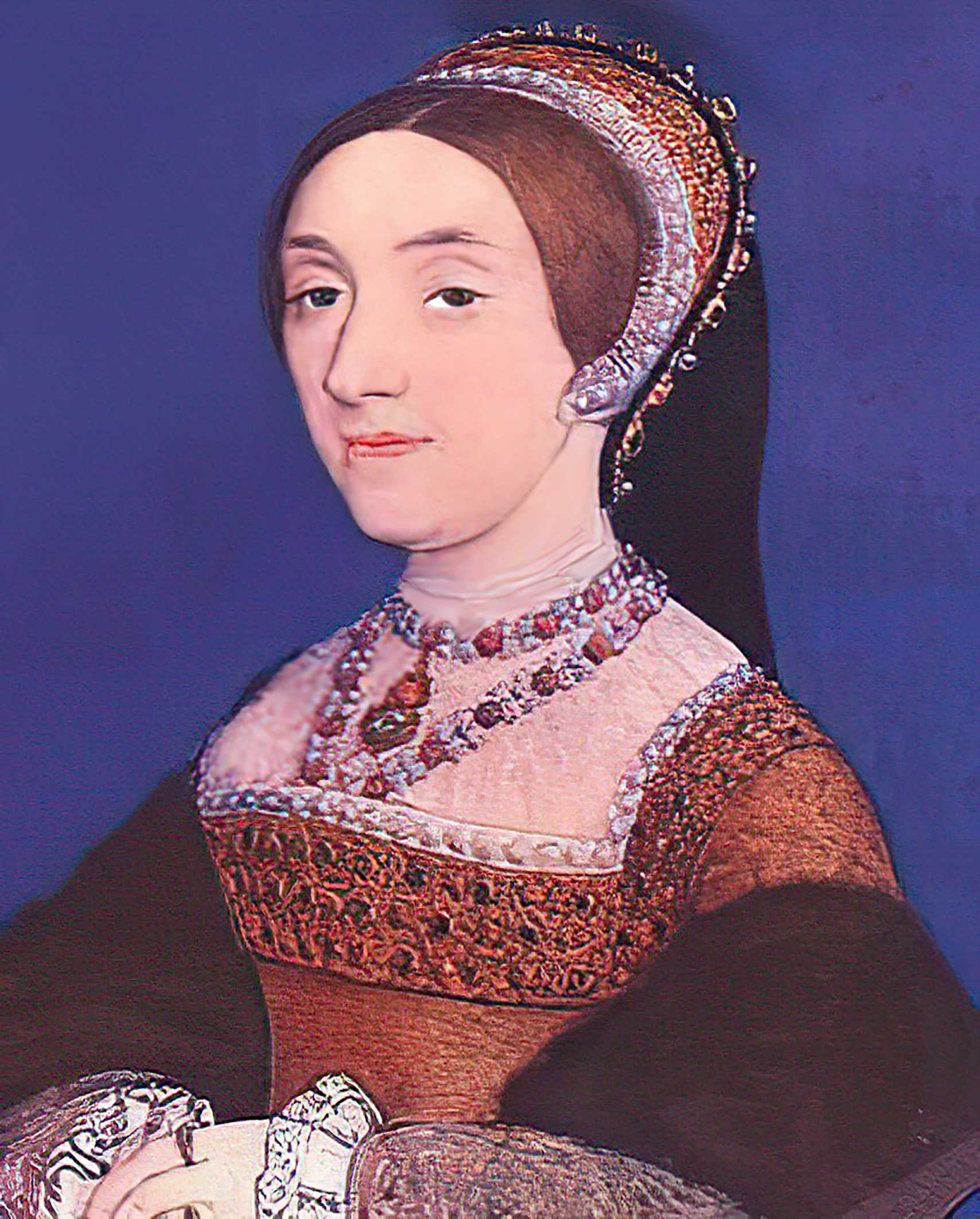
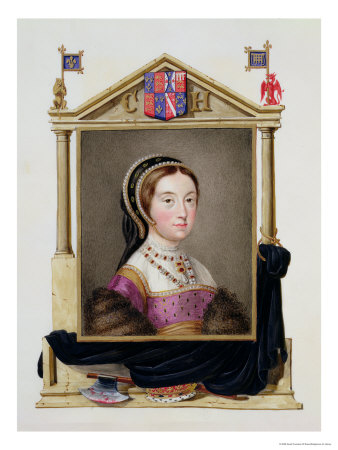
Above: Portrait of an unknown woman, possibly Katherine Howard. (left)
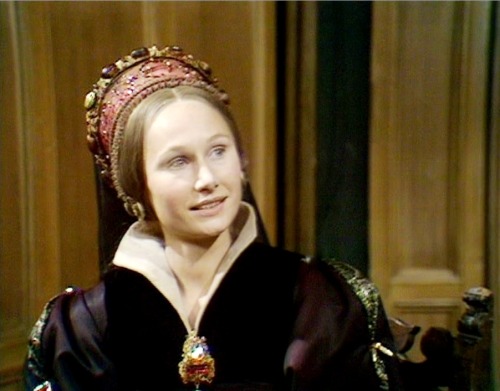
Tamzin Merchant as Katherine Howard (right), encouraging the view of her as a fun-loving, empty-headed teenager.

Many misconceptions exist about Queen Katherine Howard, and I have uncovered more and more of them in the course of my research on her life. Some of them are quite minor, but others are seriously major, and this is quite disturbing, for it means that the prevailing view of her is very far from the truth.
In this article, I will explore some of the most common misconceptions about Katherine, and hopefully show why they are wrong, while offering a likelier interpretation.

1. Katherine Howard was stupid.

Many people, including some academic historians, seriously continue to believe that Katherine Howard was intellectually inferior to Henry VIII's other wives, some going so far to call her "stupid", "dim", or "empty-headed".

In an article about faction at Henry's court (2012), historian John Matusiak rather insultingly suggested that she had "puppy fat for brains". Alison Weir called her "empty-headed". In her novel The Boleyn Inheritance (2006), bestselling novelist Philippa Gregory portrayed Katherine as dull and stupid, thinking of nothing but herself. But is there any historical evidence to back up this prevailing view of Katherine?

The short answer is no. There is nothing to indicate that Katherine was 'intellectually inferior', even 'stupid'. Yes, she did not receive an international education in the courts of Europe like her cousin Anne Boleyn, nor did she receive the royal education accorded to the European princesses Katherine of Aragon and Anne of Cleves, nor did her mother provide a humanist education for her like that entitled to Katherine Parr. Like Jane Seymour, Katherine's education was far more typical of her class and status. She learned important household skills, embroidery, and from the age of about twelve began receiving music lessons.

Other evidence frequently cited to support the claim that Katherine was a stupid girl rests on her meetings with Thomas Culpeper, which amounted, in the words of Lacey Baldwin Smith, to "unbelievable imbecility". But this depends entirely on how you interpret her meetings with Culpeper. If she was indeed meeting him for sexual intercourse, as the majority of historians still continue to think, then yes, her actions were rash. But it is more probable that they did nothing of the kind. Whether Katherine was being ruthlessly manipulated by Culpeper, as Retha Warnicke believes, or whether she was merely meeting him innocently, as I believe, then it does not follow that her actions were stupid or rash. Rather, they suggest that Katherine was naive.

The prevailing opinion, then, that Katherine was stupid, rests on no evidence and should be discarded.

2. Katherine was a fun-loving girl who did nothing but party during her time as queen.

Again, a common view is that Katherine Howard literally spent her life partying, wearing beautiful clothes, and generally having a good time. In the opinion of Dr David Starkey, she was "a good time girl". Tamzin Merchant in The Tudors did more than most to encourage this view - she plays a fun-loving Katherine who takes part in mud fights, banquets, dances in the rain, and traipses round her chambers naked.

Most historians take this view, but again, is there any actual historical evidence to back up this claim? The short answer, again, is no. The only bit of evidence which could support this interpretation is the dismissive comment made by an unknown Spanish chronicler, writing probably at least a decade after Katherine's death: "the King had no wife who made him spend so much money in dresses and jewels as she did". But the same author made some glaringly inaccurate comments about Katherine - he depicted her as the fourth wife of Henry VIII, rather than the fifth, and it is he who reported that Katherine promised that she would rather die the wife of Culpeper on the scaffold - no other evidence backs up this claim.

There is no evidence to support Starkey's view that Katherine was a party-loving "good time girl". Historical evidence relating to her time as queen is extremely sparse. The few details we have about her reign suggest that she did attend court functions, banquets and jousts, but we have nothing about her life except her marriage to the king and her downfall. Chroniclers and foreign ambassadors reported little to nothing about her.

By contrast, evidence suggests that Katherine, contrary to belief, actually took her duties as queen seriously. She acted as patron for an author, she interceded on behalf of at least four individuals, she supported her family, rewarded her friends, and corresponded with Cranmer. It is actually more likely that Anne Boleyn was the party-loving Queen, rather than Katherine, if later evidence from Anne's household is anything to go by.

Again, this second misconception is exactly that - a misconception. It is not factual and has no evidence to support it. It is a myth, and should be dismissed as such.

3. Katherine Howard was promiscuous or even a 'slut'.

Here most modern historians are in agreement that Katherine Howard was flighty, and, in a sense, deserved her execution. Alison Weir calls her "certainly promiscuous", while Alison Plowden views her as "a natural born tart". Eric Ives dismissively states that she "had minimal respect for court protocol and refused to draw a line between her position before and after becoming the King's wife". David Starkey believes that "she liked men, and they liked her".

Again, these views rest entirely on how Katherine's relationships are interpreted. These views are somewhat anachronistic because they rely on a twentieth/twenty-first century interpretation of sexuality and gender. In today's world, a girl who has sexual relations with three men before her seventeenth birthday is viewed as a slut or a whore. These historians rely on this prevailing view and believe that Katherine must have been the same. Rather too often, they forget that she lived at least four hundred years before they were writing.

Because issues of sexuality and gender have been practically ignored, we have a very inaccurate view of Katherine's relationships. As my research has indicated, I am in full agreement with Dr Retha Warnicke that Katherine's early sexual liaisons were characterised more by abuse and neglect rather than love. At the age of twelve - when girls could legally marry - she was seduced by her music master, who beseeched her to meet in dark places where he could fondle her. At fourteen, she was aggressively pursued by Francis Dereham, who probably sexually assaulted her and may have raped her. Would we nowadays suggest that a girl who had been aggressively coerced into sex by the age of fourteen was a slut? No, we would say that she was a victim.

Katherine's early experiences seem to have seriously damaged her psychologically. She may indeed even have formed a strong aversion to sex. Her relationship with Thomas Culpeper did not include sexual intercourse, it may not even have included love. As Warnicke writes in her 2006 article: "...in the sixteenth century, when female virginity was highly valued, we can only guess at how Katherine's youthful sexual experiences and punishments affected her psychologically".

Another misconception, then - and this one is perhaps the most serious one of all.

4. Katherine was elegant, but not very beautiful.

Some historians write that while Katherine Howard was elegant and charming, she was not conventionally beautiful. This rests solely on the comment of the French ambassador in 1540, when he first met her, that she was only "moderately pretty".

This is not a serious misconception, but it is one nonetheless. At least three other comments made by different individuals suggests that Katherine Howard may very well deserve her reputation, in the words of Baldwin Smith, as "the most beautiful of Henry's queens". A court observer in 1540 stated that she was "a very beautiful gentlewoman", while the same French ambassador earlier said that she was "a lady of extraordinary beauty". As if that wasn't enough, the unknown Spanish writer called her "more graceful and beautiful than any lady in the Court, or perhaps in the kingdom".

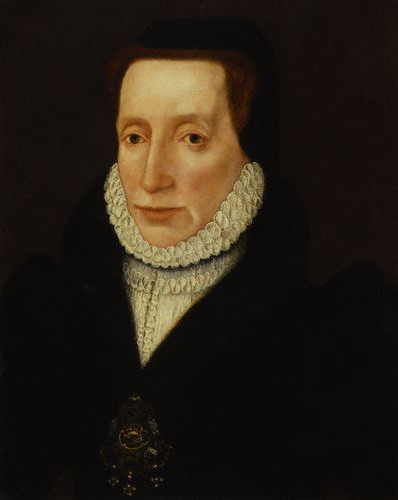
There are no surviving portraits of Katherine, so we cannot ascertain her exact appearance. Portraits purporting to be of her are more likely to be of another royal relative, perhaps Henry VIII's niece Lady Margaret Douglas. Nonetheless, if she was deemed to be conventionally beautiful, then it follows that she was probably pale/fair-skinned, blue/grey-eyed, and fair-haired. We do know that she was "small and slender", in the words of the French ambassador; so it is possible that she was the smallest of Henry's queens as well as the youngest.

The view, then, that Katherine was not particularly pretty is another unconvincing misconception.

Conclusion
These are only four misconceptions which abound about Katherine Howard. Some of them are fairly minor, such as those regarding her appearance, but others concerning her sexual history are far more serious. A fairer consideration of Katherine's career is long overdue. At the very least, it is time to put aside the modern view of her as a stupid, empty-headed, party-loving adolescent who deserved her fate.

Thursday, 19 September 2013

The Reidentification of a Portrait Identified as Elizabeth Cromwell or Katherine Howard


Above left: portrait of an unknown woman, c.1535-40, housed in the Toledo Museum of Art.
Above right: the National Portrait Gallery version dating from c.1612.

A portrait of an unknown woman variously believed to be either Queen Katherine Howard (c1524-1542) or Elizabeth Seymour, baroness Cromwell and later countess of Winchester (c1513-1563) has caused considerable controversy in artistic circles. Few historians nowadays believe that the portrait represents Henry VIII's fifth queen, who probably died before her eighteenth birthday (the sitter in this portrait is in her twenty-first year). Equally, the re-identification of the sitter as being Elizabeth Cromwell has proved tenuous. This article proposes a new argument for the mysterious sitter of the portrait - namely, that it depicts Margaret Douglas, countess of Lennox, mother-in-law of Mary Queen of Scots, and niece of Henry VIII.

During the nineteenth and early twentieth century, most art historians agreed that the portrait depicted Katherine Howard, and must have dated from c.1540 during the short period of her queenship. Lionel Cust in his 1910 article believed that the sitter in the image bore marked similarities with a miniature supposedly depicting the queen now housed in the Royal Collection (although that miniature is also dubious). David Starkey in 2008 recently proposed that the portrait does indeed depict Katherine, supposedly because the jewellery which the sitter wears is exactly that given to the queen on her marriage to Henry VIII. Most historians, however, disagree with these conclusions, not least because many sets of jewellery during this age were identical and replicated for different sitters, but also because, as mentioned, Katherine never lived to the age of twenty/one, and the sitter hardly appears the 'beautiful young gentlewoman' which Katherine was described as being by a court observer in 1540.

Both Roy Strong and Antonia Fraser (in her 1992 biography of Henry VIII's consorts) theorised that the sitter is more plausibly Elizabeth Seymour, sister of Jane and later wife to Gregory Cromwell, son of Thomas. Although this has by and large become the accepted identification, there are nevertheless particular difficulties with this interpretation. As Alison Weir pointed out, regardless of Elizabeth's status as sister to a queen of England, as the daughter of a mere knight it seems unlikely that her image would have been copied in at least three versions of the portrait (the versions exist at Toledo, the National Portrait Gallery, and Montacute House in Somerset). The sisters of Anne Boleyn, Katherine Howard and Katherine Parr respectively did not enjoy such a privilege.

Fraser suggested that the portrait was painted c1534, following the death of Elizabeth's first husband. At that time, Elizabeth was serving Queen Anne Boleyn alongside her sister as a maid of honour. Again, she would not have qualified by virtue of her comparatively low status for a portrait in which the sitter wears extremely lavish costume and expensive jewellery, including gold embroidered sleeves and magnificent embroidered cuffs. Elizabeth could have sat for this portrait in 1537, when she became the wife of Thomas Cromwell's son and subsequently a baroness, and was also the sister of Queen Jane; which would fit the Toledo Museum's dating of this portrait to c.1535-40. But most historians propose that Elizabeth was only born in 1513, and possibly as early as 1511. If so, this portrait could simply not have been painted in 1537, when Elizabeth would have been aged between twenty-three and twenty-six. The supposed resemblance in facial features between the sitter and Jane Seymour have proved tenuous, for the sitter, with her reddish-brown hair, dark eyes, full chin and French clothing bears little resemblance to the fair Jane.

The Toledo Museum of Art states that Hans Holbein himself designed the gold medallion which the woman in the painting wears, following his appointment by the king in 1533 as court painter. He probably designed jewellery for the king's second consort Anne Boleyn, and if he did design the jewellery in this portrait, it would surely follow that the woman was of a similarly high ranking status - most likely, a member of the royal family. On this basis, the portrait might depict Katherine Howard in view of her royal status, but the other pressing points encompassing her date of birth, appearance, and short tenure as queen indicate that the sitter is probably not her.

The fact that this image continued to be replicated as late as 1612 (the National Portrait Gallery version, above right) suggests that this woman was still viewed as a particularly important and respectful personage well into the reign of James I of England. The religious nature of James' reign, and the fact that this portrait was housed by the Protestant Cromwells, would suggest that the sitter was believed to be a Protestant. This would completely rule out the Catholic Katherine Howard, disgraced since her execution in 1542, and probably rules out Elizabeth Seymour too, for even if she was a member of the Cromwells, her short marriage to Gregory and her Catholic religion did not suggest that her image would continue to be replicated.

The likeliest candidate for this portrait is in fact Lady Margaret Douglas, countess of Lennox. First and foremost, as the niece of Henry VIII, she would have been entitled to wear extremely lavish costume and the finest of jewellery, perhaps designed by Holbein himself. It seems certain that the woman in this portrait was royal, and in the period c.1535-40 Margaret was one of several women who could have been a candidate for the sitter alongside Mary Tudor (aged twenty/one in 1536-7); Frances Brandon (1537-8); Eleanor Brandon (1539-40), and far less likely, Katherine Howard. Mary Tudor's Catholic religion, her uneasy relations with Thomas Cromwell, the horror of her reign still felt in the Protestant climate of Stuart England, and the lack of similarity in appearance between portraits of her and the sitter in the Toledo image rule her out as a plausible candidate. Although the Brandon sisters were Protestant and royal, they did not have the same impact on English Protestantism that Margaret, by virtue of her status as grandmother to the Protestant James I, had - although her personal religion was Roman Catholic.

Although it is notoriously unwise to make identifications of portraits based on supposed similarities in other portraits, it is nonetheless striking that in later portraits of the Countess, her large nose, pale skin, reddish-brown hair, dark eyes and rather prominent chin can also be discerned in the Toledo image. As Rosalind Marshall notes in her article about Margaret, portraits of her show "heavy-lidded, deep-set eyes, a long nose, broad jaw, and fairly thin lips". The fact that she was "a great favourite at court" - in the words of one envoy of 1534, she was "highly esteemed" - suggests that her uncle Henry VIII could have favoured her sufficiently to allow her to wear the finest of costume and jewellery in order to sit for a half-length portrait. Moreover, James I clearly esteemed her and revered her memory. Twenty-five years after her death - just a handful of years before the 1612 portrait was done - James erected a fine monument in Westminster Abbey in memory of his grandmother. It has, significantly, been recognised that her "diplomacy largely contributed to the future succession of her grandson, James VI of Scotland, to the English throne". Her personal efforts on his behalf may have been popularly celebrated and esteemed in Stuart England.


Above: the known portrait of Margaret Douglas (left) bears some similarities in facial expression and features with the unknown sitter in Holbein's portrait (right), c.1535-40.

Although the sitter of the portrait painted by Holbein in c.1535-40 must remain unknown, the evidence surveyed and put forward in this article indicates that neither Katherine Howard nor Elizabeth Cromwell are likely candidates for the portrait. It is more likely that Lady Margaret Douglas, by virtue of her royal position, closeness to Henry VIII and proximity to James I of England, qualifies as the sitter. An esteemed royal favourite in the mid 1530s, before her imprisonment in 1537 for a clandestine love affair she may have been painted in lavish costume by virtue of her position in the royal family and her popularity at court.


Friday, 28 June 2013

Why Do We Hate "The Other Boleyn Girl"'s Anne Boleyn?


Above: Natalie Portman as Anne Boleyn in The Other Boleyn Girl (2008).
A late sixteenth-century portrait of Anne Boleyn from a lost original; artist unknown.
Were they really so different...?

Those who are serious about Tudor history often view Philippa Gregory's bodice ripper of a novel, The Other Boleyn Girl (2001), with little more than contempt, dismissing the book curtly and cuttingly. Susan Bordo, who has recently written an intriguing book on Henry VIII's infamous second wife, The Creation of Anne Boleyn, states categorically: 'many of the details, and indeed the whole premise of the book, cannot be defended as anything other than pure imagination'. Claire Ridgway, of The Anne Boleyn Files, warns her readers that 'The Other Boleyn Girl is not a factual retelling of Anne Boleyn's life or even that of Mary Boleyn... there are many, many inaccuracies in the book, along with fallacies and story-lines that have no factual basis'. The late Irene Rheinwald, a historian of Anne Boleyn, complains: 'I have no idea how this travesty was foisted upon an unsuspecting public with such extraordinary success'.

Surely it's obvious, first and foremost, that the novel is just that: a novel. It is fiction. Perhaps historians and researchers get far too worried that the general public cannot tell the difference between a novel and a serious academic study. Anyone with an ounce of sense would recognise the sheer melodrama in this book, the exaggerations, and above all the very prominent distortions. The film, of course, was even worse. But, hang on a second. Isn't The Tudors just the same - fiction? And yet that TV series has been sensationally popular amongst the general public, and has not nearly been as condemned by historians and researchers as The Other Boleyn Girl. Indeed, Gareth Russell likens it, when comparing it to Philippa Gregory's novel, to a historical documentary. But The Tudors is also rife with errors and misconceptions. At least the women in The Other Boleyn Girl dress like Tudors, which is more than can be said for The Tudors.

It is possible that historians and Tudor writers are so resentful and emotional when it comes to The Other Boleyn Girl, it will be suggested here, because the portrayal of Anne Boleyn is simply what they do not want to see, they cannot accept that Anne was ever like that. An article in The Guardian questioned why Anne was presented as nothing more than 'a scheming trollop'. Writers castigate Gregory for presenting an Anne Boleyn who is sadistic, cruel, vain, ruthless, ambitious, scheming, spiteful, arrogant, and merciless. The one-dimensional characterisation is, for many, completely unconvincing and downright insulting. Historians take serious issue with such presentations of Anne. Retha M. Warnicke, in her study The Rise and Fall of Anne Boleyn, (who ironically Gregory relies heavily on for her novel), bemoans how simple gender stereotypes and hostility towards women in the Tudor period encouraged dark portrayals of Anne Boleyn, presenting her as a murderess, witch and adulteress, which have endured to the present day.

The book has serious flaws, and writers are right to point out the numerous errors and the wild storylines. The rivalry between Anne and Mary, for instance, is certainly exaggerated and distorted; in reality, the two girls were separated as teenagers when they went abroad to serve European queens and probably had little to do with one another thereafter, until a very public fall out when Mary married beneath her in 1534. The story line of incest between Anne and George is similarly wild and inaccurate, as is the portrayal of the Boleyn family, the heavy emphasis on witchcraft and sorcery, and the suggestion that Anne was involved in poisoning her enemies.

But the simple fact is this: Anne Boleyn lived almost 500 years ago. As with all controversial personalities, every source which is concerned with her life is unquestionably biased, reflecting the author's own religious and political interests, and, above all, how they perceive women. Gender stereotypes filter to us through sources produced in the Tudor age. If one follows the Protestant tradition preserved by writers such as John Foxe, Anne Boleyn was a highly virtuous, religious, and charitable queen who was blessed by God and personally selected by Him to marry Henry VIII and lead him away from superstition and corruption embodied by the Catholic Church. She thus fulfilled God's mission in leading to the break from Rome. Capping off her sensational success, Anne then gave birth to the ultra Protestant queen, Elizabeth I. For Protestants, Anne could no wrong, and her very name symbolised virtue and goodness, although these writers carefully avoided the issues of Anne's downfall and execution on charges of adultery, incest, and treason.

Catholics, however, wrote very differently about Anne. Eustace Chapuys, Spanish ambassador at Henry VIII's court during the time of Anne Boleyn, presented a monstrous portrayal of Anne. Referring to her consistently as 'the concubine' or 'the whore', Chapuys perceived Anne to be cruel, vicious, avaricious, scheming and immoral, and held her personally to blame for the ill-treatment of her stepdaughter Princess Mary, and suspected that not only had she bewitched Henry VIII, but had also poisoned Katherine of Aragon. This tradition was preserved in Nicholas Sander's notorious account, which suggested that Anne was actually the daughter of Henry VIII (and so eventually married her own father), and presented her as physically deformed, believing her to be a witch and evil sorceress who had enchanted the King and inflicted evil on the kingdom of England through causing a schism with the Roman Church. Other Catholic writers, such as the anonymous Spanish author of The Chronicle of Henry VIII, depicted Anne as immoral and licentious, taking numerous lovers behind her husband's back. These Catholic accounts, obviously, are very similar to Gregory's portrayal of Anne in The Other Boleyn Girl.

Because of the inherent bias, the political, social and religious agendas, and the persistent prevalence of simple gender stereotypes, it is impossible to know what Anne Boleyn was like. People are rarely black and white, and so it is certain that the real woman was a lot more complex and multifaceted than either Catholic or Protestant writers allow.

It is necessary to recognise the situation Anne was in. The king first proposed marriage to her in 1527, but she only married him in 1533, six years later, aged 32. She was under extreme stress, facing European powers who personally detested her and revered Katherine, and subjected to unrelenting hostility from the English people, who insisted that she was both a whore and a witch. I am wholly unconvinced that Anne Boleyn was nothing more than the almost perfect, submissive, idealistic and wholly religious woman presented by both Protestant writers in the reign of her daughter Elizabeth, and favoured in serious historical works written by Warnicke and Joanna Denny. As Jenny Wormald rightly writes in her scathing criticism of Warnicke's book, it is quite an achievement, 'to make Anne Boleyn a bore'.

Taking into account the very real hostility and hatred directed towards powerful women in the sixteenth-century, the references in letters written by courtiers, including both Anne's cousin and Cardinal Wolsey, to Anne's 'displeasure', means that it is NOT simply Chapuys who presents a woman who clearly had a temper. While Alison Weir might be slightly overstating her case in characterising Anne as 'an ambitious adventuress with a penchant for vengeance', and David Starkey singularly exaggerating in describing Anne as a 'brutal' predator who hunted down her 'prey', the Anne Boleyn of The Other Boleyn Girl might not be as far from the truth as we might like to think.

Anne was surely not a poisoner. She did not engage in murder; she did not tempt her brother with incest; she did not inflict misery and cruelty on her sister and relatives; nor did she use witchcraft to preserve her power. These are the real problems with The Other Boleyn Girl. But, if one looks critically and sceptically at sources preserved by the likes of Chapuys, which can to an extent be supported with other contemporary sources, and if one bears in mind the very real stresses and problems which plagued Anne and took on a toll on her for over six years, it is quite likely that she could be aggressive, highly strung, cruel and ruthless.

Anne Boleyn was certainly not 'a bore'. Nor was she perfect, saint-like, in fact. But neither was she the heartless poisoner, sorceress, and adulteress preserved in Catholic works. But it is quite possible that, in terms of her personality traits, The Other Boleyn Girl's Anne is not as far from the truth as we believe.

Thursday, 2 May 2013

The Downfall of Anne Boleyn


On this day, 2nd May 1536, Anne Boleyn, second queen of King Henry VIII of England, was arrested for sexual crimes (adultery with five men) and plotting to conspire the death of her husband, an act of high treason. The previous day, the Queen had attended the traditional May Day jousts with her husband at Greenwich Palace, where 'although Anne and Henry sat in their usual places, they had probably arrived separately at the tournament where two of her alleged lovers, Rochford and Norris, were to compete with each other, a public enactment of the charge that she had caused dissension and jealousy among them'. (Warnicke, p225) The Queen, most likely dressed in apple-green, was still an elegant and attractive woman of about thirty-four, even if the previous months had wearied, exhausted and depressed her. She cannot have failed to have been aware of the dark rumours swirling at court, the late-night meetings, the diplomatic difficulties, the mysterious behaviour of her husband, and her rapidly diminishing support, which must have inspired fear and apprehension in her. A quarrel with Master Secretary, Thomas Cromwell, over religious and political matters, and a very public row with her friend Henry Norris during the weekend did not help matters. But this was put to rest - briefly - by attending the jousts, where we are informed that the Queen smiled pleasingly and encouragingly at the jousters.

Much later, the hostile Nicholas Sander, writing in Elizabeth I's reign (asserting, amongst other things, that Anne was monstrously deformed, gave birth to a shapeless child, and was in fact the daughter of Henry VIII), wrote that the Queen deliberately dropped a handkerchief at the joust as a public demonstration of her love for one of the jousters. But this story was later exposed as malicious fiction designed to blacken Anne's name. Yet the joust came to an abrupt end when, in the middle of it, the King received a message, causing him to rise and leave the tournament, taking Henry Norris with him. Edward Hall, the court chronicler, reported that many individuals present 'mused but most chiefely the quene', who had been so humiliatingly deserted. She must have guessed that it related to something about herself (perhaps the sensational argument she had had with Norris two days earlier, in which she accused him of waiting for the king to die in order to marry her), but probably could not have foreseen that she would never see her husband again.

During their journey, the King accused Norris of committing adultery with his wife, Queen Anne. Norris, shocked and dumbfounded, protested that it was not true, but the King offered him a pardon, if he 'wolde utter the trewth' (George Constantine, who was present). Norris retorted, bravely and admirably, that 'he would not accuse her of anything; and he would die a thousand times, rather than ruin an innocent person'. The King, obviously, was extremely dissatisfied with this answer, and Norris was imprisoned in the Tower of London, where another of Anne's supposed lovers, the lowborn musician Mark Smeaton, had been incarcerated the previous day.

The next day, May 2, the Queen arose early and spent the morning at Mass, before journeying to watch a tennis match. Anne reportedly was in the midst of regretting she had not placed a bet on her favourite, as he was winning, when a messenger arrived from the King, ordering his wife to present herself before the Privy Council at once. The signs were ominous. According to Warnicke, her uncle the Duke of Norfolk, Sir William Paulet, and William Fitzwilliam (who had long detested her, being a supporter of the late queen Katherine of Aragon) accused her in front of her ladies-in-waiting of enjoying carnal relations with three men; only two of whom, Norris and Mark, were mentioned by name. Anne, plainly, was shocked, but later remarked that 'to be a Quene, and cruely handled was never sene'. She believed that the king was doing it 'to prove' her.

That day, the Queen's younger brother, George lord Rochford, was also taken to the Tower, accused of committing incest with his sister. At 2 o'clock in the afternoon, the Queen was publicly taken to the Tower of London, where crowds gathered on the sides of the river to jeer publicly at her (Anne Boleyn was never popular with the common people). Entering the Tower by the Court Gate, the Queen was met by Edward Walsingham, the Lieutenant of the Tower. She was then met by Sir William Kingston, the Constable of the Tower, where she dramatically questioned him as to whether she would be imprisoned in a dungeon. His reply was 'No, Madam. You shall go into the lodging you lay in at your coronation'. Kingston reported that Anne then fell to her knees, laughing but at the same time weeping, crying out that 'it is too good for me... Jesu have mercy on me'. When Kingston informed her of the arrests, the Queen showed understandable distress about the health of her mother, who 'wilt die with sorrow', and later laughed when Kingston assured her that every subject of the King would have justice.

According to Antonia Fraser, the Queen 'began screaming' during her imprisonment, but this is unlikely, as noted by Alison Weir, although clearly she was in a very delicate state. She later complained of her uncle Norfolk's sanctimonious 'tutting' during the journey to the Tower. Charles Wriothesley, another Tudor chronicler, wrote that: 'Anne Bolleine was brought to the Towre of London... entring in, she fell downe on her knees before the said lordes, beseeching God to helpe her as she was not giltie of her a accusement...' Later that day, Henry VIII met with his illegitimate son by Bessie Blount, Henry Fitzroy, and embraced him intimately, breaking down in tears and warning him that both he and Princess Mary Tudor were lucky to have escaped the hands of Queen Anne, who had planned their deaths by poison, due to her 'wicked intentions'. 

So what led to the sensational downfall of Queen Anne in the early summer of 1536? Historians have debated it intensely and powerfully during the twentieth and twenty-first centuries. In the April 2013 issue of BBC History Magazine, Dr Suzannah Lipscomb explored the various theories as to why Anne was arrested, accused of adultery, incest, and plotting the King's death, and later beheaded, dragging down 5 men with her. So what is the likely explanation? As someone who has read prominent works by Eric Ives, G. W. Bernard, Retha M. Warnicke, Joanna Denny, Antonia Fraser, Alison Weir, Karen Lindsey, and other noted historians, I believe that I have a clear perspective to offer in relation to this.

Contrary to traditional belief, Anne Boleyn had not been in a weak position over the last few months, when many believe that she had been living on 'borrowed time', which was only worsened by the King's developing love for Jane Seymour in the early winter of 1536. Most traditionalists believe that the King's once intense passion for Anne had quickly turned to hatred, which was significantly exacerbated by her second miscarriage in January 1536. J.J. Scarisbrick adheres to this traditional interpretation, as does Derek Wilson, who stress that the King's role in ordering Anne's downfall has been too often ignored or marginalised. They believe, essentially, that it was the sexual dynamics of the marriage which caused the downfall - having once been entranced and captivated by the radiant Anne, Henry became increasingly and, fatally, disillusioned with her sharp tongue, fiery temper and intelligent mind; coupled with her unsuccessful pregnancies and so ordered her arrest and execution in 1536 when evidence was presented to him by his Master Secretary Thomas Cromwell, on the basis of 'proof' brought by Anne's ladies-in-waiting, that the Queen had committed adultery and was planning Henry's death.

Is it perhaps as simple as that? Other historians believe no. Certainly, Anne Boleyn's last miscarriage (as I explored in my earlier article) considerably weakened her and may have destroyed Henry VIII's love and affection for her. George Wyatt offers a sinister interpretation of this event, writing how the King's last words to his grieving wife were that 'he would have no more boys by her', a cruel remark given that Anne had just lost her child and may have suffered a seriously traumatic pregnancy. According to later rumours at court, the King informed a courtier that he had been bewitched by Anne, by means of 'sortileges and charms', thus denying his paternity of her lost children and blaming his marriage on witchcraft. The Queen was reported to have an 'an utter inability to bear male children', which means that we can perhaps infer that her earlier miscarriage or stillbirth was also of a male child.

Yet, according to Retha M. Warnicke, traditional historians have not attached due importance to this miscarriage as they should perhaps have done. Drawing links with rumours of witchcraft made following the pregnancy, Warnicke asserts that the 'sole reason' for Anne's sudden and traumatic downfall was the fact that she miscarried a deformed male child in January, convincing Henry that this was 'an evil omen... he [thus] had her accused of engaging in illicit sexual acts with five men and fostered rumors that she had afflicted him with impotence... all of these are activities his contemporaries associated with witchcraft'. According to Warnicke, contemporaries believed that God delivered deformed children upon parents guilty of sexual deviance, thus meaning that Henry believed that, since the child could not have been his, his wife had engaged in adultery; and in Warnicke's opinion, these men (including her brother) were very probably sodomites. Warnicke suggests that further evidence is provided that the miscarriage was extraordinary because it was not kept secret, in comparison with other royal miscarriages. So the 5 men accused of sleeping with the Queen were 'chosen' because they were believed, basically, to engage in forbidden sexual encounters. Thus linking deformity, witchcraft, sorcery, adultery and social beliefs into an outrageous theory, Warnicke concludes that 'the real story is... more mundane: [Anne] was a victim of her society's mores and of human ignorance about conception and pregnancy'.

But Warnicke's theory for Anne's downfall has fallen apart, when subjected to critical scrutiny by fellow historians. For one thing, there is no evidence that the child was deformed in the first place - it was reported by contemporaries to be 'beautiful', while Anne's earnest enemy, the Spanish ambassador, made no mention of deformity, when he surely would have. This emphasis on witchcraft is also misplaced, since Anne was never accused of witchcraft; she was accused of sexual crimes. Anne died because she was believed to be a whore, not a witch. Thus Warnicke's version for Anne's downfall can be discarded.

Another traditional - and for many, convincing - theory for Anne Boleyn's rapid downfall and death in May 1536 has been put forward by Eric Ives and, later, Alison Weir. This suggests that it was not Henry VIII (who was still supporting his wife publicly a month before her death), but Master Secretary Cromwell, who engineered Anne's death, in a factional conspiracy designed to replace her with Jane Seymour. Joanna Denny and Antonia Fraser agree, Fraser writing how 'Cromwell took the lead in what became open season for the destruction of Anne Boleyn' and, drawing on Ives' argument, mentions how Cromwell actually told the Spanish ambassador how he 'thought up and plotted' Anne's downfall. This version of Anne's downfall is the most popular one: 'Cromwell... set out in cold blood to eliminate five of his political enemies in the privy chamber' (Warnicke, criticising it). But why did Cromwell turn against Anne? Had they not supported one another in Anne's rise to power? Well, according to Ives and Weir, Cromwell and the Queen had a vicious argument about the dissolution of the monasteries about to commence in England; while Cromwell was eager to seize the profits for the King, the Queen furiously reprimanded him, believing that the goal of the dissolution should be to provide education and reform. Further conflict occurred between the two due to foreign policy; Anne was believed to favour the Protestant German beliefs, while Cromwell was desperate for an alliance with the Spanish Habsburgs. Believing, in a sense, that it was either her or him, Cromwell suddenly concocted a plot, with the aid of Anne's enemies, to remove her, in order to save his own skin. Starkey believes that Cromwell had a very real fear of Queen Anne, as she was 'a brutal and effective politician' who could quite easily destroy him, if she chose. Ives concludes that it was politics, not sexuality, which destroyed Anne Boleyn.

The argument is fairly convincing. But others have strongly - and perhaps rightfully - criticised it. Some believe it is 'too neat'. Warnicke questions the choice of men executed; believing that, if a Boleyn 'faction' really existed, then surely male individuals more closely associated with the Queen would have been eliminated. This is a fair point, since one of the accused, William Brereton, for instance, had little connections with her. Warnicke believes Ives is relying far too heavily on the dispatches of the Spanish ambassador, who was Anne's enemy and deliberately misled by Cromwell. Others ask why Cromwell would have needed to have the Queen killed over matters as 'trivial' as the dissolution of the monasteries and foreign policy. Still others reckon that this marginalises the King excessively, and makes him look like a puppet in the hands of powerful men when it was he who was in control the whole time. The biggest drawback to this argument is the fact that the people Cromwell supposedly worked with to bring down Anne were, in fact, his own enemies. If they came to power, through Anne's death, then Cromwell would also face his own downfall. So why would he have plotted with them?

This theory has remained popular however, particularly in Hilary Mantel's Bring up the Bodies. Many respectable historians, including Ives, Starkey, and Fraser, believe that it is the closest we will ever get to understanding why Anne was executed, with 5 men. But others have disagreed. Most radically of all, G. W. Bernard, in his controversial book Fatal Attractions, suggests that the real answer is simple: Anne was guilty of the crimes alleged. He depicts her as a highly sexual woman who enjoyed flirtations and, perhaps terrified that the King would not be able to father a son, began sleeping around - though not with her own brother - in order to become pregnant and pass off a male heir as his. Yet is this true? Few historians agree with it. They criticise Bernard's reliance on one source for this argument - the work of Lancelot de Carles to the French government. They assert that there is no evidence that Anne was stupid enough to take lovers behind the King's back - in fact, she was extremely intelligent, even calculating. They also note that she would have needed the assistance of her ladies to help her - yet no woman was ever arrested. Furthermore, Anne swore on her soul before her death that she was innocent. Only one of the men admitted to the charges - Mark Smeaton - and many believe that this was because he was tortured and thus coerced into doing so. Yet Lacey Baldwin Smith, an American professor, in his recent book on Anne agrees, suggesting that she may have been guilty of adultery.

Others believe that it was the King's love for Jane Seymour which led to Anne's death; but why, then, would he have needed to have her arrested, convicted and beheaded? Could the marriage not just have been annulled and Anne sent to a nunnery, which Katherine of Aragon was threatened with? But on the other hand, Greg Walker, in an article published in 2002, suggested that theories for Anne's downfall have been way too complex. He believes that: 'Anne fell... not as a result of what she did, but of what she said during the May Day weekend of 1536, in a series of incautious conversations with the men who were to be tried and executed with her'. On the face of it, this is a rational argument - as noted earlier, Anne had had a public row with Henry Norris three days before her arrest, in which she accused him of waiting for the King to die so that he could marry her, and a day later, warned Mark Smeaton that he should not expect Anne to talk to him, because he was an 'inferior person'. Suzannah Lipscomb seems to agree with this version of events, terming it the 'cock-up theory': it was Anne's own amazingly indiscreet and rash comments to other gentlemen, surely a result of her fear and confusion at court, which convinced the King that she was truly guilty of the crimes presented by Master Cromwell. Walker also emphasises 'Henry's own intense emotional investment in the matter', disagreeing with Ives who marginalised the King's role. Walker concludes: 'it was this personal sense of injury and dishonour that drove Henry to root out the whole story and pursue the offenders to the death'. Anne was convicted because of her own indiscreet and careless remarks: 'to her brother, as they laughed about the king's sexual inadequacies... to Mark Smeaton, when she snubbed him publicly less than twenty-four hours before he was arrested, and most obviously to Henry Norris when she foolishly joked about the sacrosanct subject of the king's death'. 

Perhaps Walker comes the closest. But even this theory does not take into account other things: why, then, were Sir Francis Weston and Sir William Brereton executed, when according to surviving sources Anne never had indiscreet conversations with them, as she supposedly had with the other men? Why were Thomas Wyatt and Richard Page arrested? Why, during her trial, did Anne voice the suspicion that she was being executed for other reasons than those mentioned in the official charges? If it was only a result of Anne's behaviour during 29-30 April, then why have other scholars attributed Anne's downfall as early as February or March 1536?

Both Walker, Bernard, Scarisbrick and Wilson are correct in emphasising the central role played by the King. It seems nonsensical to believe that Cromwell could 'dupe' the King into playing the part he wanted him to in his own factional conspiracy to get rid of the king's wife - it was too high-risk and dangerous. The evidence does not support Warnicke's deformed-foetus story, so that can be dismissed. Weir, Ives and Starkey are all arguably guilty of relying too heavily on the flawed and biased dispatches of a man who was Anne's bitter enemy, Eustace Chapuys, and their version of Anne's downfall is, perhaps, too 'neat'.

A combination of factors probably explain Anne's downfall. Still in a strong position in January 1536, improved by the death of Katherine of Aragon, Anne suffered a bitter blow when she gave birth to a dead son some weeks later, but this was not the 'sole reason' that she later died, as Warnicke believes. The King, bitterly disappointed, began a flirtation with Jane Seymour, which gathered increasing momentum during the spring. Anne's enemies gathered together and plotted, but what this was related to cannot fully be adduced. Anne began to experience increasing fear and uncertainty about her future, but her husband publicly continued to support her, as late as four weeks before her death. A public quarrel with Cromwell worsened her position, and her own insecurity can be grasped with a furious argument with Henry Norris and irritation at Mark Smeaton's behaviour.

Walker's thesis can be coupled together with that of Scarisbrick and Wilson, with some of Ives' ideas. Disillusioned, perhaps even beginning to loathe, his queen, the King was informed of Anne's incredibly indiscreet behaviour at the end of April, in which she mentioned his death and marrying another man, and probably ordered Cromwell to get to the bottom of the matter. Cromwell, who was already hostile to Anne because of their religious and political disagreements, interrogated Anne's ladies and servants - probably hinting that they should provide him with evidence to bring about Anne's arrest - and discovered 'evidence' that she had been committing adultery and plotting the King's death. Reporting back to the King, the King, already angered, upset and full of hatred towards his wife, ordered her arrest, and she was later executed. This theory brings Henry into the centre - it was him who discovered Anne's indiscreet behaviour, became suspicious, and ordered an investigation. Cromwell did not plot Anne's downfall - he assisted the processes willingly and eagerly, because of his own hostility towards the Queen. So he was a willing servant of the King. The reason the Spanish ambassador heard that it was Cromwell, not the King, who brought about Anne's downfall, is because it could not be admitted that the King himself wanted his wife arrested and, presumably, killed. A scapegoat was needed, and Cromwell would look more powerful than he really was, thus bolstering his own position. In a sense, then, Anne was killed because of her own indiscreet behaviour, coupled with the King's hatred towards her and strong belief that she was guilty.

This is my personal interpretation, brought about through reading all the major works on Anne and the primary evidence. It also supports my version of Katherine Howard's downfall some 5 years later - there, too, the role of the King has been much played down, with historians telling us that a Protestant party at court plotted the Queen's downfall when rumours of her childhood past were dug up. But it was the King who created a new law to ensure her death and who ordered her execution, without even granting her a trial. It seems clear, in conclusion, that he too was the central player in Queen Anne Boleyn's downfall.

Bibliography

Bernard, G. W. Fatal Attractions (Yale, 2010).

Denny, Joanna, Anne Boleyn: a New History of England's Tragic Queen (Piatkus, 2004).

Fraser, Antonia, The Six Wives of Henry VIII (Phoenix, 1992).

Ives, E. W., The Life and Death of Anne Boleyn (Oxford, 2005).

Starkey, David, Six Queens: The Wives of Henry VIII (Vintage, 2004).

Walker, Greg, 'Rethinking the Fall of Anne Boleyn', The Historical Journal 45 (2002), 1-29.

Warnicke, Retha M. The Rise and Fall of Anne Boleyn (Cambridge, 1989).

Weir, Alison, The Lady in the Tower: the Fall of Anne Boleyn (Jonathan Cape, 2009).


Thursday, 25 April 2013

The Creation of Katherine Howard


Tudor history enthusiasts will be excited to discover that a very interesting book has just been published, written by Susan Bordo: The Creation of Anne Boleyn. This is not a historical biography, but instead, Bordo explores how Anne has been ‘created’ throughout history by different people, according to their prejudices, beliefs and culture, through a variety of mediums including film, theatre and novels. As someone who has been researching the life of her tragic, but much less famous, cousin and fellow queen Katherine Howard, I thought it would be interesting to explore how Katherine herself has been ‘created’ over the years according to different beliefs and prejudices.

From the time of her execution in 1542 until the nineteenth century, unlike Anne (who enjoyed long-lasting fame due to her status as the mother of the Protestant queen Elizabeth I), Katherine was a non-entity, ignored and forgotten by almost everyone; even her own family had rapidly disowned her at the time of her death. However, with the rise of the study of history in the Victorian period, writers began to pay much greater attention to the reigns of Henry VIII’s queens, lamented by Jane Austen. The austere moral values and the condemnation of ‘fallen women’ in contemporary Victorian society, unsurprisingly, influenced understandings of Katherine’s story as a lesson in morality, as something to be learned from. In relation to Katherine herself, Victorian historians were either hostile, or viewed her with pity – Agnes Strickland, perhaps the greatest female biographer of the age, characterised her as ‘a sheep being led to the slaughter’, but shied away from her shocking career, due to her stifling moral values.

In film, Katherine first appeared in the successful 1933 Oscar-winning The Private Life of Henry VIII, with Binnie Barnes presenting her opposite Charles Laughton as Henry VIII. The film centred around the relationship between the king and his fifth wife, marginalising his affairs with his other queens. The result was that Katherine was presented as a more influential and, in a sense, important wife to the detriment of the others than she had ever been in reality. This Katherine was worldly-wise, sophisticated, and incredibly beautiful, but her charm and qualities seemed far more nuanced than the real Katherine’s probably were.

The publication of the only academic biography of Katherine, written in 1961 by Lacey Baldwin Smith at a time of the beginning of rebellious feminist politics and swiftly changing views of women, was heavily critical of Katherine, condemning her as ‘a juvenile delinquent’ and a ‘common whore’ who was childish, rash and given to fits of hysteria. Again, we see how the context of the times shaped this interpretation – heavy moral values and the actual imprisonment of juvenile delinquents at the time for crime influenced this historian’s understanding of a queen executed for adultery.

Baldwin Smith’s interpretation was very influential in the next portrayal of Katherine in film/TV, in the television series The Six Wives of Henry VIII (BBC, 1970), where she was played by Angela Pleasance (top left). This series was very unsympathetic to Katherine, where she is depicted as a violent, manipulative, hedonistic teenager who threatens her cousin with poison and physical violence and acts in a cruel manner to her ex-lovers. 

Two years later, however, the most accurate presentation of Katherine emerged in the film of the same name, where the young queen was played by 18-year old Lynne Frederick (tragic in itself, since Frederick died at a very young age). The film perhaps represented growing sympathy to Katherine within England, in highlighting her youth, innocence and naivety, and her hysteria when imprisoned. Indeed, this can be seen as the beginnings of the ‘creation’ of Katherine’s status as victim, continuing into our own day. In David Starkey’s television series (2001), all six wives are presented with a label at the beginning of the program – Katherine’s is ‘victim’.

It’s not hard to see why this has happened. The rise of women’s history, feminist politics, and a greater awareness of domestic violence has shaped the creation of Katherine in modern times. Historians have suggested that she was a victim of sexual violence from ruthless predators at court. Her status as victim was exemplified in the British TV movie Henry VIII (2003), where Emily Blunt gives a poignant depiction of a sobbing and screaming Katherine on the scaffold – but again presents her as selfish and driven by her own pleasures. 

Most recently, in the successful Showtime series The Tudors, Tamzin Merchant (top right) gives a very modern portrayal of Katherine as a girl who just wants to have fun. We are encouraged to sympathise with her, but the series presents what people see as a problem in contemporary society – promiscuous girls who think of nothing but their own pleasures. This has shaped people’s views of Katherine. One person I know, who adores The Tudors and Anne Boleyn, once told other people that Katherine was the only ‘slutty’ wife, while defending Anne at every cost. But is this an accurate depiction of the real woman, or merely a view of how she has been presented in film and TV?