Showing posts with label angela pleasance. Show all posts

Thursday, 13 February 2014

The Deaths of Katherine Howard and Lady Rochford


Above: the Church of St Peter ad Vincula in the Tower of London, where the bodies of both Queen Katherine and Lady Rochford were buried.

On this day in history, 13 February 1542, the teenage queen Katherine Howard and her Lady of the Bedchamber, Jane Rochford, were executed within the walls of the Tower of London on charges of high treason. The former queen suffered first, reported to be "so weak that she could barely stand or speak", but managed to make a short speech in which she admitted that her execution was just, for she was deserving of "punishment". After the axe severed Katherine's head from her body, Lady Rochford was executed, also stating that she deserved to die and exhorting the people to pray for the king. Contrary to legend, Lady Rochford did not admit her guilt in the downfall of Anne Boleyn and George Boleyn, in which she reputedly accused them of incest.

There appears to have been uncertainty among the judges as to whether or not Katherine's actions actually constituted treason. She never admitted to adultery with Thomas Culpeper, and swore that Francis Dereham had forced himself upon her without her consent. Instead, she was attainted for not having "a pure and honest living before her marriage" and desiring to return to her "abominable" lifestyle with Dereham when she employed him into her household in the summer of 1541 - actually, it is more credible that she appointed the aggressive Dereham into her household as a naive means of keeping him silent about her past. Lady Rochford was convicted for helping the queen "to bring her vicious and abominable purpose to pass with Thomas Culpeper". But as Retha Warnicke argues, and I agree with her, it is more likely that Katherine only met with Culpeper because he was blackmailing, and later manipulating, her. She was never secure as queen, surrounded by hostile and ambitious individuals who perhaps regarded her as an easy mark.


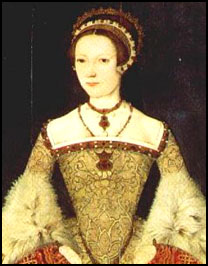
Above: Portraits said to be of Katherine are, in fact, more likely to be of Margaret Douglas.

Katherine is an enigma. We know next to nothing about her: we do not know when she was born, where she was born, her exact number of siblings, her appearance, her personality, or her personal beliefs. Indeed, the more I have researched her, the more convinced I have become that myths and legends, rather than solid historical fact, attach themselves to this queen.

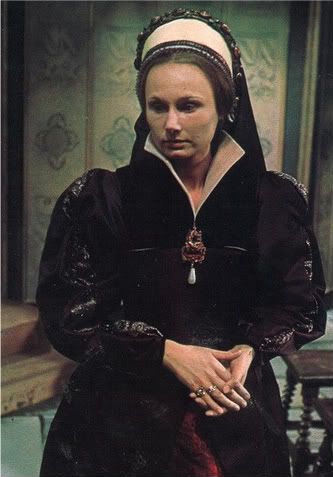
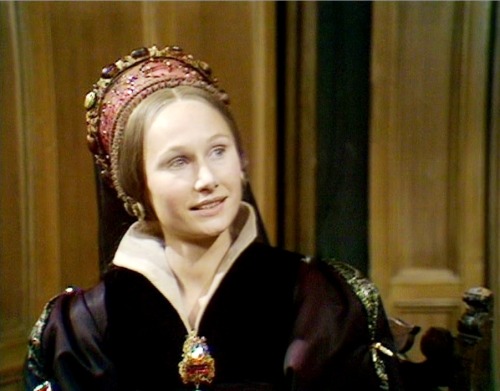
Portraits said to be of Katherine (above) are probably actually of Lady Margaret Douglas, Henry VIII's niece. The prevailing depiction of the queen in modern media remains close to Tamzin Merchant's portrayal of Katherine in the Showtime series The Tudors: a flighty, not too bright bimbo who revelled in male attention, committing adultery with Thomas Culpeper while continuing to seduce and enchant an ageing king. Philippa Gregory's Katherine, in her novel The Boleyn Inheritance, similarly portrays a stupid young girl who thinks of nothing but sexual pleasure. On the other hand, Angela Pleasance in the BBC TV series The Six Wives of Henry VIII offers a darker view of Katherine as a manipulative, sadistic young woman who bullied her lovers into doing her will.
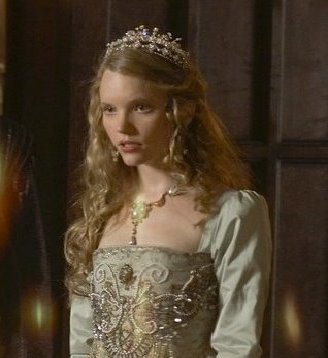
Above: A beautiful bimbo. Tamzin Merchant (left) as Katherine Howard in The Tudors. (left)
A scheming harlot. Angela Pleasance (right) as Katherine Howard in The Six Wives of Henry VIII.

All of these portrayals might be valid, we just don't know. There is virtually nothing in extant sources about Katherine, aside from her marriage to the king and her spectacular downfall in 1541-2, culminating in the gory details of her execution. Aside from that, it's free rein, for novelists, dramatists and historians alike. I personally do not subscribe to modern views of Katherine as an idiotic, sex-obsessed 'bimbo' who committed adultery with Culpeper - I think it is a very modern, twentieth/twenty-first century reading of the situation, which does not rely on any concrete fact whatsoever. As I have already explored in my article on this blog "Misconceptions of Katherine Howard", there is no evidence that she was stupid. My book rather explores the view that she took her duties as queen seriously, acting as patron and intercessor, traditional queenly roles. She also tried to act as a good stepmother, and kindly provided clothing to the doomed Countess of Salisbury shortly before that woman's grisly execution. The fragments of detail we have about Katherine suggest a kind, good-natured young woman who nonetheless was naive, but who never experienced security as queen; manipulated as she was by devious individuals from her youth while fully aware that the king expected her to provide a male heir, something she never managed to do.


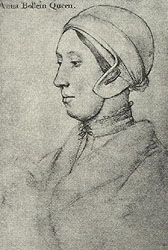
Above: Left - perhaps a sketch of Jane Boleyn, Lady Rochford.
Middle - Joanne King as Jane in The Tudors.
Right - Sheila Burrell as Jane in The Six Wives of Henry VIII.

Jane Boleyn is, similarly, an enigma. Modern scholarship has not been kind to her, and she continues to be portrayed as a sadistic, sociopathic, even insane woman who plotted the downfall of her husband George, loathed Anne Boleyn, and eagerly provided evidence of incest between the two which led to their executions. But there is no historical fact to support this, and we have no way of knowing how the downfalls of the Boleyns personally and psychologically affected her in 1536, whether she was complicit or not. Why she became involved with Katherine is impossible to determine, but Warnicke suggests - and it is possible - that Culpeper blackmailed her into allowing him to meet with Katherine, and I think this theory is credible. Certainly it makes no sense why she would have initiated the meetings on her own, and there is no evidence to suggest that Katherine instigated the whole thing. But whatever the case, Lady Rochford was to pay dearly for her indiscretions, dying alongside Katherine in February 1542.

Both women deserve respect and sympathy. It is essential to recognise that modern portrayals of Katherine and Jane in a variety of media - including literature, film and TV - are often distorted, modernised, and even simplified; they do not necessarily present an accurate depiction of these figures or of the circumstances they experienced. But after 13 February 1542, they were dead and gone, forgotten at court and probably not much mourned. It has been left to a much later age to restore these women's reputations, although many continue to regard Katherine as a promiscuous wanton and Jane as a mentally deranged sociopath. Perhaps, one day, they will be portrayed in the media in a positive light, in which historical accuracy is respected while offering entertainment.



Thursday, 25 April 2013

The Creation of Katherine Howard


Tudor history enthusiasts will be excited to discover that a very interesting book has just been published, written by Susan Bordo: The Creation of Anne Boleyn. This is not a historical biography, but instead, Bordo explores how Anne has been ‘created’ throughout history by different people, according to their prejudices, beliefs and culture, through a variety of mediums including film, theatre and novels. As someone who has been researching the life of her tragic, but much less famous, cousin and fellow queen Katherine Howard, I thought it would be interesting to explore how Katherine herself has been ‘created’ over the years according to different beliefs and prejudices.

From the time of her execution in 1542 until the nineteenth century, unlike Anne (who enjoyed long-lasting fame due to her status as the mother of the Protestant queen Elizabeth I), Katherine was a non-entity, ignored and forgotten by almost everyone; even her own family had rapidly disowned her at the time of her death. However, with the rise of the study of history in the Victorian period, writers began to pay much greater attention to the reigns of Henry VIII’s queens, lamented by Jane Austen. The austere moral values and the condemnation of ‘fallen women’ in contemporary Victorian society, unsurprisingly, influenced understandings of Katherine’s story as a lesson in morality, as something to be learned from. In relation to Katherine herself, Victorian historians were either hostile, or viewed her with pity – Agnes Strickland, perhaps the greatest female biographer of the age, characterised her as ‘a sheep being led to the slaughter’, but shied away from her shocking career, due to her stifling moral values.

In film, Katherine first appeared in the successful 1933 Oscar-winning The Private Life of Henry VIII, with Binnie Barnes presenting her opposite Charles Laughton as Henry VIII. The film centred around the relationship between the king and his fifth wife, marginalising his affairs with his other queens. The result was that Katherine was presented as a more influential and, in a sense, important wife to the detriment of the others than she had ever been in reality. This Katherine was worldly-wise, sophisticated, and incredibly beautiful, but her charm and qualities seemed far more nuanced than the real Katherine’s probably were.

The publication of the only academic biography of Katherine, written in 1961 by Lacey Baldwin Smith at a time of the beginning of rebellious feminist politics and swiftly changing views of women, was heavily critical of Katherine, condemning her as ‘a juvenile delinquent’ and a ‘common whore’ who was childish, rash and given to fits of hysteria. Again, we see how the context of the times shaped this interpretation – heavy moral values and the actual imprisonment of juvenile delinquents at the time for crime influenced this historian’s understanding of a queen executed for adultery.

Baldwin Smith’s interpretation was very influential in the next portrayal of Katherine in film/TV, in the television series The Six Wives of Henry VIII (BBC, 1970), where she was played by Angela Pleasance (top left). This series was very unsympathetic to Katherine, where she is depicted as a violent, manipulative, hedonistic teenager who threatens her cousin with poison and physical violence and acts in a cruel manner to her ex-lovers. 

Two years later, however, the most accurate presentation of Katherine emerged in the film of the same name, where the young queen was played by 18-year old Lynne Frederick (tragic in itself, since Frederick died at a very young age). The film perhaps represented growing sympathy to Katherine within England, in highlighting her youth, innocence and naivety, and her hysteria when imprisoned. Indeed, this can be seen as the beginnings of the ‘creation’ of Katherine’s status as victim, continuing into our own day. In David Starkey’s television series (2001), all six wives are presented with a label at the beginning of the program – Katherine’s is ‘victim’.

It’s not hard to see why this has happened. The rise of women’s history, feminist politics, and a greater awareness of domestic violence has shaped the creation of Katherine in modern times. Historians have suggested that she was a victim of sexual violence from ruthless predators at court. Her status as victim was exemplified in the British TV movie Henry VIII (2003), where Emily Blunt gives a poignant depiction of a sobbing and screaming Katherine on the scaffold – but again presents her as selfish and driven by her own pleasures. 

Most recently, in the successful Showtime series The Tudors, Tamzin Merchant (top right) gives a very modern portrayal of Katherine as a girl who just wants to have fun. We are encouraged to sympathise with her, but the series presents what people see as a problem in contemporary society – promiscuous girls who think of nothing but their own pleasures. This has shaped people’s views of Katherine. One person I know, who adores The Tudors and Anne Boleyn, once told other people that Katherine was the only ‘slutty’ wife, while defending Anne at every cost. But is this an accurate depiction of the real woman, or merely a view of how she has been presented in film and TV?

Saturday, 1 December 2012

Tudor Portraiture - or the game of Guess the Sitter

Tudor portraiture is notorious in leading to frequently incorrect identifications of sitters who were almost certainly not the sitter actually painted. Yet portraiture is highly influential in our interpretations of these supposed sitters' lives, careers, choices, and actions. Drawing upon four specific case studies here, this article considers why and how Tudor portraits are incorrectly identified, and how these incorrect identifications inform our interpretations of Tudor personages.


A portrait of Mary, Lady Dacre and her son Gregory; often mislabelled as Frances Brandon, duchess of Suffolk and the mother of the 'Nine Days Queen' Lady Jane Grey, and her second husband Adrian Stokes. This portrait has proved fundamental in leading to misguided views of Frances as being a cruel woman who bullied her daughter, due to the sitter's fierce characteristics.

This article begins with Frances Brandon (1517-1559), duchess of Suffolk by right of her marriage in 1533 to Henry Grey, marquis of Dorset and later Duke of Suffolk, niece of Henry VIII, king of England, and mother of Jane Grey, later queen of England (c.1537-1554). Frances lived a remarkable life, yet her reputation has been slandered over the course of history due to the view of her being a cruel, spiteful woman who frequently bullied her daughter Jane, often violently, which is still conveyed in modern works (Alison Weir's fictional Innocent Traitor often portrays Frances violently hurting Jane both physically and psychologically). This myth occurred at the beginning of the eighteenth century, acting in parallel with the depiction of Jane Grey as a Protestant martyr who died for her religion at only seventeen years old, executed on the orders of a vengeful queen, her own cousin Mary I. 

In view of this, a portrait of Lady Mary Dacre and her son Gregory - actually painted the year Frances died, 1559 - was relabelled as Frances Brandon and her second husband, Adrian Stokes, whom she married following the execution of her first husband Henry Grey as a traitor. Supposed similarities between the sitter's features and that of her uncle, Henry VIII, were drawn to emphasise the duchess' cruel, domineering nature. It has, furthermore, been deduced that Frances and Henry physically mistreated Jane in her childhood, due to something Jane informed her tutor, Roger Ascham, as a child:

"For when I am in presence of either Father or Mother, whether I speak, keep silence, sit, stand or go, eat, drink, be merry or sad, be sewing, playing, dancing or doing anything else, I must do it, as it were, in such weight, measure and number, even so perfectly as God made the world, or else I am so sharply taunted, so cruelly threatened, yea, presently sometimes with pinches, nips and bobs, and other ways, (which I shall not name, for the honour I bear them), so without measure misordered, that I think myself in hell". 

This passage, of course, needs to be viewed critically, particularly because this passage was only recorded much later after the actual events, and Jane's tutor Ascham actually praised her parents in an earlier letter. Furthermore, since the Victorian period, a more balanced appreciation of the character of Lady Jane Grey has developed. Rather than viewing her as a perfect child martyr, innocent and passive, as the Victorians did, historians have regarded her more critically, and while recognising her intelligence and determination, have also suggested that she was a proud, stubborn, narrow-minded, even arrogant  young woman. Frances, conversely, in contemporary sources was noted for her goodness and kindness to friends. 

We can therefore see how an incorrect identification of a sitter in a Tudor portrait can develop or intensify myths and legends surrounding that personage. Because Lady Dacre is depicted as unfriendly, cold, even ruthless, this was deployed by those who believed that it was actually a portrait of Frances, duchess of Suffolk to present her as a domineering woman who was prone to physical violence. This myth needs to be recognised for what it is: a myth.


Left: Katherine Howard, Elizabeth Seymour, or another Tudor woman? For centuries, controversy has raged as to who this sitter is.
Right: Angela Pleasance as Katherine Howard in The Six Wives of Henry VIII (1970).

No less important than the portrait of 'Frances Brandon' in informing interpretations of Tudor personalities is that of a portrait supposedly depicting Katherine Howard, queen of England. Identified as being the tragic queen c. 1898 and furthered by the renowned biography of the queen by Lacey Baldwin Smith (1961), this portrait has widely been used to put forward arguments surrounding Katherine's birth date, thus influencing our views surrounding her childhood, her personality, and the nature of her sexual relationships. Baldwin Smith arguably used this portrait to support his view of Katherine as 'a juvenile delinquent'. Recently, the identification of this sitter as Queen Katherine has been challenged, notably by Lady Antonia Fraser in her biography of the six wives of Henry VIII (1992). She identified this portrait as actually depicting Elizabeth Seymour nee Cromwell, younger sister of Queen Jane Seymour; strengthened by the fact that this portrait was housed in the collection of the Cromwell family.

While agreeing with Fraser that this portrait is not Katherine, in view of the fact that it does not match up either with notions of the queen's age or her physical appearance, I disagree that it represents Elizabeth Seymour. There are several reasons for this. Firstly, as has been recognised, at least three versions of this portrait exist. The sitter was therefore far more important than the daughter of a knight, as Elizabeth was. Whoever this woman was was clearly of noble, if not royal, rank. Secondly, we do not know when Elizabeth was born, but if it was around c.1511, as has been suggested, the sitter cannot be her, because this portrait dates to the mid to late 1530s or the early 1540s, when Elizabeth was likely in her mid twenties, not aged 21, as the sitter's age is. As Janet M. Torpy stated, "a necklace, rings, a brooch bearing the Biblical story of Lot, lace, and golden embroidery all signify extreme wealth and the appropriate piety and purity". It is entirely likely that this portrait actually depicts another royal woman, of which there are no less than four possible candidates in this period: the king's daughter Mary Tudor (aged 21 in 1537), Lady Margaret Douglas, his niece (aged 21 in 1536), or either of the king's Brandon nieces, Frances (aged 21 in 1538) or Eleanor (aged 21 in 1540). 

But this portrait, like the one thought to be of Frances Brandon, has informed interpretations and representations of Katherine Howard, whom it was commonly thought to portray for a long period of time. In the television series The Six Wives of Henry VIII (1970), as depicted above, Angela Pleasance, in her appearance as Queen Katherine, is clearly shown wearing a costume based on the dress worn by the sitter in this portrait. Her portrayal of Katherine is as a hedonist teenager who selfishly manipulates Thomas Culpeper to impregnate her, while she is seen to use physical violence against her cousin and is given to hysteria. This portrait was fundamental in Baldwin Smith's interpretation of Katherine as an older, knowing girl who firmly held the upper hand in her relationships and was prone to manipulating her lovers. Yet as my research has indicated, she was probably somewhat younger than this portrait suggests.
This portrait has also led to historians suggesting that Katherine was not as beautiful as legend indicated that she was. This can be refuted, since there are at least three contemporary statements which suggest that the queen was uncommonly attractive; one Spanish citizen gushingly stated that she was the most beautiful woman 'in the kingdom'. This does not support the notion that the woman in this portrait is of the queen.


Left: a portrait inscribed as being Anne Boleyn, 1530s.
Right: unknown woman. Identified as being Anne Boleyn by Roy Strong, yet others have identified this woman as being another of Henry VIII's queens, either Katherine of Aragon or Jane Seymour. Alison Weir suggests convincingly that it shows Mary Boleyn, Anne's sister.

Thus we can strongly see that portraiture is highly influential in guiding assessments and interpretations of Tudor personages. It seems unsurprising, therefore, that this is arguably best illustrated with the case of Anne Boleyn. The two portraits above have both been identified as showing the second queen of Henry VIII - despite the fact that neither bears any resemblance to contemporary descriptions of the queen. 

The sitter on the left was identified by noted Tudor historians David Starkey and John Rowlands as a contemporary likeness of Anne Boleyn. This has resulted largely from a hostile account of Anne at her coronation in 1533, which described the queen as having a fat, even disfigured, neck, resulting from a swelling which she then tried to conceal at her coronation. Further problems arise from the fact that this woman is blonde, whereas Anne was, famously, dark. This woman clearly wears a nightrobe, while the somewhat plain, rounded face bears little resemblance to contemporary reports of Anne as being narrow-faced, with high cheekbones. Yet, again, a misidentified portrait has been used to promote interpretations of its supposed sitter. Here the case seems to be that hostile accounts which vilified the queen should be regarded as historically accurate, or at least not as wild in their claims as historians have conventionally supposed. 

The portrait on the right epitomises the game of 'Guess the Sitter' in Tudor portraiture. To my knowledge, there has been no less than four sitters put forward. Originally identified as being of Henry VIII's first queen, Katherine of Aragon, this was ruled out by the fact that the portrait was painted in c.1525, when Katherine was aged forty, yet the sitter is twenty-five. This also rules out another identification of the sitter as being Jane Seymour, who was twenty-fine in c.1533 and so comes too late after this portrait was painted. Roy Strong, however, suggested that it depicts Queen Anne. There are, again, problems here. The sitter is blonde, while Anne Boleyn did not come to public attention until 1527, when the king proposed marriage to her. In 1525-6 she was a maid of honour to Queen Katherine, and so was not important enough, in a sense, to be painted in a portrait miniature. It is more likely to portray Mary Boleyn, Anne's older sister, who gave birth to a son - possibly the king's - in 1525; if one supports the view that she was born around 1499, this may tentatively be said to present Mary Boleyn. 


Above: a portrait identified as being Thomas Boleyn, earl of Wiltshire and father of Anne. Recently, however, it has been argued that it actually depicts James Butler, 9th Earl of Ormond.

Developing the game of 'guess the sitter', the portrait above has often been cited as a likeness of Thomas Boleyn, Earl of Wiltshire and father of Anne. Indeed, we can see how this has informed interpretations of the earl's physical appearance and supposed resemblance to his daughter Anne, as seen in Joanna Denny's biography of the queen published in 2004. Denny suggests that Anne Boleyn was not dark, as is often believed to be the case, but was actually fair in her complexion, while having auburn, as opposed to black, hair, on the basis of this portrait showing 'striking' similarities between father and daughter. However, this is almost certainly untrue, since historian David Starkey has indicated that it portrays James Butler, not Boleyn. As Starkey notes, there is "an utter dissimilarity between the Windsor drawing [of Boleyn] and Boleyn's superb tomb brass". Once again, we have been deceived as to the real sitter of a Tudor portrait.


Above: Lady Jane Grey or Queen Katherine Parr?

A portrait above shows a superbly dressed noblewoman, dated to the early-to-mid 1540s. It was initially identified as portraying Lady Jane Grey, England's first queen regnant, in 1965 by Roy Strong. This occurred due to Strong's perception of similarities between this portrait and an engraving of Jane published in 1620. Yet, as Susan E. James has convincingly suggested, the portrait actually portrays Katherine Parr, sixth queen consort of Henry VIII. This seems all the more convincing since Katherine was queen in the period 1543-1547, when this portrait was executed, and since Lady Jane was born in around 1537, she would have been only eight years old, or thereabouts, when this woman sat for  the portrait. This is clearly not a portrait of an eight year old girl. The fact that this sitter wears jewellery which other queen consorts of the period, such as Katherine Howard, adorned, indicates that it represents Katherine Parr, who would have obtained this jewellery in her right as queen. Yet, once again, a misidentification of a portrait has influenced judgements about the sitter. Frequently, this portrait is advertised in both written works (ie books) and online as showing the tragic Nine-Day queen. It probably represents her one time great-aunt, Katherine.

Tudor portraiture is therefore precarious. Whether one uses it as a source in interpretations or not, it must be carefully scrutinised before making grandiose claims. The game of Guess the Sitter is, unfortunately, a very frequently occurring one in terms of Tudor portraiture, yet it serves to show how mysterious and yet compelling this period continues to remain.