Showing posts with label victoria. Show all posts

Monday, 3 March 2014

Alexandra Feodorovna, Last Russian Tsaritsa

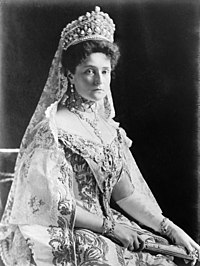
Alexandra Fyodorovna LOC 01137u.jpg

The doomed last Tsaritsa of Russia, Alexandra Feodorovna, has not fared well amongst historians. Jonathan Bromley dismissed her as "an awkward figure". Gareth Russell, in a sympathetic article exploring parallels between the Russian Empress and Marie Antoinette, queen of France and fellow victim of a political revolution, believed that Alexandra's poor reputation is "tragic", but also suggests that she was "a difficult personality". In 1976, Edward Crankshaw criticised her "instant and implacable hostility to the family into which she had entered" and believed that "she never made a worthy friend". Sixteen years earlier, popular historian Barbara Tuchman characterised her as "weak-witted", "hysterical", "morbidly suspicious" and criticised her for "hating everyone but her immediate family" - a view which somewhat contradicts Crankshaw's suggestion.

Hostility and dislike of Alexandra has not been confined to historians, of course. Her Russian subjects despised her as a "German bitch". She was resented and disliked for her supposed coldness - it has, however, convincingly been conjectured that this apparent reserve conveyed less a coldness than an unease or shyness. Her failure to give birth to a son also caused unrest and contempt; thus the birth of the Tsarevich Alexei in 1904 must have been of considerable relief to the royal couple. The context of the First World War played an essential role in fuelling dislike of the Empress; for her German birth alongside her devotion to the controversial and hated Grigory Rasputin intensified hostility to the Empress and played a significant role in the events which led to the demise of the ruling family, the Romanovs.
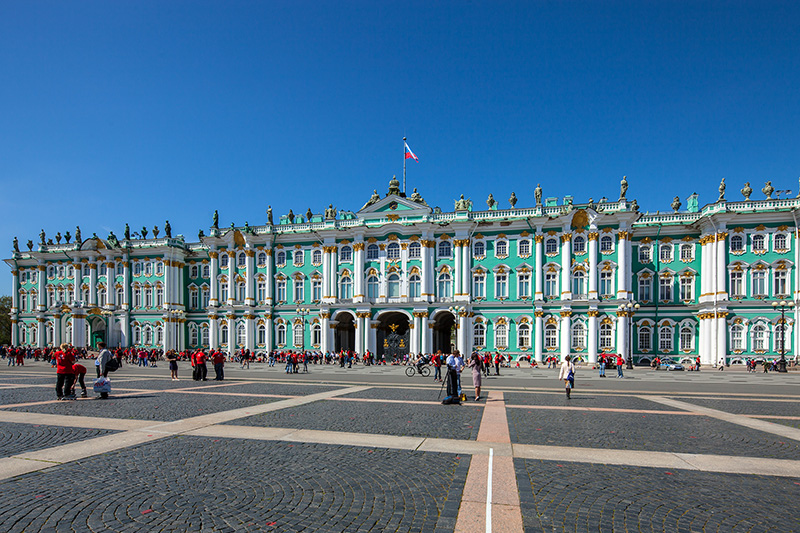


Above: The Winter Palace, St. Petersburg. Empress Alexandra never took to the palace, finding it cold and inhospitable.

On the other hand, Russian court memoirs, such as that written by the Empress' closest friend and lady-in-waiting Anna Vyrubova, paint a picture of a warm-hearted, kind woman devoted to her family and passionate about Russia. She was, famously, extremely religious and devoted to Nicholas II's cause. Theirs was a true love match, and of course, the two were together until the very end - mercilessly killed in the brutal tragedy at Ekaterinburg in 1918 alongside their young children. Possibly, Alexandra is one in a long line of unfortunate female consorts resented and disliked by their contemporaries on account of their foreign birth and because they were deemed responsible for their husbands' faults - one need only look at Margaret of Anjou and Marie Antoinette to discover that Alexandra's bitter experiences were hardly unusual.


It is important to separate facts from fiction. Alexandra was born on 6 June 1872 at the New Palace in Darmstadt to Louis IV of Hesse and Princess Alice of Great Britain, and was baptised Princess Viktoria Alix Helena Luise Beatrice of Hesse - though she was later known simply as Alix of Hesse. By virtue of her birth, she was granddaughter of Queen Victoria. Alix became close to her British grandmother, spending holidays with the British royal family. She espoused Victorian values and, according to some, was more suitable for rule as a British consort than as a Russian empress.

File:Darmstadt um 1900.jpg
Above: Alexandra was born in Darmstadt in 1872.

In 1884, aged twelve, Alexandra met Nicholas Romanov, son of Tsar Alexander III, for the first time at the wedding of Grand Duke Serge, uncle of the Tsarevich, to Alix's sister Elizabeth in St. Petersburg. When Alexandra returned to Russia five years later she and Nicholas fell in love, an enduring romance that was to blossom into a relationship set to last for the next thirty years. Nicholas admitted in his diary at this time: "I have loved her for a long time, but more deeply and strongly since 1889 when she spent six weeks in Petersburg."


Initially, Nicholas' father opposed the marriage, for he wished his son to marry Helene, daughter of the Comte de Paris. However, the Catholic Helene refused to countenance a marriage to Nicholas, for it would have meant renouncing her faith in favour of the Russian Orthodox religion. Victoria herself also expressed misgivings about Alexandra's desire to marry Nicholas. Despite this, in 1894 Nicholas proposed to Alexandra and the two became engaged. In November of that year, Nicholas' father died and he became Tsar of Russia. Three weeks later, the new Tsar married Alexandra who, at twenty-two years of age, was now Empress of Russia. Her tenure would last twenty-three tumultuous years. In May 1896 the two participated in a lavish coronation in Moscow.


Above: The marriage of Nicholas II and Alexandra, by Laurits Tuxen.

The new Empress, as mentioned earlier, experienced difficult relations with her subjects. She seems to have found court protocol uncomfortable, and failed to establish warm relationships with her ladies-in-waiting and amongst Russian aristocratic women. Her preference for the plain Anna Vyrubova caused resentment and hostility. Despite these issues, Alexandra proved a fertile bride, giving birth to four daughters within the early years of her marriage: Olga (1895); Tatiana (1897); Maria (1899) and perhaps the most famous, Anastasia (1901). The long awaited male heir, Alexei, was born in August 1904. He was born with hemophilia, a tragic condition that was to culminate in the downfall of the ruling family, for it was this condition that led Alexandra to seek out the controversial guidance and support of Rasputin.


Hemophilia was fatal in the twentieth century. It was transmitted from Alexandra, who had had tragic personal experiences of the disease - her brother Frederick had died from it alongside an uncle, Leopold of Albany. Her sister also carried the disease. As a result, it was decided that Alexei's condition should be kept secret from the royal couple's Russian subjects. As Robert K. Massie makes clear in his famous study Nicholas and Alexandra (1967), this desire to maintain secrecy was tragically misinterpreted by the Russian peoples, who perceived an evil conspiracy at the heart of the palace concocted by the ruthless tsar and his evil German wife. They never understood that Nicholas and Alexandra were personally devastated by their son's condition and merely wished to retain discretion with regards to it.


Above: Alexandra and her son, Tsarevich Alexei.

It was Alexei's condition that provoked Alexandra into seeking the support of Grigory Rasputin, a reputed holy man and mystic who haled from Siberia. Alexandra was to regard him as a saint, but his closeness to the royal family provoked unease and hatred in Russian society. Disparaging remarks were made about the Empress' supposed relationship with Rasputin, and letters written from her to him were published in society, causing contempt and outrage. Nicholas was more reserved in his judgement of Rasputin, but he appears to have retained him at court as a means of pleasing and subjugating his wife. It is possible that he was unsure what other solutions were possible. Certainly Rasputin inspired controversy, for while some condemned him as a fraud, heretic and nymphomaniac, others regarded him as a saint and a living prophet. The crucial event came in 1912 when Alexei suffered a life-threatening haemorrhage in Spala, Poland. Rasputin sent a telegram stating: "The Little One will not die". Alexei miraculously survived, and from then on, Rasputin's advice was followed while his influence was assured at court. Eventually, Rasputin was murdered in 1916. The Empress' reputation by then was severely damaged, especially on account of her reliance on Rasputin.

The weakness of government, economic instability and the collapse of agricultural production caused unbearable living conditions in Russia during the First World War. The Tsar was blamed for military losses, having taken control of the military. The Empress was left in charge of government, an act that caused further hostility and resentment. One can only feel sorry for Alexandra, for she was acting on account of what she perceived to be her husband's, as well as her country's, best interests. Caught in an impossible situation, she faced hostility and censure from all quarters. There are several parallels with her life and that of Marie Antoinette, but this is perhaps the most disturbing one - the fact that she was embroiled in impossible circumstances with no way out, caught in the public eye. The spring of 1917 saw riots across Russia, and eventually, the royal family was placed under arrest at Tsarskoe Selo.


The last photograph of the Empress. She sits with her daughters Olga and Tatiana.

Alexandra was removed with her family to Tobolsk that August and remained there until after the Bolshevik Revolution in November of that year. In April 1918, she arrived with her daughter Maria at the Ipatiev House in Ekaterinburg, her final journey. The commander of the house, Alexander Avadeyev, regularly referred to the imprisoned Empress as a "German bitch" while criticising the deposed Tsar as "Nicholas the Blood-Drinker". The royal family led an unbearable existence here, paralysed by fear and uncertainty as to what the future held. In July 1918, plans were finalised to murder the royal family. On 17 July, the former tsar and tsaritsa were shot alongside their five children in the basement of the Ipatiev House by a detachment of Bolsheviks led by Yakov Yurovsky. The Empress' body was later stripped alongside that of her husband, children and some retainers, and was thrown down a disused mine-shaft at Ganina Yama before being buried under some railway sleepers. In the 1990s, the bodies of the majority of the Romanovs were discovered, and were reinterred in the St. Catherine Chapel of the Peter and Paul Cathedral of the Fortress of St. Peter and St. Paul in St. Petersburg. In 2000, Alexandra was canonised as a passion bearer by the Russian Orthodox Church together with her husband, children, sister and the nun Varvara.
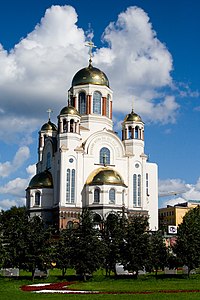


Ekaterinburg's "Church on the Blood" was built on the spot where Ipatiev House, execution site of the Romanovs, once stood.

As we have seen, history has not been kind to Empress Alexandra Feodorovna. She has been criticised and condemned as a cold, irresponsible, suspicious, hysterical, even paranoid woman who cared for nothing but her family and resented her subjects. However, the truth is more complicated than that, as recent studies of the last Romanov rulers illustrate. Certainly, she suffered a brutal fate she in no way deserved; her life bloodily cut short with a loss of dignity. Her husband, the love of her life, had been killed only moments before. It was a tragic end for the last Romanov ruling couple in Russia. They deserve our sympathy and compassion. Although Alexandra had many faults, and was not a particularly successful politician, she was in many ways a devoted wife, a successful mother, and a good woman caught in impossible circumstances that devastated Russia and destroyed the royal family.



Sunday, 8 September 2013

Elizabeth I - England's Greatest Monarch?


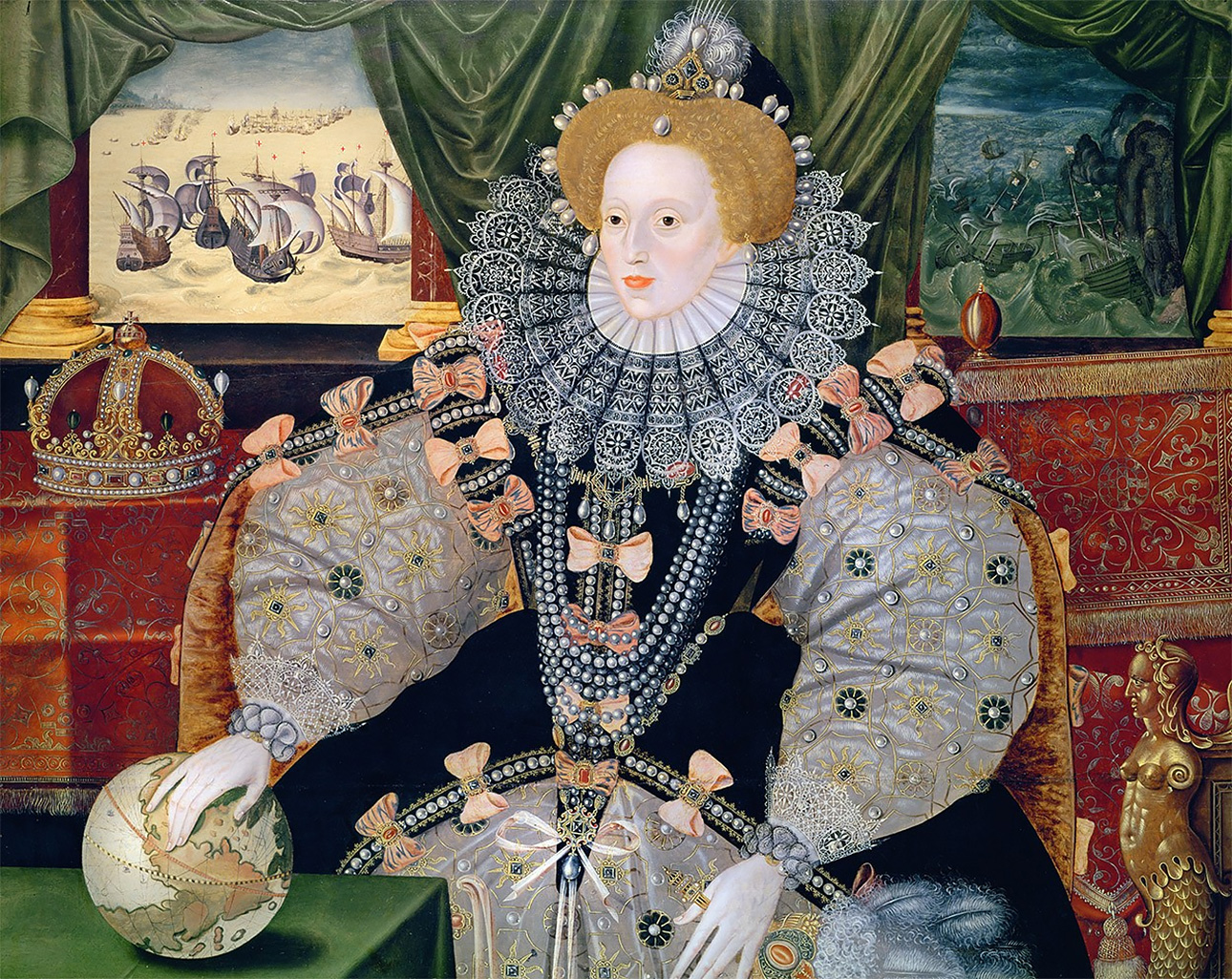
Above: the famous Armada portrait (1588).

"I know I have the body of a weak and feeble woman, but I have the heart and stomach of a king, and of a King of England too". - Queen Elizabeth I, Tutbury on the eve of the Armada, 1588.

Yesterday was the 480th anniversary of the birth of Queen Elizabeth I, only daughter of Henry VIII by his second consort Anne Boleyn. The Elizabethan era was prosperous, exciting, and one never seen before or since. Many historians and commentators in the last four hundred years or so have suggested that Elizabeth was England's greatest monarch. I decided to write this blog post having come across an interesting debate amongst historians Alison Weir, Sarah Gristwood and Martyn Downer about who England's greatest monarch truly was, with the debate favouring either Elizabeth, her father Henry VIII or Victoria.

Elizabeth was well aware that she needed to be a pragmatic yet sensible monarch in context of the fairly disastrous reigns of her predecessors and siblings Edward VI and Mary I. She revered her father's memory and demonstrably sought to emulate him in his magnificence and splendour, while desiring to be, like him, immensely popular with the English people. As a Venetian ambassador wrote in 1558, 'she prides herself on her father and glories in him'. Yet, for the first twenty or so years of her reign, until the growing threat of Spain escalated and Catholic plots surrounding Mary Queen of Scots intensified, Elizabeth was fairly liberal in her religious policies, unlike either her father or sister. While desiring that her subjects outwardly conform to the terms of the Elizabethan religious settlement, ostentatiously Protestant but considerably less rigorous than the Protestant policies of her brother Edward VI, Elizabeth famously quoted her desire not 'to make windows into men's souls' concerning religion.

What could distinguish Elizabeth as England's greatest monarch is first and foremost the political and religious world in which she lived, and her decisions made in context of prevailing European behaviours and events. The late sixteenth century and early seventeenth century witnessed increasing religious violence and hostility in context of the European Reformation and Counter-Reformation. France engaged in acts of religious terror, famously comprising the St Bartholomew's Day Massacre of 1572 in which thousands of Protestant Huguenots were slaughtered, while Spain ruthlessly punished heretics and dissidents. The outbreak of the witchcraft persecutions escalated in this era, particularly intense in Germany, leading to the brutal deaths of thousands of innocent subjects, motivated largely by political tensions and religious conflicts. England itself had been influenced by the increasing religious bloodshed affecting all of Europe during this period, when Mary I chose to burn over 200 Protestant heretics at the stake in her five year reign. Monarchs were severely threatened in this era - several French kings died young, one of whom - Henry III - was assassinated; and the Scottish queen Mary was deposed by her subjects on account of her unacceptable Catholic religion and political decisions.


Above: St Bartholomew's Day Massacre, 1572.

Yet Elizabeth did not impose religious bloodshed on her people. As has been already suggested, she allowed people to hold their own religious beliefs and follow their own practices in the privacy of their households, as long as they outwardly conformed to the Protestant settlement enacted by the state. Unlike the Spanish king or in France, she did not punish heresy ruthlessly, and did not enact a reign of terror in her country, unlike her elder sister. She was pragmatic, relatively liberal, and desiring of peace. It was only considerably later, in the 1580s and thereafter, that she began to more ruthlessly punish Catholicism, not because it was associated with heresy but because of its political threat - it was classed as treason. This was only done in context of plots surrounding Mary Queen of Scots, and assassination attempts by hostile Catholics. This seems to mark out Elizabeth as a contender for England's greatest monarch, in view of her religious tolerance and in view of the fact that, unlike either Henry VIII or Victoria, she faced a far greater threat from Europe.

Returning to the foreign policy dimensions of Elizabeth's reign, she could be viewed as England's greatest monarch on account of the fact that, as a woman (when many such as John Knox argued venomously that women had no right whatsoever to rule over men) she was already constrained by her gender, and yet was able to preserve peace and stability in her realm when faced with the hostility of both France and Spain. Most famously, she managed to defeat the Spanish Armada in 1588, and her countless marriage negotiations with men of both these powers - most significantly, the Duke of Anjou in the 1570s and the Archduke Charles of Austria - meant that she was able to remain on good  relations with these countries by virtue of the fact that she offered the promise of matrimony with either one of them. As long as she did so, they did not dare to attack her.


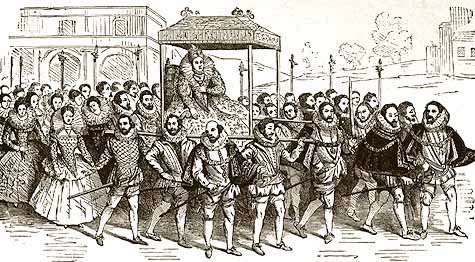
Above: Elizabeth's funeral cortege, 1603.

Elizabeth's reign is extremely famous for the adventures of exploration and trade which began in earnest during the late sixteenth century. She sponsored and supported heroic individuals such as Sir Francis Drake, and a colony in North America was founded which was named after her - Virginia. England's empire expanded globally, and began to engage in competition with the more formidable Spanish empire. Strong relations were maintained with Russia, and there was even the possibility of an alliance between the two nations. Trade and strong diplomatic relations developed between England and the Ottoman Empire. Significantly, Elizabeth was able to achieve a long lasting alliance with Scotland following the execution of Mary Queen of Scots through friendship with James VI and the two kingdoms would finally be united on James VI's succession to the English throne; something which other English monarchs, such as Henry VIII, had spectacularly failed to do.

On top of this, Elizabeth successfully ensured that England became a main player in Europe, supporting fellow Protestants in the Netherlands and France, and her own religious tolerance and shrewd political pragmatism enacted the beginnings of Britain as a Protestant kingdom and, later, a secular state - although this would surely have alarmed the Protestant Elizabeth. The Pope described Elizabeth in admiration and awe, despite being hostile to her: 'She is only a woman, only mistress of half an island, and yet she makes herself feared by Spain, by France, by the Empire, by all'.

Elizabeth celebrated many other achievements too. Her patronage and development of the navy carried on the work began by her father and encouraged by her sister, and this ensured that England's navy continued to become more prosperous and successful, which was important in view of the challenges England faced later in the reign from the likes of Spain as a sea power. She was also able to survive severe hostility in her own realm in the wake of Catholic plots and the outbreak of the Northern Rebellion in 1569, preserving her hold on the throne while maintaining peaceful relations with her subjects. As is well known, learning flourished in the Elizabethan era, with science, philosophy and literature expanding greatly, producing momentous individuals such as William Shakespeare and Christopher Marlowe who continue to be celebrated and revered today. Unlike her brother or sister, Elizabeth was able to rely effectively on shrewd and intelligent political advisers such as William Cecil and his son Robert to ensure that she made sound political and religious decisions, and ultimately to preserve England's stability as a state both nationally and globally.


Above: Elizabeth I, 1563.

As a person, she was a shrewd survivor, overcoming the hostility of her sister Mary and continuing plots from dissatisfied Catholics both at home and abroad. Many historians have earnestly celebrated Elizabeth's achievements and laud her as England's finest ruler. In the early 20th century, she became a symbol of England's national resistance to foreign threat, particularly because of the spectacular defeat of the Spanish Armada. Elizabeth's biographers including John Neale and A.L. Rowse celebrated her reign as a 'Golden Age' of progress. Sarah Gristwood goes so far to say that 'without Elizabeth we would not be who we are today - children of a proud (and Protestant) nation. The Virgin Queen... is a vital part of our national mythology... Before Elizabeth, no woman had ever successfully reigned over the country. After her, no-one could ever again relegate women to the sidelines so easily', setting an important precedent for the later female monarchs Victoria and Elizabeth II.


Above: Elizabethan England.

Other historians, however, have been more reserved and some have even attacked the notion that Elizabeth was England's greatest monarch. Professor David Loades believes that Elizabeth 'failed to find a satisfactory definition of the constitutional relationship between crown, lords and commons', while failing to solve the problem of inadequate revenue. He believes that she was unwilling or unable to accept change, meaning that 'she was so concerned to remain in charge of the ship, and to avoid the icebergs of Spanish and papal hostility, that she failed to spot the other unobtrusive rocks lying in her path. She was not on the bridge when the ship went down'. Christopher Haigh points to military and naval failures, while offering only very limited aid to fellow Protestants in Europe and failing to provide her commanders with sufficient funds to make a difference abroad.

Many historians believe that Elizabeth was short-tempered and indecisive, and enjoyed more than her fair share of luck, regarding, for instance, the defeat of the Spanish Armada. Other historians believe that a different monarch, such as Henry VIII or Victoria, should more fairly be viewed as England's greatest monarch. But while Elizabeth did enjoy an element of luck in her reign, I believe that she can ultimately be viewed as England's greatest monarch because she lived in far harsher and more hostile times (in view of the European threat throughout her reign) than, say, Victoria, and yet was able to respond magnificently to the challenge. She was able to preserve peace and stability in her realm, aided by her excellent advisers such as William Cecil, whom she relied on unfailingly. Elizabeth was supremely aware of the importance of respect and support from the English people, something which her sister and perhaps even her father could not appreciate. The religious tolerance, with its later legacy for the British state; the foreign conquests; the flourishing of literature, science, and philosophy; the extension of empire abroad; and the long-lasting legacy of Elizabethan rule which still remains in place today, indicate that Elizabeth can fairly be seen as England's greatest monarch. As she herself recognised:

'[at a time] when wars and seditions with grievous persecutions have vexed almost all kings and countries round about me, my reign hath been peaceable, and my realm a receptacle to thy afflicted Church. The love of my people hath appeared firm, and the devices of my enemies frustrate'.


Wednesday, 6 February 2013

Homosexuality in England - Hatred, Hidden, Hope?


It was announced yesterday that the gay marriage bill, a highly controversial document which has divided British society significantly, had passed through the House of Commons, with 400 MPs voting in favour of the document and 175 dissenting. 136 Tory MPs opposed the bill, but this has not prevented the outcome, with Prime Minister David Cameron announcing that "Last night's vote will be seen not just as making sure that there is a proper element of equality, but also helping us to build a stronger and fairer society." Ed Miliband agreed, stating that: "this is a proud day and an important step forward in the fight for equality in Britain". However, other conservative MPs have privately expressed worries, noting that: "we are expecting problems in the Lords". Traditional religious groups are also highly likely to oppose the changes.

But what has the history of homosexuality (encompassing both male-male and female-female relations) been in Britain, more specifically England? Has there always been universal hatred and intolerance of homosexuals and lesbians, or have they been perceived with fascination, outrage, pity, sympathy, contempt etc? Sexuality is fundamental to how we identify ourselves. It shapes our identities, our choices, and our beliefs. Such an integral part of humanity was always likely to cause extraordinary opposition, particularly when it directly affected such a traditional institution as marriage, which has existed since ancient times. This article will explore how homosexuality (and lesbianism) has been perceived in England since the medieval period, considering how views and ideas have changed over time, influenced by changing social, political, economic, cultural, medical, and indeed sexual circumstances. No mention will be made of other countries or the influence of religions such as Islam. Readers should note that I have for a while now been considering writing a book entitled Homocide, documenting the persecution of homosexuals, lesbians and other minority sexualities for a while now, but it would be a very lengthy and complex undertaking.

According to some writers, homosexuality was fairly widespread in the Middle Ages. Concerns with sexuality in general stemmed largely from the Church, which held considerable power in society and was the ultimate institution of regulation and control in medieval society. The Church forbade all sexual relations which were not intended for procreation. Strict rules were created, suggesting that married couples should only have sexual intercourse on certain days of the year, at certain times, and only in the missionary position. Anything other than this was classified as deviant and evil, to be punished accordingly. St. Augustine wrote that sex which encompassed pleasure ran the risk of leading to a loss of rationality. Masturbation, anal and oral sex were all identified as unnatural, as indeed was vaginal intercourse in any position other than missionary.

By at least the twelfth century, homosexuality was increasingly stigmatised and becoming a great concern for the Church, while it was classified as sodomy, which sternly and oppressively condemned all sexual practices which were not concerned with procreation. The Medieval Inquisition from c.1184 punished the sects of Cathars and Waldensians for sodomy and fornication, demonstrating an intensifying hostility towards 'deviant' sexual behaviour. Thomas Aquinas, an influential theologian, denounced homosexuality and other sexual deviance as "unnatural vices". Capital punishment was gradually used to punish homosexuals from the thirteenth century, along with other sexual deviants.

Yet it has been argued that homosexuality was, in fact, a common occurrence in medieval society. It should be noted here that there was no concept of a homosexual identity, which only emerged in the nineteenth century. Rather, sexual relations between men, between women, or involving an animal, were all classified as sodomy, or bestiality. Medieval writers referred to what we would today classify as homosexuality or lesbianism as sexual actions which were "sinning against nature", ie. because they did not involve procreation. Sodomy was widely feared, and was punished harshly. The term buggery also became increasingly widespread in the mid thirteenth century. It was, however, not referred to in English law until 1533.

Because the Church played such an integral, even oppressive, role in society, it is not surprising that homosexuals and lesbians were persecuted intensely in the medieval period, since the Bible was used as authority to condemn unnatural sexual practices which opposed religious teachings. Male transvestites are also recognised to have played an important role in medieval society. It appears that sex between monks, and other religious orders, was fairly frequent, a fear which was punished in hostile fashion during Henry VIII's reign with the dissolution of the monasteries.

Although English medieval sources refer constantly to actual sexual behaviours between men - there was no recognition of female homosexuality - encompassing acts such as anal sex, monastic writing from the twelfth century exists to provide evidence of intimate male friendship. Writers such as Anselm wrote to other monks frequently, desiring long and exclusive relationships, although they were often attracted to youths. However, it must be stressed, homosexual subcultures do not appear to have been as significant in medieval England as they were in France and, in particular, Italy, where there is strong evidence of homosexual relations between both older and younger men. Somewhat surprisingly, given the medieval Church's fierce hostility towards women, identifying them as lustful and seducers of innocent and unsuspecting men, there is no mention made of the possibility of sexual relations between women.

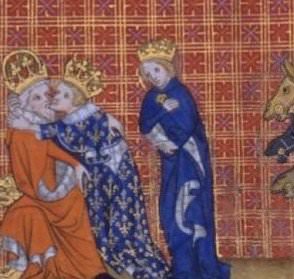
It is interesting that several medieval English kings were suspected of homosexuality. Most famously, King Edward II (1284-1327) was believed to have been at least bisexual; although he fathered five children by two women (including four with his notorious queen, Isabella of France), his rumoured love affairs with Piers Gaveston (who was later murdered) and Hugh Despenser caused severe political unrest and eventually led to the king's murder at Berkeley Castle. Chroniclers implied that the king enjoyed "wicked and forbidden sex" with Gaveston, while another asserted that "Edward took too much delight in sodomy". Although these chroniclers were, ultimately, unable to prove that the two were lovers, there is strong evidence that they were. The later king Richard II was also believed to have enjoyed a homosexual relationship with Robert de Vere, earl of Oxford.

In early modern England, lesbianism arguably emerged as a greater concern compared to the medieval period. Traub noted that "certain female-female acts were met with harsh denunciation, punishment, and considerable publicity". Female-female eroticism, like male homosexuality, was viewed as unnatural and offensive to God. Female sodomy became increasingly enshrined in law after 1550. In the reign of Henry VIII, a statute passed in 1533 condemned buggery, although it did not mention men (probably since buggery tended to mean anal penetration). If women were believed to commit buggery, it was believed that they did so with an animal (Edward Coke).

Male homosexuality continued to be viewed with considerable horror in England. We have seen that the 1533 act punished buggery harshly, specifically focusing on male-male penetration, punishing the offence with death. In 1540, Walter Lord Hungerford was the first person to be executed under this statute, while he was also believed to have enjoyed sexual relations with his own daughter. Historians who have speculated that Anne Boleyn's younger brother George was either homo- or bisexual, along with several of his fellow male courtiers, probably are inferring too imaginatively into surviving evidence, for these men appear to have been noted womanisers who were not attracted to one another.

Homosexuality, particularly in the Elizabethan period, was viewed as a crime comparable to murder or blasphemy, because it offended religious teachings and threatened accepted patriarchal, gender, and sexual mores held in society. Thomas Shepard, a seventeenth century writer, referred to sodomy in the same breath as witchcraft, murder, and adultery. John Rainolds described it as being "a monstrous sin against nature". The nature of male friendships in the early modern period meant that suspicions of sodomy were frequently held. People often shared beds with one another, not in a sexual sense as we may view it, and were often of the same sex. Men also frequently kissed and embraced one another warmly amongst the elite culture. Emotional bonds were strong, often expressed between men in their letters to one another. Yet it cannot be suggested that these men enjoyed sexual relationships with one another, in view of the hostile responses to homosexuality considered thus far.

However, in the late seventeenth century homosexual cruising grounds and brothels began appearing in London (as well as in other European cities). Allegedly, by the end of the century homosexuality in the capital had become commonplace, with Samuel Pepys stating in his diary in 1663 that "Sir J Jemmes and Mr Batten both say that buggery is now almost grown as common among our gallants as in Italy", a highly significant comment to make in context of the nature of sexual relations in Italian society. Yet it is unlikely, as Nicton has suggested, that male prostitution was a thriving business in seventeenth century England.

During the eighteenth century, in some circles homosexuality was used as a weapon to attack rivals. The court, for instance, was increasingly associated with sodomy by some disaffected courtiers, while the Society for the Reformation of Manners was also accused of homosexual conduct. Captain Edward Rigby became a famous victim of homosexuality in the 1690s, being charged with the 'offence' following sexual encounters with a nineteen year old youth who later exposed him to the authorities. In 1707 eight men, possibly more, were convicted of homosexuality due to the actions of moral movements. Apparently, the Royal Exchange was the main cruising ground. Like the medieval period, male homosexuality was viewed as much more of a threat than lesbianism. The Society of Manners eventually ensured that 100 men were convicted of homosexual conduct in that year alone.

In the Victorian period, changing views of homosexuality developed. Rather than relying on religion to identify homosexuals as enemies of God who publicly threatened accepted religion, homosexual men were increasingly perceived as being effeminate men, while lesbians were usually characterised as "mannish" women. Psychoanalysts and psychologists believed that homosexuality was a medical disorder which could be cured if treated, believed to be a disease caused by the deterioration of the nerves. Johann Valentin Muller's work, published in 1796, remained popular, identifying homosexuals as both sick and as dangers to the state and public order.

However, literary notions increasingly challenged accepted views of homosexuality and lesbianism. Radclyffe Hall's famous novel The Well of Loneliness depicted lesbianism in a sympathetic light, while the trials of Oscar Wilde for homosexual behaviour caused a sensation across England, although in the end ruining Wilde's career. Homosexuals became more confident about speaking out by the late 1800s, attempting to define themselves rather than being defined by the society in which they lived. It must be said that, in comparison with other countries, England was relatively light in terms of its punishment of homosexuality, although it was not legalised until the 1960s.

In 1906, Bloch suggested that homosexuals and lesbians should be accepted as welcome members of society. During this time, homosexuals seem to have still been perceived as a greater threat than lesbians, perhaps because it was believed that lesbians could be 'reformed'. Some were positive about homosexuality, suggesting that it encouraged strong comradeship and embodied heroism and community. The Wolfenden report of the 1950s raised serious and disturbing questions as to whether homosexuality could really be classified as an offence, arguing that what people did in their private lives was of no concern to the state, as long as it was not threatening or a disruption to public order. Eventually, homosexuality was legalised in the 1960s in context of sexual liberation in England, with the age of consent set to 21 years old before being lowered to 18, and then to 16. This, perhaps, is evidence of increasing toleration towards homosexuals and lesbians.

England has witnessed vastly differing and changing views to homosexuality, lesbianism, and other 'unnatural' sexualities over the course of its history. From deep-rooted hostility and contempt in the medieval period largely influenced by religious teachings, to increasing concern in the early modern period, and eventually to liberation in modern Britain, it can be argued that 'deviant' sexualities are still a source of fear, worry, and uncertainty in England today. Religion remains prominent, and, disturbingly, homosexual, bisexual and lesbian youths continue to commit self-harm and, in some cases suicide, because of their inability to accept their sexual identities. Gay marriage will now finally be legal in Britain, provided there is no further opposition to the Bill.

Without wishing to become involved in this highly contentious political and social issue, I would pose a question for readers: if homosexuals, lesbians, bisexuals and transvestites are not harming anyone in their private lives, should we not respect their sexual identities? The Wolfenden Report questioned as much.