Showing posts with label mary queen of scots. Show all posts

Wednesday, 8 February 2017

8 February 1587: The Execution of Mary I of Scotland


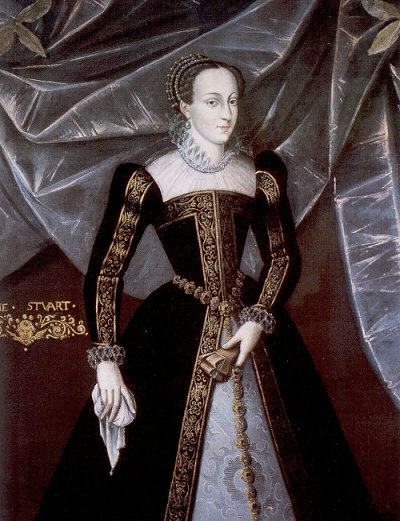
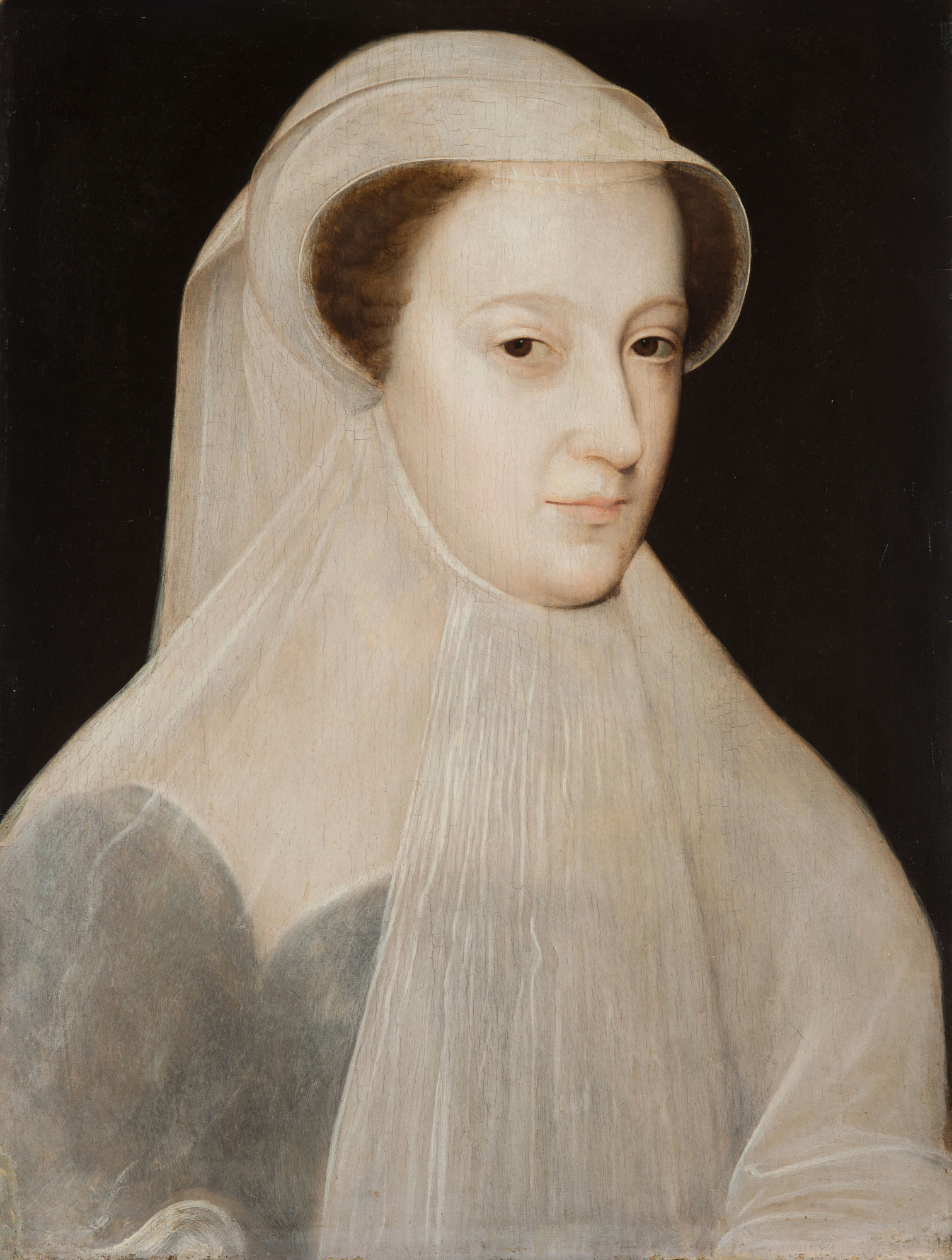
Before the sixteenth-century, executing a queen would have been virtually unthinkable in pre-modern Europe. By 1587, however, executing queens in England was not a strange concept. On 8 February that year, Mary I of Scotland - or Mary, Queen of Scots as she is more commonly known - was executed at Fotheringhay Castle. She was the fourth queen to be executed in England since 1536, following Anne Boleyn, Katherine Howard and Jane Grey, but unlike her headless predecessors, Mary was a Scottish queen regnant. 

Mary's life following her abdication from the Scottish throne in 1567 had been difficult. Although she has frequently been disparaged as a foolish, inept queen who placed too much emphasis on matters of the heart, more recently Mary has been reappraised as a conscientious and efficient monarch who was, nonetheless, undermined by contemporary expectations of gender. In a kingdom that was, at best, ambivalent to female rule, Mary was compelled to navigate not only the political and factional rivalries that held sway at the Scottish court, but also the religious tensions unleashed by the Reformation. It was to her credit that, as a Catholic monarch, Mary attempted to reach some form of compromise with her unwavering Protestant subjects.

Mary had also previously been queen consort of France as the wife of Francois II, but her young husband's death meant that Mary was compelled to return to her native kingdom to commence the business of ruling. Like her cousin Elizabeth I, the Scottish queen was expected to marry and produce an heir to ensure the continuation of the Stewart dynasty. Eventually, in 1565, she married Henry, Lord Darnley, the eldest son of Lady Margaret Douglas and a grandson of Margaret Tudor. The marriage caused a degree of controversy and was not received well by Elizabeth I, but the collapse of the marriage and Darnley's murder in 1567 fatally undermined Mary's position. Whether or not she was involved in her husband's death - and most historians generally believe she was not - Mary made a gross misjudgement by marrying the chief suspect, the earl of Bothwell, shortly afterwards. Her decision was most likely due to Bothwell's rape of her, which meant that marriage to him was the only means of protecting her honour. While this decision can, from a modern perspective, be sympathised with, it was condemned by her furious subjects, and Mary's enforced abdication followed shortly afterwards. She was succeeded by her young son James, her child by Darnley.

Above: Mary Queen of Scots was executed at Fotheringhay Castle.

During her marriage to Francois II, Mary had publicly stated her belief that she was the rightful queen of England, by quartering the royal arms of England with those of France and Scotland. This declaration was probably viewed with apprehension by Elizabeth I, who was generally regarded in Catholic Europe as a bastard and usurper. From a Catholic perspective, Mary Queen of Scots was the rightful queen of England, both because of her religion and because she was undoubtedly legitimate. After the abdication in 1567, Mary journeyed across the border into England in a bid to secure protection from her cousin and fellow queen, and perhaps hoped that Elizabeth would assist in her restoration to the Scottish throne. This decision, with the benefit of hindsight, was probably the worst that Mary ever made. Elizabeth made no attempt to restore her cousin to the Scottish throne and effectively had her placed under house arrest. 

Mary's situation became more difficult over the years, as Catholicism became more closely associated with political insurrection and foreign intrigue, especially in the context of deteriorating Anglo-Spanish relations and escalating religious tensions, resulting in bloodshed, in France. The papal bull of 1570, which effectively released Elizabeth's subjects from their bonds of allegiance to her and actively encouraged them to kill her, could be viewed as something of a turning point in the queen's attitude to her Catholic subjects. During the 1570s and 1580s, a series of increasingly harsh laws were promulgated with the intent of enforcing conformity and ensuring obedience to the Protestant queen. Harbouring priests was made a capital offence, and priests who entered the realm with the intent of ensuring conversion could be executed, and many were. Perhaps acting out of desperation, Mary became involved in a series of conspiracies aimed at deposing Elizabeth and replacing her with the Scottish queen. Mary always believed that she was the rightful queen of Scotland, anointed by God, and only death could prevent her from enjoying that honour. By this point, however, she also coveted the English crown. So seriously were these conspiracies taken by the English government that in 1584 a document known as the Bond of Association was issued. It obliged all those who signed it to execute any person who attempted to usurp the English throne or assassinated Elizabeth. It was clearly aimed at Mary. 

In 1586, Mary was judged to have actively colluded in the Babington Plot, for her correspondence was said to indicate her consent to Elizabeth's assassination - an act that would lead to her succession to the English throne. In October, the Scottish queen was tried at Fotheringhay Castle, and defended herself with dignity and courage; she also questioned the right of the court to try her, a divinely anointed queen regnant. However, the verdict was never in doubt. On 25 October, Mary was found guilty. Elizabeth hesitated to proceed with her cousin's execution, perhaps because she feared the response of Catholic Europe. Mary's son, King James, diplomatically sought Elizabeth's mercy for his mother, but in reality he took very little action to assist Mary. 


Above: The tomb of Mary, Queen of Scots at Westminster Abbey. Copyright Westminster Abbey. 

On the day of the execution, Mary proclaimed that she was dying for her Catholic religion, as a true woman of Scotland and France, the two kingdoms that she had governed. It took three blows of the axe to sever her head, but she was subsequently revered on the continent as a Catholic martyr, murdered by the ruthless and immoral Elizabeth. Although she was initially interred at Peterborough Abbey, when her son became king of England he had her reburied at Westminster Abbey. The iconography of her tomb, as Anne McLaren has stressed, celebrated her as the rightful heiress of Henry VII and, therefore, as the rightful queen of England. Her fertility and fecundity, as the mother of James I of England, was contrasted with the barrenness of her cousins, Mary I and Elizabeth I, who lay nearby. It is ironic that, shortly before her death in 1603, Elizabeth elected the son of her enemy to succeed her. In doing so, the English queen ignored the wishes of her father, Henry VIII, that the Suffolk line should succeed his children, if they all died childless, rather than the Scottish line, which he had barred completely. 

Thursday, 8 December 2016

8 December 1542: The Birth of Mary, Queen of Scots


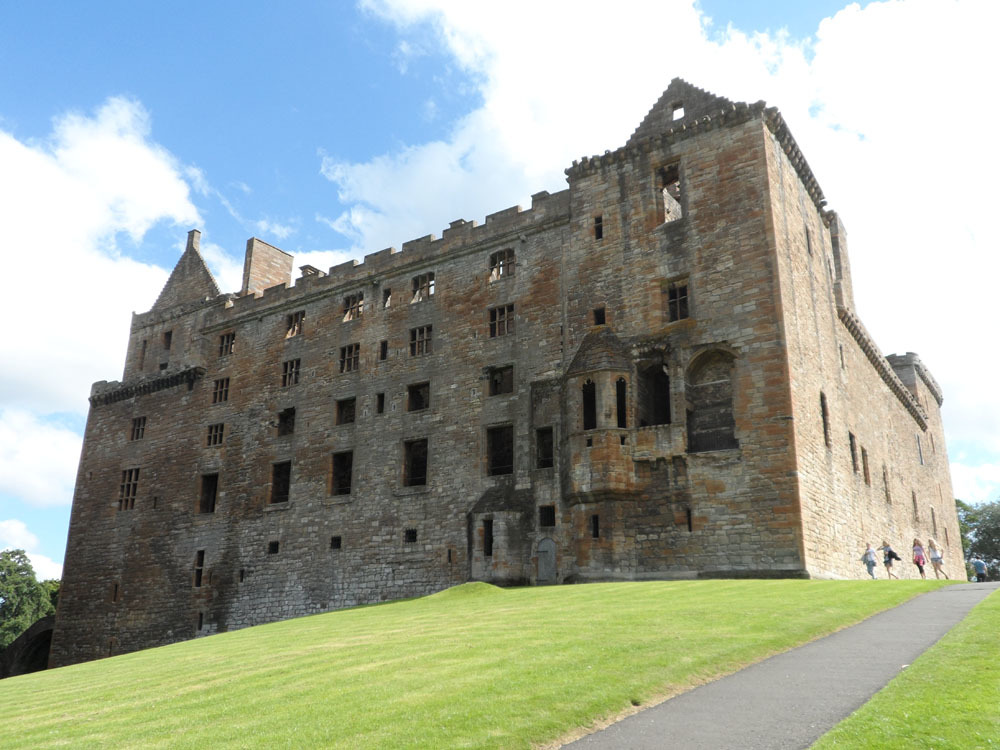
On 8 December 1542, a princess was born to Scotland. At Linlithgow Palace, Queen Marie de Guise, consort to James V of Scotland, delivered a daughter, who was named Mary; she would be their only surviving child. Six days later, Mary became queen of Scotland, following her father's death on 14 December. It was rumoured that James had lamented that his dynasty 'came with a lass, it will pass with a lass.' It is, however, questionable whether this legend has any truth to it. Mary was the first queen regnant of Scotland since Margaret of Norway (1283-90), who died at the age of seven. 

Mary's early years at the Scottish court were tumultuous ones, for her kingdom was at war with England. Henry VIII was determined to secure the submission of Scotland, and engaged in what became known as 'the Rough Wooing', in which he sought to effect the marriage of Mary to his son and heir, Edward. The two kingdoms had signed the Treaty of Greenwich in 1543, which agreed to a marriage between Edward and Mary, but the Scots soon renounced it. Mary's mother, the dowager queen, favoured an alliance with France, rather than England, and it was to France that she looked with regards to her daughter's future.

Above: Linlithgow Palace, where Mary was born in 1542.

In 1548, at the age of five, the Queen of Scots departed for France in the company of her four companions - all named Mary - and a sizeable retinue. She was betrothed to Francois, dauphin of France, and could thus anticipate a glorious future as queen consort of France, as well as queen regnant of Scotland. Mary was provided with an excellent education, in which she acquired expertise in dancing and music making, singing, needlework and horsemanship. She later became known as an accomplished poet. However, her language skills were somewhat rudimentary; certainly, she did not possess the linguistic talents of her cousin and rival, Elizabeth. As she grew to maturity, Mary was reported to be beautiful and charming. She was tall in stature, with auburn hair and dark eyes. Her love of France, and her French behaviour and customs, did not necessarily endear her to her Scottish subjects. Lord Ruthven, who was involved in the murder of her servant Rizzio, allegedly feared her wiles that she had developed while spending 'her youth in the Court of France.'

Mary was trained to regard herself as not only the queen of Scotland and France, but also the rightful queen of England and Ireland, in the event of her cousin Mary I's death. Henry VIII's will stipulated that, should Mary Tudor die without heirs, the crown should pass to her younger sister Elizabeth. However, Catholic rulers such as Henri II of France did not regard Elizabeth as the rightful heir to the English throne, on account of both her religion (Protestantism) and her bastardy (her parents' marriage had been annulled in 1536). From their point of view, it was Mary, Queen of Scots who had the right to succeed Mary Tudor. Naturally, as his son Francois was betrothed to the Queen of Scots, Henri was determined that she should be queen of England.

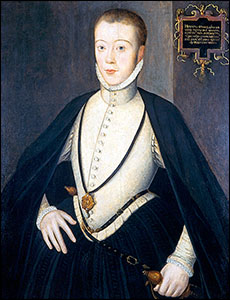
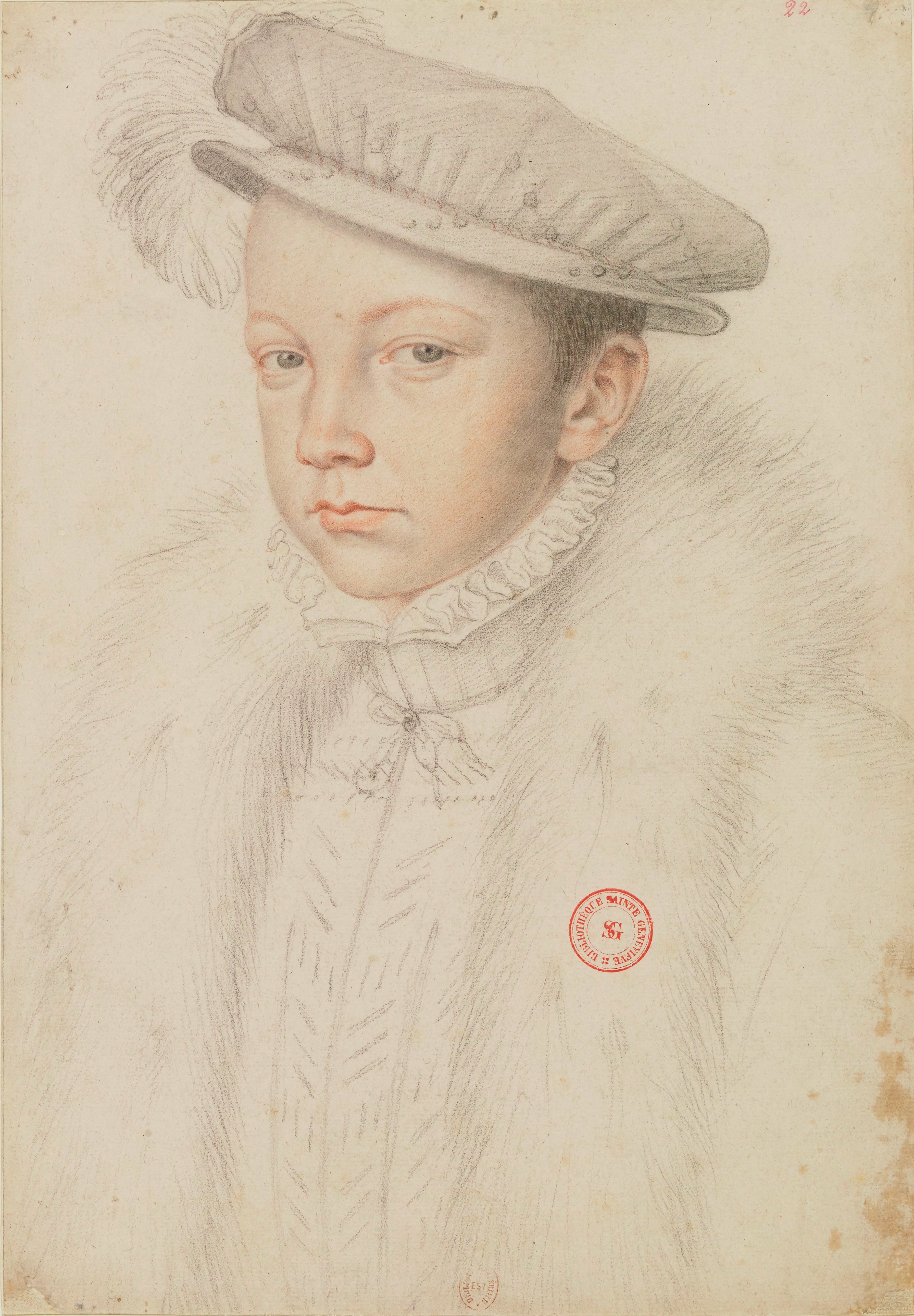
Mary's first two husbands: Francois II of France (left) and Henry, Lord Darnley (right).

It is this context that explains why 1558 was a crucial year for Mary, Queen of Scots. On 24 April, at the age of fifteen, she married the dauphin in a splendid ceremony at Notre Dame. Seven months later, Mary I of England died. The crown passed to her sister Elizabeth, but France did not recognise the new queen, at a time of war between the two kingdoms. Instead, Mary Queen of Scots and her husband quartered the royal arms of England with those of France and Scotland, in effect proclaiming themselves the rightful king and queen of England. It was a daring move, and it did not endear the Scottish queen to her cousin Elizabeth.

Henri II's death the following year meant that Francois succeeded him as king; the sixteen-year-old Mary was now queen consort of France. However her husband, who seems to have been sickly from an early age, died the following year, and it was intimated to Mary that there was no place left for her in France. In August 1561, she returned to Scotland, determined to rule as queen regnant. Occasionally, Mary has been disparaged as a frivolous ruler uninterested in affairs of government or politics, but she appears to have frequently attended council meetings and, moreover, was eager to maintain religious stability. The tensions between Catholics and Huguenots in France were steadily increasing, and culminated in the massacre of St. Bartholomew's Day in 1572. Mary I of England, moreover, had persecuted her Protestant subjects - almost 300 were burned at the stake - while Elizabeth I was responsible for the execution of almost 200 Catholic subjects. Mary Queen of Scots, who had perhaps gained an awareness of the religious violence that threatened to undo France during her years spent there, was determined to secure a religious rapprochement in Scotland.

The Scottish Reformation had been highly effective, and Mary returned to a country that was embracing Protestantism. However, she managed to hear mass privately in her chapel at Holyrood, although she was criticised by the militant preacher John Knox for doing so. Alongside her religious compromises, Mary sought to secure the recognition of Elizabeth as her heir, should the English queen die without an heir. Elizabeth, who had been the focus of rebellion during her sister's reign, had learned of the dangers in selecting an heir during her lifetime, particularly when that heir was Catholic and the ruler of a neighbouring kingdom. She was also aware that many Catholics, especially on the Continent, refused to regard her as the rightful queen. In view of this, Elizabeth made overtures to Mary but never granted her the recognition that Mary craved.

Above: Mary's cousin and rival, Elizabeth I of England. (left)
Mary's son and successor, James VI of Scotland. (right)

As a queen regnant of Scotland, Mary was eager to marry again. A variety of candidates were proposed, including Don Carlos of Spain, son of Philip II. Elizabeth, for reasons that continue to perplex modern historians, offered Mary the hand of Robert Dudley, earl of Leicester. The earl was rumoured to be the English queen's lover, and he was clearly greatly inferior to the Scottish queen in status. Moreover, he came from a family of traitors. Mary, offended, declined Elizabeth's offer. The English queen had stipulated that Mary could retain her friendship only by marrying Leicester or an English subject, or by remaining unmarried, and hinted that she might recognise Mary as her heir if she conformed to these conditions. In view of this, Mary's decision to wed Henry, Lord Darnley is explicable. Henry was the eldest son of Matthew Stuart, earl of Lennox, and Lady Margaret Douglas. He was, therefore, a grandson of Margaret Tudor and a great-grandson of Henry VII. He, like Mary, had a claim to the English throne, and it was perhaps in a bid to strengthen her own claim that Mary elected to marry her relative. They married at 29 July 1565 at Holyrood.

Henry was at least three - possibly four - years younger than his wife, and events would reveal that he was immature, spoiled, vindictive and arrogant. The marriage was not popular. The English refused to recognise the marriage and declined to refer to Henry as the king of Scotland, a title he was most anxious to enjoy. Elizabeth was enraged by her cousin's activities, and it was reported that there was much 'jealousies, suspicions and hatred' between the two queens, where previously there had been 'sisterly familiarity'. By marrying Henry, a Catholic with a claim to the English throne, Mary had undermined the fragile amity between England and Scotland. 

Mary's remarriage placed her in a difficult position that was exacerbated by rebellion at home - known as the Chaseabout Raid - and by increasing tensions between her Catholic and Protestant councillors. Her new husband, moreover, was furious by what he perceived as his wife's refusal to grant him the crown matrimonial of Scotland, which effectively meant that his status as king of Scotland was a rather meaningless one. The reign of Mary I of England had evidenced the ambiguities and difficulties of authority and precedence when a queen regnant married. Moreover, Mary's friendship with her adviser David Rizzio, a Savoyard musician, enraged both her husband and the Scottish nobles more broadly. On 9 March 1566, Rizzio was brutally stabbed to death by several noblemen in the queen's own chambers; Mary herself was seized by her husband and was harrassed by Lord Ruthven. Mary was probably shattered by the experience, but her pregnancy meant that she had to focus on her health. On 19 June, she gave birth to a son, James, who would later succeed her as James VI.

Mary's growing problems with Henry perhaps led her to collude in plots against him, although it is unlikely that she actively intrigued for his death. On 10 February 1567, her husband was murdered at Kirk o'Field, near Edinburgh. The murder scandalised Mary's subjects and was reported across Europe; Elizabeth I proclaimed herself shocked by what had happened, and quickly admonished Mary for her apparent closeness to the chief suspect, the earl of Bothwell. Mary has often been criticised for her behaviour, but she seems to have suffered a complete mental breakdown. Amid reports that she was depressed, perhaps suicidal, Mary was captured by Bothwell and incarcerated at Dunbar. Having abducted her, Bothwell then proceeded to rape her. In a bid to protect her own honour, as well as that of her infant son, Mary married Bothwell in May 1567.  She argued frequently with her new husband and reportedly called for a knife with which to end her unhappy life. Her suicidal tendencies, coupled with her depression and anxiety that had been exacerbated by the abduction, are powerful evidence against the simplistic view that she, besotted by Bothwell, had engaged in a passionate love affair with him and then encouraged him to murder Henry. Eventually, Mary was seized by the confederate lords at Carberry Hill, abandoned by her husband, and was transported through Edinburgh as crowds shouted 'Burn the whore!' She was imprisoned at Loch Leven, and forced to abdicate in favour of her son, James.

Image result for james v of scotland
Above: Mary's parents, James V of Scotland and Marie de Guise.

At Mary's birth in December 1542, Marie de Guise could never have imagined the turbulence that would characterise her daughter's life, which arose as a result of dynastic conflict, political instability and religious tensions. Nor could she ever have imagined that Mary would be the only monarch in Scottish history to die on an English scaffold, nor could she have envisaged that Mary would be the fourth British queen in a century to suffer that humiliating death. Mary, Queen of Scots' reputation has rarely been positive or even nuanced; traditionally identified as a scheming adulteress, who colluded in her husband's murder, she has also been regarded as a virtuous martyr for the Catholic faith and the rightful queen of England, executed by her barbaric and unnatural cousin, the usurper Elizabeth. Perhaps what should most be appreciated is the difficulties Mary faced in attempting to govern a turbulent kingdom, at a time when queen regnants were viewed with suspicion or were actively disparaged. Elizabeth I proved that a woman could rule successfully and actively, but the difficult experiences of her sister Mary I and her cousin Mary, Queen of Scots provided telling evidence that such success was neither preordained nor necessarily even expected by one's subjects. More recently, historians have come to view the Scottish queen sympathetically, with a more nuanced understanding of the religious, political and dynastic conflict that severely undermined her kingdom and affected her attempts - genuine attempts - to rule successfully. 


Monday, 5 December 2016

The Death of Francois II of France


On 5 December 1560, King Francois II of France died at the age of sixteen years old in Orleans. His reign had lasted merely sixteen months, having succeeded his father, Henri II, on 10 July 1559. Francois' health had deteriorated rapidly in the autumn and early winter of 1560. He suffered syncope and seems to have died from an ear condition, although mastoiditis, meningitis and otitis have also been suggested. Inevitably, there were rumours that the king had been poisoned, but these appear to have been unsubstantiated.

Above: Mary Queen of Scots was left a widow by the death of her husband, Francois II.

Francois' premature death left his wife Mary Queen of Scots a widow. The former queen of France soon learned that there was no place left for her in the kingdom of her husband's family, and departed for Scotland in August 1561. She survived her first husband by twenty-six years, dying on the scaffold at Fotheringhay Castle in 1587. The teenaged couple had no children together, which meant that Francois was succeeded by his ten-year-old brother, Charles, who became known as Charles IX. The new king's reign was marked by religious turmoil, including the infamous St. Bartholomew's Day Massacre in 1572, which witnessed the slaughter of thousands of French Huguenots.

Only weeks after Francois' death, his mother Catherine de Medici, Queen Dowager of France, was appointed regent - or governor -  for her young son Charles during his minority. Shortly after this decision, Catherine wrote to her daughter Elisabeth, queen of Spain: 'My principal aim is to have the honour of God before my eyes in all things and to preserve my authority, not for myself, but for the conservation of this kingdom and for the good of all your brothers.' 

Above: Francois II was succeeded by his younger brother, Charles IX (left), who reigned until his death in 1574. 
During Charles' minority, his mother Catherine de Medici (right) acted as regent. 

Tuesday, 18 October 2016

18 October 1541: The Death of Queen Margaret

Margaret Tudor.jpg

On 18 October 1541, Margaret Tudor, Queen Dowager of Scotland, died at Methven Castle. She was six weeks shy of her fifty-second birthday. Margaret was the elder sister of King Henry VIII of England, and was the eldest daughter of Henry VII and Elizabeth of York. In 1503, at the age of thirteen, Margaret married James IV of Scotland at Holyrood Abbey. Only one of their six children survived infancy: the future James V of Scotland. Margaret's husband was slain at the Battle of Flodden in 1513. She married twice after his death. Her second husband was Archibald Douglas, sixth earl of Angus; by him, she gave birth to a daughter, Lady Margaret Douglas, in 1515. Her third husband was Henry Stewart, Lord Methven.

Above: Methven Castle. Margaret died here in 1541.

Margaret's last years were not necessarily happy ones. Her son, who became king in 1513, differed with her over foreign policy, for Margaret favoured close ties with England, her home country, whereas James elected to renew the French alliance. Margaret seems to have hoped that England and Scotland would unite in marriage, as she had done by marrying James IV. It was anticipated that her son would marry Mary, daughter of Henry VIII, and Margaret's niece. This was fated never to take place, and James V went on to marry Madeleine of France in 1537.

Margaret was particularly unhappy in her third marriage, to Lord Methven. She regularly wrote to Henry VIII complaining of Methven's love affairs and her debts. Margaret wished to divorce her husband, but she was blocked in doing so by her son. In late 1537, she attempted to escape to Berwick, but was intercepted. Madeleine of France had died earlier that summer, and James went on to marry Mary of Guise, by whom he had a daughter, Mary Queen of Scots.

It is clear that Margaret was lonely during her final years. She had little influence with her son, and her relationship with her husband was acrimonious. Henry VIII refused to invite her to England and was content to ignore her. At Methven Castle, the dowager queen suffered a stroke. She asked that her valuables should go to her daughter Margaret Douglas, but James ignored his mother's wish and her goods reverted to the crown. She was buried in St. John's Abbey in Perth. 

Although Margaret's marriage to James IV, ultimately, failed to secure peace between the warring kingdoms of England and Scotland, her great-grandson James VI of Scotland's accession to the throne of England in 1603 brought the conflict between the two kingdoms to a close.

Wednesday, 27 January 2016

The Death of Lady Catherine Grey


Above: Portrait of Lady Catherine Grey and her son Edward Seymour.


Even by sixteenth-century standards, the demise of Lady Catherine Grey, countess of Hertford, was tragic. On 27 January 1568 (some sources suggest the 26th), the middle daughter of the disgraced Henry Grey, duke of Suffolk died at Cockfield Hall in Suffolk at the age of twenty-seven. There has been considerable speculation about the cause of the countess' untimely death. Some have suggested that she died of tuberculosis (then known as consumption), while others have speculated that she had starved herself to death. Whatever the cause, Lady Catherine's death was greeted by her cousin Elizabeth I with relief, perhaps even joy, for it removed a serious threat to Elizabeth's throne. 

In many respects, Catherine was a victim of her inheritance. Her mother was the daughter of Mary Tudor, queen of France, and niece of Henry VIII. Catherine was therefore Henry's grandniece and was probably named for his fifth wife, who married Henry in 1540 (Catherine Grey was born in August of that year). In 1553, at the age of only twelve, Catherine's world fell apart. Her elder sister Jane was nominated heir to the throne by their cousin Edward VI and, following his death in July, Jane was proclaimed Queen of England. Few accepted her accession, however, and Jane's regime collapsed when Mary Tudor successfully claimed the throne. Jane was imprisoned alongside her husband Guildford Dudley, who like her was probably no more than sixteen or seventeen years old. Queen Mary refused to order her cousin's execution despite considerable pressure from the Spanish envoys. However, following the outbreak of rebellion in early 1554 - motivated in large part by antipathy to the queen's proposed marriage to Philip of Spain and the anticipated restoration of the Catholic religion - Mary decided to have Jane and Guildford executed. Catherine's father Henry Grey followed Jane to the scaffold eleven days later, following his treasonous involvement in the rebellion.

Catherine, therefore, had suffered considerably by her early teenage years. Her father and sister had both died a shameful death, and she would have grown accustomed to her position as the member of a traitorous family. Popular history has portrayed Catherine's mother, Frances, as a tyrannical, cruel woman who bullied her daughters; however, there is no evidence of this, and it seems that both Catherine and her younger sister Mary were close to their mother. Frances died in 1559, a year after Elizabeth I came to the throne.

Edward Seymour, Earl of Hertford, Attributed to Hans Eworth (1515 - 1574).jpg
Above: Edward Seymour, earl of Hertford.

Elizabeth's accession complicated Catherine's life. According to Henry VIII's will, Catherine was Elizabeth's heir presumptive and, given the queen's unwillingness to marry and have children, Catherine stood a very real chance of becoming Queen. This fact was not lost on English Protestants, many of whom placed their hopes in Catherine and looked to her as their future monarch. Foreign rulers were also interested in Catherine, including Elizabeth I's former brother-in-law Philip of Spain. Rumours circulated that Philip was intending to have Catherine spirited abroad and married to his son. 

These rumours were regarded with fear and resentment by Queen Elizabeth. Some historians have speculated that she personally disliked Catherine. Undoubtedly she feared her as a potential claimant to her throne, and the queen would never have forgotten that her brother had disinherited both herself and her half-sister Mary in preference for the Grey claim. In 1561, Elizabeth found herself with an opportunity to prevent Catherine ever becoming queen. 

The following year, Catherine had secretly wed Edward Seymour, earl of Hertford. The couple were passionately in love, and their testimony graphically described their lovemaking in different palaces. However, unfortunately for the couple, the only witnesses to their marriage were either dead (Hertford's younger sister, Lady Jane) or disappeared (the priest who performed the service). This meant that the legality of the marriage could not be proved. Catherine, who was forced to confess that she was pregnant, was incarcerated in the Tower of London. Her father and sister had both died there only seven years earlier. Elizabeth also ordered the imprisonment of Hertford, and both he and his wife were rigorously interrogated. Their marriage was declared invalid and, when Catherine gave birth to a son, Edward, on 24 September, the child was declared a bastard. Elizabeth was determined that Catherine should not succeed her as queen. Her fear and loathing only increased when the countess gave birth to a second son, Thomas, in 1563.

Above: Cockfield Hall, where Catherine was imprisoned and later died.

Catherine remained imprisoned for the rest of her life. Elizabeth never forgave her, although her husband was later received at court. The queen's actions appear cruel and merciless to us today, but her actions are understandable when her fears are given attention. Elizabeth had been the subject of many plots in Mary I's reign; disaffected traitors had plotted to incarcerate, or even assassinate, their monarch and install Elizabeth as queen instead. Now, Elizabeth feared that the same threat would befall her. She reacted aggressively, as she was to react when Mary, Queen of Scots became a figurehead for Catholic disaffection among English subjects.

In her isolation, Catherine succumbed to despair and depression. She never saw her husband and sons again, and her household voiced concerns that she would kill herself in her misery. Following her death in January 1568, she was buried at Yoxford, although her remains were subsequently interred at Salisbury Cathedral. Later, her husband Edward Seymour was buried alongside her. The Latin inscription celebrates the couple as 'Incomparable Consorts Who, experienced in the vicissitudes of changing fortune At length, in the concord which marked their lives, Here rest together'.

Although her subjects could understand Elizabeth I's actions, that did not mean that they all agreed with her. Evidence suggests that many believed that Catherine and Edward were legally married and their children were legitimate. In view of this, English Protestants continued to regard Catherine Grey as the rightful heir to Elizabeth's throne and, following Catherine's death, they argued that the throne should pass to her sons Edward and Thomas. The MP John Hales was imprisoned for writing a tract that proclaimed the marriage was legal. Those who did not wish to see Mary, Queen of Scots as queen of England argued that Catherine's son Edward should succeed Elizabeth following her death. Finally, in 1606, the marriage of Catherine and Edward was declared valid, in the reign of James I.


Friday, 8 January 2016

Elizabeth's Heir: Margaret Stanley, Countess of Derby


Image result for eleanor brandon
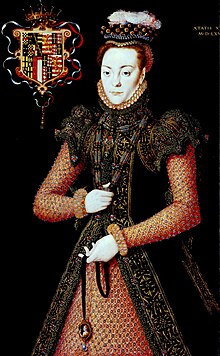
Above: A portrait thought to be of Lady Margaret Stanley, countess of Derby or her mother Lady Eleanor Brandon.


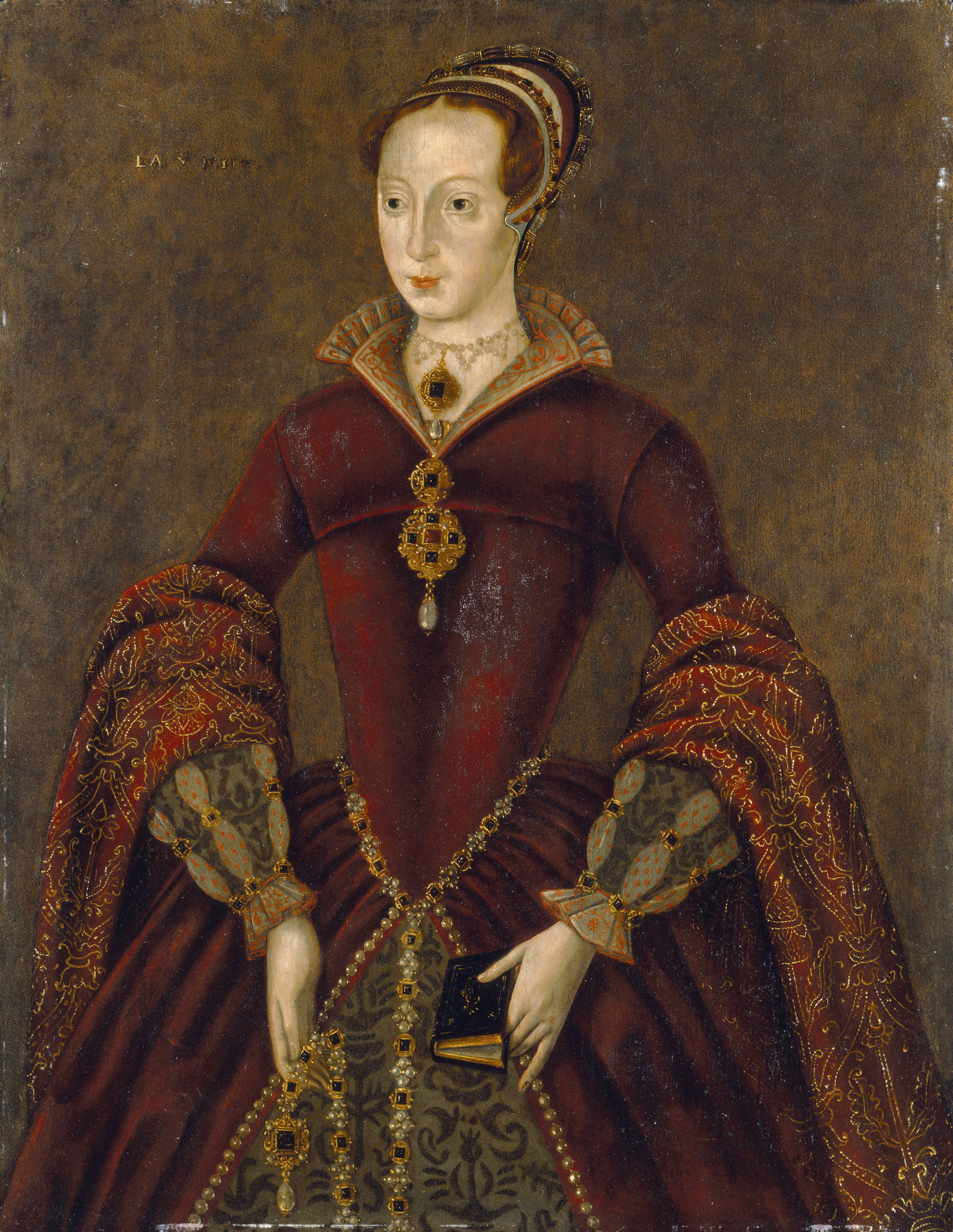
In recent years there has been an explosion of interest in the Elizabethan succession and, in particular, the extraordinary lives of Lady Jane, Catherine and Mary Grey. These women were, according to the will of Henry VIII, to inherit the throne of England in the event that Elizabeth I died with no heirs. Lady Jane was executed in 1554 for her role in seizing the throne unlawfully from the rightful queen, Mary I. As is well known, the fearful Elizabeth reacted furiously to news of the clandestine marriages of Catherine and Mary, and punished them both accordingly. Both Grey sisters were imprisoned, and Catherine's two sons by Edward Seymour, earl of Hertford, were declared illegitimate. Both sisters died fairly young, even by the standards of the time (Catherine was twenty-seven and Mary thirty-three). Their lives were undoubtedly highly tragic, but the public at large regarded the Greys as the rightful successors to Elizabeth, particularly in the wake of intensified concerns regarding Mary Queen of Scots.

After the deaths of Jane, Catherine and Mary, and the bastardisation of Catherine's sons, Elizabeth I's heir was, according to Henry VIII's will, Margaret Stanley, countess of Derby. The countess has received far less attention, both from academic historians and popular writers, regarding her role as a claimant to the English throne. However, Margaret's life was every bit as tragic, as tumultuous and as unpredictable as that of her Grey cousins. 

Above: Margaret's cousins: Jane, Catherine and Mary Grey (left to right).

Margaret was the daughter of Lady Eleanor Brandon, who was in turn the youngest daughter of Mary Tudor and Charles Brandon, duke of Suffolk. Eleanor was Henry VIII's niece and granddaughter of Henry VII. Her daughter Margaret, therefore, was Henry VIII's great-niece. She was born in 1540, the same year her cousin Catherine Grey was born. Her mother had married Henry Clifford, earl of Cumberland. He came from a respected northern family and the union between Brandon and Clifford meant that Margaret Stanley grew up amidst considerable luxury and wealth. Until her mother gave birth to a son, she was heiress to the Cumberland title. Eleanor did give birth to two sons, Henry and Charles, but both died in childhood.

Above: Margaret Stanley's grandparents, Mary Tudor and Charles Brandon, duke of Suffolk. 

From an early age, Margaret was educated to view herself as a most important lady. She would have been proud of her position as Henry VIII's great-niece. Her cousins Jane, Catherine and Mary Grey were erudite, educated and opinionated young women, and like them Margaret was aware of her important position within the Tudor dynasty. There is no surviving evidence that her parents provided her with as remarkable an education as that enjoyed by her cousins, but undoubtedly she would have been brought up with skills regarded as fundamental in Tudor gentlewomen: needlework; embroidery; dancing; music; hunting; good manners; reading; and writing. 

When Margaret was seven years old, her mother died. That was a tumultuous year, given that Henry VIII also died at the age of fifty-five. Margaret first came to play an important role in political events in 1552, when the Duke of Northumberland proposed that the twelve-year-old marry his youngest son Guildford. The marriage came to nothing, and Guildford instead married Margaret's sixteen-year-old cousin Jane Grey. There were later rumours voiced at court that Margaret was to marry instead Northumberland's brother Andrew, but again the match came to nothing, perhaps because Margaret's father had voiced opposition. 

The year 1553 was a turning point for Margaret and her family. The young Edward VI had died while still a teenager. The determined king had refused to countenance the possibility of either of his sisters succeeding him, because he believed that both were illegitimate. Instead, he willed the crown to go to the heirs of Lady Jane Grey. Because Lady Jane had not yet given birth to children, she herself became queen upon his death. Margaret's cousin was now first lady in the land. However, she was dethroned and executed seven months later by Mary I. 

How Margaret felt about her cousin's brutal execution is unknown, but it is possible that she did not give much thought to it. Five days earlier, the fourteen-year-old had married Henry Stanley, earl of Derby. It was a highly significant marriage. Stanley, who was nine years Margaret's senior, was a kinsman of Queen Anne Boleyn and Queen Katherine Howard (his maternal grandfather was Thomas Howard, duke of Norfolk). The marriage took place at Whitehall and was attended by Queen Mary. The couple seem to have experienced a volatile marriage, for the countess later confirmed that there were 'breaches and reconciliations' between herself and Stanley. They had four children together: Edward, Ferdinando, William, and Francis.

Above: Henry Stanley, earl of Derby, husband of Margaret Clifford.

How Margaret regarded her dynastic position during the reigns of Mary I and Elizabeth I cannot be known with certainty, but she was surely aware that she had a strong claim to the throne if her cousins Mary and Elizabeth died without heirs. During these years, the countess occupied an important place at court, although she spent much of her time on her estates in childbirth. In the early 1560s, however, Margaret's life was changed forever. 

Her cousin Catherine Grey clandestinely married Edward Seymour, earl of Hertford, in late 1560. Hertford was of royal blood (he was the nephew of Queen Jane Seymour and son of the Lord Protector). Catherine subsequently fell pregnant, and was forced to inform Elizabeth I of what had happened. The queen was understandably furious: not only were her councillors pressuring her to name a successor in the event that she did not marry and provide an heir herself, but she seems to have personally disliked and feared Catherine. Elizabeth was well aware that Catherine was regarded by English Protestants (and some Catholics) as her heir, and in falling pregnant Catherine had strengthened her claim. The irate queen ordered her cousin's imprisonment in the Tower of London, and her husband was recalled from Europe and incarcerated there as well. The stricken Catherine, who was only twenty-one, gave birth to their first son Edward at the Tower in the autumn of 1561.

Elizabeth never forgave Catherine. She almost certainly remembered the treachery of the Greys in the reign of Mary I, and she remembered that she had been a figurehead for rebellion during her sister's reign. Elizabeth viewed her Grey cousins with suspicion and fear, and was determined to prevent their succession in the wake of her death. Catherine remained under house arrest at a succession of different houses until her untimely death in January 1568 at the age of twenty-seven, leaving two young sons and a bereaved husband. Only a few years previously, Catherine's younger sister Mary had also been incarcerated for her clandestine marriage to Thomas Keyes, a Sergeant Porter. With her disgrace and death in 1578, Margaret Stanley's dynastic importance increased tenfold. 

According to Henry VIII's will, Margaret Stanley was her cousin Elizabeth's heir. Despite the urgent entreaties of her Privy Councillors and her own passionate love for Robert Dudley, earl of Leicester, Elizabeth refused to marry. Historians have endlessly debated about the reasons behind her decision. Undoubtedly these reasons were political, psychological and personal. Regardless, Elizabeth's decision not to marry caused considerable uncertainty in England about who would succeed upon her death. Margaret's great-uncle, King Henry, had nominated her as her cousin's heir, and it is entirely likely that, by the late 1570s, the countess had began to view herself as a possible future Queen of England.

Above: Mary Queen of Scots, Lady Margaret Stanley's kinswoman and potential rival claimant. Some historians have suggested that Queen Elizabeth always preferred the claim of the Scottish queen to the claim of the descendants of Mary duchess of Suffolk.

However, any potential ambitions for the crown that Lady Margaret had were to remain unfulfilled. The countess landed herself in deep trouble and caused her own ruin through her rash actions. In 1579, just a year after the death of her cousin and potential rival Lady Mary Grey, Margaret was accused of sorcery and arrested. She had allegedly used sorcery to predict how long Elizabeth would live, and there were even rumours that she had plotted to poison her cousin. Furthermore, she had allegedly spoken out about the queen's proposed marriage to the Duke of Alencon because it threatened her own position as Elizabeth's heir. Like her cousins Catherine and Mary Grey, the countess was punished with house arrest. Her fellow accused William Randall, whom the countess claimed was her physician, was executed. No charges were brought against Margaret, but she was banished from court. She wrote highly emotional letters to Elizabeth, claiming that she was in a 'black dungeon of sorrow and despair'. If she hoped for forgiveness and a return to royal favour, she was to be sorely disappointed.

In 1596, Lady Margaret died at the age of about fifty-six. Her sons Edward and Francis had died in childhood, and her second son Ferdinando, who had inherited the earldom of Derby, had died two years earlier. Ferdinando's son, Lady Anne Stanley, was Margaret's heiress presumptive upon the countess's death. The will of Henry VIII stipulated that Anne Stanley was Elizabeth's heir following the death of her grandmother Margaret, but the queen preferred the claim of Mary Queen of Scots' son James VI, and upon her death in 1603 James duly became King James I of England.

Much of the life of Margaret Stanley, countess of Derby, remains shadowy and elusive. It is not difficult to understand why historians have focused their attention on her Grey cousins, because greater evidence survives for their lives, and their status as claimants to the throne was more viable than Margaret's claim. It is usually forgotten that, upon the death of Mary Grey in 1578, Margaret Stanley was heir to the throne according to the will of Henry VIII. Her disgrace in 1579 seems to indicate that she was a highly ambitious woman who was determined to enforce her claim as Elizabeth's heir. Realising that her cousin would never marry and give birth to heirs, Margaret seems to have hoped and dreamed that she would one day become Queen herself. It was not to be. The disgraced countess never recovered her place at court, for she had invited the suspicion and hostility of Queen Elizabeth, who was never particularly warm towards the descendants of Mary, duchess of Suffolk at the best of times. The queen's antipathy to her Brandon kin was demonstrated in her decision to appoint Mary Queen of Scots' son James her successor upon her death, rather than Margaret Stanley's granddaughter Anne Stanley, despite the fact that Anne was, according to Henry VIII's will, the rightful heir. 

Thursday, 14 August 2014

Margaret Tudor: the Forgotten Tudor?


Above: Margaret Tudor, queen of Scotland.
(accessed: http://www.nndb.com/people/074/000095786/).

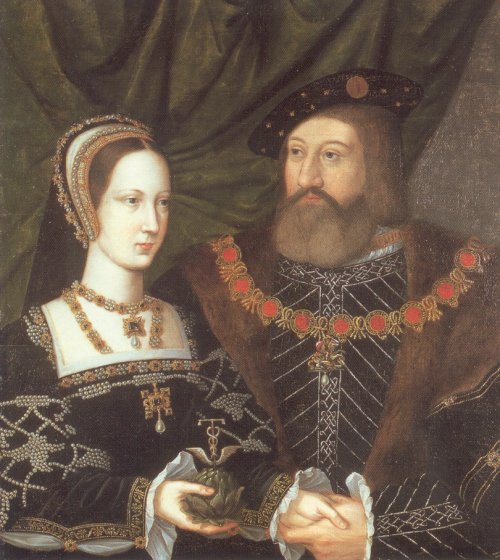
Henry VIII tends to outshine all of his siblings, for obvious reasons. Even so, most people, thanks to The Tudors' brazen portrayal, have some knowledge of his younger, impetuous sister Mary Tudor, who married first the king of France and later her brother's best friend, Charles Brandon, duke of Suffolk. Henry's elder brother Arthur Tudor, heir to the throne until his death at fifteen, is generally known for being the first husband of Henry's first wife, Katherine of Aragon. Controversy raged as to whether Arthur and Katherine had consummated their marriage. 

But few are generally aware of Henry's elder sister, Margaret Tudor, who, like her younger sister Mary, was a queen. Margaret's life, in fact, was every bit as tumultuous and volatile as that of her younger brother. Her marriages and politics significantly shaped the future of both Scotland and of England. She was the grandmother of Mary Queen of Scots and the great-grandmother of James VI of Scotland and I of England. Her actions, in fact, played some part in the later union with England which was to result in the Act of Union in 1707. It might then be asked, how is it that Margaret remains so obscure a figure?


Above: Margaret's parents, Henry VII (left) and Elizabeth of York (right).

Margaret Tudor was the second child of Henry VII and Elizabeth of York, who had married in 1486. She was born on 28 November 1489 at Westminster Palace in London. Although her father surely hoped for a second son, royal daughters were extremely useful because, through their marriages to foreign powers, they allied their countries with powerful states in prestigious unions. She spent her early years at her father's favourite place, Sheen, near the Thames (the palace was later renamed Richmond Palace), until a fire caused the royal nursery to be moved to Eltham. Margaret at an early age learned to play the lute, clavichord and to dance, traditional skills associated with feminine royalty. She also studied Latin and French, and pursued archery. It is likely that Queen Elizabeth ensured that her daughter also learned the traditional female skills of embroidery, sewing, and housewifery. 

Henry was determined to bolster the prestige of the Tudor crown, particularly because pretenders continued to threaten its security. The Yorkist threat remained, meaning that the Tudor dynasty remained fragile. At the same time, England sought to achieve harmony with its northern neighbour, for the two had customarily experienced hostile and suspicious relations with one another. In view of these factors, it is unsurprising that the Tudor king arranged for his eldest daughter Margaret to marry James IV, King of Scots, a man sixteen years her senior. On 24 January 1502, the marriage treaty between England and Scotland was concluded. Henry promised a £10,000 dowry for his daughter's hand, while the Scottish king swore his bride would receive £1000 Scots per annum alongside lands and castles affording a further income of £6000 each year.

Above: James IV of Scotland, first husband of Margaret Tudor.

In February 1503, the royal family was plunged into tragedy with the death of the queen and Margaret's mother, Elizabeth of York, at the Tower of London aged thirty-seven. How Margaret felt is unknown, but at just thirteen years of age, it is reasonable to believe it impacted severely upon her. Nonetheless, preparations for her journey to Scotland continued, and on 8 July she commenced her journey north, her retinue led by the Earl of Surrey. The formal marriage service took place in Holyroodhouse on 8 August 1503. As historians have conjectured, Margaret may have found it discomfiting that her husband had seven bastard children, housed in her own dower castle of Stirling, and continued to visit his mistress Janet Kennedy. 

Margaret's most important role as queen was to produce a male heir to safeguard the dynasty, and she duly did so in 1507, but the prince, named James for his father, died at Stirling in February 1508. A daughter born in July of that year died the same day. Like her sister-in-law Katherine of Aragon, Margaret experienced some tragedies in childbirth, but she was later to produce a healthy son. On 11 April 1512, aged twenty-two, Margaret gave birth to James, who later became James V, on his father's death at the Battle of Flodden on 9 September 1513. 

Margaret was, according to her husband's will, to serve as regent, provided that she did not remarry. Four nobles headed a council to assist her in governing the realm. On 6 August 1514, less than a year after her first husband's death, Margaret remarried. Her husband was Archibald Douglas, sixth earl of Angus, the greatest Scottish magnate. Because of this decision, Margaret renounced her position as regent of the realm. Margaret's decision was perhaps regarded as impetuous and foolish, but she perhaps sought a measure of security and stability, being as she was a young widow with an infant son, alone in a foreign realm. 

Above: Mary Stuart, queen of Scotland, was the granddaughter of Margaret Tudor.

The council subsequently invited John Stewart, cousin to the late king, to become regent. Margaret was distrusted, for her husband was extremely unpopular with the other magnates, and because she was rumoured to favour England over her adopted realm. Margaret deeply distrusted and resent Stewart, duke of Albany, and encouraged her brother, Henry of England, to restore her authority by force. On 30 September 1515, desperate and disillusioned, the former queen fled to England, in a move that strikingly foreshadowed that of her granddaughter Mary Stuart some fifty years later. Both queens sought refuge and assistance in England. 

On 7 October, the heavily pregnant queen gave birth to a daughter, Margaret Douglas. The ordeal nearly killed her and left her very weak. When she lay seriously ill at Morpeth, her second son Alexander died in December of that year. On 3 May 1516, Margaret arrived in London and met her brother for the first time in thirteen years, since she had left for Scotland in summer 1503. She remained in England for over a year, separated from her husband, while the Scottish council promised to send the jewels after her and to pay her rents. While she received her jewels, her revenues were not in fact restored, forcing the humiliated queen to seek money from Cardinal Thomas Wolsey.

In May 1517, Margaret journeyed back to Scotland, having been promised in advance that she would be treated well and would not be arrested, nor would her company be. However, her marriage to Angus was coming under increasing strain. Her husband had taken a mistress while Margaret had resided in England, and he had taken the queen's rents from Methven and Ettrick Forest. When she discovered her husband's affair, Margaret begged Henry to let her return to England. He refused, and urged her to return to her husband. Because of this, coupled with Scottish diplomatic politics in which closer links were sought with France as a means of securing both powers in the case of an English invasion, Margaret had become a marginal figure in Scotland by 1519. 


Above: Margaret's younger brother, Henry VIII, king of England.

Conflicts between Albany and the Scottish nobles persisted, especially due to Albany's detainment in France. In December 1521, Albany returned to Edinburgh and was warmly welcomed by Margaret, who hoped that he would restore her revenues and help her obtain an annulment of her unsuccessful marriage to Angus. Henry VIII became aware of rumours that his sister was Albany's mistress and rebuked her in a letter, causing the indignant Margaret to write an emotional reply to his 'sharp and unkind letter'. Albany banished Angus and his brother George to France, and even gathered an army in September for the purpose of invading England; although the memory of Flodden deterred him from pursuing this course. Eventually, a truce was achieved. 

When Albany left again for France in 1524, Margaret won the support of the Hamiltons, a powerful Scottish noble family, headed by the second earl of Arran. A coup was achieved which brought to an end Albany's regency and on 26 July of that year, invested Margaret's twelve-year old son James with full royal authority. Margaret's government met with hostility and suspicion, however, for it was perceived that the queen lacked good counsel, and the duke of Norfolk wrote to Wolsey of how unpopular Margaret had become, as a result. Margaret continued to urge Albany, who resided abroad, to help her seek a divorce from Angus, who troubled her. She had determined to marry Henry Stewart, her treasurer. The Pope finally annulled the marriage in March 1527, on the grounds of Angus' pre-contract to Lady Jane Stewart. Soon afterwards, the infatuated Margaret married Henry Stewart, and acknowledged him as her husband for the first time about April 1528. Angus retaliated by arresting Stewart and confining him, but James V expelled not just Angus, but his own family, from government. Henry was created Lord Methven and the Douglases were found guilty of treason. Margaret, however, was furious when her brother sheltered Angus in England.

Margaret's relations with her son were complex, especially because of conflict regarding foreign policy. Margaret favoured closer relations with her home country, England, and encouraged her son to marry his cousin, Mary Tudor, daughter of Henry VIII and Katherine of Aragon. James, however, renewed the French alliance. The queen's hopes of an Anglo-Scottish alliance were dashed when her son married Madeleine of Valois in 1537.

James V of Scotland2.jpg
Above: James V of Scotland, son of Margaret Tudor.

Margaret's personal difficulties with her husbands continued, for Lord Methven had taken a mistress by the mid-1530s, causing her to send a stream of letters to Henry VIII and his ministers complaining. He had so wasted her revenues that she was 8000 marks in debt. She sought to divorce him but was unsuccessful, although she did try to escape to Berwick in autumn 1537 before being intercepted. Queen Madeleine had died in July of that year, and her son, who continued to favour an alliance with France, married Marie of Guise, whom Henry VIII had shown some interest in as a prospective bride after the death of his third consort, Jane Seymour. 

Margaret's final years were unsuccessful, lonely and unhappy. On 18 October 1541, aged fifty-one, she died after experiencing a stroke at Methven Castle. Her son did not arrive in time, although his mother had requested his presence at her deathbed. She was buried in St John's Abbey in Perth. 

Richard Glen Eaves writes of Margaret thus:

'It is difficult to gain a clear impression of Queen Margaret, in terms either of her personality or of her impact on events... It seems clear that her years in Scotland were generally unhappy. She was only twenty-three when her first husband was killed, her two subsequent marriages both failed utterly, and she had limited contact with both her son in Scotland and her daughter in England... But in one respect she was undeniably a successful queen, for it was from her first marriage that there sprang the line that eventually united England and Scotland'.