Showing posts with label westminster abbey. Show all posts

Wednesday, 8 February 2017

8 February 1587: The Execution of Mary I of Scotland


Before the sixteenth-century, executing a queen would have been virtually unthinkable in pre-modern Europe. By 1587, however, executing queens in England was not a strange concept. On 8 February that year, Mary I of Scotland - or Mary, Queen of Scots as she is more commonly known - was executed at Fotheringhay Castle. She was the fourth queen to be executed in England since 1536, following Anne Boleyn, Katherine Howard and Jane Grey, but unlike her headless predecessors, Mary was a Scottish queen regnant. 

Mary's life following her abdication from the Scottish throne in 1567 had been difficult. Although she has frequently been disparaged as a foolish, inept queen who placed too much emphasis on matters of the heart, more recently Mary has been reappraised as a conscientious and efficient monarch who was, nonetheless, undermined by contemporary expectations of gender. In a kingdom that was, at best, ambivalent to female rule, Mary was compelled to navigate not only the political and factional rivalries that held sway at the Scottish court, but also the religious tensions unleashed by the Reformation. It was to her credit that, as a Catholic monarch, Mary attempted to reach some form of compromise with her unwavering Protestant subjects.

Mary had also previously been queen consort of France as the wife of Francois II, but her young husband's death meant that Mary was compelled to return to her native kingdom to commence the business of ruling. Like her cousin Elizabeth I, the Scottish queen was expected to marry and produce an heir to ensure the continuation of the Stewart dynasty. Eventually, in 1565, she married Henry, Lord Darnley, the eldest son of Lady Margaret Douglas and a grandson of Margaret Tudor. The marriage caused a degree of controversy and was not received well by Elizabeth I, but the collapse of the marriage and Darnley's murder in 1567 fatally undermined Mary's position. Whether or not she was involved in her husband's death - and most historians generally believe she was not - Mary made a gross misjudgement by marrying the chief suspect, the earl of Bothwell, shortly afterwards. Her decision was most likely due to Bothwell's rape of her, which meant that marriage to him was the only means of protecting her honour. While this decision can, from a modern perspective, be sympathised with, it was condemned by her furious subjects, and Mary's enforced abdication followed shortly afterwards. She was succeeded by her young son James, her child by Darnley.

Above: Mary Queen of Scots was executed at Fotheringhay Castle.

During her marriage to Francois II, Mary had publicly stated her belief that she was the rightful queen of England, by quartering the royal arms of England with those of France and Scotland. This declaration was probably viewed with apprehension by Elizabeth I, who was generally regarded in Catholic Europe as a bastard and usurper. From a Catholic perspective, Mary Queen of Scots was the rightful queen of England, both because of her religion and because she was undoubtedly legitimate. After the abdication in 1567, Mary journeyed across the border into England in a bid to secure protection from her cousin and fellow queen, and perhaps hoped that Elizabeth would assist in her restoration to the Scottish throne. This decision, with the benefit of hindsight, was probably the worst that Mary ever made. Elizabeth made no attempt to restore her cousin to the Scottish throne and effectively had her placed under house arrest. 

Mary's situation became more difficult over the years, as Catholicism became more closely associated with political insurrection and foreign intrigue, especially in the context of deteriorating Anglo-Spanish relations and escalating religious tensions, resulting in bloodshed, in France. The papal bull of 1570, which effectively released Elizabeth's subjects from their bonds of allegiance to her and actively encouraged them to kill her, could be viewed as something of a turning point in the queen's attitude to her Catholic subjects. During the 1570s and 1580s, a series of increasingly harsh laws were promulgated with the intent of enforcing conformity and ensuring obedience to the Protestant queen. Harbouring priests was made a capital offence, and priests who entered the realm with the intent of ensuring conversion could be executed, and many were. Perhaps acting out of desperation, Mary became involved in a series of conspiracies aimed at deposing Elizabeth and replacing her with the Scottish queen. Mary always believed that she was the rightful queen of Scotland, anointed by God, and only death could prevent her from enjoying that honour. By this point, however, she also coveted the English crown. So seriously were these conspiracies taken by the English government that in 1584 a document known as the Bond of Association was issued. It obliged all those who signed it to execute any person who attempted to usurp the English throne or assassinated Elizabeth. It was clearly aimed at Mary. 

In 1586, Mary was judged to have actively colluded in the Babington Plot, for her correspondence was said to indicate her consent to Elizabeth's assassination - an act that would lead to her succession to the English throne. In October, the Scottish queen was tried at Fotheringhay Castle, and defended herself with dignity and courage; she also questioned the right of the court to try her, a divinely anointed queen regnant. However, the verdict was never in doubt. On 25 October, Mary was found guilty. Elizabeth hesitated to proceed with her cousin's execution, perhaps because she feared the response of Catholic Europe. Mary's son, King James, diplomatically sought Elizabeth's mercy for his mother, but in reality he took very little action to assist Mary. 


Above: The tomb of Mary, Queen of Scots at Westminster Abbey. Copyright Westminster Abbey. 

On the day of the execution, Mary proclaimed that she was dying for her Catholic religion, as a true woman of Scotland and France, the two kingdoms that she had governed. It took three blows of the axe to sever her head, but she was subsequently revered on the continent as a Catholic martyr, murdered by the ruthless and immoral Elizabeth. Although she was initially interred at Peterborough Abbey, when her son became king of England he had her reburied at Westminster Abbey. The iconography of her tomb, as Anne McLaren has stressed, celebrated her as the rightful heiress of Henry VII and, therefore, as the rightful queen of England. Her fertility and fecundity, as the mother of James I of England, was contrasted with the barrenness of her cousins, Mary I and Elizabeth I, who lay nearby. It is ironic that, shortly before her death in 1603, Elizabeth elected the son of her enemy to succeed her. In doing so, the English queen ignored the wishes of her father, Henry VIII, that the Suffolk line should succeed his children, if they all died childless, rather than the Scottish line, which he had barred completely. 

Monday, 24 October 2016

The Lost Heir: Henry Frederick, Prince of Wales

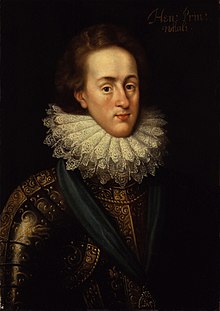
Henry Prince of Wales after Isaac Oliver.jpg

Everyone has heard of Charles I of England, who was beheaded in 1649 for high treason. Not everyone, however, has heard of Charles's elder brother, Henry Frederick. This 'faire and strong' Prince of Wales, as described by the prince's chaplain Dr. Daniel Price, was destined to be king of England, but his unexpected death in 1612 meant that the crown passed instead to Charles.

Henry was born on 19 February 1594 at Stirling Castle. He was the eldest child of James VI of Scotland and Anne of Denmark. Nine years later, his father became king of England upon Elizabeth I's death. Henry grew up at Stirling Castle in the care of John Erskine, earl of Mar. The prince was legally separated from his Roman Catholic mother, which caused Queen Anne considerable anguish. Within a year of her son's birth, the queen began to fight the arrangements in place, but she was eventually reconciled both to her husband and to Mar. Henry remained at Stirling until the spring of 1603, the year he turned nine. When his father became king of England, Henry was made duke of Cornwall, to add to his titles of duke of Rothesay, earl of Carrick, baron of Renfrew, lord of the Isles and Prince and Great Steward of Scotland.

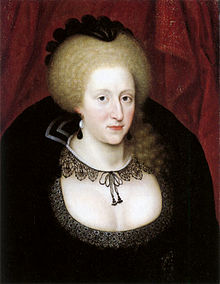
JamesIEngland.jpgAnne of Denmark in mourning.jpg
Above: Henry's parents, James VI of Scotland and Anne of Denmark. 

At the age of five, Henry was granted a tutor, Adam Newton, and the learned Sir David Murray was placed in the prince's bedchamber to assist Newton with the education of the prince. Henry soon proved gifted at sports and physical exercise. Upon his father's accession to the crown of England, Henry and his mother departed for England, where they arrived in June 1603; at Windsor Castle, Henry was made a knight of the Garter. This departure from Scotland had been accompanied by family drama. The pregnant queen had insisted that her son be handed over to her, and when she was rebuffed by Mar's mother and younger brother, her anger and despair were so intense that she suffered a miscarriage. 

Once in England, the prince's household was formed. Sir Thomas Chaloner was made governor, while Newton and Murray were retained as tutors. 141 men and youths resided in the prince's household. The Venetian ambassador was acquainted with Henry at Oatlands Palace in August 1603, and noted: 'He is ceremonious beyond his years, and with great gravity he covered and bade me be covered. Through an interpreter he gave me a long discourse on his exercises, dancing, tennis, the chase'. At the age of nine years old, Henry was already dignified and regal in his carriage. He seems to have been well aware of his glorious destiny as the future king of England, and was determined to demonstrate his suitability for the role.

Henry was interested in the cultural activities that were popular at court. He attended a masque at Winchester in the autumn of 1603 arranged by his mother, and attended her Twelfth Night masques in 1604, 1605 and 1608, as well as attending entertainments hosted by Robert Cecil, earl of Salisbury. But his love of sports was renowned. The French ambassador reported in 1606 that, while the prince studied for two hours a day, he 'employs the rest of his time in tossing the pike, or leaping, or shooting with the bow, or throwing the bar, or vaulting'.  He was also interested in both the military and navy, and encouraged his friends to send him secret reports on French fortifications.


Henry was also well known for his Protestant faith. The treasurer of the prince's household, Sir Charles Cornwallis, explained that Henry was 'a reverent and attentive hearer of sermons', and believed that financial aid should be given to the poor. He was opposed to Roman Catholicism and believed that recusants should be brought to justice. Somewhat ironically, in view of this, the prince was offered more Roman Catholic marriage proposals than Protestant. As heir to the throne, the subject of Henry's marriage attracted great interest. 

In June 1610, at the age of sixteen, Henry was created Prince of Wales and Earl of Chester at Westminster Palace. The ceremonies accompanying the investiture were lavish. James M. Sutton comments that 'this extraordinary quasi-sacramental parliamentary installation was surrounded by a whole year of court festivities that further demarcate 1610 as the signal year in Henry's short life'. The prince was a sight to behold. He was, according to a contemporary writer, 'tall... strong and well proportioned... his eyes quick and pleasant, his forehead broad, his nose big, his chin broad and cloven, his hair inclining to black... his whole face and visage comely and beautiful... with a sweet, smiling, and amiable countenance... full of gravity'.

Installed at St. James's Palace, Henry was a major patron of the arts. His musical activities were noteworthy; his household musicians formed the first new group added to the royal music since Henry VIII's reign, and his musical patronage is notable for its Italianate interests, including the employment of the musician Angelo Notari. He collected mannerist paintings from northern Italian and Netherlandish artists, and after he acquired Lord Lumley's library in 1609, was an avid collector of books until his death. 

On 6 November 1612, at the age of eighteen, Henry unexpectedly died of typhoid fever, and was buried at Westminster Abbey on 7 December. His death occasioned widespread grief. Charles Carlton notes that 'few heirs to the English throne have been as widely and deeply mourned as Prince Henry'. The prince's younger brother Charles was the chief mourner at the funeral. Four years after Henry's death, Charles was created Prince of Wales and Earl of Chester. It was he, rather than Henry, who succeeded James as king of England in 1625.

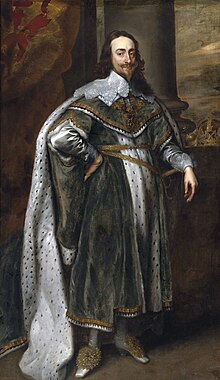
King Charles I after original by van Dyck.jpg
Above: Charles I, brother of Henry Frederick.

The prince's death was lamented by his chaplain, Dr. Daniel Price, in a number of sermons, in which Price stressed that Henry, 'while he lived, was a perpetuall Paradise', 'that blessed Model of heaven'. A large number of verses were written about Henry's passing, including by William Alexander, Joshua Sylvester and George Wither. Prince Henry's Grammar School in Otley (West Yorkshire) and Prince Henry's High School in Evesham (Worcestershire) were both named after the prince. 

Friday, 15 January 2016

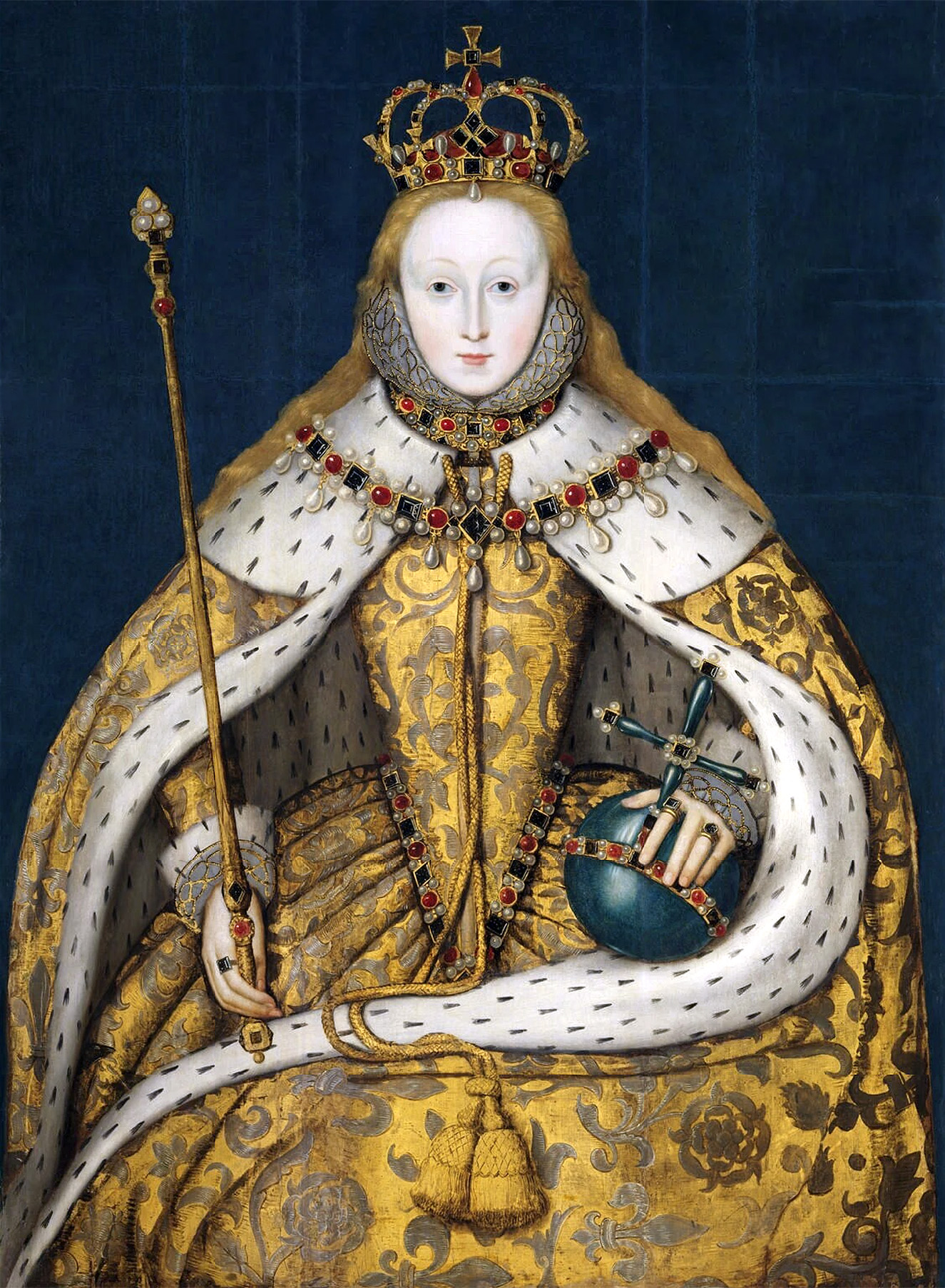
The Coronation of Elizabeth I


On 15 January 1559, Elizabeth Tudor was crowned Queen of England and Ireland at Westminster Abbey. The new queen was striking in her coronation robes, which drew attention to her famously pale skin, her flame-red hair and her sparkling dark eyes. Elizabeth had been wholeheartedly welcomed by her English subjects on her progress through the city of London. As had occurred at the coronation of Mary I, the public were enthusiastic about their queen, but Elizabeth was well aware that her subjects' affection for Mary had gradually been replaced with fear and hatred. She was determined not to make the same mistake as her sister. As yet, there was no sign that the public would grow disillusioned with Queen Elizabeth. The pageants welcomed the queen, and her gracious, considerate responses endeared her to the spectators, who were 'wonderfully ravished' at the sight of their new queen. 

The date of the coronation had been planned in advance, and had been selected because it was viewed as auspicious, a good omen for the new reign. The renowned scholar, mathematician, astrologer and astronomer John Dee had consulted an 'electional chart' and had determined that the date of 15 January was that on which Elizabeth should be crowned. Inside Westminster Abbey, where English monarchs were traditionally crowned, Elizabeth was proclaimed queen in each of the four corners of the abbey by Owen Oglethorpe, Bishop of Carlisle. At each corner, the congregation were asked if they would assent to Elizabeth being their queen, and responded with enthusiastic cries of "Yea! Yea!" Elizabeth made the traditional offerings at the altar, before a sermon took place. Dressed in cloth of gold, she was then anointed after the Lords Prayer had been read and she had taken an oath.

Bishop Oglethorpe had been the only English bishop to be prepared to officiate at Elizabeth's coronation, which was troubling for the new queen. It reminded her that there was much work to do to ensure that a favourable religious settlement was achieved. The previous reign had been marked by religious bloodshed, which Elizabeth had personally been appalled by. For now, however, she was determined to enjoy her coronation. Having been anointed, Queen Elizabeth sat in St Edward's Chair and was kissed by her Lords Spiritual and Temporal, who had knelt to her in homage. A mass took place before the queen kissed the Bible. Following the ceremony, the queen changed her dress and departed to Westminster Hall to enjoy her coronation banquet. Queen Elizabeth would reign until 1603 and she has been immortalised as one of Britain's most successful monarchs.

Saturday, 12 October 2013

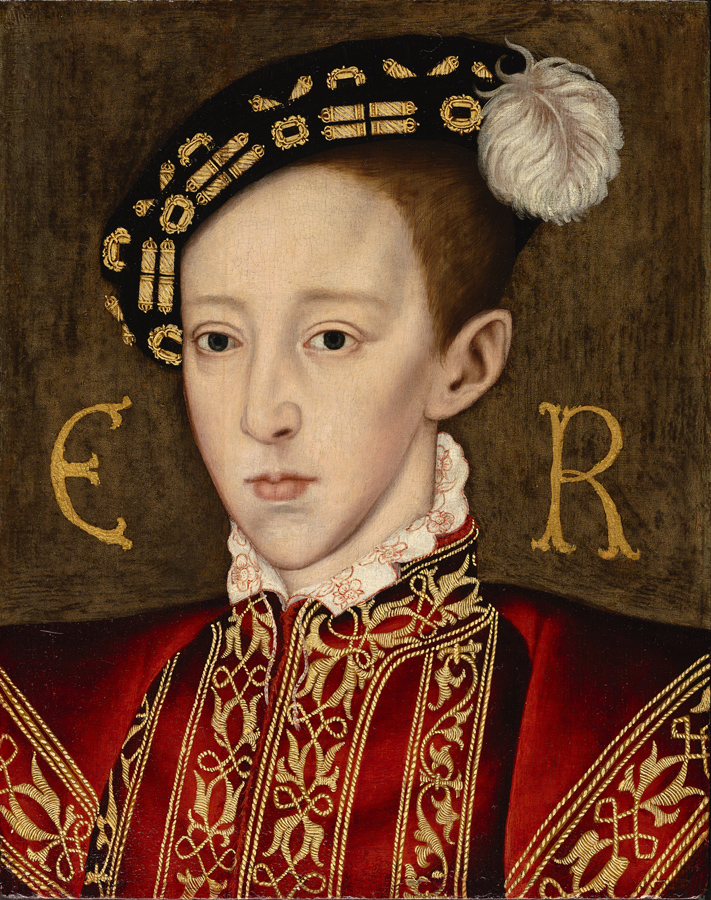
Edward VI, king of England


Above: Edward VI, portrait by William Scrots, c. 1550.

On this day in history, 12 October 1537, Henry VIII's third wife Jane Seymour gave birth to her only child, Edward, at Hampton Court Palace in Surrey. After twenty-eight years, the beginnings of the Reformation, a brutal and excruciating break from the Roman Church and the rejection of two queens, Henry finally had what he believed was essential to preserving peace and stability in England: a male heir. Tragically, however, Jane's efforts were ultimately fatal, for 12 days later, she died aged twenty-nine, a common fate of Tudor women. Henry apparently wept with joy when he held the baby Edward following his birth.

From the onset Edward was accorded a lavish lifestyle and excellent education afforded by his rank and status. He was initially placed in the care of Lady Margaret Bryan, who had also served his elder sisters, Mary and Elizabeth, during their childhoods. Until the age of six Edward was brought up 'among the women', although he was later taught by Richard Cox, Roger Ascham and John Cheke, as well as others, who instructed him in languages, philosophy, scripture, mathematics, music and liberal sciences. During these years he was close to his sisters, particularly Mary - despite the age difference of twenty-one years - and he is known to have informed her in a letter written aged nine: 'I love you most'.

Henry's marriage to Katherine Parr in 1543 changed Edward's life somewhat, for she became the only mother Edward had ever really known. As Dale Hoak writes: 'Queen Katherine brought Edward and his sisters into the royal household as members of an intimate family, providing Edward especially with an affection and attention that found endearing reflection in his frequent letters to her'. Her Protestant faith probably also had an important influence on Edward's religious beliefs and experiences. Under the influence of his Cambridge-educated humanist tutors, at an early age Edward was brought up in the Protestant religion.

On 28 January 1547, Henry VIII died aged fifty-five, and Edward, only nine years of age, became England's king. On Sunday 20 February, Edward was crowned at Westminster Abbey in a lavish coronation, wearing a crimson satin robe trimmed with gold silk lace, before showing himself to his people dressed in white velvet and cloth of silver and gold, set with patterned knots of diamonds and pearls. Because of the king's youth, it was arranged that the 16 executors named in Henry's will should act in a Regency Council on behalf of Edward until he reached the age of 18, when he would rule independently. However, the will was ignored and Edward Seymour, duke of Somerset, uncle of the king, became Protector of the Realm. The Council was Protestant-dominated following the removal of Catholic figures such as Stephen Gardiner, bishop of Winchester. Somerset was reported to 'govern everything absolutely' following his promotion.

A history of Edward VI's reign from the perspective of the king himself is difficult, for he died only fifteen before he could fully assume the mantles of government and kingship. As such, a history of his reign can be regarded as a history of Somerset's, and later Northumberland's, rule. During the early years of Edward's rule the Protestant Reformation was fully inaugurated in England. Archbishop Cranmer encouraged the king to destroy idolatry, particularly in the form of images. In July 1547 candles and shrines were banned, and by February 1548 stained-glass images and in wood and stone had gone the same way. Windows were reglazed, while chantries, processions, mystery plays, maypoles, church ales, and medieval rituals disappeared. It was an austere and forbidding environment.

In 1549, the first real challenge to Edward's rule appeared in what has come to be known as 'the year of rebellions'. These were motivated not solely by religious conservatism, but also by social unrest. By the early summer, a series of armed revolts broke out, the worst of them taking place in the southwest (Devon and Cornwall) and in Norfolk. The Prayer Book Rebellion, occurring in Devon/Cornwall, was motivated by hostility to the Protestant Reformation, while the Norfolk uprising occurred due to the encroachment of landlords on common grazing ground. Although Somerset appeared sympathetic to the rebels, the uprisings were eventually quashed, but the rebellions were perceived to be indicative of an unstable and corrupt government, thus setting the seeds for Somerset's eventual downfall.

By the autumn of 1549 Somerset was in real trouble and he was arrested in October. Edward showed little regret and did not lift a finger to save his uncle or restore his authority. In February 1550 John Dudley, duke of Northumberland, became the leader of the Council in Somerset's place. Eventually, Somerset was executed in 1552 following his initial release from the Tower of London. The only thing which Edward had to say about the affair was made in his diary: 'the duke of Somerset had his head cut off upon Tower Hill between eight and nine o'clock in the morning'. This passage perhaps supports the view of the king as a cold, unfeeling figure, who did nothing to support his uncle.

Northumberland was far more appropriate as Protector than Somerset. His administrative and economic achievements, in particular, have oft been recognised by modern historians. During these years, as he aged, Edward became more closely involved in government. The degree of his actual involvement has been controversially debated, but it seems possible that his greatest influence came in the field of religion, as the Protestant Reformation continued to flourish. Hoak believes that 'at fifteen [he was] an exceptionally capable student who was following, not directing royal affairs'. The king was depicted as a young Josiah, a godly king appointed by God to rid England of idolatry and superstition and restore truth to the realm. In context, Edward's relationship with his sister Mary became increasingly contentious, for her Catholic religion was abhorrent to him.

By February 1553, the fifteen-year old Edward, after barely six years on the throne, became seriously ill. The previous year he had fallen ill with measles and smallpox. Historians still debate what it was that killed him, with conflicting ideas of tuberculosis (consumption) or a pulmonary infection which led to septicaemia and renal failure. But it is also known that measles suppresses immunity to tuberculosis. By March, a Venetian envoy confirmed that the king was slowly dying.

Around this time, Edward drafted a 'Devise' for the English succession. Since he had never married nor fathered children, the crown by law on his death would pass to his eldest sister, the thirty-seven year old Mary. But her Catholic religion rendered her an unacceptable queen in the eyes of both Edward and his Council. In this line of thinking, if the crown should not pass to Mary, then it should go to twenty-year old Elizabeth, who, suitably, was a Protestant. But Edward subscribed to his father's will, which did not legitimate either sister - both were, despite their places in the succession, still officially bastards. Passing over the claims of his half-sisters, Edward instead willed that the crown should go to his cousin Lady Jane Grey, who was both legitimate and a Protestant.

Many historians formerly believed that Northumberland directed the whole 'Devise', because one of his sons Guildford was married to Lady Jane in May 1553, meaning that, by having a son on the throne of England, he would conceivably be the real power behind the throne. But this is an unlikely view in view of Edward's personal zeal and involvement in the affair, suggesting it was motivated by his own wishes, and in view of that Jane only married Guildford in May when the events behind the 'Devise' probably started a few months earlier.

On 1 July, Edward made his final appearance in public when he showed himself at his window in Greenwich Palace, horrifying onlookers with his 'thin and wasted' appearance. On 6 July, he died, three months before his sixteenth birthday. On 8 August he was buried in Henry VII Lady Chapel within Westminster Abbey.

Edward's reign was too short and his death at an early age means that is very difficult to tell what sort of king he would have become had he lived longer. But his greatest legacy was undoubtedly that of the Protestant Reformation, which was continued by his sister Elizabeth following Queen Mary's unsuccessful attempt at restoring Catholicism to England. Dale Hoak concludes his article with the passage:

'Edward's youth and unfulfilled promise have given rise to a number of misconceptions. But in one respect, at least, image and achievement have been found to coincide, in the perception of his image as having seen the foundations laid, with his encouragement, of one of the greatest transformations of English society and English-speaking culture, namely the Protestant Reformation'.