Monday, 21 April 2014

21 April 1509: Henry VII's Death and Henry VIII's Accession


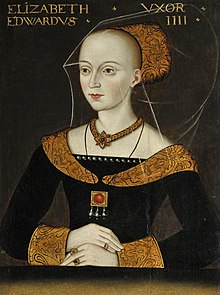
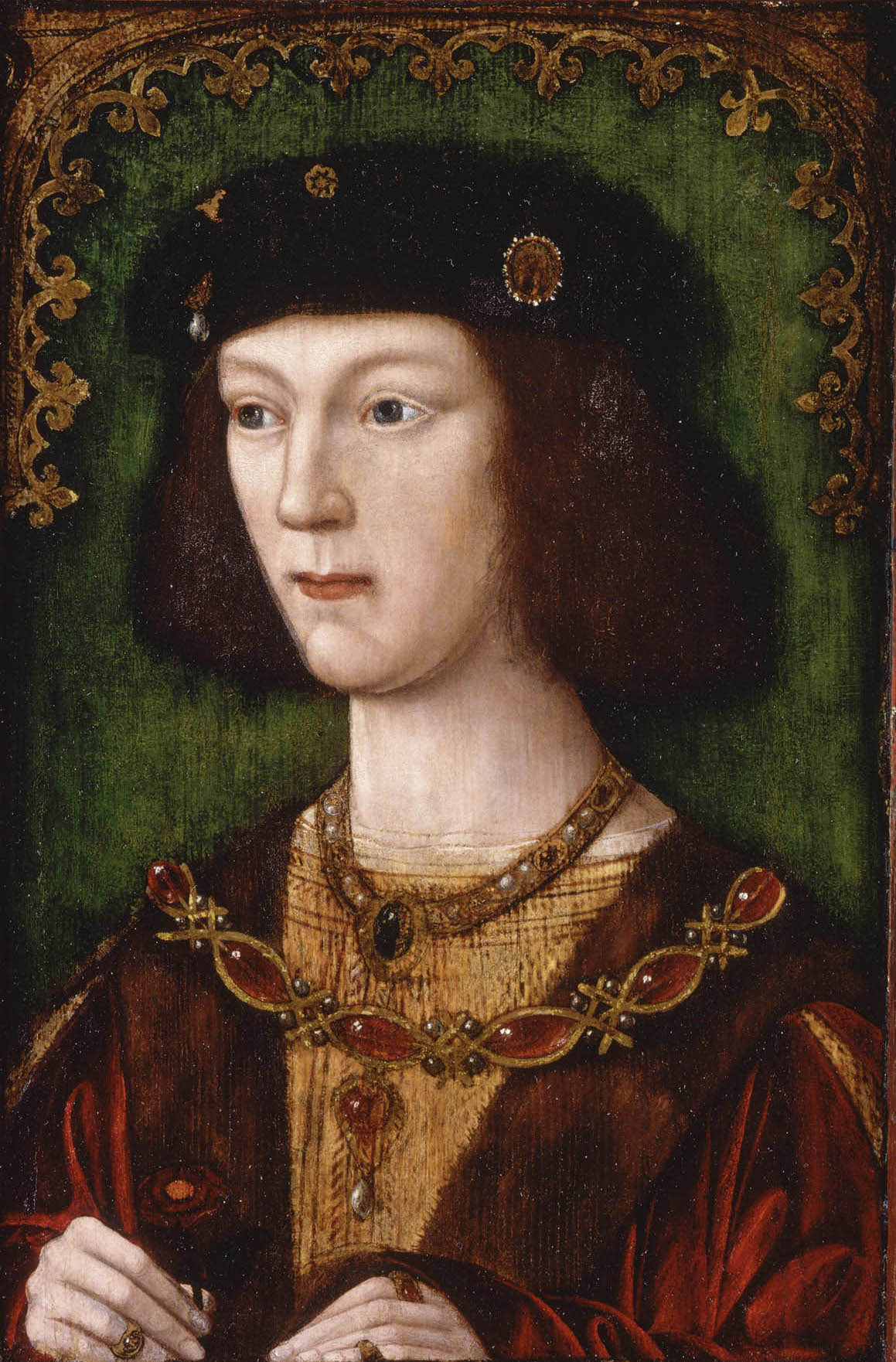
Above: Henry VII, the first Tudor (left), died aged fifty-two on 21 April 1509.
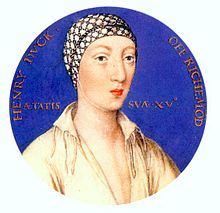
He was succeeded by his only living son, Henry, who now became Henry VIII (right).

On this day in history, 21 April 1509, the first chapter of the story of the Tudor dynasty came to an end when, after slightly less than twenty-four turbulent and troublesome years on the Tudor throne, the reign of the first Tudor, Henry VII, came to an end. The fifty-two year old king died at his favourite palace, Richmond, in Surrey. He was succeeded by his seventeen-year old son, the handsome and charismatic Prince Henry, who now succeeded to the throne as Henry VIII of England. Henry VII's death ushered in his son's succession - he would reign as king of England for thirty-eight controversial years, beginning his reign as a golden, enigmatic prince, and ending it as a bloodthirsty and feared tyrant. 

Henry VII's biographer Thomas Penn, author of the critically acclaimed Winter King, states that the first Tudor 'made an exemplary death', dying in the Roman Catholic faith. His death, similarly to that of his grandson Edward VI some 44 years later, was kept secret for a few days, to prepare his teenage son for kingship. The late king's formidable mother, the sixty-five year old Lady Margaret Beaufort, took charge of court proceedings and helped her young grandson in the first days of his rule. The new king was received excitedly by his subjects, and he was praised by contemporaries for his 'personal endowments', musical talents, linguistic ability, and his expertness 'in arms and of great valour'. It must have seemed, to the English people, like a return to the glorious kingship of Edward IV some forty years earlier. Similarities between the first Yorkist king, Edward, and his grandson Henry VIII have often been noted by historians.
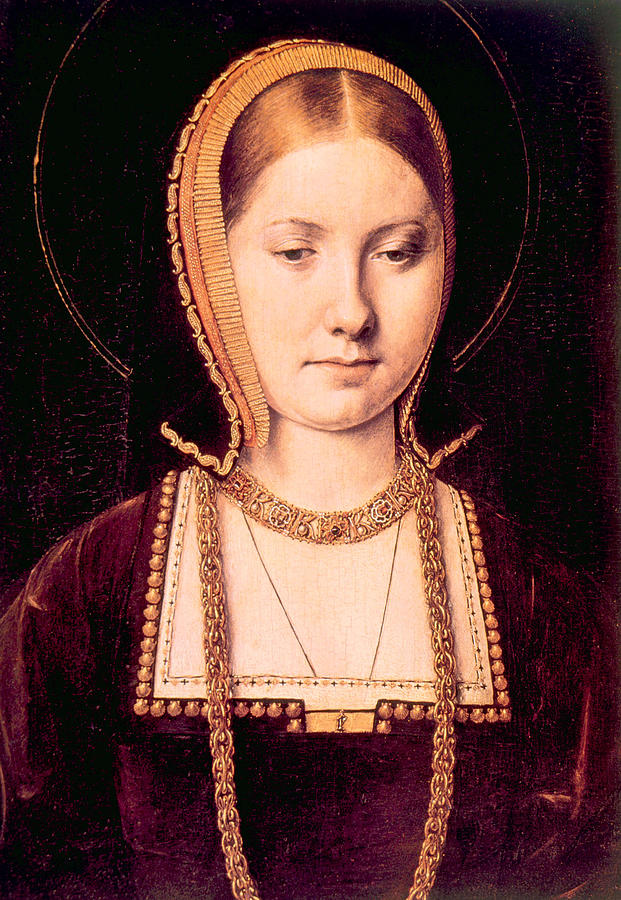

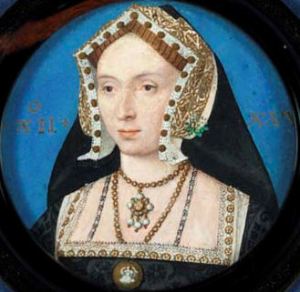
Above: Upon his accession, Henry VIII took as his wife his elder brother's widow, the beautiful and pious Katherine of Aragon (1485-1536).

Although Henry VII had been a successful king, by and large, he faced numerous rebellions throughout his reign and was never fully secure on his throne. His last years were characterised by personal tragedy, suspicion, and increasing hostility to the avaricious monarch. His beloved heir, Arthur Tudor, died in 1502 aged just fifteen and the king's pious and popular consort, Queen Elizabeth of York, died the following year in childbed. Her death severely affected her young son, Henry. King Henry VII considered taking another wife, with rumours even going so far as to suggest a marriage with his late son's widow Katherine of Aragon, but he never did remarry. Romantics might fancy this was because he felt no woman could replace his beloved queen - but whether or not this is true is impossible to ascertain.

So acceded Henry VIII to the English throne in the spring of 1509. At that moment, none of his hopeful and excited subjects could have foreseen the momentous religious, political and governmental changes that his monumental reign would usher in. They would never have believed that their new monarch would put to death his favourite advisers (including Wolsey - spared by his own death from a traitor's death - More and Cromwell); divorce his beloved queen Katherine and break with the Roman Catholic Church; marry six women and execute two of them; or put to death over 70,000 subjects. At the onset of his reign, the glamorous and enigmatic Henry VIII seemed the leader of a new golden age, a revival in England's fortunes. His subjects almost certainly predicted a vastly different reign for their new king contrasted with that of his suspicious and unpopular father. They were right - but they could never have foreseen in what way.


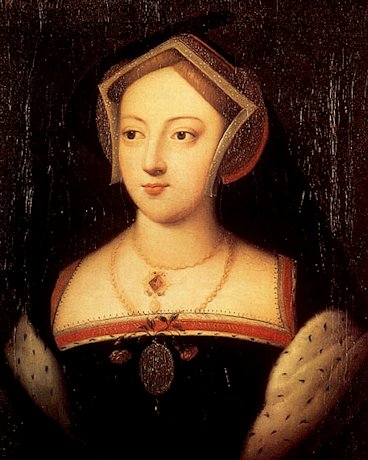
Above: The children of Henry VIII and the grandchildren of Henry VII - Mary Tudor (left), Elizabeth Tudor (centre), and Edward Tudor (right).


Saturday, 19 April 2014

Mary Boleyn in Film and TV


Above: spurned mistress (left) or harlot (right)?
Mary Boleyn in film. 

The elder sister of England's famous sixteenth-century queen, Anne Boleyn, Mary Boleyn was a somewhat obscure figure until the publication of Philippa Gregory's bestselling The Other Boleyn Girl (2001). Two film adaptations were made of that novel: a 2003 BBC production starring Natascha McElhone as Mary, and a 2008 Hollywood film starring Natalie Portman as Anne and Scarlett Johansson as Mary. But Mary has been portrayed in other film and TV productions - this article considers the differing portrayals of Anne's somewhat obscure elder sister, who was, very briefly, mistress of Henry VIII sometime in the early 1520s.

In the 1969 costume drama Anne of the Thousand Days, directed by Charles Jarrott and produced by Hal B. Wallis, Valerie Gearon (above, right) depicted Mary as a bitter, heartbroken and discarded mistress of the king of England who must bear the shame of bearing his illegitimate child. She offers blunt advice to her younger, glamorous sister Anne: "Lock up your heart, Nan". She cautions her that the king will use her and ultimately "walk away". This media portrayal of Mary is interesting, for unlike modern adaptations exemplified in Gregory's novel, there is no sibling rivalry between the two sisters, nor is Mary bland, dull and soft. Anne does, however, characterise her sister as "foolish" and appears to feel she has behaved stupidly with the king. Mary herself appears sensitive and intelligent, but deeply upset and depressed because of the king's ill treatment of her. 

Other TV series and films about the Tudor period and Henry VIII's six wives, in particular, did not feature Mary, including the 1970 BBC series The Six Wives of Henry VIII starring Keith Michell and Dorothy Tutin. By contrast, the publication of Gregory's bestselling novel led to unprecedented public interest in Mary Boleyn. The 2003 BBC adaptation of The Other Boleyn Girl portrayed Natascha McElhone as Mary and Jodhi May as her younger sister Anne. The film differed notably from the novel: Mary was elder than her sister in the film, for example. McElhone depicted Mary as sensible, alluring and loyal to her family. Ultimately, her sense and loyalty ensure that she survives. Her sister Anne, by contrast, is headstrong, giddy and foolish. Anne is extremely out of her depth as queen and publicly shames Henry at court. She decides to commit incest with George, encouraged by Mary, as a means of ensuring Anne's survival, but it ultimately fails. In contrast to both the novel and the 2008 film adaptation, the sisters' relationship with one another is not bitter, cruel or bittersweet. Instead, they appear to love one another.


Above: The Other Boleyn Girl (2003), starring Natascha McElhone as Mary (left) and Jodhi May as Anne (right).

The 2008 film adaptation, starring Natalie Portman as Anne and Scarlett Johansson as Mary, was similar in some respects to the novel but wildly differed from it in other areas. Similarly to the film, the sisters have a complex, turbulent relationship with one another: their love and closeness for one another is expressed at the beginning, when Mary confides in Anne on her wedding night; and at the end, in a highly fictional scene where Mary intercedes for Anne and visits her in prison (this never took place). As with the novel, Anne is scheming, cruel and driven by her own desires; whereas Mary is bland, unambitious, and sweet: in short, the ideal sixteenth-century woman. But the film departs from the novel's storylines in that the king falls for Anne first in the film, but rejects her when she humiliates him and seeks solace in Mary's company; Anne is banished to France in disgrace for her illicit marriage to Henry Percy (another fiction); Anne schemes to marry Henry and steal him from Mary out of revenge for her sister revealing Anne's marriage to Henry Percy (another fiction); and in short, the film is far more about Anne than it is about Mary. Mary, portrayed by Johansson, is insipid, uninspiring and, ultimately, forgettable. It is the hysterical, ambitious, unhinged Anne who lingers in our mind after the film's end. Unlike Valerie Gearon's resolute portrayal in Anne of the Thousand Days, Johansson's Mary emphasises her sexual appeal, but ultimately indicates that Mary is devoid of charisma, wit or ambition.


Above: Scarlett Johansson offered a dull, bland Mary Boleyn in 2008 film The Other Boleyn Girl.

In the BBC and Showtime TV series The Tudors (2007-10), Perdita Weeks played Mary Boleyn, the charismatic, pretty and sensual sister of Anne. In this adaptation, it is unclear which of the Boleyn sisters is older. Unlike The Other Boleyn Girl, in this adaptation the sisters enjoy a warm, cooperative and close relationship with one another. Mary's sexuality is again emphasised: she early on is negatively described as the French king's mare and she informs Henry VIII that she learned how to perform oral sex while at the French court. Soon after, she becomes Henry's mistress. Historians, such as Alison Weir, now doubt whether Mary really was the 'great and infamous whore' in France she has traditionally been depicted as. Viewers, while responding to Mary as a warm, sensual and good-hearted girl, are early on positioned to view her sister Anne as more mysterious, deeper, and ultimately more interesting than Mary. Later, when Anne is queen, Mary marries for love and visits her sister pregnant. She is banished in disgrace, and that is the last we see of her. This series focused less on the Boleyn girls' supposed rivalry with one another and more on Mary's short-livedness as Henry's mistress. In this sense, it can be seen as more historically accurate than The Other Boleyn Girl.

Mary Boleyn has not featured extensively in film and TV, unlike her tragic sister, but the few portrayals we do have of her are fascinating in indicating contemporary attitudes to women's sexuality: Mary's sexuality is her defining quality. After brief success in becoming the king's mistress, it humiliates and ultimately undoes her in Anne of the Thousand Days. In both adaptations of The Other Boleyn Girl, Mary's sexuality is bland and dull: it is safe, and ensures her survival. Anne's sexuality, by contrast, is fatally tied to her destructive ambition: it ultimately consumes and destroys her. In The Tudors, Mary's sexuality is neither dull nor bland, but instead depicted as an inherent aspect of her nature and encouraged at the licentious French court. Weeks' portrayal is ultimately more interesting, and more sympathetic, than that offered in The Other Boleyn Girl.

Wednesday, 9 April 2014

9 April 1483: The Death of Edward IV


Above: Edward IV, king of England (1442-1483).

On this day in history, 9 April 1483, King Edward IV of England died. He had been king of England for twenty-two years, barring a six month period when his predecessor, Henry VI, briefly resumed his kingship. The first Yorkist king of England, Edward's first reign (1461-70) was marred by violence and continuing political and dynastic tensions as a result of Edward's unpopular marriage to Elizabeth Woodville, his fallout with the 'Kingmaker' earl of Warwick, and the continuing threat from the Lancastrians. But his second period of kingship, 1471-83, was comparatively more successful and can be termed a period of peace as the threat from the Lancastrians fell away following the death of Henry, the defeat of his controversial queen Margaret of Anjou and the death of their prince Edward of Westminster in battle.

Edward had been born in 1442 in Rouen, France; the second child of the third Duke of York, Richard Plantagenet, and his resourceful wife Cecily Neville. Edward was the eldest of four sons who survived to adulthood. The fifteenth century was a turbulent and violent period as English dynastic politics became increasingly uncertain and faction-driven as a result of the Lancastrian king Henry VI's ineptitude. The loss of English possessions in France, so hard-won by his much-famed father Henry V, were viewed with consternation and outrage in England, and the nobles, led by York, became increasingly vocal in their demands for the king's unpopular advisers, including the earl of Suffolk and later the duke of Somerset, whom they blamed for England's mounting crises, to be removed from power.


Above: Edward IV's coat of arms.

Edward was a handsome and energetic young man, famed for his good looks and personality. He was 6'4 and as a result was England's tallest king. In the 1450s, he came to play an increasingly important role in his family's dynastic conflict with the Lancastrians. His father, the duke of York, asserted his claim to the English throne in 1460, but he died at the Battle of Wakefield later that year. As a result, his claim passed to his teenage son, Edward. Edward's position in the mounting conflicts therefore became increasingly pivotal. In alliance with his kinsman the Earl of Warwick, Edward defeated the Lancastrians in several battles, including the bloodiest battle fought on English soil, Towton, in March 1461. Edward, at the age of nineteen, became king shortly afterwards.

ElizabethWoodville.JPG
Above: Edward's queen, Elizabeth Woodville.

However, Edward's reign did not begin particularly well due to the development of conflict with his former erstwhile ally, the Earl of Warwick. Following Edward's accession to the throne, the Earl had negotiated with the French king for Edward to marry his daughter, Anne of France, in an alliance that would enhance England's prestige and allow it to play a major role in European politics. However, Edward disrupted these plans by marrying the commoner Elizabeth Woodville, a Lancastrian widow in her late twenties. This misalliance outraged the earl and caused some consternation at court. It is possible that the king's mother, the formidable Cecily Neville, disapproved of the match. Most historians believe that the King was infatuated with Elizabeth, whose beauty was legendary, although there were, unsurprisingly, rumours that she had ensnared him by use of the black arts.

The new marriage caused hostility amongst the nobility, who resented the Woodville's lowborn origins. Worst of all, Elizabeth had numerous siblings, who were quickly married off to the most powerful nobles in attempts to bolster their power and enhance their prestige. This further alienated the earl of Warwick, who had hoped to marry his two daughters and heiresses Isabel and Anne to nobles. Warwick eventually turned against the king, acting in alliance with Edward's younger brother George duke of Clarence, who had come to resent his brother's policies. Warwick eventually captured the king following the Yorkist defeat at the Battle of Edgecote Moor in July 1469, but because he did not attain the support he had hoped for, the earl was forced to release Edward in September. The king sought reconciliation with his brother and Warwick, rather than executing or imprisoning them as traitors. Warwick, however, sailed to France and allied himself with his former enemy Margaret of Anjou, acting together with the support of the French king. The alliance was cemented by the marriage of Warwick's second daughter, Anne, to Margaret's son, the Lancastrian heir Edward of Westminster.


Above: Richard III, younger brother of Edward IV.

Following Edward's defeat in 1470, the Lancastrian king Henry VI, who had briefly fell into insanity in the late 1450s, was restored to the throne. Edward, however, managed to attain support from the duke of Burgundy, who was married to his younger sister Margaret. Edward returned to England and obtained the support of his people as he steadily moved through the country unopposed. His brother George returned to his side, having been alienated by his unfavourable fortunes following Henry's readeption. The Yorkist king entered London unchallenged, taking Henry VI prisoner. Warwick was defeated at the battle of Barnet in 1471, and the Lancastrian prince was killed at the battle of Tewkesbury that same year. Henry VI was almost certainly murdered at the Tower of London in May 1471, and his shamed and humiliated wife Margaret was forced to seek sanctuary in France. No longer were the Lancastrians, in the persons of Henry and Margaret, a threat to the victorious Yorkist dynasty.

Edward's second half of his reign, comprising twelve years, were peaceful. He faced no more rebellions and sired ten children by his wife Elizabeth, whom he enjoyed a loving and affectionate relationship with, although like many men in this age he took mistresses, including the beautiful Jane (or Elizabeth) Shore. Edward became increasingly gluttonous, however, and his weight expanded during the later years of his reign. Dynastic tragedy did occur, for George was executed in 1478 on grounds of treason. On 9 April 1483, less than three weeks before his forty-first birthday, he died. He had named his younger brother Richard (whom he seems to have trusted more than the disgraced George) as Lord Protector during the reign of his successor Edward V, who was a minor. There is uncertainty surrounding the exact cause of Edward's death, although both pneumonia and typhoid have been suggested.

Edward was an extremely popular and successful king. He outshone his predecessor, the saintly if ineffectual Henry VI, and appeared similar to the glorious Henry V. Later, similarities would be drawn between the first Yorkist king and his grandson Henry VIII. He was a spectacular military commander - he was never defeated in battle. His reign saw the restoration of law and order in England that had been notably absent in the conflict-riven reign of his predecessor. Edward managed his finances well and ensured stability in his household. His court was praised as "the most splendid in all Christendom", as the reports of contemporary ambassadors attest. He was interested in fashion and architecture, and knew how to project images of himself as a godly monarch. He was also interested in literature and education - more than forty of his books survive today. To all intents and purposes, Edward enjoyed a successful and prosperous reign. The Yorkist dynasty would, however, be marred by the haunting disappearance of his two sons Edward and Richard. To this day, no-one knows for certain what happened to those two little boys.

File:Princes.jpg
Above: the Princes in the Tower. What happened to Edward IV's sons?

Thursday, 3 April 2014

Bessie Blount: Henry VIII's True Love?


Above: Portrait of an unknown woman, c.1525, possibly of Bessie Blount.

We are obsessed with Henry VIII's women. To date, at least two books (by Kelly Hart and Philippa Jones) have been published about Henry's loves, and numerous books have been published about his infamous six wives, including by respected Tudor historians such as David Starkey, Professor David Loades and the bestselling Alison Weir. Anne Boleyn is the subject of numerous biographies every year, and historians and writers are increasingly turning their attention to the less famous women he was involved with, including Mary Boleyn (following the success of Philippa Gregory's 2001 novel The Other Boleyn Girl), Jane Seymour and Katherine Howard.

Bessie Blount has long been an important name in accounts of Henry VIII's love affairs. We know that he was involved with at least eight women in the course of his fifty-five year life, including his six wives and at least two named mistresses, Mary Boleyn and Bessie herself. But was Bessie the great love of his life, at least during the fading years of his marriage to first wife Katherine of Aragon? She was certainly prominent as the mother of his only acknowledged bastard son Henry Fitzroy (1519-1536). But after her affair with the king Bessie faded into obscurity. We don't know the date of her birth, we don't know the date of her death, and we can't even be sure what she looked like.


Above: Mary Boleyn was probably Henry VIII's mistress for a considerably shorter time than her predecessor Bessie Blount.
Anne Boleyn - Henry's passion for Anne would of course surpass any feelings held for Bessie.

Bessie Blount was probably born by 1500 to Sir John Blount and Katherine Pershall in Shropshire. Her father was a loyal servant to the Tudors, a fact that probably proved of considerable importance in Bessie's career, for his loyalty to the crown perhaps offered an opportunity for his daughter to become a maiden to Katherine of Aragon, consort of Henry VIII. Bessie had arrived at court by 1514, aged about fourteen, and it seems that she had soon caught the eye of the young king. Beverley Murphy, in her article about Bessie published in Oxford Dictionary of National Biography, relates that Bessie had arrived at court by the end of March 1512. Since maidens usually had to be aged a minimum of thirteen years to serve a queen or high-ranking noblewoman, she must have been born by 1499 the latest. Her beauty has often been commented on, but as no surviving portrait exists of Bessie (the portrait at the top of this article may be of her), it is impossible to verify. In 1529, she was confirmed to be more beautiful than Henry's new love, Anne Boleyn. Since Anne's darkness may have served as a reason why she was not considered more attractive, one could surmise from this that Bessie was more conventionally attractive in terms of her appearance; and so might have been blonde or at least fair.

Bessie was particularly renowned for her skill in music and dancing, two social graces that were considered essential to young women at court hoping to attract a prestigious marriage and enhance their family's fortunes. The king danced with the teenage Bessie at the New Year celebrations of 1514. At some point, he took her as his mistress. What their relationship is like is impossible to comment on. Murphy contends that 'the lack of any concurrent references suggests that their... affair was short-lived'. Perhaps, it is time to revise the long-held view, perpetuated in TV, film and historical novels, that Henry VIII enjoyed romantic liaisons with women such as Bessie and Mary Boleyn. Alison Weir, for example, in her 2011 biography of Mary, contends that her relationship with Henry was hardly the true love story depicted in The Other Boleyn Girl. Like Mary, it is possible that Bessie's affair with Henry was brief and of little importance.

In June 1519, Bessie delivered the twenty-eight year old king a bastard son, Henry Fitzroy. He was later created Duke of Richmond and Somerset and Earl of Nottingham, prestigious titles that infuriated the humiliated Queen Katherine of Aragon, who may have perhaps identified him as a threat to her three-year old daughter Princess Mary. There were later rumours, almost certainly false, that the king planned to marry his bastard to his daughter. Certainly Bessie's son proved that Henry could sire sons, and established, in his mind at least, that the fault lay with the queen for his lack of a legitimate male heir. 

Horenbout HenryFitzRoy.jpg
Above: Henry Fitzroy, bastard son of Henry VIII and Bessie Blount.

By September of that same year Bessie had been married off to Gilbert Tailboys, which Murphy contends was a reward for Bessie because Gilbert was a ward of the crown. Bessie was granted property worth £200 per annum for life and the couple had three children once settled down in Lincolnshire: Elizabeth (born about 1520), George, and Robert. Between 1522 and 1539 Bessie continued to receive grants from the king. Gilbert died in 1530. At this time, of course, Henry was besotted by Anne Boleyn, and so did not consider taking the widowed Bessie as his wife, a move which would have legitimated his son Henry.

Bessie's role in her son's upbringing is uncertain, although records indicate that she made regular gifts to him, including a doublet and two horses in 1531. A letter of hers to his tutor John Palsgrave survives, which perhaps 'suggests that her involvement in the duke's upbringing was greater than has been generally allowed'. (Murphy) By 1535, Bessie had remarried. Her husband was Edward Fiennes de Clinton, who later became first earl of Lincoln. Bessie delivered three more daughters: Bridget, Katherine, and Margaret. However, misfortune struck Bessie in 1536 when her seventeen-year old son Henry Fitzroy died. It was a grievous blow and the king may have been profoundly affected by it, coming as it did two months after Queen Anne's execution. Henry had hinted that he believed his late wife had poisoned both the duke and his daughter Mary.

Bessie later served as lady-in-waiting to Anne of Cleves but ill-health prevented her from serving Anne's successor Katherine Howard. She died sometime between January 1539 and June 1541, aged probably in her early forties. As Karen Lindsey comments, Bessie's relative importance is negligible contrasted with the importance of Katherine of Aragon and Anne Boleyn, but she was certainly more significant than any of Henry's other mistresses including Mary Boleyn, in that she delivered his only known bastard son who was, at once point, perhaps considered by the king as a possible heir to the throne. 

What Bessie's personal relationship with the king was like is impossible to say with certainty. Perhaps she enjoyed a romantic relationship with him that lasted several years, or perhaps it was a brief interlude following on the heels of his increasing disillusionment with Katherine of Aragon and occurring shortly before his involvement with the Boleyn women. But the king certainly appears to have valued her, especially since he continued bequeathing her gifts during her later life and allowing her to be involved in her son's upbringing. Bessie certainly enjoyed a more fortunate career than some of Henry's other women, for she married twice, bore several children, enjoyed relative wealth and prosperity, and lived to what would be viewed in the Tudor period as a good age. Fortunately for her, it was not her fate to be discarded, divorced, rejected, or beheaded.


Monday, 24 March 2014

24 March 1603: The Death of Elizabeth I


On this day in history, 24 March 1603, arguably England's greatest queen if not monarch Elizabeth I died at Richmond Palace, six months before her seventieth birthday. Elizabeth had perhaps suffered from depression since about 1601, the year her former favourite Robert Devereux, Earl of Essex, was executed for treason. The deaths of close friends such as Katherine Howard, Countess of Nottingham, and loyal advisers such as William Cecil, Lord Burghley, probably contributed to the Queen's low moods and depression. Certainly, the last two or three years of her reign were, by the standards of Gloriana's Golden Age, uninspiring; even pessimistic.

In January 1603, as Tracy Borman in her successful Elizabeth's Woman notes, Elizabeth made the decision to move to Richmond Palace out of consideration for her rapidly declining health. Richmond Palace occupied a special place in the heart of the Tudors: it had been Henry VII's favourite palace. In March that year, however, the Queen fell into what Black terms "settled and unremovable melancholy". The Queen refused, however, to retire to bed; perhaps because she feared never waking up. When Robert Cecil, son of Lord Burghley and Elizabeth's chief minister, entreated his mistress to go to bed, she retorted charismatically: "the word must is not to be used to princes.. little man. Ye know I must died, and that makes ye so presumptuous". Obviously, Elizabeth's sharp tongue hadn't deserted her even on the brink of death!

Elizabeth did, however, eventually agree to retire to her bed and by 23 March it was clear that death was imminent. Archbishop Whitgift visited his mistress and entreated her to name her successor, an act she had famously refused to do for nearly five decades. She gestured with her hands, however, to signal that she agreed that James VI of Scotland, son of her former arch-enemy Queen Mary Stuart, should become king of England on her death. Between two and three in the morning the next day, the Queen died. John Manningham recorded poetically:

"This morning, about three o'clock her Majesty departed from this life, mildly like a lamb, easily like a ripe apple from a tree... Dr Parry told me he was present, and sent his prayers before her soul; and I doubt not but she is amongst the royal saints in heaven in eternal joys".


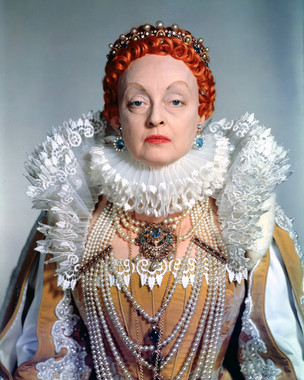
Above: Bette Davis as Elizabeth I. (left)
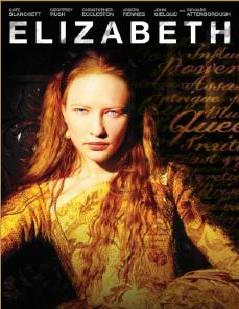
A more controversial portrayal. Cate Blanchett in "Elizabeth" (1998).

Historians speculate as to the cause of Elizabeth Tudor's death in 1603. Obviously, dying aged sixty-nine, she had lived to a great age most of her subjects never attained. G. J. Meyer suggests that the Queen could have died of anything of the following: bronchial infection that developed into pneumonia; streptococcus; the failure of one of her vital organs; or poisoning from ceruse (the mixture she used as her make-up). Meyer does agree, however, that the Queen's depression probably worsened whatever it was she was suffering from. On 28 April 1603, Elizabeth's funeral took place and she was interred in Westminster Abbey in a tomb to be shared with her infamous elder sister Mary I. The chronicler John Stow reported of the crowds gathered at the former Queen's funeral procession: "...there was such a general sighing, groaning and weeping as the like hath not been seen or known in the memory of man". England's great queen had died, bringing to an end the rule of the Tudors - England's ruling dynasty since 1485 - and perhaps the Golden Age.


Above: Elizabeth I's parents. King Henry VIII (1491-1547) and Queen Anne Boleyn (c.1501x1507-1536).

Elizabeth has regularly been viewed as England's greatest monarch. Her reign ushered in a Golden Age, when England's literary, artistic and musical achievements flourished and established it as a real player in European cultural exchange. Elizabeth's defeat of the Armada and her relative religious tolerance were both achievements that have been long appreciated by historians. A charismatic and yet mysterious woman, she remains a hugely popular subject among biographers, historians, filmmakers, dramatists, and novelists. It is perhaps Elizabeth's glamour that most appeals to a modern audience today. But it is perhaps the Queen's tolerance and desire for peace that most marks her out, in an age in which political and religious violence was endemic and monarchs frequently intolerant towards subjects they regarded as heretical or dissenting. As the Queen herself stated:

"...when wars and seditions with grievous persecutions have vexed almost all kings and countries round about me, my reign hath been peaceable, and my realm a receptacle to thy afflicted Church. The love of my people hath appeared firm, and the devices of my enemies frustrate".

It is also the mystery of Elizabeth that appeals. We don't know what she really looked like - her portraits were strictly controlled and censored by the government, and produced a prototype of how the Queen wished to appear rather than presenting what she viewed as unfavourable - and perhaps more truthful - renditions of her appearance. We do not know how she felt about her mother, Anne Boleyn. We do not know why she never married. We do not know her true attitudes to Mary Queen of Scots or her sister Mary. Perhaps most controversially of all, we do not know if she truly was a virgin queen. It is this mystery, glamour and charisma of Queen Elizabeth I that continues to make her such an exciting figure to study; especially in view of the cultural, political, religious and social achievements achieved in her reign as "Gloriana".

Sunday, 16 March 2014

The Death of Anne Neville, Queen of England

Image result for richard iii

On this day in history, 16 March 1485, Queen Anne Neville of England died aged twenty-eight at Westminster Palace. According to legend, the day she died saw an eclipse which was viewed by the superstitious as an evil omen of her husband Richard III's imminent fall from grace. Although rumours credited the king with poisoning his consort as part of his schemes to marry his niece Elizabeth of York, reports indicated that he had wept at her funeral. She was buried at Westminster Abbey, having reigned as queen for only two years.

Anne was the second daughter of Richard Neville, earl of Warwick, and Anne Beauchamp, the daughter of the thirteenth earl of Warwick. She was born at Warwick Castle and most likely spent her formative years growing up in Warwick. Her family fortunes were splendid: the Nevilles exercised considerable influence in the northern parts of England and later became loyal adherents to the House of York. At Middleham Castle in Yorkshire, Anne and her sister Isabel became acquainted with the two younger brothers of Edward IV: George (later duke of Clarence) and Richard (later duke of Gloucester). 


Above: Middleham Castle.

In 1469, Isabel Neville married George, thus integrating the Nevilles into the royal family, for George was the younger brother of the Yorkist king Edward IV. The following year, aged fourteen, Anne herself was married but to the Lancastrian heir, Edward of Westminster, rather than to a Yorkist prince. This occurred as a result of her father's schemes, for the disaffected Warwick, resentful of the Woodville family (a Woodville was married to the king) had decided to switch sides and support the defeated Lancastrians in an attempt to attain financial and political power. Anne perhaps resided in the household of the vanquished English queen Margaret of Anjou in the immediate aftermath of her marriage, but at the Battle of Tewkesbury in 1471 the Lancastrian prince was defeated and killed and Anne left a widow aged fifteen.

Because Clarence was married to Anne's sister, he took it upon himself to take custody of both Anne and her mother and attained possession of the dead Warwick's possessions in the north. Anne was deprived of her inheritance as part of these greedy endeavours, and it is possible that he even sought to prevent her remarrying. Sometime between 1472 and 1474, however, Anne took it upon herself to seek marriage with Clarence's younger brother, Richard duke of Gloucester, who has traditionally been regarded as both more loyal and closer to King Edward than the ambitious Clarence. Whether Anne directed these plans as an ambitious attempt to regain her inheritance, or whether the alliance with Richard was based on love, is impossible to say.

The newly married couple resided chiefly in the north, where loyalty to the Nevilles was strong. Perhaps in 1473, and by 1476, Anne delivered a son, Edward, who became heir to the dukedom of Gloucester and a potential claimant to the throne; although the birth of two sons to King Edward meant that it looked virtually uncertain that either Edward or his father or uncle would acquire the throne.

Having been a Princess of Wales and later a Duchess of Gloucester, in 1483 Anne became a queen. Gloucester usurped the throne in the summer of 1483 and Anne was crowned alongside her husband at Westminster Abbey. Whether she had any knowledge of matters pertaining to the Princes in the Tower is uncertain, although novels such as The Kingmaker's Daughter explore such issues imaginatively. Anne's queenship, however, was not to prove happy. In 1484 her only son died and it is perhaps significant that she seems to have had no other pregnancies, although she may have experienced miscarriages or stillbirths. As Michael Hicks remarks: "Anne seems to have been a particularly insignificant queen, perhaps because she suffered from ill health". Certainly, in contrast to the active and auspicious queenships of the charismatic Margaret of Anjou and Elizabeth Woodville, Anne appears a shadowy and perhaps ineffectual consort.

At Christmas 1484 court rumours credited that Richard was engaging in an affair with his eighteen-year old niece Elizabeth, daughter of Edward IV and later, wife of Henry VII. Rumours that the king would set aside Queen Anne in favour of the younger and more attractive Elizabeth were rampant. Following Anne's death, Richard publicly denied any intention of marrying his niece.

Thursday, 13 March 2014

13 March 1881: The Assassination of Alexander II


On this day in history, 13 March 1881, Tsar Alexander II of Russia was assassinated by Nikolai Rysakov, a twenty-year old Russian revolutionary and member of the left-wing terrorist organisation Narodnaya Volya. The Tsar, as he was prone to do on Sundays, had travelled that day to the Mikhailovsky Manege for the military roll call by a carriage. Rysakov threw a bomb at the carriage which killed one of the Cossacks accompanying the carriage. There were two further bombers, Hryniewiecki and Emelyanov, involved. The Tsar was taken to the Winter Palace in St. Petersburg where he was given Communion and last rites before dying later that day, in a horribly mutilated condition.

What drove numerous assassination attempts against the Tsar? Alexander II has traditionally been characterised by historians as successful, in comparison with both his predecessors and successors. Born on 29 April 1818 in Moscow to Nicholas I and his consort Alexandra Fyodorovna, Alexander was emperor for twenty-six years before his reign came to a grisly and bloody end in St. Petersburg, the cultural capital of Russia at that time.

Alexander was tutored by Vasily Zhukovsky, a noted translator and liberal romantic poet. Under his tuition the Tsarevich became familiar with several European languages. Alexander is famous for being the first heir to the throne to visit Siberia, as part of a six-month tour of Russia in which he visited 20 provinces. In 1855, aged thirty-seven, Alexander succeeded the throne following the death of Nicholas I. He continued to prosecute the Crimean War then occupying Russia, before suing for peace aided by his councillor Prince Gorchakov.

Russia had been badly hit by the Crimean War, leading the new Tsar to enact a phase of reforms. Alexander is perhaps most famous for instigating the emancipation of the serfs in 1861. This deeply affected the economic, political and social future of Russia as a nation, for the emancipation involved far greater issues than merely the freedom of serfs. Led by Konstantin Romanov, Yakov Rostovtsev and Nikolay Milyutin, the serfs gained freedom that year. The Russian government also reorganised and rearmed both the army and navy as a result of the devastating effects of the war, and universal military conscription was introduced in January 1874. Security of tenure was also enacted alongside a new penal code and a simplified system of civil and criminal procedure. In all, Alexander II's judicial reforms have by and large been considered successful.


Alexander II and his wife Marie Alexandrovna. 

The Tsar is also famous for encouraging Finnish nationalism, Finland traditionally being a part of the Imperial Russian Empire. At the same time, separatist movements were suppressed, leading to the January Uprising of 1863-4 in which hundreds of Poles were executed and thousands deported to Siberia. Territories of the former Poland-Lithuania were excluded from Alexander's reforms. Native languages alongside Belarusian, Lithuanian and Ukrainian were banned from printed texts, while the Polish language was banned in oral and written form in all provinces except Congress Poland.

The Tsar's reign, despite the relative success of his reforms, was however plagued by repeat assassination attempts. In 1866 Dmitry Karakozov attempted to assassinate the emperor in St. Petersburg, but failed and was executed at the Peter and Paul Fortress. Repeat attempts followed in the following years. The Tsar's reforms were met with criticism and hostility by many of his subjects; some believed he had gone too far while others argued that he had not gone nearly far enough.

Following Alexander's death his son, Alexander III, acceded to the throne. The "Liberator Tsar" had reigned for 26 years and his death was a setback for the reform movement. It is possible that, had he lived, Russia might have become a constitutional monarchy instead of becoming more oppressive during the reign of Alexander III. The assassination inspired anarchists to advocate "propaganda by deed" - ie. using spectacular violence to incite revolution or rebellion. The striking Church of the Saviour on the Blood was built, construction beginning in 1883, on the site of the Tsar's assassination and was dedicated to his memory. Alexander III used the Church to commemorate both his father's death alongside symbolising a return to Russian nationalist spirit and a rejection of the reforms and traditions associated with Peter the Great.

Храм Спаса на крови 7.jpg
Above: The Church of the Saviour on the Blood was built on the spot of Alexander II's assassination in 1881.