Showing posts with label alison weir. Show all posts

Wednesday, 14 December 2016

The Tudors and TV: Is There Anything New to Say?


Tudor enthusiasts greeted the news of Lucy Worsley's new BBC documentary about the six wives of Henry VIII with excitement. For those of us fascinated by the Tudor period, we cannot get enough of it; we read about it, we watch documentaries about it, we visit the buildings associated with it and, perhaps most of all, we love to talk about it. Admittedly, Henry's tumultuous marriages is a well-worn subject, but the enthusiastic Worsley promised to offer new insights and, for me at least, she has done so in what is, admittedly, a challenging medium: television.

However, not everyone reacted as positively to Worsley's documentary as others. Last week, an article was published in The Guardian entitled: 'Six Wives With Lucy Worsley: Why TV History Shows are for the Chop', and was written by Joel Golby. In it, he attacked Worsley's documentary as 'awful, tedious history' and 'Game of Thrones without any of the good bits', a rather absurd criticism that, nonetheless, exposes the difficulty that historians face in attempting to strike a balance between education and entertainment, when presenting TV documentaries. In one hour, Worsley was required to discuss and examine Henry's 24-year long marriage to Katherine of Aragon, her experiences of queenship and Anne Boleyn's rise to power, in a way that was both credible and engaging to viewers. Golby's scathing assessment indicates that she failed.

Others voiced their criticism of another Tudor documentary on Twitter and in the comments section of the article, although some commentators were rather more positive. One praised Worsley's coverage of 'one of the most fascinating eras.' But Golby's negativity was mirrored in another article published in History Today on 14 December by the magazine's editor, Paul Lay. The title of the piece is 'Television History and Its Discontents', and featured a still from Worsley's documentary, in which she wears Tudor costume.

Lay criticised Six Wives, for he suggested that it offered 'unconvincing, cheap looking, historical reconstructions', and because it 'says nothing that we do not know already.' I object wholeheartedly to Lay's criticism, which I believe to be both unfair and untrue. The documentary does offer new insights, and as a biographer of Katherine Howard, I wholeheartedly commend Worsley's decision to present Henry VIII's hapless fifth wife as a victim of predatory behaviour, a view that has only gained acceptance amongst historians in the last decade or so.

Before then, Katherine Howard tended to be perceived as, in Alison Weir's words, 'an empty-headed wanton', or even, to use the late David Loades's term, 'a stupid slut'. She has been derided for her 'promiscuity' and has been slated as a 'natural born tart' (Alison Plowden). Television documentaries and dramas tended to follow these interpretations: Tamzin Merchant presented Katherine as a nymphomaniac, even a prostitute, in the Showtime television series The Tudors, and even in Dr David Starkey's entertaining documentary about the six wives, Katherine was said to have shown more dignity at her death than she had ever displayed in life. An earlier documentary about the six wives produced this year also focused on Katherine as sexually adventurous both before and after her marriage.

To my knowledge, Worsley is the first to present Katherine as an abused victim in a television documentary. In doing so, she has drawn on the theories of historians such as Retha Warnicke and Joanna Denny to offer a compelling, and more historically accurate, version of Katherine's life than previously seen ever before on television. From this perspective, Lay's criticism is absurd. 

It is true that there is an abundance of documentaries about Henry VIII and his wives, but is that really a bad thing? Many people are fascinated by the king and his queens, and read as many books as they can about them, as well as flocking to Hampton Court Palace, the Tower of London and Windsor Castle every year, as well as to the numerous National Trust and English Heritage owned properties. I object to criticisms of new documentaries about the Tudors and, in particular, Henry VIII - for contrary to these views, such documentaries are offering new insights and are aimed at audiences who will appreciate these insights, because they are intelligent and engaged viewers who want to learn as much as they can about the period. 

Perhaps, if the likes of Golby and Lay view such documentaries as redundant, because they offer 'nothing that we do not know already', then they should not watch them, since there are many who will watch them and will learn something new. If either individual can point me towards an older documentary that portrays Katherine Howard as a victim of sexual predators, then I might rethink my views. But until they can, I stand by why I argue in this piece: that even well-trodden subjects can offer something new, which can be documented on television in a manner that is both educational and entertaining. 

Thursday, 8 October 2015

8 October 1515: The Birth of Lady Margaret Douglas

Margaret Douglas.jpg
Today is the five-hundredth anniversary of the birth of Lady Margaret Douglas, daughter of Archibald Douglas and Margaret Tudor, former queen of Scotland. On 8 October 1515, at Harbottle Castle in Northumberland, the former queen was delivered of a 'fair' and healthy daughter, named Margaret after her mother. The day after her birth, Margaret Douglas was hastily baptised 'with such provisions as couthe or mought be had in this baron and wyld country', according to the northern Lord Dacre. Margaret Tudor was ill following the birth, which suggests the delivery might have been difficult, but she departed with her daughter the following spring to the court of her brother Henry VIII at Greenwich Palace, where Margaret Douglas resided in the royal nursery. In June 1517, the former queen and her daughter returned to Scotland.

Harbottleruin2.jpg
Above: The ruins of Harbottle Castle, where Margaret Douglas was born in 1515.

Lady Margaret Douglas has proven to be a popular subject among historians in recent times. Early this year, Mary McGrigor published a biography of her entitled "The Other Tudor Princess: Margaret Douglas, Henry VIII's Niece". Then Sylvia Barbara Soberton charted Margaret's life alongside her friends Mary Howard and Mary Shelton in her book "The Forgotten Tudor Women". Finally, Alison Weir's biography of Margaret Douglas, entitled "The Lost Tudor Princess", was published last week. Why Lady Margaret has suddenly intrigued historians is uncertain, but the likeliest reason is because of her extraordinary life. Replete with tragedy, scandal and love, Margaret was the daughter of a former queen of Scotland, the niece of Henry VIII and the granddaughter of Henry VII, the first Tudor king. She had a claim to the English throne and, it was rumoured, was strongly favoured by her cousin Queen Mary I to succeed her as queen upon her death. Eventually, of course, Queen Mary chose her younger sister Elizabeth to succeed her, but her fondness of her cousin Margaret is apparent in the fact that she considered choosing her as her successor.

Above: Lady Margaret's parents, Margaret Tudor (left) and Archibald Douglas, sixth Earl of Angus (right).

At an early age, Lady Margaret discovered that her parents' marriage was volatile and uneasy. In 1518, Margaret Tudor learned that her husband was keeping a mistress and violently quarrelled with him. The earl abruptly seized her daughter from her and took her to his fortress of Tantallon in Haddingtonshire before departing with her to France, then to England, and then finally to Scotland. Margaret Douglas' aunt Mary Tudor, youngest sister of Henry VIII, came to her rescue in 1530, when Margaret was aged fifteen, and invited her to London. She resided at Beaulieu on the orders of her uncle Henry VIII. 

Margaret was a great success at the English court. She was described as being 'beautiful and highly esteemed', and was close to the king's first daughter Mary. She also enjoyed good relations with her uncle's second wife Anne Boleyn. Margaret fell in love with the queen's uncle Thomas Howard and was engaged to him, but the furious king sent the couple to the Tower of London upon discovering their relationship. Margaret also resided at Syon Abbey, finally being released in late October 1537; unfortunately Thomas Howard had already died while imprisoned in the Tower. Margaret was declared illegitimate by the king following the birth of his son Edward. She then went on to serve both Anne of Cleves and Katherine Howard. Margaret foolishly fell in love with Queen Katherine's older brother Charles and was again incarcerated at Syon and Kenninghall for her 'lightness'. The couple's love was short-lived and was probably brought to a close by the queen's execution early in 1542. The following year, Margaret attended her uncle's wedding to Katherine Parr at Hampton Court Palace. In 1544, she married Matthew Stuart, earl of Lennox, at the age of twenty-eight. The following year, she gave birth to Henry Stuart, lord Darnley (who wed the Scottish queen Mary in 1565). She later gave birth to a second son, Charles Stuart.

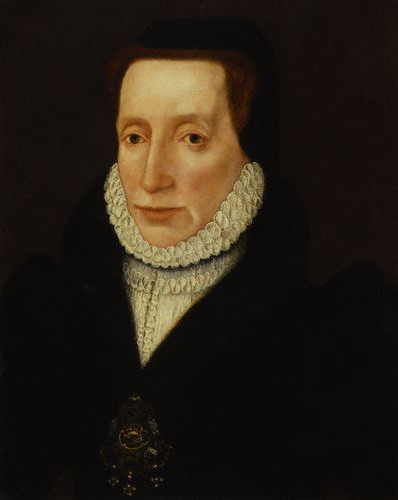
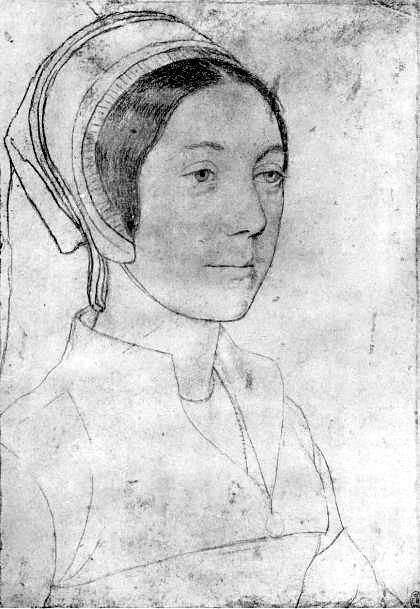
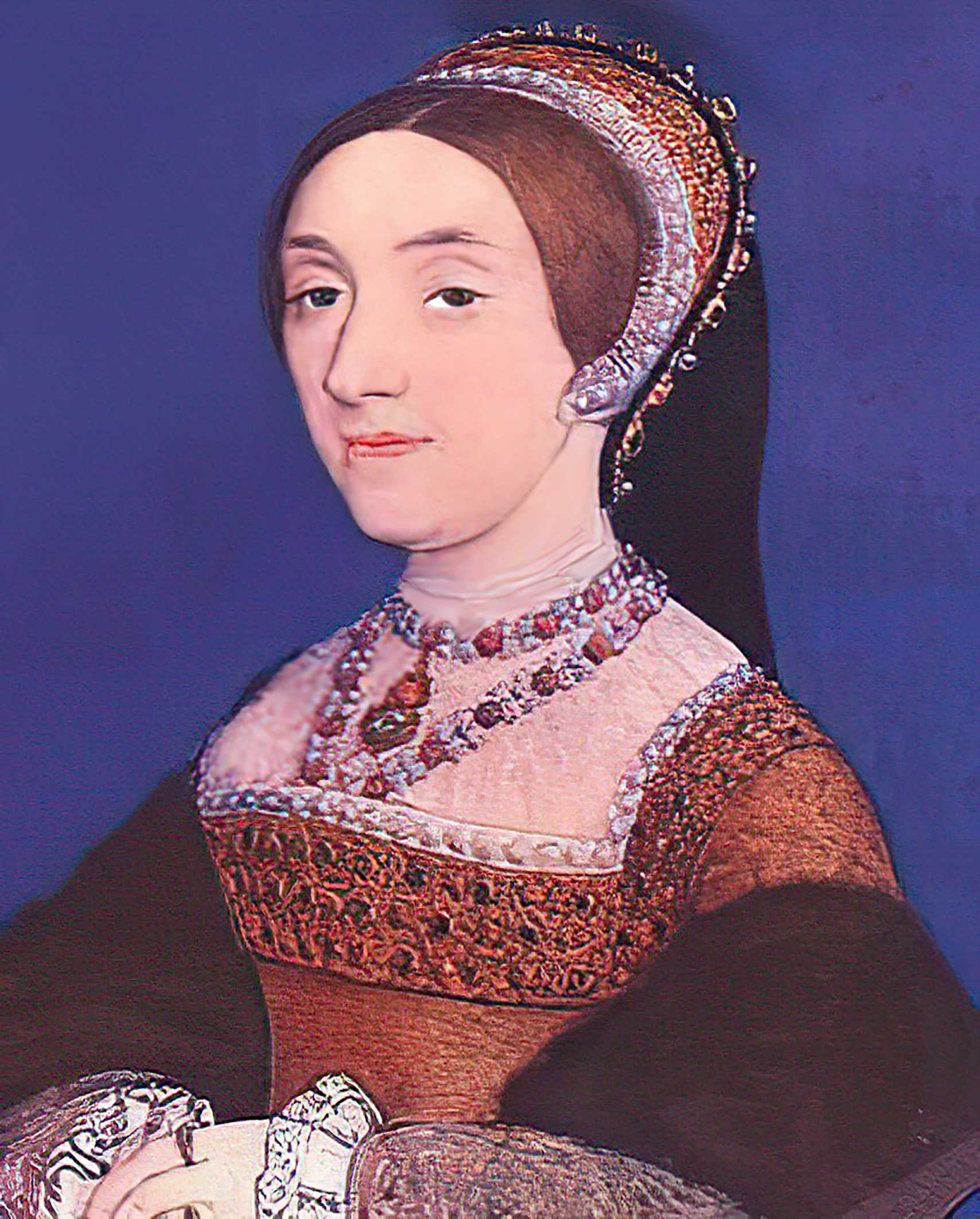
Susan E. James proposed that a miniature painted by Holbein c. 154o, thought to depict Katherine Howard, actually portrayed Margaret Douglas, countess of Lennox. While I gave credence to James' theory in my biography of Katherine, I have since come to doubt that identification. More probably, the miniature is of the queen. However, the portrait above might depict Lady Margaret Douglas, of which three versions survive. In her biography of Margaret, Weir claimed that the portrait cannot depict Lady Margaret because it is a portrait of Katherine Howard. 

However, there are sound reasons to doubt this identification. The portrait was, according to the Toledo Museum of Art (which houses a copy of the portrait), painted between 1535 and 1540. It was therefore not definitively painted in 1540 as Weir claims. The Toledo Museum of Art reports that the painting belonged to the Cromwell family for centuries, making it possible, but not certain, that the sitter was a member of that family, perhaps Elizabeth Cromwell (younger sister of Queen Jane Seymour and married to Thomas Cromwell's son). Lady Margaret was in her twenty-first year between October 1535 and October 1536 at a time when, according to observers at court, she was much favoured by the king and his courtiers for her beauty and charm. The age of the sitter in the portrait is also difficult to reconcile with evidence of Katherine Howard's youth; most modern historians are now fairly certain that she was only seventeen or so when she became queen, rather than twenty-one or so. (See Warnicke, 2012; Byrne, 2014; Licence, 2014).

There are further reasons to doubt Weir's theory. The version of the portrait housed in the National Portrait Gallery in London dates from the late seventeenth century, many decades after Katherine's execution in 1542. There are no sound reasons why the disgraced queen would have featured as a sitter decades after her death. However, it is entirely possible that Lady Margaret Douglas would have been regarded as a subject deserving of representation in the following century. James I of England became king in 1603. He was the son of Mary Queen of Scots and Lord Darnley and, as such, was the grandson of Lady Margaret Douglas. James was proud of his lineage and appreciated his English ancestry as factoring importantly in the events that led to his becoming king of England. Revering his grandmother's memory, it is surely more plausible that the king would have approved continuing artistic depictions of her in portraiture; it is not likely that approval would have been given to the expense and time spent on painting the disgraced fifth wife of his great-great-uncle. 


It has been asserted that the portrait depicts Queen Katherine because the sitter is adorned in jewellery that belonged to the queen. However, the king's wife was able to exercise the privilege of allowing favoured women at court to wear her jewellery. Jane Seymour, for example, is known to have made gifts of her jewellery to her lady-in-waiting Mary, Lady Monteagle. Lady Margaret Douglas was the king of England's niece and the highest-ranking woman in the land immediately after the queen and his two daughters. Highly favoured at court, close to both the king and queen, Lady Margaret might well have been painted by Holbein around this time wearing royal jewels. 

Thus it is entirely possible that this portrait depicts Lady Margaret. In her article on Margaret's life, Rosalind K. Marshall described her appearance thus: 'she had heavy-lidded, deep-set eyes, a long nose, broad jaw, and fairly thin lips', and was both 'lively and attractive'. All of these attributes can be seen in the portrait. A favourite of Henry VIII until her misalliances caused him to doubt her loyalty, it is likely that Margaret sat for Holbein who, as the Toledo Museum recognise, had been employed by the king since at least 1533.

Thursday, 16 April 2015

Edward II and Isabella of France


The relationship between King Edward II and his wife Isabella of France is almost always depicted in negative terms. In Derek Jarman's film Edward II (1991), Tilda Swinton offers a sexually frustrated, ambitious Isabella who turns against her ineffectual husband and usurps his throne. In Mel Gibson's Braveheart (1995), Isabella enjoys a romantic affair with the Scottish landowner and hero William Wallace, perhaps because she experiences frustration and dismay with her husband Edward. The film even suggests that Wallace is the father of her son Prince Edward, despite the fact that Wallace died in 1305, three years before Isabella arrived in England and seven years before the birth of the prince. Biographers of Isabella have tended to characterise the queen as a passive victim of her cruel and merciless husband. She apparently was humiliated, hurt and shamed by his homosexual relationships. She was neglected at court and was mistreated by her husband's courtiers. Finally, her husband seized her children from her and took hold of all of her estates, lands and possessions. He probably allowed his lover Hugh Despenser to violate her. The long-suffering Isabella, who by now had had enough, departed for France alongside her lover Roger Mortimer and arrived back in England with foreign aid. The citizens of England, who loathed their king as much as she did, willingly rallied to her side, and together they marched through the country. Edward was removed from the throne and the popular Isabella achieved a resounding victory. Her son Edward was crowned Edward III and Isabella was celebrated forever after as a liberator.

However, the real story is not as simple as this version would like to make out. This version reduces Edward and Isabella to simplistic and unconvincing cardboard caricatures: Edward as a sexually depraved bully and Isabella as a passive, humiliated victim. This does no justice to the real people. King Edward and his queen actually enjoyed a close, supportive relationship for most of their lives together. They had four children with one another, and frequently departed for France on peace missions, where contemporaries, including Geoffrey of Paris in 1313, noted their love and respect for one another. Isabella sought her husband's support and assistance in her household governance, which he readily gave. Edward was so impressed with his young wife's success in the sphere of her household that he awarded her with possession of the great seal on two occasions, in 1319 and 1321, which greatly honoured the queen and confirmed his trust in her abilities.

Isabella was happy enough to approach Edward when she sought to intercede on behalf of individuals. The administrative documents at the National Archives are full of references to her seeking pardons from the king for those whom she felt to be oppressed and in need of assistance. Edward made sure his wife enjoyed a splendid household and she was afforded every dignity as queen. It is actually uncertain, contrary to popular belief, how she felt about Piers Gaveston, her husband's favourite and, possibly, lover, but it does not seem her relations with Gaveston were as hostile as is often believed. She assisted him financially in 1311 before his exile from England, and she sheltered some of his supporters in her household. There is no evidence of how Isabella personally felt about him. 

The relationship between the royal couple did become more strained in the mid-1320s, probably because of Hugh Despenser's malign influence. He seems to have begun a concerted campaign of poisoning the king's mind against his wife, perhaps because he was attempting to replace her in Edward's counsels. In September 1324, the king seized all of Isabella's estates and lands. Yet this does not mean that Isabella gradually came to hate and despise her husband. On the contrary, when she was abroad a year or so later, she continually reiterated her desire to return to Edward, because she loved him and wished to obey his wishes. However, she felt that she could not do so on account of the enmity of Despenser and his father. She believed that her very life would be endangered if she returned to the country. Isabella also sought to protect her son Prince Edward's inheritance, who was with her in France: rumours were circulating at this point that he would be disinherited and not allowed to succeed to the throne on account of his refusal to return to England. 

The evidence credibly suggests that Isabella loved her husband and longed to return to him, but could not do so on account of the malicious Despensers, who enjoyed the king's influence and protection. Edward came to view his wife as disobedient and treacherous, for he was unable to appreciate the danger she faced. Their marriage fell into ruin and they were never able to experience the happiness which they had enjoyed in each other's company for such a long period. Whether Edward was murdered in the autumn of 1327, or whether he died at a later date as an obscure pilgrim in Europe, Isabella certainly continued to honour his memory and, when she died in 1358, she chose to be buried with his heart. The relationship between Edward and Isabella was not one of abuse, hatred and murder. It was, for fifteen years, a loving, stable and supportive union. The royal couple were frequently in one another's company and were parents to four children. Contemporaries commented on their love for one another. Yet the malign influence of the Despensers and Edward's growing tyranny destroyed their once happy marriage. 

Tuesday, 6 January 2015

6 January 1540: The Wedding of Henry VIII and Anne of Cleves


Above: Henry VIII of England (left) and his wife, Anne of Cleves (right).

On Tuesday 6 January 1540, King Henry VIII of England married for the fourth time, to Anne of Cleves, in the Queen's Closet at Greenwich Palace, the king's favourite residence. The king was dressed in a gown of cloth of gold that was embroidered with great flowers of silver and banded with black fur, a coat of crimson satin slashed and embroidered and fastened with diamonds, and a rich collar of gold about his neck. 

Henry's twenty-four year old bride was attired in a gown of cloth of gold embroidered with large flowers of great Orient pearls, in the Dutch fashion, with a round skirt and no train. Her long fair hair hung loose to symbolise her virginity, and she wore a coronet of gold upon her head that was set with precious stones and trefoils that resembled bunches of rosemary. Anne also wore a costly necklace and matching belt around her waist.

Henry VIII's marriage to Anne of Cleves has traditionally been seen as the culmination of his minister Thomas Cromwell's drive to achieve an alliance with a Protestant power, in which Cromwell sought to steer England's religion in an increasingly radical path. At the time of the wedding negotiations, the Catholic superpowers France and Spain were united against England. However, some historians have called this into question, and have stressed the personal role played by Henry himself. Of his six wives, Anne of Cleves was second only to his first consort Katherine of Aragon in her lineage and breeding. She was excellently connected and marriage to her brought the promise of assured prestige for England. Marriage to Anne, as with marriage to Katherine of Aragon, established England's influence and standing on an international level in a manner that did not apply to the king's marriages with English subjects. 

Famously, Henry disliked his fourth wife on sight, when they met at Rochester in December 1539. Following early modern protocol, in which monarchs traditionally greeted foreign-born consorts in disguise, Henry dressed in disguise and rode to meet Anne. The story goes that, unaware of the king's love of disguises and drama, Anne failed to see that this aged man in strange clothing was, in fact, her proposed husband. She afforded him a cold reception when he attempted to embrace her. Taken aback, the king later removed his costume and appeared before Anne, welcoming her to England, and she sank to her knees 'with most gracious and loving countenance and behaviour'. But the damage had been done. Henry appears to have been revolted, disgusted and - worst of all - profoundly humiliated. The king famously declared: "I see nothing in this woman as men report of her, and I marvel that wise men would make such report as they have done!" He knew, however, that he had to marry Anne both to save face and to avoid angering and humiliating the Duke of Cleves, and duly wed her on 6 January. He pointedly told his lords: "My lords, if it were not to satisfy the world and my realm, I would not do what I must do this day for any earthly thing".


Above: Anne was reportedly popular among her English subjects.

Whether Anne was aware of her husband's displeasure is impossible to tell. Traditionally, she has been unfairly depicted as something of a country bumpkin, a bland, dull and dim German girl who lacked courtly graces, played no musical instruments and, perhaps most surprisingly, knew nothing of sex. She has also sometimes been credited as being a Lutheran whose religious views bordered on heresy, but it seems, in fact, that her religion was entirely traditional in its Catholic leanings. In fact, Anne's beauty and charm were reported by many observers. The chronicler Edward Hall commented on Anne's 'goodly...stature' and 'womanly...countenance' while, after meeting her, William Fitzwilliam, earl of Southampton, praised Anne's 'excellent beauty, such as I well perceive to be no less than was reported'. If anything, it appears to have been Anne's fashion sense and style of clothing that caused bemusement and concern. Lady Browne, who supervised the new queen's maids of honour, was dismayed with the clothes worn by Anne, while Charles Marillac, the French ambassador, rather spitefully claimed that Anne's dress made her look older than thirty.

Historians have puzzled over why it was that Henry VIII rejected Anne. They have tended to believe that it was her physical ugliness that was the problem, thus validating the notion of her being a 'Flanders mare' (although this infamous label actually only came into existence in the eighteenth-century and was never used by Henry VIII to describe his wife). Retha Warnicke convincingly suggested, however, that psychological factors were at play. Henry believed that his wife was precontracted to the duke of Lorraine, and the knowledge that his wife had been promised to another could have inhibited him from consummating the match. Henry loudly voiced his concern about Anne's 'loose breasts and other tokens', for which 'I can have none appetite'. Maidens were believed to be flat-chested and small-breasted. Anne's body, in Henry's eyes, signified that she was not a virgin.

Although the new queen was not liked by her husband, she appears to have been respected, liked and even loved by her subjects. The French ambassador was to report, following the annulment of her marriage in the summer of 1540, that the English people were saddened to hear that she would no longer be their queen, for they esteemed her as 'one of the most sweet, gracious and humane queens they have had, and they greatly desire her to continue their queen'. As it turned out, Anne actually enjoyed the best fate of all Henry's six wives, becoming his 'sister' and enjoying a wealthy settlement that entitled her to a life of luxury. All of this, however, was way off in the future. When Anne of Cleves married Henry VIII on 6 January 1540 and became Queen of England, she could not have known of her husband's distaste for her, resulting in the annulment of her marriage and the loss of her queenship only six months later.

Saturday, 19 July 2014

Was Henry VIII A Bloodthirsty Wife Killer?


Above: Henry VIII of England.

In the public mind at least, Henry VIII is usually depicted as a bloodthirsty tyrant, suspicious and paranoid, bloodthirsty and brutal, a man who did not hesitate to chop and change his wives when he felt like it, and who on more than one occasion put to death his closest ministers and friends. The numbers and facts speak for themselves: between 57,000 and 72,000 people were put to death during Henry's 38-year reign, including two of his wives (Anne Boleyn and Katherine Howard), his two closest advisers (Cardinal Thomas Wolsey and Thomas Cromwell), several nobles (the Duke of Buckingham, the Marquis of Exeter, the Countess of Salisbury, and the Earl of Surrey) and several especially prominent courtiers (including George Boleyn, Viscount Rochford). It was even rumoured in the mid-1530s that Henry was considering executing his eldest daughter, Mary, because she refused to acknowledge that her parents' marriage was incestuous and unlawful, and because she refused to swear the Oath of Supremacy. Mercifully, Mary retained her life, but the same could not be said for possibly as many as 71,000 others.

Was Henry VIII what we might call 'a bloodthirsty wife killer'? I decided to write this blog post having read Suzannah Lipscomb's intriguing and engrossing book 1536: The Year That Changed Henry VIII (2009). As Dr Lipscomb correctly asserts, in popular culture this most famous king is frequently portrayed as a bloodthirsty and cruel king who had six, possibly eight, wives; women whose lives came to notoriously premature ends. But the reality is undoubtedly more complex. Henry was not necessarily a capricious, shallow and fickle man who willingly surrendered his consorts to the executioner when he was bored of them, or when they failed to provide him with a much-desired son. As respected historian Alison Weir recognises in her study of the queens of Henry VIII: 'Taking into account the ever-present problem of the succession, it is impossible to dismiss Henry VIII as the cruel lecher of popular legend who changed wives whenever it pleased him'. Truth is, in fact, stranger than fiction. 


Above: Anne Boleyn and Katherine Howard died prematurely, but were they married to 'a wife killer'?

This article considers whether Henry VIII can credibly be termed 'a wife killer' by looking at his two most infamous marriages, to Anne Boleyn and Katherine Howard, both of which ended on Tower Green. Henry's involvement with Anne was spectacular, for it catalysed the English Reformation as a result of breaking with the Roman Church, and it ushered in, as Lacey Baldwin Smith posits, the advent of the nation state. Married in 1533, Anne delivered arguably England's greatest monarch, Elizabeth I, in September that year. Boleyn biographers Eric Ives and G.W. Bernard both agree that Henry and Anne's marriage was volatile, 'sunshine and storms', although as Lipscomb intriguingly points out, observers commented on the royal couple's 'merry' times together more than they did with any of Henry's other wives. Although Anne was undoubtedly successful in promoting evangelicalism and was a responsible and enigmatic queen consort, she failed in her principal duty of giving birth to a much-longed for male heir. As everyone knows, in May 1536 she was accused of treason, incest and adultery with five men, and was executed as a result. Most scholars believe she was innocent of these crimes.

But, to turn to the question in hand: did ordering Anne Boleyn's execution render her husband, Henry VIII, 'a wife killer'? Lipscomb suggests not. Historical evidence credibly suggests that Anne was in high favour until barely three weeks before her death. Diplomatic correspondence indicates that Henry VIII was forcefully pressuring the European powers to recognise his second marriage and support Anne until as late as April 1536. It is therefore necessary to dispose of the myth that Anne's miscarriages caused Henry to tire of her. It is also a myth that Henry 'murdered' his wife because he had come to loathe and despise her. What, in fact, probably happened, as Lipscomb suggests in 1536, is that Anne's courtly behaviour with male courtiers caused her husband to believe that she was guilty of extramarital fidelity. She credibly suggests that Mark Smeaton, a lowly musician executed alongside the queen, was obsessed with Anne in a disturbing way perhaps reminiscent of a modern day stalker, and by extension admitted to sleeping with the queen as part of a misguided and disturbed fantasy. The queen then engaged in an exchange with Henry Norris, her husband's groom of the privy stool and personal favourite, in which she reprimanded him for seeking 'dead men's shoes' by looking to marry her when the king died. Speaking of Henry VIII's death was treason. Norris denied it and both he and Anne recognised their folly, the queen beseeching him to swear that she was a good woman as a result. When informed of these dangerous conversations, Henry VIII, shocked and in disbelief, ordered an investigation, which led to incriminations of several more men: Anne's own brother George, Francis Weston, William Brereton, and two others, Thomas Wyatt and Richard Page, who were later freed. They were all imprisoned, including the queen. 

Henry's behaviour during Anne's imprisonment, condemnation and execution was bizarre. He experienced severe distress and pain, on the one hand, for example comforting his illegitimate son Henry Fitzroy, duke of Richmond, and telling him that only by God's favour had Fitzroy and Mary Tudor, the queen's stepdaughter, escaped Anne's poisoning. Yet he also demonstrated happiness, leading the imperial ambassador to conclude that the king was only too pleased that his queen had supposedly cuckolded him, for it left him free to marry his new love, Jane Seymour. Henry also took a morbid, even disturbing, interest in the practical details of Anne's execution, and Weir credibly conjectures that he ordered for a French swordsman to execute his wife five or six days before her trial - meaning that he always intended to have her beheaded. This might seemingly suggest Henry was a wife killer, but let us not forget that sixteenth century social and gender norms dictated Henry's responses. The queen's alleged adulteries posed a severe threat to his masculinity by suggesting he could neither rule his wife nor his household, two crucial signifiers of successful manhood. Worse still, Anne had allegedly ridiculed Henry's sexual prowess, laughing with her brother about it. Whether she had in fact done so or not, it is possible to understand Henry's severe actions. Humiliated, enraged and devastated, he acted in this manner to restore his manhood, for his wife had supposedly undermined and threatened the social order of their world. It is essential to recognise that Henry had not been nourishing hatred for Anne for most of their marriage. He publicly and earnestly supported her until three weeks before her death. He ordered an investigation, examinations, and public trials for both her and the men accused with her. Henry did not hastily put his wife and five innocent men to death in a fit of bloodthirsty revenge. Baldwin Smith's belief that Anne 'was dispatched with callous disregard' is, therefore, not necessarily correct.


Above: Suzannah Lipscomb suggests that Henry VIII ordered portraits like the one above to be painted of him, depicting him as resolute, courageous and stern and celebrating his masculine glory, so fatally undermined by two of his wives.

While it is convincing to suggest that Henry VIII cannot be termed a wife killer regarding the downfall and death of Anne Boleyn, can the same be said of Katherine Howard? The grounds for designating Henry VIII a 'wife killer' regarding Katherine are even less firm. Henry adored his fifth consort, whom he married in the summer of 1540, and lavished jewellery and expensive presents on her. However, Katherine had an unsavoury past, and in the autumn of 1541, returning from a northern progress, the king was informed by Archbishop Thomas Cranmer of his queen's misdemeanours. The only evidence for Henry being 'a wife killer' comes in his initial response to this unwelcome news. When sitting with his Council, the king began weeping in a fit of sorrow, and called for a sword to execute that 'wicked woman' himself. Does this betray a bloodthirsty longing to be rid of a tainted wife? It is not necessarily that simple. Lipscomb convincingly indicates that after 1536, the year of Anne's execution, Henry became increasingly paranoid and suspicious, and reacted more and more brutally to personal betrayal. In a sense, he emerged as a tyrant. His response to Katherine Howard's behaviour can more plausibly be viewed as evidence of his views regarding betrayal. He refused to see Katherine ever again, and ordered her execution as a savage response to her betrayal, but which was fully justified and expected by the standards of the time. It was Katherine who was condemned for her behaviour, not her husband.

Again, historical facts need to be clearly understood here in order to explain Henry's response to Katherine's alleged adulteries. He was informed in November 1541 and that same month, the queen was imprisoned at Syon Abbey, while her supposed lovers and accomplice Lady Rochford were also incarcerated. The two men were executed the following month. However, it was only three months later, in February 1542, that Katherine and Lady Rochford were executed at the Tower of London. Again, this does not suggest that Henry VIII reacted hastily and bloodthirstily to news of his queen's betrayal. Some historians have conjectured that he considered saving Katherine's life and merely annulling the marriage, rather than beheading her, because he still loved her and was devoted to her. It is true that he did not grant his fifth queen and her servant a public trial. They were sentenced by Act of Attainder and were not given the chance to speak in their own defence. A unjust and, to our eyes, tyrannical move, perhaps motivated by personal vengeance and a desire to silence the woman he had once loved without letting her defend her actions, but in actual fact Henry VIII consistently used acts of attainder against those suspected of treason, as Lipscomb suggests, denying them the chance to speak out in open court. Katherine's relatives, the Earl of Surrey and the Duke of Norfolk, would both be sentenced to death this way. 

Henry VIII loved Anne Boleyn and Katherine Howard intensely, as his love letters to Anne show and his lavish gifts of jewellery and costume to Katherine also prove. His emotional responses to news of their alleged adulteries also prove how much he cared for and loved them: he wept openly, cursed his bad luck, and became increasingly paranoid and dark as a result. As Philippa Gregory, the novelist, credibly suggests, after Anne's execution in 1536, the Tudor court became a darker place ruled by a suspicious and irascible monarch fearful of being betrayed at every corner. Henry did not rush hastily to condemn or kill his wives. He allowed Anne and her supposed lovers the chance to speak out in open court at their trials, and he showed initial signs of mercy toward Katherine Howard. But, as those who crossed Henry VIII found to their peril, the Tudor king responded brutally when he was, in his eyes, deceived and betrayed. This does not make him 'a wife killer', necessarily, but a man intensely concerned with maintaining and protecting his honour and sense of manhood, as were the majority of sixteenth-century men. 

Sunday, 6 July 2014

Was Mary Boleyn Really 'The Mistress of Kings'?


Above: Portrait of a woman thought to be Mary Boleyn, c. 1525.

Philippa Gregory's bestselling novel The Other Boleyn Girl (2001) revitalised fascination with the Boleyn family and in particular Mary, the mysterious and unknown sister of Henry VIII's second queen. Mary Boleyn was the daughter of Sir Thomas Boleyn, born before 1502, and married William Carey in 1520 before briefly becoming Henry's mistress in the 1520s, before his attention turned to her enigmatic and attractive sister Anne. After she was banished from court in 1534 for making a clandestine second marriage, Mary survived the destruction of her family and died in obscurity in 1543 in her early forties.

Traditionally, historians have suggested that Mary was 'an infamous whore' who was the mistress of two kings, Francois I of France and Henry VIII of England. While it seems certain that Mary was indeed Henry's mistress, probably beginning in 1522 and ending before 1525 - Henry himself admitted to the affair and had to secure a papal dispensation in 1527 to marry the sister of a woman with whom he had had sexual intercourse - it is by no means certain that Mary was the French king's mistress. Indeed, historical evidence indicates that Mary never resided at the French court as a teenager.


Above: the Boleyn sisters, Anne (left) and Mary (right).

As Retha M. Warnicke points out, there is no evidence that Mary Boleyn served as a maid of honour at the French court. In 1514, Anne Boleyn travelled to Paris to serve Mary Tudor, queen of France, and later transferred to the household of Claude, wife of Francois I, but there is no evidence that her sister was there. Household accounts documented a 'M. Boleyn', but it seems likely that the 'M' referred to 'Mademoiselle' or 'Mistress', rather than 'Mary'. Contemporaries commented on Anne's presence in France. For example, George Cavendish, gentleman usher to Cardinal Wolsey, stated: 'This gentlewoman, Mistress Anne Boleyn, being very young was sent into the realm of France'. No contemporaries, however, referred to Mary dwelling in France, where she supposedly acquired a reputation for promiscuity and licentiousness.

At the English court, it has been asserted, Mary was best known for her 'reputation in bed' (Lacey Baldwin Smith, 2013) and 'the evidence is overwhelming that Mary had a reputation for sexual improprieties' (Warnicke, 1985). As Alison Weir has thoughtfully demonstrated, however, there is in fact little to no evidence to support these views. Henry VIII's affair with Mary was discreet and secret, and few seem to have known of it. Mary remains a shadowy figure and we know nothing of her thoughts and feelings. How long her relationship with Henry lasted, and whether she truly loved him, is impossible to say. It is, however, certain that she was his mistress for a brief time in the 1520s and quite possibly bore him at least one, if not two, children.


Above: Francois I of France. It is unlikely that Mary Boleyn was ever his mistress.

While Mary was undoubtedly Henry VIII's lover for a time, it is almost certain that she was not the French king's mistress, despite persistent rumours to the contrary. In 1536, the French king informed Ridolfio Pio that he had known Mary in France 'per una grandissima ribalda et infame sopra tutte' - in other words, 'a great whore, infamous above all'. However, Mary never resided at the French court, so Francois cannot have insulted her in relation to her supposed sojourn there in the 1510s. Unlike Anne, who had departed for Europe to acquire a splendid education, Mary remained at home, probably Hever Castle, where she acquired a more traditional education befitting the status of an English gentlewoman.

So what then did Francois mean by his comment? Weir has pointed out that Pio was hostile to the Boleyns. Every member of the family was defamed and attacked by hostile political commentators who resented Anne and the rejection of Katherine of Aragon. Thomas Boleyn was slandered as heretical, grasping and scheming; his wife Elizabeth was defamed as a whore and former mistress of Henry VIII; George Boleyn was cast as a heretic and hedonist; and Anne was consistently portrayed as a whore, murderess, heretic and witch. It is therefore in keeping with this general defamation and slander of the Boleyn family that Mary, too, would have been dishonoured and abused by chroniclers and commentators hostile to their cause. Nicholas Sander, for example, slandered her in his works while abusing and defaming her sister Anne Boleyn. 

It would therefore be ridiculous to accept such comments at face value. It is unlikely that Francois was referring to his own previous experiences with Mary. Possibly, as Warnicke credibly suggests, he only became acquainted with the new Queen of England's sister in 1532, when Mary accompanied Henry VIII and Anne to Calais. Francois may well have learned of Mary's former liaison with Henry and allowed it to cloud his view of her. His comment can hardly be read as admittance of a former relationship with Mary when she supposedly resided at his court as a teenager.

Aside from this one disparaging, insulting comment, there is no evidence that Mary was ever the mistress of the French king. There is no documentation of her stay in France, for the simple reason that she never served at the French court alongside her sister. In 1513, Anne Boleyn departed for Burgundy and later for France to serve in royal households. Her sister Mary, possibly because she was younger or possibly because she was less intellectual and brilliant than Anne, remained at home, before marrying William Carey in 1520. Shortly afterwards, she became the mistress of Henry VIII. We can say with some certainty that she was the lover of the English king, but we can equally be sure that she was never the mistress of his counterpart, the king of France.


Saturday, 21 June 2014

19 June 1312: the Death of Piers Gaveston

Guy de Beauchamp.jpg
Above: the Earl of Warwick stands triumphant over the dead body of King Edward II's favourite, Piers Gaveston, first earl of Cornwall.

On 19 June 1312, the first earl of Cornwall, Piers Gaveston, was illegally put to death at Blacklow Hill near Warwick. He had been condemned to death by disaffected nobles, including the earl of Warwick, the earl of Lancaster, the earl of Hereford, and the earl of Arundel, for violating the terms of the Ordinances. Two Welshmen subsequently ran him through with a sword and then beheaded him. As Richard Cavendish claims in a 2012 article: Piers 'flew too high and paid the penalty'.

Piers was the son of a Gascon knight and had been born around 1284, who was loyal to the father of Edward II, Edward I. Piers became a member of the royal household at a young age and consequently met the future king there. Chroniclers described him as handsome, athletic, and well-mannered. Edward I had, reputedly, been impressed by Piers' conduct and martial skills and wanted him to serve as a model for his young son, the heir to the throne. Piers however came into conflict with the king, when a dispute occurred between the treasurer Walter Langton and the prince. Enraged, Edward I banished Piers and a host of other men from the prince's household. He was later exiled, but returned when Edward II acceded to the throne in 1307. 

Historians have puzzled endlessly about the exact nature of Piers' relationship with Edward II. Piers was extremely close to the king. Although Cavendish terms it 'an extremely close friendship', he betrays a misunderstanding of medieval knowledge of sexual affairs, by suggesting that, although both Edward and Piers later fathered children with their spouses, they might have engaged in a bisexual affair with one affair. Scholars such as Kim Phillips and Barry Reay have convincingly demonstrated that modern notions of sexuality, including homo- and bisexuality, did not exist as such in the medieval period. 


Above: Edward II controversially made his favourite, Piers Gaveston, earl of Cornwall in 1307.

Chroniclers, however, speculated about Piers engaging in sex with the king. The Annales Paulini confirmed that Edward adored Gaveston 'beyond measure', while the Chronicle of the Civil Wars of Edward II suggested that, when he first saw Gaveston, the king felt such love for him that he 'tied himself to him against all mortals with an indissoluble bond of love'. The contemporary Vita Edwardi Secundi opined that 'I do not remember to have heard that one man so loved another... our king was... incapable of moderate favour'. Robert of Reading bluntly stated that Edward II enjoyed 'illicit and sinful unions'. In short, the wealth of evidence available supports J.S. Hamilton's suggestion that 'The love that the King felt for Piers Gaveston has been described as greater than the love of women. It still seems more likely that it was also stronger than the love of brother'.

Writers such as Lisa Hilton and Ian Mortimer have suggested that it is by no means certain that Edward engaged in sexual relations with Piers Gaveston (or other male favourites, for that matter), and Pierre Chaplais controversially argued that their relationship was probably closer to sworn brotherhood rather than a sexual relationship. As Phillips and Reay state, it is impossible to label either man homo- or bisexual, as popular writers, including Alison Weir, sometimes to do, as understandings of sexuality were extremely different in the medieval period. While it seems convincing that Edward and Piers had a sexual relationship, and perhaps loved one another, it is impossible to term either man 'non-heterosexual'.


Above: a representation of King Edward II.

In August 1307, Edward made Piers the earl of Cornwall, a decision which antagonised the barons, who resented Piers' foreign origins. When the king left England in early 1308 to marry the twelve-year old French princess Isabella, he appointed Gaveston regent in his place. When the king returned, he pointedly ignored his new bride in favour of Gaveston, who sat next to him at the coronation banquet. Eventually, disaffected barons forced the king's hand, and he was forced to exile the unpopular Gaveston in May 1308. 

Despite this, Edward continued to reward his favourite, and he was appointed Lieutenant of Ireland. Inn some respects Gaveston enjoyed success in Ireland, fortifying the town of Newcastle McKynegan, for example. Eventually, when he felt that his nobles had perhaps mellowed towards Gaveston, Edward II recalled his favourite. By February 1310, however, some earls refused to attend parliament as long as Gaveston was present, so affronted were they by his arrogance and intimacy with the king. In November 1311, by which time the king had been forced to accept the Ordinances issued by the earls, Piers had again been exiled from England.

However, Gaveston returned at Christmas and was reunited with Edward in January 1312, probably at Knaresborough. The archbishop excommunicated Gaveston in March, and the barons decided to obtain hold of Gaveston once and for all. Eventually, he was executed on 19 June outside of Warwick. His body was left on the ground for some time, before Dominican friars brought it to the city of Oxford and it was eventually buried at the Dominican prior at Langley, following the securing of a papal absolution for Piers in January 1315 (he had, as noted, been excommunicated). The king reacted with anger and heartbreak at news of his favourite's (and possibly, lover's) death, but circumstances did not allow him to seek vengeance with the earls. 

Thursday, 19 June 2014

The Relationship of Thomas Culpeper and Queen Katherine Howard


Above: Katherine Howard (left).
The letter Katherine supposedly wrote to the courtier Thomas Culpeper, perhaps in July 1541 (right).

Aside from being the youngest wife of Henry VIII, Katherine Howard is probably best known for her supposed adulterous affair with the handsome courtier Sir Thomas Culpeper conducted in 1541. What many historians argue began as a mutual attraction quickly developed into a powerful and dangerous adulterous liaison which eventually ended in the deaths of both queen and subject. However, the nature of the meetings between Katherine and Culpeper are shrouded in mystery, uncertainty and controversy. Only Katherine and Culpeper - and perhaps Lady Jane Rochford, the queen's attendant who arranged the meetings - know what really happened in those fatal spring and summer months in 1541.

For most historians, it seems obvious that Katherine, an oversexed, even 'promiscuous' young girl, had sexual intercourse with Culpeper, who was noted for his gallantry and, later rumours alleged, even indulged in rape (although, as I argue in my book, it seems more likely that it was actually his elder brother, confusingly also named Thomas Culpeper, whom the rumours referred to). This is supported by evidence documented by contemporaries residing near to the court. The unknown Spanish chronicler of The Chronicle of Henry VIII, compiled perhaps ten years after the events it described, suggested that 'the devil put it into this queen's heart' to fall in love with the dashing Culpeper, who slipped the queen a note one day during dancing confessing his love for her. Both proclaimed their love for one another on the scaffold, with the queen supposedly stating: 'I die a queen, but I would rather die the wife of Culpeper'. The Catholic polemicist Nicholas Harpsfield depicted an adulterous Katherine, who was 'an harlot before he [Henry VIII] married her, and an adulteress after he married her'. 

Modern historians largely agree. The bestselling popular writer Alison Weir wrote of Katherine's affair with Culpeper: 'Katherine had not only been playing with fire, but she had also been indiscreet about it, and incredibly foolish'. Antonia Fraser, in her 1992 biography of the six wives of Henry VIII, agrees: 'the repeated confessions and reports of clandestine meetings between a man notorious for his gallantry and a woman who was already sexually awakened really do not admit of any other explanation than adultery'. In his 2009 study of the Tudor queens, historian David Loades characterised Katherine as 'queen as whore'. This prevailing view has been consolidated in popular culture. In the popular TV series The Tudors (2007-10), Tamzin Merchant and Torrance Coombs depicted a headstrong young couple who engaged in sexual intercourse on a frequent basis early on in Katherine's marriage to the king. While Merchant portrayed a queen who appeared deeply in love with Culpeper, Coombs presented an unflattering portrayal of a manipulative, violent and scheming man who engaged in an affair with the queen as a means of attaining power and personal gain.


Above: Tamzin Merchant (left) as Queen Katherine and Torrance Coombs (right) as Thomas Culpeper in the television series The Tudors.

However, drawing on the seminal research of noted scholar Retha M. Warnicke, it is this article's contention that the relationship between Queen Katherine and Thomas Culpeper between April and September 1541 was, in reality, very different. It was not a carefree sexual liaison motivated either by love or recklessness, as most writers continue to believe. Thomas Culpeper was an experienced and savvy courtier who had served the king since the mid-1530s, when he had entered court as a page to Henry VIII before becoming a gentleman of the king's privy chamber, where the king ate, slept, and entertained indoors. Culpeper was, therefore, as close in proximity to Henry VIII as it was possible to get. Since Katherine had only arrived at court in the autumn of 1539, barely nine months or so before she became queen of England, Culpeper was vastly more experienced than her in court protocol and politics. He seems to have used that power and experience to his advantage, in manipulating the young queen, who found herself in a somewhat vulnerable position in the spring of 1541.

Katherine had had a sexual relationship with Francis Dereham in 1538, when she was aged around fifteen, and the aggressive Dereham seems to have been determined to marry Katherine, even making the treasonous suggestion that, once Henry VIII died, he would be sure to marry his young widow. In the spring of 1541, Dereham arrived at court and began openly boasting of his previous affair with Katherine. At this time, the king fell seriously ill and his life was despaired of. He shut his doors to everyone bar his doctors, including his young wife, whom he had previously spent the majority of his time with. As Warnicke suggests, it is therefore surely significant, in this highly charged atmosphere at court, that Culpeper began meeting with the queen at about the very time that both her former paramour was bragging of his sexual hold over her, and her ageing husband fell seriously ill. Since it was believed that the king might die, it has been credibly suggested that Culpeper began manipulating Katherine, perhaps having discovered details of her scandalous past, in the hope of acquiring greater power and position should Henry VIII suddenly die.


Above: Manipulative lover or abused victim?

Often, Katherine's meetings with Culpeper have been portrayed as playful, sexually intimate encounters, comprised of high passion and devotion. The reality was very different. The surviving records demonstrate that the queen refused to meet Culpeper unless Lady Rochford was present as chaperone, and when Lady Rochford began moving away on one occasion to allow the two to speak privately, Katherine reprimanded her for leaving her alone in the company of Culpeper, and told her to come back. It has been credibly suggested that 'Culpeper's rendezvous with the queen gave him the means to threaten and manipulative her'. In the summer of 1541, the queen wrote Culpeper a letter. Often, it has been portrayed as a love letter, but the nervous, even afraid tone does not suggest passion, but rather, fear and anxiety. A passage of the letter has been removed in the interests of this article (a passage dealing with Katherine's messenger):

Master Culpeper,
I heartily recommend me unto you, praying you to send me word how that you do. It was showed me that you was sick, the which thing troubled me very much till such time that I hear from you praying you to send me word how that you do, for I never longed so much for a thing as I do to see you and to speak with you, the which I trust shall be shortly now. The which doth comfortly me very much when I think of it, and when I think again that you shall depart from me again it makes my heart to die to think what fortune I have that I cannot be always in your company. It my trust is always in you that you will be as you have promised me, and in that hope I trust upon still, praying you that you will come when my Lady Rochford is here for then I shall be best at leisure to be at your commandment...
yours as long as life endures,
Katheryn. 

Traditionally, the queen's signature, 'yours as long as life endures', has been interpreted as a message of undying love, but as Warnicke recognises, Tudor letters typically closed with the statement 'by yours most bounden during my life', or something similar. Therefore, by changing the statement to 'yours as long as life endures', Katherine seems to have been hinting at her suffering, her anxiety, her worries that Culpeper would reveal her past to the king. 'Death and danger, not love and romance, were on her mind'. There was no evidence of love, passion or desire in this letter; no references to touching, kissing, caressing, etc. The queen was reported to be 'fearful and jittery' during their meetings, and admitted to Lady Rochford that she was terrified that these interviews would be discovered by others. Coupled with her insistence on Lady Rochford being present at all times, it seems clear that Katherine was meeting Culpeper only involuntarily, and not of her own free will.

Everyone knows how the story ends. Katherine and Culpeper were eventually discovered, while Francis Dereham and Lady Rochford were also imprisoned for their behaviour. A slew of Howard relatives and acquaintances of the queen were incarcerated in the Tower of London for concealing the truth about Katherine Howard's sexual past. Eventually, Dereham and Culpeper were convicted of adultery with the queen, although they both denied it, and they were executed in December 1541. Denying that she was guilty to the very end, the physically weak and frightened Katherine was beheaded on Tower Green on 13 February 1542 alongside her attendant Lady Rochford, who had reportedly gone insane. 


Above: a fictional portrayal of Katherine Howard and Thomas Culpeper from Henry VIII (2003).

Understanding of Tudor court politics and sixteenth-century beliefs surrounding gender and sexuality means that it is impossible to believe that Katherine Howard engaged in adultery with Thomas Culpeper. Katherine had endured something of a history of abuse. She had been seduced at a very young age by the grasping musician Henry Manox, before the aggressive Francis Dereham sexually manipulated her, perhaps even raping her. It is clear from surviving evidence that she had no real desire to meet with Thomas Culpeper and did so involuntarily and only in the presence of Lady Rochford, whom she perhaps trusted. This was not an affair of love, passion or desire. It was a relationship of power, manipulation and calculation that ended with both individuals' deaths.