Showing posts with label retha warnicke. Show all posts

Thursday, 8 June 2017

Katherine Howard's Age

Related image

Five years ago, I published a blog post about the date of birth of Katherine Howard, fifth wife of Henry VIII. In the course of researching and writing about her life, I became increasingly aware of the influence that misconceptions about her continued to play in historical writing. Two years after that blog post, my full-length study of Katherine's life was published. In that book, I argued that Katherine was almost certainly the second daughter of Edmund and Jocasta Howard: her older sister Margaret was born by 1518, and her younger sister Mary was probably born by 1525. We know for a fact that all three girls, and their three surviving brothers Henry, Charles and George, were born by 1527, according to Edmund Howard's own correspondence.

Since that book was published, I have continued to research and reflect on Katherine's probable date of birth. Undoubtedly, when she was born is highly important, for it influences our interpretation of her adolescent relationships in the household of her step-grandmother, the dowager duchess of Norfolk. It also influences how we perceive her relationship with Henry VIII, whom she married in 1540. It is worth thinking about Henry's own marital and sexual preferences, a much-debated issue that perhaps, strangely, neglects the issue of age. 

Henry VIII was not yet eighteen when he married Katherine of Aragon, who was twenty-three, in 1509. Sixteenth-century women could legally marry at twelve years old, but it was rare for them to marry at so young an age. Women from the lower classes married, on average, at twenty-five or twenty-six, and even among the nobility, women tended to marry at about twenty, or in their late teens. Anne Boleyn's mother, for example, was probably married by the age of nineteen or twenty, and Jane Parker, wife of George Boleyn, was about nineteen at her marriage. During his marriage to Katherine of Aragon, Henry was involved in liaisons with Bessie Blount (who was born by 1500, if not before, and was therefore nineteen when she gave birth to the king's son in 1519) and Mary Boleyn, who had probably been born by 1501 and was therefore in her early twenties.

In 1527, Henry fell passionately in love with Anne Boleyn, younger sister of a previous mistress. Anne was probably six years younger than most historians assume. In 1527, she was probably twenty years of age. A variety of palace officials, servants and the likes of Cardinal Reginald Pole all characterised her as young. Gareth Russell has also pointed out that not once, during the six arduous and time-consuming years in which Henry fought to secure from the Pope an annulment of his first marriage, was Anne's age queried as a barrier to marriage. Undoubtedly, had she been as old as thirty or thirty-one during Henry's courtship, questions would have been raised as to whether she was a suitable partner for childbearing. 


When Anne married the king in late 1532, she was probably twenty-five, and according to an attendant of her stepdaughter Mary, the disgraced queen was not yet twenty-nine when she was executed in May 1536. Her successor Jane Seymour was, according to the Imperial ambassador Eustace Chapuys, a little over twenty-five when she became Henry VIII's bride in 1536, suggesting that she was about twenty-six or twenty-seven. At her funeral the following year, there was a female mourner for every year of Jane's life: twenty-nine in all. Probably, according to the contemporary tradition of marking one's age, this referred to Jane dying in the twenty-ninth year of her life, rather than having died at the age of twenty-nine: therefore suggesting that she was born in about 1509.

In 1540, Henry married Anne of Cleves, a twenty-four year old German noblewoman. It was rumoured before his marriage to Anne that Henry had been romantically interested in Anne Basset, a former maiden of Jane Seymour. Mistress Basset was born in 1521 and so would have been sixteen or so when the king's eye fell on her, however briefly. Before the negotiations to marry Anne of Cleves, Henry had expressed an interest in marrying the seventeen-year-old Christina of Milan.

Plainly, Henry's preference was for women in their late teens or early twenties. Bessie Blount and Mary Boleyn, his two most well-known mistresses, were in their late teens, Mary perhaps her early twenties. Katherine of Aragon and Anne of Cleves were both in their early twenties, while Henry first became interested in Anne Boleyn when she was about twenty, although she was in her mid-twenties when they married. Jane Seymour, on the other hand, was probably twenty-seven. The glaring exception to this rule was Katherine Parr, who was thirty-one when she married Henry VIII in 1543, but she had already been married twice previously and there does not appear to have been any expectation on the king's behalf that she would provide him with children, unlike all of his previous marriages. It was highly unusual for a noblewoman to remain unwed by her late twenties or early thirties. Indeed, so anomalous was the as-yet unwed Jane Seymour's position in early 1536 that the Imperial ambassador openly questioned both her virginity and her morals. Jane, at twenty-seven, was still unmarried.
Related imageRelated image


When Katherine Howard caught the king's eye in late 1539 or early 1540, contemporary observers not only praised her attractiveness, but they also commented on her youth. According to Richard Hilles, she was a 'young girl', while the French ambassador referred to her as a 'young lady'. The anonymous author of The Chronicle of Henry VIII expressly stated that she was about fifteen when Henry fell in love with her, and also referred to her as a 'mere child'. George Cavendish, in his verses about Katherine's life, mentioned youth ten times. Plainly, the implication was that Katherine's youth and beauty were noticeable. 

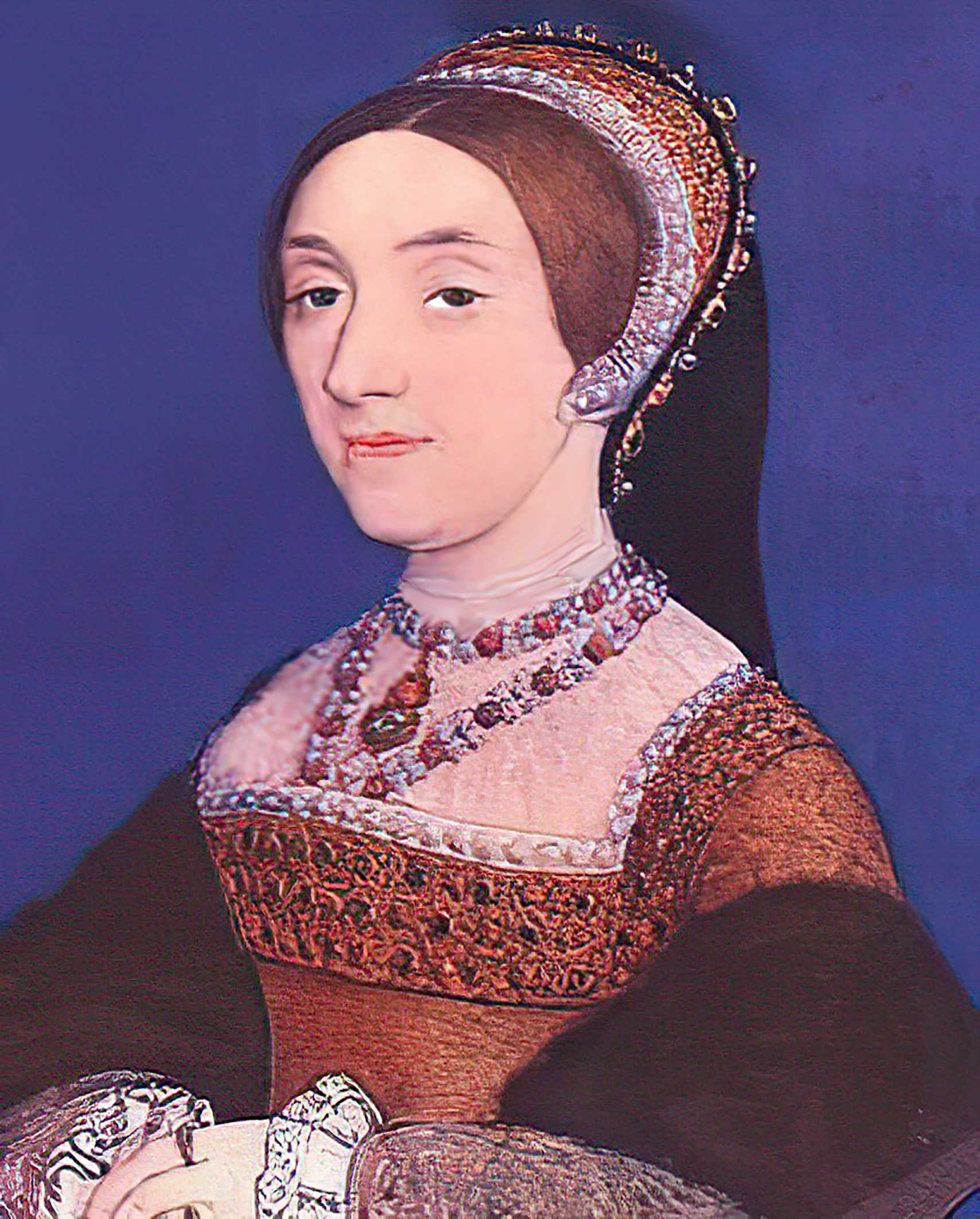
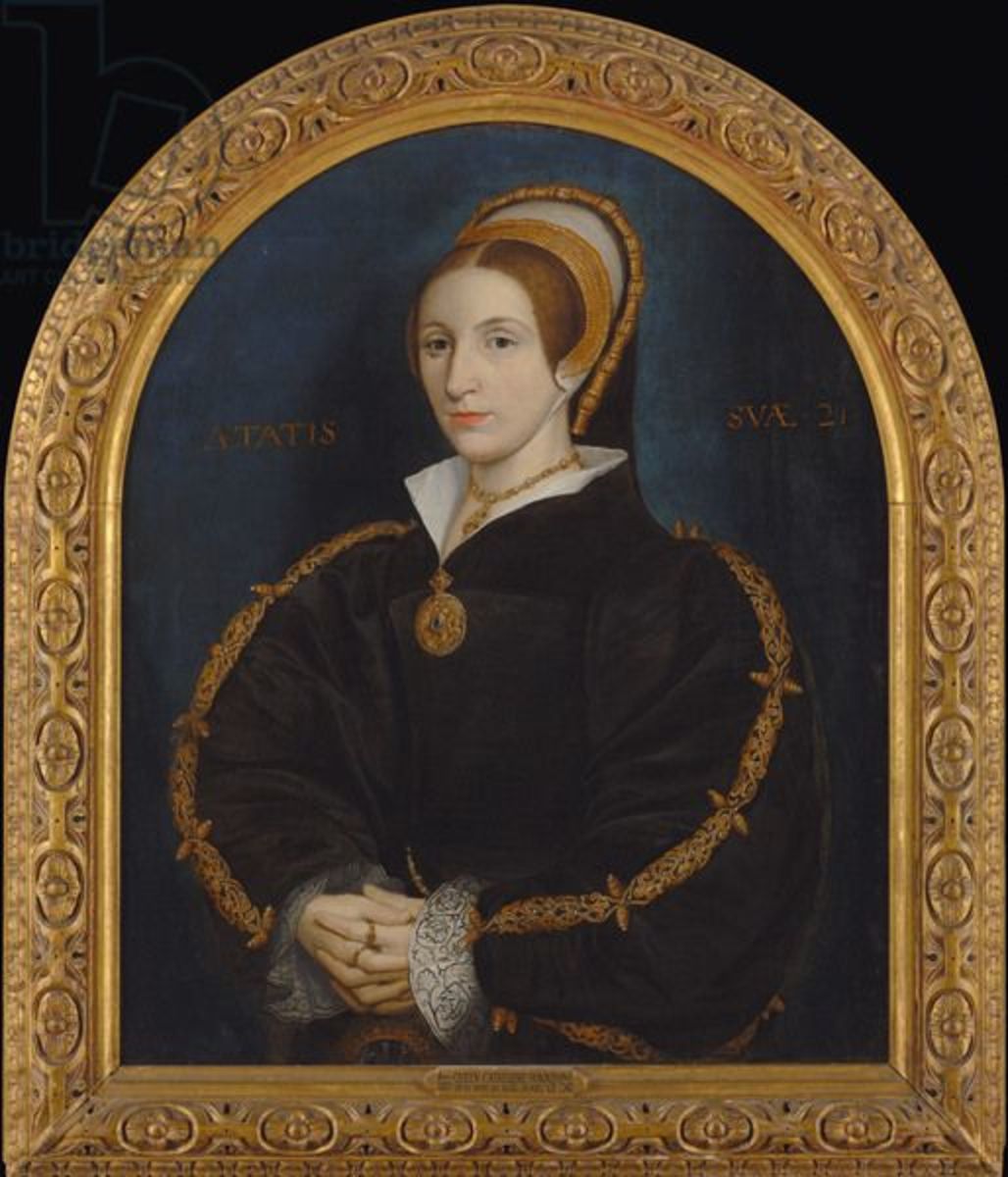
In the late twentieth-century, modern historians assumed that Katherine was born in 1520-1 because of a portrait housed in the Toledo Museum of Art, with versions also at the National Portrait Gallery and Hever Castle. The well-dressed sitter is, according to an inscription in the painting, in her twenty-first year. Quite why this portrait was identified as a portrait of Katherine remains unclear. The notion that it is an image of the hapless queen has been comprehensively debunked. Recently, it has been suggested that the sitter may plausibly be identified as any one of Frances Brandon, Eleanor Brandon, Margaret Douglas or Elizabeth Cromwell.

By contrast, a portrait housed at the Metropolitan Museum of Art in New York depicts a magnificently dressed young woman aged in her seventeenth year, according to the inscription, and it has been dated to c.1540-1545. A number of historians, including myself, Gareth Russell and Susan James, have suggested that Katherine may well be the sitter in the painting. Although the identification is speculative, if it is true then it would suggest that she was born in 1523 or 1524, assuming that the painting was painted in 1540-1. This identification, however, remains tentative.

When she was appointed a maid of honour to Anne of Cleves in late 1539, Katherine joined her cousin Katherine Carey and Mary Norris, who were born in 1524 and 1526, respectively. Undoubtedly, had she been born as early as 1520, Katherine's family would have attempted to arrange for her to serve Anne Boleyn or Jane Seymour in the years 1533-7. There is no evidence that they did so. It is probably significant that she only began receiving music lessons from Henry Manox and Master Barnes in 1536, when she was likely in her early teens.

However, the French ambassador commented that Katherine had been intimately involved with Francis Dereham from her thirteenth to her eighteenth year, thus suggesting a five year relationship. Modern historians have usually taken this comment as evidence that she was born in 1520-1, for the relationship probably ended in early 1539. I am persuaded by Retha Warnicke's argument, however, that the ambassador was probably unaware of Katherine's earlier liaison with Manox, which took place in 1536-7. In the wake of Katherine's downfall, it became apparent that she had appointed Dereham to her service and, it was rumoured, had met with him in a return to their previous relationship. If Katherine was about thirteen in 1536, then she might have been eighteen in 1541 when she confirmed Dereham's appointment to her household, therefore explaining the ambassador's reference to the ages of thirteen and eighteen.

The contradictory comments of the French ambassador and the unknown author of The Chronicle of Henry VIII clearly indicate that there was a degree of confusion about Katherine's exact age; possibly neither man knew for certain when she was born. However, Cavendish's ten references to her youth in his verses is probably significant, as are the other reported remarks about her young age when she became queen. That she was not born earlier than 1523 is a reasonable assumption in view of the ages of her fellow maids of honour, the date at which she began receiving music lessons (probably in readiness for her anticipated appointment to the queen's household) and the evidence of her grandparents' wills. In 1524, her grandfather John Legh's will did not refer to Katherine or her younger sister, but her grandmother Isabel's will, which was written three years later, referred to all three Howard girls. Whether this is evidence that Katherine and Mary were born between 1524 and 1527, however, is unclear, but at the very least it seems to suggest that they were either not yet born or were very young when their grandfather's will was penned. 

The traditional argument that Katherine was born as early as 1520-1 has been proven to be shaky and based on a dubious portrait identification. Most modern historians now believe that the portrait is not of the queen, but probably depicts one of the king's nieces or Elizabeth Cromwell, younger sister of Jane Seymour. It is probably significant that the three most recent biographers of Katherine - myself, Josephine Wilkinson and Gareth Russell - all advocate a later birth date. Wilkinson agrees with Joanna Denny that Katherine was born in 1525, probably the latest possible date for her birth. Russell suggests 1522 or 1523. The evidence available, in my opinion, seems to suggest a birth date of 1523. Sixteenth-century children were occasionally named for the saint on whose feast day they were born; St. Katherine's Day is 25 November. Whether this suggests that Katherine Howard was born in November 1523 is impossible to say, but the considerable evidence available to historians probably indicates without a doubt that she was born no earlier than 1523 and no later than 1525. This would mean that she was about seventeen when she married Henry VIII and had probably not yet attained the age of nineteen when she was executed in early 1542. 

Wednesday, 14 December 2016

The Tudors and TV: Is There Anything New to Say?


Tudor enthusiasts greeted the news of Lucy Worsley's new BBC documentary about the six wives of Henry VIII with excitement. For those of us fascinated by the Tudor period, we cannot get enough of it; we read about it, we watch documentaries about it, we visit the buildings associated with it and, perhaps most of all, we love to talk about it. Admittedly, Henry's tumultuous marriages is a well-worn subject, but the enthusiastic Worsley promised to offer new insights and, for me at least, she has done so in what is, admittedly, a challenging medium: television.

However, not everyone reacted as positively to Worsley's documentary as others. Last week, an article was published in The Guardian entitled: 'Six Wives With Lucy Worsley: Why TV History Shows are for the Chop', and was written by Joel Golby. In it, he attacked Worsley's documentary as 'awful, tedious history' and 'Game of Thrones without any of the good bits', a rather absurd criticism that, nonetheless, exposes the difficulty that historians face in attempting to strike a balance between education and entertainment, when presenting TV documentaries. In one hour, Worsley was required to discuss and examine Henry's 24-year long marriage to Katherine of Aragon, her experiences of queenship and Anne Boleyn's rise to power, in a way that was both credible and engaging to viewers. Golby's scathing assessment indicates that she failed.

Others voiced their criticism of another Tudor documentary on Twitter and in the comments section of the article, although some commentators were rather more positive. One praised Worsley's coverage of 'one of the most fascinating eras.' But Golby's negativity was mirrored in another article published in History Today on 14 December by the magazine's editor, Paul Lay. The title of the piece is 'Television History and Its Discontents', and featured a still from Worsley's documentary, in which she wears Tudor costume.

Lay criticised Six Wives, for he suggested that it offered 'unconvincing, cheap looking, historical reconstructions', and because it 'says nothing that we do not know already.' I object wholeheartedly to Lay's criticism, which I believe to be both unfair and untrue. The documentary does offer new insights, and as a biographer of Katherine Howard, I wholeheartedly commend Worsley's decision to present Henry VIII's hapless fifth wife as a victim of predatory behaviour, a view that has only gained acceptance amongst historians in the last decade or so.

Before then, Katherine Howard tended to be perceived as, in Alison Weir's words, 'an empty-headed wanton', or even, to use the late David Loades's term, 'a stupid slut'. She has been derided for her 'promiscuity' and has been slated as a 'natural born tart' (Alison Plowden). Television documentaries and dramas tended to follow these interpretations: Tamzin Merchant presented Katherine as a nymphomaniac, even a prostitute, in the Showtime television series The Tudors, and even in Dr David Starkey's entertaining documentary about the six wives, Katherine was said to have shown more dignity at her death than she had ever displayed in life. An earlier documentary about the six wives produced this year also focused on Katherine as sexually adventurous both before and after her marriage.

To my knowledge, Worsley is the first to present Katherine as an abused victim in a television documentary. In doing so, she has drawn on the theories of historians such as Retha Warnicke and Joanna Denny to offer a compelling, and more historically accurate, version of Katherine's life than previously seen ever before on television. From this perspective, Lay's criticism is absurd. 

It is true that there is an abundance of documentaries about Henry VIII and his wives, but is that really a bad thing? Many people are fascinated by the king and his queens, and read as many books as they can about them, as well as flocking to Hampton Court Palace, the Tower of London and Windsor Castle every year, as well as to the numerous National Trust and English Heritage owned properties. I object to criticisms of new documentaries about the Tudors and, in particular, Henry VIII - for contrary to these views, such documentaries are offering new insights and are aimed at audiences who will appreciate these insights, because they are intelligent and engaged viewers who want to learn as much as they can about the period. 

Perhaps, if the likes of Golby and Lay view such documentaries as redundant, because they offer 'nothing that we do not know already', then they should not watch them, since there are many who will watch them and will learn something new. If either individual can point me towards an older documentary that portrays Katherine Howard as a victim of sexual predators, then I might rethink my views. But until they can, I stand by why I argue in this piece: that even well-trodden subjects can offer something new, which can be documented on television in a manner that is both educational and entertaining. 

Friday, 2 September 2016

Anne Boleyn's Hair Colour in Portraiture

Image result for anne boleynImage result for anne boleyn portrait

Mystery surrounds Anne Boleyn's appearance. Contemporaries were ambiguous in their descriptions of the appearance of Henry VIII's second queen: either she was a slim and very beautiful, small-breasted Venus, or a grotesque, deformed creature who had lured Henry VIII into breaking from the Roman Catholic Church and marrying her. Controversy centres, in particular, on the colour of Anne Boleyn's hair. 

It is worth noting that no surviving portraits of Anne Boleyn date from her own lifetime. At the very earliest, they were painted in the reign of her daughter, Elizabeth I, and may have been based on lost originals; thus dating, at the earliest, fifty to sixty years after her execution in 1536. The standard portrait of Anne Boleyn, a copy of which is now housed in the National Portrait Gallery in London, depicts the queen wearing a French hood, black gown and pearls with a 'B' choker. In most of these portraits, Anne is portrayed with very dark brown or black hair. 

When examining these portraits, it is worthwhile to bear in mind the now infamous description of Anne Boleyn put forward by the Elizabethan Jesuit, Nicholas Sander, in his Rise and Growth of the Anglican Schism, published in 1585. Sander described Anne thus:

Anne Boleyn was rather tall of stature, with black hair and an oval face of sallow complexion, as if troubled with jaundice. She had a projecting tooth under the upper lip, and on her right hand, six fingers. There was a large wen under her chin, and therefore to hide its ugliness, she wore a high dress covering her throat. In this she was followed by the ladies of the court, who also wore high dresses, having before been in the habit of leaving their necks and upper portion of their persons uncovered. She was handsome to look at, with a pretty mouth.

Sander presented the queen as a witchlike figure who had cunningly seduced Henry VIII into abandoning his virtuous wife, Katherine of Aragon, and breaking with the true Church to marry her. Leaving aside the suggestion that Anne favoured high dresses - for which there is no other extant evidence - Sanders' description of Anne corresponds strikingly with the representation of the queen in the NPG pattern of portraits, two of which are provided at the top of the page. We can observe the queen's 'black hair', her 'oval face of sallow complexion' and 'pretty mouth'. His description of her raven hair, in particular, corresponded closely to contemporary notions of a witch's appearance. 

No other contemporary author described Anne Boleyn's hair colour as black. The Venetian ambassador, whose description of Anne's appearance has been viewed as largely accurate, stated that she had 'a swarthy complexion'. Simon Grynee, a professor of Greek at Basle, similarly noted that Anne was of a 'rather dark' complexion. It is possible that she had black hair, of course, but as Susan Bordo suggests, the notion that Anne Boleyn had raven tresses belongs largely to the work of Nicholas Sander, an author unquestionably hostile to the queen and her daughter, Elizabeth. 

Image result for anne boleyn natalie dormerImage result for anne boleyn claire foy
Above: Often Anne Boleyn is portrayed in modern films and TV with black hair. Natalie Dormer (left) in The Tudors and Claire Foy (right) in Wolf Hall.

Anne Boleyn's hair was almost certainly dark. Cardinal Wolsey allegedly referred to her as 'the night crow', probably alluding to her appearance, and as we have seen, at least two other individuals described her as possessing a dark complexion. But it does not necessarily follow that her hair colour was black, and it is possible that it was the influence of Nicholas Sander's hostile description that meant that she was portrayed in portraiture as having black hair. It is important not to underestimate how influential Sanders' work was at the time. As Retha Warnicke explains, it formed the basis for every subsequent Catholic history of the Reformation, and by 1628 it had appeared in six Latin editions and was translated into six other languages. 

Other portraits depicted the queen's hair as lighter, whether medium brown or even reddish. It is possible that these portraits 'beautified' Anne, so to speak, giving that queens were customarily depicted in artistic mediums with fair hair, because it was associated with fertility, virginity and goodness. But it is also possible that these portraits more accurately represented the queen's true hair colour. 

Image result for anne boleyn portraitImage result for anne boleyn portrait
Above: Just how dark was Anne? Two reputed portraits of her that show her with lighter hair.


Tuesday, 13 January 2015

Was Anne Boleyn A Modern Woman?


There appears to be a tendency of late to describe Henry VIII's second and most famous wife, Queen Anne Boleyn, as a 'modern woman'. It began with Eric Ives in his 2004 masterpiece The Life and Death of Anne Boleyn, in which he referred to Anne as 'a self-made woman' who broke the mould, independently carving out her own destiny at a time when women were politically, socially and culturally oppressed. Cultural depictions of Anne soon followed suit. In The Other Boleyn Girl, a ruthlessly ambitious Anne plots to marry Henry Percy, future duke of Northumberland, as a means of acquiring wealth, position and power - to her family's horror and disgust. They remind her that it is the job of her male relatives to find her a husband, rather than it being her prerogative. In the television series The Tudors, Natalie Dormer portrayed Anne as, in the words of academic Susan Bordo, 'a woman too smart, sexy, and strong for her own time', who was 'unfairly vilified' for her defiance of sixteenth-century norms. Recently, respected historian John Guy referred to Anne in an interview with BBC History Magazine as 'a modern woman'. Finally, actress Claire Foy (who plays Anne in the BBC television series Wolf Hall), described Anne as 'really a modern woman who believed that she could rise above where she was born'. The consensus seems to be that Anne Boleyn, in her fierce independence, assertiveness, confidence in her relations with men, and determination to carve out her own destiny, was a woman who should have lived in the twenty-first century, rather than in the sixteenth.

I'm not afraid to intrude here with my own opinion and say that I find this a deeply unsettling and, in many ways, disturbing interpretation of Anne Boleyn. I feel it relies heavily on the prejudiced dispatches of the Spanish ambassador Eustace Chapuys and on the traditional belief that it was Anne who called the shots in her dealings with men, namely Henry VIII. Several historians have argued, and cultural depictions of Anne in film and television have followed suit in this, that Anne manipulated Henry, even pressured him into making her his queen, and cajoled him into treating his first wife and eldest daughter with studied cruelty. In short, the lingering view of Anne as a home-wrecker remains prevalent because of its attractiveness to a twenty-first century worldview. Nowadays, of course, such a woman would be termed a home-wrecker, a whore, a schemer or a manipulator (or, of course, all of these things and more). 


Above: Natalie Dormer played a 'modern' Anne Boleyn in The Tudors.

What is the evidence for the claim that Anne Boleyn was 'a modern woman'? Surprisingly, proponents of the 'modern' view have not always specified what it supposedly was about Anne that makes her seem closer to the twenty-first century in her behaviour and character than to her own age. Bordo suggested that it was Anne's inability to shut up, her assertiveness, her independence, at a time when women were expected to be submissive, self-effacing and, above all, silent. The depiction of Anne as confident in her speech, taking on and arguing fiercely with a host of men including her uncle, father and husband, relies on the evidence of Chapuys' dispatches and hostile accounts produced by the likes of George Cavendish. Chapuys asserted that Anne fell out with her uncle, the duke of Norfolk, namely because he took offence at her outspoken and, at times, vitriolic speech. He also claimed that Anne, a crafty and cunning seductress, was responsible for pressuring Henry into mistreating his first wife, Katherine of Aragon, and his daughter by her, Mary. Were it not for the 'wicked' Anne, Chapuys believed, Henry might be persuaded to return to his 'true' wife. Indeed, Anne was so powerful at court and dominated her husband so completely, the ambassador proclaimed, that 'there is no one who dares contradict her, not even the king himself'. Chapuys also asserted, somewhat incredibly, that Anne controlled and ruled the government of the realm completely. 

Several historians have questioned Chapuys' hostile reports, with some justice. They have convincingly demonstrated that his evidence was often false. His dispatches were written with a clear agenda: to blacken the name of Anne and, he hoped, bring about the reconciliation of Henry and Katherine. Chapuys did not blame the king for his decisions, including his increasingly harsh treatment of his daughter. Instead, the ambassador resorted to employing the centuries-old trope of the wicked stepmother, casting Anne as a nagging and assertive shrew who hen-pecked her long-suffering husband into doing her will. 

There is plentiful evidence outside of Chapuys' reports that Anne upbraided the king for his extramarital affairs. Numerous stories, some of them lurid, tell of the queen's despair and shock at finding her husband with his future wife, Jane Seymour, on his lap in January 1536, thus bringing about a miscarriage. Anne found it difficult to reconcile the decade-long passion Henry had for her with the disturbing knowledge that he expected her to tolerate his infidelities once they were married. Numerous observers reported of the 'coldness and grumbling' between the couple during their marriage. The queen certainly was hurt, offended and devastated by her husband's affairs with other women, and at her trial in May 1536, she openly admitted: 'I do not say that I have always borne towards the King the humility which I owed him, considering his kindness and the great honour he showed me and the great respect he always paid me; I admit too, that often I have taken it into my head to be jealous of him... But may God be my witness if I have done him any other wrong'. Anne freely declared that she had suffered pangs of jealousy over her husband's extramarital amours. 

But does this render Anne 'modern'? To our knowledge, Henry VIII's subsequent wives did not upbraid him for his infidelities (if they knew about them). But Henry's first queen, Katherine of Aragon, seems to have reacted with hostility when news was brought to her of her husband's liaison with his first-recorded mistress, Lady Anne Stafford, in the early 1510s, and court observers commented that the couple were noticeably 'vexed' with one another for some time. There is little evidence of the conservations between other kings and queens at this period, so it is difficult to attempt to compare the personal relationship of Henry and Anne with another royal couple in similar circumstances; furthermore, we lack detailed evidence for how the ordinary populace viewed the extramarital affairs of their paramours, outside of legal documents produced in the Church courts. To us, Anne's despair and sadness at her husband's affairs are understandable, for we value companionate marriage in the twenty-first century Western world. There is an expectation that partners will be faithful to one another, and will have married for love. But it surely seems a step too far to describe Henry's second wife as 'modern' because she experienced upset and hurt over his sexual affairs. Plenty of women in the sixteenth-century might have experienced similar emotions - we lack evidence for them. Anne Boleyn, by virtue of her status as queen, was in an exceptional position for evidence of her feelings to be recorded. Just because we lack evidence for the emotions of others when news was brought to them of their partners' infidelities does not mean that she was 'modern' and others were not.


The view of Anne as 'a modern woman' ignores a wealth of evidence which proves that she was a product of her time and culture. The evidence of John Foxe and William Latimer indicates that she was a religious and charitable queen with an earnest and pious faith. She was interested in evangelical reform and patronised religious radicals. Anne followed her predecessor in giving alms to the poor and engaging in charitable pursuits that were, unfortunately for her, not publicised in her own lifetime. Anne did not have 'modern' views about social status, later known as 'class': when her sister dared to marry beneath her, the queen reacted with anger and shock, immediately banishing her from court. She also demonstrated humility in relation to her ascendancy to the queenship, informing contemporaries that the king had been 'inspired' by God to marry her, perhaps perceiving it as God's will. 

Furthermore, it has been pointed out by the likes of Warnicke that Henry VIII may have exercised considerably more control over his relationship with Anne than is traditionally believed. We lack her replies to his letters and so do not know how she was responding to him. The prevailing view, that she treated him calculatingly and ruthlessly, with an eye to the throne and a future as queen, rests on no convincing evidence for the simple reason that there really is no evidence. Anne was surely no more ambitious than Jane Seymour, Katherine Howard or Katherine Parr, and it is a step much too far to suggest that she actively set out to destroy the king's first marriage and seduce him into marrying her in a move that resembles that of the modern 'home-wrecker'. Amy Licence has credibly argued, following in the lead of writers such as Karen Lindsey and Joanna Denny, that Anne may have been unwilling or afraid to reply to the king. Perhaps she did not want to become queen. Perhaps, in short, the king pressured her into accepting his advances, a possibility that is often not given the attention it deserves.

Chapuys' dispatches have recently been termed little more than fiction by historians who are convinced that nothing he reported about Anne can be trusted as the truth. This may be a step too far: perhaps there was some truth in his claims that she was fiercely outspoken and assertive, not afraid to upbraid the king for faults she perceived in him. But is this really evidence that she was 'modern'? Henry's final wife, Katherine Parr, challenged his religious beliefs and dared to lecture him when she believed he was in error. Yet Katherine does not tend to be identified as a 'modern woman' somehow transported back in time to the sixteenth-century, although there is an unsettling line of thought which regards her as something of an early feminist. Anne Boleyn was, as Susan Bordo makes clear, no feminist, and neither was she a modern woman. She was a product of her time and the view of her as 'modern' ignores a significant amount of evidence produced by contemporaries. Much of the evidence for her 'modernity' is shaky: either produced by hostile onlookers or supposedly written by Anne herself. I refer here to the infamous letter from 'the Lady in the Tower' in May 1536, in which the queen upbraided her husband for seeking to kill her so that he could marry his new love. Most historians are convinced that Anne was not the real author of this letter, believing that it was penned sometime in the Elizabethan period, long after her death. If evidence for Anne as a 'modern woman' is mostly hostile, non-existent or doubtful, then it cannot, on a balance of probabilities, be claimed that she was ahead of her time in her beliefs, attitudes and behaviour. Anne was a product of her time and class: she may have been assertive, outspoken and ambitious, but other women were too and it certainly cannot be claimed that she was 'a self-made woman', when one examines her family networks and their role in providing her with an excellent education and marriage prospects.

Tuesday, 6 January 2015

6 January 1540: The Wedding of Henry VIII and Anne of Cleves


Above: Henry VIII of England (left) and his wife, Anne of Cleves (right).

On Tuesday 6 January 1540, King Henry VIII of England married for the fourth time, to Anne of Cleves, in the Queen's Closet at Greenwich Palace, the king's favourite residence. The king was dressed in a gown of cloth of gold that was embroidered with great flowers of silver and banded with black fur, a coat of crimson satin slashed and embroidered and fastened with diamonds, and a rich collar of gold about his neck. 

Henry's twenty-four year old bride was attired in a gown of cloth of gold embroidered with large flowers of great Orient pearls, in the Dutch fashion, with a round skirt and no train. Her long fair hair hung loose to symbolise her virginity, and she wore a coronet of gold upon her head that was set with precious stones and trefoils that resembled bunches of rosemary. Anne also wore a costly necklace and matching belt around her waist.

Henry VIII's marriage to Anne of Cleves has traditionally been seen as the culmination of his minister Thomas Cromwell's drive to achieve an alliance with a Protestant power, in which Cromwell sought to steer England's religion in an increasingly radical path. At the time of the wedding negotiations, the Catholic superpowers France and Spain were united against England. However, some historians have called this into question, and have stressed the personal role played by Henry himself. Of his six wives, Anne of Cleves was second only to his first consort Katherine of Aragon in her lineage and breeding. She was excellently connected and marriage to her brought the promise of assured prestige for England. Marriage to Anne, as with marriage to Katherine of Aragon, established England's influence and standing on an international level in a manner that did not apply to the king's marriages with English subjects. 

Famously, Henry disliked his fourth wife on sight, when they met at Rochester in December 1539. Following early modern protocol, in which monarchs traditionally greeted foreign-born consorts in disguise, Henry dressed in disguise and rode to meet Anne. The story goes that, unaware of the king's love of disguises and drama, Anne failed to see that this aged man in strange clothing was, in fact, her proposed husband. She afforded him a cold reception when he attempted to embrace her. Taken aback, the king later removed his costume and appeared before Anne, welcoming her to England, and she sank to her knees 'with most gracious and loving countenance and behaviour'. But the damage had been done. Henry appears to have been revolted, disgusted and - worst of all - profoundly humiliated. The king famously declared: "I see nothing in this woman as men report of her, and I marvel that wise men would make such report as they have done!" He knew, however, that he had to marry Anne both to save face and to avoid angering and humiliating the Duke of Cleves, and duly wed her on 6 January. He pointedly told his lords: "My lords, if it were not to satisfy the world and my realm, I would not do what I must do this day for any earthly thing".


Above: Anne was reportedly popular among her English subjects.

Whether Anne was aware of her husband's displeasure is impossible to tell. Traditionally, she has been unfairly depicted as something of a country bumpkin, a bland, dull and dim German girl who lacked courtly graces, played no musical instruments and, perhaps most surprisingly, knew nothing of sex. She has also sometimes been credited as being a Lutheran whose religious views bordered on heresy, but it seems, in fact, that her religion was entirely traditional in its Catholic leanings. In fact, Anne's beauty and charm were reported by many observers. The chronicler Edward Hall commented on Anne's 'goodly...stature' and 'womanly...countenance' while, after meeting her, William Fitzwilliam, earl of Southampton, praised Anne's 'excellent beauty, such as I well perceive to be no less than was reported'. If anything, it appears to have been Anne's fashion sense and style of clothing that caused bemusement and concern. Lady Browne, who supervised the new queen's maids of honour, was dismayed with the clothes worn by Anne, while Charles Marillac, the French ambassador, rather spitefully claimed that Anne's dress made her look older than thirty.

Historians have puzzled over why it was that Henry VIII rejected Anne. They have tended to believe that it was her physical ugliness that was the problem, thus validating the notion of her being a 'Flanders mare' (although this infamous label actually only came into existence in the eighteenth-century and was never used by Henry VIII to describe his wife). Retha Warnicke convincingly suggested, however, that psychological factors were at play. Henry believed that his wife was precontracted to the duke of Lorraine, and the knowledge that his wife had been promised to another could have inhibited him from consummating the match. Henry loudly voiced his concern about Anne's 'loose breasts and other tokens', for which 'I can have none appetite'. Maidens were believed to be flat-chested and small-breasted. Anne's body, in Henry's eyes, signified that she was not a virgin.

Although the new queen was not liked by her husband, she appears to have been respected, liked and even loved by her subjects. The French ambassador was to report, following the annulment of her marriage in the summer of 1540, that the English people were saddened to hear that she would no longer be their queen, for they esteemed her as 'one of the most sweet, gracious and humane queens they have had, and they greatly desire her to continue their queen'. As it turned out, Anne actually enjoyed the best fate of all Henry's six wives, becoming his 'sister' and enjoying a wealthy settlement that entitled her to a life of luxury. All of this, however, was way off in the future. When Anne of Cleves married Henry VIII on 6 January 1540 and became Queen of England, she could not have known of her husband's distaste for her, resulting in the annulment of her marriage and the loss of her queenship only six months later.

Wednesday, 31 December 2014

Top Ten Reads of 2014

There have been a number of excellent books which I have had the privilege to read in 2014, some of them history, some of them fiction. In this post I will run down my favourite reads of 2014. Each year, I read a variety of non-fiction and fiction books, and here I have decided to make a list of ten stand-out books which I have read this year. This will hopefully encourage readers to read these books too. I've given the publication date and publishing company for more specific details about the books.


1. Retha M. Warnicke, Wicked Women of Tudor England: Queens, Aristocrats, Commoners (Palgrave Macmillan, 2012).
Retha M. Warnicke, professor of history at Arizona State University, is probably best known for her controversial book, The Rise and Fall of Anne Boleyn: Family Politics at the Court of Henry VIII (Cambridge, 1989), in which she advanced a number of unusual theories about Henry VIII's second and most famous wife. Warnicke has also published lesser-known studies of Anne of Cleves and Mary, Queen of Scots. In Wicked Women of Tudor England, Warnicke examines six Tudor women who were slandered and defamed in their lifetimes and remain controversial even today: the queens Anne Boleyn and Katherine Howard; the noblewomen Anne Seymour, duchess of Somerset, and Lettice Dudley, countess of Leicester; and the wives of Sir Thomas More, Jane and Alice. Warnicke's research is painstaking, drawing on an impressive range of sources including diaries, ambassadors' reports, chronicles, legal documents, trial records, poetry, and literary texts. She convincingly demonstrates that none of these women, in fact, were "wicked", but were blamed for their husbands' faults. While I did not agree with all of Warnicke's conclusions, this book is a must read for anyone interested in early modern England and, more specifically, the experiences of high-status Tudor women. The chapter on Katherine Howard is a particular stand out.


2. Susan Bordo, The Creation of Anne Boleyn: In Search of the Tudors' Most Notorious Queen (OneWorld Publications, 2014).
Where Warnicke concentrated on exploring how Tudor women were defamed and slandered in their lifetimes, Susan Bordo's phenomenal cultural study of Queen Anne Boleyn not only considers how, and why, Anne has been negatively misrepresented in the centuries since her death, but asks broader questions that are essential for any student of history. Specifically, she forces us to question what history is. She convincingly shows that the 'history' of Anne Boleyn is, in fact, little more than hearsay, rumour and misrepresentation. While the true character of Henry VIII's second queen can never be known with certainty given the polarising religious and cultural views of those who wrote about her, and given the deliberate destruction of evidence for her existence, Bordo puts forward a credible and moving portrait of Anne as a talented, artistic, sophisticated and opinionated woman. Henry VIII clearly loved her and wanted to make her queen because he respected her. But her inability to provide a son put her in a vulnerable position that was exploited by her many enemies. The stand out feature of Bordo's book, however, is probably her examination of the many cultural representations of the Boleyn queen in the centuries since her death. Anne has been represented as saint, sinner, whore, witch, 'mean girl', Protestant martyr, beloved mother, feminist icon, and everything in between. The multifaceted and multidimensional nature of these representations not only demonstrates how controversial Anne was, and remains, but speaks volumes of how complex she was as a woman to inspire such complex portrayals of her even up to the present day.


3. Angela Carter, The Bloody Chamber and Other Stories (Vintage Classics, 1995).
In 2008, The Times ranked Angela Carter tenth in their list of "The 50 Greatest British Writers since 1945", and the justification for this lies above all, perhaps, in her masterpiece The Bloody Chamber and Other Stories. Carter, who died in 1992, was renowned for her magical realism and her love of the Gothic. Moreover, her feminism allowed her to imaginatively reconstruct much-loved fairytales in a more complex and subtle way than had ever been done before; as Grazia described her fairytales, they are 'fairy tales reimagined for feminist times', and British novelist Ian McEwan rightly interpreted them as 'magnificent set pieces of fastidious sensuality'. In particular, her story 'The Bloody Chamber' is sensational, artfully reinterpreting the disturbing and sinister legend of Bluebeard and interweaving sensuality with horror, seduction with gore and violence with passion. 


4. Anna Funder, Stasiland: Stories from Behind the Berlin Wall (Granta, 2003). 
When many people think about German history post-1945, the immediate image that springs to mind tends to be that of the Berlin Wall, which divided East and West between 1961 and 1989. In November 1989, amid mounting protests and discontent, the Wall finally fell, and Germany experienced its Wiedervereinigung ('Reunification') between East and West. Anna Funder, an Australian journalist, travelled to Germany in the mid-90s and met a host of Germans willing to tell their stories and experiences before the Wall came down. Her moving book details these experiences vividly and evocatively: experiences that were often dark; sometimes humorous; usually exhilarating; and always emotionally charged. Anyone interested in the history of Germany should read this book: it is beautifully written and provides a vivid sense of what it was like to live in divided Germany before the fall of the Wall in 1989.


5. Susan E. James, Kateryn Parr: The Making of a Queen (Ashgate, 1999).
The drama of Henry VIII's first two marriages and the enduring fascination in the reputed sexual scandals of Anne Boleyn and Katherine Howard have tended to result in the neglect of the sixth and final queen of Henry VIII, Katherine Parr. Yet Susan E. James's magnificent biography of Katherine compellingly demonstrates that this fiery, intelligent, passionate and educated woman was a remarkable queen consort, who deserves to be known and celebrated for her many accomplishments as Henry's wife. Katherine was the first English queen to publish her own works and was in charge of a household that was famed for its piety, culture and reformist leanings. Katherine can credibly be seen as the first Protestant queen of England and her contribution to the English Reformation was considerable. So radical were her religious beliefs, in fact, that conservatives at court plotted her downfall in 1546 and almost achieved her arrest and imprisonment (possibly even execution) for heresy. Often unfairly seen as nothing more than an aged nurse looking after her irate and volatile husband, Katherine emerges in this book as a complex, passionate, sophisticated and shrewd woman who was interested in art (specifically portraiture), music, fashion and religion. She was involved in politics and was appointed by Henry as Regent of the country when he departed for France in 1544, a mark of his respect for her and confidence in her abilities. She was a devoted stepmother and was close to all three of Henry's children. She was well-liked and respected by her contemporaries and brought a measure of stability and calmness to court after the dramas of the king's previous short-lived marriages. This is, in all respects, a remarkable read, and can with some justice be called the definitive biography of Katherine Parr.


6. Eric Ives, Lady Jane Grey: A Tudor Mystery (Wiley-Blackwell, 2009). 
The late scholar Eric Ives was best known for his phenomenal biography of Anne Boleyn, published in 2004, often referred to as being 'the Boleyn Bible'. His study of the tragic Lady Jane Grey appeared in 2009. In July 1553, fifteen-year-old King Edward VI died. In the months before his untimely death, he had determined to elect his young cousin Jane heir to the throne in the event of his death, thus displacing his elder sisters Mary and Elizabeth, because he viewed them as illegitimate. Although Henry VIII's will of 1544 had restored both sisters to the succession, they had never been declared legitimate. Mary's Catholic faith also rendered her, in Edward's eyes, unfit to be England's sovereign. Ives controversially argues that, because of this, Lady Jane was the rightful inheritor of the throne, meaning that Mary Tudor, rather than Jane, was usurper. He convincingly suggests that Edward, rather than the duke of Northumberland, was responsible for masterminding the 1553 'devise for the succession' that nominated Jane heir to the throne. Ultimately, the weakness and unpopularity of the Grey regime, amidst the strength of Mary Tudor's cause, meant that it quickly collapsed, and Mary became queen in the autumn of 1553. Lady Jane was executed months later, alongside her husband. 


7. Helen Rappaport, Four Sisters: The Lost Lives of the Romanov Grand Duchesses (Macmillan, 2013).
An air of tragedy has always surrounded the untimely and violent deaths of Olga, Tatiana, Maria and Anastasia Romanova, the four daughters of Tsar Nicholas II and Empress Alexandra. Rappaport's elegant narrative documents in exhaustive detail the lives of four young girls who were destined to grow up in a volatile and restless Russia. The lives of these four young women have been surrounded in mystery and controversy, with rumours of their survivals, but Rappaport sets the record straight by providing a factual account of their short lives. She charts their teenage crushes, their friendships, their education, their relationship with their parents and with Rasputin. The four girls were very different in their personalities: Olga emerges as stubborn, complex, emotional and sensitive; Tatiana as sensible, dutiful and reserved, her mother's favourite; Maria as friendly, optimistic and cheerful; and the youngest and most famous, Anastasia, appears to have been boisterous, energetic, playful and troublesome. Rappaport sensitively documents the difficulties these girls must have faced, with an invalid mother who was cordially detested by her courtiers, and with a haemophiliac brother shielded and closeted from the restless Russian population. One cannot but feel sorry for these four complex young women, so brutally killed alongside their parents and younger brother in the wake of the Russian Revolution. 


8. Khaled Hosseini, A Thousand Splendid Suns (Bloomsbury, 2008).

Hosseini is best known for being the author of The Kite Runner, which was later made into a Hollywood film. This beautifully written, evocative and haunting book tells the story of Mariam, who is fifteen years of age when she is sent to Kabul, Afghanistan, to wed Rasheed, who is several decades older than her. Later, she makes the acquaintance of Laila, and a strong friendship develops between the two that, in some respects, resembles the ties between mother and daughter. Set in context of the Taliban takeover of power, Hosseini charts in harrowing detail the struggles these women faced against starvation, desperation and fear. But the underlying theme of the book is love, and the wondrous things that can be done when one loves another. Hosseini conveys the war-torn brutality of contemporary Afghanistan, but positions readers to understand that, even in the darkest of places, can be found love, compassion, hope and forgiveness.


9. Caroline Weber, Queen of Fashion: What Marie Antoinette Wore to the Revolution (Picador, 2007).
While Marie Antoinette, queen of France, probably never in fact callously commented "let them eat cake", as legend suggests, the legend that she was obsessed with fashion is undoubtedly true, as Caroline Weber's playful, exciting and breathless study compellingly shows. This mesmerising book details the queen's love of fashion, her styles, her dresses, and the ostentatious and captivating outfits she wore to a host of social occasions. But Marie Antoinette was not necessarily frivolous in her love of fashion: rather, like other high-profile trendy queens such as Elizabeth I, Marie Antoinette consciously deployed fashion as a political and cultural symbol of the might of the monarchy and the power of the throne. Clothing was used as a symbol of power within the political world. It is a tragedy that, having been renowned for her fashionable tastes, her beauty and her elegance, Marie Antoinette ultimately died a poorly-dressed, bedraggled and aged old woman on the guillotine, loathed by the population. 


10. Markus Zusak, The Book Thief (Black Swan, 2008).
Last but not least, Markus Zusak's masterpiece The Book Thief. This wonderful book tells the story of Liesl, a nine-year-old girl sent to live with a foster family on Himmel Street somewhere in Germany, in the wake of the Second World War. Having lost her parents, who have been taken to a concentration camp, Liesl steals books in an attempt to become literate after being mercilessly taunted at school for her illiteracy. But Liesl faces danger when her family decide to shelter a Jew. This mesmerising book tells of love, friendship, hope and sacrifice. It is a powerful book that lingers long in the imagination, and the film is well worth seeing.