Showing posts with label conor byrne. Show all posts

Thursday, 8 June 2017

Katherine Howard's Age

Related image

Five years ago, I published a blog post about the date of birth of Katherine Howard, fifth wife of Henry VIII. In the course of researching and writing about her life, I became increasingly aware of the influence that misconceptions about her continued to play in historical writing. Two years after that blog post, my full-length study of Katherine's life was published. In that book, I argued that Katherine was almost certainly the second daughter of Edmund and Jocasta Howard: her older sister Margaret was born by 1518, and her younger sister Mary was probably born by 1525. We know for a fact that all three girls, and their three surviving brothers Henry, Charles and George, were born by 1527, according to Edmund Howard's own correspondence.

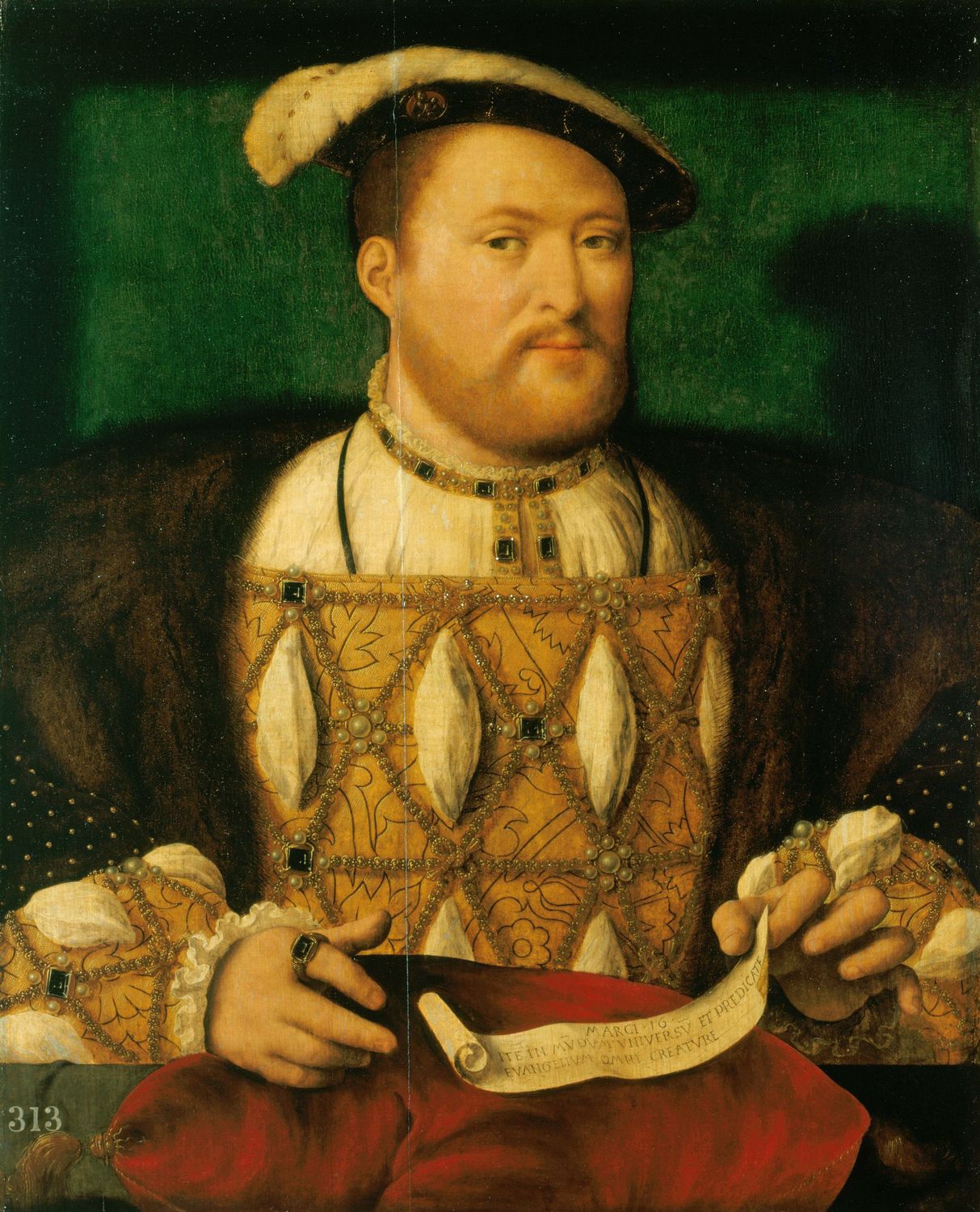
Since that book was published, I have continued to research and reflect on Katherine's probable date of birth. Undoubtedly, when she was born is highly important, for it influences our interpretation of her adolescent relationships in the household of her step-grandmother, the dowager duchess of Norfolk. It also influences how we perceive her relationship with Henry VIII, whom she married in 1540. It is worth thinking about Henry's own marital and sexual preferences, a much-debated issue that perhaps, strangely, neglects the issue of age. 

Henry VIII was not yet eighteen when he married Katherine of Aragon, who was twenty-three, in 1509. Sixteenth-century women could legally marry at twelve years old, but it was rare for them to marry at so young an age. Women from the lower classes married, on average, at twenty-five or twenty-six, and even among the nobility, women tended to marry at about twenty, or in their late teens. Anne Boleyn's mother, for example, was probably married by the age of nineteen or twenty, and Jane Parker, wife of George Boleyn, was about nineteen at her marriage. During his marriage to Katherine of Aragon, Henry was involved in liaisons with Bessie Blount (who was born by 1500, if not before, and was therefore nineteen when she gave birth to the king's son in 1519) and Mary Boleyn, who had probably been born by 1501 and was therefore in her early twenties.

In 1527, Henry fell passionately in love with Anne Boleyn, younger sister of a previous mistress. Anne was probably six years younger than most historians assume. In 1527, she was probably twenty years of age. A variety of palace officials, servants and the likes of Cardinal Reginald Pole all characterised her as young. Gareth Russell has also pointed out that not once, during the six arduous and time-consuming years in which Henry fought to secure from the Pope an annulment of his first marriage, was Anne's age queried as a barrier to marriage. Undoubtedly, had she been as old as thirty or thirty-one during Henry's courtship, questions would have been raised as to whether she was a suitable partner for childbearing. 


When Anne married the king in late 1532, she was probably twenty-five, and according to an attendant of her stepdaughter Mary, the disgraced queen was not yet twenty-nine when she was executed in May 1536. Her successor Jane Seymour was, according to the Imperial ambassador Eustace Chapuys, a little over twenty-five when she became Henry VIII's bride in 1536, suggesting that she was about twenty-six or twenty-seven. At her funeral the following year, there was a female mourner for every year of Jane's life: twenty-nine in all. Probably, according to the contemporary tradition of marking one's age, this referred to Jane dying in the twenty-ninth year of her life, rather than having died at the age of twenty-nine: therefore suggesting that she was born in about 1509.

In 1540, Henry married Anne of Cleves, a twenty-four year old German noblewoman. It was rumoured before his marriage to Anne that Henry had been romantically interested in Anne Basset, a former maiden of Jane Seymour. Mistress Basset was born in 1521 and so would have been sixteen or so when the king's eye fell on her, however briefly. Before the negotiations to marry Anne of Cleves, Henry had expressed an interest in marrying the seventeen-year-old Christina of Milan.

Plainly, Henry's preference was for women in their late teens or early twenties. Bessie Blount and Mary Boleyn, his two most well-known mistresses, were in their late teens, Mary perhaps her early twenties. Katherine of Aragon and Anne of Cleves were both in their early twenties, while Henry first became interested in Anne Boleyn when she was about twenty, although she was in her mid-twenties when they married. Jane Seymour, on the other hand, was probably twenty-seven. The glaring exception to this rule was Katherine Parr, who was thirty-one when she married Henry VIII in 1543, but she had already been married twice previously and there does not appear to have been any expectation on the king's behalf that she would provide him with children, unlike all of his previous marriages. It was highly unusual for a noblewoman to remain unwed by her late twenties or early thirties. Indeed, so anomalous was the as-yet unwed Jane Seymour's position in early 1536 that the Imperial ambassador openly questioned both her virginity and her morals. Jane, at twenty-seven, was still unmarried.

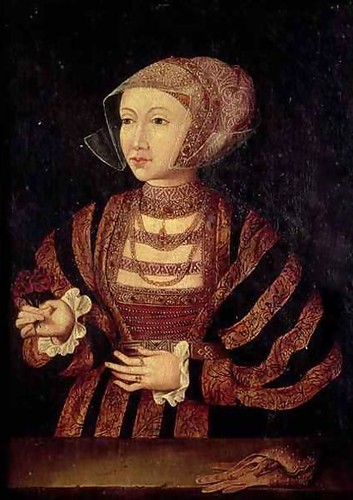
Related imageRelated image


When Katherine Howard caught the king's eye in late 1539 or early 1540, contemporary observers not only praised her attractiveness, but they also commented on her youth. According to Richard Hilles, she was a 'young girl', while the French ambassador referred to her as a 'young lady'. The anonymous author of The Chronicle of Henry VIII expressly stated that she was about fifteen when Henry fell in love with her, and also referred to her as a 'mere child'. George Cavendish, in his verses about Katherine's life, mentioned youth ten times. Plainly, the implication was that Katherine's youth and beauty were noticeable. 

In the late twentieth-century, modern historians assumed that Katherine was born in 1520-1 because of a portrait housed in the Toledo Museum of Art, with versions also at the National Portrait Gallery and Hever Castle. The well-dressed sitter is, according to an inscription in the painting, in her twenty-first year. Quite why this portrait was identified as a portrait of Katherine remains unclear. The notion that it is an image of the hapless queen has been comprehensively debunked. Recently, it has been suggested that the sitter may plausibly be identified as any one of Frances Brandon, Eleanor Brandon, Margaret Douglas or Elizabeth Cromwell.

By contrast, a portrait housed at the Metropolitan Museum of Art in New York depicts a magnificently dressed young woman aged in her seventeenth year, according to the inscription, and it has been dated to c.1540-1545. A number of historians, including myself, Gareth Russell and Susan James, have suggested that Katherine may well be the sitter in the painting. Although the identification is speculative, if it is true then it would suggest that she was born in 1523 or 1524, assuming that the painting was painted in 1540-1. This identification, however, remains tentative.

When she was appointed a maid of honour to Anne of Cleves in late 1539, Katherine joined her cousin Katherine Carey and Mary Norris, who were born in 1524 and 1526, respectively. Undoubtedly, had she been born as early as 1520, Katherine's family would have attempted to arrange for her to serve Anne Boleyn or Jane Seymour in the years 1533-7. There is no evidence that they did so. It is probably significant that she only began receiving music lessons from Henry Manox and Master Barnes in 1536, when she was likely in her early teens.

However, the French ambassador commented that Katherine had been intimately involved with Francis Dereham from her thirteenth to her eighteenth year, thus suggesting a five year relationship. Modern historians have usually taken this comment as evidence that she was born in 1520-1, for the relationship probably ended in early 1539. I am persuaded by Retha Warnicke's argument, however, that the ambassador was probably unaware of Katherine's earlier liaison with Manox, which took place in 1536-7. In the wake of Katherine's downfall, it became apparent that she had appointed Dereham to her service and, it was rumoured, had met with him in a return to their previous relationship. If Katherine was about thirteen in 1536, then she might have been eighteen in 1541 when she confirmed Dereham's appointment to her household, therefore explaining the ambassador's reference to the ages of thirteen and eighteen.

The contradictory comments of the French ambassador and the unknown author of The Chronicle of Henry VIII clearly indicate that there was a degree of confusion about Katherine's exact age; possibly neither man knew for certain when she was born. However, Cavendish's ten references to her youth in his verses is probably significant, as are the other reported remarks about her young age when she became queen. That she was not born earlier than 1523 is a reasonable assumption in view of the ages of her fellow maids of honour, the date at which she began receiving music lessons (probably in readiness for her anticipated appointment to the queen's household) and the evidence of her grandparents' wills. In 1524, her grandfather John Legh's will did not refer to Katherine or her younger sister, but her grandmother Isabel's will, which was written three years later, referred to all three Howard girls. Whether this is evidence that Katherine and Mary were born between 1524 and 1527, however, is unclear, but at the very least it seems to suggest that they were either not yet born or were very young when their grandfather's will was penned. 

The traditional argument that Katherine was born as early as 1520-1 has been proven to be shaky and based on a dubious portrait identification. Most modern historians now believe that the portrait is not of the queen, but probably depicts one of the king's nieces or Elizabeth Cromwell, younger sister of Jane Seymour. It is probably significant that the three most recent biographers of Katherine - myself, Josephine Wilkinson and Gareth Russell - all advocate a later birth date. Wilkinson agrees with Joanna Denny that Katherine was born in 1525, probably the latest possible date for her birth. Russell suggests 1522 or 1523. The evidence available, in my opinion, seems to suggest a birth date of 1523. Sixteenth-century children were occasionally named for the saint on whose feast day they were born; St. Katherine's Day is 25 November. Whether this suggests that Katherine Howard was born in November 1523 is impossible to say, but the considerable evidence available to historians probably indicates without a doubt that she was born no earlier than 1523 and no later than 1525. This would mean that she was about seventeen when she married Henry VIII and had probably not yet attained the age of nineteen when she was executed in early 1542. 

Wednesday, 3 May 2017

Kindle Countdown: Queenship in England

Queenship in England: 1308-1485 Gender and Power in the Late Middle Ages by [Byrne, Conor]

*Exciting Opportunity* If you own a Kindle, today and tomorrow, you can buy my book Queenship in England 1308-1485 for only 99p on Amazon UK and 99c on Amazon.com. It's a great deal and well worth taking advantage of. 

Amazon UK link: https://www.amazon.co.uk/Queenship-England-1308-1485-Gender-Middle-ebook/dp/B01MT5OVGK/ref=la_B00MPFTO6E_1_2?s=books&ie=UTF8&qid=1493819053&sr=1-2

Amazon.com link: https://www.amazon.com/Queenship-England-1308-1485-Gender-Middle-ebook/dp/B01MT5OVGK/ref=la_B00K2QAHAU_1_2?s=books&ie=UTF8&qid=1493819193&sr=1-2

If you don't own a Kindle, rest assured: you can still buy the book in paperback, but please note that the Amazon countdown deal doesn't apply to paperbacks, only to Kindle. I hope you think this a worthwhile deal - if you're looking for something to read, I'd love you to read (and review) the book!

Wednesday, 8 March 2017

International Women's Day 2017

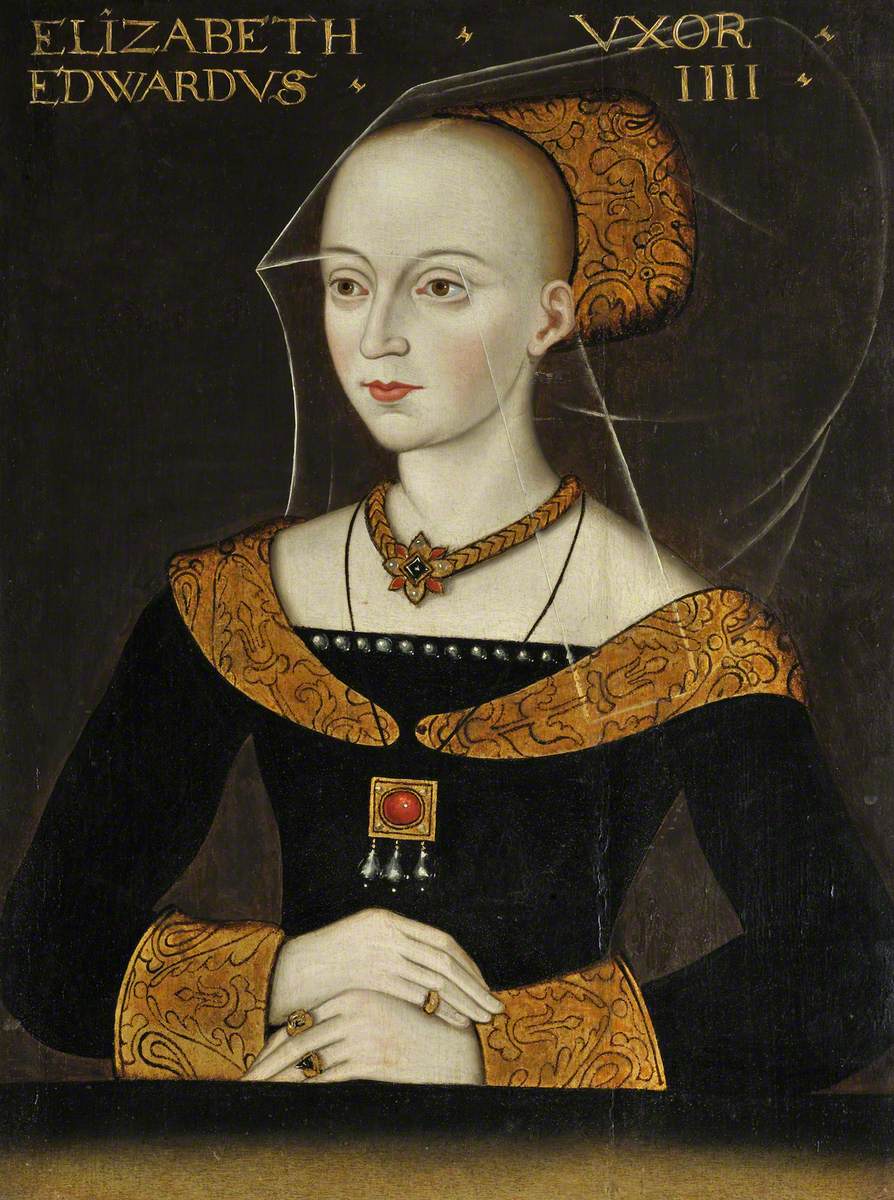
Image result for elizabeth wydeville

Today is International Women's Day. My research to date has primarily focused on late medieval and early modern women, specifically queenship. Earlier this year, MadeGlobal published my book Queenship in England 1308-1485, the culmination of years of research and what I would like to refer to as historical discovery. In honour of International Women's Day, therefore, I would like to think about some of the women that inspired my research.

My first introduction to the indomitable Isabella of France, wife of Edward II, was not an especially positive one, for it was based on a book that was both inaccurate and misleading. By immersing myself in the extant primary sources and by reading a fascinating array of secondary material, I gained a fuller and more nuanced picture of this intriguing queen. In Queenship in England, I focused on the multivalent roles that comprised the office of queenship. Isabella was highly active in her household governance, her lordship, her intercessionary activities and her patronage. Her relationship with Edward, moreover, appears to have been close and loving for the first fifteen years of their marriage. But political tensions and the ascendancy of the Despensers fractured their relationship beyond repair. 

Margaret of Anjou and Elizabeth Wydeville, like Isabella, have been similarly maligned or misrepresented, but the last few decades have witnessed several publications that have aimed to rehabilitate their reputations. My research indicated that Margaret was more politically astute and pragmatic than is usually suggested, and she sought to maintain a cordial relationship with the duke of York from early on in her queenship. In the aftermath of the Wars of the Roses, it was convenient for commentators to assign blame to Margaret for the conflict, but in assuming the role of leader, she was ardently fighting to protect the inheritance of her son and the honour of her beleaguered husband. 

Elizabeth's personality and appearance have both been attacked by modern historians, who have condemned her as a cold, grasping and avaricious woman. Much of this results from a misunderstanding of court protocol. In her lifetime, Elizabeth was praised for her "womanly" conduct and, indeed, she appears to have actively distanced herself from the militant queenship of her predecessor. She was, in most respects, the ideal medieval consort, and demonstrated her suitability to be queen by bearing Edward IV several children, thus testifying to divine approval of their union. The events following Edward's death and the accession of Richard III, coupled with her questionable relationship with Henry VII, have perhaps obscured the fact that Elizabeth was one of the most successful medieval queens of England.

These three women are perhaps three of the most well-known of England's medieval queens, and they are certainly not the only ones who fascinated and inspired me during my research and writing. However, I was especially drawn to their experiences and stories, in demonstrating the rich opportunities for the consort to wield agency and, in some instances, power. Investigating the relationship between gender and power as it operated in the political sphere is an exciting exercise and one that continues to resonate, and be relevant to, today.

Wednesday, 4 January 2017

Queenship in England


Happy New Year! I am delighted to inform you that my new book, Queenship in England, will be published on 12 January 2017 by MadeGlobal. The book is currently available on Amazon to preorder on Kindle, and will be available soon in paperback. You can preorder it on Kindle here.

Queenship in England is a study of the institution of queenship between 1308 and 1485, and examines the experiences of the nine women who occupied the position of queen during that period: Isabella of France; Philippa of Hainault; Anne of Bohemia; Isabelle of France; Joan of Navarre; Katherine of Valois; Margaret of Anjou; Elizabeth Wydeville; and Anne Neville. The book has been praised by Amy Licence, author of Catherine of Aragon: An Intimate Life of Henry VIII's True Wife, as offering 'an interesting and accessible exploration of medieval queenship in relation to gender expectations', while Toni Mount, author of A Year in the Life of Medieval England, described it as 'very readable' and 'thoroughly researched'. 

It was absolutely fascinating to research and write this book, and I hope you will enjoy reading it. 

Thursday, 22 October 2015

The Stereotyped Six Wives: One: 'A Great and Strong-Laboured Woman'


Katherine of Aragon, first wife of Henry VIII of England
Lifetime: 16 December 1485 - 7 January 1536
Reigned: June 1509 - May 1533 (23 years, 11 months)
Pregnancies: 6 
Stillborn daughter: January 1510
Prince Henry: 1 January 1511 - 23 February 1511 
Stillborn son: September 1513
Stillborn son: November 1514
Mary I of England: 18 February 1516 - 17 November 1558
Stillborn daughter: November 1518

In this new six-part series, I will be reexamining the lives and personalities of Henry VIII's six wives, seeking to portray their lives realistically in a process that discards prevailing stereotypes. Much scholarly work has been done on Henry's reign in recent decades, affording fresh insights into the politics and achievements of the period. Understandably, widespread interest in Henry's marital affairs remains unabated. Yet stereotypes continue to bedevil our knowledge of the wives of this most enigmatic king. 

This first blog post examines the incredible life of Queen Katherine of Aragon, Henry's first wife. Married to Henry at the age of twenty-three, Katherine was both a princess of Spain and a queen of England. Her tenure as Henry's consort included notable achievements. Katherine successfully fulfilled the queenly role of intercessor and was an acknowledged ambassador for her home country. Her considerable achievements as queen are usually overlooked in the divorce crisis that concerned only the final six years of her reign. She was Queen of England for almost 24 years and was a noted patron of the Renaissance in England. An examination of the sources concerning Katherine indicate that she was learned, charismatic, shrewd and formidable. Often depicted as the innocent, virtuous foil to the scheming Anne Boleyn, reality is rather different.
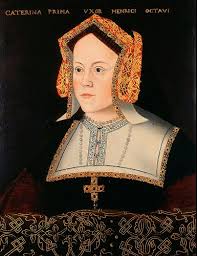

As the youngest daughter of the formidable 'Catholic Kings' Ferdinand and Isabella, who jointly ruled the Spanish kingdoms of Castile and Aragon, Katherine was expected to make an excellent marriage, but it was probably not anticipated at her birth that she would marry into the English royal family. At the time of Katherine's birth on 16 December 1485 at the Archbishop's Palace at Alcala de Henares, the Tudors had been on the English throne for less than four months. A newly established dynasty with a fairly weak claim to the throne, the Tudors were not regarded with especial confidence or admiration by other rulers in Europe. Ferdinand and Isabella, who had already ruled Spain for several years by this point, were shrewd and confident rulers and could be forgiven for regarding King Henry VII with wariness. Perhaps they wondered how long he would hold the turbulent throne. Given that England had been in a state of dynastic turmoil since the mid fifteenth-century, they could have been forgiven for thinking this.

Katherine was educated by a clerk in holy orders, Alessandro Geraldini. The Dutch humanist Erasmus later recorded that the princess was 'imbued with learning, by the care of her illustrious mother'. She learned languages (though not English, and she only acquired a knowledge of French several years later); canon and civil law; theology; philosophy; history; and arithmetic, but was also brought up with an excellent knowledge of skills deemed appropriately feminine: housewifery; embroidery; lacemaking; and music. At a time when the Renaissance was beginning to develop across Europe, the Spanish monarchs likely placed great emphasis on their daughter acquiring musical talent. As queen, Katherine was to enjoy participating in masques and dances. Perhaps most importantly, Katherine was brought up with an intense devotion and loyalty to the Roman Catholic Church. Her parents had determinedly enforced the Roman faith across their dominions, finally expelling Jews and Moors who refused to convert. Not for nothing were Ferdinand and Isabella granted the title Catholic Monarch by the satisfied pope Alexander VI. From an early age, Katherine came to regard any religion that was antithetical to the Roman faith as heresy. Given the determination with which her parents sought to expel heretics from their kingdoms, it is highly likely that Katherine was imbued with a passionate hatred of what she perceived as heresy and an instinctive intolerance for heretics. 

Above: Ferdinand of Aragon and Isabella of Castile, the parents of Katherine of Aragon. Their active rule, which involved the determined expulsion of heresy from their kingdoms, likely had a significant influence on Katherine, inspiring her to regard heresy with revulsion while encouraging her to revere and loyally serve the Roman Catholic Church.

The influence of Katherine's parents on their daughter's development should not be underestimated. Their shared, active rule would have signalled to Katherine that a queen could exercise tremendous influence alongside her husband in ruling a kingdom. Katherine was not brought up in England, revering the queenly model in place there: a compliant, devoted and virginal wife and mother. While she was brought up to regard these qualities as essential to successful rulership, she would also have learned that a queen consort could be active, even militant, in working alongside her husband to successfully rule. As a young girl, Katherine of Aragon's model of queenship was one that was active, determined and militant. It was also one that was fiercely intolerant of threat, whether religious or political, and one that was grounded in loyalty to one's lineage and devotion to one's faith. 

Katherine grew to be both beautiful and charming. She was reputedly tiny in height, probably less than five foot tall, and her hair was long and auburn in colour. Sir Thomas More, who was to become Katherine's close friend and admirer, wrote in her praise: 'There is nothing wanting in her that the most beautiful girl should have. Everyone is singing her praises'. She was also learned and intelligent, with an interest in the burgeoning Renaissance movement and a devotion to the Roman Catholic Church: in short, she appeared the perfect queen consort for a young king. Aware of this, and determined to extend Spanish power outwards into Europe to diminish the hostile influence of France, Ferdinand and Isabella decided to marry their youngest daughter into England. She was betrothed to the English king's eldest son Prince Arthur. Given that interest in the match had first been mooted in the spring of 1488, when Katherine was only two years of age and her betrothed not yet two, it is unsurprising that Katherine came to regard herself as divinely appointed by God to be England's queen. It was her destiny. With a fierce devotion to the Catholic faith, combined with a deep-seated loyalty to her lineage, it must be borne in mind that Katherine regarded herself from infanthood as the Queen of England. Only in death could God could take that title from her. 

Even at an early age, then, Katherine was never the submissive, silent and passive consort presented in Victorian historiography and even in some modern works of history. She was an energetic, determined and resourceful woman who was appointed by God to rule England. While she would have learned from her mother that a queen's primary task was to provide male heirs with which to secure the dynasty's continuation, her mother's example also educated her daughter to believe that a queen's role in the politics of the kingdom was as important as that of her husband. Her role was active, not passive. Indeed, it is questionable whether Katherine actively cultivated a submissive ideal of womanhood that was later associated with her successor, Jane Seymour, so it is perhaps surprising that she is often identified with this role. As will be seen, she perhaps reacted more negatively and forcefully to Henry VIII's infidelities than is often assumed, and she certainly was not averse to losing her temper publicly. 
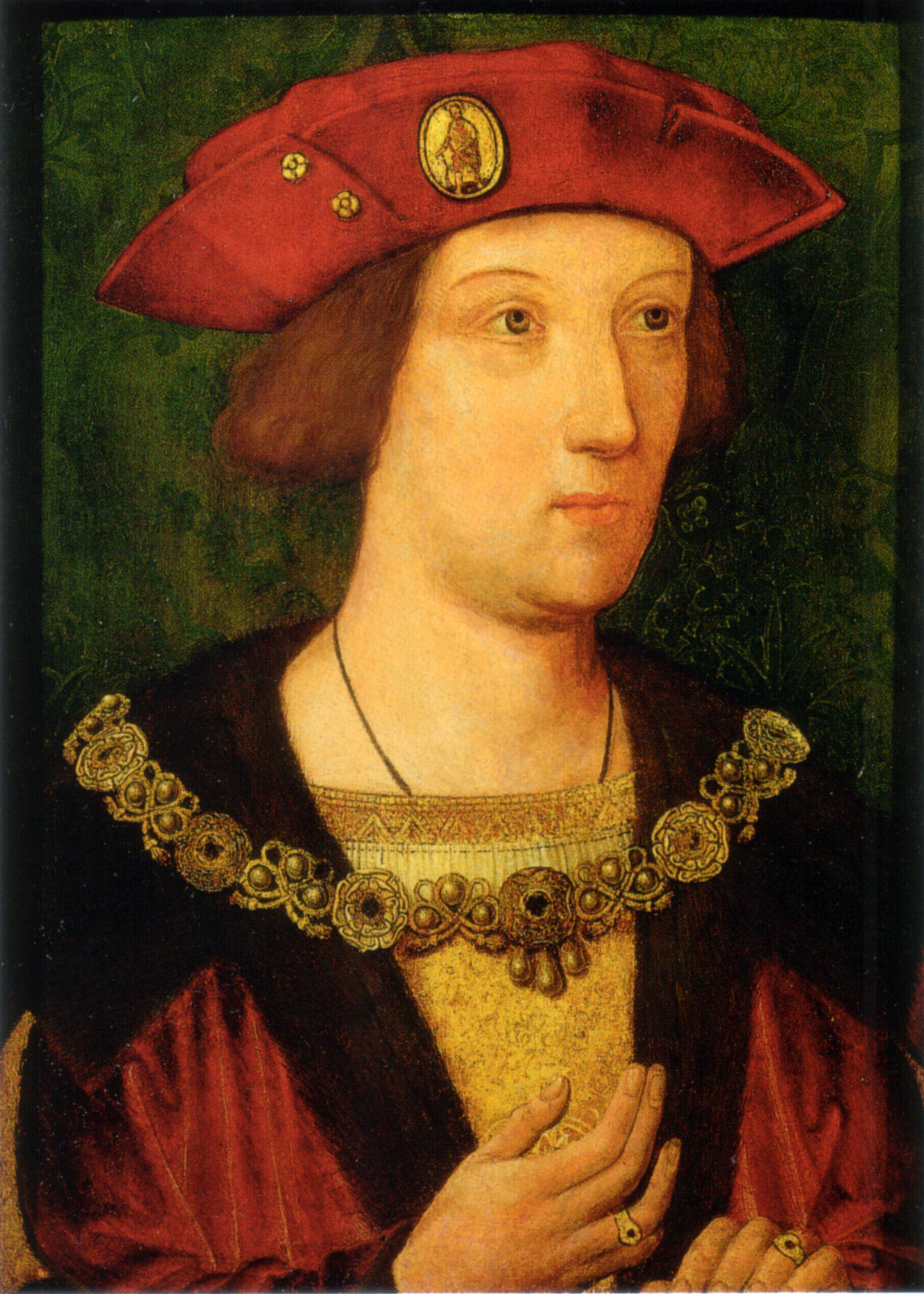
Brothers: Arthur, Prince of Wales (left) and Henry, Prince of Wales (right); later Henry VIII. Both men married Katherine of Aragon.

In November 1501, at the age of fifteen, Katherine of Aragon wed Arthur Tudor, prince of Wales, at St. Paul's Cathedral in London. Katherine was acquainted with her new family around this time. She reportedly enjoyed warm relations with her mother-in-law Queen Elizabeth of York, the shrewd and kindly wife of Henry VII, and she undoubtedly regarded her bridegroom's grandmother, Lady Margaret Beaufort, with respect. Like Katherine's mother Isabella of Castile, Lady Margaret was a determined and active woman who ruled her estates vigorously and exercised considerable influence at court. Contemporary ambassadors whispered rumours that she even held her daughter-in-law, the Queen of England, in subjection. Katherine would have learnt from this state of affairs that a royal woman's power and influence at the English court was potentially considerable. She may also have considered Elizabeth's situation and determined that no woman would ever oust her from a position of influence, whether that woman was family or not.

After their marriage, the prince and princess of Wales (as Katherine was now known) were sent to reside at Ludlow Castle, Arthur's ceremonial centre of power in the Welsh Marches. Traditionally, it has been argued that Katherine's marriage to Arthur was not consummated and, when the prince tragically died in the spring of 1502, the princess was left a virgin widow. However, David Starkey recently suggested that the marriage was indeed consummated. Certainly no-one at the time doubted that it had. When her marriage was threatened in 1527 by Henry VIII's determination to remarry, Katherine had every reason to lie. Not only was her position as queen endangered, but her daughter's future could be jeopardised were the princess to become a bastard. Moreover, Arthur was not the unhealthy, sickly teenager of popular legend, but a vigorous youth. Katherine's mother would have educated her about the necessity of consummating a union, to prevent doubts arising as to its legitimacy. The Catholic Church taught that a marriage could be annulled on the grounds of non-consummation, as the failed union of Henry VIII and Anne of Cleves was to prove. Given both her pride and loyalty to her lineage, and her intense devotion to her Roman Catholic faith, it seems unlikely that Katherine failed to consummate her marriage to Arthur.

Ludlow Castle from Whitcliffe, 2011.jpg
Above: Ludlow Castle in Wales, where Katherine probably consummated her marriage to Arthur, Prince of Wales.

Whether Katherine truly loved her first husband is uncertain, but her determination to become Queen of England did not die with her husband in April 1502. During her seven years of widowhood, Katherine continued to exert a forceful and vigorous presence in European politics. She regularly wrote to her parents, especially her father following the death of her mother in late 1504. Katherine informed Ferdinand that she had 'no other hope or comfort in this world' unless he wrote to her regularly. The evidence of her letters indicates that she sought to influence her father's policy, as seen in her insistent determination to have the Spanish ambassador de Puebla expelled for the 'pain and annoyance' which he had caused her, perhaps principally on account of his failure to promote her wellbeing and interests at court. She also pressured Henry VII, her father-in-law, to remember 'his daughter' and to remember that 'it will reflect dishonour upon his character if he should entirely abandon' her. Katherine's entreaties were genuine, but were also calculating. She sought to remind the English king of her position as princess of Spain and, thus, her central importance in European affairs as a prospective consort to a foreign ruler. She surely rejoiced upon learning that she was betrothed to her former husband's younger brother Henry Tudor, but whether she knew of his decision to revoke his promises to her is unknown. Certainly it would not have altered her firm belief that she would one day rule England as its queen. 

Her health, however, soon became a matter of concern. Historian Giles Tremlett has speculated that the princess may have suffered from an eating disorder, although it is unwise to refer it as such in the modern sense of the term. Certainly Katherine's zeal for fasting and abstinence was famed across Europe. The Pope himself became so concerned that he issued a missive instructing that if Katherine's 'devotions and fasting' were 'thought to stand in the way of her physical health and the procreation of children', then they could be 'revoked and annulled by men'. Katherine's desire to fast is highly indicative of the importance she placed on loyally and devotedly serving the Roman Catholic faith. In her eyes, alongside her destiny as Queen of England, it was the fundamental reason for her existence. 

Even as her fortunes experienced strain, during these years Katherine's belief in her God-given destiny as Queen of England remained rock-solid. If anything, the experience of adversity hardened her and accustomed her to fighting for what she regarded as her birthright. Moreover, the experience of success positioned her to regard her cause as just, certain of triumph. That success came in the summer of 1509 when, following Henry VII's death, the teenaged Henry VIII of England chose to wed Katherine. He was reputed to regard her with 'singular love', but it is also equally likely that he wished to preserve the Spanish alliance in the face of French hostility. The Tudor claim to the throne remained fragile, as the lingering fear of the White Rose proved.


Above: Katherine of Aragon's only surviving child, Mary, born in 1516.

It is unfortunate that Katherine of Aragon tends to be regarded in popular culture as dowdy and dull, given that she was beautiful, elegant and sophisticated in her early years as England's queen. She dressed exquisitely and was reputed to be 'a ceremonious woman in her attire'. Alongside her handsome, auburn-haired husband, Katherine represented a triumphant figure presiding over the cultured English court. God certainly seemed to smile on their union, as were the people at large who rejoiced 'in the possession of such a King'. Katherine immediately became pregnant and was delivered of a stillborn daughter in January 1510. Yet Henry was not overly concerned, writing to his father-in-law Ferdinand of the 'joy and felicity' which he had experienced in marrying the charming Katherine. 'In high health, with the greatest gaiety and contentment that ever there was', it is hardly likely that the queen was overly concerned too. She had triumphed after years of hardship and adversity, and was supremely confident that God favoured her and would reward her devotion to the faith with the birth of sons. 

Despite the success of their marriage, Katherine's father had reputedly been unfaithful to his wife, and Katherine would likely have learned from an early age that kings were accustomed to taking lovers. However, that does not mean that she regarded extramarital liaisons with approval or even acceptance. Given her devout adherence to Roman Catholicism, it is rather more likely that she regarded adulterous affairs with horror and revulsion. So when Henry took Lady Anne Hastings as his lover within a year of marrying Katherine, it is not entirely surprising that the queen was said to be highly 'vexed' with her husband. She confronted him about his seduction of her lady-in-waiting and was to later show a marked disapproval of his decision to award his bastard son Henry Fitzroy with two dukedoms. While Katherine did not cause tantrums, she certainly did not necessarily acquiesce to Henry's extramarital affairs submissively or ignorantly. It is far too simplistic to interpret her behaviour in this light, as the majority of historians have done. An energetic, shrewd and determined consort, and mindful of her admirable lineage, she perhaps rationalised that such affairs were beneath her. Her primary duty was to bear sons, and if she did so, then no lady-in-waiting, no matter how beautiful or sophisticated, could threaten her. 
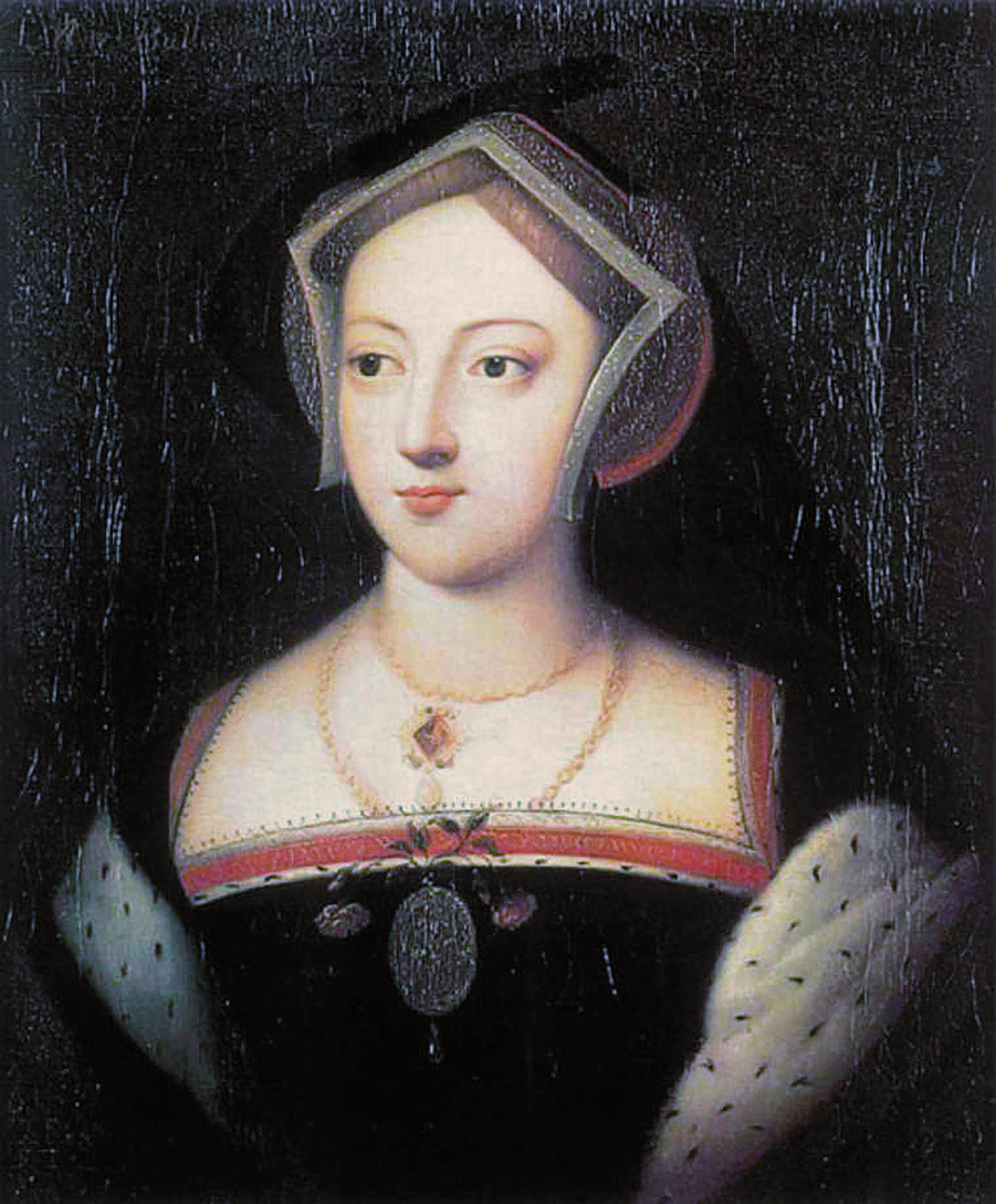
Above: Mary Boleyn, mistress of Henry VIII. While we have no direct evidence for Queen Katherine's opinion of the woman who supplanted Bessie Blount in her husband's affections, it seems too simplistic to view Katherine as submissively ignoring Henry's adulterous affairs. 

Aside from the royal couple's failure to have a healthy son, Katherine's queenship was largely triumphant. She enjoyed notable achievements that have often been overlooked in the focus on the 'great matter'. Not only was she a loyal ambassador of her homeland, but she was her husband's chief advisor and confidant during his early years as king. In the summer of 1513, while campaigning in France, Henry accorded his wife the supreme honour of granting her the position of regent in England. Katherine, who was well aware that the queen's role could be active and forceful rather than silent and submissive, took on this position with enthusiasm. When the Scots invaded in the autumn, she energetically mustered her troops and rallied her forces. Katherine herself declared to her husband that she was 'horribly busy with making standards, banners and badges' for the cause. The queen travelled to Buckingham and urged the English forces to victory. They were inspired by Katherine's enthusiasm and courage and resoundingly defeated the Scots at Flodden on 9 September 1513. Triumphant, Katherine wrote to her husband: 'To my thinking, this battle hath been more than should you win all the crown of France'. She also hoped that Henry would shortly return to England because of the 'joy' it would bring both her and his subjects. Katherine's confidence has often been interpreted negatively by historians, who view her as crowing and inconsiderate of Henry's feelings, in seeming to accord her victory more importance than his own triumphs in France. However, Katherine would not have regarded it that way. Her mother had been as active, as militant and as successful as her father, and Katherine would have seen no reason why she could not achieve the same greatness that Isabella had. Moreover, the English queen was pregnant during these events and although the stillbirth of her son barely a week later would have caused her sorrow, she perhaps tempered this loss with the knowledge that God had continued to smile on her by granting her an unforgettable victory on the battlefield.

Because she regarded her queenship as active and a position to be approached with consideration and respect, Katherine took on the duties of her role with enthusiasm and diligence. She was a noted intercessor and earned considerable popularity in England for her success in this sphere. Following the aftermath of the May Day riots in 1517, when the London apprentices had violently turned on the foreigners of the city, the queen begged her husband with tears in her eyes to 'spare the apprentices' from execution. Willingly, Henry acceded to her request. This incident provides further evidence of Henry's love for his wife. He later admitted during the annulment proceedings that 'if I were to marry again, I would chose her above all women' for her 'gentleness, humility and buxomness'. Katherine's influence at court extended to matters of religion; she was also known to be charitable and provided alms for the poor. Presenting herself carefully as submissive, virtuous and pious, her husband and close friends were aware that she was vigorous, determined and resourceful, particularly when it came to a crisis.

By the spring of 1527, Katherine experienced her first real crisis as queen. Eighteen years on the throne had enabled her to grow into a confident, shrewd and experienced queen who was more than comfortable in affairs of state and promoting the interests of her homeland. She had watched as Henry's lovers had come and gone. Although she did not regard his affairs with approval, and had reacted furiously when his bastard by Bessie Blount had been granted unprecedented honours in 1525, Katherine shrewdly remained calm. She had witnessed her father's infidelities and continued to believe that, since God had ordained for her to become queen, she would remain Henry's wife until the day she died. In 1516, she had given birth to her only surviving daughter Mary. Katherine exercised undoubted influence in her daughter's education, for she was determined to ensure that her daughter was an active and successful queen just as her mother and grandmother had been. The Spanish humanist Juan Luis Vives had been appointed as her tutor, and Mary was brought up to be a virtuous Christian maiden. Katherine's devotion to the Catholic faith grounded her approach to her daughter's upbringing, and Mary's intense piety was undoubtedly instilled in her from birth by her formidable mother.

Above: Peterborough Cathedral, where Katherine was buried in 1536.

Katherine's queenship had been active, resourceful, even militant. She had always been at the centre of politics and had never shied from exerting influence in matters of state. During the annulment crisis, Katherine refused to accept that she was no longer Queen. As she perceived it, she had been educated from the age of two to regard herself as England's queen. No earthly being, even her husband, could take it from her. Only God could by calling her to Heaven. It was her destiny to be Queen, just as it was her daughter Mary's destiny someday to be Queen in her mother's place. By daring to put her aside, Henry was endangering not only his immortal soul but the wellbeing of England. Several modern historians have interpreted Katherine as disloyal to English interests, but she was in fact highly concerned with England's future and interpreted Henry's selfish desires as grossly antithetical to the future harmony of England. 

She had been groomed from birth to regard heresy as mortally dangerous. It was an infection, a blight on the kingdom and a warning from God. The annulment was heretical, for it was closely associated with the reformed religion. Katherine and her supporters, including the Spanish ambassador Eustace Chapuys, were united in their belief that the reformed faith was Lutheran heresy and offensive to God. Katherine's parents had militantly stamped out heresy in their dominions and their daughter was determined to do the same in her adopted home. In no sense could she have stepped aside for her husband. Not only was he, in her eyes, endangering her position as queen and threatening their daughter's future, but he was tacitly granting acceptance to newfound heresy and thus calling into question the very foundations of society, as proven by the favour he bestowed on the Boleyns, whom Katherine knew were inferior to her in birth. By preferring them to Katherine, whose lineage was prestigious and renowned across Europe, Henry's behaviour ran dangerously close to questioning God's will. 

Katherine's behaviour during her years of widowhood (1502-9) had been resourceful, energetic and determined. She had not remained silent, but had issued urgent letters to her father, ambassador, friends and her aloof father-in-law Henry VII, demanding for her wellbeing to be respected and her fortunes to be restored. As then, her role during the annulment crisis was formidable. She magnificently rose to the challenge presented her and upbraided Henry at the Blackfriars court in the summer of 1529 for daring to put her aside, asking him how she had offended him and daring him to assert that he had not found her a virgin at their marriage. All the evidence demonstrates, from her position as Princess of Wales to a threatened Queen of England, that Katherine of Aragon responded magnificently to a threat. Her offensive was calculating and determined. Not only was she fighting for her daughter's future, but for her country's wellbeing. 

Above: Margaret of Anjou, queen of England.

Margaret of Anjou, the courageous wife of Henry VI, had been described as 'a great and strong-laboured woman, for she spareth no pain to sue her things to an intent and conclusion to her power'. The same might in fairness be said of Katherine of Aragon. The first wife of Henry VIII was perhaps the toughest and was certainly the one who felt most confident in taking on her husband and reminding him of his responsibilities as king. She had not reacted submissively to his extramarital affairs, but had dared to reproach him for his affairs with Anne Hastings and Anne Boleyn, and when he promoted his bastard son's interests to the detriment of his legitimate daughter's position, she protested so vigorously that she was punished with the removal of several of her ladies-in-waiting. 

In popular culture, Katherine continues to be perceived as the virtuous and silently suffering foil to the scheming, manipulative Anne Boleyn. This interpretation is both skewed and inaccurate, and marks a betrayal of Katherine's memory, failing to understand the real woman for who she truly was. Katherine was a determined, passionate adherent of the Roman Catholic faith and viewed other religious persuasions as dangerous heresy that required elimination at all cost. She was a courageous defender of the country's interests and was prepared to lead her troops, valiantly urging them on to destroy England's enemies. An energetic, stubborn and formidable queen, she was capable of deceit. She had probably lied about the consummation of her first marriage, perhaps lied about her pregnancy in 1510 to her father, and was capable of bloodthirstiness - as her desire to send her husband the brutally mangled body of James IV proves. Yet she was also interested in the Renaissance, was unswervingly loyal to her friends and relations, and was deeply concerned to promote the welfare of her people. It is misleading to regard Katherine as a perfect saint, a wronged wife and a silently suffering mother. She, like Margaret of Anjou, was 'a great and strong-laboured woman' who never once shied away from promoting her interests at all costs, while valiantly fighting to destroy all threats to her position, whether religious, political or dynastic.




Monday, 1 December 2014

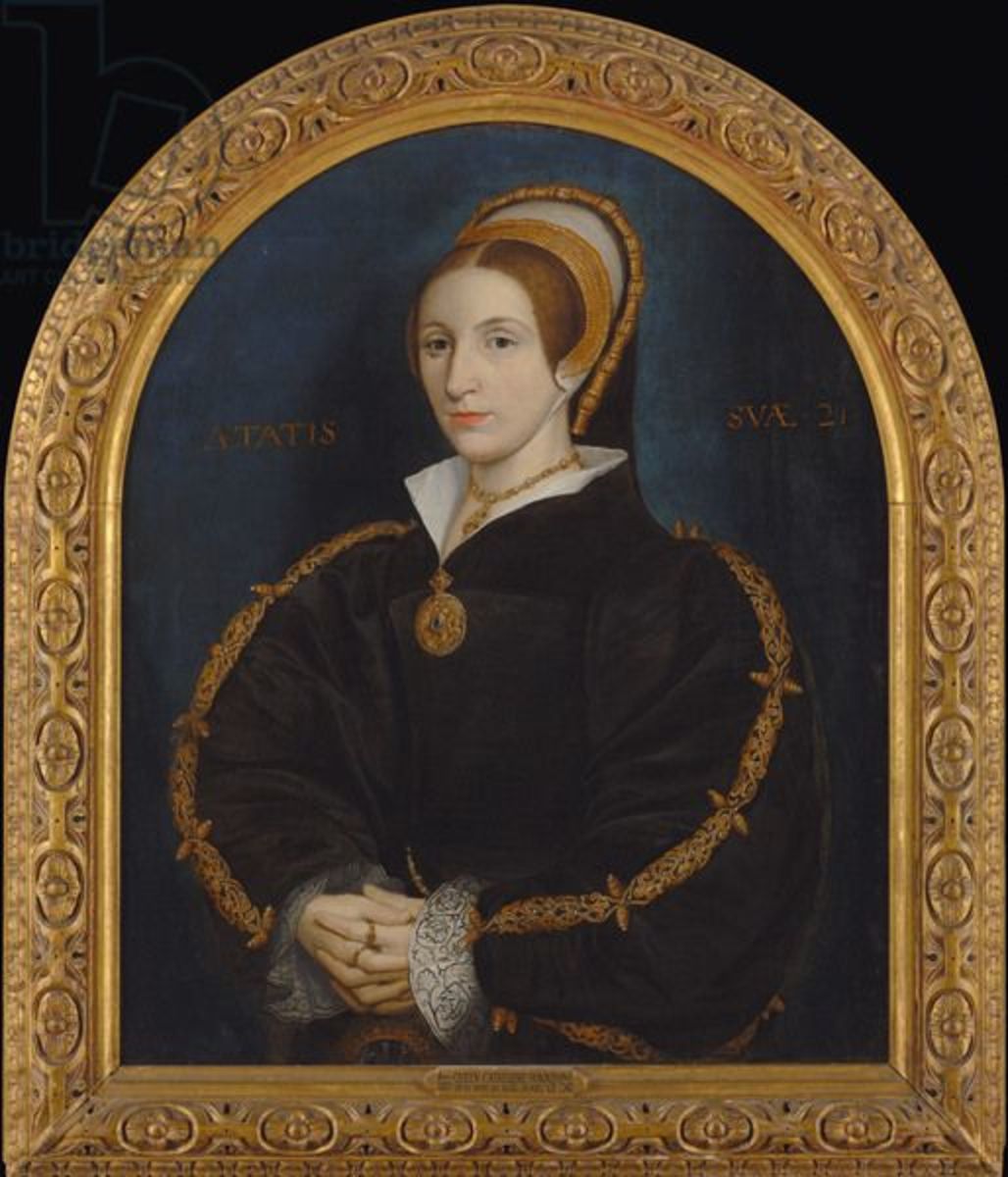
A Biography of Lady Catherine Grey

Lady Katherine Grey
I am very excited to announce that my next book, if all goes well, will be a biography of Lady Catherine Grey, the beautiful and enigmatic younger sister of Lady Jane. Catherine's life was every bit as tragic and turbulent as that of her older sister. She was exposed to violence, brutality and heartbreak at an early age, and she herself died young, at the age of only 27. She was favoured by Protestants during the early years of Elizabeth I's reign as a viable successor to the throne, and in different circumstances, could very well have become queen of England upon Elizabeth's death. 

I am aware that Leanda de Lisle has written an excellent study of the three Grey girls. Leanda is a fine historian who writes beautifully, and I am looking forward to reading her work on Catherine. However, there has, as yet, been no individual biography of Catherine herself, which is surprising given her dynastic importance in the 1560s, as well as the personal turbulence and tragedy of her own life. I am very much looking forward to researching Catherine's life in depth, and I am excited to share with you all the fruits of this research. 

My first book was a biography of Katherine Howard, wife of Henry VIII. That covered much more familiar territory, and so I believe this project on Catherine Grey will take considerably longer. In view of this, it is unlikely that the biography will be published any time soon, but I am hoping that one day, in the not too distant future, readers will be able to enjoy my biography of Catherine Grey. 

Thursday, 20 November 2014

Fantasies of a Bitch: "Anne Boleyn", Mean Girls, and Culture


Everyone loves a bitch. In one guise or another, bitches have occupied centre stage within every culture in civilisation. Medieval mean girls, ancient vixens, Renaissance shrews and modern Reginas reign supreme throughout their generations, tormenting, tantalising, manipulating, wreaking havoc, creating misery and doing it all with a stunning smile. Regina George, played by Rachael McAdams in Mean Girls, is the archetypal bitch of twenty-first century American culture: manipulative; beautiful; tormenting; ruthless; spiteful; and dizzyingly intelligent. Very much the "Queen Bee" of her school, where she rules the roost and throws every other female into the shade, Regina epitomises modern bitchiness in its every facet. For many, the Tudor equivalent of Regina George in modern America is the very mother of Elizabeth I herself, Henry VIII's second and most infamous wife: Anne Boleyn.

Susan Bordo, in her excellent, original and provocative book The Creation of Anne Boleyn, ponders why Anne continues to be represented in cultural works as hell on earth, asking 'who let the bitch out?' Eustace Chapuys, imperial ambassador during the majority of Henry VIII's reign, created a nightmare vision of Anne that has powerfully shaped, to one degree or another, every cultural representation of her since. Presenting her as 'that accursed she-devil' who used witchcraft and magic to lure Henry into marrying her, Chapuys suggested that Anne was craftily and cunningly planning the deaths of her rival Katherine of Aragon and her stepdaughter Mary Tudor. When she wasn't busy making threats and acquiring poison to do away with enemies, she was spreading Lutheranism throughout the kingdom, luring the king into ridding England of its rightful religion. As Bordo notes: 'What this view of Anne has done is create a vivid, provocative "template" which later generations have responded to in different, often highly polarized ways'. In short, Chapuys portrayed Anne in so vile and hostile a light that represented her as the bitch of the Tudor court, a woman who stopped at nothing to attain her own ends. 


Chapuys's influence can be discerned in several contemporary works. Philippa Gregory's novel The Other Boleyn Girl presented Anne as a murderous, malicious and egotistical woman who bullied her siblings into doing what she wanted. She poisoned Katherine and several bishops, slept with her brother, and stole her sister's child in an act of coldblooded cruelty. The portrayal of Anne in Hilary Mantel's Wolf Hall and Bring Up the Bodies has been described as 'lethal' and so 'spitefully ambitious' that 'one feels any king would be justified in beheading her'. Yet there is very little to no evidence to support this. Aside from Chapuy's poison pen, and the later hostile account written by a Catholic priest, Nicholas Sander (who was himself a child when Anne was executed), contemporary accounts did not so vividly and fictionally present Anne as, in effect, the bitch of the Tudor court. 

As Bordo notes, the femme fatale, the bitch, is an archetype of all cultures throughout the ages. Just perusing a GoodReads discussion entitled 'Why did everyone hate Anne Boleyn?' brought up the following claims:


'I... think she deserved to die though innocent of adultery and to other sexual misconduct but because she made C. of Aragon suffer so, slowly poisoning her to death, and treating Mary so badly. In those days queens seemed to have a Queen Bee syndrome and Anne was viciously true to form'.


'Today, she would probably be diagnosed as being a sociopath'.


'She was just cruel and crazy!'


'...She was definitely a wack job'.


'She was political and manipulative'.


'She was manipulative... today she would probably be diagnosed with a personality disorder'.


'She was a manipulator for sure'.


'Anne Boleyn was a horrible person... she stole someone's husband... she also treated Mary Catherine's daughter so badly...she deserved what she got in the end'. 


What all of these views have in common is their underlying suggestion that Anne Boleyn was able to manipulate Henry VIII. She was the one who wielded power and control in their relationship. She pushed him around and made sure she got her own way. But, aside from the complete lack of evidence for this, this is in many ways an absurd and distorted characterisation of their relationship. Although some historians continue to view Henry VIII as malleable and easily led, they are very few and far between. Historians by and large generally agree that he held absolute power. Upon becoming king, he had two of his father's ministers summarily beheaded. He put to death two of his wives. He treated his elder daughter with remarkable cruelty. He put to death possibly as many as 72,000 people. He ordered the death of a 67-year-old woman innocent of any crime, who was then cruelly hacked to death. He was described as a 'tyrant' and 'worse than Nero'. 


It then invites disbelief to suggest, as these readers commenting do, that Anne was able to manipulate and control Henry. People continue to believe that she was responsible for Mary's ill treatment. Yet, when Anne was beheaded, Henry continued to treat his daughter cruelly. There were even rumours that he would put her to death for refusing to recognise him as Supreme Head of the Church and because she refused to agree that her parents' marriage was invalid. This is apart from the complete lack of evidence that Anne had in any way, shape, or form, what resembled a 'personality disorder'. 


So why do these views of Anne Boleyn persist? Partly, I suggest, is because history loves a bitch. Bitches are scapegoats. Queens are often closely aligned with bitchdom: consider Empress Matilda, Isabella of France, Margaret of Anjou and Elizabeth Wydeville just in relation to medieval England. They were blamed and condemned for their male relatives' behaviour. There remains a strange and very obvious reluctance to hold Henry VIII responsible for his actions. People automatically assume that he was a weak and easily led man who was manipulated by both his wives and advisers. When she wasn't luring him into bed, people think, Anne Boleyn was encouraging Henry to kill his first wife and her child. Evidence? None.


It's worth remembering, then, when readers stumble across a vengeful, demented Anne hellbent on revenge in a novel, or a particularly negative account of her actions in a serious academic study, or a TV portrayal of her as manipulative and sexually cunning, that these depictions of Anne the bitch are not grounded in, or informed by, any historical evidence. They derive from a culturally constructed archetype that has remained influential in every culture. Everyone loves a bitch, and for many, Anne Boleyn was the bitch of the Tudor period. 


Friday, 5 September 2014

5 September 1548: The Death of Queen Katherine Parr

On this day in history, 5 September 1548, the former queen of England Katherine Parr died aged thirty-six at her home, Sudeley Castle, in Gloucestershire. It was a sad and tragic end to an extraordinary life and, in particular, provided a closing chapter to one woman's remarkable journey from minor gentry to queenship to comfortable nobility. Katherine's fate mirrored that of countless medieval and Tudor women: she died of puerperal fever shortly after giving birth to her first and only daughter, Mary. Tragically, her young daughter probably lived to be no more than two years old, although her exact fate is unknown. 

In spring 1782, Katherine's coffin was discovered by some ladies visiting the castle. They discovered the inscription which read:
"Here lyeth Queen Katheryne Wife to Kinge
Henry the VIII and
The wife of Thomas
Lord of Sudely high
Admy… of Englond
And ynkle to Kyng
Edward VI".

Katherine was unique in many ways: she was the first Protestant queen of England, she was the first English queen to publish books, she was the most married English queen (with four husbands in all), and perhaps most fortunately, she was the only one of Henry VIII's wives to 'survive' him (although the rejected Anne of Cleves actually survived all his wives, dying in 1557, nine years after Katherine Parr). Indeed, it is this which most people tend to remember about Katherine: she 'survived' her husband. Others believe she was an old nursemaid who dutifully and compassionately attending to the ailing and irascible Henry VIII in his old age. This is very far from the truth. Katherine was an educated, principled, pious and charitable woman who also loved fine clothing and jewellery, adored dancing, had a strong romantic streak, and was kind and loving to her family and friends. She was admired during her own lifetime and has legions of admirers to the present day, including Camilla, duchess of Cornwall. In many respects, Katherine was an excellent candidate for the position of queen of England.

Biographer Linda Porter believes that Katherine's influence was particularly important with her three royal stepchildren: Mary Tudor (who was only four years younger than her), Elizabeth, and Edward. She brought them to court and established loving and close relationships with all three. Although some of Henry's other queens, namely Anne of Cleves and Katherine Howard, had also attempted to bring the royal family together, it was Katherine Parr who provided a mother figure for Elizabeth and Edward, who had been cruelly deprived of their mothers at a very early age (Elizabeth's mother was beheaded when she was not yet three, while Edward's mother had died from puerperal fever only twelve days after his birth). To Mary, who had also suffered the loss of her mother in a humiliating and dragged-out annulment battle, Katherine was a warm and supportive companion, although the two experienced a more strained relationship after Henry VIII's death and Katherine's remarriage to Thomas Seymour. 

Katherine's life was truly extraordinary. Born in 1512 (historian Susan James, who published an academic study of the queen, thought that she was probably born in about July or August of that year), Katherine's family was respected northern gentry, and she appears to have been named after Katherine of Aragon who was, of course, the first wife of Katherine Parr's future husband, Henry VIII (Maud Parr, her mother, was a close favourite of Katherine of Aragon at court). She was later married for the first time in 1529 to Edward Borough in Lincolnshire, but her husband died only four years later, leaving Katherine widowed - not for the first time - aged twenty-one.

A year later her second husband was Lord Latimer, a man twenty years older than her with two children of his own. Katherine became, as with the Tudor children, a warm stepmother. She resided at Snape Castle in Yorkshire. Lord Latimer was a conventional Catholic, and historians such as David Starkey, aware that Katherine Parr later as queen developed strong reformist tendencies that we would now associate with Protestantism, have questioned whether she, too, was a traditional Catholic in these years, or whether she had already began to develop reformist ideas and beliefs that set her up in conflict to her conservative husband. The north of England was conservative as a whole, and in 1536 the most threatening rebellion of Henry VIII's reign, the Pilgrimage of Grace, occurred. Terrifyingly, Katherine herself and her stepchildren were seized as hostages in their own home. Cromwell later blackmailed Lord Latimer due to his involvement, even if unwilling, in the rebellion. Later, the couple departed for London, where they were living when Lord Latimer died in spring 1543.

Above: a family painting of Henry VIII sitting with his son, Edward, flanked by his two daughters: Mary to the left, and Elizabeth to the right. The queen who sits with Henry is his third wife Jane Seymour, although, painted as it was in 1544, his wife at that time was Katherine Parr.

Henry VIII's previous wife Katherine Howard had been executed in February 1542, and by spring 1543 the ageing king had still not remarried. At some point, he became attracted to the widowed Katherine Parr, and proposed marriage to her. Katherine felt doubt and discomfort. She appears to have been in love with Thomas Seymour, brother of the late queen Jane, at this point. But after much soul-searching, as she later admitted, she felt it was God's will that she marry the king. She perhaps also felt it would provide an excellent opportunity for her to bring about further reform within the church. On 12 July 1543, she became the sixth wife of Henry VIII at Hampton Court Palace.

While the king may not have passionately adored Katherine Parr, as he did Anne Boleyn, he does appear to have respected her deeply and to have felt genuine affection for her. Katherine, on her part, worked hard to be an effective and successful queen consort. Evidence of Henry's admiration and affection for his wife can be found in the fact that, in 1544, when he departed for France for war, he appointed her Regent. None of his other wives, with the exception of Katherine of Aragon in 1513, enjoyed this prestigious honour. Katherine was clearly ambitious. The following year, she began publishing religious works which outlined her reformist views that were bordering on the radical. Indeed, Katherine soon found herself in a position of danger when in 1546, if the martyrologist John Foxe is to be believed, the conservatives at court instigated a plot to accuse the queen of heresy. Anne Askew, who was associated with the queen, was burned at the stake in July 1546. Katherine supposedly discovered news of the plot and, falling into panic and distress, pleaded for forgiveness from the king and convinced him of her innocence. Luckily for her, she was successful. 

In January 1547, the king died aged fifty-five. We cannot know what Katherine felt, but only three months later she married for the fourth time to Thomas Seymour. This may have been a love match, but perhaps the dowager queen also felt she required a helpmate and strong man to support her. Since Seymour was uncle of the new king, Edward VI, it can be argued, as Linda Porter credibly did, that she regarded marriage to him as strengthening her hand and ensuring her continuing political relevance in the kingdom. Although her stepdaughter Elizabeth and the future queen Lady Jane Grey came to reside in her household, Katherine had to battle the Lord Protector Edward Seymour, elder brother of her husband and thus her brother-in-law, for control of her dower estates. 

What happened next has been shrouded in controversy, but it appears Thomas Seymour began a flirtation - some would call it abuse - with the thirteen-year old Elizabeth. Unbeknownst to Katherine, he had actually, before marrying Katherine, petitioned both Mary Tudor and Elizabeth for marriage, and later even considered marrying the nine-year old Jane Grey. Clearly, Seymour was an ambitious, perhaps even unscrupulous man, who desired greater political influence and power. What he was doing with Elizabeth cannot now be known for sure. Undoubtedly, it brought scandal to Katherine's name, and she banished Elizabeth from her household in spring 1548. Rumours circulated that Elizabeth was delivered of a child in secrecy, the offspring of Thomas Seymour.

At this time, Katherine was pregnant. At a time when most Tudor noblewomen married about twenty and, in some cases, in their teens (Katherine herself had been only in her seventeenth year when she married for the first time), Katherine, at thirty-five, was rather old to be expecting her first child. This is evident in numerous letters written by her friends and relatives, who anxiously warned her of the risks of childbirth and offered soothing and comforting messages and advice. After a difficult pregnancy, Katherine gave birth not to the much-desired son but to a daughter, who was named Mary, on 30 August 1548. Only six days later, between two and three in the morning, she herself died, only thirty-six. Supposedly, she had reprimanded her husband beforehand for his ill-treatment of her, probably referring to the scandal with Elizabeth, but this story cannot be corroborated.

Katherine Parr's end was tragic. But her life was extraordinary and deserves to be remembered, admired, even celebrated. She was a successful and diligent queen consort who brought family stability and a measure of much-needed dignity and calmness to court, following the king's previous marital scandals. For perhaps the first time, Henry VIII and his three children enjoyed, under Katherine's influence, a degree of harmony and closeness with one another. Katherine Parr was far more than merely the 'survivor' of a much-married monarch. 

Thursday, 21 August 2014

Myths About Henry VIII's Six Wives


The average person's knowledge of the six wives of Henry VIII will most likely have been shaped more by myths than by concrete historical fact. This may seem a bold claim to make, but the continuing popularity of ideas such as Anne of Cleves being 'a Flanders Mare', for example, or Anne Boleyn a six-fingered witch who slept with her brother, tends to support this statement. 

The myths, legends and stereotypes of the six wives have been explored in some depth by Claire Ridgway over on The Anne Boleyn Files. This blog post concentrates in less detail on the most well-known, occasionally sensational, myths concerning these women, looking at each wife in turn.

Katherine of Aragon: Queen 1509-1533
Myth: Katherine was a bloodthirsty and fanatical Catholic.
Myth: Katherine was sultry, dark-haired and olive-skinned. 

Katherine was Henry's first queen, marrying him in 1509. Their marriage officially lasted some twenty-four years by the time that it was annulled in spring 1533, although Henry VIII had been actively seeking an annulment of it since at least 1527. Katherine had been expelled from court in 1531, and never saw her daughter, Mary Tudor, again. She died, heartbroken, in January 1536, probably of cancer.

Admittedly, there are not as many myths concerning Katherine of Aragon as there are for Henry's other queens.  Perhaps one lingering myth is of Katherine being a bloodthirsty Catholic who was fanatical about her faith to the point of brutality. This was suggested in Joanna Denny's controversial biography of Anne Boleyn (2004). Katherine certainly was, as David Starkey notes, a conventional and pious Catholic, and was the daughter of Ferdinand and Isabella of Spain, two dogmatic Roman Catholic rulers who had expelled the Jews from Granada in 1492. But there is no evidence of Katherine's supposed 'bloodthirstiness'. Some, perhaps seeking to explain Mary Tudor's religious policies as queen which infamously resulted in nearly 300 people being burned at the stake for heresy, have sought links with Katherine's Catholic faith, believing that she imposed her dogmatic religion on her daughter. There is no evidence of this. There is, in fact, little evidence of Katherine's personal beliefs on heresy, although it seems almost certain she viewed it with alarm and horror.

Above: a c.1502 portrait believed to depict Katherine as princess.

Another lingering myth about Katherine of Aragon is that she had a typical Spanish appearance: she was olive-skinned, dark-eyed, and black-haired. This is found in all varieties of popular culture: in the successful television series The Tudors, for example, Maria Doyle Kennedy depicts a brunette and swarthy Katherine. But as the above portrait shows (believed to be of Katherine in her youth), Katherine actually was of a very fair complexion, with long auburn hair and blue eyes. Attached to this myth is a belief that Katherine was physically ugly (in other words, looks were not her strong point). Yet historical evidence tends to confirm otherwise. During her lifetime, Katherine was described as being 'the most beautiful creature in the world', and Thomas More noted that there was 'nothing lacking in her that the most beautiful girl should have'. 

There are not as many myths about Katherine as there are, for instance, concerning her successor Anne Boleyn, but for many, Katherine of Aragon is visualised as a dogmatic, stubborn, dull and dowdy Spanish woman with a dark complexion. The truth is very different. She was fair, beautiful and well-educated, revered for her piety. 

Anne Boleyn: Queen 1533-1536
Myth: Anne Boleyn was deformed and disfigured, with six fingers.
Myth: Anne Boleyn was a witch. 
Myth: Anne Boleyn was a sexual predator. 

There seem to be more myths about Anne Boleyn, second queen of Henry VIII, than for any of his other wives. For many, Anne Boleyn was a six-fingered witch who likely slept with her brother. Others believe she was sexually 'corrupted' in France. Still others hold that she was physically disfigured, with moles and warts all over her body. 

Above: Anne Boleyn.

Nicholas Sander, a Catholic Reformation priest, invented a monstrous portrayal of Anne, whom he personally loathed and blamed for the development of the Reformation in England. He stated that she was very tall, with six fingers on one hand, a protruding tooth, and a wen under her chin. Sander reflected the Neoplatonic tradition, whereby a morally evil person was covered in deformities that revealed their true inner nature. George Wyatt, an apologist of the queen, amended Sander's characterisation to suggest that Anne had had a vestigial extra nail on one hand, but as Retha Warnicke as suggested, it is unlikely that Anne would have attracted the king had she even had this minor defect, at a time when deformities were regarded with horror and suspicion. Ambassadors who met Anne described her, surely accurately, as being of medium height, small-breasted, dark-haired, with a pretty mouth. No mention of deformities or warts there.

A second prevailing myth about Anne Boleyn is that she was actually a witch. This has been given impetus by Philippa Gregory's 2001 novel The Other Boleyn Girl, in which Anne consults with witches, produces a deformed child, and is said to seduce the king by witchcraft and sorcery. Sander depicted Anne as a witch and suggested that she had used the dark arts to become queen. Aside from this malicious propaganda, however, there is no evidence that Anne was a witch. She was never accused of witchcraft, contrary to popular belief. Henry VIII did state that he had been seduced into his second marriage by 'sortileges', but as Suzannah Lipscomb argues, this translates as 'divination' and suggests that Henry probably meant that he had been persuaded to marry Anne because of prophecies that she would bear a son. It does not necessarily translate as 'spells' or 'charms' that imply witchcraft. 


Above: Anne the sexual predator? Natalie Portman in The Other Boleyn Girl (2008).

Thirdly, a more popular myth in recent times casts Anne Boleyn as a sexual predator who not only manipulated Henry VIII into marriage, but seduced Henry Percy some years earlier, and possibly embarked on several extramarital affairs while queen, for which she was found guilty and executed. The Other Boleyn Girl presents a scheming and malicious Anne who plots to 'steal' the king from her sister and later sleeps with her brother George to conceive a male heir. In the first season of The Tudors, Natalie Dormer offers a similar portrayal: Anne is frequently naked or half-dressed, luring Henry with promises of sexual fulfilment and the son he so craves. But this is a myth! Feminist Karen Lindsey and Joanna Denny both suggest that Anne may have been sexually harassed by the king, for she may not have wished to marry him, and even if she did, it doesn't mean she purposefully went after him and sought to break up his marriage. There is also no convincing evidence that she slept around as queen, either.

Jane Seymour: Queen 1536-1537
Myth: Jane Seymour was a devout Catholic.
Myth: Jane Seymour supported and admired Katherine of Aragon and Mary Tudor.
Myth: Jane Seymour wanted Anne Boleyn dead. 

Just eleven days after Anne Boleyn was beheaded, Henry VIII married for the third time to his late wife's maid of honour, Jane Seymour. Like Anne, historians have varied widely in their assessments of Jane. Alison Weir wrote admiringly of her that she was 'a strong-minded matriarch in the making', and Antonia Fraser also voiced admiration for her piety, gentleness and good character. On the other end of the spectrum, Joanna Denny condemned her for being 'sly', and David Starkey wrote scathingly in his 2004 study of the six queens: 'How Jane Seymour became Queen of England is a mystery. In Tudor terms she came from nowhere and was nothing'!


Above: Jane Seymour as queen.

Perhaps the number one myth about Jane Seymour is that she was a devout Catholic. Martin Luther did describe her as 'an enemy of the gospel', and historians have traditionally cited her supposed support for Katherine of Aragon (of which more below) and the Catholic faith, which set her up in opposition to the radical Boleyns. However, Pamela Gross found in her study of Jane that there is no convincing evidence that Jane was a devout and pious Catholic in a similar manner to that of Katherine. Her reign was essentially passive and there is no evidence of her personal religious beliefs. She did not act as patron for any religious works, unlike Henry's other queens. Alison Weir, nonetheless, wrote in her 1991 biography of Henry's wives that 'she was known to be an orthodox Catholic with no heretical tendencies whatsoever, one who favoured the old ways and who might use her influence to dissuade the King from continuing with his radical religious reforms'.

The second myth about Jane is closely connected with the first: many writers believe she was a strong supporter of Katherine of Aragon and that she admired and loved Mary Tudor, Katherine's daughter. The Imperial ambassador Eustace Chapuys wrote that Jane 'suggested that the Princess [Mary] should be replaced in her former position.' Weir stated that 'Jane greatly admired Queen Katherine, and later used her as her own role model when she herself became queen'. As Gross and Retha Warnicke have both pointed out, however, there is no evidence of this. Linked to this, Jane has been credited as being a peacemaker who brought  Mary to court and reconciled her with her father. But Henry had insisted that Mary swear the Oath of Succession, thus agreeing that she was a bastard, and only restored her to favour and invited her to court in late 1536 when she had done so. Jane's involvement in this was minimal at best. 

Thirdly, many continue to believe that Jane was not content with Henry annulling his marriage to Anne, but wanted her dead. The Victorian historian Agnes Strickland called Jane's conduct 'shameless' and condemned her for encouraging Henry's advances while Anne lay in terror in the Tower, awaiting the sentence of death. Some of Jane's conduct does appear calculating, for example in refusing a gift of gold sovereigns from the king in March 1536 which was calculated to inflame the king's ardour for her. But we do not know if Jane was being coached by her ambitious family, or whether she really was a virginal and chaste young woman who sought to protect her dignity and honour. There is no evidence that she wanted Anne dead, and we just do not know how she felt about her. 

Anne of Cleves: Queen 1540
Myth: Anne of Cleves was 'a Flanders mare'.

There is only one major myth related to Anne of Cleves, but it is a major one. It has become enshrined in historical and popular consciousness worldwide that Anne, fourth wife of Henry VIII, was so ugly that he called her 'a Flanders mare'. This is still repeated in both novels and non-fiction. But it is exactly that: a myth. Henry VIII never referred to her as such - the label 'Flanders mare' dates from 1759 (Smollett, A Complete History of England), some two hundred years later!


Above: Anne of Cleves. 

Anne is often depicted in popular culture as an ugly, awkward, disfigured but jolly woman who was too stupid to save her marriage, and blindly accepted the settlement which Henry bestowed upon her following the annulment of their marriage. But there is no evidence that Anne was unattractive. Christopher Mont, who resided in the household of Master Secretary Thomas Cromwell, stated that: 'everybody praises the lady's beauty, both of face and body. One said that she excelled the Duchess [of Milan] as the golden sun doth the silver moon'. Anne was not smelly, a popular misconception. Retha Warnicke published a study of Anne in 2000, and suggested that Anne was actually a very attractive woman with pleasant features. It was not so much her physical appearance that offended the king, it was the fact that he believed that she was pre-contracted to the duke of Lorraine, consequently impeding the consummation of his marriage to Anne. Psychological and cultural factors were at stake, rather than appearance.

Anne does not appear to have been a stupid woman, either. She got on well with Katherine Howard, her successor, and she was close to all of Henry's children, especially Elizabeth. She was famed for her successful household, and was much praised by all who knew her. To me, this indicates an intelligent, resourceful and perceptive woman of good sense. The fact that she seems to have gotten on well with all who knew her also suggests she was pleasant, kind, and good company. Hardly a 'Flanders mare'.

Katherine Howard: Queen 1540-1541 
Myth: Katherine Howard was Henry VIII's 'rose without a thorn'. 

I have already covered in detail misconceptions of Katherine Howard on this blog, and you can read my biography of Katherine (available NOW on Amazon), if you would like to learn more about her. Here, though, I will concentrate on one major myth about her that has recently been demolished by Claire Ridgway: that she was the king's blushing 'rose without a thorn'.


Above: Portrait of a woman, c. 1540, possibly Katherine Howard.

Agnes Strickland in the nineteenth century wrote of how Henry VIII ordered a coin struck in celebration of his marriage to Katherine, on which he referred to his new bride as his blushing 'rose without a thorn'. The name has since stuck - it was the title of Jean Plaidy's 1991 historical novel about Katherine, and is referenced by the likes of Philippa Gregory, Alison Weir, Antonia Fraser and Joanna Denny. But the legend on the coin, 'HENRICUS VIII. RUTILANS ROSA SINE SPINA', actually refers to Henry VIII himself, as noted by Dye's Coin Encyclopaedia. Tony Clayton noted that the coin was first struck in 1526, when the king was married to his first wife, Katherine of Aragon, so it had nothing to do with his marriage to Katherine Howard fourteen years later. David Starkey pointed out in his 2004 book that the motto/legend referred to Henry VIII and that the rose badge had nothing to do with Katherine, for she 'seems to have displayed no personal badge'. Sadly, then, for romantics, Katherine Howard was not affectionately nicknamed 'the rose without a thorn' by her adoring husband.

Katherine Parr: Queen 1543-1547
Myth: Katherine Parr was Henry VIII's nursemaid. 
Myth: Katherine Parr was a heretic who could have been burned alive. 
Myth: Katherine Parr was the least important of Henry VIII's wives. 


Above: Katherine Parr.

Katherine Parr was thirty-one when she became the sixth wife of Henry VIII in the summer of 1543. A prevailing myth about her, given both her age and Henry VIII's infirmities, is that she was not so much Henry's wife as she was his nursemaid. Legend has it that she applied poultices to the ageing king's leg ulcer and soothing him. Popular culture often follows this myth: in the 1970 BBC TV series The Six Wives of Henry VIII, Katherine Parr is a dowdy and frumpy middle-aged woman who nurses her ageing husband, and even in The Tudors, the glamorous Joely Richardson applies poultices to Henry's ulcer. As with the aforementioned myth concerning Katherine Howard, however, it seems this myth of Katherine Parr as nursemaid originated with the Victorian historian Agnes Strickland. David Starkey dismissed it contemptuously, and noted that the idea of a Tudor queen being her husband's nurse would have been both repulsive and unthinkable to the Tudors. There is no evidence that Katherine was her husband's nursemaid, contrary to popular belief.

A second prevailing myth about the sixth wife is that she was a Protestant heretic who could have been - and who almost was - burned at the stake for heresy in the mid-1540s. Katherine was definitely a reformist, and Antonia Fraser, among others, has consequently described her as the first Protestant queen of England. However, Parr's biographer Linda Porter notes that the Parr family 'were associated with reform and not ostentatiously so'. Katherine's printed works, including Prayers Stirring the Mind unto Heavenly Meditations, establishes her as an ardent evangelical who believed that the Bible should be in English. But Katherine cannot necessarily be called a heretic who was almost burned alive. John Foxe, in his "Book of Martyrs", depicted both Anne Boleyn and Katherine Parr as ardent Protestant queens who rescued England from the evils of the papacy, representing Anne as a martyr for her faith and Katherine nearly so, and he associated Katherine with the Protestant Anne Askew, who was burned alive in 1546 having been tortured. But we do not know how factual this account was, and it is uncertain if Katherine Parr really did come close to being charged with heresy. 


Above: Katherine Parr as queen.

Finally, Katherine is often dismissed as the least important of Henry VIII's wives (beginning with historian Martin Hume in 1905), and as being boring and dull. However, she was far from that, and was one of the most important of his queens. Aside from her religious roles and activities, Katherine was an excellent stepmother who brought all three of Henry's children to court, establishing strong relationships with them (although she experienced conflict with Mary when Katherine remarried very soon after Henry VIII's death). Linda Porter describes how Katherine and Mary were close companions who shared a love of jewellery and fashion, music and dancing, and suggests that Katherine acted as a mother for the younger children, Elizabeth and Edward. Henry VIII also evidently trusted and respected Katherine enough to appoint her as his regent in 1544, when he left to pursue a war in France. Only Katherine of Aragon (in 1513) had previously occupied this honoured and trusted position. Her three month regency proved to be a success. Katherine was also the first Queen of England to become an author.

In conclusion, many myths and legends exist about the six wives of Henry VIII. This article has sought to demolish the most famous ones, seeking to offer the truth behind the legend.