Showing posts with label edward iv. Show all posts

Wednesday, 8 March 2017

International Women's Day 2017

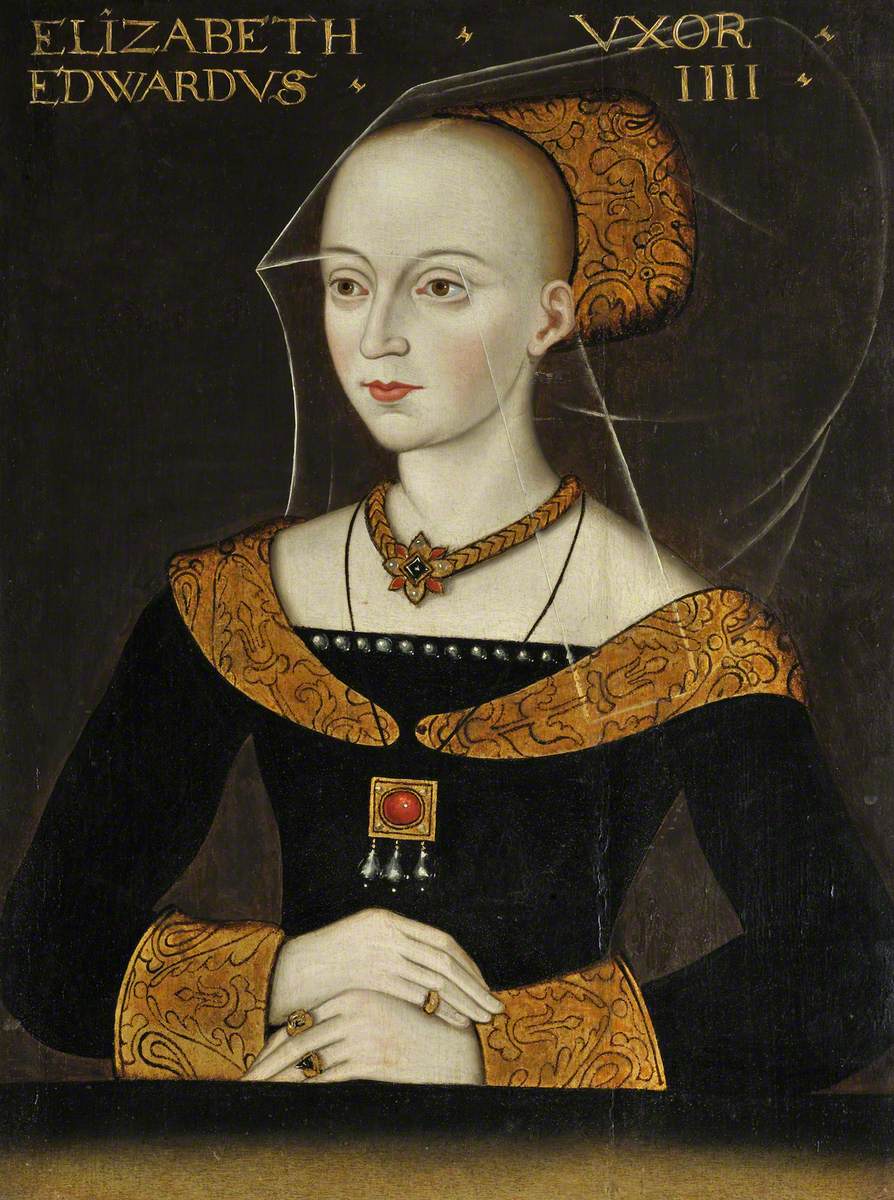
Image result for elizabeth wydeville

Today is International Women's Day. My research to date has primarily focused on late medieval and early modern women, specifically queenship. Earlier this year, MadeGlobal published my book Queenship in England 1308-1485, the culmination of years of research and what I would like to refer to as historical discovery. In honour of International Women's Day, therefore, I would like to think about some of the women that inspired my research.

My first introduction to the indomitable Isabella of France, wife of Edward II, was not an especially positive one, for it was based on a book that was both inaccurate and misleading. By immersing myself in the extant primary sources and by reading a fascinating array of secondary material, I gained a fuller and more nuanced picture of this intriguing queen. In Queenship in England, I focused on the multivalent roles that comprised the office of queenship. Isabella was highly active in her household governance, her lordship, her intercessionary activities and her patronage. Her relationship with Edward, moreover, appears to have been close and loving for the first fifteen years of their marriage. But political tensions and the ascendancy of the Despensers fractured their relationship beyond repair. 

Margaret of Anjou and Elizabeth Wydeville, like Isabella, have been similarly maligned or misrepresented, but the last few decades have witnessed several publications that have aimed to rehabilitate their reputations. My research indicated that Margaret was more politically astute and pragmatic than is usually suggested, and she sought to maintain a cordial relationship with the duke of York from early on in her queenship. In the aftermath of the Wars of the Roses, it was convenient for commentators to assign blame to Margaret for the conflict, but in assuming the role of leader, she was ardently fighting to protect the inheritance of her son and the honour of her beleaguered husband. 

Elizabeth's personality and appearance have both been attacked by modern historians, who have condemned her as a cold, grasping and avaricious woman. Much of this results from a misunderstanding of court protocol. In her lifetime, Elizabeth was praised for her "womanly" conduct and, indeed, she appears to have actively distanced herself from the militant queenship of her predecessor. She was, in most respects, the ideal medieval consort, and demonstrated her suitability to be queen by bearing Edward IV several children, thus testifying to divine approval of their union. The events following Edward's death and the accession of Richard III, coupled with her questionable relationship with Henry VII, have perhaps obscured the fact that Elizabeth was one of the most successful medieval queens of England.

These three women are perhaps three of the most well-known of England's medieval queens, and they are certainly not the only ones who fascinated and inspired me during my research and writing. However, I was especially drawn to their experiences and stories, in demonstrating the rich opportunities for the consort to wield agency and, in some instances, power. Investigating the relationship between gender and power as it operated in the political sphere is an exciting exercise and one that continues to resonate, and be relevant to, today.

Monday, 28 November 2016

28 November 1499: The Execution of Edward Plantagenet, Earl of Warwick


Above: Edward was the son of George, duke of Clarence (left) and Isabel Neville, duchess of Clarence (right).

28 November 1499 is one of the darkest days in Tudor history, for it witnessed the execution of Edward Plantagenet, earl of Warwick. The earl, who was only twenty-four years of age, was the only son of George, duke of Clarence and Isabel, duchess of Clarence. He was, therefore, a nephew of Edward IV and Richard III. After Henry VII's triumph at Bosworth in 1485, the ten-year-old Warwick - whose parents had died in 1478 and 1476, respectively - was incarcerated in the Tower of London. 

The Tudor dynasty was vulnerable in its early days, and Henry VII's reign was troubled by the emergence of pretenders claiming to be members of the House of York. The two most notable pretenders were Lambert Simnel and Perkin Warbeck, who claimed to be Richard of York. Historians have puzzled over whether or not Warwick willingly became involved in Warbeck's conspiracy to seize the throne from Henry VII. Allegedly, both Warbeck and Warwick attempted to escape from the Tower in 1499. Both were tried and found guilty of treason. On 23 November, Warbeck processed from the Tower to Tyburn on a hurdle, where he was hanged.

Five days later, Warwick was executed on Tower Hill. His body was later buried at Bisham Abbey in Berkshire. Contemporaries believed that Warwick's execution was the result of pressure put on Henry VII by Ferdinand of Aragon and Isabella of Castile, who were concerned about the situation that their daughter, Katherine, would face in England if she were to marry the king's son Arthur. Jane Dormer, duchess of Feria, an attendant of Katherine's daughter Mary, claimed that Katherine believed that her marriage to Arthur had been made in blood.

In 1541, Warwick's sister, Margaret, was also executed, on the orders of Henry VIII. She was sixty-seven years old and was literally hacked to death by an inexperienced executioner. The Tudors were undoubtedly ruthless in their pursuit of dynastic security, and the actions of Henry VII and Henry VIII towards the Yorkists does not reveal either king in an especially flattering light. Elizabeth I exercised a similarly militant policy in regards to her royal cousins.

Tuesday, 31 May 2016

31 May 1443: The Birth of Lady Margaret Beaufort


On 31 May 1443, Lady Margaret Beaufort was born at Bletsoe Castle in Bedfordshire. She was the daughter of John Beaufort, duke of Somerset, and Lady Margaret Beauchamp. Through her father, Margaret was a descendant of Edward III. Less than a year after his daughter's birth, the duke of Somerset died in suspicious circumstances while on campaign abroad. Some of his contemporaries believed that he had committed suicide, a heinous sin in the eyes of fifteenth-century individuals. Margaret probably did not learn of her father's death until she was older, but the knowledge that he may have killed himself would have brought shame and dishonour both to herself and to her family.

Shortly afterwards, Margaret's wardship was granted to the king's favourite, William de la Pole, first duke of Suffolk. As the heiress to her father's fortunes, Margaret was a highly valuable commodity. In early 1444, when she was less than three years old, Margaret was married to the duke's son John de la Pole. Occasionally, highborn children were married while still in infancy. Later, Edward IV's son Richard married Anne Mowbray when he was four years old and she five. Other evidence indicates that Margaret may actually only have married John in 1450, the year in which Suffolk was murdered. Irrespective of its date, the marriage was annulled in 1453 and Henry VI granted Margaret's wardship to his half-brothers Edmund and Jasper Tudor. 

Eddytudor.jpg
Above: Edmund Tudor, earl of Richmond.

On 1 November 1455, when she was twelve years old, Margaret was married to the king's twenty-four year-old half-brother Edmund Tudor, earl of Richmond. Usually when girls were married at a young age, consummation of the marriage was delayed until a later date. Edmund, however, elected to consummate his marriage immediately. At the age of thirteen, Margaret fell pregnant. Her husband, however, was not to learn the outcome of her pregnancy, for he died while in captivity at Carmarthen in November 1456, perhaps of plague. Two months later, his widow gave birth to her only child, Henry Tudor, at Pembroke Castle. Evidence suggests that the birth was a difficult one, and Margaret may have been physically and mentally scarred by the experience. A year after the birth of her son, the widowed countess remarried. Her husband was Sir Henry Stafford, son of the duke of Buckingham. Evidence suggests that their marriage was a happy one. 

Above: Pembroke Castle. Margaret gave birth to her son Henry there.

In 1461, the castle was captured by the Yorkists, and the infant Henry was placed in the custody of William Herbert, earl of Pembroke. Henry later departed for the Continent in the company of his uncle Jasper. The year her son departed for France, Margaret's husband died at the Battle of Barnet. 1471 was a tumultuous year. The Lancastrian king Henry VI was probably murdered in the Tower of London by the victorious Yorkists, and his only son Edward of Westminster was slain at Tewkesbury. Margaret, whose status had naturally inclined her to support the Lancastrian cause, dutifully made a show of supporting the new Yorkist dynasty. She understood that her son, Henry Tudor, was the only Lancastrian claimant still alive. Edward IV, understandably, was determined to gain custody of Henry. In a bid to protect both herself and her son's future, Margaret outwardly supported the house of York. 

A year after her husband's death, Margaret married for the last time, to Thomas Stanley. This marriage enabled Margaret to reside at court, and she appears to have enjoyed amicable relations with both the king and queen, later serving as godmother to one of their daughters. However, Edward IV's unexpected death in 1483 and the usurpation of Richard III changed Margaret's life forever. Margaret initially signalled her support of the new regime by carrying Anne Neville's train at her coronation, but she wholeheartedly supported the duke of Buckingham's rebellion against Richard III, perhaps with the backing of Edward IV's widow Elizabeth Wydeville. The rebellion was legitimated by rumours that Edward IV's sons had been murdered, perhaps on the orders of Richard III. It was agreed that, if the rebellion succeeded, Henry Tudor would marry Edward IV's daughter Elizabeth of York. However, the rebellion failed and Buckingham was executed. Margaret was stripped of her titles and estates and placed under house arrest; she was fortunate to escape with her life.

Above: Thomas Stanley, husband of Margaret Beaufort.

Despite this setback, Margaret continued to scheme for her son's accession. Evidence suggests that she had been content to support Edward IV and desired no more than her son's attainment of the earldom of Richmond. However, Margaret may have believed that Richard III was a usurper and perhaps viewed him as guilty of the murder of his nephews. It may have been this that encouraged her to press for Richard's deposition and his replacement with her son. At Bosworth in 1485, Henry Tudor defeated Richard and the final Yorkist king was slain. It was a moment of triumph for Margaret. Her son duly married Elizabeth of York, but Margaret's influence was considerable during her son's reign. Known as 'My Lady the King's Mother', Margaret held property independently from her husband, and she administered justice in the king's name at several courts. 

Margaret was revered for her education and her piety. In 1502, she founded the Lady Margaret's Professorship of Divinity at the University of Oxford, and three years later founded Christ's College, Cambridge. St John's was founded in 1511. She was politically astute, intelligent and resourceful. Historians have debated the nature of relations between Margaret and her daughter-in-law Elizabeth of York, but irrespective of their true feelings towards each other, the two women cooperated and worked together for much of Henry's reign. Margaret's death in 1509 followed that of her only son, for whom she had schemed and worked to ensure his accession to the throne. Lady Margaret Beaufort deserves to be remembered for her considerable successes. 

Above: Henry VII, son of Margaret. 

Sunday, 1 May 2016

'Now Take Heed What Love May Do'


The exact date on which King Edward IV married Elizabeth Wydeville is uncertain, but traditionally they are held to have married on, or about, 1 May 1464. In literature, Mayday had long been associated with romance, chivalry and passion. The selection of the date was appropriate, because Edward's marriage to Elizabeth appears to have been a love match. 

The marriage took place in circumstances of secrecy. Elizabeth's mother Jacquetta attended - and perhaps arranged the match - as did an unnamed priest. Two gentlewomen also attended. Contemporary writers and chroniclers later wrote, variously, that Elizabeth had enchanted the young king under an oak tree; that she had defended herself with a dagger when he attempted to force himself upon her; or that he threatened her with a dagger. 

Edward has been criticised by modern historians for selecting Elizabeth as his bride. However, there were good reasons to marry her. Firstly, she was undoubtedly fertile. She had already produced two sons in her first marriage, and she herself had thirteen siblings. Clearly, from Edward's perspective, Elizabeth came from good stock and would be able to produce sons, which was the primary duty of the medieval queen. Secondly, as later events would show, Elizabeth was beautiful, intelligent, charismatic, pious and ambitious. Thirdly, she was descended from the ducal house of Luxembourg, and could in theory offer her husband a prestigious foreign alliance. Fourthly, she had been married to a Lancastrian knight and the Wydevilles had traditionally supported the Lancastrian regime, so marriage to Elizabeth offered Edward the opportunity to heal the divisions between the warring houses of Lancaster and York.

On the other hand, Edward's choice was surprising to his contemporaries, because Elizabeth was not a foreign princess; marriage to a French princess would have been more profitable both for Edward and for his kingdom. The earl of Warwick had been negotiating for the king to wed Bona of Savoy. By marrying an English widow, Edward failed to consolidate his position, which was a risky policy given that he was a usurper. The situation in England remained precarious, and marriage to a foreign princess would have offered the promise of foreign military and diplomatic support, in the wake of further conflict and bloodshed. Secondly, the marriage alienated Warwick, who had supported Edward until that point. There is no evidence that the nobility as a whole resented the Wydevilles, but they were certainly disliked by Warwick, and he was a dangerous enemy to have, as events were to prove. 

In defying convention, Edward behaved exactly like his future grandson Henry VIII, who married four English women, at least two for love. King Edward has often been viewed as a serial womaniser, and indeed it is possible that he was actually married to Eleanor Talbot before marrying Elizabeth Wydeville. The king could not have known it, but his previous involvement with Eleanor was to jeopardise his marriage to Elizabeth. In Richard III's reign, the Wydeville marriage was declared invalid and the children of Edward and Elizabeth were declared illegitimate and unfit to succeed. 

In September 1464, Edward finally admitted that he had married Elizabeth. She was crowned queen on 26 May 1465, and gave birth to their first child, a daughter named Elizabeth, in February 1466. The marriage seems to have been a successful one. Elizabeth demonstrated her suitability to be queen and was praised for her constancy and modest behaviour, particularly during the troubles of 1470. Ultimately, it was their daughter Elizabeth's fate to be queen of England as the wife of Henry VII. 

Thursday, 14 April 2016

The Children of Edward IV and Elizabeth Wydeville


The marriage between the first Yorkist king, Edward IV, and Elizabeth Wydeville was highly controversial in the fifteenth-century. There were doubts over its legitimacy, and some modern historians believe that Edward's first marriage to Lady Eleanor Butler rendered the Wydeville marriage invalid. This blog post does not seek to explore whether Edward's marriage to Elizabeth was valid or not. Rather, it is concerned with the offspring of the Wydeville marriage. 

Queen Elizabeth proved to be a fertile bride. In nineteen years of marriage, she gave birth to ten children: seven daughters and three sons. All of the sons died young, and two of the daughters did not live to adulthood. The eldest child, Elizabeth, became Queen of England in the summer of 1485, when she married Henry VII, the first Tudor king. Her brother was Edward V, who had been imprisoned in the Tower of London with his younger brother Richard when their uncle, the duke of Gloucester, usurped the throne in 1483. Mystery surrounds the fates of the 'Princes in the Tower', as they came to be known. Most modern historians believe that they were likely dead by the autumn of 1483. 

Queen Elizabeth Wydeville was close to her children, particularly her eldest daughter Elizabeth. This blog post explores the lives of the children of King Edward IV and Queen Elizabeth. 

Elizabeth of York (1466-1503)

The eldest child of King Edward and Queen Elizabeth was a daughter. She was born at Westminster Palace on 11 February 1466, and was named for her mother. While young, Elizabeth was briefly betrothed to George Neville, first duke of Bedford. This was not the match that the king and queen had envisaged for their eldest daughter, but the match was proposed with a view to continuing the friendship between the house of York and the Neville earls of Warwick. When George's father joined forces with his brother, the 'Kingmaker' duke of Warwick, the betrothal was called off. In 1475, in alliance with Louis XI of France, King Edward arranged a betrothal between his daughter and Charles, the French dauphin. It would have been a splendid marriage for Elizabeth, had it have gone ahead, and it would have enabled her to become Queen of France. However, it was not to be. Elizabeth's father died in 1483, and following the accession of her uncle Richard, Elizabeth accompanied her mother into sanctuary, with her other siblings. A year later, Elizabeth left sanctuary with her sisters, and they arrived at court. It is likely that they resided in the household of Queen Anne. Rumours of the queen's imminent demise fuelled speculation that King Richard was planning on marrying his niece. Whether Elizabeth truly considered marrying Richard is a mystery, and has been furiously debated by historians. It is entirely likely that she did scheme to marry her uncle, but ultimately his death at Bosworth in 1485 compelled her to honour her prior agreement to marry Henry Tudor, who had become king. 

Elizabeth and Henry, to all appearances, enjoyed a warm and loving marriage. Elizabeth gave birth to seven children; three of them survived to adulthood. She appears to have been a popular queen consort and was praised for her acts of intercession. Mystery surrounds much of Elizabeth's life. We do not know the true nature of her relations with her resourceful mother-in-law, Lady Margaret Beaufort. Nor do we know whether she really believed that her younger brothers had been murdered. Whether she loved Henry or not, she was a dutiful wife and a loving mother to their children. She died in 1503, on her thirty-seventh birthday. Her son, who later became Henry VIII, was said to have been devastated by her death.

Mary of York.JPG
Mary of York (1467-1482)

Mary was the second child of Edward and Elizabeth. She was born on 11 August 1467 at Windsor Castle. Very little is known about her. There were rumours during her childhood that she would marry John, the Danish king. In 1480, at the age of thirteen, she became a Lady of the Garter alongside her younger sister Cecily. Mary died on 23 May 1482 at the age of fourteen. She was buried at St. George's Chapel at Windsor Castle, where her parents would later be buried. Her early death meant that Mary did not experience the drama of the following year, when her father died, her brother was deposed and her uncle became king.

Cecily of York (1469-1507)

Cecily of York's life is one of drama. The events of her life suggest that she seems to have been a strong-minded, impulsive woman. Cecily was born at Westminster Palace on 20 March 1469, and was likely named after her grandmother, the duchess of York. At the age of seven, she was betrothed to the future James IV of Scotland. Cecily would have grown up believing, at least for a time, that it was her destiny to be Queen of Scotland. However, it was not to be. In 1482, when Cecily was thirteen, she was betrothed to Alexander Stewart, duke of Albany. However, the death of Edward IV the following year put paid to any hopes Cecily may have had of marrying Albany. On her uncle Richard III's orders, she and her siblings were declared illegitimate, on the grounds that the marriage of Edward and Elizabeth Wydeville was invalid. However, Richard knew that Cecily remained attractive as a prospective bride. To counter this, he arranged for her to marry Ralph Scrope of Upsall, a younger brother of Richard's supporter Thomas Scrope. It was surely not a match that Cecily had desired; given that she had been betrothed at one time to the heir to the Scottish crown, it is entirely possible that she was bitterly disappointed, perhaps even resentful. 

Henry VII's accession, however, changed Cecily's fortunes. The Scrope marriage was annulled and, two years after Richard III's death, Cecily remarried. Her second husband was John Welles, first Viscount Welles, who was a maternal half-brother of Lady Margaret Beaufort and was, therefore, half-uncle to Henry VII. Again, it was probably not the match that Cecily had wanted, but it is possible that the couple were happy. They had two daughters, Elizabeth and Anne, both of whom died young. Viscount Welles died in around 1498. 

It is in the aftermath of her second husband's death that we are able to gain an insight into Cecily's personality. One commentator reported that she chose to marry for a third time for 'comfort': perhaps she sought love, or stability. Her third husband was an obscure Lincolnshire esquire, Thomas Kyme. It seems to have been a love match. However, Cecily was reckless in failing to secure Henry VII's consent to the marriage, which she was required to do, as a member of the royal family. The king was furious and banished his sister-in-law from court. Lady Margaret, who appears to have been fond of Cecily, interceded for her and some of Cecily's lands were restored to her. Cecily died in 1507 at the age of thirty-eight, and she was buried at Hatfield, Hertfordshire. 

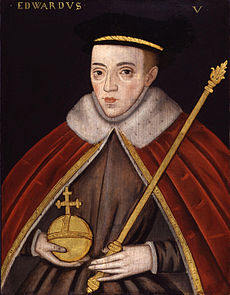
King Edward V from NPG.jpg
Edward V (1470-1483?)

The eldest son of King Edward and Queen Elizabeth was born on 2 November 1470 in Westminster Abbey. The queen had sought sanctuary after the Lancastrians had forced the king to flee his realm. However, King Edward emerged victorious and the prince was brought out of sanctuary. He was created Prince of Wales the following year. Prince Edward was reputedly learned, diligent, and dignified.

The birth of a son to the royal couple was highly important: it brought security to them, and offered the promise of future prosperity as well as the continuation of the dynasty. However, it was not to be. When he was only twelve years old, Prince Edward became King Edward V, upon the unexpected death of his father. However, his uncle Richard seized the throne. Edward was lodged in the Tower of London alongside his younger brother Richard, duke of York. Like his siblings, the new king was declared illegitimate and unfit to succeed to the throne. 

Mystery surrounds Edward's fate. Contemporaries speculated a great deal about what had happened to him. Some outright accused King Richard of murdering him and his brother. Others believed that the king had died in the Tower from illness. The majority of modern historians believe that Edward was dead by late 1483, which if true would mean that he never reached his fourteenth birthday (and possibly not his thirteenth). Edward V is one of the shortest reigning monarchs in English history.

Richard of Shrewsbury.jpg
Richard, duke of York (1473-1483?)

Richard was born on 17 August 1473 in Shrewsbury, and may have been named for his grandfather Richard, duke of York; alternatively, he may have been named for his uncle, Richard, duke of Gloucester. At the age of four, Prince Richard married the five-year-old Anne Mowbray, countess of Norfolk, at Westminster in January 1478. This appears utterly bizarre to modern readers. The marriage occurred on account of the king's determination to secure the Mowbray estates. Anne died in 1481, and her estates should have passed to William, Viscount Berkeley and to John, Lord Howard. However, an act was passed in 1483 that granted the Mowbray estates to Prince Richard for his lifetime, and to his heirs, if he had any, when he died. The whole episode was an example of King Edward IV's capacity for rapacity and ruthlessness when it came to acquiring greater wealth.

The declaration made in the spring of 1483, following Edward IV's death, that the children of the Wydeville marriage were illegitimate on account of their father's previous marriage to Lady Eleanor Talbot, rendered Prince Richard a bastard. The prince was escorted to the Tower of London, to join his brother, Edward V. Most historians believe that Richard was killed on the orders of King Richard; others suggest that he was put to death, but on another individual's orders: possibly Henry Tudor; possibly the duke of Buckingham; or possibly Lady Margaret Beaufort. 

However, others believe that Richard escaped abroad. One line of thought posits that the pretender Perkin Warbeck, who was a menace to Henry VII, was actually Richard, duke of York, come back to claim his inheritance.

The Daughters of Edward IV.jpg
Anne of York (1475-1511)

Anne was born on 2 November 1475 at Westminster Palace. In the summer of 1480, her father signed a treaty agreement with Maximilian I, duke of Austria, and it was agreed that Anne would marry the duke's eldest son Philip. This would have been a most prestigious marriage for Anne, for it would have enabled her to become duchess of Burgundy. Following Richard III's accession, the nine-year-old Anne was betrothed to Thomas Howard (later the uncle of Anne Boleyn and Katherine Howard) in 1484. Even after Richard's death, Howard remained eager to marry Anne. They married at Westminster Abbey on 4 February 1495. None of their children survived. 

Anne was close to her sister Queen Elizabeth, and like her sister Cecily, she played an important role in court ceremonies. She carried the chrisom at the christenings of her nephew Arthur, in 1486, and niece Margaret in 1489. Anne died on 23 November 1511 and was buried at Thetford Priory in Norfolk. Later, her body was moved to the Church of St Michael the Archangel in Framlingham.

Katherine of York.jpg
Katherine of York (1479-1527)

Aside from her sister Elizabeth, Katherine of York made the best marriage of any of the York children. She was born on 14 August 1479 at Eltham Palace. In childhood, Katherine had been betrothed to Juan, the heir to the kingdoms of Castile and Aragon (he was the older brother of Katherine of Aragon). Upon Henry VII's accession, Katherine was betrothed to James Stewart, duke of Ross. The same agreement envisaged marrying Katherine's mother, the dowager queen Elizabeth Wydeville, to James III of Scotland. These plans came to nothing, and in 1495, the same year her sister Anne married Howard, Katherine married William Courtenay, earl of Devon. 

Again, it may not have been the marriage that Katherine had wanted, but it ensured that she was a countess. They had three children: Henry (who was executed in 1539 for plotting against Henry VIII); Edward (who died young); and Margaret (who married Henry Somerset, earl of Worcester). Her husband died in 1511. Following his death, Katherine swore a voluntary vow of chastity in the presence of the bishop of London. She was reportedly favoured by her nephew Henry VIII, who 'brought her into a sure estate'. Katherine died on 15 November 1527 at Tiverton Castle, the last of Edward IV's children to die.

BrigídaYork01.JPG
Bridget of York (1480-1517)

Bridget was the youngest child of King Edward and Queen Elizabeth. She was born on 10 November 1480 at Eltham Palace. It is likely that Bridget was named after St. Bridget of Sweden. It seems that the king and queen decided, while Bridget was still young, that their youngest daughter would follow a religious life. At an unknown date between 1486 and 1492, when she was between the ages of six and twelve, Bridget was entrusted to Dartford Priory in Kent. Her sister, Queen Elizabeth of York, continued to write to her and send messengers. Bridget attended the funeral of her mother, Elizabeth Wydeville, in 1492. She died in 1517, and in some respects is the most obscure of Edward IV's daughters.

Children who died young
Margaret of York (born and died 1472)
George, duke of Bedford (1477-1479)

Margaret of York was born on 10 April 1472 at Winchester Castle in Hampshire. She was likely named for her aunt, Margaret, duchess of Burgundy. Tragically, Margaret died at the age of only eight months, on 11 December 1472. She was buried in Westminster Abbey.

George of York was born in March 1477 at Windsor Castle. The following year, he was created duke of Bedford. The dukedom of Bedford had long been associated with the royal family. That same year, George was appointed lord lieutenant of Ireland. He died in 1479 at the age of two, perhaps from plague, and was buried in St George's Chapel at Windsor Castle, where his parents were later buried. 

Sunday, 8 November 2015

The Forgotten Countess: Anne Beauchamp, Countess of Warwick


Above: Anne Beauchamp alongside her husband Richard Neville, earl of Warwick, in the television series The White Queen.

In fifteenth-century England, titled women, that is duchesses and countesses, enjoyed positions of great social and political importance. They were second only to queens in the power they held and influence they wielded. At that time, a duchess or countess was responsible for advising her husband; supervising her estates and assisting her adherents in a variety of matters; attending court in the queen's household; and, most importantly, bearing children (preferably sons). Even today, duchesses and countesses of fifteenth-century England remain well-known. Women such as Jacquetta, duchess of Bedford, and Cecily, duchess of York, were influential, intelligent and strong-willed. They influenced their offspring and assisted them in their schemes to take the throne. Jacquetta masterminded her daughter Elizabeth Wydeville's obscure marriage to Edward IV, while Cecily had played an important role in educating Edward and, perhaps, grooming him for kingship. Similarly, the political involvement of Margaret Beaufort, countess of Richmond and Derby, was significant. Her influence both at court and in local society ensured the continuing relevance of her son Henry Tudor's claim to the throne, and the countess emerged triumphant in the summer of 1485 with Henry's accession. 

However, one countess remains largely unknown, and yet her story was every bit as tragic, as unpredictable, and as fascinating as the stories of the women above named. Anne Beauchamp, countess of Warwick, was the wife of Richard Neville, earl of Warwick, who remains known today as the 'Kingmaker'. She was the mother of Isabel and Anne, and her younger daughter would become queen of England in 1483 as the wife of Richard III. In the television series The White Queen, the countess is not one of the main characters, but she is portrayed as a shrewd, intelligent woman who played an advisory role to her husband. She was depicted as being extremely close to her two daughters. Whether the real countess enjoyed good relations with her offspring is unknown.


Above: Anne Neville, the younger daughter of the Countess of Warwick.

Anne Beauchamp was the daughter of Richard Beauchamp, thirteenth earl of Warwick, and Isabel le Despenser, who was the sole heiress of her deceased father Thomas. She was born in July 1426 at Caversham Castle in Oxfordshire. In 1434, when Anne was only eight years old, she was betrothed to Richard Neville. She married Richard at an unknown date and gave birth to two daughters by him: Isabel (born in September 1451) and Anne (born in June 1456). Both girls were born at the family seat at Warwick Castle. Whether the couple were severely disappointed by their failure to have a son is unknown, but it is entirely possible given that Richard may have wanted the estates and title to remain within the family. The son of the earl of Salisbury, Richard acquired significant wealth and status by marrying Anne Beauchamp and inheriting the Warwick estates and title. Upon her marriage to Richard, Anne became countess of Warwick. 

The Neville family was one of the old noble families in England. They were proud of their lineage and were highly ambitious. Warwick's ambition was renowned and he played a major role in securing the accession of his cousin Edward, earl of March, in 1461. However, Warwick experienced conflict with the new king when Edward elected to marry the relatively unknown Elizabeth Wydeville. The new king's mother, Cecily, duchess of York, disliked her daughter-in-law and voiced outrage at her son's folly. Warwick similarly disliked the new queen and harboured a great deal of resentment, eventually leading him to rebel against Edward. Whether Anne Beauchamp resented Queen Elizabeth, or whether she enjoyed good relations with her, is a mystery. Certainly she would have enjoyed a favoured position at court. 

The sources are frustratingly silent about the countess. We know next to nothing about her. Did she welcome the favour shown to her family and did she feel pride at her husband's influence at the king's side? She surely harboured concern about the twists and turns of fortune. In 1470, the disaffected Warwick masterminded the restoration of the Lancastrian king Henry VI and his resourceful wife Margaret of Anjou, a woman who loathed Warwick. We cannot know whether the countess was on intimate terms with Queen Margaret, but she surely could not have envisaged that the queen would become her sister-in-law that same year. But that is exactly what happened. Anne's younger daughter, also named Anne, married Edward of Westminster at the age of fourteen and, in the process, became Princess of Wales. She was destined to be England's queen - but, unknown at the time, it would not be at the side of Edward, who was killed in battle at Tewkesbury the following year, leaving the young Anne a widow.


Above: Margaret of Anjou, briefly Anne Beauchamp's sister-in-law.

1471 was perhaps Anne Beauchamp's annus horribilis. Not only had she lost her son-in-law, but her husband Warwick was killed at the battle of Barnet that spring. With his death, the countess lost everything. Her husband was, in the eyes of the restored Edward IV's government, a traitor. The countess herself was, by association, a pariah and she was forced to keep a low profile for a time. Her position, however, was uncomfortably ambiguous. Her elder daughter Isabel had married Edward's younger brother George, duke of Clarence, in 1469. This ensured the countess' continuing closeness to the ruling house of York. Isabel died in 1476, however, and Clarence was executed for treason two years later.

These were years of sorrow and loss for the countess. In a brief period, she had lost her husband, her daughter, and both her sons-in-law. She had been respected, perhaps even loved, during Warwick's ascendancy, and she had enjoyed an influential position at court. Briefly she had been Margaret of Anjou's sister-in-law, and had Margaret triumphantly regained her position as queen with the final collapse of the house of York, then Anne's position would surely have been unrivalled as the mother-in-law of the heir to the throne. Instead, she was isolated and alone. She only had her younger daughter Anne for company, and as events were to prove, that was not necessarily a positive thing. 


Above: Isabel Neville, duchess of Clarence, firstborn daughter of Anne Beauchamp.

The marriages of her two daughters caused the countess considerable stress. Her younger daughter Anne had married the king's youngest brother Richard, duke of Gloucester. In Clarence's lifetime, he had fought bitterly with Richard over the Neville inheritance. The countess resided in the household of her daughter, the duchess of Gloucester, but there may have been considerable ill-feeling between mother and daughter. Between them, the sons-in-law of the countess had effectively disinherited her. 

The countess did not meekly submit to the schemes of her sons-in-law. She responded furiously and expressed both outrage and disbelief. She perhaps viewed herself as betrayed by her own daughter. While in sanctuary at Beaulieu Abbey, the countess had written several letters seeking both her release and her control of her own wealth, swearing that she had 'neuer offended his most redoghted highnes' [Edward IV]. She was determined to exercise control over her own future and she would do whatever it took to do so. The countess sought the assistance of the queen, the king's mother, the queen's mother, and even the assistance of the king's eldest daughter Elizabeth. 

It was to no avail. The countess was legally treated as if she were dead. Her lands were divided between her two daughters and their avaricious husbands. She did, however, acquire an income from her son-in-law Richard III when he became king. It is worth noting that Henry VII was more generous in his treatment of the countess, providing her with 500 marks a year while granting her life estates in over two dozen manors and lordships. Henry also made her principal keeper of the forest of Wychwode. 

Anne died in 1492 aged sixty-six. Hers had been a long, tumultuous and, in many respects, tragic life. She had lost her husband in battle, her eldest daughter had died while still young, and she may have experienced conflict with her youngest daughter. Her lands and estates were seized from her by George of Clarence and Richard of Gloucester. She had been respected as the wife of the Kingmaker, but she had also been an outcast, perhaps even a pariah. She was briefly the mother of the Queen of England, but unlike Jacquetta Wydeville, Cecily Neville or Margaret Beaufort, she did not enjoy a position of power and influence as the mother of the ruler. We know very little about the countess and evidence is scarce. Whether the countess was scheming and ambitious, or whether she was more sympathetic, cannot be known. 

Sunday, 2 August 2015

Edward IV's Secret Bride

Elizabeth Woodville (c.1437–1492), 2nd Foundress of Queens' College, Wife of Edward IV
Above: King Edward IV's secret union with Lady Eleanor Talbot was to have a serious impact on the legality of his marriage to Elizabeth Wydeville (right).


Before he married the beautiful widow Elizabeth Wydeville, King Edward IV of England is said to have secretly married Lady Eleanor Talbot who was, like Elizabeth, a widow. In his study of Eleanor, historian John Ashdown-Hill speculates that the couple wed in secret in the spring of 1461, shortly before the first Yorkist king's coronation. Rumours of Edward's secret first marriage gained momentum following his unexpected death in 1483. His younger brother Richard duke of Gloucester, as is well known, seized the throne that summer, claiming that Edward's bigamous marriage to Queen Elizabeth rendered their children illegitimate. By virtue of the late king's first marriage to Eleanor Talbot, his children by Elizabeth were bastards, and as such had no right to inherit the crown. The majority of modern historians have dismissed this allegation, viewing it as evidence of Gloucester's depravity as well as his remorseless desire to attain kingship at whatever the cost, but Ashdown-Hill takes these allegations seriously. He concludes that King Edward probably did clandestinely marry Eleanor some three years before he wed Elizabeth. 

Following his unexpected accession to the throne, Richard III's first Parliament was responsible for passing an Act that declared that 'King Edward was and stood married and troth plight to one Dame Eleanor Butler, daughter of the old Earl of Shrewsbury'. The Burgundian diplomat Philippe de Commines was to report in c. 1490 that Robert Stillington, bishop of Bath and Wells, 'married them [Edward and Eleanor] when only he and they were present'. Indeed, the eminent nineteenth-century historian James Gairdner found the extant evidence so compelling that he was to conclude that the marriage between Edward and Eleanor cannot be regarded 'as a mere political invention... Perhaps rather an evidence of the truth of the story is the care afterwards taken to suppress and to pervert it'. It is also entirely possible that Queen Elizabeth herself eventually discovered that her husband had married another before her. Dominico Mancini was to report that Elizabeth was well aware of 'the calumnies with which she was reproached, namely that according to established usage she was not the legitimate wife of the king'. 

George Plantagenet, Duke of Clarence.jpg
Above: If Edward IV truly was married to Eleanor Talbot before his marriage to Elizabeth Wydeville, then the true king of England was, by right, his younger brother George duke of Clarence (left) and, following George's execution, Richard duke of Gloucester (right). 

Who was Lady Eleanor Talbot, the woman who was allegedly Edward IV's secret bride? Born perhaps in 1436, Eleanor was perhaps the fourth child of John Talbot, first earl of Shrewsbury, by his second wife Lady Margaret Beauchamp, a formidable and enterprising woman who was not afraid to ensure the protection of her rights. Eleanor's childhood was probably entirely orthodox. She learnt the fundamental female skills of embroidery and housewifery, and was perhaps taught to both read and write. She was probably taught to dance, to sing and to play a musical instrument. Certainly, that she attracted Edward IV indicates that she possessed the requisite social graces and accomplishments viewed at the time as desirable. As the daughter of an earl, Eleanor's education would not have been neglected. She almost certainly learnt French, although it is less likely that she would have been taught Latin. Eleanor's relationships with her siblings is unknown, although evidence suggests that she was close to her younger sister Elizabeth, later duchess of Norfolk. We have no knowledge of Eleanor's appearance, although Commines later described her as 'a beautiful young lady'.

At the age of thirteen, Eleanor married Sir Thomas Butler, son of Ralph Butler, lord Sudeley. We have virtually no evidence of their married life together. As an arranged marriage, personal feelings would have counted for very little, but that is not to say that Eleanor and Thomas did not grow to love one another. At an unknown date (certainly before 1460), Sir Thomas died, perhaps from injuries sustained at the battle of Blore Heath, as Ashdown-Hill conjectures. Eleanor herself died at the age of thirty-four on 30 June 1468. She was buried in Norwich in the monastic church of the white Carmelites, to whom she had supported during her lifetime as benefactress. 

Whether Eleanor Talbot truly married Edward IV in about 1461 is an issue of considerable historical importance. If she was, then she was the king's true wife and any subsequent marriage he made was invalid. His second marriage to Elizabeth Wydeville would have been bigamous and their children illegitimate. Historians, however, have largely regarded Richard's suggestion that Edward was legitimately married to Eleanor Talbot with scepticism. John A. Wagner explained that 'most modern historians believe the precontract to be a fabrication devised to give Richard III's usurpation a veneer of legitimacy. The betrothal cannot be documented beyond the account rehearsed in Titulus Regius, and Richard never attempted to have the precontract authenticated by a church court, the proper venue for such a case'. However, as we have seen, there is indeed evidence beyond the act of 1484 for Edward's marriage to Eleanor. 

Historian Anne Crawford believes that Edward IV did not truly marry Eleanor Talbot. She draws attention to the fact that Eleanor Talbot did not come forward when news of Edward's marriage to Elizabeth Wydeville became public. Crawford also noted that it is significant that the Talbot family failed to support Richard of Gloucester's claims about the precontract. If Edward was truly married to Eleanor before his later union with Elizabeth, then he could have applied for a papal dispensation that would have invalidated the match with Eleanor. Modern historians remain divided as to whether Eleanor was truly Edward's wife. It seems certain, however, that she was the king's lover at some point early in his reign and unknowingly provided the basis for which Richard seized the crown in the aftermath of his brother's death, leading to the eventual overthrow of the Yorkist dynasty.

Friday, 28 November 2014

28 November 1499: The Execution of Edward, Earl of Warwick

Arms of Edward Plantagenet, 17th Earl of Warwick.svgEdward Plantagenet, Earl of Warwick
Above: Shield of the Earl of Warwick. 

On 28 November 1499, Edward Plantagenet, earl of Warwick, was executed on Tower Hill for treason. The son of George, duke of Clarence, and the nephew of both Edward IV and Richard III, Warwick was only twenty-four years of age at his death. 

In an article I wrote for the University of St. Andrews's History Society, which can be accessed here, I explored the tragic life of Warwick and what his cruel end demonstrates about the phenomenon of pretenders in early Tudor England. Warwick had been born on 25 February 1475 to Clarence, younger brother of King Edward, by his wife Isabel Neville, eldest daughter of Richard, earl of Warwick, known as 'the Kingmaker'. At the age of three years old, Warwick's father was brutally executed on charges of treason, and the young Edward became earl of Warwick, although the attainder of his father removed Warwick from the line of succession. 

In 1484, Warwick's young cousin Edward of Middleham, the heir to the throne, died, and there has been speculation that Richard III named his nephew heir to the throne in consequence. However, historians have pointed out the lack of evidence for this, as well as the illogicality of Richard nominating his nephew as heir when Clarence's attainder had barred Warwick from the throne.


Above: Edward's parents, the duke and duchess of Clarence. 

The rule of the House of York came to a bloody end in August 1485, when Richard III was killed by Henry Tudor's forces at the Battle of Bosworth. The Tudors had seized the throne and would not relinquish it until 1603 upon the death of Elizabeth I. The new king shortly afterwards imprisoned Warwick, still only ten years old, in the Tower, an act that appears cruel and callous to us today but which Henry VII surely felt was necessary for the security of his dynasty. If Henry's reign had been peaceful and free of rebellions against his rule, Warwick might reasonably have lived out the rest of his days in obscurity in the Tower. However, the first Tudor king was far from universally loved, and many remained loyal to the Yorkist cause, believing that Henry VII should be deposed and replaced with a member of the House of York.

There has been some speculation about whether Warwick was mentally deficient. The Tudor chronicler Edward Hall famously described him as being kept imprisoned for so long 'out of all company of men, and sight of beasts, in so much that he could not discern a Goose from a Capon'. This statement has subsequently been interpreted to mean that Warwick was retarded. However, Hazel Pierce argued that Hall probably actually meant that Warwick's long imprisonment had made him naive and unworldly, rather than mentally disabled.

From the onset, rebellions and conspiracies surfaced seeking to remove the first Tudor king. The appearance of the pretender Lambert Simnel in 1487 was the first of several conspiracies to usurp the throne from Henry VII and replace him with a Yorkist. Simnel claimed to be the earl of Warwick, leading the king to publicly parade the real Warwick to prove the absurdity of Simnel's pretensions. James A. Williamson suggested that Warwick was merely a figurehead for a rebellion that was already being planned by the resentful and distrustful Yorkists. Simnel, and his cause, was defeated at the Battle of Stoke in June 1487, but the affair had proven to King Henry the danger Warwick represented.

In the 1490s, Perkin Warbeck, another pretender, menaced the king. Upon his imprisonment in the Tower in 1499, Warbeck allegedly attempted to escape alongside Warwick. Both were found guilty, and Warbeck was hanged at Tyburn. Warwick was tried at Westminster in November by his peers, and was found guilty of treason. He was beheaded at Tower Hill on 28 November, aged twenty-four. He was later buried at Bisham Abbey in Berkshire. It was thought at the time that Warwick was executed to appease the Spanish monarchs, who were fearful of sending their daughter Katherine to England to marry Prince Arthur, the king's heir, in view of continuing insurgencies against the monarchy. A later sixteenth-century account, The Life of Jane Dormer (Jane Dormer having been a favourite of Mary Tudor, daughter of Katherine of Aragon), claimed that Katherine experienced considerable remorse for Warwick's death, believing that her marriage to Arthur had been made in innocent blood. 

The end of Warwick provides evidence of the considerable vulnerability of the Tudor dynasty and Henry VII's intense paranoia about Yorkist conspiracies against his rule. Although he had married Elizabeth of the house of York, many resented his rule and sought his downfall. Henry's fears are understandable, given that his two immediate predecessors, Edward V and Richard III, had both been usurped and brutally killed. Despite Warwick's death, the future of the Tudor dynasty remained precarious. The king's beloved wife died in 1503. His heir Arthur had died the year before, while another son, Edmund, had died as an infant in 1500. Only the young Prince Henry (later Henry VIII) offered the hope of a peaceful and legitimate succession. The Yorkist threat did not disappear after Henry VII's death. Warwick's cousin Edmund, earl of Suffolk, plotted against the throne and fled abroad, and was executed by Henry VIII in 1513. Lady Margaret Pole, elder sister of Warwick, was brutally executed in 1541 aged sixty-seven on charges of treason, although her innocence has never been in any real doubt. She was beautified in 1886.


Thursday, 11 September 2014

The Wars of the Roses: A Tudor Construction?


Historian Dan Jones has published an interesting article in the October 2014 edition of BBC History Magazine claiming that the Wars of the Roses, the dynastic conflict between the royal houses of Lancaster and York in the mid-to-late fifteenth century, might have been a Tudor construction invented by that dynasty to consolidate and legitimise their rule. Some historians have supported this approach. K. B. McFarlane argued years before that there was no such thing as the 'Wars of the Roses'. This period of history has become ever more popular with the success of Philippa Gregory's "Cousins' War" novels (and the BBC television adaptation of one novel, The White Queen). But is Jones right to claim that the Wars of the Roses was, effectively, invented by the Tudors to explain their success in attaining the throne? Is the traditional interpretation of the conflict, so vividly described in Shakespeare's plays, 'misleading, distorted, oversimplified and - in parts - deliberately false'?

To start with, the term 'Wars of the Roses' certainly does not date from the time of the conflict. Sir Walter Scott seems to have coined it in his novel Anne of Geierstein, published in 1829. Scott in turn came up with the name having read Shakespeare's play Henry VI Part 1, specifically a scene in which a number of noblemen and a lawyer in the gardens of the Temple Church select red or white roses to demonstrate their loyalty to the Lancaster or York house, respectively. Jones is probably correct in suggesting that the Lancastrians never actually used the red rose as a badge during the period of conflict. As Adrian Ailes comments, Henry VII's decision to combine the red and white roses as a symbol of the end of conflict between Lancaster and York 'was a brilliant piece of simple heraldic propaganda'. 

Leanda de Lisle, however, recently suggested that the term 'Wars of the Roses' actually originated long before the publication of Scott's novel in 1829. She mentions that historian David Hume referred to 'the wars between the two roses' in his work of 1762, while more than a hundred years earlier the conflict was described as 'the quarrel of the two roses'. Lisle interestingly notes that Edward IV made extensive use of the white rose as a badge representing the House of York, for it was believed to have been the badge of Edward's ancestor Roger Mortimer, the supposed 'true' heir of Richard II before his right was 'usurped' by Henry IV. Perhaps most intriguingly of all, Lisle dismisses claims that the conflict should instead be known as 'the Cousins' War'.


Above: did the Wars of the Roses really involve the red rose of Lancaster competing for the throne against the white rose of York?

Jones' argument that the Wars of the Roses was an invention of the victorious Tudors hinges on the suggestion that it is a myth that the wars erupted because 'there were too many men of royal blood clustering around the crown, vying for power and influence over a weak-willed king'. Yet, in histories of the conflict that I have read, it is argued that conflict broke out firstly because of Henry VI's incompetence as a king, and secondly because of military disasters in France. England lost all the territories it had conquered and was left only with Calais (later won back by the French in 1558). Jones argues, fairly, that the 1420s saw no serious unrest and speculates that Henry VI's weak kingship did not ultimately result in dynastic conflict until he experienced insanity in 1453. This is correct. In stating this point, why does Jones seem to imply that historians have traditionally viewed the roots of the conflict as occurring as early as the 1420s/30s? To me, it was Henry VI's madness in 1453 that instigated the conflict. His illness allowed Richard duke of York to seize the reins of government, leading to conflict and rivalry with Henry's queen, Margaret of Anjou. Jones speculates that Henry VI's forced decision to disinherit his own son Prince Edward in 1460 in favour of the Yorkists was the point at which 'the wars became dynastic'. Surely this is stating the obvious: beforehand, conflict between York and Edmund Beaufort, duke of Somerset, occurred because both men were fighting for control of the king and the greater power and influence at court. But at some point, York seems to have concluded that he would make a stronger and more efficient king than the incapacitated Henry VI.


Above: Henry VI, house of Lancaster (left).
Edward IV, house of York (right).

In dividing the conflict into four phases, Jones' conclusions do not suggest that the Wars of the Roses was necessarily a Tudor invention. Rather, it indicates that the term 'Wars of the Roses', itself, is not perhaps the most helpful or effective way of characterising this period of dynastic conflict, especially given the fact that neither house probably employed their rose as the most prominent badge to represent their claim. The Tudors' decision to incorporate the red and white roses into what became the Tudor rose - achieved by Henry VII's marriage to Elizabeth of York in 1486 after his victory at Bosworth - was undoubtedly propaganda at its most effective, indicating that they had brought unity, harmony and sound rule to England after thirty years or so of political, governmental and dynastic unrest. But I remain unconvinced by Jones' claim that the Wars of the Roses should be considered a construction of the victorious Tudors. If anything, I came away from his article more convinced than before that it was a period of dynastic conflict, in which rival families sought to obtain the throne. Maybe they were not neatly separated into Lancaster and York, that is fair enough. But after 1460, there was certainly concerted rivalry between those loyal to Henry VI and the Lancastrians, and those who favoured Edward IV and the Yorkists, that blossomed due to increasing determination to obtain the throne and achieve peaceful governance after years of serious unrest.

Wednesday, 9 April 2014

9 April 1483: The Death of Edward IV


Above: Edward IV, king of England (1442-1483).

On this day in history, 9 April 1483, King Edward IV of England died. He had been king of England for twenty-two years, barring a six month period when his predecessor, Henry VI, briefly resumed his kingship. The first Yorkist king of England, Edward's first reign (1461-70) was marred by violence and continuing political and dynastic tensions as a result of Edward's unpopular marriage to Elizabeth Woodville, his fallout with the 'Kingmaker' earl of Warwick, and the continuing threat from the Lancastrians. But his second period of kingship, 1471-83, was comparatively more successful and can be termed a period of peace as the threat from the Lancastrians fell away following the death of Henry, the defeat of his controversial queen Margaret of Anjou and the death of their prince Edward of Westminster in battle.

Edward had been born in 1442 in Rouen, France; the second child of the third Duke of York, Richard Plantagenet, and his resourceful wife Cecily Neville. Edward was the eldest of four sons who survived to adulthood. The fifteenth century was a turbulent and violent period as English dynastic politics became increasingly uncertain and faction-driven as a result of the Lancastrian king Henry VI's ineptitude. The loss of English possessions in France, so hard-won by his much-famed father Henry V, were viewed with consternation and outrage in England, and the nobles, led by York, became increasingly vocal in their demands for the king's unpopular advisers, including the earl of Suffolk and later the duke of Somerset, whom they blamed for England's mounting crises, to be removed from power.


Above: Edward IV's coat of arms.

Edward was a handsome and energetic young man, famed for his good looks and personality. He was 6'4 and as a result was England's tallest king. In the 1450s, he came to play an increasingly important role in his family's dynastic conflict with the Lancastrians. His father, the duke of York, asserted his claim to the English throne in 1460, but he died at the Battle of Wakefield later that year. As a result, his claim passed to his teenage son, Edward. Edward's position in the mounting conflicts therefore became increasingly pivotal. In alliance with his kinsman the Earl of Warwick, Edward defeated the Lancastrians in several battles, including the bloodiest battle fought on English soil, Towton, in March 1461. Edward, at the age of nineteen, became king shortly afterwards.

ElizabethWoodville.JPG
Above: Edward's queen, Elizabeth Woodville.

However, Edward's reign did not begin particularly well due to the development of conflict with his former erstwhile ally, the Earl of Warwick. Following Edward's accession to the throne, the Earl had negotiated with the French king for Edward to marry his daughter, Anne of France, in an alliance that would enhance England's prestige and allow it to play a major role in European politics. However, Edward disrupted these plans by marrying the commoner Elizabeth Woodville, a Lancastrian widow in her late twenties. This misalliance outraged the earl and caused some consternation at court. It is possible that the king's mother, the formidable Cecily Neville, disapproved of the match. Most historians believe that the King was infatuated with Elizabeth, whose beauty was legendary, although there were, unsurprisingly, rumours that she had ensnared him by use of the black arts.

The new marriage caused hostility amongst the nobility, who resented the Woodville's lowborn origins. Worst of all, Elizabeth had numerous siblings, who were quickly married off to the most powerful nobles in attempts to bolster their power and enhance their prestige. This further alienated the earl of Warwick, who had hoped to marry his two daughters and heiresses Isabel and Anne to nobles. Warwick eventually turned against the king, acting in alliance with Edward's younger brother George duke of Clarence, who had come to resent his brother's policies. Warwick eventually captured the king following the Yorkist defeat at the Battle of Edgecote Moor in July 1469, but because he did not attain the support he had hoped for, the earl was forced to release Edward in September. The king sought reconciliation with his brother and Warwick, rather than executing or imprisoning them as traitors. Warwick, however, sailed to France and allied himself with his former enemy Margaret of Anjou, acting together with the support of the French king. The alliance was cemented by the marriage of Warwick's second daughter, Anne, to Margaret's son, the Lancastrian heir Edward of Westminster.


Above: Richard III, younger brother of Edward IV.

Following Edward's defeat in 1470, the Lancastrian king Henry VI, who had briefly fell into insanity in the late 1450s, was restored to the throne. Edward, however, managed to attain support from the duke of Burgundy, who was married to his younger sister Margaret. Edward returned to England and obtained the support of his people as he steadily moved through the country unopposed. His brother George returned to his side, having been alienated by his unfavourable fortunes following Henry's readeption. The Yorkist king entered London unchallenged, taking Henry VI prisoner. Warwick was defeated at the battle of Barnet in 1471, and the Lancastrian prince was killed at the battle of Tewkesbury that same year. Henry VI was almost certainly murdered at the Tower of London in May 1471, and his shamed and humiliated wife Margaret was forced to seek sanctuary in France. No longer were the Lancastrians, in the persons of Henry and Margaret, a threat to the victorious Yorkist dynasty.

Edward's second half of his reign, comprising twelve years, were peaceful. He faced no more rebellions and sired ten children by his wife Elizabeth, whom he enjoyed a loving and affectionate relationship with, although like many men in this age he took mistresses, including the beautiful Jane (or Elizabeth) Shore. Edward became increasingly gluttonous, however, and his weight expanded during the later years of his reign. Dynastic tragedy did occur, for George was executed in 1478 on grounds of treason. On 9 April 1483, less than three weeks before his forty-first birthday, he died. He had named his younger brother Richard (whom he seems to have trusted more than the disgraced George) as Lord Protector during the reign of his successor Edward V, who was a minor. There is uncertainty surrounding the exact cause of Edward's death, although both pneumonia and typhoid have been suggested.

Edward was an extremely popular and successful king. He outshone his predecessor, the saintly if ineffectual Henry VI, and appeared similar to the glorious Henry V. Later, similarities would be drawn between the first Yorkist king and his grandson Henry VIII. He was a spectacular military commander - he was never defeated in battle. His reign saw the restoration of law and order in England that had been notably absent in the conflict-riven reign of his predecessor. Edward managed his finances well and ensured stability in his household. His court was praised as "the most splendid in all Christendom", as the reports of contemporary ambassadors attest. He was interested in fashion and architecture, and knew how to project images of himself as a godly monarch. He was also interested in literature and education - more than forty of his books survive today. To all intents and purposes, Edward enjoyed a successful and prosperous reign. The Yorkist dynasty would, however, be marred by the haunting disappearance of his two sons Edward and Richard. To this day, no-one knows for certain what happened to those two little boys.

File:Princes.jpg
Above: the Princes in the Tower. What happened to Edward IV's sons?