Showing posts with label anne neville. Show all posts

Sunday, 8 November 2015

The Forgotten Countess: Anne Beauchamp, Countess of Warwick


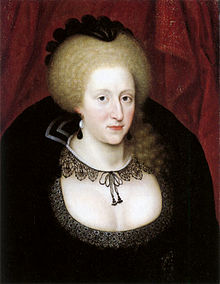
Above: Anne Beauchamp alongside her husband Richard Neville, earl of Warwick, in the television series The White Queen.

In fifteenth-century England, titled women, that is duchesses and countesses, enjoyed positions of great social and political importance. They were second only to queens in the power they held and influence they wielded. At that time, a duchess or countess was responsible for advising her husband; supervising her estates and assisting her adherents in a variety of matters; attending court in the queen's household; and, most importantly, bearing children (preferably sons). Even today, duchesses and countesses of fifteenth-century England remain well-known. Women such as Jacquetta, duchess of Bedford, and Cecily, duchess of York, were influential, intelligent and strong-willed. They influenced their offspring and assisted them in their schemes to take the throne. Jacquetta masterminded her daughter Elizabeth Wydeville's obscure marriage to Edward IV, while Cecily had played an important role in educating Edward and, perhaps, grooming him for kingship. Similarly, the political involvement of Margaret Beaufort, countess of Richmond and Derby, was significant. Her influence both at court and in local society ensured the continuing relevance of her son Henry Tudor's claim to the throne, and the countess emerged triumphant in the summer of 1485 with Henry's accession. 

However, one countess remains largely unknown, and yet her story was every bit as tragic, as unpredictable, and as fascinating as the stories of the women above named. Anne Beauchamp, countess of Warwick, was the wife of Richard Neville, earl of Warwick, who remains known today as the 'Kingmaker'. She was the mother of Isabel and Anne, and her younger daughter would become queen of England in 1483 as the wife of Richard III. In the television series The White Queen, the countess is not one of the main characters, but she is portrayed as a shrewd, intelligent woman who played an advisory role to her husband. She was depicted as being extremely close to her two daughters. Whether the real countess enjoyed good relations with her offspring is unknown.


Above: Anne Neville, the younger daughter of the Countess of Warwick.

Anne Beauchamp was the daughter of Richard Beauchamp, thirteenth earl of Warwick, and Isabel le Despenser, who was the sole heiress of her deceased father Thomas. She was born in July 1426 at Caversham Castle in Oxfordshire. In 1434, when Anne was only eight years old, she was betrothed to Richard Neville. She married Richard at an unknown date and gave birth to two daughters by him: Isabel (born in September 1451) and Anne (born in June 1456). Both girls were born at the family seat at Warwick Castle. Whether the couple were severely disappointed by their failure to have a son is unknown, but it is entirely possible given that Richard may have wanted the estates and title to remain within the family. The son of the earl of Salisbury, Richard acquired significant wealth and status by marrying Anne Beauchamp and inheriting the Warwick estates and title. Upon her marriage to Richard, Anne became countess of Warwick. 

The Neville family was one of the old noble families in England. They were proud of their lineage and were highly ambitious. Warwick's ambition was renowned and he played a major role in securing the accession of his cousin Edward, earl of March, in 1461. However, Warwick experienced conflict with the new king when Edward elected to marry the relatively unknown Elizabeth Wydeville. The new king's mother, Cecily, duchess of York, disliked her daughter-in-law and voiced outrage at her son's folly. Warwick similarly disliked the new queen and harboured a great deal of resentment, eventually leading him to rebel against Edward. Whether Anne Beauchamp resented Queen Elizabeth, or whether she enjoyed good relations with her, is a mystery. Certainly she would have enjoyed a favoured position at court. 

The sources are frustratingly silent about the countess. We know next to nothing about her. Did she welcome the favour shown to her family and did she feel pride at her husband's influence at the king's side? She surely harboured concern about the twists and turns of fortune. In 1470, the disaffected Warwick masterminded the restoration of the Lancastrian king Henry VI and his resourceful wife Margaret of Anjou, a woman who loathed Warwick. We cannot know whether the countess was on intimate terms with Queen Margaret, but she surely could not have envisaged that the queen would become her sister-in-law that same year. But that is exactly what happened. Anne's younger daughter, also named Anne, married Edward of Westminster at the age of fourteen and, in the process, became Princess of Wales. She was destined to be England's queen - but, unknown at the time, it would not be at the side of Edward, who was killed in battle at Tewkesbury the following year, leaving the young Anne a widow.


Above: Margaret of Anjou, briefly Anne Beauchamp's sister-in-law.

1471 was perhaps Anne Beauchamp's annus horribilis. Not only had she lost her son-in-law, but her husband Warwick was killed at the battle of Barnet that spring. With his death, the countess lost everything. Her husband was, in the eyes of the restored Edward IV's government, a traitor. The countess herself was, by association, a pariah and she was forced to keep a low profile for a time. Her position, however, was uncomfortably ambiguous. Her elder daughter Isabel had married Edward's younger brother George, duke of Clarence, in 1469. This ensured the countess' continuing closeness to the ruling house of York. Isabel died in 1476, however, and Clarence was executed for treason two years later.

These were years of sorrow and loss for the countess. In a brief period, she had lost her husband, her daughter, and both her sons-in-law. She had been respected, perhaps even loved, during Warwick's ascendancy, and she had enjoyed an influential position at court. Briefly she had been Margaret of Anjou's sister-in-law, and had Margaret triumphantly regained her position as queen with the final collapse of the house of York, then Anne's position would surely have been unrivalled as the mother-in-law of the heir to the throne. Instead, she was isolated and alone. She only had her younger daughter Anne for company, and as events were to prove, that was not necessarily a positive thing. 
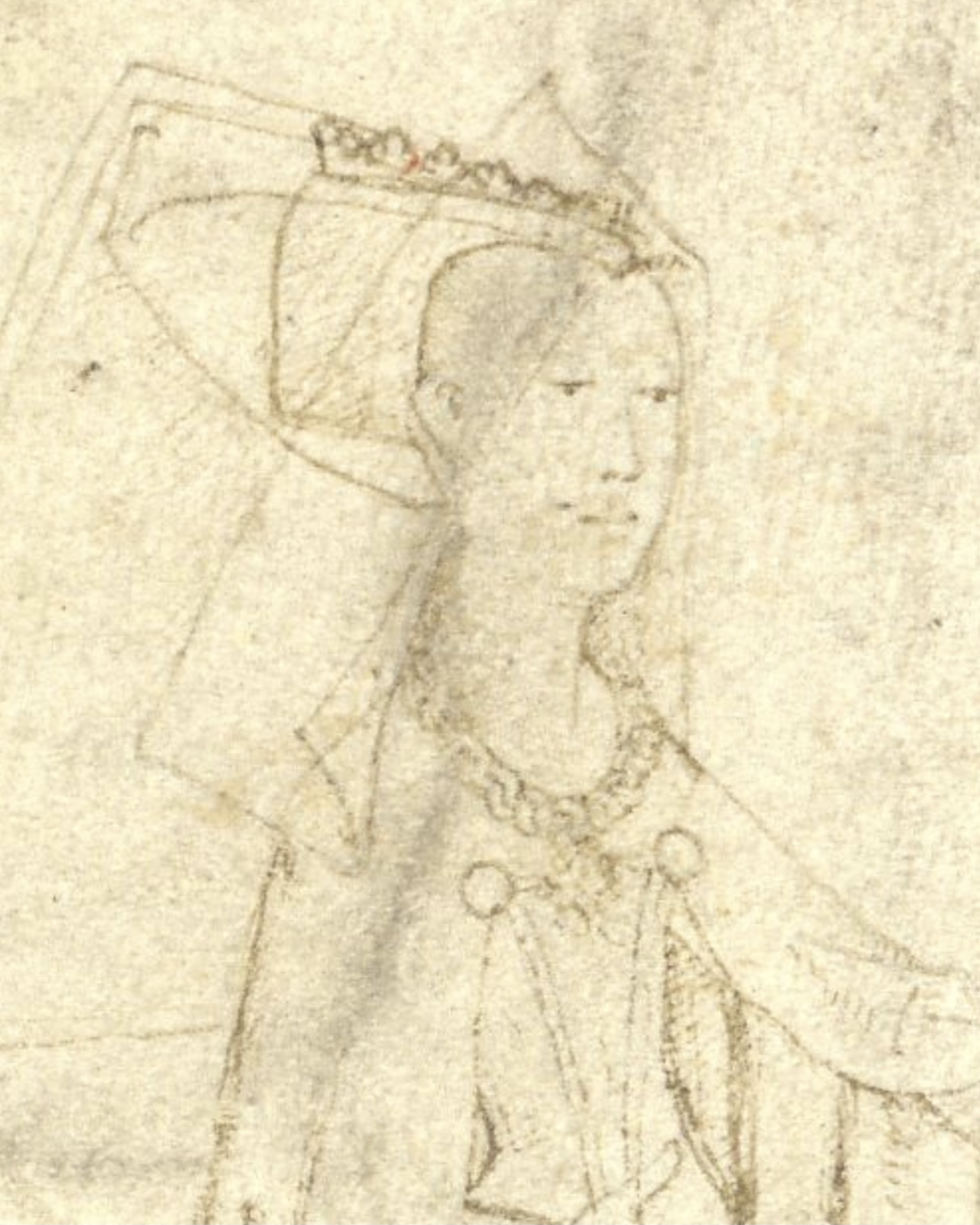


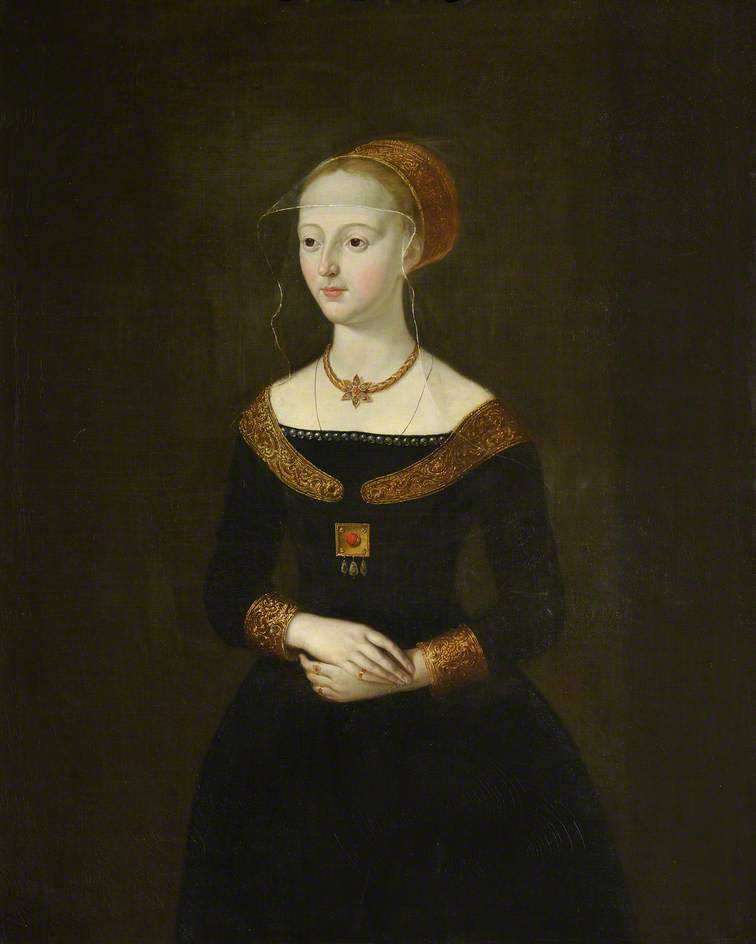
Above: Isabel Neville, duchess of Clarence, firstborn daughter of Anne Beauchamp.

The marriages of her two daughters caused the countess considerable stress. Her younger daughter Anne had married the king's youngest brother Richard, duke of Gloucester. In Clarence's lifetime, he had fought bitterly with Richard over the Neville inheritance. The countess resided in the household of her daughter, the duchess of Gloucester, but there may have been considerable ill-feeling between mother and daughter. Between them, the sons-in-law of the countess had effectively disinherited her. 

The countess did not meekly submit to the schemes of her sons-in-law. She responded furiously and expressed both outrage and disbelief. She perhaps viewed herself as betrayed by her own daughter. While in sanctuary at Beaulieu Abbey, the countess had written several letters seeking both her release and her control of her own wealth, swearing that she had 'neuer offended his most redoghted highnes' [Edward IV]. She was determined to exercise control over her own future and she would do whatever it took to do so. The countess sought the assistance of the queen, the king's mother, the queen's mother, and even the assistance of the king's eldest daughter Elizabeth. 

It was to no avail. The countess was legally treated as if she were dead. Her lands were divided between her two daughters and their avaricious husbands. She did, however, acquire an income from her son-in-law Richard III when he became king. It is worth noting that Henry VII was more generous in his treatment of the countess, providing her with 500 marks a year while granting her life estates in over two dozen manors and lordships. Henry also made her principal keeper of the forest of Wychwode. 

Anne died in 1492 aged sixty-six. Hers had been a long, tumultuous and, in many respects, tragic life. She had lost her husband in battle, her eldest daughter had died while still young, and she may have experienced conflict with her youngest daughter. Her lands and estates were seized from her by George of Clarence and Richard of Gloucester. She had been respected as the wife of the Kingmaker, but she had also been an outcast, perhaps even a pariah. She was briefly the mother of the Queen of England, but unlike Jacquetta Wydeville, Cecily Neville or Margaret Beaufort, she did not enjoy a position of power and influence as the mother of the ruler. We know very little about the countess and evidence is scarce. Whether the countess was scheming and ambitious, or whether she was more sympathetic, cannot be known. 

Friday, 9 October 2015

England's Queen Annes

Betting on The Favourite: Emma Stone, Olivia Colman and Kate Winslet.

It has been reported that an upcoming film about machinations at the court of Queen Anne of England, entitled The Favourite, will star Olivia Colman as the last Stuart monarch, Kate Winslet as the queen's intimate friend Sarah Churchill, duchess of Marlborough, and Emma Stone as Abigail Masham, favourite of the queen. What better time, then, to look at the women named Anne who rose to the position of queen of England?

Anne of Bohemia (1366-1394), consort of Richard II
Reigned 1382-1394.

Anne of Bohemia was the eldest surviving daughter of the Holy Roman Emperor Charles IV and his fourth wife Elizabeth of Pomerania. One of the more shadowy of England's medieval queens, Anne was reputed to be kind, charitable and was popular among her English subjects. The chronicler of Evesham described her thus: 'This queen, although she did not bear children, was still held to have contributed to the glory and wealth of the realm, as far as she was able. Noble and common people suffered greatly at her death'. On 20 January 1382, at the age of fifteen, Anne married Richard II of England. Her new husband was strikingly handsome, charismatic and intelligent; but he had a cruel streak and was known to be volatile, unpredictable and at times careless. The marriage was not particularly popular among the English nobility. Anne did not bring a dowry with her and the diplomatic advantages of the match were not regarded particularly favourably. As soon as she had disembarked in her new kingdom, Anne's ships were reportedly smashed to pieces - a troubling omen for superstitious observers. Despite these undercurrents of discontent, both nobles and commons alike came to regard Anne positively. She was a noted intercessor with her husband, procuring pardons for rebels involved in the Peasants' Revolt of 1381, and interceded for both John Northampton (a former mayor of London) and the citizens of London in the ceremonial reconciliation in 1392 between king and city. However, Anne failed to fulfil the most important duty of a queen consort: childbearing. There is no evidence that she was ever pregnant, leading some historians to speculate that Richard had agreed at his marriage to fulfil a vow of chastity. Anne died in 1394 at Sheen and her grief-stricken husband ordered the building destroyed. She was buried at Westminster Abbey, where her husband later joined her upon his death.

Anne Neville (1456-1485), consort of Richard III
Anne Neville portrait.jpg
Reigned 1483-1485.

Lady Anne Neville was the younger daughter of Richard Neville, sixteenth Earl of Warwick and Lady Anne de Beauchamp. Born at Warwick Castle, Anne's family was the premier noble family in the north of England. She spent her childhood at Middleham Castle in Yorkshire, residing with her kinsmen George of York and Richard of York (later to become her husband). In 1461, at the age of five, Anne's kinsman Edward earl of March became King Edward IV. In 1469, Anne's sister Isabel wed George duke of Clarence. Although her family was now closely tied to the ruling House of York, Anne's fortunes were to change drastically. Her father, immortalised as the 'Kingmaker', changed sides because of his disaffection and supported the return of the defeated Lancastrians. In 1470, at the age of fourteen, Anne was betrothed to Edward of Westminster, the only son of Henry VI and Margaret of Anjou, and was married to him later that year at Angers Cathedral, thus becoming Princess of Wales. How she felt about her husband we can only speculate; but given that Anne had been educated from birth to regard the Lancastrians as immoral, corrupt and deficient rulers, it cannot have been easy for her to suddenly regard the heir to the Lancastrian throne, her husband, with respect or affection. However, Anne's fortunes were to change again. In the spring of 1471, her former brother-in-law Edward IV returned from exile and seized the throne once more from the inept Henry VI, who was put to death in the Tower of London in May. This was a traumatic time for Anne. Her father was killed at the Battle of Barnet and her husband was killed at the Battle of Tewkesbury. Before her fifteenth birthday, the younger daughter of Warwick had lost both her husband and her father; her grief and inner turmoil can only be imagined. Richard of Gloucester, younger brother of Edward IV, was determined to wed her; whether out of genuine affection or shrewd ambition, we cannot say. Richard's brother Clarence opposed the match because he desired the entire Warwick inheritance, rather than splitting it with his brother. Anne and Richard, however, escaped Clarence's clutches and wed in the spring of 1472. A year after her first husband's death, Anne became Duchess of Gloucester, equal in rank to her sister. Perhaps in 1476, Anne gave birth to her only son Edward. Upon the death of Edward IV in 1483, Richard of Gloucester seized the throne and was crowned as King Richard III at Westminster on 6 July alongside his wife. He had usurped it from his nephew Edward V; whether Edward and his brother were put to death on Richard's orders, or escaped abroad, or were incarcerated for the rest of their lives is an issue that continues to arouse passionate debate. In the spring of 1484, Anne's son died while still an infant. She was not to bear any more children. She died on 16 March 1485. Rumours alleged that Richard had poisoned her in order to wed his niece Elizabeth of York, but he declared publicly that these rumours were false and that he had always loved Anne. 

Anne Boleyn (c. 1507-1536), consort of Henry VIII
Reigned 1533-1536.

Anne Boleyn was the younger daughter of Sir Thomas Boleyn and Lady Elizabeth Howard. She was most likely born in 1507 at Blickling Hall in Norfolk or Hever Castle in Kent, although later evidence indicates that her birthplace was London. Anne departed for the Continent in 1513 and served both Mary Tudor, queen consort of France, and Claude, wife of Francois I of France. She may also have known Marguerite of Alencon, Francois' sister. Anne was reputed to be charming, intelligent and witty and acquired an excellent education abroad. She was of medium height, with long dark hair, sparkling brown eyes, a wide mouth and elegant hands. Surviving evidence suggests that she was a skilled musician, a talented linguist and a shrewd intellectual with a fervent interest in the reformed faith. Anne returned to England to wed her relative James Butler, but the match did not come to fruition, and it is possible that she fell in love with Henry Percy, later sixth earl of Northumberland, and hoped to wed him. However, in 1526 or 1527 Henry VIII fell passionately in love with Anne and, after she refused to become his lover, proposed marriage to her. In 1533 she was crowned Queen of England upon the dissolution of his first marriage to Katherine of Aragon, and gave birth to Elizabeth in September. Hostile observers at court portrayed the new queen as a vindictive, cruel and outspoken woman who encouraged her husband to mercilessly kill his enemies, including his own daughter. These writers also claimed that Anne was responsible for the spread of heretical ideas. While Anne was undoubtedly an evangelical, she was not interested in the more extreme forms of Protestantism, and continued to favour traditional Catholic ideas such as the importance of good works. Anne was a charitable queen and concerned herself with education, providing generous assistance to the universities of Oxford and Cambridge. However, like Anne of Bohemia, she failed in her principal duty: to give birth to a son. In the spring of 1536, for reasons that remain mysterious and unfathomable to modern historians, the queen fell from favour and was arrested and imprisoned in the Tower of London alongside seven men, including her brother George Boleyn. She was found guilty of adultery and treason and was executed within the Tower walls on 19 May, and was later buried at the chapel of St Peter ad Vincula. Biographers and historians writing in the reign of her daughter Elizabeth stressed Anne's important contribution to the Elizabethan political and religious establishment, and were united in their belief that she was not guilty of the crimes for which she was put to death.

Anne of Cleves (1515-1557), consort of Henry VIII
Reigned 1540.

Henry VIII married Anne of Cleves on 6 January 1540 at Greenwich Palace in a bid to strengthen England's hand in the face of French and Imperial hostility. However, the ageing king was extremely reluctant to marry the shy and pleasant twenty-four-year old, perhaps because he found her unattractive but more likely because he believed she was already the wife of the duke of Lorraine. The marriage was never consummated. Anne was highly popular among her English subjects; the French ambassador reporting that she was viewed as 'one of the most sweet, gracious and humane queens they had had'. She enjoyed warm relations with her three stepchildren and was reputed to be especially close to her stepdaughter Elizabeth, daughter of Anne Boleyn. In the spring of 1540 Henry VIII fell in love with Anne's teenaged maid-of-honour Katherine Howard, and his marriage to Anne was annulled in July of that year. He wed Katherine less than three weeks later, on the day of Thomas Cromwell's execution. Anne died in 1557 and was buried at Westminster Abbey. Although she was rewarded with a generous settlement following the annulment of her marriage, whether she was truly relieved to be free from the tyranny of Henry VIII is open to question, since evidence suggests that she hoped to remarry him and was highly disappointed when he married Katherine Parr, rather than herself, in 1543.

Anne of Denmark (1574-1619), consort of James I
Anne of Denmark in mourning.jpg
Reigned 1603-1619. 

Anne was the eldest daughter of Frederick II of Denmark and Sophie of Mecklenburg-Guestrow. Born on 12 December 1574 at Skanderborg Castle in Denmark, Anne married James VI of Scotland in 1589. Her husband sailed from Leith in Scotland with a retinue of 300 to escort his wife personally to her new kingdom. They were married at the Old Bishop's Palace in Oslo later that year. Anne was described as being 'a princess both godly and beautiful... she giveth great contentment to his Majesty'. On 17 May the following year, the fifteen-year-old Anne was crowned queen in the Abbey Church at the Palace of Holyrood, the first Protestant coronation in Scotland. The royal couple's relations with one another were often tempestuous and strained, although they also viewed one another with affection. Anne's initial inability to provide her husband with an heir caused widespread consternation, but in February 1594 she gave birth to Henry Frederick, who later died at the age of eighteen from typhoid fever. When she discovered that she would have no involvement in her son's care, the queen reacted furiously and demanded that the Council resolve the matter. So upset was she that she suffered a miscarriage in the summer of 1595. The following month, it was reported that 'there is nothing but lurking hatred disguised with cunning dissimulation betwixt the King and the Queen, each intending by slight to overcome the other'. This episode seems to suggest that Anne was a resourceful, intelligent and proactive consort who was not afraid to pursue her rights. The royal couple were in conflict with one another over the issue of religion (Anne was rumoured to secretly favour Catholicism) and because of the king's favourites. Anne died in 1619 of dropsy and was buried in King Henry's Chapel, Westminster Abbey. Upon her husband's death in 1625, her second son Charles became king of England.

Anne (1665-1714), queen regnant
Anne1705.jpg
Reigned 1702-1714. 

Elizabeth I and Victoria remain England's most famous and celebrated queen regnants, but the only Anne to rule in her own right was the daughter of James II of England and Anne Hyde, duchess of York. Anne was highly popular upon her accession in 1702 at the age of thirty-seven, and described herself as being 'entirely English', in contrast to her Dutch brother-in-law. She promised to concern herself with attaining 'happiness and prosperity' for her country; like her fellow queen regnant Elizabeth I, Anne was careful to present the welfare of England as her abiding mission as ruler. The new queen, however, suffered ill health throughout her life. At her coronation, she had to be carried to Westminster Abbey in an open sedan chair because of her crippling gout. Anne's reign is especially memorable because the Act of Union was passed in 1707, thus uniting the kingdoms of England and Scotland in a single kingdom known as Great Britain. The queen attended a thanksgiving service at St. Paul's Cathedral immediately afterwards and was reported to be 'sincerely devout and thankful'. Anne was married to Prince George of Denmark, with whom she enjoyed good relations. The queen was devastated when her husband died in 1708. She had become pregnant seventeen times by him but, tragically, none of her children survived. Her son, Prince William, lived to the age of eleven before dying tragically in July 1700. Anne's health worsened during her reign and, in the final year of her life, suffered fevers and strokes. Anne has come to be regarded positively as a shrewd politician who achieved notable political and diplomatic achievements as queen regnant, including the Act of Union in 1707. 


Sunday, 16 March 2014

The Death of Anne Neville, Queen of England

Image result for richard iii

On this day in history, 16 March 1485, Queen Anne Neville of England died aged twenty-eight at Westminster Palace. According to legend, the day she died saw an eclipse which was viewed by the superstitious as an evil omen of her husband Richard III's imminent fall from grace. Although rumours credited the king with poisoning his consort as part of his schemes to marry his niece Elizabeth of York, reports indicated that he had wept at her funeral. She was buried at Westminster Abbey, having reigned as queen for only two years.

Anne was the second daughter of Richard Neville, earl of Warwick, and Anne Beauchamp, the daughter of the thirteenth earl of Warwick. She was born at Warwick Castle and most likely spent her formative years growing up in Warwick. Her family fortunes were splendid: the Nevilles exercised considerable influence in the northern parts of England and later became loyal adherents to the House of York. At Middleham Castle in Yorkshire, Anne and her sister Isabel became acquainted with the two younger brothers of Edward IV: George (later duke of Clarence) and Richard (later duke of Gloucester). 


Above: Middleham Castle.

In 1469, Isabel Neville married George, thus integrating the Nevilles into the royal family, for George was the younger brother of the Yorkist king Edward IV. The following year, aged fourteen, Anne herself was married but to the Lancastrian heir, Edward of Westminster, rather than to a Yorkist prince. This occurred as a result of her father's schemes, for the disaffected Warwick, resentful of the Woodville family (a Woodville was married to the king) had decided to switch sides and support the defeated Lancastrians in an attempt to attain financial and political power. Anne perhaps resided in the household of the vanquished English queen Margaret of Anjou in the immediate aftermath of her marriage, but at the Battle of Tewkesbury in 1471 the Lancastrian prince was defeated and killed and Anne left a widow aged fifteen.

Because Clarence was married to Anne's sister, he took it upon himself to take custody of both Anne and her mother and attained possession of the dead Warwick's possessions in the north. Anne was deprived of her inheritance as part of these greedy endeavours, and it is possible that he even sought to prevent her remarrying. Sometime between 1472 and 1474, however, Anne took it upon herself to seek marriage with Clarence's younger brother, Richard duke of Gloucester, who has traditionally been regarded as both more loyal and closer to King Edward than the ambitious Clarence. Whether Anne directed these plans as an ambitious attempt to regain her inheritance, or whether the alliance with Richard was based on love, is impossible to say.

The newly married couple resided chiefly in the north, where loyalty to the Nevilles was strong. Perhaps in 1473, and by 1476, Anne delivered a son, Edward, who became heir to the dukedom of Gloucester and a potential claimant to the throne; although the birth of two sons to King Edward meant that it looked virtually uncertain that either Edward or his father or uncle would acquire the throne.

Having been a Princess of Wales and later a Duchess of Gloucester, in 1483 Anne became a queen. Gloucester usurped the throne in the summer of 1483 and Anne was crowned alongside her husband at Westminster Abbey. Whether she had any knowledge of matters pertaining to the Princes in the Tower is uncertain, although novels such as The Kingmaker's Daughter explore such issues imaginatively. Anne's queenship, however, was not to prove happy. In 1484 her only son died and it is perhaps significant that she seems to have had no other pregnancies, although she may have experienced miscarriages or stillbirths. As Michael Hicks remarks: "Anne seems to have been a particularly insignificant queen, perhaps because she suffered from ill health". Certainly, in contrast to the active and auspicious queenships of the charismatic Margaret of Anjou and Elizabeth Woodville, Anne appears a shadowy and perhaps ineffectual consort.

At Christmas 1484 court rumours credited that Richard was engaging in an affair with his eighteen-year old niece Elizabeth, daughter of Edward IV and later, wife of Henry VII. Rumours that the king would set aside Queen Anne in favour of the younger and more attractive Elizabeth were rampant. Following Anne's death, Richard publicly denied any intention of marrying his niece.

Tuesday, 11 February 2014

The Birth and Death of Elizabeth of York


Above: Elizabeth of York (1466-1503).

11 February was the most important day for Elizabeth of York, for she was born on this day in 1466 and died on this day, on her thirty-seventh birthday, in 1503. Elizabeth was the eldest daughter of the renowned first Yorkist king, Edward IV, and his beautiful if controversial queen Elizabeth Woodville. She was born at Westminster Palace and baptised in St Stephen's Chapel in Westminster Abbey.

Until 1470, aged four, Elizabeth was heir to the throne of England, but that year Queen Elizabeth bore her first son, the ill-fated Prince Edward who was - almost certainly - to die aged thirteen in 1483 as the imprisoned Edward V. In 1469 Elizabeth was betrothed to George Neville, son of the Marquess Montagu, as part of her father King Edward's attempts to build a strong relationship with the disaffected Nevilles, headed by the 'Kingmaker' Earl of Warwick.


Above: Elizabeth was the eldest daughter of King Edward of York (left) and Queen Elizabeth Woodville (right).

In 1475, however, as part of the Treaty of Picquigny, it was agreed that Princess Elizabeth would marry the Dauphin Charles, with a jointure of £60,000 provided by the French king Louis XI. In 1483, when Elizabeth was aged seventeen, her father died, aged only forty-one. As Rosemary Horrox comments, Edward's death "transformed" the situation of his daughters. At  the end of April Elizabeth's uncle Richard Duke of Gloucester took control of her twelve-year old brother and king Edward; leading the queen alongside her daughters and her younger son Richard to seek sanctuary in Westminster. In June 1483, Gloucester crowned himself as Richard III alongside his consort Anne Neville. He declared Edward's marriage to Elizabeth Woodville invalid, making their children, including Elizabeth, bastards and unfit to inherit the throne.

During the early months of Richard's reign, Elizabeth remained in sanctuary alongside her mother and siblings. Chroniclers suggested that there were attempts made to remove them from sanctuary and sail them from overseas, for "they were an obvious focus for political disaffection". The new King was unpopular amongst the majority of his English subjects, who viewed him as the likely culprit for the murder of the Princes in the Tower - although, of course, no-one knows to this day what happened to the two young boys. On Christmas Day 1483, the twenty-six year old pretender to the throne Henry Tudor swore an oath at Rennes Cathedral, promising to marry Elizabeth of York should he successfully attain the throne of England. Marriage to Elizabeth would provide him with a legitimate claim to the throne, for his own pretensions were somewhat dubious.


Above: Henry VIII was the son of Elizabeth of York by Henry VII. His mother's death, when Henry was aged eleven, appears to have profoundly affected him.

Alison Weir rightfully argues that, but for her gender, Elizabeth of York would have ruled England on the death of her uncle in battle at Bosworth in 1485, for she was the eldest child of Edward IV. Many believed, despite Richard's claims to the contrary, that he had entered into marriage with Elizabeth Woodville in good faith. However, rumours abounded that Elizabeth planned to marry not Henry Tudor, but her uncle King Richard. At Christmas 1484 - the girls had left sanctuary and had been welcomed at court - chroniclers were scandalised to see that Elizabeth was dressed in the same finery as Queen Anne, perhaps setting herself up as the queen's rival for the king's affections. Three months later, Anne died and rumours abounded that Richard had poisoned her in order to marry his nineteen-year old niece. Certainly, these rumours put paid to any hopes Richard may have had of marrying Elizabeth, and he realised that marriage to her would be a reckless, perhaps life-threatening, move. Weir, however, suspects that Elizabeth had schemed to marry Richard, perhaps encouraged by her mother. Thus she can be termed an "enigma".

Richard was killed at Bosworth in August 1485 and the victor, Henry Tudor, crowned king, thus establishing the new Tudor dynasty. In January of the following year, the king selected Elizabeth as his consort and she was crowned late in 1487. In September 1486, she delivered her eldest son, the ill-fated Arthur who died aged fifteen. Elizabeth bore several children: Margaret (1489; becoming Queen of Scotland in 1503 and eventually grandmother to Mary Queen of Scots); Henry (1491; later Henry VIII); Elizabeth (1492; died aged three in 1495); Mary (1496; became Queen of France in 1514 but later married Charles Brandon and was thus ancestress to Lady Jane Grey); Edmund (1499; died 1500); and Katherine (born and died 1503). Like her mother, Elizabeth Woodville, the new Queen was extremely fertile.


Horrox comments that Elizabeth's political role as queen is uncertain, although Weir asserts that it was influential, remarking furthermore that her "role in history was crucial". She may have been overshadowed by her notorious mother-in-law Margaret Beaufort, but historians have disputed this more recently. But Elizabeth's crucial role as head of the Yorkist line, in a sense, alongside her position as first Tudor queen meant that her position was exceptionally important. It strengthened Henry VII's dubious claim to the throne, and meant that the Yorkists supported him when it might well have been in their interests not to do so.

Numerous myths and legends abound about the first Tudor queen. The popularity of Philippa Gregory's bestselling novels The Cousins' War, including most pertinently The White Queen and The White Princess, mean that many people believe that Elizabeth, like her mother Elizabeth Woodville, engaged in witchcraft and supernatural actions to achieve her own desires; but this is almost certainly false. It is also suggested in these novels that Elizabeth's marriage to Henry was unhappy, that he raped her, for one thing, and she never loved him for another. But perhaps most spectacularly, it is suggested that Elizabeth's brother Richard survived, and she continued to support him, thus disobeying her husband. It should be borne in mind that, while it can never be known what exactly happened to Elizabeth's brothers, they did disappear sometime in the autumn of 1483. Whose orders they were murdered on - if they were, of course - cannot now be known, but traditional historians favour Richard III. I am very sceptical of Gregory's imaginative reworking of "history" and I believe that Elizabeth's marriage to Henry VII was strong, loving, and affectionate - as demonstrated by the death of their eldest son Arthur in 1502. Both parents were devastated, but both attempted to conceal their feelings in order to comfort the other. Eventually, both broke down in each other's arms. Clearly, the death of their heir devastated them. Instances such as this call into doubt Gregory's interpretation.


Above: Elizabeth of York as played by Freya Mavor in the BBC TV series The White Queen. In it, she is a witch and seductress who schemes to marry her uncle Richard III ... but the truth is probably less fantastical. 

Elizabeth's reign as queen was successful in many respects, for she was a loyal consort and fertile bride who supported her husband faithfully. In the summer of 1502, she fell pregnant for the last time and entered confinement at the Tower of London in the winter. On 2 February, she bore a daughter, Katherine, who was sickly and sadly died soon afterwards. Nine days later, on 11 February, her thirty-seventh birthday, the queen died. She was mourned sincerely by her subjects and her husband King Henry appears to have been devastated. He did initiate marriage negotiations later in his reign, but these came to nothing and it is clear that he sincerely mourned the loss of his wife. The impact of her death on her children appears to have been monumental. Her 11-year old son, Henry, was particularly distraught, for he had been extremely close to his mother. Perhaps this accounts for his infamous attempts to find a successful marriage - trying to find the perfect woman who, perhaps consciously or unconsciously, resembled his mother as a dutiful wife, caring mother, and fertile bride.


Above: The last Tudor queen, Elizabeth I, was the granddaughter of her namesake and the first Tudor queen, Elizabeth of York.

Saturday, 13 July 2013

Jacquetta of Luxembourg


Above: Janet McTeer as Jacquetta Woodville in The White Queen (2013).
Portrait of Queen Elizabeth Woodville.

The BBC television series The White Queen, based on three of bestselling fictional novelist Philippa Gregory's novels set in the times of the Wars of the Roses, has sparked much greater interest in the extraordinary lives of royal English women who lived in context of ferocious battles, murder, bloodshed, and treachery. The TV series, of course, is horrendously inaccurate, with critics noting the appearance of zips on dresses, modern stair-rails, and quick to rage against the very modern language. I personally cannot understand why these medieval women do not wear headdresses and instead walk around dressed like prostitutes!

Queen Elizabeth Woodville, of course, was a notorious woman who was adored by her husband, Edward IV, much praised for her beauty, fairness and other qualities, but loathed by English nobles who perceived her to be arrogant, cold, ruthless, and vain. However, the life of Elizabeth's mother, Jacquetta of Luxembourg, is perhaps even more astounding than that of her eldest daughter.

Portrayed by Janet McTeer in the television series, Jacquetta had lived a life of almost unimaginable luxury and privilege before she married into the Woodville family. Perhaps born around 1416, Jacquetta was the eldest of nine children born to Pierre of Luxembourg, count of St. Pol, Conversano and Brienne and vicomte of Lille, and his wife Marguerite, daughter of the duke of Andrea. In 1433, aged seventeen, she married John duke of Bedford, who was uncle to the infant king of England, Henry VI. Thus, having been born into the European aristocracy, Jacquetta married essentially into the English royal family, cementing further her family's illustrious prestige and lineage. This marriage was not a love match, for the duke was aged around 27 years older than his new bride and had previously been married already. Instead, it was a marriage made by politics, to suit prevailing English interests in French lands at the time.

However, Jacquetta's husband John died only two years after the marriage, leaving her a widow aged 19, without children. She was, however, left extremely rich, for she was entitled to a third of her husband's lands and annuities. Just two years later, in 1437, Jacquetta married again, to her social inferior Sir Richard Woodville, who was not at all wealthy or highly ranked. Since she had, a year previously, agreed that she could not marry again without the consent of King Henry VI, she was forced to pay £1000 as a royal pardon for her transgression. This marriage clearly seems to have been a love match, for Jacquetta was willing to sacrifice her wealth, her lineage and royal connections in marrying a humble squire. Further evidence of the passionate love between them can be seen in the fact that she bore Richard at least 14 children.


Above: Were Jacquetta and her daughter Elizabeth witches, as The White Queen so controversially suggests?

Jacquetta and her new husband spent the first few years of their marriage in France, for Jacquetta was negotiating there to secure her dower lands, while Richard served there. They dwelled at Grafton, Northamptonshire, as their main English residence following their return. Their first daughter, Elizabeth Woodville, was born around 1437, and was followed by a further seven girls and seven boys, including Anthony and John. Elizabeth would prove like her mother to be extremely fertile.

In 1444, Jacquetta participated in the retinue which brought the new queen, Margaret of Anjou, to England, and it seems that the two became close friends. Jacquetta and her Woodville family were, initially, Lancastrians who supported Henry VI's regime, for the Woodvilles had been connected with the duke of Bedford, uncle to the king. However, several years later, the political and dynastic troubles which came to be known as The Wars of the Roses transformed Jacquetta's life forever. At the Battle of Towton, her husband and eldest son were arrested and imprisoned in the Tower of London, although they were later released. At this point, the Woodville family probably transferred their allegiance to the Yorkists.

Most infamously, Elizabeth, Jacquetta's eldest daughter, allegedly seduced the new Yorkist king, Edward IV, in 1464, leading him to marry her since she had, apparently, refused to become his concubine. Later stories dramatically suggested that she had held a dagger to her throat and promised to kill herself were he to attempt to use force on her. Regardless of the circumstances, Edward married Elizabeth at the Woodville's family home at Grafton on 1 May 1464, with only Jacquetta, a priest, and two gentlewomen present. This, of course, transformed the Woodville's fortunes. Jacquetta's husband became Earl Rivers and treasurer of England, while her children were married into the English nobility, causing much resentment and anger among other nobles. For instance, her 20-year old son John was, shockingly, married to Katherine Neville, the elderly dowager duchess of Norfolk, who was at least in her late 60s. Katherine Woodville married the young Duke of Buckingham, who was apparently furious, believing his new wife to be grossly inferior to himself.

Jacquetta and Elizabeth have often been linked in the public consciousness with witchcraft and sorcery. The White Queen supports these allegations, in both the TV series and in the book, by suggesting that both women engage in witchcraft to fulfil their ambitions - thus sorcery is practised to make Edward fall in love with and marry Elizabeth; to change the outcomes of battles; to wreak vengeance on enemies. Certainly, at the time rumours of witchcraft were linked to the new queen and her family. Contemporaries found it scarcely credible that their Yorkist king had married a woman so far beneath him, who had no royal blood and was, in fact, from a Lancastrian family. Richard III, brother-in-law to Elizabeth, and the Earl of Warwick both insinuated that Jacquetta and Elizabeth had inflicted sorcery on the king, rendering his marriage invalid. Thomas Wake, a Northamptonshire esquire, claimed in 1469 that Jacquetta had brought about the marriage of Edward and Elizabeth by witchcraft, having found two lead figures, one for the king and one for the queen. Jacquetta, however, when brought to trial proved her innocence and the case against her collapsed.

As with earlier medieval women such as Joan of Navarre and Eleanor duchess of Gloucester, witchcraft was often used to irrevocably damage the reputations of powerful women. There is no evidence to suggest that Elizabeth and Jacquetta were witches. Jacquetta's family was linked to Melusina, a water goddess or 'serpent woman'. However, there is no conclusive evidence to show that Elizabeth or Jacquetta strongly celebrated their links with such a legend, despite Philippa Gregory's claims to the contrary. While Jacquetta did own a copy of the ancestral romance Melusine, other fifteenth-century ladies did too, which hardly suggests that she was unique.

The main reason why Elizabeth was believed to be a witch was because other nobles could not believe that she, a mere gentlewoman of no social standing, was genuinely worthy of the king of England and had caused him to fall in love with her by natural means. Certainly, Edward's cousin and former supporter the earl of Warwick was furious, for he had been negotiating for Edward to marry a foreign princess, who was believed to be far worthier of Edward. Warwick personally resented and hated the Woodvilles, mainly because, by virtue of their relatives marrying almost all the other nobles, there were no suitable nobles left for his two daughters Isabel and Anne to marry.

The marriage between Edward and Elizabeth culminated in Warwick's defection to the Lancastrian cause, resentful of his loss of influence and power with the rise of the queen's family. He married his eldest daughter Isabel to the king's younger brother George duke of Clarence, who had become similarly angered and hostile towards his brother. Matters came to a head when Warwick left England, accompanied by his wife, his two daughters and his new son-in-law, and journeyed to visit the former queen Margaret of Anjou, promising his support of her and allegiance to the Lancastrian cause. Agreeing that his younger daughter Anne should marry Margaret's son Edward of Lancaster, a new alliance was struck up by which it was agreed that the Lancastrian king, Henry VI, should be returned to the English throne, and Edward IV forcibly removed from it.

Meanwhile, Jacquetta's personal influence with Queen Elizabeth remained firmly entrenched. She participated in her daughter's coronation, and in 1466 took part in Elizabeth's churching following the birth of her first child, the future Elizabeth of York. Misfortune overtook her, when her husband Richard and her son John were executed in 1470 on the orders of Warwick, who had returned to England in an attempt to restore Henry VI to the throne. Edward IV escaped to Europe, leaving his young wife to seek sanctuary in Westminster Abbey where, accompanied by her mother, she gave birth to the future Edward V in November 1470.

Jacquetta did not long survive the brutal deaths of her husband and son, dying on 30 May 1472, aged around 56. Where she was buried is unknown. She was an immensely powerful and wealthy woman who had been born into European royalty, marrying into the English royalty in her teens before becoming, by virtue of her second marriage, the mother of England's queen and thus grandmother of a later queen, Elizabeth of York, and great-grandmother of Henry VIII.

Rather than being a scheming and ambitious woman who only relied on witchcraft and sorcery to bring about her triumphs, it is likely that Jacquetta was, as Lucia Diaz Pascual intriguingly writes: 'a formidable woman who understood how to navigate the corridors of power and was capable of great resilience, strength, and determination to achieve her objectives'.


Saturday, 27 April 2013

Richard III: Life and Legacy


ANNE: Never hung poison on a fouler toad.
Out of my sight. Thou dost infect mine eyes.
RICHARD: Thine eyes, sweet lady, have infected mine.

William Shakespeare, Richard III (1592)

This month, the BBC announced that relatives of Richard III, England's last medieval king, are launching a legal challenge over plans to bury him in Leicester Cathedral. The mooted burial place of England's most controversial king have inspired furious debate amongst devoted Ricardians, academics, and the general public as a whole, following the sensational news that the body unearthed in a Leicester priory was really that of the defamed king, killed at the Battle of Bosworth in August 1485. The Plantagenet monarch's supporters commonly believe that Richard should instead be buried at York Minster, due to Richard's strong associations with the North - where he was much esteemed - during his lifetime.

In an article I wrote earlier this year for my university newspaper, which can be accessed here (http://xmedia.ex.ac.uk/wp/wordpress/?p=6591), I explored the brief outline of Richard's controversial life and the sensational legacy he continues to exert today in modern Britain. How controversial Richard's life and legacy really are can be glimpsed in the March 2013 issue of BBC History Magazine, where academics differed wildly from one another in their judgements of Richard. Chris Skidmore, MP and historian, insists that Richard deserves a state funeral, in order for people to 'reassess' this maligned monarch. Nigel Saul, respected medieval scholar, suggests that the bones of the two sons found in the Tower should be DNA-tested in order to see if they really are those of Richard's nephews. Nigel Jones is especially vehement in wishing 'that the strange cult of this murderous little tyrant would also lie down and die', and insists that he should remained buried in a Leicester car park due to his status as 'a serial-killing child murderer', while Alison Weir agrees somewhat, noting that 'his bad press was probably well deserved'. Yet Phil Stone, chairman of the Richard III Society, strongly disagreed, instead hoping that 'people will start to read about this monarch who did much for this country'.

The sensational nature of Richard III's reign and comparatively short life have meant that he has left a long-lasting legacy in Britain today comprised of controversy and mystery, which ferociously divide those who believe he is a victim of cruel Tudor propaganda and those who, like Nigel Jones, view him as the epitome of evil. This conflict was witnessed during Richard's own lifetime. John Rous, a medieval English historian writing in the fifteenth century, praised Richard as a 'good lord' who punished 'oppressors of the commons', and insisted that he had 'a great heart'. Certainly, Richard's excellent reforms of the English legal system and his desire to provide aid for the poor are well recognised by medieval historians. But the bloody death of Richard at Bosworth Field, and the subsequent triumph of the Tudors, blackened Richard's name beyond redemption. Notoriously, Shakespeare depicted him as deformed, cruel, scheming and evil, stopping at nothing - not even poison and murder - to achieve his ambitions. Thomas More condemned Richard, portraying him as 'little of stature, ill-featured of limbs, crook-backed... hard-favoured of visage', while Polydore Vergil opined that he was 'deformed of body... one shoulder higher than the right'. For years, devoted Ricardians insisted that this was all nonsense, designed to tarnish the king's reputation beyond redemption, but the unearthing of Richard's body at Leicester goes some way to proving that these writers were truthful in their claims.

However, praise remained for Richard in the early modern period. The late Elizabethan historian William Camden praised his 'good laws', although remarking that he had 'lived wickedly'. Francis Bacon concurred, suggesting that he was 'a good lawmaker for the ease and solace of the common people'. Again, therefore, we can see that while Richard may have alienated nobles and the elites at court, he was popular among the common people for his successful reforms and desire to improve their lot. During the eighteenth and nineteenth centuries, contrastingly, the depiction of Richard as evil and corrupt became the dominant description. David Hume castigated his 'fierce and savage nature'; he had 'abandoned all principles of honour and humanity'. Respected historian James Gairdner believed that Shakespeare and More's views of the king, while exaggerated, were essentially correct. Twentieth century historians have arguably become fairer in their assessments, focusing less on Richard's moral qualities, with Charles Ross believing that 'like most men, he was conditioned by the standards of his age'. Yet other writers, such as Weir, believe that he was highly corrupt and believe that he was responsible for the murder of his nephews, the 'Princes in the Tower', in 1483.

As proof of the controversy and passionate emotions Richard inspires today, I received several comments on my article insisting that Richard could not have been responsible for that heinous crime, the murder of his nephews - the disturbing event which has overshadowed all other events of his short but bitter reign. This has been disputed ferociously by historians, scholars, playwrights, novelists, film-makers, and a host of other professionals to this day. Katherine Emery, fellow student at Exeter, explored who may have been responsible for the murder of the Princes in the March 2013 issue of The Historian, sifting through a variety of evidence which could point towards the murderers being either Richard, Henry VII, the Duke of Buckingham, or Margaret Beaufort. But she concluded that evidence overwhelmingly suggested that Richard was indeed responsible for his nephews' deaths.

On a balance of probabilities, I agree that Richard is the most likely culprit for his nephews' deaths (but that is not to say that he physically killed them himself!) One of the most commonly raised arguments, but one that I wholeheartedly agree with, is that if the Princes were still alive after 1483, why did the King never produce them in London publicly to counter harsh criticism and increasing suspicion that he had murdered them? Henry VII was to do a similar thing during his reign with a pretender who challenged his throne. Rumours swirled in London during Richard's reign that he had 'put to death the children of King Edward, for which cause he lost the hearts of the people.' In Danzig, Caspar Weinreich's contemporary chronicle recorded that 'Later this summer, Richard, the King's brother, had himself put in power... and he had his brother's children killed'. The Croyland Chronicler, who was in fact a royal councillor at court, later wrote that 'the children of King Edward', were 'avenged' at Bosworth through Richard's death. The evidence is convincing.

Richard's reputation was blackened, it would seem, almost beyond repair by other disturbing allegations about him during his own lifetime. Following his queen Anne Neville's premature death in March 1485, it was believed that Richard had murdered her, perhaps by poisoning her, in order to marry his own niece Elizabeth of York. Richard was also condemned for his savage treatment of Hastings, executing him before his coup in 1483, and later ordered the execution of his most erstwhile supporter the duke of Buckingham for rebelling against him. While the rumours about Anne are almost certainly scurrilous, the other charges are correct. If Richard was not the poisonous, cruel, murderous tyrant immortalised in Tudor propaganda, he was certainly scheming, ruthless, and desperate to retain his power at all costs.

Richard's controversial life and sensational legacy will mean that he will always provoke fierce debates and bitter beliefs. But where should the king be buried? Since he was extremely popular in the North, and enjoyed considerable success there, perhaps it is only right that he should be buried at York Minster. The Queen has made it discreetly clear that she will not tolerate a state funeral in Westminster Abbey, which many people seem to agree with. But, although he remains tainted with the crime of murder (including of children), it seems clear that York Minster is the most fitting place for this king to be buried - particularly if it, finally, ends the tiring debates as to where his final resting place should be.

Thursday, 21 March 2013

Margaret of Anjou - "She-Wolf"?


Stupidly, I've recently gone crazy with buying books - I currently have about 30 which need reading, 6 of which I'm trying to get through from the university library. As a history student, unfortunately, I get so passionate about wanting to discover the past that I feel I have to read constantly, and I've got this notion into my head that I need to know about every period and nation, not just early modern England. Anyway, I thought I'd post on someone who's fascinated me for a long time now, Margaret of Anjou, the subject of one of those said books I've taken out from the library.

Studying A Level Tudor History, with one module on the Wars of the Roses during the period 1450-1485, was incredible to me in allowing me to discover some of the most extraordinary women who lived in that period: Elizabeth Woodville, Margaret Beaufort, and of course, Margaret queen of England herself. Taking for this blog's post the book Margaret of Anjou: Queenship and Power in Late Medieval England by Helen E. Maurer, this post will explore Margaret's controversial but remarkable life as wife of the notoriously inept Henry VI of England. Was she the 'she-wolf' immortalised by Shakespeare's compelling lines? Or was she a powerful political player who genuinely sought to bring a measure of stability to a faction-ridden and corrupt English court?


Maurer makes the very true point when starting her book that the likes of Shakespeare have influenced our understandings of Margaret as 'a vengeful and a violent woman', 'a bitch, an adulterous she-wolf who mocks her captive enemy, Richard, duke of York, before killing him in cold blood'.[1] More to the point, Maurer insists that since Shakespeare, most modern historians have generally agreed with his verdict of Margaret, though recognising the inaccuracies and exaggerations which plague his play. Maurer laments that serious academics have spoken of ‘the queen’s harsh determination’, her ‘unforgiving severity’ towards the Yorkists.[2] One cannot but agree with Maurer when she notes somewhat ironically that this fails to take into consideration Margaret’s incredible leadership and political abilities at an unstable court. But there is a likely reason for such harsh judgments persisting in relation to this late medieval queen: ‘until quite recently all western history was male-centered as a matter of course. The problem that this poses for the inclusion and study of anachronistically prominent women is that they have had to be fitted into male standards and constructs, present as well as past. The result too often has been judgment rather than analysis’.[3]

This, of course, is true in relation to other queens of this period. Retha M. Warnicke critically notes that, writing of Anne Boleyn, ‘in histories that treat men as three-dimensional and complex personalities, the women shine forth in universal stereotypes: the shrew, the whore, the tease, the shy virgin, or the blessed mother’.[4] Similarly, Katherine Howard, who supposedly deviated from notions of the ideal woman in early modern England, was condemned as a whore and traitoress and suffered execution for it.[5] In view of this, Maurer’s insistence that we utilise gender as a central historical category of analysis is compelling: ‘just as the addition of gender helps to make the political story clearer, so the chaotic political history of the Wars of the Roses cast the gender issues into high relief’.[6]
In view of this, this article will attempt to survey the events (diplomatic, political, social, factional) of Margaret’s life through a gendered framework, paying critical attention to the difference her sex made and notions of the female sex. This is essential since ‘in order to move beyond the traditional picture of Margaret’s activities (ie. which eventually condemn her as an adulteress, a shrew and a she-wolf), the very real issue of gender must be engaged’.[7]

Born in March 1430 to RenĂ©, duke of Anjou and his wife Isabelle daughter and heir of Charles II duke of Lorraine, Margaret was born into a prominent European royal family during this period and thus, in the words of Diana E. S. Dunn, ‘destined her from birth to be a pawn in the complexities of European diplomacy’.[8] European politics governed Margaret’s course of life, which must be considered from both French and an English perspective. In terms of England, Henry VI had acceded to the throne in 1422 aged just nine months following the death of his renowned father Henry V, who had brought prestige and glory to the English crown through his military victories abroad and his claims to the crown of France. This, however, provided a situation of conflict, crisis and factional discontent, a common occurrence when a minor acceded to the crown. Henry, having reached his majority, sought a bride in the early 1440s; an essential element of kingship was the fathering of a male heir who could then succeed his father peacefully following his father’s death. It is not surprising that Henry sought a French princess as his bride – the majority of queens since the Norman Conquest in 1066 had been of the French royal house.[9] Yet this did occur at a time when English dominance in France was slowly fading, since the French had managed to recover some English-held territory while attempts to achieve a settlement between the powers failed.

In terms of Margaret’s perspective, the marriage alliance with England represented a prestigious match for Margaret’s father, while it also brought a fundamental source of influence at the English court to the French monarch Charles VII. Margaret was able to bring important links with parts of the French kingdom, including the duchies of Lorraine and Bar, although her dowry was ‘meagre’.[10] Yet the English desire to effect an alliance with France probably dispelled any annoyance at the prospective queen’s unremarkable dowry.

How Margaret felt about her prospective bridegroom, Henry VI, we cannot tell. She may have held a negative opinion about his father, Henry V, gained from stories of his exploits in France and his undermining of the French kingdom during the early fifteenth century. Nonetheless, the opportunity to become queen of England was a significant and exciting one, and probably the best match she was ever likely to make. In 1445, aged fifteen – this youthful age was not seen as representing particular problems; Isabella of France had wed Richard II aged twelve, while Katherine Howard may have been only around fifteen at marriage – Margaret arrived in England and in May the king presented her with jewels fit for a queen, before marrying Henry at Titchfield Abbey and being crowned on 30 May in Westminster Abbey. [11] Margaret was later described as being ‘a most handsome woman, though somewhat dark and not so beautiful’ as Bianca Maria Visconti, duchess of Milan, although she had very long hair worn loose at her coronation.[12] Margaret was well aware of the duties she was expected to fulfil as queen: namely, produce a male heir in order to ensure the continuation of the Lancastrian dynasty, and to bring political and social stability to a faction-ridden and economically unstable kingdom. It is unsurprising, in view of this, that there was considerable hope and expectation at the royal wedding.

Margaret was granted 10,000 marks per annum as the new queen of England by parliament in March 1446, and estates worth £2000 per annum were settled on her from the duchy of Lancaster.[13] As has been noted in relation to Anne Boleyn, Margaret’s elevated status had meant she became a woman of considerable economic power as a landowner and a source of patronage in the English court.[14] Margaret’s marriage was initially successful, and she was a strong queen consort. However, her inability in the early years of her marriage to Henry VI to produce a son must have caused considerable concern at the court. Whether or not this was Margaret’s fault is impossible to discern. Viewing her life through a gendered framework, it is plausible to argue that, by virtue of their sex, failures in pregnancy were attributed to queens, as seen in the case of Henry VIII’s queens. Despite this, she was a strong figure, ‘a determined and effective distributor of patronage, and a woman concerned for the welfare of her household servants’.[15] Evidence of her patronage exists in her founding Queen’s College, Cambridge in 1448, shortly after her husband’s foundation of King’s College. Her excellent upbringing as a princess of the royal house of France undoubtedly benefited her, allowing her to act in her role with dignity, compassion and political sense. Yet unsettling events in her adopted country were soon to threaten Margaret’s stability as queen.

In April 1453, famously, Henry VI collapsed with a very serious physical and mental illness, commonly believed by historians to have been schizophrenia. This was highly unfortunate, for Margaret had fallen pregnant that year, and when in March 1454 her son Edward was born, the king was unable to recognise him. In view of both her son’s birth and her husband’s mental collapse, Margaret ‘was forced into the centre of the political arena, as control of her husband and son became the focus of competing groups among the nobility’.[16] We therefore must reconsider our interpretation of Margaret’s character and behaviour in view of these events. The argument that she was a cold and ruthless ‘she-wolf’ who ambitiously sought power and political advantage for both herself and her ‘party’ at court is nonsensical in view of the events which occurred in 1453-4. By stepping into the centre of power, Margaret was acting logically and common sensically, determined to preserve her lineage and ensure the position of her husband the king was not undermined further. We should recognise these actions as courageous and representative of a strong woman acting on her own in a ruthless court which viewed ruling women in a hostile manner. Of course, contemporary gender beliefs among courtiers did not lead to this view, and beginning with these events, Margaret became increasingly unpopular. Her bid for the regency failed, and Richard duke of York, later her enemy, filled that position instead.

Margaret probably viewed York as a very serious threat to her son’s position, for royal blood flowed in the veins of York and his family. Yet it is unlikely that there had been long-standing hostility and hatred between the two, as Dunn makes clear. Of course, factional discontent intensified following York’s appointment, culminating in the first Battle of St Albans in 1455 whereby Margaret’s ally, the duke of Somerset, was murdered, and York’s party emerged triumphant. However, York was forced to resign the protectorate in 1456, allowing Margaret to regain a sense of political authority within the English court. She and Edward departed from London to take up residence in Kenilworth, before being joined in August by the king, who later recovered miraculously from his illness. Margaret played a strong and active role in her son’s household, controlling appointments to his council and ensuring that her supporters within the Lancastrian monarchy filled vital roles. A reconciliation between the Yorkists and Lancastrians was sought by King Henry in 1458, known as the ‘Loveday’, where the queen was to walk with her enemy York hand-in-hand in a procession in the streets of London. However, it was nothing but a sham, and factional discontent had worsened by spring 1459.

Further battles, in what became known as the Wars of the Roses, occurred shortly afterwards, which Margaret was to play a prominent role in – allegedly, she watched the battle of Bloreheath from Mucklestone church tower, a story which Dunn dismisses as false.[17] Nonetheless, it does indicate that Margaret had taken over the reins of the Lancastrian government in this period of time following her husband’s intermittent illnesses and his ever-present political weaknesses and ineptitude. Following Henry’s capture at Northampton in 1460, Margaret and her son fled to Scotland, and following the Yorkists’ victory at Towton in 1461, which culminated in the accession of Edward IV, the Lancastrian royal family again fled to Scotland for safety.

The next 10 years saw Margaret attempting to regain the crown, which she saw as rightfully hers. Contemporaries, who resented powerful women in prominent government positions, characterised her as scheming and ruthless, but a more nuanced position allows us to view her efforts as commendable, in a way similar to those of Katherine of Aragon’s some seventy years later although in an entirely different context: she believed that she and her husband were the rightful king and queen of England, and she was determined to preserve her family’s inheritance. While prominent nobles, such as Somerset, Exeter and Pembroke remained loyal to the Lancastrians, a lack of money and committed political backing severely hampered Margaret’s efforts to regain the crown.


In 1462, Margaret and her son departed for France, perhaps hoping for more effective aid there. A meeting with the French king Louis XI was fairly successful: Margaret promised to renounce Calais to the French in return for a loan of 20,000 francs. A mutual friendship was later signed. Yet the period 1463-1468 was a dismal failure for Margaret, as Louis renounced his promises and the weakening of the Lancastrian cause. However, the growing disaffection of Margaret’s enemy York’s son Warwick, known as ‘the Kingmaker’, with the English king meant a new development in Margaret’s condition. Although Margaret initially refused to listen to Warwick when he journeyed to France, she was later encouraged to listen to his promises, agreeing to the marriage of her son Edward to Warwick’s daughter Anne Neville. Later sailing to England, Margaret’s cause fell irrevocably apart in 1471 following the brief return of her husband to the kingship. Margaret was informed of her son’s death in battle, something which must have meant her world fell apart. She was later brought in a carriage as a prisoner through the streets of London, followed by King Edward in his triumphant procession through London. Henry VI, her husband, was probably murdered that night in May 1471 in the Tower. The fact that both her husband and heir had died completely changed Margaret’s position, and the grief and shock she must have experienced is unimaginable.

Not much is known about Margaret’s final decade, but she died in August 1482, a tragic and obscure ending to an initially glittering career and eventual failure. She was buried in Angers Cathedral, neglected by her family, forced to renounce her claims to the Angevin inheritance by King Louis. Yet, as Dunn concludes, ‘of all medieval queens consort, Margaret has received some of the harshest criticism from both contemporary commentators and later historians’, which Maurer of course exemplifies through criticising conceptions of Margaret as a ‘bitch’ and ‘she-wolf’.[18] Dunn’s conclusion is compelling: ‘... she was subsequently forced, by political circumstance and the weakness of her husband, to take on a much more active role in politics in order to protect both her own position and that of her son’.[19] Yet, to most people, like Isabella queen of Edward II and Anne Boleyn, Margaret remains a ‘she-wolf’, an unnaturally ruthless and powerful queen consort who meddled in politics enthusiastically, a place not fit for a medieval woman. Surely we should alter our views of her and recognise her for what she was: a strong, intelligent, pragmatic woman who sought to preserve her family’s inheritance and retain stability within the English monarchy. Her husband’s madness and the factional discontent and corruption pervading the court can hardly be blamed on her. It is time to reappraise our views of this mysterious, but notorious, queen of England.


[1] H. E. Maurer, Margaret of Anjou: Queenship and Power in Late Medieval England (The Boydell Press, 2003), p. 1.
[2] R. A. Griffiths, The Reign of Henry VI (Berkeley, 1981), quoted in Maurer, Margaret of Anjou, p. 2.
[3] Maurer, Margaret of Anjou, p. 3.
[4] R. M. Warnicke, The Rise and Fall of Anne Boleyn: Family politics at the court of Henry VIII (Cambridge, 1989), p. 57.
[5] C. Byrne, ‘Katherine Howard and the Importance of Gender History’, The Historian 2 (March 2013), 58-62; also available on www.thehistoryfiles.com/katherine-howard-and-the-importance-of-gender-history/1100/.
[6] Maurer, Margaret of Anjou, pp. 4-5.
[7] Ibid., p. 4. See also my article on Katherine Howard for similar points.
[8] Diana E. S. Dunn, ‘Margaret [Margaret of Anjou] (1430-1482), queen of England, consort of Henry VI’, Oxford Dictionary of National Biography (2004).
[9] Maurer, Margaret of Anjou, p. 17.
[10] Dunn, ‘Margaret, queen of England’. 
[11] Dunn, ‘Margaret queen of England’.
[12] CSP, Milan, p. 19, quoted in Maurer, Margaret of Anjou, p. 23.
[13] Dunn, ‘Margaret queen of England’.
[14] Warnicke, Anne Boleyn.
[15] Dunn, ‘Margaret queen of England’.
[16] Ibid.
[17] Ibid.
[18] Ibid, Maurer.
[19] Ibid.