Showing posts with label philippa gregory. Show all posts

Thursday, 20 November 2014

Fantasies of a Bitch: "Anne Boleyn", Mean Girls, and Culture


Everyone loves a bitch. In one guise or another, bitches have occupied centre stage within every culture in civilisation. Medieval mean girls, ancient vixens, Renaissance shrews and modern Reginas reign supreme throughout their generations, tormenting, tantalising, manipulating, wreaking havoc, creating misery and doing it all with a stunning smile. Regina George, played by Rachael McAdams in Mean Girls, is the archetypal bitch of twenty-first century American culture: manipulative; beautiful; tormenting; ruthless; spiteful; and dizzyingly intelligent. Very much the "Queen Bee" of her school, where she rules the roost and throws every other female into the shade, Regina epitomises modern bitchiness in its every facet. For many, the Tudor equivalent of Regina George in modern America is the very mother of Elizabeth I herself, Henry VIII's second and most infamous wife: Anne Boleyn.

Susan Bordo, in her excellent, original and provocative book The Creation of Anne Boleyn, ponders why Anne continues to be represented in cultural works as hell on earth, asking 'who let the bitch out?' Eustace Chapuys, imperial ambassador during the majority of Henry VIII's reign, created a nightmare vision of Anne that has powerfully shaped, to one degree or another, every cultural representation of her since. Presenting her as 'that accursed she-devil' who used witchcraft and magic to lure Henry into marrying her, Chapuys suggested that Anne was craftily and cunningly planning the deaths of her rival Katherine of Aragon and her stepdaughter Mary Tudor. When she wasn't busy making threats and acquiring poison to do away with enemies, she was spreading Lutheranism throughout the kingdom, luring the king into ridding England of its rightful religion. As Bordo notes: 'What this view of Anne has done is create a vivid, provocative "template" which later generations have responded to in different, often highly polarized ways'. In short, Chapuys portrayed Anne in so vile and hostile a light that represented her as the bitch of the Tudor court, a woman who stopped at nothing to attain her own ends. 


Chapuys's influence can be discerned in several contemporary works. Philippa Gregory's novel The Other Boleyn Girl presented Anne as a murderous, malicious and egotistical woman who bullied her siblings into doing what she wanted. She poisoned Katherine and several bishops, slept with her brother, and stole her sister's child in an act of coldblooded cruelty. The portrayal of Anne in Hilary Mantel's Wolf Hall and Bring Up the Bodies has been described as 'lethal' and so 'spitefully ambitious' that 'one feels any king would be justified in beheading her'. Yet there is very little to no evidence to support this. Aside from Chapuy's poison pen, and the later hostile account written by a Catholic priest, Nicholas Sander (who was himself a child when Anne was executed), contemporary accounts did not so vividly and fictionally present Anne as, in effect, the bitch of the Tudor court. 

As Bordo notes, the femme fatale, the bitch, is an archetype of all cultures throughout the ages. Just perusing a GoodReads discussion entitled 'Why did everyone hate Anne Boleyn?' brought up the following claims:


'I... think she deserved to die though innocent of adultery and to other sexual misconduct but because she made C. of Aragon suffer so, slowly poisoning her to death, and treating Mary so badly. In those days queens seemed to have a Queen Bee syndrome and Anne was viciously true to form'.


'Today, she would probably be diagnosed as being a sociopath'.


'She was just cruel and crazy!'


'...She was definitely a wack job'.


'She was political and manipulative'.


'She was manipulative... today she would probably be diagnosed with a personality disorder'.


'She was a manipulator for sure'.


'Anne Boleyn was a horrible person... she stole someone's husband... she also treated Mary Catherine's daughter so badly...she deserved what she got in the end'. 


What all of these views have in common is their underlying suggestion that Anne Boleyn was able to manipulate Henry VIII. She was the one who wielded power and control in their relationship. She pushed him around and made sure she got her own way. But, aside from the complete lack of evidence for this, this is in many ways an absurd and distorted characterisation of their relationship. Although some historians continue to view Henry VIII as malleable and easily led, they are very few and far between. Historians by and large generally agree that he held absolute power. Upon becoming king, he had two of his father's ministers summarily beheaded. He put to death two of his wives. He treated his elder daughter with remarkable cruelty. He put to death possibly as many as 72,000 people. He ordered the death of a 67-year-old woman innocent of any crime, who was then cruelly hacked to death. He was described as a 'tyrant' and 'worse than Nero'. 


It then invites disbelief to suggest, as these readers commenting do, that Anne was able to manipulate and control Henry. People continue to believe that she was responsible for Mary's ill treatment. Yet, when Anne was beheaded, Henry continued to treat his daughter cruelly. There were even rumours that he would put her to death for refusing to recognise him as Supreme Head of the Church and because she refused to agree that her parents' marriage was invalid. This is apart from the complete lack of evidence that Anne had in any way, shape, or form, what resembled a 'personality disorder'. 


So why do these views of Anne Boleyn persist? Partly, I suggest, is because history loves a bitch. Bitches are scapegoats. Queens are often closely aligned with bitchdom: consider Empress Matilda, Isabella of France, Margaret of Anjou and Elizabeth Wydeville just in relation to medieval England. They were blamed and condemned for their male relatives' behaviour. There remains a strange and very obvious reluctance to hold Henry VIII responsible for his actions. People automatically assume that he was a weak and easily led man who was manipulated by both his wives and advisers. When she wasn't luring him into bed, people think, Anne Boleyn was encouraging Henry to kill his first wife and her child. Evidence? None.


It's worth remembering, then, when readers stumble across a vengeful, demented Anne hellbent on revenge in a novel, or a particularly negative account of her actions in a serious academic study, or a TV portrayal of her as manipulative and sexually cunning, that these depictions of Anne the bitch are not grounded in, or informed by, any historical evidence. They derive from a culturally constructed archetype that has remained influential in every culture. Everyone loves a bitch, and for many, Anne Boleyn was the bitch of the Tudor period. 


Thursday, 11 September 2014

The Wars of the Roses: A Tudor Construction?


Historian Dan Jones has published an interesting article in the October 2014 edition of BBC History Magazine claiming that the Wars of the Roses, the dynastic conflict between the royal houses of Lancaster and York in the mid-to-late fifteenth century, might have been a Tudor construction invented by that dynasty to consolidate and legitimise their rule. Some historians have supported this approach. K. B. McFarlane argued years before that there was no such thing as the 'Wars of the Roses'. This period of history has become ever more popular with the success of Philippa Gregory's "Cousins' War" novels (and the BBC television adaptation of one novel, The White Queen). But is Jones right to claim that the Wars of the Roses was, effectively, invented by the Tudors to explain their success in attaining the throne? Is the traditional interpretation of the conflict, so vividly described in Shakespeare's plays, 'misleading, distorted, oversimplified and - in parts - deliberately false'?

To start with, the term 'Wars of the Roses' certainly does not date from the time of the conflict. Sir Walter Scott seems to have coined it in his novel Anne of Geierstein, published in 1829. Scott in turn came up with the name having read Shakespeare's play Henry VI Part 1, specifically a scene in which a number of noblemen and a lawyer in the gardens of the Temple Church select red or white roses to demonstrate their loyalty to the Lancaster or York house, respectively. Jones is probably correct in suggesting that the Lancastrians never actually used the red rose as a badge during the period of conflict. As Adrian Ailes comments, Henry VII's decision to combine the red and white roses as a symbol of the end of conflict between Lancaster and York 'was a brilliant piece of simple heraldic propaganda'. 

Leanda de Lisle, however, recently suggested that the term 'Wars of the Roses' actually originated long before the publication of Scott's novel in 1829. She mentions that historian David Hume referred to 'the wars between the two roses' in his work of 1762, while more than a hundred years earlier the conflict was described as 'the quarrel of the two roses'. Lisle interestingly notes that Edward IV made extensive use of the white rose as a badge representing the House of York, for it was believed to have been the badge of Edward's ancestor Roger Mortimer, the supposed 'true' heir of Richard II before his right was 'usurped' by Henry IV. Perhaps most intriguingly of all, Lisle dismisses claims that the conflict should instead be known as 'the Cousins' War'.


Above: did the Wars of the Roses really involve the red rose of Lancaster competing for the throne against the white rose of York?

Jones' argument that the Wars of the Roses was an invention of the victorious Tudors hinges on the suggestion that it is a myth that the wars erupted because 'there were too many men of royal blood clustering around the crown, vying for power and influence over a weak-willed king'. Yet, in histories of the conflict that I have read, it is argued that conflict broke out firstly because of Henry VI's incompetence as a king, and secondly because of military disasters in France. England lost all the territories it had conquered and was left only with Calais (later won back by the French in 1558). Jones argues, fairly, that the 1420s saw no serious unrest and speculates that Henry VI's weak kingship did not ultimately result in dynastic conflict until he experienced insanity in 1453. This is correct. In stating this point, why does Jones seem to imply that historians have traditionally viewed the roots of the conflict as occurring as early as the 1420s/30s? To me, it was Henry VI's madness in 1453 that instigated the conflict. His illness allowed Richard duke of York to seize the reins of government, leading to conflict and rivalry with Henry's queen, Margaret of Anjou. Jones speculates that Henry VI's forced decision to disinherit his own son Prince Edward in 1460 in favour of the Yorkists was the point at which 'the wars became dynastic'. Surely this is stating the obvious: beforehand, conflict between York and Edmund Beaufort, duke of Somerset, occurred because both men were fighting for control of the king and the greater power and influence at court. But at some point, York seems to have concluded that he would make a stronger and more efficient king than the incapacitated Henry VI.


Above: Henry VI, house of Lancaster (left).
Edward IV, house of York (right).

In dividing the conflict into four phases, Jones' conclusions do not suggest that the Wars of the Roses was necessarily a Tudor invention. Rather, it indicates that the term 'Wars of the Roses', itself, is not perhaps the most helpful or effective way of characterising this period of dynastic conflict, especially given the fact that neither house probably employed their rose as the most prominent badge to represent their claim. The Tudors' decision to incorporate the red and white roses into what became the Tudor rose - achieved by Henry VII's marriage to Elizabeth of York in 1486 after his victory at Bosworth - was undoubtedly propaganda at its most effective, indicating that they had brought unity, harmony and sound rule to England after thirty years or so of political, governmental and dynastic unrest. But I remain unconvinced by Jones' claim that the Wars of the Roses should be considered a construction of the victorious Tudors. If anything, I came away from his article more convinced than before that it was a period of dynastic conflict, in which rival families sought to obtain the throne. Maybe they were not neatly separated into Lancaster and York, that is fair enough. But after 1460, there was certainly concerted rivalry between those loyal to Henry VI and the Lancastrians, and those who favoured Edward IV and the Yorkists, that blossomed due to increasing determination to obtain the throne and achieve peaceful governance after years of serious unrest.

Saturday, 19 April 2014

Mary Boleyn in Film and TV


Above: spurned mistress (left) or harlot (right)?
Mary Boleyn in film. 

The elder sister of England's famous sixteenth-century queen, Anne Boleyn, Mary Boleyn was a somewhat obscure figure until the publication of Philippa Gregory's bestselling The Other Boleyn Girl (2001). Two film adaptations were made of that novel: a 2003 BBC production starring Natascha McElhone as Mary, and a 2008 Hollywood film starring Natalie Portman as Anne and Scarlett Johansson as Mary. But Mary has been portrayed in other film and TV productions - this article considers the differing portrayals of Anne's somewhat obscure elder sister, who was, very briefly, mistress of Henry VIII sometime in the early 1520s.

In the 1969 costume drama Anne of the Thousand Days, directed by Charles Jarrott and produced by Hal B. Wallis, Valerie Gearon (above, right) depicted Mary as a bitter, heartbroken and discarded mistress of the king of England who must bear the shame of bearing his illegitimate child. She offers blunt advice to her younger, glamorous sister Anne: "Lock up your heart, Nan". She cautions her that the king will use her and ultimately "walk away". This media portrayal of Mary is interesting, for unlike modern adaptations exemplified in Gregory's novel, there is no sibling rivalry between the two sisters, nor is Mary bland, dull and soft. Anne does, however, characterise her sister as "foolish" and appears to feel she has behaved stupidly with the king. Mary herself appears sensitive and intelligent, but deeply upset and depressed because of the king's ill treatment of her. 

Other TV series and films about the Tudor period and Henry VIII's six wives, in particular, did not feature Mary, including the 1970 BBC series The Six Wives of Henry VIII starring Keith Michell and Dorothy Tutin. By contrast, the publication of Gregory's bestselling novel led to unprecedented public interest in Mary Boleyn. The 2003 BBC adaptation of The Other Boleyn Girl portrayed Natascha McElhone as Mary and Jodhi May as her younger sister Anne. The film differed notably from the novel: Mary was elder than her sister in the film, for example. McElhone depicted Mary as sensible, alluring and loyal to her family. Ultimately, her sense and loyalty ensure that she survives. Her sister Anne, by contrast, is headstrong, giddy and foolish. Anne is extremely out of her depth as queen and publicly shames Henry at court. She decides to commit incest with George, encouraged by Mary, as a means of ensuring Anne's survival, but it ultimately fails. In contrast to both the novel and the 2008 film adaptation, the sisters' relationship with one another is not bitter, cruel or bittersweet. Instead, they appear to love one another.


Above: The Other Boleyn Girl (2003), starring Natascha McElhone as Mary (left) and Jodhi May as Anne (right).

The 2008 film adaptation, starring Natalie Portman as Anne and Scarlett Johansson as Mary, was similar in some respects to the novel but wildly differed from it in other areas. Similarly to the film, the sisters have a complex, turbulent relationship with one another: their love and closeness for one another is expressed at the beginning, when Mary confides in Anne on her wedding night; and at the end, in a highly fictional scene where Mary intercedes for Anne and visits her in prison (this never took place). As with the novel, Anne is scheming, cruel and driven by her own desires; whereas Mary is bland, unambitious, and sweet: in short, the ideal sixteenth-century woman. But the film departs from the novel's storylines in that the king falls for Anne first in the film, but rejects her when she humiliates him and seeks solace in Mary's company; Anne is banished to France in disgrace for her illicit marriage to Henry Percy (another fiction); Anne schemes to marry Henry and steal him from Mary out of revenge for her sister revealing Anne's marriage to Henry Percy (another fiction); and in short, the film is far more about Anne than it is about Mary. Mary, portrayed by Johansson, is insipid, uninspiring and, ultimately, forgettable. It is the hysterical, ambitious, unhinged Anne who lingers in our mind after the film's end. Unlike Valerie Gearon's resolute portrayal in Anne of the Thousand Days, Johansson's Mary emphasises her sexual appeal, but ultimately indicates that Mary is devoid of charisma, wit or ambition.


Above: Scarlett Johansson offered a dull, bland Mary Boleyn in 2008 film The Other Boleyn Girl.

In the BBC and Showtime TV series The Tudors (2007-10), Perdita Weeks played Mary Boleyn, the charismatic, pretty and sensual sister of Anne. In this adaptation, it is unclear which of the Boleyn sisters is older. Unlike The Other Boleyn Girl, in this adaptation the sisters enjoy a warm, cooperative and close relationship with one another. Mary's sexuality is again emphasised: she early on is negatively described as the French king's mare and she informs Henry VIII that she learned how to perform oral sex while at the French court. Soon after, she becomes Henry's mistress. Historians, such as Alison Weir, now doubt whether Mary really was the 'great and infamous whore' in France she has traditionally been depicted as. Viewers, while responding to Mary as a warm, sensual and good-hearted girl, are early on positioned to view her sister Anne as more mysterious, deeper, and ultimately more interesting than Mary. Later, when Anne is queen, Mary marries for love and visits her sister pregnant. She is banished in disgrace, and that is the last we see of her. This series focused less on the Boleyn girls' supposed rivalry with one another and more on Mary's short-livedness as Henry's mistress. In this sense, it can be seen as more historically accurate than The Other Boleyn Girl.

Mary Boleyn has not featured extensively in film and TV, unlike her tragic sister, but the few portrayals we do have of her are fascinating in indicating contemporary attitudes to women's sexuality: Mary's sexuality is her defining quality. After brief success in becoming the king's mistress, it humiliates and ultimately undoes her in Anne of the Thousand Days. In both adaptations of The Other Boleyn Girl, Mary's sexuality is bland and dull: it is safe, and ensures her survival. Anne's sexuality, by contrast, is fatally tied to her destructive ambition: it ultimately consumes and destroys her. In The Tudors, Mary's sexuality is neither dull nor bland, but instead depicted as an inherent aspect of her nature and encouraged at the licentious French court. Weeks' portrayal is ultimately more interesting, and more sympathetic, than that offered in The Other Boleyn Girl.

Saturday, 8 March 2014

International Women's Day and the Tudors


Today, 8 March, is International Women's Day. It concentrates on, and celebrates, the collective efforts of women's struggle for equality. Love and respect for women, ostentatiously, is celebrated while women's political, cultural and social achievements are recognised. The first Women's Days were held in the early twentieth century, and some observers nowadays regard International Women's Day as "redundant". Continuing inequalities persist for women. Sexual violence is rampant across the world - in South Africa, it is estimated that a woman is raped every 26 seconds while 500,000 rape cases take place in the country every year. 44 per cent of all UK women state that they have experienced physical or sexual violence since they were 15. In Egypt, 99.3% of women and girls have been subjected to sexual harassment. The customary form of insult directed against women is both sexually charged and explicitly gendered: "whore" or "slut".


Above: Anne Boleyn (portrait - left) is still often seen as a temptress who got what she deserved (right).

The Tudors didn't celebrate International Women's Day - in fact, the very notion would have been downright unthinkable. This was a patriarchal society which viewed women with contempt as lustful, empty-headed, sexually voracious inferiors who needed to be constantly controlled and regulated by their menfolk. Sexual violence, assault and murder - then as now - were pervasive at all levels of society. But the case of Tudor noblewomen and queens is especially important in demonstrating that these trends and views of women have continued to infiltrate modern society. Anne Boleyn, second and most famous wife of Henry VIII, is a clear example of this.

In a disturbing article written recently, feminist scholar Susan Bordo questioned why "the lethal, calculating social climber has been our default Anne Boleyn". Philippa Gregory's The Other Boleyn Girl famously inaugurated a perception of Anne as a malicious, spiteful and evil witch who plotted the murders of her enemies, slept with her brother, delivered a deformed child borne by the Devil and bullied and harassed anyone who crossed her path. Hilary Mantel took this one step further in Wolf Hall and Bring Up the Bodies; providing a depiction of the Queen that has been described by The Telegraph as "vile and manipulative" and The Morning Star as "so spitefully ambitious" that "one feels any king would be justified in beheading" her. This last statement is especially disturbing and unsettling. Not only is it explicitly suggested that a woman who dares to transgress accepted norms actually deserves death; but it also both presupposes, and accepts, that the real Anne Boleyn may have been very close to the modern depiction of her - in this case on stage - and so might have deserved her awful fate. Even the mostly sympathetic performance given by Natalie Dormer in The Tudors subscribes to this archetype in the first series in presenting Anne as a manipulative seductress who orders Henry to "seduce me!"

It's worth saying, as Bordo does, that actual historical evidence doesn't bear this point out. Professor Retha Warnicke, a noted Tudor historian, recently criticised Gregory for manipulating Warnicke's evidence to provide a sensationalist and controversial portrayal of Anne. As she writes: "the Anne Boleyn of The Other Boleyn Girl is not an early modern woman". Both Gregory and Mantel provide fantasies that are explicitly modern. The real Anne Boleyn would never have brazenly seduced Henry, staring at him openly in front of the court or invited him to put his hand up her dress, as in The Tudors. She was both educated and religious, and would surely have both read, and subscribed to, literature prevailing in educated culture that explicitly warned women to preserve their virtue, behave modestly, and dress circumspectly. But Anne Boleyn continues to be regarded as both the villain and the temptress who destroyed a good marriage and, whether guilty of adultery or not, deserved her death. As Gareth Russell writes: "There is a pervasive view in modern literature and history that holds that although Anne Boleyn probably was not guilty of the crimes for which she perished in 1536, she nonetheless basically deserved her eventual fate. To paraphrase a popular television show, Anne played the game of thrones - and lost. She was a game player, who deserved neither pity nor special treatment". As feminist scholar Andrea Dworkin once noted, for a woman to be "good" in our culture, she needs to conform to the same criteria set forth in fairytales: she must be like Sleeping Beauty, quiet and quiescent to the point of practically being unconscious; and the passive object of events, neither their initiator nor their agent. Because Anne Boleyn has been seen as neither passive nor quiet, she has been termed a "bad" woman who got her comeuppance.

But what is perhaps most disturbing of all is that these stereotype exists within a wider cultural perception of women as sexually aggressive and manipulative. The shocking statistics of sexual assault and rape given earlier in this article demonstrate that this belief has not resided - in fact, it remains an entrenched part of modern society. Even today, women are usually viewed as to blame in cases of sexual assault: they are usually deemed to have been "asking for it". I read an article written by a student recently which described how, following her experiences of sexual assault, she was incredulously asked by teachers why she had not sought to stop it. She was not believed and nothing happened to the culprit. Statistics indicate that 97% of rapists get away with it.


Above: Katherine Howard, fifth wife of Henry VIII and quintessential victim of the early modern culture of misogyny, patriarchy and sexual assault.

A quote is worth giving because it essentially encapsulates the premise of this article:

"Women nowadays are not supposed to be victims, it's considered somehow demeaning, but when one looks at the extraordinary misogyny of the sixteenth century and the crushing physical, emotional, biological and social burdens these women were subjected to on a daily basis... they were victims." (Gareth Russell, 2012).

Anne, of course, has not been the only Tudor woman misinterpreted, misrepresented and essentially despised because of the prevailing dictates of cultural misogyny and receptions of female sexuality. Katherine Howard is an example both of the very real physical assault and sexual abuse experienced by women, both then and now; and more pertinently of the ways in which women continue to be deemed the instigators or, at least, facilitators of these sexual encounters. When she was 12 or 13, Katherine was seduced by a musician in her step-grandmother's household who invited her to meet him in dark places, where no one else was present, and then proceeded to fondle and, I would argue, harass her. Other women in the household became extremely concerned about this musician's behaviour and sought to protect the young Katherine. It is, of course, true that girls were married off at exactly this age in the Tudor period, and notions of child abuse were completely different to the twenty-first century (some would argue the concept of childhood didn't even exist in the early modern period); but that shouldn't necessarily then mean that experiences of sexual abuse, even violence, should run the risk of being invalidated simply because they were interpreted differently in different cultures. That Katherine was unwilling there is no doubt, for she requested the musician not to go any further. When she was 15, she was probably sexually abused, even raped, by another gentleman in the household who maintained a frightening and aggressive hold over her even when she became queen.

When Katherine was executed in 1542, it was effectively accepted that she was not only guilty of the crimes for which she died but that she was a common whore who deserved never to be spoken of again. Silence surrounded her name in this culture of shame. Bordo speaks of "our default Anne" - well, one could argue that we only have one prevailing conception of Katherine Howard. Unless she's been termed a victim, as one or two historians have suggested, she is almost always presented as a promiscuous whore who cheated on an ageing husband and, like Anne, deserved her grisly fate. But if one bears in mind the continuing perceptions of female sexuality and culpability in the modern world, then it can only be imagined how much worse the situation was almost 500 years ago for these women. It was culturally and socially ingrained that these women were licentious beings who used witchcraft to seduce and emasculate men. They were viewed as followers of the Devil, and men were explicitly warned to be wary of them.

From this perspective, it becomes nonsensical to think that the documents relating to Katherine's downfall are accurate representations of what really happened. Her "promiscuity" actually derives from the language and discourse used by men and women in these interrogations to explain and account for what had happened. Not only, as Lyndal Roper notes, did early modern men and women talk about sex differently, but if women were deemed to be promiscuous and aggressive as a fundamental part of their nature, then is it any wonder that Katherine was repeatedly described as a seductress who initiated meetings with Culpeper, or who invited Dereham into her bedchamber? To me, at least, these interrogations reflect not so much the truth as the early modern culture of female sexuality and blame.


Women continue to be objectified.

Today is International Women's Day and it goes without saying that the monumental achievements of women across the world should be recognised and celebrated. But let us not forget that levels of sexual violence, objectification, and humiliation of women remains a disturbing phenomenon across the modern world. Tudor women were subjected to this on a regular basis and were always viewed as to blame. This therefore raises the unsettling question: just how far have women really come?


Tuesday, 11 February 2014

The Birth and Death of Elizabeth of York


Above: Elizabeth of York (1466-1503).

11 February was the most important day for Elizabeth of York, for she was born on this day in 1466 and died on this day, on her thirty-seventh birthday, in 1503. Elizabeth was the eldest daughter of the renowned first Yorkist king, Edward IV, and his beautiful if controversial queen Elizabeth Woodville. She was born at Westminster Palace and baptised in St Stephen's Chapel in Westminster Abbey.

Until 1470, aged four, Elizabeth was heir to the throne of England, but that year Queen Elizabeth bore her first son, the ill-fated Prince Edward who was - almost certainly - to die aged thirteen in 1483 as the imprisoned Edward V. In 1469 Elizabeth was betrothed to George Neville, son of the Marquess Montagu, as part of her father King Edward's attempts to build a strong relationship with the disaffected Nevilles, headed by the 'Kingmaker' Earl of Warwick.


Above: Elizabeth was the eldest daughter of King Edward of York (left) and Queen Elizabeth Woodville (right).

In 1475, however, as part of the Treaty of Picquigny, it was agreed that Princess Elizabeth would marry the Dauphin Charles, with a jointure of £60,000 provided by the French king Louis XI. In 1483, when Elizabeth was aged seventeen, her father died, aged only forty-one. As Rosemary Horrox comments, Edward's death "transformed" the situation of his daughters. At  the end of April Elizabeth's uncle Richard Duke of Gloucester took control of her twelve-year old brother and king Edward; leading the queen alongside her daughters and her younger son Richard to seek sanctuary in Westminster. In June 1483, Gloucester crowned himself as Richard III alongside his consort Anne Neville. He declared Edward's marriage to Elizabeth Woodville invalid, making their children, including Elizabeth, bastards and unfit to inherit the throne.

During the early months of Richard's reign, Elizabeth remained in sanctuary alongside her mother and siblings. Chroniclers suggested that there were attempts made to remove them from sanctuary and sail them from overseas, for "they were an obvious focus for political disaffection". The new King was unpopular amongst the majority of his English subjects, who viewed him as the likely culprit for the murder of the Princes in the Tower - although, of course, no-one knows to this day what happened to the two young boys. On Christmas Day 1483, the twenty-six year old pretender to the throne Henry Tudor swore an oath at Rennes Cathedral, promising to marry Elizabeth of York should he successfully attain the throne of England. Marriage to Elizabeth would provide him with a legitimate claim to the throne, for his own pretensions were somewhat dubious.


Above: Henry VIII was the son of Elizabeth of York by Henry VII. His mother's death, when Henry was aged eleven, appears to have profoundly affected him.

Alison Weir rightfully argues that, but for her gender, Elizabeth of York would have ruled England on the death of her uncle in battle at Bosworth in 1485, for she was the eldest child of Edward IV. Many believed, despite Richard's claims to the contrary, that he had entered into marriage with Elizabeth Woodville in good faith. However, rumours abounded that Elizabeth planned to marry not Henry Tudor, but her uncle King Richard. At Christmas 1484 - the girls had left sanctuary and had been welcomed at court - chroniclers were scandalised to see that Elizabeth was dressed in the same finery as Queen Anne, perhaps setting herself up as the queen's rival for the king's affections. Three months later, Anne died and rumours abounded that Richard had poisoned her in order to marry his nineteen-year old niece. Certainly, these rumours put paid to any hopes Richard may have had of marrying Elizabeth, and he realised that marriage to her would be a reckless, perhaps life-threatening, move. Weir, however, suspects that Elizabeth had schemed to marry Richard, perhaps encouraged by her mother. Thus she can be termed an "enigma".

Richard was killed at Bosworth in August 1485 and the victor, Henry Tudor, crowned king, thus establishing the new Tudor dynasty. In January of the following year, the king selected Elizabeth as his consort and she was crowned late in 1487. In September 1486, she delivered her eldest son, the ill-fated Arthur who died aged fifteen. Elizabeth bore several children: Margaret (1489; becoming Queen of Scotland in 1503 and eventually grandmother to Mary Queen of Scots); Henry (1491; later Henry VIII); Elizabeth (1492; died aged three in 1495); Mary (1496; became Queen of France in 1514 but later married Charles Brandon and was thus ancestress to Lady Jane Grey); Edmund (1499; died 1500); and Katherine (born and died 1503). Like her mother, Elizabeth Woodville, the new Queen was extremely fertile.


Horrox comments that Elizabeth's political role as queen is uncertain, although Weir asserts that it was influential, remarking furthermore that her "role in history was crucial". She may have been overshadowed by her notorious mother-in-law Margaret Beaufort, but historians have disputed this more recently. But Elizabeth's crucial role as head of the Yorkist line, in a sense, alongside her position as first Tudor queen meant that her position was exceptionally important. It strengthened Henry VII's dubious claim to the throne, and meant that the Yorkists supported him when it might well have been in their interests not to do so.

Numerous myths and legends abound about the first Tudor queen. The popularity of Philippa Gregory's bestselling novels The Cousins' War, including most pertinently The White Queen and The White Princess, mean that many people believe that Elizabeth, like her mother Elizabeth Woodville, engaged in witchcraft and supernatural actions to achieve her own desires; but this is almost certainly false. It is also suggested in these novels that Elizabeth's marriage to Henry was unhappy, that he raped her, for one thing, and she never loved him for another. But perhaps most spectacularly, it is suggested that Elizabeth's brother Richard survived, and she continued to support him, thus disobeying her husband. It should be borne in mind that, while it can never be known what exactly happened to Elizabeth's brothers, they did disappear sometime in the autumn of 1483. Whose orders they were murdered on - if they were, of course - cannot now be known, but traditional historians favour Richard III. I am very sceptical of Gregory's imaginative reworking of "history" and I believe that Elizabeth's marriage to Henry VII was strong, loving, and affectionate - as demonstrated by the death of their eldest son Arthur in 1502. Both parents were devastated, but both attempted to conceal their feelings in order to comfort the other. Eventually, both broke down in each other's arms. Clearly, the death of their heir devastated them. Instances such as this call into doubt Gregory's interpretation.


Above: Elizabeth of York as played by Freya Mavor in the BBC TV series The White Queen. In it, she is a witch and seductress who schemes to marry her uncle Richard III ... but the truth is probably less fantastical. 

Elizabeth's reign as queen was successful in many respects, for she was a loyal consort and fertile bride who supported her husband faithfully. In the summer of 1502, she fell pregnant for the last time and entered confinement at the Tower of London in the winter. On 2 February, she bore a daughter, Katherine, who was sickly and sadly died soon afterwards. Nine days later, on 11 February, her thirty-seventh birthday, the queen died. She was mourned sincerely by her subjects and her husband King Henry appears to have been devastated. He did initiate marriage negotiations later in his reign, but these came to nothing and it is clear that he sincerely mourned the loss of his wife. The impact of her death on her children appears to have been monumental. Her 11-year old son, Henry, was particularly distraught, for he had been extremely close to his mother. Perhaps this accounts for his infamous attempts to find a successful marriage - trying to find the perfect woman who, perhaps consciously or unconsciously, resembled his mother as a dutiful wife, caring mother, and fertile bride.


Above: The last Tudor queen, Elizabeth I, was the granddaughter of her namesake and the first Tudor queen, Elizabeth of York.

Sunday, 29 December 2013

Favourite Reads of 2013


Antonia Fraser, Marie Antoinette: The Journey (2002).

Myths and misconceptions abound about France's tragic eighteenth century queen, destined to lose her ill-fated life in the brutality of the French Revolution. A biography of Marie Antoinette, fair in its treatment, has been long overdue. Fraser's biography of the queen is stylish, beautifully written, evocative, and compelling. In fact, so successful was it that it inspired Sofia Coppola's 2006 film adaptation starring Kirsten Dunst.


Robert K. Massie, Nicholas & Alexandra (1967).

It may have been published in 1967, but Robert K. Massie's study of the last tsar of Russia, Nicholas II, and his unpopular consort Alexandra remains the definitive biography of the Imperial family. The book is particularly moving when readers learn early on that the author was inspired to write this book because of his son's own haemophilia, shared by the Tsar's son and heir Alexis. The Russian royal family fought to conceal this humiliating and disturbing truth from their subjects, but to no avail. Rasputin's subsequent influence and growing power ruined any hopes of a peaceful succession, and set in train the awful events which led, eventually, to the massacre at Ekaterinburg in 1917.


Oscar Wilde, The Picture of Dorian Gray (1890).

Probably Wilde's most famous work, this dark, captivating and brilliant novel encompasses disturbing themes regarding art, morality, sexuality, murder and, of course, beauty. Although his narcissism, selfishness and cruelty contribute to his spectacular downfall, readers sympathise with Dorian's plight. It's worth considering whether his hedonism and narcissism merely reflect the preoccupations and conceited desires of his own age, rather than symbolise in a more narrow sense his own personal faults and failings.


George Orwell, 1984 (1949).

Need I say more? Disturbing and reflective of the totalitarian systems operating in his own age in he aftermath of the Second World War, Orwell's novel remains a classic example of dystopian oppression.


Philippa Gregory, The Lady of the Rivers (2011.

Following on from the success of her The White Queen, Philippa Gregory tackled Elizabeth Woodville's shadowy mother, Jacquetta of Luxembourg, in The Lady of the Rivers. Beautifully evoking the factional disputes, prevalent misogyny, and sexual politics of fifteenth-century Europe, Jacquetta proves a strong, determined narrator who takes affairs into her own hands and, after an unsuccessful first marriage, marries for love into the Woodville family and guides her daughter's path to the throne of England. The emphasis on witchcraft and magic might prove a little repetitive, but this novel is probably Gregory's best.


Anna Whitelock, Elizabeth's Bedfellows (2013).

This isn't a traditional biography of the Virgin Queen, which is exactly what makes it refreshing. Beautifully written, Anna Whitelock's impressive scholarly pedigree shines through as she guides us through the intimacy of the Elizabethan court. Themes of beauty, fertility, sexuality, marriage, youth, and age are very much to the forefront here; alongside broader issues of representation and image. A must read for all those interested in Elizabeth.


Sunday, 14 July 2013

The Princes in the Tower


The fate of the two Princes in the Tower, the eldest sons of Edward IV and his queen Elizabeth Woodville, is one of the greatest mysteries in history. Shrouded in controversy and mystery, historians and researchers fiercely disagree as to who was responsible for their deaths; debating as to whether both princes died; whether one, or both, in fact survived; and, unsurprisingly, this scandal has impacted profoundly on those associated with it, including two English kings, Richard III and Henry VII.

This article will examine the events which led to Richard III's accession and will explore the fate of the two Princes, considering the main suspects for their murders - if, that is, they were even murdered at all. The surviving evidence is intriguing, but entirely contradictory, and one has to take into account the political, social and dynastic bias of the writer, whether it was a Tudor apologist bent on demonising Richard, or a contemporary observer writing in a foreign country, detached from English events.

It was a shock for everyone when Edward IV died aged forty-one in April 1483, allegedly of a fever. This Yorkist king's reign had seen comparative peace and tranquillity in England following the dynastic troubles which had plagued the 1460s and 1470s, known by the later name Wars of the Roses. Edward had fathered at least 8 children with his queen Elizabeth, of whom his eldest son, Edward, aged twelve, had been heir and now England's king. However, the fact that the new king was a minor spelt trouble for contemporaries, for the rule of minor kings led inevitably to greater factional conflict and fierce rivalry over control of the child king. This, perhaps, may have greatly influenced the actions of both Edward's mother and his uncle, Richard duke of Gloucester.

In May 1483 the new king arrived in London for his coronation, weeks after the death of his father, and was accommodated in the royal residence of the Tower of London, while his younger brother Richard resided in sanctuary with his mother the queen and several of his sisters. They had journeyed there after hearing alarming news which suggested that Elizabeth's brother-in-law, Richard of Gloucester, had intercepted the king's journey from Ludlow in Wales and had seized the king's uncle Anthony Woodville and the queen's youngest son by her first marriage Richard Grey.

It seems certain that Richard of Gloucester feared for his own future, for the Woodvilles were powerful, greedy and notoriously intolerant. He may also have genuinely believed that his brother Edward's marriage to Elizabeth was invalid, for he claimed that it had been brought about by witchcraft and sorcery, and also suggested that Edward had in fact been previously precontracted to one Eleanor Butler, which meant that Elizabeth Woodville was never his lawful wife. Consequently, their children were illegitimate and not fit to inherit the throne of England. By this thinking, then, Richard of Gloucester was England's rightful king.

It is essential to critically examine later Tudor propaganda, which alleged that Richard III was a monster and a murderer. I, personally, do not believe that the moment King Edward died, Richard, as a scheming and essentially evil character, decided to seize the throne of England and murder his nephews. I believe that he genuinely feared the Woodvilles and, consequently, was scared for his own future, and it is entirely possible that he did believe that his brother's marriage to Elizabeth was invalid by reason of his earlier pre-contract. If this was true, then Richard was entitled to be king of England, as shocking as it may seem.

As Sarah Gristwood writes in her book Blood Sisters (2012):

"The majority of historians from Vergil and More onwards have believed that Richard III murdered his nephews; and thanks largely to Shakespeare, it has become the accepted view among many who care nothing for history. A vocal minority are utterly convinced he was not guilty, while propounding various alternative versions of the boys' fate. Others again believe it is virtually impossible to be certain, which makes it wrong to declare Richard guilty. In that uncertainty the writer's most honourable option is simply to present both the few known facts, and the relevant theories".

Contemporary historians fiercely and angrily dispute who killed the Princes in the Tower - as Gristwood says, most continue to believe, subscribing to persuasive Tudor propaganda, that it was their evil uncle, the hunchbacked and deformed Richard III (although the recent excavation at Leicester somewhat disproves this). Others, however, suggest it was someone entirely different. So what is the 'truth', if that can even ever be recovered?

One needs to put the events in context. Having seized the throne, Richard ordered it to be preached by a Dr Shaa at St Paul's Cross that Edward IV's marriage was invalid, rendering all his children (including his daughters living in sanctuary) illegitimate. By all accounts, what we know is that the Princes were last seen, for certain, playing in the grounds of the Tower in the summer of 1483 (the younger prince, Richard, having been sent out of sanctuary by a very reluctant Queen Elizabeth to join his brother in the Tower). Dominic Mancini stated that both princes 'were withdrawn in the inner apartments of the Tower proper, and day by day began to be seen more rarely behind the bars and windows, till at length they ceased to appear altogether'. In 1674, ominously, two skeletons were discovered under the staircase leading to the chapel within the Tower of London, and in 1933 the grave was opened (the two bodies having been buried, on the orders of Charles II, in Westminster Abbey), and the skeletons were determined to be those of two young children, aged about seven to eleven and eleven to thirteen. The two princes, if they died in 1483, would have been aged 12 and 10. Moreover, the fact that they were buried in Westminster Abbey, where royals were traditionally buried, indicates that, at least in the seventeenth century, the king and others believed the bodies to be of the princes.

So, firstly, it would be wise to consider the main suspect: Richard III. Some have argued that he had no need to kill his nephews, for he had already had them declared illegitimate - since they were bastards, neither could inherit the throne, so why should he need to have them dead when they were safely imprisoned? But, as historian Amy Licence notes: '... the princes' royal blood made them dangerous claimants to the throne, to whom many of their father's former staff would prove unfailingly loyal... Richard may have hoped that the problem of the two little boys may simply have disappeared. They did, but the problem didn't.'

Those who believe that Richard had no need to kill his nephews are somewhat misguided, for one needs only to consider the bloodshed of the Wars of the Roses to understand just why he may have felt he would only be secure with both boys dead. While they were alive and imprisoned, they would always be the focus for future rebellions which aimed to restore either boy to the throne as the rightful king, and one only needs to look at the example of Richard's brother Edward, who had had King Henry VI killed on his orders, obviously not feeling secure enough about his own claim to the throne. Edward had also had his own brother George duke of Clarence executed for treason - family connections did not prevent execution. It is possible that Richard ordered a loyal servant to dispose of his two princes, as suggested in Shakespeare's play. The suspect, for a long time, has been Sir James Tyrell, for he is known to have made a confession in 1502 which admitted that he had killed the two princes. This Tyrell was actually in London in the late summer and early autumn of 1483, when the boys were last seen alive for certain. Moreover, Licence suggests that, when Richard discovered that a loyal servant, perhaps Tyrell, had murdered both boys, he may have visited Canterbury Cathedral soon afterwards to make his peace with God, as a highly religious man.

There is evidence to suggest that Tyrell was the murderer of the princes, although since it was produced much later by observers writing in the Tudor age and thus hostile to Richard, it must be regarded as suspect. Polydore Vergil, who loathed Richard, claimed that Tyrell 'rode sorrowfully to London' to commit the deed on the orders of King Richard, while Richard himself later spread rumours of his nephews' deaths in the hope that it would discourage future rebellion. Thomas More, who vilified Richard to a shocking degree, also claimed that Tyrell had murdered the boys on Richard's orders, before confessing to his crime in the reign of Henry VII.

It seems that the most compelling reason to believe Richard was guilty of his nephews' deaths was the simple fact that he never publicly produced them, to prove that they were still alive, and to counter rumours which spoke of their murders. Furthermore, Richard promised the safety and security of the princes' sisters, but he gave no such assurances for their brothers, which suggests that they had been done away with by this time. Henry VII, when he acceded to the throne, accused the former king of "shedding of Infants blood" in a Bill of Attainder brought against the dead Richard, which probably directly accuses him of the Princes' murders. The Danzig Chronicle of 1483 alleged that 'Later this summer [1483] Richard the king's brother seized power and had his brother's children killed, and the queen secretly put away'. The French chancellor Guillame de Rochefort, in a speech on 15 January 1484, recounted how Edward IV's sons 'have been put to death with impunity, and the royal crown transferred to their murderer by the favour of the people'.

Many modern historians, including Alison Weir, Michael Hicks, and David Starkey, agree that Richard was the culprit. Further rumours alleged: Richard 'put to death the children of King Edward, for which cause he lost the hearts of the people. And thereupon many gentlemen intended his destruction'. The major problem is, however, that much of the surviving evidence which suggests Richard was the culprit was produced in the Tudor age, when Richard was vilified as a tyrant and a monster, and was therefore hardly objective. For instance, the historian Bernard Andre, writing in the sixteenth century, claimed: 'the entire land was convulsed with sobbing and anguish. The nobles of the kingdom, fearful of their lives, wondered what might be done against the danger. Faithful to the tyrant [Richard] in word, they remained distant in heart'. Philippe de Commines categorically confirmed that Richard III was responsible for the princes' deaths.

The fifteenth century was a troubled age, comprised of dynastic conflict, murder, treason and betrayal. Richard III would not have been unusual had he put to death his own relatives. Let us consider the fact that there were at least 5 other monarchs around this time who did the same thing:

Edward IV - put to death his own brother, George duke of Clarence, and probably ordered Henry VI's murder.
Henry VII - put to death his wife's relatives Edward earl of Warwick and Edmund earl of Suffolk.
Henry VIII - executed the 'White Rose' faction (members of the Pole family); also executed 2 of his queens.
Mary I - executed her own cousin, Lady Jane Grey.
Elizabeth I - executed her cousin and rival Mary Queen of Scots.

It would not have been unusual if Richard had ordered the murder of his 2 nephews. I do not subscribe to the Tudor propaganda which presents Richard as evil, deformed, corrupt and ungodly. But I do think that, in this period, a person did not have to be evil to commit an act of murder.

However, there might be other evidence which intriguingly suggests that Richard was not, in fact, the culprit for the murders of his nephews. Some have suggested that it was, in fact, Margaret Beaufort, mother of Henry VII. She would clearly have had a motive, for if the two princes were to die, then her son would have an even stronger claim to the English throne. He was betrothed to their sister Elizabeth of York, yet if they remained alive, they would both have a greater claim to be king than he would, even if he were to marry their sister. The seventeenth-century antiquary George Buck apparently read 'in an old manuscript book' how it was believed that Margaret and her friend Bishop Morton 'conspiring the deaths of the sons of King Edward and some others, resolved that  these treacheries should be executed by poison and by sorcery'. Helen Maurer, a historian, also favours Margaret as the culprit.

However, Buck was one of Richard III's earliest and most vocal defenders, and so would have claimed that it was someone from the enemy camp who had committed such a shocking deed. It is also noteworthy, as Weir notes, that Richard's own relatives never accused Margaret of murdering the princes - Margaret of York, his elder sister and former Duchess of Burgundy, who loathed Henry VII, never accused Margaret, while she was not even named by other contemporaries. Furthermore, we do not even know Margaret's whereabouts during the summer of 1483 for certain - she may not have been in London at the time. Margaret also, at this time, was probably in a secret alliance with Queen Elizabeth, plotting to marry her son Henry to Elizabeth's daughter, and if Margaret was simultaneously planning to murder Elizabeth's sons, it is inconceivable that the Queen would have co-operated and worked together with Margaret.

Was the murderer in fact Henry Tudor, future king of England? He was not actually residing in England in the summer and autumn of 1483, instead being a fugitive in Brittany as he plotted to usurp the throne from Richard with the aid of his mother. Gristwood seems to believe that he may possibly be responsible:

'If Henry were to bolster his own genealogically weak claim with that of Elizabeth of York, he needed the princes dead. If the whole family were declared illegitimate, then Elizabeth had no claim. If they were legitimate, her brothers' claim would take precedence over hers for as long as they lived. What is more, while the assumption of Richard's guilt depends on a posthumous reputation for savagery it was Henry VII (and later Henry VIII) who would, one by one, eliminate all the rival Yorkist line with chilling efficiency'.

Gristwood certainly had a point, for Henry VII would later order the executions of the nephew of Richard, Edward earl of Warwick, and also had executed Perkin Warbeck, a pretender (but whom, some believe, may actually have been the younger of the two Princes). Henry VIII was similarly ruthless in the 1530s. However, no surviving source material from the time actually suggests that Henry was believed to be the culprit. True, Tudor historians would hardly have dared to have challenged their king and accused him of murder, but no foreign sources written on the Continent connected Henry Tudor with the Princes' murders. Even Margaret of Burgundy, who continually plotted against him, never accused him of her nephews' deaths.
Some actually believed that Henry avenged the princes' deaths. The Crowland Chronicler, for instance, wrote how 'the children of King Edward' had been 'avenged' at Bosworth in 1485 through Henry's victory and Richard's death.

Furthermore, Henry's only real opportunity to murder the two Princes would have been on his accession in 1485, for he had been dwelling in Europe prior to that. By all accounts, however, the two boys were last seen in the autumn of 1483 - almost 2 years previously. It is, admittedly, possible that Henry ordered one of his servants or a loyal supporter to travel to England and commit the deed, but there is no evidence of this.

Others suspect that it was Richard's former supporter, the Duke of Buckingham, who had the Princes murdered. The contemporary Historical notes of a London citizen stated that 'King Edward the Vth, late called Prince of Wales and Richard Duke of York, his brother... were put to death in the Tower of London by the vise [advice] of the Duke of Buckingham' (although this does not actually mean that Buckingham himself killed the princes). The private secretary to the king of Portugal, Alfonso V, recounted how '...after the passing away of king Edward in the year of 83, another one of his brothers, the Duke of Gloucester, had in his power the Prince of Wales and the Duke of York, the young sons of the said king his brother, and turned them to the Duke of Buckingham, under whose custody the said Princes were starved to death'. Yet Buckingham had left the court on progress at Gloucester in early August, travelling to his residence, before leading a rebellion in Wales - there is no evidence that he was in London at the time.

Buckingham had become increasingly disaffected with Richard and had rebelled against him in the autumn of 1483, before being executed on 2 November. However, the rebellion may have been aimed at actually freeing the princes - so why would he then have killed them? But this becomes murkier when one considers that Buckingham himself had royal blood (he had also been the husband of one of Elizabeth Woodville's younger sisters, who he resented). Yet, as Weir notes, Richard never accused Buckingham of murdering his nephews before his execution for treason, which would have been a crime, and which he surely would have done if evidence had come forth suggesting Buckingham was responsible, thus deflecting from the rumours which linked Richard with their deaths. Moreover, The Great Chronicle suggested that rumours of the Princes' deaths did not circulate in London until Easter 1484, which if true, meaning that the Princes were still alive at the end of 1483, removes the possibility of Buckingham's culpability, for he had been executed in November 1483.

Overall, the evidence thus far seems to indicate that the traditional assumption that Richard was the culprit is probably correct. However, some revisionist historians believe that one, or both, of the Princes actually survived. A visitor from Silesia in 1484, Nicolaus von Popplau, recorded: 'many people say - and I agree with them - that they are still alive and kept in a very dark cellar', but of course, they might have been killed shortly afterwards. One might question, furthermore, how Poppau and 'many people' knew specifically that the princes were alive and kept in a cellar. Vergil reported rumours which suggested that they had been exiled to 'some secret land'. Historians such as David Baldwin believe that the younger prince, Richard Duke of York, actually survived, and became a bricklayer in Essex. Yet his evidence has not proved compelling.

Audrey Williamson, author of The Mystery of the Princes, suggested that Elizabeth Woodville left sanctuary because she was promised by Richard that both, or her younger son, would be allowed to join her and live with her. Williamson believes that the younger Prince may have later dwelt at Gipping Hall in Suffolk, along with other royal children. More intriguingly, this was the seat of the Tyrell family, whom Tudor historians believed was responsible for their deaths. But as has been stated, if either, or both of, the princes was sent to Gipping Hall, 'someone would surely have got to know about it... It is likely that several of those who served the Queen could have recognised her sons. Thus it would have been virtually impossible to keep the existence of the Princes a secret, especially in the face of rumours of their deaths'.

Other historians have suggested that one of the pretenders in the reign of Henry VII, Perkin Warbeck, may actually have been the younger prince, Richard. Throughout the 1490s, Warbeck invaded England, hoping to gain support for 'his' crown, supported by many European powers including Margaret of Burgundy, the Scottish king, and King Maximilian I. Margaret personally tutored Warbeck in the ways of the Yorkist court - of course, if this was actually her nephew, it explains her actions; but it is more likely that she knew he was an imposter but supported his venture against her sworn enemy Henry VII. Warbeck was reported to resemble Richard of York in his appearance (although one might question when anyone had last seen Richard alive, especially since he had only been a child of 10, whereas Warbeck was somewhat older). However, Warbeck later confessed to being an imposter, being of Flemish origin. This is somewhat confirmed by the fact that many of the family ties he recounted in his later confession have been backed up by the municipal archives of Tournai.

Certainly, by the autumn of 1483, it is likely that the elder prince was dead. Evidence suggests that he had been gravely ill, possibly suffering osteomyelitis, a bone disease. More seems to suggest that he may have suffered depression. Possibly, then, he died of natural causes, but his murder cannot be ruled out. It is significant that no pretenders ever claimed to be him - instead, it was his younger brother they chose to represent.

The evidence put forward here indicates that it is impossible to be certain what happened. Rumours are often untrustworthy, the evidence is contradictory, and much of it was compiled significantly later, in the age of the Tudors, by those hostile to Richard III and his legacy. However, it seems likely that both Princes died in the Tower by the end of 1483. Theories of one Prince's survival, or indeed both, are not convincing and do not put forward compelling evidence. For me, the most convincing evidence which suggests that both died within the Tower was the discovery of two corpses in 1674, clearly of children, who were about the same age as the Princes would have been. The only problem, of course, is the sex - they were not definitively known to be male. But then, who else could they be?

We will never know for certain just what happened to the Princes. But, taking everything into account, I would still tentatively put Richard as the culprit, believing that both boys were dead by the end of 1483. At least five other monarchs put to death people who they feared would take the succession from them. His own brother, Edward, ordered his brother George's execution. Henry VIII executed 2 of his wives, and several maternal relatives. His two daughters, Mary and Elizabeth, each executed a fellow queen and cousin. I do not think Richard was evil or corrupt, as Shakespeare presents him. But I think that he strongly wanted to be King of England. He was aware of his brother's popularity, and knew that, as long as his 2 nephews lived, they would always have the stronger claims to the throne, and would always be the focus for rebellion and dissent against his regime. Their deaths were necessary, even if he regretted them.


Saturday, 13 July 2013

Jacquetta of Luxembourg


Above: Janet McTeer as Jacquetta Woodville in The White Queen (2013).
Portrait of Queen Elizabeth Woodville.

The BBC television series The White Queen, based on three of bestselling fictional novelist Philippa Gregory's novels set in the times of the Wars of the Roses, has sparked much greater interest in the extraordinary lives of royal English women who lived in context of ferocious battles, murder, bloodshed, and treachery. The TV series, of course, is horrendously inaccurate, with critics noting the appearance of zips on dresses, modern stair-rails, and quick to rage against the very modern language. I personally cannot understand why these medieval women do not wear headdresses and instead walk around dressed like prostitutes!

Queen Elizabeth Woodville, of course, was a notorious woman who was adored by her husband, Edward IV, much praised for her beauty, fairness and other qualities, but loathed by English nobles who perceived her to be arrogant, cold, ruthless, and vain. However, the life of Elizabeth's mother, Jacquetta of Luxembourg, is perhaps even more astounding than that of her eldest daughter.

Portrayed by Janet McTeer in the television series, Jacquetta had lived a life of almost unimaginable luxury and privilege before she married into the Woodville family. Perhaps born around 1416, Jacquetta was the eldest of nine children born to Pierre of Luxembourg, count of St. Pol, Conversano and Brienne and vicomte of Lille, and his wife Marguerite, daughter of the duke of Andrea. In 1433, aged seventeen, she married John duke of Bedford, who was uncle to the infant king of England, Henry VI. Thus, having been born into the European aristocracy, Jacquetta married essentially into the English royal family, cementing further her family's illustrious prestige and lineage. This marriage was not a love match, for the duke was aged around 27 years older than his new bride and had previously been married already. Instead, it was a marriage made by politics, to suit prevailing English interests in French lands at the time.

However, Jacquetta's husband John died only two years after the marriage, leaving her a widow aged 19, without children. She was, however, left extremely rich, for she was entitled to a third of her husband's lands and annuities. Just two years later, in 1437, Jacquetta married again, to her social inferior Sir Richard Woodville, who was not at all wealthy or highly ranked. Since she had, a year previously, agreed that she could not marry again without the consent of King Henry VI, she was forced to pay £1000 as a royal pardon for her transgression. This marriage clearly seems to have been a love match, for Jacquetta was willing to sacrifice her wealth, her lineage and royal connections in marrying a humble squire. Further evidence of the passionate love between them can be seen in the fact that she bore Richard at least 14 children.


Above: Were Jacquetta and her daughter Elizabeth witches, as The White Queen so controversially suggests?

Jacquetta and her new husband spent the first few years of their marriage in France, for Jacquetta was negotiating there to secure her dower lands, while Richard served there. They dwelled at Grafton, Northamptonshire, as their main English residence following their return. Their first daughter, Elizabeth Woodville, was born around 1437, and was followed by a further seven girls and seven boys, including Anthony and John. Elizabeth would prove like her mother to be extremely fertile.

In 1444, Jacquetta participated in the retinue which brought the new queen, Margaret of Anjou, to England, and it seems that the two became close friends. Jacquetta and her Woodville family were, initially, Lancastrians who supported Henry VI's regime, for the Woodvilles had been connected with the duke of Bedford, uncle to the king. However, several years later, the political and dynastic troubles which came to be known as The Wars of the Roses transformed Jacquetta's life forever. At the Battle of Towton, her husband and eldest son were arrested and imprisoned in the Tower of London, although they were later released. At this point, the Woodville family probably transferred their allegiance to the Yorkists.

Most infamously, Elizabeth, Jacquetta's eldest daughter, allegedly seduced the new Yorkist king, Edward IV, in 1464, leading him to marry her since she had, apparently, refused to become his concubine. Later stories dramatically suggested that she had held a dagger to her throat and promised to kill herself were he to attempt to use force on her. Regardless of the circumstances, Edward married Elizabeth at the Woodville's family home at Grafton on 1 May 1464, with only Jacquetta, a priest, and two gentlewomen present. This, of course, transformed the Woodville's fortunes. Jacquetta's husband became Earl Rivers and treasurer of England, while her children were married into the English nobility, causing much resentment and anger among other nobles. For instance, her 20-year old son John was, shockingly, married to Katherine Neville, the elderly dowager duchess of Norfolk, who was at least in her late 60s. Katherine Woodville married the young Duke of Buckingham, who was apparently furious, believing his new wife to be grossly inferior to himself.

Jacquetta and Elizabeth have often been linked in the public consciousness with witchcraft and sorcery. The White Queen supports these allegations, in both the TV series and in the book, by suggesting that both women engage in witchcraft to fulfil their ambitions - thus sorcery is practised to make Edward fall in love with and marry Elizabeth; to change the outcomes of battles; to wreak vengeance on enemies. Certainly, at the time rumours of witchcraft were linked to the new queen and her family. Contemporaries found it scarcely credible that their Yorkist king had married a woman so far beneath him, who had no royal blood and was, in fact, from a Lancastrian family. Richard III, brother-in-law to Elizabeth, and the Earl of Warwick both insinuated that Jacquetta and Elizabeth had inflicted sorcery on the king, rendering his marriage invalid. Thomas Wake, a Northamptonshire esquire, claimed in 1469 that Jacquetta had brought about the marriage of Edward and Elizabeth by witchcraft, having found two lead figures, one for the king and one for the queen. Jacquetta, however, when brought to trial proved her innocence and the case against her collapsed.

As with earlier medieval women such as Joan of Navarre and Eleanor duchess of Gloucester, witchcraft was often used to irrevocably damage the reputations of powerful women. There is no evidence to suggest that Elizabeth and Jacquetta were witches. Jacquetta's family was linked to Melusina, a water goddess or 'serpent woman'. However, there is no conclusive evidence to show that Elizabeth or Jacquetta strongly celebrated their links with such a legend, despite Philippa Gregory's claims to the contrary. While Jacquetta did own a copy of the ancestral romance Melusine, other fifteenth-century ladies did too, which hardly suggests that she was unique.

The main reason why Elizabeth was believed to be a witch was because other nobles could not believe that she, a mere gentlewoman of no social standing, was genuinely worthy of the king of England and had caused him to fall in love with her by natural means. Certainly, Edward's cousin and former supporter the earl of Warwick was furious, for he had been negotiating for Edward to marry a foreign princess, who was believed to be far worthier of Edward. Warwick personally resented and hated the Woodvilles, mainly because, by virtue of their relatives marrying almost all the other nobles, there were no suitable nobles left for his two daughters Isabel and Anne to marry.

The marriage between Edward and Elizabeth culminated in Warwick's defection to the Lancastrian cause, resentful of his loss of influence and power with the rise of the queen's family. He married his eldest daughter Isabel to the king's younger brother George duke of Clarence, who had become similarly angered and hostile towards his brother. Matters came to a head when Warwick left England, accompanied by his wife, his two daughters and his new son-in-law, and journeyed to visit the former queen Margaret of Anjou, promising his support of her and allegiance to the Lancastrian cause. Agreeing that his younger daughter Anne should marry Margaret's son Edward of Lancaster, a new alliance was struck up by which it was agreed that the Lancastrian king, Henry VI, should be returned to the English throne, and Edward IV forcibly removed from it.

Meanwhile, Jacquetta's personal influence with Queen Elizabeth remained firmly entrenched. She participated in her daughter's coronation, and in 1466 took part in Elizabeth's churching following the birth of her first child, the future Elizabeth of York. Misfortune overtook her, when her husband Richard and her son John were executed in 1470 on the orders of Warwick, who had returned to England in an attempt to restore Henry VI to the throne. Edward IV escaped to Europe, leaving his young wife to seek sanctuary in Westminster Abbey where, accompanied by her mother, she gave birth to the future Edward V in November 1470.

Jacquetta did not long survive the brutal deaths of her husband and son, dying on 30 May 1472, aged around 56. Where she was buried is unknown. She was an immensely powerful and wealthy woman who had been born into European royalty, marrying into the English royalty in her teens before becoming, by virtue of her second marriage, the mother of England's queen and thus grandmother of a later queen, Elizabeth of York, and great-grandmother of Henry VIII.

Rather than being a scheming and ambitious woman who only relied on witchcraft and sorcery to bring about her triumphs, it is likely that Jacquetta was, as Lucia Diaz Pascual intriguingly writes: 'a formidable woman who understood how to navigate the corridors of power and was capable of great resilience, strength, and determination to achieve her objectives'.


Friday, 28 June 2013

Why Do We Hate "The Other Boleyn Girl"'s Anne Boleyn?


Above: Natalie Portman as Anne Boleyn in The Other Boleyn Girl (2008).
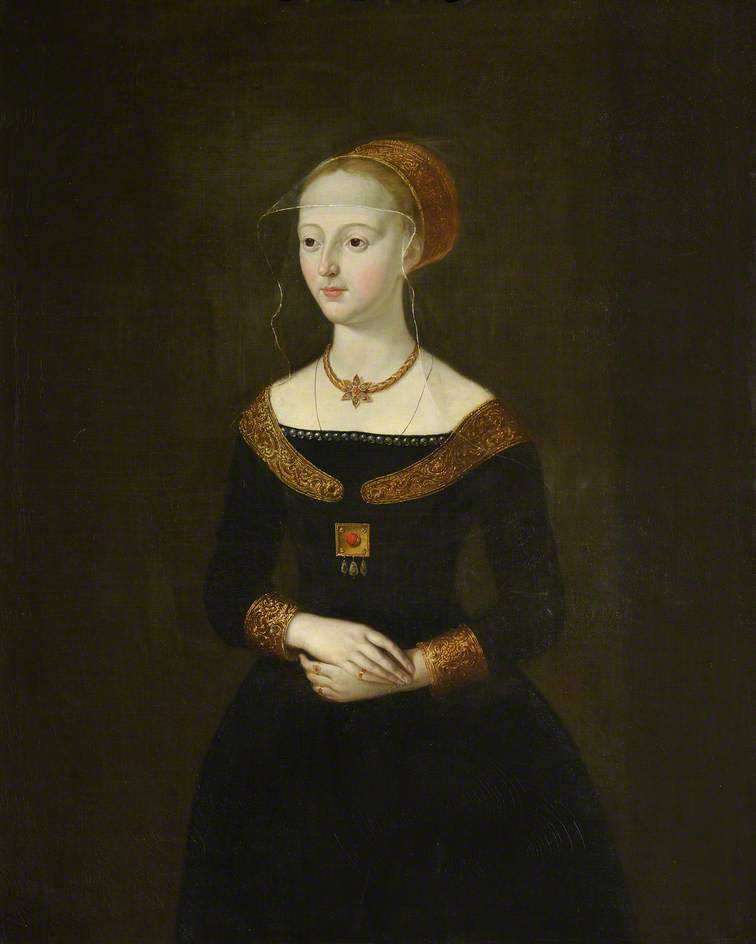
A late sixteenth-century portrait of Anne Boleyn from a lost original; artist unknown.
Were they really so different...?

Those who are serious about Tudor history often view Philippa Gregory's bodice ripper of a novel, The Other Boleyn Girl (2001), with little more than contempt, dismissing the book curtly and cuttingly. Susan Bordo, who has recently written an intriguing book on Henry VIII's infamous second wife, The Creation of Anne Boleyn, states categorically: 'many of the details, and indeed the whole premise of the book, cannot be defended as anything other than pure imagination'. Claire Ridgway, of The Anne Boleyn Files, warns her readers that 'The Other Boleyn Girl is not a factual retelling of Anne Boleyn's life or even that of Mary Boleyn... there are many, many inaccuracies in the book, along with fallacies and story-lines that have no factual basis'. The late Irene Rheinwald, a historian of Anne Boleyn, complains: 'I have no idea how this travesty was foisted upon an unsuspecting public with such extraordinary success'.

Surely it's obvious, first and foremost, that the novel is just that: a novel. It is fiction. Perhaps historians and researchers get far too worried that the general public cannot tell the difference between a novel and a serious academic study. Anyone with an ounce of sense would recognise the sheer melodrama in this book, the exaggerations, and above all the very prominent distortions. The film, of course, was even worse. But, hang on a second. Isn't The Tudors just the same - fiction? And yet that TV series has been sensationally popular amongst the general public, and has not nearly been as condemned by historians and researchers as The Other Boleyn Girl. Indeed, Gareth Russell likens it, when comparing it to Philippa Gregory's novel, to a historical documentary. But The Tudors is also rife with errors and misconceptions. At least the women in The Other Boleyn Girl dress like Tudors, which is more than can be said for The Tudors.

It is possible that historians and Tudor writers are so resentful and emotional when it comes to The Other Boleyn Girl, it will be suggested here, because the portrayal of Anne Boleyn is simply what they do not want to see, they cannot accept that Anne was ever like that. An article in The Guardian questioned why Anne was presented as nothing more than 'a scheming trollop'. Writers castigate Gregory for presenting an Anne Boleyn who is sadistic, cruel, vain, ruthless, ambitious, scheming, spiteful, arrogant, and merciless. The one-dimensional characterisation is, for many, completely unconvincing and downright insulting. Historians take serious issue with such presentations of Anne. Retha M. Warnicke, in her study The Rise and Fall of Anne Boleyn, (who ironically Gregory relies heavily on for her novel), bemoans how simple gender stereotypes and hostility towards women in the Tudor period encouraged dark portrayals of Anne Boleyn, presenting her as a murderess, witch and adulteress, which have endured to the present day.

The book has serious flaws, and writers are right to point out the numerous errors and the wild storylines. The rivalry between Anne and Mary, for instance, is certainly exaggerated and distorted; in reality, the two girls were separated as teenagers when they went abroad to serve European queens and probably had little to do with one another thereafter, until a very public fall out when Mary married beneath her in 1534. The story line of incest between Anne and George is similarly wild and inaccurate, as is the portrayal of the Boleyn family, the heavy emphasis on witchcraft and sorcery, and the suggestion that Anne was involved in poisoning her enemies.

But the simple fact is this: Anne Boleyn lived almost 500 years ago. As with all controversial personalities, every source which is concerned with her life is unquestionably biased, reflecting the author's own religious and political interests, and, above all, how they perceive women. Gender stereotypes filter to us through sources produced in the Tudor age. If one follows the Protestant tradition preserved by writers such as John Foxe, Anne Boleyn was a highly virtuous, religious, and charitable queen who was blessed by God and personally selected by Him to marry Henry VIII and lead him away from superstition and corruption embodied by the Catholic Church. She thus fulfilled God's mission in leading to the break from Rome. Capping off her sensational success, Anne then gave birth to the ultra Protestant queen, Elizabeth I. For Protestants, Anne could no wrong, and her very name symbolised virtue and goodness, although these writers carefully avoided the issues of Anne's downfall and execution on charges of adultery, incest, and treason.

Catholics, however, wrote very differently about Anne. Eustace Chapuys, Spanish ambassador at Henry VIII's court during the time of Anne Boleyn, presented a monstrous portrayal of Anne. Referring to her consistently as 'the concubine' or 'the whore', Chapuys perceived Anne to be cruel, vicious, avaricious, scheming and immoral, and held her personally to blame for the ill-treatment of her stepdaughter Princess Mary, and suspected that not only had she bewitched Henry VIII, but had also poisoned Katherine of Aragon. This tradition was preserved in Nicholas Sander's notorious account, which suggested that Anne was actually the daughter of Henry VIII (and so eventually married her own father), and presented her as physically deformed, believing her to be a witch and evil sorceress who had enchanted the King and inflicted evil on the kingdom of England through causing a schism with the Roman Church. Other Catholic writers, such as the anonymous Spanish author of The Chronicle of Henry VIII, depicted Anne as immoral and licentious, taking numerous lovers behind her husband's back. These Catholic accounts, obviously, are very similar to Gregory's portrayal of Anne in The Other Boleyn Girl.

Because of the inherent bias, the political, social and religious agendas, and the persistent prevalence of simple gender stereotypes, it is impossible to know what Anne Boleyn was like. People are rarely black and white, and so it is certain that the real woman was a lot more complex and multifaceted than either Catholic or Protestant writers allow.

It is necessary to recognise the situation Anne was in. The king first proposed marriage to her in 1527, but she only married him in 1533, six years later, aged 32. She was under extreme stress, facing European powers who personally detested her and revered Katherine, and subjected to unrelenting hostility from the English people, who insisted that she was both a whore and a witch. I am wholly unconvinced that Anne Boleyn was nothing more than the almost perfect, submissive, idealistic and wholly religious woman presented by both Protestant writers in the reign of her daughter Elizabeth, and favoured in serious historical works written by Warnicke and Joanna Denny. As Jenny Wormald rightly writes in her scathing criticism of Warnicke's book, it is quite an achievement, 'to make Anne Boleyn a bore'.

Taking into account the very real hostility and hatred directed towards powerful women in the sixteenth-century, the references in letters written by courtiers, including both Anne's cousin and Cardinal Wolsey, to Anne's 'displeasure', means that it is NOT simply Chapuys who presents a woman who clearly had a temper. While Alison Weir might be slightly overstating her case in characterising Anne as 'an ambitious adventuress with a penchant for vengeance', and David Starkey singularly exaggerating in describing Anne as a 'brutal' predator who hunted down her 'prey', the Anne Boleyn of The Other Boleyn Girl might not be as far from the truth as we might like to think.

Anne was surely not a poisoner. She did not engage in murder; she did not tempt her brother with incest; she did not inflict misery and cruelty on her sister and relatives; nor did she use witchcraft to preserve her power. These are the real problems with The Other Boleyn Girl. But, if one looks critically and sceptically at sources preserved by the likes of Chapuys, which can to an extent be supported with other contemporary sources, and if one bears in mind the very real stresses and problems which plagued Anne and took on a toll on her for over six years, it is quite likely that she could be aggressive, highly strung, cruel and ruthless.

Anne Boleyn was certainly not 'a bore'. Nor was she perfect, saint-like, in fact. But neither was she the heartless poisoner, sorceress, and adulteress preserved in Catholic works. But it is quite possible that, in terms of her personality traits, The Other Boleyn Girl's Anne is not as far from the truth as we believe.