Showing posts with label richard iii. Show all posts

Wednesday, 8 March 2017

International Women's Day 2017

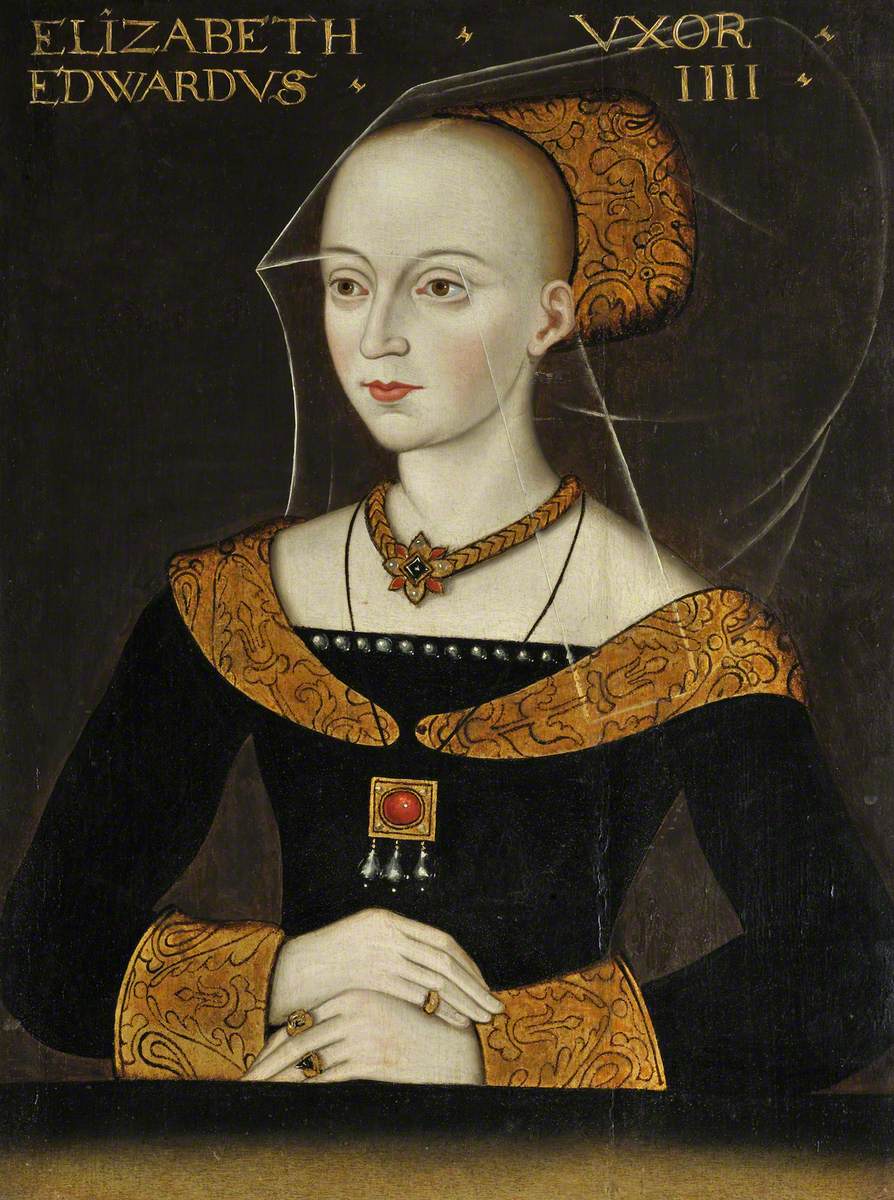
Image result for elizabeth wydeville

Today is International Women's Day. My research to date has primarily focused on late medieval and early modern women, specifically queenship. Earlier this year, MadeGlobal published my book Queenship in England 1308-1485, the culmination of years of research and what I would like to refer to as historical discovery. In honour of International Women's Day, therefore, I would like to think about some of the women that inspired my research.

My first introduction to the indomitable Isabella of France, wife of Edward II, was not an especially positive one, for it was based on a book that was both inaccurate and misleading. By immersing myself in the extant primary sources and by reading a fascinating array of secondary material, I gained a fuller and more nuanced picture of this intriguing queen. In Queenship in England, I focused on the multivalent roles that comprised the office of queenship. Isabella was highly active in her household governance, her lordship, her intercessionary activities and her patronage. Her relationship with Edward, moreover, appears to have been close and loving for the first fifteen years of their marriage. But political tensions and the ascendancy of the Despensers fractured their relationship beyond repair. 

Margaret of Anjou and Elizabeth Wydeville, like Isabella, have been similarly maligned or misrepresented, but the last few decades have witnessed several publications that have aimed to rehabilitate their reputations. My research indicated that Margaret was more politically astute and pragmatic than is usually suggested, and she sought to maintain a cordial relationship with the duke of York from early on in her queenship. In the aftermath of the Wars of the Roses, it was convenient for commentators to assign blame to Margaret for the conflict, but in assuming the role of leader, she was ardently fighting to protect the inheritance of her son and the honour of her beleaguered husband. 

Elizabeth's personality and appearance have both been attacked by modern historians, who have condemned her as a cold, grasping and avaricious woman. Much of this results from a misunderstanding of court protocol. In her lifetime, Elizabeth was praised for her "womanly" conduct and, indeed, she appears to have actively distanced herself from the militant queenship of her predecessor. She was, in most respects, the ideal medieval consort, and demonstrated her suitability to be queen by bearing Edward IV several children, thus testifying to divine approval of their union. The events following Edward's death and the accession of Richard III, coupled with her questionable relationship with Henry VII, have perhaps obscured the fact that Elizabeth was one of the most successful medieval queens of England.

These three women are perhaps three of the most well-known of England's medieval queens, and they are certainly not the only ones who fascinated and inspired me during my research and writing. However, I was especially drawn to their experiences and stories, in demonstrating the rich opportunities for the consort to wield agency and, in some instances, power. Investigating the relationship between gender and power as it operated in the political sphere is an exciting exercise and one that continues to resonate, and be relevant to, today.

Monday, 28 November 2016

28 November 1499: The Execution of Edward Plantagenet, Earl of Warwick


Above: Edward was the son of George, duke of Clarence (left) and Isabel Neville, duchess of Clarence (right).

28 November 1499 is one of the darkest days in Tudor history, for it witnessed the execution of Edward Plantagenet, earl of Warwick. The earl, who was only twenty-four years of age, was the only son of George, duke of Clarence and Isabel, duchess of Clarence. He was, therefore, a nephew of Edward IV and Richard III. After Henry VII's triumph at Bosworth in 1485, the ten-year-old Warwick - whose parents had died in 1478 and 1476, respectively - was incarcerated in the Tower of London. 

The Tudor dynasty was vulnerable in its early days, and Henry VII's reign was troubled by the emergence of pretenders claiming to be members of the House of York. The two most notable pretenders were Lambert Simnel and Perkin Warbeck, who claimed to be Richard of York. Historians have puzzled over whether or not Warwick willingly became involved in Warbeck's conspiracy to seize the throne from Henry VII. Allegedly, both Warbeck and Warwick attempted to escape from the Tower in 1499. Both were tried and found guilty of treason. On 23 November, Warbeck processed from the Tower to Tyburn on a hurdle, where he was hanged.

Five days later, Warwick was executed on Tower Hill. His body was later buried at Bisham Abbey in Berkshire. Contemporaries believed that Warwick's execution was the result of pressure put on Henry VII by Ferdinand of Aragon and Isabella of Castile, who were concerned about the situation that their daughter, Katherine, would face in England if she were to marry the king's son Arthur. Jane Dormer, duchess of Feria, an attendant of Katherine's daughter Mary, claimed that Katherine believed that her marriage to Arthur had been made in blood.

In 1541, Warwick's sister, Margaret, was also executed, on the orders of Henry VIII. She was sixty-seven years old and was literally hacked to death by an inexperienced executioner. The Tudors were undoubtedly ruthless in their pursuit of dynastic security, and the actions of Henry VII and Henry VIII towards the Yorkists does not reveal either king in an especially flattering light. Elizabeth I exercised a similarly militant policy in regards to her royal cousins.

Tuesday, 31 May 2016

31 May 1443: The Birth of Lady Margaret Beaufort


On 31 May 1443, Lady Margaret Beaufort was born at Bletsoe Castle in Bedfordshire. She was the daughter of John Beaufort, duke of Somerset, and Lady Margaret Beauchamp. Through her father, Margaret was a descendant of Edward III. Less than a year after his daughter's birth, the duke of Somerset died in suspicious circumstances while on campaign abroad. Some of his contemporaries believed that he had committed suicide, a heinous sin in the eyes of fifteenth-century individuals. Margaret probably did not learn of her father's death until she was older, but the knowledge that he may have killed himself would have brought shame and dishonour both to herself and to her family.

Shortly afterwards, Margaret's wardship was granted to the king's favourite, William de la Pole, first duke of Suffolk. As the heiress to her father's fortunes, Margaret was a highly valuable commodity. In early 1444, when she was less than three years old, Margaret was married to the duke's son John de la Pole. Occasionally, highborn children were married while still in infancy. Later, Edward IV's son Richard married Anne Mowbray when he was four years old and she five. Other evidence indicates that Margaret may actually only have married John in 1450, the year in which Suffolk was murdered. Irrespective of its date, the marriage was annulled in 1453 and Henry VI granted Margaret's wardship to his half-brothers Edmund and Jasper Tudor. 

Eddytudor.jpg
Above: Edmund Tudor, earl of Richmond.

On 1 November 1455, when she was twelve years old, Margaret was married to the king's twenty-four year-old half-brother Edmund Tudor, earl of Richmond. Usually when girls were married at a young age, consummation of the marriage was delayed until a later date. Edmund, however, elected to consummate his marriage immediately. At the age of thirteen, Margaret fell pregnant. Her husband, however, was not to learn the outcome of her pregnancy, for he died while in captivity at Carmarthen in November 1456, perhaps of plague. Two months later, his widow gave birth to her only child, Henry Tudor, at Pembroke Castle. Evidence suggests that the birth was a difficult one, and Margaret may have been physically and mentally scarred by the experience. A year after the birth of her son, the widowed countess remarried. Her husband was Sir Henry Stafford, son of the duke of Buckingham. Evidence suggests that their marriage was a happy one. 

Above: Pembroke Castle. Margaret gave birth to her son Henry there.

In 1461, the castle was captured by the Yorkists, and the infant Henry was placed in the custody of William Herbert, earl of Pembroke. Henry later departed for the Continent in the company of his uncle Jasper. The year her son departed for France, Margaret's husband died at the Battle of Barnet. 1471 was a tumultuous year. The Lancastrian king Henry VI was probably murdered in the Tower of London by the victorious Yorkists, and his only son Edward of Westminster was slain at Tewkesbury. Margaret, whose status had naturally inclined her to support the Lancastrian cause, dutifully made a show of supporting the new Yorkist dynasty. She understood that her son, Henry Tudor, was the only Lancastrian claimant still alive. Edward IV, understandably, was determined to gain custody of Henry. In a bid to protect both herself and her son's future, Margaret outwardly supported the house of York. 

A year after her husband's death, Margaret married for the last time, to Thomas Stanley. This marriage enabled Margaret to reside at court, and she appears to have enjoyed amicable relations with both the king and queen, later serving as godmother to one of their daughters. However, Edward IV's unexpected death in 1483 and the usurpation of Richard III changed Margaret's life forever. Margaret initially signalled her support of the new regime by carrying Anne Neville's train at her coronation, but she wholeheartedly supported the duke of Buckingham's rebellion against Richard III, perhaps with the backing of Edward IV's widow Elizabeth Wydeville. The rebellion was legitimated by rumours that Edward IV's sons had been murdered, perhaps on the orders of Richard III. It was agreed that, if the rebellion succeeded, Henry Tudor would marry Edward IV's daughter Elizabeth of York. However, the rebellion failed and Buckingham was executed. Margaret was stripped of her titles and estates and placed under house arrest; she was fortunate to escape with her life.

Above: Thomas Stanley, husband of Margaret Beaufort.

Despite this setback, Margaret continued to scheme for her son's accession. Evidence suggests that she had been content to support Edward IV and desired no more than her son's attainment of the earldom of Richmond. However, Margaret may have believed that Richard III was a usurper and perhaps viewed him as guilty of the murder of his nephews. It may have been this that encouraged her to press for Richard's deposition and his replacement with her son. At Bosworth in 1485, Henry Tudor defeated Richard and the final Yorkist king was slain. It was a moment of triumph for Margaret. Her son duly married Elizabeth of York, but Margaret's influence was considerable during her son's reign. Known as 'My Lady the King's Mother', Margaret held property independently from her husband, and she administered justice in the king's name at several courts. 

Margaret was revered for her education and her piety. In 1502, she founded the Lady Margaret's Professorship of Divinity at the University of Oxford, and three years later founded Christ's College, Cambridge. St John's was founded in 1511. She was politically astute, intelligent and resourceful. Historians have debated the nature of relations between Margaret and her daughter-in-law Elizabeth of York, but irrespective of their true feelings towards each other, the two women cooperated and worked together for much of Henry's reign. Margaret's death in 1509 followed that of her only son, for whom she had schemed and worked to ensure his accession to the throne. Lady Margaret Beaufort deserves to be remembered for her considerable successes. 

Above: Henry VII, son of Margaret. 

Sunday, 1 May 2016

'Now Take Heed What Love May Do'


The exact date on which King Edward IV married Elizabeth Wydeville is uncertain, but traditionally they are held to have married on, or about, 1 May 1464. In literature, Mayday had long been associated with romance, chivalry and passion. The selection of the date was appropriate, because Edward's marriage to Elizabeth appears to have been a love match. 

The marriage took place in circumstances of secrecy. Elizabeth's mother Jacquetta attended - and perhaps arranged the match - as did an unnamed priest. Two gentlewomen also attended. Contemporary writers and chroniclers later wrote, variously, that Elizabeth had enchanted the young king under an oak tree; that she had defended herself with a dagger when he attempted to force himself upon her; or that he threatened her with a dagger. 

Edward has been criticised by modern historians for selecting Elizabeth as his bride. However, there were good reasons to marry her. Firstly, she was undoubtedly fertile. She had already produced two sons in her first marriage, and she herself had thirteen siblings. Clearly, from Edward's perspective, Elizabeth came from good stock and would be able to produce sons, which was the primary duty of the medieval queen. Secondly, as later events would show, Elizabeth was beautiful, intelligent, charismatic, pious and ambitious. Thirdly, she was descended from the ducal house of Luxembourg, and could in theory offer her husband a prestigious foreign alliance. Fourthly, she had been married to a Lancastrian knight and the Wydevilles had traditionally supported the Lancastrian regime, so marriage to Elizabeth offered Edward the opportunity to heal the divisions between the warring houses of Lancaster and York.

On the other hand, Edward's choice was surprising to his contemporaries, because Elizabeth was not a foreign princess; marriage to a French princess would have been more profitable both for Edward and for his kingdom. The earl of Warwick had been negotiating for the king to wed Bona of Savoy. By marrying an English widow, Edward failed to consolidate his position, which was a risky policy given that he was a usurper. The situation in England remained precarious, and marriage to a foreign princess would have offered the promise of foreign military and diplomatic support, in the wake of further conflict and bloodshed. Secondly, the marriage alienated Warwick, who had supported Edward until that point. There is no evidence that the nobility as a whole resented the Wydevilles, but they were certainly disliked by Warwick, and he was a dangerous enemy to have, as events were to prove. 

In defying convention, Edward behaved exactly like his future grandson Henry VIII, who married four English women, at least two for love. King Edward has often been viewed as a serial womaniser, and indeed it is possible that he was actually married to Eleanor Talbot before marrying Elizabeth Wydeville. The king could not have known it, but his previous involvement with Eleanor was to jeopardise his marriage to Elizabeth. In Richard III's reign, the Wydeville marriage was declared invalid and the children of Edward and Elizabeth were declared illegitimate and unfit to succeed. 

In September 1464, Edward finally admitted that he had married Elizabeth. She was crowned queen on 26 May 1465, and gave birth to their first child, a daughter named Elizabeth, in February 1466. The marriage seems to have been a successful one. Elizabeth demonstrated her suitability to be queen and was praised for her constancy and modest behaviour, particularly during the troubles of 1470. Ultimately, it was their daughter Elizabeth's fate to be queen of England as the wife of Henry VII. 

Sunday, 8 November 2015

The Forgotten Countess: Anne Beauchamp, Countess of Warwick


Above: Anne Beauchamp alongside her husband Richard Neville, earl of Warwick, in the television series The White Queen.

In fifteenth-century England, titled women, that is duchesses and countesses, enjoyed positions of great social and political importance. They were second only to queens in the power they held and influence they wielded. At that time, a duchess or countess was responsible for advising her husband; supervising her estates and assisting her adherents in a variety of matters; attending court in the queen's household; and, most importantly, bearing children (preferably sons). Even today, duchesses and countesses of fifteenth-century England remain well-known. Women such as Jacquetta, duchess of Bedford, and Cecily, duchess of York, were influential, intelligent and strong-willed. They influenced their offspring and assisted them in their schemes to take the throne. Jacquetta masterminded her daughter Elizabeth Wydeville's obscure marriage to Edward IV, while Cecily had played an important role in educating Edward and, perhaps, grooming him for kingship. Similarly, the political involvement of Margaret Beaufort, countess of Richmond and Derby, was significant. Her influence both at court and in local society ensured the continuing relevance of her son Henry Tudor's claim to the throne, and the countess emerged triumphant in the summer of 1485 with Henry's accession. 

However, one countess remains largely unknown, and yet her story was every bit as tragic, as unpredictable, and as fascinating as the stories of the women above named. Anne Beauchamp, countess of Warwick, was the wife of Richard Neville, earl of Warwick, who remains known today as the 'Kingmaker'. She was the mother of Isabel and Anne, and her younger daughter would become queen of England in 1483 as the wife of Richard III. In the television series The White Queen, the countess is not one of the main characters, but she is portrayed as a shrewd, intelligent woman who played an advisory role to her husband. She was depicted as being extremely close to her two daughters. Whether the real countess enjoyed good relations with her offspring is unknown.


Above: Anne Neville, the younger daughter of the Countess of Warwick.

Anne Beauchamp was the daughter of Richard Beauchamp, thirteenth earl of Warwick, and Isabel le Despenser, who was the sole heiress of her deceased father Thomas. She was born in July 1426 at Caversham Castle in Oxfordshire. In 1434, when Anne was only eight years old, she was betrothed to Richard Neville. She married Richard at an unknown date and gave birth to two daughters by him: Isabel (born in September 1451) and Anne (born in June 1456). Both girls were born at the family seat at Warwick Castle. Whether the couple were severely disappointed by their failure to have a son is unknown, but it is entirely possible given that Richard may have wanted the estates and title to remain within the family. The son of the earl of Salisbury, Richard acquired significant wealth and status by marrying Anne Beauchamp and inheriting the Warwick estates and title. Upon her marriage to Richard, Anne became countess of Warwick. 

The Neville family was one of the old noble families in England. They were proud of their lineage and were highly ambitious. Warwick's ambition was renowned and he played a major role in securing the accession of his cousin Edward, earl of March, in 1461. However, Warwick experienced conflict with the new king when Edward elected to marry the relatively unknown Elizabeth Wydeville. The new king's mother, Cecily, duchess of York, disliked her daughter-in-law and voiced outrage at her son's folly. Warwick similarly disliked the new queen and harboured a great deal of resentment, eventually leading him to rebel against Edward. Whether Anne Beauchamp resented Queen Elizabeth, or whether she enjoyed good relations with her, is a mystery. Certainly she would have enjoyed a favoured position at court. 

The sources are frustratingly silent about the countess. We know next to nothing about her. Did she welcome the favour shown to her family and did she feel pride at her husband's influence at the king's side? She surely harboured concern about the twists and turns of fortune. In 1470, the disaffected Warwick masterminded the restoration of the Lancastrian king Henry VI and his resourceful wife Margaret of Anjou, a woman who loathed Warwick. We cannot know whether the countess was on intimate terms with Queen Margaret, but she surely could not have envisaged that the queen would become her sister-in-law that same year. But that is exactly what happened. Anne's younger daughter, also named Anne, married Edward of Westminster at the age of fourteen and, in the process, became Princess of Wales. She was destined to be England's queen - but, unknown at the time, it would not be at the side of Edward, who was killed in battle at Tewkesbury the following year, leaving the young Anne a widow.


Above: Margaret of Anjou, briefly Anne Beauchamp's sister-in-law.

1471 was perhaps Anne Beauchamp's annus horribilis. Not only had she lost her son-in-law, but her husband Warwick was killed at the battle of Barnet that spring. With his death, the countess lost everything. Her husband was, in the eyes of the restored Edward IV's government, a traitor. The countess herself was, by association, a pariah and she was forced to keep a low profile for a time. Her position, however, was uncomfortably ambiguous. Her elder daughter Isabel had married Edward's younger brother George, duke of Clarence, in 1469. This ensured the countess' continuing closeness to the ruling house of York. Isabel died in 1476, however, and Clarence was executed for treason two years later.

These were years of sorrow and loss for the countess. In a brief period, she had lost her husband, her daughter, and both her sons-in-law. She had been respected, perhaps even loved, during Warwick's ascendancy, and she had enjoyed an influential position at court. Briefly she had been Margaret of Anjou's sister-in-law, and had Margaret triumphantly regained her position as queen with the final collapse of the house of York, then Anne's position would surely have been unrivalled as the mother-in-law of the heir to the throne. Instead, she was isolated and alone. She only had her younger daughter Anne for company, and as events were to prove, that was not necessarily a positive thing. 


Above: Isabel Neville, duchess of Clarence, firstborn daughter of Anne Beauchamp.

The marriages of her two daughters caused the countess considerable stress. Her younger daughter Anne had married the king's youngest brother Richard, duke of Gloucester. In Clarence's lifetime, he had fought bitterly with Richard over the Neville inheritance. The countess resided in the household of her daughter, the duchess of Gloucester, but there may have been considerable ill-feeling between mother and daughter. Between them, the sons-in-law of the countess had effectively disinherited her. 

The countess did not meekly submit to the schemes of her sons-in-law. She responded furiously and expressed both outrage and disbelief. She perhaps viewed herself as betrayed by her own daughter. While in sanctuary at Beaulieu Abbey, the countess had written several letters seeking both her release and her control of her own wealth, swearing that she had 'neuer offended his most redoghted highnes' [Edward IV]. She was determined to exercise control over her own future and she would do whatever it took to do so. The countess sought the assistance of the queen, the king's mother, the queen's mother, and even the assistance of the king's eldest daughter Elizabeth. 

It was to no avail. The countess was legally treated as if she were dead. Her lands were divided between her two daughters and their avaricious husbands. She did, however, acquire an income from her son-in-law Richard III when he became king. It is worth noting that Henry VII was more generous in his treatment of the countess, providing her with 500 marks a year while granting her life estates in over two dozen manors and lordships. Henry also made her principal keeper of the forest of Wychwode. 

Anne died in 1492 aged sixty-six. Hers had been a long, tumultuous and, in many respects, tragic life. She had lost her husband in battle, her eldest daughter had died while still young, and she may have experienced conflict with her youngest daughter. Her lands and estates were seized from her by George of Clarence and Richard of Gloucester. She had been respected as the wife of the Kingmaker, but she had also been an outcast, perhaps even a pariah. She was briefly the mother of the Queen of England, but unlike Jacquetta Wydeville, Cecily Neville or Margaret Beaufort, she did not enjoy a position of power and influence as the mother of the ruler. We know very little about the countess and evidence is scarce. Whether the countess was scheming and ambitious, or whether she was more sympathetic, cannot be known. 

Sunday, 2 August 2015

Edward IV's Secret Bride

Elizabeth Woodville (c.1437–1492), 2nd Foundress of Queens' College, Wife of Edward IV
Above: King Edward IV's secret union with Lady Eleanor Talbot was to have a serious impact on the legality of his marriage to Elizabeth Wydeville (right).


Before he married the beautiful widow Elizabeth Wydeville, King Edward IV of England is said to have secretly married Lady Eleanor Talbot who was, like Elizabeth, a widow. In his study of Eleanor, historian John Ashdown-Hill speculates that the couple wed in secret in the spring of 1461, shortly before the first Yorkist king's coronation. Rumours of Edward's secret first marriage gained momentum following his unexpected death in 1483. His younger brother Richard duke of Gloucester, as is well known, seized the throne that summer, claiming that Edward's bigamous marriage to Queen Elizabeth rendered their children illegitimate. By virtue of the late king's first marriage to Eleanor Talbot, his children by Elizabeth were bastards, and as such had no right to inherit the crown. The majority of modern historians have dismissed this allegation, viewing it as evidence of Gloucester's depravity as well as his remorseless desire to attain kingship at whatever the cost, but Ashdown-Hill takes these allegations seriously. He concludes that King Edward probably did clandestinely marry Eleanor some three years before he wed Elizabeth. 

Following his unexpected accession to the throne, Richard III's first Parliament was responsible for passing an Act that declared that 'King Edward was and stood married and troth plight to one Dame Eleanor Butler, daughter of the old Earl of Shrewsbury'. The Burgundian diplomat Philippe de Commines was to report in c. 1490 that Robert Stillington, bishop of Bath and Wells, 'married them [Edward and Eleanor] when only he and they were present'. Indeed, the eminent nineteenth-century historian James Gairdner found the extant evidence so compelling that he was to conclude that the marriage between Edward and Eleanor cannot be regarded 'as a mere political invention... Perhaps rather an evidence of the truth of the story is the care afterwards taken to suppress and to pervert it'. It is also entirely possible that Queen Elizabeth herself eventually discovered that her husband had married another before her. Dominico Mancini was to report that Elizabeth was well aware of 'the calumnies with which she was reproached, namely that according to established usage she was not the legitimate wife of the king'. 

George Plantagenet, Duke of Clarence.jpg
Above: If Edward IV truly was married to Eleanor Talbot before his marriage to Elizabeth Wydeville, then the true king of England was, by right, his younger brother George duke of Clarence (left) and, following George's execution, Richard duke of Gloucester (right). 

Who was Lady Eleanor Talbot, the woman who was allegedly Edward IV's secret bride? Born perhaps in 1436, Eleanor was perhaps the fourth child of John Talbot, first earl of Shrewsbury, by his second wife Lady Margaret Beauchamp, a formidable and enterprising woman who was not afraid to ensure the protection of her rights. Eleanor's childhood was probably entirely orthodox. She learnt the fundamental female skills of embroidery and housewifery, and was perhaps taught to both read and write. She was probably taught to dance, to sing and to play a musical instrument. Certainly, that she attracted Edward IV indicates that she possessed the requisite social graces and accomplishments viewed at the time as desirable. As the daughter of an earl, Eleanor's education would not have been neglected. She almost certainly learnt French, although it is less likely that she would have been taught Latin. Eleanor's relationships with her siblings is unknown, although evidence suggests that she was close to her younger sister Elizabeth, later duchess of Norfolk. We have no knowledge of Eleanor's appearance, although Commines later described her as 'a beautiful young lady'.

At the age of thirteen, Eleanor married Sir Thomas Butler, son of Ralph Butler, lord Sudeley. We have virtually no evidence of their married life together. As an arranged marriage, personal feelings would have counted for very little, but that is not to say that Eleanor and Thomas did not grow to love one another. At an unknown date (certainly before 1460), Sir Thomas died, perhaps from injuries sustained at the battle of Blore Heath, as Ashdown-Hill conjectures. Eleanor herself died at the age of thirty-four on 30 June 1468. She was buried in Norwich in the monastic church of the white Carmelites, to whom she had supported during her lifetime as benefactress. 

Whether Eleanor Talbot truly married Edward IV in about 1461 is an issue of considerable historical importance. If she was, then she was the king's true wife and any subsequent marriage he made was invalid. His second marriage to Elizabeth Wydeville would have been bigamous and their children illegitimate. Historians, however, have largely regarded Richard's suggestion that Edward was legitimately married to Eleanor Talbot with scepticism. John A. Wagner explained that 'most modern historians believe the precontract to be a fabrication devised to give Richard III's usurpation a veneer of legitimacy. The betrothal cannot be documented beyond the account rehearsed in Titulus Regius, and Richard never attempted to have the precontract authenticated by a church court, the proper venue for such a case'. However, as we have seen, there is indeed evidence beyond the act of 1484 for Edward's marriage to Eleanor. 

Historian Anne Crawford believes that Edward IV did not truly marry Eleanor Talbot. She draws attention to the fact that Eleanor Talbot did not come forward when news of Edward's marriage to Elizabeth Wydeville became public. Crawford also noted that it is significant that the Talbot family failed to support Richard of Gloucester's claims about the precontract. If Edward was truly married to Eleanor before his later union with Elizabeth, then he could have applied for a papal dispensation that would have invalidated the match with Eleanor. Modern historians remain divided as to whether Eleanor was truly Edward's wife. It seems certain, however, that she was the king's lover at some point early in his reign and unknowingly provided the basis for which Richard seized the crown in the aftermath of his brother's death, leading to the eventual overthrow of the Yorkist dynasty.

Friday, 28 November 2014

28 November 1499: The Execution of Edward, Earl of Warwick

Arms of Edward Plantagenet, 17th Earl of Warwick.svgEdward Plantagenet, Earl of Warwick
Above: Shield of the Earl of Warwick. 

On 28 November 1499, Edward Plantagenet, earl of Warwick, was executed on Tower Hill for treason. The son of George, duke of Clarence, and the nephew of both Edward IV and Richard III, Warwick was only twenty-four years of age at his death. 

In an article I wrote for the University of St. Andrews's History Society, which can be accessed here, I explored the tragic life of Warwick and what his cruel end demonstrates about the phenomenon of pretenders in early Tudor England. Warwick had been born on 25 February 1475 to Clarence, younger brother of King Edward, by his wife Isabel Neville, eldest daughter of Richard, earl of Warwick, known as 'the Kingmaker'. At the age of three years old, Warwick's father was brutally executed on charges of treason, and the young Edward became earl of Warwick, although the attainder of his father removed Warwick from the line of succession. 

In 1484, Warwick's young cousin Edward of Middleham, the heir to the throne, died, and there has been speculation that Richard III named his nephew heir to the throne in consequence. However, historians have pointed out the lack of evidence for this, as well as the illogicality of Richard nominating his nephew as heir when Clarence's attainder had barred Warwick from the throne.


Above: Edward's parents, the duke and duchess of Clarence. 

The rule of the House of York came to a bloody end in August 1485, when Richard III was killed by Henry Tudor's forces at the Battle of Bosworth. The Tudors had seized the throne and would not relinquish it until 1603 upon the death of Elizabeth I. The new king shortly afterwards imprisoned Warwick, still only ten years old, in the Tower, an act that appears cruel and callous to us today but which Henry VII surely felt was necessary for the security of his dynasty. If Henry's reign had been peaceful and free of rebellions against his rule, Warwick might reasonably have lived out the rest of his days in obscurity in the Tower. However, the first Tudor king was far from universally loved, and many remained loyal to the Yorkist cause, believing that Henry VII should be deposed and replaced with a member of the House of York.

There has been some speculation about whether Warwick was mentally deficient. The Tudor chronicler Edward Hall famously described him as being kept imprisoned for so long 'out of all company of men, and sight of beasts, in so much that he could not discern a Goose from a Capon'. This statement has subsequently been interpreted to mean that Warwick was retarded. However, Hazel Pierce argued that Hall probably actually meant that Warwick's long imprisonment had made him naive and unworldly, rather than mentally disabled.

From the onset, rebellions and conspiracies surfaced seeking to remove the first Tudor king. The appearance of the pretender Lambert Simnel in 1487 was the first of several conspiracies to usurp the throne from Henry VII and replace him with a Yorkist. Simnel claimed to be the earl of Warwick, leading the king to publicly parade the real Warwick to prove the absurdity of Simnel's pretensions. James A. Williamson suggested that Warwick was merely a figurehead for a rebellion that was already being planned by the resentful and distrustful Yorkists. Simnel, and his cause, was defeated at the Battle of Stoke in June 1487, but the affair had proven to King Henry the danger Warwick represented.

In the 1490s, Perkin Warbeck, another pretender, menaced the king. Upon his imprisonment in the Tower in 1499, Warbeck allegedly attempted to escape alongside Warwick. Both were found guilty, and Warbeck was hanged at Tyburn. Warwick was tried at Westminster in November by his peers, and was found guilty of treason. He was beheaded at Tower Hill on 28 November, aged twenty-four. He was later buried at Bisham Abbey in Berkshire. It was thought at the time that Warwick was executed to appease the Spanish monarchs, who were fearful of sending their daughter Katherine to England to marry Prince Arthur, the king's heir, in view of continuing insurgencies against the monarchy. A later sixteenth-century account, The Life of Jane Dormer (Jane Dormer having been a favourite of Mary Tudor, daughter of Katherine of Aragon), claimed that Katherine experienced considerable remorse for Warwick's death, believing that her marriage to Arthur had been made in innocent blood. 

The end of Warwick provides evidence of the considerable vulnerability of the Tudor dynasty and Henry VII's intense paranoia about Yorkist conspiracies against his rule. Although he had married Elizabeth of the house of York, many resented his rule and sought his downfall. Henry's fears are understandable, given that his two immediate predecessors, Edward V and Richard III, had both been usurped and brutally killed. Despite Warwick's death, the future of the Tudor dynasty remained precarious. The king's beloved wife died in 1503. His heir Arthur had died the year before, while another son, Edmund, had died as an infant in 1500. Only the young Prince Henry (later Henry VIII) offered the hope of a peaceful and legitimate succession. The Yorkist threat did not disappear after Henry VII's death. Warwick's cousin Edmund, earl of Suffolk, plotted against the throne and fled abroad, and was executed by Henry VIII in 1513. Lady Margaret Pole, elder sister of Warwick, was brutally executed in 1541 aged sixty-seven on charges of treason, although her innocence has never been in any real doubt. She was beautified in 1886.


Wednesday, 9 April 2014

9 April 1483: The Death of Edward IV


Above: Edward IV, king of England (1442-1483).

On this day in history, 9 April 1483, King Edward IV of England died. He had been king of England for twenty-two years, barring a six month period when his predecessor, Henry VI, briefly resumed his kingship. The first Yorkist king of England, Edward's first reign (1461-70) was marred by violence and continuing political and dynastic tensions as a result of Edward's unpopular marriage to Elizabeth Woodville, his fallout with the 'Kingmaker' earl of Warwick, and the continuing threat from the Lancastrians. But his second period of kingship, 1471-83, was comparatively more successful and can be termed a period of peace as the threat from the Lancastrians fell away following the death of Henry, the defeat of his controversial queen Margaret of Anjou and the death of their prince Edward of Westminster in battle.

Edward had been born in 1442 in Rouen, France; the second child of the third Duke of York, Richard Plantagenet, and his resourceful wife Cecily Neville. Edward was the eldest of four sons who survived to adulthood. The fifteenth century was a turbulent and violent period as English dynastic politics became increasingly uncertain and faction-driven as a result of the Lancastrian king Henry VI's ineptitude. The loss of English possessions in France, so hard-won by his much-famed father Henry V, were viewed with consternation and outrage in England, and the nobles, led by York, became increasingly vocal in their demands for the king's unpopular advisers, including the earl of Suffolk and later the duke of Somerset, whom they blamed for England's mounting crises, to be removed from power.


Above: Edward IV's coat of arms.

Edward was a handsome and energetic young man, famed for his good looks and personality. He was 6'4 and as a result was England's tallest king. In the 1450s, he came to play an increasingly important role in his family's dynastic conflict with the Lancastrians. His father, the duke of York, asserted his claim to the English throne in 1460, but he died at the Battle of Wakefield later that year. As a result, his claim passed to his teenage son, Edward. Edward's position in the mounting conflicts therefore became increasingly pivotal. In alliance with his kinsman the Earl of Warwick, Edward defeated the Lancastrians in several battles, including the bloodiest battle fought on English soil, Towton, in March 1461. Edward, at the age of nineteen, became king shortly afterwards.

ElizabethWoodville.JPG
Above: Edward's queen, Elizabeth Woodville.

However, Edward's reign did not begin particularly well due to the development of conflict with his former erstwhile ally, the Earl of Warwick. Following Edward's accession to the throne, the Earl had negotiated with the French king for Edward to marry his daughter, Anne of France, in an alliance that would enhance England's prestige and allow it to play a major role in European politics. However, Edward disrupted these plans by marrying the commoner Elizabeth Woodville, a Lancastrian widow in her late twenties. This misalliance outraged the earl and caused some consternation at court. It is possible that the king's mother, the formidable Cecily Neville, disapproved of the match. Most historians believe that the King was infatuated with Elizabeth, whose beauty was legendary, although there were, unsurprisingly, rumours that she had ensnared him by use of the black arts.

The new marriage caused hostility amongst the nobility, who resented the Woodville's lowborn origins. Worst of all, Elizabeth had numerous siblings, who were quickly married off to the most powerful nobles in attempts to bolster their power and enhance their prestige. This further alienated the earl of Warwick, who had hoped to marry his two daughters and heiresses Isabel and Anne to nobles. Warwick eventually turned against the king, acting in alliance with Edward's younger brother George duke of Clarence, who had come to resent his brother's policies. Warwick eventually captured the king following the Yorkist defeat at the Battle of Edgecote Moor in July 1469, but because he did not attain the support he had hoped for, the earl was forced to release Edward in September. The king sought reconciliation with his brother and Warwick, rather than executing or imprisoning them as traitors. Warwick, however, sailed to France and allied himself with his former enemy Margaret of Anjou, acting together with the support of the French king. The alliance was cemented by the marriage of Warwick's second daughter, Anne, to Margaret's son, the Lancastrian heir Edward of Westminster.


Above: Richard III, younger brother of Edward IV.

Following Edward's defeat in 1470, the Lancastrian king Henry VI, who had briefly fell into insanity in the late 1450s, was restored to the throne. Edward, however, managed to attain support from the duke of Burgundy, who was married to his younger sister Margaret. Edward returned to England and obtained the support of his people as he steadily moved through the country unopposed. His brother George returned to his side, having been alienated by his unfavourable fortunes following Henry's readeption. The Yorkist king entered London unchallenged, taking Henry VI prisoner. Warwick was defeated at the battle of Barnet in 1471, and the Lancastrian prince was killed at the battle of Tewkesbury that same year. Henry VI was almost certainly murdered at the Tower of London in May 1471, and his shamed and humiliated wife Margaret was forced to seek sanctuary in France. No longer were the Lancastrians, in the persons of Henry and Margaret, a threat to the victorious Yorkist dynasty.

Edward's second half of his reign, comprising twelve years, were peaceful. He faced no more rebellions and sired ten children by his wife Elizabeth, whom he enjoyed a loving and affectionate relationship with, although like many men in this age he took mistresses, including the beautiful Jane (or Elizabeth) Shore. Edward became increasingly gluttonous, however, and his weight expanded during the later years of his reign. Dynastic tragedy did occur, for George was executed in 1478 on grounds of treason. On 9 April 1483, less than three weeks before his forty-first birthday, he died. He had named his younger brother Richard (whom he seems to have trusted more than the disgraced George) as Lord Protector during the reign of his successor Edward V, who was a minor. There is uncertainty surrounding the exact cause of Edward's death, although both pneumonia and typhoid have been suggested.

Edward was an extremely popular and successful king. He outshone his predecessor, the saintly if ineffectual Henry VI, and appeared similar to the glorious Henry V. Later, similarities would be drawn between the first Yorkist king and his grandson Henry VIII. He was a spectacular military commander - he was never defeated in battle. His reign saw the restoration of law and order in England that had been notably absent in the conflict-riven reign of his predecessor. Edward managed his finances well and ensured stability in his household. His court was praised as "the most splendid in all Christendom", as the reports of contemporary ambassadors attest. He was interested in fashion and architecture, and knew how to project images of himself as a godly monarch. He was also interested in literature and education - more than forty of his books survive today. To all intents and purposes, Edward enjoyed a successful and prosperous reign. The Yorkist dynasty would, however, be marred by the haunting disappearance of his two sons Edward and Richard. To this day, no-one knows for certain what happened to those two little boys.

File:Princes.jpg
Above: the Princes in the Tower. What happened to Edward IV's sons?

Sunday, 16 March 2014

The Death of Anne Neville, Queen of England

Image result for richard iii

On this day in history, 16 March 1485, Queen Anne Neville of England died aged twenty-eight at Westminster Palace. According to legend, the day she died saw an eclipse which was viewed by the superstitious as an evil omen of her husband Richard III's imminent fall from grace. Although rumours credited the king with poisoning his consort as part of his schemes to marry his niece Elizabeth of York, reports indicated that he had wept at her funeral. She was buried at Westminster Abbey, having reigned as queen for only two years.

Anne was the second daughter of Richard Neville, earl of Warwick, and Anne Beauchamp, the daughter of the thirteenth earl of Warwick. She was born at Warwick Castle and most likely spent her formative years growing up in Warwick. Her family fortunes were splendid: the Nevilles exercised considerable influence in the northern parts of England and later became loyal adherents to the House of York. At Middleham Castle in Yorkshire, Anne and her sister Isabel became acquainted with the two younger brothers of Edward IV: George (later duke of Clarence) and Richard (later duke of Gloucester). 


Above: Middleham Castle.

In 1469, Isabel Neville married George, thus integrating the Nevilles into the royal family, for George was the younger brother of the Yorkist king Edward IV. The following year, aged fourteen, Anne herself was married but to the Lancastrian heir, Edward of Westminster, rather than to a Yorkist prince. This occurred as a result of her father's schemes, for the disaffected Warwick, resentful of the Woodville family (a Woodville was married to the king) had decided to switch sides and support the defeated Lancastrians in an attempt to attain financial and political power. Anne perhaps resided in the household of the vanquished English queen Margaret of Anjou in the immediate aftermath of her marriage, but at the Battle of Tewkesbury in 1471 the Lancastrian prince was defeated and killed and Anne left a widow aged fifteen.

Because Clarence was married to Anne's sister, he took it upon himself to take custody of both Anne and her mother and attained possession of the dead Warwick's possessions in the north. Anne was deprived of her inheritance as part of these greedy endeavours, and it is possible that he even sought to prevent her remarrying. Sometime between 1472 and 1474, however, Anne took it upon herself to seek marriage with Clarence's younger brother, Richard duke of Gloucester, who has traditionally been regarded as both more loyal and closer to King Edward than the ambitious Clarence. Whether Anne directed these plans as an ambitious attempt to regain her inheritance, or whether the alliance with Richard was based on love, is impossible to say.

The newly married couple resided chiefly in the north, where loyalty to the Nevilles was strong. Perhaps in 1473, and by 1476, Anne delivered a son, Edward, who became heir to the dukedom of Gloucester and a potential claimant to the throne; although the birth of two sons to King Edward meant that it looked virtually uncertain that either Edward or his father or uncle would acquire the throne.

Having been a Princess of Wales and later a Duchess of Gloucester, in 1483 Anne became a queen. Gloucester usurped the throne in the summer of 1483 and Anne was crowned alongside her husband at Westminster Abbey. Whether she had any knowledge of matters pertaining to the Princes in the Tower is uncertain, although novels such as The Kingmaker's Daughter explore such issues imaginatively. Anne's queenship, however, was not to prove happy. In 1484 her only son died and it is perhaps significant that she seems to have had no other pregnancies, although she may have experienced miscarriages or stillbirths. As Michael Hicks remarks: "Anne seems to have been a particularly insignificant queen, perhaps because she suffered from ill health". Certainly, in contrast to the active and auspicious queenships of the charismatic Margaret of Anjou and Elizabeth Woodville, Anne appears a shadowy and perhaps ineffectual consort.

At Christmas 1484 court rumours credited that Richard was engaging in an affair with his eighteen-year old niece Elizabeth, daughter of Edward IV and later, wife of Henry VII. Rumours that the king would set aside Queen Anne in favour of the younger and more attractive Elizabeth were rampant. Following Anne's death, Richard publicly denied any intention of marrying his niece.

Tuesday, 11 February 2014

The Birth and Death of Elizabeth of York


Above: Elizabeth of York (1466-1503).

11 February was the most important day for Elizabeth of York, for she was born on this day in 1466 and died on this day, on her thirty-seventh birthday, in 1503. Elizabeth was the eldest daughter of the renowned first Yorkist king, Edward IV, and his beautiful if controversial queen Elizabeth Woodville. She was born at Westminster Palace and baptised in St Stephen's Chapel in Westminster Abbey.

Until 1470, aged four, Elizabeth was heir to the throne of England, but that year Queen Elizabeth bore her first son, the ill-fated Prince Edward who was - almost certainly - to die aged thirteen in 1483 as the imprisoned Edward V. In 1469 Elizabeth was betrothed to George Neville, son of the Marquess Montagu, as part of her father King Edward's attempts to build a strong relationship with the disaffected Nevilles, headed by the 'Kingmaker' Earl of Warwick.


Above: Elizabeth was the eldest daughter of King Edward of York (left) and Queen Elizabeth Woodville (right).

In 1475, however, as part of the Treaty of Picquigny, it was agreed that Princess Elizabeth would marry the Dauphin Charles, with a jointure of £60,000 provided by the French king Louis XI. In 1483, when Elizabeth was aged seventeen, her father died, aged only forty-one. As Rosemary Horrox comments, Edward's death "transformed" the situation of his daughters. At  the end of April Elizabeth's uncle Richard Duke of Gloucester took control of her twelve-year old brother and king Edward; leading the queen alongside her daughters and her younger son Richard to seek sanctuary in Westminster. In June 1483, Gloucester crowned himself as Richard III alongside his consort Anne Neville. He declared Edward's marriage to Elizabeth Woodville invalid, making their children, including Elizabeth, bastards and unfit to inherit the throne.

During the early months of Richard's reign, Elizabeth remained in sanctuary alongside her mother and siblings. Chroniclers suggested that there were attempts made to remove them from sanctuary and sail them from overseas, for "they were an obvious focus for political disaffection". The new King was unpopular amongst the majority of his English subjects, who viewed him as the likely culprit for the murder of the Princes in the Tower - although, of course, no-one knows to this day what happened to the two young boys. On Christmas Day 1483, the twenty-six year old pretender to the throne Henry Tudor swore an oath at Rennes Cathedral, promising to marry Elizabeth of York should he successfully attain the throne of England. Marriage to Elizabeth would provide him with a legitimate claim to the throne, for his own pretensions were somewhat dubious.


Above: Henry VIII was the son of Elizabeth of York by Henry VII. His mother's death, when Henry was aged eleven, appears to have profoundly affected him.

Alison Weir rightfully argues that, but for her gender, Elizabeth of York would have ruled England on the death of her uncle in battle at Bosworth in 1485, for she was the eldest child of Edward IV. Many believed, despite Richard's claims to the contrary, that he had entered into marriage with Elizabeth Woodville in good faith. However, rumours abounded that Elizabeth planned to marry not Henry Tudor, but her uncle King Richard. At Christmas 1484 - the girls had left sanctuary and had been welcomed at court - chroniclers were scandalised to see that Elizabeth was dressed in the same finery as Queen Anne, perhaps setting herself up as the queen's rival for the king's affections. Three months later, Anne died and rumours abounded that Richard had poisoned her in order to marry his nineteen-year old niece. Certainly, these rumours put paid to any hopes Richard may have had of marrying Elizabeth, and he realised that marriage to her would be a reckless, perhaps life-threatening, move. Weir, however, suspects that Elizabeth had schemed to marry Richard, perhaps encouraged by her mother. Thus she can be termed an "enigma".

Richard was killed at Bosworth in August 1485 and the victor, Henry Tudor, crowned king, thus establishing the new Tudor dynasty. In January of the following year, the king selected Elizabeth as his consort and she was crowned late in 1487. In September 1486, she delivered her eldest son, the ill-fated Arthur who died aged fifteen. Elizabeth bore several children: Margaret (1489; becoming Queen of Scotland in 1503 and eventually grandmother to Mary Queen of Scots); Henry (1491; later Henry VIII); Elizabeth (1492; died aged three in 1495); Mary (1496; became Queen of France in 1514 but later married Charles Brandon and was thus ancestress to Lady Jane Grey); Edmund (1499; died 1500); and Katherine (born and died 1503). Like her mother, Elizabeth Woodville, the new Queen was extremely fertile.


Horrox comments that Elizabeth's political role as queen is uncertain, although Weir asserts that it was influential, remarking furthermore that her "role in history was crucial". She may have been overshadowed by her notorious mother-in-law Margaret Beaufort, but historians have disputed this more recently. But Elizabeth's crucial role as head of the Yorkist line, in a sense, alongside her position as first Tudor queen meant that her position was exceptionally important. It strengthened Henry VII's dubious claim to the throne, and meant that the Yorkists supported him when it might well have been in their interests not to do so.

Numerous myths and legends abound about the first Tudor queen. The popularity of Philippa Gregory's bestselling novels The Cousins' War, including most pertinently The White Queen and The White Princess, mean that many people believe that Elizabeth, like her mother Elizabeth Woodville, engaged in witchcraft and supernatural actions to achieve her own desires; but this is almost certainly false. It is also suggested in these novels that Elizabeth's marriage to Henry was unhappy, that he raped her, for one thing, and she never loved him for another. But perhaps most spectacularly, it is suggested that Elizabeth's brother Richard survived, and she continued to support him, thus disobeying her husband. It should be borne in mind that, while it can never be known what exactly happened to Elizabeth's brothers, they did disappear sometime in the autumn of 1483. Whose orders they were murdered on - if they were, of course - cannot now be known, but traditional historians favour Richard III. I am very sceptical of Gregory's imaginative reworking of "history" and I believe that Elizabeth's marriage to Henry VII was strong, loving, and affectionate - as demonstrated by the death of their eldest son Arthur in 1502. Both parents were devastated, but both attempted to conceal their feelings in order to comfort the other. Eventually, both broke down in each other's arms. Clearly, the death of their heir devastated them. Instances such as this call into doubt Gregory's interpretation.


Above: Elizabeth of York as played by Freya Mavor in the BBC TV series The White Queen. In it, she is a witch and seductress who schemes to marry her uncle Richard III ... but the truth is probably less fantastical. 

Elizabeth's reign as queen was successful in many respects, for she was a loyal consort and fertile bride who supported her husband faithfully. In the summer of 1502, she fell pregnant for the last time and entered confinement at the Tower of London in the winter. On 2 February, she bore a daughter, Katherine, who was sickly and sadly died soon afterwards. Nine days later, on 11 February, her thirty-seventh birthday, the queen died. She was mourned sincerely by her subjects and her husband King Henry appears to have been devastated. He did initiate marriage negotiations later in his reign, but these came to nothing and it is clear that he sincerely mourned the loss of his wife. The impact of her death on her children appears to have been monumental. Her 11-year old son, Henry, was particularly distraught, for he had been extremely close to his mother. Perhaps this accounts for his infamous attempts to find a successful marriage - trying to find the perfect woman who, perhaps consciously or unconsciously, resembled his mother as a dutiful wife, caring mother, and fertile bride.


Above: The last Tudor queen, Elizabeth I, was the granddaughter of her namesake and the first Tudor queen, Elizabeth of York.

Thursday, 22 August 2013

The Battle of Bosworth


Although the Wars of the Roses - known in the fifteenth century as the Cousins' War - had been raging intermittently and violently for the last 30 years, encompassing horrific battles at Towton, Barnet and Tewkesbury and more minor skirmishes across the country, the Battle of Bosworth on this day in history, 22 August 1485, was unquestionably the most significant battle of the lot. The Wars had seen three usurpations (Edward IV usurping Henry VI; Henry usurping Edward; and Richard III usurping Edward V), and Bosworth threatened a fourth usurpation: that of the relatively unknown Henry Tudor, earl of Richmond, who prepared to face England's controversial king, Richard III.

For many years the exact location of the Battle was controversially debated and questioned by both archaeologists and historians. Danny Williams, in 1974, developing the research of eighteenth-century historians, theorised that Richard's army gathered on the western slopes of Ambion Hill and marshes on the southern slopes, while Henry Tudor's forces approached from Whitemoors. The Stanley forces arrived from Near Coton. Williams suggested that the forces clashed west of Ambion Hill, near Shenton, where the Yorkist king eventually died.

However, Peter Foss (1985) disagreed with Williams' conclusions and believed that the battle occurred on low lying ground, Redesmore, which was situated between Ambion, Dadlington, Stoke Golding, Upton and Shenton. Richard's army assembled on a ridge southwest of Ambion Hill while Henry's troops gathered on Fenn Lane; the Stanley forces, meanwhile, gathered at Stoke Golding and Dadlington. Foss placed the actual battle north of Stoke Golding, on Fenn Lane. Michael K Jones, writing in 2002, disagreed, placing Henry's camp at Merevale since the Crowland Chronicle reported that Henry Tudor had provided compensation to Mancetter, Witherley, Atterton and Fenny Drayton for damage caused to crops during the battle. He put Richard's army between Merevale and Ratcliffe Culey. Jones concluded that the actual battle occurred in the area south and east of Ratcliffe Culey.

These conclusions were undermined by the 2010 archaeological survey funded by the Heritage Lottery Fund, using metal detecting, in which Glenn Foard, a Battlefields Trust archaeologist, located evidence to provide the true location of the battle: "the site, never before suggested as the battlefield, straddles the Roman road known as the Fenn Lane, near Fenn lane farm. It is three kilometres south-west of Ambion Hill and a kilometre west of the site suggested by Peter Foss." A silver gilt-boar, Richard's badge, was discovered, probably worn by a knight in the king's retinue during the battle. Silver coins belonging to Charles of Burgundy and the largest collection of round shot found on a medieval battlefield were also discovered.

Richard III had endured a controversial and difficult reign since first usurping the throne 2 years previously, following the premature death of his elder brother Edward IV. Whether Richard was ultimately responsible or not for the deaths of his two nephews, the 'Princes in the Tower', his unlawful usurpation of the Crown had caused scandal and outrage in England. While Richard had been successful in restoring law and order, and enacted successful financial and legal reforms, he continued to face rebellion and threats during his brief reign. These were headed by Henry Tudor, the young earl of Richmond who had been groomed by his uncle Jasper Tudor, with the assistance of Henry's ambitious and notorious mother Margaret Beaufort, with the intention of, one day, making him King of England. In promising to marry Elizabeth of York, daughter of Edward IV, once he had become king of England, Henry was able to enjoy support from English Yorkists, many of whom were disaffected with Richard and desired his usurpation.

Henry had first attempted to invade England in 1483, during the Duke of Buckingham's rebellion against King Richard, but stormy weather frustrated his attempts. However, Henry refused to give up, and on 7 August 1485 successfully arrived on the south-west coast of Wales, determined to claim his crown. Henry gathered crucial support on his journey through the country, although the support and allegiance of his mother's husband, Thomas Stanley, and his family proved less certain, even during the battle itself. As Henry was to recognise, their support was essential to his cause.

Richard, however, refused to renounce his throne without a fight, and mustered his own troops, which vastly outnumbered those of the Tudor pretender. He intercepted Henry's army south of Market Bosworth in Leicestershire in late August. John Howard, duke of Norfolk, and Henry Percy, earl of Northumberland, were among several powerful nobles who supported Richard's cause and served in his army. By contrast, Henry was able to rely on the support of John de Vere, earl of Oxford. Wary of the Stanleys, Richard took Lord Strange, son of Thomas Stanley, as hostage for his father's support during the battle.

The Yorkist army, which probably numbered around 10,000, assembled on the battlefield, with Norfolk's group of spearmen assembled on the right flank, protecting the cannon and 1,200 archers. Richard's group, encompassing 3000 infantry, formed the centre. Northumberland's 4000 men, most of them mounted, guarded the left flank. In contrast, Henry probably had fewer than 1000 English men in his army; historian John Mackie suggested in 1983 that 1800 French mercenaries, led by Philibert de Chandee, formed the core of the Tudor army. John Mair, writing in c1520, argued that many of the force were Scottish. In total, Henry's army encompassed some 5000 men. The earl of Oxford commanded his army and retired to the rear with his bodyguards.

During the battle, Richard's army held sway for much of it, and a Yorkist victory appeared inevitable during the early stages. Henry's troops were harassed by Richard's cannon as they sought to manoeuvre around the marsh. Norfolk's men and contingents of Richard's group advanced, with arrows attacking both sides as they advanced. Norfolk's men fled the field as Oxford's men proved steadier in hand-to-hand combat. Crucially, Northumberland's men refused to assist Richard's forces when the King sought to engage their help, recognising his army's weaknesses. Why Northumberland refused to help has been debated by modern historians.

Richard himself decided to attack Henry's group after witnessing Henry's departure to the Stanleys. While Richard killed Henry's standard-bearer William Brandon, and managed to unhorse Edward IV's former standard-bearer John Cheyne, Richard was defeated by the crucial decision of Sir William Stanley, kin to Henry Tudor, to lead in his men to fight at Henry's side. The king's group was outnumbered and surrounded by enemies. Richard's banner man Sir Percival Thirwell lost both his legs but, admirably, managed to hold the Yorkist banner aloft until he was hacked to death. Richard's horse was mired in the soft ground, forcing him to fight on foot. While his followers offered him horses in order to escape, the king refused. Although, as contemporary chroniclers agree, Richard fought valiantly to the end, he was overwhelmed by the numbers of Welsh spearmen around him and was killed on the battlefield. Richard's forces disintegrated on news of his death - the duke of Norfolk was killed, while Northumberland and his men, who had refused to intercede on Richard's behalf, fled north.

Although there is no evidence to support the legend that Richard's crown was eventually found in a hawthorn bush, Richard's circlet itself was found and brought to Henry, who was crowned King on Crown Hill, near the village of Stoke Golding. The Yorkist king's corpse was stripped naked and strapped across a horse, before being brought to Leicester and openly exhibited in a church to prove his death. The corpse was eventually placed in an unmarked tomb in Greyfriars Church. Discovered in 2012, it is possible that Richard's body will be reinterred in York Minster. Since he was extremely popular in the North, where he exercised formidable power, enjoyed widespread loyalty and because his family were the Yorkists, this would be a fitting place for him to be buried.

Henry eventually married the nineteen-year old Elizabeth of York, ending the bloody feud between the Yorkists and Lancastrians and ushering in a new ruling house, the Tudors, who would rule England for 118 years, bringing in alternatively peace, prosperity, bloodshed, rebellion, and murder. Henry VII actively presented the Battle of Bosworth as a symbol for a new beginning for England, hiring chroniclers such as Polydore Vergil to portray the Tudors in the best possible light. For many, Bosworth symbolises the end of the medieval period and the beginning of 'modernity'.