Showing posts with label henry vi. Show all posts

Sunday, 23 April 2017

23 April 1445: The Wedding of Henry VI and Margaret of Anjou

Image result for margaret of anjou

On 23 April - some sources suggest 22 April - 1445, Henry VI married Margaret of Anjou at Titchfield Abbey in Hampshire. The king was twenty-three years old and his new bride was fifteen. Margaret, who was born in Lorraine, had arrived in England on 9 April and met Henry shortly afterwards. The marriage was expressly designed to achieve peace between the warring kingdoms of England and France, although Margaret's dowry was rather unimpressive. 

On her wedding day, the king provided Margaret with jewels, including a gold wedding ring. On 28 May, Margaret entered London and was crowned queen at Westminster Abbey two days later. The surviving evidence indicates that Henry and Margaret felt affection, possibly love, for one another, and the records demonstrate that king and queen cooperated on matters of policy during the early years of their marriage. However, Margaret's inability to conceive contributed to growing tensions at court and in the realm more generally. This childlessness, coupled with the perceived shortcomings of the Anjou alliance, meant that Margaret was unable to enjoy popularity among her subjects. 

Image result for titchfield abbey

In 1453, eight years after her marriage, Margaret finally conceived and gave birth to a son, Edward, on 13 October. However, the birth of her child coincided with Henry VI's illness and compelled Margaret to take a politically active role at the centre of government. Her bid for the regency failed and the duke of York was made protector. As is well-known, Henry's incapacity and the ensuing crisis of kingship led to civil war. 

In my book, Queenship in England - which can be purchased here - I examine Margaret's controversial tenure as queen:

Henry VI’s incapacity created a crisis at the centre of governance. Contemporaries feared the consequences of the king’s infirmity: ‘the reame of Englonde was out of all governaunce… for the kyng was simple… held ne householde ne meyntened no warres’. It is not true that the queen was an avaricious, grasping woman determined to enjoy power irrespective of the consequences; however, her husband’s collapse placed her in an ambiguous and uncomfortable position. Indeed, it was circumstances, including the collapse of her husband and growing discontent among the nobility, that required the queen to play a more directly political role after 1453, alongside her realisation that her son’s inheritance had to be safeguarded.

Wednesday, 8 March 2017

International Women's Day 2017

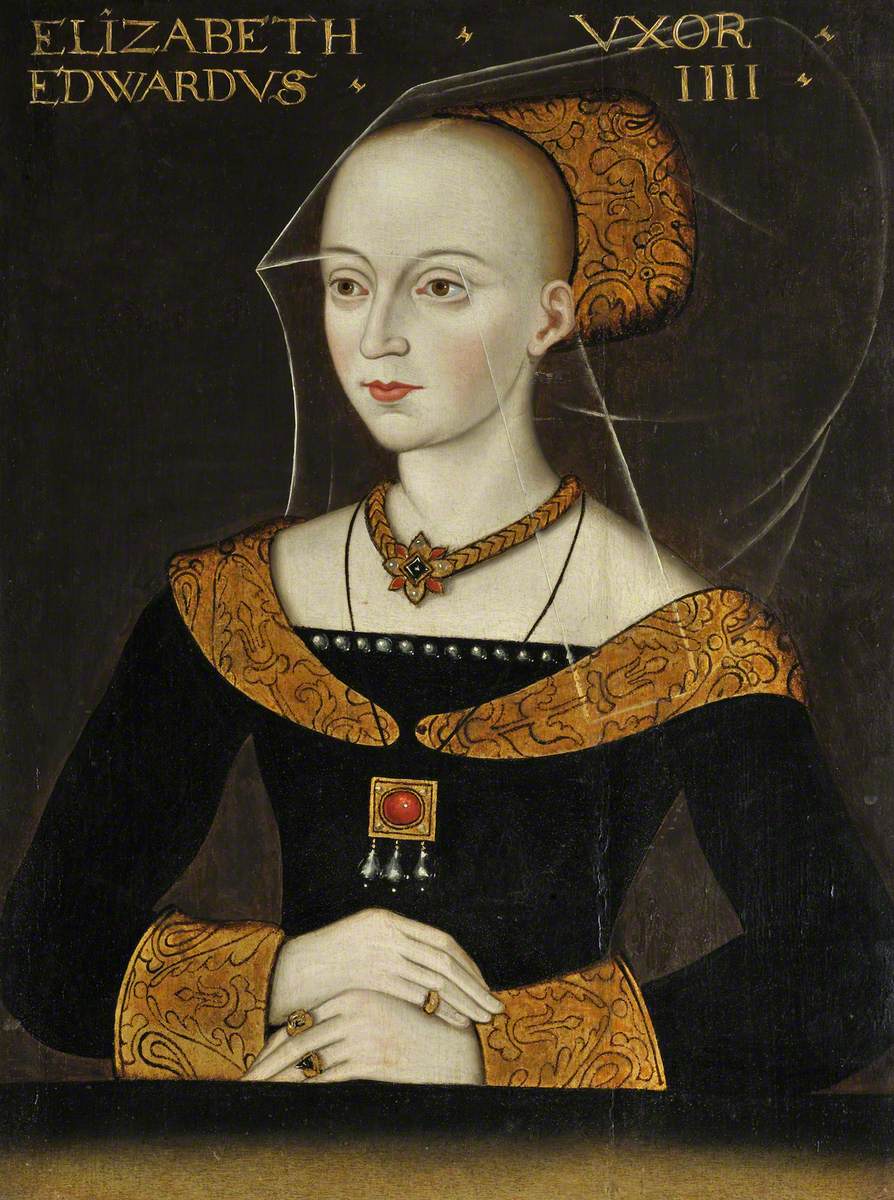
Image result for elizabeth wydeville

Today is International Women's Day. My research to date has primarily focused on late medieval and early modern women, specifically queenship. Earlier this year, MadeGlobal published my book Queenship in England 1308-1485, the culmination of years of research and what I would like to refer to as historical discovery. In honour of International Women's Day, therefore, I would like to think about some of the women that inspired my research.

My first introduction to the indomitable Isabella of France, wife of Edward II, was not an especially positive one, for it was based on a book that was both inaccurate and misleading. By immersing myself in the extant primary sources and by reading a fascinating array of secondary material, I gained a fuller and more nuanced picture of this intriguing queen. In Queenship in England, I focused on the multivalent roles that comprised the office of queenship. Isabella was highly active in her household governance, her lordship, her intercessionary activities and her patronage. Her relationship with Edward, moreover, appears to have been close and loving for the first fifteen years of their marriage. But political tensions and the ascendancy of the Despensers fractured their relationship beyond repair. 

Margaret of Anjou and Elizabeth Wydeville, like Isabella, have been similarly maligned or misrepresented, but the last few decades have witnessed several publications that have aimed to rehabilitate their reputations. My research indicated that Margaret was more politically astute and pragmatic than is usually suggested, and she sought to maintain a cordial relationship with the duke of York from early on in her queenship. In the aftermath of the Wars of the Roses, it was convenient for commentators to assign blame to Margaret for the conflict, but in assuming the role of leader, she was ardently fighting to protect the inheritance of her son and the honour of her beleaguered husband. 

Elizabeth's personality and appearance have both been attacked by modern historians, who have condemned her as a cold, grasping and avaricious woman. Much of this results from a misunderstanding of court protocol. In her lifetime, Elizabeth was praised for her "womanly" conduct and, indeed, she appears to have actively distanced herself from the militant queenship of her predecessor. She was, in most respects, the ideal medieval consort, and demonstrated her suitability to be queen by bearing Edward IV several children, thus testifying to divine approval of their union. The events following Edward's death and the accession of Richard III, coupled with her questionable relationship with Henry VII, have perhaps obscured the fact that Elizabeth was one of the most successful medieval queens of England.

These three women are perhaps three of the most well-known of England's medieval queens, and they are certainly not the only ones who fascinated and inspired me during my research and writing. However, I was especially drawn to their experiences and stories, in demonstrating the rich opportunities for the consort to wield agency and, in some instances, power. Investigating the relationship between gender and power as it operated in the political sphere is an exciting exercise and one that continues to resonate, and be relevant to, today.

Tuesday, 31 May 2016

31 May 1443: The Birth of Lady Margaret Beaufort


On 31 May 1443, Lady Margaret Beaufort was born at Bletsoe Castle in Bedfordshire. She was the daughter of John Beaufort, duke of Somerset, and Lady Margaret Beauchamp. Through her father, Margaret was a descendant of Edward III. Less than a year after his daughter's birth, the duke of Somerset died in suspicious circumstances while on campaign abroad. Some of his contemporaries believed that he had committed suicide, a heinous sin in the eyes of fifteenth-century individuals. Margaret probably did not learn of her father's death until she was older, but the knowledge that he may have killed himself would have brought shame and dishonour both to herself and to her family.

Shortly afterwards, Margaret's wardship was granted to the king's favourite, William de la Pole, first duke of Suffolk. As the heiress to her father's fortunes, Margaret was a highly valuable commodity. In early 1444, when she was less than three years old, Margaret was married to the duke's son John de la Pole. Occasionally, highborn children were married while still in infancy. Later, Edward IV's son Richard married Anne Mowbray when he was four years old and she five. Other evidence indicates that Margaret may actually only have married John in 1450, the year in which Suffolk was murdered. Irrespective of its date, the marriage was annulled in 1453 and Henry VI granted Margaret's wardship to his half-brothers Edmund and Jasper Tudor. 

Eddytudor.jpg
Above: Edmund Tudor, earl of Richmond.

On 1 November 1455, when she was twelve years old, Margaret was married to the king's twenty-four year-old half-brother Edmund Tudor, earl of Richmond. Usually when girls were married at a young age, consummation of the marriage was delayed until a later date. Edmund, however, elected to consummate his marriage immediately. At the age of thirteen, Margaret fell pregnant. Her husband, however, was not to learn the outcome of her pregnancy, for he died while in captivity at Carmarthen in November 1456, perhaps of plague. Two months later, his widow gave birth to her only child, Henry Tudor, at Pembroke Castle. Evidence suggests that the birth was a difficult one, and Margaret may have been physically and mentally scarred by the experience. A year after the birth of her son, the widowed countess remarried. Her husband was Sir Henry Stafford, son of the duke of Buckingham. Evidence suggests that their marriage was a happy one. 

Above: Pembroke Castle. Margaret gave birth to her son Henry there.

In 1461, the castle was captured by the Yorkists, and the infant Henry was placed in the custody of William Herbert, earl of Pembroke. Henry later departed for the Continent in the company of his uncle Jasper. The year her son departed for France, Margaret's husband died at the Battle of Barnet. 1471 was a tumultuous year. The Lancastrian king Henry VI was probably murdered in the Tower of London by the victorious Yorkists, and his only son Edward of Westminster was slain at Tewkesbury. Margaret, whose status had naturally inclined her to support the Lancastrian cause, dutifully made a show of supporting the new Yorkist dynasty. She understood that her son, Henry Tudor, was the only Lancastrian claimant still alive. Edward IV, understandably, was determined to gain custody of Henry. In a bid to protect both herself and her son's future, Margaret outwardly supported the house of York. 

A year after her husband's death, Margaret married for the last time, to Thomas Stanley. This marriage enabled Margaret to reside at court, and she appears to have enjoyed amicable relations with both the king and queen, later serving as godmother to one of their daughters. However, Edward IV's unexpected death in 1483 and the usurpation of Richard III changed Margaret's life forever. Margaret initially signalled her support of the new regime by carrying Anne Neville's train at her coronation, but she wholeheartedly supported the duke of Buckingham's rebellion against Richard III, perhaps with the backing of Edward IV's widow Elizabeth Wydeville. The rebellion was legitimated by rumours that Edward IV's sons had been murdered, perhaps on the orders of Richard III. It was agreed that, if the rebellion succeeded, Henry Tudor would marry Edward IV's daughter Elizabeth of York. However, the rebellion failed and Buckingham was executed. Margaret was stripped of her titles and estates and placed under house arrest; she was fortunate to escape with her life.

Above: Thomas Stanley, husband of Margaret Beaufort.

Despite this setback, Margaret continued to scheme for her son's accession. Evidence suggests that she had been content to support Edward IV and desired no more than her son's attainment of the earldom of Richmond. However, Margaret may have believed that Richard III was a usurper and perhaps viewed him as guilty of the murder of his nephews. It may have been this that encouraged her to press for Richard's deposition and his replacement with her son. At Bosworth in 1485, Henry Tudor defeated Richard and the final Yorkist king was slain. It was a moment of triumph for Margaret. Her son duly married Elizabeth of York, but Margaret's influence was considerable during her son's reign. Known as 'My Lady the King's Mother', Margaret held property independently from her husband, and she administered justice in the king's name at several courts. 

Margaret was revered for her education and her piety. In 1502, she founded the Lady Margaret's Professorship of Divinity at the University of Oxford, and three years later founded Christ's College, Cambridge. St John's was founded in 1511. She was politically astute, intelligent and resourceful. Historians have debated the nature of relations between Margaret and her daughter-in-law Elizabeth of York, but irrespective of their true feelings towards each other, the two women cooperated and worked together for much of Henry's reign. Margaret's death in 1509 followed that of her only son, for whom she had schemed and worked to ensure his accession to the throne. Lady Margaret Beaufort deserves to be remembered for her considerable successes. 

Above: Henry VII, son of Margaret. 

Monday, 23 March 2015

23 March 1430: The Birth of Margaret of Anjou, Queen of England


Above: Queen Margaret of Anjou. 


On this day in history, 23 March 1430, Margaret of Anjou was born at Pont-a-Mousson in Lorraine to Rene of Anjou and his wife Isabella, duchess of Lorraine. Rene was titular king of Naples, Jerusalem, and Aragon, and duke of Anjou, Bar, Lorraine, count of Provence and count of Piedmont. Despite his claims to many kingdoms, Rene was unfavourably known as 'a man of many crowns but no kingdoms'. Margaret was the couple's fourth child and second daughter, and spent her childhood at the beautiful castle of Tarascon in southern France and in the old royal palace at Capua, near Naples. Contemporary observers described her in her youth as beautiful, dignified and graceful. 

In April 1445, at the age of fifteen, Margaret married Henry VI of England and became England's queen. The marriage sought to achieve peace between the warring kingdoms of England and France, with the hope being to bring to a conclusion the brutal conflict known as the Hundred Years War. Although Margaret symbolised hopes of peace and prosperity, the marriage was not popular in England, for the bride brought no dowry, while the cessation of Anjou and Maine to Margaret's father and the king of France caused outrage and dismay. Margaret has traditionally been interpreted by historians as a cunning and avaricious meddler in politics, responsible for urging her husband to cede the kingdoms to the French, but Helen Maurer's careful research has called into question this view. Given that Margaret was only in her teenage years, in a strange land, when Anjou and Maine were ceded, it does seem unlikely that she was responsible for what took place.

Margaret's position would have been secured early on had she given birth to a son with which to secure the succession, but this was only accomplished eight years after her marriage, when her son Edward was born in October 1453. His birth could not have occurred at a worse time: several months earlier, Henry VI suffered a complete breakdown and was thought to have gone insane. He may have been suffering from a form of schizophrenia. Margaret's position became uncertain as the government fell into crisis. She did not become regent and, contrary to popular belief, did not espouse an aggressive stance towards the duke of York, who became Protector at this time. Indeed, she appears to have been content to cooperate with him and was on good terms with his wife, Cecily Neville.

King Henry VI from NPG (2).jpg
Above: Henry VI.

Margaret has tended to be characterised negatively as a vengeful, aggressive, merciless and cruel woman who was responsible for the outbreak of the Wars of the Roses by virtue of her partisan favour of the earl of Suffolk and the Duke of Somerset. She is often interpreted as the leader of a court party that was corrupt, decadent and wasteful, causing damage to the kingdom and tensions in society at large. This unfair portrayal of the queen has been encouraged by Shakespeare's portrayal of her as a she-wolf. The real Margaret of Anjou was almost certainly not the evil villain of legend. She was a pragmatic, intelligent and courageous woman who fought ardently to protect her son's inheritance and to safeguard her husband's position as king. It was hardly her fault that she was married to a weak and inept king unable to control factional discontent or rule with a steady hand. Margaret's attempt to provide strong governance caused anger and dismay, given that her role in English politics threatened to unsettle the established gender order. However, with the benefit of hindsight, we can appreciate the impossible situation Margaret found herself in, and admire her brave attempts to restore her deposed husband to the throne. She was not a she-wolf, but neither was she a saint. Rather, she is someone to be admired, respected and appreciated for her courage, pragmatism and devotion to her husband and son.

Saturday, 7 March 2015

Eleanor Cobham: Gender, Politics and Witchcraft

HumphreyGloucester.jpgHumphrey & Eleanor.jpg
Above: Humphrey, duke of Gloucester (left).
Humphrey and Eleanor (right).

Eleanor Cobham, duchess of Gloucester, is well-known today as a convicted sorceress. The second wife of Humphrey, duke of Gloucester, who was uncle to Henry VI, the duchess has usually been perceived as a proud and ambitious parvenu who resorted to witchcraft in a calculated attempt to ensure her husband's succession to the throne. At a time of dynastic uncertainty and political turmoil, the fear and dismay of her contemporaries is understandable. Believing that women resorted to the black arts as a mechanism for wielding power, they readily believed the charges against Eleanor. Their belief fitted in with the conventional understanding that women were naturally manipulative, power-hungry and secretive.

Born around 1400, Eleanor was the fourth child of Sir Reginald Cobham and his wife Eleanor. Following her mother's death in 1422, she departed to serve in the household of Jacqueline, countess of Hainault. The countess was an immensely influential lady who was also duchess of Bavaria-Straubing, countess of Holland and Zealand, and had been Dauphine of France between 1415 and 1417 as the wife of the dauphin John. Eleanor's appointment to her household was therefore an excellent opportunity for her. She was not content merely to serve the duchess, however. In the spring of 1425 she became Humphrey's mistress. Three years later, Humphrey's marriage to Jacqueline was declared invalid, and shortly thereafter he married Eleanor Cobham.

Jacoba van Beieren door Hollandse school ca 1600.jpg
Above: Jacqueline of Hainault.

It is possible that Eleanor was an ambitious and calculating woman, but it is equally valid that she was in love with Humphrey and believed that she had a right to become his wife if he had, in fact, never lawfully been married to Jacqueline. Although the marriage may have attracted hostility, the couple appear to have been exceptionally happy with one another. They established a pleasure garden, La Plesaunce, at Greenwich and invited musicians, poets, scholars, physicians and their friends to form a miniature court there.

In 1435-6, Humphrey became heir apparent following the death of his elder brother, the duke of Bedford. This represented a turning point in Eleanor's career, for it enhanced her prominence greatly. If Henry VI, her nephew, died, she would become queen of England. Eleanor was accorded full recognition of her status: in November 1435 the duke created a jointure for her in his whole estate, and in spring of the following year she acquired the robes of a duchess for the Garter ceremony. She appears to have been close to her young nephew, the king. By 1440 she was consulting astrologers to cast Henry's horoscope and to predict her own fortunes. Given that the teenaged king had not yet married or produced an heir, Eleanor's actions may represent less a determined attempt to wrest the crown from him through witchcraft than an earnest effort to establish a sense of security regarding the succession. Her actions may be considered understandable in a context of dynastic uncertainty and international conflict, at a time of decline in England's fortunes in the Hundred Years War with France.

Eleanor's actions were not necessarily suspicious in and of themselves; as Harriss notes, 'mathematical astrology had become socially and academically respectable and other great noblemen had astrologers in their employ'. Surely if the king harboured suspicions of his aunt's behaviour he would have acted sooner against her than he in fact did. The prediction of Eleanor's physician Thomas Southwell and principal of St Andrew's Hall, Oxford, Roger Bolingbroke, however, that Henry VI would be endangered by a serious illness in the summer of 1441, led to rumours surrounding the duchess's ambitions. Southwell, Bolingbroke and John Home, canon of Hereford, chaplain to the duchess, were all examined. They were arrested and charged with the practice of necromancy in July 1441 and, when Bolingbroke named Eleanor, she was examined for eighteen charges of treasonable necromancy, to which she admitted her guilt. She was incarcerated in Leeds Castle. Southwell died in the Tower, Bolingbroke was hanged, drawn and quartered and the 'Witch of Eye', Margery Jourdemayne, was burned, whom Eleanor had admitted to procuring potions from in order to conceive and bear Humphrey's child. The duchess herself was sentenced to walk barefoot to three London churches in penance on successive market days in November, bearing a taper. She was then imprisoned, firstly at Chester, then at Kenilworth, then on the Isle of Man, and finally at Beaumaris, where she died in 1452.

It is uncertain whether Eleanor Cobham was guilty of the charges levied against her. There is no evidence that she plotted the king's death, although she did admit to consulting his horoscope and to obtaining potions from a witch with which to fall pregnant by the duke. Undoubtedly the charges were politicised and sought to attack her husband. High status women were vulnerable to charges of witchcraft and treasonable activity as a way of casting suspicion on their husbands. Jacquetta, duchess of Bedford, was another victim of witchcraft accusations in the reign of Edward IV that were motivated by a desire to bring down the Wydevilles. Humphrey's political enemies used the charges as a way of estranging the duke from his nephew. Six years later, the duke himself was arrested and died in suspicious circumstances. Eleanor, duchess of Gloucester, may have been less a convicted sorceress than a victim of the dynastic turmoil, political conflict and gendered suspicions of the mid-fifteenth-century.

Thursday, 11 September 2014

The Wars of the Roses: A Tudor Construction?


Historian Dan Jones has published an interesting article in the October 2014 edition of BBC History Magazine claiming that the Wars of the Roses, the dynastic conflict between the royal houses of Lancaster and York in the mid-to-late fifteenth century, might have been a Tudor construction invented by that dynasty to consolidate and legitimise their rule. Some historians have supported this approach. K. B. McFarlane argued years before that there was no such thing as the 'Wars of the Roses'. This period of history has become ever more popular with the success of Philippa Gregory's "Cousins' War" novels (and the BBC television adaptation of one novel, The White Queen). But is Jones right to claim that the Wars of the Roses was, effectively, invented by the Tudors to explain their success in attaining the throne? Is the traditional interpretation of the conflict, so vividly described in Shakespeare's plays, 'misleading, distorted, oversimplified and - in parts - deliberately false'?

To start with, the term 'Wars of the Roses' certainly does not date from the time of the conflict. Sir Walter Scott seems to have coined it in his novel Anne of Geierstein, published in 1829. Scott in turn came up with the name having read Shakespeare's play Henry VI Part 1, specifically a scene in which a number of noblemen and a lawyer in the gardens of the Temple Church select red or white roses to demonstrate their loyalty to the Lancaster or York house, respectively. Jones is probably correct in suggesting that the Lancastrians never actually used the red rose as a badge during the period of conflict. As Adrian Ailes comments, Henry VII's decision to combine the red and white roses as a symbol of the end of conflict between Lancaster and York 'was a brilliant piece of simple heraldic propaganda'. 

Leanda de Lisle, however, recently suggested that the term 'Wars of the Roses' actually originated long before the publication of Scott's novel in 1829. She mentions that historian David Hume referred to 'the wars between the two roses' in his work of 1762, while more than a hundred years earlier the conflict was described as 'the quarrel of the two roses'. Lisle interestingly notes that Edward IV made extensive use of the white rose as a badge representing the House of York, for it was believed to have been the badge of Edward's ancestor Roger Mortimer, the supposed 'true' heir of Richard II before his right was 'usurped' by Henry IV. Perhaps most intriguingly of all, Lisle dismisses claims that the conflict should instead be known as 'the Cousins' War'.


Above: did the Wars of the Roses really involve the red rose of Lancaster competing for the throne against the white rose of York?

Jones' argument that the Wars of the Roses was an invention of the victorious Tudors hinges on the suggestion that it is a myth that the wars erupted because 'there were too many men of royal blood clustering around the crown, vying for power and influence over a weak-willed king'. Yet, in histories of the conflict that I have read, it is argued that conflict broke out firstly because of Henry VI's incompetence as a king, and secondly because of military disasters in France. England lost all the territories it had conquered and was left only with Calais (later won back by the French in 1558). Jones argues, fairly, that the 1420s saw no serious unrest and speculates that Henry VI's weak kingship did not ultimately result in dynastic conflict until he experienced insanity in 1453. This is correct. In stating this point, why does Jones seem to imply that historians have traditionally viewed the roots of the conflict as occurring as early as the 1420s/30s? To me, it was Henry VI's madness in 1453 that instigated the conflict. His illness allowed Richard duke of York to seize the reins of government, leading to conflict and rivalry with Henry's queen, Margaret of Anjou. Jones speculates that Henry VI's forced decision to disinherit his own son Prince Edward in 1460 in favour of the Yorkists was the point at which 'the wars became dynastic'. Surely this is stating the obvious: beforehand, conflict between York and Edmund Beaufort, duke of Somerset, occurred because both men were fighting for control of the king and the greater power and influence at court. But at some point, York seems to have concluded that he would make a stronger and more efficient king than the incapacitated Henry VI.


Above: Henry VI, house of Lancaster (left).
Edward IV, house of York (right).

In dividing the conflict into four phases, Jones' conclusions do not suggest that the Wars of the Roses was necessarily a Tudor invention. Rather, it indicates that the term 'Wars of the Roses', itself, is not perhaps the most helpful or effective way of characterising this period of dynastic conflict, especially given the fact that neither house probably employed their rose as the most prominent badge to represent their claim. The Tudors' decision to incorporate the red and white roses into what became the Tudor rose - achieved by Henry VII's marriage to Elizabeth of York in 1486 after his victory at Bosworth - was undoubtedly propaganda at its most effective, indicating that they had brought unity, harmony and sound rule to England after thirty years or so of political, governmental and dynastic unrest. But I remain unconvinced by Jones' claim that the Wars of the Roses should be considered a construction of the victorious Tudors. If anything, I came away from his article more convinced than before that it was a period of dynastic conflict, in which rival families sought to obtain the throne. Maybe they were not neatly separated into Lancaster and York, that is fair enough. But after 1460, there was certainly concerted rivalry between those loyal to Henry VI and the Lancastrians, and those who favoured Edward IV and the Yorkists, that blossomed due to increasing determination to obtain the throne and achieve peaceful governance after years of serious unrest.

Wednesday, 9 April 2014

9 April 1483: The Death of Edward IV


Above: Edward IV, king of England (1442-1483).

On this day in history, 9 April 1483, King Edward IV of England died. He had been king of England for twenty-two years, barring a six month period when his predecessor, Henry VI, briefly resumed his kingship. The first Yorkist king of England, Edward's first reign (1461-70) was marred by violence and continuing political and dynastic tensions as a result of Edward's unpopular marriage to Elizabeth Woodville, his fallout with the 'Kingmaker' earl of Warwick, and the continuing threat from the Lancastrians. But his second period of kingship, 1471-83, was comparatively more successful and can be termed a period of peace as the threat from the Lancastrians fell away following the death of Henry, the defeat of his controversial queen Margaret of Anjou and the death of their prince Edward of Westminster in battle.

Edward had been born in 1442 in Rouen, France; the second child of the third Duke of York, Richard Plantagenet, and his resourceful wife Cecily Neville. Edward was the eldest of four sons who survived to adulthood. The fifteenth century was a turbulent and violent period as English dynastic politics became increasingly uncertain and faction-driven as a result of the Lancastrian king Henry VI's ineptitude. The loss of English possessions in France, so hard-won by his much-famed father Henry V, were viewed with consternation and outrage in England, and the nobles, led by York, became increasingly vocal in their demands for the king's unpopular advisers, including the earl of Suffolk and later the duke of Somerset, whom they blamed for England's mounting crises, to be removed from power.


Above: Edward IV's coat of arms.

Edward was a handsome and energetic young man, famed for his good looks and personality. He was 6'4 and as a result was England's tallest king. In the 1450s, he came to play an increasingly important role in his family's dynastic conflict with the Lancastrians. His father, the duke of York, asserted his claim to the English throne in 1460, but he died at the Battle of Wakefield later that year. As a result, his claim passed to his teenage son, Edward. Edward's position in the mounting conflicts therefore became increasingly pivotal. In alliance with his kinsman the Earl of Warwick, Edward defeated the Lancastrians in several battles, including the bloodiest battle fought on English soil, Towton, in March 1461. Edward, at the age of nineteen, became king shortly afterwards.

ElizabethWoodville.JPG
Above: Edward's queen, Elizabeth Woodville.

However, Edward's reign did not begin particularly well due to the development of conflict with his former erstwhile ally, the Earl of Warwick. Following Edward's accession to the throne, the Earl had negotiated with the French king for Edward to marry his daughter, Anne of France, in an alliance that would enhance England's prestige and allow it to play a major role in European politics. However, Edward disrupted these plans by marrying the commoner Elizabeth Woodville, a Lancastrian widow in her late twenties. This misalliance outraged the earl and caused some consternation at court. It is possible that the king's mother, the formidable Cecily Neville, disapproved of the match. Most historians believe that the King was infatuated with Elizabeth, whose beauty was legendary, although there were, unsurprisingly, rumours that she had ensnared him by use of the black arts.

The new marriage caused hostility amongst the nobility, who resented the Woodville's lowborn origins. Worst of all, Elizabeth had numerous siblings, who were quickly married off to the most powerful nobles in attempts to bolster their power and enhance their prestige. This further alienated the earl of Warwick, who had hoped to marry his two daughters and heiresses Isabel and Anne to nobles. Warwick eventually turned against the king, acting in alliance with Edward's younger brother George duke of Clarence, who had come to resent his brother's policies. Warwick eventually captured the king following the Yorkist defeat at the Battle of Edgecote Moor in July 1469, but because he did not attain the support he had hoped for, the earl was forced to release Edward in September. The king sought reconciliation with his brother and Warwick, rather than executing or imprisoning them as traitors. Warwick, however, sailed to France and allied himself with his former enemy Margaret of Anjou, acting together with the support of the French king. The alliance was cemented by the marriage of Warwick's second daughter, Anne, to Margaret's son, the Lancastrian heir Edward of Westminster.


Above: Richard III, younger brother of Edward IV.

Following Edward's defeat in 1470, the Lancastrian king Henry VI, who had briefly fell into insanity in the late 1450s, was restored to the throne. Edward, however, managed to attain support from the duke of Burgundy, who was married to his younger sister Margaret. Edward returned to England and obtained the support of his people as he steadily moved through the country unopposed. His brother George returned to his side, having been alienated by his unfavourable fortunes following Henry's readeption. The Yorkist king entered London unchallenged, taking Henry VI prisoner. Warwick was defeated at the battle of Barnet in 1471, and the Lancastrian prince was killed at the battle of Tewkesbury that same year. Henry VI was almost certainly murdered at the Tower of London in May 1471, and his shamed and humiliated wife Margaret was forced to seek sanctuary in France. No longer were the Lancastrians, in the persons of Henry and Margaret, a threat to the victorious Yorkist dynasty.

Edward's second half of his reign, comprising twelve years, were peaceful. He faced no more rebellions and sired ten children by his wife Elizabeth, whom he enjoyed a loving and affectionate relationship with, although like many men in this age he took mistresses, including the beautiful Jane (or Elizabeth) Shore. Edward became increasingly gluttonous, however, and his weight expanded during the later years of his reign. Dynastic tragedy did occur, for George was executed in 1478 on grounds of treason. On 9 April 1483, less than three weeks before his forty-first birthday, he died. He had named his younger brother Richard (whom he seems to have trusted more than the disgraced George) as Lord Protector during the reign of his successor Edward V, who was a minor. There is uncertainty surrounding the exact cause of Edward's death, although both pneumonia and typhoid have been suggested.

Edward was an extremely popular and successful king. He outshone his predecessor, the saintly if ineffectual Henry VI, and appeared similar to the glorious Henry V. Later, similarities would be drawn between the first Yorkist king and his grandson Henry VIII. He was a spectacular military commander - he was never defeated in battle. His reign saw the restoration of law and order in England that had been notably absent in the conflict-riven reign of his predecessor. Edward managed his finances well and ensured stability in his household. His court was praised as "the most splendid in all Christendom", as the reports of contemporary ambassadors attest. He was interested in fashion and architecture, and knew how to project images of himself as a godly monarch. He was also interested in literature and education - more than forty of his books survive today. To all intents and purposes, Edward enjoyed a successful and prosperous reign. The Yorkist dynasty would, however, be marred by the haunting disappearance of his two sons Edward and Richard. To this day, no-one knows for certain what happened to those two little boys.

File:Princes.jpg
Above: the Princes in the Tower. What happened to Edward IV's sons?

Tuesday, 26 March 2013

England's Worst King in the Medieval Period


Above: Henry VI (reigned 1422-1470), Stephen (reigned 1135-1154), Richard II (reigned 1377-1399)

The last few weeks, reading studies on late medieval English monarchs roughly in the period after the Norman Conquest up until the fifteenth century, have left me grappling with the fascinating and highly debated issue: who was England's worst medieval king? This article will look at arguably the prime contenders for this dubious title in the period 1066-1483.
Of course, not all English kings will be considered here, since the likes of Henry II, Edward III and Henry V are widely recognised to have been comparatively successful monarchs in medieval England. The prime contenders will each be discussed in turn, beginning with William Rufus.

William Rufus (c.1060-1100), reigned 1087-1000

William Rufus, also known as William II of England, reigned for thirteen years in the period 1087-1100, following the death of his highly successful father William the Conqueror. The third son of William the Conqueror and Matilda of Flanders, William Rufus can arguably be considered one of, if not England's worst, medieval king, because of his unfavourable temperament, his dubious policies and his notorious reign. Described by the Anglo-Saxon Chronicle as 'hateful to almost all his people and odious to God', his struggles with the Church in his reign would make him notorious amongst contemporary chroniclers.

William never married, and as the third son of King William could never realistically have hoped to attain the throne of England. However, circumstances dramatically changed this in 1067 following the death of his father. At the age of about 27, William sailed to England from Tonques and was crowned in September 1087. He was described by William of Malmesbury as being 'well set, his complexion florid, his hair yellow; of open countenance; different coloured eyes; varying with certain glittering specks; of astonishing strength, though not tall, and his belly rather projecting'. Frank Barlow describes him on the Oxford Dictionary of National Biography as being at the time of his accession 'a seasoned soldier and commander but with only a limited knowledge of England, and, although well acquainted with his father's ways, without experience of government'. William's reign was unstable the moment he commenced it, most notably in 1088 with the rebellion of the nobles who supported his elder brother Robert, the ruler of Normandy, in favour of uniting England and Normandy. Hostilities lasted up to six months. Luckily, Rufus' appeals to the English people and his attack of the rebels personally, taking Rochester Castle, allowed his success. Barlow rates Rufus' reaction to the rebellion 'shrewd'.

Notwithstanding this, the historian H.W.C. Davis of Oxford University, in his book England Under the Normans and Angevins 1066-1272, first published in 1905, is dismissive of Rufus, characterising him as 'so illiterate that he could not spell his way through an ordinary letter', he 'fought and squandered, leaving extortion to his clerks and judges'; he 'mounted the throne with little preparation and less fitness for that high position', criticising his policies towards the Church and his foreign policy during his reign. Certainly Rufus' long-standing conflict with Anselm of Canterbury made him notorious in a highly religious age, intensified when the archbishop went into exile in 1097. His failure to marry and sire a son, something expected of all kings in the medieval period, further gives impetus to the notion that he was something of a failure. The fact that Rufus faced continuous rebellions throughout his reign, including one from the Scottish King in 1091, further weakened his authority. Famous for his hot temper, monastic writers condemned his immorality, and there were even suggestions of homosexual behaviour, according to Barlow. This is strengthened, of course, by his failure to marry and sire an heir. His contentious relations with his brother Robert were not particularly helpful to his cause, although understandable in context. Killed in a hunting expedition in 1100, medieval commentators believed that Rufus' death was the act of a vengeful God against this blasphemer. Yet Barlow dismisses the notion that he could be seen as England's worst medieval king, writing: 'he had maintained good order and satisfactory justice in England and restored good peace to Normandy. He had extended Anglo-Norman rule in Wales, brought Scotland firmly under his lordship, recovered Maine, and kept up the pressure on the Vexin', suggesting that Rufus was 'a hero', even if he was lustful and 'a scandalous figure'.

Stephen (1092/6-1154), reigned 1135-1154.

Davis seems to rate King Stephen the worst medieval king in England's history, closing his account of Stephen's reign with the passage: 'Stephen did not die too soon... Too simple to anticipate intrigues, too scrupulous to destroy the root from which they sprang, too vacillating to crush them when they began to take effect, he failed alike in peace and war. Among all our medieval sovereigns none owed his title in so real a sense to the election of the nation; few showed themselves more incapable; none was a greater curse to the nation... his reign furnished a warning...' Are these claims fair, suggesting as they do that Stephen was England's worst medieval king?

Born in c1092/6, Stephen was a grandson of William the Conqueror and thus kinsman to William Rufus, the son of Stephen II Count of Blois and his wife Adela of Normandy. A powerful landholder in French provinces, Stephen married Matilda of Boulogne through the efforts of the English king Henry I in 1125, and thus became even more influential in northern Europe. Edmund King suggests that this marriage 'moved him to the centre of Anglo-Norman political life'. Henry I seems to have regarded Stephen, who was his nephew, as his successor at this time, but following the death of Henry's daughter Matilda's husband in 1125, the situation changed, and in 1127, having returned to England, Matilda was declared heir to the English throne. In 1135 the English king died, setting in place the events which would eventually lead to Stephen's succession. Davis, in a somewhat misogynistic fashion, claims that Stephen became king because 'on the death of Henry I there was hardly a man in his dominion who desired the accession of the Empress [Matilda]. Her sex, the arrogance of her temper, above all her Angevin marriage, were objections which in most minds overrode all scruples as to oaths and pledges'.

Stephen immediately came to England, and was received by the citizens as king, probably because of his comparative popularity in English society at this time. He was seen as being modest, easy-going, and gentle. Henry's death occurred at a difficult time: his daughter Matilda and her husband Geoffrey of Anjou were in Anjou, involved in a rebellion against the royal army, while Stephen's elder brother Theobald - who arguably had a better claim to the throne - was further away, in Blois. Yet like Rufus' reign, Stephen suffered a succession of rebellions during the early years of his reign which severely threatened his authority, notably from the Welsh in the 1130s. Matilda's husband Geoffrey also periodically invaded in this period, and many saw Matilda as the rightful ruler of England. Compounding this, the complex relations with the Church caused discontent, particularly when Stephen seized the lands of the dead Archbishop of Canterbury in 1136. Barons increasingly opposed the king, feeling that they had not been aptly rewarded for their loyalty. Foreign policy further threatened Stephen in this years.

The situation took a turn for the worse in 1139, when civil war in England occurred. Empress Matilda was invited by Henry I's consort Adeliza to stay with her at Arundel, and in September the former Empress and her half-brother Robert invaded England. Robert marched north, hoping to obtain support for their rebellion. But Stephen besieged Arundel, entrapping Matilda, showing a fierce determination to preserve his crown. The complex events of this years are difficult to explain in detail. But civil war severely undermined Stephen's kingship. In 1140, Stephen faced further revolts from former loyalists, such as Nigel bishop of Ely, who had become disaffected with Stephen's rule. The king, later captured by Robert, was imprisoned in Bristol Castle, and Matilda was proclaimed Lady of the English - in effect, England's first ruling female. However, the Londoners refused to crown Matilda, viewing her as haughty, and she was forced to flee to Oxford, thus offering some hope for Stephen. Stephen's queen, confusingly also named Matilda, played a central role in these events, generating sympathy for Stephen's cause. Stephen was eventually released following the Angevin defeat at Winchester. A stalemate occurred in the period 1143-1146, although Stephen faced further rebellions from dissatisfied barons such as from the Earl of Essex. By 1147 England had suffered severely from the 'Anarchy', and it was believed to be in a state of chaos and destruction. The Anglo-Saxon Chronicle wrote that 'there was nothing but disturbance and wickedness and robbery'. Yet the death of Robert that year, and Matilda's flight the following year, changed the nature of the conflict. But Stephen's chaotic relations with the Church did not help matters, particularly conflict with the papacy.

The next few years saw Stephen maintaining peace with Matilda's son Henry, later Henry II, and he was later recognised as Stephen's heir following the death of his son Eustace. In 1154 Stephen died, and Henry II succeeded to the English throne. Edmund King depicts Stephen as a weak king, easily manipulated by his brother or wife, and Crouch has also been negative in relation to Stephen. Yet was he England's worst king? Arguably, yes - his reign was characterised by civil war, rebellions, dissatisfaction of the nobles, problems with the Church, and conflict-ridden foreign policy. Yet Stephen survived, and the throne passed in a peaceful manner to Henry following a series of truces. It remains to be seen whether Davis' critical assessment can be confirmed.

John (1166-1216), reigned 1199-1216.

Most famous for the Magna Carta (1215), John has a strong claim to being England's worst king. Historian Ralph Turner criticises his 'distasteful, even dangerous personality traits', which encompassed spitefulness, cruelty and pettiness. Famously, John has been presented as the arch villain in Robin Hood, particularly the Disney film of the same name.

John was born in 1199 as the ninth child, and sixth son, of Henry II of England and his infamous queen consort Eleanor of Aquitaine. Described as being red-haired, around 5'5 tall, and with a 'powerful, barrel-chested body', John's early life was engulfed by the rebellions led by his elder brothers Henry, Geoffrey and Richard (later Richard I) against their ageing father Henry II, John became increasingly influential, for instance being granted the estates of the Duchy of Cornwall in 1175. Following the death of his brother King Richard in 1199, John acceded to the English throne aged 33, having been supported by most of both the English and the Norman nobility against a pretender Arthur of Brittany. In 1200 John married Isabella of Angouleme, abandoning his first wife Isabel countess of Gloucester. This meant that warfare in Normandy recommenced. Complex events in Europe encompass this period, characterised perhaps most profoundly by the loss of Normandy in the period 1202-04. John's mother Eleanor was threatened by Arthur's forces, but John's forces were successful at the battle of Mirebeau. Yet John's power was not secure following this victory. John's local allies were deserted in 1203, and the pope was not successful in aiding John's cause. Arthur was probably murdered by John that year in an attempt to quash the unrest engulfing Europe and threatening John's stability.

In England, John's financial measures were not popular. He levied scutage payments eleven times in his reign, a much greater amount in his comparatively shorter reign compared with preceding English monarchs. Enormous sums were often charged in relation to relief payments when estates and castles were inherited. A new tax on income and movable goods in 1207 may also have caused resentment, although it was successful for the king in raising £60,000. Inflationary pressure and bad harvests, however, may have contributed to an increasingly resentful atmosphere. John, notoriously, was deeply suspicious of the barons at the English court, and numerous barons were subjected to John's malevolentia (royal ill-will), including William Marshal. William de Braose's wife and son were imprisoned by John following conflict between this baron and the king, and they eventually died. John was also criticised by chroniclers for being lustful and irreligious, heinous sins by the standards of the clerical writers. He had many mistresses and illegitimate children. Some even accused John of being an atheist.

All this was worsened by John's continental policy in the years 1204-14. A potential French invasion undermined England's security, worsened by increasing baronial unrest. John also became embroiled in a dispute with Pope Innocent III in 1205, leading notoriously to the king's excommunication, the worst penalty possibly levied by the papacy. This resulted from John's desire for John de Gray, bishop of Norwich, to be appointed Archbishop of Canterbury, but Reginald was favoured by the Canterbury Cathedral chapter. Stephen Langton was later made Archbishop, and John was furious, barring Langton from entering England and seizing the archbishopric's lands and papal possessions. Innocent, not surprisingly, placed an interdict on England in 1208. His anger intensified, John tried to punish Innocent personally and sought to create a conflict between the English clergy who supported him and those who favoured the pope. John was later excommunicated in 1209. A reconciliation finally occurred in 1213, but John's reputation must have suffered appallingly.

This was made worse by the barons' discontent; in 1212 there had even been a plot against the king. Following John's return from France in 1214, rebel barons in north and east England organised resistance to his rule, congregating at Northampton in May 1215 and renouncing their feudal ties to John, appointing Robert FitzWalter as their military leader in an entirely unprecedented action. This 'Army of God' shockingly marched on London, taking the capital as well as Lincoln and Exeter. John later met the rebel leaders at Runnymede in June, and a charter was later created, named Magna Carta. This promised new political reform, curtailing the powers of the king, promising the protection of church rights, protection from illegal imprisonment, access to justice, limitations on scrutage and other feudal payments, and new taxation only with the consent of the barons. Pope Innocent, having been contacted by the king, dismissed this document as 'illegal and unjust', excommunicating the rebels. The First Barons' War occurred shortly afterwards, following the failure of the agreement, and the first move was the seizure of Rochester Castle. In November John retook it, and while John was initially successful, by the end of the summer the rebels had regained southeast England and parts of the north. Attacking eastwards from London to Cambridge in September 1216, John later travelled to Lincoln and King's Lynn, but later contracted dysentery there, which proved fatal.  By this time John was seen to face a 'stalemate' and a possible defeat. His illness worsened, and he died in October.

While John was initially praised by medieval chroniclers, he was later criticised by later commentators. Kate Norgate, a Victorian historian, attacked 'his almost superhuman wickedness', although Whiggish scholars saw Magna Carta as essential in the economic and political progress of England during this period. Historians today suggest that John's vices and failures were wildly exaggerated by contemporaries, but agree that he was a failure. They recognise that he was hard-working and enjoyed notable successes, although Jim Bradbury suggests that modern historians are too lenient towards John. Thus, while it is not certain that John was England's worst medieval king, his reign was certainly characterised by conflict and controversy, and it cannot be seen as a success in any sense of the word.

Edward II (1284-1327), reigned 1307-1327. 

A recent popular history study of Edward II's notorious queen, infamously named the 'she-wolf of France', Isabella, suggests that Edward was 'a weak and vicious monarch'. Many probably see Edward II as England's worst ever king. Although he fathered five children by two children, he was widely rumoured to be bisexual or even homosexual, due to his notorious relationship with Piers Gaveston (later executed), although historians should remember that notions of alternative sexualities in the modern sense of the word only really came into being in the nineteenth century, not the fourteenth.

Edward was the fourth son and eleventh child of Edward I of England and his queen Eleanor of Castile. Following the death of his father in 1307, Edward acceded to the throne as king of England aged twenty-three, comparatively young for an English monarch. Edward recalled to court his friend Piers, who had been dismissed by Edward I due to the belief that he was not suitable company for Prince Edward, and he was made Earl of Cornwall soon after. Piers was also married to the king's niece Margaret of Gloucester, a clear sign of his favour towards the Gascon knight.

In 1308, Edward married Isabella of France, aged merely thirteen, and later demonised as a 'she-wolf' (other English queens, such as Aelgifu and Margaret of Anjou, also suffered this dubious epitaph). Renowned for her beauty, intelligence, and diplomatic and political competence, Isabella arrived in England at a time of increasing discontent between the king and the barons (similarly to John in a sense). Her husband was resented at court for the lavish influence and rewards he bestowed upon Piers, meaning that it is not surprising that hostile commentators interpreted this as signs of a homosexual relationship between the two. Some have suggested that Edward frequently neglected his young queen, perhaps provoking her hostility, and many historians have noted with sympathy her uncomfortable position as the wife of a king who indiscreetly favoured another man at court. These problems were compounded when Edward left Piers to serve as Regent of England in 1308 when he travelled to marry Isabella, and some barons in the Ordinances of 1311 insisted vocally that Piers be banished immediately from the kingdom, due to the troubles associated with his presence. Other concerns present in the Ordinances concerned fiscal reform, setbacks in the Anglo-Scottish war, and the king's personal incompetence. In 1312 the earl of Lancaster ordered Gaveston to be captured, and he was handed over to two Welshmen who promptly murdered him at Blacklow Hill. The king suffered profound grief over his favourite's execution, and he became increasingly fixated on revenge upon those who had instigated his friend's death. The earls of Lancaster, Warwick, Arundel and Hereford were later forced to seek Edward's pardon.

Whether or not Edward and Piers engaged in homosexual sex is unknown; chroniclers criticised the king's passion for 'wicked and forbidden sex' and saw the relationship as being 'excessive' and 'immoderate beyond measure'. The Meaux Chronicle later noted that the king 'took too much delight in sodomy'. Added together, this compellingly suggests that the two did have sexual relations. However, sodomy encompasses much broader sexual relations than merely homosexual sex, and so it's difficult to tell what was meant specifically. Both Edward and Piers had children in their marriages and some historians have suggested that the relationship between the two actually more closely resembled an 'adoptive brotherhood'. Anyway, King Edward's defeat in Scotland in 1314 further blackened his reputation, considered by contemporary historians to be the English's worst defeat since 1066. The increasing influence of the Despenser family at court provoked the hostility of the barons, and in 1321 Edward was forced to banish them due to increasing pressure from hostile earls at court. Yet the king's opponents came to be murdered in a bloodthirsty revenge enacted shortly afterwards, including the beheading of Lancaster in the king's presence.

In 1325, Queen Isabella returned to France following a disagreement between England and France over whether Edward should pay homage to the French king. She was able to escape the influential Despenser family and the king's families, whom she resented deeply - it's possible to regard her with sympathy, her position must have been almost impossible in these embarrassing years. Isabella declared that she would not return to England unless the Despensers were removed. Isabella fell in love with Roger Mortimer, earl of March, during her time in Paris and they decided to plot together to usurp the throne from Edward - hence the beginning of Isabella's notorious reputation as a 'she-wolf' and adulteress. Edward was betrayed by those formerly close to him, perhaps alienated by his policies, and in September 1326 his wife and her lover invaded England. The king and the Despensers were left isolated, and the king was forced to flee. Unable to rally an army, this proved Edward's downfall. The Despensers were captured and executed by a victorious Isabella. Isabella was condemned, however, by some as being bloodthirsty when she ordered Hugh Despenser the Younger to be hanged, drawn and quartered publicly. Edward, imprisoned at Kenilworth Castle, was charged in 1327 with incompetence, losing lands in Scotland, Gascony and Ireland, allowing the murder of nobles, the failure of government, and a host of other failures. Weeping, he agreed to abdicate, and his 14-year old son Edward III was proclaimed king, controlled by the queen and her lover. Later imprisoned in Berkeley Castle, Edward was almost certainly murdered here by Isabella and Roger's agent, some notorious sources claiming a red-hot poker was inserted into his anus (perhaps a parody of his love for sodomy?) Some suggest that he actually lived until at least 1330.

When all is said and done, there is a strong case for the claim that Edward II is England's worst medieval monarch. His reign was characterised by political favouritism, uncertainty at court, conflicting foreign policy, the alienation of his queen and her supporters, and ultimately, he was forced to abdicate and was murdered by orders of his own wife, thus damaging her reputation permanently. Whether Edward really was 'weak and vicious', he can be criticised for his ineffectual policies, which led to the alienation of courtiers and undermined England's security devastatingly.

Richard II (1367-1400), reigned 1377-1399.

I am currently in the midst of reading a book on Richard II, since there seems to be a current vogue for him at present, perhaps influenced by the showing of The Hollow Crown on the BBC. Was Richard II England's worst king? He was certainly arrogant, suspicious, cruel, cold and ruthless towards his enemies, not stopping to murder his own relatives. Yet he was also glorious, intelligent, a lover of regal splendour and patronage, and he has continued to fascinate and perplex historians and the general public.

The son of the chivalrous and renowned 'Black Prince' Edward and his wife Joan of Kent, Richard was born in 1367, the grandson of the celebrated king Edward III. Tall, good-looking and intelligent, Richard succeeded to the English throne aged merely 10 years old, and it's well known that minority rules are often clouded by political unrest and uncertainty at court and within the kingdom. This case was no different. Widespread opposition to the king's influential uncle, John of Gaunt, characterised much of English politics during the early years of Richard's reign. The king's influential councillors Simon Burley and the Earl of Oxford gained increasing control of royal affairs, causing resentment within the court. Heavy poll taxes in the period 1377-81 weakened English security further, leading to the infamous Peasants' Revolt in 1381, in which the fourteen-year old king was forced to meet the rebels personally and promise them sanctions in an attempt to quash the revolt. Many high-placed governmental officials, including the archbishop of Canterbury and the Lord High Treasurer, were publicly beheaded. Following the revolt, Richard married Anne of Bohemia in 1382, and the two appear to have enjoyed close relations until Anne's death in 1394, although there was no issue from the marriage, which proved to be a momentous and unsettling issue for the king.

The war in France caused further problems at court, with councillors favouring one of two approaches: peace, or aggressive military endeavours. The king turned his attention to Scotland, leading an expedition in 1385, but nothing came of it, while a French invasion of England undoubtedly undermined any notion of England's stability in these years. Factional discontent intensified at court, leading the king's uncle Thomas of Woodstock, duke of Gloucester, the earl of Arundel and the earl of Warwick to bring an appeal of treason against the king's favourites in 1387, including Michael de la Pole, the mayor of London Nicholas Brembre and the Archbishop of York; these nobles known as 'The Appellants' in bringing charges of treason against the royal favourites. Joining forces with Henry earl of Derby (the king's cousin) and the earl of Nottingham, the king was forced to comply with the Appellants' demands, and the royal favourites were removed from power, mostly being executed. Yet the Appellants, as Nigel Saul makes clear, were not popular, and their rule eventually crumbled following failures in foreign policy and court politics. Richard gained increasing authority at court, and promised to restore stability which had not been present in England during his reign.

Following Anne's death, Richard married the 7-year old Isabella of France in 1396, thus strengthening Anglo-French relations. In 1397, what came to be known as the 'tyranny' of Richard II began. Gloucester, Warwick and Arundel were arrested and punished, with Arundel being put to death, Warwick imprisoned, and Gloucester, the king's own uncle, apparently smothered by the king's supporters at his castle of Plushey. New favourites rose to power, including John Beaufort (the king's relative), the earl of Rutland, Thomas le Despenser, and others. But the House of Lancaster, in the form of Henry of Derby, posed a new threat to Richard's weak authority. Henry was disinherited and banished from England following a dispute with the earl of Norfolk, who was also banished. Yet when Richard left in May 1399 for Ireland, Henry famously invaded England and later took the throne, deposing Richard. Richard is thought to have been starved to death, having been imprisoned in Pontefract Castle.

Richard had been widely praised in his youth for his beauty, intelligence, and his development of court culture. He was intelligent, well-read and vivacious. Yet in the latter part of his reign he was increasingly criticised for his perceived arrogance, cruelty, and desire to wreak vengeance upon his political enemies. Shakespeare's play has severely influenced our understanding of Richard, depicting him as cruel and irresponsible, deserving of his fate. Many academic historians have wondered if Richard was actually insane. Yet Nigel Saul is reasonably fair in his assessment of Richard, and recognises the king's real strengths despite his, at  times, political incompetence, cruelty and arrogance. It does not seem that Richard, in comparison with Edward II, can be classified England's worst medieval king, but he had certainly lost the majority of his subjects' respect and devotion by the time of his deposition in 1399, meaning his rule, on the whole, cannot be judged a success.

Henry VI (1421-1471), reigned 1422-1461, 1470-1. 

Helen E. Maurer, in her sympathetic study of Henry VI's notorious queen, Margaret of Anjou (see http://www.conorbyrnex.blogspot.co.uk/2013/03/margaret-of-anjou-she-wolf.html), dismissively wrote of Henry VI that he was perhaps 'the greatest disaster' England was ever to experience. Indeed, many would agree with her that Henry VI was, quite simply, a disaster; England's worst medieval king.

It's perhaps fair to note that it wasn't all Henry's own fault. The son of  the renowned and glorious king Henry V and his consort Catherine of Valois, Henry became king of England nine months old, and we have seen that minority rule never works well. This, of course, did not allow for political stability at court, and the king's uncles John and Humphrey were resented for their overbearing rule and political influence. Nonetheless, in the late 1430s and early 1440s Henry assumed growing authority and power as he became older, and in 1445 a prosperous alliance with France was achieved with his marriage to the 15-year old princess Margaret of Anjou, although this was not universally popular among his subjects. However, the king's failure to produce an heir with his consort caused considerable concern in a politically unstable kingdom. In 1453, when the queen eventually gave birth to their son Edward, many disputed who the father was in view of this.

Henry is often dismissed by historians as being pious and kind, but an entirely unsuitable king. Perhaps this is an unfair assessment, but when the king fell mad, or at least insane, in 1453, it plunged the kingdom into chaos. At a time of increasing unpopular attitudes towards the monarchy, caused largely by the loss of all the lands won by the English in France by Henry V save Calais, a breakdown in law and order, corruption and favouritism at the English court, and a rebellion in 1450 led by 'Jack Cade', the duke of York, the king's relative, became increasingly prominent at court and challenged royal authority. At Christmas 1454, King Henry eventually recovered his senses, but the Wars of the Roses were to be brought about nonetheless in view of these problems. A violent struggle between the competing houses of Lancaster and York took place, the first battle of St Albans occurring in 1455, although York was later killed at Wakefield in 1460. With the king's own incompetence, Queen Margaret was widely believed to be the figurehead of the Lancastrian cause. He was later captured by Edward earl of March in 1465 and imprisoned in the Tower of London, who was now king. Yet Margaret, now exiled, was determined to reclaim what she saw as her rightful place as queen and wife to the king, and schemed with the French king to win her throne back. Affecting an alliance with her former enemy the earl of Warwick, it was agreed that her son by the king would marry the earl's daughter Anne Neville. Warwick returned to England, forcing King Edward into exile, and restored Henry in 1470. Yet his return lasted less than six months, and he was murdered probably on orders of the returned  king Edward, in the Tower in May 1471, following the death of his heir Edward in battle previously, thus undermining the Lancastrian cause seemingly beyond repair.

While Henry has been seen by some as a martyr, a devout and pious king, his reign was a failure, in every sense of the word, ushering in the Wars of the Roses. He was incompetent, beset by factional conflict, utterly unable to control powerful nobles, and dominated by ruthless courtiers. His queen, who sought to preserve both their royal state and the legitimacy of their son, was condemned by contemporaries as being unwomanly  and a 'she-wolf', despite the fact that she was acting in her husband's interests. Although Henry may not have been unlikeable personally, he has a fair claim to being England's worst medieval monarch for what his reign brought about.

Richard III (1452-1483), reigned 1483-1485.

I don't wish to be attacked by the Richard III Society here, but it would be nonsensical to write an article on England's worst medieval king without at least mentioning Richard III, for he was demonised in his lifetime up until the present day, and many would argue that he was, by far, England's worst medieval king.

The son of Richard duke of York (killed at Wakefield during the Wars in 1460) and his wife Cecily Neville, Richard was younger brother to  the king Edward IV. Following that king's premature death in 1471, it is believed that, fearing hostile and cruel behaviour from his sister-in-law Queen Elizabeth Woodville and her family at court, who were believed to be hoping to exclude Richard utterly from power, Richard seized control of the new king, the 12-year old Edward V, and later his brother Richard of York, in an attempt to control the political situation in England at the time. Edward IV's supporters were quickly routed from power; his most famous supporter Hastings being beheaded in June 1483. Elizabeth, in fear and concern, quickly retreated from power, and sought sanctuary with her daughters.

Whether or not Richard was really as evil as Shakespeare made him out to be is unlikely, yet he certainly took advantage of the uncertain political and dynastic situation in England at the time. Whether or not the princes in the Tower, as they later became known, were murdered on his own orders is impossible to ever know the answer to, but on a balance of probabilities, it seems the likeliest scenario - they were last seen in the autumn of 1483, and no attempt was made by the king to produce them publicly to counter persistent rumours alleged that he had ordered their deaths. Richard faced numerous rebellions during his short-lived reign, most famously from his former supporter Buckingham in November 1483, resulting in Buckingham's execution. Queen Elizabeth quickly sought an alliance with the Lancastrian Margaret Beaufort, agreeing that her daughter Elizabeth of York would marry Margaret's son Henry Tudor if he managed to wrestle the throne from Richard, seen by many as an unlawful usurper. In view of this, Richard's own dynastic situation must have troubled him severely. His son died in 1484, and it was rumoured, following the death of his queen in 1485, that he had poisoned her in order to marry his own niece Elizabeth, designed to jeopardise Henry Tudor's plans and in order to sire a legitimate son.

By summer 1485, the situation had worsened beyond repair, and Henry and Richard eventually met in battle at Bosworth on 22 August. As everyone knows, Henry was victorious, and Richard was killed, meaning the end of the Yorkist dynasty in a sense. Henry married Elizabeth of York, and ushered in the glorious age of the Tudors. Richard's supposed notorious crimes, first and foremost the belief that he had ordered the deaths of the two princes, his ordering the execution of notable supporters of Edward IV, the belief that he had poisoned Queen Anne, the execution of his supporter the earl of Buckingham, and a host of other rumours blackened his reputation beyond repair, although we need to recognise the fundamental role placed by the Tudors in propaganda, shown most famously in Shakespeare's play Richard III in which Richard is deformed, evil, abhorrent in fact. But it cannot be doubted that many would argue that he has a strong claim to being England's worst ever medieval monarch.

In conclusion....
It's difficult to say who England's worst medieval monarch was, for their situations were so different, the context altered dramatically, and the king's own personality played a fundamental role. Other kings not mentioned here might be recognised by other historians to deserve the title worst king of England in the medieval period - perhaps, for some Henry I, for instance. I think it's impossible to say for certain ... but due to the evidence put forward, I think it comes down to Edward II, Henry VI, and Richard III. These three have strong claims to being England's worst medieval monarch.


Thursday, 21 March 2013

Margaret of Anjou - "She-Wolf"?


Stupidly, I've recently gone crazy with buying books - I currently have about 30 which need reading, 6 of which I'm trying to get through from the university library. As a history student, unfortunately, I get so passionate about wanting to discover the past that I feel I have to read constantly, and I've got this notion into my head that I need to know about every period and nation, not just early modern England. Anyway, I thought I'd post on someone who's fascinated me for a long time now, Margaret of Anjou, the subject of one of those said books I've taken out from the library.

Studying A Level Tudor History, with one module on the Wars of the Roses during the period 1450-1485, was incredible to me in allowing me to discover some of the most extraordinary women who lived in that period: Elizabeth Woodville, Margaret Beaufort, and of course, Margaret queen of England herself. Taking for this blog's post the book Margaret of Anjou: Queenship and Power in Late Medieval England by Helen E. Maurer, this post will explore Margaret's controversial but remarkable life as wife of the notoriously inept Henry VI of England. Was she the 'she-wolf' immortalised by Shakespeare's compelling lines? Or was she a powerful political player who genuinely sought to bring a measure of stability to a faction-ridden and corrupt English court?


Maurer makes the very true point when starting her book that the likes of Shakespeare have influenced our understandings of Margaret as 'a vengeful and a violent woman', 'a bitch, an adulterous she-wolf who mocks her captive enemy, Richard, duke of York, before killing him in cold blood'.[1] More to the point, Maurer insists that since Shakespeare, most modern historians have generally agreed with his verdict of Margaret, though recognising the inaccuracies and exaggerations which plague his play. Maurer laments that serious academics have spoken of ‘the queen’s harsh determination’, her ‘unforgiving severity’ towards the Yorkists.[2] One cannot but agree with Maurer when she notes somewhat ironically that this fails to take into consideration Margaret’s incredible leadership and political abilities at an unstable court. But there is a likely reason for such harsh judgments persisting in relation to this late medieval queen: ‘until quite recently all western history was male-centered as a matter of course. The problem that this poses for the inclusion and study of anachronistically prominent women is that they have had to be fitted into male standards and constructs, present as well as past. The result too often has been judgment rather than analysis’.[3]

This, of course, is true in relation to other queens of this period. Retha M. Warnicke critically notes that, writing of Anne Boleyn, ‘in histories that treat men as three-dimensional and complex personalities, the women shine forth in universal stereotypes: the shrew, the whore, the tease, the shy virgin, or the blessed mother’.[4] Similarly, Katherine Howard, who supposedly deviated from notions of the ideal woman in early modern England, was condemned as a whore and traitoress and suffered execution for it.[5] In view of this, Maurer’s insistence that we utilise gender as a central historical category of analysis is compelling: ‘just as the addition of gender helps to make the political story clearer, so the chaotic political history of the Wars of the Roses cast the gender issues into high relief’.[6]
In view of this, this article will attempt to survey the events (diplomatic, political, social, factional) of Margaret’s life through a gendered framework, paying critical attention to the difference her sex made and notions of the female sex. This is essential since ‘in order to move beyond the traditional picture of Margaret’s activities (ie. which eventually condemn her as an adulteress, a shrew and a she-wolf), the very real issue of gender must be engaged’.[7]

Born in March 1430 to René, duke of Anjou and his wife Isabelle daughter and heir of Charles II duke of Lorraine, Margaret was born into a prominent European royal family during this period and thus, in the words of Diana E. S. Dunn, ‘destined her from birth to be a pawn in the complexities of European diplomacy’.[8] European politics governed Margaret’s course of life, which must be considered from both French and an English perspective. In terms of England, Henry VI had acceded to the throne in 1422 aged just nine months following the death of his renowned father Henry V, who had brought prestige and glory to the English crown through his military victories abroad and his claims to the crown of France. This, however, provided a situation of conflict, crisis and factional discontent, a common occurrence when a minor acceded to the crown. Henry, having reached his majority, sought a bride in the early 1440s; an essential element of kingship was the fathering of a male heir who could then succeed his father peacefully following his father’s death. It is not surprising that Henry sought a French princess as his bride – the majority of queens since the Norman Conquest in 1066 had been of the French royal house.[9] Yet this did occur at a time when English dominance in France was slowly fading, since the French had managed to recover some English-held territory while attempts to achieve a settlement between the powers failed.

In terms of Margaret’s perspective, the marriage alliance with England represented a prestigious match for Margaret’s father, while it also brought a fundamental source of influence at the English court to the French monarch Charles VII. Margaret was able to bring important links with parts of the French kingdom, including the duchies of Lorraine and Bar, although her dowry was ‘meagre’.[10] Yet the English desire to effect an alliance with France probably dispelled any annoyance at the prospective queen’s unremarkable dowry.

How Margaret felt about her prospective bridegroom, Henry VI, we cannot tell. She may have held a negative opinion about his father, Henry V, gained from stories of his exploits in France and his undermining of the French kingdom during the early fifteenth century. Nonetheless, the opportunity to become queen of England was a significant and exciting one, and probably the best match she was ever likely to make. In 1445, aged fifteen – this youthful age was not seen as representing particular problems; Isabella of France had wed Richard II aged twelve, while Katherine Howard may have been only around fifteen at marriage – Margaret arrived in England and in May the king presented her with jewels fit for a queen, before marrying Henry at Titchfield Abbey and being crowned on 30 May in Westminster Abbey. [11] Margaret was later described as being ‘a most handsome woman, though somewhat dark and not so beautiful’ as Bianca Maria Visconti, duchess of Milan, although she had very long hair worn loose at her coronation.[12] Margaret was well aware of the duties she was expected to fulfil as queen: namely, produce a male heir in order to ensure the continuation of the Lancastrian dynasty, and to bring political and social stability to a faction-ridden and economically unstable kingdom. It is unsurprising, in view of this, that there was considerable hope and expectation at the royal wedding.

Margaret was granted 10,000 marks per annum as the new queen of England by parliament in March 1446, and estates worth £2000 per annum were settled on her from the duchy of Lancaster.[13] As has been noted in relation to Anne Boleyn, Margaret’s elevated status had meant she became a woman of considerable economic power as a landowner and a source of patronage in the English court.[14] Margaret’s marriage was initially successful, and she was a strong queen consort. However, her inability in the early years of her marriage to Henry VI to produce a son must have caused considerable concern at the court. Whether or not this was Margaret’s fault is impossible to discern. Viewing her life through a gendered framework, it is plausible to argue that, by virtue of their sex, failures in pregnancy were attributed to queens, as seen in the case of Henry VIII’s queens. Despite this, she was a strong figure, ‘a determined and effective distributor of patronage, and a woman concerned for the welfare of her household servants’.[15] Evidence of her patronage exists in her founding Queen’s College, Cambridge in 1448, shortly after her husband’s foundation of King’s College. Her excellent upbringing as a princess of the royal house of France undoubtedly benefited her, allowing her to act in her role with dignity, compassion and political sense. Yet unsettling events in her adopted country were soon to threaten Margaret’s stability as queen.

In April 1453, famously, Henry VI collapsed with a very serious physical and mental illness, commonly believed by historians to have been schizophrenia. This was highly unfortunate, for Margaret had fallen pregnant that year, and when in March 1454 her son Edward was born, the king was unable to recognise him. In view of both her son’s birth and her husband’s mental collapse, Margaret ‘was forced into the centre of the political arena, as control of her husband and son became the focus of competing groups among the nobility’.[16] We therefore must reconsider our interpretation of Margaret’s character and behaviour in view of these events. The argument that she was a cold and ruthless ‘she-wolf’ who ambitiously sought power and political advantage for both herself and her ‘party’ at court is nonsensical in view of the events which occurred in 1453-4. By stepping into the centre of power, Margaret was acting logically and common sensically, determined to preserve her lineage and ensure the position of her husband the king was not undermined further. We should recognise these actions as courageous and representative of a strong woman acting on her own in a ruthless court which viewed ruling women in a hostile manner. Of course, contemporary gender beliefs among courtiers did not lead to this view, and beginning with these events, Margaret became increasingly unpopular. Her bid for the regency failed, and Richard duke of York, later her enemy, filled that position instead.

Margaret probably viewed York as a very serious threat to her son’s position, for royal blood flowed in the veins of York and his family. Yet it is unlikely that there had been long-standing hostility and hatred between the two, as Dunn makes clear. Of course, factional discontent intensified following York’s appointment, culminating in the first Battle of St Albans in 1455 whereby Margaret’s ally, the duke of Somerset, was murdered, and York’s party emerged triumphant. However, York was forced to resign the protectorate in 1456, allowing Margaret to regain a sense of political authority within the English court. She and Edward departed from London to take up residence in Kenilworth, before being joined in August by the king, who later recovered miraculously from his illness. Margaret played a strong and active role in her son’s household, controlling appointments to his council and ensuring that her supporters within the Lancastrian monarchy filled vital roles. A reconciliation between the Yorkists and Lancastrians was sought by King Henry in 1458, known as the ‘Loveday’, where the queen was to walk with her enemy York hand-in-hand in a procession in the streets of London. However, it was nothing but a sham, and factional discontent had worsened by spring 1459.

Further battles, in what became known as the Wars of the Roses, occurred shortly afterwards, which Margaret was to play a prominent role in – allegedly, she watched the battle of Bloreheath from Mucklestone church tower, a story which Dunn dismisses as false.[17] Nonetheless, it does indicate that Margaret had taken over the reins of the Lancastrian government in this period of time following her husband’s intermittent illnesses and his ever-present political weaknesses and ineptitude. Following Henry’s capture at Northampton in 1460, Margaret and her son fled to Scotland, and following the Yorkists’ victory at Towton in 1461, which culminated in the accession of Edward IV, the Lancastrian royal family again fled to Scotland for safety.

The next 10 years saw Margaret attempting to regain the crown, which she saw as rightfully hers. Contemporaries, who resented powerful women in prominent government positions, characterised her as scheming and ruthless, but a more nuanced position allows us to view her efforts as commendable, in a way similar to those of Katherine of Aragon’s some seventy years later although in an entirely different context: she believed that she and her husband were the rightful king and queen of England, and she was determined to preserve her family’s inheritance. While prominent nobles, such as Somerset, Exeter and Pembroke remained loyal to the Lancastrians, a lack of money and committed political backing severely hampered Margaret’s efforts to regain the crown.


In 1462, Margaret and her son departed for France, perhaps hoping for more effective aid there. A meeting with the French king Louis XI was fairly successful: Margaret promised to renounce Calais to the French in return for a loan of 20,000 francs. A mutual friendship was later signed. Yet the period 1463-1468 was a dismal failure for Margaret, as Louis renounced his promises and the weakening of the Lancastrian cause. However, the growing disaffection of Margaret’s enemy York’s son Warwick, known as ‘the Kingmaker’, with the English king meant a new development in Margaret’s condition. Although Margaret initially refused to listen to Warwick when he journeyed to France, she was later encouraged to listen to his promises, agreeing to the marriage of her son Edward to Warwick’s daughter Anne Neville. Later sailing to England, Margaret’s cause fell irrevocably apart in 1471 following the brief return of her husband to the kingship. Margaret was informed of her son’s death in battle, something which must have meant her world fell apart. She was later brought in a carriage as a prisoner through the streets of London, followed by King Edward in his triumphant procession through London. Henry VI, her husband, was probably murdered that night in May 1471 in the Tower. The fact that both her husband and heir had died completely changed Margaret’s position, and the grief and shock she must have experienced is unimaginable.

Not much is known about Margaret’s final decade, but she died in August 1482, a tragic and obscure ending to an initially glittering career and eventual failure. She was buried in Angers Cathedral, neglected by her family, forced to renounce her claims to the Angevin inheritance by King Louis. Yet, as Dunn concludes, ‘of all medieval queens consort, Margaret has received some of the harshest criticism from both contemporary commentators and later historians’, which Maurer of course exemplifies through criticising conceptions of Margaret as a ‘bitch’ and ‘she-wolf’.[18] Dunn’s conclusion is compelling: ‘... she was subsequently forced, by political circumstance and the weakness of her husband, to take on a much more active role in politics in order to protect both her own position and that of her son’.[19] Yet, to most people, like Isabella queen of Edward II and Anne Boleyn, Margaret remains a ‘she-wolf’, an unnaturally ruthless and powerful queen consort who meddled in politics enthusiastically, a place not fit for a medieval woman. Surely we should alter our views of her and recognise her for what she was: a strong, intelligent, pragmatic woman who sought to preserve her family’s inheritance and retain stability within the English monarchy. Her husband’s madness and the factional discontent and corruption pervading the court can hardly be blamed on her. It is time to reappraise our views of this mysterious, but notorious, queen of England.


[1] H. E. Maurer, Margaret of Anjou: Queenship and Power in Late Medieval England (The Boydell Press, 2003), p. 1.
[2] R. A. Griffiths, The Reign of Henry VI (Berkeley, 1981), quoted in Maurer, Margaret of Anjou, p. 2.
[3] Maurer, Margaret of Anjou, p. 3.
[4] R. M. Warnicke, The Rise and Fall of Anne Boleyn: Family politics at the court of Henry VIII (Cambridge, 1989), p. 57.
[5] C. Byrne, ‘Katherine Howard and the Importance of Gender History’, The Historian 2 (March 2013), 58-62; also available on www.thehistoryfiles.com/katherine-howard-and-the-importance-of-gender-history/1100/.
[6] Maurer, Margaret of Anjou, pp. 4-5.
[7] Ibid., p. 4. See also my article on Katherine Howard for similar points.
[8] Diana E. S. Dunn, ‘Margaret [Margaret of Anjou] (1430-1482), queen of England, consort of Henry VI’, Oxford Dictionary of National Biography (2004).
[9] Maurer, Margaret of Anjou, p. 17.
[10] Dunn, ‘Margaret, queen of England’. 
[11] Dunn, ‘Margaret queen of England’.
[12] CSP, Milan, p. 19, quoted in Maurer, Margaret of Anjou, p. 23.
[13] Dunn, ‘Margaret queen of England’.
[14] Warnicke, Anne Boleyn.
[15] Dunn, ‘Margaret queen of England’.
[16] Ibid.
[17] Ibid.
[18] Ibid, Maurer.
[19] Ibid.