
Anne of Cleves, fourth wife of Henry VIII of England
Lifetime: 22 September 1515 - 16 July 1557
Reigned: January 1540 - July 1540 (6 months)
Pregnancies: 0
In this new six-part series, I will be reexamining the lives and personalities of Henry VIII's six wives, seeking to portray their lives realistically in a process that discards prevailing stereotypes. Much scholarly work has been done on Henry's reign in recent decades, affording fresh insights into the politics and achievements of the period. Understandably, widespread interest in Henry's marital affairs remains unabated. Yet stereotypes continue to bedevil our knowledge of the wives of this most enigmatic king.
On 6 January 1540, Henry VIII married his fourth wife, Anne of Cleves, at Greenwich Palace. The briefness of Anne's time as queen - six months - has left us only with scarce information about her character, her interests and the nature of her queenship. In popular culture she continues to be viewed as the 'Flanders Mare', an unattractive, unappealing woman who lacked the courtly accomplishments prized at Henry's court. The traditional story views Anne as celebrating her escape from the increasingly bloated Henry and considers that her fate rendered her the most fortunate of Henry's wives. However, the surviving evidence - much in Anne's own words - tells a very different tale of hope, disappointment and sorrow. Anne continued to regard herself as the rightful queen of England, which is perhaps understandable given her impressive lineage; after Katherine of Aragon, she was the most nobly born of Henry's consorts. Her relations with her successor Katherine Howard were perhaps more complex than usually believed and she was allegedly contemptuous of Henry's marriage to Katherine Parr. The French ambassador reported that Anne was much loved by her English subjects; sadly for Anne, this love was not shared by Henry VIII.

Above: Greenwich Palace. Anne of Cleves married Henry VIII there on 6 January 1540.
Anne was born on 22 September 1515, the daughter of Johann, duke of Cleves, and his wife Maria. The duchy of Cleves, located in the Holy Roman Empire, was of economic and military significance and was an important cultural centre. Anne's father employed musicians and showed favour to humanist scholars. Anne's mother was responsible for overseeing her education, which placed an emphasis on needlework and reading and writing in German. Shortly before her twelfth birthday, Anne was betrothed to Francois, heir to the duchy of Lorraine. This marriage would have enabled Anne to become a duchess, a position of prime political and social significance, enhancing her prestigious lineage and extending her family's power outwards.
However, Anne was destined not to wed Francois. Within months of Jane Seymour's death, Henry VIII's privy councillors began considering foreign brides for their ageing monarch. Early on, Anne was considered as a candidate for Henry's hand. Christopher Mont, who served in the household of Thomas Cromwell, reported that everyone at the court of Cleves praised Anne's beauty: 'one said that she excelled the Duchess [of Milan] as the golden sun did the silver moon'. She was also reportedly demure and virtuous. In the summer of 1539, Henry VIII's court painter Hans Holbein arrived in Cleves to paint Anne. Nicholas Wotton, the resident English ambassador, confirmed that Holbein's representation of Anne was accurate. Other observers commented on Anne's physical attractiveness. The notion that Anne of Cleves was ugly, or even physically disfigured, is a later myth. Only in the following century did Bishop Burnet suggest that she was a 'Flanders mare'.

Above: The miniature that persuaded Henry VIII of Anne's beauty.
Modern research has indicated that it was largely Henry VIII, rather than Cromwell, who was enthusiastic for the alliance with Cleves. In the face of combined Franco-Imperial hostility, marrying Anne appeared a shrewd move. In October 1539, the marriage treaty between England and Cleves was signed and Anne departed for England the following month. On 31 December, she arrived at Rochester in stormy weather, and the following day was greeted by the man who was to become her husband. Henry's behaviour, in greeting Anne in disguise, was not unusual: as Warnicke has explained, he was simply following the prevailing custom of Renaissance monarchs. However, the meeting did not go as expected. Upon sight of Anne, the king doubted that she was truly a virgin. He based his judgement on 'the looseness of her breasts and other tokens', an accepted sixteenth-century understanding of virginity. At the time, contemporaries followed Castiglione's belief that 'outward beauty is a true sign of inner goodness' and 'for the most part the ugly are also evil'.
Maidens were expected to have slim figures, thus Anne's fuller figure caused Henry to worry that, perhaps, his prospective bride was no virgin. The ambassador of Cleves' failure to deliver a copy of the Lorraine contract fuelled the king's concerns. As Warnicke suggests, because Henry believed that Anne was truly the wife of Francois, she 'had therefore been symbolically deprived of her maidenhead'. Anne's ambassadors, however, informed Cromwell that she was not Francois' wife and promised to have a copy of the contract sent to England. Two days later, Anne became Henry's wife. She had been publicly greeted by Henry some days earlier at Blackheath Common in a lavish welcome attended by the nobility of the land. The chronicler Hall referred to her impressive dress and her long golden hair. Contemporaries were impressed by their new queen's dignity and gracious nature, and de Marillac, the resident French ambassador, reported that she was much-loved by her English subjects, who esteemed her as the kindest queen they had ever had.
Anne's kind nature, however, was not sufficient to win the heart of Henry VIII. Believing her to be Francois' wife, he was later to admit that he had failed to consummate his new marriage. Far from being ignorant, as she is often depicted, Anne endeavoured to communicate with Cromwell about her marital difficulties. Cromwell informed the earl of Rutland, Anne's lord chamberlain, to behave more pleasantly towards Henry, perhaps hoping that her gracious behaviour would encourage the king to consummate the marriage. It was to no avail. The king suffered relative impotence with her. As Warnicke has noted: 'contemporary medical experts, who were unaware of psychogenic sexual dysfunction, blamed witchcraft for causing relative impotence'.
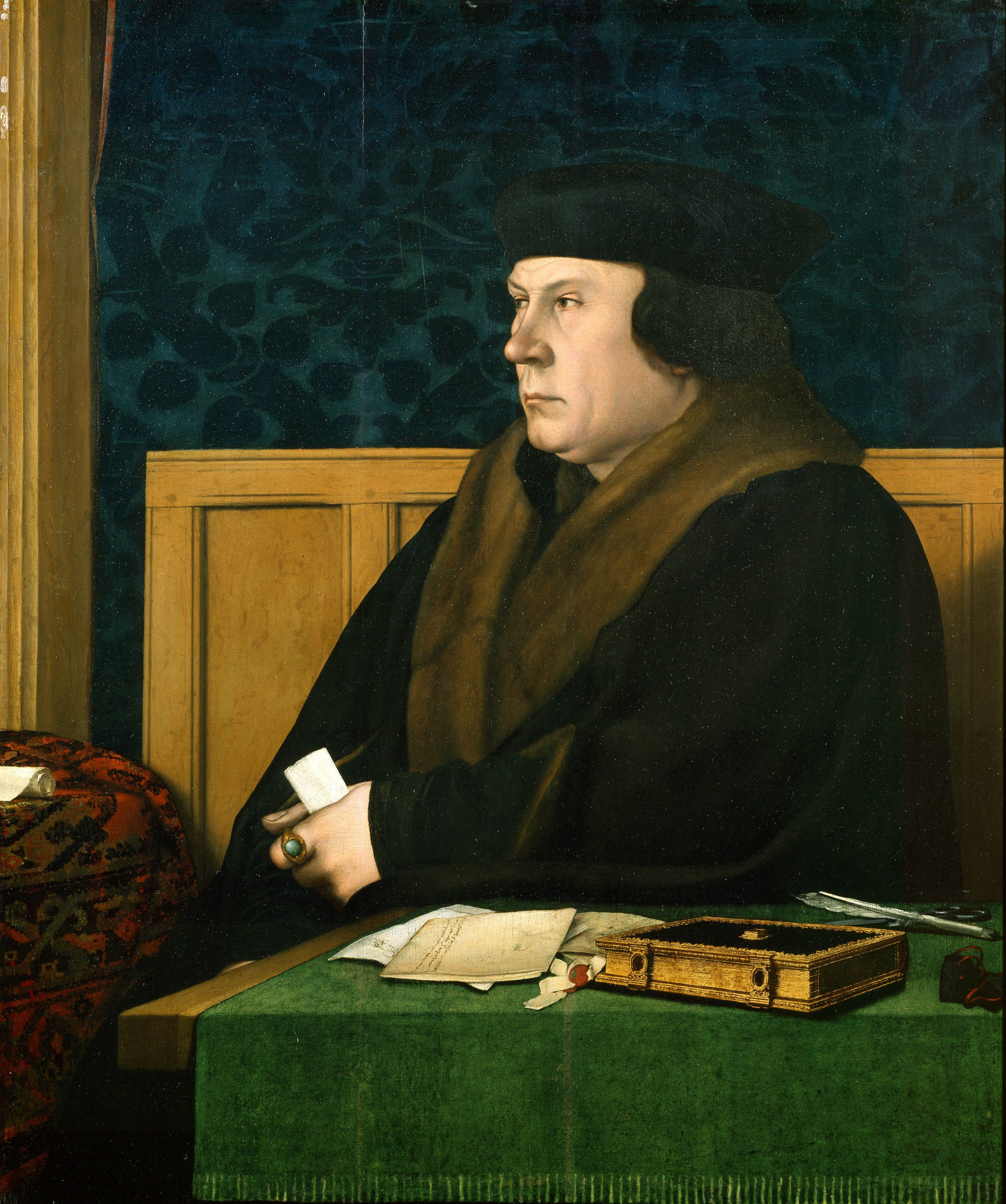
Above: Thomas Cromwell. He was executed on 28 July 1540, merely weeks after the annulment of Anne's marriage.
Henry's failure to consummate his union caused Anne dismay and concern. As noted, she had communicated to Cromwell her concerns about the king's behaviour. Shrewdly, she maintained her dignity and performed her queenly functions with success. She accompanied her husband to Westminster in February by barge and was festively greeted by the Londoners. Anne enjoyed warm relations with her stepchildren, as displayed by her decision to order her stepson Edward a bonnet; while the seeds of her long friendship with Mary Tudor were sown. At her coronation in October 1553, Mary provided Anne with a prominent place in the procession, sitting alongside her other stepdaughter Elizabeth.
Although she was respected and loved by her subjects, Anne's position was perilous. Her last public appearance alongside her husband was at the May Day celebrations, and shortly afterwards she learned of Henry's growing infatuation with her maid-of-honour Katherine Howard. In June, Anne revealed to Harst, the Cleves ambassador, that the king's council had requested her removal to Richmond Palace, and she admitted to him that she feared that Katherine of Aragon's fate would become her own.
Anne consented to the annulment of her marriage, but it is hardly likely that she consented happily. Her ambassador later reported that she had screamed and cried loudly, thus breaking his heart. Her settlement was generous: she was granted possession of Richmond and Bletchingley Manor for life (and later Hever Castle); precedence over all of Henry's subjects except himself, his children and his new wife; and the allowance of 8000 nobles for the maintenance of her household. However, her correspondence with Cleves was censored, thus dishonouring her.
How Anne felt about Henry's hasty marriage to her former attendant Katherine Howard is not known. Six months later, at the New Year celebrations, Anne was invited to court and publicly greeted the new queen, who later bestowed upon her the gift of a ring and two small dogs. It is often assumed that Anne bore no ill-will towards Katherine, but the truth is perhaps more complex. As Elizabeth Norton has suggested: 'Despite her acquiescence, Anne always believed herself to be the legitimate wife of the king and the true queen. In spite of this she was, first and foremost, a survivor and, if the price of that survival was a denial of her status in exchange for a life of opulent retirement, she was prepared to play along, even if that meant accepting a new lower status beside her former maid, Queen Catherine Howard'.
More likely, Anne was biding her time. The annulment of her marriage, in her eyes, had brought great shame upon herself and her family. Her correspondence with her family was heavily censored and her position remained, to put it mildly, highly ambiguous. Even the king's subjects were uncertain how to view the former queen. Rumours spread that Anne had been delivered of a son in the summer of 1541, which indicates that some, at least, continued to view her as Henry's true wife. Chapuys reported that she was delighted at the news of Katherine Howard's downfall, probably because she viewed it as indicative of her return to queenship. She was to be highly disappointed. Henry married Katherine Parr, rather than Anne, and the former queen was reportedly in great despair at the news. She allegedly made negative remarks about the new queen's appearance.

It is simplistic and probably erroneous to view Anne of Cleves as lucky, the most fortunate of Henry's wives. She herself did not view her situation that way. Not only had Henry publicly dishonoured her by annulling her marriage and marrying her attendant, but her situation as the king's 'sister' was uncomfortably ambiguous. When Henry failed to correspond with her she reportedly became melancholy. Anne later informed her brother that she felt like a stranger in England and longed to return to Cleves.
Moreover, her financial situation experienced strain following Henry's death. In 1547 Edward VI's council confiscated her manors of Bletchingley and Richmond, leading her to request her brother's assistance. Her situation remained unresolved when Mary succeeded her brother on the throne. Anne's final years were further troubled by household disputes. She died shortly before her forty-second birthday, on 16 July 1557, at her manor of Chelsea, and was later buried at Westminster Abbey. Authors, writing in memory of her, praised her gentleness, her household management, and her piety.
Anne of Cleves was a popular queen, much respected by her subjects, and has usually been viewed in modern times as the unattractive but kindly fourth wife of Henry VIII, who had the luckiest fate of all his wives. While it might appear that way today, Anne herself did not regard her situation so positively. She longed to be queen of England and was greatly distressed when Henry married Katherine Howard and, later, Katherine Parr. As Norton suggests, she continued to regard herself as the rightful queen and believed the annulment of her marriage had inflicted shame and dishonour upon her. Marriage was the primary vocation of sixteenth-century women, in particular royal women, and thus the annulment was viewed as a failure, a perversion of Anne's destiny and a slur upon her womanhood. She longed to return to her home country, believing herself an anomaly in England. This kindly, virtuous woman, who was reportedly attractive, has been much maligned and misrepresented in modern times. Perhaps of all of Henry's queens, Anne of Cleves remains the most stereotyped. This is a pity, for the evidence suggests that she was popular, much-praised, and in her short tenure as queen, she enjoyed success in her queenly role.


