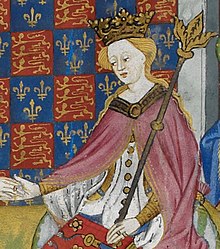
Showing posts with label katherine of aragon. Show all posts

Saturday, 14 November 2020

The Tudor Consorts 1485–1547


Seven women held the office of consort in the period 1485–1547, one of whom as the wife of the first Tudor king, Henry VII, and the following six as the wives of his son and successor, Henry VIII. The consorts are Elizabeth of York, Katherine of Aragon, Anne Boleyn, Jane Seymour, Anne of Cleves, Katherine Howard and Katherine Parr. These women have long fascinated scholars and the general public alike, with articles, books, films, television shows and even a musical about their dramatic, and in some cases tragic, lives. This article sets out to provide a brief overview of each consort, with further reading included for those who wish to learn more about the life in question. Briefly, however, it is worth noting that Retha M. Warnicke's Elizabeth of York and Her Six Daughters-in-Law (2017) is the only extant study of Tudor queenship in this period, and provides an illuminating and in-depth study of Tudor queenship in the period 1485–1547, offering facts not usually available in other works. Alison Weir (1991), Antonia Fraser (1992), David Starkey (2004) and David Loades (2010) have all written works about Henry VIII's six queens.


Elizabeth of York, consort of Henry VII
Born: 11 February 1466, Westminster Palace, London, England
Died: 11 February 1503, Tower of London, London, England (aged 37)
Father: Edward IV 
Mother: Elizabeth Wydeville
Tenure as queen consort of England: 1486–1503 (17 years, 1 month)
Coronation: 25 November 1487

Elizabeth of York was the eldest child of the first Yorkist king, Edward IV, and his consort Elizabeth Wydeville. She was born on 11 February 1466 at Westminster Palace, but had no expectation of ruling England in view of prevailing attitudes to female succession alongside the birth of a number of sons to her parents, including the eldest, Edward (born in 1470). During her childhood, she was briefly betrothed to the Dauphin Charles, son of the king of France, but the marriage did not take place. In 1483, Elizabeth's father died and her uncle, Richard of Gloucester, seized the throne resulting in the deposition of her brother. He and his younger brother, also named Richard, were placed in the Tower of London but their subsequent fate remains a mystery. Elizabeth and her sisters sought sanctuary alongside their mother, but resided at their uncle's court when he reached an agreement with their mother, the dowager queen. Rumours circulated that King Richard intended to marry his niece Elizabeth, in view of reports that Queen Anne was unable to bear children and was in poor health. Some evidence suggests that Elizabeth may have been interested in this match, but the king publicly denied it. Instead, Lady Margaret Beaufort, mother of Henry Tudor, earl of Richmond, who possessed a somewhat obscure claim to the English throne, schemed with Elizabeth Wydeville for the marriage of Henry to Elizabeth of York. Beautiful, virtuous and pious, Elizabeth became queen of England in January 1486 when she married Henry following his defeat of Richard III at the Battle of Bosworth. Historians have shown that there is no evidence for later allegations of conflict between Elizabeth and her somewhat domineering mother-in-law Lady Margaret. The king and queen had several children, but only four survived to adulthood: Arthur, Margaret, Henry and Mary. Arthur died in April 1502 at the age of fifteen and his mother died ten months later, on her thirty-seventh birthday at the Tower of London, shortly after giving birth to a short-lived daughter Katherine. She was buried at Westminster Abbey and was joined there by her husband when he died seven years later. Elizabeth's only surviving son, Henry, succeeded his father as king of England in 1509 and her two surviving daughters Margaret and Mary became queen consorts of Scotland and France, respectively.

Further reading:
- Amy Licence, Elizabeth of York: the Forgotten Tudor Queen (2013)
- Alison Weir, Elizabeth of York: the First Tudor Queen (2013)
- Arlene Okerlund, Elizabeth of York (2009)


Katherine of Aragon, first consort of Henry VIII
Born: 16 December 1485, Archiepiscopal Palace of Alcala de Henares, Alcala de Henares, Kingdom of Castile
Died: 7 January 1536, Kimbolton Castle, Cambridgeshire, England (aged 50)
Father: Ferdinand II of Aragon
Mother: Isabella I of Castile
Tenure as queen consort of England: 1509–1533 (23 years, 11 months)
Coronation: 24 June 1509

The youngest daughter of Ferdinand II of Aragon and Isabella I of Castile, Katherine (born in 1485) was betrothed to Arthur, Prince of Wales, eldest son of Henry VII and Elizabeth of York, in childhood and was thus educated as befitted a queen consort of England. A devout Roman Catholic, Katherine studied a range of subjects including philosophy, theology, history, arithmetic and classical and canon law, and learned languages such as French and Latin. She also acquired experience in domestic skills such as embroidery and sewing. In the summer of 1501, the fifteen-year-old Katherine travelled to England to wed Arthur and their wedding took place at St Paul's Cathedral in November. Whether the young couple consummated their union or not has remained a subject of controversy for the last five hundred years. Tragically, Arthur died the following spring at Ludlow Castle on the borders of Wales, where Katherine was residing with him. Subsequently the English and Spanish monarchs arranged that Katherine would marry Arthur's younger brother, Henry, now heir to the English throne. Ferdinand's procrastination over paying the remainder of his daughter's dowry, however, led to the marriage being postponed while Katherine lived in difficult conditions at Durham House in London. When Henry VII died in 1509, his eighteen-year-old son elected to marry Katherine and the couple were crowned at Westminster Abbey in June. Katherine presided over a court of culture and learning and was appointed regent of England when her husband went to war with France in 1513. When the Scots invaded that year, the queen ordered Thomas Lovell to raise an army in the Midlands and the English army triumphed at the Battle of Flodden. 

During her marriage, Katherine was pregnant at least six times but only one child survived, Mary (born in 1516). Like many of his contemporaries, Henry doubted whether a female could successfully rule England and by 1527 believed that his marriage to Katherine had displeased God by virtue of their lack of surviving sons. He was also in love with Anne Boleyn, who served in Katherine's household. The king argued that Katherine's marriage to Arthur in 1501 had been consummated, thus making her subsequent union with Henry invalid according to Biblical law. The queen, however, claimed that she and Arthur had never consummated their marriage. The struggle for an annulment of the Aragon marriage endured for six years, but in 1532 or 1533 Henry married Anne Boleyn in secret and in May, Archbishop Cranmer pronounced the Aragon marriage null and void, rendering the queen's daughter Mary illegitimate and unable to succeed her father. By then banished from court, Katherine resided in a range of residences including The More, Ampthill Castle and Buckden Towers, before spending the final years of her life at Kimbolton Castle, where she died on 7 January 1536, perhaps of cancer, having never accepted her husband's decision to annul their marriage. She was buried at Peterborough Abbey (now Cathedral); her daughter Mary became England's first queen regnant in July 1553.

Further reading:
- Garrett Mattingly, Catherine of Aragon (1941)
- Giles Tremlett, Catherine of Aragon: Henry's Spanish Queen (2010)
- Amy Licence, Catherine of Aragon: An Intimate Life of Henry VIII's True Wife (2016)


Anne Boleyn, second consort of Henry VIII
Born: Between 1500 and 1507 probably at Blickling Hall, Norfolk or Hever Castle, Kent, England
Died: 19 May 1536, Tower of London, London, England (aged 28–36)
Father: Thomas Boleyn, earl of Wiltshire
Mother: Lady Elizabeth Howard
Tenure as queen consort of England: 1533–1536 (3 years)
Coronation: 1 June 1533

The most famous of Henry VIII's six wives, Anne Boleyn was born between 1500 and 1507. The majority of modern historians favour a birth date of circa 1501, but evidence from her daughter's lifetime supports the later birth date, especially in view of prevailing court customs that decreed that maidens of honour did not receive instruction in languages. It is also questionable why the ambitious Thomas Boleyn would have been content for his daughter to remain unmarried between 1523 and 1527 if she were as old as twenty-seven in the latter year. Anne is thought to have been born at Blickling Hall in Norfolk or perhaps Hever Castle in Kent, although some of her later relatives believed that she had been born in London. Whether she was older or younger than her sister Mary and brother George continues to remain controversial. If born in 1507, Anne was probably the youngest surviving child. In 1513, she was sent to the court of Margaret of Austria in the Low Countries; traditionally thought to have served as a maiden of honour, as noted earlier it was not the custom for maidens to receive an education while they were fulfilling her duties. The following year, Anne wrote a letter to her father in poor French, indicating that she could not speak the language and so would not have been capable of fulfilling the duties of a maiden of honour. Perhaps she initially resided in the royal nursery and served as a maiden at a later date. In 1514, she attended Henry VIII's sister Mary when she married Louis XII of France and later served Claude of France, wife of Francois I. Anne acquired a thorough knowledge of French culture and developed her talents in dancing, music and singing. Her evangelical faith may also have originated in France. In 1521 or 1522, she returned to England to wed James Butler to settle a dispute between the Boleyn and Butler families concerning the earldom of Ormond, but the marriage never took place. Anne fell in love with, and hoped to marry, Henry Percy, heir to the earldom of Northumberland, in 1523, but the couple were prevented from marrying due to the wishes of the king and Cardinal Wolsey and Anne was banished from court, remaining at Hever until 1526 or 1527, when she returned probably in the capacity of maiden of honour to Katherine of Aragon. 

Contemporaries described her as being of medium height, with long dark hair, brown or black eyes and a swarthy complexion. Her detractors slandered her as being deformed, while others noted her beauty and elegance. In 1531 she was described as being both 'young' and 'good-looking'; such references to Anne's youth in the late 1520s and early 1530s provide further evidence of a birth in 1507, rather than as early as 1500/1. In 1527, Henry fell passionately in love with the sophisticated and charming Anne, and proposed marriage to her. The couple, however, wed only in late 1532 or early 1533 on account of the long struggle to annul the Aragon marriage. Anne was crowned queen on 1 June 1533, already pregnant, and gave birth to her only surviving child, Elizabeth, on 7 September. Two further pregnancies resulted in a probable stillbirth (in 1534) and in a miscarriage (in 1536). The king and queen's relationship was stormy, punctuated by periods of bitter quarrels and subsequent reconciliation. Many of the king's subjects refused to accept Anne as queen and she was regularly slandered as a whore or prostitute. The marriage was also never recognised in Europe as valid. 

Anne exerted significant influence at court, especially in advancing the evangelical faith, and was outspoken on political and religious matters. Despite her influence, the royal couple's lack of a son endangered Anne's security. The queen's precarious position worsened in early 1536 when her husband fell in love with her attendant Jane Seymour. In May, four months after a miscarriage, Anne was accused of treason, adultery and incest with five men, including her brother, and was imprisoned in the Tower of London. Historians continue to debate the reasons for the queen's downfall; suggestions include that a coup was masterminded by Thomas Cromwell to remove Anne and her 'faction' from power; that her husband had grown to hate her and was desperate to marry Jane; that she actually was guilty of the charges; that she gave birth to a deformed foetus, convincing her husband that she was a witch; and that her own incriminating behaviour and conversations in the spring of 1536 created a climate of suspicion and distrust of her loyalty to the king. Irrespective of the reason, most historians believe that she and the men accused with her were not guilty of the charges. All were found guilty and the men were executed on 17 May, the date on which Anne's marriage to Henry was annulled, probably on account of his earlier liaison with the queen's sister Mary. Anne was beheaded within the walls of the Tower of London two days later, the first English queen to suffer execution, and her remains were interred at the Tower chapel of St Peter ad Vincula. Her daughter, Elizabeth, became queen of England in 1558.

Further reading:
- Eric Ives, The Life and Death of Anne Boleyn (2004)
- Retha M. Warnicke, The Rise and Fall of Anne Boleyn (1989)
- G. W. Bernard, Anne Boleyn: Fatal Attractions (2010)
- Susan Bordo, The Creation of Anne Boleyn (2013)
- Alison Weir, The Lady in the Tower: The Fall of Anne Boleyn (2009)


Jane Seymour, third consort of Henry VIII
Born: About 1509 probably at Wolfhall, Wiltshire, England
Died: 24 October 1537, Hampton Court Palace, London, England (aged about 28)
Father: Sir John Seymour
Mother: Margery Wentworth
Tenure as queen consort of England: 1536–1537 (1 year, 5 months)
Coronation: Never crowned

On 30 May 1536, Jane Seymour became the third wife of Henry VIII when she married him at Whitehall Palace in London. The eldest daughter of Sir John Seymour and Margery Wentworth, Jane was probably born in about 1509, for twenty-nine female mourners are alleged to have participated in her funeral procession, suggesting that when she died, she had been in her twenty-ninth year. The imperial ambassador also described her as being over 25 in 1536. Jane is thought to have served Katherine of Aragon as a maiden of honour, but the evidence is patchy and it is uncertain when she arrived at court. She later attended Anne Boleyn, although she is thought to have remained loyal to the former queen. There is little, if any, evidence for the oft-repeated assertion that Jane revered Katherine of Aragon and later modelled her queenship on that of Katherine's. She received a traditional education as a child, in which she learned skills such as embroidery, housewifery, sewing and needlework, but she was never described as possessing linguistic or musical ability. Jane may have been betrothed to William Dormer, but if so, the marriage took place and by early 1536, at the age of twenty-seven, Jane remained unwed. Henry VIII began courting her that year, perhaps with a view to taking her as his mistress, but Jane, who seems to have been coached by her family, refused the king's proposal. The turbulence of the Boleyn marriage, and the king's lack of sons by the queen, coupled with his interest in Jane, sealed Anne's fate and led to Jane becoming queen of England in May 1536. She was described as being pale and fair, but not beautiful, and while some observers praised her good sense and placid nature, others thought that she was haughty. Jane was never crowned queen due to an outbreak of plague in the capital. Her household was conservative in dress and behaviour, and she exerted little political influence, although she did intercede for the king's daughter Mary and father and daughter were reconciled in 1536. When Jane did attempt to speak out for the abbeys, which the king planned to dissolve in order to seize their revenues, she was brutally warned not to meddle in political matters if she wished to avoid the fate of her predecessor. 

In early 1537, the queen conceived a child and on 12 October, at Hampton Court Palace, she gave birth to the king's much-desired son, who was named Edward. Tragically, Jane died twelve days later at the age of about 28, perhaps of puerperal fever or an infection from a retained placenta. She was buried at St George's Chapel, Windsor, and her husband was interred there next to her when he died in 1547. 

Further reading:
- Pamela Gross, Jane, the Quene (1999)
- Elizabeth Norton, Jane Seymour: Henry VIII's True Love (2009)


Anne of Cleves, fourth consort of Henry VIII
Born: June 1515 in Dusseldorf, Duchy of Berg, Holy Roman Empire
Died: 16 July 1557, Chelsea Old Manor, London, England (aged 42)
Father: John III, duke of Cleves
Mother: Maria of Julich-Berg
Tenure as queen consort of England: 1540 (6 months)
Coronation: Never crowned

Jane Seymour's death in 1537 led Henry VIII and his chief minister Thomas Cromwell to seek a bride from one of the royal houses of Europe. Various candidates were proposed, including Marie of Guise and Christina of Denmark, but the king's desire for an alliance with Cleves - in view of England's isolation and the threat from France and Spain, who were then allies - led him to favour a match with Anne, daughter of John III, duke of Cleves. Anne had initially been betrothed to Francis of Lorraine. Her education was traditional in nature, but she does not seem to have acquired instruction in music and was not viewed as being sophisticated. She was described by observers as attractive, with long fair hair and with a tall, slim build. In 1539 she departed for England in readiness for her marriage to Henry, whom she met for the first time at Rochester Abbey on New Year's Day 1540. The king and a few of his attendants adopted a courtly love convention in which they visited Anne in disguise. Henry was disappointed with Anne, perhaps because she had allegedly 'regarded him little' since she may not have known who he was on account of his disguise. The king also complained that she was 'nothing so fair as she hath been reported', but it is a myth that he described her as a Flanders mare, a claim which dates from a later period. The couple married at Greenwich Palace on 6 January 1540, but the marriage was never consummated and Anne was never crowned. By the spring of that year, Henry was passionately in love with Anne's maiden of honour, Katherine Howard, and international politics, namely the renewal of conflict between France and Spain, meant that the Cleves alliance was no longer welcome or necessary. The king believed that Anne was not legally his wife on account of her earlier precontract to Francis of Lorraine. The marriage was annulled in July and Thomas Cromwell, who had helped to arrange the Cleves marriage, was executed for treason. Anne received a generous settlement; her properties included Richmond Palace and Hever Castle. It is a myth that she was the luckiest of Henry VIII's six queens, for she would not have viewed the situation that way: Anne hoped to be reinstated as queen and when Henry married for the final time to Katherine Parr, she was described as being disappointed and disparaged the new queen's appearance. In some sense Henry was Anne's protector and, after his death, her life became increasingly complicated. She experienced conflict between her servants in her household and confided to her brother that she felt like a stranger in England. When her stepdaughter Mary became queen of England in 1553, Anne congratulated her and participated in the queen's coronation procession. She seems to have lost royal favour the following year on account of her close association with her other stepdaughter Elizabeth, who was implicated in Wyatt's Rebellion, and because she was thought to have intrigued on Elizabeth's behalf during the rebellion. Anne died on 16 July 1557 at Chelsea Old Manor, probably of cancer, and was buried at Westminster Abbey. 

Further reading:
- Heather Darsie, Anna, Duchess of Cleves: The King's Beloved Sister (2019)
- Retha M. Warnicke, The Marrying of Anne of Cleves. Royal Protocol in Early Modern England (2000)
- Elizabeth Norton, Anne of Cleves: Henry VIII's Discarded Bride (2009)


Katherine Howard, fifth consort of Henry VIII
Born: Between 1523 and 1525 probably in Lambeth, London, England
Died: 13 February 1542, Tower of London, London, England (aged 17–19)
Father: Lord Edmund Howard
Mother: Joyce Culpeper
Tenure as queen consort of England: 1540–1541 (1 year, 4 months)
Coronation: Never crowned

Katherine Howard was the youngest wife of Henry VIII. She was a younger daughter of Lord Edmund Howard and Joyce Culpeper, and was the granddaughter of Thomas, second duke of Norfolk and a niece of Thomas, third duke of Norfolk. She and Anne Boleyn were first cousins, for Anne was the daughter of Edmund's sister Elizabeth. Katherine's date of birth is unknown, but contemporary - albeit fragmentary - evidence indicates that she was born between 1523 and 1525. Certainly she was a teenager when she captivated the ageing king in late 1539 or early 1540. At some point between 1531 and 1536, Katherine was sent to reside in the household of her step-grandmother Agnes, dowager duchess of Norfolk. She began receiving music lessons in 1536, perhaps with a view to serving as maiden of honour to Anne Boleyn or Jane Seymour. That she only began receiving music lessons that year is a further clue to her age, for if born as early as 1520/1 these surely would have taken place earlier with a view to acquiring a place in the queen's household. In the midst of these lessons her music master Henry Manox seduced her, although the two did not have sexual intercourse. She later noted that Manox had beseeched her to grant him sexual favours 'at the flattering and fair persuasions of Manox, being but a young girl'. By 1538, Katherine was involved in a liaison with Francis Dereham, a secretary to the dowager duchess, and rumours circulated in the household that the two hoped to marry. Dereham, born between 1506 and 1509, was then aged between twenty-nine and thirty-two, and Katherine was aged between thirteen and fifteen. It is possible, though uncertain, that Dereham coerced her. By 1539, however, their relationship had ended on account of Katherine's appointment to the household of Anne of Cleves. 

An unknown Spanish chronicler later described Katherine as the most beautiful woman in the kingdom. She was elegant, charming and generous, although other contemporaries described her as willful and imperious. Upon her arrival at court, Henry VIII fell headily in love with the teenaged Katherine and the two married on 28 July 1540 at Oatlands Palace. Katherine fulfilled her duties as queen successfully, acting as a patron and intercessor on a number of occasions, and court observers described the king's hope that his new queen would bear a son. Rumours circulated throughout Katherine's queenship that she was pregnant, but if so, she never gave birth to a living child. Like Jane Seymour and Anne of Cleves, Katherine was never crowned, although it was rumoured that she would be crowned in York during the royal couple's progress to the north of England. By the spring of 1541, however, Katherine's life became complicated. Her former suitor Dereham arrived at court, hoping to serve in her household, and soon began boasting of his former relations with the queen. Dereham's aggressive and possessive attitude towards Katherine placed both individuals in danger. At the same time, Katherine began secretly meeting with Thomas Culpeper, a favoured courtier, with the aid of Lady Rochford, sister-in-law to Anne Boleyn. Culpeper was described as handsome but he had a dark reputation as an alleged rapist.

Traditionally, the queen and Culpeper are thought to have had a sexual affair, but both parties denied it. A letter written by Katherine to Culpeper probably in July 1541, usually described as a love letter, instead indicates that she desired him to keep his promise to her, but it remains uncertain what she was referring to. Perhaps the couple were in love, but it is also possible that in a climate of tension and intrigue at court, in which Dereham had recklessly boasted of his former liaison with the queen, that Culpeper had learned of Katherine's background and used it against her in order to win favours and attention. In support of this theory is the fact that Katherine gave him gifts and met with him regularly while chaperoned by Lady Rochford. It is possible that the promise which Katherine referred to in her letter concerned Culpeper's promise not to reveal her past to the king. She also warned him to beware revealing their meetings during his confessions to priests in case Henry VIII, by virtue of his position as head of the Church in England, somehow learned of their liaisons. Irrespective of the nature of their meetings, Katherine behaved recklessly since contemporary customs warned women not to meet secretly with men who were not their husbands. It is also questionable why she did not learn from the experiences of her cousin and predecessor Anne Boleyn, whose allegedly indiscreet conversations had led to her downfall and execution in 1536.

In November 1541, Archbishop Cranmer learned of Katherine's past when John Lascelles, whose sister Mary had resided in the dowager duchess of Norfolk's household alongside Katherine, revealed that the queen had been involved with two men prior to her marriage to the king. The queen and her household were subsequently investigated and the privy councillors eventually learned of her secret meetings with Culpeper in the spring and summer of that year. The distraught king refused to see Katherine and moved away from court. In December, Dereham and Culpeper were executed for treason and in February of the following year, Katherine and Lady Rochford were beheaded at the Tower of London, having been found guilty of treason by an Act of Attainder, thus denying them the right to stand trial. Contrary to popular belief, the queen was not found guilty of adultery but was indicted for intending to commit adultery with Culpeper, which constituted a treasonous offence. Both women were praised for their godly conduct on the scaffold, in which they praised the king and beseeched onlookers to pray for them. After the executions, their remains were interred at the chapel of St Peter ad Vincula. Katherine was aged seventeen to nineteen years when she was executed. 

Further reading:
- Conor Byrne, Katherine Howard: Henry VIII's Slandered Queen (2019)
- Gareth Russell, Young and Damned and Fair: The Life and Tragedy of Catherine Howard at the Court of Henry VIII (2017)
- Josephine Wilkinson, Katherine Howard: The Tragic Story of Henry VIII's Fifth Queen (2016)
- Retha M. Warnicke, Wicked Women of Tudor England (2012)
- Lacey Baldwin Smith, A Tudor Tragedy: The Life and Times of Catherine Howard (1961)

Katherine Parr, sixth consort of Henry VIII
Born: 1512 probably in Blackfriars, London, England
Died: 5 September 1548, Sudeley Castle, Gloucestershire, England (aged 36)
Father: Sir Thomas Parr
Mother: Maud Green
Tenure as queen consort of England: 1543–1547 (3 years, 6 months)
Coronation: Never crowned

Katherine was the eldest daughter of Sir Thomas Parr and Maud Green, and was probably born in the summer of 1512 in Blackfriars, London. Her father was a favoured companion of Henry VIII and her mother served in the household of Katherine of Aragon, for whom Katherine Parr was probably named. Katherine acquired an excellent education, which included the learning of languages such as French and Latin, and in 1529, aged seventeen, she married Sir Edward Burgh of Gainsborough, Lincolnshire. Her husband died in 1533 and Katherine probably resided for a time at Sizergh Castle in Westmorland with the Dowager Lady Strickland, the widow of Katherine's cousin Sir Walter Strickland. The following year, Katherine married for the second time to John Neville, Baron Latimer, and acted as stepmother to his two children John and Margaret. In 1537, during the Pilgrimage of Grace, Katherine and her stepchildren were held hostage by the rebels at Snape Castle in Yorkshire. Her husband had been compelled the previous autumn to join the rebellion, and had been threatened with violence if he refused. However, Latimer's involvement in the rebellion led the king and Cromwell to suspect him of being a traitor, and it is possible that Katherine's brother William and their uncle (also named William) intervened for his life as a result. In 1543, Latimer died and at the age of thirty-one, Katherine was once more a widow.

She seems to have fallen in love with Sir Thomas Seymour, brother of the late Queen Jane, but while residing at court, she caught the attention of Henry VIII and the couple were married at Hampton Court Palace on 12 July of that year. Katherine's later correspondence indicates that she had not willingly agreed to marry the king, but felt that God had called her to be queen of England in order to advance true religion. It is a myth that she acted as a nursemaid to her ageing and infirm husband. Katherine was an educated, cultured and elegant queen consort who was known for her love of art, music and fashion. Like Katherine of Aragon, she was made regent of England in 1544 when the king left England to campaign in France. Katherine became close to her three stepchildren Mary, Elizabeth and Edward, and scholars have conjectured that her influence on Elizabeth, in particular, was significant. Katherine possessed a devout religious faith and wrote a number of religious works including The Lamentation of a Sinner (published after her husband's death). She enjoyed reading and discussing scripture with the ladies of her Privy Chamber. However, her adherence to the reformed faith led the conservatives at court, masterminded by Bishop Stephen Gardiner and Lord Wriothesley, to plot against her. Her own outspoken views increasingly alienated the king, and rumours began circulating that Henry planned to marry for the seventh time to the queen's friend Katherine, duchess of Suffolk. Whether there was any truth to these rumours remains uncertain.

In the summer of 1546, shortly after the burning of the heretic Anne Askew, who was thought to have links to some of the queen's ladies-in-waiting, a warrant was drawn up for the queen's arrest on charges of heresy. Fortunately for Katherine, a servant caught sight of the warrant and warned her in time. She convinced the king of her loyalty by claiming that she had only discussed religion with him as a distraction from the suffering caused by his ulcered leg. Henry VIII died on 28 January 1547 and his wife, now queen dowager, retired from court. The queen's swift remarriage to Thomas Seymour, probably in that spring, caused a scandal. In particular, her stepdaughter Mary was reported to be displeased by Katherine's actions. The dowager queen also experienced conflict with the Lord Protector on account of her jewels, since he and his wife argued that Katherine was no longer entitled to wear them.   

In the spring of 1548, Katherine conceived a child for the first time. However, her husband's reckless behaviour with her stepdaughter Elizabeth, who was residing with her stepmother, created a scandal in the household, and Elizabeth was dismissed as a result. On 30 August, the dowager queen gave birth to a daughter, Mary, but Katherine died only six days later from puerperal (or childbed) fever. Her daughter is thought to have died in infancy. Katherine was buried at St. Mary's Chapel in the grounds of Sudeley Castle, and remains the only English queen buried on private ground. Thomas Seymour was executed for treason the following March.

Further reading:
- Susan James, Kateryn Parr: The Making of a Queen (1999)
- Linda Porter, Katherine the Queen: The Remarkable Life of Katherine Parr (2010)
- Susan James, Catherine Parr: Henry VIII's Last Love (2010)

The Tudor Consorts
This article has sought to provide a brief biography of each of the seven Tudor consorts, alongside offering a list of recommended works for readers interested in learning more about them. Their lives continue to remain fascinating for modern audiences.

Monday, 29 January 2018

On The Tudor Trail - Anne Boleyn's Life, 1521-1527

I have recently written an article for the website On The Tudor Trail about Anne Boleyn's life in the years 1521-7, a period that remains frustratingly shadowy. In this article, I discuss Anne's return to England from the French court in late 1521; her anticipated marriage to James Butler, heir to the earldom of Ormond; her probable appointment to Katherine of Aragon's household in 1523 and her liaison that year with Henry Percy, heir to the earldom of Northumberland; her dismissal and probable return in late 1526. My approach is closely informed by the extant evidence concerning Anne's age and the Boleyn family goals and ambitions, in which it was anticipated that Anne would be ennobled as the countess of Ormond. As is well known, of course, the marriage did not come to fruition and Anne instead captured the heart of Henry VIII by 1527, four years after her affair with Percy, who inherited the earldom of Northumberland in 1527. You can read the article here.

Friday, 23 October 2015

The Stereotyped Six Wives: Two: A Dangerous Obsession


Anne Boleyn, second wife of Henry VIII of England
Lifetime: c. 1507 - 19 May 1536
Reigned: May 1533 - May 1536 (3 years)
Pregnancies: 3 
Elizabeth I of England: 7 September 1533 - 24 March 1603
Stillborn child: June/July 1534
Miscarried son: January 1536

In this new six-part series, I will be reexamining the lives and personalities of Henry VIII's six wives, seeking to portray their lives realistically in a process that discards prevailing stereotypes. Much scholarly work has been done on Henry's reign in recent decades, affording fresh insights into the politics and achievements of the period. Understandably, widespread interest in Henry's marital affairs remains unabated. Yet stereotypes continue to bedevil our knowledge of the wives of this most enigmatic king. 

The historiography of Anne Boleyn, Henry VIII's second consort, is paradoxical. More has been written about Anne than any of Henry's other wives, yet she remains the most maligned of his queens. An explanation for this can perhaps be found in the polarising nature of the surviving sources. Protestant literature that approved of the break with Rome and celebrated the accession of Elizabeth I presented Anne as 'that most holy Queen', a charitable and pious reformer who had married the king solely to further the reformed faith. By contrast, Catholic polemical works depicted Anne as a monstrous vixen who had vindictively encouraged Henry to destroy both his first marriage and the Church in England. In these accounts, the bewitching Anne was indeed guilty of the crimes of which she was charged and was punished with a shameful death for her sins.

It is unfortunate that the sources concerning Anne's life are so polarised, for they strip away the queen's humanity, presenting her as a figure not wholly human. In the Protestant works she is saintly, whereas in Counter-Reformation histories she is less than human, a worshipper of the devil. Only with difficulty can historians navigate their way through the conflicting stories of Anne's life and reach a realistic understanding of Anne as a person and as a queen. The true story is a sinister one of fatal obsession rather than love.

Hever Castle
Above: Hever Castle in Kent, where Anne Boleyn may have been born.

Anne was the younger daughter of the diplomat and courtier Sir Thomas Boleyn and his wife Lady Elizabeth Howard. While it is a myth that she was the most nobly born of Henry's English wives, her pedigree was impressive. On her mother's side, she was the niece of the Earl of Surrey and granddaughter of the Duke of Norfolk, while on her father's side she was related to the earls of Ormond. Anne's date of birth and birthplace are unknown. Traditionally it has been suggested that she was born either at Blickling Hall in Norfolk or at Hever Castle in Kent, but several of Anne's relatives were of the opinion that her birthplace was London, perhaps Norfolk House at Lambeth. The majority of modern historians favour a birthdate of circa 1501; however, the Elizabethan antiquarian William Camden confirmed that Anne was born in 1507, while the Duchess of Feria informed her biographer Henry Clifford that Anne had not yet reached twenty-nine years of age when she was beheaded in 1536. 

Cardinal Wolsey himself allegedly referred to Anne in 1523 as a 'foolish girl', while Cardinal Reginald Pole described Anne as a 'girl' when Henry VIII fell in love with her. In 1534, a year after her marriage, Anne was described by the Imperial ambassador Eustace Chapuys as being 'in a state of health and of an age to have many more children'. While she could have had more children, the adjective 'many' is questionable if she were actually 33 or 34 years old. Finally, when Anne was sent abroad to the court of Margaret of Austria, she was described by the regent as being 'so pleasing in her youthful age'. In the sixteenth-century, children of the nobility and gentry were routinely sent to noble households at an early age to acquire an education. Sir Thomas, an ambitious and well-educated diplomat, surely had similar hopes for his daughter. Recognising that she was 'bright and toward', it is entirely credible that he arranged for her departure to Europe at the age of only six years old. Perhaps it was only in 1519 or 1520 that Anne formally served as a maid of honour. 

From an early age, Anne would have been brought up to value her lineage. The Boleyns were not nobility, but they were an ambitious and enterprising family that had consistently married well. Sir Thomas's marriage to Elizabeth Howard had been a considerable achievement for him in that it allied the Boleyns with the Howards, the premier ducal family in England. The Howards, moreover, were closely linked to the Tudor dynasty, for Queen Elizabeth of York's younger sister Anne had married Thomas Howard, earl of Surrey and later duke of Norfolk. It is entirely credible that Anne Boleyn was named after her aunt. 

Bernard van Orley - Portrait of Margareta van Oostenrijk - WGA16689.jpg
Above: Margaret of Austria, duchess of Savoy (left) and Queen Claude of France (right). As a young girl, Anne Boleyn was closely acquainted with both ladies.

It is usually asserted that Anne's older sister Mary also accompanied her to France, but the list naming the maids of honour serving Mary Tudor when she married Louis XII of France in 1514 referred only to one 'M. Boleyn' rather than two. The initial 'M' referred to the title mistress rather than one's Christian name. A later inventory of ladies remaining in France referred to 'Mademoiselle Boleyn' which, again, almost certainly referred to Anne. Why Sir Thomas elected to send Anne rather than Mary to serve in the courts of Europe can perhaps be explained by the brightness and shrewd intellect that Anne already possessed. The ambitious Thomas was perhaps also hoping to wed Mary to a high-ranking English nobleman. Sending Anne abroad, rather than Mary, cannot necessarily be read as evidence of Thomas' preference for Anne or as evidence that Mary was intellectually inferior to her sister.

Anne's childhood in Europe profoundly influenced her worldviews and her inner character. Like Katherine of Aragon, she was acquainted with strong ruling women that were more than capable of governing kingdoms. Margaret of Austria was the shrewd regent of the Netherlands during Anne's stay there, and when Anne departed to France to serve Queen Mary she was acquainted with Marguerite de Navarre, sister of Francois I. The duke of Norfolk, Anne's uncle, was later to inform Marguerite that his niece was 'as affectionate to your highness as if she were your own sister, and likewise to the queen... My opinion is that she is your good and assured friend'. Two years later, in 1535, Anne herself informed Marguerite that 'her greatest wish, next to having a son, was to see you again'. While it is difficult to uncover the true nature of relations between Anne and Marguerite, it seems likely that the young Anne admired Marguerite. She was both an author and a patron of humanists and reformers. Her most famous work was Heptameron, which has been interpreted as a social and political critique, combining religiosity (pious dedication and high moral standards) with 'lurid voluptuousness'.  

If Anne was influenced by Marguerite, then she would have grew to value her own ideas, to think critically of the world around her, and to place a great emphasis on inner piety and spiritual enlightenment. Anne also served Claude, wife of Francois I. Claude was renowned for her piety, virtue and goodness, and she did not encourage the licentious intrigues that pervaded the French court. As a favoured companion of the French queen, Anne would have understood that female virtue was her greatest prize. She likely came to understand her own worth and arrived at a deep understanding of herself as a woman. Influenced from a young age by strong women on the continent, including the capable Margaret of Austria, the sophisticated and educated Marguerite de Navarre, and the virtuous Queen Claude, Anne Boleyn grew up to be a remarkable woman.

She was not the most beautiful of women, but she had something more. She valued her own ideas, she read widely in secular and religious literature, and she developed an intense fascination with the reformed faith. Eric Ives has speculated that Anne underwent something of a religious enlightenment while in France, and it is certainly possible given her receptivity to the beginnings of the reformed faith that were developing across Europe. Anne also became a highly skilled musician, an excellent dancer and an intellectual with a keen interest in the Renaissance movement. Although she had not been groomed for queenship like Katherine of Aragon, she was in many respects a highly suitable candidate for royalty given her piety, her intellect, her sensitivity to the artistic movement and her interest in the Reformation. Moreover, she came from a fertile family and, while not blessed with outstandingly good looks, was physically attractive. The Venetian ambassador recorded that she was of medium stature, with a swarthy complexion, a wide mouth, and 'black and beautiful' eyes. Her brown hair was lustrous and long and her hands finely formed.


Anne returned to England late in 1521. Her father had arranged a most advantageous marriage for her to James Butler, later ninth earl of Ormond, in a bid to settle the Boleyn-Butler dispute over the title of Ormond. An ambitious young lady who had been educated to advance her lineage, Anne would surely have been aware of the advantages presented to the Boleyn family by the alliance with the Butlers. For reasons that remain unsolved, however, the marriage did not take place. Around this time Anne was appointed to serve Katherine of Aragon, first wife of Henry VIII, and alongside her sister Mary and former mistress Mary Tudor, she appeared in a court masque in March 1522 in the role of Perseverance. If George Cavendish, gentleman usher of Cardinal Wolsey, is to be believed, Anne soon afterwards became acquainted with Henry Percy, heir to the earldom of Northumberland and the two fell in love with one another. He wrote that 'there grewe such a secret love between them that at lengthe they were ensured together intending to marry'. Percy was captivated by Anne's 'excellent behaviour and gesture'. He regarded Anne as 'a convenient wife', informing the enraged Cardinal thus when Wolsey discovered the secret relationship between them. Percy described Anne as being 'descended of right noble parentage' which, in truth, she was. Heartbroken, Percy was forced to separate Anne, and she seems to have been sent from court in disgrace.

As an assertive, intellectual young woman who valued her own ideas and was interested in both the Renaissance and the Reformation, Anne Boleyn attracted admirers. At some point she attracted the king himself. It is a lingering myth that Anne deliberately set out to become queen, calculatingly ensnaring the unsuspecting king and seducing him in a bid to become queen of England. If anything, the evidence indicates the exact opposite, as recent research has demonstrated. Anne may have been in love with Henry Percy and, when the king of England fell in love with her, she might not yet have recovered from the heartbreak she had endured over Percy. A charismatic, attractive woman, she provoked dangerous obsession in men who became interested in her, one of whom was the king, and another of whom was the musician Mark Smeaton. Only in the realm of fiction have these obsessions been interpreted in a sinister light, but it is possible that fiction, in this case, mirrors reality. 

For Henry's obsession with Anne was completely one-sided. She was not interested in becoming his mistress; neither did she, at least initially, wish to become queen. This perhaps is at odds with the admirable marital successes achieved by Boleyn ambition, but Anne had served several royal women on the continent and had been close to at least two of them. Her relations with Marguerite and Claude perhaps instilled in her a deep-seated loyalty to the traditions of monarchy. George Wyatt, a grandson of the poet Sir Thomas Wyatt, confirmed in his biography of Anne that she bare great 'love to the queen [Katherine] whom she served, that was also a personage of great virtue'. Loyal to Queen Katherine, and well aware that her sister Mary had been discarded by the king once her period as his mistress was over, Anne had no wish to become queen of England, and by ignoring the king's relentless stream of letters she likely hoped that he would leave her alone.


Related image
Above: Henry VIII wrote repeatedly to Anne beseeching her to become his love, but her replies were vague and she often neglected to reply, probably due to an earnest desire to be left alone.

However, Anne's behaviour served only to make the king more obsessive, often dangerously so. Nowadays his behaviour might be interpreted as stalking, which is what a handful of modern historians have interpreted it as. When she remained aloof, Henry reproached her by opining that her lack of enthusiasm 'seems a very poor return for the great love which I bear you'. She retreated from court to Hever and returned only in the company of her mother. Henry continued to entreat her 'earnestly to let me know expressly your whole mind as to the love between us'. Anne's replies, in reality, had not exactly suggested that she felt 'love' for him, as Henry disingenuously wrote. She surely knew that involvement with the king would constitute a betrayal of her mistress, and as Wyatt's evidence suggests, Anne was loyal to Katherine and had no wish to hurt her. Yet, in refusing to become Henry's mistress and in retreating from court in an attempt to escape his lust, Anne's situation only worsened. For the more she retreated, hoping that the king would respect her wishes to be left alone, the more his obsession was inflamed until it became fatal. Not, at this stage, fatal for Anne, but fatal for his kingdom and fatal for his first marriage. By the summer of 1527, Katherine was informed that her marriage was invalid on account of her previous marriage to Henry's brother Arthur. The king was certain that their lack of sons was because their marriage had offended God as an unclean union. 

Whether Anne was prepared for what was to befall her cannot be known with certainty. When she danced with Henry at a reception for the French ambassadors in May 1527, the court became aware that it was Sir Thomas Boleyn's younger, sophisticated daughter who would replace the beloved Katherine as queen of England. Anne's life became much harder around this time. Queen Katherine was reportedly 'much beloved in this kingdom' and the king himself, despite his desire to annul his first marriage, was well-liked by the people and respected by his courtiers. Who to blame, then, for the royal marital crisis? Anne herself. With the passing of time, in the exaggerated dispatches of ambassadors, the whispers of courtiers and the murmurs of discontent across the kingdom, Anne was gradually endowed with enormous power that was regarded as unthinkable in a woman. Her power was heinous, dark, supernatural: it was whispered that she had cast a spell on the unsuspecting king, manipulating him with the promises of sexual fulfillment to put aside his long-suffering wife and marry her, a younger woman, instead. Endowed with this unnatural power, Anne was figured as a witch, an enchanting siren who resorted to poisoning her enemies (including Bishop John Fisher in early 1531) and threatening the life of the Queen (that same year apparently wishing that all Spaniards were at the bottom of the sea). In short, she became a scapegoat for the annulment and a scapegoat for the king's relentless lust. 

Those who scapegoated her were ignorant of her admiration for Katherine, her love for Henry Percy and her insistent refusal to become involved with Henry. They either ignored, or were not aware, that Henry's obsession for her was lethal and could not be escaped from. She had sought to escape court, she had failed to reply to his letters, she had only given in after draining months of messages and gifts. She was an intelligent, shrewd and sophisticated young woman, but she placed great value on her own virtue and piety and had no desire to replace Katherine as queen. Whether her family respected her wishes and resigned themselves to the king's longing, or whether they actively encouraged her to cultivate his interest, cannot be known with certainty. But what seems clear is that Anne herself never set out to become queen and became the victim of a relentless campaign of hatred and lies beginning in the late 1520s and continuing to her death and beyond.


It is highly unlikely that Anne Boleyn had any initial desire to become queen of England. She sought to distance herself from Henry VIII's relentless obsession, but eventually resigned herself to her fate. 

In truth, Anne's individual involvement in the stages leading to the annulment was minor. As Warnicke has asserted: 'It is possible Henry... had considerably more control over their relationship than is sometimes alleged'. In his letters, he was able to deny her suits and requests, while comforting her during her absence from court in 1528. However, even if she had no desire to become queen, Anne seems to have gradually understood that she was a position to further the reformed faith. The Spanish ambassador described her and her brother George as 'more Lutheran than Luther himself', but Anne continued to respect the revered rituals and traditions of Catholicism. She read the Bible in the vernacular and increasingly afforded support to reformed scholars. Thomas Cranmer, who later became archbishop of Canterbury, was a chaplain of her family. Cranmer was later to confirm that he 'never had better opinion in woman, than I had in her'. She was also highly charitable as queen. The martyrologist John Foxe, writing in the reign of Elizabeth I, recorded: 'Also, how bountiful she was to the poor, passing not only the common example of other queens, but also the revenues almost of her estate... Again, what a zealous defender she was of Christ's gospel all the world doth know, and her acts do and will declare to the world's end'.

Given her receptivity to learned ideas on the Continent and her years of experience serving pious, virtuous royal women, it does not seem likely that Anne was the loose-living, vulgar woman of popular legend and the vitriolic dispatches of Ambassador Chapuys. Describing her as 'the concubine' or 'the whore', Chapuys believed that her primary ambition was to cause harm to Katherine and Princess Mary, asserting: 'the King's mistress has been heard to say that she will never rest until he [Henry] has had her [Katherine] put out of the way'. He had earlier opined that 'Anne might be further encouraged to execute her wicked design'. And yet Chapuys consistently refused to meet Anne and had no way of knowing her inner thoughts or the details of her conversations with Henry. Indeed, other evidence indicates that she was initially loyal to Katherine and, as queen, she consistently wrote to her stepdaughter Mary promising her that she would enjoy a favoured position at court if she would recognise that her father's marriage to Katherine was invalid. Henry's first wife had angrily referred to Anne as 'the scandal of Christendom' because, like her subjects, she blamed her husband's mistress rather than the king himself for the decision to break with Rome and the annulment of her marriage. But it seems unlikely that Anne was so consumed with hatred towards Katherine and Mary as Chapuys makes out that she would relentlessly plot their deaths.


Anne was close to her brother George and seems to have enjoyed warm relations with her mother Elizabeth. Her relationship with her older sister is uncertain, but Julia Fox's biography of Jane Boleyn, Lady Rochford, intriguingly suggests that Anne was closer to her sister-in-law Jane than to her sister Mary. Although Antonia Fraser commented that Anne had no interest in developing close friendships with other women, Anne enjoyed a warm friendship with Elizabeth, Lady Worcester, and was initially on good terms with Lady Bridget Wingfield. She also concerned herself with the marriage of her young cousin Mary Howard, arranging an excellent alliance for her with Henry Fitzroy, Henry VIII's bastard son by Bessie Blount. 

Anne's position during these years and during her queenship caused her grave anxiety. There is enough extant evidence to indicate that she never felt entirely secure in Henry's affections, while simultaneously revealing her to be a highly strung, anxious and occasionally fragile woman. At a banquet in January 1535 given in honour of the French alliance, Anne reportedly 'burst out laughing' upon seeing that her husband was engaged in conversation with a beautiful lady, bringing tears to her eyes. Upon news of Katherine's death in January 1536, Anne apparently withdrew to her apartments and wept because she feared that Katherine's fate would become hers. Although Chapuys absurdly stated late in 1535 that Anne 'now rules over, and governs the nation; the King dares not contradict her', Henry was always fully in control of his relationship with Anne, as demonstrated in his chilling reminder to her that he had the power to lower her. As with Katherine, Anne's queenship, in which she enjoyed noted successes as religious patron and as governor of her household, was undermined primarily by her failure to bear a healthy son. The queen had conceived soon after the birth of Elizabeth in the autumn of 1533, but probably gave birth to a stillborn child in the early summer of 1534. Anne was well aware that her position, and that of her daughter, remained uncertain. When the Admiral of France late in 1534 proposed a marriage alliance between Mary Tudor and the Dauphin, the queen was said to have reacted with 'anger', as well she might have, for it constituted a snub of her and her marriage. Having spent her childhood in France and having enjoyed good relations with the French ruling women, as a queen herself Anne might well have expected greater support from France. 

Although it is unlikely that she had ever plotted Katherine's destruction, Anne might have felt relief upon hearing of her former mistress' death in early 1536. She herself was pregnant at the time and perhaps anticipated a secure future as queen were she to present her increasingly irascible husband with the much-desired male heir. Having lived in fear during Henry's dangerous obsession with her, Anne was perhaps now apprehensive that his obsession for her was dead and feared the resulting consequences. When she miscarried a son at the end of January, the die was cast. Henry's growing infatuation with Anne's attendant Jane Seymour only worsened the perilous situation facing the queen.


Above: The Chapel of St Peter ad Vincula at the Tower of London, where Anne Boleyn was buried in May 1536.

Only four months after her final miscarriage, Anne was executed at the Tower of London alongside her brother George Boleyn, Lord Rochford, Henry Norris, William Brereton, Francis Weston and Mark Smeaton on charges of adultery and conspiracy to murder the king. The speed of the queen's downfall astonished her contemporaries and has perplexed historians ever since. A variety of complex explanations for her demise have been proffered, including the birth of a deformed foetus to Anne (thus convincing her husband that she was a witch); a court conspiracy masterminded by Anne's former ally Thomas Cromwell in alliance with those hostile to Anne and loyal to Mary Tudor; the influence of foreign policy; and more recently, that Anne was guilty as charged. Perhaps what all of these explanations lack is the human side of the story. 

Anne Boleyn's rise to queenship had occurred solely because the king of England had fallen dangerously, possessively, in love with her. His obsession for her had caused him to break with the Roman Catholic Church, annul his first marriage, and ruthlessly put to death those who opposed him, including his former friend Sir Thomas More and the aged bishop John Fisher, his own grandmother's chaplain and confessor. Anne had been blamed for all of this: by the English people at large, by foreign rulers in Europe, and by her former mistress Katherine and her daughter Mary. Only after Anne's brutal demise did they learn where responsibility for these momentous events truly lay. As mentioned, Anne's influence in the annulment proceedings was minor, and she exercised far less control, if any, in her relationship with Henry than is traditionally thought. She did not have the powerful protection of royal relatives abroad, as Katherine had. 

The best explanation for Anne's demise was offered by Amy Licence in her biography of Henry's wives and mistresses:

Henry was ruthless in his personal relationships... Once-beloved favourites were rejected suddenly, almost overnight, being sent away from court with little warning, never to be seen again. Once he had made up his mind, he never went back. He could no longer tolerate their existence and had a need to close a door upon them... The greater the love he had felt for them, the greater the suffering he needed to inflict upon them... It appears that Henry had a need to punish Anne, to exact a complete revenge on her that owed less to her reputed crimes than to his own monocracy. Thus, as he had dictated the path of her rise, he had to end it decisively. He had controlled and shaped her as a mistress and queen; she was his subject, his plaything, and he could not resist imposing the ultimate authority when he had tired of the game.

Anne Boleyn was not the tyrannical, monstrous witch of Catholic propaganda or the wily seductress of popular culture. An intelligent, sophisticated and principled woman, she had sought to distance herself from Henry's relentless advances but had eventually capitulated. Once she had assented to his demands, there was no way out. Responsibility for the ill-treatment of Katherine and Mary, the break with Rome, and the brutal persecution of those who refused to recognise the king's supremacy as Head of the English Church lies entirely with Henry, not Anne. Once his obsession with her had ended, she faced a brutal death because she had not provided him with a son and because she had disappointed him. Henry's great joy at her downfall and execution, publicly displayed to his courtiers and ambassadors, is indicative of the price Anne paid for having the misfortune to attract a dangerous ruler whose obsessions proved lethal. 

Thursday, 22 October 2015

The Stereotyped Six Wives: One: 'A Great and Strong-Laboured Woman'


Katherine of Aragon, first wife of Henry VIII of England
Lifetime: 16 December 1485 - 7 January 1536
Reigned: June 1509 - May 1533 (23 years, 11 months)
Pregnancies: 6 
Stillborn daughter: January 1510
Prince Henry: 1 January 1511 - 23 February 1511 
Stillborn son: September 1513
Stillborn son: November 1514
Mary I of England: 18 February 1516 - 17 November 1558
Stillborn daughter: November 1518

In this new six-part series, I will be reexamining the lives and personalities of Henry VIII's six wives, seeking to portray their lives realistically in a process that discards prevailing stereotypes. Much scholarly work has been done on Henry's reign in recent decades, affording fresh insights into the politics and achievements of the period. Understandably, widespread interest in Henry's marital affairs remains unabated. Yet stereotypes continue to bedevil our knowledge of the wives of this most enigmatic king. 

This first blog post examines the incredible life of Queen Katherine of Aragon, Henry's first wife. Married to Henry at the age of twenty-three, Katherine was both a princess of Spain and a queen of England. Her tenure as Henry's consort included notable achievements. Katherine successfully fulfilled the queenly role of intercessor and was an acknowledged ambassador for her home country. Her considerable achievements as queen are usually overlooked in the divorce crisis that concerned only the final six years of her reign. She was Queen of England for almost 24 years and was a noted patron of the Renaissance in England. An examination of the sources concerning Katherine indicate that she was learned, charismatic, shrewd and formidable. Often depicted as the innocent, virtuous foil to the scheming Anne Boleyn, reality is rather different.


As the youngest daughter of the formidable 'Catholic Kings' Ferdinand and Isabella, who jointly ruled the Spanish kingdoms of Castile and Aragon, Katherine was expected to make an excellent marriage, but it was probably not anticipated at her birth that she would marry into the English royal family. At the time of Katherine's birth on 16 December 1485 at the Archbishop's Palace at Alcala de Henares, the Tudors had been on the English throne for less than four months. A newly established dynasty with a fairly weak claim to the throne, the Tudors were not regarded with especial confidence or admiration by other rulers in Europe. Ferdinand and Isabella, who had already ruled Spain for several years by this point, were shrewd and confident rulers and could be forgiven for regarding King Henry VII with wariness. Perhaps they wondered how long he would hold the turbulent throne. Given that England had been in a state of dynastic turmoil since the mid fifteenth-century, they could have been forgiven for thinking this.

Katherine was educated by a clerk in holy orders, Alessandro Geraldini. The Dutch humanist Erasmus later recorded that the princess was 'imbued with learning, by the care of her illustrious mother'. She learned languages (though not English, and she only acquired a knowledge of French several years later); canon and civil law; theology; philosophy; history; and arithmetic, but was also brought up with an excellent knowledge of skills deemed appropriately feminine: housewifery; embroidery; lacemaking; and music. At a time when the Renaissance was beginning to develop across Europe, the Spanish monarchs likely placed great emphasis on their daughter acquiring musical talent. As queen, Katherine was to enjoy participating in masques and dances. Perhaps most importantly, Katherine was brought up with an intense devotion and loyalty to the Roman Catholic Church. Her parents had determinedly enforced the Roman faith across their dominions, finally expelling Jews and Moors who refused to convert. Not for nothing were Ferdinand and Isabella granted the title Catholic Monarch by the satisfied pope Alexander VI. From an early age, Katherine came to regard any religion that was antithetical to the Roman faith as heresy. Given the determination with which her parents sought to expel heretics from their kingdoms, it is highly likely that Katherine was imbued with a passionate hatred of what she perceived as heresy and an instinctive intolerance for heretics. 

Above: Ferdinand of Aragon and Isabella of Castile, the parents of Katherine of Aragon. Their active rule, which involved the determined expulsion of heresy from their kingdoms, likely had a significant influence on Katherine, inspiring her to regard heresy with revulsion while encouraging her to revere and loyally serve the Roman Catholic Church.

The influence of Katherine's parents on their daughter's development should not be underestimated. Their shared, active rule would have signalled to Katherine that a queen could exercise tremendous influence alongside her husband in ruling a kingdom. Katherine was not brought up in England, revering the queenly model in place there: a compliant, devoted and virginal wife and mother. While she was brought up to regard these qualities as essential to successful rulership, she would also have learned that a queen consort could be active, even militant, in working alongside her husband to successfully rule. As a young girl, Katherine of Aragon's model of queenship was one that was active, determined and militant. It was also one that was fiercely intolerant of threat, whether religious or political, and one that was grounded in loyalty to one's lineage and devotion to one's faith. 

Katherine grew to be both beautiful and charming. She was reputedly tiny in height, probably less than five foot tall, and her hair was long and auburn in colour. Sir Thomas More, who was to become Katherine's close friend and admirer, wrote in her praise: 'There is nothing wanting in her that the most beautiful girl should have. Everyone is singing her praises'. She was also learned and intelligent, with an interest in the burgeoning Renaissance movement and a devotion to the Roman Catholic Church: in short, she appeared the perfect queen consort for a young king. Aware of this, and determined to extend Spanish power outwards into Europe to diminish the hostile influence of France, Ferdinand and Isabella decided to marry their youngest daughter into England. She was betrothed to the English king's eldest son Prince Arthur. Given that interest in the match had first been mooted in the spring of 1488, when Katherine was only two years of age and her betrothed not yet two, it is unsurprising that Katherine came to regard herself as divinely appointed by God to be England's queen. It was her destiny. With a fierce devotion to the Catholic faith, combined with a deep-seated loyalty to her lineage, it must be borne in mind that Katherine regarded herself from infanthood as the Queen of England. Only in death could God could take that title from her. 

Even at an early age, then, Katherine was never the submissive, silent and passive consort presented in Victorian historiography and even in some modern works of history. She was an energetic, determined and resourceful woman who was appointed by God to rule England. While she would have learned from her mother that a queen's primary task was to provide male heirs with which to secure the dynasty's continuation, her mother's example also educated her daughter to believe that a queen's role in the politics of the kingdom was as important as that of her husband. Her role was active, not passive. Indeed, it is questionable whether Katherine actively cultivated a submissive ideal of womanhood that was later associated with her successor, Jane Seymour, so it is perhaps surprising that she is often identified with this role. As will be seen, she perhaps reacted more negatively and forcefully to Henry VIII's infidelities than is often assumed, and she certainly was not averse to losing her temper publicly. 

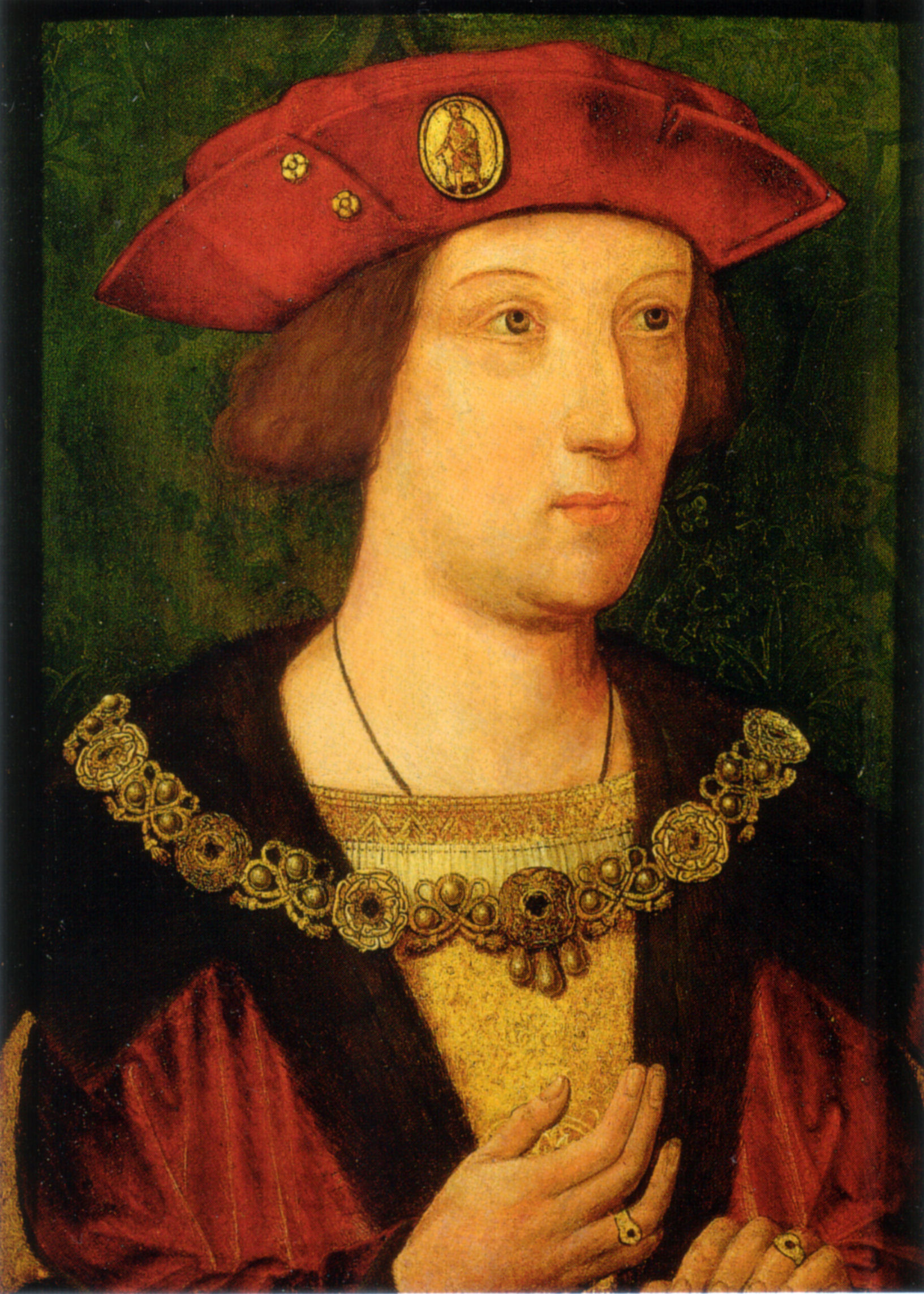
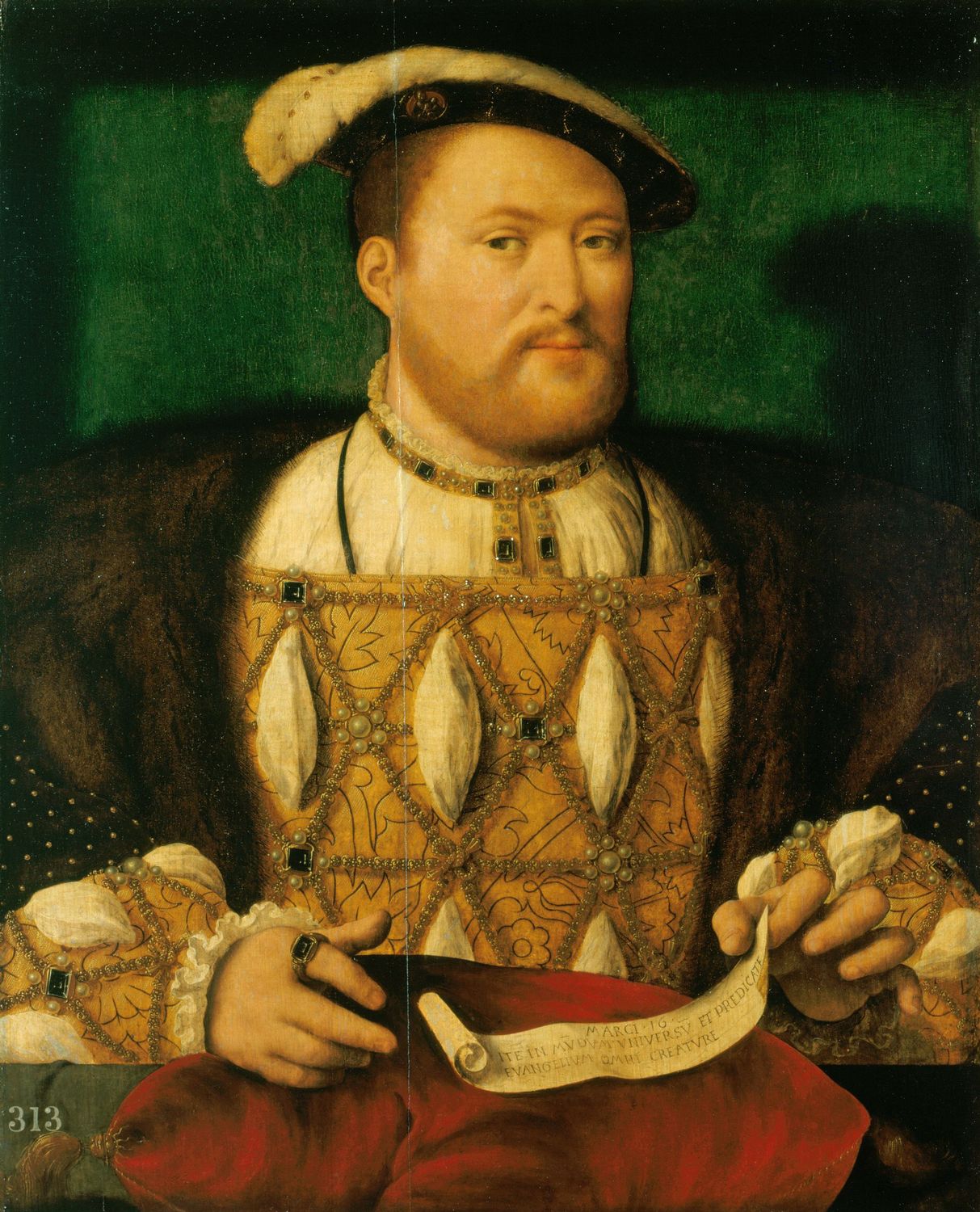
Brothers: Arthur, Prince of Wales (left) and Henry, Prince of Wales (right); later Henry VIII. Both men married Katherine of Aragon.

In November 1501, at the age of fifteen, Katherine of Aragon wed Arthur Tudor, prince of Wales, at St. Paul's Cathedral in London. Katherine was acquainted with her new family around this time. She reportedly enjoyed warm relations with her mother-in-law Queen Elizabeth of York, the shrewd and kindly wife of Henry VII, and she undoubtedly regarded her bridegroom's grandmother, Lady Margaret Beaufort, with respect. Like Katherine's mother Isabella of Castile, Lady Margaret was a determined and active woman who ruled her estates vigorously and exercised considerable influence at court. Contemporary ambassadors whispered rumours that she even held her daughter-in-law, the Queen of England, in subjection. Katherine would have learnt from this state of affairs that a royal woman's power and influence at the English court was potentially considerable. She may also have considered Elizabeth's situation and determined that no woman would ever oust her from a position of influence, whether that woman was family or not.

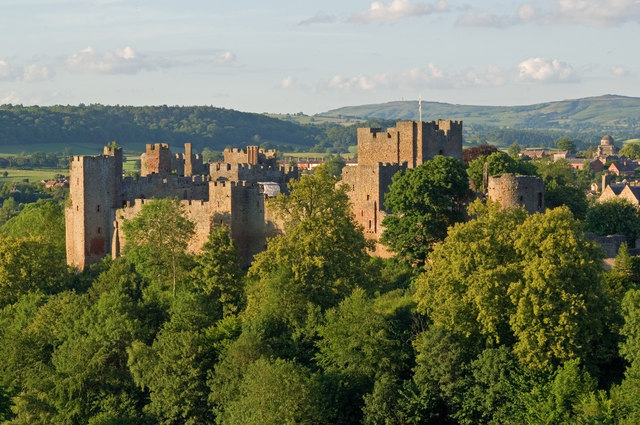
After their marriage, the prince and princess of Wales (as Katherine was now known) were sent to reside at Ludlow Castle, Arthur's ceremonial centre of power in the Welsh Marches. Traditionally, it has been argued that Katherine's marriage to Arthur was not consummated and, when the prince tragically died in the spring of 1502, the princess was left a virgin widow. However, David Starkey recently suggested that the marriage was indeed consummated. Certainly no-one at the time doubted that it had. When her marriage was threatened in 1527 by Henry VIII's determination to remarry, Katherine had every reason to lie. Not only was her position as queen endangered, but her daughter's future could be jeopardised were the princess to become a bastard. Moreover, Arthur was not the unhealthy, sickly teenager of popular legend, but a vigorous youth. Katherine's mother would have educated her about the necessity of consummating a union, to prevent doubts arising as to its legitimacy. The Catholic Church taught that a marriage could be annulled on the grounds of non-consummation, as the failed union of Henry VIII and Anne of Cleves was to prove. Given both her pride and loyalty to her lineage, and her intense devotion to her Roman Catholic faith, it seems unlikely that Katherine failed to consummate her marriage to Arthur.

Ludlow Castle from Whitcliffe, 2011.jpg
Above: Ludlow Castle in Wales, where Katherine probably consummated her marriage to Arthur, Prince of Wales.

Whether Katherine truly loved her first husband is uncertain, but her determination to become Queen of England did not die with her husband in April 1502. During her seven years of widowhood, Katherine continued to exert a forceful and vigorous presence in European politics. She regularly wrote to her parents, especially her father following the death of her mother in late 1504. Katherine informed Ferdinand that she had 'no other hope or comfort in this world' unless he wrote to her regularly. The evidence of her letters indicates that she sought to influence her father's policy, as seen in her insistent determination to have the Spanish ambassador de Puebla expelled for the 'pain and annoyance' which he had caused her, perhaps principally on account of his failure to promote her wellbeing and interests at court. She also pressured Henry VII, her father-in-law, to remember 'his daughter' and to remember that 'it will reflect dishonour upon his character if he should entirely abandon' her. Katherine's entreaties were genuine, but were also calculating. She sought to remind the English king of her position as princess of Spain and, thus, her central importance in European affairs as a prospective consort to a foreign ruler. She surely rejoiced upon learning that she was betrothed to her former husband's younger brother Henry Tudor, but whether she knew of his decision to revoke his promises to her is unknown. Certainly it would not have altered her firm belief that she would one day rule England as its queen. 

Her health, however, soon became a matter of concern. Historian Giles Tremlett has speculated that the princess may have suffered from an eating disorder, although it is unwise to refer it as such in the modern sense of the term. Certainly Katherine's zeal for fasting and abstinence was famed across Europe. The Pope himself became so concerned that he issued a missive instructing that if Katherine's 'devotions and fasting' were 'thought to stand in the way of her physical health and the procreation of children', then they could be 'revoked and annulled by men'. Katherine's desire to fast is highly indicative of the importance she placed on loyally and devotedly serving the Roman Catholic faith. In her eyes, alongside her destiny as Queen of England, it was the fundamental reason for her existence. 

Even as her fortunes experienced strain, during these years Katherine's belief in her God-given destiny as Queen of England remained rock-solid. If anything, the experience of adversity hardened her and accustomed her to fighting for what she regarded as her birthright. Moreover, the experience of success positioned her to regard her cause as just, certain of triumph. That success came in the summer of 1509 when, following Henry VII's death, the teenaged Henry VIII of England chose to wed Katherine. He was reputed to regard her with 'singular love', but it is also equally likely that he wished to preserve the Spanish alliance in the face of French hostility. The Tudor claim to the throne remained fragile, as the lingering fear of the White Rose proved.


Above: Katherine of Aragon's only surviving child, Mary, born in 1516.

It is unfortunate that Katherine of Aragon tends to be regarded in popular culture as dowdy and dull, given that she was beautiful, elegant and sophisticated in her early years as England's queen. She dressed exquisitely and was reputed to be 'a ceremonious woman in her attire'. Alongside her handsome, auburn-haired husband, Katherine represented a triumphant figure presiding over the cultured English court. God certainly seemed to smile on their union, as were the people at large who rejoiced 'in the possession of such a King'. Katherine immediately became pregnant and was delivered of a stillborn daughter in January 1510. Yet Henry was not overly concerned, writing to his father-in-law Ferdinand of the 'joy and felicity' which he had experienced in marrying the charming Katherine. 'In high health, with the greatest gaiety and contentment that ever there was', it is hardly likely that the queen was overly concerned too. She had triumphed after years of hardship and adversity, and was supremely confident that God favoured her and would reward her devotion to the faith with the birth of sons. 

Despite the success of their marriage, Katherine's father had reputedly been unfaithful to his wife, and Katherine would likely have learned from an early age that kings were accustomed to taking lovers. However, that does not mean that she regarded extramarital liaisons with approval or even acceptance. Given her devout adherence to Roman Catholicism, it is rather more likely that she regarded adulterous affairs with horror and revulsion. So when Henry took Lady Anne Hastings as his lover within a year of marrying Katherine, it is not entirely surprising that the queen was said to be highly 'vexed' with her husband. She confronted him about his seduction of her lady-in-waiting and was to later show a marked disapproval of his decision to award his bastard son Henry Fitzroy with two dukedoms. While Katherine did not cause tantrums, she certainly did not necessarily acquiesce to Henry's extramarital affairs submissively or ignorantly. It is far too simplistic to interpret her behaviour in this light, as the majority of historians have done. An energetic, shrewd and determined consort, and mindful of her admirable lineage, she perhaps rationalised that such affairs were beneath her. Her primary duty was to bear sons, and if she did so, then no lady-in-waiting, no matter how beautiful or sophisticated, could threaten her. 

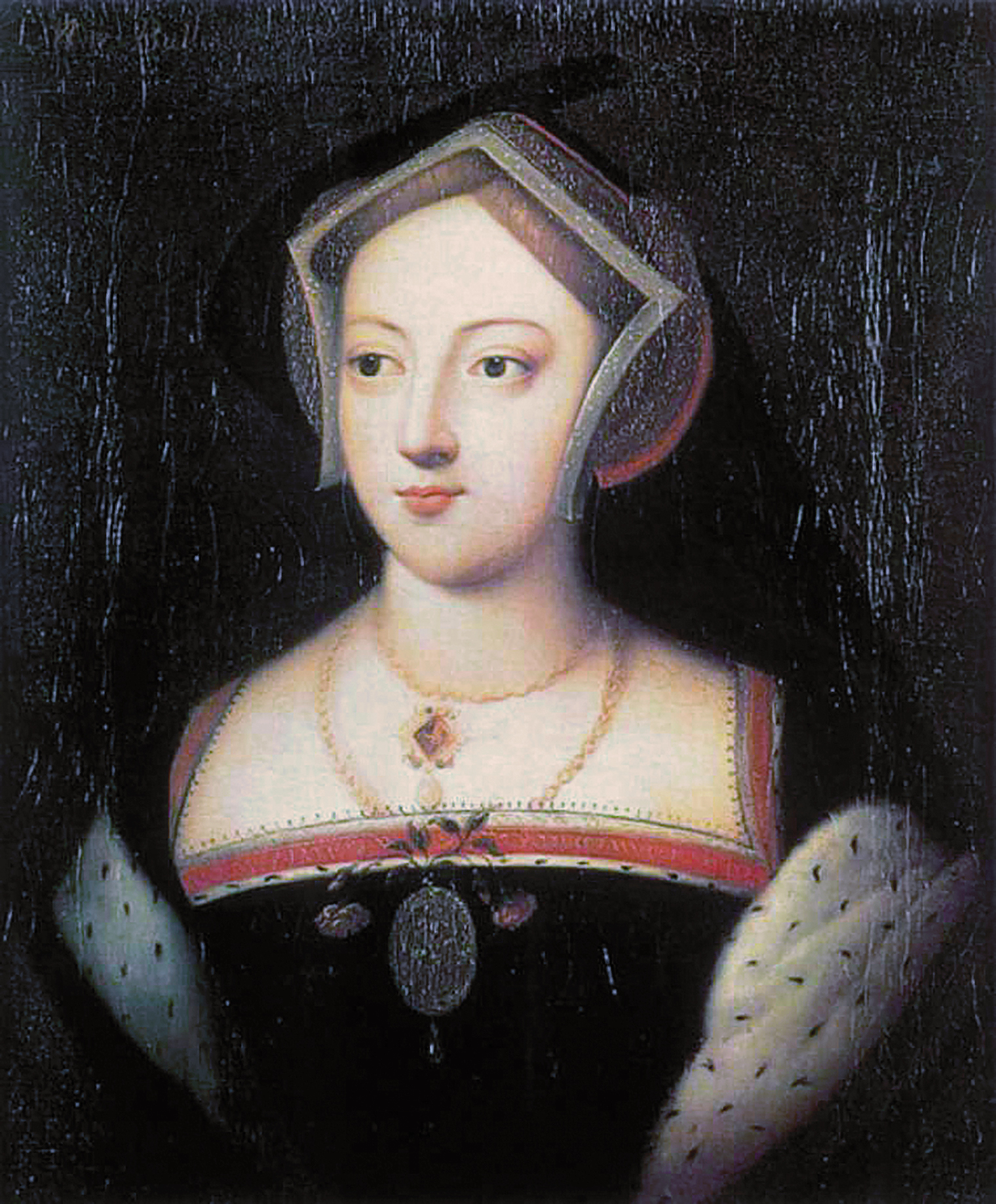
Above: Mary Boleyn, mistress of Henry VIII. While we have no direct evidence for Queen Katherine's opinion of the woman who supplanted Bessie Blount in her husband's affections, it seems too simplistic to view Katherine as submissively ignoring Henry's adulterous affairs. 

Aside from the royal couple's failure to have a healthy son, Katherine's queenship was largely triumphant. She enjoyed notable achievements that have often been overlooked in the focus on the 'great matter'. Not only was she a loyal ambassador of her homeland, but she was her husband's chief advisor and confidant during his early years as king. In the summer of 1513, while campaigning in France, Henry accorded his wife the supreme honour of granting her the position of regent in England. Katherine, who was well aware that the queen's role could be active and forceful rather than silent and submissive, took on this position with enthusiasm. When the Scots invaded in the autumn, she energetically mustered her troops and rallied her forces. Katherine herself declared to her husband that she was 'horribly busy with making standards, banners and badges' for the cause. The queen travelled to Buckingham and urged the English forces to victory. They were inspired by Katherine's enthusiasm and courage and resoundingly defeated the Scots at Flodden on 9 September 1513. Triumphant, Katherine wrote to her husband: 'To my thinking, this battle hath been more than should you win all the crown of France'. She also hoped that Henry would shortly return to England because of the 'joy' it would bring both her and his subjects. Katherine's confidence has often been interpreted negatively by historians, who view her as crowing and inconsiderate of Henry's feelings, in seeming to accord her victory more importance than his own triumphs in France. However, Katherine would not have regarded it that way. Her mother had been as active, as militant and as successful as her father, and Katherine would have seen no reason why she could not achieve the same greatness that Isabella had. Moreover, the English queen was pregnant during these events and although the stillbirth of her son barely a week later would have caused her sorrow, she perhaps tempered this loss with the knowledge that God had continued to smile on her by granting her an unforgettable victory on the battlefield.

Because she regarded her queenship as active and a position to be approached with consideration and respect, Katherine took on the duties of her role with enthusiasm and diligence. She was a noted intercessor and earned considerable popularity in England for her success in this sphere. Following the aftermath of the May Day riots in 1517, when the London apprentices had violently turned on the foreigners of the city, the queen begged her husband with tears in her eyes to 'spare the apprentices' from execution. Willingly, Henry acceded to her request. This incident provides further evidence of Henry's love for his wife. He later admitted during the annulment proceedings that 'if I were to marry again, I would chose her above all women' for her 'gentleness, humility and buxomness'. Katherine's influence at court extended to matters of religion; she was also known to be charitable and provided alms for the poor. Presenting herself carefully as submissive, virtuous and pious, her husband and close friends were aware that she was vigorous, determined and resourceful, particularly when it came to a crisis.

By the spring of 1527, Katherine experienced her first real crisis as queen. Eighteen years on the throne had enabled her to grow into a confident, shrewd and experienced queen who was more than comfortable in affairs of state and promoting the interests of her homeland. She had watched as Henry's lovers had come and gone. Although she did not regard his affairs with approval, and had reacted furiously when his bastard by Bessie Blount had been granted unprecedented honours in 1525, Katherine shrewdly remained calm. She had witnessed her father's infidelities and continued to believe that, since God had ordained for her to become queen, she would remain Henry's wife until the day she died. In 1516, she had given birth to her only surviving daughter Mary. Katherine exercised undoubted influence in her daughter's education, for she was determined to ensure that her daughter was an active and successful queen just as her mother and grandmother had been. The Spanish humanist Juan Luis Vives had been appointed as her tutor, and Mary was brought up to be a virtuous Christian maiden. Katherine's devotion to the Catholic faith grounded her approach to her daughter's upbringing, and Mary's intense piety was undoubtedly instilled in her from birth by her formidable mother.

Above: Peterborough Cathedral, where Katherine was buried in 1536.

Katherine's queenship had been active, resourceful, even militant. She had always been at the centre of politics and had never shied from exerting influence in matters of state. During the annulment crisis, Katherine refused to accept that she was no longer Queen. As she perceived it, she had been educated from the age of two to regard herself as England's queen. No earthly being, even her husband, could take it from her. Only God could by calling her to Heaven. It was her destiny to be Queen, just as it was her daughter Mary's destiny someday to be Queen in her mother's place. By daring to put her aside, Henry was endangering not only his immortal soul but the wellbeing of England. Several modern historians have interpreted Katherine as disloyal to English interests, but she was in fact highly concerned with England's future and interpreted Henry's selfish desires as grossly antithetical to the future harmony of England. 

She had been groomed from birth to regard heresy as mortally dangerous. It was an infection, a blight on the kingdom and a warning from God. The annulment was heretical, for it was closely associated with the reformed religion. Katherine and her supporters, including the Spanish ambassador Eustace Chapuys, were united in their belief that the reformed faith was Lutheran heresy and offensive to God. Katherine's parents had militantly stamped out heresy in their dominions and their daughter was determined to do the same in her adopted home. In no sense could she have stepped aside for her husband. Not only was he, in her eyes, endangering her position as queen and threatening their daughter's future, but he was tacitly granting acceptance to newfound heresy and thus calling into question the very foundations of society, as proven by the favour he bestowed on the Boleyns, whom Katherine knew were inferior to her in birth. By preferring them to Katherine, whose lineage was prestigious and renowned across Europe, Henry's behaviour ran dangerously close to questioning God's will. 

Katherine's behaviour during her years of widowhood (1502-9) had been resourceful, energetic and determined. She had not remained silent, but had issued urgent letters to her father, ambassador, friends and her aloof father-in-law Henry VII, demanding for her wellbeing to be respected and her fortunes to be restored. As then, her role during the annulment crisis was formidable. She magnificently rose to the challenge presented her and upbraided Henry at the Blackfriars court in the summer of 1529 for daring to put her aside, asking him how she had offended him and daring him to assert that he had not found her a virgin at their marriage. All the evidence demonstrates, from her position as Princess of Wales to a threatened Queen of England, that Katherine of Aragon responded magnificently to a threat. Her offensive was calculating and determined. Not only was she fighting for her daughter's future, but for her country's wellbeing. 

Above: Margaret of Anjou, queen of England.

Margaret of Anjou, the courageous wife of Henry VI, had been described as 'a great and strong-laboured woman, for she spareth no pain to sue her things to an intent and conclusion to her power'. The same might in fairness be said of Katherine of Aragon. The first wife of Henry VIII was perhaps the toughest and was certainly the one who felt most confident in taking on her husband and reminding him of his responsibilities as king. She had not reacted submissively to his extramarital affairs, but had dared to reproach him for his affairs with Anne Hastings and Anne Boleyn, and when he promoted his bastard son's interests to the detriment of his legitimate daughter's position, she protested so vigorously that she was punished with the removal of several of her ladies-in-waiting. 

In popular culture, Katherine continues to be perceived as the virtuous and silently suffering foil to the scheming, manipulative Anne Boleyn. This interpretation is both skewed and inaccurate, and marks a betrayal of Katherine's memory, failing to understand the real woman for who she truly was. Katherine was a determined, passionate adherent of the Roman Catholic faith and viewed other religious persuasions as dangerous heresy that required elimination at all cost. She was a courageous defender of the country's interests and was prepared to lead her troops, valiantly urging them on to destroy England's enemies. An energetic, stubborn and formidable queen, she was capable of deceit. She had probably lied about the consummation of her first marriage, perhaps lied about her pregnancy in 1510 to her father, and was capable of bloodthirstiness - as her desire to send her husband the brutally mangled body of James IV proves. Yet she was also interested in the Renaissance, was unswervingly loyal to her friends and relations, and was deeply concerned to promote the welfare of her people. It is misleading to regard Katherine as a perfect saint, a wronged wife and a silently suffering mother. She, like Margaret of Anjou, was 'a great and strong-laboured woman' who never once shied away from promoting her interests at all costs, while valiantly fighting to destroy all threats to her position, whether religious, political or dynastic.