Showing posts with label elizabeth i. Show all posts

Sunday, 2 June 2024

Jane and Katherine Grey


My article about Ladies Jane and Katherine Grey and their shared experiences of imprisonment in the Tower of London in 1553-4 and 1561-3 respectively has been published by EPOCH Magazine and is available to read here

Saturday, 14 November 2020

The Tudor Consorts 1485–1547


Seven women held the office of consort in the period 1485–1547, one of whom as the wife of the first Tudor king, Henry VII, and the following six as the wives of his son and successor, Henry VIII. The consorts are Elizabeth of York, Katherine of Aragon, Anne Boleyn, Jane Seymour, Anne of Cleves, Katherine Howard and Katherine Parr. These women have long fascinated scholars and the general public alike, with articles, books, films, television shows and even a musical about their dramatic, and in some cases tragic, lives. This article sets out to provide a brief overview of each consort, with further reading included for those who wish to learn more about the life in question. Briefly, however, it is worth noting that Retha M. Warnicke's Elizabeth of York and Her Six Daughters-in-Law (2017) is the only extant study of Tudor queenship in this period, and provides an illuminating and in-depth study of Tudor queenship in the period 1485–1547, offering facts not usually available in other works. Alison Weir (1991), Antonia Fraser (1992), David Starkey (2004) and David Loades (2010) have all written works about Henry VIII's six queens.


Elizabeth of York, consort of Henry VII
Born: 11 February 1466, Westminster Palace, London, England
Died: 11 February 1503, Tower of London, London, England (aged 37)
Father: Edward IV 
Mother: Elizabeth Wydeville
Tenure as queen consort of England: 1486–1503 (17 years, 1 month)
Coronation: 25 November 1487

Elizabeth of York was the eldest child of the first Yorkist king, Edward IV, and his consort Elizabeth Wydeville. She was born on 11 February 1466 at Westminster Palace, but had no expectation of ruling England in view of prevailing attitudes to female succession alongside the birth of a number of sons to her parents, including the eldest, Edward (born in 1470). During her childhood, she was briefly betrothed to the Dauphin Charles, son of the king of France, but the marriage did not take place. In 1483, Elizabeth's father died and her uncle, Richard of Gloucester, seized the throne resulting in the deposition of her brother. He and his younger brother, also named Richard, were placed in the Tower of London but their subsequent fate remains a mystery. Elizabeth and her sisters sought sanctuary alongside their mother, but resided at their uncle's court when he reached an agreement with their mother, the dowager queen. Rumours circulated that King Richard intended to marry his niece Elizabeth, in view of reports that Queen Anne was unable to bear children and was in poor health. Some evidence suggests that Elizabeth may have been interested in this match, but the king publicly denied it. Instead, Lady Margaret Beaufort, mother of Henry Tudor, earl of Richmond, who possessed a somewhat obscure claim to the English throne, schemed with Elizabeth Wydeville for the marriage of Henry to Elizabeth of York. Beautiful, virtuous and pious, Elizabeth became queen of England in January 1486 when she married Henry following his defeat of Richard III at the Battle of Bosworth. Historians have shown that there is no evidence for later allegations of conflict between Elizabeth and her somewhat domineering mother-in-law Lady Margaret. The king and queen had several children, but only four survived to adulthood: Arthur, Margaret, Henry and Mary. Arthur died in April 1502 at the age of fifteen and his mother died ten months later, on her thirty-seventh birthday at the Tower of London, shortly after giving birth to a short-lived daughter Katherine. She was buried at Westminster Abbey and was joined there by her husband when he died seven years later. Elizabeth's only surviving son, Henry, succeeded his father as king of England in 1509 and her two surviving daughters Margaret and Mary became queen consorts of Scotland and France, respectively.

Further reading:
- Amy Licence, Elizabeth of York: the Forgotten Tudor Queen (2013)
- Alison Weir, Elizabeth of York: the First Tudor Queen (2013)
- Arlene Okerlund, Elizabeth of York (2009)


Katherine of Aragon, first consort of Henry VIII
Born: 16 December 1485, Archiepiscopal Palace of Alcala de Henares, Alcala de Henares, Kingdom of Castile
Died: 7 January 1536, Kimbolton Castle, Cambridgeshire, England (aged 50)
Father: Ferdinand II of Aragon
Mother: Isabella I of Castile
Tenure as queen consort of England: 1509–1533 (23 years, 11 months)
Coronation: 24 June 1509

The youngest daughter of Ferdinand II of Aragon and Isabella I of Castile, Katherine (born in 1485) was betrothed to Arthur, Prince of Wales, eldest son of Henry VII and Elizabeth of York, in childhood and was thus educated as befitted a queen consort of England. A devout Roman Catholic, Katherine studied a range of subjects including philosophy, theology, history, arithmetic and classical and canon law, and learned languages such as French and Latin. She also acquired experience in domestic skills such as embroidery and sewing. In the summer of 1501, the fifteen-year-old Katherine travelled to England to wed Arthur and their wedding took place at St Paul's Cathedral in November. Whether the young couple consummated their union or not has remained a subject of controversy for the last five hundred years. Tragically, Arthur died the following spring at Ludlow Castle on the borders of Wales, where Katherine was residing with him. Subsequently the English and Spanish monarchs arranged that Katherine would marry Arthur's younger brother, Henry, now heir to the English throne. Ferdinand's procrastination over paying the remainder of his daughter's dowry, however, led to the marriage being postponed while Katherine lived in difficult conditions at Durham House in London. When Henry VII died in 1509, his eighteen-year-old son elected to marry Katherine and the couple were crowned at Westminster Abbey in June. Katherine presided over a court of culture and learning and was appointed regent of England when her husband went to war with France in 1513. When the Scots invaded that year, the queen ordered Thomas Lovell to raise an army in the Midlands and the English army triumphed at the Battle of Flodden. 

During her marriage, Katherine was pregnant at least six times but only one child survived, Mary (born in 1516). Like many of his contemporaries, Henry doubted whether a female could successfully rule England and by 1527 believed that his marriage to Katherine had displeased God by virtue of their lack of surviving sons. He was also in love with Anne Boleyn, who served in Katherine's household. The king argued that Katherine's marriage to Arthur in 1501 had been consummated, thus making her subsequent union with Henry invalid according to Biblical law. The queen, however, claimed that she and Arthur had never consummated their marriage. The struggle for an annulment of the Aragon marriage endured for six years, but in 1532 or 1533 Henry married Anne Boleyn in secret and in May, Archbishop Cranmer pronounced the Aragon marriage null and void, rendering the queen's daughter Mary illegitimate and unable to succeed her father. By then banished from court, Katherine resided in a range of residences including The More, Ampthill Castle and Buckden Towers, before spending the final years of her life at Kimbolton Castle, where she died on 7 January 1536, perhaps of cancer, having never accepted her husband's decision to annul their marriage. She was buried at Peterborough Abbey (now Cathedral); her daughter Mary became England's first queen regnant in July 1553.

Further reading:
- Garrett Mattingly, Catherine of Aragon (1941)
- Giles Tremlett, Catherine of Aragon: Henry's Spanish Queen (2010)
- Amy Licence, Catherine of Aragon: An Intimate Life of Henry VIII's True Wife (2016)


Anne Boleyn, second consort of Henry VIII
Born: Between 1500 and 1507 probably at Blickling Hall, Norfolk or Hever Castle, Kent, England
Died: 19 May 1536, Tower of London, London, England (aged 28–36)
Father: Thomas Boleyn, earl of Wiltshire
Mother: Lady Elizabeth Howard
Tenure as queen consort of England: 1533–1536 (3 years)
Coronation: 1 June 1533

The most famous of Henry VIII's six wives, Anne Boleyn was born between 1500 and 1507. The majority of modern historians favour a birth date of circa 1501, but evidence from her daughter's lifetime supports the later birth date, especially in view of prevailing court customs that decreed that maidens of honour did not receive instruction in languages. It is also questionable why the ambitious Thomas Boleyn would have been content for his daughter to remain unmarried between 1523 and 1527 if she were as old as twenty-seven in the latter year. Anne is thought to have been born at Blickling Hall in Norfolk or perhaps Hever Castle in Kent, although some of her later relatives believed that she had been born in London. Whether she was older or younger than her sister Mary and brother George continues to remain controversial. If born in 1507, Anne was probably the youngest surviving child. In 1513, she was sent to the court of Margaret of Austria in the Low Countries; traditionally thought to have served as a maiden of honour, as noted earlier it was not the custom for maidens to receive an education while they were fulfilling her duties. The following year, Anne wrote a letter to her father in poor French, indicating that she could not speak the language and so would not have been capable of fulfilling the duties of a maiden of honour. Perhaps she initially resided in the royal nursery and served as a maiden at a later date. In 1514, she attended Henry VIII's sister Mary when she married Louis XII of France and later served Claude of France, wife of Francois I. Anne acquired a thorough knowledge of French culture and developed her talents in dancing, music and singing. Her evangelical faith may also have originated in France. In 1521 or 1522, she returned to England to wed James Butler to settle a dispute between the Boleyn and Butler families concerning the earldom of Ormond, but the marriage never took place. Anne fell in love with, and hoped to marry, Henry Percy, heir to the earldom of Northumberland, in 1523, but the couple were prevented from marrying due to the wishes of the king and Cardinal Wolsey and Anne was banished from court, remaining at Hever until 1526 or 1527, when she returned probably in the capacity of maiden of honour to Katherine of Aragon. 

Contemporaries described her as being of medium height, with long dark hair, brown or black eyes and a swarthy complexion. Her detractors slandered her as being deformed, while others noted her beauty and elegance. In 1531 she was described as being both 'young' and 'good-looking'; such references to Anne's youth in the late 1520s and early 1530s provide further evidence of a birth in 1507, rather than as early as 1500/1. In 1527, Henry fell passionately in love with the sophisticated and charming Anne, and proposed marriage to her. The couple, however, wed only in late 1532 or early 1533 on account of the long struggle to annul the Aragon marriage. Anne was crowned queen on 1 June 1533, already pregnant, and gave birth to her only surviving child, Elizabeth, on 7 September. Two further pregnancies resulted in a probable stillbirth (in 1534) and in a miscarriage (in 1536). The king and queen's relationship was stormy, punctuated by periods of bitter quarrels and subsequent reconciliation. Many of the king's subjects refused to accept Anne as queen and she was regularly slandered as a whore or prostitute. The marriage was also never recognised in Europe as valid. 

Anne exerted significant influence at court, especially in advancing the evangelical faith, and was outspoken on political and religious matters. Despite her influence, the royal couple's lack of a son endangered Anne's security. The queen's precarious position worsened in early 1536 when her husband fell in love with her attendant Jane Seymour. In May, four months after a miscarriage, Anne was accused of treason, adultery and incest with five men, including her brother, and was imprisoned in the Tower of London. Historians continue to debate the reasons for the queen's downfall; suggestions include that a coup was masterminded by Thomas Cromwell to remove Anne and her 'faction' from power; that her husband had grown to hate her and was desperate to marry Jane; that she actually was guilty of the charges; that she gave birth to a deformed foetus, convincing her husband that she was a witch; and that her own incriminating behaviour and conversations in the spring of 1536 created a climate of suspicion and distrust of her loyalty to the king. Irrespective of the reason, most historians believe that she and the men accused with her were not guilty of the charges. All were found guilty and the men were executed on 17 May, the date on which Anne's marriage to Henry was annulled, probably on account of his earlier liaison with the queen's sister Mary. Anne was beheaded within the walls of the Tower of London two days later, the first English queen to suffer execution, and her remains were interred at the Tower chapel of St Peter ad Vincula. Her daughter, Elizabeth, became queen of England in 1558.

Further reading:
- Eric Ives, The Life and Death of Anne Boleyn (2004)
- Retha M. Warnicke, The Rise and Fall of Anne Boleyn (1989)
- G. W. Bernard, Anne Boleyn: Fatal Attractions (2010)
- Susan Bordo, The Creation of Anne Boleyn (2013)
- Alison Weir, The Lady in the Tower: The Fall of Anne Boleyn (2009)


Jane Seymour, third consort of Henry VIII
Born: About 1509 probably at Wolfhall, Wiltshire, England
Died: 24 October 1537, Hampton Court Palace, London, England (aged about 28)
Father: Sir John Seymour
Mother: Margery Wentworth
Tenure as queen consort of England: 1536–1537 (1 year, 5 months)
Coronation: Never crowned

On 30 May 1536, Jane Seymour became the third wife of Henry VIII when she married him at Whitehall Palace in London. The eldest daughter of Sir John Seymour and Margery Wentworth, Jane was probably born in about 1509, for twenty-nine female mourners are alleged to have participated in her funeral procession, suggesting that when she died, she had been in her twenty-ninth year. The imperial ambassador also described her as being over 25 in 1536. Jane is thought to have served Katherine of Aragon as a maiden of honour, but the evidence is patchy and it is uncertain when she arrived at court. She later attended Anne Boleyn, although she is thought to have remained loyal to the former queen. There is little, if any, evidence for the oft-repeated assertion that Jane revered Katherine of Aragon and later modelled her queenship on that of Katherine's. She received a traditional education as a child, in which she learned skills such as embroidery, housewifery, sewing and needlework, but she was never described as possessing linguistic or musical ability. Jane may have been betrothed to William Dormer, but if so, the marriage took place and by early 1536, at the age of twenty-seven, Jane remained unwed. Henry VIII began courting her that year, perhaps with a view to taking her as his mistress, but Jane, who seems to have been coached by her family, refused the king's proposal. The turbulence of the Boleyn marriage, and the king's lack of sons by the queen, coupled with his interest in Jane, sealed Anne's fate and led to Jane becoming queen of England in May 1536. She was described as being pale and fair, but not beautiful, and while some observers praised her good sense and placid nature, others thought that she was haughty. Jane was never crowned queen due to an outbreak of plague in the capital. Her household was conservative in dress and behaviour, and she exerted little political influence, although she did intercede for the king's daughter Mary and father and daughter were reconciled in 1536. When Jane did attempt to speak out for the abbeys, which the king planned to dissolve in order to seize their revenues, she was brutally warned not to meddle in political matters if she wished to avoid the fate of her predecessor. 

In early 1537, the queen conceived a child and on 12 October, at Hampton Court Palace, she gave birth to the king's much-desired son, who was named Edward. Tragically, Jane died twelve days later at the age of about 28, perhaps of puerperal fever or an infection from a retained placenta. She was buried at St George's Chapel, Windsor, and her husband was interred there next to her when he died in 1547. 

Further reading:
- Pamela Gross, Jane, the Quene (1999)
- Elizabeth Norton, Jane Seymour: Henry VIII's True Love (2009)


Anne of Cleves, fourth consort of Henry VIII
Born: June 1515 in Dusseldorf, Duchy of Berg, Holy Roman Empire
Died: 16 July 1557, Chelsea Old Manor, London, England (aged 42)
Father: John III, duke of Cleves
Mother: Maria of Julich-Berg
Tenure as queen consort of England: 1540 (6 months)
Coronation: Never crowned

Jane Seymour's death in 1537 led Henry VIII and his chief minister Thomas Cromwell to seek a bride from one of the royal houses of Europe. Various candidates were proposed, including Marie of Guise and Christina of Denmark, but the king's desire for an alliance with Cleves - in view of England's isolation and the threat from France and Spain, who were then allies - led him to favour a match with Anne, daughter of John III, duke of Cleves. Anne had initially been betrothed to Francis of Lorraine. Her education was traditional in nature, but she does not seem to have acquired instruction in music and was not viewed as being sophisticated. She was described by observers as attractive, with long fair hair and with a tall, slim build. In 1539 she departed for England in readiness for her marriage to Henry, whom she met for the first time at Rochester Abbey on New Year's Day 1540. The king and a few of his attendants adopted a courtly love convention in which they visited Anne in disguise. Henry was disappointed with Anne, perhaps because she had allegedly 'regarded him little' since she may not have known who he was on account of his disguise. The king also complained that she was 'nothing so fair as she hath been reported', but it is a myth that he described her as a Flanders mare, a claim which dates from a later period. The couple married at Greenwich Palace on 6 January 1540, but the marriage was never consummated and Anne was never crowned. By the spring of that year, Henry was passionately in love with Anne's maiden of honour, Katherine Howard, and international politics, namely the renewal of conflict between France and Spain, meant that the Cleves alliance was no longer welcome or necessary. The king believed that Anne was not legally his wife on account of her earlier precontract to Francis of Lorraine. The marriage was annulled in July and Thomas Cromwell, who had helped to arrange the Cleves marriage, was executed for treason. Anne received a generous settlement; her properties included Richmond Palace and Hever Castle. It is a myth that she was the luckiest of Henry VIII's six queens, for she would not have viewed the situation that way: Anne hoped to be reinstated as queen and when Henry married for the final time to Katherine Parr, she was described as being disappointed and disparaged the new queen's appearance. In some sense Henry was Anne's protector and, after his death, her life became increasingly complicated. She experienced conflict between her servants in her household and confided to her brother that she felt like a stranger in England. When her stepdaughter Mary became queen of England in 1553, Anne congratulated her and participated in the queen's coronation procession. She seems to have lost royal favour the following year on account of her close association with her other stepdaughter Elizabeth, who was implicated in Wyatt's Rebellion, and because she was thought to have intrigued on Elizabeth's behalf during the rebellion. Anne died on 16 July 1557 at Chelsea Old Manor, probably of cancer, and was buried at Westminster Abbey. 

Further reading:
- Heather Darsie, Anna, Duchess of Cleves: The King's Beloved Sister (2019)
- Retha M. Warnicke, The Marrying of Anne of Cleves. Royal Protocol in Early Modern England (2000)
- Elizabeth Norton, Anne of Cleves: Henry VIII's Discarded Bride (2009)


Katherine Howard, fifth consort of Henry VIII
Born: Between 1523 and 1525 probably in Lambeth, London, England
Died: 13 February 1542, Tower of London, London, England (aged 17–19)
Father: Lord Edmund Howard
Mother: Joyce Culpeper
Tenure as queen consort of England: 1540–1541 (1 year, 4 months)
Coronation: Never crowned

Katherine Howard was the youngest wife of Henry VIII. She was a younger daughter of Lord Edmund Howard and Joyce Culpeper, and was the granddaughter of Thomas, second duke of Norfolk and a niece of Thomas, third duke of Norfolk. She and Anne Boleyn were first cousins, for Anne was the daughter of Edmund's sister Elizabeth. Katherine's date of birth is unknown, but contemporary - albeit fragmentary - evidence indicates that she was born between 1523 and 1525. Certainly she was a teenager when she captivated the ageing king in late 1539 or early 1540. At some point between 1531 and 1536, Katherine was sent to reside in the household of her step-grandmother Agnes, dowager duchess of Norfolk. She began receiving music lessons in 1536, perhaps with a view to serving as maiden of honour to Anne Boleyn or Jane Seymour. That she only began receiving music lessons that year is a further clue to her age, for if born as early as 1520/1 these surely would have taken place earlier with a view to acquiring a place in the queen's household. In the midst of these lessons her music master Henry Manox seduced her, although the two did not have sexual intercourse. She later noted that Manox had beseeched her to grant him sexual favours 'at the flattering and fair persuasions of Manox, being but a young girl'. By 1538, Katherine was involved in a liaison with Francis Dereham, a secretary to the dowager duchess, and rumours circulated in the household that the two hoped to marry. Dereham, born between 1506 and 1509, was then aged between twenty-nine and thirty-two, and Katherine was aged between thirteen and fifteen. It is possible, though uncertain, that Dereham coerced her. By 1539, however, their relationship had ended on account of Katherine's appointment to the household of Anne of Cleves. 

An unknown Spanish chronicler later described Katherine as the most beautiful woman in the kingdom. She was elegant, charming and generous, although other contemporaries described her as willful and imperious. Upon her arrival at court, Henry VIII fell headily in love with the teenaged Katherine and the two married on 28 July 1540 at Oatlands Palace. Katherine fulfilled her duties as queen successfully, acting as a patron and intercessor on a number of occasions, and court observers described the king's hope that his new queen would bear a son. Rumours circulated throughout Katherine's queenship that she was pregnant, but if so, she never gave birth to a living child. Like Jane Seymour and Anne of Cleves, Katherine was never crowned, although it was rumoured that she would be crowned in York during the royal couple's progress to the north of England. By the spring of 1541, however, Katherine's life became complicated. Her former suitor Dereham arrived at court, hoping to serve in her household, and soon began boasting of his former relations with the queen. Dereham's aggressive and possessive attitude towards Katherine placed both individuals in danger. At the same time, Katherine began secretly meeting with Thomas Culpeper, a favoured courtier, with the aid of Lady Rochford, sister-in-law to Anne Boleyn. Culpeper was described as handsome but he had a dark reputation as an alleged rapist.

Traditionally, the queen and Culpeper are thought to have had a sexual affair, but both parties denied it. A letter written by Katherine to Culpeper probably in July 1541, usually described as a love letter, instead indicates that she desired him to keep his promise to her, but it remains uncertain what she was referring to. Perhaps the couple were in love, but it is also possible that in a climate of tension and intrigue at court, in which Dereham had recklessly boasted of his former liaison with the queen, that Culpeper had learned of Katherine's background and used it against her in order to win favours and attention. In support of this theory is the fact that Katherine gave him gifts and met with him regularly while chaperoned by Lady Rochford. It is possible that the promise which Katherine referred to in her letter concerned Culpeper's promise not to reveal her past to the king. She also warned him to beware revealing their meetings during his confessions to priests in case Henry VIII, by virtue of his position as head of the Church in England, somehow learned of their liaisons. Irrespective of the nature of their meetings, Katherine behaved recklessly since contemporary customs warned women not to meet secretly with men who were not their husbands. It is also questionable why she did not learn from the experiences of her cousin and predecessor Anne Boleyn, whose allegedly indiscreet conversations had led to her downfall and execution in 1536.

In November 1541, Archbishop Cranmer learned of Katherine's past when John Lascelles, whose sister Mary had resided in the dowager duchess of Norfolk's household alongside Katherine, revealed that the queen had been involved with two men prior to her marriage to the king. The queen and her household were subsequently investigated and the privy councillors eventually learned of her secret meetings with Culpeper in the spring and summer of that year. The distraught king refused to see Katherine and moved away from court. In December, Dereham and Culpeper were executed for treason and in February of the following year, Katherine and Lady Rochford were beheaded at the Tower of London, having been found guilty of treason by an Act of Attainder, thus denying them the right to stand trial. Contrary to popular belief, the queen was not found guilty of adultery but was indicted for intending to commit adultery with Culpeper, which constituted a treasonous offence. Both women were praised for their godly conduct on the scaffold, in which they praised the king and beseeched onlookers to pray for them. After the executions, their remains were interred at the chapel of St Peter ad Vincula. Katherine was aged seventeen to nineteen years when she was executed. 

Further reading:
- Conor Byrne, Katherine Howard: Henry VIII's Slandered Queen (2019)
- Gareth Russell, Young and Damned and Fair: The Life and Tragedy of Catherine Howard at the Court of Henry VIII (2017)
- Josephine Wilkinson, Katherine Howard: The Tragic Story of Henry VIII's Fifth Queen (2016)
- Retha M. Warnicke, Wicked Women of Tudor England (2012)
- Lacey Baldwin Smith, A Tudor Tragedy: The Life and Times of Catherine Howard (1961)

Katherine Parr, sixth consort of Henry VIII
Born: 1512 probably in Blackfriars, London, England
Died: 5 September 1548, Sudeley Castle, Gloucestershire, England (aged 36)
Father: Sir Thomas Parr
Mother: Maud Green
Tenure as queen consort of England: 1543–1547 (3 years, 6 months)
Coronation: Never crowned

Katherine was the eldest daughter of Sir Thomas Parr and Maud Green, and was probably born in the summer of 1512 in Blackfriars, London. Her father was a favoured companion of Henry VIII and her mother served in the household of Katherine of Aragon, for whom Katherine Parr was probably named. Katherine acquired an excellent education, which included the learning of languages such as French and Latin, and in 1529, aged seventeen, she married Sir Edward Burgh of Gainsborough, Lincolnshire. Her husband died in 1533 and Katherine probably resided for a time at Sizergh Castle in Westmorland with the Dowager Lady Strickland, the widow of Katherine's cousin Sir Walter Strickland. The following year, Katherine married for the second time to John Neville, Baron Latimer, and acted as stepmother to his two children John and Margaret. In 1537, during the Pilgrimage of Grace, Katherine and her stepchildren were held hostage by the rebels at Snape Castle in Yorkshire. Her husband had been compelled the previous autumn to join the rebellion, and had been threatened with violence if he refused. However, Latimer's involvement in the rebellion led the king and Cromwell to suspect him of being a traitor, and it is possible that Katherine's brother William and their uncle (also named William) intervened for his life as a result. In 1543, Latimer died and at the age of thirty-one, Katherine was once more a widow.

She seems to have fallen in love with Sir Thomas Seymour, brother of the late Queen Jane, but while residing at court, she caught the attention of Henry VIII and the couple were married at Hampton Court Palace on 12 July of that year. Katherine's later correspondence indicates that she had not willingly agreed to marry the king, but felt that God had called her to be queen of England in order to advance true religion. It is a myth that she acted as a nursemaid to her ageing and infirm husband. Katherine was an educated, cultured and elegant queen consort who was known for her love of art, music and fashion. Like Katherine of Aragon, she was made regent of England in 1544 when the king left England to campaign in France. Katherine became close to her three stepchildren Mary, Elizabeth and Edward, and scholars have conjectured that her influence on Elizabeth, in particular, was significant. Katherine possessed a devout religious faith and wrote a number of religious works including The Lamentation of a Sinner (published after her husband's death). She enjoyed reading and discussing scripture with the ladies of her Privy Chamber. However, her adherence to the reformed faith led the conservatives at court, masterminded by Bishop Stephen Gardiner and Lord Wriothesley, to plot against her. Her own outspoken views increasingly alienated the king, and rumours began circulating that Henry planned to marry for the seventh time to the queen's friend Katherine, duchess of Suffolk. Whether there was any truth to these rumours remains uncertain.

In the summer of 1546, shortly after the burning of the heretic Anne Askew, who was thought to have links to some of the queen's ladies-in-waiting, a warrant was drawn up for the queen's arrest on charges of heresy. Fortunately for Katherine, a servant caught sight of the warrant and warned her in time. She convinced the king of her loyalty by claiming that she had only discussed religion with him as a distraction from the suffering caused by his ulcered leg. Henry VIII died on 28 January 1547 and his wife, now queen dowager, retired from court. The queen's swift remarriage to Thomas Seymour, probably in that spring, caused a scandal. In particular, her stepdaughter Mary was reported to be displeased by Katherine's actions. The dowager queen also experienced conflict with the Lord Protector on account of her jewels, since he and his wife argued that Katherine was no longer entitled to wear them.   

In the spring of 1548, Katherine conceived a child for the first time. However, her husband's reckless behaviour with her stepdaughter Elizabeth, who was residing with her stepmother, created a scandal in the household, and Elizabeth was dismissed as a result. On 30 August, the dowager queen gave birth to a daughter, Mary, but Katherine died only six days later from puerperal (or childbed) fever. Her daughter is thought to have died in infancy. Katherine was buried at St. Mary's Chapel in the grounds of Sudeley Castle, and remains the only English queen buried on private ground. Thomas Seymour was executed for treason the following March.

Further reading:
- Susan James, Kateryn Parr: The Making of a Queen (1999)
- Linda Porter, Katherine the Queen: The Remarkable Life of Katherine Parr (2010)
- Susan James, Catherine Parr: Henry VIII's Last Love (2010)

The Tudor Consorts
This article has sought to provide a brief biography of each of the seven Tudor consorts, alongside offering a list of recommended works for readers interested in learning more about them. Their lives continue to remain fascinating for modern audiences.

Friday, 19 May 2017

19 May 1536: Anne Boleyn's Execution


We have no way of knowing whether Anne Boleyn was greeted by warm sunshine and birdsong as she took her final steps out of the queen's apartments and towards the scaffold within the Tower of London. Likewise, it is impossible to say whether the queen and her attendants were showered with rain, or whether blustery winds tugged on the trains of their gowns. Films and television often portray Anne's execution day as beautifully sunny and warm (think Anne of the Thousand Days; The Tudors; Henry VIII, etc.), but contemporary writers writing about that momentous day were uninterested in the finer details of the weather, and it is questionable whether Anne Boleyn herself was all too concerned if her final moments were spent in brilliant May sunshine or unseasonable damp and cold. 19 May 1536 was the date on which an unprecedented act would take place: the execution of an English queen consort, the first of its kind.

Four days earlier, she had been tried and found guilty of adultery with five courtiers, treason and plotting the death of her husband, Henry VIII. Two days later, her marriage had been annulled (probably on the grounds of her sister Mary's liaison with the king a decade earlier) and her co-accused had themselves gone to the scaffold, including her brother George, lord Rochford. Anne's tortuous imprisonment in the Tower had been, understandably, emotionally charged for her: she had experienced hope, despair, confusion, sorrow, anxiety and humour. Sir William Kingston, the constable of the Tower, had been baffled by her behaviour: one minute she seemed ready and willing to die, he reported, but the next minute she would collapse in a fit of weeping. Archbishop Cranmer, who had received patronage and support from Anne and her family, had provided Anne with hope that she would be permitted to spend the rest of her life in a nunnery, but that hope was nothing more than a cruel illusion. As May 19 dawned, the queen was aware that her life would indeed end within the walls of the Tower, rather than behind the walls of a nunnery, but at least her death would be caused by decapitation, a relatively quick form of execution, rather than by being burned at the stake, as was originally feared.

According to Edward Hall, the lawyer and chronicler, Anne spoke these words on the scaffold:

Good Christen people, I am come hether to dye, for accordyng to the lawe and by the lawe I am iudged to dye, and therefore I wyll speake nothyng against it. I am come hether to accuse no man, nor to speake any thyng of that wherof I am accused and condempned to dye, but I pray God saue the king and send him long to reigne ouer you, for a gentler nor a more mercyfull prince was there neuer: and to me he was euer a good, a gentle, & soueraigne lorde. And if any persone wil medle of my cause, I require them to iudge the best. And thus I take my leue of the worlde and of you all, and I heartely desyre you all to pray for me. O lorde haue mercy on me, to God I comende my soule. 

Mercifully, Anne's head was swiftly 'stryken of with the sworde', and she was buried at the chapel of St. Peter ad Vincula. Modern readers might wonder whether Anne's last words in praise of her husband were spoken with irony, or contempt, or humour: but her speech actually followed contemporary protocol in almost every sense. The condemned was expected to praise the king and the justice of his law; to speak out against it threatened infamy and ruin to the condemned's family, and might result in an even harsher mode of execution for the condemned. Whether or not Anne was thinking of her daughter, the infant Elizabeth, when she spoke these words is uncertain, but it is possible that she was desirous of securing as stable a future as possible for her soon-to-be motherless, bastardised daughter. Criticising Henry or questioning his justice in public would hardly achieve that. In asking those present to judge the best of her case, however, Anne left the events of her ruin open to question and open to debate. 

The unexpected accession of her daughter, Elizabeth, in 1558 meant that Anne's memory could be honoured and her status as queen of England celebrated, but had it not been for Elizabeth's accession, it is possible that Anne would have been confined to history as an unpopular and possibly adulterous queen. Her name was rarely spoken, at least in public, during the reigns of Henry VIII and Edward VI, and Mary I, who understandably blamed Anne for her harsh treatment during the 1530s, openly referred to Anne as an adulteress and heretic, and was desirous of preventing her half-sister Elizabeth from succeeding her. Even during Elizabeth's reign, moreover, a degree of ambivalence remained. Protestant writers, including John Foxe, dutifully celebrated Anne's piety and charity, but they refrained from discussing the events that led to her downfall and execution. To do so, perhaps, would cast doubt on Henry VIII's motives. Elizabeth herself, who gloried in her father's memory, rarely referred to her mother and, unlike her half-sister Mary (who had proclaimed her parents' marriage to be valid upon her succession to the throne in 1553), Elizabeth did not legitimise herself and did not declare her parents' union to be valid. In doing so, she left herself vulnerable to accusations of bastardy for the rest of her reign, and in Catholic Europe, her cousin Mary Queen of Scots was always regarded as the rightful queen of England, by virtue of both her unquestioned legitimacy and her Catholic faith.


Above: Elizabeth I.

Why Elizabeth did not restore the legitimacy of her parents' marriage is understandable: her father had approved the dissolution of his marriage to her mother and had sanctioned her subsequent execution on charges of treason and adultery, charges that called into question Elizabeth's parentage. To have retrospectively declared the marriage to be lawful, rather than null and void, would have effectively cast Henry VIII as a murderer. As mentioned earlier, Elizabeth fondly recalled her father's memory on several occasions during her reign, including at her coronation festivities. Her relative silence concerning her mother need not be taken as evidence that she was ashamed of her, for there is other evidence to suggest that, privately at least, she honoured her mother's memory. Moreover, the likes of Foxe probably encouraged Elizabeth to view Anne Boleyn, correctly or otherwise, as an important patron and supporter of the Protestant faith, a faith with which Elizabeth identified with increasing militancy as her reign saw the introduction of gradually harsher measures against Catholics.

The silence that followed Anne Boleyn's death well into the reign of Elizabeth stands in stark contrast to today: as Susan Bordo notes, in modern times Anne is undoubtedly the most famous of Henry's wives. Countless biographies, novels, films, television dramas and documentaries are produced about her every year. She has been portrayed in virtually every guise, from revolutionary reformer to hapless victim, from scheming adulteress to feminist icon, from deformed witch to courageous intellectual. Everything about her is debated: her date of birth, her hair colour, her facial features, her religious opinions, her character, her sexual life, her relations with her siblings, her political activities, her relationship with Henry VIII and, most explicitly, the reasons for her downfall. She continues to make the headlines in newspapers, as witnessed recently with newfound theories about her portraiture. There is an insatiable lust and desire for all things Anne Boleyn. 

I recommend Susan Bordo's original and fascinating book, The Creation of Anne Boleyn, for an engaging analysis of Anne's status as an icon and her legacy, a legacy that transcended her brutal and bloody death in May 1536. Bordo also makes the important point - and one worth remembering - that "Anne Boleyn", in her many cultural guises, has by now largely overshadowed the historical remnants of the real Anne Boleyn. With so little documentary evidence for the historical figure - as noted earlier, even her date of birth is open to question - it is no wonder that historians, novelists and filmmakers alike delight in using their imaginations to fill in the gaps. It is the scarcity of surviving records that account for why Anne is such a polarising figure and why she has been portrayed in virtually every guise imaginable, even those of vampire and prophetess. 

Wednesday, 8 February 2017

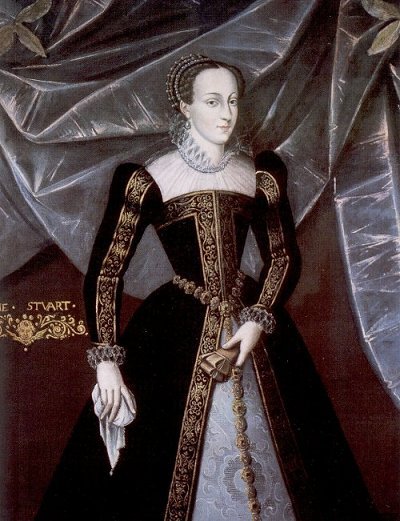
8 February 1587: The Execution of Mary I of Scotland


Before the sixteenth-century, executing a queen would have been virtually unthinkable in pre-modern Europe. By 1587, however, executing queens in England was not a strange concept. On 8 February that year, Mary I of Scotland - or Mary, Queen of Scots as she is more commonly known - was executed at Fotheringhay Castle. She was the fourth queen to be executed in England since 1536, following Anne Boleyn, Katherine Howard and Jane Grey, but unlike her headless predecessors, Mary was a Scottish queen regnant. 

Mary's life following her abdication from the Scottish throne in 1567 had been difficult. Although she has frequently been disparaged as a foolish, inept queen who placed too much emphasis on matters of the heart, more recently Mary has been reappraised as a conscientious and efficient monarch who was, nonetheless, undermined by contemporary expectations of gender. In a kingdom that was, at best, ambivalent to female rule, Mary was compelled to navigate not only the political and factional rivalries that held sway at the Scottish court, but also the religious tensions unleashed by the Reformation. It was to her credit that, as a Catholic monarch, Mary attempted to reach some form of compromise with her unwavering Protestant subjects.

Mary had also previously been queen consort of France as the wife of Francois II, but her young husband's death meant that Mary was compelled to return to her native kingdom to commence the business of ruling. Like her cousin Elizabeth I, the Scottish queen was expected to marry and produce an heir to ensure the continuation of the Stewart dynasty. Eventually, in 1565, she married Henry, Lord Darnley, the eldest son of Lady Margaret Douglas and a grandson of Margaret Tudor. The marriage caused a degree of controversy and was not received well by Elizabeth I, but the collapse of the marriage and Darnley's murder in 1567 fatally undermined Mary's position. Whether or not she was involved in her husband's death - and most historians generally believe she was not - Mary made a gross misjudgement by marrying the chief suspect, the earl of Bothwell, shortly afterwards. Her decision was most likely due to Bothwell's rape of her, which meant that marriage to him was the only means of protecting her honour. While this decision can, from a modern perspective, be sympathised with, it was condemned by her furious subjects, and Mary's enforced abdication followed shortly afterwards. She was succeeded by her young son James, her child by Darnley.

Above: Mary Queen of Scots was executed at Fotheringhay Castle.

During her marriage to Francois II, Mary had publicly stated her belief that she was the rightful queen of England, by quartering the royal arms of England with those of France and Scotland. This declaration was probably viewed with apprehension by Elizabeth I, who was generally regarded in Catholic Europe as a bastard and usurper. From a Catholic perspective, Mary Queen of Scots was the rightful queen of England, both because of her religion and because she was undoubtedly legitimate. After the abdication in 1567, Mary journeyed across the border into England in a bid to secure protection from her cousin and fellow queen, and perhaps hoped that Elizabeth would assist in her restoration to the Scottish throne. This decision, with the benefit of hindsight, was probably the worst that Mary ever made. Elizabeth made no attempt to restore her cousin to the Scottish throne and effectively had her placed under house arrest. 

Mary's situation became more difficult over the years, as Catholicism became more closely associated with political insurrection and foreign intrigue, especially in the context of deteriorating Anglo-Spanish relations and escalating religious tensions, resulting in bloodshed, in France. The papal bull of 1570, which effectively released Elizabeth's subjects from their bonds of allegiance to her and actively encouraged them to kill her, could be viewed as something of a turning point in the queen's attitude to her Catholic subjects. During the 1570s and 1580s, a series of increasingly harsh laws were promulgated with the intent of enforcing conformity and ensuring obedience to the Protestant queen. Harbouring priests was made a capital offence, and priests who entered the realm with the intent of ensuring conversion could be executed, and many were. Perhaps acting out of desperation, Mary became involved in a series of conspiracies aimed at deposing Elizabeth and replacing her with the Scottish queen. Mary always believed that she was the rightful queen of Scotland, anointed by God, and only death could prevent her from enjoying that honour. By this point, however, she also coveted the English crown. So seriously were these conspiracies taken by the English government that in 1584 a document known as the Bond of Association was issued. It obliged all those who signed it to execute any person who attempted to usurp the English throne or assassinated Elizabeth. It was clearly aimed at Mary. 

In 1586, Mary was judged to have actively colluded in the Babington Plot, for her correspondence was said to indicate her consent to Elizabeth's assassination - an act that would lead to her succession to the English throne. In October, the Scottish queen was tried at Fotheringhay Castle, and defended herself with dignity and courage; she also questioned the right of the court to try her, a divinely anointed queen regnant. However, the verdict was never in doubt. On 25 October, Mary was found guilty. Elizabeth hesitated to proceed with her cousin's execution, perhaps because she feared the response of Catholic Europe. Mary's son, King James, diplomatically sought Elizabeth's mercy for his mother, but in reality he took very little action to assist Mary. 


Above: The tomb of Mary, Queen of Scots at Westminster Abbey. Copyright Westminster Abbey. 

On the day of the execution, Mary proclaimed that she was dying for her Catholic religion, as a true woman of Scotland and France, the two kingdoms that she had governed. It took three blows of the axe to sever her head, but she was subsequently revered on the continent as a Catholic martyr, murdered by the ruthless and immoral Elizabeth. Although she was initially interred at Peterborough Abbey, when her son became king of England he had her reburied at Westminster Abbey. The iconography of her tomb, as Anne McLaren has stressed, celebrated her as the rightful heiress of Henry VII and, therefore, as the rightful queen of England. Her fertility and fecundity, as the mother of James I of England, was contrasted with the barrenness of her cousins, Mary I and Elizabeth I, who lay nearby. It is ironic that, shortly before her death in 1603, Elizabeth elected the son of her enemy to succeed her. In doing so, the English queen ignored the wishes of her father, Henry VIII, that the Suffolk line should succeed his children, if they all died childless, rather than the Scottish line, which he had barred completely. 

Thursday, 8 December 2016

8 December 1542: The Birth of Mary, Queen of Scots


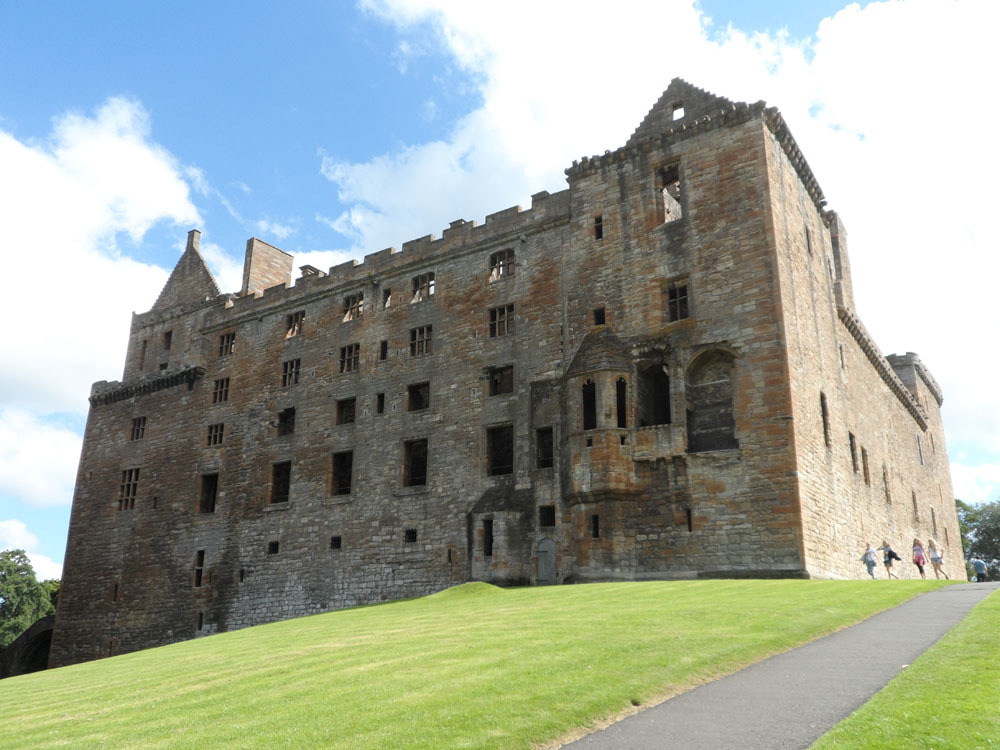
On 8 December 1542, a princess was born to Scotland. At Linlithgow Palace, Queen Marie de Guise, consort to James V of Scotland, delivered a daughter, who was named Mary; she would be their only surviving child. Six days later, Mary became queen of Scotland, following her father's death on 14 December. It was rumoured that James had lamented that his dynasty 'came with a lass, it will pass with a lass.' It is, however, questionable whether this legend has any truth to it. Mary was the first queen regnant of Scotland since Margaret of Norway (1283-90), who died at the age of seven. 

Mary's early years at the Scottish court were tumultuous ones, for her kingdom was at war with England. Henry VIII was determined to secure the submission of Scotland, and engaged in what became known as 'the Rough Wooing', in which he sought to effect the marriage of Mary to his son and heir, Edward. The two kingdoms had signed the Treaty of Greenwich in 1543, which agreed to a marriage between Edward and Mary, but the Scots soon renounced it. Mary's mother, the dowager queen, favoured an alliance with France, rather than England, and it was to France that she looked with regards to her daughter's future.

Above: Linlithgow Palace, where Mary was born in 1542.

In 1548, at the age of five, the Queen of Scots departed for France in the company of her four companions - all named Mary - and a sizeable retinue. She was betrothed to Francois, dauphin of France, and could thus anticipate a glorious future as queen consort of France, as well as queen regnant of Scotland. Mary was provided with an excellent education, in which she acquired expertise in dancing and music making, singing, needlework and horsemanship. She later became known as an accomplished poet. However, her language skills were somewhat rudimentary; certainly, she did not possess the linguistic talents of her cousin and rival, Elizabeth. As she grew to maturity, Mary was reported to be beautiful and charming. She was tall in stature, with auburn hair and dark eyes. Her love of France, and her French behaviour and customs, did not necessarily endear her to her Scottish subjects. Lord Ruthven, who was involved in the murder of her servant Rizzio, allegedly feared her wiles that she had developed while spending 'her youth in the Court of France.'

Mary was trained to regard herself as not only the queen of Scotland and France, but also the rightful queen of England and Ireland, in the event of her cousin Mary I's death. Henry VIII's will stipulated that, should Mary Tudor die without heirs, the crown should pass to her younger sister Elizabeth. However, Catholic rulers such as Henri II of France did not regard Elizabeth as the rightful heir to the English throne, on account of both her religion (Protestantism) and her bastardy (her parents' marriage had been annulled in 1536). From their point of view, it was Mary, Queen of Scots who had the right to succeed Mary Tudor. Naturally, as his son Francois was betrothed to the Queen of Scots, Henri was determined that she should be queen of England.

Mary's first two husbands: Francois II of France (left) and Henry, Lord Darnley (right).

It is this context that explains why 1558 was a crucial year for Mary, Queen of Scots. On 24 April, at the age of fifteen, she married the dauphin in a splendid ceremony at Notre Dame. Seven months later, Mary I of England died. The crown passed to her sister Elizabeth, but France did not recognise the new queen, at a time of war between the two kingdoms. Instead, Mary Queen of Scots and her husband quartered the royal arms of England with those of France and Scotland, in effect proclaiming themselves the rightful king and queen of England. It was a daring move, and it did not endear the Scottish queen to her cousin Elizabeth.

Henri II's death the following year meant that Francois succeeded him as king; the sixteen-year-old Mary was now queen consort of France. However her husband, who seems to have been sickly from an early age, died the following year, and it was intimated to Mary that there was no place left for her in France. In August 1561, she returned to Scotland, determined to rule as queen regnant. Occasionally, Mary has been disparaged as a frivolous ruler uninterested in affairs of government or politics, but she appears to have frequently attended council meetings and, moreover, was eager to maintain religious stability. The tensions between Catholics and Huguenots in France were steadily increasing, and culminated in the massacre of St. Bartholomew's Day in 1572. Mary I of England, moreover, had persecuted her Protestant subjects - almost 300 were burned at the stake - while Elizabeth I was responsible for the execution of almost 200 Catholic subjects. Mary Queen of Scots, who had perhaps gained an awareness of the religious violence that threatened to undo France during her years spent there, was determined to secure a religious rapprochement in Scotland.

The Scottish Reformation had been highly effective, and Mary returned to a country that was embracing Protestantism. However, she managed to hear mass privately in her chapel at Holyrood, although she was criticised by the militant preacher John Knox for doing so. Alongside her religious compromises, Mary sought to secure the recognition of Elizabeth as her heir, should the English queen die without an heir. Elizabeth, who had been the focus of rebellion during her sister's reign, had learned of the dangers in selecting an heir during her lifetime, particularly when that heir was Catholic and the ruler of a neighbouring kingdom. She was also aware that many Catholics, especially on the Continent, refused to regard her as the rightful queen. In view of this, Elizabeth made overtures to Mary but never granted her the recognition that Mary craved.

Above: Mary's cousin and rival, Elizabeth I of England. (left)
Mary's son and successor, James VI of Scotland. (right)

As a queen regnant of Scotland, Mary was eager to marry again. A variety of candidates were proposed, including Don Carlos of Spain, son of Philip II. Elizabeth, for reasons that continue to perplex modern historians, offered Mary the hand of Robert Dudley, earl of Leicester. The earl was rumoured to be the English queen's lover, and he was clearly greatly inferior to the Scottish queen in status. Moreover, he came from a family of traitors. Mary, offended, declined Elizabeth's offer. The English queen had stipulated that Mary could retain her friendship only by marrying Leicester or an English subject, or by remaining unmarried, and hinted that she might recognise Mary as her heir if she conformed to these conditions. In view of this, Mary's decision to wed Henry, Lord Darnley is explicable. Henry was the eldest son of Matthew Stuart, earl of Lennox, and Lady Margaret Douglas. He was, therefore, a grandson of Margaret Tudor and a great-grandson of Henry VII. He, like Mary, had a claim to the English throne, and it was perhaps in a bid to strengthen her own claim that Mary elected to marry her relative. They married at 29 July 1565 at Holyrood.

Henry was at least three - possibly four - years younger than his wife, and events would reveal that he was immature, spoiled, vindictive and arrogant. The marriage was not popular. The English refused to recognise the marriage and declined to refer to Henry as the king of Scotland, a title he was most anxious to enjoy. Elizabeth was enraged by her cousin's activities, and it was reported that there was much 'jealousies, suspicions and hatred' between the two queens, where previously there had been 'sisterly familiarity'. By marrying Henry, a Catholic with a claim to the English throne, Mary had undermined the fragile amity between England and Scotland. 

Mary's remarriage placed her in a difficult position that was exacerbated by rebellion at home - known as the Chaseabout Raid - and by increasing tensions between her Catholic and Protestant councillors. Her new husband, moreover, was furious by what he perceived as his wife's refusal to grant him the crown matrimonial of Scotland, which effectively meant that his status as king of Scotland was a rather meaningless one. The reign of Mary I of England had evidenced the ambiguities and difficulties of authority and precedence when a queen regnant married. Moreover, Mary's friendship with her adviser David Rizzio, a Savoyard musician, enraged both her husband and the Scottish nobles more broadly. On 9 March 1566, Rizzio was brutally stabbed to death by several noblemen in the queen's own chambers; Mary herself was seized by her husband and was harrassed by Lord Ruthven. Mary was probably shattered by the experience, but her pregnancy meant that she had to focus on her health. On 19 June, she gave birth to a son, James, who would later succeed her as James VI.

Mary's growing problems with Henry perhaps led her to collude in plots against him, although it is unlikely that she actively intrigued for his death. On 10 February 1567, her husband was murdered at Kirk o'Field, near Edinburgh. The murder scandalised Mary's subjects and was reported across Europe; Elizabeth I proclaimed herself shocked by what had happened, and quickly admonished Mary for her apparent closeness to the chief suspect, the earl of Bothwell. Mary has often been criticised for her behaviour, but she seems to have suffered a complete mental breakdown. Amid reports that she was depressed, perhaps suicidal, Mary was captured by Bothwell and incarcerated at Dunbar. Having abducted her, Bothwell then proceeded to rape her. In a bid to protect her own honour, as well as that of her infant son, Mary married Bothwell in May 1567.  She argued frequently with her new husband and reportedly called for a knife with which to end her unhappy life. Her suicidal tendencies, coupled with her depression and anxiety that had been exacerbated by the abduction, are powerful evidence against the simplistic view that she, besotted by Bothwell, had engaged in a passionate love affair with him and then encouraged him to murder Henry. Eventually, Mary was seized by the confederate lords at Carberry Hill, abandoned by her husband, and was transported through Edinburgh as crowds shouted 'Burn the whore!' She was imprisoned at Loch Leven, and forced to abdicate in favour of her son, James.

Image result for james v of scotland
Above: Mary's parents, James V of Scotland and Marie de Guise.

At Mary's birth in December 1542, Marie de Guise could never have imagined the turbulence that would characterise her daughter's life, which arose as a result of dynastic conflict, political instability and religious tensions. Nor could she ever have imagined that Mary would be the only monarch in Scottish history to die on an English scaffold, nor could she have envisaged that Mary would be the fourth British queen in a century to suffer that humiliating death. Mary, Queen of Scots' reputation has rarely been positive or even nuanced; traditionally identified as a scheming adulteress, who colluded in her husband's murder, she has also been regarded as a virtuous martyr for the Catholic faith and the rightful queen of England, executed by her barbaric and unnatural cousin, the usurper Elizabeth. Perhaps what should most be appreciated is the difficulties Mary faced in attempting to govern a turbulent kingdom, at a time when queen regnants were viewed with suspicion or were actively disparaged. Elizabeth I proved that a woman could rule successfully and actively, but the difficult experiences of her sister Mary I and her cousin Mary, Queen of Scots provided telling evidence that such success was neither preordained nor necessarily even expected by one's subjects. More recently, historians have come to view the Scottish queen sympathetically, with a more nuanced understanding of the religious, political and dynastic conflict that severely undermined her kingdom and affected her attempts - genuine attempts - to rule successfully. 


Sunday, 13 November 2016

13 November 1553: The Trials of Queen Jane, Archbishop Cranmer, and the Dudley Brothers


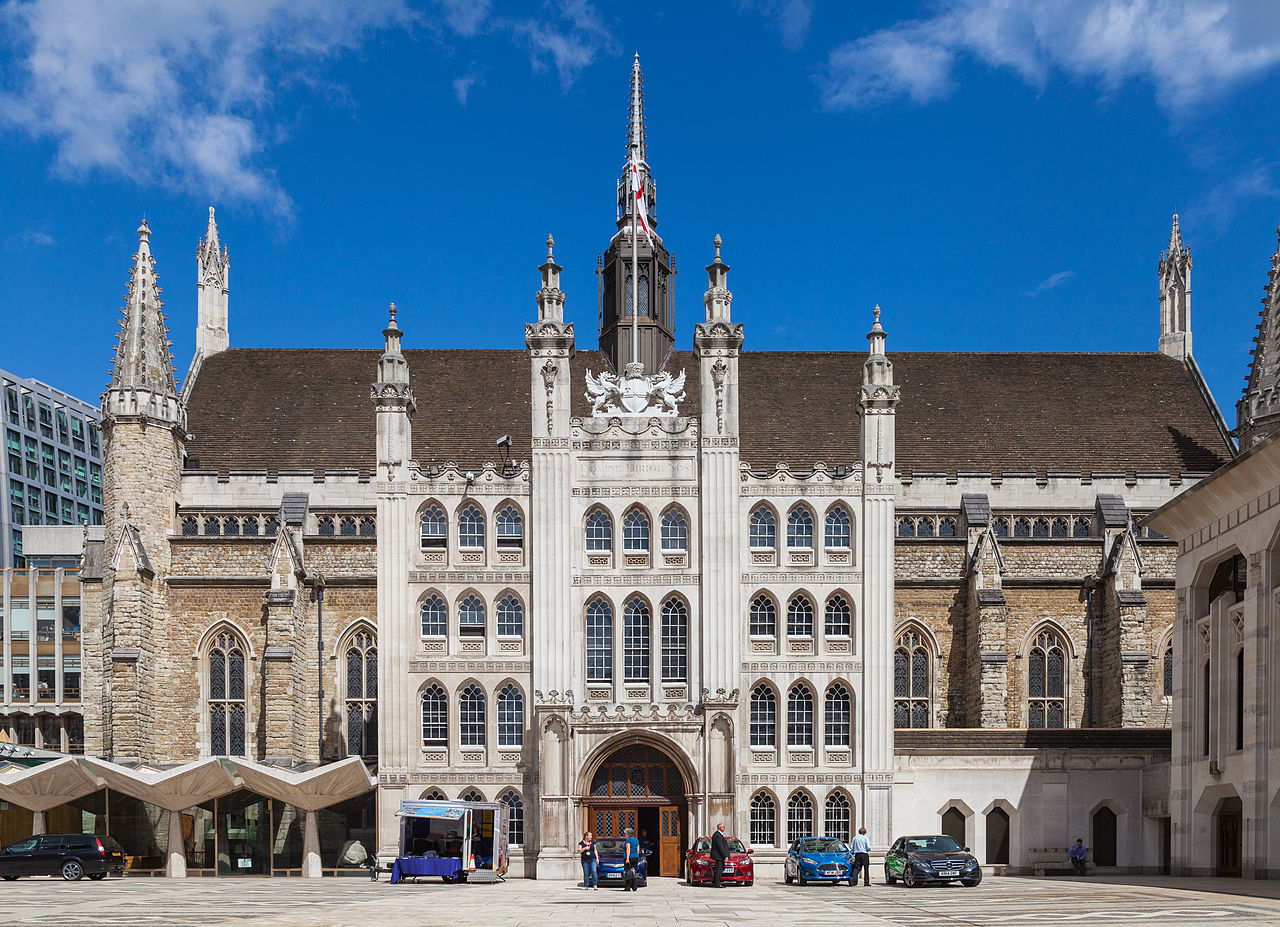
At London's Guildhall on 13 November 1553, five individuals were tried for high treason: Lady Jane Grey, the so-called 'Nine Days Queen'; her husband Guildford Dudley; his brothers Ambrose and Henry; and Thomas Cranmer, archbishop of Canterbury. Cranmer was charged with helping to seize the Tower for Jane and of levying troops for the duke of Northumberland's expeditionary force against Mary I (Northumberland himself had been executed in August that year). The beleaguered archbishop allegedly 'openly confessed his crime', although he himself later clarified that he had 'confessed more... than was true'. 

The Guildhall was the venue of several notable treason trials during the Tudor period. Francis Dereham and Thomas Culpeper, the reputed lovers of Katherine Howard, were tried and convicted at the Guildhall in 1541, while Anne Askew was tried for heresy at the same venue five years later. The five tried on 13 November 1553 proceeded from the Tower of London through the streets on foot to the Guildhall. Lady Jane - or Queen Jane; her exact title continues to rouse debate - was dressed in a sombre gown of black cloth and a black French hood. 

The commission was headed by the lord mayor, Sir Thomas White. Eric Ives notes that the commission was 'overwhelmingly Catholic in sentiment', which was surely a calculated move on Queen Mary's part, as a sign of the new order that was to be a feature of her reign. The 'Nine Days Queen' was charged with taking possession of the Tower, alongside her husband, and 'signing various writings'. In short, she had unlawfully usurped the sovereign's authority. 

Image result for lady jane greyImage result for thomas cranmer

All five were found guilty of high treason. The four men were sentenced to suffer a traitor's death: hanging, drawing and quartering. Jane was sentenced to be burned alive or beheaded according to the Queen's pleasure. The teenager faced news of her sentence bravely; she was sustained during those bleak months of imprisonment by her devout reformist faith. No date was given for the executions, and it appears that Queen Mary was, at least initially, willing to show mercy to the defendants, with the exception of Cranmer. 

The outbreak of rebellion in early 1554, however, changed that. Whether or not she was pressured by the Spanish envoys, with the promise of marriage to Philip of Spain, or by her Privy Council, Mary elected to order the executions of Guildford Dudley and Lady Jane Grey, for she feared that her security would be compromised as long as they remained alive and a focus for reformers. On 12 February, Guildford and Jane were executed. Both died bravely. Jane was subsequently represented in cultural works as an innocent victim of her scheming parents, or as a virtuous Protestant martyr. Guildford was viewed with sympathy by his contemporaries, but modern writers tend to depict him negatively as an abusive, weak-willed and vicious adolescent, a portrayal that is essentially fictional in basis.

Ambrose and Henry, Guildford's brothers, were more fortunate. Ambrose was released from the Tower in late 1554 and went on to serve Elizabeth I as her Master of the Ordnance. In 1561, he was created earl of Warwick. He died in 1590. His younger brother Henry participated with Ambrose in several tournaments held by Philip of Spain, as a demonstration of Anglo-Spanish amity. Henry participated in the Battle of St. Quentin in 1557, where he died. Archbishop Cranmer fared less well. He was tried for heresy in 1555 and went to the stake on 21 March 1556. 

Friday, 2 September 2016

Anne Boleyn's Hair Colour in Portraiture

Image result for anne boleynImage result for anne boleyn portrait

Mystery surrounds Anne Boleyn's appearance. Contemporaries were ambiguous in their descriptions of the appearance of Henry VIII's second queen: either she was a slim and very beautiful, small-breasted Venus, or a grotesque, deformed creature who had lured Henry VIII into breaking from the Roman Catholic Church and marrying her. Controversy centres, in particular, on the colour of Anne Boleyn's hair. 

It is worth noting that no surviving portraits of Anne Boleyn date from her own lifetime. At the very earliest, they were painted in the reign of her daughter, Elizabeth I, and may have been based on lost originals; thus dating, at the earliest, fifty to sixty years after her execution in 1536. The standard portrait of Anne Boleyn, a copy of which is now housed in the National Portrait Gallery in London, depicts the queen wearing a French hood, black gown and pearls with a 'B' choker. In most of these portraits, Anne is portrayed with very dark brown or black hair. 

When examining these portraits, it is worthwhile to bear in mind the now infamous description of Anne Boleyn put forward by the Elizabethan Jesuit, Nicholas Sander, in his Rise and Growth of the Anglican Schism, published in 1585. Sander described Anne thus:

Anne Boleyn was rather tall of stature, with black hair and an oval face of sallow complexion, as if troubled with jaundice. She had a projecting tooth under the upper lip, and on her right hand, six fingers. There was a large wen under her chin, and therefore to hide its ugliness, she wore a high dress covering her throat. In this she was followed by the ladies of the court, who also wore high dresses, having before been in the habit of leaving their necks and upper portion of their persons uncovered. She was handsome to look at, with a pretty mouth.

Sander presented the queen as a witchlike figure who had cunningly seduced Henry VIII into abandoning his virtuous wife, Katherine of Aragon, and breaking with the true Church to marry her. Leaving aside the suggestion that Anne favoured high dresses - for which there is no other extant evidence - Sanders' description of Anne corresponds strikingly with the representation of the queen in the NPG pattern of portraits, two of which are provided at the top of the page. We can observe the queen's 'black hair', her 'oval face of sallow complexion' and 'pretty mouth'. His description of her raven hair, in particular, corresponded closely to contemporary notions of a witch's appearance. 

No other contemporary author described Anne Boleyn's hair colour as black. The Venetian ambassador, whose description of Anne's appearance has been viewed as largely accurate, stated that she had 'a swarthy complexion'. Simon Grynee, a professor of Greek at Basle, similarly noted that Anne was of a 'rather dark' complexion. It is possible that she had black hair, of course, but as Susan Bordo suggests, the notion that Anne Boleyn had raven tresses belongs largely to the work of Nicholas Sander, an author unquestionably hostile to the queen and her daughter, Elizabeth. 

Image result for anne boleyn natalie dormerImage result for anne boleyn claire foy
Above: Often Anne Boleyn is portrayed in modern films and TV with black hair. Natalie Dormer (left) in The Tudors and Claire Foy (right) in Wolf Hall.

Anne Boleyn's hair was almost certainly dark. Cardinal Wolsey allegedly referred to her as 'the night crow', probably alluding to her appearance, and as we have seen, at least two other individuals described her as possessing a dark complexion. But it does not necessarily follow that her hair colour was black, and it is possible that it was the influence of Nicholas Sander's hostile description that meant that she was portrayed in portraiture as having black hair. It is important not to underestimate how influential Sanders' work was at the time. As Retha Warnicke explains, it formed the basis for every subsequent Catholic history of the Reformation, and by 1628 it had appeared in six Latin editions and was translated into six other languages. 

Other portraits depicted the queen's hair as lighter, whether medium brown or even reddish. It is possible that these portraits 'beautified' Anne, so to speak, giving that queens were customarily depicted in artistic mediums with fair hair, because it was associated with fertility, virginity and goodness. But it is also possible that these portraits more accurately represented the queen's true hair colour. 

Image result for anne boleyn portraitImage result for anne boleyn portrait
Above: Just how dark was Anne? Two reputed portraits of her that show her with lighter hair.