Showing posts with label margaret beaufort. Show all posts

Thursday, 22 October 2015

The Stereotyped Six Wives: One: 'A Great and Strong-Laboured Woman'


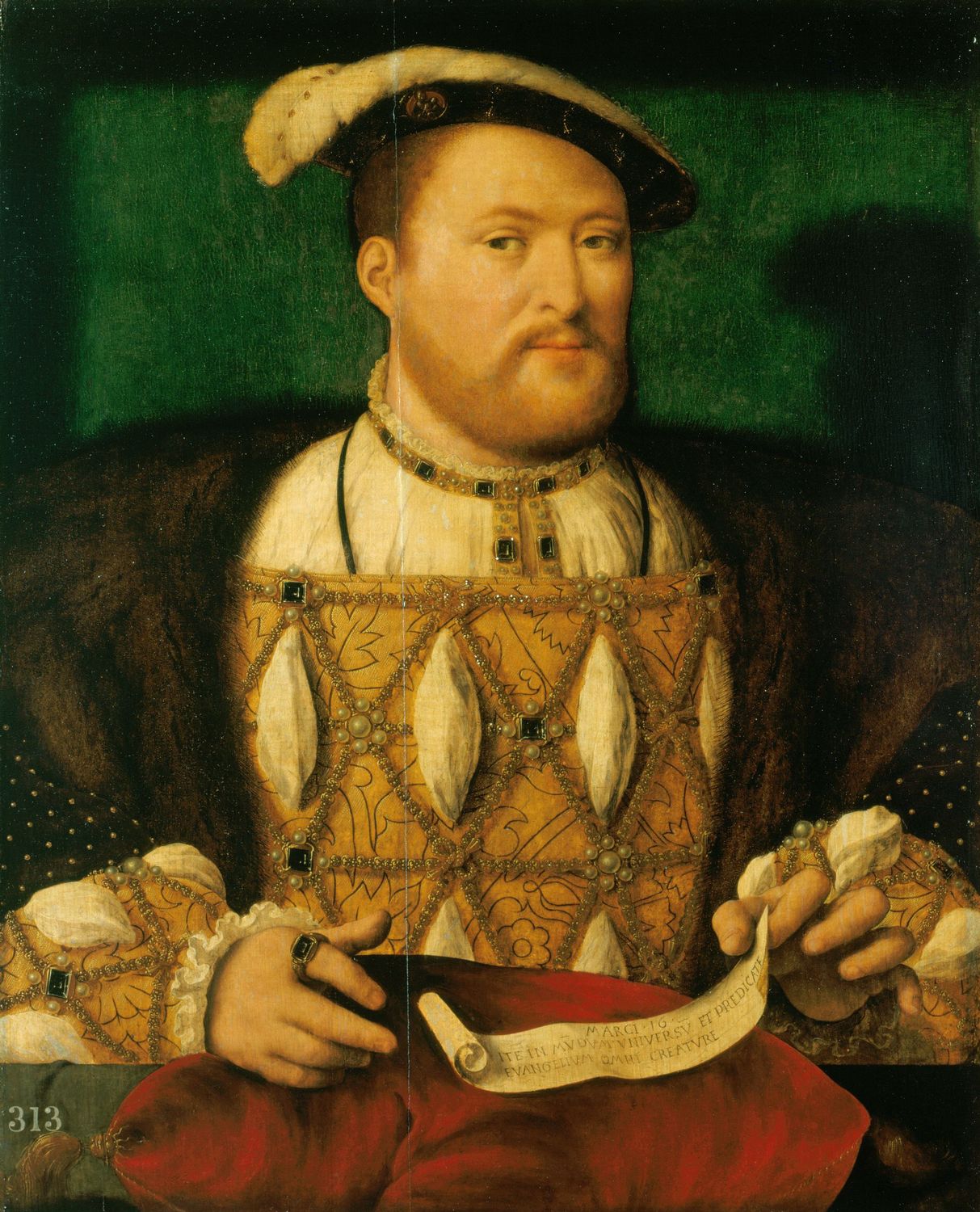
Katherine of Aragon, first wife of Henry VIII of England
Lifetime: 16 December 1485 - 7 January 1536
Reigned: June 1509 - May 1533 (23 years, 11 months)
Pregnancies: 6 
Stillborn daughter: January 1510
Prince Henry: 1 January 1511 - 23 February 1511 
Stillborn son: September 1513
Stillborn son: November 1514
Mary I of England: 18 February 1516 - 17 November 1558
Stillborn daughter: November 1518

In this new six-part series, I will be reexamining the lives and personalities of Henry VIII's six wives, seeking to portray their lives realistically in a process that discards prevailing stereotypes. Much scholarly work has been done on Henry's reign in recent decades, affording fresh insights into the politics and achievements of the period. Understandably, widespread interest in Henry's marital affairs remains unabated. Yet stereotypes continue to bedevil our knowledge of the wives of this most enigmatic king. 

This first blog post examines the incredible life of Queen Katherine of Aragon, Henry's first wife. Married to Henry at the age of twenty-three, Katherine was both a princess of Spain and a queen of England. Her tenure as Henry's consort included notable achievements. Katherine successfully fulfilled the queenly role of intercessor and was an acknowledged ambassador for her home country. Her considerable achievements as queen are usually overlooked in the divorce crisis that concerned only the final six years of her reign. She was Queen of England for almost 24 years and was a noted patron of the Renaissance in England. An examination of the sources concerning Katherine indicate that she was learned, charismatic, shrewd and formidable. Often depicted as the innocent, virtuous foil to the scheming Anne Boleyn, reality is rather different.


As the youngest daughter of the formidable 'Catholic Kings' Ferdinand and Isabella, who jointly ruled the Spanish kingdoms of Castile and Aragon, Katherine was expected to make an excellent marriage, but it was probably not anticipated at her birth that she would marry into the English royal family. At the time of Katherine's birth on 16 December 1485 at the Archbishop's Palace at Alcala de Henares, the Tudors had been on the English throne for less than four months. A newly established dynasty with a fairly weak claim to the throne, the Tudors were not regarded with especial confidence or admiration by other rulers in Europe. Ferdinand and Isabella, who had already ruled Spain for several years by this point, were shrewd and confident rulers and could be forgiven for regarding King Henry VII with wariness. Perhaps they wondered how long he would hold the turbulent throne. Given that England had been in a state of dynastic turmoil since the mid fifteenth-century, they could have been forgiven for thinking this.

Katherine was educated by a clerk in holy orders, Alessandro Geraldini. The Dutch humanist Erasmus later recorded that the princess was 'imbued with learning, by the care of her illustrious mother'. She learned languages (though not English, and she only acquired a knowledge of French several years later); canon and civil law; theology; philosophy; history; and arithmetic, but was also brought up with an excellent knowledge of skills deemed appropriately feminine: housewifery; embroidery; lacemaking; and music. At a time when the Renaissance was beginning to develop across Europe, the Spanish monarchs likely placed great emphasis on their daughter acquiring musical talent. As queen, Katherine was to enjoy participating in masques and dances. Perhaps most importantly, Katherine was brought up with an intense devotion and loyalty to the Roman Catholic Church. Her parents had determinedly enforced the Roman faith across their dominions, finally expelling Jews and Moors who refused to convert. Not for nothing were Ferdinand and Isabella granted the title Catholic Monarch by the satisfied pope Alexander VI. From an early age, Katherine came to regard any religion that was antithetical to the Roman faith as heresy. Given the determination with which her parents sought to expel heretics from their kingdoms, it is highly likely that Katherine was imbued with a passionate hatred of what she perceived as heresy and an instinctive intolerance for heretics. 

Above: Ferdinand of Aragon and Isabella of Castile, the parents of Katherine of Aragon. Their active rule, which involved the determined expulsion of heresy from their kingdoms, likely had a significant influence on Katherine, inspiring her to regard heresy with revulsion while encouraging her to revere and loyally serve the Roman Catholic Church.

The influence of Katherine's parents on their daughter's development should not be underestimated. Their shared, active rule would have signalled to Katherine that a queen could exercise tremendous influence alongside her husband in ruling a kingdom. Katherine was not brought up in England, revering the queenly model in place there: a compliant, devoted and virginal wife and mother. While she was brought up to regard these qualities as essential to successful rulership, she would also have learned that a queen consort could be active, even militant, in working alongside her husband to successfully rule. As a young girl, Katherine of Aragon's model of queenship was one that was active, determined and militant. It was also one that was fiercely intolerant of threat, whether religious or political, and one that was grounded in loyalty to one's lineage and devotion to one's faith. 

Katherine grew to be both beautiful and charming. She was reputedly tiny in height, probably less than five foot tall, and her hair was long and auburn in colour. Sir Thomas More, who was to become Katherine's close friend and admirer, wrote in her praise: 'There is nothing wanting in her that the most beautiful girl should have. Everyone is singing her praises'. She was also learned and intelligent, with an interest in the burgeoning Renaissance movement and a devotion to the Roman Catholic Church: in short, she appeared the perfect queen consort for a young king. Aware of this, and determined to extend Spanish power outwards into Europe to diminish the hostile influence of France, Ferdinand and Isabella decided to marry their youngest daughter into England. She was betrothed to the English king's eldest son Prince Arthur. Given that interest in the match had first been mooted in the spring of 1488, when Katherine was only two years of age and her betrothed not yet two, it is unsurprising that Katherine came to regard herself as divinely appointed by God to be England's queen. It was her destiny. With a fierce devotion to the Catholic faith, combined with a deep-seated loyalty to her lineage, it must be borne in mind that Katherine regarded herself from infanthood as the Queen of England. Only in death could God could take that title from her. 

Even at an early age, then, Katherine was never the submissive, silent and passive consort presented in Victorian historiography and even in some modern works of history. She was an energetic, determined and resourceful woman who was appointed by God to rule England. While she would have learned from her mother that a queen's primary task was to provide male heirs with which to secure the dynasty's continuation, her mother's example also educated her daughter to believe that a queen's role in the politics of the kingdom was as important as that of her husband. Her role was active, not passive. Indeed, it is questionable whether Katherine actively cultivated a submissive ideal of womanhood that was later associated with her successor, Jane Seymour, so it is perhaps surprising that she is often identified with this role. As will be seen, she perhaps reacted more negatively and forcefully to Henry VIII's infidelities than is often assumed, and she certainly was not averse to losing her temper publicly. 
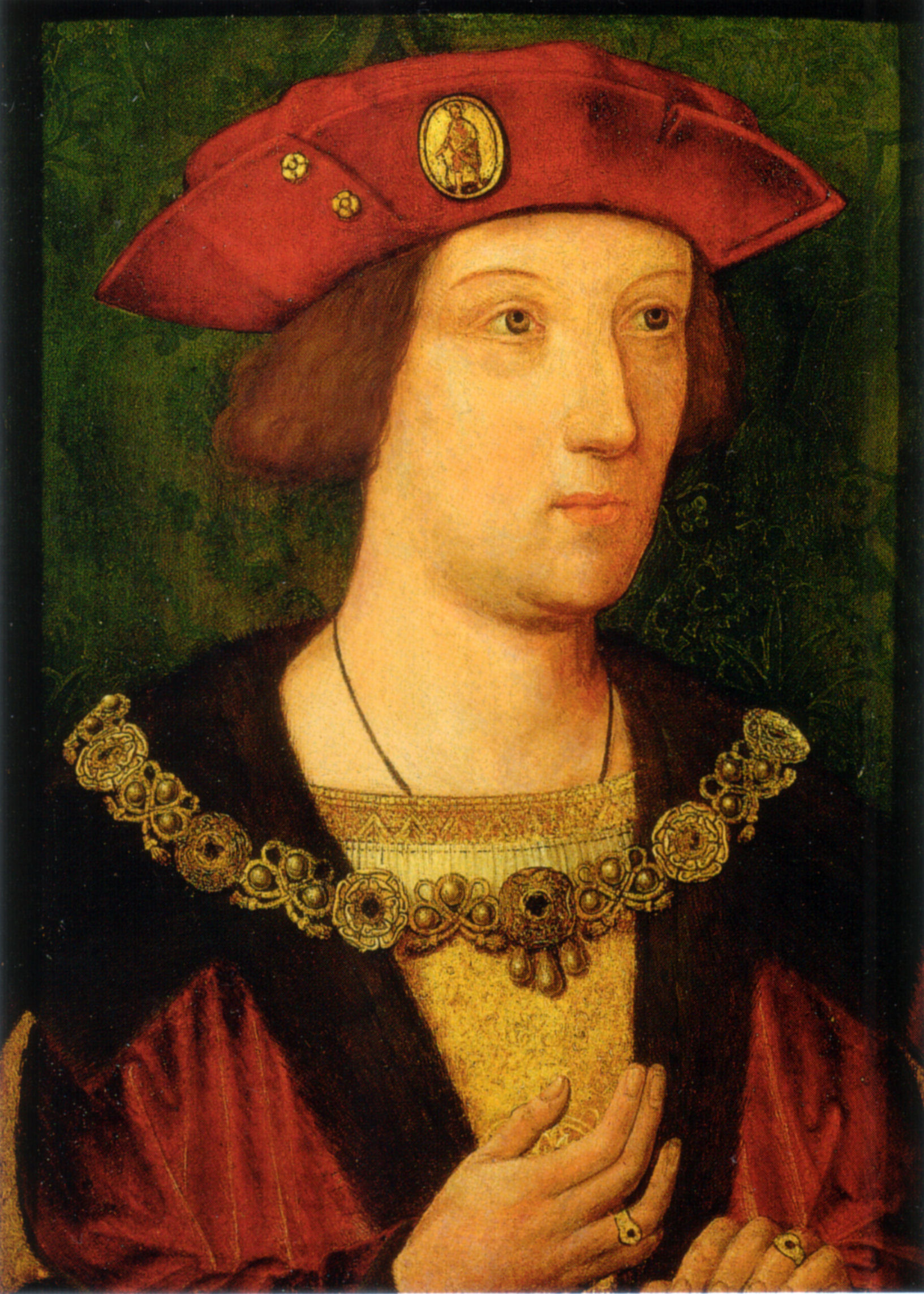
Brothers: Arthur, Prince of Wales (left) and Henry, Prince of Wales (right); later Henry VIII. Both men married Katherine of Aragon.

In November 1501, at the age of fifteen, Katherine of Aragon wed Arthur Tudor, prince of Wales, at St. Paul's Cathedral in London. Katherine was acquainted with her new family around this time. She reportedly enjoyed warm relations with her mother-in-law Queen Elizabeth of York, the shrewd and kindly wife of Henry VII, and she undoubtedly regarded her bridegroom's grandmother, Lady Margaret Beaufort, with respect. Like Katherine's mother Isabella of Castile, Lady Margaret was a determined and active woman who ruled her estates vigorously and exercised considerable influence at court. Contemporary ambassadors whispered rumours that she even held her daughter-in-law, the Queen of England, in subjection. Katherine would have learnt from this state of affairs that a royal woman's power and influence at the English court was potentially considerable. She may also have considered Elizabeth's situation and determined that no woman would ever oust her from a position of influence, whether that woman was family or not.

After their marriage, the prince and princess of Wales (as Katherine was now known) were sent to reside at Ludlow Castle, Arthur's ceremonial centre of power in the Welsh Marches. Traditionally, it has been argued that Katherine's marriage to Arthur was not consummated and, when the prince tragically died in the spring of 1502, the princess was left a virgin widow. However, David Starkey recently suggested that the marriage was indeed consummated. Certainly no-one at the time doubted that it had. When her marriage was threatened in 1527 by Henry VIII's determination to remarry, Katherine had every reason to lie. Not only was her position as queen endangered, but her daughter's future could be jeopardised were the princess to become a bastard. Moreover, Arthur was not the unhealthy, sickly teenager of popular legend, but a vigorous youth. Katherine's mother would have educated her about the necessity of consummating a union, to prevent doubts arising as to its legitimacy. The Catholic Church taught that a marriage could be annulled on the grounds of non-consummation, as the failed union of Henry VIII and Anne of Cleves was to prove. Given both her pride and loyalty to her lineage, and her intense devotion to her Roman Catholic faith, it seems unlikely that Katherine failed to consummate her marriage to Arthur.
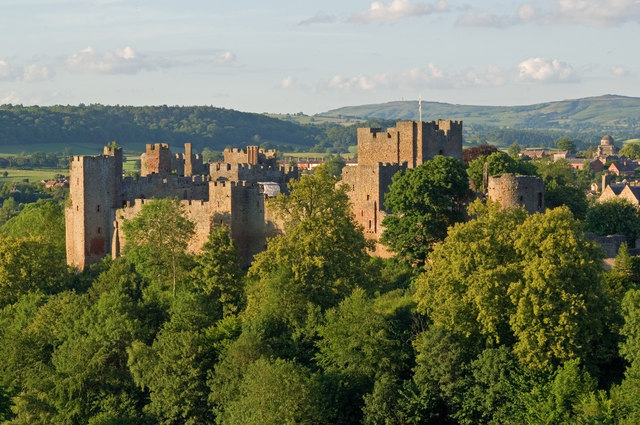
Ludlow Castle from Whitcliffe, 2011.jpg
Above: Ludlow Castle in Wales, where Katherine probably consummated her marriage to Arthur, Prince of Wales.

Whether Katherine truly loved her first husband is uncertain, but her determination to become Queen of England did not die with her husband in April 1502. During her seven years of widowhood, Katherine continued to exert a forceful and vigorous presence in European politics. She regularly wrote to her parents, especially her father following the death of her mother in late 1504. Katherine informed Ferdinand that she had 'no other hope or comfort in this world' unless he wrote to her regularly. The evidence of her letters indicates that she sought to influence her father's policy, as seen in her insistent determination to have the Spanish ambassador de Puebla expelled for the 'pain and annoyance' which he had caused her, perhaps principally on account of his failure to promote her wellbeing and interests at court. She also pressured Henry VII, her father-in-law, to remember 'his daughter' and to remember that 'it will reflect dishonour upon his character if he should entirely abandon' her. Katherine's entreaties were genuine, but were also calculating. She sought to remind the English king of her position as princess of Spain and, thus, her central importance in European affairs as a prospective consort to a foreign ruler. She surely rejoiced upon learning that she was betrothed to her former husband's younger brother Henry Tudor, but whether she knew of his decision to revoke his promises to her is unknown. Certainly it would not have altered her firm belief that she would one day rule England as its queen. 

Her health, however, soon became a matter of concern. Historian Giles Tremlett has speculated that the princess may have suffered from an eating disorder, although it is unwise to refer it as such in the modern sense of the term. Certainly Katherine's zeal for fasting and abstinence was famed across Europe. The Pope himself became so concerned that he issued a missive instructing that if Katherine's 'devotions and fasting' were 'thought to stand in the way of her physical health and the procreation of children', then they could be 'revoked and annulled by men'. Katherine's desire to fast is highly indicative of the importance she placed on loyally and devotedly serving the Roman Catholic faith. In her eyes, alongside her destiny as Queen of England, it was the fundamental reason for her existence. 

Even as her fortunes experienced strain, during these years Katherine's belief in her God-given destiny as Queen of England remained rock-solid. If anything, the experience of adversity hardened her and accustomed her to fighting for what she regarded as her birthright. Moreover, the experience of success positioned her to regard her cause as just, certain of triumph. That success came in the summer of 1509 when, following Henry VII's death, the teenaged Henry VIII of England chose to wed Katherine. He was reputed to regard her with 'singular love', but it is also equally likely that he wished to preserve the Spanish alliance in the face of French hostility. The Tudor claim to the throne remained fragile, as the lingering fear of the White Rose proved.


Above: Katherine of Aragon's only surviving child, Mary, born in 1516.

It is unfortunate that Katherine of Aragon tends to be regarded in popular culture as dowdy and dull, given that she was beautiful, elegant and sophisticated in her early years as England's queen. She dressed exquisitely and was reputed to be 'a ceremonious woman in her attire'. Alongside her handsome, auburn-haired husband, Katherine represented a triumphant figure presiding over the cultured English court. God certainly seemed to smile on their union, as were the people at large who rejoiced 'in the possession of such a King'. Katherine immediately became pregnant and was delivered of a stillborn daughter in January 1510. Yet Henry was not overly concerned, writing to his father-in-law Ferdinand of the 'joy and felicity' which he had experienced in marrying the charming Katherine. 'In high health, with the greatest gaiety and contentment that ever there was', it is hardly likely that the queen was overly concerned too. She had triumphed after years of hardship and adversity, and was supremely confident that God favoured her and would reward her devotion to the faith with the birth of sons. 

Despite the success of their marriage, Katherine's father had reputedly been unfaithful to his wife, and Katherine would likely have learned from an early age that kings were accustomed to taking lovers. However, that does not mean that she regarded extramarital liaisons with approval or even acceptance. Given her devout adherence to Roman Catholicism, it is rather more likely that she regarded adulterous affairs with horror and revulsion. So when Henry took Lady Anne Hastings as his lover within a year of marrying Katherine, it is not entirely surprising that the queen was said to be highly 'vexed' with her husband. She confronted him about his seduction of her lady-in-waiting and was to later show a marked disapproval of his decision to award his bastard son Henry Fitzroy with two dukedoms. While Katherine did not cause tantrums, she certainly did not necessarily acquiesce to Henry's extramarital affairs submissively or ignorantly. It is far too simplistic to interpret her behaviour in this light, as the majority of historians have done. An energetic, shrewd and determined consort, and mindful of her admirable lineage, she perhaps rationalised that such affairs were beneath her. Her primary duty was to bear sons, and if she did so, then no lady-in-waiting, no matter how beautiful or sophisticated, could threaten her. 
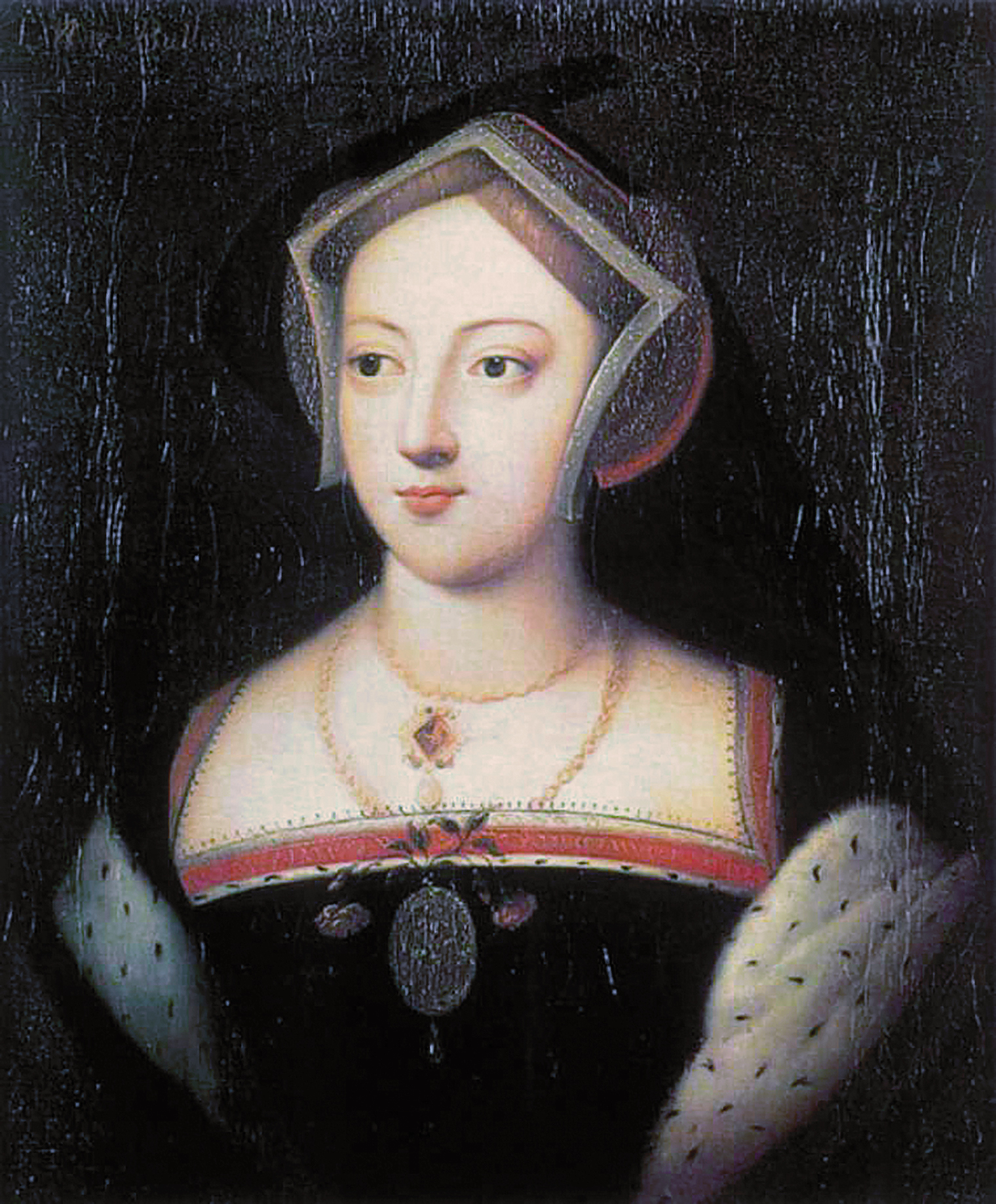
Above: Mary Boleyn, mistress of Henry VIII. While we have no direct evidence for Queen Katherine's opinion of the woman who supplanted Bessie Blount in her husband's affections, it seems too simplistic to view Katherine as submissively ignoring Henry's adulterous affairs. 

Aside from the royal couple's failure to have a healthy son, Katherine's queenship was largely triumphant. She enjoyed notable achievements that have often been overlooked in the focus on the 'great matter'. Not only was she a loyal ambassador of her homeland, but she was her husband's chief advisor and confidant during his early years as king. In the summer of 1513, while campaigning in France, Henry accorded his wife the supreme honour of granting her the position of regent in England. Katherine, who was well aware that the queen's role could be active and forceful rather than silent and submissive, took on this position with enthusiasm. When the Scots invaded in the autumn, she energetically mustered her troops and rallied her forces. Katherine herself declared to her husband that she was 'horribly busy with making standards, banners and badges' for the cause. The queen travelled to Buckingham and urged the English forces to victory. They were inspired by Katherine's enthusiasm and courage and resoundingly defeated the Scots at Flodden on 9 September 1513. Triumphant, Katherine wrote to her husband: 'To my thinking, this battle hath been more than should you win all the crown of France'. She also hoped that Henry would shortly return to England because of the 'joy' it would bring both her and his subjects. Katherine's confidence has often been interpreted negatively by historians, who view her as crowing and inconsiderate of Henry's feelings, in seeming to accord her victory more importance than his own triumphs in France. However, Katherine would not have regarded it that way. Her mother had been as active, as militant and as successful as her father, and Katherine would have seen no reason why she could not achieve the same greatness that Isabella had. Moreover, the English queen was pregnant during these events and although the stillbirth of her son barely a week later would have caused her sorrow, she perhaps tempered this loss with the knowledge that God had continued to smile on her by granting her an unforgettable victory on the battlefield.

Because she regarded her queenship as active and a position to be approached with consideration and respect, Katherine took on the duties of her role with enthusiasm and diligence. She was a noted intercessor and earned considerable popularity in England for her success in this sphere. Following the aftermath of the May Day riots in 1517, when the London apprentices had violently turned on the foreigners of the city, the queen begged her husband with tears in her eyes to 'spare the apprentices' from execution. Willingly, Henry acceded to her request. This incident provides further evidence of Henry's love for his wife. He later admitted during the annulment proceedings that 'if I were to marry again, I would chose her above all women' for her 'gentleness, humility and buxomness'. Katherine's influence at court extended to matters of religion; she was also known to be charitable and provided alms for the poor. Presenting herself carefully as submissive, virtuous and pious, her husband and close friends were aware that she was vigorous, determined and resourceful, particularly when it came to a crisis.

By the spring of 1527, Katherine experienced her first real crisis as queen. Eighteen years on the throne had enabled her to grow into a confident, shrewd and experienced queen who was more than comfortable in affairs of state and promoting the interests of her homeland. She had watched as Henry's lovers had come and gone. Although she did not regard his affairs with approval, and had reacted furiously when his bastard by Bessie Blount had been granted unprecedented honours in 1525, Katherine shrewdly remained calm. She had witnessed her father's infidelities and continued to believe that, since God had ordained for her to become queen, she would remain Henry's wife until the day she died. In 1516, she had given birth to her only surviving daughter Mary. Katherine exercised undoubted influence in her daughter's education, for she was determined to ensure that her daughter was an active and successful queen just as her mother and grandmother had been. The Spanish humanist Juan Luis Vives had been appointed as her tutor, and Mary was brought up to be a virtuous Christian maiden. Katherine's devotion to the Catholic faith grounded her approach to her daughter's upbringing, and Mary's intense piety was undoubtedly instilled in her from birth by her formidable mother.

Above: Peterborough Cathedral, where Katherine was buried in 1536.

Katherine's queenship had been active, resourceful, even militant. She had always been at the centre of politics and had never shied from exerting influence in matters of state. During the annulment crisis, Katherine refused to accept that she was no longer Queen. As she perceived it, she had been educated from the age of two to regard herself as England's queen. No earthly being, even her husband, could take it from her. Only God could by calling her to Heaven. It was her destiny to be Queen, just as it was her daughter Mary's destiny someday to be Queen in her mother's place. By daring to put her aside, Henry was endangering not only his immortal soul but the wellbeing of England. Several modern historians have interpreted Katherine as disloyal to English interests, but she was in fact highly concerned with England's future and interpreted Henry's selfish desires as grossly antithetical to the future harmony of England. 

She had been groomed from birth to regard heresy as mortally dangerous. It was an infection, a blight on the kingdom and a warning from God. The annulment was heretical, for it was closely associated with the reformed religion. Katherine and her supporters, including the Spanish ambassador Eustace Chapuys, were united in their belief that the reformed faith was Lutheran heresy and offensive to God. Katherine's parents had militantly stamped out heresy in their dominions and their daughter was determined to do the same in her adopted home. In no sense could she have stepped aside for her husband. Not only was he, in her eyes, endangering her position as queen and threatening their daughter's future, but he was tacitly granting acceptance to newfound heresy and thus calling into question the very foundations of society, as proven by the favour he bestowed on the Boleyns, whom Katherine knew were inferior to her in birth. By preferring them to Katherine, whose lineage was prestigious and renowned across Europe, Henry's behaviour ran dangerously close to questioning God's will. 

Katherine's behaviour during her years of widowhood (1502-9) had been resourceful, energetic and determined. She had not remained silent, but had issued urgent letters to her father, ambassador, friends and her aloof father-in-law Henry VII, demanding for her wellbeing to be respected and her fortunes to be restored. As then, her role during the annulment crisis was formidable. She magnificently rose to the challenge presented her and upbraided Henry at the Blackfriars court in the summer of 1529 for daring to put her aside, asking him how she had offended him and daring him to assert that he had not found her a virgin at their marriage. All the evidence demonstrates, from her position as Princess of Wales to a threatened Queen of England, that Katherine of Aragon responded magnificently to a threat. Her offensive was calculating and determined. Not only was she fighting for her daughter's future, but for her country's wellbeing. 
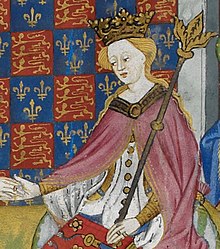
Above: Margaret of Anjou, queen of England.

Margaret of Anjou, the courageous wife of Henry VI, had been described as 'a great and strong-laboured woman, for she spareth no pain to sue her things to an intent and conclusion to her power'. The same might in fairness be said of Katherine of Aragon. The first wife of Henry VIII was perhaps the toughest and was certainly the one who felt most confident in taking on her husband and reminding him of his responsibilities as king. She had not reacted submissively to his extramarital affairs, but had dared to reproach him for his affairs with Anne Hastings and Anne Boleyn, and when he promoted his bastard son's interests to the detriment of his legitimate daughter's position, she protested so vigorously that she was punished with the removal of several of her ladies-in-waiting. 

In popular culture, Katherine continues to be perceived as the virtuous and silently suffering foil to the scheming, manipulative Anne Boleyn. This interpretation is both skewed and inaccurate, and marks a betrayal of Katherine's memory, failing to understand the real woman for who she truly was. Katherine was a determined, passionate adherent of the Roman Catholic faith and viewed other religious persuasions as dangerous heresy that required elimination at all cost. She was a courageous defender of the country's interests and was prepared to lead her troops, valiantly urging them on to destroy England's enemies. An energetic, stubborn and formidable queen, she was capable of deceit. She had probably lied about the consummation of her first marriage, perhaps lied about her pregnancy in 1510 to her father, and was capable of bloodthirstiness - as her desire to send her husband the brutally mangled body of James IV proves. Yet she was also interested in the Renaissance, was unswervingly loyal to her friends and relations, and was deeply concerned to promote the welfare of her people. It is misleading to regard Katherine as a perfect saint, a wronged wife and a silently suffering mother. She, like Margaret of Anjou, was 'a great and strong-laboured woman' who never once shied away from promoting her interests at all costs, while valiantly fighting to destroy all threats to her position, whether religious, political or dynastic.




Tuesday, 28 January 2014

28 January - Tudor Life and Tudor Death of Two Kings

File:Portrait of King Henry VIII.jpg
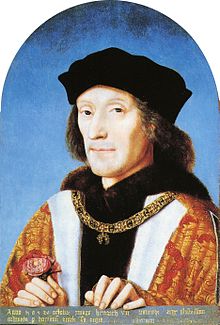
Left: Henry VII (1457-1509).
Right: Henry VIII (1491-1547).

28 January was a highly significant date for the first two Tudor monarchs, Henry VII and his second son Henry VIII. It marked the birthday of the Tudor dynasty's first monarch, in 1457, and ninety years later, it would be on 28 January that Henry VIII died, ending his turbulent 38-year reign. It's perhaps a touch ironic that these two milestones occurred on exactly the same day.

Henry Tudor was born on 28 January 1457 at Pembroke Castle, the only son of Edmund Tudor, earl of Richmond, and his formidable wife Lady Margaret Beaufort, who was barely thirteen when she gave birth to Henry. Edmund had died three months before his son's birth as a result of plague, a lethal killer in late medieval and early modern Europe. Margaret devoted her whole life to promoting the cause of her son, whom she believed to be England's rightful king. Loyal Lancastrians, the eclipse of Henry VI meant that Margaret became obsessed with the idea of her son resurrecting the rightful Lancastrian line in the person of his kingship. Eventually, her ambition came to fruition, and in 1485, at the age of 28, Henry Tudor became king of England after defeating Richard III, the last Yorkist king, at the Battle of Bosworth. He took to wife Elizabeth, daughter of Edward IV, with whom he sired at least seven children, four of whom lived to adolescence (his eldest son Arthur died at fifteen). In 1509, after a reign characterised by dynastic tragedy, political instability and the threat of renewed civil war, Henry died aged 52. He did, however, successfully allow the crown to pass to his son Henry without the outbreak of pretenders laying claim to it. An uncontested succession had not been experienced in England hitherto since 1422.

Henry VIII had been born in 1491. He was extremely close to his mother Queen Elizabeth, and her death in 1503, when the young prince was not yet twelve, appears to have severely affected him psychologically. His relations with his father were, famously, less cordial, and were at times overtly hostile. In 1509, just before his eighteenth birthday, he succeeded to the throne of England, and took to wife Katherine of Aragon, the former consort of Arthur. Her inability to provide a male heir, however, and the king's passion for Anne Boleyn led him to seek an annulment of his first marriage and a remarriage to the alluring Anne. Although this indeed came to pass, it inflicted the English Reformation on the people of England and was characterised by much bloodthirst and destruction in the wake of Thomas Cromwell's reforms. Mary and Elizabeth were born to Henry by his first two wives; and Jane Seymour finally provided the king with his long desired male heir in 1537, Edward. Three short marriages followed; although the king did manage to enjoy a peaceful and fairly untroubled final marriage to Katherine Parr. In 1547, at the age of fifty-five, Henry VIII died. Despite his military shortcomings, marital disasters, and difficult political decisions, Henry has remained one of England's most enigmatic and famous kings, and was extremely popular among his subjects. His children, particularly Elizabeth, delighted in him; although Mary may have been less close to her father than her two younger siblings. Henry's death paved the way for his nine-year old son Edward's succession, who was to die, tragically, before his sixteenth birthday in 1553.

Thus 28 January was a monumental day for the Tudor ruling dynasty. It began with an extremely difficult birth in a secluded castle in Wales, endured by a thirteen-year old girl who would prove unable to bear any more children. The child's father was not absent, having died months earlier. Ninety years later, in an exceptionally different political, religious and dynastic climate in England, that king's son died at the age of fifty-five, leaving behind a controversial legacy of religious turmoil, dynastic bloodshed, and personal charisma which continues to prove irresistible to modern audiences today.

Sunday, 14 July 2013

The Princes in the Tower


The fate of the two Princes in the Tower, the eldest sons of Edward IV and his queen Elizabeth Woodville, is one of the greatest mysteries in history. Shrouded in controversy and mystery, historians and researchers fiercely disagree as to who was responsible for their deaths; debating as to whether both princes died; whether one, or both, in fact survived; and, unsurprisingly, this scandal has impacted profoundly on those associated with it, including two English kings, Richard III and Henry VII.

This article will examine the events which led to Richard III's accession and will explore the fate of the two Princes, considering the main suspects for their murders - if, that is, they were even murdered at all. The surviving evidence is intriguing, but entirely contradictory, and one has to take into account the political, social and dynastic bias of the writer, whether it was a Tudor apologist bent on demonising Richard, or a contemporary observer writing in a foreign country, detached from English events.

It was a shock for everyone when Edward IV died aged forty-one in April 1483, allegedly of a fever. This Yorkist king's reign had seen comparative peace and tranquillity in England following the dynastic troubles which had plagued the 1460s and 1470s, known by the later name Wars of the Roses. Edward had fathered at least 8 children with his queen Elizabeth, of whom his eldest son, Edward, aged twelve, had been heir and now England's king. However, the fact that the new king was a minor spelt trouble for contemporaries, for the rule of minor kings led inevitably to greater factional conflict and fierce rivalry over control of the child king. This, perhaps, may have greatly influenced the actions of both Edward's mother and his uncle, Richard duke of Gloucester.

In May 1483 the new king arrived in London for his coronation, weeks after the death of his father, and was accommodated in the royal residence of the Tower of London, while his younger brother Richard resided in sanctuary with his mother the queen and several of his sisters. They had journeyed there after hearing alarming news which suggested that Elizabeth's brother-in-law, Richard of Gloucester, had intercepted the king's journey from Ludlow in Wales and had seized the king's uncle Anthony Woodville and the queen's youngest son by her first marriage Richard Grey.

It seems certain that Richard of Gloucester feared for his own future, for the Woodvilles were powerful, greedy and notoriously intolerant. He may also have genuinely believed that his brother Edward's marriage to Elizabeth was invalid, for he claimed that it had been brought about by witchcraft and sorcery, and also suggested that Edward had in fact been previously precontracted to one Eleanor Butler, which meant that Elizabeth Woodville was never his lawful wife. Consequently, their children were illegitimate and not fit to inherit the throne of England. By this thinking, then, Richard of Gloucester was England's rightful king.

It is essential to critically examine later Tudor propaganda, which alleged that Richard III was a monster and a murderer. I, personally, do not believe that the moment King Edward died, Richard, as a scheming and essentially evil character, decided to seize the throne of England and murder his nephews. I believe that he genuinely feared the Woodvilles and, consequently, was scared for his own future, and it is entirely possible that he did believe that his brother's marriage to Elizabeth was invalid by reason of his earlier pre-contract. If this was true, then Richard was entitled to be king of England, as shocking as it may seem.

As Sarah Gristwood writes in her book Blood Sisters (2012):

"The majority of historians from Vergil and More onwards have believed that Richard III murdered his nephews; and thanks largely to Shakespeare, it has become the accepted view among many who care nothing for history. A vocal minority are utterly convinced he was not guilty, while propounding various alternative versions of the boys' fate. Others again believe it is virtually impossible to be certain, which makes it wrong to declare Richard guilty. In that uncertainty the writer's most honourable option is simply to present both the few known facts, and the relevant theories".

Contemporary historians fiercely and angrily dispute who killed the Princes in the Tower - as Gristwood says, most continue to believe, subscribing to persuasive Tudor propaganda, that it was their evil uncle, the hunchbacked and deformed Richard III (although the recent excavation at Leicester somewhat disproves this). Others, however, suggest it was someone entirely different. So what is the 'truth', if that can even ever be recovered?

One needs to put the events in context. Having seized the throne, Richard ordered it to be preached by a Dr Shaa at St Paul's Cross that Edward IV's marriage was invalid, rendering all his children (including his daughters living in sanctuary) illegitimate. By all accounts, what we know is that the Princes were last seen, for certain, playing in the grounds of the Tower in the summer of 1483 (the younger prince, Richard, having been sent out of sanctuary by a very reluctant Queen Elizabeth to join his brother in the Tower). Dominic Mancini stated that both princes 'were withdrawn in the inner apartments of the Tower proper, and day by day began to be seen more rarely behind the bars and windows, till at length they ceased to appear altogether'. In 1674, ominously, two skeletons were discovered under the staircase leading to the chapel within the Tower of London, and in 1933 the grave was opened (the two bodies having been buried, on the orders of Charles II, in Westminster Abbey), and the skeletons were determined to be those of two young children, aged about seven to eleven and eleven to thirteen. The two princes, if they died in 1483, would have been aged 12 and 10. Moreover, the fact that they were buried in Westminster Abbey, where royals were traditionally buried, indicates that, at least in the seventeenth century, the king and others believed the bodies to be of the princes.

So, firstly, it would be wise to consider the main suspect: Richard III. Some have argued that he had no need to kill his nephews, for he had already had them declared illegitimate - since they were bastards, neither could inherit the throne, so why should he need to have them dead when they were safely imprisoned? But, as historian Amy Licence notes: '... the princes' royal blood made them dangerous claimants to the throne, to whom many of their father's former staff would prove unfailingly loyal... Richard may have hoped that the problem of the two little boys may simply have disappeared. They did, but the problem didn't.'

Those who believe that Richard had no need to kill his nephews are somewhat misguided, for one needs only to consider the bloodshed of the Wars of the Roses to understand just why he may have felt he would only be secure with both boys dead. While they were alive and imprisoned, they would always be the focus for future rebellions which aimed to restore either boy to the throne as the rightful king, and one only needs to look at the example of Richard's brother Edward, who had had King Henry VI killed on his orders, obviously not feeling secure enough about his own claim to the throne. Edward had also had his own brother George duke of Clarence executed for treason - family connections did not prevent execution. It is possible that Richard ordered a loyal servant to dispose of his two princes, as suggested in Shakespeare's play. The suspect, for a long time, has been Sir James Tyrell, for he is known to have made a confession in 1502 which admitted that he had killed the two princes. This Tyrell was actually in London in the late summer and early autumn of 1483, when the boys were last seen alive for certain. Moreover, Licence suggests that, when Richard discovered that a loyal servant, perhaps Tyrell, had murdered both boys, he may have visited Canterbury Cathedral soon afterwards to make his peace with God, as a highly religious man.

There is evidence to suggest that Tyrell was the murderer of the princes, although since it was produced much later by observers writing in the Tudor age and thus hostile to Richard, it must be regarded as suspect. Polydore Vergil, who loathed Richard, claimed that Tyrell 'rode sorrowfully to London' to commit the deed on the orders of King Richard, while Richard himself later spread rumours of his nephews' deaths in the hope that it would discourage future rebellion. Thomas More, who vilified Richard to a shocking degree, also claimed that Tyrell had murdered the boys on Richard's orders, before confessing to his crime in the reign of Henry VII.

It seems that the most compelling reason to believe Richard was guilty of his nephews' deaths was the simple fact that he never publicly produced them, to prove that they were still alive, and to counter rumours which spoke of their murders. Furthermore, Richard promised the safety and security of the princes' sisters, but he gave no such assurances for their brothers, which suggests that they had been done away with by this time. Henry VII, when he acceded to the throne, accused the former king of "shedding of Infants blood" in a Bill of Attainder brought against the dead Richard, which probably directly accuses him of the Princes' murders. The Danzig Chronicle of 1483 alleged that 'Later this summer [1483] Richard the king's brother seized power and had his brother's children killed, and the queen secretly put away'. The French chancellor Guillame de Rochefort, in a speech on 15 January 1484, recounted how Edward IV's sons 'have been put to death with impunity, and the royal crown transferred to their murderer by the favour of the people'.

Many modern historians, including Alison Weir, Michael Hicks, and David Starkey, agree that Richard was the culprit. Further rumours alleged: Richard 'put to death the children of King Edward, for which cause he lost the hearts of the people. And thereupon many gentlemen intended his destruction'. The major problem is, however, that much of the surviving evidence which suggests Richard was the culprit was produced in the Tudor age, when Richard was vilified as a tyrant and a monster, and was therefore hardly objective. For instance, the historian Bernard Andre, writing in the sixteenth century, claimed: 'the entire land was convulsed with sobbing and anguish. The nobles of the kingdom, fearful of their lives, wondered what might be done against the danger. Faithful to the tyrant [Richard] in word, they remained distant in heart'. Philippe de Commines categorically confirmed that Richard III was responsible for the princes' deaths.

The fifteenth century was a troubled age, comprised of dynastic conflict, murder, treason and betrayal. Richard III would not have been unusual had he put to death his own relatives. Let us consider the fact that there were at least 5 other monarchs around this time who did the same thing:

Edward IV - put to death his own brother, George duke of Clarence, and probably ordered Henry VI's murder.
Henry VII - put to death his wife's relatives Edward earl of Warwick and Edmund earl of Suffolk.
Henry VIII - executed the 'White Rose' faction (members of the Pole family); also executed 2 of his queens.
Mary I - executed her own cousin, Lady Jane Grey.
Elizabeth I - executed her cousin and rival Mary Queen of Scots.

It would not have been unusual if Richard had ordered the murder of his 2 nephews. I do not subscribe to the Tudor propaganda which presents Richard as evil, deformed, corrupt and ungodly. But I do think that, in this period, a person did not have to be evil to commit an act of murder.

However, there might be other evidence which intriguingly suggests that Richard was not, in fact, the culprit for the murders of his nephews. Some have suggested that it was, in fact, Margaret Beaufort, mother of Henry VII. She would clearly have had a motive, for if the two princes were to die, then her son would have an even stronger claim to the English throne. He was betrothed to their sister Elizabeth of York, yet if they remained alive, they would both have a greater claim to be king than he would, even if he were to marry their sister. The seventeenth-century antiquary George Buck apparently read 'in an old manuscript book' how it was believed that Margaret and her friend Bishop Morton 'conspiring the deaths of the sons of King Edward and some others, resolved that  these treacheries should be executed by poison and by sorcery'. Helen Maurer, a historian, also favours Margaret as the culprit.

However, Buck was one of Richard III's earliest and most vocal defenders, and so would have claimed that it was someone from the enemy camp who had committed such a shocking deed. It is also noteworthy, as Weir notes, that Richard's own relatives never accused Margaret of murdering the princes - Margaret of York, his elder sister and former Duchess of Burgundy, who loathed Henry VII, never accused Margaret, while she was not even named by other contemporaries. Furthermore, we do not even know Margaret's whereabouts during the summer of 1483 for certain - she may not have been in London at the time. Margaret also, at this time, was probably in a secret alliance with Queen Elizabeth, plotting to marry her son Henry to Elizabeth's daughter, and if Margaret was simultaneously planning to murder Elizabeth's sons, it is inconceivable that the Queen would have co-operated and worked together with Margaret.

Was the murderer in fact Henry Tudor, future king of England? He was not actually residing in England in the summer and autumn of 1483, instead being a fugitive in Brittany as he plotted to usurp the throne from Richard with the aid of his mother. Gristwood seems to believe that he may possibly be responsible:

'If Henry were to bolster his own genealogically weak claim with that of Elizabeth of York, he needed the princes dead. If the whole family were declared illegitimate, then Elizabeth had no claim. If they were legitimate, her brothers' claim would take precedence over hers for as long as they lived. What is more, while the assumption of Richard's guilt depends on a posthumous reputation for savagery it was Henry VII (and later Henry VIII) who would, one by one, eliminate all the rival Yorkist line with chilling efficiency'.

Gristwood certainly had a point, for Henry VII would later order the executions of the nephew of Richard, Edward earl of Warwick, and also had executed Perkin Warbeck, a pretender (but whom, some believe, may actually have been the younger of the two Princes). Henry VIII was similarly ruthless in the 1530s. However, no surviving source material from the time actually suggests that Henry was believed to be the culprit. True, Tudor historians would hardly have dared to have challenged their king and accused him of murder, but no foreign sources written on the Continent connected Henry Tudor with the Princes' murders. Even Margaret of Burgundy, who continually plotted against him, never accused him of her nephews' deaths.
Some actually believed that Henry avenged the princes' deaths. The Crowland Chronicler, for instance, wrote how 'the children of King Edward' had been 'avenged' at Bosworth in 1485 through Henry's victory and Richard's death.

Furthermore, Henry's only real opportunity to murder the two Princes would have been on his accession in 1485, for he had been dwelling in Europe prior to that. By all accounts, however, the two boys were last seen in the autumn of 1483 - almost 2 years previously. It is, admittedly, possible that Henry ordered one of his servants or a loyal supporter to travel to England and commit the deed, but there is no evidence of this.

Others suspect that it was Richard's former supporter, the Duke of Buckingham, who had the Princes murdered. The contemporary Historical notes of a London citizen stated that 'King Edward the Vth, late called Prince of Wales and Richard Duke of York, his brother... were put to death in the Tower of London by the vise [advice] of the Duke of Buckingham' (although this does not actually mean that Buckingham himself killed the princes). The private secretary to the king of Portugal, Alfonso V, recounted how '...after the passing away of king Edward in the year of 83, another one of his brothers, the Duke of Gloucester, had in his power the Prince of Wales and the Duke of York, the young sons of the said king his brother, and turned them to the Duke of Buckingham, under whose custody the said Princes were starved to death'. Yet Buckingham had left the court on progress at Gloucester in early August, travelling to his residence, before leading a rebellion in Wales - there is no evidence that he was in London at the time.

Buckingham had become increasingly disaffected with Richard and had rebelled against him in the autumn of 1483, before being executed on 2 November. However, the rebellion may have been aimed at actually freeing the princes - so why would he then have killed them? But this becomes murkier when one considers that Buckingham himself had royal blood (he had also been the husband of one of Elizabeth Woodville's younger sisters, who he resented). Yet, as Weir notes, Richard never accused Buckingham of murdering his nephews before his execution for treason, which would have been a crime, and which he surely would have done if evidence had come forth suggesting Buckingham was responsible, thus deflecting from the rumours which linked Richard with their deaths. Moreover, The Great Chronicle suggested that rumours of the Princes' deaths did not circulate in London until Easter 1484, which if true, meaning that the Princes were still alive at the end of 1483, removes the possibility of Buckingham's culpability, for he had been executed in November 1483.

Overall, the evidence thus far seems to indicate that the traditional assumption that Richard was the culprit is probably correct. However, some revisionist historians believe that one, or both, of the Princes actually survived. A visitor from Silesia in 1484, Nicolaus von Popplau, recorded: 'many people say - and I agree with them - that they are still alive and kept in a very dark cellar', but of course, they might have been killed shortly afterwards. One might question, furthermore, how Poppau and 'many people' knew specifically that the princes were alive and kept in a cellar. Vergil reported rumours which suggested that they had been exiled to 'some secret land'. Historians such as David Baldwin believe that the younger prince, Richard Duke of York, actually survived, and became a bricklayer in Essex. Yet his evidence has not proved compelling.

Audrey Williamson, author of The Mystery of the Princes, suggested that Elizabeth Woodville left sanctuary because she was promised by Richard that both, or her younger son, would be allowed to join her and live with her. Williamson believes that the younger Prince may have later dwelt at Gipping Hall in Suffolk, along with other royal children. More intriguingly, this was the seat of the Tyrell family, whom Tudor historians believed was responsible for their deaths. But as has been stated, if either, or both of, the princes was sent to Gipping Hall, 'someone would surely have got to know about it... It is likely that several of those who served the Queen could have recognised her sons. Thus it would have been virtually impossible to keep the existence of the Princes a secret, especially in the face of rumours of their deaths'.

Other historians have suggested that one of the pretenders in the reign of Henry VII, Perkin Warbeck, may actually have been the younger prince, Richard. Throughout the 1490s, Warbeck invaded England, hoping to gain support for 'his' crown, supported by many European powers including Margaret of Burgundy, the Scottish king, and King Maximilian I. Margaret personally tutored Warbeck in the ways of the Yorkist court - of course, if this was actually her nephew, it explains her actions; but it is more likely that she knew he was an imposter but supported his venture against her sworn enemy Henry VII. Warbeck was reported to resemble Richard of York in his appearance (although one might question when anyone had last seen Richard alive, especially since he had only been a child of 10, whereas Warbeck was somewhat older). However, Warbeck later confessed to being an imposter, being of Flemish origin. This is somewhat confirmed by the fact that many of the family ties he recounted in his later confession have been backed up by the municipal archives of Tournai.

Certainly, by the autumn of 1483, it is likely that the elder prince was dead. Evidence suggests that he had been gravely ill, possibly suffering osteomyelitis, a bone disease. More seems to suggest that he may have suffered depression. Possibly, then, he died of natural causes, but his murder cannot be ruled out. It is significant that no pretenders ever claimed to be him - instead, it was his younger brother they chose to represent.

The evidence put forward here indicates that it is impossible to be certain what happened. Rumours are often untrustworthy, the evidence is contradictory, and much of it was compiled significantly later, in the age of the Tudors, by those hostile to Richard III and his legacy. However, it seems likely that both Princes died in the Tower by the end of 1483. Theories of one Prince's survival, or indeed both, are not convincing and do not put forward compelling evidence. For me, the most convincing evidence which suggests that both died within the Tower was the discovery of two corpses in 1674, clearly of children, who were about the same age as the Princes would have been. The only problem, of course, is the sex - they were not definitively known to be male. But then, who else could they be?

We will never know for certain just what happened to the Princes. But, taking everything into account, I would still tentatively put Richard as the culprit, believing that both boys were dead by the end of 1483. At least five other monarchs put to death people who they feared would take the succession from them. His own brother, Edward, ordered his brother George's execution. Henry VIII executed 2 of his wives, and several maternal relatives. His two daughters, Mary and Elizabeth, each executed a fellow queen and cousin. I do not think Richard was evil or corrupt, as Shakespeare presents him. But I think that he strongly wanted to be King of England. He was aware of his brother's popularity, and knew that, as long as his 2 nephews lived, they would always have the stronger claims to the throne, and would always be the focus for rebellion and dissent against his regime. Their deaths were necessary, even if he regretted them.