 Above: A portrait miniature thought to be of Katherine Howard, c. 1540.
For Queen Katherine, the end came quickly and inexplicably. One moment she was England's adored queen, the beloved youthful consort of Henry VIII, renowned for her beauty and virtue. Finally, it seemed, Henry had married a woman who represented everything he desired in a bride: youthfulness, beauty, virtue, chasteness, fertility and, above all, innocence. Katherine seemed to share Katherine of Aragon's loyalty and humility; Anne Boleyn's sensuality and attractiveness; Jane Seymour's demureness and modesty; Anne of Cleves' good sense. Contemporaries often noted Henry's pleasure in his bride and his new found happiness. But throughout her brief reign Katherine was on the edge of a precipice. Her past harboured dark secrets, and she was well aware of the need to conceal them from public attention, if she was to be secure as England's queen.
From her marriage in the hot days of July 1540 to the autumnal beginnings of November 1541, Queen Katherine managed rather well. Recently, historians have come to dismiss the traditional notion that she was an irresponsible, reckless hedonist who spent her days partying and making merry. David Starkey noted her excellent handling of the responsibilities of queenship and credited her with bringing the Tudor family together for the first time. My research similarly suggests that Katherine took her responsibilities as queen seriously, providing for her family, dispensing patronage and maintaining good relations with the royals. She was young and inexperienced, but she moved past these drawbacks to perform her responsibilities as queen earnestly and devotedly.
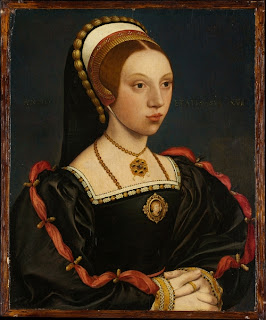 Above: Possibly Katherine Howard.
Katherine's success, however, depended on her past remaining secret. Despite her apparent successes as queen, Katherine's past haunted her from the moment she married the king. Francis Dereham, a persistent and forceful young man who had been intimately involved with the queen some years before her marriage, arrived at court hoping to win her favour. When he arrived at court in spring 1541, he began boasting of his friendship with the queen and even commented that, were the king to die, he would be sure to marry Katherine. Henry Manox, a musician who had fondled Katherine some years previously, also pressed for appointment.
In context of these dangerous rumours swirling about the queen's past, the emboldened Thomas Culpeper, a groom of the privy chamber to the king, sought out the queen and urged her to meet with him in secret. Possibly he had learned of her murky past and used it to encourage her to bestow favours upon him. Katherine, hoping to continue as England's queen, beseeched him to meet with her only in the presence of her chaperone Lady Rochford. What the two discussed is not known, but in context of dangerous allegations about the queen, it seems more credible that Culpeper had come into knowledge of Katherine's childhood liaisons and was using this knowledge to manipulate her.
 Above: Hampton Court Palace, where the queen was abandoned in November 1541.
The royal court departed on a northern progress in the summer of 1541. While they were away, an ardent reformer John Lascelles (who would be burned for heresy five years later) approached the Archbishop of Canterbury with damaging knowledge about the queen. Historians have recently considered the possibility that Katherine was the victim of a reformist conspiracy designed to bring down the conservative Howards. Certainly, it seems too much of a coincidence that Lascelles informed Cranmer of Katherine's past at this time, when rumours were also circulating of her sexual misadventures. The royal couple arrived in London in late October. On 2 November, the disbelieving king was informed of his wife's misconduct before her marriage. Four days later, distraught and emotional, Henry left Hampton Court Palace. He would never see his wife again.
A day later, the queen was confined to her chambers. Katherine quickly guessed what was going on and suffered a full breakdown. Archbishop Cranmer referred to her 'lamentation and heaviness' when he visited her to interrogate her. He seems to have felt pity and compassion for her. The following day, Katherine had recovered sufficiently to answer Cranmer's questions. She admitted liaisons with both Manox and Dereham, but took care to emphasise her youth and vulnerability when these had occurred. She explained that Dereham had pursued her and that she had not enjoyed the affair. In a religious society valuing female chastity and honour, a loss of a girl's maidenhead proved personally and socially damaging. In view of this alongside her clear loyalty to her family, it is questionable whether Katherine would voluntarily and consensually have permitted either man, both of whom were lower in status, intimacies. She denied being Dereham's wife, possibly because canon law required that both vowtakers provide consent.
Both Katherine and Dereham, when questioned, responded that their relationship had not continued following Katherine's royal marriage. However, Dereham asserted that Thomas Culpeper had since succeeded him in the queen's affections. Possibly he was aware of Culpeper's knowledge about Katherine's past, and assumed that the two were close. Katherine denied committing adultery with Culpeper, but did not reveal what she had discussed with him. Possibly, if their discussions had concerned the queen's past and a need to conceal it, Katherine felt reluctant to incriminate herself further by revealing sordid details of her childhood experiences.
Although Culpeper did later admit his hope to commit adultery with Katherine, 'the queen's motives remain opaque, not least because her questioners never pressed Katherine to explain why she met with Culpeper or needed to converse with him, beyond her excuse that he insisted on seeing her'. (Warnicke) Warnicke suggests that Katherine remained silent about the topics of their discussions because 'an admission that she had been attempting to deceive the king by concealing her relationship with Dereham would not have bolstered her defence'. Thus, while she may not have committed adultery, Katherine was guilty of deceit.
The king, meanwhile, experienced extreme sorrow and desolation when faced with knowledge of his wife's misbehaviour. On 12 November his privy council described his distress in a letter to Sir William Paget, resident ambassador in France. As late as April 1542 the king was described as being a different man since hearing of Katherine's past. On 14 November, the queen was relocated to Syon. Eight days later she relinquished the title of queenship, which proved easy enough to do, since she had never been crowned and had been queen purely by virtue of her marriage to the king. The following month, Dereham and Culpeper were sentenced to death, and shortly afterwards executed at Tyburn. Katherine and Lady Rochford were never brought to trial, but were found guilty by act of Attainder. They were executed at the Tower of London in February 1542.
Katherine never did admit to adultery. Although she admitted that she had been unchaste before her marriage, she insisted that she had done no more than converse with Culpeper. Because she admitted to having had a sexual relationship with Dereham, and because she confirmed that she had met secretly on several occasions with Culpeper, both early modern and modern commentators have tended to accept her guilt. If she did not commit adultery with Culpeper, then why did she become involved with him? Possibly 'fear of disclosure would... have made her vulnerable to the machinations of seasoned courtiers like Culpeper, for as she said in her confession about Dereham, 'the sorrow of my offences was ever before my eyes''. (Warnicke)
 Above: Tower Green.

 Above: Katherine Howard (left).
The letter Katherine supposedly wrote to the courtier Thomas Culpeper, perhaps in July 1541 (right).
Above: Katherine Howard (left).
The letter Katherine supposedly wrote to the courtier Thomas Culpeper, perhaps in July 1541 (right).
Aside from being the youngest wife of Henry VIII, Katherine Howard is probably best known for her supposed adulterous affair with the handsome courtier Sir Thomas Culpeper conducted in 1541. What many historians argue began as a mutual attraction quickly developed into a powerful and dangerous adulterous liaison which eventually ended in the deaths of both queen and subject. However, the nature of the meetings between Katherine and Culpeper are shrouded in mystery, uncertainty and controversy. Only Katherine and Culpeper - and perhaps Lady Jane Rochford, the queen's attendant who arranged the meetings - know what really happened in those fatal spring and summer months in 1541.
For most historians, it seems obvious that Katherine, an oversexed, even 'promiscuous' young girl, had sexual intercourse with Culpeper, who was noted for his gallantry and, later rumours alleged, even indulged in rape (although, as I argue in my book, it seems more likely that it was actually his elder brother, confusingly also named Thomas Culpeper, whom the rumours referred to). This is supported by evidence documented by contemporaries residing near to the court. The unknown Spanish chronicler of The Chronicle of Henry VIII, compiled perhaps ten years after the events it described, suggested that 'the devil put it into this queen's heart' to fall in love with the dashing Culpeper, who slipped the queen a note one day during dancing confessing his love for her. Both proclaimed their love for one another on the scaffold, with the queen supposedly stating: 'I die a queen, but I would rather die the wife of Culpeper'. The Catholic polemicist Nicholas Harpsfield depicted an adulterous Katherine, who was 'an harlot before he [Henry VIII] married her, and an adulteress after he married her'.
Modern historians largely agree. The bestselling popular writer Alison Weir wrote of Katherine's affair with Culpeper: 'Katherine had not only been playing with fire, but she had also been indiscreet about it, and incredibly foolish'. Antonia Fraser, in her 1992 biography of the six wives of Henry VIII, agrees: 'the repeated confessions and reports of clandestine meetings between a man notorious for his gallantry and a woman who was already sexually awakened really do not admit of any other explanation than adultery'. In his 2009 study of the Tudor queens, historian David Loades characterised Katherine as 'queen as whore'. This prevailing view has been consolidated in popular culture. In the popular TV series The Tudors (2007-10), Tamzin Merchant and Torrance Coombs depicted a headstrong young couple who engaged in sexual intercourse on a frequent basis early on in Katherine's marriage to the king. While Merchant portrayed a queen who appeared deeply in love with Culpeper, Coombs presented an unflattering portrayal of a manipulative, violent and scheming man who engaged in an affair with the queen as a means of attaining power and personal gain.
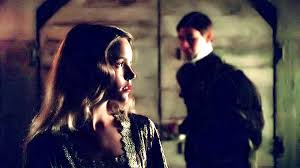 Above: Tamzin Merchant (left) as Queen Katherine and Torrance Coombs (right) as Thomas Culpeper in the television series The Tudors.
However, drawing on the seminal research of noted scholar Retha M. Warnicke, it is this article's contention that the relationship between Queen Katherine and Thomas Culpeper between April and September 1541 was, in reality, very different. It was not a carefree sexual liaison motivated either by love or recklessness, as most writers continue to believe. Thomas Culpeper was an experienced and savvy courtier who had served the king since the mid-1530s, when he had entered court as a page to Henry VIII before becoming a gentleman of the king's privy chamber, where the king ate, slept, and entertained indoors. Culpeper was, therefore, as close in proximity to Henry VIII as it was possible to get. Since Katherine had only arrived at court in the autumn of 1539, barely nine months or so before she became queen of England, Culpeper was vastly more experienced than her in court protocol and politics. He seems to have used that power and experience to his advantage, in manipulating the young queen, who found herself in a somewhat vulnerable position in the spring of 1541.
Katherine had had a sexual relationship with Francis Dereham in 1538, when she was aged around fifteen, and the aggressive Dereham seems to have been determined to marry Katherine, even making the treasonous suggestion that, once Henry VIII died, he would be sure to marry his young widow. In the spring of 1541, Dereham arrived at court and began openly boasting of his previous affair with Katherine. At this time, the king fell seriously ill and his life was despaired of. He shut his doors to everyone bar his doctors, including his young wife, whom he had previously spent the majority of his time with. As Warnicke suggests, it is therefore surely significant, in this highly charged atmosphere at court, that Culpeper began meeting with the queen at about the very time that both her former paramour was bragging of his sexual hold over her, and her ageing husband fell seriously ill. Since it was believed that the king might die, it has been credibly suggested that Culpeper began manipulating Katherine, perhaps having discovered details of her scandalous past, in the hope of acquiring greater power and position should Henry VIII suddenly die.
 Above: Manipulative lover or abused victim?
Often, Katherine's meetings with Culpeper have been portrayed as playful, sexually intimate encounters, comprised of high passion and devotion. The reality was very different. The surviving records demonstrate that the queen refused to meet Culpeper unless Lady Rochford was present as chaperone, and when Lady Rochford began moving away on one occasion to allow the two to speak privately, Katherine reprimanded her for leaving her alone in the company of Culpeper, and told her to come back. It has been credibly suggested that 'Culpeper's rendezvous with the queen gave him the means to threaten and manipulative her'. In the summer of 1541, the queen wrote Culpeper a letter. Often, it has been portrayed as a love letter, but the nervous, even afraid tone does not suggest passion, but rather, fear and anxiety. A passage of the letter has been removed in the interests of this article (a passage dealing with Katherine's messenger):
Master Culpeper,
I heartily recommend me unto you, praying you to send me word how that you do. It was showed me that you was sick, the which thing troubled me very much till such time that I hear from you praying you to send me word how that you do, for I never longed so much for a thing as I do to see you and to speak with you, the which I trust shall be shortly now. The which doth comfortly me very much when I think of it, and when I think again that you shall depart from me again it makes my heart to die to think what fortune I have that I cannot be always in your company. It my trust is always in you that you will be as you have promised me, and in that hope I trust upon still, praying you that you will come when my Lady Rochford is here for then I shall be best at leisure to be at your commandment...
yours as long as life endures,
Katheryn.
Traditionally, the queen's signature, 'yours as long as life endures', has been interpreted as a message of undying love, but as Warnicke recognises, Tudor letters typically closed with the statement 'by yours most bounden during my life', or something similar. Therefore, by changing the statement to 'yours as long as life endures', Katherine seems to have been hinting at her suffering, her anxiety, her worries that Culpeper would reveal her past to the king. 'Death and danger, not love and romance, were on her mind'. There was no evidence of love, passion or desire in this letter; no references to touching, kissing, caressing, etc. The queen was reported to be 'fearful and jittery' during their meetings, and admitted to Lady Rochford that she was terrified that these interviews would be discovered by others. Coupled with her insistence on Lady Rochford being present at all times, it seems clear that Katherine was meeting Culpeper only involuntarily, and not of her own free will.
Everyone knows how the story ends. Katherine and Culpeper were eventually discovered, while Francis Dereham and Lady Rochford were also imprisoned for their behaviour. A slew of Howard relatives and acquaintances of the queen were incarcerated in the Tower of London for concealing the truth about Katherine Howard's sexual past. Eventually, Dereham and Culpeper were convicted of adultery with the queen, although they both denied it, and they were executed in December 1541. Denying that she was guilty to the very end, the physically weak and frightened Katherine was beheaded on Tower Green on 13 February 1542 alongside her attendant Lady Rochford, who had reportedly gone insane.
 Above: a fictional portrayal of Katherine Howard and Thomas Culpeper from Henry VIII (2003).
Understanding of Tudor court politics and sixteenth-century beliefs surrounding gender and sexuality means that it is impossible to believe that Katherine Howard engaged in adultery with Thomas Culpeper. Katherine had endured something of a history of abuse. She had been seduced at a very young age by the grasping musician Henry Manox, before the aggressive Francis Dereham sexually manipulated her, perhaps even raping her. It is clear from surviving evidence that she had no real desire to meet with Thomas Culpeper and did so involuntarily and only in the presence of Lady Rochford, whom she perhaps trusted. This was not an affair of love, passion or desire. It was a relationship of power, manipulation and calculation that ended with both individuals' deaths.
