Showing posts with label tower of london. Show all posts

Sunday, 2 June 2024

Jane and Katherine Grey


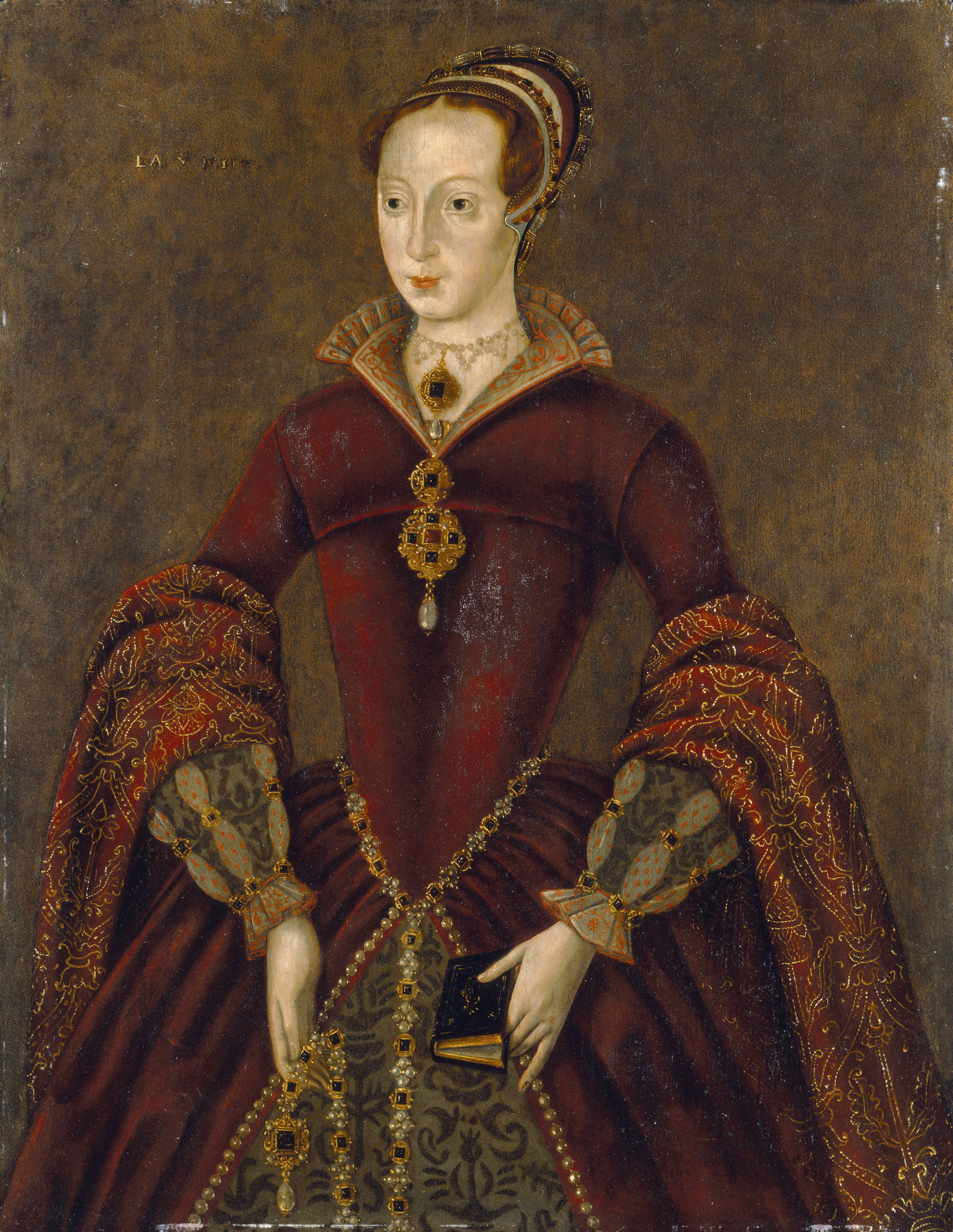
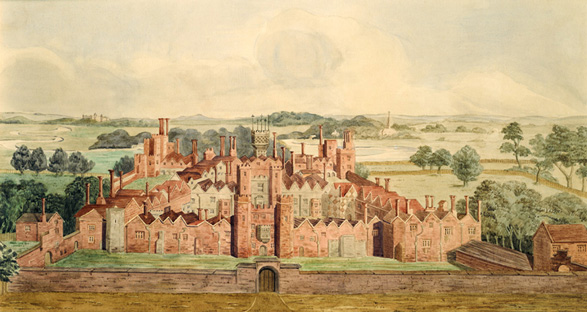
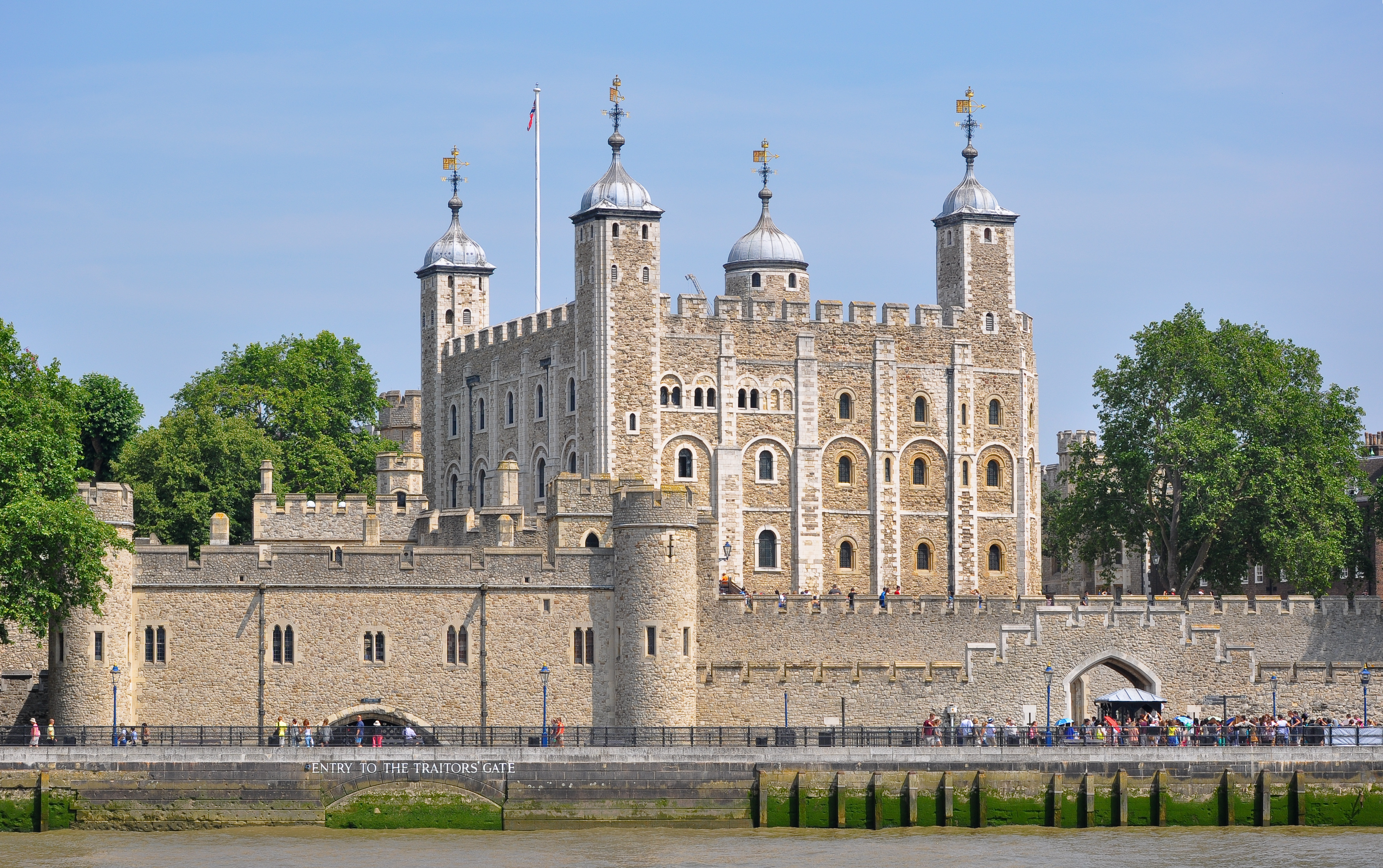
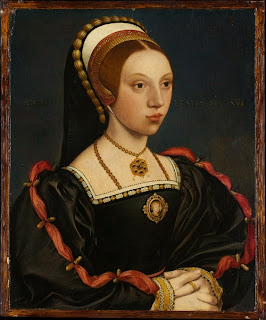
My article about Ladies Jane and Katherine Grey and their shared experiences of imprisonment in the Tower of London in 1553-4 and 1561-3 respectively has been published by EPOCH Magazine and is available to read here. 

Friday, 19 May 2017

19 May 1536: Anne Boleyn's Execution


We have no way of knowing whether Anne Boleyn was greeted by warm sunshine and birdsong as she took her final steps out of the queen's apartments and towards the scaffold within the Tower of London. Likewise, it is impossible to say whether the queen and her attendants were showered with rain, or whether blustery winds tugged on the trains of their gowns. Films and television often portray Anne's execution day as beautifully sunny and warm (think Anne of the Thousand Days; The Tudors; Henry VIII, etc.), but contemporary writers writing about that momentous day were uninterested in the finer details of the weather, and it is questionable whether Anne Boleyn herself was all too concerned if her final moments were spent in brilliant May sunshine or unseasonable damp and cold. 19 May 1536 was the date on which an unprecedented act would take place: the execution of an English queen consort, the first of its kind.

Four days earlier, she had been tried and found guilty of adultery with five courtiers, treason and plotting the death of her husband, Henry VIII. Two days later, her marriage had been annulled (probably on the grounds of her sister Mary's liaison with the king a decade earlier) and her co-accused had themselves gone to the scaffold, including her brother George, lord Rochford. Anne's tortuous imprisonment in the Tower had been, understandably, emotionally charged for her: she had experienced hope, despair, confusion, sorrow, anxiety and humour. Sir William Kingston, the constable of the Tower, had been baffled by her behaviour: one minute she seemed ready and willing to die, he reported, but the next minute she would collapse in a fit of weeping. Archbishop Cranmer, who had received patronage and support from Anne and her family, had provided Anne with hope that she would be permitted to spend the rest of her life in a nunnery, but that hope was nothing more than a cruel illusion. As May 19 dawned, the queen was aware that her life would indeed end within the walls of the Tower, rather than behind the walls of a nunnery, but at least her death would be caused by decapitation, a relatively quick form of execution, rather than by being burned at the stake, as was originally feared.

According to Edward Hall, the lawyer and chronicler, Anne spoke these words on the scaffold:

Good Christen people, I am come hether to dye, for accordyng to the lawe and by the lawe I am iudged to dye, and therefore I wyll speake nothyng against it. I am come hether to accuse no man, nor to speake any thyng of that wherof I am accused and condempned to dye, but I pray God saue the king and send him long to reigne ouer you, for a gentler nor a more mercyfull prince was there neuer: and to me he was euer a good, a gentle, & soueraigne lorde. And if any persone wil medle of my cause, I require them to iudge the best. And thus I take my leue of the worlde and of you all, and I heartely desyre you all to pray for me. O lorde haue mercy on me, to God I comende my soule. 

Mercifully, Anne's head was swiftly 'stryken of with the sworde', and she was buried at the chapel of St. Peter ad Vincula. Modern readers might wonder whether Anne's last words in praise of her husband were spoken with irony, or contempt, or humour: but her speech actually followed contemporary protocol in almost every sense. The condemned was expected to praise the king and the justice of his law; to speak out against it threatened infamy and ruin to the condemned's family, and might result in an even harsher mode of execution for the condemned. Whether or not Anne was thinking of her daughter, the infant Elizabeth, when she spoke these words is uncertain, but it is possible that she was desirous of securing as stable a future as possible for her soon-to-be motherless, bastardised daughter. Criticising Henry or questioning his justice in public would hardly achieve that. In asking those present to judge the best of her case, however, Anne left the events of her ruin open to question and open to debate. 

The unexpected accession of her daughter, Elizabeth, in 1558 meant that Anne's memory could be honoured and her status as queen of England celebrated, but had it not been for Elizabeth's accession, it is possible that Anne would have been confined to history as an unpopular and possibly adulterous queen. Her name was rarely spoken, at least in public, during the reigns of Henry VIII and Edward VI, and Mary I, who understandably blamed Anne for her harsh treatment during the 1530s, openly referred to Anne as an adulteress and heretic, and was desirous of preventing her half-sister Elizabeth from succeeding her. Even during Elizabeth's reign, moreover, a degree of ambivalence remained. Protestant writers, including John Foxe, dutifully celebrated Anne's piety and charity, but they refrained from discussing the events that led to her downfall and execution. To do so, perhaps, would cast doubt on Henry VIII's motives. Elizabeth herself, who gloried in her father's memory, rarely referred to her mother and, unlike her half-sister Mary (who had proclaimed her parents' marriage to be valid upon her succession to the throne in 1553), Elizabeth did not legitimise herself and did not declare her parents' union to be valid. In doing so, she left herself vulnerable to accusations of bastardy for the rest of her reign, and in Catholic Europe, her cousin Mary Queen of Scots was always regarded as the rightful queen of England, by virtue of both her unquestioned legitimacy and her Catholic faith.


Above: Elizabeth I.

Why Elizabeth did not restore the legitimacy of her parents' marriage is understandable: her father had approved the dissolution of his marriage to her mother and had sanctioned her subsequent execution on charges of treason and adultery, charges that called into question Elizabeth's parentage. To have retrospectively declared the marriage to be lawful, rather than null and void, would have effectively cast Henry VIII as a murderer. As mentioned earlier, Elizabeth fondly recalled her father's memory on several occasions during her reign, including at her coronation festivities. Her relative silence concerning her mother need not be taken as evidence that she was ashamed of her, for there is other evidence to suggest that, privately at least, she honoured her mother's memory. Moreover, the likes of Foxe probably encouraged Elizabeth to view Anne Boleyn, correctly or otherwise, as an important patron and supporter of the Protestant faith, a faith with which Elizabeth identified with increasing militancy as her reign saw the introduction of gradually harsher measures against Catholics.

The silence that followed Anne Boleyn's death well into the reign of Elizabeth stands in stark contrast to today: as Susan Bordo notes, in modern times Anne is undoubtedly the most famous of Henry's wives. Countless biographies, novels, films, television dramas and documentaries are produced about her every year. She has been portrayed in virtually every guise, from revolutionary reformer to hapless victim, from scheming adulteress to feminist icon, from deformed witch to courageous intellectual. Everything about her is debated: her date of birth, her hair colour, her facial features, her religious opinions, her character, her sexual life, her relations with her siblings, her political activities, her relationship with Henry VIII and, most explicitly, the reasons for her downfall. She continues to make the headlines in newspapers, as witnessed recently with newfound theories about her portraiture. There is an insatiable lust and desire for all things Anne Boleyn. 

I recommend Susan Bordo's original and fascinating book, The Creation of Anne Boleyn, for an engaging analysis of Anne's status as an icon and her legacy, a legacy that transcended her brutal and bloody death in May 1536. Bordo also makes the important point - and one worth remembering - that "Anne Boleyn", in her many cultural guises, has by now largely overshadowed the historical remnants of the real Anne Boleyn. With so little documentary evidence for the historical figure - as noted earlier, even her date of birth is open to question - it is no wonder that historians, novelists and filmmakers alike delight in using their imaginations to fill in the gaps. It is the scarcity of surviving records that account for why Anne is such a polarising figure and why she has been portrayed in virtually every guise imaginable, even those of vampire and prophetess. 

Monday, 26 September 2016

Almost A King: Lord Guildford Dudley

Lord Guilford Dudley.jpg

Lord Guildford Dudley, son of the duke of Northumberland, is not usually depicted positively either in fiction or non-fiction. Often, Guildford is presented as a weak-willed, snivelling adolescent who sobbed on the scaffold, or as an abusive sociopath capable of bullying his gentle wife, Lady Jane Grey. In her study of the so-called nine days queen, Hester Chapman described Guildford as 'a spoilt, conceited and disagreeable young man', while in her novel Innocent Traitor, Alison Weir portrayed Guildford as a vicious abuser who mistreated Jane on their wedding night.

Guildford, who married Jane in 1553, could have become king of England, had events turned out differently. Little is known of him, but it is likely that he was well educated and was brought up to favour the reformist faith. It is possible that he was younger than his wife Jane, who was probably born in the spring of 1537. The Dudleys had a newborn son in March 1537, while one of Guildford's godfathers, Diego de Mendoza, visited England between the spring of 1537 and the summer of 1538. Thus making it likely that Guildford was born in 1537 or 1538 and inherently probable that he was younger than his wife. According to Grafton, Guildford was 'a comely, virtuous and godly gentleman'.

In the spring of 1553, Guildford married Jane Grey, the cousin of Edward VI. For the Dudleys, the Grey marriage was a notable triumph, for it allied them with the ducal house of Suffolk as well as to the Tudor dynasty. There is no evidence that John Dudley, duke of Northumberland, schemed to marry his son to Jane as part of his plan to have Jane made queen in the wake of Edward VI's death. Traditionally, it has been reported that Jane was bullied into marrying Guildford by her scheming family; some alleged that she had been physically beaten until she had submitted to the will of her parents. These stories are questionable. Certainly there is no evidence that she objected to Guildford on personal terms, although it could be said that the duke and duchess of Suffolk, Jane's parents, might have hoped for a more noble bridegroom for their daughter. After all, rumours had circulated in some quarters that Edward VI himself hoped to marry Jane. Once it became apparent that the king's demise was imminent, the Dudleys surely realised that Guildford might very well become king of England as the husband of Queen Jane, if the coup against Mary Tudor succeeded.

Image result for lady jane grey
Above: Lady Jane Grey. After her marriage, Jane referred to herself as 'Lady Jane Dudley'. There is no evidence that she objected to the marriage with Guildford on personal grounds.

Unfortunately for both the Greys and the Dudleys, Mary Tudor was highly popular in the country at large, and following Edward VI's death on 6 July, the displaced Mary immediately acted to ensure that she was accepted, and then crowned, as England's queen. Jane had arrived at the Tower of London shortly after the king's death, and she was presented with the crown jewels by the Marquess of Winchester. Reportedly, Jane explained that she did not wish her husband to be presented with a crown, because she wished to make him a duke, rather than honour him with the title of king consort. This was not because of personal feelings on her behalf, given that she was 'loving of my husband'. Indeed, after her marriage Jane consistently referred to herself as 'Lady Jane Dudley'. On 19 July, the last day of her 'reign', Jane acted as godmother to a son born to one of the Tower guards. The child was named Guildford.

Mary Tudor took the throne with triumph. Eric Ives and Leanda de Lisle have explained, in detail, how Mary seized the throne from Jane; whether or not she should be viewed as the rightful queen and Jane the usurper, or vice versa, continues to be disputed. On 22 August, Guildford's father, the duke of Northumberland, was executed. Three months later, both Jane and Guildford were tried and found guilty of treason, but the queen made known her wish that the two prisoners should be spared death. 

However, Sir Thomas Wyatt's rebellion in early 1554, which involved Jane's father, sealed the fates of both Jane and Guildford. Both wrote letters to the duke; Guildford signed himself 'youre lovyng and obedynent son', while Jane described herself as 'youre gracys humble daughter Jane Duddley'. On the day of their execution, 12 February 1554, it is reported that Guildford wished to see Jane one last time, 'desiring to give her the last kisses, and the last embrace'. Jane refused, however, because 'their sight would increase the misery in both, and bring much more suffering'. After their deaths, Jane believed, they would 'live perpetually joined in an indissoluble bond'.

Evidence suggests that Guildford, at  the age of only fifteen or sixteen, went to his death with dignity. He made a short, unrecorded speech on the scaffold and prayed without losing control of his emotions. No mention, in this contemporary account, of Guildford's supposed sobbing in the moments before his execution. 

Lord Guildford Dudley has traditionally been viewed as a weak-willed, vicious adolescent, who was loathed by his gentle, victimised wife Lady Jane Grey. There is no evidence of this, and the couple's closeness and loyalty to one another emerges from the sources even during the last hours of their lives. Had the events of the summer of 1553 gone differently, had Jane been blessed by fortune, Guildford could have become king of England as the husband of Jane I. It was not to be, and history has not been kind to him in the centuries since his passing. 

Saturday, 13 February 2016

Katherine Howard and Hampton Court Palace


Above: Portrait of an unknown woman, possibly Katherine Howard (left).
The Haunted Gallery at Hampton Court Palace (right).

On 13 February 1542, two women were executed for treason within the walls of the Tower of London. On the same spot on which Anne Boleyn had been beheaded six years earlier, Katherine Howard was executed after making a short speech. Mercifully, her head was removed with a single blow of the axe. Following her death, it was the turn of her attendant Jane, viscountess Rochford. The viscountess had allegedly gone insane during her imprisonment; yet so determined was Henry VIII for her to die that he had her nursed back to health. Like the former queen, Jane was decapitated with a single strike. Both ladies were buried in the chapel of St. Peter ad Vincula. 

It is often believed that Katherine was executed for committing adultery with Thomas Culpeper, a groom of the privy chamber, but the Bill of Attainder passed against her clarified that she was condemned for having lived 'an old abominable life'. The attainder explained that Katherine's decision to appoint a former lover, Francis Dereham, to the position of secretary was 'proof of her will' to return to her 'vicious life'. In this respect, it was Katherine's unchaste childhood that counted against her. When it was discovered that she was not a virgin when she married Henry VIII, her meetings with Thomas Culpeper took on a sinister light. The Bill of Attainder became law on 11 February, a day after the queen had been taken to the Tower. Two days later, she and Jane Rochford were beheaded. Neither had been given the right to a trial, as Anne Boleyn had in 1536. The Act of Attainder was later repealed in the reign of Mary I.

Having endured imprisonment for two months, Katherine's end came astonishingly quickly. Within three days she was imprisoned in the Tower and then executed. The Spanish ambassador Eustace Chapuys reported that Katherine had to be forced onto the barge 'with some difficulty and resistance' when it arrived to transport her to the Tower. Although both she and Jane were to die with dignity, rumours abounded both then and now that Katherine Howard's spirit was restless. This idea soon became legend with the story of Katherine's ghost haunting a gallery at Hampton Court Palace.

Joanna Denny, in her biography of Katherine, explains this legend:

'There is a legend at Hampton Court Palace that Katherine Howard made one last, desperate attempt to see her husband. The story goes that, knowing Henry was at service in the Chapel Royal, she broke free of her rooms and ran down the long gallery to try and talk to him and convince him of her innocence. 

...It is said that Katherine's ghost is seen here, running and screaming in her panic as she calls Henry's name... She was presumably caught long before she came anywhere near the King and dragged away by her guards'.

Hampton Court Palace, on its website, provides 'anecdotal evidence' to confirm that the story is true: visitors to the gallery are often unsettled by a strange presence in the gallery, and some have fainted before. The story has moved into the realm of popular culture, and the link between Katherine Howard and the Haunted Gallery is well-known. 

It's not hard to see why. The image of a teenage queen, paralysed by fear and terror, running and begging for her life is a haunting one. The legend is often included in modern novels, such as Jean Plaidy's Rose Without a Thorn, and it is occasionally referenced in television, as in the Showtime series The Tudors (2007-10). But historians have, by and large, demonstrated that the myth is exactly that: a myth. There is no contemporary evidence that Katherine Howard ran down the gallery screaming for her life; none of the court ambassadors, including the well-informed Chapuys, reported it. 

Hampton Court Palace is central to the story of Katherine Howard. Its setting was the centre piece of her spectacular rise and was to prove the site of her calamitous downfall. Unsurprisingly, then, Katherine's ghost is almost never linked with the Tower of London, but it is always associated with Hampton Court. As a young maid of honour to Queen Anne of Cleves, Katherine had captivated the ageing Henry VIII; perhaps their first meeting occurred at Hampton Court. In August 1540, less than two weeks after Katherine married Henry at Oatlands Palace, she was acknowledged as queen for the first time at Hampton Court. Formerly in the hands of Cardinal Wolsey, it had become, by the 1540s, Henry VIII's main residence. 

As it had been the main setting for her rise to queenship, so Hampton Court was to be the setting for Katherine's downfall. Returning from the northern progress in the autumn of 1541, Henry VIII was confronted with a letter placed in the Chapel Royal informing him of his wife's unchaste childhood. Devastated, he departed the palace, never to see her again. The disgraced queen was eventually moved from Hampton Court to Syon, before making her final journey to the Tower of London.

In January 2016, I visited Hampton Court Palace for a ghost tour held one evening. The final stop on the tour was at the Haunted Gallery, where the story of Katherine Howard's ghost was recounted by the guide. Undeniably, the Gallery has an unsettling atmosphere, especially at night. One's imagination can run away; it is easy to imagine a frightened girl frantically running down the Gallery, screaming and begging for her life before being seized by her guards and taken back to her rooms. While the story of Katherine's ghost has no basis in reality, it does provide a poignant, chilling reminder of the speed of her downfall and death. For Katherine Howard, Hampton Court Palace was initially associated with happiness, glory and possibility, but it later became for her a site of fear, terror and destruction.

Friday, 12 February 2016

Remembering Lady Jane Grey


On 12 February 1554, Lady Jane Grey was executed within the walls of the Tower of London. Three months earlier, she and her husband Guildford Dudley had been found guilty of high treason. They had unlawfully usurped the throne from the rightful queen, Mary I. Traditionally, historians presented Lady Jane as an unwilling innocent, a much wronged young girl who had no desire whatsoever to be Queen of England. Recent research has disproved this legend. In actuality, Lady Jane was an intelligent, stubborn and resilient woman who was fiercely devoted to her Protestant faith. She regarded herself as appointed by God to rule England, and she likely regarded her Catholic cousin Mary Tudor as ungodly, even abominable in the eyes of God. He had chosen Jane to be Queen, and she believed it was her destiny to be sovereign of England.

Having been selected as Edward VI's heir, Jane was proclaimed queen in July 1553. As is well known, Jane's regime collapsed within days, and Mary was declared queen on 19 July. Jane's trial followed in November, and although she and her husband were found guilty, Queen Mary showed no desire to have them put to death. However, the outbreak of rebellion in early 1554, motivated by dislike of Mary's decision to marry Philip of Spain, coupled with the decision to reinstate the medieval heresy laws, sealed Jane's fate. Her own father was involved in the plot against the queen, and he followed Jane to the scaffold a few days after her own death. A courageous and resourceful young woman, Jane accepted her fate and bravely prepared for death.

Above: The traditional view of Lady Jane Grey, as portrayed in Paul Delaroche's nineteenth-century painting, as a wronged innocent.

Guildford Dudley was executed on the morning of 12 February 1554 on Tower Hill, where his father, the duke of Northumberland, had died the previous August. Guildford was himself still a teenager, perhaps no more than nineteen years old, and has been the victim of notable slanders. Modern historians have usually depicted him as a snivelling, weak-willed and vicious adolescent, loathed by Jane, but Leanda de Lisle's research questions whether this portrayal is accurate, as no contemporary source describes Guildford in such a negative way. Whatever the truth of Guildford's character, his end was tragic. Like Jane, he was the victim of his father's plotting, and he duly resigned himself to his fate. His wife was confronted by the sight of her husband's headless corpse, the fabric stained with his blood, returning on a cart from Tower Hill. She knew that her own demise was imminent.

Shortly afterwards, around ten in the morning, Lady Jane Grey walked out of her apartments and mounted the scaffold that had been built within the walls of the Tower. Onlookers commented on her braveness and her piety. Two versions of her scaffold speech survive, both of which confirm that she acknowledged that she was to die under the law, having been condemned by it. She confirmed that she had offended the queen and had behaved unlawfully. Most importantly, particularly for her posthumous reputation, Jane proclaimed that she died a true Christian woman, and looked to be saved only by Christ's mercy. This confirmed her commitment to the Protestant faith, for Catholics traditionally believed that good works also played an important part in one's salvation. She then asked the onlookers to pray for her.

Above: Queen Mary I, who ordered her cousin Lady Jane Grey's execution in February 1554.

Lady Jane's female attendants then helped her off with her gown and gave her a handkerchief to use as a blindfold. Groping about in the dark, she could not find the scaffold, and cried, "Where is it? What shall I do?" Someone came forward to guide her and she rested her head upon the block. Mercifully, she was decapitated with one blow, probably just a few months short of her seventeenth birthday. Her remains were interred in the nearby chapel of St. Peter ad Vincula. With her passing, Lady Jane Grey's story became the stuff of legend. In Protestant works, most notably John Foxe's Book of Martyrs, she was depicted as a pious, virtuous Protestant maiden who had died for her faith, condemned by the cruel Catholic tyrant, Mary I. Victorian historians depicted her as an innocent victim of her grasping, scheming family, and portrayed Jane's mother, Lady Frances Brandon, as a tyrannical woman and an abusive mother. Modern historians have usually followed this version of events. But modern research has demonstrated that reality was more complex. Lady Jane Grey was far more than merely an innocent child, and there is no contemporary evidence to suggest that Frances was cruel to her daughters.

Lady Jane Grey remains, in many respects, a mystery. Her beheading was the first of several calamities to befall the Grey family. Her father followed her to the scaffold only eleven days after her own death; like her, he was executed as a traitor to his queen. In spite of this, Jane's mother, Frances, remained close to Queen Mary, and her younger daughters Catherine and Mary were resident at court. However, Elizabeth I's accession proved to be the final undoing of the Grey family. While she did not behead either of the Grey sisters, as Mary had done, Elizabeth had both Catherine and Mary Grey imprisoned for their clandestine marriages, and the distraught Catherine died in 1568 while still in her twenties, deprived of her husband and children. Mary followed her to the grave ten years later, her own husband having predeceased her. Lady Jane Grey's story has been represented as a great tragedy, but her younger sisters were as much victims of their birth as she was.

Thursday, 26 November 2015

Queen Elizabeth of York and the Tower of London


Several Tudor queens are associated with the Tower of London. Elizabeth of York, Katherine of Aragon and Anne Boleyn all resided there the night before their coronations at Westminster Abbey, as did the Tudor queens regnant Mary I and Elizabeth I. More ominously, Anne Boleyn and Katherine Howard met their deaths at the Tower of London; both wives were executed on charges of treason within the walls of the Tower. A third queen (although her royal title has, and continues to be disputed), Lady Jane Grey, was also beheaded within the Tower. However, one Tudor queen's death at the Tower of London has tended to be forgotten in modern times. We remember the grim demises of Anne Boleyn, Katherine Howard and Jane Grey at the Tower, but we often forget that Queen Elizabeth was the first Tudor queen to die at the royal fortress. She, however, was not executed, but died following complications in childbirth. 

Elizabeth of York was the eldest daughter of Edward IV and Elizabeth Wydeville. She was born on 11 February 1466 at the Palace of Westminster, and became queen of England following her marriage to the first Tudor king, Henry VII. Elizabeth's life was tumultuous. She had been born a princess of England and grew up in expectation of a glorious future; she perhaps believed that it was her destiny to marry a European prince. When her brother Edward was born in 1470, the infant Elizabeth would have acknowledged that it would be unlikely that she would rule England, unlikely even in the capacity of queen consort. However, everything changed for Elizabeth in the year 1483, when she was seventeen. Following Edward IV's unexpected death, Prince Edward was proclaimed Edward V, but his uncle Richard of Gloucester seized him and his younger brother Richard of York, and had them incarcerated in the Tower of London. Rumours of both princes' disappearances began to circulate, and by the autumn of that year it was believed that they were dead. What truly happened to Edward and Richard can never be known with certainty, and it is a mystery as to whether or not Elizabeth ever learned of their fate. Both during and after her lifetime, it was rumoured that she had schemed to marry her uncle Richard of Gloucester, now Richard III, but he denied ever considering marrying her. Shortly before her twentieth birthday, Elizabeth became queen of England as the wife of Henry VII, and she gave birth to four surviving children: Arthur (born in 1486); Margaret (born in 1489); Henry, the future Henry VIII (born in 1491); and Mary (born in 1496). She gave birth to a daughter, Katherine, in February 1503, but the child was sickly and did not long survive. The queen died nine days later, on her thirty-seventh birthday.

Above: A contemporary drawing of the Tower of London. 

The Tower of London occupied a central presence in the life of Elizabeth of York. For her, it was associated with triumph (she was crowned there in November 1487); tragedy (she died there in 1503); childbirth; mystery and a lack of fulfillment (her brothers had allegedly disappeared after being imprisoned there). Perhaps Elizabeth's most abiding memory of the Tower, during her lifetime, was the day of her coronation in the winter of 1487. At the age of twenty-one, the attractive, fair-haired daughter of York fulfilled her glorious destiny: she became queen of England as the wife of the first Tudor king. Not only did she follow in her mother's footsteps, the footsteps of another Queen Elizabeth, but she had fulfilled her father's ambition that the Yorkist dynasty should reign triumphant. Elizabeth, of course, was not a queen regnant, and her husband was especially keen to demonstrate that his accession had united the houses of York and Tudor, rather than representing a Yorkist triumph. 

However, everyone - including, first and foremost, Elizabeth - knew that without his wife's impeccable credentials and her Yorkist symbolism, Henry VII would not have enjoyed a triumphant accession to the throne of England. Elizabeth was vitally important in strengthening her husband's claim, and in crowning her as queen, Henry showed his recognition of his wife's dynastic importance. On that chilly day in November, the young Elizabeth sat in triumph, fiercely proud of her lineage and determined to honour her dynasty to the best of her ability. In all likelihood, for her, the Tower was a glorious setting for the occasion. It was a palace, as well as a fortress, and while its association with the disappearance of her younger brothers two years earlier represented it as dark and forbidding, for Elizabeth its positive features were probably more on show that day. 

Whether the queen ever learned of her brothers' fate is uncertain, but if she did not, then the Tower of London surely symbolised mystery, perhaps premature death, perhaps premature ending of hope, a lack of fulfillment. During her youth and teenage years, she was educated to view her younger brother as the next king of England upon her father's death. Richard III's triumph had snuffed out the possibility of that happening, and Elizabeth was suddenly elevated to a new position as a result of her uncle's ambitions. 


The Tower of London was, finally, for Elizabeth, a scene of tragedy, a setting of death. On 11 February 1503, the queen died on her thirty-seventh birthday, days after giving birth to a daughter. The Tower was associated with triumph and glory when monarchs were crowned there, but it could also be represented as dark, gloomy and associated with death. Elizabeth's death occurred at a time of coldness, darkness, and icy winter. She was the first Tudor queen to die at the fortress, but she would not be the last. However, while Anne Boleyn, Katherine Howard and Jane Grey lost their lives at the Tower at the hands of the executioner as traitors to the Crown, Queen Elizabeth was posthumously represented as a virtuous, learned and pious woman who had died performing a good service, an act that was symbolically identified as the holy, divinely ordained duty of queens: childbirth. Today, the ghosts of Anne and Jane, in particular, are believed to haunt the Tower in sorrow, unhappiness and desolation. Whether the ghost of Elizabeth of York is ever glimpsed at the Tower is a question that is almost never considered, but given her positive reputation, her dynastic achievements and her love and loyalty to her family, it perhaps seems unlikely. 

Monday, 26 October 2015

The Stereotyped Six Wives: Five: 'Flourishing in Youth'


Katherine Howard, fifth wife of Henry VIII of England
Lifetime: c. 1523 - 13 February 1542
Reigned: July 1540 - November 1541 (1 year, 4 months)
Pregnancies: 0

In this new six-part series, I will be reexamining the lives and personalities of Henry VIII's six wives, seeking to portray their lives realistically in a process that discards prevailing stereotypes. Much scholarly work has been done on Henry's reign in recent decades, affording fresh insights into the politics and achievements of the period. Understandably, widespread interest in Henry's marital affairs remains unabated. Yet stereotypes continue to bedevil our knowledge of the wives of this most enigmatic king. 

The pretty teenager Katherine Howard had been at court for only seven months when she became queen of England upon her marriage to Henry VIII on 28 July 1540 at Oatlands Palace. The niece of Thomas Howard, duke of Norfolk, Katherine had served as maid of honour to Queen Anne of Cleves. Henry was entranced by his wife's attractive attendant and began publicly favouring her in April. Katherine's downfall was as swift as her ascent. In November 1541, her unsavoury past was discovered by her husband and his Privy Council, who had been informed by the reformer John Lascelles, brother of Katherine's childhood acquaintance Mary Lascelles. The council also learned that the queen had met in secret several times with her husband's gentleman of the privy chamber Thomas Culpeper. Both Katherine and Culpeper insistently denied that they had engaged in sexual intercourse, but their pleas of innocence went unheard. Culpeper was executed alongside Katherine's former lover Francis Dereham, who had boasted that he would be sure to marry Katherine once Henry had died. The queen, accompanied by her lady-in-waiting Jane Rochford, followed them to the scaffold in February 1542. Katherine was reviled as an adulteress in her own time and has been systematically 'slut shamed' in modern times. However, the brief evidence of her queenship indicates that she was a noted intercessor, a patron and loyally provided for her family and friends. The traditional depiction of her as an older, knowing woman who quarrelled with her stepdaughter Mary Tudor, a woman who was 'airheaded' or 'dim', is one that is not fully supported by the extant sources. In continuing to 'slut shame' Katherine, modern historians merely perpetuate the prevailing misogyny of the period in which Katherine lived.


Above: Oatlands Palace, where Katherine Howard married Henry VIII.

Katherine Howard's origins are mostly unknown; we do not know her birth date, where she was born, or her exact number of siblings. Her contemporaries, however, were agreed that she was very young when she married Henry VIII. In his Metrical Visions, Wolsey's former gentleman usher George Cavendish referred to Katherine's youth no less than ten times; for example, he described her as 'floryshyng in youthe with beawtie freshe and pure'. The French ambassador Charles Marillac believed that Katherine was sexually involved with Dereham from the ages of thirteen to eighteen. However, he was not perceptive about women's ages: he had earlier affirmed that Anne of Cleves was thirty, rather than twenty-four, perhaps because he disliked her German clothing and manners. It is possible that Marillac was unaware of Katherine's relations with Henry Manox, but he would have known of Dereham given Dereham's position at court in Katherine's household. On the basis of hearsay that Katherine had been sexually active in 1536, and knowing that rumours had accused her of granting sexual favours to Dereham as queen, Marillac might have assumed that she was thirteen in 1536 and eighteen in 1541. 

Other observers agreed that Katherine was younger than Henry's previous wives. Richard Hilles, in his letter to Henry Bullinger written in 1541, reported that the king had married 'a young girl'. Katherine herself blamed her youth for her mistakes, which indicates that she was still in her teenage years. Warnicke has advanced the suggestion that modern historians are usually reluctant in believing Katherine may have been younger than eighteen because it depicts Henry VIII in a negative light. However, following Jane Seymour's death he had been interested in marrying the sixteen-year-old Christina of Milan, and his mistress Bessie Blount had been perhaps only fourteen years old when Henry was first attracted to her. The abundance of references to Katherine's youth indicate that she was probably born around 1523 and was about seventeen when she became Henry's wife in 1540.

Henry was probably captivated by Katherine's beauty and charm, but he was perhaps also entranced by her youth. It signalled fertility and offered the promise of a second son to secure the Tudor succession. When Katherine married Henry, his only surviving son Edward was only two years old and, given that Henry's own elder brother had died as a teenager, the king must have been deeply concerned about the future of his dynasty. Katherine's family was highly fertile: she herself was one of about six children, and her father had ten siblings. Moreover, whereas Anne of Cleves' physical appearance had indicated to Henry that she was not a virgin, Katherine's slim figure confirmed that she was a virgin. Possibly because she was less than five feet in height - reportedly being 'diminutive' in stature - and he was a tall man of over six feet inches, on his wedding night Henry seems to have failed to discern that his new wife was not a virgin as he had believed.


Above: Portrait of a young woman, thought by some to be Katherine Howard.

Modern historians have usually asserted that the new queen experienced conflict with her stepdaughter Mary Tudor. The Spanish ambassador reported that Katherine, offended because her stepdaughter had failed to treat her with the same respect shown to Jane Seymour and Anne of Cleves, had ordered two of Mary's maids to be removed from her household. However, Chapuys reported in January that Mary had not visited the queen yet. He did report that the New Year gift sent by Mary had greatly pleased the queen. In May, Katherine approved the king's decision to grant his daughter permission to reside at court. Katherine also cooperated with Mary in arranging the royal couple's visit to Prince Edward. When viewed in full, the surviving evidence hardly suggests that Katherine and Mary disliked one another and it does not indicate that Mary resented her stepmother's supposed greed or frivolousness. It suggests that their initial relations were rocky, but seems to indicate that they later experienced cooperative relations with one another.

Katherine sought to be a kind and generous mistress. She granted both her stepdaughters, Mary and Elizabeth, gifts of jewellery, and she also provided her niece-by-marriage Lady Margaret Douglas with jewels. The queen ensured that members of her family served in her household: her half-sister, for example, was the wife of Katherine's vice-chamberlain. One or two scholars have opined that Katherine was disliked by her husband's courtiers and failed to inspire loyalty; but given her youth, inexperience and newness at court, this is hardly surprising. Moreover, there is no conclusive evidence that she was unpopular or widely disliked. Chapuys was sympathetic in his reports of her, and like Jane Seymour her queenship was grounded in submission to her husband's authority, as her motto 'No Other Will But His' confirmed.

She was usually successful in the performance of her royal duties. In November 1540, she wrote to the archbishop of York requesting that he provide her chaplain with an advowson of the York archdeaconery, although she was unsuccessful. On several occasions Katherine successfully interceded; in late March she requested pardons for Sir Thomas Wyatt and Sir John Wallop, and in October she successfully beseeched her husband to pardon Helen Page. Katherine may also have been involved in the sending of clothing to the condemned Margaret Pole, countess of Salisbury, who was imprisoned in the Tower. Katherine was a loyal presence at Henry's side. In March, the king and queen travelled to Greenwich by barge and were granted by the saluting of the Tower cannons and the firing of ships' guns along the Thames, in the eyes of the chronicler Charles Wriothesley 'a goodly sight'.


Above: The Tower of London, where Katherine was imprisoned and executed.

Unknown to her husband, Katherine had a murky past. As a young girl she had resided in the household of her step-grandmother the Dowager Duchess of Norfolk. In 1536, the Dowager Duchess arranged for a musician, Henry Manox, to provide the thirteen-year-old Katherine with music lessons. When Katherine's interrogators learned of her relations with Manox, they assumed that she was responsible for his seduction of her. Sixteenth-century observers viewed young women as sexually insatiable, believing that they were 'desirous to be married... to the end that they may be fruitful'. They were believed to provoke rape and were viewed as experiencing pleasure in it. If a woman was involved in sexual relations against her will, and subsequently fell pregnant, it was held that she could not have been raped. 

Katherine's music master was in a position of authority over her. He entreated Katherine to secretly meet with him, where he fondled her and, although she showed reluctance, he reported that she was 'content' for him to do so. As Laura Gowing has noted, Manox's confession 'shows no signs of the sense of guilty self-implication' that appears regularly in women's testimony. When the dowager duchess discovered Katherine's relationship with Manox, she beat her step-granddaughter several times and warned them never to meet together again. Two years later, in 1538, Katherine was acquainted with Francis Dereham, who was perhaps a gentleman usher to the dowager duchess. 

Whether Katherine was in love with Dereham is a question that has not often been debated. Most historians have assumed that theirs was a love affair, but as Warnicke notes, none of Katherine's later testimony suggests that she enjoyed Dereham's pursuit of her. The interrogators failed to ask her whether she had consented to Dereham's sexual advances. Katherine answered this, however, by confirming that Dereham's actions constituted 'importune forcement, and in a manner, violence, rather than of her own free consent and will'. Rather than proclaiming her knowledge of contraception, Katherine's comment 'a woman might meddle with a man and yet conceive no child unless she would for herself' can be viewed as 'a coded statement about her feelings for Dereham rather than a reference to birth control' (Warnicke). Contemporaries believed that females should enjoy sexual intercourse in order to successfully conceive. If Katherine had no wish to have sexual intercourse with Dereham, then she would have believed that she was forced to please him and would therefore not have enjoyed the experience. This explains her later denial that she was ever Dereham's wife. The church required that the marriage vows were freely given, rather than coerced.


Dereham's arrival at court in the spring of 1541 complicated matters for Katherine. Aware of the potential danger of his presence, she admonished him to keep silent about their former relationship and placated him with gifts of money in a misguided attempt to buy his silence. Perhaps fearful about the possibility that the king would discover that she was not a virgin, the queen agreed to meet with Thomas Culpeper, her distant kinsman, that spring. Culpeper was an experienced courtier and had an unfavourable reputation as a murderer and a rapist. Whether he deserved this reputation is uncertain, but certainly he was well aware of the treacherous nature of court intrigue. Simply by meeting with Culpeper in private, regardless of her intentions, Katherine placed herself in a position of great danger. Contemporaries warned that wives should not meet with men who were not their husbands. By meeting with Culpeper in secret, Katherine invited suspicion and her motives were to be interpreted in the worst possible light.

Possibly Culpeper had initially approached Lady Rochford, Katherine's attendant, because he was aware that she was closest to the queen on account of her position as Lady of the Bedchamber. Margaret Morton, who served Katherine, later reported that Lady Rochford was to bear the blame for Katherine's actions. The queen provided Culpeper with a velvet cap at their first meeting, perhaps as a reward for his promise to keep her childhood secret. Certainly, the timing of his meeting with Katherine was suspicious. In the spring of 1541, when they first met, Dereham arrived at court and openly bragged of his former sexual relationship with the queen, even claiming that, were the king to die, he would be sure to marry Katherine. At around the same time, Henry fell seriously ill and closed his doors to Katherine for several days, later inviting rumours that he had been displeased with her and had been considering annulling their marriage. It is often not appreciated how perilous Katherine's position was in the spring of 1541. As rumours emerged about her past, in the midst of her husband's incapacity, Katherine sought to silence those who knew the truth of her childhood.

The court departed on the northern progress in June and Katherine met with Culpeper on several occasions. At some point the queen wrote a letter to Culpeper, perhaps with the assistance of Lady Rochford given that the style of handwriting changes several words in. Interestingly, the letter was never mentioned in the indictments or by resident ambassadors at court, thus endowing it with mystery. Katherine's intentions cannot easily be read from the letter alone. The elaborate style and flowery sentences have usually been viewed as evidence of the queen's love for Culpeper, but the phrases were in keeping with those used in the period. Warnicke has suggested that the closing phrase, 'yours as long as life endures', provides evidence that danger and death, rather than love and romance, were on Katherine's mind at the time. She was surely well aware of Anne Boleyn's execution and knew that her actions could be interpreted in the same light. Unsurprisingly, she eventually informed Lady Rochford to instruct Culpeper not to meet with her again. 

Certainly Culpeper reported later how nervous she had been in their meetings. She had instructed Lady Rochford to remain closely nearby as a chaperone, perhaps assuming that the older woman's presence would add an air of respectability to her meetings with Culpeper. Much of the queen's ladies' later evidence was speculative. Margaret Morton believed that Katherine had looked out of a window with an expression of lust directed towards Culpeper, but one wonders why the queen's attendants did not inform the king or his council of their suspicions at the time. More likely, having heard in the wake of Katherine's downfall that she had not been a virgin when she became queen, they viewed her meetings with Culpeper in this light. Viewing her as a loose, promiscuous woman, they believed that her nighttime meetings must surely have been sexually motivated rather than anything else. Yet the evidence is mostly ambiguous. 

When the council discovered Katherine's past and interrogated her, she reacted with dismay and fell into a 'vehement rage', sobbing and weeping. Why her past came to light at this time cannot be known with certainty. Several historians have interpreted this as evidence of a court conspiracy led by the enemies of the Catholic Howards in an attempt to bring down the queen, a theory supported by the informer John Lascelles' devout Protestant faith. More likely the queen was caught up in circumstances beyond her control. In the spring her husband had fallen dangerously ill, prompting rumours of his imminent demise, and at the same time her former lover had arrived at court, boasting that he had previously enjoyed a sexual relationship with her and was hopeful of marrying her. Culpeper, perhaps hearing these rumours, approached the queen and was rewarded with gifts. She had granted Dereham money in a bid to buy his silence; it was perhaps the same with Culpeper. If so, Katherine's gift-giving was of no use.

Both Katherine and Culpeper denied that they had engaged in sexual intercourse, although Culpeper claimed that she was 'dying of love' for him and admitted he had sought sexual relations with her. He was executed alongside Dereham at Tyburn in December. Unlike Anne Boleyn, Katherine was not given the benefit of a public trial in which to proclaim her innocence. She and Lady Rochford were condemned by Act of Attainder and were executed within the walls of the Tower on 13 February 1542. The two women 'made the most godly and Christian end', asking the onlookers to pray for them and amend their own ungodly lives.

There is very little evidence for Katherine Howard's adultery. She admitted to a sexual relationship with Francis Dereham, and confirmed that, as a young girl, she had allowed the musician Henry Manox to fondle her. The interrogators failed to ask Katherine what she and Culpeper discussed in their lengthy meetings on the court progress, perhaps because they assumed that the two had committed adultery.  It is entirely possible, as Warnicke has suggested, that they discussed her past, with Katherine seeking to buy his silence by offering him gifts and attention. Fearing the king's discovery of her sexual past, Katherine was condemned and executed, viewed by her contemporaries as a deceitful wife who had manipulated the unassuming king into marrying her. 

In modern times, Katherine has been 'slut shamed' by historians, thus perpetuating the misogyny of the time in which she lived. David Loades, in his study of the Tudor queens, frequently refers to Katherine as 'a slut' or 'a whore', while Alison Plowden dubbed her 'a natural born tart'. These historians failed to consider the true nature of Katherine's relationships, focusing on the fiction rather than the fact of her involvement with men. As a young girl of thirteen, she had been seduced by Manox, who was in a position of authority over her, and two years later, she had been involved with Dereham, perhaps unwillingly. Then, she had married Henry VIII and had met with Culpeper in secret, not necessarily to commit adultery. By distorting the reality of her life, and ignoring the positive achievements of her queenship, modern historians have done Katherine a disservice. Dismissing her as an airheaded flirt or a scheming wanton perpetuates the misogyny and ignorance of Katherine's contemporaries. Despite advances made in historical scholarship, several historians continue to believe that she was born earlier than 1523, was immoral and scheming, and quarrelled with her stepdaughter out of spite.

Wednesday, 6 May 2015

'The Lady in the Tower': Anne Boleyn's Letter to Henry VIII


On 2 May 1536, Henry VIII's second wife, Queen Anne Boleyn, was imprisoned in the Tower of London on charges of treasonable adultery and conspiracy to murder the king. Four days later, on 6 May, she is said to have written her husband a letter. This letter, which is headed 'To the King from the Lady in the Tower', has proved controversial. Historians debate whether the letter was genuinely written by the Queen, or whether it is an Elizabethan forgery. Henry Ellis referred to the letter as 'one of the finest compositions in the English language'. The letter reads as follows:

Your Grace's displeasure and my imprisonment are things so strange to me, that what to write, or what to excuse, I am altogether ignorant. Whereas you send to me (willing me to confess a truth and so obtain your favour), by such a one, whom you know to be mine ancient professed enemy; I no sooner received this message by him, than I rightly conceived your meaning; and if as you say, confessing a truth may procure my safety, I shall, with willingness and duty, perform your command.

But let not your grace ever imagine your poor wife will ever be brought to acknowledge a fault, where not so much as a thought ever proceeded. And to speak a truth, never a prince had a wife more loyal in all duty, and in all true affection, than you have ever found in Anne Bulen - with which name and place I could willingly have contented myself if God and your grace's pleasure had so been pleased. Neither did I at any time so far forget myself in my exaltation, or received queenship, but I always looked for such alteration as I now find; for the ground of my preferment being on no surer foundation than your grace's fancy, the least alteration was fit and sufficient (I knew) to draw that fancy to some other subject.

You have chosen me from a low estate to be your queen and companion, far beyond my just desert or desire; if then you found me worthy of such honour, good your grace, let not any light fancy or bad counsel of my enemies withdraw your princely favour from me, neither let that stain - that unworthy stain - of a disloyal heart toward your good grace ever cast so foul a blot on me and on the infant princess, your daughter.

Try me, good king, but let me have a lawful trial, and let not my sworn enemies sit as my accusers and as my judges; yea, let me receive an open trial, for my truth shall fear no open shames; then shall you see either mine innocency cleared, your suspicions and conscience satisfied, the ignominy and slander of the world stopped, or my guilt openly declared. So that wherever God and you may determine of, your grace may be at liberty, both before God and man, not only to execute worthy punishment on me, as an unfaithful wife, but to follow your affection already settled on that party, for whose sake I am now as I am; whose name I could some good while since, have pointed unto: Your Grace being not ignorant of my suspicions therein.

But if you have already determined of me, and that not only my death, but an infamous slander, must bring you to the enjoying of your desired happiness, then I desire of God that He will pardon your great sin herein, and likewise, my enemies, the instruments thereof, and that he will not call you to a strait account for your unprincely and cruel usage of me at his general judgement-seat, where both you and myself must shortly appear; and in whose just judgement, I doubt not (whatsoever the world think of me) mine innocency shall be openly known and sufficiently cleared.

My last and only request shall be, that myself may only bear the burden of your grace's displeasure, and that it may not touch the innocent souls of those poor gentlemen, whom, as I understand, are likewise in strait imprisonment for my sake.

If ever I have found favour in your sight - if ever the name of Anne Bulen have been pleasing in your ears - then let me obtain this request; and so I will leave to trouble your grace no further: with mine earnest prayers to the Trinity to have your grace in his good keeping, and to direct you in all your actions.

From my doleful prison in the Tower, the 6th of May.
Ann Bulen

The letter is haunting, emotional and powerful: it bristles with indignation and is dominated by the writer's pleas of innocence. Most striking of all is the writer's dignified tone. Yet was the letter actually written by Queen Anne while imprisoned in the Tower? The majority of modern historians are convinced that it is a forgery. Eric Ives, Retha Warnicke and G.W. Bernard, the three most respected biographers of Anne, all dismiss the letter. Ives notes: 'its elegance has always inspired suspicion'. Professor David Starkey, Antonia Fraser and David Loades failed to even discuss the letter in their histories of Anne, almost certainly because they too subscribed to the view that it is a forgery, and was not genuinely written by the Queen.

The letter was first published in Lord Herbert's The Life and Raigne of King Henry the Eighth (1649), and then by Bishop Burnet thirty years later. In his The History of the Reformation of the Church of England (1679), Burnet noted that the imprisoned Queen made 'deep protestations of her innocence, and begged to see the King, but that was not to be expected'. Burnet found the letter with Sir William Kingston's letters among the papers of Cromwell. Other early modern historians included references to the letter in their works, including John Strype, Bishop White Kennett, and Sir Henry Ellis. As Sandra Vasoli notes, several versions of the letter survive. Yet none of them are written in Anne's handwriting as recognised from her extant letters.

This is, in fact, the main argument in favour of the letter being a forgery. Against that it can be noted that one's handwriting changes over the course of one's lifetime; the letters we have written by Anne were written in her youth. Secondly, the letter may have been dictated by the Queen to a servant or maid. James Gairdner, however, believed that the letter was written in an Elizabethan hand. Alternatively, Jasper Ridley dismissed this argument by noting that the letter 'bears all the marks of Anne's character, of her spirit, her impudence and her recklessness'.

Alison Weir, concluding that the letter is most likely a forgery, referred to other anomalies which call into question the view that the letter was genuinely penned by Anne: the writer signs herself as 'Ann Bulen' rather than 'Anne the Queen' or 'Anne Boleyn'; Cromwell kept the letter, rather than destroying it; the heading at the top is unusual ('To the King from the Lady in the Tower' - why not refer to Anne as 'the Queen' or 'Anne'?); and, perhaps most importantly, the reproving tone and bold attitude towards the king, in which the writer admonishes him for instigating a plot in order to be free of her to wed Jane Seymour. 

Other writers have doubted the genuineness of the letter. Gareth Russell noted the 'psychological inconsistencies' in the letter, in which the writer refers to herself as being chosen from 'a low estate to be your queen': yet Anne was hardly from 'a low estate', she was well-connected. While it is a myth that she was the most noble of Henry VIII's English-born wives, she was related to the Howard dukes of Norfolk (her mother was a Howard), her father was heir presumptive to the earldom of Ormond at the time of her birth, and she could trace her descent from King Edward III. 

Another difficulty is the writer's claim that Anne's rise to queenship had 'no surer foundation than your grace's fancy', which is problematic when other evidence is considered. As Warnicke notes, the Queen genuinely believed that God had selected her to become Henry's wife, and she was fond of informing visitors at court of this. Alternatively, as Marie Louise Bruce stated in her biography of Anne, she had a tendency to express herself in hyperbole and it is therefore possible that she was resorting to the use of hyperbole or, alternatively, was flattering her husband's ego at a time of danger. Interestingly, there is but one reference to Anne's daughter Elizabeth: however, this is consistent with Anne's silence about her daughter while imprisoned in the Tower, perhaps because she was hoping not to worsen the consequences of her fall for Elizabeth that were, already, looking bleak. 

One way or another, it will never be known with certainty whether the letter from 'The Lady in the Tower' was genuinely written by Anne Boleyn or not. I personally believe that she may have written it. Although it is strange that Anne refers to herself as 'Ann Bulen' and there are problematic assertions in relation to her relationship with the king and her rise to queenship, I believe the emotional tone of the letter, which wavers between desperation, dignity, resolution and indignation, is consistent with what we know of the Queen's behaviour in the Tower. Her moods oscillated between despair and joy, sorrow and hysteria, panic and calmness, resignation and hope. It is entirely possible that the Queen either wrote - or dictated to someone serving her - this passionate, dignified letter. 

As Vasoli notes, however, the letter never reached Henry VIII. He was not to be swayed in his decision to be rid of Anne. Nine days after the letter was supposedly written, the Queen was found guilty of the crimes with which she was charged, and four days later she went to the scaffold. Anne refused to admit her guilt on the scaffold. She admitted that she had been condemned by the law, but she did not admit to betraying the king. During her trial she pleaded her innocence and sought mercy. Her pleas of innocence are consistent with those that recur in the letter of May 6. 

Friday, 7 November 2014

November 1541: The Downfall of Katherine Howard


Above: A portrait miniature thought to be of Katherine Howard, c. 1540.

For Queen Katherine, the end came quickly and inexplicably. One moment she was England's adored queen, the beloved youthful consort of Henry VIII, renowned for her beauty and virtue. Finally, it seemed, Henry had married a woman who represented everything he desired in a bride: youthfulness, beauty, virtue, chasteness, fertility and, above all, innocence. Katherine seemed to share Katherine of Aragon's loyalty and humility; Anne Boleyn's sensuality and attractiveness; Jane Seymour's demureness and modesty; Anne of Cleves' good sense. Contemporaries often noted Henry's pleasure in his bride and his new found happiness. But throughout her brief reign Katherine was on the edge of a precipice. Her past harboured dark secrets, and she was well aware of the need to conceal them from public attention, if she was to be secure as England's queen.

From her marriage in the hot days of July 1540 to the autumnal beginnings of November 1541, Queen Katherine managed rather well. Recently, historians have come to dismiss the traditional notion that she was an irresponsible, reckless hedonist who spent her days partying and making merry. David Starkey noted her excellent handling of the responsibilities of queenship and credited her with bringing the Tudor family together for the first time. My research similarly suggests that Katherine took her responsibilities as queen seriously, providing for her family, dispensing patronage and maintaining good relations with the royals. She was young and inexperienced, but she moved past these drawbacks to perform her responsibilities as queen earnestly and devotedly.


Above: Possibly Katherine Howard.

Katherine's success, however, depended on her past remaining secret. Despite her apparent successes as queen, Katherine's past haunted her from the moment she married the king. Francis Dereham, a persistent and forceful young man who had been intimately involved with the queen some years before her marriage, arrived at court hoping to win her favour. When he arrived at court in spring 1541, he began boasting of his friendship with the queen and even commented that, were the king to die, he would be sure to marry Katherine. Henry Manox, a musician who had fondled Katherine some years previously, also pressed for appointment. 

In context of these dangerous rumours swirling about the queen's past, the emboldened Thomas Culpeper, a groom of the privy chamber to the king, sought out the queen and urged her to meet with him in secret. Possibly he had learned of her murky past and used it to encourage her to bestow favours upon him. Katherine, hoping to continue as England's queen, beseeched him to meet with her only in the presence of her chaperone Lady Rochford. What the two discussed is not known, but in context of dangerous allegations about the queen, it seems more credible that Culpeper had come into knowledge of Katherine's childhood liaisons and was using this knowledge to manipulate her. 


Above: Hampton Court Palace, where the queen was abandoned in November 1541.

The royal court departed on a northern progress in the summer of 1541. While they were away, an ardent reformer John Lascelles (who would be burned for heresy five years later) approached the Archbishop of Canterbury with damaging knowledge about the queen. Historians have recently considered the possibility that Katherine was the victim of a reformist conspiracy designed to bring down the conservative Howards. Certainly, it seems too much of a coincidence that Lascelles informed Cranmer of Katherine's past at this time, when rumours were also circulating of her sexual misadventures. The royal couple arrived in London in late October. On 2 November, the disbelieving king was informed of his wife's misconduct before her marriage. Four days later, distraught and emotional, Henry left Hampton Court Palace. He would never see his wife again. 

A day later, the queen was confined to her chambers. Katherine quickly guessed what was going on and suffered a full breakdown. Archbishop Cranmer referred to her 'lamentation and heaviness' when he visited her to interrogate her. He seems to have felt pity and compassion for her. The following day, Katherine had recovered sufficiently to answer Cranmer's questions. She admitted liaisons with both Manox and Dereham, but took care to emphasise her youth and vulnerability when these had occurred. She explained that Dereham had pursued her and that she had not enjoyed the affair. In a religious society valuing female chastity and honour, a loss of a girl's maidenhead proved personally and socially damaging. In view of this alongside her clear loyalty to her family, it is questionable whether Katherine would voluntarily and consensually have permitted either man, both of whom were lower in status, intimacies. She denied being Dereham's wife, possibly because canon law required that both vowtakers provide consent. 

Both Katherine and Dereham, when questioned, responded that their relationship had not continued following Katherine's royal marriage. However, Dereham asserted that Thomas Culpeper had since succeeded him in the queen's affections. Possibly he was aware of Culpeper's knowledge about Katherine's past, and assumed that the two were close. Katherine denied committing adultery with Culpeper, but did not reveal what she had discussed with him. Possibly, if their discussions had concerned the queen's past and a need to conceal it, Katherine felt reluctant to incriminate herself further by revealing sordid details of her childhood experiences.

Although Culpeper did later admit his hope to commit adultery with Katherine, 'the queen's motives remain opaque, not least because her questioners never pressed Katherine to explain why she met with Culpeper or needed to converse with him, beyond her excuse that he insisted on seeing her'. (Warnicke) Warnicke suggests that Katherine remained silent about the topics of their discussions because 'an admission that she had been attempting to deceive the king by concealing her relationship with Dereham would not have bolstered her defence'. Thus, while she may not have committed adultery, Katherine was guilty of deceit.

The king, meanwhile, experienced extreme sorrow and desolation when faced with knowledge of his wife's misbehaviour. On 12 November his privy council described his distress in a letter to Sir William Paget, resident ambassador in France. As late as April 1542 the king was described as being a different man since hearing of Katherine's past. On 14 November, the queen was relocated to Syon. Eight days later she relinquished the title of queenship, which proved easy enough to do, since she had never been crowned and had been queen purely by virtue of her marriage to the king. The following month, Dereham and Culpeper were sentenced to death, and shortly afterwards executed at Tyburn. Katherine and Lady Rochford were never brought to trial, but were found guilty by act of Attainder. They were executed at the Tower of London in February 1542.

Katherine never did admit to adultery. Although she admitted that she had been unchaste before her marriage, she insisted that she had done no more than converse with Culpeper. Because she admitted to having had a sexual relationship with Dereham, and because she confirmed that she had met secretly on several occasions with Culpeper, both early modern and modern commentators have tended to accept her guilt. If she did not commit adultery with Culpeper, then why did she become involved with him? Possibly 'fear of disclosure would... have made her vulnerable to the machinations of seasoned courtiers like Culpeper, for as she said in her confession about Dereham, 'the sorrow of my offences was ever before my eyes''. (Warnicke)


Above: Tower Green.


Monday, 19 May 2014

In Memory of Anne Boleyn


On 19 May 1536, an unprecedented event occurred in England. Queen Anne Boleyn, second consort of Henry VIII of England, was beheaded within the walls of the Tower of London, between eight and nine in the morning (sources differ), on charges of treason, adultery and incest. She was later buried within the Chapel of St Peter ad Vincula, situated near to Tower Green, the falsely alleged site of Anne's death.

Famously, Anne had only been queen for one thousand days, having married Henry three years previously. Born at the turn of the century to Sir Thomas Boleyn and Lady Elizabeth Howard, Anne had served at European courts for most of her childhood before returning to her home country in 1521/2, where she attracted the love of the king in 1526 as a vivacious, intelligent and ambitious woman in her twenties, serving in the household of Queen Katherine of Aragon. It took seven years before Anne finally became queen, only to die for alleged sexual crimes and plotting her husband's death in May 1536. She left one daughter, Elizabeth, aged only two and a half years old at her mother's death, who would become queen twenty-two years later.

Above: Princess Elizabeth, the future Elizabeth I, daughter of Anne Boleyn.

I was introduced to Anne at the age of about eleven, having read Carolyn Meyer's children's novel Mary, Bloody Mary, writing from the perspective of Princess Mary Tudor, daughter of Henry VIII and his first wife, Katherine of Aragon. Unsurprisingly, it offered a demonic view of Anne as an evil temptress who plotted Mary's death and that of her mother. My first introduction to Anne, therefore, was hardly positive; but Meyer's later novel Doomed, Queen Anne offered a fairer assessment of Anne (though hardly more accurate) as an awkward, perhaps disfigured girl who was nonetheless able to use her supreme confidence and social graces acquired at the court of France to attract Henry VIII and become his queen, only to die on false charges when his love for her rapidly turned to hate, due to her failure to bear him a son.

From these novels, a powerful fascination with Anne Boleyn developed. I soon read Jean Plaidy's beautifully written The Lady in the Tower, a novel that I would argue offers a particularly sympathetic, and fair, portrayal of Anne and which is far better written than modern books about her such as The Other Boleyn Girl or The Queen of Subtleties. Plaidy depicted her as a sensitive, thoughtful young woman who never wanted to be queen, desiring only her first love Henry Percy, betrayed by a selfish king intent on a male heir. Philippa Gregory's The Other Boleyn Girl provided a highly sexualised, captivating, if vulgar Anne who used anything - and anyone - to manipulate her way to the throne. The Queen of Subtleties, written by Suzannah Dunn, similarly presented the queen as a foul-mouthed, vulgar and ambitious woman, which is hardly convincing given the nature of Anne's luxurious childhood.

I particularly enjoyed Dorothy Tutin's portrayal of Anne in the 1970 BBC TV series The Six Wives of Henry VIII, which portrayed her as older, measured and more dignified than she is usually presented in popular culture, but which also hinted at her shrewish, insecure, and jealous nature (which may come close to the truth). Natalie Portman offered a beautiful and seductive Anne in the 2008 film The Other Boleyn Girl, but unlike Natalie Dormer's initially similar depiction in the TV series The Tudors, Portman's performance lacked gravity and conviction. Genevieve Bujold, of course, delivered a powerful, energetic and emotionally charged performance as the doomed queen in the 1969 film Anne of the Thousand Days.

Above: Natalie Dormer (left) and Genevieve Bujold (right) offered standout performances as Anne Boleyn in The Tudors (2007-10) and Anne of the Thousand Days (1969), respectively.

Anne is often depicted as mesmerising, beautiful, almost perfect in her attractions, in mediums such as The Tudors and The Other Boleyn Girl - but the real woman was very different. Although the malicious slurs of the Elizabethan Catholic recusant Nicholas Sander, charging that she was physically disfigured and witchlike, can easily be dismissed, it is apparent that Anne was not a conventional beauty. A Venetian ambassador described her thus:

"Not one of the handsomest women in the world; she is of middling stature, swarthy complexion, long neck, wide mouth, a bosom not much raised and eyes which are black and beautiful".  

George Cavendish hinted that she had an extra nail on one of her hands, but hardly a sixth finger, as Sander states. It was not, however, Anne's physical appearance that attracted Henry VIII, and other male courtiers. It was her captivating, vivacious and compelling personality, her sophistication, her charm, her charisma, in short. Intelligent, cultivated, educated, and opinionated, Anne stood out amongst the other ladies at both the French and English courts. Perhaps this is something still difficult for people to believe today: that for a woman to be attractive, she does not need to be physically beautiful. It can be her personality that makes her so.

Above: often depicted as visually stunning in films, TV and novels, the real Anne Boleyn might not have been so physically perfect, as these three purported portraits of her make clear.

Anne has rightly been called by her eminent biographer, the late Eric Ives, 'the most influential and the most important queen consort in English history'. This is a fair claim to make, given her powerful religious role and involvement in the English Reformation, her charitable activities, her part in the divorce (what Ives calls 'the most shattering marriage break up in history'), her role as patron, to name but a few. It is surely Anne's tragic death, however, that has made her so famous across the world. Few historians, with the exception of G.W. Bernard, today believe that Anne was truly guilty of the crimes she was alleged to have committed. If she was, as seems likely, in truth innocent of these crimes, then her death was nothing short of legalised murder. She was executed in what was a gross miscarriage of justice. But Anne was to triumph. Calm, dignified, resigned, and yet still beautiful, elegant, and mesmerising on the scaffold, as she had been throughout her life, Anne triumphed by virtue of her daughter Elizabeth's succession to the throne in 1558, to begin a glorious reign that lasted 45 years, a triumph that few could have foreseen in 1536. On this day in history, 19 May, we should remember the life of this incredible and inspiring woman, who was killed so brutally and so unjustly within the Tower. To Anne Boleyn, queen of England, RIP.


Above: a legend in her lifetime, an enduring icon. Queen Anne Boleyn. 

I admire this woman for her resourcefulness, her courage, her driving will, her ambition, her loyalty, her intelligence, her piety... Above all, she was a complex, two-dimensional and multifaceted human being, a concept which so many people still seem to struggle with. I have not found anyone in history who fascinates me as much as Anne Boleyn. I think she was an absolutely incredible woman who achieved things others could only dream about. She was cut down cruelly and unjustly in the prime of her youth, who knows how much longer she could have lived and how much more she could have achieved. I think her continuing legacy speaks volumes about her as a person, and I hope she has achieved the peace in death she was denied so cruelly in life, whether by the suspicion of her husband, the pressures of her position, or the slanders of court gossips and the nation at large. She has been so maligned and misrepresented even nearly five hundred years on. I admire Anne Boleyn and I congratulate her for everything she achieved in her inspiring life. RIP the Queen!

Above: a portrait of Anne Boleyn and her daughter, the infant princess Elizabeth, shortly before Anne's arrest. Anne's daughter would eventually become queen twenty-two years later.