Showing posts with label the tudors. Show all posts

Monday, 2 March 2015

The Whitewashing of Tudor History

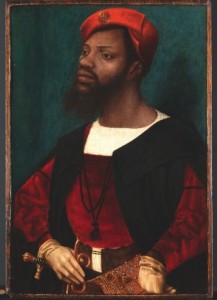
African Tudor England

My final academic year at university has included a module on the history of the body in early modern England. The module was wide-ranging, examining a host of challenging and interesting themes that included death, fashion, pregnancy, anatomy, illness and sexual regulation. Only in the final week of the module did we consider what early modern Europeans termed 'unnatural' or 'foreign' bodies. Given that this was an age when great voyages of discovery were being made across the world, it is unsurprising that we looked at sources concerning the experiences of Europeans with 'natives' dwelling in Africa and Asia. In the seminar, twenty minutes was devoted to discussion of black people in early modern England, in a module lasting one academic year in duration.

This presents a troubling question: why does Tudor history continue to be whitewashed? (Forgive the pun). Black people clearly lived in England and were a vital cultural, social and economic presence. Only when their history is taken account of and included in both academic studies and in curriculums can the experiences of those living in the past fully be understood. Our understanding of Tudor history remains overwhelmingly confined to the experiences of those who were wealthy, privileged, and white.

If you are interested in reading more, I wrote an article for The Tudor Society about Africans in Tudor and Stuart England: https://www.tudorsociety.com/africans-in-tudor-and-stuart-england-by-conor-byrne/.

Sunday, 22 February 2015

The Character Assassination of George Boleyn


Above: Negative depictions of George Boleyn were offered in both The Tudors (left) and The Other Boleyn Girl (right).

My research focuses on the maligning and misrepresentation of high-status women in late medieval and Tudor England, examining the gendered dimension and motivations for attacking prominent women. However, it was not only women who were defamed and maligned, but men too. One outstanding example of this is George Boleyn, lord Rochford, whose posthumous reputation has been notorious. He is frequently depicted as a rapist, homosexual, heretic, womaniser, abuser or coward - and, often, all of these are mixed together. This has resulted in what could be termed the black legend of George Boleyn. However, this popular understanding of George has little basis in historical evidence.

How did this black legend come about? It is difficult to separate the defamation of George from the character assassination of his entire family. The Boleyns have, in popular culture, become synonymous with greed, treachery, political ambition and ruthlessness, although modern historians recognise that they were typical of the period in which they lived in and were no worse than other noble families. But this has not prevented novelists, film-makers, and directors from slandering the Boleyns. Thomas Boleyn, a respected diplomat and talented linguist in his day, has been caricatured as an ambitious, grasping egotist. His daughter Mary has become synonymous with bawdiness and prostitution, although another line of thought has cast her as the innocent, vulnerable victim of her merciless family. Queen Anne Boleyn has suffered the most, being reduced to a scheming manipulator, a nymphomaniac, or a homewrecker - and frequently, the three are mixed together. George Boleyn then is, like other members of his family, a victim of the abuse directed at the Boleyns. 


Above: Anne (left) and Mary (right), the sisters of George.

Modern historians have been fairly appreciative of George Boleyn's significance, particularly in the English Reformation. In 1531, he was one of several crown officials who assisted Henry VIII in his claim to be supreme head of the English Church. Like his sister Anne, George owned a number of French evangelical works. He turned two of them into presentation copies for his sister, which were based on the works of Jacques Lefevre d'Etaples. These texts stressed the necessity of having a living faith in Christ in order to attain salvation, rather than relying on good works and on the rituals of the established Church. George wrote a dedicatory letter to his sister in one of the texts, "The Epistles and Gospels for the Fifty-Two Weeks of the Year", in which he addressed Anne as 'her most loving and friendly brother'. He also assured her that he loved her. These texts testify to both George's devout religion and his close relationship with Anne.

Later, George's execution speech in 1536 confirmed his prominent involvement in religious reform at Henry VIII's court. He referred to himself as 'a great reader and mighty debater of the Word of God, and one of those who most favoured the Gospel of Jesus Christ.' The Imperial ambassador Eustace Chapuys frequently accused the Boleyns of being 'more Lutheran than Luther himself', and it seems plausible that, when Anne became queen, her brother assisted her in advancing evangelical reform at court. Their father, also passionate about religious reform, was probably also involved. Joseph S. Block has written that George's interest and passion for religious reform was motivated not only out of desire to assist his sister, but 'was a guiding light in his life'. 

George's interests, however, extended beyond religion. His biographers Claire Ridgway and Clare Cherry note that he was a talented poet and linguist. George also enjoyed an excellent diplomatic career, a point often overlooked especially in popular depictions of him. For example, in 1529 he was knighted and led an embassy to France at an unusually young age (if he was born around 1504, he would have been only twenty-five or so years of age: a point which indicates that there was already considerable confidence in his abilities). Soon after, George became Viscount Rochford. In 1533, he again travelled to France where he informed the French king about Henry VIII's marriage to Anne and was able to secure Francois I's support in the struggle against the papal denunciation of Henry's annulment of his first marriage. Further embassies followed later that year and in 1534, and in June 1534, George was rewarded for his diplomatic successes: he was promoted to Baron of the Cinque Ports.

Around the end of 1524, he married Jane Parker, the daughter of Henry lord Morley. George's marriage to Jane has more often than not been portrayed as a vicious, tempestuous and abusive union. Alison Weir describes their relationship as "unhappy" and asserts that Jane testified against her husband at the time of his downfall in spring 1536 because she was revolted and disgusted by his sexual practices. This idea was originally put forward by academic historian Retha Warnicke, who suggested that not only was George promiscuous, but guilty of sodomy with several men too. Perhaps unsurprisingly, this salacious notion has become enshrined in popular culture and has hugely influenced the prevailing view of George. In Philippa Gregory's novel The Other Boleyn Girl, George Boleyn is a promiscuous, unhinged and sexually disturbed man who not only has an affair with Francis Weston, but is strongly suggested to have slept with his sister Anne, resulting in the birth of a deformed child and accusations of witchcraft and incest that send both of them to the scaffold. In the television series The Tudors, George is portrayed in a darker light as a serial abuser, who sexually assaults his innocent wife on their wedding night. He also enjoys a sexual relationship with Mark Smeaton. The Tudors provided the most manipulative, abusive, violent and cruel portrayal of George Boleyn to date. Hilary Mantel's Wolf Hall and Bring Up the Bodies presents George more as an arrogant, shallow dandy or fop who shamefully cries at his trial and, during his lifetime, is concerned with nothing more than the pursuit of luxury and decadence. The television series Wolf Hall similarly presents his relationship with Jane as abusive, in which he treats her violently and with contempt.

Wolf-Hall-Crows-George Boleyn

Above: George Boleyn in Wolf Hall.

There is no evidence for any of this, and we cannot know the truth of George and Jane's marriage. Their childlessness has frequently been cited as conclusive evidence of their marital unhappiness, but it is equally possible that either partner suffered from infertility, or perhaps there were other problems that we just do not know about. In the absence of evidence, it is unfair and contrary to historical practice to speculate negatively about their relationship. Contrary to legend, Jane was not the 'principal accuser' of her husband in the wake of his downfall in 1536, and she may have been coerced into providing testimony, in what must have been a terrifying and traumatic experience for her. Jane has traditionally been presented as jealous and hurt by George's close relationship with his sister Anne, in which he neglected and mistreated his wife in favour of spending time with his more attractive and accomplished sister. Again, there is no evidence for this. Perhaps Jane was jealous of Anne, perhaps she hated her, perhaps she did love George and was hurt by his treatment of her. Alternatively, and equally validly, perhaps she enjoyed a good relationship with her sister-in-law and perhaps she was treated well by George. We cannot say, and as stated, it is unfair and fruitless to speculate.


George was implicated in Anne Boleyn's downfall in the spring of 1536, and he was one of five men sentenced to death for committing adultery with her and plotting to murder Henry VIII (and, in his case, incest). While the majority of modern historians reject these charges entirely, and present all six as innocent of adultery and treason, several writers have speculated that George was guilty of 'unnatural' sexual offences, primarily sodomy and buggery. His sexual partners have been identified as Mark Smeaton and, perhaps, Francis Weston, both of whom were also accused of adultery with the queen and executed. As noted above, the notion of George Boleyn as a homosexual has gained credence in popular culture, and it is almost impossible to read a novel, watch a film, or view a play about him that does not subscribe to this prevailing view of him as a lover of men. However, as with his relationship with his wife, there is no evidence for this. George did provide Smeaton with a manuscript attacking the institution of marriage, but it is reading far too much into this to infer from this alone, in the absence of any other evidence, that George and Smeaton were lovers. George Cavendish, who served Cardinal Wolsey, later described George as 'my life not chaste, my living bestial, I forced widows, maidens I did deflower': in other words, identifying him as a serial womaniser, rather than a sodomite. However, Cavendish was a hostile and prejudiced writer with a clear agenda: to blacken the name of the Boleyns, whom he blamed for the downfall of his master. The famed Tudor poet Sir Thomas Wyatt, who knew George personally, lamented that, had George 'not been so proud, for thy great wit each man would thee bemoan'.


It is disturbing to realise that George Boleyn's posthumous reputation has been more negative than it was in his own lifetime. Since his death, he has been subjected to vitriolic attack, shameful slander and, in short, character assassination. In his lifetime, observers alleged that his chief vices were pride, arrogance and, from the perspective of religious conservatives, heresy. However, with the exception of Cavendish, none of them accused him of sexual lechery, and his intimate, loving relationship with Anne was cruelly distorted and misrepresented in 1536 as an incestuous relationship in order to get rid of them both. George Boleyn was a talented linguist, a renowned poet, and above all, a principal exponent of religious reform. He occupied a central place in English politics in the late 1520s and most of the 1530s, and was actively involved in several embassies on the Continent. His contemporaries were in awe of his talents and appreciated his significance. Controversy about George centres on his sexual preferences and on his relationship with his wife Jane. In the absence of any evidence that their relationship was unhappy, or that his sexual behaviour was anything but conventional, George should be given the benefit of the doubt, and should instead be admired and respected for his talents and skills.


Tuesday, 13 January 2015

Was Anne Boleyn A Modern Woman?


There appears to be a tendency of late to describe Henry VIII's second and most famous wife, Queen Anne Boleyn, as a 'modern woman'. It began with Eric Ives in his 2004 masterpiece The Life and Death of Anne Boleyn, in which he referred to Anne as 'a self-made woman' who broke the mould, independently carving out her own destiny at a time when women were politically, socially and culturally oppressed. Cultural depictions of Anne soon followed suit. In The Other Boleyn Girl, a ruthlessly ambitious Anne plots to marry Henry Percy, future duke of Northumberland, as a means of acquiring wealth, position and power - to her family's horror and disgust. They remind her that it is the job of her male relatives to find her a husband, rather than it being her prerogative. In the television series The Tudors, Natalie Dormer portrayed Anne as, in the words of academic Susan Bordo, 'a woman too smart, sexy, and strong for her own time', who was 'unfairly vilified' for her defiance of sixteenth-century norms. Recently, respected historian John Guy referred to Anne in an interview with BBC History Magazine as 'a modern woman'. Finally, actress Claire Foy (who plays Anne in the BBC television series Wolf Hall), described Anne as 'really a modern woman who believed that she could rise above where she was born'. The consensus seems to be that Anne Boleyn, in her fierce independence, assertiveness, confidence in her relations with men, and determination to carve out her own destiny, was a woman who should have lived in the twenty-first century, rather than in the sixteenth.

I'm not afraid to intrude here with my own opinion and say that I find this a deeply unsettling and, in many ways, disturbing interpretation of Anne Boleyn. I feel it relies heavily on the prejudiced dispatches of the Spanish ambassador Eustace Chapuys and on the traditional belief that it was Anne who called the shots in her dealings with men, namely Henry VIII. Several historians have argued, and cultural depictions of Anne in film and television have followed suit in this, that Anne manipulated Henry, even pressured him into making her his queen, and cajoled him into treating his first wife and eldest daughter with studied cruelty. In short, the lingering view of Anne as a home-wrecker remains prevalent because of its attractiveness to a twenty-first century worldview. Nowadays, of course, such a woman would be termed a home-wrecker, a whore, a schemer or a manipulator (or, of course, all of these things and more). 


Above: Natalie Dormer played a 'modern' Anne Boleyn in The Tudors.

What is the evidence for the claim that Anne Boleyn was 'a modern woman'? Surprisingly, proponents of the 'modern' view have not always specified what it supposedly was about Anne that makes her seem closer to the twenty-first century in her behaviour and character than to her own age. Bordo suggested that it was Anne's inability to shut up, her assertiveness, her independence, at a time when women were expected to be submissive, self-effacing and, above all, silent. The depiction of Anne as confident in her speech, taking on and arguing fiercely with a host of men including her uncle, father and husband, relies on the evidence of Chapuys' dispatches and hostile accounts produced by the likes of George Cavendish. Chapuys asserted that Anne fell out with her uncle, the duke of Norfolk, namely because he took offence at her outspoken and, at times, vitriolic speech. He also claimed that Anne, a crafty and cunning seductress, was responsible for pressuring Henry into mistreating his first wife, Katherine of Aragon, and his daughter by her, Mary. Were it not for the 'wicked' Anne, Chapuys believed, Henry might be persuaded to return to his 'true' wife. Indeed, Anne was so powerful at court and dominated her husband so completely, the ambassador proclaimed, that 'there is no one who dares contradict her, not even the king himself'. Chapuys also asserted, somewhat incredibly, that Anne controlled and ruled the government of the realm completely. 

Several historians have questioned Chapuys' hostile reports, with some justice. They have convincingly demonstrated that his evidence was often false. His dispatches were written with a clear agenda: to blacken the name of Anne and, he hoped, bring about the reconciliation of Henry and Katherine. Chapuys did not blame the king for his decisions, including his increasingly harsh treatment of his daughter. Instead, the ambassador resorted to employing the centuries-old trope of the wicked stepmother, casting Anne as a nagging and assertive shrew who hen-pecked her long-suffering husband into doing her will. 

There is plentiful evidence outside of Chapuys' reports that Anne upbraided the king for his extramarital affairs. Numerous stories, some of them lurid, tell of the queen's despair and shock at finding her husband with his future wife, Jane Seymour, on his lap in January 1536, thus bringing about a miscarriage. Anne found it difficult to reconcile the decade-long passion Henry had for her with the disturbing knowledge that he expected her to tolerate his infidelities once they were married. Numerous observers reported of the 'coldness and grumbling' between the couple during their marriage. The queen certainly was hurt, offended and devastated by her husband's affairs with other women, and at her trial in May 1536, she openly admitted: 'I do not say that I have always borne towards the King the humility which I owed him, considering his kindness and the great honour he showed me and the great respect he always paid me; I admit too, that often I have taken it into my head to be jealous of him... But may God be my witness if I have done him any other wrong'. Anne freely declared that she had suffered pangs of jealousy over her husband's extramarital amours. 

But does this render Anne 'modern'? To our knowledge, Henry VIII's subsequent wives did not upbraid him for his infidelities (if they knew about them). But Henry's first queen, Katherine of Aragon, seems to have reacted with hostility when news was brought to her of her husband's liaison with his first-recorded mistress, Lady Anne Stafford, in the early 1510s, and court observers commented that the couple were noticeably 'vexed' with one another for some time. There is little evidence of the conservations between other kings and queens at this period, so it is difficult to attempt to compare the personal relationship of Henry and Anne with another royal couple in similar circumstances; furthermore, we lack detailed evidence for how the ordinary populace viewed the extramarital affairs of their paramours, outside of legal documents produced in the Church courts. To us, Anne's despair and sadness at her husband's affairs are understandable, for we value companionate marriage in the twenty-first century Western world. There is an expectation that partners will be faithful to one another, and will have married for love. But it surely seems a step too far to describe Henry's second wife as 'modern' because she experienced upset and hurt over his sexual affairs. Plenty of women in the sixteenth-century might have experienced similar emotions - we lack evidence for them. Anne Boleyn, by virtue of her status as queen, was in an exceptional position for evidence of her feelings to be recorded. Just because we lack evidence for the emotions of others when news was brought to them of their partners' infidelities does not mean that she was 'modern' and others were not.


The view of Anne as 'a modern woman' ignores a wealth of evidence which proves that she was a product of her time and culture. The evidence of John Foxe and William Latimer indicates that she was a religious and charitable queen with an earnest and pious faith. She was interested in evangelical reform and patronised religious radicals. Anne followed her predecessor in giving alms to the poor and engaging in charitable pursuits that were, unfortunately for her, not publicised in her own lifetime. Anne did not have 'modern' views about social status, later known as 'class': when her sister dared to marry beneath her, the queen reacted with anger and shock, immediately banishing her from court. She also demonstrated humility in relation to her ascendancy to the queenship, informing contemporaries that the king had been 'inspired' by God to marry her, perhaps perceiving it as God's will. 

Furthermore, it has been pointed out by the likes of Warnicke that Henry VIII may have exercised considerably more control over his relationship with Anne than is traditionally believed. We lack her replies to his letters and so do not know how she was responding to him. The prevailing view, that she treated him calculatingly and ruthlessly, with an eye to the throne and a future as queen, rests on no convincing evidence for the simple reason that there really is no evidence. Anne was surely no more ambitious than Jane Seymour, Katherine Howard or Katherine Parr, and it is a step much too far to suggest that she actively set out to destroy the king's first marriage and seduce him into marrying her in a move that resembles that of the modern 'home-wrecker'. Amy Licence has credibly argued, following in the lead of writers such as Karen Lindsey and Joanna Denny, that Anne may have been unwilling or afraid to reply to the king. Perhaps she did not want to become queen. Perhaps, in short, the king pressured her into accepting his advances, a possibility that is often not given the attention it deserves.

Chapuys' dispatches have recently been termed little more than fiction by historians who are convinced that nothing he reported about Anne can be trusted as the truth. This may be a step too far: perhaps there was some truth in his claims that she was fiercely outspoken and assertive, not afraid to upbraid the king for faults she perceived in him. But is this really evidence that she was 'modern'? Henry's final wife, Katherine Parr, challenged his religious beliefs and dared to lecture him when she believed he was in error. Yet Katherine does not tend to be identified as a 'modern woman' somehow transported back in time to the sixteenth-century, although there is an unsettling line of thought which regards her as something of an early feminist. Anne Boleyn was, as Susan Bordo makes clear, no feminist, and neither was she a modern woman. She was a product of her time and the view of her as 'modern' ignores a significant amount of evidence produced by contemporaries. Much of the evidence for her 'modernity' is shaky: either produced by hostile onlookers or supposedly written by Anne herself. I refer here to the infamous letter from 'the Lady in the Tower' in May 1536, in which the queen upbraided her husband for seeking to kill her so that he could marry his new love. Most historians are convinced that Anne was not the real author of this letter, believing that it was penned sometime in the Elizabethan period, long after her death. If evidence for Anne as a 'modern woman' is mostly hostile, non-existent or doubtful, then it cannot, on a balance of probabilities, be claimed that she was ahead of her time in her beliefs, attitudes and behaviour. Anne was a product of her time and class: she may have been assertive, outspoken and ambitious, but other women were too and it certainly cannot be claimed that she was 'a self-made woman', when one examines her family networks and their role in providing her with an excellent education and marriage prospects.

Thursday, 25 September 2014

The Eternally Beautiful Anne Boleyn


If your knowledge of Tudor history was gained from the Showtime television series The Tudors (2007-10), the profoundly successful novel The Other Boleyn Girl by Philippa Gregory, or the 2008 Hollywood adaptation of that novel starring Natalie Portman and Scarlett Johansson, your lasting impression would most likely be that Anne Boleyn was a stunningly beautiful young woman. A woman with dazzling dark eyes, long brown hair, creamy skin and rosebud lips; a woman who epitomised charm, elegance and dressed superbly. A woman who turned heads wherever she went, and who captured men's hearts with ease. 

Popular culture, as Susan Bordo notes in her study of Anne, tends to present Anne as a drop-dead-gorgeous creation who captivated Henry VIII the minute he laid eyes on her, solely because of her physical appearance. In The Tudors, for example, Natalie Dormer plays a stunningly attractive Anne who captures the king's heart when they meet at the Chateau Vert pageant in early 1522. From that moment on, all he can think about is Anne. Similarly, in the novel The Other Boleyn Girl, Philippa Gregory introduces a beautiful Anne, who coldly and ruthlessly manipulates besotted male suitors to fulfil her every whim. But, popular culture aside, how accurate are these interpretations of Anne Boleyn's physical appearance? More pertinently, what do these claims and ideas suggest about prevailing ideas about female attractiveness and whether or not a person's appeal is rooted in their physical looks? 


Above: The Tudors. Natalie Dormer introduced a stunningly beautiful Anne.

Henry VIII's second wife was, contrary to popular belief, not a great beauty. To be sure, we lack contemporary portraits of her, because in the wake of her disgrace and death in 1536, Henry VIII ruthlessly and efficiently destroyed everything he could find to do with her, including portraits of his once beloved queen. We therefore have very little knowledge about what Anne Boleyn actually looked like. There are some things we do, however, know about her appearance, relying on contemporary reports without taking their obvious biases and polarising viewpoints at face value. 

The Venetian ambassador, who met Anne in the late 1520s, recorded that the king's new love was:
'Not one of the handsomest women in the world; she is of middling stature, swarthy complexion, long neck, wide mouth, a bosom not much raised and eyes which are black and beautiful'. 

To this ambassador, then, with the exception of her 'beautiful' dark eyes, Anne Boleyn was very average in her physical appearance. His description conveys someone not particularly impressed or swept off his feet. 
Others, however, were more praiseworthy about Anne's looks. Lancelot de Carles, a Frenchman who wrote a poem detailing her disgrace in 1536, remarked that she was 'beautiful', with 'an elegant figure'. John Barlow, a cleric of Anne, recorded that she was 'reasonably good looking' - again, not a dazzling beauty, but attractive enough. George Wyatt, the grandson of Thomas Wyatt (who some suspect was Anne's admirer), admitted that her colouring was 'not so whitely' as then admired, and she had several 'small moles... upon certain parts of her body'. He also stated that she had an extra nail on one hand.

The most notorious description of Anne's physical appearance, however, came from the man who did the most to blacken her name: Nicholas Sander, a Catholic recusant writing in the reign of her daughter Elizabeth I. Viewing Anne as a bewitching temptress and witch who had craftily ensnared Henry VIII into marriage, encouraging him to commit heresy by breaking away from the Roman Catholic Church and his long-suffering and devoted first wife Katherine of Aragon, Sander recorded:

'Anne Boleyn was rather tall of stature, with black hair and an oval face of sallow complexion, as if troubled with jaundice. She had a projecting tooth under the upper lip and, on her right hand, six fingers. There was a large wen under her chin, and therefore to hide its ugliness, she wore a high dress covering her throat. In this she was followed by the ladies of the court, who also wore high dresses, having before been in the habit of leaving their necks and the upper portion of their persons uncovered. She was handsome to look at, with a pretty mouth'. 

The last sentence, in view of Sander's shattering and devastating description of Anne, is entirely contradictory. Regarding Anne Boleyn as the Devil's accomplice and the incarnation of evil, he gave her a witchlike appearance. This was an age, as Retha Warnicke notes in her study of Anne, when a person's outer appearance was believed to reflect and embody their inner character. Believing Anne to be utterly evil, Sander presented her as ugly, deformed, monstrous: she had a projecting tooth, an extra finger, a large wen. His statement indicated his complete lack of knowledge about fashion tastes at Henry VIII's court. A glance at portraiture from this era confirms that ladies-in-waiting did not tend to wear high dresses, including Anne.


Above: Another gorgeous Anne. Natalie Portman as Anne Boleyn in The Other Boleyn Girl (2008).

Putting to one side Sander's outrageous claims, Anne Boleyn is almost always depicted in cultural works as a ravishing beauty, a stunning woman who dressed fashionably, spoke beautifully, and enchanted all who knew her. But, as we have just seen, even observers who were at least neutral, if not friendly, to Anne confirmed that she was not jaw-droppingly beautiful. They confirmed that she was attractive, or reasonably good-looking, but none of them were swept off their feet by her physical appearance.

Most scholars agree that it was not Anne's physical looks so much as her charm, her intelligence, her accomplishments, her wit, her fiery nature, her uniqueness, in short, that captivated Henry VIII and kept his attention for the best part of 10 years. Bordo thinks our fixation with Anne's physical appearance in popular culture may lie in twentieth- and twenty-first century limits of the concepts of attraction, 'fixated as they are on the surface of the body'. Henry VIII certainly wasn't fixated on the surface of Anne's body. By all accounts, he was completely taken with her in a way he never was with any of his subsequent wives or mistresses. There was, in short, something special about Anne that cannot be restricted to her body. 

Looking at Anne's portraits in an attempt to discern what she really looked like is a futile exercise. As mentioned earlier, none of them are contemporary to her, the earliest ones being produced something like fifty years after her death, and many of them later. Lacey Baldwin Smith, author of books on both Anne Boleyn and Katherine Howard, wittily quipped: 'Tudor portraits bear about as much resemblance to their subjects as elephants to prunes'. 

Anne seems, in short, to have had style. Lancelot de Carles comments on the beauty of her dark eyes and her ability to captivate and entrance men merely by looking at them. One commentator reported than she was 'more a Frenchwoman' than she was English, and the French, of course, are renowned, then as now, for their style and elegance. Sixteenth-century England valued clear-skinned, blue-eyed, blonde women who were celebrated as the epitome of beauty, including Mary Tudor, younger sister of Henry VIII (below). Anne, with her 'small' breasts, dark complexion and dark hair, challenged these norms and brought in fashions and styles of her own to replace these ideals. 


Above: Mary Tudor, queen consort of France, was the epitome of Tudor ideals of beauty: clear-skinned, fair-haired and light-eyed. 

Bordo sums up what it was about Anne that enchanted the king:

Henry's attraction to Anne, in any case, seems to have been fueled not only by sexual attraction but by common enjoyments, compatible interests, intellectual stimulation, and shared political purpose.

Too often, as in the 2008 film The Other Boleyn Girl, Anne is characterised as a shallow, bosomy schemer who thrusts herself brazenly before the king. She is reduced, in short, to a sex symbol. But as Bordo's statement makes clear, Anne Boleyn was so much more than that. She was a devout evangelical; a keen intellectual; a woman interested in politics; possessed of a sharp mind; charitable and pious; loyal to her family and friends; musically gifted; and talented in languages. This was no floozy who wormed her way into the king's bed with seductive promises of bedtime pleasures. This was a woman who shone in the court of England as she had in the Flemish and French courts during her teenage years. 

Why is it, then, that popular culture tends often to reduce her to a sex symbol or an icon of perfect beauty? What does it suggest about our own narrow, constricting, possibly harmful views of attractiveness, particularly in relation to women? Does it indicate that a woman can only be truly attractive if she is physically stunning, regardless of her intellectual and personal accomplishments? Contemporary evidence makes it devastatingly clear that Anne Boleyn was not a woman who stole hearts merely on the basis of her appearance. Popular culture would stay truer to the real woman and her incredible legacy if it focused, instead, on her remarkable personality, her contradictions, her flaws, her religious outlook, her political activities, her charities, her charm, her culture, her fashion sense, her wit, her humour, her arrogance, her insecurities, her family loyalties and devotion to her friends - everything, in short, that made Anne Boleyn a bundle of contradictions. 


Thursday, 7 August 2014

The Boleyns and the Howards in Popular Culture


Above: Thomas Howard, duke of Norfolk, The Other Boleyn Girl (2008), left.
Thomas Boleyn, earl of Wiltshire, The Tudors (2007-10), right.

The Boleyns and the Howards have been mythologised and misrepresented in many mediums of popular culture ever since the sixteenth century. In stories of Anne Boleyn's rise to power, in particular, her Boleyn and Howard relatives are typically depicted as power-hungry, merciless courtiers who stop at nothing, including murder, treason and incest, to achieve what they want and cement their power. But how accurate are these portrayals? The short answer is: we don't know. Chroniclers did not record the motives of these individuals, even if they were aware of them, and depictions of the Boleyns, in particular, are frequently hostile.

As Claire Ridgway of The Anne Boleyn Files notes, Thomas Boleyn, father of Anne, is frequently presented as a manipulative, cunning man who stops at nothing to achieve his ambitions, including placing both his daughters in the king's bed and turning on his two youngest children when they fall from grace. Historians have, to some extent, supported this characterisation, with Paul Friedmann terming Thomas 'mean and grasping' and P.W. Sergeant going so far as to say that 'it is clearly hopeless to attempt a defence of Sir Thomas'. But we simply do not know if Thomas pressurised both Mary and Anne to seduce Henry VIII, as is portrayed in both The Other Boleyn Girl and The Tudors. This seems to be a very modern conceptualisation, in effect portraying Thomas Boleyn as a pimp who advertises his beautiful daughters while coldly calculating the best odds for them. But, in both cases (especially regarding Anne), it appears to have been nothing of the sort. Rather, Henry VIII fell in love with these women, and Thomas probably made the best of his good fortune, rather than avidly scheming to manipulate his king into falling in love with his daughters.

Yet popular culture has not favoured this line of approach. In particular, in The Tudors, Nick Dunning offers a portrayal of Thomas that is cold, calculating, deceptive and ruthless. He turns on Mary when she displeases him and bullies and manipulates Anne to do what he wants her to do. The Imperial ambassador Eustace Chapuys, who loathed the Boleyn family, depicted Thomas as a heretic, liar and bully. He was said to have a hot temper and even staged a masque at the downfall of Thomas Wolsey in which the late cardinal was taken to Hell, to burn in eternity. 

In The Other Boleyn Girl, both the novel written by Philippa Gregory and the 2003 and 2008 film adaptations, Thomas Boleyn plays far less of a role than in The Tudors, and particularly in the 2008 film starring Scarlett Johansson and Natalie Portman, he is a weak, ineffectual man, pitied by the audience for his spineless demeanour and nervous behaviour. In short, it seems safest to agree with Claire Ridgway regarding Thomas:

'I guess we'll just never know what kind of man Thomas really was but he cared enough about his daughters to make sure that they received a top notch education...' 'Thomas Boleyn can be described as ambitious and self-seeking, but I do not think he was an evil man who manipulated his children and then turned his back on them in their hour of need. In my opinion, he was simply a product of Henry's court and his time, a courtier who enjoyed basking in royal favour but who knew the sense of hiding when things got too hot. He was a survivor.'


Portrayals of Thomas's brother-in-law, and the uncle of Anne Boleyn, Thomas Howard duke of Norfolk have been similarly negative. Historians have, once again, in some measure supported this negative characterisation. Joanna Denny, who wrote biographies of both Anne and her cousin Katherine Howard, described Thomas Howard thus:

'He was a monolithic figure, a monster and ruthless in his cold-hearted use of those around him, including the members of his own family, who were just pawns for his ambition... His survival was just part of his astonishing luck, ironically cheating the scaffold of another Howard at the last hour and dying in his bed'.

A prevailing view in both popular culture and academia seems to be of the Howards and Boleyns as power-hungry, cold-hearted schemers who 'pimped' their female relatives out and ruthlessly sacrificed them when they fell from grace. It might appear that way, but it was not necessarily the case. Claire Ridgway has already raised questions about the exact role played by Thomas Boleyn and the Boleyn family in Henry VIII's pursuit of Anne Boleyn, and it is fair to do the same with Katherine Howard and the Howards. I agree with Antonia Fraser that the Howards were probably pleasantly surprised when the king became infatuated with Katherine and asked for her hand in marriage. As Fraser contends, she was not a suitable candidate for queenship, because of her murky past. My research indicates that Thomas Howard, duke of Norfolk, probably had no idea about his niece's sexual escapades when she married Henry VIII.

Modern viewers love a good drama, and TV offers this. But it is essential to separate facts from fiction. To be fair, it is not just the Howards and Boleyns who have been conceptualised in this negative manner as power-hungry schemers who used their women for their own ends. The Seymours, in both The Tudors and the novel The Other Boleyn Girl, encourage Jane to accept Henry's advances, and are depicted as just as scheming and ruthless as their Boleyn rivals. But the fact of the matter is this: we just do not know if these families actively sought to raise their prestige and bolster their power at court by dangling their women in front of the king, or whether they made the most of their fortune when he favoured one or another of them. Surely, with so little documentary evidence, and given the mostly hostile nature of the evidence which has survived, it is best not to condemn these figures at a distance of so many years, when the cultural, social and political worldview was completely alien to our own today.


Thursday, 19 June 2014

The Relationship of Thomas Culpeper and Queen Katherine Howard


Above: Katherine Howard (left).
The letter Katherine supposedly wrote to the courtier Thomas Culpeper, perhaps in July 1541 (right).

Aside from being the youngest wife of Henry VIII, Katherine Howard is probably best known for her supposed adulterous affair with the handsome courtier Sir Thomas Culpeper conducted in 1541. What many historians argue began as a mutual attraction quickly developed into a powerful and dangerous adulterous liaison which eventually ended in the deaths of both queen and subject. However, the nature of the meetings between Katherine and Culpeper are shrouded in mystery, uncertainty and controversy. Only Katherine and Culpeper - and perhaps Lady Jane Rochford, the queen's attendant who arranged the meetings - know what really happened in those fatal spring and summer months in 1541.

For most historians, it seems obvious that Katherine, an oversexed, even 'promiscuous' young girl, had sexual intercourse with Culpeper, who was noted for his gallantry and, later rumours alleged, even indulged in rape (although, as I argue in my book, it seems more likely that it was actually his elder brother, confusingly also named Thomas Culpeper, whom the rumours referred to). This is supported by evidence documented by contemporaries residing near to the court. The unknown Spanish chronicler of The Chronicle of Henry VIII, compiled perhaps ten years after the events it described, suggested that 'the devil put it into this queen's heart' to fall in love with the dashing Culpeper, who slipped the queen a note one day during dancing confessing his love for her. Both proclaimed their love for one another on the scaffold, with the queen supposedly stating: 'I die a queen, but I would rather die the wife of Culpeper'. The Catholic polemicist Nicholas Harpsfield depicted an adulterous Katherine, who was 'an harlot before he [Henry VIII] married her, and an adulteress after he married her'. 

Modern historians largely agree. The bestselling popular writer Alison Weir wrote of Katherine's affair with Culpeper: 'Katherine had not only been playing with fire, but she had also been indiscreet about it, and incredibly foolish'. Antonia Fraser, in her 1992 biography of the six wives of Henry VIII, agrees: 'the repeated confessions and reports of clandestine meetings between a man notorious for his gallantry and a woman who was already sexually awakened really do not admit of any other explanation than adultery'. In his 2009 study of the Tudor queens, historian David Loades characterised Katherine as 'queen as whore'. This prevailing view has been consolidated in popular culture. In the popular TV series The Tudors (2007-10), Tamzin Merchant and Torrance Coombs depicted a headstrong young couple who engaged in sexual intercourse on a frequent basis early on in Katherine's marriage to the king. While Merchant portrayed a queen who appeared deeply in love with Culpeper, Coombs presented an unflattering portrayal of a manipulative, violent and scheming man who engaged in an affair with the queen as a means of attaining power and personal gain.


Above: Tamzin Merchant (left) as Queen Katherine and Torrance Coombs (right) as Thomas Culpeper in the television series The Tudors.

However, drawing on the seminal research of noted scholar Retha M. Warnicke, it is this article's contention that the relationship between Queen Katherine and Thomas Culpeper between April and September 1541 was, in reality, very different. It was not a carefree sexual liaison motivated either by love or recklessness, as most writers continue to believe. Thomas Culpeper was an experienced and savvy courtier who had served the king since the mid-1530s, when he had entered court as a page to Henry VIII before becoming a gentleman of the king's privy chamber, where the king ate, slept, and entertained indoors. Culpeper was, therefore, as close in proximity to Henry VIII as it was possible to get. Since Katherine had only arrived at court in the autumn of 1539, barely nine months or so before she became queen of England, Culpeper was vastly more experienced than her in court protocol and politics. He seems to have used that power and experience to his advantage, in manipulating the young queen, who found herself in a somewhat vulnerable position in the spring of 1541.

Katherine had had a sexual relationship with Francis Dereham in 1538, when she was aged around fifteen, and the aggressive Dereham seems to have been determined to marry Katherine, even making the treasonous suggestion that, once Henry VIII died, he would be sure to marry his young widow. In the spring of 1541, Dereham arrived at court and began openly boasting of his previous affair with Katherine. At this time, the king fell seriously ill and his life was despaired of. He shut his doors to everyone bar his doctors, including his young wife, whom he had previously spent the majority of his time with. As Warnicke suggests, it is therefore surely significant, in this highly charged atmosphere at court, that Culpeper began meeting with the queen at about the very time that both her former paramour was bragging of his sexual hold over her, and her ageing husband fell seriously ill. Since it was believed that the king might die, it has been credibly suggested that Culpeper began manipulating Katherine, perhaps having discovered details of her scandalous past, in the hope of acquiring greater power and position should Henry VIII suddenly die.


Above: Manipulative lover or abused victim?

Often, Katherine's meetings with Culpeper have been portrayed as playful, sexually intimate encounters, comprised of high passion and devotion. The reality was very different. The surviving records demonstrate that the queen refused to meet Culpeper unless Lady Rochford was present as chaperone, and when Lady Rochford began moving away on one occasion to allow the two to speak privately, Katherine reprimanded her for leaving her alone in the company of Culpeper, and told her to come back. It has been credibly suggested that 'Culpeper's rendezvous with the queen gave him the means to threaten and manipulative her'. In the summer of 1541, the queen wrote Culpeper a letter. Often, it has been portrayed as a love letter, but the nervous, even afraid tone does not suggest passion, but rather, fear and anxiety. A passage of the letter has been removed in the interests of this article (a passage dealing with Katherine's messenger):

Master Culpeper,
I heartily recommend me unto you, praying you to send me word how that you do. It was showed me that you was sick, the which thing troubled me very much till such time that I hear from you praying you to send me word how that you do, for I never longed so much for a thing as I do to see you and to speak with you, the which I trust shall be shortly now. The which doth comfortly me very much when I think of it, and when I think again that you shall depart from me again it makes my heart to die to think what fortune I have that I cannot be always in your company. It my trust is always in you that you will be as you have promised me, and in that hope I trust upon still, praying you that you will come when my Lady Rochford is here for then I shall be best at leisure to be at your commandment...
yours as long as life endures,
Katheryn. 

Traditionally, the queen's signature, 'yours as long as life endures', has been interpreted as a message of undying love, but as Warnicke recognises, Tudor letters typically closed with the statement 'by yours most bounden during my life', or something similar. Therefore, by changing the statement to 'yours as long as life endures', Katherine seems to have been hinting at her suffering, her anxiety, her worries that Culpeper would reveal her past to the king. 'Death and danger, not love and romance, were on her mind'. There was no evidence of love, passion or desire in this letter; no references to touching, kissing, caressing, etc. The queen was reported to be 'fearful and jittery' during their meetings, and admitted to Lady Rochford that she was terrified that these interviews would be discovered by others. Coupled with her insistence on Lady Rochford being present at all times, it seems clear that Katherine was meeting Culpeper only involuntarily, and not of her own free will.

Everyone knows how the story ends. Katherine and Culpeper were eventually discovered, while Francis Dereham and Lady Rochford were also imprisoned for their behaviour. A slew of Howard relatives and acquaintances of the queen were incarcerated in the Tower of London for concealing the truth about Katherine Howard's sexual past. Eventually, Dereham and Culpeper were convicted of adultery with the queen, although they both denied it, and they were executed in December 1541. Denying that she was guilty to the very end, the physically weak and frightened Katherine was beheaded on Tower Green on 13 February 1542 alongside her attendant Lady Rochford, who had reportedly gone insane. 


Above: a fictional portrayal of Katherine Howard and Thomas Culpeper from Henry VIII (2003).

Understanding of Tudor court politics and sixteenth-century beliefs surrounding gender and sexuality means that it is impossible to believe that Katherine Howard engaged in adultery with Thomas Culpeper. Katherine had endured something of a history of abuse. She had been seduced at a very young age by the grasping musician Henry Manox, before the aggressive Francis Dereham sexually manipulated her, perhaps even raping her. It is clear from surviving evidence that she had no real desire to meet with Thomas Culpeper and did so involuntarily and only in the presence of Lady Rochford, whom she perhaps trusted. This was not an affair of love, passion or desire. It was a relationship of power, manipulation and calculation that ended with both individuals' deaths.

Monday, 19 May 2014

In Memory of Anne Boleyn


On 19 May 1536, an unprecedented event occurred in England. Queen Anne Boleyn, second consort of Henry VIII of England, was beheaded within the walls of the Tower of London, between eight and nine in the morning (sources differ), on charges of treason, adultery and incest. She was later buried within the Chapel of St Peter ad Vincula, situated near to Tower Green, the falsely alleged site of Anne's death.

Famously, Anne had only been queen for one thousand days, having married Henry three years previously. Born at the turn of the century to Sir Thomas Boleyn and Lady Elizabeth Howard, Anne had served at European courts for most of her childhood before returning to her home country in 1521/2, where she attracted the love of the king in 1526 as a vivacious, intelligent and ambitious woman in her twenties, serving in the household of Queen Katherine of Aragon. It took seven years before Anne finally became queen, only to die for alleged sexual crimes and plotting her husband's death in May 1536. She left one daughter, Elizabeth, aged only two and a half years old at her mother's death, who would become queen twenty-two years later.

Above: Princess Elizabeth, the future Elizabeth I, daughter of Anne Boleyn.

I was introduced to Anne at the age of about eleven, having read Carolyn Meyer's children's novel Mary, Bloody Mary, writing from the perspective of Princess Mary Tudor, daughter of Henry VIII and his first wife, Katherine of Aragon. Unsurprisingly, it offered a demonic view of Anne as an evil temptress who plotted Mary's death and that of her mother. My first introduction to Anne, therefore, was hardly positive; but Meyer's later novel Doomed, Queen Anne offered a fairer assessment of Anne (though hardly more accurate) as an awkward, perhaps disfigured girl who was nonetheless able to use her supreme confidence and social graces acquired at the court of France to attract Henry VIII and become his queen, only to die on false charges when his love for her rapidly turned to hate, due to her failure to bear him a son.

From these novels, a powerful fascination with Anne Boleyn developed. I soon read Jean Plaidy's beautifully written The Lady in the Tower, a novel that I would argue offers a particularly sympathetic, and fair, portrayal of Anne and which is far better written than modern books about her such as The Other Boleyn Girl or The Queen of Subtleties. Plaidy depicted her as a sensitive, thoughtful young woman who never wanted to be queen, desiring only her first love Henry Percy, betrayed by a selfish king intent on a male heir. Philippa Gregory's The Other Boleyn Girl provided a highly sexualised, captivating, if vulgar Anne who used anything - and anyone - to manipulate her way to the throne. The Queen of Subtleties, written by Suzannah Dunn, similarly presented the queen as a foul-mouthed, vulgar and ambitious woman, which is hardly convincing given the nature of Anne's luxurious childhood.

I particularly enjoyed Dorothy Tutin's portrayal of Anne in the 1970 BBC TV series The Six Wives of Henry VIII, which portrayed her as older, measured and more dignified than she is usually presented in popular culture, but which also hinted at her shrewish, insecure, and jealous nature (which may come close to the truth). Natalie Portman offered a beautiful and seductive Anne in the 2008 film The Other Boleyn Girl, but unlike Natalie Dormer's initially similar depiction in the TV series The Tudors, Portman's performance lacked gravity and conviction. Genevieve Bujold, of course, delivered a powerful, energetic and emotionally charged performance as the doomed queen in the 1969 film Anne of the Thousand Days.

Above: Natalie Dormer (left) and Genevieve Bujold (right) offered standout performances as Anne Boleyn in The Tudors (2007-10) and Anne of the Thousand Days (1969), respectively.

Anne is often depicted as mesmerising, beautiful, almost perfect in her attractions, in mediums such as The Tudors and The Other Boleyn Girl - but the real woman was very different. Although the malicious slurs of the Elizabethan Catholic recusant Nicholas Sander, charging that she was physically disfigured and witchlike, can easily be dismissed, it is apparent that Anne was not a conventional beauty. A Venetian ambassador described her thus:

"Not one of the handsomest women in the world; she is of middling stature, swarthy complexion, long neck, wide mouth, a bosom not much raised and eyes which are black and beautiful".  

George Cavendish hinted that she had an extra nail on one of her hands, but hardly a sixth finger, as Sander states. It was not, however, Anne's physical appearance that attracted Henry VIII, and other male courtiers. It was her captivating, vivacious and compelling personality, her sophistication, her charm, her charisma, in short. Intelligent, cultivated, educated, and opinionated, Anne stood out amongst the other ladies at both the French and English courts. Perhaps this is something still difficult for people to believe today: that for a woman to be attractive, she does not need to be physically beautiful. It can be her personality that makes her so.

Above: often depicted as visually stunning in films, TV and novels, the real Anne Boleyn might not have been so physically perfect, as these three purported portraits of her make clear.

Anne has rightly been called by her eminent biographer, the late Eric Ives, 'the most influential and the most important queen consort in English history'. This is a fair claim to make, given her powerful religious role and involvement in the English Reformation, her charitable activities, her part in the divorce (what Ives calls 'the most shattering marriage break up in history'), her role as patron, to name but a few. It is surely Anne's tragic death, however, that has made her so famous across the world. Few historians, with the exception of G.W. Bernard, today believe that Anne was truly guilty of the crimes she was alleged to have committed. If she was, as seems likely, in truth innocent of these crimes, then her death was nothing short of legalised murder. She was executed in what was a gross miscarriage of justice. But Anne was to triumph. Calm, dignified, resigned, and yet still beautiful, elegant, and mesmerising on the scaffold, as she had been throughout her life, Anne triumphed by virtue of her daughter Elizabeth's succession to the throne in 1558, to begin a glorious reign that lasted 45 years, a triumph that few could have foreseen in 1536. On this day in history, 19 May, we should remember the life of this incredible and inspiring woman, who was killed so brutally and so unjustly within the Tower. To Anne Boleyn, queen of England, RIP.


Above: a legend in her lifetime, an enduring icon. Queen Anne Boleyn. 

I admire this woman for her resourcefulness, her courage, her driving will, her ambition, her loyalty, her intelligence, her piety... Above all, she was a complex, two-dimensional and multifaceted human being, a concept which so many people still seem to struggle with. I have not found anyone in history who fascinates me as much as Anne Boleyn. I think she was an absolutely incredible woman who achieved things others could only dream about. She was cut down cruelly and unjustly in the prime of her youth, who knows how much longer she could have lived and how much more she could have achieved. I think her continuing legacy speaks volumes about her as a person, and I hope she has achieved the peace in death she was denied so cruelly in life, whether by the suspicion of her husband, the pressures of her position, or the slanders of court gossips and the nation at large. She has been so maligned and misrepresented even nearly five hundred years on. I admire Anne Boleyn and I congratulate her for everything she achieved in her inspiring life. RIP the Queen!

Above: a portrait of Anne Boleyn and her daughter, the infant princess Elizabeth, shortly before Anne's arrest. Anne's daughter would eventually become queen twenty-two years later.