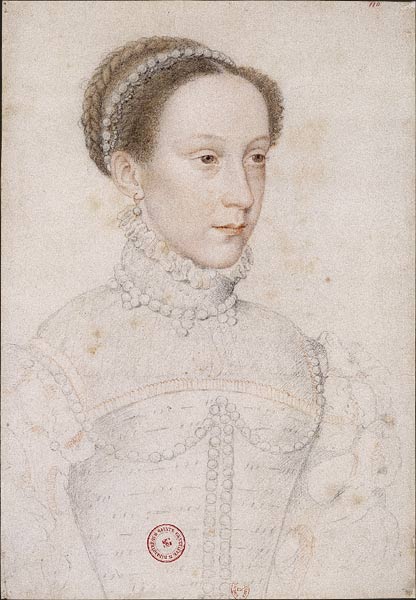
Showing posts with label mary stuart. Show all posts

Monday, 24 March 2014

24 March 1603: The Death of Elizabeth I


On this day in history, 24 March 1603, arguably England's greatest queen if not monarch Elizabeth I died at Richmond Palace, six months before her seventieth birthday. Elizabeth had perhaps suffered from depression since about 1601, the year her former favourite Robert Devereux, Earl of Essex, was executed for treason. The deaths of close friends such as Katherine Howard, Countess of Nottingham, and loyal advisers such as William Cecil, Lord Burghley, probably contributed to the Queen's low moods and depression. Certainly, the last two or three years of her reign were, by the standards of Gloriana's Golden Age, uninspiring; even pessimistic.

In January 1603, as Tracy Borman in her successful Elizabeth's Woman notes, Elizabeth made the decision to move to Richmond Palace out of consideration for her rapidly declining health. Richmond Palace occupied a special place in the heart of the Tudors: it had been Henry VII's favourite palace. In March that year, however, the Queen fell into what Black terms "settled and unremovable melancholy". The Queen refused, however, to retire to bed; perhaps because she feared never waking up. When Robert Cecil, son of Lord Burghley and Elizabeth's chief minister, entreated his mistress to go to bed, she retorted charismatically: "the word must is not to be used to princes.. little man. Ye know I must died, and that makes ye so presumptuous". Obviously, Elizabeth's sharp tongue hadn't deserted her even on the brink of death!

Elizabeth did, however, eventually agree to retire to her bed and by 23 March it was clear that death was imminent. Archbishop Whitgift visited his mistress and entreated her to name her successor, an act she had famously refused to do for nearly five decades. She gestured with her hands, however, to signal that she agreed that James VI of Scotland, son of her former arch-enemy Queen Mary Stuart, should become king of England on her death. Between two and three in the morning the next day, the Queen died. John Manningham recorded poetically:

"This morning, about three o'clock her Majesty departed from this life, mildly like a lamb, easily like a ripe apple from a tree... Dr Parry told me he was present, and sent his prayers before her soul; and I doubt not but she is amongst the royal saints in heaven in eternal joys".


Above: Bette Davis as Elizabeth I. (left)
A more controversial portrayal. Cate Blanchett in "Elizabeth" (1998).

Historians speculate as to the cause of Elizabeth Tudor's death in 1603. Obviously, dying aged sixty-nine, she had lived to a great age most of her subjects never attained. G. J. Meyer suggests that the Queen could have died of anything of the following: bronchial infection that developed into pneumonia; streptococcus; the failure of one of her vital organs; or poisoning from ceruse (the mixture she used as her make-up). Meyer does agree, however, that the Queen's depression probably worsened whatever it was she was suffering from. On 28 April 1603, Elizabeth's funeral took place and she was interred in Westminster Abbey in a tomb to be shared with her infamous elder sister Mary I. The chronicler John Stow reported of the crowds gathered at the former Queen's funeral procession: "...there was such a general sighing, groaning and weeping as the like hath not been seen or known in the memory of man". England's great queen had died, bringing to an end the rule of the Tudors - England's ruling dynasty since 1485 - and perhaps the Golden Age.


Above: Elizabeth I's parents. King Henry VIII (1491-1547) and Queen Anne Boleyn (c.1501x1507-1536).

Elizabeth has regularly been viewed as England's greatest monarch. Her reign ushered in a Golden Age, when England's literary, artistic and musical achievements flourished and established it as a real player in European cultural exchange. Elizabeth's defeat of the Armada and her relative religious tolerance were both achievements that have been long appreciated by historians. A charismatic and yet mysterious woman, she remains a hugely popular subject among biographers, historians, filmmakers, dramatists, and novelists. It is perhaps Elizabeth's glamour that most appeals to a modern audience today. But it is perhaps the Queen's tolerance and desire for peace that most marks her out, in an age in which political and religious violence was endemic and monarchs frequently intolerant towards subjects they regarded as heretical or dissenting. As the Queen herself stated:

"...when wars and seditions with grievous persecutions have vexed almost all kings and countries round about me, my reign hath been peaceable, and my realm a receptacle to thy afflicted Church. The love of my people hath appeared firm, and the devices of my enemies frustrate".

It is also the mystery of Elizabeth that appeals. We don't know what she really looked like - her portraits were strictly controlled and censored by the government, and produced a prototype of how the Queen wished to appear rather than presenting what she viewed as unfavourable - and perhaps more truthful - renditions of her appearance. We do not know how she felt about her mother, Anne Boleyn. We do not know why she never married. We do not know her true attitudes to Mary Queen of Scots or her sister Mary. Perhaps most controversially of all, we do not know if she truly was a virgin queen. It is this mystery, glamour and charisma of Queen Elizabeth I that continues to make her such an exciting figure to study; especially in view of the cultural, political, religious and social achievements achieved in her reign as "Gloriana".

Sunday, 8 December 2013

The Birth of Mary, Queen of Scots


Above: Mary Queen of Scots.

On this day in history, 8 December 1542, Mary Stuart, queen consort of France and queen regnant of Scotland, was born at Linlithgow Palace, 'in the coldest of winters'. She was the only child of James V, king of Scotland, and his French consort Mary of Guise. Mary was the great-niece of Henry VIII of England by virtue of the fact that her paternal grandmother Margaret Tudor was Henry's elder sister. As such, she had a claim to the English throne, which as time would tell would ultimately prove to be her downfall.

Six days later, Mary's father died, and so the crown of Scotland passed to a baby girl. John Knox reported that the king exclaimed in regards to the fate of Scotland, when told of the birth of his daughter, 'it came with a lass, it will pass with a lass!' Whether true or not, Knox's comment that 'all men lamented that the realm was left without a male to succeed' is probably more believable. Although rumours suggested that the new princess was weak, even frail, Ralph Sadler, an English diplomat at the Scottish court, confirmed that Mary was a 'goodly child', 'as like to live'. She was baptised at the nearby Church of St. Michael, and was crowned queen in September 1543.


Above: Linlithgow Palace, where Mary was born.

Mary's biographer John Guy claims that 'Mary Stuart was born at a turning point in history'. Two weeks before her birth, her father's forces had been routed by the English at the Battle of Solway Moss. Henry intended for the infant Mary to marry his five-year old son Edward, as a means of uniting the two kingdoms. In July 1543 the Treaty of Greenwich was signed. But the proposed Anglo-Scottish alliance was to disintegrate as rival factions, led by Catholics and Protestants who favoured alliance with either France or England, fought for control of the infant queen. In 1548 she travelled to France, and eventually wed Francis, son of the French king.

Thus were the events set in motion which would lead to Mary becoming queen consort of France alongside queen regnant of Scotland. Her short life in France did not prepare her for the struggles and conflict she would later encounter in her home country. Mary's life was turbulent, dramatic, and ultimately tragic: forty-four years after her birth, she would die at the hands of the executioner in the great hall of Fotheringhay Castle, a declared traitor to Queen Elizabeth I.


Sunday, 18 August 2013

A Formative Childhood?: A Comparison of the Reigns of Mary Stuart & Elizabeth Tudor


Above: queens, cousins, rivals. Mary Stuart, queen consort of France and queen regnant of Scotland (left) and Elizabeth Tudor, queen regnant of England (right).

Being a queen regnant in sixteenth-century Europe was no easy task. Prevailing misogynistic notions questioned whether women, as the inferior sex, had the right to rule over their male superiors. John Knox, the vehement Scottish Protestant preacher, opined in his The first blast of the trumpet against the monstrous regiment of women, attacking the rule of female monarchs such as Mary Tudor and Mary of Guise and published in 1558, that female rule was contrary to Biblical law. He bitterly concluded: 'For their [women's] sight in ciulie regiment, is but blindnes: their strength, weakness: their counsel, foolishenes: and judgement, phrenesie, if it be rightlie considered'. In view of this, the experiences of the queens regnant Mary Stuart, queen of Scotland, and Elizabeth Tudor, queen of England, should be considered in light of the customary expectations of figures such as Knox. 

Modern psychologists often suggest that childhood experiences are formative in governing later choices, actions and motives. Alfred Adler believed that people develop desires and drives during the childhood phase which later affects adulthood. Ann Smith concluded, in her article published by Psychology Today, that 'our own childhood experiences, which include parents, combined with our own personalities, our reaction to siblings and peers and the context of our lives send us off on a path with a particular set of beliefs and patterns that have a huge impact on our future relationships'. Although the psychology of queen regnants such as Mary and Elizabeth, living four hundred years ago, can only be guessed at, it is credible that the childhood experiences of these two queens, which were vastly different, dictated significantly their later actions and beliefs, particularly in relation to queenship and authority.


Above: John Knox's The first blast of the trumpet (1558) was aimed at attacking female rulers such as Mary Stuart and Mary Tudor (right). 

Both women descended from the first Tudor king, Henry VII, who had attained the crown of England through his defeat of the last Yorkist king, Richard III, at the Battle of Bosworth in August 1485. Elizabeth Tudor's birth had only been brought about by the annulment of her father's first marriage and his subsequent marriage to Anne Boleyn in 1533, with her birth occurring in September of that year. This marriage and the accompanied break with the Roman Church proved highly significant in European politics, particularly later on in the sixteenth century, for Catholic powers such as France and Spain viewed Henry VIII's divorce as illegal and his remarriage void, rendering his second daughter Elizabeth a bastard with no right to accede to the throne of England. Mary Stuart, by contrast, was the grand-niece of Henry VIII since she was the daughter of the Scottish king, James V (nephew of Henry), and his French queen Mary of Guise. Her line of descent and her claim to the English throne came through Henry's eldest sister Margaret Tudor, second child of Henry VII.

Elizabeth Tudor's childhood was extremely complex and must be viewed as, at best, topsy turvy. For the first three years of her life, she had occupied a central place in her father's affections as the heir to his throne following the bastardisation of her elder sister Mary. Besotted with his new wife Anne, the English king continued to hope, however, that she would bear him the much longed-for son to succeed Henry on the throne of England. Like most European rulers, Henry adhered to prevailing ideas that female rulers were unacceptable and contrary to God. This idea had, of course, provided the context for the annulment of his first marriage and his belief that his daughter Mary was illegitimate. Elizabeth enjoyed the luxury and splendour befitting an English princess, with her own household and servants, but because this occurred in the first three years of her life it is questionable to what extent she remembered or fully appreciated these luxurious early years.

In 1536, before her third birthday, Elizabeth's fortunes changed dramatically with her mother's loss of favour and eventual execution on charges of treason, adultery, and incest. While most historians firmly believe in Anne's innocence, her daughter was presumably shattered by the news of her mother's death, although at two years old how much she understood of the situation was very limited. Historians such as Sarah Gristwood and Maria Perry question how closely Elizabeth had bonded with her mother, for she had never resided with her. Following the custom of sixteenth century royal practice, Elizabeth had been nourished by a wet nurse and had been assigned her own household at Hatfield. Her visits to court had been relatively infrequent. Perhaps, as John Neale suggests, Elizabeth's 'emotional life was unaffected by her mother's fortunes'.

But this is slightly dubious. Following her mother's execution, Elizabeth was also, like Mary, declared a bastard, no longer in line to the English throne. Her title of princess was stripped from her, and it is probable that her father, by virtue of who her mother was, viewed her with considerable disfavour for a time. Probably Henry neglected Elizabeth in the immediate aftermath of her mother's death, for in the late summer of 1536 her governess Lady Bryan was forced to beg Cromwell for new clothes for the toddler. Later that year, however, she had returned to court and the Cardinal du Bellay observed the king's affection for his youngest daughter. By all accounts, during her life Elizabeth revered her father's memory and proudly proclaimed her parentage. By contrast, she is said to have mentioned Anne Boleyn's name only three times in her seventy-year long life. Does this indicate suspicion or even hostility towards her mother, who had been executed for the foulest of crimes? Historians such as Alison Weir think not, believing that she may have, as queen, commissioned George Wyatt to write a secret defence of her mother.

Although Elizabeth was probably not severely affected personally in the immediate aftermath of this event, it is likely that her mother's execution 'must have overshadowed Elizabeth's childhood. Over the years, guarded revelations, gossip, rumour and innuendo... and the growing awareness of her bastard status, must have caused the maturing Elizabeth recurring distress and enduring insecurities, and certainly affected her emotional development' (Weir, 2009). The executions of both Katherine Howard (1542) and Lady Jane Grey (1554, by her sister Queen Mary) likely caused Elizabeth considerable distress, bringing back painful memories of her own mother's brutal end. But how did these early childhood experiences govern Elizabeth's decisions and choices as a ruler?

For one thing, as Antonia Fraser suggests, she learned from a very early age to hide her true feelings. Although Elizabeth was notoriously prone to fits of anger, distress, and annoyance, her own personal feelings regarding, for instance, personages such as Anne and her cousin Mary Stuart, queen of Scots, remain mysterious, as do her personal feelings for Robert Dudley, earl of Leicester and her lifelong suitor. Wisely, Elizabeth chose not to become embroiled in plots against her sister Queen Mary, although she was imprisoned in the Tower of London for a time. When Thomas Seymour tried to seduce her in 1549 during the reign of her brother Edward as a means of pursuing power at court, Elizabeth wisely refused to have nothing to do with him, and at the news of his execution she noted his 'very little judgement'. 
In other ways, too, the impact of Elizabeth's early childhood experiences can be clearly discerned. She was notoriously touchy about her status, and reacted furiously to allegations that she was a bastard and thus no rightful queen of England. 

Elizabeth's reign was characterised by her caution and indecisiveness. She sought to placate foreign powers such as Spain while cautiously supporting fellow Protestants in the Netherlands, who sought to free themselves from the tyranny of the Spanish monarchy. Nevertheless, she did not seek to invade Scotland or France as a means of asserting her authority as her father, Henry VIII, sought to do. Her own horror of bloodshed and her desire for clemency can also be explained as a result of her personal aversion to the bloody experiences of her youth. Famously, she spent weeks, even months, agonising over her duty to sign the death warrant of Mary Stuart, and unlike her Catholic sister, refused to instigate a full scale Holocaust of religious deviants during her throne. Notwithstanding this, English Catholics were, of course, harshly persecuted from the 1570s on in light of the menacing threat of Spain and, to a lesser extent, France.

But above all the impact of Elizabeth's childhood can most illuminatingly be seen in her attitudes to marriage and her decision to remain unmarried as England's Virgin Queen. Her father had not prioritised her marriage in her youth, although suggestions of a betrothal to the son of the French king had surfaced during her early years. Later, when Mary Tudor sought to marry Elizabeth to the duke of Savoy, Elizabeth personally refused, on grounds of her decision, already made in her early twenties, to remain single, a decision which revolted her unhappily married sister. Why she chose to do so can only be guessed at, although most historians attribute her momentous decision to the bloody experiences of marriage suffered by her mother Anne and her stepmother Katherine Howard. Potentially, the death in childhood of two of her stepmothers, Jane Seymour and Katherine Parr, also influenced Elizabeth's aversion to marriage, for she may have come to associate the married position with an early death, pain, even bloodshed. Others argue that she feared the loss of both personal and political power if she had to give way to a husband, while some contended that she refused to marry because she was physically unable to bear children.

In her illuminating article 'Why Elizabeth I Never Married', Retha Warnicke suggests that political issues were far more important, for 'every British queen regnant who married soon discovered that her husband and his family complicated her life politically'. The unsuccessful marriages of three other queen regnants at this time, Lady Jane Grey, Mary Tudor and Mary Stuart, probably influenced Elizabeth's marital beliefs. Jane's Dudley in-laws were unpopular, while Mary Tudor's Spanish husband was so hated that a popular rebellion was directed against him in 1554. Mary Stuart's second marriage to Henry lord Darnley had, of course, ended in his brutal murder, attributed by hostile individuals to the Scottish queen herself. Her third husband brutally raped her and left her alone in a hostile Scotland. In view of Warnicke's arguments, it is extremely likely that both Elizabeth's childhood experiences and the experiences of later queen regnants in relation to marriage governed her momentous decision to remain unmarried.


Above: Queens Elizabeth Tudor and Mary Stuart in their youth.

It is clear that Queen Elizabeth's personal views and decisions regarding foreign policy, marriage, and the shedding of bloodshed were strongly governed by her formative childhood experiences. Is the same notion true for Mary Stuart, queen regnant of Scotland and, at one stage, queen consort of France? As second cousin to the English queen, Mary Stuart had enjoyed a far different childhood to Elizabeth. While Mary as dauphiness of France was to enjoy a life of luxury and splendour similar to that of the English princess before the execution of her mother, beforehand her birth in 1542 to the Scottish king James V occurred at a time of political and foreign difficulties in Scotland. The hostility of Henry VIII, directed in continuing invasions of Scotland, was worsened by the death of James six days after his daughter's birth. At 6 days old, therefore, Mary Stuart became queen of Scotland. Her mother, Queen Mary, became regent of Scotland during her daughter's minority, but her French lineage and her Catholic faith rendered her an unpopular figure to Scottish Protestants. It is significant that the Scottish Reformation occurred from this time.

The hostile misadventures of the English king encouraged the Scottish dowager queen's decision to send her infant daughter to the land of her own birth, France, where she would be brought up by her Guise relatives and groomed for a splendid marriage to the French dauphin, Francois, who would day accede to the crown of France. Although, like Elizabeth, Mary's infant years had been traumatic and complex, during her adolescence she enjoyed a life of luxury and fulfilment as a princess of France. She grew into a tall, striking, charming woman who enjoyed poetry, music, and dancing, and who sought personal satisfaction in outdoor physical exercise. While she was of the Catholic faith, during her teenage years she was not devout. However, the year 1558 was significant for Mary and the course of her life. Aged fifteen at the time, Mary's position in Europe was immeasurably strengthened by the death of her cousin Queen Mary Tudor, ruler of England, in November. Because Catholic powers, as mentioned, identified Elizabeth as a bastard, in the eyes of Europe, Mary Stuart was now the rightful queen of England. Elizabeth's Protestant faith rendered her a heretic, and her illegitimacy was proclaimed to be a pressing reason why she should never accede to the crown of England. Accordingly, Mary and her French husband, whom she had married in April of that year in Paris, began using the royal arms of England alongside those of France and Scotland and it was ordered that they should be referred to as the king and queen of France, Scotland and England.

Mary's childhood and adolescence had encouraged her to believe that, by virtue of her excellent lineage and her Catholic faith, she was the rightful queen of England. But her future became uncertain in 1560 when, aged only seventeen, the French dauphin died prematurely. No longer queen consort of France, Mary decided to return home to Scotland as its queen regnant, although not after considering a second marriage alliance with a powerful nation such as Spain. Once in Scotland, Mary's political decisions and choices as queen are intriguing in view of her childhood experiences. Her religious policy was famously fair and liberal, for although she was a Catholic, the Scottish Reformation had progressed so extensively that she quickly discerned that it would be unwise to press for Catholicism to become the state religion. Her own mother had faced mounting hostility in view of her Catholic faith, culminating in an invasion. Wisely, Mary learned from her childhood experiences in accordance with the political and religious situation prevailing in Scotland. Like Elizabeth in the early years of her reign, who famously desired not 'to make windows into men's souls', Queen Mary sought peace and stability in a kingdom which was slowly experiencing increasing inner tensions. She may also have been influenced by the religious violence in France between Catholics and Huguenots during her childhood. As Fraser contends, she seems to have had a personal aversion to bloodshed and violence, like her cousin Elizabeth.

Mary's beliefs regarding marriage and motherhood were significantly different to those of Elizabeth, most likely because of her own childhood experiences in that regard. While Elizabeth may have equated motherhood and marriage with bloodshed and an early death, Mary's acquaintance with the fertility of the French royal family, coupled with her own maternal feelings, meant that marriage was a promising prospect for her. She also regarded it as essential in order to preserve dynastic and political stability in Scotland. Unlike Elizabeth, who feared the loss of her authority through marriage, Mary naturally desired a strong ruling hand to aid her in her queenship. In view of this, in 1565 Mary, having fallen in love with the dashing but volatile Henry Stewart, lord Darnley, chose to marry once more. Her choice, aside from his own personal failings, was a wise one, for Henry had royal blood by virtue of being the son of Lady Margaret Douglas, niece of Henry VIII as the daughter of Margaret Tudor. Since Mary Stuart was the granddaughter of Margaret Tudor, she was first cousin to Lord Darnley.

Mary's political decisions and views were dictated entirely by her childhood experiences in France. There, absolutism reigned, and the monarchy was entirely respected with its due reverence. By contrast, the Scottish monarchy was beset with difficulties in view of increasing religious conflict among the Scottish lords. They were violent and sought only to pursue their own interests. Abduction and rape of rich widows was commonly used as a means of achieving power and greater wealth. It was therefore impossible for Mary to appreciate the tensions and resentment prevalent among her nobility. Despite her religious tolerance, her Catholic faith rendered her unacceptable to hostile Protestants such as John Knox and her brother, the earl of Moray. Her husband, Lord Darnley, soon proved to be a disastrous choice as consort. Immature, jealous and easily manipulated, he was soon embroiled in a plot to kill Mary's beloved secretary Riccio, who was blamed for causing the Queen's disillusionment with her second husband. Less than a year after Riccio's brutal end, Darnley himself had been murdered, his strangled body found at Kirk o'Field. His house had been blown up in a plot to kill him, probably governed largely by the Earl of Bothwell who subsequently abducted the Scottish queen and raped her. Their marriage ceremony followed shortly afterwards. Mary now totally lost any support she had formerly enjoyed from the nobility. Viewing her as an adulteress and whore, they imprisoned her at Lochleven, and forced her to abdicate in favour of her infant son James. Months later, she managed to escape to England, where she would endure 19 years of imprisonment before Queen Elizabeth signed her death warrant, when evidence gradually but quickly emerged that Mary had been involved in a number of plots against her. Mary's life came to an end at the hands of the executioner's axe in Fotheringhay Castle in February 1587.

While Elizabeth's decisions were governed by caution and indecision, Mary's have often been considered reckless and impulsive, although her early religious policies were tolerant and well-considered. She also sought to pursue a policy of conciliation with the nobility, in order to avoid bloodshed and violence at the Scottish court. Both women were influenced supremely by their childhood experiences. In relation to marriage, Elizabeth shrunk from the prospect due to her own psychological views and her political awareness, while Mary's association of marriage with lineage and power, formed at the court of France, governed her decisions to remarry once in Scotland. Both women pursued strong alliances with European powers as a means of strengthening their positions politically and personally; Elizabeth because of the experiences of her father and sister in their reigns and because of England's own insecurities; and Mary because she was aware that Scotland's conflict could only be assuaged by the helping hand of a loyal Catholic ally. Both women also sought conciliating religious policies since both had a horror of bloodshed and violence. But in the most important decisions, it seems clear that Elizabeth was both more politically astute and more aware of the importance of her people's opinions. Consequently, she refused to marry Robert Dudley in 1560 following the mysterious death of his wife because she was aware that she was implicated by some in Amy Robsart's death; she refused to go to war with fellow Protestants because she feared England's loss of security at the hands of hostile powers such as Spain; and she refused to suffer the loss of her virgin status. Elizabeth was understandably reluctant to place her political and personal authority in doubt were she to marry an overbearing husband. Her own sister's example had demonstrated such a risk. 

By contrast, Mary Stuart's decision to marry Darnley appears singularly misguided even if, at the time, it was considered a strong alliance. But her own decision to marry Bothwell scandalised her people and alienated her nobility, although it seems hardly fair to blame Mary since he had both abducted and raped her and it is certain that she had very little choice. But the belief that she was a constant schemer and plotter against the English queen, whatever the truths of it, and the association of her name with murder blackened her reputation irretrievably. Unlike Elizabeth, who at an early age by virtue of her childhood experiences became cautious and indecisive, Mary was more impulsive and reckless by virtue of the fact that her childhood had not prepared her in the same manner for a successful queenship. Her sense of absolutism political sense and her views regarding marriage were significantly different to those of Queen Elizabeth.

Queen regnants faced hostility and suspicion in the sixteenth century, when it was believed that women were inferior to men and as such had no right to rule over them. The example of Queen Elizabeth proved that a woman could rule successfully, while that of Mary Stuart indicated the difficulties a female ruler faced by virtue of her gender. Both women's childhoods dictated their decisions later in life and their own personal characteristics, but while Elizabeth has been generally praised as a successful ruler and perhaps even England's greatest monarch, Mary has often been condemned, as a result of her political and religious decisions, as a failure, notwithstanding the prevailing image of her as a religious martyr or tragic figure.


Friday, 8 February 2013

Catholic Martyr or Scottish Traitor? The Execution of Mary Queen of Scots


On this day in history, 426 years ago, Mary Stuart, queen of Scotland and formerly Queen of France as the wife of Francis II, was beheaded for allegedly plotting to assassinate her second cousin and fellow queen, the English monarch Elizabeth I. This charismatic, alluring and complex woman was praised, adored, scorned, despised and vilified throughout her lifetime, but her controversial execution shocked Catholic Europe - despite the fact that they had, in essence, neglected her as nothing more than a nuisance - and led to the portrayal of Mary as a martyr in Catholic sources which violently condemned her cousin. 

Mary's short reign as the French queen was brought to a rapid end by her husband's premature death while still a youth, leaving her a widow aged just eighteen. A well-dressed, highly intelligent and cultured woman, Mary has been described by Julian Goodare as being 'unusually tall', her beauty 'universally and fulsomely praised', while her 'charm, wit and grace' were extolled by those who knew her. Returning to Scotland as its queen following her husband's death, Mary had, undoubtedly and unfortunately, concluded the most satisfactory and peaceful period of her life. A Catholic queen viewed as more French than Scottish in a land eagerly embracing austere Protestantism, Mary was regarded with ambivalence at best and hostility at worst by her Scottish subjects, who viewed her as a foreigner, despite having been born in Scotland as the daughter of the Scottish King James V. 

Despite her later poor reputation, Mary's conduct during her queenship in Scotland can be praised, for despite her sincere Catholic religion she tried fulsomely to maintain peaceful relations with the Protestant Scots, endeavouring to work with the regime following an agreement with her illegitimate half-brother Lord James Stewart. As Retha Warnicke notes: 'negative assessments of Mary's qualities as ruler have virtually ignored the dispatches of Thomas Randolph, the English ambassador, who, although sometimes misled by Mary's statements, usually was aware of her whereabouts'.

 Failed marital negotiations eventually catalysed political unrest and dissatisfaction at Mary's court, with Mary falling in love with her cousin Henry Lord Darnley. Mary's feelings for him were apparently sincere, but most historians have concluded that the vain teenager Darnley only wooed the queen out of an ambitious desire to become king of Scotland and achieve political and material glory. However, Mary refused to permit her husband to attain regal hegemony, and he was never crowned or titled King of Scotland. It appears that the queen belatedly discovered that Darnley was vain, petulant, selfish, and an entirely unsuitable husband for a queen. This marriage alienated Mary's cousin Elizabeth, who arguably modelled her own cautious actions in opposition to the disastrous policies of her cousin. 

The queen faced increasing political conflict at her court, caused largely by differences in religion, political beliefs, and hostility towards the new consort. The Moray-Hamilton conflict severely threatened Mary's authority, although she was ultimately successful in suppressing it. Darnley became alarmingly jealous of his wife, believing that her failure to crown him king of Scotland resulted from her favour to other noblemen at court, who had poisoned her mind against him. Warnicke has suggested that 'contemporaries worked to undermine female rules with accusations that they were involved in sexual relationships with their advisers'. In view of this, the shocking events of 1566 which saw the violent murder of Mary's French secretary David Riccio make sense. One day at supper, the Scottish lords burst uninvited into Mary's private chambers where she was in the company of Riccio, seized the unfortunate secretary, and stabbed him fifty times in a brutal and violent death. Mary, who was actually pregnant at this time, was apparently threatened with a similar death. Notwithstanding, she soon afterwards gave birth to her only child, the future king of England and Scotland, James. 

However, despite the removal of Riccio from the political scene, Darnley continued to face hostility and contempt from other prominent Scots. Having departed for Glasgow after apparently suffering from a disease - perhaps smallpox or syphilis - Darley's house was blown up in Kirk o'Field, in Edinburgh. Although he managed to escape, he was shortly afterwards smothered in the garden. Mary was residing nearby at Holyrood. Those who disliked her believed that she had ordered her husband's murder, although there is no evidence of this. Following this, the ambitious Earl of Bothwell concocted a scheme to entrap the vulnerable Queen, seduce her, and then marry her. What followed was an abhorrent act of sexual violence, with the earl raping her. Mary married him, probably against her will, following this. Mary became increasingly unpopular with her already resentful subjects, because many believed that Bothwell had been the culprit for Darnley's murder, and because of her speedy and entirely unsuitable marriage to him soon afterwards, believed that Mary was complicit in Darnley's murder. She was therefore vilified as a murderess and a whore.

What followed, of course, is well known. 1567 saw Mary being deposed as Queen of Scotland and her son, James, ascended to the throne in her place, although as a toddler he did not in reality rule. The queen later escaped into England in 1568, apparently cutting her hair short and discarding her lavish costume in order to escape being detected. This desperate action following Mary being paraded publicly through the streets of Edinburgh, condemned as a 'whore' by hostile citizens. She was, at this point, 25 years old.

Twenty years later, in February 1587, Mary was sentenced to death at the castle of Fotheringhay, where she had been imprisoned since the previous year. The preceding decade had seen the former Scottish queen implicated in a variety of plots, including the 1571 Ridolfi Plot and eventually the Babington Plot of 1586. Whether Mary was involved in these plots, to depose her cousin and become Queen of England, is uncertain; she frequently denied so and asserted her innocence, but contemporary evidence convincingly suggests that she was implicit in plots to assassinate Elizabeth. Catholic rulers in France and Spain vigorously supported Mary, hoping to extend Catholic rule into England; unsurprisingly, they viewed the English Queen as a Protestant heretic, daughter of a whore and traitor. Elizabeth's principal Secretary, Sir Francis Walsingham, ensured that Mary's correspondence entrapped her. Believing that her letters were secure, when they were in fact deciphered and read by Walsingham, Mary continually wrote to Sir Anthony Babington, the mastermind of a murky plot in 1586 to assassinate Elizabeth and replace her with Mary. The plot also involved the Spanish king, who was personally hostile to Elizabeth, who promised to provide a Spanish army to seize Mary, crown her as queen, and do away with her cousin. 

Some may be surprised to note that Elizabeth actually was highly reluctant to execute her cousin and rival. Elizabeth, who deeply respected and revered both the monarchy and public opinion abroad, was well aware of the unsettling consequences if she decided to execute not only her cousin, but a fellow queen, who none but God had the power to depose. Of course, Elizabeth's sister Mary Tudor had faced a similar issue in 1554, when faced with the execution of her cousin and queen Jane Grey, but Jane had been a usurper, whereas Mary Stuart was the legitimate ruler of Scotland, even if she had been deposed in favour of her son. Elizabeth's biographer, Wallace Maccaffrey, believed that 'Elizabeth was confident that with adequate safeguards the genie [ie Mary] could be kept in the bottle'. However, Elizabeth's councillors were adamant that Mary had to go. She had been implicated in horrifying plots to kill Elizabeth for the last 15 years, and many despaired at the fact that, despite the overwhelming evidence, the Queen still prevaricated about getting rid of her cousin. 

Elizabeth agreed to her cousin's trial, but as Maccaffrey notes, she was 'grudging', and employed deliberate delaying tactics in order to try and prevent what was, essentially, an inevitability. The trial began in October 1586 at Fotheringhay Castle, with Mary, apparently, defending herself strongly and convincingly. She was charged with plotting to assassinate the queen, and was sentenced to death accordingly. Mary, according to sources, welcomed death, viewing herself as a martyr for the Catholic faith. She apparently stated that her cousin should beware the terrible penalties she would face from God if she dared to kill a queen, anoited by God. This, of course, could not have made Elizabeth's life any easier.

Although Mary had been condemned in October, it was only four months later that Mary's execution proceeded, after Elizabeth had finally agreed to her cousin's execution in what has been termed 'the most painful decision of her life'. Of course, considering Elizabeth's personal history and her renowned aversion to violence of any sort, it is easy to understand why she prevaricated and was so reluctant to order Mary's death. Her own mother had been executed on false charges of adultery when Elizabeth was just 2, while Elizabeth's friend Robert Dudley reported that, following Katherine Howard's execution when Elizabeth was aged 8, Elizabeth had declared that she would never marry. Plainly, she abhorred execution, and must have dreaded, if not positively loathed, the idea of sending a queen to the scaffold, in what only reawakened painful memories. Elizabeth may also have remembered her cousin Jane Grey's execution. The 17-year old queen, following her beheading, was mourned by Protestants as a martyr for the Protestant faith, and Mary Tudor consequently reviled and despised. Elizabeth probably feared that the same - reversing the religions - would occur if she authorised Mary Stuart's execution. 

Despite her hysterical reactions, Elizabeth finally agreed to Mary's execution. Mary received the news that she would die calmly, announcing to her attendants that she was dying for her Catholic religion, apparently ignoring the fact that she had been repeatedly implicated in plots to assassinate her rival over a 15-year period. Unlike the executions of three other English queens (Anne Boleyn, Katherine Howard and Jane Grey), Mary was not beheaded outside, but inside the hall of Fotheringhay Castle. The scaffold had been erected in the Great Hall and was draped in black. Mary wore a gold crucifix, stressing her devotion to Catholicism, a gown of black satin which revealed a scarlet bodice and petticoat - highly significant, as red was the colour of Catholic martyrdom - and short sleeves of satin in purple. Mary turned to her ladies at the scaffold, and announced that her troubles would finally be at an end. 

Mary had been denied a Catholic priest on the scaffold, and consequently ignored the Protestant Dean of Peterborough's prayers for her as he accompanied her. The executioner begged for the former queen's forgiveness, which she readily granted. Reciting her prayers, Mary was then beheaded with three strokes of the axe, an undoubtedly painful and brutal death caused by an inexperienced executioner - some have suggested that he was so overcome with grief that he was unable to carry out the deed effectively. Mary, whether people loved her or hated her, made a strong and lasting impression on all who knew her. Robert Wynkfielde, a contemporary, wrote following her execution:

...and so the executioner cut off her head... he lift up her head to the view of all the assembly... then, her dress of lawn falling from off her head, it appeared as grey as one of threescore and ten years old, polled very short... Tragically, Mary had been wearing a wig, and her true hair was grey, showing how shockingly she had aged during her 20-year imprisonment. She was, of course, still only 44 years old at her execution. 

Then one of her executioners... espied her little dog which was crept under her clothes, which could not be gotten forth but by force, yet afterward would not depart from the dead corpse...

Mary Queen of Scots is one of the most controversial women to have lived in the Tudor period. A charismatic, cultured, intelligent and passionate woman, she was also highly reckless, rash, and at times incredibly foolish, in contrast with her cautious cousin Queen Elizabeth. Historians divide sharply in how they assess her - was she a martyr for the Catholic faith? Was she an idiotic woman who was ruled by her heart and let men dominate her? Or was she simply unlucky, the victim of Scottish religious politics and men of power? What cannot be denied is that Mary was repeatedly granted chance after chance by Elizabeth, who forgave her time and time again. Yet Mary repeatedly embroiled herself in treasonous plots to assassinate her cousin. It is surprising how long Mary actually lived, considering that Elizabeth had enough evidence to order her death many years previously. Mary certainly wanted to be Queen of England, and her disposition from the Scottish throne occurred in undoubtedly tragic and unlucky circumstances. But she was not politically astute, as her cousin was, and she failed to appreciate her good fortune in retaining her life at her cousin's jeopardy. As tragic as Mary's ultimate fate was, one cannot but feel, regretfully, that it was a logical consequence of her own actions.