Showing posts with label philip ii. Show all posts

Friday, 12 August 2016

Uncrowned Consorts 1066-1558


After the Norman Conquest of 1066, it became customary for the king's consort to be crowned, either alongside him or at a later date. In Anglo-Saxon England, it had not been usual for the queen to be crowned. However, William the Conqueror signalled a break with the past when he assented to the coronation of his wife, Matilda of Flanders, alongside him on Christmas Day 1066. Thereafter, the wife of the king was usually honoured with a coronation. 

As J. L. Laynesmith notes, the medieval coronation enhanced the quasi-religious nature of the royal dynasty and manifested a 'dynasty-bound divine right'. It conveyed divine favour while promising prosperity for the dynasty, provided that the king and his consort obey God's laws and govern their people equitably and justly. For the queen consort, the coronation was concerned with her role as an integral part of her husband's public body. Thus the coronation, as Laynesmith suggests, offered the consort 'a richer sense of her divinely ordained role'. 

Given that the majority of English queens in the period 1066-1558 were foreign-born, it was customary for the consort to be crowned after her arrival in England and subsequent marriage to the king. Indeed, no Englishwoman was crowned queen until Elizabeth Wydeville in 1465. The coronation, from the consort's perspective, functioned as a celebration of the ruling king's dynasty and more broadly demonstrated the wealth and magnificence of the realm which she had arrived in. 

However, not all consorts in the five hundred years after the Conquest were crowned, for a variety of reasons. These were complex in nature and included political troubles, financial difficulties, and domestic insurrection or rebellion that prevented the king from dedicating the time and expenses required to furnish his consort with a coronation. Whether or not a lack of coronation affected the consort's claim to legitimacy is a significant question that cannot always be answered straightforwardly, but it will be seen that at least in some cases, the consort felt slighted by the absence of this ceremony.

Margaret of France, second consort of Edward I
(1279-1318), consort 1299-1307


Margaret of France was the second wife of Edward I of England (1239-1307) and married the sixty-year-old on 8 September 1299 in Canterbury. The king's first wife, the beloved Eleanor of Castile, had died in 1290. Edward was desirous of achieving peace with France, which would enable him to more effectively pursue his wars with Scotland (France's traditional ally). It was agreed that Edward's son and namesake would marry Isabella, daughter of Philip IV of France, while the English king himself would marry Philip's sister, Margaret. The new queen was never crowned, although she did appear on public occasions wearing a crown and used the royal title in letters and documents. Margaret was queen for a short period, but she enjoyed some success in intercession and is credited with maintaining stable relations between her husband and her stepson (the future Edward II). Margaret was also revered for her piety and favoured the Franciscan order. She also fulfilled the queen's primary duty by giving birth to two sons: Thomas of Brotherton and Edmund of Woodstock (the latter was executed during the reign of his nephew, Edward III). Margaret died in 1318, aged about thirty-nine. She was the first uncrowned consort since the Norman Conquest, and was queen for less than eight years, but she enjoyed notable successes. 

Isabelle of France, second consort of Richard II
(1389-1409), consort 1396-1399


Traditionally, Richard II's second consort is said to have been crowned on or about 8 January 1397, but unusually, there is no extant evidence of the coronation festivities. If her coronation did take place, it must have been very low-key and this may partly be because of the hostility generated by Richard's choice of bride. The new queen was only seven years old and would be unable to bear children for some years to come. Given the uneasy political climate, it could be said that Richard had not chosen particularly wisely, although the marriage was designed to cement peaceful relations between England and France. If the coronation took place, it was apparently unworthy of being recorded for posterity; some historians doubt whether it actually took place. If it did not, Isabelle was only the second consort in over three hundred years not to be honoured with a coronation. 

Henry VIII's consorts (1536-1547)

Related image

After his failed marriages to Katherine of Aragon and Anne Boleyn, Henry VIII elected not to honour any of his subsequent four wives with a coronation. In two cases, evidence suggests that coronation festivities were planned but did not take place. Jane Seymour, his third consort, most likely would have been crowned had she lived after giving birth to her only son, the future Edward VI. Court observers reported that the king wished for Jane to be crowned in October 1536, six months after her marriage, but rumours of plague alongside insurrection in the north of England prevented the ceremony from taking place. The coronation could, and did, celebrate the queen's fertility, thus legitimising the king's dynasty. Had Jane survived the birth of Edward in October 1537, it seems reasonable to suppose that her grateful husband would have arranged for her coronation, but her unexpected death prevented this from coming to fruition. 

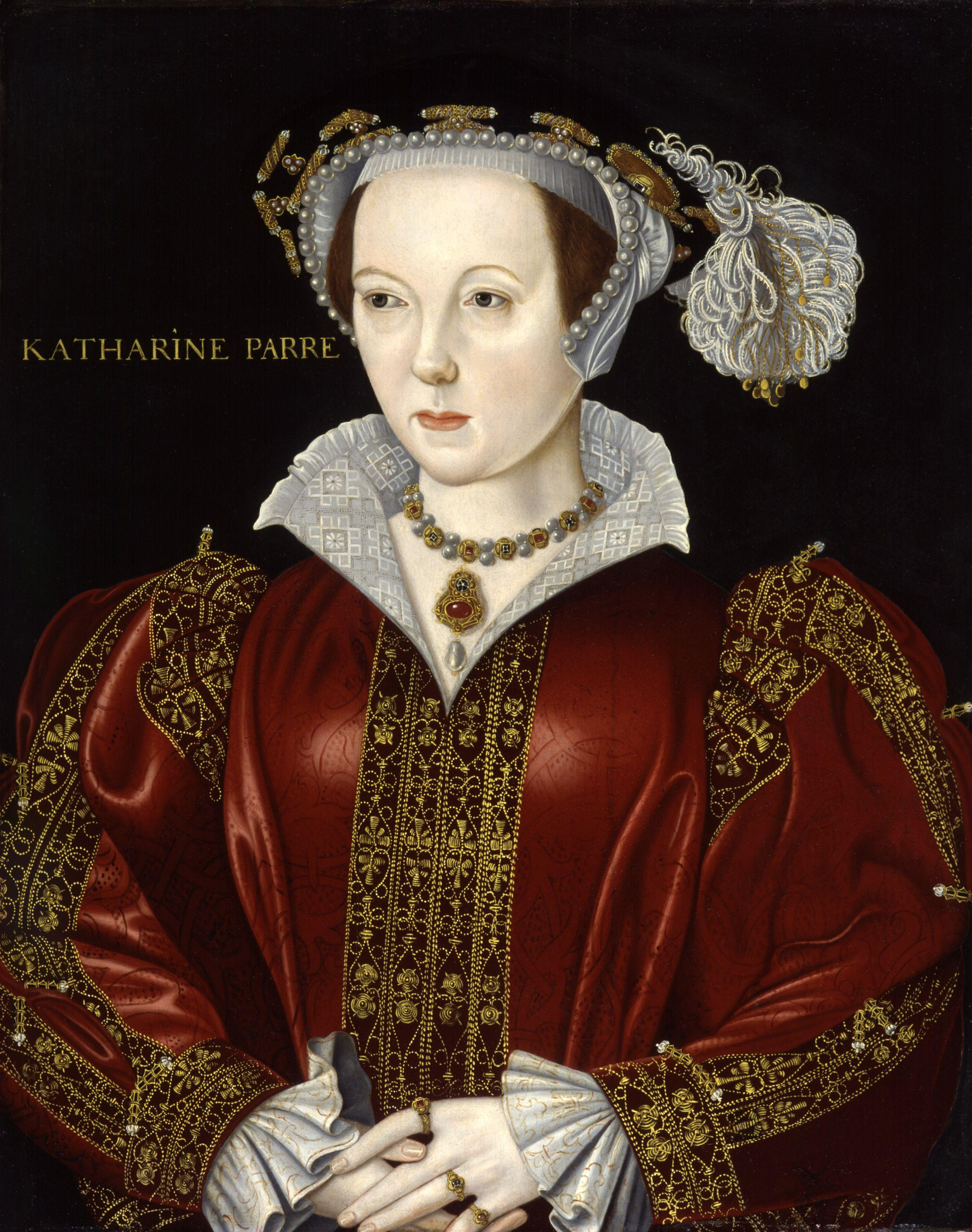
Henry's belief that Anne of Cleves was not his wife prevented her from receiving a coronation, while his final consort, Katherine Parr, was not favoured with a coronation for reasons that remain unclear. However, it is possible that Henry did consider crowning his fifth wife, Katherine Howard. The royal couple departed on a northern progress in the summer of 1541, partly because Henry was determined to ensure the north's obedience to him following recent rebellion in the area, and partly because he hoped to meet his nephew, James of Scotland, at York. One ambassador reported that Henry intended to have Katherine crowned at York, which would have marked a break with the past given that both Katherine of Aragon and Anne Boleyn, not to mention the medieval consorts, had been crowned in London. The coronation did not take place, perhaps because Henry was waiting for his consort to provide him with an heir. She did not, of course, and her execution the following year prevented her from being crowned.

Guildford Dudley, consort of Jane 
(c. 1537/8-1554), consort 1553

Whether Lady Jane Grey should in truth be referred to as Queen Jane I of England continues to be disputed by modern historians, but if she was rightful queen, as Eric Ives argues, then her husband Guildford Dudley should be viewed as her consort. Guildford, who was probably younger than his wife, most likely would have been crowned alongside his wife had Mary Tudor not successfully seized the crown from Jane and had the young couple imprisoned in the Tower of London. Contrary to popular belief, there is no evidence of animosity or dislike between Jane and Guildford and the young noblewoman continued to refer to herself as Lady Jane Dudley even while imprisoned. When Guildford requested to see Jane before their executions on 12 February 1554, Jane refused because the sight of one another would 'increase the misery in both, and bring much more suffering'. Fifteen or sixteen when he was beheaded, Guildford Dudley was the first male consort since Geoffrey of Anjou, husband of the Empress Matilda.

Philip II of Spain, consort of Mary
(1527-1598), consort 1554-1558

Portrait of King Philip II of Spain, in Gold-Embroidered Costume with Order of the Golden Fleece.jpg

Mary I's husband, Philip II of Spain, was never crowned. It is clear that he personally resented his wife's decision not to arrange for his coronation, because it confirmed that his wife took precedence at least in governing England. This absence of a coronation was part of a broader curtailing of Philip's powers and influence in Mary's realm. Philip was made king by an Act of Parliament stipulating that he 'shall aid her Highness... in the happy administration of her Grace's realms and dominions'. It is possible that the decision not to crown Philip was at least partly a result of the widespread antipathy to Mary's choice of a husband who was both Catholic and Spanish. 


In the period 1066-1558, the consort expected to be crowned alongside her husband (or more rarely, his wife). It was unusual for the consort not to be honoured with a coronation and usually, if the ceremony did not take place, it was due to extraordinary circumstances. These circumstances included political troubles, as in the case of Philip II; domestic insurrection and rebellion, as Jane Seymour and Guildford Dudley discovered, the latter being deposed alongside his wife; and the king's decision to wait for his consort to prove her fertility, as occurred with Henry VIII's later consorts. In the case of Margaret of France, it is unknown why her husband neglected to provide her with a coronation, although evidence suggests that she appeared wearing a crown on public occasions, a privilege denied to the other uncrowned consorts. Whether the consort accepted the absence of a crowning or not depended on their personality. No evidence survives for how Henry's later consorts felt, or perhaps Isabelle of France. Nor do we know whether Guildford Dudley minded, but given that his wife was also not crowned before she was deposed, it is unlikely that he had much say in the matter. But evidence suggests that Philip resented what he perceived as the curtailing of his rights in England; the absence of a coronation confirmed his supplication to Mary, at least in her own realm.

Friday, 23 January 2015

Mary I and Religion


The religious policies of England's first queen regnant, Mary I (1553-58), undoubtedly defined her reign, both within her lifetime and within the historiography subsequently produced about her. Mary's infamous sobriquet, "Bloody Mary", derives from her alleged bloodthirsty persecution of 300 godly Protestants. In popular culture, the queen is often depicted as a vengeful, tyrannical and cruel woman who mercilessly ordered the deaths of hundreds of her subjects for their religious beliefs. Mary's Catholic religion was central to her sense of identity. It was recorded that she 'felt so strongly on this matter of religion that she was hardly to be moved'. Yet recent historians have, quite rightly, questioned the traditional interpretation of Mary's decision to return England to Roman Catholicism as foolish, naive and contrary to her subjects' wishes. Historians, including Eamon Duffy, have put forward compelling evidence for much of the general population's continuing loyalty to the Catholic religion and their hostility towards the Protestant reforms introduced in the reign of Edward VI. In certain geographical areas, including much of the north and southwest, Catholicism continued to be embraced wholeheartedly. The succession of a Catholic queen was viewed eagerly and delightedly, and Mary's religion indisputably contributed to the overwhelming support she received when fighting against the regime of Lady Jane Grey in the summer of 1553, a struggle that she was successful in. Susan Brigden has rightly said that, upon her accession, 'there was... popular rejoicing at the restoration of the old faith', as relics, altars and the Mass were restored to churches across the country. It is significant that the Mass, in particular, was sung across England not by royal command but 'of the people's devotion'. 

Contrary to the popular legend of Queen Mary as a bloodthirsty and tyrannical monarch who forced the unpopular Catholic religion upon her unwilling subjects, she initially demonstrated, in the words of Ann Weikel, 'flexibility and political sensitivity'. The Catholic religion was not immediately reintroduced until several months into the queen's reign. Mary may have been unsure of her subjects' attitudes and clearly desired to proceed carefully and hesitantly in so delicate and controversial a matter. On 18 August 1553, the queen issued a proclamation promising that she would not coerce any of her subjects into practising Catholicism until parliament was called, an announcement which mirrored Queen Elizabeth I's promise not to 'open windows into men's souls'. Mary faced a dilemma, however. The situation in England, both religious and political, was not the same as it had been in her youth, over twenty years earlier, when Roman Catholicism was still the state's religion as it had been for hundreds of years. The dissolution of the monasteries in the reign of her father, Henry VIII, had profited the upper and middle orders, who understandably were reluctant to renounce the wealth they had acquired from dissolved abbeys and religious houses. The queen was cautioned by Bishop Gardiner that enforcing the restoration of church lands would fatally undermine the Catholic cause, and wisely she chose not to follow that path. In October, the reforms of Edward's reign were repealed during the first session of Mary's parliament. The queen legislated that her parents' marriage had been good and lawful, and rejected the Supremacy of the Church. On 30 November 1554, England was absolved by Cardinal Pole, and two months later, the Royal Supremacy was formally repealed. Leading Protestant churchmen, including Archbishop Thomas Cranmer, John Bradford, John Rogers, John Hooper and Hugh Latimer were imprisoned. Mary disliked Cranmer, in particular, for she held him responsible for the annulment of her parents' marriage.

Mary had made an unpopular religion with Philip of Spain in July 1554, a marriage that provoked Wyatt's Rebellion in early 1554 and was linked by her resentful Protestant subjects with 'popish' tyranny and foreign domination. They had reason to worry, for in November the medieval heresy laws were revived, in which burning at the stake was issued as punishment for heretical practices and beliefs. Traditionally, historians have asserted that the queen faced an impossibly difficult uphill battle in her desire to restore Catholicism that she was never going to succeed in. As Brigden explains, 'the old world of religious unity and obedience was broken'. Ambivalence existed among the general population to the idea of papal supremacy, while traditional Catholic practices such as prayers for the dead, belief in purgatory, processions, creeping to the cross on Good Friday, palms on Palm Sunday, and the 'burial' of the Host in the Easter sepulchre proved exceptionally difficult to reintroduce across the country. However, while the Marian regime faced difficulties, it is inaccurate to view their religious policies as backward and stagnant. Altars, windows and vestments were reintroduced into parish churches alongside resplendent roods, but Cardinal Pole, who arrived in England in late 1554, was a renowned reformer who 'had deeper designs for Catholic reform than the recovery of what was past' (Brigden), and restored old practices as means of moving forward with new reforms. The Marian regime had a focus on scripture, teaching and education that had been lacking in traditional Roman Catholic systems. Thus, papal supremacy and priestly power were marginalised in the reforms of the Marian Church, while the cult of the Blessed Virgin, saints and pilgrimages played far less of a role in popular devotion than they had done previously. Catholic reformers hoped to fully restore England to the old religion by reconciliation and education, pursuing an initially peaceful and positive path that hoped to renew the traditional religion of Catholicism. The cardinal 'had considerable experience and talent to bring to the revitalization of the faith', given his excellent reputation as a humanist and his role as advocate for reform at the early sessions of the Council of Trent (Weikel). He assured Parliament in late 1554 that he had arrived in England 'to reconcyle, not to condemne... not to destroy but to build... not to compel but to call agayne'.


Above: Cardinal Reginald Pole.

Pole placed particular emphasis upon episcopal and clerical leadership and training, concentrating on the education of the clergy and, through them, the laity. These bishops produced strong defences of the Catholic faith. The Marian regime hoped to take advantage of the expanded printing press, as the Protestant regime of Edward's reign had done so so efficiently and effectively. Thomas Watson, bishop of Lincoln, and Edmund Bonner were two notable clerics who authored defences of Catholicism. In his efforts, Pole was assisted by the Pope, who later recalled him on charges of heresy. The Marian programme of Catholic restoration, however, inevitably included the pursuit of heresy; a pursuit validated and made possible by the return of the heresy laws late in 1554. It is an exaggeration to claim that most of England's Protestant subjects were brutally and cold-bloodedly sent to the stake by their hateful, murderous queen. Notable clerics were sent to the stake, including Bishops Hooper, Latimer and Ridley late in 1555 and Archbishop Cranmer in the spring of 1556. The burnings were motivated by the conviction of the queen and Pole that heresy needed to be exterminated from society in order to prevent its spread, for it was a disease that had the power to 'infect'. The Marian regime hoped to reconcile dissenting subjects and bring them back to the Catholic fold, meaning that, in the long-term, each burning was an act of failure for the regime. The martyrs were widely supported at the burnings, meaning that the executions came to be held in secret, with the hope of avoiding large crowds. They gradually became less and less popular. After June 1558, the burnings at Smithfield were halted. Mary's decision to restore the medieval heresy laws and, with them, the death by burning for heresy, has been viewed by historians as crucial evidence of her 'backward' and 'ignorant' thinking, her inability to adapt to current situations and circumstances, but it is impossible to identify who was truly responsible for the burnings, as Weikel notes: 'there is little explicit evidence for her [Mary's] continuing involvement, except for the obvious fact that as queen she could have halted the process at any moment'. 


Above: Thomas Cranmer (left) and Hugh Latimer (right) were both burned at the stake in Mary's reign.

It is important to recognise that the negative depiction of Mary I's religious policies ultimately lies in the success of Protestant propaganda and its impact on the creation of national history. As Weikel explains, this propaganda has obscured the many positive aspects of the queen's religious regime. It is virtually impossible to know with any certainty how popular her restoration of Catholicism was, for we lack the attitudes of ordinary people across the country. Historians have uncovered evidence of a desire to return to the old religion, and celebrations across England at news of Mary's accession speaks volumes about her initial popularity among her subjects. In the end, circumstances beyond the queen's control defeated her efforts at Catholic restoration: 'Mary's regime was fatally undermined, not so much by failings in policy, but by disasters beyond human control' (Brigden). Pole was recalled by a vengeful pope, which demoralised both him and the queen, while a  'devastating mortality crisis' in 1558-9 was significant in that the queen was one of its victims. Mary died in November 1558, aged only 42, with no Catholic heir and having been queen for only five years: the shortest reigning of the five Tudor monarchs. Had she given birth to a Catholic heir, had she reigned for longer, it is quite conceivable that England's return to Roman Catholicism might have been, in the long-term, successful. The Marian regime was not 'backward' or 'stagnant' in its religious reforms and policies. It was energetic, vivacious, resourceful and purposeful in seeking to restore the old religion. As eighteenth-century historian John Lingard explained, Mary's policies failed, not because they were unpopular or 'wrong', but because her reign was too short to fully establish them, while natural disasters beyond her control ultimately undid her efforts. Elizabethan propaganda skilfully 'stamped Catholicism as an alien presence in England, and has consequently prevented 'a just assessment of the aims and achievements of the Marian Church'' (Weikel and Duffy). We, however, do not have to uncritically read such propaganda in our own times. We can afford England's first queen regnant respect and admiration for her concerted attempts to restore Roman Catholicism to a country which, in many respects, cried out for its return upon her accession. 

Sunday, 20 October 2013

Anne Boleyn and Spanish Sources

Doomed: Queen Anne Boleyn, who was executed in 1536, wore a pearl choker with a dangling 'B' pendant
Above (left): Queen Anne Boleyn, accessed online at the Daily Mail.
Above (right): Pedro Calderon de la Barca (1600-1681); Spanish playwright, dramatist and poet.

The Spanish ambassador at Henry VIII's court, Eustace Chapuys, and Nicholas Sander, writing in the reign of Elizabeth I, were two individuals who notoriously slandered and criticised Queen Anne Boleyn, second consort of Henry and mother to Elizabeth. While Sander believed she was a witch and a monster, Chapuys characterised her more in the guise of a manipulative, murderous shrew who bullied her husband, poisoned her rival Katherine, and plotted the death of her stepdaughter Mary.

Yet, as Paula de Pando makes clear in her essay 'Unqueening the queen: the Spanish image of Anne Boleyn', Chapuys was hardly the only Spanish writer who created a monstrous depiction of the queen. In Spain, particularly as the European Reformation further developed and relations between England and Spain soured and complicated, Anne came to be more and more attacked. One such example is the play La cisma de Inglaterra (The Schism in England), created by Pedro Calderon de la Barca, dating from c.1627, long after her death.

Relying on the Spanish Jesuit Pedro de Ribadeneyra (1587)'s history Historia eclesiastica del cisma del reino de Inglaterra (Ecclesiastical history of the schism in England), de la Barca set out to create a play which, occurring in context of worsening relations between England and Spain, encouraged an invasion of England while celebrating the reign of Queen Mary Tudor. The play initially introduces Anne as a seductive but ambitious woman who seduces the French ambassador Charles while a lady-in-waiting to Katherine of Aragon. de la Barca characterises her as de los hombres bellisima sirena / pues aduerme a su encanto los sentidos / ciega los ojos y abre los oidos ('that siren who enchants men's quietened senses / Blinding their eyes and opening their ears'). Clearly, like both Chapuys and Sander, de la Barca believed that Anne's unnatural sexuality was lethal to unsuspecting men.


Above: Anne Boleyn the seductress? The Other Boleyn Girl (2008) certainly encouraged this view.

In the play, de la Barca was also careful to present Anne as 'mujer altiva. Su vanidad, su ambicion, su arrogancia y presuncion la hacen, a veces, esquiva, arrogante, loca y vana'. ('Anne is proud; her vanity, ambition, and presumption make her at times disdainful, arrogant and wild, as well as being frivolous'.) Spanish audiences are also encouraged to react hostilely to the presentation of this woman as 'en secreto luterana' ('in private a Lutheran'). As Paula de Pando notes in relation to these and similar verses: 'This is where we see the myth of the evil temptress at is best, encapsulating all the negative stereotypes which were spread by Catholic writers and which even pervaded many supposedly canonical Protestant writings'.

Eventually, having married her and discovered her supposed adulteries, the king rejects Anne in horror and orders her execution. Afterwards, her bloodied corpse is lain at the feet of her rival, Mary. In context of Anglo-Spanish relations: 'Anne's exemplary punishment becomes a spectacle intended to incense the masses and encourage them to fight against the enemy.... Anne's transgression is portrayed as a crime that perverted the whole country: taking her revenge on the corpse of the offender, Mary is restoring the peace of the kingdom and restating 'the true faith''. De La Barca knowingly portrays Anne as an evil usurper who has brought heresy to the realm, while mistreating the Spanish (Katherine and Mary). The play encourages a Spanish invasion of England in order to restore Catholicism to the realm.


Above: the play was written in context of worsening Anglo-Spanish relations, which had begun deteriorating in the reigns of Elizabeth I (above left) and Philip II (above right). 

Clearly, Eustace Chapuys was not the only Spaniard to violently disparage Anne Boleyn, casting her as a heretic, poisoner, witch and adulteress. Spanish playwrights encouraged a hostile and licentious picture of the queen in their writings in order to support an invasion of England, to rid the realm of heresy and restore Catholicism. Drawing on religious stereotypes, gender beliefs, and cultural views, they created monstrous depictions of those they held responsible - including Anne Boleyn, mother of the Protestant queen, Elizabeth I.

Friday, 8 February 2013

Catholic Martyr or Scottish Traitor? The Execution of Mary Queen of Scots


On this day in history, 426 years ago, Mary Stuart, queen of Scotland and formerly Queen of France as the wife of Francis II, was beheaded for allegedly plotting to assassinate her second cousin and fellow queen, the English monarch Elizabeth I. This charismatic, alluring and complex woman was praised, adored, scorned, despised and vilified throughout her lifetime, but her controversial execution shocked Catholic Europe - despite the fact that they had, in essence, neglected her as nothing more than a nuisance - and led to the portrayal of Mary as a martyr in Catholic sources which violently condemned her cousin. 

Mary's short reign as the French queen was brought to a rapid end by her husband's premature death while still a youth, leaving her a widow aged just eighteen. A well-dressed, highly intelligent and cultured woman, Mary has been described by Julian Goodare as being 'unusually tall', her beauty 'universally and fulsomely praised', while her 'charm, wit and grace' were extolled by those who knew her. Returning to Scotland as its queen following her husband's death, Mary had, undoubtedly and unfortunately, concluded the most satisfactory and peaceful period of her life. A Catholic queen viewed as more French than Scottish in a land eagerly embracing austere Protestantism, Mary was regarded with ambivalence at best and hostility at worst by her Scottish subjects, who viewed her as a foreigner, despite having been born in Scotland as the daughter of the Scottish King James V. 

Despite her later poor reputation, Mary's conduct during her queenship in Scotland can be praised, for despite her sincere Catholic religion she tried fulsomely to maintain peaceful relations with the Protestant Scots, endeavouring to work with the regime following an agreement with her illegitimate half-brother Lord James Stewart. As Retha Warnicke notes: 'negative assessments of Mary's qualities as ruler have virtually ignored the dispatches of Thomas Randolph, the English ambassador, who, although sometimes misled by Mary's statements, usually was aware of her whereabouts'.

 Failed marital negotiations eventually catalysed political unrest and dissatisfaction at Mary's court, with Mary falling in love with her cousin Henry Lord Darnley. Mary's feelings for him were apparently sincere, but most historians have concluded that the vain teenager Darnley only wooed the queen out of an ambitious desire to become king of Scotland and achieve political and material glory. However, Mary refused to permit her husband to attain regal hegemony, and he was never crowned or titled King of Scotland. It appears that the queen belatedly discovered that Darnley was vain, petulant, selfish, and an entirely unsuitable husband for a queen. This marriage alienated Mary's cousin Elizabeth, who arguably modelled her own cautious actions in opposition to the disastrous policies of her cousin. 

The queen faced increasing political conflict at her court, caused largely by differences in religion, political beliefs, and hostility towards the new consort. The Moray-Hamilton conflict severely threatened Mary's authority, although she was ultimately successful in suppressing it. Darnley became alarmingly jealous of his wife, believing that her failure to crown him king of Scotland resulted from her favour to other noblemen at court, who had poisoned her mind against him. Warnicke has suggested that 'contemporaries worked to undermine female rules with accusations that they were involved in sexual relationships with their advisers'. In view of this, the shocking events of 1566 which saw the violent murder of Mary's French secretary David Riccio make sense. One day at supper, the Scottish lords burst uninvited into Mary's private chambers where she was in the company of Riccio, seized the unfortunate secretary, and stabbed him fifty times in a brutal and violent death. Mary, who was actually pregnant at this time, was apparently threatened with a similar death. Notwithstanding, she soon afterwards gave birth to her only child, the future king of England and Scotland, James. 

However, despite the removal of Riccio from the political scene, Darnley continued to face hostility and contempt from other prominent Scots. Having departed for Glasgow after apparently suffering from a disease - perhaps smallpox or syphilis - Darley's house was blown up in Kirk o'Field, in Edinburgh. Although he managed to escape, he was shortly afterwards smothered in the garden. Mary was residing nearby at Holyrood. Those who disliked her believed that she had ordered her husband's murder, although there is no evidence of this. Following this, the ambitious Earl of Bothwell concocted a scheme to entrap the vulnerable Queen, seduce her, and then marry her. What followed was an abhorrent act of sexual violence, with the earl raping her. Mary married him, probably against her will, following this. Mary became increasingly unpopular with her already resentful subjects, because many believed that Bothwell had been the culprit for Darnley's murder, and because of her speedy and entirely unsuitable marriage to him soon afterwards, believed that Mary was complicit in Darnley's murder. She was therefore vilified as a murderess and a whore.

What followed, of course, is well known. 1567 saw Mary being deposed as Queen of Scotland and her son, James, ascended to the throne in her place, although as a toddler he did not in reality rule. The queen later escaped into England in 1568, apparently cutting her hair short and discarding her lavish costume in order to escape being detected. This desperate action following Mary being paraded publicly through the streets of Edinburgh, condemned as a 'whore' by hostile citizens. She was, at this point, 25 years old.

Twenty years later, in February 1587, Mary was sentenced to death at the castle of Fotheringhay, where she had been imprisoned since the previous year. The preceding decade had seen the former Scottish queen implicated in a variety of plots, including the 1571 Ridolfi Plot and eventually the Babington Plot of 1586. Whether Mary was involved in these plots, to depose her cousin and become Queen of England, is uncertain; she frequently denied so and asserted her innocence, but contemporary evidence convincingly suggests that she was implicit in plots to assassinate Elizabeth. Catholic rulers in France and Spain vigorously supported Mary, hoping to extend Catholic rule into England; unsurprisingly, they viewed the English Queen as a Protestant heretic, daughter of a whore and traitor. Elizabeth's principal Secretary, Sir Francis Walsingham, ensured that Mary's correspondence entrapped her. Believing that her letters were secure, when they were in fact deciphered and read by Walsingham, Mary continually wrote to Sir Anthony Babington, the mastermind of a murky plot in 1586 to assassinate Elizabeth and replace her with Mary. The plot also involved the Spanish king, who was personally hostile to Elizabeth, who promised to provide a Spanish army to seize Mary, crown her as queen, and do away with her cousin. 

Some may be surprised to note that Elizabeth actually was highly reluctant to execute her cousin and rival. Elizabeth, who deeply respected and revered both the monarchy and public opinion abroad, was well aware of the unsettling consequences if she decided to execute not only her cousin, but a fellow queen, who none but God had the power to depose. Of course, Elizabeth's sister Mary Tudor had faced a similar issue in 1554, when faced with the execution of her cousin and queen Jane Grey, but Jane had been a usurper, whereas Mary Stuart was the legitimate ruler of Scotland, even if she had been deposed in favour of her son. Elizabeth's biographer, Wallace Maccaffrey, believed that 'Elizabeth was confident that with adequate safeguards the genie [ie Mary] could be kept in the bottle'. However, Elizabeth's councillors were adamant that Mary had to go. She had been implicated in horrifying plots to kill Elizabeth for the last 15 years, and many despaired at the fact that, despite the overwhelming evidence, the Queen still prevaricated about getting rid of her cousin. 

Elizabeth agreed to her cousin's trial, but as Maccaffrey notes, she was 'grudging', and employed deliberate delaying tactics in order to try and prevent what was, essentially, an inevitability. The trial began in October 1586 at Fotheringhay Castle, with Mary, apparently, defending herself strongly and convincingly. She was charged with plotting to assassinate the queen, and was sentenced to death accordingly. Mary, according to sources, welcomed death, viewing herself as a martyr for the Catholic faith. She apparently stated that her cousin should beware the terrible penalties she would face from God if she dared to kill a queen, anoited by God. This, of course, could not have made Elizabeth's life any easier.

Although Mary had been condemned in October, it was only four months later that Mary's execution proceeded, after Elizabeth had finally agreed to her cousin's execution in what has been termed 'the most painful decision of her life'. Of course, considering Elizabeth's personal history and her renowned aversion to violence of any sort, it is easy to understand why she prevaricated and was so reluctant to order Mary's death. Her own mother had been executed on false charges of adultery when Elizabeth was just 2, while Elizabeth's friend Robert Dudley reported that, following Katherine Howard's execution when Elizabeth was aged 8, Elizabeth had declared that she would never marry. Plainly, she abhorred execution, and must have dreaded, if not positively loathed, the idea of sending a queen to the scaffold, in what only reawakened painful memories. Elizabeth may also have remembered her cousin Jane Grey's execution. The 17-year old queen, following her beheading, was mourned by Protestants as a martyr for the Protestant faith, and Mary Tudor consequently reviled and despised. Elizabeth probably feared that the same - reversing the religions - would occur if she authorised Mary Stuart's execution. 

Despite her hysterical reactions, Elizabeth finally agreed to Mary's execution. Mary received the news that she would die calmly, announcing to her attendants that she was dying for her Catholic religion, apparently ignoring the fact that she had been repeatedly implicated in plots to assassinate her rival over a 15-year period. Unlike the executions of three other English queens (Anne Boleyn, Katherine Howard and Jane Grey), Mary was not beheaded outside, but inside the hall of Fotheringhay Castle. The scaffold had been erected in the Great Hall and was draped in black. Mary wore a gold crucifix, stressing her devotion to Catholicism, a gown of black satin which revealed a scarlet bodice and petticoat - highly significant, as red was the colour of Catholic martyrdom - and short sleeves of satin in purple. Mary turned to her ladies at the scaffold, and announced that her troubles would finally be at an end. 

Mary had been denied a Catholic priest on the scaffold, and consequently ignored the Protestant Dean of Peterborough's prayers for her as he accompanied her. The executioner begged for the former queen's forgiveness, which she readily granted. Reciting her prayers, Mary was then beheaded with three strokes of the axe, an undoubtedly painful and brutal death caused by an inexperienced executioner - some have suggested that he was so overcome with grief that he was unable to carry out the deed effectively. Mary, whether people loved her or hated her, made a strong and lasting impression on all who knew her. Robert Wynkfielde, a contemporary, wrote following her execution:

...and so the executioner cut off her head... he lift up her head to the view of all the assembly... then, her dress of lawn falling from off her head, it appeared as grey as one of threescore and ten years old, polled very short... Tragically, Mary had been wearing a wig, and her true hair was grey, showing how shockingly she had aged during her 20-year imprisonment. She was, of course, still only 44 years old at her execution. 

Then one of her executioners... espied her little dog which was crept under her clothes, which could not be gotten forth but by force, yet afterward would not depart from the dead corpse...

Mary Queen of Scots is one of the most controversial women to have lived in the Tudor period. A charismatic, cultured, intelligent and passionate woman, she was also highly reckless, rash, and at times incredibly foolish, in contrast with her cautious cousin Queen Elizabeth. Historians divide sharply in how they assess her - was she a martyr for the Catholic faith? Was she an idiotic woman who was ruled by her heart and let men dominate her? Or was she simply unlucky, the victim of Scottish religious politics and men of power? What cannot be denied is that Mary was repeatedly granted chance after chance by Elizabeth, who forgave her time and time again. Yet Mary repeatedly embroiled herself in treasonous plots to assassinate her cousin. It is surprising how long Mary actually lived, considering that Elizabeth had enough evidence to order her death many years previously. Mary certainly wanted to be Queen of England, and her disposition from the Scottish throne occurred in undoubtedly tragic and unlucky circumstances. But she was not politically astute, as her cousin was, and she failed to appreciate her good fortune in retaining her life at her cousin's jeopardy. As tragic as Mary's ultimate fate was, one cannot but feel, regretfully, that it was a logical consequence of her own actions.