Showing posts with label gender. Show all posts

Wednesday, 4 January 2017

Queenship in England


Happy New Year! I am delighted to inform you that my new book, Queenship in England, will be published on 12 January 2017 by MadeGlobal. The book is currently available on Amazon to preorder on Kindle, and will be available soon in paperback. You can preorder it on Kindle here.

Queenship in England is a study of the institution of queenship between 1308 and 1485, and examines the experiences of the nine women who occupied the position of queen during that period: Isabella of France; Philippa of Hainault; Anne of Bohemia; Isabelle of France; Joan of Navarre; Katherine of Valois; Margaret of Anjou; Elizabeth Wydeville; and Anne Neville. The book has been praised by Amy Licence, author of Catherine of Aragon: An Intimate Life of Henry VIII's True Wife, as offering 'an interesting and accessible exploration of medieval queenship in relation to gender expectations', while Toni Mount, author of A Year in the Life of Medieval England, described it as 'very readable' and 'thoroughly researched'. 

It was absolutely fascinating to research and write this book, and I hope you will enjoy reading it. 

Friday, 17 June 2016

Queenship and Witchcraft: Joan of Navarre

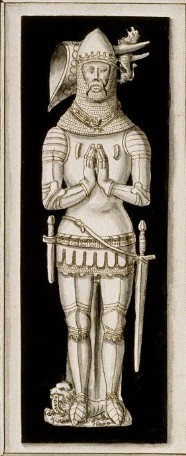
Joana Canterbury.jpg

In 1437, a week ago today, Queen Joan of Navarre died in London at the age of about sixty-six. Joan is one of the lesser known medieval queens of England and her controversial reputation is founded on the accusations of witchcraft that were levied against her by her stepson, Henry V. This neglect of Joan is unfortunate, because in reality she was one of the most intelligent, politically astute and capable consorts. Recently, I undertook research into Joan's life and discovered that there was a great deal more to her story than the rumours of sorcery that blackened her name.

Born around 1370 in Pamplona, Navarre, Joan married her first husband while still a teenager, in 1386. Her husband was John IV, duke of Brittany. The marriage appears to have been successful and the couple had nine children together. As duchess of Brittany, Joan participated in the ceremonies of court and she is known to have interceded for individuals who displeased her mercurial husband, including Clisson, constable of France. In her activities, Joan conformed entirely to contemporary expectations of how a noblewoman should behave. She fulfilled the roles of mother, wife, intercessor and patron. Her interest in court ceremonial, moreover, indicates that she was both cultured and artistic. 

Jan5Bretan.jpg
Above left: John IV, duke of Brittany, Joan's first husband. 
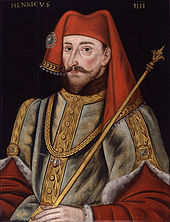
Above right: Henry IV of England, Joan's second husband. 

In 1399, when Joan was around the age of twenty-nine, her husband died. She chose not to remarry immediately after her husband's death and instead fulfilled the role of regent for her son, John V, during his minority. It was during this period that Joan clearly emerges as a politically astute, capable and wise ruler. In 1403, she remarried. Her second husband was Henry IV of England. By marrying Henry, Joan placed herself in an ambiguous position, for her husband was a usurper. As with the later consorts Elizabeth Wydeville and Anne Neville, whose husbands also unlawfully usurped the throne, Joan was required to legitimise her husband's claim to the throne. Rumours circulated that there had been long-standing affection between Henry and Joan, and it is possible that their marriage was a love match.

However, Henry also demonstrated shrewdness in selecting Joan to be his consort. She was highly experienced in the affairs of government, intelligent and pragmatic. Moreover, in bearing her first husband nine children, she was clearly fertile, which was undoubtedly important for a medieval king whose claim to the throne was not fully secure. Unfortunately, during their ten-year marriage Joan did not bear Henry an heir, although it is possible that she experienced stillbirths. Fortunately, the queen enjoyed excellent relations with her stepchildren, including her husband's son Henry. 

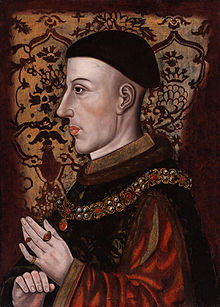
King Henry V from NPG.jpg
Above: Henry V, Joan's stepson.

Henry IV's death, however, changed Joan's life. Financially straitened, the new king, Henry V, accused Joan of witchcraft in a ruthless attempt to seize her lands and income with which to finance his foreign wars. As a highborn woman, Joan was vulnerable to accusations that were usually gender specific: namely witchcraft, sorcery and adultery. Other medieval noblewomen suffered from similarly ignominious accusations: both Eleanor Cobham, duchess of Gloucester, and Jacquetta, duchess of Bedford, were accused of witchcraft. There is no surviving evidence that Joan ever engaged in activities associated with witchcraft, and it is surely significant that she was later restored to favour.

During her imprisonment, Joan resided at Pevensey Castle and later at Nottingham Castle. Her stepson died in 1422 and was succeeded by his only son, Henry VI. Joan died on 10 June 1437, the same year in which her successor, Katherine of Valois, also died. As with many medieval queens, there is a lack of evidence concerning Joan's life and her experiences as queen. However, she seems to have enjoyed success during her husband's reign, but his death placed her in an ambiguous position, for she had borne him no children and thus was unable to exert influence in the politics of her stepson's reign. With no-one to support her interests, she was vulnerable to the whims of Henry V and was humiliated when he seized her income to finance his wars on the Continent. Although she died in obscurity, Joan of Navarre emerges as a politically astute, intelligent and influential consort, whose eventual fate bears witness to the dangers faced by highborn women in the Middle Ages. 

Saturday, 8 March 2014

International Women's Day and the Tudors


Today, 8 March, is International Women's Day. It concentrates on, and celebrates, the collective efforts of women's struggle for equality. Love and respect for women, ostentatiously, is celebrated while women's political, cultural and social achievements are recognised. The first Women's Days were held in the early twentieth century, and some observers nowadays regard International Women's Day as "redundant". Continuing inequalities persist for women. Sexual violence is rampant across the world - in South Africa, it is estimated that a woman is raped every 26 seconds while 500,000 rape cases take place in the country every year. 44 per cent of all UK women state that they have experienced physical or sexual violence since they were 15. In Egypt, 99.3% of women and girls have been subjected to sexual harassment. The customary form of insult directed against women is both sexually charged and explicitly gendered: "whore" or "slut".


Above: Anne Boleyn (portrait - left) is still often seen as a temptress who got what she deserved (right).

The Tudors didn't celebrate International Women's Day - in fact, the very notion would have been downright unthinkable. This was a patriarchal society which viewed women with contempt as lustful, empty-headed, sexually voracious inferiors who needed to be constantly controlled and regulated by their menfolk. Sexual violence, assault and murder - then as now - were pervasive at all levels of society. But the case of Tudor noblewomen and queens is especially important in demonstrating that these trends and views of women have continued to infiltrate modern society. Anne Boleyn, second and most famous wife of Henry VIII, is a clear example of this.

In a disturbing article written recently, feminist scholar Susan Bordo questioned why "the lethal, calculating social climber has been our default Anne Boleyn". Philippa Gregory's The Other Boleyn Girl famously inaugurated a perception of Anne as a malicious, spiteful and evil witch who plotted the murders of her enemies, slept with her brother, delivered a deformed child borne by the Devil and bullied and harassed anyone who crossed her path. Hilary Mantel took this one step further in Wolf Hall and Bring Up the Bodies; providing a depiction of the Queen that has been described by The Telegraph as "vile and manipulative" and The Morning Star as "so spitefully ambitious" that "one feels any king would be justified in beheading" her. This last statement is especially disturbing and unsettling. Not only is it explicitly suggested that a woman who dares to transgress accepted norms actually deserves death; but it also both presupposes, and accepts, that the real Anne Boleyn may have been very close to the modern depiction of her - in this case on stage - and so might have deserved her awful fate. Even the mostly sympathetic performance given by Natalie Dormer in The Tudors subscribes to this archetype in the first series in presenting Anne as a manipulative seductress who orders Henry to "seduce me!"

It's worth saying, as Bordo does, that actual historical evidence doesn't bear this point out. Professor Retha Warnicke, a noted Tudor historian, recently criticised Gregory for manipulating Warnicke's evidence to provide a sensationalist and controversial portrayal of Anne. As she writes: "the Anne Boleyn of The Other Boleyn Girl is not an early modern woman". Both Gregory and Mantel provide fantasies that are explicitly modern. The real Anne Boleyn would never have brazenly seduced Henry, staring at him openly in front of the court or invited him to put his hand up her dress, as in The Tudors. She was both educated and religious, and would surely have both read, and subscribed to, literature prevailing in educated culture that explicitly warned women to preserve their virtue, behave modestly, and dress circumspectly. But Anne Boleyn continues to be regarded as both the villain and the temptress who destroyed a good marriage and, whether guilty of adultery or not, deserved her death. As Gareth Russell writes: "There is a pervasive view in modern literature and history that holds that although Anne Boleyn probably was not guilty of the crimes for which she perished in 1536, she nonetheless basically deserved her eventual fate. To paraphrase a popular television show, Anne played the game of thrones - and lost. She was a game player, who deserved neither pity nor special treatment". As feminist scholar Andrea Dworkin once noted, for a woman to be "good" in our culture, she needs to conform to the same criteria set forth in fairytales: she must be like Sleeping Beauty, quiet and quiescent to the point of practically being unconscious; and the passive object of events, neither their initiator nor their agent. Because Anne Boleyn has been seen as neither passive nor quiet, she has been termed a "bad" woman who got her comeuppance.

But what is perhaps most disturbing of all is that these stereotype exists within a wider cultural perception of women as sexually aggressive and manipulative. The shocking statistics of sexual assault and rape given earlier in this article demonstrate that this belief has not resided - in fact, it remains an entrenched part of modern society. Even today, women are usually viewed as to blame in cases of sexual assault: they are usually deemed to have been "asking for it". I read an article written by a student recently which described how, following her experiences of sexual assault, she was incredulously asked by teachers why she had not sought to stop it. She was not believed and nothing happened to the culprit. Statistics indicate that 97% of rapists get away with it.


Above: Katherine Howard, fifth wife of Henry VIII and quintessential victim of the early modern culture of misogyny, patriarchy and sexual assault.

A quote is worth giving because it essentially encapsulates the premise of this article:

"Women nowadays are not supposed to be victims, it's considered somehow demeaning, but when one looks at the extraordinary misogyny of the sixteenth century and the crushing physical, emotional, biological and social burdens these women were subjected to on a daily basis... they were victims." (Gareth Russell, 2012).

Anne, of course, has not been the only Tudor woman misinterpreted, misrepresented and essentially despised because of the prevailing dictates of cultural misogyny and receptions of female sexuality. Katherine Howard is an example both of the very real physical assault and sexual abuse experienced by women, both then and now; and more pertinently of the ways in which women continue to be deemed the instigators or, at least, facilitators of these sexual encounters. When she was 12 or 13, Katherine was seduced by a musician in her step-grandmother's household who invited her to meet him in dark places, where no one else was present, and then proceeded to fondle and, I would argue, harass her. Other women in the household became extremely concerned about this musician's behaviour and sought to protect the young Katherine. It is, of course, true that girls were married off at exactly this age in the Tudor period, and notions of child abuse were completely different to the twenty-first century (some would argue the concept of childhood didn't even exist in the early modern period); but that shouldn't necessarily then mean that experiences of sexual abuse, even violence, should run the risk of being invalidated simply because they were interpreted differently in different cultures. That Katherine was unwilling there is no doubt, for she requested the musician not to go any further. When she was 15, she was probably sexually abused, even raped, by another gentleman in the household who maintained a frightening and aggressive hold over her even when she became queen.

When Katherine was executed in 1542, it was effectively accepted that she was not only guilty of the crimes for which she died but that she was a common whore who deserved never to be spoken of again. Silence surrounded her name in this culture of shame. Bordo speaks of "our default Anne" - well, one could argue that we only have one prevailing conception of Katherine Howard. Unless she's been termed a victim, as one or two historians have suggested, she is almost always presented as a promiscuous whore who cheated on an ageing husband and, like Anne, deserved her grisly fate. But if one bears in mind the continuing perceptions of female sexuality and culpability in the modern world, then it can only be imagined how much worse the situation was almost 500 years ago for these women. It was culturally and socially ingrained that these women were licentious beings who used witchcraft to seduce and emasculate men. They were viewed as followers of the Devil, and men were explicitly warned to be wary of them.

From this perspective, it becomes nonsensical to think that the documents relating to Katherine's downfall are accurate representations of what really happened. Her "promiscuity" actually derives from the language and discourse used by men and women in these interrogations to explain and account for what had happened. Not only, as Lyndal Roper notes, did early modern men and women talk about sex differently, but if women were deemed to be promiscuous and aggressive as a fundamental part of their nature, then is it any wonder that Katherine was repeatedly described as a seductress who initiated meetings with Culpeper, or who invited Dereham into her bedchamber? To me, at least, these interrogations reflect not so much the truth as the early modern culture of female sexuality and blame.


Women continue to be objectified.

Today is International Women's Day and it goes without saying that the monumental achievements of women across the world should be recognised and celebrated. But let us not forget that levels of sexual violence, objectification, and humiliation of women remains a disturbing phenomenon across the modern world. Tudor women were subjected to this on a regular basis and were always viewed as to blame. This therefore raises the unsettling question: just how far have women really come?


Sunday, 17 November 2013

Mary I's Death and Elizabeth I's Accession


Above: Sisters and queens. Mary I (left) and her sister Elizabeth I (right).

On this day in history, Thursday 17 November 1558, Queen Mary I of England died, probably of influenza, at St James' Palace in London. Her infamous and unsuccessful reign had lasted five extraordinary but bitter years, encompassing religious fervour, political turmoil and a greater involvement of England in international politics. Today, England remembers her by the infamous epithet 'Bloody Mary'. Her chief biographer, Professor David Loades, concedes that her reign was ultimately a 'failure'. Certainly, she has been eclipsed by her successful and brilliant younger sister Elizabeth, who succeeded to the English throne on Mary's death.

Having married Philip of Spain in 1554 - and so eventually becoming, by marriage, Queen of Spain - Mary had believed herself to be pregnant shortly after, but what eventually turned out to be a traumatic and humiliating phantom pregnancy in 1555 exposed her to scorn and left the Tudor succession in continued uncertainty. In March 1558, the year of her death, Mary expected the birth of a child, and made preparations in her will for the succession of her child to the throne of England. Nothing came of the so-called pregnancy, and by all accounts Mary had been the only person to believe in its existence. Her health began to slowly decline following that.

As both Loades and Anna Whitelock point out, from May 1558 Mary's health gradually worsened, and she suffered a fever in August. An influenza epidemic swept across London in the late autumn and claimed not only Mary's life but also that of her confidant, Reginald Pole archbishop of Canterbury. It has been conjectured that she might have been suffering from uterine cancer. On the day of her death, Mary stated that angels in the guise of children appeared to her, leading some historians to draw a tragic link between this and Mary's own strong desire to have children, a desire she never realised. She also spoke of how the word 'Calais' would be found imprinted on her heart; alluding to the national and international humiliation which England had endured following the loss of Calais, the only English stronghold in France, earlier that year, which had culminated in intensified dislike of the queen. Early on the morning of 17 November, the queen of England passed away in a lonely and abandoned court. Her contemporaries had long before flocked to Elizabeth's residence, to pay homage to the new queen.

Elizabeth was at her childhood residence of Hatfield when news of Mary's death and her subsequent accession reached her. Allegedly, although some doubt has been cast on this story, according to romantic legend Elizabeth was seated under an old oak tree, reading a book, when the councillors brought news. Sinking to her knees, she proclaimed in Latin in what has become immortalised: 'This is the Lord's doing, it is marvellous in our eyes'. Her godson, John Harington, however claimed that she actually made a speech confiding her sorrow in her sister's death and her amazement at God's decision to appoint her to the position of Queen. She asked her lords to help her in the business of ruling the country and promised her goodwill.

Mary's funeral took place on 14 December, and she was buried at Westminster Abbey, although her mother's body (Katherine of Aragon) was not moved there from Peterborough Cathedral as she had beseeched Elizabeth to do. Eventually, that tomb would be shared with Elizabeth, who died forty-five years later in 1603. The Latin inscription on the tomb translates as: 'Consorts in realm and tomb, here we sleep, Elizabeth and Mary, sisters, in hope of resurrection'.


Above: Mary and Elizabeth.

Unless Lady Jane Grey is included, Mary I was England's first ruling queen. She was expected to uphold the duties of kingship, embodied in the body politic, while symbolising her position as a woman with her own natural body. Her reign had lasted five bitter years, and one might consider how different her reign might have been if only the circumstances had been different. For one thing, she succeeded to the crown aged 37, old by the standards of the day to consider a first marriage and children. She was running on little time in terms of producing a Catholic heir to safeguard the faith so dear to her heart. One might wish that Henry VIII had married off his eldest daughter in her youth, particularly because of her desire to bear children, something which, tragically, she was never able to do.

Many of Queen Mary's decisions were doubtful; most infamously, her religious policies meant she became an unpopular and hated queen in a country where religious persecution was viewed as alien and un-English. But her desire to ingratiate England to a much greater degree in Europe can be applauded. Usually known as 'the Spanish Tudor', Mary's decision to marry Philip II of Spain has often been unfairly criticised, but her desire to align England with the most powerful and influential nation in Europe should be viewed as a shrewd and positive move designed to improve her country's security and bolster its international standing. Far from being the selfish, self-centred and out of touch monarch she is usually presented as in regards to this, Mary actually demonstrated a remarkably close consideration of her subjects' needs and best interests

By contrast, Elizabeth's accession on 17 November 1558 was to inaugurate a supposed 'Golden Age'; a prosperous, successful and godly reign entirely different to that of her hated sister. But in terms of understandings about monarchy and related issues of gender, Elizabeth undoubtedly owed a great deal to her elder sister. Mary was England's first ruling queen, not Elizabeth. Mary alone shouldered that burden in a country which had never experienced female rule in so definitive a sense; something Henry VIII had worked determinedly and bloodthirstily to avoid his whole reign. By being England's second queen regnant, Elizabeth was able to fully recognise and appreciate in a shrewd sense why her sister had failed, what she had done well, and what she was able to appropriate. Celebrated for her numerous speeches, it is actually very likely that Elizabeth drew strong inspiration from Queen Mary's given speeches. Consider the speech Mary gave in the wake of Wyatt's rebellion at the Guildhall in 1554, and this will be seen to have been the case.

Queen Mary, even by the standards of her time, was still relatively young at her death - she was forty-two years of age. She reigned the shortest out of all the Tudors, sitting on the throne for even less time than that of her teenage brother Edward VI. She had come to the throne amidst great controversy, opposition and hostility, intensified in the reign of King Edward on account of her Catholic faith. Her ability to dislodge the Duke of Northumberland, and with him Queen Jane, from power speaks volumes to her sense of purpose, her determination, her courage, and her faith. She was certainly not successful and prosperous in the way her sister Elizabeth I was. But Elizabeth had what Mary always lacked during her reign: time and youth. As one historian suggests, it would be more fruitful to compare Mary's reign with the first five years of Elizabeth's reign, since comparing a 5-year reign with that lasting 45 years will, inevitably, draw unfair and unrealistic conclusions.

Sisters, rivals, enemies - the relationship between Mary and Elizabeth was complicated, devastating and psychologically unstable. To the very end, Mary fought against appointing her younger sister her successor, a woman she continued to regard as a heretic and a bastard. But with the death of Queen Mary, Elizabeth's succession was to mark a spectacular and never before seen phase in England's history, forever immortalised as the 'Golden Age'. Where Queen Mary is 'Bloody Mary', Queen Elizabeth is 'Gloriana'.

Friday, 15 November 2013

Lady Gaga and the Politics of Burqa

Credit: Daily Mail
Above: Lady Gaga and the burqa.

The burqa forms extremely controversial attire in Western societies today. Although many Muslim women believe that it is an essential part of their religious and social identity, it has been attacked by critics as being a means of oppressing women within society. In 2011, it was reported that 66% of the British population believe that the burqa should be banned in all public places, while they were banned in France that same year, justifying this decision by saying: 'given the damage it produces on those rules which allow the life in community, ensure the dignity of the person and equality between sexes, this practice, even if it is voluntary, cannot be tolerated in any public place'.

Lady Gaga's song, 'Aura', released from her latest album ARTPOP, thus comes at an unsettling time in terms of burqa identity and gender issues of freedom and oppression. In the words of commentator Alyssa Rosenberg, the lyrics to this song 'are... politically disconcerting'. Concerning the burqa, they are as follows:

'I'm not a wandering slave, I am a woman of choice
My veil is protection for the gorgeousness of my face',

'Do you wanna peak underneath the cover?
Do you wanna see the girl who lives behind the aura, behind the aura?'

'She wears burqa for fashion
It's not a statement as much as just a move of passion'.

Yet, as Carmen Rios scathingly opines, 'instead of exploring the stories of Muslim women who wear burqas because they are... 'women of choice', she instead chooses to celebrate... the burqa by completely missing the actual point in exchange for making the religious garb sexy, edgy, acceptable to a broad audience of racist Islamophobic people'. In other words, Gaga is anti-Muslim through her portrayal of the burqa: 'instead of giving insight into a heritage that already exists, she superimposes her own desires - to be seen as sexual in a specific way - onto women who never asked for it'. A religious and cultural tradition is 'reduced' to 'a sexual ploy'.

One lady from Pakistan took to personally writing to Gaga expressing her disappointment with the track, claiming that the song 'sends the wrong message'. She questioned why Gaga, who had, in her opinion, done so much to empower young girls to love their own bodies, then went on to encourage women to sexualise the clothes that covered said bodies. By inviting men to 'peak underneath the cover', Umema from Pakistan argued that Gaga was arguing that 'if a woman shows signs of refusal, she is just being titillating and playing hard to get; that she secretly wants to be pursued and seduced'. This is dangerous, because it 'perpetuates violence against women'. Burqas are used to 'defy the male gaze', not to invite lust. To claim otherwise, Umema concluded, is 'insensitive and oversimplified'.


On the other hand, Myriam Francois Cerrah, writing for The Independent, completely disagreed with these negative opinions and claimed that 'Aura' actually emancipates Muslim women. Cerrah criticised the fact that Gaga was being condemned for allegedly 'supporting the patriarchy and insulting those women who are forced to wear the garb in question'. The burqa represents different things to different religions and cultures - whether piety, neo-feminism, or something else. Therefore Cerrah applauded Gaga's act of subverting 'the monopoly on meaning typically associated with the face veil as the evil imposition of male domination'. Passive and voiceless women are given a 'confident sexual identity and power', which could account for why the song has produced such shock and controversy: 'How dare a burqa-clad woman also be a confident sexual being?' One Muslim woman went so far to call the song 'amazing and uplifting'.

Alongside her other music and actions, Gaga's latest track 'Aura' has produced significant controversy. Some accuse her of recording it as a relentless money-making, attention-grabbing exercise, while others suggest she genuinely seeks to liberate Muslim women. By and large, responses to the track have been heavily negative. One wrote: 'Lady Gaga has decided to insult Muslims with her new song' after her 'exploitation of the gay community'. Others call her 'fake'. Whether Gaga really cares about the identity and culture of Islam, or whether she seeks merely to grab attention and controversy once more, is difficult to say. One thing's for sure - it's impossible to truly get behind Gaga's 'aura' as she seeks to remain controversial in music.

Sunday, 18 August 2013

A Formative Childhood?: A Comparison of the Reigns of Mary Stuart & Elizabeth Tudor


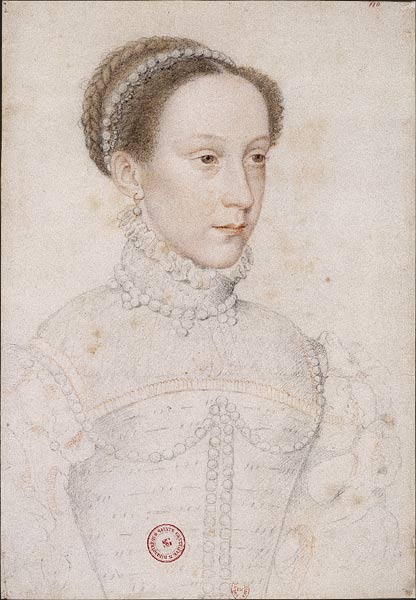
Above: queens, cousins, rivals. Mary Stuart, queen consort of France and queen regnant of Scotland (left) and Elizabeth Tudor, queen regnant of England (right).

Being a queen regnant in sixteenth-century Europe was no easy task. Prevailing misogynistic notions questioned whether women, as the inferior sex, had the right to rule over their male superiors. John Knox, the vehement Scottish Protestant preacher, opined in his The first blast of the trumpet against the monstrous regiment of women, attacking the rule of female monarchs such as Mary Tudor and Mary of Guise and published in 1558, that female rule was contrary to Biblical law. He bitterly concluded: 'For their [women's] sight in ciulie regiment, is but blindnes: their strength, weakness: their counsel, foolishenes: and judgement, phrenesie, if it be rightlie considered'. In view of this, the experiences of the queens regnant Mary Stuart, queen of Scotland, and Elizabeth Tudor, queen of England, should be considered in light of the customary expectations of figures such as Knox. 

Modern psychologists often suggest that childhood experiences are formative in governing later choices, actions and motives. Alfred Adler believed that people develop desires and drives during the childhood phase which later affects adulthood. Ann Smith concluded, in her article published by Psychology Today, that 'our own childhood experiences, which include parents, combined with our own personalities, our reaction to siblings and peers and the context of our lives send us off on a path with a particular set of beliefs and patterns that have a huge impact on our future relationships'. Although the psychology of queen regnants such as Mary and Elizabeth, living four hundred years ago, can only be guessed at, it is credible that the childhood experiences of these two queens, which were vastly different, dictated significantly their later actions and beliefs, particularly in relation to queenship and authority.


Above: John Knox's The first blast of the trumpet (1558) was aimed at attacking female rulers such as Mary Stuart and Mary Tudor (right). 

Both women descended from the first Tudor king, Henry VII, who had attained the crown of England through his defeat of the last Yorkist king, Richard III, at the Battle of Bosworth in August 1485. Elizabeth Tudor's birth had only been brought about by the annulment of her father's first marriage and his subsequent marriage to Anne Boleyn in 1533, with her birth occurring in September of that year. This marriage and the accompanied break with the Roman Church proved highly significant in European politics, particularly later on in the sixteenth century, for Catholic powers such as France and Spain viewed Henry VIII's divorce as illegal and his remarriage void, rendering his second daughter Elizabeth a bastard with no right to accede to the throne of England. Mary Stuart, by contrast, was the grand-niece of Henry VIII since she was the daughter of the Scottish king, James V (nephew of Henry), and his French queen Mary of Guise. Her line of descent and her claim to the English throne came through Henry's eldest sister Margaret Tudor, second child of Henry VII.

Elizabeth Tudor's childhood was extremely complex and must be viewed as, at best, topsy turvy. For the first three years of her life, she had occupied a central place in her father's affections as the heir to his throne following the bastardisation of her elder sister Mary. Besotted with his new wife Anne, the English king continued to hope, however, that she would bear him the much longed-for son to succeed Henry on the throne of England. Like most European rulers, Henry adhered to prevailing ideas that female rulers were unacceptable and contrary to God. This idea had, of course, provided the context for the annulment of his first marriage and his belief that his daughter Mary was illegitimate. Elizabeth enjoyed the luxury and splendour befitting an English princess, with her own household and servants, but because this occurred in the first three years of her life it is questionable to what extent she remembered or fully appreciated these luxurious early years.

In 1536, before her third birthday, Elizabeth's fortunes changed dramatically with her mother's loss of favour and eventual execution on charges of treason, adultery, and incest. While most historians firmly believe in Anne's innocence, her daughter was presumably shattered by the news of her mother's death, although at two years old how much she understood of the situation was very limited. Historians such as Sarah Gristwood and Maria Perry question how closely Elizabeth had bonded with her mother, for she had never resided with her. Following the custom of sixteenth century royal practice, Elizabeth had been nourished by a wet nurse and had been assigned her own household at Hatfield. Her visits to court had been relatively infrequent. Perhaps, as John Neale suggests, Elizabeth's 'emotional life was unaffected by her mother's fortunes'.

But this is slightly dubious. Following her mother's execution, Elizabeth was also, like Mary, declared a bastard, no longer in line to the English throne. Her title of princess was stripped from her, and it is probable that her father, by virtue of who her mother was, viewed her with considerable disfavour for a time. Probably Henry neglected Elizabeth in the immediate aftermath of her mother's death, for in the late summer of 1536 her governess Lady Bryan was forced to beg Cromwell for new clothes for the toddler. Later that year, however, she had returned to court and the Cardinal du Bellay observed the king's affection for his youngest daughter. By all accounts, during her life Elizabeth revered her father's memory and proudly proclaimed her parentage. By contrast, she is said to have mentioned Anne Boleyn's name only three times in her seventy-year long life. Does this indicate suspicion or even hostility towards her mother, who had been executed for the foulest of crimes? Historians such as Alison Weir think not, believing that she may have, as queen, commissioned George Wyatt to write a secret defence of her mother.

Although Elizabeth was probably not severely affected personally in the immediate aftermath of this event, it is likely that her mother's execution 'must have overshadowed Elizabeth's childhood. Over the years, guarded revelations, gossip, rumour and innuendo... and the growing awareness of her bastard status, must have caused the maturing Elizabeth recurring distress and enduring insecurities, and certainly affected her emotional development' (Weir, 2009). The executions of both Katherine Howard (1542) and Lady Jane Grey (1554, by her sister Queen Mary) likely caused Elizabeth considerable distress, bringing back painful memories of her own mother's brutal end. But how did these early childhood experiences govern Elizabeth's decisions and choices as a ruler?

For one thing, as Antonia Fraser suggests, she learned from a very early age to hide her true feelings. Although Elizabeth was notoriously prone to fits of anger, distress, and annoyance, her own personal feelings regarding, for instance, personages such as Anne and her cousin Mary Stuart, queen of Scots, remain mysterious, as do her personal feelings for Robert Dudley, earl of Leicester and her lifelong suitor. Wisely, Elizabeth chose not to become embroiled in plots against her sister Queen Mary, although she was imprisoned in the Tower of London for a time. When Thomas Seymour tried to seduce her in 1549 during the reign of her brother Edward as a means of pursuing power at court, Elizabeth wisely refused to have nothing to do with him, and at the news of his execution she noted his 'very little judgement'. 
In other ways, too, the impact of Elizabeth's early childhood experiences can be clearly discerned. She was notoriously touchy about her status, and reacted furiously to allegations that she was a bastard and thus no rightful queen of England. 

Elizabeth's reign was characterised by her caution and indecisiveness. She sought to placate foreign powers such as Spain while cautiously supporting fellow Protestants in the Netherlands, who sought to free themselves from the tyranny of the Spanish monarchy. Nevertheless, she did not seek to invade Scotland or France as a means of asserting her authority as her father, Henry VIII, sought to do. Her own horror of bloodshed and her desire for clemency can also be explained as a result of her personal aversion to the bloody experiences of her youth. Famously, she spent weeks, even months, agonising over her duty to sign the death warrant of Mary Stuart, and unlike her Catholic sister, refused to instigate a full scale Holocaust of religious deviants during her throne. Notwithstanding this, English Catholics were, of course, harshly persecuted from the 1570s on in light of the menacing threat of Spain and, to a lesser extent, France.

But above all the impact of Elizabeth's childhood can most illuminatingly be seen in her attitudes to marriage and her decision to remain unmarried as England's Virgin Queen. Her father had not prioritised her marriage in her youth, although suggestions of a betrothal to the son of the French king had surfaced during her early years. Later, when Mary Tudor sought to marry Elizabeth to the duke of Savoy, Elizabeth personally refused, on grounds of her decision, already made in her early twenties, to remain single, a decision which revolted her unhappily married sister. Why she chose to do so can only be guessed at, although most historians attribute her momentous decision to the bloody experiences of marriage suffered by her mother Anne and her stepmother Katherine Howard. Potentially, the death in childhood of two of her stepmothers, Jane Seymour and Katherine Parr, also influenced Elizabeth's aversion to marriage, for she may have come to associate the married position with an early death, pain, even bloodshed. Others argue that she feared the loss of both personal and political power if she had to give way to a husband, while some contended that she refused to marry because she was physically unable to bear children.

In her illuminating article 'Why Elizabeth I Never Married', Retha Warnicke suggests that political issues were far more important, for 'every British queen regnant who married soon discovered that her husband and his family complicated her life politically'. The unsuccessful marriages of three other queen regnants at this time, Lady Jane Grey, Mary Tudor and Mary Stuart, probably influenced Elizabeth's marital beliefs. Jane's Dudley in-laws were unpopular, while Mary Tudor's Spanish husband was so hated that a popular rebellion was directed against him in 1554. Mary Stuart's second marriage to Henry lord Darnley had, of course, ended in his brutal murder, attributed by hostile individuals to the Scottish queen herself. Her third husband brutally raped her and left her alone in a hostile Scotland. In view of Warnicke's arguments, it is extremely likely that both Elizabeth's childhood experiences and the experiences of later queen regnants in relation to marriage governed her momentous decision to remain unmarried.


Above: Queens Elizabeth Tudor and Mary Stuart in their youth.

It is clear that Queen Elizabeth's personal views and decisions regarding foreign policy, marriage, and the shedding of bloodshed were strongly governed by her formative childhood experiences. Is the same notion true for Mary Stuart, queen regnant of Scotland and, at one stage, queen consort of France? As second cousin to the English queen, Mary Stuart had enjoyed a far different childhood to Elizabeth. While Mary as dauphiness of France was to enjoy a life of luxury and splendour similar to that of the English princess before the execution of her mother, beforehand her birth in 1542 to the Scottish king James V occurred at a time of political and foreign difficulties in Scotland. The hostility of Henry VIII, directed in continuing invasions of Scotland, was worsened by the death of James six days after his daughter's birth. At 6 days old, therefore, Mary Stuart became queen of Scotland. Her mother, Queen Mary, became regent of Scotland during her daughter's minority, but her French lineage and her Catholic faith rendered her an unpopular figure to Scottish Protestants. It is significant that the Scottish Reformation occurred from this time.

The hostile misadventures of the English king encouraged the Scottish dowager queen's decision to send her infant daughter to the land of her own birth, France, where she would be brought up by her Guise relatives and groomed for a splendid marriage to the French dauphin, Francois, who would day accede to the crown of France. Although, like Elizabeth, Mary's infant years had been traumatic and complex, during her adolescence she enjoyed a life of luxury and fulfilment as a princess of France. She grew into a tall, striking, charming woman who enjoyed poetry, music, and dancing, and who sought personal satisfaction in outdoor physical exercise. While she was of the Catholic faith, during her teenage years she was not devout. However, the year 1558 was significant for Mary and the course of her life. Aged fifteen at the time, Mary's position in Europe was immeasurably strengthened by the death of her cousin Queen Mary Tudor, ruler of England, in November. Because Catholic powers, as mentioned, identified Elizabeth as a bastard, in the eyes of Europe, Mary Stuart was now the rightful queen of England. Elizabeth's Protestant faith rendered her a heretic, and her illegitimacy was proclaimed to be a pressing reason why she should never accede to the crown of England. Accordingly, Mary and her French husband, whom she had married in April of that year in Paris, began using the royal arms of England alongside those of France and Scotland and it was ordered that they should be referred to as the king and queen of France, Scotland and England.

Mary's childhood and adolescence had encouraged her to believe that, by virtue of her excellent lineage and her Catholic faith, she was the rightful queen of England. But her future became uncertain in 1560 when, aged only seventeen, the French dauphin died prematurely. No longer queen consort of France, Mary decided to return home to Scotland as its queen regnant, although not after considering a second marriage alliance with a powerful nation such as Spain. Once in Scotland, Mary's political decisions and choices as queen are intriguing in view of her childhood experiences. Her religious policy was famously fair and liberal, for although she was a Catholic, the Scottish Reformation had progressed so extensively that she quickly discerned that it would be unwise to press for Catholicism to become the state religion. Her own mother had faced mounting hostility in view of her Catholic faith, culminating in an invasion. Wisely, Mary learned from her childhood experiences in accordance with the political and religious situation prevailing in Scotland. Like Elizabeth in the early years of her reign, who famously desired not 'to make windows into men's souls', Queen Mary sought peace and stability in a kingdom which was slowly experiencing increasing inner tensions. She may also have been influenced by the religious violence in France between Catholics and Huguenots during her childhood. As Fraser contends, she seems to have had a personal aversion to bloodshed and violence, like her cousin Elizabeth.

Mary's beliefs regarding marriage and motherhood were significantly different to those of Elizabeth, most likely because of her own childhood experiences in that regard. While Elizabeth may have equated motherhood and marriage with bloodshed and an early death, Mary's acquaintance with the fertility of the French royal family, coupled with her own maternal feelings, meant that marriage was a promising prospect for her. She also regarded it as essential in order to preserve dynastic and political stability in Scotland. Unlike Elizabeth, who feared the loss of her authority through marriage, Mary naturally desired a strong ruling hand to aid her in her queenship. In view of this, in 1565 Mary, having fallen in love with the dashing but volatile Henry Stewart, lord Darnley, chose to marry once more. Her choice, aside from his own personal failings, was a wise one, for Henry had royal blood by virtue of being the son of Lady Margaret Douglas, niece of Henry VIII as the daughter of Margaret Tudor. Since Mary Stuart was the granddaughter of Margaret Tudor, she was first cousin to Lord Darnley.

Mary's political decisions and views were dictated entirely by her childhood experiences in France. There, absolutism reigned, and the monarchy was entirely respected with its due reverence. By contrast, the Scottish monarchy was beset with difficulties in view of increasing religious conflict among the Scottish lords. They were violent and sought only to pursue their own interests. Abduction and rape of rich widows was commonly used as a means of achieving power and greater wealth. It was therefore impossible for Mary to appreciate the tensions and resentment prevalent among her nobility. Despite her religious tolerance, her Catholic faith rendered her unacceptable to hostile Protestants such as John Knox and her brother, the earl of Moray. Her husband, Lord Darnley, soon proved to be a disastrous choice as consort. Immature, jealous and easily manipulated, he was soon embroiled in a plot to kill Mary's beloved secretary Riccio, who was blamed for causing the Queen's disillusionment with her second husband. Less than a year after Riccio's brutal end, Darnley himself had been murdered, his strangled body found at Kirk o'Field. His house had been blown up in a plot to kill him, probably governed largely by the Earl of Bothwell who subsequently abducted the Scottish queen and raped her. Their marriage ceremony followed shortly afterwards. Mary now totally lost any support she had formerly enjoyed from the nobility. Viewing her as an adulteress and whore, they imprisoned her at Lochleven, and forced her to abdicate in favour of her infant son James. Months later, she managed to escape to England, where she would endure 19 years of imprisonment before Queen Elizabeth signed her death warrant, when evidence gradually but quickly emerged that Mary had been involved in a number of plots against her. Mary's life came to an end at the hands of the executioner's axe in Fotheringhay Castle in February 1587.

While Elizabeth's decisions were governed by caution and indecision, Mary's have often been considered reckless and impulsive, although her early religious policies were tolerant and well-considered. She also sought to pursue a policy of conciliation with the nobility, in order to avoid bloodshed and violence at the Scottish court. Both women were influenced supremely by their childhood experiences. In relation to marriage, Elizabeth shrunk from the prospect due to her own psychological views and her political awareness, while Mary's association of marriage with lineage and power, formed at the court of France, governed her decisions to remarry once in Scotland. Both women pursued strong alliances with European powers as a means of strengthening their positions politically and personally; Elizabeth because of the experiences of her father and sister in their reigns and because of England's own insecurities; and Mary because she was aware that Scotland's conflict could only be assuaged by the helping hand of a loyal Catholic ally. Both women also sought conciliating religious policies since both had a horror of bloodshed and violence. But in the most important decisions, it seems clear that Elizabeth was both more politically astute and more aware of the importance of her people's opinions. Consequently, she refused to marry Robert Dudley in 1560 following the mysterious death of his wife because she was aware that she was implicated by some in Amy Robsart's death; she refused to go to war with fellow Protestants because she feared England's loss of security at the hands of hostile powers such as Spain; and she refused to suffer the loss of her virgin status. Elizabeth was understandably reluctant to place her political and personal authority in doubt were she to marry an overbearing husband. Her own sister's example had demonstrated such a risk. 

By contrast, Mary Stuart's decision to marry Darnley appears singularly misguided even if, at the time, it was considered a strong alliance. But her own decision to marry Bothwell scandalised her people and alienated her nobility, although it seems hardly fair to blame Mary since he had both abducted and raped her and it is certain that she had very little choice. But the belief that she was a constant schemer and plotter against the English queen, whatever the truths of it, and the association of her name with murder blackened her reputation irretrievably. Unlike Elizabeth, who at an early age by virtue of her childhood experiences became cautious and indecisive, Mary was more impulsive and reckless by virtue of the fact that her childhood had not prepared her in the same manner for a successful queenship. Her sense of absolutism political sense and her views regarding marriage were significantly different to those of Queen Elizabeth.

Queen regnants faced hostility and suspicion in the sixteenth century, when it was believed that women were inferior to men and as such had no right to rule over them. The example of Queen Elizabeth proved that a woman could rule successfully, while that of Mary Stuart indicated the difficulties a female ruler faced by virtue of her gender. Both women's childhoods dictated their decisions later in life and their own personal characteristics, but while Elizabeth has been generally praised as a successful ruler and perhaps even England's greatest monarch, Mary has often been condemned, as a result of her political and religious decisions, as a failure, notwithstanding the prevailing image of her as a religious martyr or tragic figure.


Thursday, 21 March 2013

Margaret of Anjou - "She-Wolf"?


Stupidly, I've recently gone crazy with buying books - I currently have about 30 which need reading, 6 of which I'm trying to get through from the university library. As a history student, unfortunately, I get so passionate about wanting to discover the past that I feel I have to read constantly, and I've got this notion into my head that I need to know about every period and nation, not just early modern England. Anyway, I thought I'd post on someone who's fascinated me for a long time now, Margaret of Anjou, the subject of one of those said books I've taken out from the library.

Studying A Level Tudor History, with one module on the Wars of the Roses during the period 1450-1485, was incredible to me in allowing me to discover some of the most extraordinary women who lived in that period: Elizabeth Woodville, Margaret Beaufort, and of course, Margaret queen of England herself. Taking for this blog's post the book Margaret of Anjou: Queenship and Power in Late Medieval England by Helen E. Maurer, this post will explore Margaret's controversial but remarkable life as wife of the notoriously inept Henry VI of England. Was she the 'she-wolf' immortalised by Shakespeare's compelling lines? Or was she a powerful political player who genuinely sought to bring a measure of stability to a faction-ridden and corrupt English court?


Maurer makes the very true point when starting her book that the likes of Shakespeare have influenced our understandings of Margaret as 'a vengeful and a violent woman', 'a bitch, an adulterous she-wolf who mocks her captive enemy, Richard, duke of York, before killing him in cold blood'.[1] More to the point, Maurer insists that since Shakespeare, most modern historians have generally agreed with his verdict of Margaret, though recognising the inaccuracies and exaggerations which plague his play. Maurer laments that serious academics have spoken of ‘the queen’s harsh determination’, her ‘unforgiving severity’ towards the Yorkists.[2] One cannot but agree with Maurer when she notes somewhat ironically that this fails to take into consideration Margaret’s incredible leadership and political abilities at an unstable court. But there is a likely reason for such harsh judgments persisting in relation to this late medieval queen: ‘until quite recently all western history was male-centered as a matter of course. The problem that this poses for the inclusion and study of anachronistically prominent women is that they have had to be fitted into male standards and constructs, present as well as past. The result too often has been judgment rather than analysis’.[3]

This, of course, is true in relation to other queens of this period. Retha M. Warnicke critically notes that, writing of Anne Boleyn, ‘in histories that treat men as three-dimensional and complex personalities, the women shine forth in universal stereotypes: the shrew, the whore, the tease, the shy virgin, or the blessed mother’.[4] Similarly, Katherine Howard, who supposedly deviated from notions of the ideal woman in early modern England, was condemned as a whore and traitoress and suffered execution for it.[5] In view of this, Maurer’s insistence that we utilise gender as a central historical category of analysis is compelling: ‘just as the addition of gender helps to make the political story clearer, so the chaotic political history of the Wars of the Roses cast the gender issues into high relief’.[6]
In view of this, this article will attempt to survey the events (diplomatic, political, social, factional) of Margaret’s life through a gendered framework, paying critical attention to the difference her sex made and notions of the female sex. This is essential since ‘in order to move beyond the traditional picture of Margaret’s activities (ie. which eventually condemn her as an adulteress, a shrew and a she-wolf), the very real issue of gender must be engaged’.[7]

Born in March 1430 to RenĂ©, duke of Anjou and his wife Isabelle daughter and heir of Charles II duke of Lorraine, Margaret was born into a prominent European royal family during this period and thus, in the words of Diana E. S. Dunn, ‘destined her from birth to be a pawn in the complexities of European diplomacy’.[8] European politics governed Margaret’s course of life, which must be considered from both French and an English perspective. In terms of England, Henry VI had acceded to the throne in 1422 aged just nine months following the death of his renowned father Henry V, who had brought prestige and glory to the English crown through his military victories abroad and his claims to the crown of France. This, however, provided a situation of conflict, crisis and factional discontent, a common occurrence when a minor acceded to the crown. Henry, having reached his majority, sought a bride in the early 1440s; an essential element of kingship was the fathering of a male heir who could then succeed his father peacefully following his father’s death. It is not surprising that Henry sought a French princess as his bride – the majority of queens since the Norman Conquest in 1066 had been of the French royal house.[9] Yet this did occur at a time when English dominance in France was slowly fading, since the French had managed to recover some English-held territory while attempts to achieve a settlement between the powers failed.

In terms of Margaret’s perspective, the marriage alliance with England represented a prestigious match for Margaret’s father, while it also brought a fundamental source of influence at the English court to the French monarch Charles VII. Margaret was able to bring important links with parts of the French kingdom, including the duchies of Lorraine and Bar, although her dowry was ‘meagre’.[10] Yet the English desire to effect an alliance with France probably dispelled any annoyance at the prospective queen’s unremarkable dowry.

How Margaret felt about her prospective bridegroom, Henry VI, we cannot tell. She may have held a negative opinion about his father, Henry V, gained from stories of his exploits in France and his undermining of the French kingdom during the early fifteenth century. Nonetheless, the opportunity to become queen of England was a significant and exciting one, and probably the best match she was ever likely to make. In 1445, aged fifteen – this youthful age was not seen as representing particular problems; Isabella of France had wed Richard II aged twelve, while Katherine Howard may have been only around fifteen at marriage – Margaret arrived in England and in May the king presented her with jewels fit for a queen, before marrying Henry at Titchfield Abbey and being crowned on 30 May in Westminster Abbey. [11] Margaret was later described as being ‘a most handsome woman, though somewhat dark and not so beautiful’ as Bianca Maria Visconti, duchess of Milan, although she had very long hair worn loose at her coronation.[12] Margaret was well aware of the duties she was expected to fulfil as queen: namely, produce a male heir in order to ensure the continuation of the Lancastrian dynasty, and to bring political and social stability to a faction-ridden and economically unstable kingdom. It is unsurprising, in view of this, that there was considerable hope and expectation at the royal wedding.

Margaret was granted 10,000 marks per annum as the new queen of England by parliament in March 1446, and estates worth £2000 per annum were settled on her from the duchy of Lancaster.[13] As has been noted in relation to Anne Boleyn, Margaret’s elevated status had meant she became a woman of considerable economic power as a landowner and a source of patronage in the English court.[14] Margaret’s marriage was initially successful, and she was a strong queen consort. However, her inability in the early years of her marriage to Henry VI to produce a son must have caused considerable concern at the court. Whether or not this was Margaret’s fault is impossible to discern. Viewing her life through a gendered framework, it is plausible to argue that, by virtue of their sex, failures in pregnancy were attributed to queens, as seen in the case of Henry VIII’s queens. Despite this, she was a strong figure, ‘a determined and effective distributor of patronage, and a woman concerned for the welfare of her household servants’.[15] Evidence of her patronage exists in her founding Queen’s College, Cambridge in 1448, shortly after her husband’s foundation of King’s College. Her excellent upbringing as a princess of the royal house of France undoubtedly benefited her, allowing her to act in her role with dignity, compassion and political sense. Yet unsettling events in her adopted country were soon to threaten Margaret’s stability as queen.

In April 1453, famously, Henry VI collapsed with a very serious physical and mental illness, commonly believed by historians to have been schizophrenia. This was highly unfortunate, for Margaret had fallen pregnant that year, and when in March 1454 her son Edward was born, the king was unable to recognise him. In view of both her son’s birth and her husband’s mental collapse, Margaret ‘was forced into the centre of the political arena, as control of her husband and son became the focus of competing groups among the nobility’.[16] We therefore must reconsider our interpretation of Margaret’s character and behaviour in view of these events. The argument that she was a cold and ruthless ‘she-wolf’ who ambitiously sought power and political advantage for both herself and her ‘party’ at court is nonsensical in view of the events which occurred in 1453-4. By stepping into the centre of power, Margaret was acting logically and common sensically, determined to preserve her lineage and ensure the position of her husband the king was not undermined further. We should recognise these actions as courageous and representative of a strong woman acting on her own in a ruthless court which viewed ruling women in a hostile manner. Of course, contemporary gender beliefs among courtiers did not lead to this view, and beginning with these events, Margaret became increasingly unpopular. Her bid for the regency failed, and Richard duke of York, later her enemy, filled that position instead.

Margaret probably viewed York as a very serious threat to her son’s position, for royal blood flowed in the veins of York and his family. Yet it is unlikely that there had been long-standing hostility and hatred between the two, as Dunn makes clear. Of course, factional discontent intensified following York’s appointment, culminating in the first Battle of St Albans in 1455 whereby Margaret’s ally, the duke of Somerset, was murdered, and York’s party emerged triumphant. However, York was forced to resign the protectorate in 1456, allowing Margaret to regain a sense of political authority within the English court. She and Edward departed from London to take up residence in Kenilworth, before being joined in August by the king, who later recovered miraculously from his illness. Margaret played a strong and active role in her son’s household, controlling appointments to his council and ensuring that her supporters within the Lancastrian monarchy filled vital roles. A reconciliation between the Yorkists and Lancastrians was sought by King Henry in 1458, known as the ‘Loveday’, where the queen was to walk with her enemy York hand-in-hand in a procession in the streets of London. However, it was nothing but a sham, and factional discontent had worsened by spring 1459.

Further battles, in what became known as the Wars of the Roses, occurred shortly afterwards, which Margaret was to play a prominent role in – allegedly, she watched the battle of Bloreheath from Mucklestone church tower, a story which Dunn dismisses as false.[17] Nonetheless, it does indicate that Margaret had taken over the reins of the Lancastrian government in this period of time following her husband’s intermittent illnesses and his ever-present political weaknesses and ineptitude. Following Henry’s capture at Northampton in 1460, Margaret and her son fled to Scotland, and following the Yorkists’ victory at Towton in 1461, which culminated in the accession of Edward IV, the Lancastrian royal family again fled to Scotland for safety.

The next 10 years saw Margaret attempting to regain the crown, which she saw as rightfully hers. Contemporaries, who resented powerful women in prominent government positions, characterised her as scheming and ruthless, but a more nuanced position allows us to view her efforts as commendable, in a way similar to those of Katherine of Aragon’s some seventy years later although in an entirely different context: she believed that she and her husband were the rightful king and queen of England, and she was determined to preserve her family’s inheritance. While prominent nobles, such as Somerset, Exeter and Pembroke remained loyal to the Lancastrians, a lack of money and committed political backing severely hampered Margaret’s efforts to regain the crown.


In 1462, Margaret and her son departed for France, perhaps hoping for more effective aid there. A meeting with the French king Louis XI was fairly successful: Margaret promised to renounce Calais to the French in return for a loan of 20,000 francs. A mutual friendship was later signed. Yet the period 1463-1468 was a dismal failure for Margaret, as Louis renounced his promises and the weakening of the Lancastrian cause. However, the growing disaffection of Margaret’s enemy York’s son Warwick, known as ‘the Kingmaker’, with the English king meant a new development in Margaret’s condition. Although Margaret initially refused to listen to Warwick when he journeyed to France, she was later encouraged to listen to his promises, agreeing to the marriage of her son Edward to Warwick’s daughter Anne Neville. Later sailing to England, Margaret’s cause fell irrevocably apart in 1471 following the brief return of her husband to the kingship. Margaret was informed of her son’s death in battle, something which must have meant her world fell apart. She was later brought in a carriage as a prisoner through the streets of London, followed by King Edward in his triumphant procession through London. Henry VI, her husband, was probably murdered that night in May 1471 in the Tower. The fact that both her husband and heir had died completely changed Margaret’s position, and the grief and shock she must have experienced is unimaginable.

Not much is known about Margaret’s final decade, but she died in August 1482, a tragic and obscure ending to an initially glittering career and eventual failure. She was buried in Angers Cathedral, neglected by her family, forced to renounce her claims to the Angevin inheritance by King Louis. Yet, as Dunn concludes, ‘of all medieval queens consort, Margaret has received some of the harshest criticism from both contemporary commentators and later historians’, which Maurer of course exemplifies through criticising conceptions of Margaret as a ‘bitch’ and ‘she-wolf’.[18] Dunn’s conclusion is compelling: ‘... she was subsequently forced, by political circumstance and the weakness of her husband, to take on a much more active role in politics in order to protect both her own position and that of her son’.[19] Yet, to most people, like Isabella queen of Edward II and Anne Boleyn, Margaret remains a ‘she-wolf’, an unnaturally ruthless and powerful queen consort who meddled in politics enthusiastically, a place not fit for a medieval woman. Surely we should alter our views of her and recognise her for what she was: a strong, intelligent, pragmatic woman who sought to preserve her family’s inheritance and retain stability within the English monarchy. Her husband’s madness and the factional discontent and corruption pervading the court can hardly be blamed on her. It is time to reappraise our views of this mysterious, but notorious, queen of England.


[1] H. E. Maurer, Margaret of Anjou: Queenship and Power in Late Medieval England (The Boydell Press, 2003), p. 1.
[2] R. A. Griffiths, The Reign of Henry VI (Berkeley, 1981), quoted in Maurer, Margaret of Anjou, p. 2.
[3] Maurer, Margaret of Anjou, p. 3.
[4] R. M. Warnicke, The Rise and Fall of Anne Boleyn: Family politics at the court of Henry VIII (Cambridge, 1989), p. 57.
[5] C. Byrne, ‘Katherine Howard and the Importance of Gender History’, The Historian 2 (March 2013), 58-62; also available on www.thehistoryfiles.com/katherine-howard-and-the-importance-of-gender-history/1100/.
[6] Maurer, Margaret of Anjou, pp. 4-5.
[7] Ibid., p. 4. See also my article on Katherine Howard for similar points.
[8] Diana E. S. Dunn, ‘Margaret [Margaret of Anjou] (1430-1482), queen of England, consort of Henry VI’, Oxford Dictionary of National Biography (2004).
[9] Maurer, Margaret of Anjou, p. 17.
[10] Dunn, ‘Margaret, queen of England’. 
[11] Dunn, ‘Margaret queen of England’.
[12] CSP, Milan, p. 19, quoted in Maurer, Margaret of Anjou, p. 23.
[13] Dunn, ‘Margaret queen of England’.
[14] Warnicke, Anne Boleyn.
[15] Dunn, ‘Margaret queen of England’.
[16] Ibid.
[17] Ibid.
[18] Ibid, Maurer.
[19] Ibid.