Showing posts with label france. Show all posts

Thursday, 8 December 2016

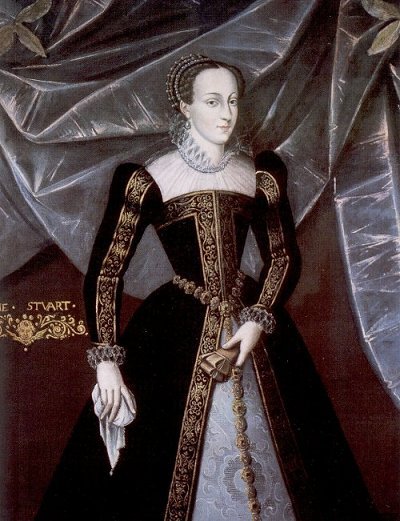
8 December 1542: The Birth of Mary, Queen of Scots


On 8 December 1542, a princess was born to Scotland. At Linlithgow Palace, Queen Marie de Guise, consort to James V of Scotland, delivered a daughter, who was named Mary; she would be their only surviving child. Six days later, Mary became queen of Scotland, following her father's death on 14 December. It was rumoured that James had lamented that his dynasty 'came with a lass, it will pass with a lass.' It is, however, questionable whether this legend has any truth to it. Mary was the first queen regnant of Scotland since Margaret of Norway (1283-90), who died at the age of seven. 

Mary's early years at the Scottish court were tumultuous ones, for her kingdom was at war with England. Henry VIII was determined to secure the submission of Scotland, and engaged in what became known as 'the Rough Wooing', in which he sought to effect the marriage of Mary to his son and heir, Edward. The two kingdoms had signed the Treaty of Greenwich in 1543, which agreed to a marriage between Edward and Mary, but the Scots soon renounced it. Mary's mother, the dowager queen, favoured an alliance with France, rather than England, and it was to France that she looked with regards to her daughter's future.

Above: Linlithgow Palace, where Mary was born in 1542.

In 1548, at the age of five, the Queen of Scots departed for France in the company of her four companions - all named Mary - and a sizeable retinue. She was betrothed to Francois, dauphin of France, and could thus anticipate a glorious future as queen consort of France, as well as queen regnant of Scotland. Mary was provided with an excellent education, in which she acquired expertise in dancing and music making, singing, needlework and horsemanship. She later became known as an accomplished poet. However, her language skills were somewhat rudimentary; certainly, she did not possess the linguistic talents of her cousin and rival, Elizabeth. As she grew to maturity, Mary was reported to be beautiful and charming. She was tall in stature, with auburn hair and dark eyes. Her love of France, and her French behaviour and customs, did not necessarily endear her to her Scottish subjects. Lord Ruthven, who was involved in the murder of her servant Rizzio, allegedly feared her wiles that she had developed while spending 'her youth in the Court of France.'

Mary was trained to regard herself as not only the queen of Scotland and France, but also the rightful queen of England and Ireland, in the event of her cousin Mary I's death. Henry VIII's will stipulated that, should Mary Tudor die without heirs, the crown should pass to her younger sister Elizabeth. However, Catholic rulers such as Henri II of France did not regard Elizabeth as the rightful heir to the English throne, on account of both her religion (Protestantism) and her bastardy (her parents' marriage had been annulled in 1536). From their point of view, it was Mary, Queen of Scots who had the right to succeed Mary Tudor. Naturally, as his son Francois was betrothed to the Queen of Scots, Henri was determined that she should be queen of England.

Mary's first two husbands: Francois II of France (left) and Henry, Lord Darnley (right).

It is this context that explains why 1558 was a crucial year for Mary, Queen of Scots. On 24 April, at the age of fifteen, she married the dauphin in a splendid ceremony at Notre Dame. Seven months later, Mary I of England died. The crown passed to her sister Elizabeth, but France did not recognise the new queen, at a time of war between the two kingdoms. Instead, Mary Queen of Scots and her husband quartered the royal arms of England with those of France and Scotland, in effect proclaiming themselves the rightful king and queen of England. It was a daring move, and it did not endear the Scottish queen to her cousin Elizabeth.

Henri II's death the following year meant that Francois succeeded him as king; the sixteen-year-old Mary was now queen consort of France. However her husband, who seems to have been sickly from an early age, died the following year, and it was intimated to Mary that there was no place left for her in France. In August 1561, she returned to Scotland, determined to rule as queen regnant. Occasionally, Mary has been disparaged as a frivolous ruler uninterested in affairs of government or politics, but she appears to have frequently attended council meetings and, moreover, was eager to maintain religious stability. The tensions between Catholics and Huguenots in France were steadily increasing, and culminated in the massacre of St. Bartholomew's Day in 1572. Mary I of England, moreover, had persecuted her Protestant subjects - almost 300 were burned at the stake - while Elizabeth I was responsible for the execution of almost 200 Catholic subjects. Mary Queen of Scots, who had perhaps gained an awareness of the religious violence that threatened to undo France during her years spent there, was determined to secure a religious rapprochement in Scotland.

The Scottish Reformation had been highly effective, and Mary returned to a country that was embracing Protestantism. However, she managed to hear mass privately in her chapel at Holyrood, although she was criticised by the militant preacher John Knox for doing so. Alongside her religious compromises, Mary sought to secure the recognition of Elizabeth as her heir, should the English queen die without an heir. Elizabeth, who had been the focus of rebellion during her sister's reign, had learned of the dangers in selecting an heir during her lifetime, particularly when that heir was Catholic and the ruler of a neighbouring kingdom. She was also aware that many Catholics, especially on the Continent, refused to regard her as the rightful queen. In view of this, Elizabeth made overtures to Mary but never granted her the recognition that Mary craved.

Above: Mary's cousin and rival, Elizabeth I of England. (left)
Mary's son and successor, James VI of Scotland. (right)

As a queen regnant of Scotland, Mary was eager to marry again. A variety of candidates were proposed, including Don Carlos of Spain, son of Philip II. Elizabeth, for reasons that continue to perplex modern historians, offered Mary the hand of Robert Dudley, earl of Leicester. The earl was rumoured to be the English queen's lover, and he was clearly greatly inferior to the Scottish queen in status. Moreover, he came from a family of traitors. Mary, offended, declined Elizabeth's offer. The English queen had stipulated that Mary could retain her friendship only by marrying Leicester or an English subject, or by remaining unmarried, and hinted that she might recognise Mary as her heir if she conformed to these conditions. In view of this, Mary's decision to wed Henry, Lord Darnley is explicable. Henry was the eldest son of Matthew Stuart, earl of Lennox, and Lady Margaret Douglas. He was, therefore, a grandson of Margaret Tudor and a great-grandson of Henry VII. He, like Mary, had a claim to the English throne, and it was perhaps in a bid to strengthen her own claim that Mary elected to marry her relative. They married at 29 July 1565 at Holyrood.

Henry was at least three - possibly four - years younger than his wife, and events would reveal that he was immature, spoiled, vindictive and arrogant. The marriage was not popular. The English refused to recognise the marriage and declined to refer to Henry as the king of Scotland, a title he was most anxious to enjoy. Elizabeth was enraged by her cousin's activities, and it was reported that there was much 'jealousies, suspicions and hatred' between the two queens, where previously there had been 'sisterly familiarity'. By marrying Henry, a Catholic with a claim to the English throne, Mary had undermined the fragile amity between England and Scotland. 

Mary's remarriage placed her in a difficult position that was exacerbated by rebellion at home - known as the Chaseabout Raid - and by increasing tensions between her Catholic and Protestant councillors. Her new husband, moreover, was furious by what he perceived as his wife's refusal to grant him the crown matrimonial of Scotland, which effectively meant that his status as king of Scotland was a rather meaningless one. The reign of Mary I of England had evidenced the ambiguities and difficulties of authority and precedence when a queen regnant married. Moreover, Mary's friendship with her adviser David Rizzio, a Savoyard musician, enraged both her husband and the Scottish nobles more broadly. On 9 March 1566, Rizzio was brutally stabbed to death by several noblemen in the queen's own chambers; Mary herself was seized by her husband and was harrassed by Lord Ruthven. Mary was probably shattered by the experience, but her pregnancy meant that she had to focus on her health. On 19 June, she gave birth to a son, James, who would later succeed her as James VI.

Mary's growing problems with Henry perhaps led her to collude in plots against him, although it is unlikely that she actively intrigued for his death. On 10 February 1567, her husband was murdered at Kirk o'Field, near Edinburgh. The murder scandalised Mary's subjects and was reported across Europe; Elizabeth I proclaimed herself shocked by what had happened, and quickly admonished Mary for her apparent closeness to the chief suspect, the earl of Bothwell. Mary has often been criticised for her behaviour, but she seems to have suffered a complete mental breakdown. Amid reports that she was depressed, perhaps suicidal, Mary was captured by Bothwell and incarcerated at Dunbar. Having abducted her, Bothwell then proceeded to rape her. In a bid to protect her own honour, as well as that of her infant son, Mary married Bothwell in May 1567.  She argued frequently with her new husband and reportedly called for a knife with which to end her unhappy life. Her suicidal tendencies, coupled with her depression and anxiety that had been exacerbated by the abduction, are powerful evidence against the simplistic view that she, besotted by Bothwell, had engaged in a passionate love affair with him and then encouraged him to murder Henry. Eventually, Mary was seized by the confederate lords at Carberry Hill, abandoned by her husband, and was transported through Edinburgh as crowds shouted 'Burn the whore!' She was imprisoned at Loch Leven, and forced to abdicate in favour of her son, James.

Image result for james v of scotland
Above: Mary's parents, James V of Scotland and Marie de Guise.

At Mary's birth in December 1542, Marie de Guise could never have imagined the turbulence that would characterise her daughter's life, which arose as a result of dynastic conflict, political instability and religious tensions. Nor could she ever have imagined that Mary would be the only monarch in Scottish history to die on an English scaffold, nor could she have envisaged that Mary would be the fourth British queen in a century to suffer that humiliating death. Mary, Queen of Scots' reputation has rarely been positive or even nuanced; traditionally identified as a scheming adulteress, who colluded in her husband's murder, she has also been regarded as a virtuous martyr for the Catholic faith and the rightful queen of England, executed by her barbaric and unnatural cousin, the usurper Elizabeth. Perhaps what should most be appreciated is the difficulties Mary faced in attempting to govern a turbulent kingdom, at a time when queen regnants were viewed with suspicion or were actively disparaged. Elizabeth I proved that a woman could rule successfully and actively, but the difficult experiences of her sister Mary I and her cousin Mary, Queen of Scots provided telling evidence that such success was neither preordained nor necessarily even expected by one's subjects. More recently, historians have come to view the Scottish queen sympathetically, with a more nuanced understanding of the religious, political and dynastic conflict that severely undermined her kingdom and affected her attempts - genuine attempts - to rule successfully. 


Monday, 5 December 2016

The Death of Francois II of France


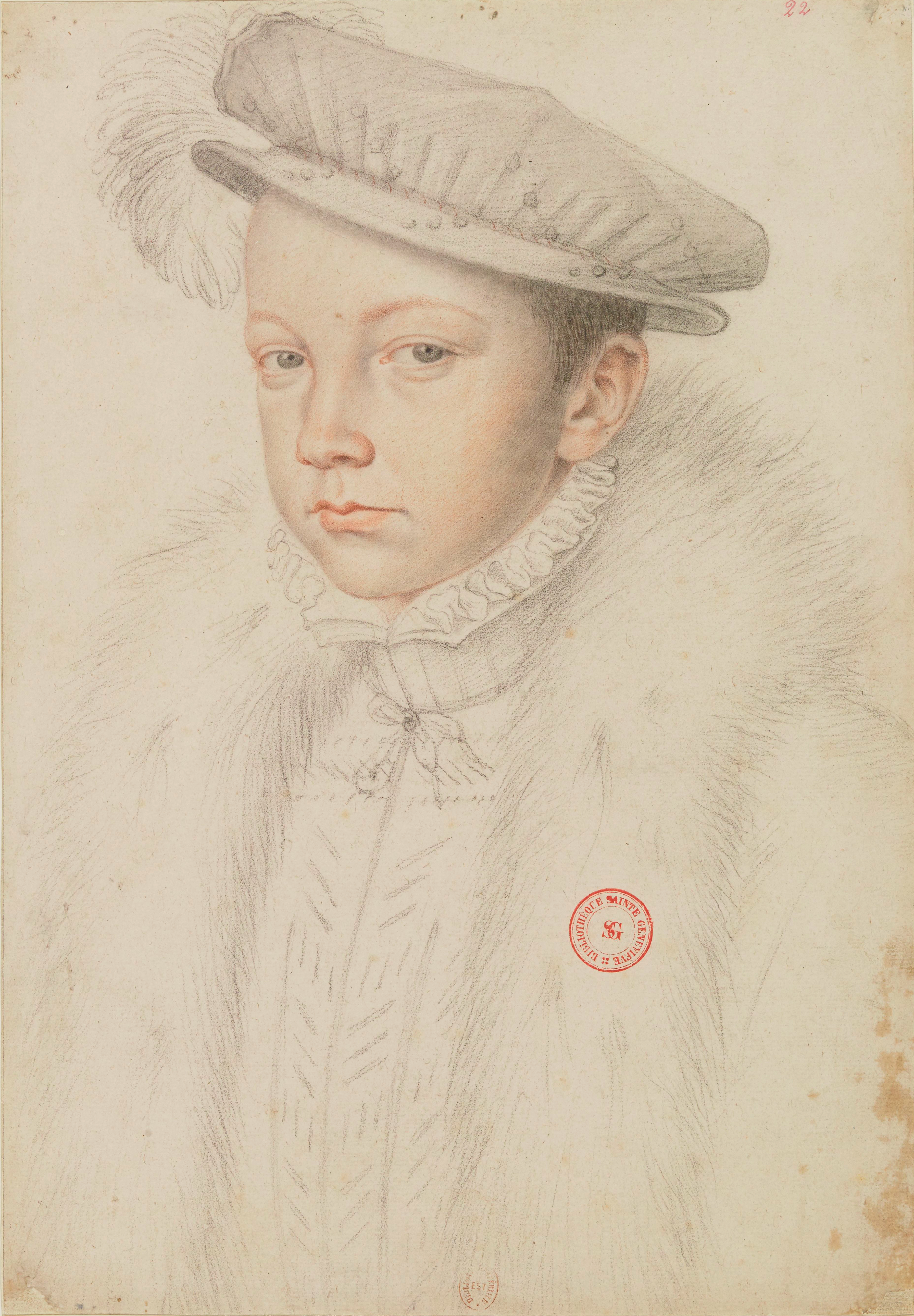
On 5 December 1560, King Francois II of France died at the age of sixteen years old in Orleans. His reign had lasted merely sixteen months, having succeeded his father, Henri II, on 10 July 1559. Francois' health had deteriorated rapidly in the autumn and early winter of 1560. He suffered syncope and seems to have died from an ear condition, although mastoiditis, meningitis and otitis have also been suggested. Inevitably, there were rumours that the king had been poisoned, but these appear to have been unsubstantiated.

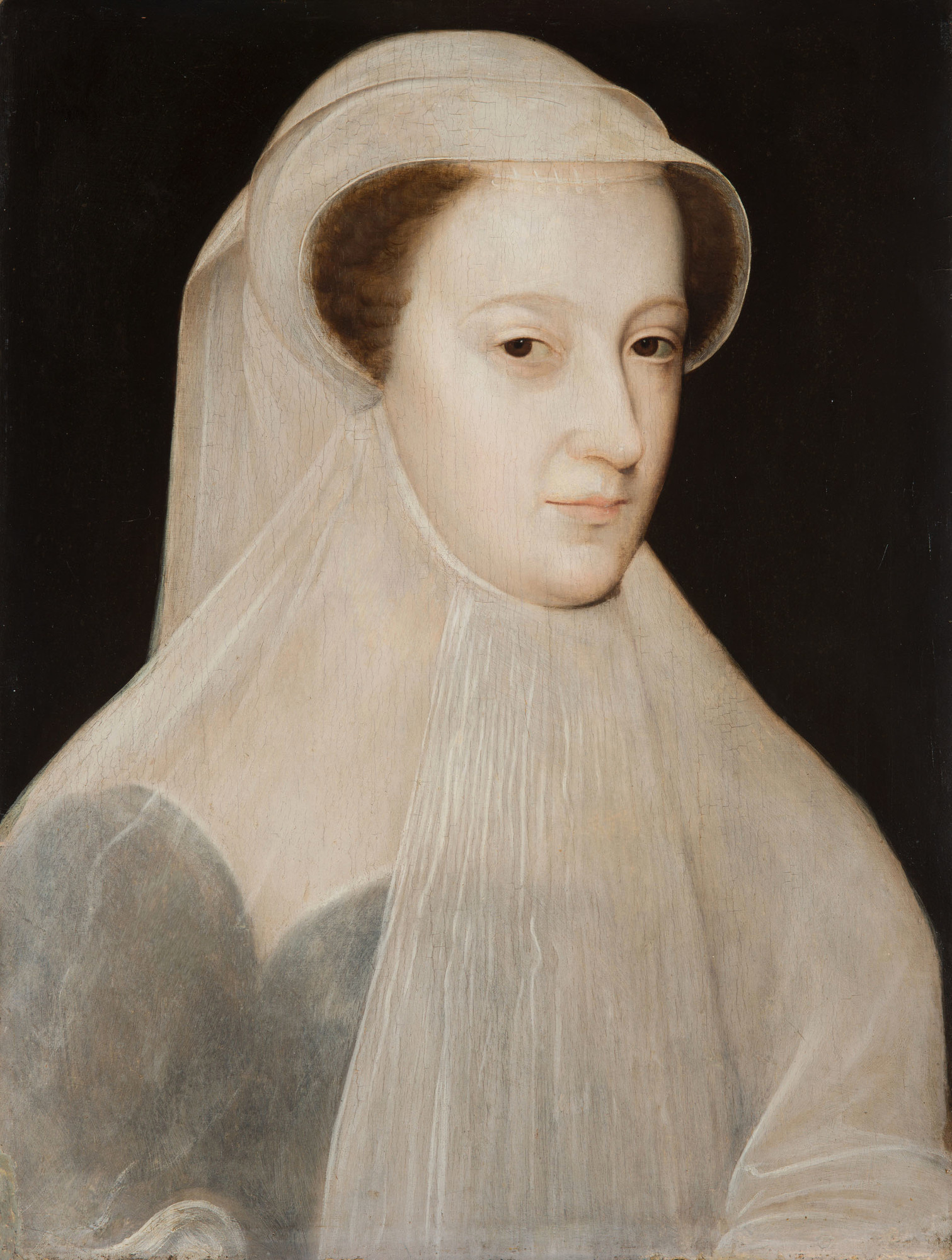
Above: Mary Queen of Scots was left a widow by the death of her husband, Francois II.

Francois' premature death left his wife Mary Queen of Scots a widow. The former queen of France soon learned that there was no place left for her in the kingdom of her husband's family, and departed for Scotland in August 1561. She survived her first husband by twenty-six years, dying on the scaffold at Fotheringhay Castle in 1587. The teenaged couple had no children together, which meant that Francois was succeeded by his ten-year-old brother, Charles, who became known as Charles IX. The new king's reign was marked by religious turmoil, including the infamous St. Bartholomew's Day Massacre in 1572, which witnessed the slaughter of thousands of French Huguenots.

Only weeks after Francois' death, his mother Catherine de Medici, Queen Dowager of France, was appointed regent - or governor -  for her young son Charles during his minority. Shortly after this decision, Catherine wrote to her daughter Elisabeth, queen of Spain: 'My principal aim is to have the honour of God before my eyes in all things and to preserve my authority, not for myself, but for the conservation of this kingdom and for the good of all your brothers.' 

Above: Francois II was succeeded by his younger brother, Charles IX (left), who reigned until his death in 1574. 
During Charles' minority, his mother Catherine de Medici (right) acted as regent. 

Monday, 30 May 2016

The End of Joan of Arc


On 30 May 1431, a young woman of nineteen years was burned to death in Rouen, Normandy. A year previously, Joan of Arc (known to the French as La Pucelle d'Orleans, the maid of Orleans) had been captured by the Burgundians, who handed her over to the English. She had almost single-handedly revived French fortunes during the Lancastrian phase of the Hundred Years' War between the traditional enemies England and France. Now, she was to die a shameful death, associated with witchcraft and heresy, a perversion of the natural order of things.

Joan had been born in northeastern France in around 1412, in an area that remained loyal to the French crown despite being close in proximity to Burgundian lands. At the age of thirteen, Joan reportedly experienced visions while in her father's garden. She saw the figures Saint Michael, Saint Catherine and Saint Margaret, who instructed her to bring about the expulsion of the English from France, and to bring the Dauphin to Reims for his coronation. Thus began Joan of Arc's mission, as she perceived it. Her experience thus far could be viewed as a sign of God's favour, uniquely bestowed upon her, but to others it betokened witchcraft.

Joan later visited the court of Charles VII, and she was financed with an army by the king's mother-in-law Yolande of Aragon. Joan requested to be equipped for war and to be placed at the head of the king's army; her requests were duly granted. Stephen W. Richey notes: 'Only a regime in the final straits of desperation would pay any heed to an illiterate farm girl who claimed that the voice of God was instructing her to take charge of her country's army and lead it to victory'. The king perhaps viewed Joan as sent from God, the means by which France could be delivered from subjection to England. Her presence offered the promise of French independence and French victory. Others, however, were concerned; they wondered whether Joan was a heretic or a sorceress, while her decision to wear the clothing of a soldier would later be brought against her. In response to initial concerns about Joan, a commission of inquiry at Poitiers concluded that Joan was 'a good Christian' and 'of irreproachable life'. Shortly afterwards, Joan visited the besieged city of Orleans in April 1429, and was present at the councils and battles thereafter.

Charles VII by Jean Fouquet 1445 1450.jpg
Above: Charles VII of France.

Joan believed that she had been instructed by God to drive the English from France and ensure that the dauphin was crowned; as she saw it, her mission was a holy one. The lifting of the siege at Orleans was perceived by contemporaries as evidence that Joan truly was God's messenger, and she gained the support of the archbishop of Embrun and the theologian Jean Gerson as a result. Joan later provided the Duke of Alencon with advice about strategy. After the lifting of the siege and the battle of Patay, which was a decisive victory for the French, Joan accompanied the victors on the march to Reims. 

Patay.JPG
Above: The Battle of Patay, June 1429.

Reims opened its gates on 16 July 1429, and the coronation took place the following morning. The French army accepted peaceful surrenders from towns near the capital. In December that year, Joan and her family were ennobled by a grateful Charles VII as a reward for her actions. Six months later, she was present at the siege of Compiegne, the scene of her final military action. Joan was ambushed and captured; later, she was imprisoned by the Burgundians at Beaurevoir Castle. She made several escape attempts, including jumping from a window 70 feet high, but miraculously survived, which was for her supporters another sign of her divine favour. Later, Joan was moved to Rouen. 

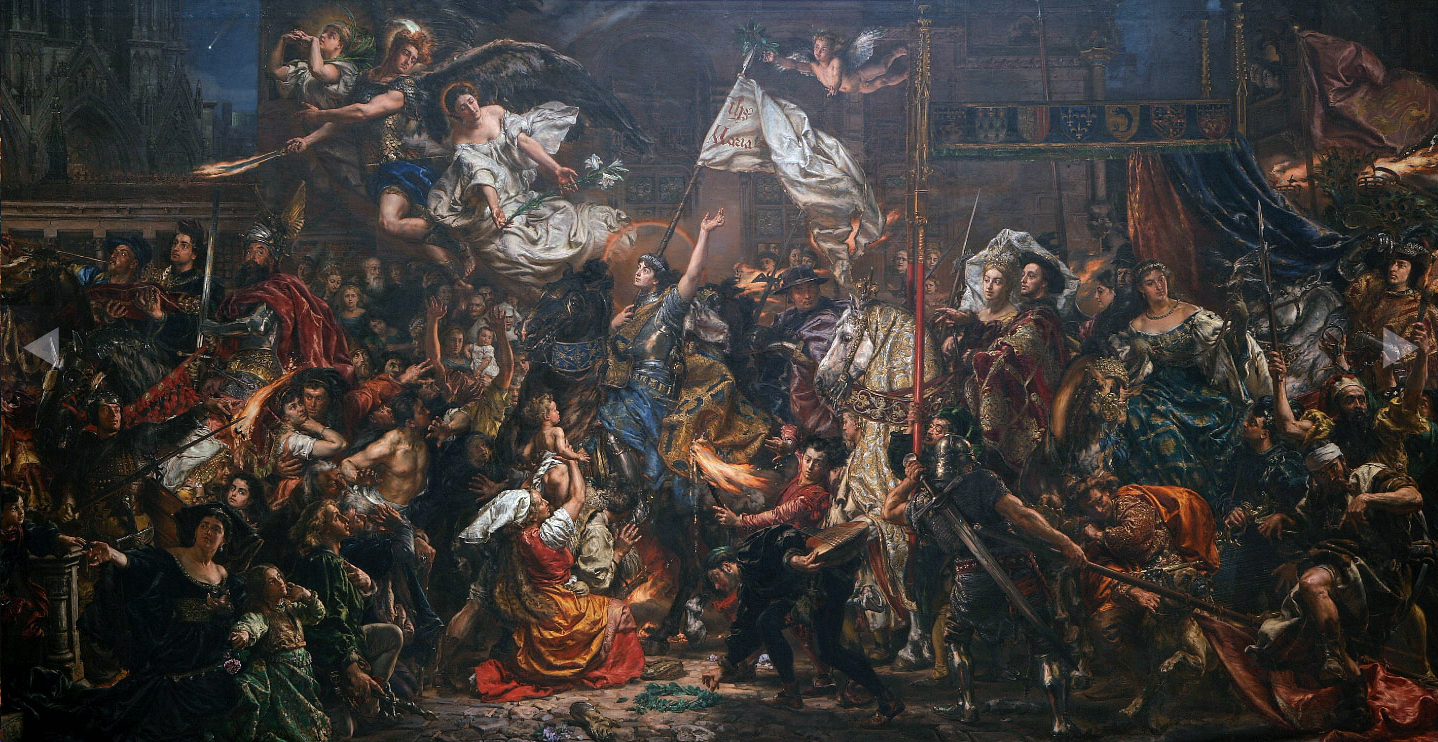
Above: Joan of Arc's entry into Reims in 1429; painting by Jan Matejko.

In early 1431, Joan's trial began. It was a contentious affair and several of the clergy had to be threatened with their lives to participate in it. These threats and the domination of the trial by a secular government actually violated the rules of the Church. Usually, a heresy trial should be conducted without secular interference. Ecclesiastical law was further violated by the refusal to allow Joan a legal adviser. Joan was charged with heresy and cross-dressing, a heinous offence in fifteenth-century eyes since it violated the natural order. Joan explained that she had chosen to wear male attire to protect herself from molestation; others testified that her dress had been taken by the guards and she had nothing else to wear. On 30 May, her execution took place. Burning at the stake was the customary method of execution for those found guilty of heresy. A crucifix was held before her by two of the clergy as she was tied to the stake. Her remains were cast into the Seine river. Some, at least, believed that a saint had been burned.

Two decades after her death, in 1452, a retrial was ordered, authorised by Pope Callixtus III at the request of Inquisitor-General Jean Brehal and Joan's mother, Isabelle. A formal appeal followed three years later, and in the summer of 1456, the court declared that Joan was innocent. She was canonised by Pope Benedict XV on 16 May 1920. 


In a short but extraordinary life, Joan of Arc was perceived in the contradictory guises of woman, warrior, saviour, heretic, witch, and saint. Following her death, she became something of a legendary figure and has inspired many by her bravery and willingness to die for her faith. She was certain that she had been chosen by God to ensure France's total victory over the English; it was the driving force in her life. Since her death, Joan has inspired artistic and cultural depictions for six centuries. Ultimately, although she did not live to see it, France's victory in the Hundred Years' War lent credence to the legitimacy of Joan's mission, signifying that she had indeed been favoured by God. Her retrial served to vindicate Joan, and in death she has been granted the admiration and awe that was largely denied to her in life. 

Saturday, 18 October 2014

Christine de Pizan: A Remarkable Woman

Christine de Pisan - cathedra.jpg

The fourteenth-century was, in many respects, a century of remarkable women. Christine de Pizan was one of them, and her name continues to resonate today with connotations of learning, chivalry and courtliness. Born in 1365, Christine was a French Renaissance writer who, some have argued, wrote some of the first feminist works of literature, although it seems somewhat anachronistic to label them as such. Christine was remarkably educated and this allowed her to write, becoming what King's College termed 'the first woman in Europe to successfully make a living through writing'.

Born in Italy in 1365, Christine later departed for France at a young age when her father, Thomas de Pizan, was appointed to the position of astrologer to the French king at that time, Charles V. This atmosphere allowed his daughter to pursue her intellectual interests, for Thomas clearly believed that his daughter should enjoy a fine education. At the age of fifteen, in 1380 Christine married Etienne du Castel, a royal secretary at court, with whom she had three children (a daughter, a son, and another child who tragically died in childhood). In 1390, her husband sadly died in an epidemic, meaning that, on his death, Christine had to support her mother, her niece, and two small children. As a means of supporting herself and her family, she devoted herself to writing. By 1393 she had attracted attention for her love ballads, and between 1399 and 1412 she is said to have composed over three hundred ballads, as well as many shorter poems.


Above: Christine de Pizan presents her book to the queen of France, Isabeau of Bavaria.

In 1401-2, Christine participated in a literary debate that allowed her to move beyond the courtly circles she had up to that moment moved in. Following this, she became involved in a renowned literary controversy known as the 'Querelle du Roman de la Rose', which she helped to instigate by calling into question the literary merits of Jean de Meun's Romance of the Rose, a medieval French poem that satirised and entertained about the Art of Love. Its focus on sensual language and imagery caused particular controversy, leading to individuals, including Christine, to question it. She, in particular, condemned its suggestion that women were little more than seducers. Christine began to counter and oppose literary treatments of women that were negative or even abusive.

Christine was, and remains, best known for her vernacular works, both in prose and in verse. These include political treatises and mirrors for princes, which consequently brought her a great deal of attention from the very highest orders. Her most famous literary works, The Book of the City of Ladies (in which she created a symbolic city in which women are both appreciated and defended) and The Treasure of the City of Ladies, were both published in 1405. They both offered positive representations of women, stressing how to cultivate useful feminine qualities and celebrating women's past contributions to society. Christine emphasised that women should seek to bring about peace between people, while arguing that slanderous speech eroded one's honour. Christine also later wrote a poem eulogising the tragic Joan of Arc, burned at the stake at the age of nineteen. She died in 1430 aged sixty-five or sixty-six.


Above: A scene from The Book of the City of Ladies (1405).

Christine de Pizan was not a medieval feminist. However, she was remarkable in that, as Simone de Beauvoir wrote in 1949, her work was 'the first time we see a woman take up her pen in defence of her sex'. Historians have debated whether this period saw a 'golden age' for women that was tantalisingly brief but which afforded women splendid opportunities not experienced before. While this remains uncertain, Christine de Pizan's astonishing life demonstrates the opportunities for women of the upper orders in particular, who, mobilised by their education and status, could achieve incredible feats.

Sunday, 6 July 2014

Was Mary Boleyn Really 'The Mistress of Kings'?


Above: Portrait of a woman thought to be Mary Boleyn, c. 1525.

Philippa Gregory's bestselling novel The Other Boleyn Girl (2001) revitalised fascination with the Boleyn family and in particular Mary, the mysterious and unknown sister of Henry VIII's second queen. Mary Boleyn was the daughter of Sir Thomas Boleyn, born before 1502, and married William Carey in 1520 before briefly becoming Henry's mistress in the 1520s, before his attention turned to her enigmatic and attractive sister Anne. After she was banished from court in 1534 for making a clandestine second marriage, Mary survived the destruction of her family and died in obscurity in 1543 in her early forties.

Traditionally, historians have suggested that Mary was 'an infamous whore' who was the mistress of two kings, Francois I of France and Henry VIII of England. While it seems certain that Mary was indeed Henry's mistress, probably beginning in 1522 and ending before 1525 - Henry himself admitted to the affair and had to secure a papal dispensation in 1527 to marry the sister of a woman with whom he had had sexual intercourse - it is by no means certain that Mary was the French king's mistress. Indeed, historical evidence indicates that Mary never resided at the French court as a teenager.


Above: the Boleyn sisters, Anne (left) and Mary (right).

As Retha M. Warnicke points out, there is no evidence that Mary Boleyn served as a maid of honour at the French court. In 1514, Anne Boleyn travelled to Paris to serve Mary Tudor, queen of France, and later transferred to the household of Claude, wife of Francois I, but there is no evidence that her sister was there. Household accounts documented a 'M. Boleyn', but it seems likely that the 'M' referred to 'Mademoiselle' or 'Mistress', rather than 'Mary'. Contemporaries commented on Anne's presence in France. For example, George Cavendish, gentleman usher to Cardinal Wolsey, stated: 'This gentlewoman, Mistress Anne Boleyn, being very young was sent into the realm of France'. No contemporaries, however, referred to Mary dwelling in France, where she supposedly acquired a reputation for promiscuity and licentiousness.

At the English court, it has been asserted, Mary was best known for her 'reputation in bed' (Lacey Baldwin Smith, 2013) and 'the evidence is overwhelming that Mary had a reputation for sexual improprieties' (Warnicke, 1985). As Alison Weir has thoughtfully demonstrated, however, there is in fact little to no evidence to support these views. Henry VIII's affair with Mary was discreet and secret, and few seem to have known of it. Mary remains a shadowy figure and we know nothing of her thoughts and feelings. How long her relationship with Henry lasted, and whether she truly loved him, is impossible to say. It is, however, certain that she was his mistress for a brief time in the 1520s and quite possibly bore him at least one, if not two, children.


Above: Francois I of France. It is unlikely that Mary Boleyn was ever his mistress.

While Mary was undoubtedly Henry VIII's lover for a time, it is almost certain that she was not the French king's mistress, despite persistent rumours to the contrary. In 1536, the French king informed Ridolfio Pio that he had known Mary in France 'per una grandissima ribalda et infame sopra tutte' - in other words, 'a great whore, infamous above all'. However, Mary never resided at the French court, so Francois cannot have insulted her in relation to her supposed sojourn there in the 1510s. Unlike Anne, who had departed for Europe to acquire a splendid education, Mary remained at home, probably Hever Castle, where she acquired a more traditional education befitting the status of an English gentlewoman.

So what then did Francois mean by his comment? Weir has pointed out that Pio was hostile to the Boleyns. Every member of the family was defamed and attacked by hostile political commentators who resented Anne and the rejection of Katherine of Aragon. Thomas Boleyn was slandered as heretical, grasping and scheming; his wife Elizabeth was defamed as a whore and former mistress of Henry VIII; George Boleyn was cast as a heretic and hedonist; and Anne was consistently portrayed as a whore, murderess, heretic and witch. It is therefore in keeping with this general defamation and slander of the Boleyn family that Mary, too, would have been dishonoured and abused by chroniclers and commentators hostile to their cause. Nicholas Sander, for example, slandered her in his works while abusing and defaming her sister Anne Boleyn. 

It would therefore be ridiculous to accept such comments at face value. It is unlikely that Francois was referring to his own previous experiences with Mary. Possibly, as Warnicke credibly suggests, he only became acquainted with the new Queen of England's sister in 1532, when Mary accompanied Henry VIII and Anne to Calais. Francois may well have learned of Mary's former liaison with Henry and allowed it to cloud his view of her. His comment can hardly be read as admittance of a former relationship with Mary when she supposedly resided at his court as a teenager.

Aside from this one disparaging, insulting comment, there is no evidence that Mary was ever the mistress of the French king. There is no documentation of her stay in France, for the simple reason that she never served at the French court alongside her sister. In 1513, Anne Boleyn departed for Burgundy and later for France to serve in royal households. Her sister Mary, possibly because she was younger or possibly because she was less intellectual and brilliant than Anne, remained at home, before marrying William Carey in 1520. Shortly afterwards, she became the mistress of Henry VIII. We can say with some certainty that she was the lover of the English king, but we can equally be sure that she was never the mistress of his counterpart, the king of France.


Friday, 16 May 2014

16 May 1770: The Marriage of Marie Antoinette and Dauphin Louis Auguste of France


Related imageRelated image
Above: Marie Antoinette, dauphine of France and, later, queen consort (left).
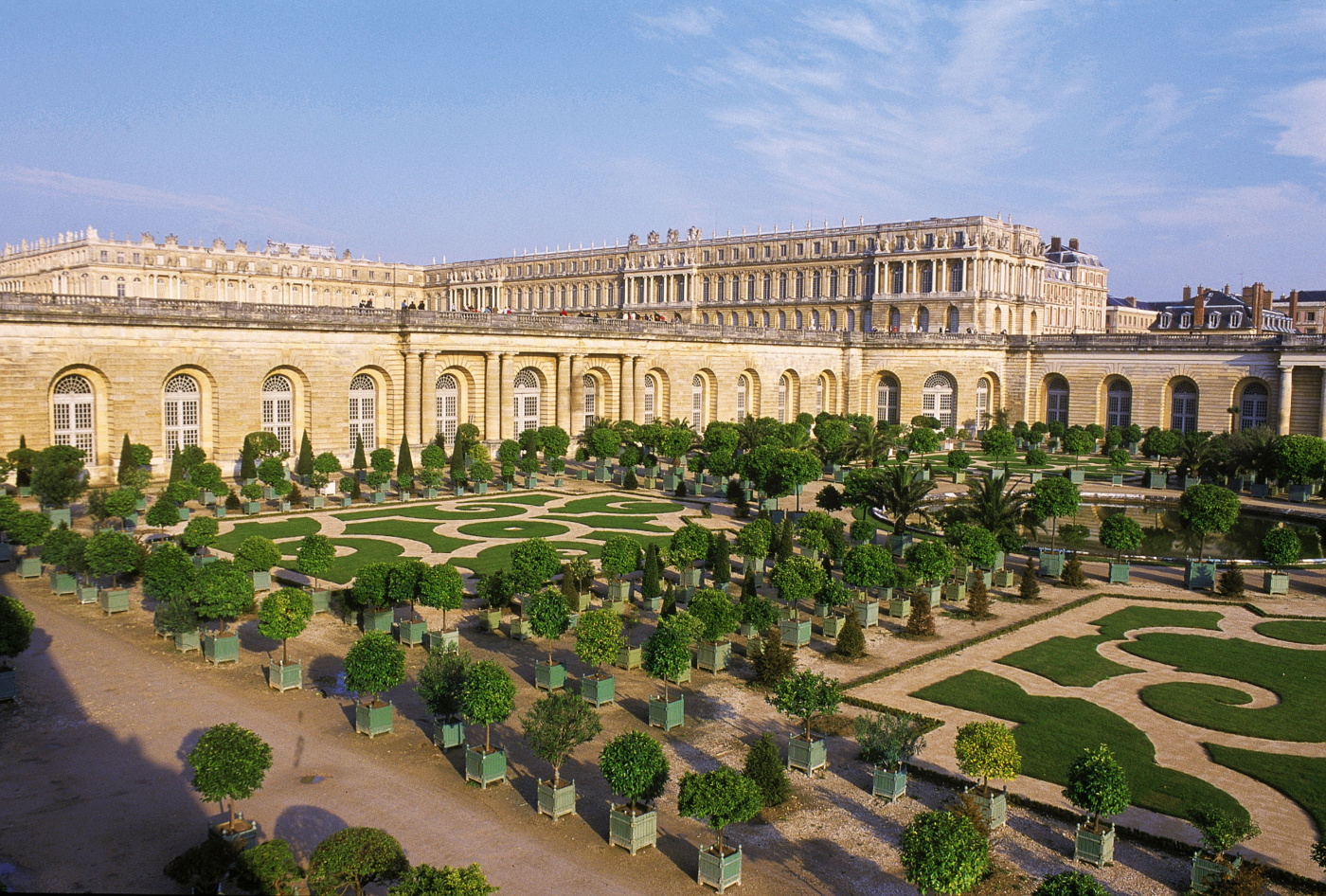
The Palace of Versailles (right).

On this day in history, 16 May 1770, the ceremonial wedding of Dauphin Louis Auguste of France and his fiance, Marie Antoinette (formerly Archduchess Maria Antonia of Austria), took place at the Palace of Versailles just outside of Paris, France. The future queen consort of France had actually only arrived at Versailles that very morning, and must have been swept away by the imposing grandeur of the palace, the most spectacular of its kind in Europe.

In 1765, the series of events leading to the Austrian archduchess' betrothal to the heir to the French throne had begun, when Marie Antoinette's father, the Austrian Emperor, had died of a stroke that year. Because of the deaths of several of her siblings from a smallpox epidemic, Marie Antoinette was the only available daughter for the fourteen-year old French dauphin Louis Auguste. Negotiations for a betrothal began, but as historians such as Caroline Weber point out, the rigorous standards of the French court meant that the prospective bride had to be considerably beautified and perfected to fit in with their exacting standards. Her crooked smile was cosmetically altered so that it would be "very beautiful and straight". The bride's dowry was set at 200,000 crowns and, as Weber states, Empress Maria Theresa, mother of Marie Antoinette, spent 400,000 livres on her youngest daughter's trosseau, far more than she had lavished on her other children. 


Image result for louis xvi
Above: the future Louis XVI of France, husband of Marie Antoinette.

On 19 April 1770, aged fourteen, Marie Antoinette was married by proxy in the Church of the Augustine Friars in Vienna, Austria, where she had been baptised following her birth. On 7 May, nine days before her official marriage, the new French dauphine was handed over to her French relations on a French island near Kehl, the ceremonial halfway point between the Austrian empire and France. Marie Antoinette was acquainted with her new husband's family, including his amorous grandfather Louis XV of France, the king's daughters Mesdames Adelaide, Victoire, and Sophie, and her future brothers-in-law. On 16 May, she arrived at Versailles, and was married that same day.

The dauphine was dressed in a lavish gown of white cloth-of-silver, which as Weber remarks was the traditionally prescribed material for the wedding gown of a dauphine. It was enhanced by gorgeous diamonds which Marie Antoinette had received from her formidable mother, Empress Maria Theresa, as wedding gifts. However, the wedding gown was far too small in its bodice, which meant that there was, according to one observer, "quite a broad stripe of lacing and shift quite visible". Black thunderclouds filled the summer sky and were perceived to be an ominous omen, according to the Duc de Richelieu. Despite the problems with her wedding dress, Marie Antoinette "cut a breathtaking figure as she made her way to the King's Chapel" (Weber). As Mademoiselle Cosson de la Cressonniere wrote:

Bearing the wishes of her court,
She comes, by noble marriage led;
'Tis Psyche in the bloom of youth
Conducted here to Cupid's bed.

Although the dauphine appeared graceful and elegant, her teenage husband was seen to tremble excessively during the wedding service and blushed when he passed his new wife the wedding ring. At the wedding meal, he ate with gusto, in contrast to Marie Antoinette who ate barely anything, instead appearing as "a statue of Beauty". Clearly, the rigorous lessons she had undertaken in her youth in grace, charm and sophistication had paid dividends in what was, thus far, the most important ceremony and occasion of her life. Following the wedding service and public dinner, the royal couple were publicly put to bed "before the whole world". However, the newlyweds did not consummate their wedding that night. Royal ambassadors learned of this embarrassing detail the following morning and hastily informed their royal masters of this scandalous fact. Marie Antoinette was later to admit that her new husband had not even touched her hand. As Marie Antoinette's biographer Antonia Fraser states, the lack of consummation was to plague the reputation of both Louis and Marie Antoinette for seven years to come.

Thus it was that this tragic teenage couple were married at Versailles in 1770. Surely no one could then have foreseen that, only twenty-three years later, both these figures would be dead, brutally guillotined in the wake of a bloodthirsty Revolution that swept France and enacted devastating and unprecedented change.

Tuesday, 13 May 2014

13 May 1515 - Marriage of Mary Queen of France and Charles Brandon, Duke of Suffolk


Above: the marriage of Mary Tudor, former queen of France, and Charles Brandon, duke of Suffolk, took place on 13 May 1515.

On this day in history, 13 May 1515, the marriage between Mary Tudor, formerly queen consort of France, to Charles Brandon, duke of Suffolk and close friend of Henry VIII, took place. Their marriage was a love match and it caused considerable controversy, for Mary's first marriage to the French king, Louis XII, had only recently ended through his death, and Brandon was not royal. Nor had Mary asked her brother, Henry VIII, for permission to marry.

Mary was the youngest surviving daughter of the first Tudor king, Henry VII, and Elizabeth of York. She was born on 18 March 1496 at Richmond Palace in Surrey, reportedly her father's favourite residence. The humanist scholar described the youthful Tudor princess as extremely "beautiful". Her charm and beauty was famous in Europe. The Venetian ambassador was to describe her at the time of her marriage, when she was eighteen, as being 'tall, slender, grey-eyed', in short, 'a Paradise'. A French observer further commented that Mary was 'one of the most beautiful young women in the world'. She had long, red-golden hair and blue eyes. She closely resembled her elder brother, Henry, in looks, and like him she had a fiery temper and could be stubborn and determined, as her pursuit of Brandon demonstrated.


Above: Mary Tudor, the French queen consort.

Although, as a child, Mary had been betrothed to Charles, the future Holy Roman Emperor, and had been groomed for a glorious future as archduchess of Burgundy and princess of Castile, her brother Henry VIII decided to marry her off to his ally, the French king, Louis XII, who was aged in his fifties and had been married twice previously, when relations with the Habsburgs fell into disrepute. In the autumn of 1514, the eighteen-year old Princess Mary was betrothed to a man aged approximately 34 years older than her. Although this might seem shocking to modern sensibilities, it was completely usual for the time, especially for royalty. Mary's later husband, Charles Brandon, duke of Suffolk, married Katherine Willoughby when Katherine was aged only fourteen and he was aged forty-nine, and Henry VIII, aged forty-nine, married the sixteen-year old Katherine Howard in 1540.

Traditionally, especially in popular culture, Mary has been depicted as a petulant teenager who adamantly refused to marry the elderly French king. When Henry VIII informed her that she had no choice, she allegedly made a bargain with him in which he agreed that, were the French king to die, Mary would be able to marry whomever she liked. However, as historian David Loades states, there is no record of Mary's feelings about her French bridegroom and no such record of any bargain. 


Above: Anne Boleyn was briefly attendant to Queen Mary Tudor in 1514, and some nineteen years later, was to become her sister-in-law.

On 9 October, having arrived in France, Mary's marriage to King Louis was celebrated with elaborate ceremony at pomp. On 5 November, Mary was crowned at St. Denis. Unhappiness surfaced, however, when the new French queen's English entourage was by and large dismissed. She was, however, left with one notable attendant - a young English girl (possibly aged as young as six, but more probably twelve or thirteen) named Anne Boleyn, who would nineteen years later, for a very brief spell, become Mary's sister-in-law, but no-one could have foreseen that in 1514. Mary soon felt isolated and vulnerable, and the teenage queen, alone in a foreign land, soon began writing despairing letters to her brother, the King of England. Mary's unhappiness was not to last long, however, for on 1 January 1515, after barely three months of marriage, the ailing and exhausted Louis died, allegedly of being danced to death by his energetic queen.


Above: Louis XII of France, first husband of Mary Tudor.

Following Louis XII's death, Mary's name was soon being linked to that of the duke of Savoy and the duke of Lorraine, for her royal blood, youth and beauty made her an excellent prospect. Whether Mary had been in love with Charles Brandon, duke of Suffolk, before she had sailed to France, or whether it was an infatuation that developed when Brandon led a delegation of honour to France after the queen's coronation, is impossible to say. It seems, however, that both had strong feelings of passion for one another, and according to Loades, in February 1515 the eighteen-year old dowager queen 'virtually forced him to marry her secretly'. Henry VIII was furious, for not only had Mary not asked for his permission to remarry, but Brandon had married a princess of the blood without royal permission, and which constituted an act of treason. The couple were forced to pay a hefty fine in order to attain royal forgiveness.

On this day, 13 May 1515, three months after their secret union, Charles Brandon and Mary Tudor wed publicly at Greenwich Palace, having arrived safely back in England. Thus, barely six months after being crowned Queen of France, the youngest Tudor princess became Duchess of Suffolk. While Charles was to play an important role at court, thereafter Mary visited court only intermittently. She bore Charles four children: Henry (who died young), Frances Brandon (the mother of Lady Jane Grey), Eleanor Brandon and a second Henry Brandon. 

The nature of the Suffolks' marriage is impossible to pinpoint, but romantic tradition and the available historical evidence indicates that it was, at least initially, a love match. On 25 June 1533, Mary died aged thirty-seven, and it is possible that she died estranged from Henry VIII, for she had vocally disapproved of his second marriage to Anne Boleyn, her former maid of honour. Part of this dislike and resentment of Anne may have been because of Mary's closeness with Katherine of Aragon. 

As David Loades concludes, Mary Tudor's main importance lies in her 'claim to the English throne that she transmitted via her elder daughter, Frances, to Jane and Katherine Grey, Frances's daughters from her marriage to Henry Grey, seventh marquess of Dorset'. When Charles and Mary wed in 1515, two headstrong young lovers, it is almost certain that they could never then have envisaged that, forty years later, their granddaughter, Lady Jane Grey, would become queen of England - albeit for only thirteen days.


Above: Lady Jane Grey, queen of England, and granddaughter of Charles Brandon and Mary Tudor.

Sunday, 8 December 2013

The Birth of Mary, Queen of Scots


Above: Mary Queen of Scots.

On this day in history, 8 December 1542, Mary Stuart, queen consort of France and queen regnant of Scotland, was born at Linlithgow Palace, 'in the coldest of winters'. She was the only child of James V, king of Scotland, and his French consort Mary of Guise. Mary was the great-niece of Henry VIII of England by virtue of the fact that her paternal grandmother Margaret Tudor was Henry's elder sister. As such, she had a claim to the English throne, which as time would tell would ultimately prove to be her downfall.

Six days later, Mary's father died, and so the crown of Scotland passed to a baby girl. John Knox reported that the king exclaimed in regards to the fate of Scotland, when told of the birth of his daughter, 'it came with a lass, it will pass with a lass!' Whether true or not, Knox's comment that 'all men lamented that the realm was left without a male to succeed' is probably more believable. Although rumours suggested that the new princess was weak, even frail, Ralph Sadler, an English diplomat at the Scottish court, confirmed that Mary was a 'goodly child', 'as like to live'. She was baptised at the nearby Church of St. Michael, and was crowned queen in September 1543.


Above: Linlithgow Palace, where Mary was born.

Mary's biographer John Guy claims that 'Mary Stuart was born at a turning point in history'. Two weeks before her birth, her father's forces had been routed by the English at the Battle of Solway Moss. Henry intended for the infant Mary to marry his five-year old son Edward, as a means of uniting the two kingdoms. In July 1543 the Treaty of Greenwich was signed. But the proposed Anglo-Scottish alliance was to disintegrate as rival factions, led by Catholics and Protestants who favoured alliance with either France or England, fought for control of the infant queen. In 1548 she travelled to France, and eventually wed Francis, son of the French king.

Thus were the events set in motion which would lead to Mary becoming queen consort of France alongside queen regnant of Scotland. Her short life in France did not prepare her for the struggles and conflict she would later encounter in her home country. Mary's life was turbulent, dramatic, and ultimately tragic: forty-four years after her birth, she would die at the hands of the executioner in the great hall of Fotheringhay Castle, a declared traitor to Queen Elizabeth I.


Sunday, 8 September 2013

Elizabeth I - England's Greatest Monarch?


Above: the famous Armada portrait (1588).

"I know I have the body of a weak and feeble woman, but I have the heart and stomach of a king, and of a King of England too". - Queen Elizabeth I, Tutbury on the eve of the Armada, 1588.

Yesterday was the 480th anniversary of the birth of Queen Elizabeth I, only daughter of Henry VIII by his second consort Anne Boleyn. The Elizabethan era was prosperous, exciting, and one never seen before or since. Many historians and commentators in the last four hundred years or so have suggested that Elizabeth was England's greatest monarch. I decided to write this blog post having come across an interesting debate amongst historians Alison Weir, Sarah Gristwood and Martyn Downer about who England's greatest monarch truly was, with the debate favouring either Elizabeth, her father Henry VIII or Victoria.

Elizabeth was well aware that she needed to be a pragmatic yet sensible monarch in context of the fairly disastrous reigns of her predecessors and siblings Edward VI and Mary I. She revered her father's memory and demonstrably sought to emulate him in his magnificence and splendour, while desiring to be, like him, immensely popular with the English people. As a Venetian ambassador wrote in 1558, 'she prides herself on her father and glories in him'. Yet, for the first twenty or so years of her reign, until the growing threat of Spain escalated and Catholic plots surrounding Mary Queen of Scots intensified, Elizabeth was fairly liberal in her religious policies, unlike either her father or sister. While desiring that her subjects outwardly conform to the terms of the Elizabethan religious settlement, ostentatiously Protestant but considerably less rigorous than the Protestant policies of her brother Edward VI, Elizabeth famously quoted her desire not 'to make windows into men's souls' concerning religion.

What could distinguish Elizabeth as England's greatest monarch is first and foremost the political and religious world in which she lived, and her decisions made in context of prevailing European behaviours and events. The late sixteenth century and early seventeenth century witnessed increasing religious violence and hostility in context of the European Reformation and Counter-Reformation. France engaged in acts of religious terror, famously comprising the St Bartholomew's Day Massacre of 1572 in which thousands of Protestant Huguenots were slaughtered, while Spain ruthlessly punished heretics and dissidents. The outbreak of the witchcraft persecutions escalated in this era, particularly intense in Germany, leading to the brutal deaths of thousands of innocent subjects, motivated largely by political tensions and religious conflicts. England itself had been influenced by the increasing religious bloodshed affecting all of Europe during this period, when Mary I chose to burn over 200 Protestant heretics at the stake in her five year reign. Monarchs were severely threatened in this era - several French kings died young, one of whom - Henry III - was assassinated; and the Scottish queen Mary was deposed by her subjects on account of her unacceptable Catholic religion and political decisions.


Above: St Bartholomew's Day Massacre, 1572.

Yet Elizabeth did not impose religious bloodshed on her people. As has been already suggested, she allowed people to hold their own religious beliefs and follow their own practices in the privacy of their households, as long as they outwardly conformed to the Protestant settlement enacted by the state. Unlike the Spanish king or in France, she did not punish heresy ruthlessly, and did not enact a reign of terror in her country, unlike her elder sister. She was pragmatic, relatively liberal, and desiring of peace. It was only considerably later, in the 1580s and thereafter, that she began to more ruthlessly punish Catholicism, not because it was associated with heresy but because of its political threat - it was classed as treason. This was only done in context of plots surrounding Mary Queen of Scots, and assassination attempts by hostile Catholics. This seems to mark out Elizabeth as a contender for England's greatest monarch, in view of her religious tolerance and in view of the fact that, unlike either Henry VIII or Victoria, she faced a far greater threat from Europe.

Returning to the foreign policy dimensions of Elizabeth's reign, she could be viewed as England's greatest monarch on account of the fact that, as a woman (when many such as John Knox argued venomously that women had no right whatsoever to rule over men) she was already constrained by her gender, and yet was able to preserve peace and stability in her realm when faced with the hostility of both France and Spain. Most famously, she managed to defeat the Spanish Armada in 1588, and her countless marriage negotiations with men of both these powers - most significantly, the Duke of Anjou in the 1570s and the Archduke Charles of Austria - meant that she was able to remain on good  relations with these countries by virtue of the fact that she offered the promise of matrimony with either one of them. As long as she did so, they did not dare to attack her.


Above: Elizabeth's funeral cortege, 1603.

Elizabeth's reign is extremely famous for the adventures of exploration and trade which began in earnest during the late sixteenth century. She sponsored and supported heroic individuals such as Sir Francis Drake, and a colony in North America was founded which was named after her - Virginia. England's empire expanded globally, and began to engage in competition with the more formidable Spanish empire. Strong relations were maintained with Russia, and there was even the possibility of an alliance between the two nations. Trade and strong diplomatic relations developed between England and the Ottoman Empire. Significantly, Elizabeth was able to achieve a long lasting alliance with Scotland following the execution of Mary Queen of Scots through friendship with James VI and the two kingdoms would finally be united on James VI's succession to the English throne; something which other English monarchs, such as Henry VIII, had spectacularly failed to do.

On top of this, Elizabeth successfully ensured that England became a main player in Europe, supporting fellow Protestants in the Netherlands and France, and her own religious tolerance and shrewd political pragmatism enacted the beginnings of Britain as a Protestant kingdom and, later, a secular state - although this would surely have alarmed the Protestant Elizabeth. The Pope described Elizabeth in admiration and awe, despite being hostile to her: 'She is only a woman, only mistress of half an island, and yet she makes herself feared by Spain, by France, by the Empire, by all'.

Elizabeth celebrated many other achievements too. Her patronage and development of the navy carried on the work began by her father and encouraged by her sister, and this ensured that England's navy continued to become more prosperous and successful, which was important in view of the challenges England faced later in the reign from the likes of Spain as a sea power. She was also able to survive severe hostility in her own realm in the wake of Catholic plots and the outbreak of the Northern Rebellion in 1569, preserving her hold on the throne while maintaining peaceful relations with her subjects. As is well known, learning flourished in the Elizabethan era, with science, philosophy and literature expanding greatly, producing momentous individuals such as William Shakespeare and Christopher Marlowe who continue to be celebrated and revered today. Unlike her brother or sister, Elizabeth was able to rely effectively on shrewd and intelligent political advisers such as William Cecil and his son Robert to ensure that she made sound political and religious decisions, and ultimately to preserve England's stability as a state both nationally and globally.


Above: Elizabeth I, 1563.

As a person, she was a shrewd survivor, overcoming the hostility of her sister Mary and continuing plots from dissatisfied Catholics both at home and abroad. Many historians have earnestly celebrated Elizabeth's achievements and laud her as England's finest ruler. In the early 20th century, she became a symbol of England's national resistance to foreign threat, particularly because of the spectacular defeat of the Spanish Armada. Elizabeth's biographers including John Neale and A.L. Rowse celebrated her reign as a 'Golden Age' of progress. Sarah Gristwood goes so far to say that 'without Elizabeth we would not be who we are today - children of a proud (and Protestant) nation. The Virgin Queen... is a vital part of our national mythology... Before Elizabeth, no woman had ever successfully reigned over the country. After her, no-one could ever again relegate women to the sidelines so easily', setting an important precedent for the later female monarchs Victoria and Elizabeth II.


Above: Elizabethan England.

Other historians, however, have been more reserved and some have even attacked the notion that Elizabeth was England's greatest monarch. Professor David Loades believes that Elizabeth 'failed to find a satisfactory definition of the constitutional relationship between crown, lords and commons', while failing to solve the problem of inadequate revenue. He believes that she was unwilling or unable to accept change, meaning that 'she was so concerned to remain in charge of the ship, and to avoid the icebergs of Spanish and papal hostility, that she failed to spot the other unobtrusive rocks lying in her path. She was not on the bridge when the ship went down'. Christopher Haigh points to military and naval failures, while offering only very limited aid to fellow Protestants in Europe and failing to provide her commanders with sufficient funds to make a difference abroad.

Many historians believe that Elizabeth was short-tempered and indecisive, and enjoyed more than her fair share of luck, regarding, for instance, the defeat of the Spanish Armada. Other historians believe that a different monarch, such as Henry VIII or Victoria, should more fairly be viewed as England's greatest monarch. But while Elizabeth did enjoy an element of luck in her reign, I believe that she can ultimately be viewed as England's greatest monarch because she lived in far harsher and more hostile times (in view of the European threat throughout her reign) than, say, Victoria, and yet was able to respond magnificently to the challenge. She was able to preserve peace and stability in her realm, aided by her excellent advisers such as William Cecil, whom she relied on unfailingly. Elizabeth was supremely aware of the importance of respect and support from the English people, something which her sister and perhaps even her father could not appreciate. The religious tolerance, with its later legacy for the British state; the foreign conquests; the flourishing of literature, science, and philosophy; the extension of empire abroad; and the long-lasting legacy of Elizabethan rule which still remains in place today, indicate that Elizabeth can fairly be seen as England's greatest monarch. As she herself recognised:

'[at a time] when wars and seditions with grievous persecutions have vexed almost all kings and countries round about me, my reign hath been peaceable, and my realm a receptacle to thy afflicted Church. The love of my people hath appeared firm, and the devices of my enemies frustrate'.