Showing posts with label guildford dudley. Show all posts

Sunday, 13 November 2016

13 November 1553: The Trials of Queen Jane, Archbishop Cranmer, and the Dudley Brothers


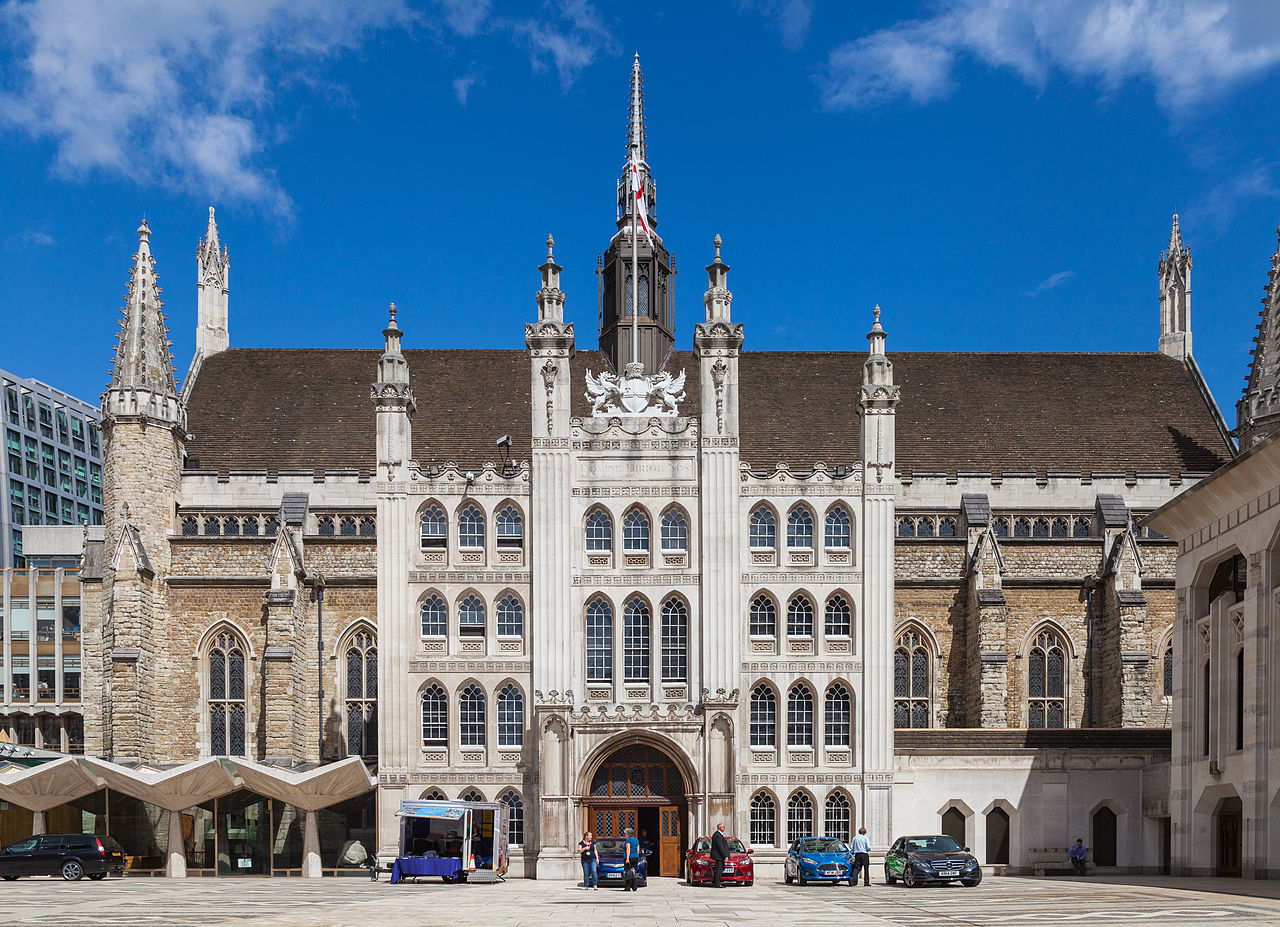
At London's Guildhall on 13 November 1553, five individuals were tried for high treason: Lady Jane Grey, the so-called 'Nine Days Queen'; her husband Guildford Dudley; his brothers Ambrose and Henry; and Thomas Cranmer, archbishop of Canterbury. Cranmer was charged with helping to seize the Tower for Jane and of levying troops for the duke of Northumberland's expeditionary force against Mary I (Northumberland himself had been executed in August that year). The beleaguered archbishop allegedly 'openly confessed his crime', although he himself later clarified that he had 'confessed more... than was true'. 

The Guildhall was the venue of several notable treason trials during the Tudor period. Francis Dereham and Thomas Culpeper, the reputed lovers of Katherine Howard, were tried and convicted at the Guildhall in 1541, while Anne Askew was tried for heresy at the same venue five years later. The five tried on 13 November 1553 proceeded from the Tower of London through the streets on foot to the Guildhall. Lady Jane - or Queen Jane; her exact title continues to rouse debate - was dressed in a sombre gown of black cloth and a black French hood. 

The commission was headed by the lord mayor, Sir Thomas White. Eric Ives notes that the commission was 'overwhelmingly Catholic in sentiment', which was surely a calculated move on Queen Mary's part, as a sign of the new order that was to be a feature of her reign. The 'Nine Days Queen' was charged with taking possession of the Tower, alongside her husband, and 'signing various writings'. In short, she had unlawfully usurped the sovereign's authority. 

Image result for lady jane greyImage result for thomas cranmer

All five were found guilty of high treason. The four men were sentenced to suffer a traitor's death: hanging, drawing and quartering. Jane was sentenced to be burned alive or beheaded according to the Queen's pleasure. The teenager faced news of her sentence bravely; she was sustained during those bleak months of imprisonment by her devout reformist faith. No date was given for the executions, and it appears that Queen Mary was, at least initially, willing to show mercy to the defendants, with the exception of Cranmer. 

The outbreak of rebellion in early 1554, however, changed that. Whether or not she was pressured by the Spanish envoys, with the promise of marriage to Philip of Spain, or by her Privy Council, Mary elected to order the executions of Guildford Dudley and Lady Jane Grey, for she feared that her security would be compromised as long as they remained alive and a focus for reformers. On 12 February, Guildford and Jane were executed. Both died bravely. Jane was subsequently represented in cultural works as an innocent victim of her scheming parents, or as a virtuous Protestant martyr. Guildford was viewed with sympathy by his contemporaries, but modern writers tend to depict him negatively as an abusive, weak-willed and vicious adolescent, a portrayal that is essentially fictional in basis.

Ambrose and Henry, Guildford's brothers, were more fortunate. Ambrose was released from the Tower in late 1554 and went on to serve Elizabeth I as her Master of the Ordnance. In 1561, he was created earl of Warwick. He died in 1590. His younger brother Henry participated with Ambrose in several tournaments held by Philip of Spain, as a demonstration of Anglo-Spanish amity. Henry participated in the Battle of St. Quentin in 1557, where he died. Archbishop Cranmer fared less well. He was tried for heresy in 1555 and went to the stake on 21 March 1556. 

Monday, 26 September 2016

Almost A King: Lord Guildford Dudley

Lord Guilford Dudley.jpg

Lord Guildford Dudley, son of the duke of Northumberland, is not usually depicted positively either in fiction or non-fiction. Often, Guildford is presented as a weak-willed, snivelling adolescent who sobbed on the scaffold, or as an abusive sociopath capable of bullying his gentle wife, Lady Jane Grey. In her study of the so-called nine days queen, Hester Chapman described Guildford as 'a spoilt, conceited and disagreeable young man', while in her novel Innocent Traitor, Alison Weir portrayed Guildford as a vicious abuser who mistreated Jane on their wedding night.

Guildford, who married Jane in 1553, could have become king of England, had events turned out differently. Little is known of him, but it is likely that he was well educated and was brought up to favour the reformist faith. It is possible that he was younger than his wife Jane, who was probably born in the spring of 1537. The Dudleys had a newborn son in March 1537, while one of Guildford's godfathers, Diego de Mendoza, visited England between the spring of 1537 and the summer of 1538. Thus making it likely that Guildford was born in 1537 or 1538 and inherently probable that he was younger than his wife. According to Grafton, Guildford was 'a comely, virtuous and godly gentleman'.

In the spring of 1553, Guildford married Jane Grey, the cousin of Edward VI. For the Dudleys, the Grey marriage was a notable triumph, for it allied them with the ducal house of Suffolk as well as to the Tudor dynasty. There is no evidence that John Dudley, duke of Northumberland, schemed to marry his son to Jane as part of his plan to have Jane made queen in the wake of Edward VI's death. Traditionally, it has been reported that Jane was bullied into marrying Guildford by her scheming family; some alleged that she had been physically beaten until she had submitted to the will of her parents. These stories are questionable. Certainly there is no evidence that she objected to Guildford on personal terms, although it could be said that the duke and duchess of Suffolk, Jane's parents, might have hoped for a more noble bridegroom for their daughter. After all, rumours had circulated in some quarters that Edward VI himself hoped to marry Jane. Once it became apparent that the king's demise was imminent, the Dudleys surely realised that Guildford might very well become king of England as the husband of Queen Jane, if the coup against Mary Tudor succeeded.

Image result for lady jane grey
Above: Lady Jane Grey. After her marriage, Jane referred to herself as 'Lady Jane Dudley'. There is no evidence that she objected to the marriage with Guildford on personal grounds.

Unfortunately for both the Greys and the Dudleys, Mary Tudor was highly popular in the country at large, and following Edward VI's death on 6 July, the displaced Mary immediately acted to ensure that she was accepted, and then crowned, as England's queen. Jane had arrived at the Tower of London shortly after the king's death, and she was presented with the crown jewels by the Marquess of Winchester. Reportedly, Jane explained that she did not wish her husband to be presented with a crown, because she wished to make him a duke, rather than honour him with the title of king consort. This was not because of personal feelings on her behalf, given that she was 'loving of my husband'. Indeed, after her marriage Jane consistently referred to herself as 'Lady Jane Dudley'. On 19 July, the last day of her 'reign', Jane acted as godmother to a son born to one of the Tower guards. The child was named Guildford.

Mary Tudor took the throne with triumph. Eric Ives and Leanda de Lisle have explained, in detail, how Mary seized the throne from Jane; whether or not she should be viewed as the rightful queen and Jane the usurper, or vice versa, continues to be disputed. On 22 August, Guildford's father, the duke of Northumberland, was executed. Three months later, both Jane and Guildford were tried and found guilty of treason, but the queen made known her wish that the two prisoners should be spared death. 

However, Sir Thomas Wyatt's rebellion in early 1554, which involved Jane's father, sealed the fates of both Jane and Guildford. Both wrote letters to the duke; Guildford signed himself 'youre lovyng and obedynent son', while Jane described herself as 'youre gracys humble daughter Jane Duddley'. On the day of their execution, 12 February 1554, it is reported that Guildford wished to see Jane one last time, 'desiring to give her the last kisses, and the last embrace'. Jane refused, however, because 'their sight would increase the misery in both, and bring much more suffering'. After their deaths, Jane believed, they would 'live perpetually joined in an indissoluble bond'.

Evidence suggests that Guildford, at  the age of only fifteen or sixteen, went to his death with dignity. He made a short, unrecorded speech on the scaffold and prayed without losing control of his emotions. No mention, in this contemporary account, of Guildford's supposed sobbing in the moments before his execution. 

Lord Guildford Dudley has traditionally been viewed as a weak-willed, vicious adolescent, who was loathed by his gentle, victimised wife Lady Jane Grey. There is no evidence of this, and the couple's closeness and loyalty to one another emerges from the sources even during the last hours of their lives. Had the events of the summer of 1553 gone differently, had Jane been blessed by fortune, Guildford could have become king of England as the husband of Jane I. It was not to be, and history has not been kind to him in the centuries since his passing. 

Friday, 12 August 2016

Uncrowned Consorts 1066-1558


After the Norman Conquest of 1066, it became customary for the king's consort to be crowned, either alongside him or at a later date. In Anglo-Saxon England, it had not been usual for the queen to be crowned. However, William the Conqueror signalled a break with the past when he assented to the coronation of his wife, Matilda of Flanders, alongside him on Christmas Day 1066. Thereafter, the wife of the king was usually honoured with a coronation. 

As J. L. Laynesmith notes, the medieval coronation enhanced the quasi-religious nature of the royal dynasty and manifested a 'dynasty-bound divine right'. It conveyed divine favour while promising prosperity for the dynasty, provided that the king and his consort obey God's laws and govern their people equitably and justly. For the queen consort, the coronation was concerned with her role as an integral part of her husband's public body. Thus the coronation, as Laynesmith suggests, offered the consort 'a richer sense of her divinely ordained role'. 

Given that the majority of English queens in the period 1066-1558 were foreign-born, it was customary for the consort to be crowned after her arrival in England and subsequent marriage to the king. Indeed, no Englishwoman was crowned queen until Elizabeth Wydeville in 1465. The coronation, from the consort's perspective, functioned as a celebration of the ruling king's dynasty and more broadly demonstrated the wealth and magnificence of the realm which she had arrived in. 

However, not all consorts in the five hundred years after the Conquest were crowned, for a variety of reasons. These were complex in nature and included political troubles, financial difficulties, and domestic insurrection or rebellion that prevented the king from dedicating the time and expenses required to furnish his consort with a coronation. Whether or not a lack of coronation affected the consort's claim to legitimacy is a significant question that cannot always be answered straightforwardly, but it will be seen that at least in some cases, the consort felt slighted by the absence of this ceremony.

Margaret of France, second consort of Edward I
(1279-1318), consort 1299-1307


Margaret of France was the second wife of Edward I of England (1239-1307) and married the sixty-year-old on 8 September 1299 in Canterbury. The king's first wife, the beloved Eleanor of Castile, had died in 1290. Edward was desirous of achieving peace with France, which would enable him to more effectively pursue his wars with Scotland (France's traditional ally). It was agreed that Edward's son and namesake would marry Isabella, daughter of Philip IV of France, while the English king himself would marry Philip's sister, Margaret. The new queen was never crowned, although she did appear on public occasions wearing a crown and used the royal title in letters and documents. Margaret was queen for a short period, but she enjoyed some success in intercession and is credited with maintaining stable relations between her husband and her stepson (the future Edward II). Margaret was also revered for her piety and favoured the Franciscan order. She also fulfilled the queen's primary duty by giving birth to two sons: Thomas of Brotherton and Edmund of Woodstock (the latter was executed during the reign of his nephew, Edward III). Margaret died in 1318, aged about thirty-nine. She was the first uncrowned consort since the Norman Conquest, and was queen for less than eight years, but she enjoyed notable successes. 

Isabelle of France, second consort of Richard II
(1389-1409), consort 1396-1399


Traditionally, Richard II's second consort is said to have been crowned on or about 8 January 1397, but unusually, there is no extant evidence of the coronation festivities. If her coronation did take place, it must have been very low-key and this may partly be because of the hostility generated by Richard's choice of bride. The new queen was only seven years old and would be unable to bear children for some years to come. Given the uneasy political climate, it could be said that Richard had not chosen particularly wisely, although the marriage was designed to cement peaceful relations between England and France. If the coronation took place, it was apparently unworthy of being recorded for posterity; some historians doubt whether it actually took place. If it did not, Isabelle was only the second consort in over three hundred years not to be honoured with a coronation. 

Henry VIII's consorts (1536-1547)

Related image

After his failed marriages to Katherine of Aragon and Anne Boleyn, Henry VIII elected not to honour any of his subsequent four wives with a coronation. In two cases, evidence suggests that coronation festivities were planned but did not take place. Jane Seymour, his third consort, most likely would have been crowned had she lived after giving birth to her only son, the future Edward VI. Court observers reported that the king wished for Jane to be crowned in October 1536, six months after her marriage, but rumours of plague alongside insurrection in the north of England prevented the ceremony from taking place. The coronation could, and did, celebrate the queen's fertility, thus legitimising the king's dynasty. Had Jane survived the birth of Edward in October 1537, it seems reasonable to suppose that her grateful husband would have arranged for her coronation, but her unexpected death prevented this from coming to fruition. 

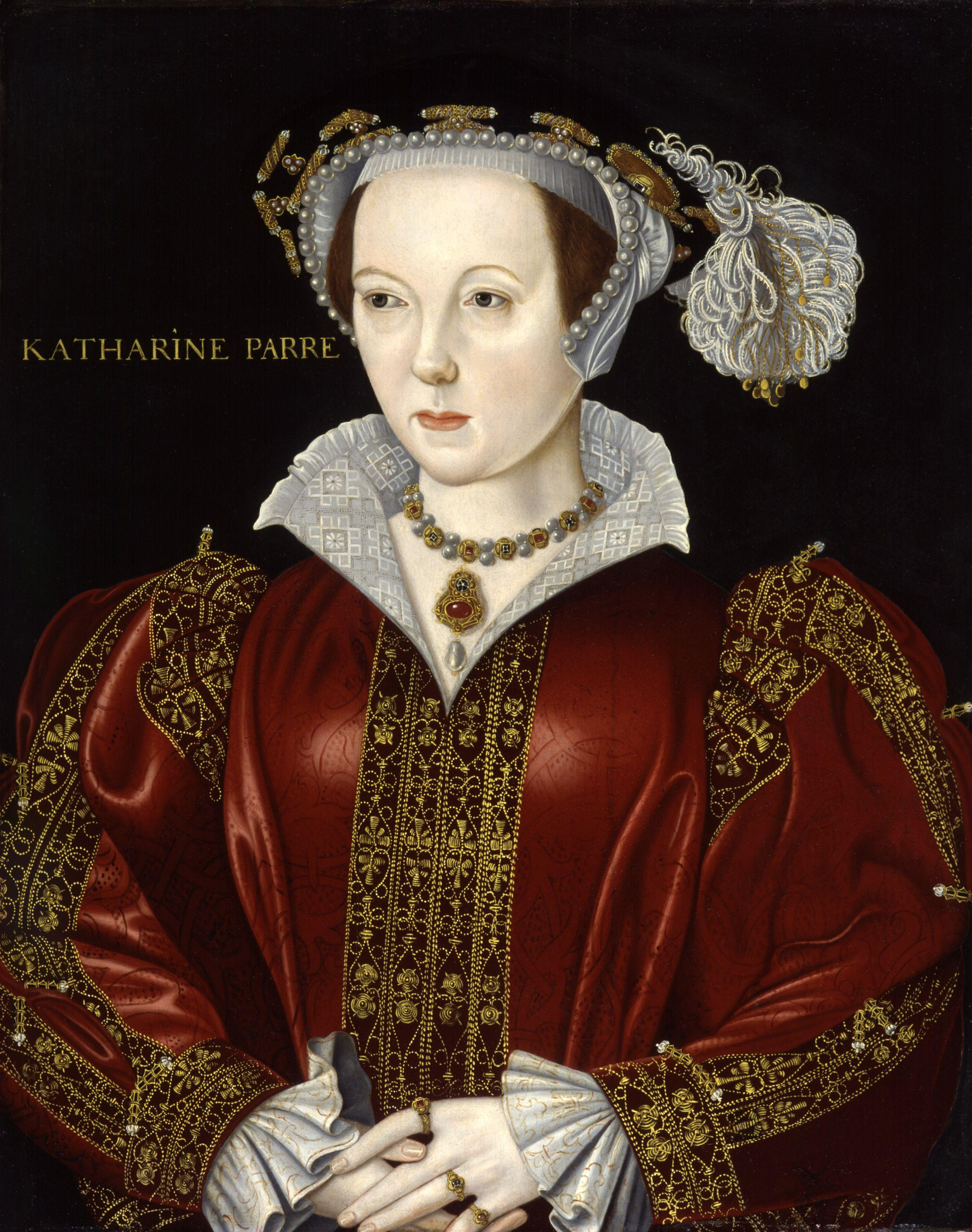
Henry's belief that Anne of Cleves was not his wife prevented her from receiving a coronation, while his final consort, Katherine Parr, was not favoured with a coronation for reasons that remain unclear. However, it is possible that Henry did consider crowning his fifth wife, Katherine Howard. The royal couple departed on a northern progress in the summer of 1541, partly because Henry was determined to ensure the north's obedience to him following recent rebellion in the area, and partly because he hoped to meet his nephew, James of Scotland, at York. One ambassador reported that Henry intended to have Katherine crowned at York, which would have marked a break with the past given that both Katherine of Aragon and Anne Boleyn, not to mention the medieval consorts, had been crowned in London. The coronation did not take place, perhaps because Henry was waiting for his consort to provide him with an heir. She did not, of course, and her execution the following year prevented her from being crowned.

Guildford Dudley, consort of Jane 
(c. 1537/8-1554), consort 1553


Whether Lady Jane Grey should in truth be referred to as Queen Jane I of England continues to be disputed by modern historians, but if she was rightful queen, as Eric Ives argues, then her husband Guildford Dudley should be viewed as her consort. Guildford, who was probably younger than his wife, most likely would have been crowned alongside his wife had Mary Tudor not successfully seized the crown from Jane and had the young couple imprisoned in the Tower of London. Contrary to popular belief, there is no evidence of animosity or dislike between Jane and Guildford and the young noblewoman continued to refer to herself as Lady Jane Dudley even while imprisoned. When Guildford requested to see Jane before their executions on 12 February 1554, Jane refused because the sight of one another would 'increase the misery in both, and bring much more suffering'. Fifteen or sixteen when he was beheaded, Guildford Dudley was the first male consort since Geoffrey of Anjou, husband of the Empress Matilda.

Philip II of Spain, consort of Mary
(1527-1598), consort 1554-1558

Portrait of King Philip II of Spain, in Gold-Embroidered Costume with Order of the Golden Fleece.jpg

Mary I's husband, Philip II of Spain, was never crowned. It is clear that he personally resented his wife's decision not to arrange for his coronation, because it confirmed that his wife took precedence at least in governing England. This absence of a coronation was part of a broader curtailing of Philip's powers and influence in Mary's realm. Philip was made king by an Act of Parliament stipulating that he 'shall aid her Highness... in the happy administration of her Grace's realms and dominions'. It is possible that the decision not to crown Philip was at least partly a result of the widespread antipathy to Mary's choice of a husband who was both Catholic and Spanish. 


In the period 1066-1558, the consort expected to be crowned alongside her husband (or more rarely, his wife). It was unusual for the consort not to be honoured with a coronation and usually, if the ceremony did not take place, it was due to extraordinary circumstances. These circumstances included political troubles, as in the case of Philip II; domestic insurrection and rebellion, as Jane Seymour and Guildford Dudley discovered, the latter being deposed alongside his wife; and the king's decision to wait for his consort to prove her fertility, as occurred with Henry VIII's later consorts. In the case of Margaret of France, it is unknown why her husband neglected to provide her with a coronation, although evidence suggests that she appeared wearing a crown on public occasions, a privilege denied to the other uncrowned consorts. Whether the consort accepted the absence of a crowning or not depended on their personality. No evidence survives for how Henry's later consorts felt, or perhaps Isabelle of France. Nor do we know whether Guildford Dudley minded, but given that his wife was also not crowned before she was deposed, it is unlikely that he had much say in the matter. But evidence suggests that Philip resented what he perceived as the curtailing of his rights in England; the absence of a coronation confirmed his supplication to Mary, at least in her own realm.

Tuesday, 12 February 2013

The Execution of Lady Jane Grey, Queen of England


On this day, February 12 1554, Lady Jane Grey, famously the Nine - or more accurately, Thirteen - Day Queen was beheaded privately on Tower Green, shortly after her teenage husband Guildford Dudley had been executed on Tower Hill. Last week I detailed the execution of Mary Queen of Scots, Jane's fellow queen who, like Jane, believed that she was dying as a martyr for her faith. Unlike Mary, however, Jane was dying as a fervent, even devout Protestant, and has ever since been mourned as a martyr for the Protestant faith and a victim of the Catholic queen Mary Tudor's bloody campaign of tyranny.

Lady Jane had been born sometime between the autumn of 1536 and the autumn of 1537 to two highly ambitious Tudor figures, Henry Grey, marquis of Dorset, and his notorious wife Frances Brandon, who was the daughter of Henry VIII's youngest sister Mary by her husband Charles Brandon, duke of Suffolk. Royal blood thus flowed in Frances' descendants. Jane's sisters, Katherine and Mary, were born in 1540 and 1545 respectively. Jane's childhood and the nature of her relationship with her parents is something of a mystery. The Victorian era, through portraying Jane as an innocent teenage victim and Protestant martyr, depicted Jane as ruthlessly bullied by her cruel parents, especially her tyrannical mother, apparently famously beating her when Jane refused to marry Guildford in 1553. This portrayal of the Grey parents' relations with their eldest daughter was famously described in Alison Weir's fictional historical novel Innocent Traitor, where Frances mercilessly punishes her daughter, often physically beating her and inflicting violence on her. Recent historians, however, have questioned the reality of the personal nature of the Grey family's relations with one another. Plowden, for instance, suggests that Jane's complaints about her parents' harsh treatment of her may not necessarily reflect reality but, instead, 'may... illustrate the attitude of a priggish, opinionated teenager, openly scornful of her parents' conventional, old-fashioned tastes'.

Whatever the case is, Jane was, famously, extremely intellectual. In the words of Alison Plowden, who has written extensively on her, she showed 'exceptional academic ability'. Aged thirteen, she was found by Roger Ascham, Princess Elizabeth's tutor, to be reading Plato, and she was learned in several languages, classics, history, religion/theology, and sciences. In the spring of 1547, aged around ten, Jane was sent into the household of Henry VIII's last and ultimately luckiest queen, Katherine Parr, who quickly showed fondness for her young charge. Jane was exposed to Katherine's radical Protestantism, and she later shared lessons with her royal cousins Edward and Elizabeth. It has been theorised by numerous scholars that these three developed a strong Protestant faith which they all shared equally passionately, although it seems unlikely, given what we know of her reign and personal beliefs, that Elizabeth was as puritanical in her Protestant religion as Edward and Jane were. Tragically, Katherine died in childbed in 1548, and Jane returned to her parents' home in Leicestershire.

Jane rapidly became an increasingly devout Protestant, and as a teenager she began, with her tutors' encouragement, to communicate with radicals on the continent, including Heinrich Bullinger, associated with the radical church in Zurich. By now, of course, Jane's teenage cousin Edward had become king of England, and Protestantism had been forcefully introduced into England through a swift and brutal campaign of destruction of all traces of late medieval Catholic religion. In 1551, aged fourteen, Jane began to attend court more, following her father's advancement through becoming Duke of Suffolk, a wealthy and prestigious title which further enhanced the status of the Grey family. Jane apparently came into conflict with her thirty-five year old cousin Princess Mary, since Jane, despite only being in her early teens, showed considerable distaste towards her cousin on account of her Catholic religion. When Mary kindly sent her a lavish and fashionable dress, Jane rejected it, viewing it as symbolic of the corrupt nature of Catholicism. She pointedly remarked that it was a shame that Mary did not dress like her sister Elizabeth who, in the true spirit of Protestantism, rejected lavish dress and instead wore plain, modest clothing.

What is clear is that during the early 1550s Jane, and her family, became increasingly important at court. There had even been talk that Jane would marry her cousin Edward and become queen, thus further strengthening the Protestant religion in a gradually radical England. In 1553, it was arranged between the Grey parents and John Dudley, earl of Northumberland, that sixteen-year old Jane would marry Guildford Dudley, a younger son of Northumberland. Famously, Jane refused, and the story goes that her parents beat her mercilessly until she agreed to marry him, although it is uncertain whether this in fact happened. The marriage occurred in May, on a day when three weddings occurred at Durham House in London. Jane's thirteen year old sister Katherine was also married. Dramatic developments entailed in July when the fifteen-year old king Edward tragically died. Of course, this signalled Jane's fantastic rise to power and, eventually, triggered her dramatic downfall.

Historians have debated intensely the processes which led to Jane becoming queen of England, with some arguing that it was a Grey-Dudley family plot which saw members of that family, prominently the duke, bullying the king into naming Jane as his successor. Others have doubted this and emphasised that it was the king's intention all along to pass the crown to Jane, to ensure the triumph of Protestantism in England. Even though his own sister Elizabeth was Protestant, both she and Mary were excluded from the throne on account of their status as bastards. According to Jane's later letter to Mary, she was 'stupefied and troubled' by the astonishing announcement in early July that she was now Queen of England, but accepted the throne as a means of inaugurating Protestantism further in England. This has been explored in fictional works such as the 1985 film starring Helena Bonham Carter, Lady Jane, where Jane, as a devout Protestant, accepts the crown due to her religious beliefs.

On 10 July, Jane was taken to the Tower; on the way, an Italian spectator watched the grand procession and described the teenage Queen as being red-haired, freckled, and very short and thin. Apparently, she was so  tiny that she had to wear high platforms on her shoes. Her husband, Guildford, was described as being blonde, tall, and strong. According to contemporary accounts, the new Queen was received with largely indifference, confusion, and even hostility. Very few people had actually heard of Jane, and of course her cousin Mary was highly popular in England. Jane was proclaimed queen at Cheapside, before news quickly emerged that Mary had assembled an army and was intending to march into London and recover her throne. Jane's Council fell apart, with Northumberland unable to defeat Mary, and Mary was soon afterwards proclaimed queen. Jane's father ripped up her canopy of state when he later met with her, and informed her that she was no longer Queen. Her reign had lasted thirteen days, from 6 to 19 July.

To begin with, Mary had promised to be merciful, and it does seem likely that, as a kind-hearted but ultimately inexperienced and naive woman, she intended initially to spare her seventeen-year old cousin, who she believed had not wanted the throne for herself, and was merely a pawn of her ambitious family. Northumberland, however, was executed in August 1553, despite his earnest attempts to save himself through converting to Catholicism shortly before his execution, to no avail. Jane allegedly voiced shock and contempt at her father-in-law's renouncing of his religious beliefs. In November, Jane and her husband were tried for treason, and were condemned to die. Jane's fate was to be beheaded on the Green or to be burned alive within the Tower. She was assured, however, that she would not die, and that Mary would save her.

Tragically, Wyatt's rebellion in early 1554 sealed Jane's fate. Up till then, the queen had granted her several freedoms, allowing her to continue studying and to walk in the Tower gardens, and Jane had had nothing to do with the Wyatt rebellion. Yet this confirmed to both Queen Mary and her Council  that she would never be truly safe until her cousin was dead, since she would always be the figurehead for strong Protestant plots who sought to remove Mary and replace her with a Protestant monarch. The Queen was no longer able to be merciful, and Jane's execution was scheduled for February. Again showing her merciful nature, Mary sent the new dean of St Paul's to attempt to convert Jane, who Mary viewed as a heretic on account of her Protestant faith and hostility towards Catholicism, but to no avail. Demonstrating remarkable bravery and single-mindedness, bearing in mind her tender years, Jane refused to renounce her faith.

On 12 February, both Jane and her husband Guildford were beheaded. Guildford was executed first, although Jane refused to bid goodbye to him. Jane apparently cried "Oh Guildford!" when Guildford's bloody body was brought by her window, before processing to Tower Green for her own execution shortly after 10am. Dressed in deep black, and described by the onlooker Richard Grafton as being "a gentle young Ladie with singuler gifts both of learning and knowledge", Jane made a short speech on the scaffold, admitting that she had done wrong in accepting the crown, but emphasising her innocency and love of God. She announced that she died as "a true christian woman", before kneeling down and saying Psalm 51.

The headsman stepped forward and Jane, finally, saw the dreaded block for the first time. Unlike Anne Boleyn, she was executed with an axe by kneeling before the block. Following her ladies tying a kerchief around her eyes, Jane experienced a brief moment of panic and distress, groping for the block and crying out, "Where is it? What shall I do?" before someone came forward to guide her. The execution was soon over quickly, and Jane's body was buried in the chapel of St Peter ad Vincula, along with her fellow queens Anne and Katherine, who had been buried there previously.

The execution of Lady Jane Grey has since given rise to a legend and a series of myths surrounding this unfortunate young woman. Plowden referred to her beheading as "the judicial murder... and no one ever pretended it was anything else". Yet Plowden also, wisely, cautions that "it is difficult now to see beyond the religious bias of such contemporary sources as Holinshed's Chronicles and Foxe's Acts and Monuments, or the uncritical later biographies of Agnes Strickland and Richard Davey." She was made an icon as a Protestant symbol, an innocent victim of the bloody and cruel Catholic Mary I, who was vilified and condemned as evil and corrupt in Protestant sources of the kind produced by Foxe.

The painting above, painted in the nineteenth century by a French painter, helped to promote the image of Jane as a guiltless, gentle teenage martyr, characterising her as a Protestant heroine, even a saint. The famous Tudor historian Eric Ives, who wrote a celebrated book about Jane, concluded in his study of the young Queen's life that "Truth to tell she counted for little. She was important for barely nine months, she ruled for only thirteen days... And yet her name still lives... But the fundamental justification for remembering Jane is the justification for remembering Anne Frank centuries later. They speak for the multitude of brutality's victims who have no voice".

As beautiful as this is, I also agree with Plowden, who wrote somewhat unsettlingly: "...the reality of Jane Grey, sacrificial victim of realpolitik though she undoubtedly became, was surely rather more disturbing than the sentimental myths surrounding her seem to suggest".

I agree. The picture we have of Jane, and the depiction of Queen Mary I, are the results of the triumph of Protestantism, and later secularism, in England today, thus identifying the Protestant Jane as a victim and martyr for England's faith and her cousin as alien, barbaric, cruel, un-English, unnatural. Imagine if Catholicism had triumphed, and Mary was celebrated as a good and highly effective ruler and Jane as a traitor. Historians need to remember that the pictures we have of historical figures are often influenced overwhelmingly by later national, political, and cultural developments. Thus the success of the Reformation in England has led to Anne Boleyn being celebrated as an important religious figure in her own right, rather than as a royal prostitute as she was identified in her own time, while the success of Elizabethan Protestantism has similarly led to harsh judgements about one of its victims, Mary Queen of Scots.

Truth be told, Jane Grey must be seen as a tragic and unfortunate figure. She was beheaded at the age of seventeen, in a highly cruel time which experienced bloodshed and political rivalry on a constant basis. But Jane held firm religious beliefs, she was highly confident that she would enjoy salvation, and I doubt very much that she saw her cousin Mary with anything but contempt and pity, perhaps. She was innocent in that she did not readily participate in family plots to seize the throne, but I do think Jane was more complex than Victorian writers made her out to be. There is evidence to suggest that she was stubborn, highly opinionated, ruthless, priggish, and very narrow-minded towards those who did not share her beliefs. Who knows - if she had defeated Mary, and continued as Queen Jane, there may have been a persecution of Catholics on the same scale as Queen Mary persecuted Protestant heretics.