Showing posts with label witchcraft. Show all posts

Friday, 17 June 2016

Queenship and Witchcraft: Joan of Navarre

Joana Canterbury.jpg

In 1437, a week ago today, Queen Joan of Navarre died in London at the age of about sixty-six. Joan is one of the lesser known medieval queens of England and her controversial reputation is founded on the accusations of witchcraft that were levied against her by her stepson, Henry V. This neglect of Joan is unfortunate, because in reality she was one of the most intelligent, politically astute and capable consorts. Recently, I undertook research into Joan's life and discovered that there was a great deal more to her story than the rumours of sorcery that blackened her name.

Born around 1370 in Pamplona, Navarre, Joan married her first husband while still a teenager, in 1386. Her husband was John IV, duke of Brittany. The marriage appears to have been successful and the couple had nine children together. As duchess of Brittany, Joan participated in the ceremonies of court and she is known to have interceded for individuals who displeased her mercurial husband, including Clisson, constable of France. In her activities, Joan conformed entirely to contemporary expectations of how a noblewoman should behave. She fulfilled the roles of mother, wife, intercessor and patron. Her interest in court ceremonial, moreover, indicates that she was both cultured and artistic. 

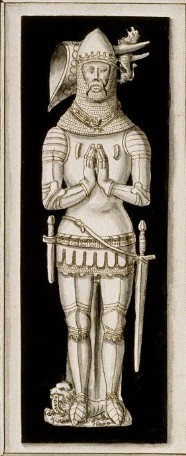
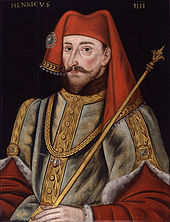
Jan5Bretan.jpg
Above left: John IV, duke of Brittany, Joan's first husband. 
Above right: Henry IV of England, Joan's second husband. 

In 1399, when Joan was around the age of twenty-nine, her husband died. She chose not to remarry immediately after her husband's death and instead fulfilled the role of regent for her son, John V, during his minority. It was during this period that Joan clearly emerges as a politically astute, capable and wise ruler. In 1403, she remarried. Her second husband was Henry IV of England. By marrying Henry, Joan placed herself in an ambiguous position, for her husband was a usurper. As with the later consorts Elizabeth Wydeville and Anne Neville, whose husbands also unlawfully usurped the throne, Joan was required to legitimise her husband's claim to the throne. Rumours circulated that there had been long-standing affection between Henry and Joan, and it is possible that their marriage was a love match.

However, Henry also demonstrated shrewdness in selecting Joan to be his consort. She was highly experienced in the affairs of government, intelligent and pragmatic. Moreover, in bearing her first husband nine children, she was clearly fertile, which was undoubtedly important for a medieval king whose claim to the throne was not fully secure. Unfortunately, during their ten-year marriage Joan did not bear Henry an heir, although it is possible that she experienced stillbirths. Fortunately, the queen enjoyed excellent relations with her stepchildren, including her husband's son Henry. 

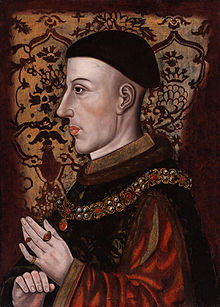
King Henry V from NPG.jpg
Above: Henry V, Joan's stepson.

Henry IV's death, however, changed Joan's life. Financially straitened, the new king, Henry V, accused Joan of witchcraft in a ruthless attempt to seize her lands and income with which to finance his foreign wars. As a highborn woman, Joan was vulnerable to accusations that were usually gender specific: namely witchcraft, sorcery and adultery. Other medieval noblewomen suffered from similarly ignominious accusations: both Eleanor Cobham, duchess of Gloucester, and Jacquetta, duchess of Bedford, were accused of witchcraft. There is no surviving evidence that Joan ever engaged in activities associated with witchcraft, and it is surely significant that she was later restored to favour.

During her imprisonment, Joan resided at Pevensey Castle and later at Nottingham Castle. Her stepson died in 1422 and was succeeded by his only son, Henry VI. Joan died on 10 June 1437, the same year in which her successor, Katherine of Valois, also died. As with many medieval queens, there is a lack of evidence concerning Joan's life and her experiences as queen. However, she seems to have enjoyed success during her husband's reign, but his death placed her in an ambiguous position, for she had borne him no children and thus was unable to exert influence in the politics of her stepson's reign. With no-one to support her interests, she was vulnerable to the whims of Henry V and was humiliated when he seized her income to finance his wars on the Continent. Although she died in obscurity, Joan of Navarre emerges as a politically astute, intelligent and influential consort, whose eventual fate bears witness to the dangers faced by highborn women in the Middle Ages. 

Saturday, 7 March 2015

Eleanor Cobham: Gender, Politics and Witchcraft

HumphreyGloucester.jpgHumphrey & Eleanor.jpg
Above: Humphrey, duke of Gloucester (left).
Humphrey and Eleanor (right).

Eleanor Cobham, duchess of Gloucester, is well-known today as a convicted sorceress. The second wife of Humphrey, duke of Gloucester, who was uncle to Henry VI, the duchess has usually been perceived as a proud and ambitious parvenu who resorted to witchcraft in a calculated attempt to ensure her husband's succession to the throne. At a time of dynastic uncertainty and political turmoil, the fear and dismay of her contemporaries is understandable. Believing that women resorted to the black arts as a mechanism for wielding power, they readily believed the charges against Eleanor. Their belief fitted in with the conventional understanding that women were naturally manipulative, power-hungry and secretive.

Born around 1400, Eleanor was the fourth child of Sir Reginald Cobham and his wife Eleanor. Following her mother's death in 1422, she departed to serve in the household of Jacqueline, countess of Hainault. The countess was an immensely influential lady who was also duchess of Bavaria-Straubing, countess of Holland and Zealand, and had been Dauphine of France between 1415 and 1417 as the wife of the dauphin John. Eleanor's appointment to her household was therefore an excellent opportunity for her. She was not content merely to serve the duchess, however. In the spring of 1425 she became Humphrey's mistress. Three years later, Humphrey's marriage to Jacqueline was declared invalid, and shortly thereafter he married Eleanor Cobham.

Jacoba van Beieren door Hollandse school ca 1600.jpg
Above: Jacqueline of Hainault.

It is possible that Eleanor was an ambitious and calculating woman, but it is equally valid that she was in love with Humphrey and believed that she had a right to become his wife if he had, in fact, never lawfully been married to Jacqueline. Although the marriage may have attracted hostility, the couple appear to have been exceptionally happy with one another. They established a pleasure garden, La Plesaunce, at Greenwich and invited musicians, poets, scholars, physicians and their friends to form a miniature court there.

In 1435-6, Humphrey became heir apparent following the death of his elder brother, the duke of Bedford. This represented a turning point in Eleanor's career, for it enhanced her prominence greatly. If Henry VI, her nephew, died, she would become queen of England. Eleanor was accorded full recognition of her status: in November 1435 the duke created a jointure for her in his whole estate, and in spring of the following year she acquired the robes of a duchess for the Garter ceremony. She appears to have been close to her young nephew, the king. By 1440 she was consulting astrologers to cast Henry's horoscope and to predict her own fortunes. Given that the teenaged king had not yet married or produced an heir, Eleanor's actions may represent less a determined attempt to wrest the crown from him through witchcraft than an earnest effort to establish a sense of security regarding the succession. Her actions may be considered understandable in a context of dynastic uncertainty and international conflict, at a time of decline in England's fortunes in the Hundred Years War with France.

Eleanor's actions were not necessarily suspicious in and of themselves; as Harriss notes, 'mathematical astrology had become socially and academically respectable and other great noblemen had astrologers in their employ'. Surely if the king harboured suspicions of his aunt's behaviour he would have acted sooner against her than he in fact did. The prediction of Eleanor's physician Thomas Southwell and principal of St Andrew's Hall, Oxford, Roger Bolingbroke, however, that Henry VI would be endangered by a serious illness in the summer of 1441, led to rumours surrounding the duchess's ambitions. Southwell, Bolingbroke and John Home, canon of Hereford, chaplain to the duchess, were all examined. They were arrested and charged with the practice of necromancy in July 1441 and, when Bolingbroke named Eleanor, she was examined for eighteen charges of treasonable necromancy, to which she admitted her guilt. She was incarcerated in Leeds Castle. Southwell died in the Tower, Bolingbroke was hanged, drawn and quartered and the 'Witch of Eye', Margery Jourdemayne, was burned, whom Eleanor had admitted to procuring potions from in order to conceive and bear Humphrey's child. The duchess herself was sentenced to walk barefoot to three London churches in penance on successive market days in November, bearing a taper. She was then imprisoned, firstly at Chester, then at Kenilworth, then on the Isle of Man, and finally at Beaumaris, where she died in 1452.

It is uncertain whether Eleanor Cobham was guilty of the charges levied against her. There is no evidence that she plotted the king's death, although she did admit to consulting his horoscope and to obtaining potions from a witch with which to fall pregnant by the duke. Undoubtedly the charges were politicised and sought to attack her husband. High status women were vulnerable to charges of witchcraft and treasonable activity as a way of casting suspicion on their husbands. Jacquetta, duchess of Bedford, was another victim of witchcraft accusations in the reign of Edward IV that were motivated by a desire to bring down the Wydevilles. Humphrey's political enemies used the charges as a way of estranging the duke from his nephew. Six years later, the duke himself was arrested and died in suspicious circumstances. Eleanor, duchess of Gloucester, may have been less a convicted sorceress than a victim of the dynastic turmoil, political conflict and gendered suspicions of the mid-fifteenth-century.

Saturday, 13 July 2013

Jacquetta of Luxembourg


Above: Janet McTeer as Jacquetta Woodville in The White Queen (2013).
Portrait of Queen Elizabeth Woodville.

The BBC television series The White Queen, based on three of bestselling fictional novelist Philippa Gregory's novels set in the times of the Wars of the Roses, has sparked much greater interest in the extraordinary lives of royal English women who lived in context of ferocious battles, murder, bloodshed, and treachery. The TV series, of course, is horrendously inaccurate, with critics noting the appearance of zips on dresses, modern stair-rails, and quick to rage against the very modern language. I personally cannot understand why these medieval women do not wear headdresses and instead walk around dressed like prostitutes!

Queen Elizabeth Woodville, of course, was a notorious woman who was adored by her husband, Edward IV, much praised for her beauty, fairness and other qualities, but loathed by English nobles who perceived her to be arrogant, cold, ruthless, and vain. However, the life of Elizabeth's mother, Jacquetta of Luxembourg, is perhaps even more astounding than that of her eldest daughter.

Portrayed by Janet McTeer in the television series, Jacquetta had lived a life of almost unimaginable luxury and privilege before she married into the Woodville family. Perhaps born around 1416, Jacquetta was the eldest of nine children born to Pierre of Luxembourg, count of St. Pol, Conversano and Brienne and vicomte of Lille, and his wife Marguerite, daughter of the duke of Andrea. In 1433, aged seventeen, she married John duke of Bedford, who was uncle to the infant king of England, Henry VI. Thus, having been born into the European aristocracy, Jacquetta married essentially into the English royal family, cementing further her family's illustrious prestige and lineage. This marriage was not a love match, for the duke was aged around 27 years older than his new bride and had previously been married already. Instead, it was a marriage made by politics, to suit prevailing English interests in French lands at the time.

However, Jacquetta's husband John died only two years after the marriage, leaving her a widow aged 19, without children. She was, however, left extremely rich, for she was entitled to a third of her husband's lands and annuities. Just two years later, in 1437, Jacquetta married again, to her social inferior Sir Richard Woodville, who was not at all wealthy or highly ranked. Since she had, a year previously, agreed that she could not marry again without the consent of King Henry VI, she was forced to pay £1000 as a royal pardon for her transgression. This marriage clearly seems to have been a love match, for Jacquetta was willing to sacrifice her wealth, her lineage and royal connections in marrying a humble squire. Further evidence of the passionate love between them can be seen in the fact that she bore Richard at least 14 children.


Above: Were Jacquetta and her daughter Elizabeth witches, as The White Queen so controversially suggests?

Jacquetta and her new husband spent the first few years of their marriage in France, for Jacquetta was negotiating there to secure her dower lands, while Richard served there. They dwelled at Grafton, Northamptonshire, as their main English residence following their return. Their first daughter, Elizabeth Woodville, was born around 1437, and was followed by a further seven girls and seven boys, including Anthony and John. Elizabeth would prove like her mother to be extremely fertile.

In 1444, Jacquetta participated in the retinue which brought the new queen, Margaret of Anjou, to England, and it seems that the two became close friends. Jacquetta and her Woodville family were, initially, Lancastrians who supported Henry VI's regime, for the Woodvilles had been connected with the duke of Bedford, uncle to the king. However, several years later, the political and dynastic troubles which came to be known as The Wars of the Roses transformed Jacquetta's life forever. At the Battle of Towton, her husband and eldest son were arrested and imprisoned in the Tower of London, although they were later released. At this point, the Woodville family probably transferred their allegiance to the Yorkists.

Most infamously, Elizabeth, Jacquetta's eldest daughter, allegedly seduced the new Yorkist king, Edward IV, in 1464, leading him to marry her since she had, apparently, refused to become his concubine. Later stories dramatically suggested that she had held a dagger to her throat and promised to kill herself were he to attempt to use force on her. Regardless of the circumstances, Edward married Elizabeth at the Woodville's family home at Grafton on 1 May 1464, with only Jacquetta, a priest, and two gentlewomen present. This, of course, transformed the Woodville's fortunes. Jacquetta's husband became Earl Rivers and treasurer of England, while her children were married into the English nobility, causing much resentment and anger among other nobles. For instance, her 20-year old son John was, shockingly, married to Katherine Neville, the elderly dowager duchess of Norfolk, who was at least in her late 60s. Katherine Woodville married the young Duke of Buckingham, who was apparently furious, believing his new wife to be grossly inferior to himself.

Jacquetta and Elizabeth have often been linked in the public consciousness with witchcraft and sorcery. The White Queen supports these allegations, in both the TV series and in the book, by suggesting that both women engage in witchcraft to fulfil their ambitions - thus sorcery is practised to make Edward fall in love with and marry Elizabeth; to change the outcomes of battles; to wreak vengeance on enemies. Certainly, at the time rumours of witchcraft were linked to the new queen and her family. Contemporaries found it scarcely credible that their Yorkist king had married a woman so far beneath him, who had no royal blood and was, in fact, from a Lancastrian family. Richard III, brother-in-law to Elizabeth, and the Earl of Warwick both insinuated that Jacquetta and Elizabeth had inflicted sorcery on the king, rendering his marriage invalid. Thomas Wake, a Northamptonshire esquire, claimed in 1469 that Jacquetta had brought about the marriage of Edward and Elizabeth by witchcraft, having found two lead figures, one for the king and one for the queen. Jacquetta, however, when brought to trial proved her innocence and the case against her collapsed.

As with earlier medieval women such as Joan of Navarre and Eleanor duchess of Gloucester, witchcraft was often used to irrevocably damage the reputations of powerful women. There is no evidence to suggest that Elizabeth and Jacquetta were witches. Jacquetta's family was linked to Melusina, a water goddess or 'serpent woman'. However, there is no conclusive evidence to show that Elizabeth or Jacquetta strongly celebrated their links with such a legend, despite Philippa Gregory's claims to the contrary. While Jacquetta did own a copy of the ancestral romance Melusine, other fifteenth-century ladies did too, which hardly suggests that she was unique.

The main reason why Elizabeth was believed to be a witch was because other nobles could not believe that she, a mere gentlewoman of no social standing, was genuinely worthy of the king of England and had caused him to fall in love with her by natural means. Certainly, Edward's cousin and former supporter the earl of Warwick was furious, for he had been negotiating for Edward to marry a foreign princess, who was believed to be far worthier of Edward. Warwick personally resented and hated the Woodvilles, mainly because, by virtue of their relatives marrying almost all the other nobles, there were no suitable nobles left for his two daughters Isabel and Anne to marry.

The marriage between Edward and Elizabeth culminated in Warwick's defection to the Lancastrian cause, resentful of his loss of influence and power with the rise of the queen's family. He married his eldest daughter Isabel to the king's younger brother George duke of Clarence, who had become similarly angered and hostile towards his brother. Matters came to a head when Warwick left England, accompanied by his wife, his two daughters and his new son-in-law, and journeyed to visit the former queen Margaret of Anjou, promising his support of her and allegiance to the Lancastrian cause. Agreeing that his younger daughter Anne should marry Margaret's son Edward of Lancaster, a new alliance was struck up by which it was agreed that the Lancastrian king, Henry VI, should be returned to the English throne, and Edward IV forcibly removed from it.

Meanwhile, Jacquetta's personal influence with Queen Elizabeth remained firmly entrenched. She participated in her daughter's coronation, and in 1466 took part in Elizabeth's churching following the birth of her first child, the future Elizabeth of York. Misfortune overtook her, when her husband Richard and her son John were executed in 1470 on the orders of Warwick, who had returned to England in an attempt to restore Henry VI to the throne. Edward IV escaped to Europe, leaving his young wife to seek sanctuary in Westminster Abbey where, accompanied by her mother, she gave birth to the future Edward V in November 1470.

Jacquetta did not long survive the brutal deaths of her husband and son, dying on 30 May 1472, aged around 56. Where she was buried is unknown. She was an immensely powerful and wealthy woman who had been born into European royalty, marrying into the English royalty in her teens before becoming, by virtue of her second marriage, the mother of England's queen and thus grandmother of a later queen, Elizabeth of York, and great-grandmother of Henry VIII.

Rather than being a scheming and ambitious woman who only relied on witchcraft and sorcery to bring about her triumphs, it is likely that Jacquetta was, as Lucia Diaz Pascual intriguingly writes: 'a formidable woman who understood how to navigate the corridors of power and was capable of great resilience, strength, and determination to achieve her objectives'.

Tuesday, 29 January 2013

"A Shapeless Mass of Flesh" or a "Beautiful Son"? Anne Boleyn's Mysterious Pregnancy in 1536


In late January or early February 1536, Anne Boleyn, second queen of Henry VIII of England, suffered a miscarriage, believed to be of a male child, at Greenwich Palace. This failure has since been shrouded in mystery and controversy, with a series of myths surrounding the tragic loss of a male heir which, almost certainly, would have guaranteed Anne's personal safety as queen and confirmed in the eyes of her husband that his second marriage was valid and his first one unlawful. Some scholars have seen Anne's pregnancy as the direct reason for her downfall, while others suggest that it considerably weakened her position but stress that she was not in fatal danger. So what is the truth of what happened to that tragic, if mysterious, pregnancy? Attempting in this article to separate fact from fiction, and viewing events through the eyes of sixteenth century social and cultural norms, a reasonable explanation will hopefully be offered.

According to later comments, it seems likely that the queen had become pregnant for the third time in mid-October 1535, when travelling with her husband on the annual summer progress.[1] Following another failure in pregnancy in the summer of 1534 – historians debate whether the queen suffered a phantom pregnancy, a miscarriage, or a stillbirth in July or August 1534[2] - both Anne and Henry must have been considerably relieved, because, as has been argued, no queen consort was ever really safe until she gave birth to the highly desired male heir, as conveyed strongly in the king’s first marriage to Katherine of Aragon. Unfortunately, Anne miscarried her child in early 1536, although what happened has been surrounded with fantastical stories born out of hindsight.[3] It is almost impossible, readers should note, to penetrate both contemporary and later sources in order to discern what really happened.

It seems logical to begin with the reports of contemporary observers who were well placed at court, although according to the divided nature of the palace according to royal protocol, status and occupation none of them were actually in the queen’s privy chamber when she suffered this calamity. Eustace Chapuys, the Imperial ambassador and a personal enemy of the queen, wrote that: “on the day of the internment (the funeral of Katherine of Aragon, 29 January), the Concubine [Anne] had an abortion [a miscarriage] which seemed to be a male child which she had not borne 3 ½ months, at which the King has shown great distress. The said concubine wished to lay the blame on the duke of Norfolk, whom she hates, saying he frightened her by bringing the news of the fall the King had six days before.”[4] Chapuys went on to write that it was well-known that this was not the cause of Anne’s miscarriage, and that others at court had speculated that, medically, she was unable to bear male children. Some historians have developed this point and suggested that Anne was rhesus negative, meaning that, following her first successful pregnancy (giving birth to Elizabeth in September 1533), she would never again have been able to bear a healthy child.[5] On a different note, Raphael Holinshed, a Tudor chronicler, also wrote that Anne’s miscarriage occurred on 29 January.

Edward Hall, who wrote a celebrated chronicle of Henry VIII’s reign, stated that: “And in February folowyng was quene Anne brought a bedde of a childe before her tyme, whiche was born dead”.[6] Hall had previously asserted that, following Katherine’s death, Anne had worn yellow in celebration – or possibly in mourning, since yellow was Spain’s national colour of mourning – of the former queen’s passing. Charles Wriothesley, a prominent court observer, wrote: “This yeare also, three daies before Candlemas [ie. 2 February], Queene Anne was brought a bedd and delivered of a man chield, as it was said, afore her tyme, for she said that she had reckoned herself at that tyme but fiftene weekes gonne with chield...”[7] Lancelot de Carles, who wrote a controversial poem about Anne’s downfall in June, wrote that the king’s jousting accident – thus agreeing with Chapuys’ sentiments – caused the queen to miscarry in shock, delivering “un beau filz”, a beautiful son, prematurely.[8]

As can therefore be recognised, there was near universal confusion surrounding the date of the miscarriage, but what can be determined is that the queen: suffered a miscarriage of a male child, at around three and one half months (or 15 weeks), at the end of January or early February 1536. Some actually doubted that the queen had been pregnant at all. The Bishop of Faenza wrote to Ambrogio in March 1536 that the French King had commented that Anne had pretended to be pregnant and her sister Mary was her only attendant, in order to maintain the pretence.[9] Dr Ortiz also wrote to Emperor Charles that month that Anne pretended to be pregnant due to her fear that the king would leave her, hoping to convince him that she was still capable of bearing a male heir.[10] Such statements are clearly garbled with rumour and can be dismissed. Nicholas Sander, a Catholic Reformation historian who wrote a damning portrayal of Anne, suggested that she had given birth to “a shapeless mass of flesh” in 1536, with connotations of deformity – which will be later discussed.[11]

What caused her miscarriage? Sensational stories created by hostile Catholics offered scandalous reasons for the queen’s miscarriage, which they delighted in. According to Jane Dormer, duchess of Feria and a personal friend of Mary I, and thus no admirer of Anne Boleyn, the queen had discovered her husband with Jane Seymour, his mistress, seated on his lap in January 1536 and had flown into a rage. Sander wrote something similar, suggesting that Anne had found her husband with Jane one afternoon in an intimate position, leading Anne to suffer a miscarriage from shock and distress and subsequently blaming her husband for her mishap: “See, how well I must be since the day I caught that abandoned woman Jane sitting on your knees”. Chapuys later commented that Anne had “miscarried of her saviour”. As has been observed, some believed that the queen suffered from a defective constitution and so would never be able to bear male children. Chapuys later spitefully alleged that the queen could not have a male child, which has led some writers to believe that the mysterious miscarriage in the summer of 1534 was also of a boy.[12] A reasonable suggestion would be that the king’s shocking jousting fall a few days earlier on 24 January had caused the queen to experience shock, horror and bewilderment, perhaps directly influencing what later occurred. However, Chapuys stated that she was indifferent to the king’s fall when told.

Whatever did happen, historians have advanced several theories as to this miscarriage, concerning how it impacted upon the queen’s personal relations with her husband, and how it damaged – either fatally or merely badly – both her political position and her personal security. Retha M. Warnicke, an American historian, is perhaps the best known scholar for her controversial, if intriguing, theories on Anne’s final pregnancy. Believing that the Spanish ambassador Chapuys was deliberately misinformed by Master Secretary Thomas Cromwell and other English officials as to both the date of Anne’s miscarriage and the nature of that miscarriage, Warnicke asserts that Anne delivered a deformed child in mid-January 1536, which was the ‘sole reason’ why she was executed four months later, because the birth of deformed children, apparently, was associated with witchcraft and sexual misbehaviour, thus convincing Henry that his wife was both a witch and an adulteress.[13] Warnicke believes that Sander’s comment, that the queen delivered “a shapeless mass of flesh” – written, by the way, some fifty years after that tragic event by someone who was a toddler at the time of Anne’s execution – reflected the truth of what happened to Anne’s pregnancy. This claim was spectacularly developed in Philippa Gregory’s wildly inaccurate novel The Other Boleyn Girl (2001) where Anne gives birth to a shockingly malformed foetus with a splayed spine and a giant head.

Warnicke puts forward several pieces of evidence to support her argument: Anne’s comments when imprisoned in the Tower of London suggested that her miscarriage was unusual, contemporary observers at court wrote that that spring the king was acting as if he was “accursed” and “living in hell”, rumours of witchcraft circulated a few days after the miscarriage, Anne was accused of committing incest with her brother and adultery with four men – in Warnicke’s eyes, had the foetus been normal, there would have been no need to go to such lengths to prove the king was not the father, there was a delay between the miscarriage and when it was reported (around 2 weeks in the case of Chapuys), the nature of the crimes alleged to have been committed by Anne, the fact that all five men were supposedly “libertines” – ie. homosexuals – and thus viewed as monstrous, and the fact that efforts were made to see what Mary, Anne’s stepdaughter, knew about the pregnancy.[14] Warnicke’s argument has proved convincing, with scholars such as John Guy crediting Anne’s downfall in 1536 with the birth of a deformed foetus in January. But can Warnicke’s arguments be supported, and do they suggest that Anne did miscarry a deformed child?

Nicholas Sander did assert that the queen had miscarried “a shapeless mass of flesh”, but we must remember that his work was published fifty years after these events, he never met Anne, and as a Catholic Reformation scholar, portrayed the queen as a monstrous being, with a witch-like character, deformed appearance, and insinuated that she was the daughter of Henry VIII. His account, therefore, is untrustworthy at best, slanderous and venomous at worst. No other contemporary Catholic sources referred to this supposed monstrous pregnancy, when they surely would have exploited such scandalous news to further blacken Anne’s reputation. Chapuys, who loathed the queen, simply described the miscarried child as being male and of around three and a half months in age. The notorious Chronicle of Henry VIII, which asserted incredulously that the queen was guilty of multiple adulteries and contains multiple inaccuracies, did not refer to the pregnancy at all. Neither did Jane Dormer. During Mary I’s reign, when Anne was publicly referred to as being an adulteress, there was no mention made of the deformed foetus. If this really did have connotations of witchcraft, consorting with the Devil and sexual immorality, why was no mention made of it and, more to the point, why was Anne’s daughter Elizabeth not publicly debarred from the succession on account of being the daughter of a witch? Warnicke herself has shown that contemporaries believed that daughters of witches were viewed as witches themselves, but no mention was made of this. What may both convince readers about the dubious nature of this theory – and is yet disturbing for so many people contain to believe it is true – is that there is no mention of a deformed child. As has been shown, contemporary comments only referred to the miscarried child as being male, while de Carles stressed that it was “beautiful”. Furthermore, rumours of witchcraft circulating in February, made by the Imperial ambassador, have been severely and critically questioned by historians, who conclude that this information was at best third-hand. No mention of witchcraft was made in the indictments against Anne and her lovers; the crimes were overwhelmingly sexual, not supernatural in basis.

More to the point, historians have not considered the thriving broadside ballad culture in early modern England, and how this may have been exploited with salacious details about Anne’s supposedly monstrous pregnancy. Particularly in the late sixteenth and early seventeenth century, ballads became increasingly interested with monstrous births and deformed children, as numerous ballads of this nature attest. A W Bates has written that “monstrous births... were popular subjects for ballads”.[15] There were, apparently, 250 monstrous births between 1503 and 1700, often reported in scandalous detail in early modern ballads.[16] The birth of deformed children, more to the point, was not necessarily believed to have been the result of witchcraft or sexual misbehaviour. A woman’s disturbed imagination could be viewed as leading to her child being born with defects. Other factors could be at work. Couples who had sexual intercourse during menstruation were believed capable of producing a deformed child. Religious differences in belief could be important too. It has been argued, for instance, that whereas Catholics – ie the king and his consort – interpreted a deformed foetus as being the result of natural forces, later Protestants chose to view it as being a sign of God’s direct intervention in the natural world.[17] Historians who support the deformed foetus story therefore fail to answer the simple question: how could a government, no matter how powerful or efficient the ministers and officials, successfully conceal from both country and continent the news of such a monstrous happening as the birth of a deformed child, particularly one born to the most powerful woman in the country, which would surely have invited scandal? This has never been adequately explained. Warnicke claims that the charges of adultery and incest were brought against the men to try and conceal all news of the deformed child, which apparently was more disparaging to the king’s honour than the fact that his wife was apparently violated by five men, one her own brother. This is an unconvincing and dubious argument. No individual, or group of individuals, could successfully conceal such a monstrosity, only for a scholar to ‘discover’ it 450 years later. As Eric Ives has commented, this invites more than a raised eyebrow.[18] To conclude, there is no evidence that a deformed child was born to Queen Anne, so this suggests that there was no deformed child at all. No mention was made of it during the queen’s downfall, no hostile Catholic (or Protestant, for some also opposed Anne) ever scandalised it in literature, no evidence of Anne’s association with witchcraft was brought forward, and claiming that Anne’s conversations in the Tower, the charges that she kissed and seduced courtiers, and the fact that her lovers were supposedly libertines are evidence of a deformed foetus cannot be substantiated.

However, Warnicke’s arguments that fertility and its related matters, such as impotence, were crucial to this miscarriage and its role in Anne’s downfall are somewhat more convincing, and something perhaps neglected by political historians who emphasise the factional nature of Anne’s downfall. The indictments drawn against her did emphasise that “certain ills had befallen” the king’s body, implying impotence – which, interestingly, was a significant issue in his later marriages to Anne of Cleves and Katherine Howard – and it was suggested that he had been bewitched into marriage by the queen. I would cautiously suggest that strenuous efforts were made to deny the king’s paternity of Anne’s last child, not because it was deformed, but because it was believed that during the period 1533-35 Anne had rapidly turned to five lovers in desperate attempts to become pregnant, and therefore the king was not the father. Similar issues were addressed in Katherine Howard’s downfall, when her probably innocent meetings with Culpeper and former relations with Dereham were viewed as evidence that she intended to fall pregnant by either in order to provide her impotent husband with an heir.

If it was believed that the queen had turned to other male lovers, as hostile Catholic sources alleged in scandalous detail – possibly due to Henry VIII’s developing impotence – then it makes sense why strong efforts were made to suggest that during a period of two years Anne had enjoyed sexual relations with five men. However, this was only to occur significantly later on. With no evidence of deformity, one cannot argue that Anne’s last miscarriage was the ‘sole reason’ why she was executed four months later. I would tentatively agree with Ives, and other historians, who have argued that ‘the miscarriage of 29 January was neither Anne’s last chance nor the point at which Jane Seymour replaced Anne in Henry’s priorities. It did, nevertheless, make her vulnerable again’.[19] An issue which historians should perhaps consider further is that of the queen’s age. Disagreeing with those who believe Anne was born in 1507, I have argued that she was born most likely during 1501.[20] If the king was aware that his queen was approaching her thirty-fifth birthday, it makes considerable sense why he voiced dissatisfaction and dismay with her second failure in pregnancy. Surely, if she was aged twenty-eight, his reaction would not have been as severe or devastated, for Katherine of Aragon had been pregnant consistently until the age of thirty-three, while Jane Seymour bore her son aged twenty-eight. Since the Imperial ambassador spitefully referred to Anne around this time as being “a thin, old woman” and emphasising that her rival was “a young lady”, it is possible that the queen’s age provoked the king’s concern that, married to Anne, he would never beget a healthy male heir.

This article has indicated how suspect sources which detail Anne Boleyn’s final miscarriage in 1536 are. Many of them are Catholic, written from a hostile perspective designed to disparage the queen and the circumstances of her rule. Many were written much later than the events they describe, and must be viewed with a critical and sceptical eye. Yet the fact that they knew of this miscarriage in the first place suggests that it was significant. Other, perhaps less unsympathetic, court observers simply stated that the queen had aborted a male some three months after conception, making no reference to either a deformity or to a violent separation between the couple. They do, however, suggest that the king was devastated and blamed his queen, fearing that he would never father a male heir by her, while they also show Anne’s grief at following a second unsuccessful pregnancy. In the long term, this miscarriage certainly played an important role in Anne’s downfall. Yet it was not the sole cause, as some historians have suggested. Although an uneasy, even tragic, estrangement between the couple seems to have shortly followed, it was not until late April 1536 that Anne fell into severe royal disfavour, only indirectly influenced by the loss of her son earlier that year.


[1] Charles Wriothesley, a contemporary observer, wrote that Anne believed herself to be ‘but fiftene weekes gonne with chield’, while the Spanish ambassador Eustace Chapuys also stated that the child had been conceived three and a months previously.
[2] G. W. Bernard, Fatal Attractions (Yale, 2010) advances the claim that Queen Anne was never pregnant and was suffering from a phantom pregnancy, which her stepdaughter Mary later infamously experienced in 1554-5. Eric Ives, The Life and Death of Anne Boleyn (Oxford, 2005) suggests that Anne suffered a miscarriage in the late summer of 1534, stating that it could not have been a stillbirth because she never took to her chamber. Retha M. Warnicke, The Rise and Fall of Anne Boleyn (Cambridge, 1989) believes that the queen gave birth to a stillborn child in late June 1534. Other historians identify with one of these theories – I believe it is most likely Anne suffered a miscarriage.
[3] Cited by Joanna Denny, Anne Boleyn: a New History of England’s Tragic Queen (London, 2004).
[4] Letters and Papers, Foreign and Domestic, of the Reign of Henry VIII, x.282.
[5] Such as A. Weir, The Lady in the Tower: the Fall of Anne Boleyn (Jonathan Cape, 2009).
[6] Hall’s Chronicle, p. 818.
[7] C. Wriothesley, A Chronicle of England during the reign of the Tudors, from A.D. 1485 to 1559, p. 33.
[8] Poème sur la Mort d’Anne Boleyn, Lancelot de Carles, lines 317-326, in La Grande Bretagne devant L’Opinion Française depuis la Guerre de Cent Ans jusqu’a la Fin du XVI Siècle, George Ascoli.
[9] Letters and Papers, x.450.
[10] Letters and Papers, x.528.
[11] Nicholas Sander, Rise and Growth of the Anglican Schism (Burns and Oates, 1887), p.132.
[12] For instance, Weir, Lady in the Tower.
[13] Warnicke, The Rise and Fall of Anne Boleyn (1989) and “Sexual Heresy at the Court of Henry VIII”.
[14] For these arguments, see Warnicke, The Rise and Fall of Anne Boleyn (1989) – Chapter 8 “Sexual Heresy”.
[15] A W Bates ‘Birth defects described in Elizabethan ballads’, http://www.jrsm.rsmjournals.com/content/93/4/202.full.pdf.
[16] http://www.h-net.org/reviews/showrev.php?id=11902
[17] http://www.h-net.org/reviews/showrev.php?id=11902
[18] E. W. Ives The Life and Death of Anne Boleyn (Oxford, 2005).
[19] Ibid.
[20] See http://www.conorbyrnex.blogspot.co.uk/2012/11/the-boleyn-marriage-and-birth-of-anne.html

Thursday, 13 December 2012

A Tudor Mystery: What Happened to Amy Robsart?

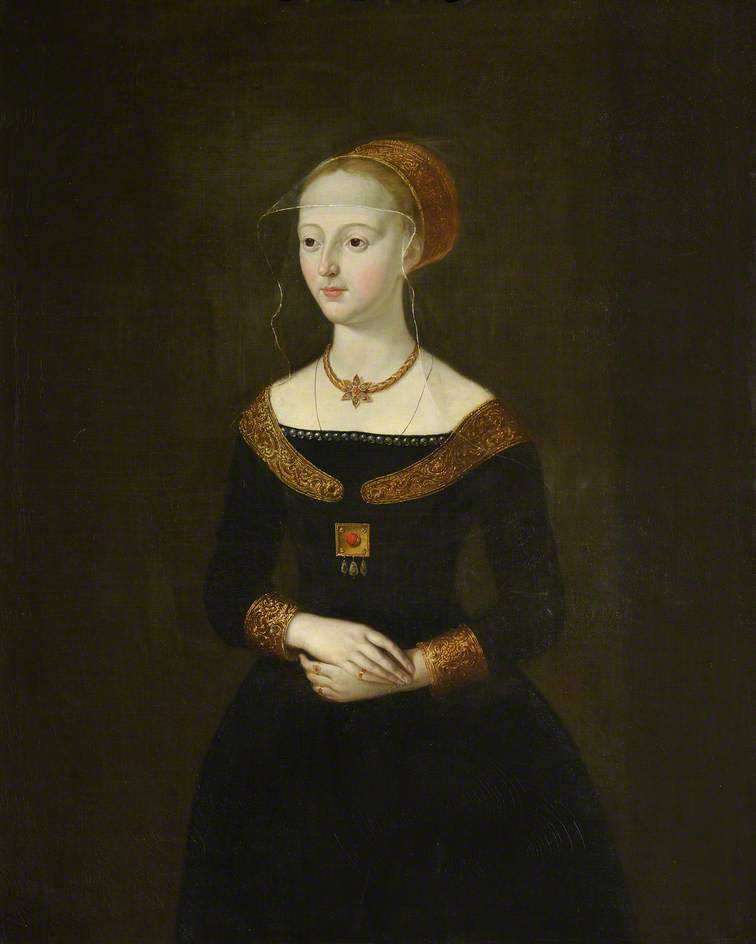
Portrait of a lady, possibly Lady Amy Dudley nee Robsart (1532-1560).

The death of Lady Amy Dudley nee Robsart on 8 September 1560 has generated considerable controversy. What led to the death of this prosperous gentlewoman, discovered at the bottom of a flight of stairs in Cumnor Place, Oxfordshire? The only child of Sir John Robsart, Amy married the wealthy and successful Robert Dudley, son of the Duke of Northumberland, in 1550 aged eighteen. Rumours circulated at the time and have intensified in modern times that the couple's marriage was unhappy, prominently because of Robert's close relationship - some believed love affair - with the Princess and later Queen Elizabeth. An impenetrable mystery surrounds the circumstances which caused Amy's death, although there are several possible explanations: suicide, cancer, murder (by either the Queen's agents, Dudley's agents, or Cecil's agents) or, simply but tragically, an accident. For an enjoyable - if taken with a pinch of salt - fictional take of Amy's relationship with Robert and her eventual death, readers should consider reading Philippa Gregory's The Virgin's Lover.

First, let us begin with the facts. Amy Dudley, despite being the daughter-in-law of a duke (later disgraced), did not accompany her husband Robert to court in 1559 when he served the new Queen, Elizabeth I, as her faithful courtier. She seems to have spent her time travelling around the country and visiting family friends, while she seems to have enjoyed spending money on clothes from London.

We do not know the personal details of Robert and Amy's marriage. In an age in which marriages between the gentry and aristocracy were arranged for social, material and political advantage, individual couples did not prioritise finding happiness or love in marriage, although of course it was beneficial when this did occur. The couple had no children, yet we do not know whether this was due to fertility problems or whether it was because the couple were often separated. Rumours have circulated that Dudley enjoyed a love affair with Queen Elizabeth, scandalously conveyed in Gregory's novel, yet again, we lack any real proof to fully substantiate this claim. However, courtiers did mention that for over a year before Amy died, the queen and her favourite had merely been waiting for Amy to die so that they could marry.

It is plausible, however, that Robert and Amy's marriage was not entirely happy. They were often separated, had no children, and since many believed after Amy's death that Robert had actually murdered his wife, it seems credible to argue that contemporaries were aware that the marriage was somewhat difficult. After the summer of 1559, Robert never saw Amy again.

On 8 September 1560, the day after the Queen's birthday, Amy Dudley sent away her servants from Cumnor Place, as described by Robert's steward Thomas Blount:

would not that day suffer one of her own sort to tarry at home, and was so earnest to have them gone to the fair, that with any of her own sort that made reason of tarrying at home she was very angry, and came to Mrs. Odingsells ... who refused that day to go to the fair, and was very angry with her also. Because [Mrs. Odingsells] said it was no day for gentlewomen to go ... Whereunto my lady answered and said that she might choose and go at her pleasure, but all hers should go; and was very angry. They asked who should keep her company if all they went; she said Mrs. Owen should keep her company at dinner; the same tale doth Picto, who doth dearly love her, confirm. Certainly, my Lord, as little while as I have been here, I have heard divers tales of her that maketh me judge her to be a strange woman of mind.

Perhaps suspiciously, she was later described as being angry when her three servants resisted her desire that they leave. Later that day, she was discovered at the bottom of a flight of stairs with a broken neck and two head wounds. So what caused Amy's death?

Firstly, this article will consider the modern explanation of Amy suffering a malady in her breasts which caused her death. It was assumed at the time of the death in 1560 that a simple fall could not have caused Amy's death - there were not particularly many steps as it was a short flight, while Amy's headdress was described as still remaining perfectly undisturbed on her head.  In 1956, Ian Aird proposed this theory, arguing simultaneously that "a verdict of misadventure, in the case of accident, [is] not easily acceptable". Aird's profession as a professor of medicine undoubtedly aided him in putting forward the theory that, rather than suicide, accident or murder, Amy was suffering from breast cancer and so may have meant that her neck was particularly fragile and could break easily. This theory has become somewhat popular in modern times. As he noted: "in a woman of Amy's age the likeliest cause of a spontaneous fracture of the spine would be a cancer of the breast..." Indeed, the Count of Feria reported in April 1559 that Amy Dudley "had a malady in one of her breasts". When one reads Aird's article, his argument that Amy's death resulted from a fall down the stairs, which was worsened than it would otherwise have been by a weakened spine caused by breast cancer, his viewpoint is compelling. Yet it has been attacked. Simon Adams, for instance, asserts that "this theory accounts for a number of the known circumstances, but a serious illness in April 1559 is difficult to reconcile with her extensive travelling in the following months".

An alternative explanation is suicide. If she was suffering illness or depression, even potentially breast cancer, this may have led her to commit suicide in an attempt to escape a life no longer bearable. This can be supported by evidence of her "desperation" in some sources, while some historians have put forward the hypothesis that Amy sent away her servants on the morning of 8 September in order to commit suicide secretly. Robert Dudley himself may have alluded to this possibility. However, Aird attacked this view, stating that "to project oneself down a flight of stairs would not occur to a suicide now, and would have occurred even less to an Elizabethan suicide at a time when the steps of staircases were broad and low, and the angle of descent gradual". Furthermore, it is difficult to believe that, if Amy killed herself, her headdress would still have remained upright on her head when she would not have been able to do this if she was dead by the time she fell to the bottom of the stairs.


Others have suggested that Amy's death was accidental. James Gairdner, in 1898, suggested that her death was a tragic accident. The coroner's verdict in 1561 was that Amy Dudley, "being alone in a certain chamber... accidentally fell precipitously down" the stairs next to the chamber "to the very bottom of the same". This caused two head injuries and injuries to one thumb. Tragically, she had broken her neck in the fall. Because of this, she "died instantly... the Lady Amy... by misfortune came to her death and not otherwise, as they are able to agree at present". However, historians have suggested that Robert Dudley, as an influential and powerful courtier, was able to influence the jury. Aird has argued that "there are several circumstances in relation to Amy Robsart's death which made her contemporaries, and which have made the historians of later times, a little hesitant to accept unreservedly the jury's verdict of misadventure". 


Perhaps most famously, it has been theorised that Amy was, in fact, murdered. Following her death, there was "grievous and dangerous suspicion, and muttering" in both court and country, as people murmured about Amy's death and the renewed relationship between the Queen and her favourite, Dudley. William Cecil, who was Principal Secretary and who has been argued felt threatened by Dudley's increasing influence, informed the Spanish ambassador in the aftermath of Amy's death that Elizabeth and Dudley had been plotting to murder Amy by poison, "giving out that she was ill but she was not ill at all" (which somewhat contradicts the evidence put forward earlier that she was ill). In 1567, Amy's half brother John Appleyarde, in irritation with Dudley, stated that he "had not been satisfied with the verdict of the jury at her death; but that for the sake of Dudley he had covered the murder of his sister". Contemporary evidence raises the possibility that Amy was murdered.


The discovery of the contemporary Spanish ambassadors' correspondence in the nineteenth century supported the theory of murder, reporting that Amy was ill and her husband had been trying to either poison or divorce her as early as the spring of 1559. The report from 11 September 1560, three days after Amy's death, states that Cecil believed that Dudley had murdered his wife. A 1563 chronicle, written by someone violently hostile to the Dudleys, suggested that Robert Dudley's retainer, Sir Richard Verney, murdered Amy by breaking her neck (this is fictionalised in The Virgin's Lover). Catholic exiles wrote the satirical Leicester's Commonwealth in 1584 and, hostile to Dudley, suggested that Verney sent Amy's servants to the market when he arrived at Cumnor Place before breaking Amy Dudley's neck and placing her at the bottom of the stairs. The Victorian historian James Anthony Froude, having found the Spanish ambassadorial correspondence, wrote in 1863 that: "she was murdered by persons who hoped to profit by his elevation to the throne; and Dudley himself... used private means... to prevent the search from being pressed inconveniently far". Alison Weir, in 1999, suggested that Cecil, rather than Dudley, arranged Lady Amy's death because he had a murder motive, ie. to prevent Dudley's potential marriage to his mistress, Elizabeth I, and because Cecil would benefit as a result of the scandal. Other evidence has been put forward: considerable time before Amy did die, both Robert and the Queen predicted to the Spanish ambassador that she would shortly die.


However, many historians have discredited rumours that Amy was murdered. Dudley's correspondence with Thomas Blount and William Cecil in the preceding days has been seen as evidence that he was innocent, while others have noted that both he and Queen Elizabeth were highly shocked when news of Amy's death were brought to them. It has, plausibly, been suggested that he would not have had his wife killed because of the tremendous scandal  that would ensue if he were implicated in his wife's murder. David Loades went so far as to state that "we can be reasonably certain that Lord Robert had no hand in his wife's death". Aird states that there "was no evidence that he [Dudley] had any thought of murdering his wife" even if he did wish to marry the Queen. He also asserts that "a staircase [is not] a convenient weapon for murder. To throw a person downstairs is too uncertain", it cannot be argued that "she was first murdered by some extreme violence and then thrown downstairs". Historians have also recognised that poison was a "stock-in trade accusation" in the sixteenth century to discredit political rivals and the fact that sources support one another in suggesting Amy was murdered was "no more than a tradition of gossip". As Catholic sources, and thus hostile to both Queen and Dudley, we should consider them very cautiously and sceptically. 


To conclude, I have to admit, personally, that I know too little about these mysterious events to put forward my belief of what actually happened on that day. I can only say, however, that it was very suspicious. Why did Amy send away her servants on that particular day? Was it because, to put it nicely but bluntly, she was going mad or even insane due to her illness; was it because she wished to be alone to commit suicide, or was it for some other reason? Why did the Queen and Dudley hint to the Spanish ambassador that Amy Dudley would soon die - was it because they knew she was fatally ill, or is it evidence of murder? Almost all of the sources we have about this event are highly suspect. Thus we cannot conclude with any real certainty about what happened. 


I have suspicions, however. Aird has discredited the notion that Amy was found with her headdress perfectly intact, but if this was true, surely suicide seems much less likely. If Amy threw herself down a flight of stairs, it seems highly unlikely that, dying shortly afterwards, her hood would still be perfectly in position on her head. I am also persuaded by Aird's arguments that falling down a short flight of stairs is hardly a foolproof method of suicide. However, if Amy was melancholy or despairing at this time, as some sources may indicate, perhaps she did have a motive in wishing to end her life prematurely, particularly if her marriage was unhappy, as possibly the case. Out of all the explanations, however, I believe that suicide is the least likely theory.


This leaves accident, murder, or illness. An accident is perfectly possible, but again, we are left with the simple fact that a short flight of stairs would not ordinarily kill a person. Therefore we must consider Aird's argument that Amy's body, because of the malady of her breasts, was weakened considerably, and so a short flight of stairs which, though usually would not result in death, may have caused her death if she was more fragile and physically vulnerable than a 'normal' person would be. This was the verdict recorded after her death, and many historians have suggested that it is what happened. Thus accident and illness are intertwined to provide an explanation, tragically, of accidental death.


A more unsettling interpretation is possible. If one literally accepts the Spanish ambassador's comments, bearing in mind that ambassadors occasionally spoke little to none of the language in the court in which they served, relied on informers, and were frequently deceived by officials and courtiers, it is possible to believe that Amy Dudley was murdered, either by Cecil's agents or Dudley's agents. I have to agree, however, with modern historians who argue that Dudley would not have dared have his wife murdered, as the scandal would almost certainly have meant that the Queen would not have dared marry a man who would only bring controversy and even ridicule to her status. But desperate people do desperate things - if Dudley was so determined to marry the Queen, and only saw his wife as an unnecessary complication, who knows what he might have done? 


To conclude, it is impossible to know what really happened. On the basis of the evidence, I would tentatively conclude that Amy's death was caused by both her breast cancer and an accident; ie. if she had been physically healthy, and had fallen down the stairs, she would not have died, but in tragic circumstances, when her body was physically much more fragile, a simple fall led to her death due to the thinning of her bones. I believe that we can reject suicide as a likely explanation. It is possible that she was murdered, but if one believes that much of the evidence we have for this theory is based on hostile Catholic sources which openly vilified both the Dudleys and Queen Elizabeth, this theory becomes much less tenable. Therefore, I would suggest that accidental death, acting in conjunction with breast cancer, caused Amy's death, but we cannot rule out murder.


Further Reading

Simon Adams, 'Amy Dudley, Lady Dudley (1532-1560)', Oxford Dictionary of National Biography (2008), online edition (Last accessed 13 December 2012).
Ian Aird, 'The Death of Amy Robsart', The English Historical Review 71 (1956), pp. 69-79.
James Gairdner, 'The Death of Amy Robsart', The English Historical Review 1 (1886), 235-259.
James Gairdner, 'Bishop de Quadra's Letter and the Death of Amy Robsart', The English Historical Review 13 (1898), pp. 83-90.

For a fictional take on Amy's death and Robert and Queen Elizabeth's relationship, Philippa Gregory, The Virgin's Lover (2004) (please take it with a pinch of salt, it's not fact, it's fiction!)

Wikipedia for a general overview.