Showing posts with label white queen. Show all posts

Thursday, 25 June 2015

25 June 1533: The Death of Mary Tudor, Queen of France


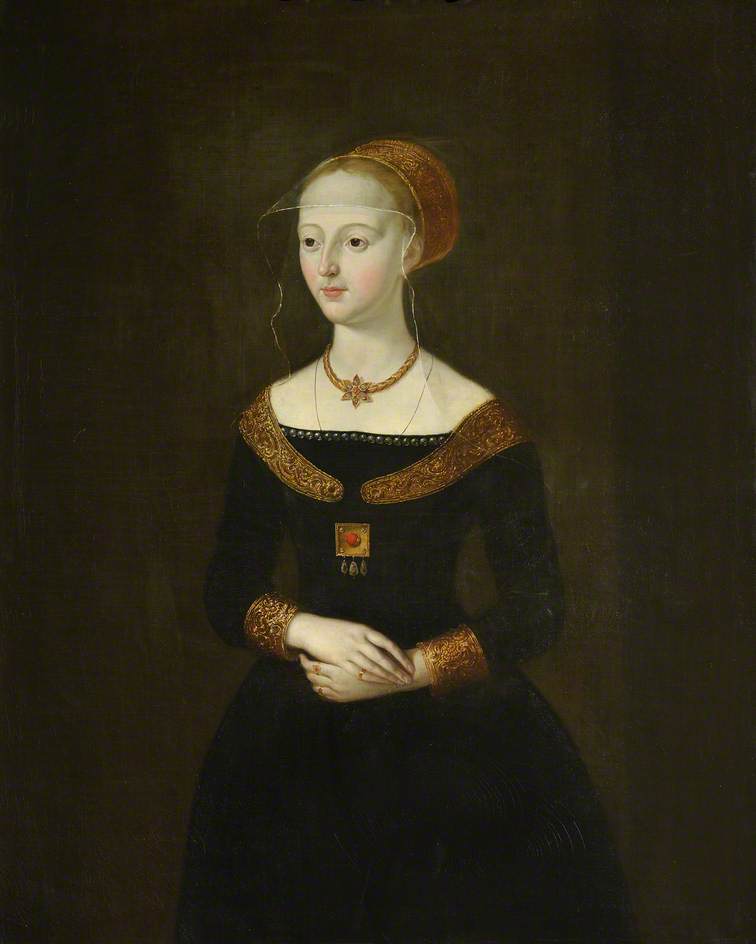
On a midsummer day in late June, the former queen of France lay dying at her residence of Westhorpe Hall in Suffolk. Mary Tudor, the universally acknowledged beautiful younger sister of Henry VIII, was only thirty-seven years of age at the time of her death. Fiery, charismatic and passionate, Mary is perhaps better known for being the beautiful duchess of Suffolk rather than queen of France, a position she occupied for only three months. The 'white queen', as Mary has sometimes been known, was surrounded by only a few attendants in the gentle seclusion of her Suffolk estate. It is entirely possible that her husband was not at her side in her last hours. 


In her youth, Mary had been described as 'a Paradise - tall, slender, grey-eyed, possessing an extreme pallor'. She was born at the palace of Sheen in March 1496, the youngest surviving child of Henry VII and Elizabeth of York. When she was only six years old, her eldest brother Arthur died and her mother followed Arthur to the grave only ten months later. Mary appears to have been close with her brother Henry, later Henry VIII. He was to name his only surviving child after her, a princess born in 1516. 


Mary had been married to Charles, duke of Suffolk since May 1515. Their marriage had scandalised Europe and had outraged King Henry, who was furious with the couple's failure to secure royal permission for their marriage. The couple were fortunate to escape with a heavy fine: by the standards of the time, Henry's honour had been disparaged by his sister's actions, and her husband the duke could have been imprisoned or even executed. Although the king and his younger sister had traditionally been close, their relationship was further strained after 1527, when Henry pursued marriage with Anne Boleyn. Mary was close to his wife, Katherine of Aragon, whom she had known since her early years. As David Loades writes, Mary and Anne 'exchanged insults of a semi-public nature'. Henry's annoyance with his sister's behaviour means that he seems to have failed to mourn her death. He left no comment when informed of her demise, although this reaction is perhaps explained by the fact that he had just remarried and was spending time with his new consort. 


Mary's widower, Charles Brandon, was left with three children: Frances (born in 1517; she married Henry Grey the same year); Eleanor (born in 1519); and Henry (who was to die the following year). Less than three months after his wife's passing, the duke remarried. His second wife was fourteen-year-old Katherine Willoughby. The thirty-five year age difference between the duke and his teenage bride did not pass without comment, but the marriage was a successful one.


In the story of the early Tudors, Mary tends to be overshadowed by her volatile brother and the drama of his six marriages. Yet she was a passionate, intelligent and charismatic woman who was a teenaged Queen of France and who caused considerable controversy when she decided to marry her husband's favourite without seeking royal permission. Two decades after Mary's death, her granddaughter Lady Jane Grey briefly became queen of England, an event that Mary could never have foreseen. 

Sunday, 16 March 2014

The Death of Anne Neville, Queen of England

Image result for richard iii

On this day in history, 16 March 1485, Queen Anne Neville of England died aged twenty-eight at Westminster Palace. According to legend, the day she died saw an eclipse which was viewed by the superstitious as an evil omen of her husband Richard III's imminent fall from grace. Although rumours credited the king with poisoning his consort as part of his schemes to marry his niece Elizabeth of York, reports indicated that he had wept at her funeral. She was buried at Westminster Abbey, having reigned as queen for only two years.

Anne was the second daughter of Richard Neville, earl of Warwick, and Anne Beauchamp, the daughter of the thirteenth earl of Warwick. She was born at Warwick Castle and most likely spent her formative years growing up in Warwick. Her family fortunes were splendid: the Nevilles exercised considerable influence in the northern parts of England and later became loyal adherents to the House of York. At Middleham Castle in Yorkshire, Anne and her sister Isabel became acquainted with the two younger brothers of Edward IV: George (later duke of Clarence) and Richard (later duke of Gloucester). 


Above: Middleham Castle.

In 1469, Isabel Neville married George, thus integrating the Nevilles into the royal family, for George was the younger brother of the Yorkist king Edward IV. The following year, aged fourteen, Anne herself was married but to the Lancastrian heir, Edward of Westminster, rather than to a Yorkist prince. This occurred as a result of her father's schemes, for the disaffected Warwick, resentful of the Woodville family (a Woodville was married to the king) had decided to switch sides and support the defeated Lancastrians in an attempt to attain financial and political power. Anne perhaps resided in the household of the vanquished English queen Margaret of Anjou in the immediate aftermath of her marriage, but at the Battle of Tewkesbury in 1471 the Lancastrian prince was defeated and killed and Anne left a widow aged fifteen.

Because Clarence was married to Anne's sister, he took it upon himself to take custody of both Anne and her mother and attained possession of the dead Warwick's possessions in the north. Anne was deprived of her inheritance as part of these greedy endeavours, and it is possible that he even sought to prevent her remarrying. Sometime between 1472 and 1474, however, Anne took it upon herself to seek marriage with Clarence's younger brother, Richard duke of Gloucester, who has traditionally been regarded as both more loyal and closer to King Edward than the ambitious Clarence. Whether Anne directed these plans as an ambitious attempt to regain her inheritance, or whether the alliance with Richard was based on love, is impossible to say.

The newly married couple resided chiefly in the north, where loyalty to the Nevilles was strong. Perhaps in 1473, and by 1476, Anne delivered a son, Edward, who became heir to the dukedom of Gloucester and a potential claimant to the throne; although the birth of two sons to King Edward meant that it looked virtually uncertain that either Edward or his father or uncle would acquire the throne.

Having been a Princess of Wales and later a Duchess of Gloucester, in 1483 Anne became a queen. Gloucester usurped the throne in the summer of 1483 and Anne was crowned alongside her husband at Westminster Abbey. Whether she had any knowledge of matters pertaining to the Princes in the Tower is uncertain, although novels such as The Kingmaker's Daughter explore such issues imaginatively. Anne's queenship, however, was not to prove happy. In 1484 her only son died and it is perhaps significant that she seems to have had no other pregnancies, although she may have experienced miscarriages or stillbirths. As Michael Hicks remarks: "Anne seems to have been a particularly insignificant queen, perhaps because she suffered from ill health". Certainly, in contrast to the active and auspicious queenships of the charismatic Margaret of Anjou and Elizabeth Woodville, Anne appears a shadowy and perhaps ineffectual consort.

At Christmas 1484 court rumours credited that Richard was engaging in an affair with his eighteen-year old niece Elizabeth, daughter of Edward IV and later, wife of Henry VII. Rumours that the king would set aside Queen Anne in favour of the younger and more attractive Elizabeth were rampant. Following Anne's death, Richard publicly denied any intention of marrying his niece.

Tuesday, 11 February 2014

The Birth and Death of Elizabeth of York


Above: Elizabeth of York (1466-1503).

11 February was the most important day for Elizabeth of York, for she was born on this day in 1466 and died on this day, on her thirty-seventh birthday, in 1503. Elizabeth was the eldest daughter of the renowned first Yorkist king, Edward IV, and his beautiful if controversial queen Elizabeth Woodville. She was born at Westminster Palace and baptised in St Stephen's Chapel in Westminster Abbey.

Until 1470, aged four, Elizabeth was heir to the throne of England, but that year Queen Elizabeth bore her first son, the ill-fated Prince Edward who was - almost certainly - to die aged thirteen in 1483 as the imprisoned Edward V. In 1469 Elizabeth was betrothed to George Neville, son of the Marquess Montagu, as part of her father King Edward's attempts to build a strong relationship with the disaffected Nevilles, headed by the 'Kingmaker' Earl of Warwick.


Above: Elizabeth was the eldest daughter of King Edward of York (left) and Queen Elizabeth Woodville (right).

In 1475, however, as part of the Treaty of Picquigny, it was agreed that Princess Elizabeth would marry the Dauphin Charles, with a jointure of £60,000 provided by the French king Louis XI. In 1483, when Elizabeth was aged seventeen, her father died, aged only forty-one. As Rosemary Horrox comments, Edward's death "transformed" the situation of his daughters. At  the end of April Elizabeth's uncle Richard Duke of Gloucester took control of her twelve-year old brother and king Edward; leading the queen alongside her daughters and her younger son Richard to seek sanctuary in Westminster. In June 1483, Gloucester crowned himself as Richard III alongside his consort Anne Neville. He declared Edward's marriage to Elizabeth Woodville invalid, making their children, including Elizabeth, bastards and unfit to inherit the throne.

During the early months of Richard's reign, Elizabeth remained in sanctuary alongside her mother and siblings. Chroniclers suggested that there were attempts made to remove them from sanctuary and sail them from overseas, for "they were an obvious focus for political disaffection". The new King was unpopular amongst the majority of his English subjects, who viewed him as the likely culprit for the murder of the Princes in the Tower - although, of course, no-one knows to this day what happened to the two young boys. On Christmas Day 1483, the twenty-six year old pretender to the throne Henry Tudor swore an oath at Rennes Cathedral, promising to marry Elizabeth of York should he successfully attain the throne of England. Marriage to Elizabeth would provide him with a legitimate claim to the throne, for his own pretensions were somewhat dubious.


Above: Henry VIII was the son of Elizabeth of York by Henry VII. His mother's death, when Henry was aged eleven, appears to have profoundly affected him.

Alison Weir rightfully argues that, but for her gender, Elizabeth of York would have ruled England on the death of her uncle in battle at Bosworth in 1485, for she was the eldest child of Edward IV. Many believed, despite Richard's claims to the contrary, that he had entered into marriage with Elizabeth Woodville in good faith. However, rumours abounded that Elizabeth planned to marry not Henry Tudor, but her uncle King Richard. At Christmas 1484 - the girls had left sanctuary and had been welcomed at court - chroniclers were scandalised to see that Elizabeth was dressed in the same finery as Queen Anne, perhaps setting herself up as the queen's rival for the king's affections. Three months later, Anne died and rumours abounded that Richard had poisoned her in order to marry his nineteen-year old niece. Certainly, these rumours put paid to any hopes Richard may have had of marrying Elizabeth, and he realised that marriage to her would be a reckless, perhaps life-threatening, move. Weir, however, suspects that Elizabeth had schemed to marry Richard, perhaps encouraged by her mother. Thus she can be termed an "enigma".

Richard was killed at Bosworth in August 1485 and the victor, Henry Tudor, crowned king, thus establishing the new Tudor dynasty. In January of the following year, the king selected Elizabeth as his consort and she was crowned late in 1487. In September 1486, she delivered her eldest son, the ill-fated Arthur who died aged fifteen. Elizabeth bore several children: Margaret (1489; becoming Queen of Scotland in 1503 and eventually grandmother to Mary Queen of Scots); Henry (1491; later Henry VIII); Elizabeth (1492; died aged three in 1495); Mary (1496; became Queen of France in 1514 but later married Charles Brandon and was thus ancestress to Lady Jane Grey); Edmund (1499; died 1500); and Katherine (born and died 1503). Like her mother, Elizabeth Woodville, the new Queen was extremely fertile.


Horrox comments that Elizabeth's political role as queen is uncertain, although Weir asserts that it was influential, remarking furthermore that her "role in history was crucial". She may have been overshadowed by her notorious mother-in-law Margaret Beaufort, but historians have disputed this more recently. But Elizabeth's crucial role as head of the Yorkist line, in a sense, alongside her position as first Tudor queen meant that her position was exceptionally important. It strengthened Henry VII's dubious claim to the throne, and meant that the Yorkists supported him when it might well have been in their interests not to do so.

Numerous myths and legends abound about the first Tudor queen. The popularity of Philippa Gregory's bestselling novels The Cousins' War, including most pertinently The White Queen and The White Princess, mean that many people believe that Elizabeth, like her mother Elizabeth Woodville, engaged in witchcraft and supernatural actions to achieve her own desires; but this is almost certainly false. It is also suggested in these novels that Elizabeth's marriage to Henry was unhappy, that he raped her, for one thing, and she never loved him for another. But perhaps most spectacularly, it is suggested that Elizabeth's brother Richard survived, and she continued to support him, thus disobeying her husband. It should be borne in mind that, while it can never be known what exactly happened to Elizabeth's brothers, they did disappear sometime in the autumn of 1483. Whose orders they were murdered on - if they were, of course - cannot now be known, but traditional historians favour Richard III. I am very sceptical of Gregory's imaginative reworking of "history" and I believe that Elizabeth's marriage to Henry VII was strong, loving, and affectionate - as demonstrated by the death of their eldest son Arthur in 1502. Both parents were devastated, but both attempted to conceal their feelings in order to comfort the other. Eventually, both broke down in each other's arms. Clearly, the death of their heir devastated them. Instances such as this call into doubt Gregory's interpretation.


Above: Elizabeth of York as played by Freya Mavor in the BBC TV series The White Queen. In it, she is a witch and seductress who schemes to marry her uncle Richard III ... but the truth is probably less fantastical. 

Elizabeth's reign as queen was successful in many respects, for she was a loyal consort and fertile bride who supported her husband faithfully. In the summer of 1502, she fell pregnant for the last time and entered confinement at the Tower of London in the winter. On 2 February, she bore a daughter, Katherine, who was sickly and sadly died soon afterwards. Nine days later, on 11 February, her thirty-seventh birthday, the queen died. She was mourned sincerely by her subjects and her husband King Henry appears to have been devastated. He did initiate marriage negotiations later in his reign, but these came to nothing and it is clear that he sincerely mourned the loss of his wife. The impact of her death on her children appears to have been monumental. Her 11-year old son, Henry, was particularly distraught, for he had been extremely close to his mother. Perhaps this accounts for his infamous attempts to find a successful marriage - trying to find the perfect woman who, perhaps consciously or unconsciously, resembled his mother as a dutiful wife, caring mother, and fertile bride.


Above: The last Tudor queen, Elizabeth I, was the granddaughter of her namesake and the first Tudor queen, Elizabeth of York.

Saturday, 13 July 2013

Jacquetta of Luxembourg


Above: Janet McTeer as Jacquetta Woodville in The White Queen (2013).
Portrait of Queen Elizabeth Woodville.

The BBC television series The White Queen, based on three of bestselling fictional novelist Philippa Gregory's novels set in the times of the Wars of the Roses, has sparked much greater interest in the extraordinary lives of royal English women who lived in context of ferocious battles, murder, bloodshed, and treachery. The TV series, of course, is horrendously inaccurate, with critics noting the appearance of zips on dresses, modern stair-rails, and quick to rage against the very modern language. I personally cannot understand why these medieval women do not wear headdresses and instead walk around dressed like prostitutes!

Queen Elizabeth Woodville, of course, was a notorious woman who was adored by her husband, Edward IV, much praised for her beauty, fairness and other qualities, but loathed by English nobles who perceived her to be arrogant, cold, ruthless, and vain. However, the life of Elizabeth's mother, Jacquetta of Luxembourg, is perhaps even more astounding than that of her eldest daughter.

Portrayed by Janet McTeer in the television series, Jacquetta had lived a life of almost unimaginable luxury and privilege before she married into the Woodville family. Perhaps born around 1416, Jacquetta was the eldest of nine children born to Pierre of Luxembourg, count of St. Pol, Conversano and Brienne and vicomte of Lille, and his wife Marguerite, daughter of the duke of Andrea. In 1433, aged seventeen, she married John duke of Bedford, who was uncle to the infant king of England, Henry VI. Thus, having been born into the European aristocracy, Jacquetta married essentially into the English royal family, cementing further her family's illustrious prestige and lineage. This marriage was not a love match, for the duke was aged around 27 years older than his new bride and had previously been married already. Instead, it was a marriage made by politics, to suit prevailing English interests in French lands at the time.

However, Jacquetta's husband John died only two years after the marriage, leaving her a widow aged 19, without children. She was, however, left extremely rich, for she was entitled to a third of her husband's lands and annuities. Just two years later, in 1437, Jacquetta married again, to her social inferior Sir Richard Woodville, who was not at all wealthy or highly ranked. Since she had, a year previously, agreed that she could not marry again without the consent of King Henry VI, she was forced to pay £1000 as a royal pardon for her transgression. This marriage clearly seems to have been a love match, for Jacquetta was willing to sacrifice her wealth, her lineage and royal connections in marrying a humble squire. Further evidence of the passionate love between them can be seen in the fact that she bore Richard at least 14 children.


Above: Were Jacquetta and her daughter Elizabeth witches, as The White Queen so controversially suggests?

Jacquetta and her new husband spent the first few years of their marriage in France, for Jacquetta was negotiating there to secure her dower lands, while Richard served there. They dwelled at Grafton, Northamptonshire, as their main English residence following their return. Their first daughter, Elizabeth Woodville, was born around 1437, and was followed by a further seven girls and seven boys, including Anthony and John. Elizabeth would prove like her mother to be extremely fertile.

In 1444, Jacquetta participated in the retinue which brought the new queen, Margaret of Anjou, to England, and it seems that the two became close friends. Jacquetta and her Woodville family were, initially, Lancastrians who supported Henry VI's regime, for the Woodvilles had been connected with the duke of Bedford, uncle to the king. However, several years later, the political and dynastic troubles which came to be known as The Wars of the Roses transformed Jacquetta's life forever. At the Battle of Towton, her husband and eldest son were arrested and imprisoned in the Tower of London, although they were later released. At this point, the Woodville family probably transferred their allegiance to the Yorkists.

Most infamously, Elizabeth, Jacquetta's eldest daughter, allegedly seduced the new Yorkist king, Edward IV, in 1464, leading him to marry her since she had, apparently, refused to become his concubine. Later stories dramatically suggested that she had held a dagger to her throat and promised to kill herself were he to attempt to use force on her. Regardless of the circumstances, Edward married Elizabeth at the Woodville's family home at Grafton on 1 May 1464, with only Jacquetta, a priest, and two gentlewomen present. This, of course, transformed the Woodville's fortunes. Jacquetta's husband became Earl Rivers and treasurer of England, while her children were married into the English nobility, causing much resentment and anger among other nobles. For instance, her 20-year old son John was, shockingly, married to Katherine Neville, the elderly dowager duchess of Norfolk, who was at least in her late 60s. Katherine Woodville married the young Duke of Buckingham, who was apparently furious, believing his new wife to be grossly inferior to himself.

Jacquetta and Elizabeth have often been linked in the public consciousness with witchcraft and sorcery. The White Queen supports these allegations, in both the TV series and in the book, by suggesting that both women engage in witchcraft to fulfil their ambitions - thus sorcery is practised to make Edward fall in love with and marry Elizabeth; to change the outcomes of battles; to wreak vengeance on enemies. Certainly, at the time rumours of witchcraft were linked to the new queen and her family. Contemporaries found it scarcely credible that their Yorkist king had married a woman so far beneath him, who had no royal blood and was, in fact, from a Lancastrian family. Richard III, brother-in-law to Elizabeth, and the Earl of Warwick both insinuated that Jacquetta and Elizabeth had inflicted sorcery on the king, rendering his marriage invalid. Thomas Wake, a Northamptonshire esquire, claimed in 1469 that Jacquetta had brought about the marriage of Edward and Elizabeth by witchcraft, having found two lead figures, one for the king and one for the queen. Jacquetta, however, when brought to trial proved her innocence and the case against her collapsed.

As with earlier medieval women such as Joan of Navarre and Eleanor duchess of Gloucester, witchcraft was often used to irrevocably damage the reputations of powerful women. There is no evidence to suggest that Elizabeth and Jacquetta were witches. Jacquetta's family was linked to Melusina, a water goddess or 'serpent woman'. However, there is no conclusive evidence to show that Elizabeth or Jacquetta strongly celebrated their links with such a legend, despite Philippa Gregory's claims to the contrary. While Jacquetta did own a copy of the ancestral romance Melusine, other fifteenth-century ladies did too, which hardly suggests that she was unique.

The main reason why Elizabeth was believed to be a witch was because other nobles could not believe that she, a mere gentlewoman of no social standing, was genuinely worthy of the king of England and had caused him to fall in love with her by natural means. Certainly, Edward's cousin and former supporter the earl of Warwick was furious, for he had been negotiating for Edward to marry a foreign princess, who was believed to be far worthier of Edward. Warwick personally resented and hated the Woodvilles, mainly because, by virtue of their relatives marrying almost all the other nobles, there were no suitable nobles left for his two daughters Isabel and Anne to marry.

The marriage between Edward and Elizabeth culminated in Warwick's defection to the Lancastrian cause, resentful of his loss of influence and power with the rise of the queen's family. He married his eldest daughter Isabel to the king's younger brother George duke of Clarence, who had become similarly angered and hostile towards his brother. Matters came to a head when Warwick left England, accompanied by his wife, his two daughters and his new son-in-law, and journeyed to visit the former queen Margaret of Anjou, promising his support of her and allegiance to the Lancastrian cause. Agreeing that his younger daughter Anne should marry Margaret's son Edward of Lancaster, a new alliance was struck up by which it was agreed that the Lancastrian king, Henry VI, should be returned to the English throne, and Edward IV forcibly removed from it.

Meanwhile, Jacquetta's personal influence with Queen Elizabeth remained firmly entrenched. She participated in her daughter's coronation, and in 1466 took part in Elizabeth's churching following the birth of her first child, the future Elizabeth of York. Misfortune overtook her, when her husband Richard and her son John were executed in 1470 on the orders of Warwick, who had returned to England in an attempt to restore Henry VI to the throne. Edward IV escaped to Europe, leaving his young wife to seek sanctuary in Westminster Abbey where, accompanied by her mother, she gave birth to the future Edward V in November 1470.

Jacquetta did not long survive the brutal deaths of her husband and son, dying on 30 May 1472, aged around 56. Where she was buried is unknown. She was an immensely powerful and wealthy woman who had been born into European royalty, marrying into the English royalty in her teens before becoming, by virtue of her second marriage, the mother of England's queen and thus grandmother of a later queen, Elizabeth of York, and great-grandmother of Henry VIII.

Rather than being a scheming and ambitious woman who only relied on witchcraft and sorcery to bring about her triumphs, it is likely that Jacquetta was, as Lucia Diaz Pascual intriguingly writes: 'a formidable woman who understood how to navigate the corridors of power and was capable of great resilience, strength, and determination to achieve her objectives'.