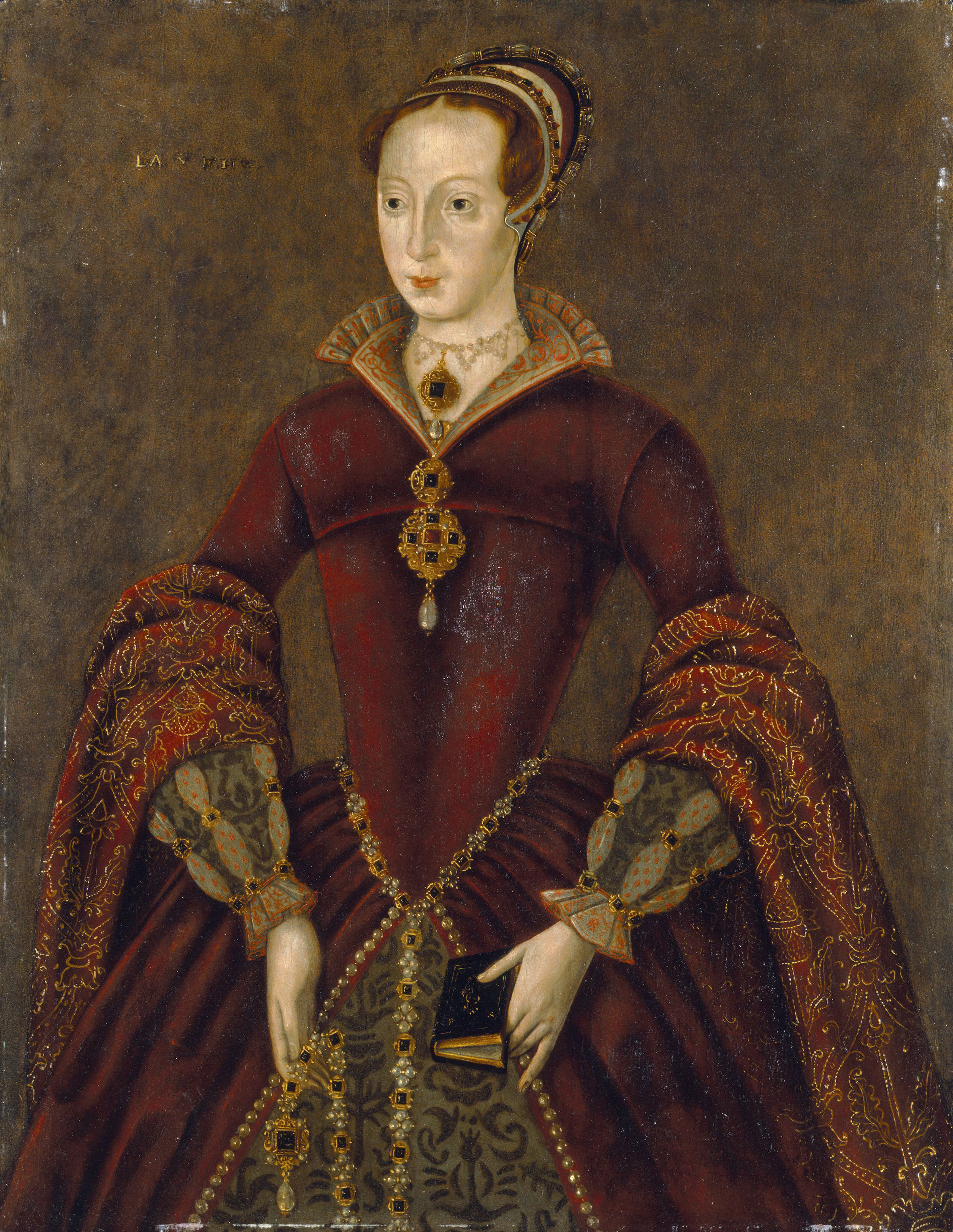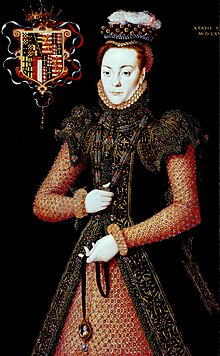
Showing posts with label jane grey. Show all posts

Sunday, 2 June 2024

Jane and Katherine Grey


My article about Ladies Jane and Katherine Grey and their shared experiences of imprisonment in the Tower of London in 1553-4 and 1561-3 respectively has been published by EPOCH Magazine and is available to read here

Monday, 26 September 2016

Almost A King: Lord Guildford Dudley

Lord Guilford Dudley.jpg

Lord Guildford Dudley, son of the duke of Northumberland, is not usually depicted positively either in fiction or non-fiction. Often, Guildford is presented as a weak-willed, snivelling adolescent who sobbed on the scaffold, or as an abusive sociopath capable of bullying his gentle wife, Lady Jane Grey. In her study of the so-called nine days queen, Hester Chapman described Guildford as 'a spoilt, conceited and disagreeable young man', while in her novel Innocent Traitor, Alison Weir portrayed Guildford as a vicious abuser who mistreated Jane on their wedding night.

Guildford, who married Jane in 1553, could have become king of England, had events turned out differently. Little is known of him, but it is likely that he was well educated and was brought up to favour the reformist faith. It is possible that he was younger than his wife Jane, who was probably born in the spring of 1537. The Dudleys had a newborn son in March 1537, while one of Guildford's godfathers, Diego de Mendoza, visited England between the spring of 1537 and the summer of 1538. Thus making it likely that Guildford was born in 1537 or 1538 and inherently probable that he was younger than his wife. According to Grafton, Guildford was 'a comely, virtuous and godly gentleman'.

In the spring of 1553, Guildford married Jane Grey, the cousin of Edward VI. For the Dudleys, the Grey marriage was a notable triumph, for it allied them with the ducal house of Suffolk as well as to the Tudor dynasty. There is no evidence that John Dudley, duke of Northumberland, schemed to marry his son to Jane as part of his plan to have Jane made queen in the wake of Edward VI's death. Traditionally, it has been reported that Jane was bullied into marrying Guildford by her scheming family; some alleged that she had been physically beaten until she had submitted to the will of her parents. These stories are questionable. Certainly there is no evidence that she objected to Guildford on personal terms, although it could be said that the duke and duchess of Suffolk, Jane's parents, might have hoped for a more noble bridegroom for their daughter. After all, rumours had circulated in some quarters that Edward VI himself hoped to marry Jane. Once it became apparent that the king's demise was imminent, the Dudleys surely realised that Guildford might very well become king of England as the husband of Queen Jane, if the coup against Mary Tudor succeeded.

Image result for lady jane grey
Above: Lady Jane Grey. After her marriage, Jane referred to herself as 'Lady Jane Dudley'. There is no evidence that she objected to the marriage with Guildford on personal grounds.

Unfortunately for both the Greys and the Dudleys, Mary Tudor was highly popular in the country at large, and following Edward VI's death on 6 July, the displaced Mary immediately acted to ensure that she was accepted, and then crowned, as England's queen. Jane had arrived at the Tower of London shortly after the king's death, and she was presented with the crown jewels by the Marquess of Winchester. Reportedly, Jane explained that she did not wish her husband to be presented with a crown, because she wished to make him a duke, rather than honour him with the title of king consort. This was not because of personal feelings on her behalf, given that she was 'loving of my husband'. Indeed, after her marriage Jane consistently referred to herself as 'Lady Jane Dudley'. On 19 July, the last day of her 'reign', Jane acted as godmother to a son born to one of the Tower guards. The child was named Guildford.

Mary Tudor took the throne with triumph. Eric Ives and Leanda de Lisle have explained, in detail, how Mary seized the throne from Jane; whether or not she should be viewed as the rightful queen and Jane the usurper, or vice versa, continues to be disputed. On 22 August, Guildford's father, the duke of Northumberland, was executed. Three months later, both Jane and Guildford were tried and found guilty of treason, but the queen made known her wish that the two prisoners should be spared death. 

However, Sir Thomas Wyatt's rebellion in early 1554, which involved Jane's father, sealed the fates of both Jane and Guildford. Both wrote letters to the duke; Guildford signed himself 'youre lovyng and obedynent son', while Jane described herself as 'youre gracys humble daughter Jane Duddley'. On the day of their execution, 12 February 1554, it is reported that Guildford wished to see Jane one last time, 'desiring to give her the last kisses, and the last embrace'. Jane refused, however, because 'their sight would increase the misery in both, and bring much more suffering'. After their deaths, Jane believed, they would 'live perpetually joined in an indissoluble bond'.

Evidence suggests that Guildford, at  the age of only fifteen or sixteen, went to his death with dignity. He made a short, unrecorded speech on the scaffold and prayed without losing control of his emotions. No mention, in this contemporary account, of Guildford's supposed sobbing in the moments before his execution. 

Lord Guildford Dudley has traditionally been viewed as a weak-willed, vicious adolescent, who was loathed by his gentle, victimised wife Lady Jane Grey. There is no evidence of this, and the couple's closeness and loyalty to one another emerges from the sources even during the last hours of their lives. Had the events of the summer of 1553 gone differently, had Jane been blessed by fortune, Guildford could have become king of England as the husband of Jane I. It was not to be, and history has not been kind to him in the centuries since his passing. 

Wednesday, 27 January 2016

The Death of Lady Catherine Grey


Above: Portrait of Lady Catherine Grey and her son Edward Seymour.


Even by sixteenth-century standards, the demise of Lady Catherine Grey, countess of Hertford, was tragic. On 27 January 1568 (some sources suggest the 26th), the middle daughter of the disgraced Henry Grey, duke of Suffolk died at Cockfield Hall in Suffolk at the age of twenty-seven. There has been considerable speculation about the cause of the countess' untimely death. Some have suggested that she died of tuberculosis (then known as consumption), while others have speculated that she had starved herself to death. Whatever the cause, Lady Catherine's death was greeted by her cousin Elizabeth I with relief, perhaps even joy, for it removed a serious threat to Elizabeth's throne. 

In many respects, Catherine was a victim of her inheritance. Her mother was the daughter of Mary Tudor, queen of France, and niece of Henry VIII. Catherine was therefore Henry's grandniece and was probably named for his fifth wife, who married Henry in 1540 (Catherine Grey was born in August of that year). In 1553, at the age of only twelve, Catherine's world fell apart. Her elder sister Jane was nominated heir to the throne by their cousin Edward VI and, following his death in July, Jane was proclaimed Queen of England. Few accepted her accession, however, and Jane's regime collapsed when Mary Tudor successfully claimed the throne. Jane was imprisoned alongside her husband Guildford Dudley, who like her was probably no more than sixteen or seventeen years old. Queen Mary refused to order her cousin's execution despite considerable pressure from the Spanish envoys. However, following the outbreak of rebellion in early 1554 - motivated in large part by antipathy to the queen's proposed marriage to Philip of Spain and the anticipated restoration of the Catholic religion - Mary decided to have Jane and Guildford executed. Catherine's father Henry Grey followed Jane to the scaffold eleven days later, following his treasonous involvement in the rebellion.

Catherine, therefore, had suffered considerably by her early teenage years. Her father and sister had both died a shameful death, and she would have grown accustomed to her position as the member of a traitorous family. Popular history has portrayed Catherine's mother, Frances, as a tyrannical, cruel woman who bullied her daughters; however, there is no evidence of this, and it seems that both Catherine and her younger sister Mary were close to their mother. Frances died in 1559, a year after Elizabeth I came to the throne.

Edward Seymour, Earl of Hertford, Attributed to Hans Eworth (1515 - 1574).jpg
Above: Edward Seymour, earl of Hertford.

Elizabeth's accession complicated Catherine's life. According to Henry VIII's will, Catherine was Elizabeth's heir presumptive and, given the queen's unwillingness to marry and have children, Catherine stood a very real chance of becoming Queen. This fact was not lost on English Protestants, many of whom placed their hopes in Catherine and looked to her as their future monarch. Foreign rulers were also interested in Catherine, including Elizabeth I's former brother-in-law Philip of Spain. Rumours circulated that Philip was intending to have Catherine spirited abroad and married to his son. 

These rumours were regarded with fear and resentment by Queen Elizabeth. Some historians have speculated that she personally disliked Catherine. Undoubtedly she feared her as a potential claimant to her throne, and the queen would never have forgotten that her brother had disinherited both herself and her half-sister Mary in preference for the Grey claim. In 1561, Elizabeth found herself with an opportunity to prevent Catherine ever becoming queen. 

The following year, Catherine had secretly wed Edward Seymour, earl of Hertford. The couple were passionately in love, and their testimony graphically described their lovemaking in different palaces. However, unfortunately for the couple, the only witnesses to their marriage were either dead (Hertford's younger sister, Lady Jane) or disappeared (the priest who performed the service). This meant that the legality of the marriage could not be proved. Catherine, who was forced to confess that she was pregnant, was incarcerated in the Tower of London. Her father and sister had both died there only seven years earlier. Elizabeth also ordered the imprisonment of Hertford, and both he and his wife were rigorously interrogated. Their marriage was declared invalid and, when Catherine gave birth to a son, Edward, on 24 September, the child was declared a bastard. Elizabeth was determined that Catherine should not succeed her as queen. Her fear and loathing only increased when the countess gave birth to a second son, Thomas, in 1563.

Above: Cockfield Hall, where Catherine was imprisoned and later died.

Catherine remained imprisoned for the rest of her life. Elizabeth never forgave her, although her husband was later received at court. The queen's actions appear cruel and merciless to us today, but her actions are understandable when her fears are given attention. Elizabeth had been the subject of many plots in Mary I's reign; disaffected traitors had plotted to incarcerate, or even assassinate, their monarch and install Elizabeth as queen instead. Now, Elizabeth feared that the same threat would befall her. She reacted aggressively, as she was to react when Mary, Queen of Scots became a figurehead for Catholic disaffection among English subjects.

In her isolation, Catherine succumbed to despair and depression. She never saw her husband and sons again, and her household voiced concerns that she would kill herself in her misery. Following her death in January 1568, she was buried at Yoxford, although her remains were subsequently interred at Salisbury Cathedral. Later, her husband Edward Seymour was buried alongside her. The Latin inscription celebrates the couple as 'Incomparable Consorts Who, experienced in the vicissitudes of changing fortune At length, in the concord which marked their lives, Here rest together'.

Although her subjects could understand Elizabeth I's actions, that did not mean that they all agreed with her. Evidence suggests that many believed that Catherine and Edward were legally married and their children were legitimate. In view of this, English Protestants continued to regard Catherine Grey as the rightful heir to Elizabeth's throne and, following Catherine's death, they argued that the throne should pass to her sons Edward and Thomas. The MP John Hales was imprisoned for writing a tract that proclaimed the marriage was legal. Those who did not wish to see Mary, Queen of Scots as queen of England argued that Catherine's son Edward should succeed Elizabeth following her death. Finally, in 1606, the marriage of Catherine and Edward was declared valid, in the reign of James I.


Friday, 8 January 2016

Elizabeth's Heir: Margaret Stanley, Countess of Derby


Image result for eleanor brandon
Above: A portrait thought to be of Lady Margaret Stanley, countess of Derby or her mother Lady Eleanor Brandon.


In recent years there has been an explosion of interest in the Elizabethan succession and, in particular, the extraordinary lives of Lady Jane, Catherine and Mary Grey. These women were, according to the will of Henry VIII, to inherit the throne of England in the event that Elizabeth I died with no heirs. Lady Jane was executed in 1554 for her role in seizing the throne unlawfully from the rightful queen, Mary I. As is well known, the fearful Elizabeth reacted furiously to news of the clandestine marriages of Catherine and Mary, and punished them both accordingly. Both Grey sisters were imprisoned, and Catherine's two sons by Edward Seymour, earl of Hertford, were declared illegitimate. Both sisters died fairly young, even by the standards of the time (Catherine was twenty-seven and Mary thirty-three). Their lives were undoubtedly highly tragic, but the public at large regarded the Greys as the rightful successors to Elizabeth, particularly in the wake of intensified concerns regarding Mary Queen of Scots.

After the deaths of Jane, Catherine and Mary, and the bastardisation of Catherine's sons, Elizabeth I's heir was, according to Henry VIII's will, Margaret Stanley, countess of Derby. The countess has received far less attention, both from academic historians and popular writers, regarding her role as a claimant to the English throne. However, Margaret's life was every bit as tragic, as tumultuous and as unpredictable as that of her Grey cousins. 

Above: Margaret's cousins: Jane, Catherine and Mary Grey (left to right).

Margaret was the daughter of Lady Eleanor Brandon, who was in turn the youngest daughter of Mary Tudor and Charles Brandon, duke of Suffolk. Eleanor was Henry VIII's niece and granddaughter of Henry VII. Her daughter Margaret, therefore, was Henry VIII's great-niece. She was born in 1540, the same year her cousin Catherine Grey was born. Her mother had married Henry Clifford, earl of Cumberland. He came from a respected northern family and the union between Brandon and Clifford meant that Margaret Stanley grew up amidst considerable luxury and wealth. Until her mother gave birth to a son, she was heiress to the Cumberland title. Eleanor did give birth to two sons, Henry and Charles, but both died in childhood.

Above: Margaret Stanley's grandparents, Mary Tudor and Charles Brandon, duke of Suffolk. 

From an early age, Margaret was educated to view herself as a most important lady. She would have been proud of her position as Henry VIII's great-niece. Her cousins Jane, Catherine and Mary Grey were erudite, educated and opinionated young women, and like them Margaret was aware of her important position within the Tudor dynasty. There is no surviving evidence that her parents provided her with as remarkable an education as that enjoyed by her cousins, but undoubtedly she would have been brought up with skills regarded as fundamental in Tudor gentlewomen: needlework; embroidery; dancing; music; hunting; good manners; reading; and writing. 

When Margaret was seven years old, her mother died. That was a tumultuous year, given that Henry VIII also died at the age of fifty-five. Margaret first came to play an important role in political events in 1552, when the Duke of Northumberland proposed that the twelve-year-old marry his youngest son Guildford. The marriage came to nothing, and Guildford instead married Margaret's sixteen-year-old cousin Jane Grey. There were later rumours voiced at court that Margaret was to marry instead Northumberland's brother Andrew, but again the match came to nothing, perhaps because Margaret's father had voiced opposition. 

The year 1553 was a turning point for Margaret and her family. The young Edward VI had died while still a teenager. The determined king had refused to countenance the possibility of either of his sisters succeeding him, because he believed that both were illegitimate. Instead, he willed the crown to go to the heirs of Lady Jane Grey. Because Lady Jane had not yet given birth to children, she herself became queen upon his death. Margaret's cousin was now first lady in the land. However, she was dethroned and executed seven months later by Mary I. 

How Margaret felt about her cousin's brutal execution is unknown, but it is possible that she did not give much thought to it. Five days earlier, the fourteen-year-old had married Henry Stanley, earl of Derby. It was a highly significant marriage. Stanley, who was nine years Margaret's senior, was a kinsman of Queen Anne Boleyn and Queen Katherine Howard (his maternal grandfather was Thomas Howard, duke of Norfolk). The marriage took place at Whitehall and was attended by Queen Mary. The couple seem to have experienced a volatile marriage, for the countess later confirmed that there were 'breaches and reconciliations' between herself and Stanley. They had four children together: Edward, Ferdinando, William, and Francis.

Above: Henry Stanley, earl of Derby, husband of Margaret Clifford.

How Margaret regarded her dynastic position during the reigns of Mary I and Elizabeth I cannot be known with certainty, but she was surely aware that she had a strong claim to the throne if her cousins Mary and Elizabeth died without heirs. During these years, the countess occupied an important place at court, although she spent much of her time on her estates in childbirth. In the early 1560s, however, Margaret's life was changed forever. 

Her cousin Catherine Grey clandestinely married Edward Seymour, earl of Hertford, in late 1560. Hertford was of royal blood (he was the nephew of Queen Jane Seymour and son of the Lord Protector). Catherine subsequently fell pregnant, and was forced to inform Elizabeth I of what had happened. The queen was understandably furious: not only were her councillors pressuring her to name a successor in the event that she did not marry and provide an heir herself, but she seems to have personally disliked and feared Catherine. Elizabeth was well aware that Catherine was regarded by English Protestants (and some Catholics) as her heir, and in falling pregnant Catherine had strengthened her claim. The irate queen ordered her cousin's imprisonment in the Tower of London, and her husband was recalled from Europe and incarcerated there as well. The stricken Catherine, who was only twenty-one, gave birth to their first son Edward at the Tower in the autumn of 1561.

Elizabeth never forgave Catherine. She almost certainly remembered the treachery of the Greys in the reign of Mary I, and she remembered that she had been a figurehead for rebellion during her sister's reign. Elizabeth viewed her Grey cousins with suspicion and fear, and was determined to prevent their succession in the wake of her death. Catherine remained under house arrest at a succession of different houses until her untimely death in January 1568 at the age of twenty-seven, leaving two young sons and a bereaved husband. Only a few years previously, Catherine's younger sister Mary had also been incarcerated for her clandestine marriage to Thomas Keyes, a Sergeant Porter. With her disgrace and death in 1578, Margaret Stanley's dynastic importance increased tenfold. 

According to Henry VIII's will, Margaret Stanley was her cousin Elizabeth's heir. Despite the urgent entreaties of her Privy Councillors and her own passionate love for Robert Dudley, earl of Leicester, Elizabeth refused to marry. Historians have endlessly debated about the reasons behind her decision. Undoubtedly these reasons were political, psychological and personal. Regardless, Elizabeth's decision not to marry caused considerable uncertainty in England about who would succeed upon her death. Margaret's great-uncle, King Henry, had nominated her as her cousin's heir, and it is entirely likely that, by the late 1570s, the countess had began to view herself as a possible future Queen of England.

Above: Mary Queen of Scots, Lady Margaret Stanley's kinswoman and potential rival claimant. Some historians have suggested that Queen Elizabeth always preferred the claim of the Scottish queen to the claim of the descendants of Mary duchess of Suffolk.

However, any potential ambitions for the crown that Lady Margaret had were to remain unfulfilled. The countess landed herself in deep trouble and caused her own ruin through her rash actions. In 1579, just a year after the death of her cousin and potential rival Lady Mary Grey, Margaret was accused of sorcery and arrested. She had allegedly used sorcery to predict how long Elizabeth would live, and there were even rumours that she had plotted to poison her cousin. Furthermore, she had allegedly spoken out about the queen's proposed marriage to the Duke of Alencon because it threatened her own position as Elizabeth's heir. Like her cousins Catherine and Mary Grey, the countess was punished with house arrest. Her fellow accused William Randall, whom the countess claimed was her physician, was executed. No charges were brought against Margaret, but she was banished from court. She wrote highly emotional letters to Elizabeth, claiming that she was in a 'black dungeon of sorrow and despair'. If she hoped for forgiveness and a return to royal favour, she was to be sorely disappointed.

In 1596, Lady Margaret died at the age of about fifty-six. Her sons Edward and Francis had died in childhood, and her second son Ferdinando, who had inherited the earldom of Derby, had died two years earlier. Ferdinando's son, Lady Anne Stanley, was Margaret's heiress presumptive upon the countess's death. The will of Henry VIII stipulated that Anne Stanley was Elizabeth's heir following the death of her grandmother Margaret, but the queen preferred the claim of Mary Queen of Scots' son James VI, and upon her death in 1603 James duly became King James I of England.

Much of the life of Margaret Stanley, countess of Derby, remains shadowy and elusive. It is not difficult to understand why historians have focused their attention on her Grey cousins, because greater evidence survives for their lives, and their status as claimants to the throne was more viable than Margaret's claim. It is usually forgotten that, upon the death of Mary Grey in 1578, Margaret Stanley was heir to the throne according to the will of Henry VIII. Her disgrace in 1579 seems to indicate that she was a highly ambitious woman who was determined to enforce her claim as Elizabeth's heir. Realising that her cousin would never marry and give birth to heirs, Margaret seems to have hoped and dreamed that she would one day become Queen herself. It was not to be. The disgraced countess never recovered her place at court, for she had invited the suspicion and hostility of Queen Elizabeth, who was never particularly warm towards the descendants of Mary, duchess of Suffolk at the best of times. The queen's antipathy to her Brandon kin was demonstrated in her decision to appoint Mary Queen of Scots' son James her successor upon her death, rather than Margaret Stanley's granddaughter Anne Stanley, despite the fact that Anne was, according to Henry VIII's will, the rightful heir. 

Saturday, 24 May 2014

Katherine Howard: the Fashion-Loving Queen?


Above: Katherine Howard - trendsetter and fashion lover?

Cleopatra, Anne Boleyn, Elizabeth I, Marie Antoinette - all were fashion-loving queens who emerged as trendsetters at their respective courts, evoking glamour, sophistication and originality into the costumes they eagerly wore as symbols of their power and influence. Katherine Howard, the short-reigning fifth queen consort of Henry VIII, is not typically included amongst these royal fashion legends. But interestingly enough, tantalising glimpses within the sources indicate that this queen was a woman who loved fashion, and who stood out amongst Henry's wives (with the possible, obvious exception of her French-fashion loving cousin Anne Boleyn) for her delight and love of fashion. Observers who met Queen Katherine focused, above all, on her dress in their writings, ranging from the appreciative comments of the French ambassador, who met her in the glorious days of her honeymoon in the late summer of 1540, that she had taken to wearing French clothes, to the Imperial ambassador's recollection that she had been wearing a gown of black velvet when she was taken to the Tower of London barely eighteen months later.

A range of evidence offers compelling insights into Katherine's love of fashion. In September 1540, just two months after she had married Henry VIII, the French ambassador Charles Marillac visited her while the court was on progress. Although he found her to be graceful, rather than beautiful, Marillac appreciatively noted that she had dressed both herself and her ladies in the latest and most becoming French fashions. An insight into how Katherine might have looked in her stunning French gowns at the time Marillac met her can be discerned in the portrait miniature below, believed to be of the Queen:

 
As Susan James comments, the fur-trimmed sleeves worn in the miniature alongside the jewelled bodice and cap of matching material in brown indicates that the portrait was painted in the autumn or winter. If it is a portrait of Katherine, therefore (and there is some doubt about this), it might reasonably therefore be suggested that the queen sat for this miniature between September 1540 and February 1541, around the time that the French ambassador met her personally and commented on her love of French fashion. Although Susan James, in her article, suggests that the miniature is actually a portrait of Lady Margaret Douglas, a niece of Henry VIII, the emerald and ruby pendant worn by the sitter is a jewel that had previously been worn by Jane Seymour, Katherine's predecessor. The queen's jewels were worn by the women who occupied that role, and following Jane's death, her jewellery would have passed to Katherine to wear.

The notorious Chronicle of King Henry VIII of England, more commonly known as The Spanish Chronicle, was written by an unknown Spaniard in the mid-sixteenth century, and has been derided by historians for its inaccuracies and sensationalised nature. Interestingly, however, this account provides further insights into Katherine Howard's love of fashion, and suggests that this love was known beyond the confines of the court. Just as Katherine of Aragon was revered for her piety, and Anne Boleyn famed for her interests in theology and music, so, too, might Katherine Howard have come to be associated with elegant and glamorous dress. The author wrote: 'The King had no wife who made him spend so much money in dresses and jewels as she did, who every day had some fresh caprice'. It is a comment that could easily be written about the likes of Marie Antoinette. Add this remark to Ambassador Marillac's comments and a clear picture emerges of a fashion-loving queen famed for her love of luxurious and expensive dress.


Above: Queen Katherine, teenage queen and fashion lover. One observer wrote of the fifth queen: 'The King had no wife who made him spend so much money in dresses and jewels as she did, who every day had some fresh caprice'.

But if Katherine loved adorning herself in the finest of fabrics and the most dazzling of jewels, she was ready and willing to impart that love to others and share it with them. A look at her inventory demonstrates this, and suggests a kind-hearted and caring girl who wanted others to love fashion in the same way in which she did. Katherine bestowed upon her two stepdaughters, the twenty-four year old Mary and the seven-year old Elizabeth, gifts of jewellery, including a pomander of gold with rubies and pearls, and she was also to grant her former mistress and predecessor, the rejected Anne of Cleves, a ring. More famously still, according to the Proceedings of the Privy Council, upon hearing of the news of the aged Countess of Salisbury's imprisonment in the Tower in the spring of 1541, the queen ordered her tailor to provide the aged prisoner with a furred nightgown, a furred petticoat, a kirtle, a nightgown, a frontlet, four pairs of hose, four pairs of shoes, and one pair of slippers. Tragically, the 68-year old noblewoman was bloodthirstily beheaded in May 1541, but one would hope that Katherine's gifts of clothing would have provided her with at least some comfort.


Above: Margaret Pole, countess of Salisbury (left), and Mary Tudor, later queen of England (right), were two women who experienced Katherine Howard's inordinate love of fashion. 

The last few months of Katherine's life offer final tantalising glimpses into the close associations she was clearly felt to possess with fashion. Upon being imprisoned in Syon Abbey in November 1541, it was specifically ordered that her clothing should only be plain, and her French hoods should contain no jewels. Just as her expensive and lavish French fashion and royal jewellery had demonstrated her power and legitimacy as the beloved consort of the King in the times of her queenship, so, too, did Katherine's downgraded fashion demonstrate visibly her disgrace and disfavour. Upon being taken to the Tower in February 1542, the Imperial ambassador felt it apt to record that the queen, she who had once taken such pride in French designs and glittering jewels, was merely wearing a gown of black velvet. This fashion choice may have been a calculated move on Katherine's part, allowing for a measure of dignity and a suggestion of the gravity of her situation, or it may merely have reflected the limited array of clothing she now had at her disposal.

It is uncertain what Katherine wore on the scaffold, for no contemporary observers felt it necessary to record what she wore - a somewhat surprising omission, given that this article has suggested that her associations with, and love of, fashion were well known. Disgraced Tudor queens about to die on the scaffold had something of a habit for utilising fashion to make a final and compelling statement to the assembled audience. We know that Queen Anne Boleyn had wore an elegant gown of grey damask with a crimson kirtle underneath and a mantle trimmed with ermine. These represented two conscious and clever fashion choices on the part of the queen. Crimson, as Alison Weir notes, was the Catholic colour of martyrdom, so by wearing it, Queen Anne was effectively proclaiming her innocence and martyrdom in the most visible means possible. Secondly, her ermine mantle, a fur only worn by the royalty, represented her position as queen to the very last. In so doing, Anne died proclaiming both her innocence and her royalty. Similarly, in 1587, Mary Queen of Scots selected a red costume to wear to her execution, in a calculated effort to emphasise her martyrdom and innocence.

Queen Jane Grey, on the other hand, chose to wore a gown of black, probably the same which she had worn to her public trial three months previously. Of course, in Delaroche's famous painting of 1833, the teenage Queen is replete in white costume, emphasising her innocence, fragility, and martyrdom. But this painting is steeped in inaccuracies. The real Jane wore black to the scaffold. Couple this fashion choice with her devout Protestant faith, so evident in the last days of her life, and a clear picture emerges of a woman determined to emphasise her sobriety, earnestness, piety and dignity to the last, dying in her faith. Just as Anne Boleyn chose to celebrate her innocence and royalty on the scaffold, Jane Grey focused on her Protestant faith and dignity, while Mary Queen of Scots' red costume declared her martyrdom and death in the Catholic faith.

Streathamladyjayne.jpgMary Stuart Queen.jpg
Above: Three other beheaded queens - Anne Boleyn, Jane Grey and Mary Stuart - made calculated choices in their outfits on the scaffold, employing fashion to offer a final and compelling statement.

By contrast to her fellow executed queens, we have no way of knowing what Katherine Howard wore to her execution. It may well have been the black velvet dress she wore on her journey to the Tower, spotted by Ambassador Chapuys. It is somewhat ironic that, for a woman clearly besotted with fashion, it is unknown what she wore on the final, and most dramatic, day of her short-lived life.

Despite this tantalising omission, the fragments available from surviving sources convincingly suggest that Katherine was a fashion-loving queen who may have acted as something of a trendsetter at the English court. She did not revolutionise fashion, in the way in which the likes of Elizabeth I and Marie Antoinette were to do, but she revelled in it and clearly wished to impart that passion to other members of her court. Often dismissed as frivolous and empty-headed, Katherine may actually have been using fashion in a more clever and calculated effort to enhance and celebrate the prestige and power of the Tudor dynasty, by appearing well-dressed, spectacular, and mesmerising at the side of her husband, Henry VIII, a man who, of course, was well known for his love of splendour and glory. 


Tuesday, 13 May 2014

13 May 1515 - Marriage of Mary Queen of France and Charles Brandon, Duke of Suffolk


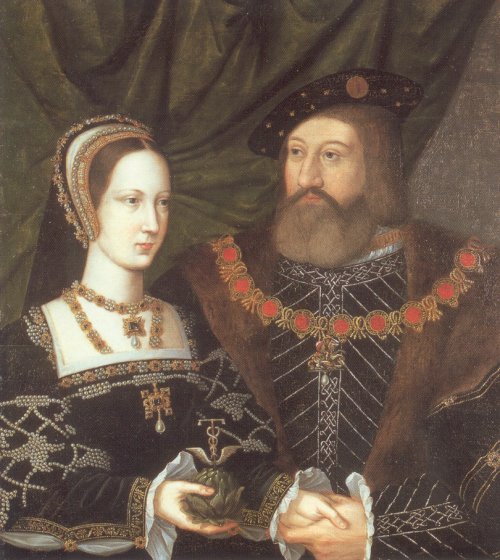
Above: the marriage of Mary Tudor, former queen of France, and Charles Brandon, duke of Suffolk, took place on 13 May 1515.

On this day in history, 13 May 1515, the marriage between Mary Tudor, formerly queen consort of France, to Charles Brandon, duke of Suffolk and close friend of Henry VIII, took place. Their marriage was a love match and it caused considerable controversy, for Mary's first marriage to the French king, Louis XII, had only recently ended through his death, and Brandon was not royal. Nor had Mary asked her brother, Henry VIII, for permission to marry.

Mary was the youngest surviving daughter of the first Tudor king, Henry VII, and Elizabeth of York. She was born on 18 March 1496 at Richmond Palace in Surrey, reportedly her father's favourite residence. The humanist scholar described the youthful Tudor princess as extremely "beautiful". Her charm and beauty was famous in Europe. The Venetian ambassador was to describe her at the time of her marriage, when she was eighteen, as being 'tall, slender, grey-eyed', in short, 'a Paradise'. A French observer further commented that Mary was 'one of the most beautiful young women in the world'. She had long, red-golden hair and blue eyes. She closely resembled her elder brother, Henry, in looks, and like him she had a fiery temper and could be stubborn and determined, as her pursuit of Brandon demonstrated.


Above: Mary Tudor, the French queen consort.

Although, as a child, Mary had been betrothed to Charles, the future Holy Roman Emperor, and had been groomed for a glorious future as archduchess of Burgundy and princess of Castile, her brother Henry VIII decided to marry her off to his ally, the French king, Louis XII, who was aged in his fifties and had been married twice previously, when relations with the Habsburgs fell into disrepute. In the autumn of 1514, the eighteen-year old Princess Mary was betrothed to a man aged approximately 34 years older than her. Although this might seem shocking to modern sensibilities, it was completely usual for the time, especially for royalty. Mary's later husband, Charles Brandon, duke of Suffolk, married Katherine Willoughby when Katherine was aged only fourteen and he was aged forty-nine, and Henry VIII, aged forty-nine, married the sixteen-year old Katherine Howard in 1540.

Traditionally, especially in popular culture, Mary has been depicted as a petulant teenager who adamantly refused to marry the elderly French king. When Henry VIII informed her that she had no choice, she allegedly made a bargain with him in which he agreed that, were the French king to die, Mary would be able to marry whomever she liked. However, as historian David Loades states, there is no record of Mary's feelings about her French bridegroom and no such record of any bargain. 


Above: Anne Boleyn was briefly attendant to Queen Mary Tudor in 1514, and some nineteen years later, was to become her sister-in-law.

On 9 October, having arrived in France, Mary's marriage to King Louis was celebrated with elaborate ceremony at pomp. On 5 November, Mary was crowned at St. Denis. Unhappiness surfaced, however, when the new French queen's English entourage was by and large dismissed. She was, however, left with one notable attendant - a young English girl (possibly aged as young as six, but more probably twelve or thirteen) named Anne Boleyn, who would nineteen years later, for a very brief spell, become Mary's sister-in-law, but no-one could have foreseen that in 1514. Mary soon felt isolated and vulnerable, and the teenage queen, alone in a foreign land, soon began writing despairing letters to her brother, the King of England. Mary's unhappiness was not to last long, however, for on 1 January 1515, after barely three months of marriage, the ailing and exhausted Louis died, allegedly of being danced to death by his energetic queen.


Above: Louis XII of France, first husband of Mary Tudor.

Following Louis XII's death, Mary's name was soon being linked to that of the duke of Savoy and the duke of Lorraine, for her royal blood, youth and beauty made her an excellent prospect. Whether Mary had been in love with Charles Brandon, duke of Suffolk, before she had sailed to France, or whether it was an infatuation that developed when Brandon led a delegation of honour to France after the queen's coronation, is impossible to say. It seems, however, that both had strong feelings of passion for one another, and according to Loades, in February 1515 the eighteen-year old dowager queen 'virtually forced him to marry her secretly'. Henry VIII was furious, for not only had Mary not asked for his permission to remarry, but Brandon had married a princess of the blood without royal permission, and which constituted an act of treason. The couple were forced to pay a hefty fine in order to attain royal forgiveness.

On this day, 13 May 1515, three months after their secret union, Charles Brandon and Mary Tudor wed publicly at Greenwich Palace, having arrived safely back in England. Thus, barely six months after being crowned Queen of France, the youngest Tudor princess became Duchess of Suffolk. While Charles was to play an important role at court, thereafter Mary visited court only intermittently. She bore Charles four children: Henry (who died young), Frances Brandon (the mother of Lady Jane Grey), Eleanor Brandon and a second Henry Brandon. 

The nature of the Suffolks' marriage is impossible to pinpoint, but romantic tradition and the available historical evidence indicates that it was, at least initially, a love match. On 25 June 1533, Mary died aged thirty-seven, and it is possible that she died estranged from Henry VIII, for she had vocally disapproved of his second marriage to Anne Boleyn, her former maid of honour. Part of this dislike and resentment of Anne may have been because of Mary's closeness with Katherine of Aragon. 

As David Loades concludes, Mary Tudor's main importance lies in her 'claim to the English throne that she transmitted via her elder daughter, Frances, to Jane and Katherine Grey, Frances's daughters from her marriage to Henry Grey, seventh marquess of Dorset'. When Charles and Mary wed in 1515, two headstrong young lovers, it is almost certain that they could never then have envisaged that, forty years later, their granddaughter, Lady Jane Grey, would become queen of England - albeit for only thirteen days.


Above: Lady Jane Grey, queen of England, and granddaughter of Charles Brandon and Mary Tudor.

Monday, 30 December 2013

Further Indications of Anne Boleyn's Birth Date


This article follows on from my 2012 essay "The Boleyn Marriage and the Birth of Anne Boleyn", accessed at http://conorbyrnex.blogspot.co.uk/2012/11/the-boleyn-marriage-and-birth-of-anne.html.

Although not specifically related to Anne Boleyn herself, other sixteenth century evidence concerned with youth and marriageability specifically from a feminine perspective can be used to support this writer's belief that the Queen was born in c 1501. This therefore agrees with the theories of Hugh Paget, Eric Ives and Alison Weir, and counters claims (mainly put forward by Retha Warnicke) that Anne was born c 1507.

In Eric Ives' 2009 book Lady Jane Grey: A Tudor Mystery, he puts forward (p50) a letter written by Jane's father Henry Grey, marquis of Dorset to Thomas Seymour in September 1548, concerning the upbringing of Jane. To put this in context: Katherine Parr had died earlier that month, and since she had been acting as Jane's guardian, Henry Grey was keen to relocate Jane back to the Grey family's household at Bradgate in Leicestershire. In his letter, he emphasised to Seymour:

"I seek in these her young years wherein she now stands..."
"Considering the state of my daughter and her tender years..."

Lady Jane Grey's birth date is unknown but most historians believe it was in the spring of 1537, making her approximately eleven years of age when this letter was penned. Now, as anyone with an interest in Anne Boleyn knows, those who favour the 1507 birth date often cite the comment of Margaret of Austria to Thomas Boleyn in 1513. She found the youthful Anne to be "so bright and so pleasant for her young age..."

Gareth Russell argued that this lends weight to a 1507 birth date: 'why would the Archduchess have made a point of referring to Anne's age as being exceptionally young, if she was the same age as every other maid-of-honour?' But Anne was not the same age as every other maid of honour, for even if she were twelve years old in 1513, as seems likely, it is certain that other maids would have been older. A glance at the list of maids at the English court in the sixteenth century confirms this. Jane Seymour was 21 when she was appointed a maid of honour to Queen Katherine of Aragon in 1529; Anne Basset was 16 when Jane selected her as a maid in 1537; and the Viscountess Montague was also 16 when she was appointed a maid of honour to Queen Mary I. Thus, if Anne were 12 in 1513, she would have seemed youthful compared with the other, older, maids of honour.

Henry Grey's 1548 letter, written about his 11-year old daughter, suggests that references to 'young age' or even 'tender years' do not necessarily have to refer to an infant of seven. Using this as evidence of a 1507 birth date for Anne is, therefore, extremely problematic. If Jane was referred to as 'young' and 'tender' when she was aged 11, it therefore makes sense for Anne, only one year older, to also be viewed as 'young'.

Comments on Anne Boleyn's fertility, made in context of her courtship with Henry VIII during the late 1520s, can also be viewed as supporting an earlier birth date. The king's mistress was praised in 1528-9 for her 'apparent aptness to procreation of children'. It has consequently been argued that she must have been born around 1507, for had she been in her late twenties, her fertility and childbearing potential would have been questioned or openly challenged, not praised. However, the Parliament of June 1536, following on from Jane Seymour's marriage to Henry after Anne's death, emphasised that Jane was 'in age and in form... deemed to be meet and apt for the procreation of children'. She was then 28, thus calling into question suggestions that Anne, at 27, was too old to be described as fit for childbearing.

The seventeenth-century writer William Camden, who wrote that Anne was born in 1507, actually expressed some confusion. Besides recalling that she had been born in 1507, he later commented that Anne had been twenty when the king (aged thirty-eight) had fallen in love with her, thus pushing her birth to 1509. This indicates that he was hardly a reliable source for the early life of Elizabeth I's mother.

As Nell Gavin writes: 'the sources that suggest a later birth year are either questionable, purely speculative, are second or third hand, are noted 80 to 100 years after Anne's death, and/or have no verifiable source for the information'. Gavin notes that, for the 1507 birth date to be true:

* 'Margaret of Austria must have accepted Anne into her employment at age five or six, even though it is both unlikely and undocumented that she would bend the rules to accept a non-royal child. Plus, a pampered upper-class child of that age undoubtedly required more care and supervision than she could offer in service and responsibility'.
* 'Anne must have been completely fluent and literate in her second language by the time she was seven, an age at which most children are struggling with their first language'.

The evidence put forward here in relation to attitudes to youth (Lady Jane Grey, 1548) and marriageability (Jane Seymour, 1536) act alongside the persuasive arguments of Eric Ives, Alison Weir and Hugh Paget to convincingly attest to a birth date of c 1501 for Anne Boleyn. The 1507 birth date is both tenuous and unlikely. Camden and the Duchess of Feria, the only two individuals to have suggested a later birth date, were not reliable sources; Camden because of his second or third hand information and distance from the events he described; and the Duchess because of her hostility to Anne Boleyn and her distance from events. There can be little doubt that Anne was born c 1501.


Sunday, 17 November 2013

Mary I's Death and Elizabeth I's Accession


Above: Sisters and queens. Mary I (left) and her sister Elizabeth I (right).

On this day in history, Thursday 17 November 1558, Queen Mary I of England died, probably of influenza, at St James' Palace in London. Her infamous and unsuccessful reign had lasted five extraordinary but bitter years, encompassing religious fervour, political turmoil and a greater involvement of England in international politics. Today, England remembers her by the infamous epithet 'Bloody Mary'. Her chief biographer, Professor David Loades, concedes that her reign was ultimately a 'failure'. Certainly, she has been eclipsed by her successful and brilliant younger sister Elizabeth, who succeeded to the English throne on Mary's death.

Having married Philip of Spain in 1554 - and so eventually becoming, by marriage, Queen of Spain - Mary had believed herself to be pregnant shortly after, but what eventually turned out to be a traumatic and humiliating phantom pregnancy in 1555 exposed her to scorn and left the Tudor succession in continued uncertainty. In March 1558, the year of her death, Mary expected the birth of a child, and made preparations in her will for the succession of her child to the throne of England. Nothing came of the so-called pregnancy, and by all accounts Mary had been the only person to believe in its existence. Her health began to slowly decline following that.

As both Loades and Anna Whitelock point out, from May 1558 Mary's health gradually worsened, and she suffered a fever in August. An influenza epidemic swept across London in the late autumn and claimed not only Mary's life but also that of her confidant, Reginald Pole archbishop of Canterbury. It has been conjectured that she might have been suffering from uterine cancer. On the day of her death, Mary stated that angels in the guise of children appeared to her, leading some historians to draw a tragic link between this and Mary's own strong desire to have children, a desire she never realised. She also spoke of how the word 'Calais' would be found imprinted on her heart; alluding to the national and international humiliation which England had endured following the loss of Calais, the only English stronghold in France, earlier that year, which had culminated in intensified dislike of the queen. Early on the morning of 17 November, the queen of England passed away in a lonely and abandoned court. Her contemporaries had long before flocked to Elizabeth's residence, to pay homage to the new queen.

Elizabeth was at her childhood residence of Hatfield when news of Mary's death and her subsequent accession reached her. Allegedly, although some doubt has been cast on this story, according to romantic legend Elizabeth was seated under an old oak tree, reading a book, when the councillors brought news. Sinking to her knees, she proclaimed in Latin in what has become immortalised: 'This is the Lord's doing, it is marvellous in our eyes'. Her godson, John Harington, however claimed that she actually made a speech confiding her sorrow in her sister's death and her amazement at God's decision to appoint her to the position of Queen. She asked her lords to help her in the business of ruling the country and promised her goodwill.

Mary's funeral took place on 14 December, and she was buried at Westminster Abbey, although her mother's body (Katherine of Aragon) was not moved there from Peterborough Cathedral as she had beseeched Elizabeth to do. Eventually, that tomb would be shared with Elizabeth, who died forty-five years later in 1603. The Latin inscription on the tomb translates as: 'Consorts in realm and tomb, here we sleep, Elizabeth and Mary, sisters, in hope of resurrection'.


Above: Mary and Elizabeth.

Unless Lady Jane Grey is included, Mary I was England's first ruling queen. She was expected to uphold the duties of kingship, embodied in the body politic, while symbolising her position as a woman with her own natural body. Her reign had lasted five bitter years, and one might consider how different her reign might have been if only the circumstances had been different. For one thing, she succeeded to the crown aged 37, old by the standards of the day to consider a first marriage and children. She was running on little time in terms of producing a Catholic heir to safeguard the faith so dear to her heart. One might wish that Henry VIII had married off his eldest daughter in her youth, particularly because of her desire to bear children, something which, tragically, she was never able to do.

Many of Queen Mary's decisions were doubtful; most infamously, her religious policies meant she became an unpopular and hated queen in a country where religious persecution was viewed as alien and un-English. But her desire to ingratiate England to a much greater degree in Europe can be applauded. Usually known as 'the Spanish Tudor', Mary's decision to marry Philip II of Spain has often been unfairly criticised, but her desire to align England with the most powerful and influential nation in Europe should be viewed as a shrewd and positive move designed to improve her country's security and bolster its international standing. Far from being the selfish, self-centred and out of touch monarch she is usually presented as in regards to this, Mary actually demonstrated a remarkably close consideration of her subjects' needs and best interests

By contrast, Elizabeth's accession on 17 November 1558 was to inaugurate a supposed 'Golden Age'; a prosperous, successful and godly reign entirely different to that of her hated sister. But in terms of understandings about monarchy and related issues of gender, Elizabeth undoubtedly owed a great deal to her elder sister. Mary was England's first ruling queen, not Elizabeth. Mary alone shouldered that burden in a country which had never experienced female rule in so definitive a sense; something Henry VIII had worked determinedly and bloodthirstily to avoid his whole reign. By being England's second queen regnant, Elizabeth was able to fully recognise and appreciate in a shrewd sense why her sister had failed, what she had done well, and what she was able to appropriate. Celebrated for her numerous speeches, it is actually very likely that Elizabeth drew strong inspiration from Queen Mary's given speeches. Consider the speech Mary gave in the wake of Wyatt's rebellion at the Guildhall in 1554, and this will be seen to have been the case.

Queen Mary, even by the standards of her time, was still relatively young at her death - she was forty-two years of age. She reigned the shortest out of all the Tudors, sitting on the throne for even less time than that of her teenage brother Edward VI. She had come to the throne amidst great controversy, opposition and hostility, intensified in the reign of King Edward on account of her Catholic faith. Her ability to dislodge the Duke of Northumberland, and with him Queen Jane, from power speaks volumes to her sense of purpose, her determination, her courage, and her faith. She was certainly not successful and prosperous in the way her sister Elizabeth I was. But Elizabeth had what Mary always lacked during her reign: time and youth. As one historian suggests, it would be more fruitful to compare Mary's reign with the first five years of Elizabeth's reign, since comparing a 5-year reign with that lasting 45 years will, inevitably, draw unfair and unrealistic conclusions.

Sisters, rivals, enemies - the relationship between Mary and Elizabeth was complicated, devastating and psychologically unstable. To the very end, Mary fought against appointing her younger sister her successor, a woman she continued to regard as a heretic and a bastard. But with the death of Queen Mary, Elizabeth's succession was to mark a spectacular and never before seen phase in England's history, forever immortalised as the 'Golden Age'. Where Queen Mary is 'Bloody Mary', Queen Elizabeth is 'Gloriana'.

Saturday, 12 October 2013

Edward VI, king of England


Above: Edward VI, portrait by William Scrots, c. 1550.

On this day in history, 12 October 1537, Henry VIII's third wife Jane Seymour gave birth to her only child, Edward, at Hampton Court Palace in Surrey. After twenty-eight years, the beginnings of the Reformation, a brutal and excruciating break from the Roman Church and the rejection of two queens, Henry finally had what he believed was essential to preserving peace and stability in England: a male heir. Tragically, however, Jane's efforts were ultimately fatal, for 12 days later, she died aged twenty-nine, a common fate of Tudor women. Henry apparently wept with joy when he held the baby Edward following his birth.

From the onset Edward was accorded a lavish lifestyle and excellent education afforded by his rank and status. He was initially placed in the care of Lady Margaret Bryan, who had also served his elder sisters, Mary and Elizabeth, during their childhoods. Until the age of six Edward was brought up 'among the women', although he was later taught by Richard Cox, Roger Ascham and John Cheke, as well as others, who instructed him in languages, philosophy, scripture, mathematics, music and liberal sciences. During these years he was close to his sisters, particularly Mary - despite the age difference of twenty-one years - and he is known to have informed her in a letter written aged nine: 'I love you most'.

Henry's marriage to Katherine Parr in 1543 changed Edward's life somewhat, for she became the only mother Edward had ever really known. As Dale Hoak writes: 'Queen Katherine brought Edward and his sisters into the royal household as members of an intimate family, providing Edward especially with an affection and attention that found endearing reflection in his frequent letters to her'. Her Protestant faith probably also had an important influence on Edward's religious beliefs and experiences. Under the influence of his Cambridge-educated humanist tutors, at an early age Edward was brought up in the Protestant religion.

On 28 January 1547, Henry VIII died aged fifty-five, and Edward, only nine years of age, became England's king. On Sunday 20 February, Edward was crowned at Westminster Abbey in a lavish coronation, wearing a crimson satin robe trimmed with gold silk lace, before showing himself to his people dressed in white velvet and cloth of silver and gold, set with patterned knots of diamonds and pearls. Because of the king's youth, it was arranged that the 16 executors named in Henry's will should act in a Regency Council on behalf of Edward until he reached the age of 18, when he would rule independently. However, the will was ignored and Edward Seymour, duke of Somerset, uncle of the king, became Protector of the Realm. The Council was Protestant-dominated following the removal of Catholic figures such as Stephen Gardiner, bishop of Winchester. Somerset was reported to 'govern everything absolutely' following his promotion.

A history of Edward VI's reign from the perspective of the king himself is difficult, for he died only fifteen before he could fully assume the mantles of government and kingship. As such, a history of his reign can be regarded as a history of Somerset's, and later Northumberland's, rule. During the early years of Edward's rule the Protestant Reformation was fully inaugurated in England. Archbishop Cranmer encouraged the king to destroy idolatry, particularly in the form of images. In July 1547 candles and shrines were banned, and by February 1548 stained-glass images and in wood and stone had gone the same way. Windows were reglazed, while chantries, processions, mystery plays, maypoles, church ales, and medieval rituals disappeared. It was an austere and forbidding environment.

In 1549, the first real challenge to Edward's rule appeared in what has come to be known as 'the year of rebellions'. These were motivated not solely by religious conservatism, but also by social unrest. By the early summer, a series of armed revolts broke out, the worst of them taking place in the southwest (Devon and Cornwall) and in Norfolk. The Prayer Book Rebellion, occurring in Devon/Cornwall, was motivated by hostility to the Protestant Reformation, while the Norfolk uprising occurred due to the encroachment of landlords on common grazing ground. Although Somerset appeared sympathetic to the rebels, the uprisings were eventually quashed, but the rebellions were perceived to be indicative of an unstable and corrupt government, thus setting the seeds for Somerset's eventual downfall.

By the autumn of 1549 Somerset was in real trouble and he was arrested in October. Edward showed little regret and did not lift a finger to save his uncle or restore his authority. In February 1550 John Dudley, duke of Northumberland, became the leader of the Council in Somerset's place. Eventually, Somerset was executed in 1552 following his initial release from the Tower of London. The only thing which Edward had to say about the affair was made in his diary: 'the duke of Somerset had his head cut off upon Tower Hill between eight and nine o'clock in the morning'. This passage perhaps supports the view of the king as a cold, unfeeling figure, who did nothing to support his uncle.

Northumberland was far more appropriate as Protector than Somerset. His administrative and economic achievements, in particular, have oft been recognised by modern historians. During these years, as he aged, Edward became more closely involved in government. The degree of his actual involvement has been controversially debated, but it seems possible that his greatest influence came in the field of religion, as the Protestant Reformation continued to flourish. Hoak believes that 'at fifteen [he was] an exceptionally capable student who was following, not directing royal affairs'. The king was depicted as a young Josiah, a godly king appointed by God to rid England of idolatry and superstition and restore truth to the realm. In context, Edward's relationship with his sister Mary became increasingly contentious, for her Catholic religion was abhorrent to him.

By February 1553, the fifteen-year old Edward, after barely six years on the throne, became seriously ill. The previous year he had fallen ill with measles and smallpox. Historians still debate what it was that killed him, with conflicting ideas of tuberculosis (consumption) or a pulmonary infection which led to septicaemia and renal failure. But it is also known that measles suppresses immunity to tuberculosis. By March, a Venetian envoy confirmed that the king was slowly dying.

Around this time, Edward drafted a 'Devise' for the English succession. Since he had never married nor fathered children, the crown by law on his death would pass to his eldest sister, the thirty-seven year old Mary. But her Catholic religion rendered her an unacceptable queen in the eyes of both Edward and his Council. In this line of thinking, if the crown should not pass to Mary, then it should go to twenty-year old Elizabeth, who, suitably, was a Protestant. But Edward subscribed to his father's will, which did not legitimate either sister - both were, despite their places in the succession, still officially bastards. Passing over the claims of his half-sisters, Edward instead willed that the crown should go to his cousin Lady Jane Grey, who was both legitimate and a Protestant.

Many historians formerly believed that Northumberland directed the whole 'Devise', because one of his sons Guildford was married to Lady Jane in May 1553, meaning that, by having a son on the throne of England, he would conceivably be the real power behind the throne. But this is an unlikely view in view of Edward's personal zeal and involvement in the affair, suggesting it was motivated by his own wishes, and in view of that Jane only married Guildford in May when the events behind the 'Devise' probably started a few months earlier.

On 1 July, Edward made his final appearance in public when he showed himself at his window in Greenwich Palace, horrifying onlookers with his 'thin and wasted' appearance. On 6 July, he died, three months before his sixteenth birthday. On 8 August he was buried in Henry VII Lady Chapel within Westminster Abbey.

Edward's reign was too short and his death at an early age means that is very difficult to tell what sort of king he would have become had he lived longer. But his greatest legacy was undoubtedly that of the Protestant Reformation, which was continued by his sister Elizabeth following Queen Mary's unsuccessful attempt at restoring Catholicism to England. Dale Hoak concludes his article with the passage:

'Edward's youth and unfulfilled promise have given rise to a number of misconceptions. But in one respect, at least, image and achievement have been found to coincide, in the perception of his image as having seen the foundations laid, with his encouragement, of one of the greatest transformations of English society and English-speaking culture, namely the Protestant Reformation'.

Saturday, 1 December 2012

Tudor Portraiture - or the game of Guess the Sitter

Tudor portraiture is notorious in leading to frequently incorrect identifications of sitters who were almost certainly not the sitter actually painted. Yet portraiture is highly influential in our interpretations of these supposed sitters' lives, careers, choices, and actions. Drawing upon four specific case studies here, this article considers why and how Tudor portraits are incorrectly identified, and how these incorrect identifications inform our interpretations of Tudor personages.


A portrait of Mary, Lady Dacre and her son Gregory; often mislabelled as Frances Brandon, duchess of Suffolk and the mother of the 'Nine Days Queen' Lady Jane Grey, and her second husband Adrian Stokes. This portrait has proved fundamental in leading to misguided views of Frances as being a cruel woman who bullied her daughter, due to the sitter's fierce characteristics.

This article begins with Frances Brandon (1517-1559), duchess of Suffolk by right of her marriage in 1533 to Henry Grey, marquis of Dorset and later Duke of Suffolk, niece of Henry VIII, king of England, and mother of Jane Grey, later queen of England (c.1537-1554). Frances lived a remarkable life, yet her reputation has been slandered over the course of history due to the view of her being a cruel, spiteful woman who frequently bullied her daughter Jane, often violently, which is still conveyed in modern works (Alison Weir's fictional Innocent Traitor often portrays Frances violently hurting Jane both physically and psychologically). This myth occurred at the beginning of the eighteenth century, acting in parallel with the depiction of Jane Grey as a Protestant martyr who died for her religion at only seventeen years old, executed on the orders of a vengeful queen, her own cousin Mary I. 

In view of this, a portrait of Lady Mary Dacre and her son Gregory - actually painted the year Frances died, 1559 - was relabelled as Frances Brandon and her second husband, Adrian Stokes, whom she married following the execution of her first husband Henry Grey as a traitor. Supposed similarities between the sitter's features and that of her uncle, Henry VIII, were drawn to emphasise the duchess' cruel, domineering nature. It has, furthermore, been deduced that Frances and Henry physically mistreated Jane in her childhood, due to something Jane informed her tutor, Roger Ascham, as a child:

"For when I am in presence of either Father or Mother, whether I speak, keep silence, sit, stand or go, eat, drink, be merry or sad, be sewing, playing, dancing or doing anything else, I must do it, as it were, in such weight, measure and number, even so perfectly as God made the world, or else I am so sharply taunted, so cruelly threatened, yea, presently sometimes with pinches, nips and bobs, and other ways, (which I shall not name, for the honour I bear them), so without measure misordered, that I think myself in hell". 

This passage, of course, needs to be viewed critically, particularly because this passage was only recorded much later after the actual events, and Jane's tutor Ascham actually praised her parents in an earlier letter. Furthermore, since the Victorian period, a more balanced appreciation of the character of Lady Jane Grey has developed. Rather than viewing her as a perfect child martyr, innocent and passive, as the Victorians did, historians have regarded her more critically, and while recognising her intelligence and determination, have also suggested that she was a proud, stubborn, narrow-minded, even arrogant  young woman. Frances, conversely, in contemporary sources was noted for her goodness and kindness to friends. 

We can therefore see how an incorrect identification of a sitter in a Tudor portrait can develop or intensify myths and legends surrounding that personage. Because Lady Dacre is depicted as unfriendly, cold, even ruthless, this was deployed by those who believed that it was actually a portrait of Frances, duchess of Suffolk to present her as a domineering woman who was prone to physical violence. This myth needs to be recognised for what it is: a myth.


Left: Katherine Howard, Elizabeth Seymour, or another Tudor woman? For centuries, controversy has raged as to who this sitter is.
Right: Angela Pleasance as Katherine Howard in The Six Wives of Henry VIII (1970).

No less important than the portrait of 'Frances Brandon' in informing interpretations of Tudor personalities is that of a portrait supposedly depicting Katherine Howard, queen of England. Identified as being the tragic queen c. 1898 and furthered by the renowned biography of the queen by Lacey Baldwin Smith (1961), this portrait has widely been used to put forward arguments surrounding Katherine's birth date, thus influencing our views surrounding her childhood, her personality, and the nature of her sexual relationships. Baldwin Smith arguably used this portrait to support his view of Katherine as 'a juvenile delinquent'. Recently, the identification of this sitter as Queen Katherine has been challenged, notably by Lady Antonia Fraser in her biography of the six wives of Henry VIII (1992). She identified this portrait as actually depicting Elizabeth Seymour nee Cromwell, younger sister of Queen Jane Seymour; strengthened by the fact that this portrait was housed in the collection of the Cromwell family.

While agreeing with Fraser that this portrait is not Katherine, in view of the fact that it does not match up either with notions of the queen's age or her physical appearance, I disagree that it represents Elizabeth Seymour. There are several reasons for this. Firstly, as has been recognised, at least three versions of this portrait exist. The sitter was therefore far more important than the daughter of a knight, as Elizabeth was. Whoever this woman was was clearly of noble, if not royal, rank. Secondly, we do not know when Elizabeth was born, but if it was around c.1511, as has been suggested, the sitter cannot be her, because this portrait dates to the mid to late 1530s or the early 1540s, when Elizabeth was likely in her mid twenties, not aged 21, as the sitter's age is. As Janet M. Torpy stated, "a necklace, rings, a brooch bearing the Biblical story of Lot, lace, and golden embroidery all signify extreme wealth and the appropriate piety and purity". It is entirely likely that this portrait actually depicts another royal woman, of which there are no less than four possible candidates in this period: the king's daughter Mary Tudor (aged 21 in 1537), Lady Margaret Douglas, his niece (aged 21 in 1536), or either of the king's Brandon nieces, Frances (aged 21 in 1538) or Eleanor (aged 21 in 1540). 

But this portrait, like the one thought to be of Frances Brandon, has informed interpretations and representations of Katherine Howard, whom it was commonly thought to portray for a long period of time. In the television series The Six Wives of Henry VIII (1970), as depicted above, Angela Pleasance, in her appearance as Queen Katherine, is clearly shown wearing a costume based on the dress worn by the sitter in this portrait. Her portrayal of Katherine is as a hedonist teenager who selfishly manipulates Thomas Culpeper to impregnate her, while she is seen to use physical violence against her cousin and is given to hysteria. This portrait was fundamental in Baldwin Smith's interpretation of Katherine as an older, knowing girl who firmly held the upper hand in her relationships and was prone to manipulating her lovers. Yet as my research has indicated, she was probably somewhat younger than this portrait suggests.
This portrait has also led to historians suggesting that Katherine was not as beautiful as legend indicated that she was. This can be refuted, since there are at least three contemporary statements which suggest that the queen was uncommonly attractive; one Spanish citizen gushingly stated that she was the most beautiful woman 'in the kingdom'. This does not support the notion that the woman in this portrait is of the queen.


Left: a portrait inscribed as being Anne Boleyn, 1530s.
Right: unknown woman. Identified as being Anne Boleyn by Roy Strong, yet others have identified this woman as being another of Henry VIII's queens, either Katherine of Aragon or Jane Seymour. Alison Weir suggests convincingly that it shows Mary Boleyn, Anne's sister.

Thus we can strongly see that portraiture is highly influential in guiding assessments and interpretations of Tudor personages. It seems unsurprising, therefore, that this is arguably best illustrated with the case of Anne Boleyn. The two portraits above have both been identified as showing the second queen of Henry VIII - despite the fact that neither bears any resemblance to contemporary descriptions of the queen. 

The sitter on the left was identified by noted Tudor historians David Starkey and John Rowlands as a contemporary likeness of Anne Boleyn. This has resulted largely from a hostile account of Anne at her coronation in 1533, which described the queen as having a fat, even disfigured, neck, resulting from a swelling which she then tried to conceal at her coronation. Further problems arise from the fact that this woman is blonde, whereas Anne was, famously, dark. This woman clearly wears a nightrobe, while the somewhat plain, rounded face bears little resemblance to contemporary reports of Anne as being narrow-faced, with high cheekbones. Yet, again, a misidentified portrait has been used to promote interpretations of its supposed sitter. Here the case seems to be that hostile accounts which vilified the queen should be regarded as historically accurate, or at least not as wild in their claims as historians have conventionally supposed. 

The portrait on the right epitomises the game of 'Guess the Sitter' in Tudor portraiture. To my knowledge, there has been no less than four sitters put forward. Originally identified as being of Henry VIII's first queen, Katherine of Aragon, this was ruled out by the fact that the portrait was painted in c.1525, when Katherine was aged forty, yet the sitter is twenty-five. This also rules out another identification of the sitter as being Jane Seymour, who was twenty-fine in c.1533 and so comes too late after this portrait was painted. Roy Strong, however, suggested that it depicts Queen Anne. There are, again, problems here. The sitter is blonde, while Anne Boleyn did not come to public attention until 1527, when the king proposed marriage to her. In 1525-6 she was a maid of honour to Queen Katherine, and so was not important enough, in a sense, to be painted in a portrait miniature. It is more likely to portray Mary Boleyn, Anne's older sister, who gave birth to a son - possibly the king's - in 1525; if one supports the view that she was born around 1499, this may tentatively be said to present Mary Boleyn. 


Above: a portrait identified as being Thomas Boleyn, earl of Wiltshire and father of Anne. Recently, however, it has been argued that it actually depicts James Butler, 9th Earl of Ormond.

Developing the game of 'guess the sitter', the portrait above has often been cited as a likeness of Thomas Boleyn, Earl of Wiltshire and father of Anne. Indeed, we can see how this has informed interpretations of the earl's physical appearance and supposed resemblance to his daughter Anne, as seen in Joanna Denny's biography of the queen published in 2004. Denny suggests that Anne Boleyn was not dark, as is often believed to be the case, but was actually fair in her complexion, while having auburn, as opposed to black, hair, on the basis of this portrait showing 'striking' similarities between father and daughter. However, this is almost certainly untrue, since historian David Starkey has indicated that it portrays James Butler, not Boleyn. As Starkey notes, there is "an utter dissimilarity between the Windsor drawing [of Boleyn] and Boleyn's superb tomb brass". Once again, we have been deceived as to the real sitter of a Tudor portrait.


Above: Lady Jane Grey or Queen Katherine Parr?

A portrait above shows a superbly dressed noblewoman, dated to the early-to-mid 1540s. It was initially identified as portraying Lady Jane Grey, England's first queen regnant, in 1965 by Roy Strong. This occurred due to Strong's perception of similarities between this portrait and an engraving of Jane published in 1620. Yet, as Susan E. James has convincingly suggested, the portrait actually portrays Katherine Parr, sixth queen consort of Henry VIII. This seems all the more convincing since Katherine was queen in the period 1543-1547, when this portrait was executed, and since Lady Jane was born in around 1537, she would have been only eight years old, or thereabouts, when this woman sat for  the portrait. This is clearly not a portrait of an eight year old girl. The fact that this sitter wears jewellery which other queen consorts of the period, such as Katherine Howard, adorned, indicates that it represents Katherine Parr, who would have obtained this jewellery in her right as queen. Yet, once again, a misidentification of a portrait has influenced judgements about the sitter. Frequently, this portrait is advertised in both written works (ie books) and online as showing the tragic Nine-Day queen. It probably represents her one time great-aunt, Katherine.

Tudor portraiture is therefore precarious. Whether one uses it as a source in interpretations or not, it must be carefully scrutinised before making grandiose claims. The game of Guess the Sitter is, unfortunately, a very frequently occurring one in terms of Tudor portraiture, yet it serves to show how mysterious and yet compelling this period continues to remain.