Showing posts with label mary boleyn. Show all posts

Tuesday, 19 July 2016

19 July 1543: The Death of Mary Stafford


We do not know how old Mary Stafford (nee Boleyn) was when she died on 19 July 1543. Mystery surrounds every aspect of Mary's life: we do not know her date of birth, what she looked like, whether she was the oldest or the youngest of the surviving Boleyn children, what her relationship with her siblings was like, or even where she died. Mary's life has been imagined and invented in works of fiction, most notably Philippa Gregory's bestselling novel The Other Boleyn Girl and in Karen Harper's The Last Boleyn. 

Although Mary remains best known as the sister of Anne Boleyn, it seems fitting to refer to her as Mary Stafford given that she died while the wife of William Stafford. In her letter to Thomas Cromwell, written c. 1534, Mary described her second husband as 'honest' and noted that she 'could never have had one that should have loved me so well'. At a distance of almost five hundred years, it is impossible to know whether Mary's controversial marriage to William Stafford was ultimately happy, but certainly theirs appears to have initially been a love match. Like other Tudor noblewomen, such as Frances Brandon, Katherine Willoughby and Anne Stanhope, Mary had selected a second husband who was inferior to her in status because it brought the promise of security, although it enraged her family and compelled her sister to order her dismissal from court.

At her death, Mary held a number of properties, many located in Essex. After the disgrace and deaths of her brother and sister in 1536, she was her father's sole heiress and it was to her that the Boleyn inheritance passed. When Mary died, the properties passed to her son Henry Carey, who was then aged seventeen. He was highly favoured by his cousin Elizabeth following her accession in 1558. Henry's sister Katherine was also a favourite of the queen. 

Above: Anne Boleyn. In the realm of fiction, Mary and Anne have often been presented as jealous rivals. 

The last years of Mary Stafford's life were not necessarily pleasant ones. Her unexpected marriage to William Stafford displeased her family and her sister, who was then queen, banished her from court permanently. Less than two years later, Anne and George Boleyn were both executed, alongside four other men, on scandalous charges of adultery, incest and treason. Less than two years after the shocking events of 1536, Mary's mother died, and a year after that, her father also passed away. In 1542, her sister-in-law Jane Parker was beheaded for treason alongside Mary's cousin, Katherine Howard. Although she was not necessarily close to any of these individuals, it would be surprising if the betrayal, bloodshed and devastation that was inflicted on the Boleyn family between the late 1530s and early 1540s did not have an impact on Mary, by then the only surviving child of Thomas and Elizabeth Boleyn.

Two biographies of Mary have been published to date and she regularly features in general histories of Henry VIII's reign. Moreover, she has been the subject of numerous novels. However, much of Mary's life remains unknown. Perhaps it is this mystery, this uncertainty, that makes her so entrancing to modern audiences today. 

Above: Katherine (left) and Henry (right), Mary's children by her first husband William Carey. Both were greatly favoured by their cousin, Elizabeth I. 

Sunday, 22 February 2015

The Character Assassination of George Boleyn


Above: Negative depictions of George Boleyn were offered in both The Tudors (left) and The Other Boleyn Girl (right).

My research focuses on the maligning and misrepresentation of high-status women in late medieval and Tudor England, examining the gendered dimension and motivations for attacking prominent women. However, it was not only women who were defamed and maligned, but men too. One outstanding example of this is George Boleyn, lord Rochford, whose posthumous reputation has been notorious. He is frequently depicted as a rapist, homosexual, heretic, womaniser, abuser or coward - and, often, all of these are mixed together. This has resulted in what could be termed the black legend of George Boleyn. However, this popular understanding of George has little basis in historical evidence.

How did this black legend come about? It is difficult to separate the defamation of George from the character assassination of his entire family. The Boleyns have, in popular culture, become synonymous with greed, treachery, political ambition and ruthlessness, although modern historians recognise that they were typical of the period in which they lived in and were no worse than other noble families. But this has not prevented novelists, film-makers, and directors from slandering the Boleyns. Thomas Boleyn, a respected diplomat and talented linguist in his day, has been caricatured as an ambitious, grasping egotist. His daughter Mary has become synonymous with bawdiness and prostitution, although another line of thought has cast her as the innocent, vulnerable victim of her merciless family. Queen Anne Boleyn has suffered the most, being reduced to a scheming manipulator, a nymphomaniac, or a homewrecker - and frequently, the three are mixed together. George Boleyn then is, like other members of his family, a victim of the abuse directed at the Boleyns. 


Above: Anne (left) and Mary (right), the sisters of George.

Modern historians have been fairly appreciative of George Boleyn's significance, particularly in the English Reformation. In 1531, he was one of several crown officials who assisted Henry VIII in his claim to be supreme head of the English Church. Like his sister Anne, George owned a number of French evangelical works. He turned two of them into presentation copies for his sister, which were based on the works of Jacques Lefevre d'Etaples. These texts stressed the necessity of having a living faith in Christ in order to attain salvation, rather than relying on good works and on the rituals of the established Church. George wrote a dedicatory letter to his sister in one of the texts, "The Epistles and Gospels for the Fifty-Two Weeks of the Year", in which he addressed Anne as 'her most loving and friendly brother'. He also assured her that he loved her. These texts testify to both George's devout religion and his close relationship with Anne.

Later, George's execution speech in 1536 confirmed his prominent involvement in religious reform at Henry VIII's court. He referred to himself as 'a great reader and mighty debater of the Word of God, and one of those who most favoured the Gospel of Jesus Christ.' The Imperial ambassador Eustace Chapuys frequently accused the Boleyns of being 'more Lutheran than Luther himself', and it seems plausible that, when Anne became queen, her brother assisted her in advancing evangelical reform at court. Their father, also passionate about religious reform, was probably also involved. Joseph S. Block has written that George's interest and passion for religious reform was motivated not only out of desire to assist his sister, but 'was a guiding light in his life'. 

George's interests, however, extended beyond religion. His biographers Claire Ridgway and Clare Cherry note that he was a talented poet and linguist. George also enjoyed an excellent diplomatic career, a point often overlooked especially in popular depictions of him. For example, in 1529 he was knighted and led an embassy to France at an unusually young age (if he was born around 1504, he would have been only twenty-five or so years of age: a point which indicates that there was already considerable confidence in his abilities). Soon after, George became Viscount Rochford. In 1533, he again travelled to France where he informed the French king about Henry VIII's marriage to Anne and was able to secure Francois I's support in the struggle against the papal denunciation of Henry's annulment of his first marriage. Further embassies followed later that year and in 1534, and in June 1534, George was rewarded for his diplomatic successes: he was promoted to Baron of the Cinque Ports.

Around the end of 1524, he married Jane Parker, the daughter of Henry lord Morley. George's marriage to Jane has more often than not been portrayed as a vicious, tempestuous and abusive union. Alison Weir describes their relationship as "unhappy" and asserts that Jane testified against her husband at the time of his downfall in spring 1536 because she was revolted and disgusted by his sexual practices. This idea was originally put forward by academic historian Retha Warnicke, who suggested that not only was George promiscuous, but guilty of sodomy with several men too. Perhaps unsurprisingly, this salacious notion has become enshrined in popular culture and has hugely influenced the prevailing view of George. In Philippa Gregory's novel The Other Boleyn Girl, George Boleyn is a promiscuous, unhinged and sexually disturbed man who not only has an affair with Francis Weston, but is strongly suggested to have slept with his sister Anne, resulting in the birth of a deformed child and accusations of witchcraft and incest that send both of them to the scaffold. In the television series The Tudors, George is portrayed in a darker light as a serial abuser, who sexually assaults his innocent wife on their wedding night. He also enjoys a sexual relationship with Mark Smeaton. The Tudors provided the most manipulative, abusive, violent and cruel portrayal of George Boleyn to date. Hilary Mantel's Wolf Hall and Bring Up the Bodies presents George more as an arrogant, shallow dandy or fop who shamefully cries at his trial and, during his lifetime, is concerned with nothing more than the pursuit of luxury and decadence. The television series Wolf Hall similarly presents his relationship with Jane as abusive, in which he treats her violently and with contempt.

Wolf-Hall-Crows-George Boleyn

Above: George Boleyn in Wolf Hall.

There is no evidence for any of this, and we cannot know the truth of George and Jane's marriage. Their childlessness has frequently been cited as conclusive evidence of their marital unhappiness, but it is equally possible that either partner suffered from infertility, or perhaps there were other problems that we just do not know about. In the absence of evidence, it is unfair and contrary to historical practice to speculate negatively about their relationship. Contrary to legend, Jane was not the 'principal accuser' of her husband in the wake of his downfall in 1536, and she may have been coerced into providing testimony, in what must have been a terrifying and traumatic experience for her. Jane has traditionally been presented as jealous and hurt by George's close relationship with his sister Anne, in which he neglected and mistreated his wife in favour of spending time with his more attractive and accomplished sister. Again, there is no evidence for this. Perhaps Jane was jealous of Anne, perhaps she hated her, perhaps she did love George and was hurt by his treatment of her. Alternatively, and equally validly, perhaps she enjoyed a good relationship with her sister-in-law and perhaps she was treated well by George. We cannot say, and as stated, it is unfair and fruitless to speculate.


George was implicated in Anne Boleyn's downfall in the spring of 1536, and he was one of five men sentenced to death for committing adultery with her and plotting to murder Henry VIII (and, in his case, incest). While the majority of modern historians reject these charges entirely, and present all six as innocent of adultery and treason, several writers have speculated that George was guilty of 'unnatural' sexual offences, primarily sodomy and buggery. His sexual partners have been identified as Mark Smeaton and, perhaps, Francis Weston, both of whom were also accused of adultery with the queen and executed. As noted above, the notion of George Boleyn as a homosexual has gained credence in popular culture, and it is almost impossible to read a novel, watch a film, or view a play about him that does not subscribe to this prevailing view of him as a lover of men. However, as with his relationship with his wife, there is no evidence for this. George did provide Smeaton with a manuscript attacking the institution of marriage, but it is reading far too much into this to infer from this alone, in the absence of any other evidence, that George and Smeaton were lovers. George Cavendish, who served Cardinal Wolsey, later described George as 'my life not chaste, my living bestial, I forced widows, maidens I did deflower': in other words, identifying him as a serial womaniser, rather than a sodomite. However, Cavendish was a hostile and prejudiced writer with a clear agenda: to blacken the name of the Boleyns, whom he blamed for the downfall of his master. The famed Tudor poet Sir Thomas Wyatt, who knew George personally, lamented that, had George 'not been so proud, for thy great wit each man would thee bemoan'.


It is disturbing to realise that George Boleyn's posthumous reputation has been more negative than it was in his own lifetime. Since his death, he has been subjected to vitriolic attack, shameful slander and, in short, character assassination. In his lifetime, observers alleged that his chief vices were pride, arrogance and, from the perspective of religious conservatives, heresy. However, with the exception of Cavendish, none of them accused him of sexual lechery, and his intimate, loving relationship with Anne was cruelly distorted and misrepresented in 1536 as an incestuous relationship in order to get rid of them both. George Boleyn was a talented linguist, a renowned poet, and above all, a principal exponent of religious reform. He occupied a central place in English politics in the late 1520s and most of the 1530s, and was actively involved in several embassies on the Continent. His contemporaries were in awe of his talents and appreciated his significance. Controversy about George centres on his sexual preferences and on his relationship with his wife Jane. In the absence of any evidence that their relationship was unhappy, or that his sexual behaviour was anything but conventional, George should be given the benefit of the doubt, and should instead be admired and respected for his talents and skills.


Thursday, 7 August 2014

The Boleyns and the Howards in Popular Culture


Above: Thomas Howard, duke of Norfolk, The Other Boleyn Girl (2008), left.
Thomas Boleyn, earl of Wiltshire, The Tudors (2007-10), right.

The Boleyns and the Howards have been mythologised and misrepresented in many mediums of popular culture ever since the sixteenth century. In stories of Anne Boleyn's rise to power, in particular, her Boleyn and Howard relatives are typically depicted as power-hungry, merciless courtiers who stop at nothing, including murder, treason and incest, to achieve what they want and cement their power. But how accurate are these portrayals? The short answer is: we don't know. Chroniclers did not record the motives of these individuals, even if they were aware of them, and depictions of the Boleyns, in particular, are frequently hostile.

As Claire Ridgway of The Anne Boleyn Files notes, Thomas Boleyn, father of Anne, is frequently presented as a manipulative, cunning man who stops at nothing to achieve his ambitions, including placing both his daughters in the king's bed and turning on his two youngest children when they fall from grace. Historians have, to some extent, supported this characterisation, with Paul Friedmann terming Thomas 'mean and grasping' and P.W. Sergeant going so far as to say that 'it is clearly hopeless to attempt a defence of Sir Thomas'. But we simply do not know if Thomas pressurised both Mary and Anne to seduce Henry VIII, as is portrayed in both The Other Boleyn Girl and The Tudors. This seems to be a very modern conceptualisation, in effect portraying Thomas Boleyn as a pimp who advertises his beautiful daughters while coldly calculating the best odds for them. But, in both cases (especially regarding Anne), it appears to have been nothing of the sort. Rather, Henry VIII fell in love with these women, and Thomas probably made the best of his good fortune, rather than avidly scheming to manipulate his king into falling in love with his daughters.

Yet popular culture has not favoured this line of approach. In particular, in The Tudors, Nick Dunning offers a portrayal of Thomas that is cold, calculating, deceptive and ruthless. He turns on Mary when she displeases him and bullies and manipulates Anne to do what he wants her to do. The Imperial ambassador Eustace Chapuys, who loathed the Boleyn family, depicted Thomas as a heretic, liar and bully. He was said to have a hot temper and even staged a masque at the downfall of Thomas Wolsey in which the late cardinal was taken to Hell, to burn in eternity. 

In The Other Boleyn Girl, both the novel written by Philippa Gregory and the 2003 and 2008 film adaptations, Thomas Boleyn plays far less of a role than in The Tudors, and particularly in the 2008 film starring Scarlett Johansson and Natalie Portman, he is a weak, ineffectual man, pitied by the audience for his spineless demeanour and nervous behaviour. In short, it seems safest to agree with Claire Ridgway regarding Thomas:

'I guess we'll just never know what kind of man Thomas really was but he cared enough about his daughters to make sure that they received a top notch education...' 'Thomas Boleyn can be described as ambitious and self-seeking, but I do not think he was an evil man who manipulated his children and then turned his back on them in their hour of need. In my opinion, he was simply a product of Henry's court and his time, a courtier who enjoyed basking in royal favour but who knew the sense of hiding when things got too hot. He was a survivor.'


Portrayals of Thomas's brother-in-law, and the uncle of Anne Boleyn, Thomas Howard duke of Norfolk have been similarly negative. Historians have, once again, in some measure supported this negative characterisation. Joanna Denny, who wrote biographies of both Anne and her cousin Katherine Howard, described Thomas Howard thus:

'He was a monolithic figure, a monster and ruthless in his cold-hearted use of those around him, including the members of his own family, who were just pawns for his ambition... His survival was just part of his astonishing luck, ironically cheating the scaffold of another Howard at the last hour and dying in his bed'.

A prevailing view in both popular culture and academia seems to be of the Howards and Boleyns as power-hungry, cold-hearted schemers who 'pimped' their female relatives out and ruthlessly sacrificed them when they fell from grace. It might appear that way, but it was not necessarily the case. Claire Ridgway has already raised questions about the exact role played by Thomas Boleyn and the Boleyn family in Henry VIII's pursuit of Anne Boleyn, and it is fair to do the same with Katherine Howard and the Howards. I agree with Antonia Fraser that the Howards were probably pleasantly surprised when the king became infatuated with Katherine and asked for her hand in marriage. As Fraser contends, she was not a suitable candidate for queenship, because of her murky past. My research indicates that Thomas Howard, duke of Norfolk, probably had no idea about his niece's sexual escapades when she married Henry VIII.

Modern viewers love a good drama, and TV offers this. But it is essential to separate facts from fiction. To be fair, it is not just the Howards and Boleyns who have been conceptualised in this negative manner as power-hungry schemers who used their women for their own ends. The Seymours, in both The Tudors and the novel The Other Boleyn Girl, encourage Jane to accept Henry's advances, and are depicted as just as scheming and ruthless as their Boleyn rivals. But the fact of the matter is this: we just do not know if these families actively sought to raise their prestige and bolster their power at court by dangling their women in front of the king, or whether they made the most of their fortune when he favoured one or another of them. Surely, with so little documentary evidence, and given the mostly hostile nature of the evidence which has survived, it is best not to condemn these figures at a distance of so many years, when the cultural, social and political worldview was completely alien to our own today.


Sunday, 6 July 2014

Was Mary Boleyn Really 'The Mistress of Kings'?


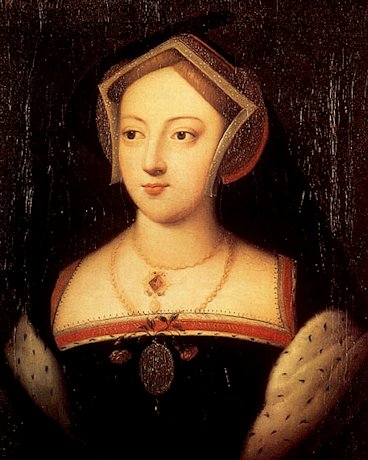
Above: Portrait of a woman thought to be Mary Boleyn, c. 1525.

Philippa Gregory's bestselling novel The Other Boleyn Girl (2001) revitalised fascination with the Boleyn family and in particular Mary, the mysterious and unknown sister of Henry VIII's second queen. Mary Boleyn was the daughter of Sir Thomas Boleyn, born before 1502, and married William Carey in 1520 before briefly becoming Henry's mistress in the 1520s, before his attention turned to her enigmatic and attractive sister Anne. After she was banished from court in 1534 for making a clandestine second marriage, Mary survived the destruction of her family and died in obscurity in 1543 in her early forties.

Traditionally, historians have suggested that Mary was 'an infamous whore' who was the mistress of two kings, Francois I of France and Henry VIII of England. While it seems certain that Mary was indeed Henry's mistress, probably beginning in 1522 and ending before 1525 - Henry himself admitted to the affair and had to secure a papal dispensation in 1527 to marry the sister of a woman with whom he had had sexual intercourse - it is by no means certain that Mary was the French king's mistress. Indeed, historical evidence indicates that Mary never resided at the French court as a teenager.


Above: the Boleyn sisters, Anne (left) and Mary (right).

As Retha M. Warnicke points out, there is no evidence that Mary Boleyn served as a maid of honour at the French court. In 1514, Anne Boleyn travelled to Paris to serve Mary Tudor, queen of France, and later transferred to the household of Claude, wife of Francois I, but there is no evidence that her sister was there. Household accounts documented a 'M. Boleyn', but it seems likely that the 'M' referred to 'Mademoiselle' or 'Mistress', rather than 'Mary'. Contemporaries commented on Anne's presence in France. For example, George Cavendish, gentleman usher to Cardinal Wolsey, stated: 'This gentlewoman, Mistress Anne Boleyn, being very young was sent into the realm of France'. No contemporaries, however, referred to Mary dwelling in France, where she supposedly acquired a reputation for promiscuity and licentiousness.

At the English court, it has been asserted, Mary was best known for her 'reputation in bed' (Lacey Baldwin Smith, 2013) and 'the evidence is overwhelming that Mary had a reputation for sexual improprieties' (Warnicke, 1985). As Alison Weir has thoughtfully demonstrated, however, there is in fact little to no evidence to support these views. Henry VIII's affair with Mary was discreet and secret, and few seem to have known of it. Mary remains a shadowy figure and we know nothing of her thoughts and feelings. How long her relationship with Henry lasted, and whether she truly loved him, is impossible to say. It is, however, certain that she was his mistress for a brief time in the 1520s and quite possibly bore him at least one, if not two, children.


Above: Francois I of France. It is unlikely that Mary Boleyn was ever his mistress.

While Mary was undoubtedly Henry VIII's lover for a time, it is almost certain that she was not the French king's mistress, despite persistent rumours to the contrary. In 1536, the French king informed Ridolfio Pio that he had known Mary in France 'per una grandissima ribalda et infame sopra tutte' - in other words, 'a great whore, infamous above all'. However, Mary never resided at the French court, so Francois cannot have insulted her in relation to her supposed sojourn there in the 1510s. Unlike Anne, who had departed for Europe to acquire a splendid education, Mary remained at home, probably Hever Castle, where she acquired a more traditional education befitting the status of an English gentlewoman.

So what then did Francois mean by his comment? Weir has pointed out that Pio was hostile to the Boleyns. Every member of the family was defamed and attacked by hostile political commentators who resented Anne and the rejection of Katherine of Aragon. Thomas Boleyn was slandered as heretical, grasping and scheming; his wife Elizabeth was defamed as a whore and former mistress of Henry VIII; George Boleyn was cast as a heretic and hedonist; and Anne was consistently portrayed as a whore, murderess, heretic and witch. It is therefore in keeping with this general defamation and slander of the Boleyn family that Mary, too, would have been dishonoured and abused by chroniclers and commentators hostile to their cause. Nicholas Sander, for example, slandered her in his works while abusing and defaming her sister Anne Boleyn. 

It would therefore be ridiculous to accept such comments at face value. It is unlikely that Francois was referring to his own previous experiences with Mary. Possibly, as Warnicke credibly suggests, he only became acquainted with the new Queen of England's sister in 1532, when Mary accompanied Henry VIII and Anne to Calais. Francois may well have learned of Mary's former liaison with Henry and allowed it to cloud his view of her. His comment can hardly be read as admittance of a former relationship with Mary when she supposedly resided at his court as a teenager.

Aside from this one disparaging, insulting comment, there is no evidence that Mary was ever the mistress of the French king. There is no documentation of her stay in France, for the simple reason that she never served at the French court alongside her sister. In 1513, Anne Boleyn departed for Burgundy and later for France to serve in royal households. Her sister Mary, possibly because she was younger or possibly because she was less intellectual and brilliant than Anne, remained at home, before marrying William Carey in 1520. Shortly afterwards, she became the mistress of Henry VIII. We can say with some certainty that she was the lover of the English king, but we can equally be sure that she was never the mistress of his counterpart, the king of France.


Saturday, 19 April 2014

Mary Boleyn in Film and TV


Above: spurned mistress (left) or harlot (right)?
Mary Boleyn in film. 

The elder sister of England's famous sixteenth-century queen, Anne Boleyn, Mary Boleyn was a somewhat obscure figure until the publication of Philippa Gregory's bestselling The Other Boleyn Girl (2001). Two film adaptations were made of that novel: a 2003 BBC production starring Natascha McElhone as Mary, and a 2008 Hollywood film starring Natalie Portman as Anne and Scarlett Johansson as Mary. But Mary has been portrayed in other film and TV productions - this article considers the differing portrayals of Anne's somewhat obscure elder sister, who was, very briefly, mistress of Henry VIII sometime in the early 1520s.

In the 1969 costume drama Anne of the Thousand Days, directed by Charles Jarrott and produced by Hal B. Wallis, Valerie Gearon (above, right) depicted Mary as a bitter, heartbroken and discarded mistress of the king of England who must bear the shame of bearing his illegitimate child. She offers blunt advice to her younger, glamorous sister Anne: "Lock up your heart, Nan". She cautions her that the king will use her and ultimately "walk away". This media portrayal of Mary is interesting, for unlike modern adaptations exemplified in Gregory's novel, there is no sibling rivalry between the two sisters, nor is Mary bland, dull and soft. Anne does, however, characterise her sister as "foolish" and appears to feel she has behaved stupidly with the king. Mary herself appears sensitive and intelligent, but deeply upset and depressed because of the king's ill treatment of her. 

Other TV series and films about the Tudor period and Henry VIII's six wives, in particular, did not feature Mary, including the 1970 BBC series The Six Wives of Henry VIII starring Keith Michell and Dorothy Tutin. By contrast, the publication of Gregory's bestselling novel led to unprecedented public interest in Mary Boleyn. The 2003 BBC adaptation of The Other Boleyn Girl portrayed Natascha McElhone as Mary and Jodhi May as her younger sister Anne. The film differed notably from the novel: Mary was elder than her sister in the film, for example. McElhone depicted Mary as sensible, alluring and loyal to her family. Ultimately, her sense and loyalty ensure that she survives. Her sister Anne, by contrast, is headstrong, giddy and foolish. Anne is extremely out of her depth as queen and publicly shames Henry at court. She decides to commit incest with George, encouraged by Mary, as a means of ensuring Anne's survival, but it ultimately fails. In contrast to both the novel and the 2008 film adaptation, the sisters' relationship with one another is not bitter, cruel or bittersweet. Instead, they appear to love one another.


Above: The Other Boleyn Girl (2003), starring Natascha McElhone as Mary (left) and Jodhi May as Anne (right).

The 2008 film adaptation, starring Natalie Portman as Anne and Scarlett Johansson as Mary, was similar in some respects to the novel but wildly differed from it in other areas. Similarly to the film, the sisters have a complex, turbulent relationship with one another: their love and closeness for one another is expressed at the beginning, when Mary confides in Anne on her wedding night; and at the end, in a highly fictional scene where Mary intercedes for Anne and visits her in prison (this never took place). As with the novel, Anne is scheming, cruel and driven by her own desires; whereas Mary is bland, unambitious, and sweet: in short, the ideal sixteenth-century woman. But the film departs from the novel's storylines in that the king falls for Anne first in the film, but rejects her when she humiliates him and seeks solace in Mary's company; Anne is banished to France in disgrace for her illicit marriage to Henry Percy (another fiction); Anne schemes to marry Henry and steal him from Mary out of revenge for her sister revealing Anne's marriage to Henry Percy (another fiction); and in short, the film is far more about Anne than it is about Mary. Mary, portrayed by Johansson, is insipid, uninspiring and, ultimately, forgettable. It is the hysterical, ambitious, unhinged Anne who lingers in our mind after the film's end. Unlike Valerie Gearon's resolute portrayal in Anne of the Thousand Days, Johansson's Mary emphasises her sexual appeal, but ultimately indicates that Mary is devoid of charisma, wit or ambition.


Above: Scarlett Johansson offered a dull, bland Mary Boleyn in 2008 film The Other Boleyn Girl.

In the BBC and Showtime TV series The Tudors (2007-10), Perdita Weeks played Mary Boleyn, the charismatic, pretty and sensual sister of Anne. In this adaptation, it is unclear which of the Boleyn sisters is older. Unlike The Other Boleyn Girl, in this adaptation the sisters enjoy a warm, cooperative and close relationship with one another. Mary's sexuality is again emphasised: she early on is negatively described as the French king's mare and she informs Henry VIII that she learned how to perform oral sex while at the French court. Soon after, she becomes Henry's mistress. Historians, such as Alison Weir, now doubt whether Mary really was the 'great and infamous whore' in France she has traditionally been depicted as. Viewers, while responding to Mary as a warm, sensual and good-hearted girl, are early on positioned to view her sister Anne as more mysterious, deeper, and ultimately more interesting than Mary. Later, when Anne is queen, Mary marries for love and visits her sister pregnant. She is banished in disgrace, and that is the last we see of her. This series focused less on the Boleyn girls' supposed rivalry with one another and more on Mary's short-livedness as Henry's mistress. In this sense, it can be seen as more historically accurate than The Other Boleyn Girl.

Mary Boleyn has not featured extensively in film and TV, unlike her tragic sister, but the few portrayals we do have of her are fascinating in indicating contemporary attitudes to women's sexuality: Mary's sexuality is her defining quality. After brief success in becoming the king's mistress, it humiliates and ultimately undoes her in Anne of the Thousand Days. In both adaptations of The Other Boleyn Girl, Mary's sexuality is bland and dull: it is safe, and ensures her survival. Anne's sexuality, by contrast, is fatally tied to her destructive ambition: it ultimately consumes and destroys her. In The Tudors, Mary's sexuality is neither dull nor bland, but instead depicted as an inherent aspect of her nature and encouraged at the licentious French court. Weeks' portrayal is ultimately more interesting, and more sympathetic, than that offered in The Other Boleyn Girl.

Thursday, 3 April 2014

Bessie Blount: Henry VIII's True Love?


Above: Portrait of an unknown woman, c.1525, possibly of Bessie Blount.

We are obsessed with Henry VIII's women. To date, at least two books (by Kelly Hart and Philippa Jones) have been published about Henry's loves, and numerous books have been published about his infamous six wives, including by respected Tudor historians such as David Starkey, Professor David Loades and the bestselling Alison Weir. Anne Boleyn is the subject of numerous biographies every year, and historians and writers are increasingly turning their attention to the less famous women he was involved with, including Mary Boleyn (following the success of Philippa Gregory's 2001 novel The Other Boleyn Girl), Jane Seymour and Katherine Howard.

Bessie Blount has long been an important name in accounts of Henry VIII's love affairs. We know that he was involved with at least eight women in the course of his fifty-five year life, including his six wives and at least two named mistresses, Mary Boleyn and Bessie herself. But was Bessie the great love of his life, at least during the fading years of his marriage to first wife Katherine of Aragon? She was certainly prominent as the mother of his only acknowledged bastard son Henry Fitzroy (1519-1536). But after her affair with the king Bessie faded into obscurity. We don't know the date of her birth, we don't know the date of her death, and we can't even be sure what she looked like.


Above: Mary Boleyn was probably Henry VIII's mistress for a considerably shorter time than her predecessor Bessie Blount.
Anne Boleyn - Henry's passion for Anne would of course surpass any feelings held for Bessie.

Bessie Blount was probably born by 1500 to Sir John Blount and Katherine Pershall in Shropshire. Her father was a loyal servant to the Tudors, a fact that probably proved of considerable importance in Bessie's career, for his loyalty to the crown perhaps offered an opportunity for his daughter to become a maiden to Katherine of Aragon, consort of Henry VIII. Bessie had arrived at court by 1514, aged about fourteen, and it seems that she had soon caught the eye of the young king. Beverley Murphy, in her article about Bessie published in Oxford Dictionary of National Biography, relates that Bessie had arrived at court by the end of March 1512. Since maidens usually had to be aged a minimum of thirteen years to serve a queen or high-ranking noblewoman, she must have been born by 1499 the latest. Her beauty has often been commented on, but as no surviving portrait exists of Bessie (the portrait at the top of this article may be of her), it is impossible to verify. In 1529, she was confirmed to be more beautiful than Henry's new love, Anne Boleyn. Since Anne's darkness may have served as a reason why she was not considered more attractive, one could surmise from this that Bessie was more conventionally attractive in terms of her appearance; and so might have been blonde or at least fair.

Bessie was particularly renowned for her skill in music and dancing, two social graces that were considered essential to young women at court hoping to attract a prestigious marriage and enhance their family's fortunes. The king danced with the teenage Bessie at the New Year celebrations of 1514. At some point, he took her as his mistress. What their relationship is like is impossible to comment on. Murphy contends that 'the lack of any concurrent references suggests that their... affair was short-lived'. Perhaps, it is time to revise the long-held view, perpetuated in TV, film and historical novels, that Henry VIII enjoyed romantic liaisons with women such as Bessie and Mary Boleyn. Alison Weir, for example, in her 2011 biography of Mary, contends that her relationship with Henry was hardly the true love story depicted in The Other Boleyn Girl. Like Mary, it is possible that Bessie's affair with Henry was brief and of little importance.

In June 1519, Bessie delivered the twenty-eight year old king a bastard son, Henry Fitzroy. He was later created Duke of Richmond and Somerset and Earl of Nottingham, prestigious titles that infuriated the humiliated Queen Katherine of Aragon, who may have perhaps identified him as a threat to her three-year old daughter Princess Mary. There were later rumours, almost certainly false, that the king planned to marry his bastard to his daughter. Certainly Bessie's son proved that Henry could sire sons, and established, in his mind at least, that the fault lay with the queen for his lack of a legitimate male heir. 

Horenbout HenryFitzRoy.jpg
Above: Henry Fitzroy, bastard son of Henry VIII and Bessie Blount.

By September of that same year Bessie had been married off to Gilbert Tailboys, which Murphy contends was a reward for Bessie because Gilbert was a ward of the crown. Bessie was granted property worth £200 per annum for life and the couple had three children once settled down in Lincolnshire: Elizabeth (born about 1520), George, and Robert. Between 1522 and 1539 Bessie continued to receive grants from the king. Gilbert died in 1530. At this time, of course, Henry was besotted by Anne Boleyn, and so did not consider taking the widowed Bessie as his wife, a move which would have legitimated his son Henry.

Bessie's role in her son's upbringing is uncertain, although records indicate that she made regular gifts to him, including a doublet and two horses in 1531. A letter of hers to his tutor John Palsgrave survives, which perhaps 'suggests that her involvement in the duke's upbringing was greater than has been generally allowed'. (Murphy) By 1535, Bessie had remarried. Her husband was Edward Fiennes de Clinton, who later became first earl of Lincoln. Bessie delivered three more daughters: Bridget, Katherine, and Margaret. However, misfortune struck Bessie in 1536 when her seventeen-year old son Henry Fitzroy died. It was a grievous blow and the king may have been profoundly affected by it, coming as it did two months after Queen Anne's execution. Henry had hinted that he believed his late wife had poisoned both the duke and his daughter Mary.

Bessie later served as lady-in-waiting to Anne of Cleves but ill-health prevented her from serving Anne's successor Katherine Howard. She died sometime between January 1539 and June 1541, aged probably in her early forties. As Karen Lindsey comments, Bessie's relative importance is negligible contrasted with the importance of Katherine of Aragon and Anne Boleyn, but she was certainly more significant than any of Henry's other mistresses including Mary Boleyn, in that she delivered his only known bastard son who was, at once point, perhaps considered by the king as a possible heir to the throne. 

What Bessie's personal relationship with the king was like is impossible to say with certainty. Perhaps she enjoyed a romantic relationship with him that lasted several years, or perhaps it was a brief interlude following on the heels of his increasing disillusionment with Katherine of Aragon and occurring shortly before his involvement with the Boleyn women. But the king certainly appears to have valued her, especially since he continued bequeathing her gifts during her later life and allowing her to be involved in her son's upbringing. Bessie certainly enjoyed a more fortunate career than some of Henry's other women, for she married twice, bore several children, enjoyed relative wealth and prosperity, and lived to what would be viewed in the Tudor period as a good age. Fortunately for her, it was not her fate to be discarded, divorced, rejected, or beheaded.


Friday, 28 June 2013

Why Do We Hate "The Other Boleyn Girl"'s Anne Boleyn?


Above: Natalie Portman as Anne Boleyn in The Other Boleyn Girl (2008).
A late sixteenth-century portrait of Anne Boleyn from a lost original; artist unknown.
Were they really so different...?

Those who are serious about Tudor history often view Philippa Gregory's bodice ripper of a novel, The Other Boleyn Girl (2001), with little more than contempt, dismissing the book curtly and cuttingly. Susan Bordo, who has recently written an intriguing book on Henry VIII's infamous second wife, The Creation of Anne Boleyn, states categorically: 'many of the details, and indeed the whole premise of the book, cannot be defended as anything other than pure imagination'. Claire Ridgway, of The Anne Boleyn Files, warns her readers that 'The Other Boleyn Girl is not a factual retelling of Anne Boleyn's life or even that of Mary Boleyn... there are many, many inaccuracies in the book, along with fallacies and story-lines that have no factual basis'. The late Irene Rheinwald, a historian of Anne Boleyn, complains: 'I have no idea how this travesty was foisted upon an unsuspecting public with such extraordinary success'.

Surely it's obvious, first and foremost, that the novel is just that: a novel. It is fiction. Perhaps historians and researchers get far too worried that the general public cannot tell the difference between a novel and a serious academic study. Anyone with an ounce of sense would recognise the sheer melodrama in this book, the exaggerations, and above all the very prominent distortions. The film, of course, was even worse. But, hang on a second. Isn't The Tudors just the same - fiction? And yet that TV series has been sensationally popular amongst the general public, and has not nearly been as condemned by historians and researchers as The Other Boleyn Girl. Indeed, Gareth Russell likens it, when comparing it to Philippa Gregory's novel, to a historical documentary. But The Tudors is also rife with errors and misconceptions. At least the women in The Other Boleyn Girl dress like Tudors, which is more than can be said for The Tudors.

It is possible that historians and Tudor writers are so resentful and emotional when it comes to The Other Boleyn Girl, it will be suggested here, because the portrayal of Anne Boleyn is simply what they do not want to see, they cannot accept that Anne was ever like that. An article in The Guardian questioned why Anne was presented as nothing more than 'a scheming trollop'. Writers castigate Gregory for presenting an Anne Boleyn who is sadistic, cruel, vain, ruthless, ambitious, scheming, spiteful, arrogant, and merciless. The one-dimensional characterisation is, for many, completely unconvincing and downright insulting. Historians take serious issue with such presentations of Anne. Retha M. Warnicke, in her study The Rise and Fall of Anne Boleyn, (who ironically Gregory relies heavily on for her novel), bemoans how simple gender stereotypes and hostility towards women in the Tudor period encouraged dark portrayals of Anne Boleyn, presenting her as a murderess, witch and adulteress, which have endured to the present day.

The book has serious flaws, and writers are right to point out the numerous errors and the wild storylines. The rivalry between Anne and Mary, for instance, is certainly exaggerated and distorted; in reality, the two girls were separated as teenagers when they went abroad to serve European queens and probably had little to do with one another thereafter, until a very public fall out when Mary married beneath her in 1534. The story line of incest between Anne and George is similarly wild and inaccurate, as is the portrayal of the Boleyn family, the heavy emphasis on witchcraft and sorcery, and the suggestion that Anne was involved in poisoning her enemies.

But the simple fact is this: Anne Boleyn lived almost 500 years ago. As with all controversial personalities, every source which is concerned with her life is unquestionably biased, reflecting the author's own religious and political interests, and, above all, how they perceive women. Gender stereotypes filter to us through sources produced in the Tudor age. If one follows the Protestant tradition preserved by writers such as John Foxe, Anne Boleyn was a highly virtuous, religious, and charitable queen who was blessed by God and personally selected by Him to marry Henry VIII and lead him away from superstition and corruption embodied by the Catholic Church. She thus fulfilled God's mission in leading to the break from Rome. Capping off her sensational success, Anne then gave birth to the ultra Protestant queen, Elizabeth I. For Protestants, Anne could no wrong, and her very name symbolised virtue and goodness, although these writers carefully avoided the issues of Anne's downfall and execution on charges of adultery, incest, and treason.

Catholics, however, wrote very differently about Anne. Eustace Chapuys, Spanish ambassador at Henry VIII's court during the time of Anne Boleyn, presented a monstrous portrayal of Anne. Referring to her consistently as 'the concubine' or 'the whore', Chapuys perceived Anne to be cruel, vicious, avaricious, scheming and immoral, and held her personally to blame for the ill-treatment of her stepdaughter Princess Mary, and suspected that not only had she bewitched Henry VIII, but had also poisoned Katherine of Aragon. This tradition was preserved in Nicholas Sander's notorious account, which suggested that Anne was actually the daughter of Henry VIII (and so eventually married her own father), and presented her as physically deformed, believing her to be a witch and evil sorceress who had enchanted the King and inflicted evil on the kingdom of England through causing a schism with the Roman Church. Other Catholic writers, such as the anonymous Spanish author of The Chronicle of Henry VIII, depicted Anne as immoral and licentious, taking numerous lovers behind her husband's back. These Catholic accounts, obviously, are very similar to Gregory's portrayal of Anne in The Other Boleyn Girl.

Because of the inherent bias, the political, social and religious agendas, and the persistent prevalence of simple gender stereotypes, it is impossible to know what Anne Boleyn was like. People are rarely black and white, and so it is certain that the real woman was a lot more complex and multifaceted than either Catholic or Protestant writers allow.

It is necessary to recognise the situation Anne was in. The king first proposed marriage to her in 1527, but she only married him in 1533, six years later, aged 32. She was under extreme stress, facing European powers who personally detested her and revered Katherine, and subjected to unrelenting hostility from the English people, who insisted that she was both a whore and a witch. I am wholly unconvinced that Anne Boleyn was nothing more than the almost perfect, submissive, idealistic and wholly religious woman presented by both Protestant writers in the reign of her daughter Elizabeth, and favoured in serious historical works written by Warnicke and Joanna Denny. As Jenny Wormald rightly writes in her scathing criticism of Warnicke's book, it is quite an achievement, 'to make Anne Boleyn a bore'.

Taking into account the very real hostility and hatred directed towards powerful women in the sixteenth-century, the references in letters written by courtiers, including both Anne's cousin and Cardinal Wolsey, to Anne's 'displeasure', means that it is NOT simply Chapuys who presents a woman who clearly had a temper. While Alison Weir might be slightly overstating her case in characterising Anne as 'an ambitious adventuress with a penchant for vengeance', and David Starkey singularly exaggerating in describing Anne as a 'brutal' predator who hunted down her 'prey', the Anne Boleyn of The Other Boleyn Girl might not be as far from the truth as we might like to think.

Anne was surely not a poisoner. She did not engage in murder; she did not tempt her brother with incest; she did not inflict misery and cruelty on her sister and relatives; nor did she use witchcraft to preserve her power. These are the real problems with The Other Boleyn Girl. But, if one looks critically and sceptically at sources preserved by the likes of Chapuys, which can to an extent be supported with other contemporary sources, and if one bears in mind the very real stresses and problems which plagued Anne and took on a toll on her for over six years, it is quite likely that she could be aggressive, highly strung, cruel and ruthless.

Anne Boleyn was certainly not 'a bore'. Nor was she perfect, saint-like, in fact. But neither was she the heartless poisoner, sorceress, and adulteress preserved in Catholic works. But it is quite possible that, in terms of her personality traits, The Other Boleyn Girl's Anne is not as far from the truth as we believe.

Friday, 18 January 2013

Mary Boleyn


Left: Scarlett Johansson as Mary Boleyn in The Other Boleyn Girl (2008).
Right: Unknown woman, c.1525, possibly Mary Boleyn.

I was drawn to writing this blog post after reading a fascinating article by Gareth Russell entitled 'Why do we care about Mary Boleyn?' It would be fair to say that since the publication of Philippa Gregory's highly successful, if scandalously inaccurate, novel The Other Boleyn Girl in 2001, Mary has evolved into something of a historical celebrity. She represents feminism, love and bravery to many women who enjoy this period, although others continue to view her dubiously as someone who was, essentially, highly ordinary, and has only become known due to this successful book. Only a handful of her letters survive, we don't know what she looked like, when she was born, her relationships with her siblings or the nature of her childhood experiences. Rumours circulated that she was a 'great and infamous whore', but modern historians, such as Alison Weir, have questioned whether Mary was really the sexually-charged prostitute she is so often depicted as being.

Mary was probably the eldest child born to Sir Thomas Boleyn, a highly successful diplomat at Henry VIII's court, and his highborn wife Lady Elizabeth Howard. When they married is unknown, but it was before 1501 since Elizabeth's jointure was settled on her in November of that year. It is likely that Mary was born around 1500. She had a younger brother, George (born around 1504), and her infamous younger sister Anne, born either in 1501 or in 1507. Mary's appearance is unknown; she is often portrayed as being blonde, pale-skinned, blue-eyed and provocatively sexual. Rumours that she was more beautiful than Anne should be looked at sceptically, but if she attracted two kings Mary must have possessed some charm and physical attractions. Probably born at Blickling Hall, Norfolk, Mary was afforded the splendid opportunity of becoming maid of honour to Mary Tudor, queen of France, in 1514, when she was aged around fourteen. Apparently at the French court, she attracted a reputation of wantonness; some historians suggest that King Francis referred to her as 'the great prostitute' or a 'whore' who he boasted of riding. Leading many to conclude that Mary was at one point the French King's mistress, Weir has questioned whether Mary was really flighty, sceptically looking at these sources and suggesting they were written by those hostile to the Boleyns. Since Francis was a notorious womaniser, he may have been merely representing the prevailing gender beliefs of his time, in an age which identified women as sexually licentious and prone to seducing men when given the chance.

What happened to Mary next is something of a mystery, with some speculating that she returned to England. Her family afforded her a successful marriage to Sir William Carey, a courtier who served Henry VIII, in February 1520. Portrayed in The Other Boleyn Girl as colourless, dull and manipulated by her family, Mary's marriage to William may not have been a love marriage, but it is likely that she had  two children with him, Katherine (b. 1524) and Henry (b. 1526), both of whom later became favourites of their cousin, Elizabeth I. However, some historians - and Gregory portrays it in her novel - suggest that one, or both, children were fathered by Henry VIII, since it is likely that Mary became his mistress somewhere around 1522. The relationship was almost certainly not the great romance it is so often portrayed as being. Weir contends that Mary was manipulated by both her family and the king, while those who served the Pope later suggested that she had been violated, or raped, by  the King. Her husband achieved excellent rewards, probably due to his own capabilities, but his wife's pleasing nature may also have helped. How Mary we felt about this - we don't know. Her thoughts, feelings and beliefs are shrouded in mystery.

In 1526, Mary was, famously, replaced by her charismatic younger sister Anne, who attracted the king. However, unlike Mary, Anne famously refused to become his mistress; whether she actively tempted the king into annulling his marriage to Queen Katherine of Aragon or whether it was based more on his intense desire for a male heir is a matter of notorious dispute between historians. The Boleyn family gradually enjoyed greater and greater success in the late 1520s, with Anne's father becoming an earl and her brother, George, being made a viscount. Mary, however, enjoyed no such rewards. One historian speculates that she became a 'pariah', or embarrassment, to the Boleyn family. She certainly experienced some tragedy in 1528, when her husband William died from the sweating sickness. The 2008 film, with Scarlett Johansson, does not depict this. However, the novel suggests that the two may have enjoyed greater affection and intimacy after Mary was discarded by the king.

After that, not much more is known of Mary. She accompanied Anne to France in 1532, when she entertained the French king - the one who may have boasted of Mary's sexual nature. However, a shocking event occurred in 1534, when Mary, perhaps revealing her determined personality, finally took matters into her own hands. Aged around thirty-four, she married William Stafford, a man of little wealth or lineage, and became pregnant by him immediately. Unfortunately, Mary was forced to reveal this scandalous secret to her sister, who was by now Queen, and Anne understandably reacted with fury and outrage. Not only had Mary married a mere commoner, a highly unsuitable match for a woman who was not only a relative of the powerful Howard family but sister to the Queen herself, but she had not asked royal permission to marry which, as a member of the royal family, she needed to have. Anne banished Mary from court straightaway. This is where The Other Boleyn Girl really frustrates me. Anne, probably, never saw Mary again. So realistically, the book should end there. But no, it portrays Mary as running back to court to serve Anne when Anne begins to suffer mental breakdown after mental breakdown. Readers should note that this never happened. Anne was so shocked at her sister's behaviour that she never saw her again.

Mary's new marriage appears to have been affectionate. However, any children she had by Stafford seem to have died young. They probably retired to the country, although Weir suggests that they actually moved to Calais and resided there until some years later, which I find difficult to believe. Tragically, Mary's siblings, George and Anne, were both executed on trumped-up charges of treason, adultery and incest in May 1536. How Mary reacted to this is impossible to say, but she was probably shocked at the very least, although there is NO evidence - contrary to the book - that she was ever particularly close to her siblings. Her daughter, Katherine, went on to serve Henry's fourth queen Anne of Cleves in 1540, and then her cousin Katherine Howard, before Katherine Howard was executed on similar charges to Anne Boleyn in 1542. Mary died in July 1543, aged around forty-three. What she died of we don't know. Her burial place, similarly, remains a mystery.

It can therefore be concluded that Mary's life is a mystery. We know almost nothing of her, save that she was the sister of a Queen, the wife of a successful courtier, and the aunt of Elizabeth I. The Other Boleyn Girl needs to be recognised for what it is - highly mythologised, romanticised fiction. Philippa Gregory has declared Mary to be her hero, but as Russell bluntly and scathingly points out:

"Why on earth should Mary Boleyn qualify as anyone's historical heroine, out of all the hundreds of magnificent women who have peopled the pages of history? One need not look too far in Mary Boleyn's own gene pool to find women who actually did something with their lives. In contrast, the historical Mary Boleyn did absolutely nothing unremarkable, either by the standards of her own generation or ours".

I have to agree with Gareth Russell. If it wasn't for the widespread success of Philippa Gregory's novel, I doubt that anyone would even be vaguely aware of who Mary Boleyn was, let alone idolise and romanticise about her. The fact is, nothing can be known of her. She was almost certainly not as charming, intelligent, religious, influential, charismatic or mesmerising as her sister Anne. All that she is known for, sadly but truthfully, is for being a whore, the mistress of two kings.

Alison Weir has debated and challenged this view of Mary. Her counterarguments are largely successful - Mary probably wasn't the 'great whore' she is so saliciously depicted as being. But the problems are that in going against history and portraying Mary as a naive innocent, the tool of her family, Gregory dehumanises her sister Anne Boleyn, depicting her as a witch, murderess, adulteress, and poisoner. And this is supposedly from a feminist writer. Surely if she was a true feminist Gregory would applaud Anne for being a strong, ambitious woman who sought to make something of herself in a male-dominated world. But no, she doesn't, and as I wrote on my Amazon review, she betrays both Boleyn girls. I think both Anne and Mary would be shocked and offended at how they're portrayed in her novel.

The film, produced in 2008, is even worse. All of  the actors - none of whom are British, by the way - admitted to reading nothing but the novel as part of their research. Natalie Portman even admitted she didn't identify with Anne Boleyn at all. Contrast this with the incredible Natalie Dormer, who portrayed Anne in The Tudors (2007-10), who read book after book about Anne Boleyn, and even condemned the producers for the way they were presenting her in the series (!) because she was so determined not to betray her historical heroine. The Other Boleyn Girl smacks of laziness, contempt, and a desire to make Anne a scapegoat, and her sister a heroine. Those who know better will scorn the laughable attempts in this work to do so. The sad fact remains this - contrary to Gregory's attempts, Anne is the charismatic queen adored, even idolised, by many today and seen as a romantic victim, and not as the murdering whore portrayed in the novel, while her sister Mary, far from being a heroine for modern English women, is seen at best as colourless and unremarkable and at worst as a woman of very dubious sexual morals.

Saturday, 1 December 2012

Tudor Portraiture - or the game of Guess the Sitter

Tudor portraiture is notorious in leading to frequently incorrect identifications of sitters who were almost certainly not the sitter actually painted. Yet portraiture is highly influential in our interpretations of these supposed sitters' lives, careers, choices, and actions. Drawing upon four specific case studies here, this article considers why and how Tudor portraits are incorrectly identified, and how these incorrect identifications inform our interpretations of Tudor personages.


A portrait of Mary, Lady Dacre and her son Gregory; often mislabelled as Frances Brandon, duchess of Suffolk and the mother of the 'Nine Days Queen' Lady Jane Grey, and her second husband Adrian Stokes. This portrait has proved fundamental in leading to misguided views of Frances as being a cruel woman who bullied her daughter, due to the sitter's fierce characteristics.

This article begins with Frances Brandon (1517-1559), duchess of Suffolk by right of her marriage in 1533 to Henry Grey, marquis of Dorset and later Duke of Suffolk, niece of Henry VIII, king of England, and mother of Jane Grey, later queen of England (c.1537-1554). Frances lived a remarkable life, yet her reputation has been slandered over the course of history due to the view of her being a cruel, spiteful woman who frequently bullied her daughter Jane, often violently, which is still conveyed in modern works (Alison Weir's fictional Innocent Traitor often portrays Frances violently hurting Jane both physically and psychologically). This myth occurred at the beginning of the eighteenth century, acting in parallel with the depiction of Jane Grey as a Protestant martyr who died for her religion at only seventeen years old, executed on the orders of a vengeful queen, her own cousin Mary I. 

In view of this, a portrait of Lady Mary Dacre and her son Gregory - actually painted the year Frances died, 1559 - was relabelled as Frances Brandon and her second husband, Adrian Stokes, whom she married following the execution of her first husband Henry Grey as a traitor. Supposed similarities between the sitter's features and that of her uncle, Henry VIII, were drawn to emphasise the duchess' cruel, domineering nature. It has, furthermore, been deduced that Frances and Henry physically mistreated Jane in her childhood, due to something Jane informed her tutor, Roger Ascham, as a child:

"For when I am in presence of either Father or Mother, whether I speak, keep silence, sit, stand or go, eat, drink, be merry or sad, be sewing, playing, dancing or doing anything else, I must do it, as it were, in such weight, measure and number, even so perfectly as God made the world, or else I am so sharply taunted, so cruelly threatened, yea, presently sometimes with pinches, nips and bobs, and other ways, (which I shall not name, for the honour I bear them), so without measure misordered, that I think myself in hell". 

This passage, of course, needs to be viewed critically, particularly because this passage was only recorded much later after the actual events, and Jane's tutor Ascham actually praised her parents in an earlier letter. Furthermore, since the Victorian period, a more balanced appreciation of the character of Lady Jane Grey has developed. Rather than viewing her as a perfect child martyr, innocent and passive, as the Victorians did, historians have regarded her more critically, and while recognising her intelligence and determination, have also suggested that she was a proud, stubborn, narrow-minded, even arrogant  young woman. Frances, conversely, in contemporary sources was noted for her goodness and kindness to friends. 

We can therefore see how an incorrect identification of a sitter in a Tudor portrait can develop or intensify myths and legends surrounding that personage. Because Lady Dacre is depicted as unfriendly, cold, even ruthless, this was deployed by those who believed that it was actually a portrait of Frances, duchess of Suffolk to present her as a domineering woman who was prone to physical violence. This myth needs to be recognised for what it is: a myth.


Left: Katherine Howard, Elizabeth Seymour, or another Tudor woman? For centuries, controversy has raged as to who this sitter is.
Right: Angela Pleasance as Katherine Howard in The Six Wives of Henry VIII (1970).

No less important than the portrait of 'Frances Brandon' in informing interpretations of Tudor personalities is that of a portrait supposedly depicting Katherine Howard, queen of England. Identified as being the tragic queen c. 1898 and furthered by the renowned biography of the queen by Lacey Baldwin Smith (1961), this portrait has widely been used to put forward arguments surrounding Katherine's birth date, thus influencing our views surrounding her childhood, her personality, and the nature of her sexual relationships. Baldwin Smith arguably used this portrait to support his view of Katherine as 'a juvenile delinquent'. Recently, the identification of this sitter as Queen Katherine has been challenged, notably by Lady Antonia Fraser in her biography of the six wives of Henry VIII (1992). She identified this portrait as actually depicting Elizabeth Seymour nee Cromwell, younger sister of Queen Jane Seymour; strengthened by the fact that this portrait was housed in the collection of the Cromwell family.

While agreeing with Fraser that this portrait is not Katherine, in view of the fact that it does not match up either with notions of the queen's age or her physical appearance, I disagree that it represents Elizabeth Seymour. There are several reasons for this. Firstly, as has been recognised, at least three versions of this portrait exist. The sitter was therefore far more important than the daughter of a knight, as Elizabeth was. Whoever this woman was was clearly of noble, if not royal, rank. Secondly, we do not know when Elizabeth was born, but if it was around c.1511, as has been suggested, the sitter cannot be her, because this portrait dates to the mid to late 1530s or the early 1540s, when Elizabeth was likely in her mid twenties, not aged 21, as the sitter's age is. As Janet M. Torpy stated, "a necklace, rings, a brooch bearing the Biblical story of Lot, lace, and golden embroidery all signify extreme wealth and the appropriate piety and purity". It is entirely likely that this portrait actually depicts another royal woman, of which there are no less than four possible candidates in this period: the king's daughter Mary Tudor (aged 21 in 1537), Lady Margaret Douglas, his niece (aged 21 in 1536), or either of the king's Brandon nieces, Frances (aged 21 in 1538) or Eleanor (aged 21 in 1540). 

But this portrait, like the one thought to be of Frances Brandon, has informed interpretations and representations of Katherine Howard, whom it was commonly thought to portray for a long period of time. In the television series The Six Wives of Henry VIII (1970), as depicted above, Angela Pleasance, in her appearance as Queen Katherine, is clearly shown wearing a costume based on the dress worn by the sitter in this portrait. Her portrayal of Katherine is as a hedonist teenager who selfishly manipulates Thomas Culpeper to impregnate her, while she is seen to use physical violence against her cousin and is given to hysteria. This portrait was fundamental in Baldwin Smith's interpretation of Katherine as an older, knowing girl who firmly held the upper hand in her relationships and was prone to manipulating her lovers. Yet as my research has indicated, she was probably somewhat younger than this portrait suggests.
This portrait has also led to historians suggesting that Katherine was not as beautiful as legend indicated that she was. This can be refuted, since there are at least three contemporary statements which suggest that the queen was uncommonly attractive; one Spanish citizen gushingly stated that she was the most beautiful woman 'in the kingdom'. This does not support the notion that the woman in this portrait is of the queen.


Left: a portrait inscribed as being Anne Boleyn, 1530s.
Right: unknown woman. Identified as being Anne Boleyn by Roy Strong, yet others have identified this woman as being another of Henry VIII's queens, either Katherine of Aragon or Jane Seymour. Alison Weir suggests convincingly that it shows Mary Boleyn, Anne's sister.

Thus we can strongly see that portraiture is highly influential in guiding assessments and interpretations of Tudor personages. It seems unsurprising, therefore, that this is arguably best illustrated with the case of Anne Boleyn. The two portraits above have both been identified as showing the second queen of Henry VIII - despite the fact that neither bears any resemblance to contemporary descriptions of the queen. 

The sitter on the left was identified by noted Tudor historians David Starkey and John Rowlands as a contemporary likeness of Anne Boleyn. This has resulted largely from a hostile account of Anne at her coronation in 1533, which described the queen as having a fat, even disfigured, neck, resulting from a swelling which she then tried to conceal at her coronation. Further problems arise from the fact that this woman is blonde, whereas Anne was, famously, dark. This woman clearly wears a nightrobe, while the somewhat plain, rounded face bears little resemblance to contemporary reports of Anne as being narrow-faced, with high cheekbones. Yet, again, a misidentified portrait has been used to promote interpretations of its supposed sitter. Here the case seems to be that hostile accounts which vilified the queen should be regarded as historically accurate, or at least not as wild in their claims as historians have conventionally supposed. 

The portrait on the right epitomises the game of 'Guess the Sitter' in Tudor portraiture. To my knowledge, there has been no less than four sitters put forward. Originally identified as being of Henry VIII's first queen, Katherine of Aragon, this was ruled out by the fact that the portrait was painted in c.1525, when Katherine was aged forty, yet the sitter is twenty-five. This also rules out another identification of the sitter as being Jane Seymour, who was twenty-fine in c.1533 and so comes too late after this portrait was painted. Roy Strong, however, suggested that it depicts Queen Anne. There are, again, problems here. The sitter is blonde, while Anne Boleyn did not come to public attention until 1527, when the king proposed marriage to her. In 1525-6 she was a maid of honour to Queen Katherine, and so was not important enough, in a sense, to be painted in a portrait miniature. It is more likely to portray Mary Boleyn, Anne's older sister, who gave birth to a son - possibly the king's - in 1525; if one supports the view that she was born around 1499, this may tentatively be said to present Mary Boleyn. 


Above: a portrait identified as being Thomas Boleyn, earl of Wiltshire and father of Anne. Recently, however, it has been argued that it actually depicts James Butler, 9th Earl of Ormond.

Developing the game of 'guess the sitter', the portrait above has often been cited as a likeness of Thomas Boleyn, Earl of Wiltshire and father of Anne. Indeed, we can see how this has informed interpretations of the earl's physical appearance and supposed resemblance to his daughter Anne, as seen in Joanna Denny's biography of the queen published in 2004. Denny suggests that Anne Boleyn was not dark, as is often believed to be the case, but was actually fair in her complexion, while having auburn, as opposed to black, hair, on the basis of this portrait showing 'striking' similarities between father and daughter. However, this is almost certainly untrue, since historian David Starkey has indicated that it portrays James Butler, not Boleyn. As Starkey notes, there is "an utter dissimilarity between the Windsor drawing [of Boleyn] and Boleyn's superb tomb brass". Once again, we have been deceived as to the real sitter of a Tudor portrait.


Above: Lady Jane Grey or Queen Katherine Parr?

A portrait above shows a superbly dressed noblewoman, dated to the early-to-mid 1540s. It was initially identified as portraying Lady Jane Grey, England's first queen regnant, in 1965 by Roy Strong. This occurred due to Strong's perception of similarities between this portrait and an engraving of Jane published in 1620. Yet, as Susan E. James has convincingly suggested, the portrait actually portrays Katherine Parr, sixth queen consort of Henry VIII. This seems all the more convincing since Katherine was queen in the period 1543-1547, when this portrait was executed, and since Lady Jane was born in around 1537, she would have been only eight years old, or thereabouts, when this woman sat for  the portrait. This is clearly not a portrait of an eight year old girl. The fact that this sitter wears jewellery which other queen consorts of the period, such as Katherine Howard, adorned, indicates that it represents Katherine Parr, who would have obtained this jewellery in her right as queen. Yet, once again, a misidentification of a portrait has influenced judgements about the sitter. Frequently, this portrait is advertised in both written works (ie books) and online as showing the tragic Nine-Day queen. It probably represents her one time great-aunt, Katherine.

Tudor portraiture is therefore precarious. Whether one uses it as a source in interpretations or not, it must be carefully scrutinised before making grandiose claims. The game of Guess the Sitter is, unfortunately, a very frequently occurring one in terms of Tudor portraiture, yet it serves to show how mysterious and yet compelling this period continues to remain.