Showing posts with label henry grey. Show all posts

Friday, 12 February 2016

Remembering Lady Jane Grey


On 12 February 1554, Lady Jane Grey was executed within the walls of the Tower of London. Three months earlier, she and her husband Guildford Dudley had been found guilty of high treason. They had unlawfully usurped the throne from the rightful queen, Mary I. Traditionally, historians presented Lady Jane as an unwilling innocent, a much wronged young girl who had no desire whatsoever to be Queen of England. Recent research has disproved this legend. In actuality, Lady Jane was an intelligent, stubborn and resilient woman who was fiercely devoted to her Protestant faith. She regarded herself as appointed by God to rule England, and she likely regarded her Catholic cousin Mary Tudor as ungodly, even abominable in the eyes of God. He had chosen Jane to be Queen, and she believed it was her destiny to be sovereign of England.

Having been selected as Edward VI's heir, Jane was proclaimed queen in July 1553. As is well known, Jane's regime collapsed within days, and Mary was declared queen on 19 July. Jane's trial followed in November, and although she and her husband were found guilty, Queen Mary showed no desire to have them put to death. However, the outbreak of rebellion in early 1554, motivated by dislike of Mary's decision to marry Philip of Spain, coupled with the decision to reinstate the medieval heresy laws, sealed Jane's fate. Her own father was involved in the plot against the queen, and he followed Jane to the scaffold a few days after her own death. A courageous and resourceful young woman, Jane accepted her fate and bravely prepared for death.

Above: The traditional view of Lady Jane Grey, as portrayed in Paul Delaroche's nineteenth-century painting, as a wronged innocent.

Guildford Dudley was executed on the morning of 12 February 1554 on Tower Hill, where his father, the duke of Northumberland, had died the previous August. Guildford was himself still a teenager, perhaps no more than nineteen years old, and has been the victim of notable slanders. Modern historians have usually depicted him as a snivelling, weak-willed and vicious adolescent, loathed by Jane, but Leanda de Lisle's research questions whether this portrayal is accurate, as no contemporary source describes Guildford in such a negative way. Whatever the truth of Guildford's character, his end was tragic. Like Jane, he was the victim of his father's plotting, and he duly resigned himself to his fate. His wife was confronted by the sight of her husband's headless corpse, the fabric stained with his blood, returning on a cart from Tower Hill. She knew that her own demise was imminent.

Shortly afterwards, around ten in the morning, Lady Jane Grey walked out of her apartments and mounted the scaffold that had been built within the walls of the Tower. Onlookers commented on her braveness and her piety. Two versions of her scaffold speech survive, both of which confirm that she acknowledged that she was to die under the law, having been condemned by it. She confirmed that she had offended the queen and had behaved unlawfully. Most importantly, particularly for her posthumous reputation, Jane proclaimed that she died a true Christian woman, and looked to be saved only by Christ's mercy. This confirmed her commitment to the Protestant faith, for Catholics traditionally believed that good works also played an important part in one's salvation. She then asked the onlookers to pray for her.

Above: Queen Mary I, who ordered her cousin Lady Jane Grey's execution in February 1554.

Lady Jane's female attendants then helped her off with her gown and gave her a handkerchief to use as a blindfold. Groping about in the dark, she could not find the scaffold, and cried, "Where is it? What shall I do?" Someone came forward to guide her and she rested her head upon the block. Mercifully, she was decapitated with one blow, probably just a few months short of her seventeenth birthday. Her remains were interred in the nearby chapel of St. Peter ad Vincula. With her passing, Lady Jane Grey's story became the stuff of legend. In Protestant works, most notably John Foxe's Book of Martyrs, she was depicted as a pious, virtuous Protestant maiden who had died for her faith, condemned by the cruel Catholic tyrant, Mary I. Victorian historians depicted her as an innocent victim of her grasping, scheming family, and portrayed Jane's mother, Lady Frances Brandon, as a tyrannical woman and an abusive mother. Modern historians have usually followed this version of events. But modern research has demonstrated that reality was more complex. Lady Jane Grey was far more than merely an innocent child, and there is no contemporary evidence to suggest that Frances was cruel to her daughters.

Lady Jane Grey remains, in many respects, a mystery. Her beheading was the first of several calamities to befall the Grey family. Her father followed her to the scaffold only eleven days after her own death; like her, he was executed as a traitor to his queen. In spite of this, Jane's mother, Frances, remained close to Queen Mary, and her younger daughters Catherine and Mary were resident at court. However, Elizabeth I's accession proved to be the final undoing of the Grey family. While she did not behead either of the Grey sisters, as Mary had done, Elizabeth had both Catherine and Mary Grey imprisoned for their clandestine marriages, and the distraught Catherine died in 1568 while still in her twenties, deprived of her husband and children. Mary followed her to the grave ten years later, her own husband having predeceased her. Lady Jane Grey's story has been represented as a great tragedy, but her younger sisters were as much victims of their birth as she was.

Wednesday, 27 January 2016

The Death of Lady Catherine Grey


Above: Portrait of Lady Catherine Grey and her son Edward Seymour.


Even by sixteenth-century standards, the demise of Lady Catherine Grey, countess of Hertford, was tragic. On 27 January 1568 (some sources suggest the 26th), the middle daughter of the disgraced Henry Grey, duke of Suffolk died at Cockfield Hall in Suffolk at the age of twenty-seven. There has been considerable speculation about the cause of the countess' untimely death. Some have suggested that she died of tuberculosis (then known as consumption), while others have speculated that she had starved herself to death. Whatever the cause, Lady Catherine's death was greeted by her cousin Elizabeth I with relief, perhaps even joy, for it removed a serious threat to Elizabeth's throne. 

In many respects, Catherine was a victim of her inheritance. Her mother was the daughter of Mary Tudor, queen of France, and niece of Henry VIII. Catherine was therefore Henry's grandniece and was probably named for his fifth wife, who married Henry in 1540 (Catherine Grey was born in August of that year). In 1553, at the age of only twelve, Catherine's world fell apart. Her elder sister Jane was nominated heir to the throne by their cousin Edward VI and, following his death in July, Jane was proclaimed Queen of England. Few accepted her accession, however, and Jane's regime collapsed when Mary Tudor successfully claimed the throne. Jane was imprisoned alongside her husband Guildford Dudley, who like her was probably no more than sixteen or seventeen years old. Queen Mary refused to order her cousin's execution despite considerable pressure from the Spanish envoys. However, following the outbreak of rebellion in early 1554 - motivated in large part by antipathy to the queen's proposed marriage to Philip of Spain and the anticipated restoration of the Catholic religion - Mary decided to have Jane and Guildford executed. Catherine's father Henry Grey followed Jane to the scaffold eleven days later, following his treasonous involvement in the rebellion.

Catherine, therefore, had suffered considerably by her early teenage years. Her father and sister had both died a shameful death, and she would have grown accustomed to her position as the member of a traitorous family. Popular history has portrayed Catherine's mother, Frances, as a tyrannical, cruel woman who bullied her daughters; however, there is no evidence of this, and it seems that both Catherine and her younger sister Mary were close to their mother. Frances died in 1559, a year after Elizabeth I came to the throne.

Edward Seymour, Earl of Hertford, Attributed to Hans Eworth (1515 - 1574).jpg
Above: Edward Seymour, earl of Hertford.

Elizabeth's accession complicated Catherine's life. According to Henry VIII's will, Catherine was Elizabeth's heir presumptive and, given the queen's unwillingness to marry and have children, Catherine stood a very real chance of becoming Queen. This fact was not lost on English Protestants, many of whom placed their hopes in Catherine and looked to her as their future monarch. Foreign rulers were also interested in Catherine, including Elizabeth I's former brother-in-law Philip of Spain. Rumours circulated that Philip was intending to have Catherine spirited abroad and married to his son. 

These rumours were regarded with fear and resentment by Queen Elizabeth. Some historians have speculated that she personally disliked Catherine. Undoubtedly she feared her as a potential claimant to her throne, and the queen would never have forgotten that her brother had disinherited both herself and her half-sister Mary in preference for the Grey claim. In 1561, Elizabeth found herself with an opportunity to prevent Catherine ever becoming queen. 

The following year, Catherine had secretly wed Edward Seymour, earl of Hertford. The couple were passionately in love, and their testimony graphically described their lovemaking in different palaces. However, unfortunately for the couple, the only witnesses to their marriage were either dead (Hertford's younger sister, Lady Jane) or disappeared (the priest who performed the service). This meant that the legality of the marriage could not be proved. Catherine, who was forced to confess that she was pregnant, was incarcerated in the Tower of London. Her father and sister had both died there only seven years earlier. Elizabeth also ordered the imprisonment of Hertford, and both he and his wife were rigorously interrogated. Their marriage was declared invalid and, when Catherine gave birth to a son, Edward, on 24 September, the child was declared a bastard. Elizabeth was determined that Catherine should not succeed her as queen. Her fear and loathing only increased when the countess gave birth to a second son, Thomas, in 1563.

Above: Cockfield Hall, where Catherine was imprisoned and later died.

Catherine remained imprisoned for the rest of her life. Elizabeth never forgave her, although her husband was later received at court. The queen's actions appear cruel and merciless to us today, but her actions are understandable when her fears are given attention. Elizabeth had been the subject of many plots in Mary I's reign; disaffected traitors had plotted to incarcerate, or even assassinate, their monarch and install Elizabeth as queen instead. Now, Elizabeth feared that the same threat would befall her. She reacted aggressively, as she was to react when Mary, Queen of Scots became a figurehead for Catholic disaffection among English subjects.

In her isolation, Catherine succumbed to despair and depression. She never saw her husband and sons again, and her household voiced concerns that she would kill herself in her misery. Following her death in January 1568, she was buried at Yoxford, although her remains were subsequently interred at Salisbury Cathedral. Later, her husband Edward Seymour was buried alongside her. The Latin inscription celebrates the couple as 'Incomparable Consorts Who, experienced in the vicissitudes of changing fortune At length, in the concord which marked their lives, Here rest together'.

Although her subjects could understand Elizabeth I's actions, that did not mean that they all agreed with her. Evidence suggests that many believed that Catherine and Edward were legally married and their children were legitimate. In view of this, English Protestants continued to regard Catherine Grey as the rightful heir to Elizabeth's throne and, following Catherine's death, they argued that the throne should pass to her sons Edward and Thomas. The MP John Hales was imprisoned for writing a tract that proclaimed the marriage was legal. Those who did not wish to see Mary, Queen of Scots as queen of England argued that Catherine's son Edward should succeed Elizabeth following her death. Finally, in 1606, the marriage of Catherine and Edward was declared valid, in the reign of James I.


Tuesday, 16 December 2014

Frances Grey, Duchess of Suffolk: History's Scapegoat?


Above: A portrait identified by some as Frances Grey, duchess of Suffolk.

History remembers Lady Jane Grey, the so-called 'nine days queen', as an innocent teenager brutally sacrificed on the altar of ambition, greed and political treachery. This interpretation runs concurrently with the belief that Jane's family, the Greys, and her Dudley in-laws, were mercilessly ambitious, cold-hearted, scheming and brutal in their quest for power and position. In particular, Jane's mother, Frances Grey, duchess of Suffolk, is usually presented as the mother from hell: physically abusive, she allegedly took delight in bullying her young daughter and treating her with calculated cruelty. But is there any evidence for this dark view of Frances Grey?


High-born Tudor women were prone to misrepresentation and character assassination in their own lifetimes and have been savagely condemned up until the present day. Prominent examples include Anne Boleyn and Anne Stanhope, duchess of Somerset. Frances Grey is a notable example of this trend. Yet, as historical fiction writer Susan Higginbotham notes: 'the real Frances Grey bears no resemblance to the lurid tales about her. Only in our own time has she become a controversial and loathed figure'. Indeed, in her own lifetime, the Duchess of Suffolk was a respected, popular and influential woman who occupied a central place at court. Who then, exactly, was the real Frances Grey, niece of Henry VIII, mother of Lady Jane Grey and wife of the Duke of Suffolk?


Suffolk, Charles Brandon, 1st Duke of, Viscount Lisle

Above: Frances's parents: Charles Brandon, duke of Suffolk (left), and his wife Mary Tudor, formerly queen consort of France (right).

Frances Brandon was born on 16 July 1517 at Hatfield, Hertfordshire, the seat of the bishops of Ely. She was the eldest daughter of Henry VIII's close friend and brother-in-law Charles Brandon, duke of Suffolk, by his wife Mary Tudor, younger sister of the king. Frances grew up and was educated at Westhorpe in Suffolk. In the spring of 1533 at Suffolk House in London, sixteen-year-old Frances married Henry Grey, marquis of Dorset. Her mother died at the end of June that same year. Frances served as principal mourner at her funeral in July. It is impossible to know how close she had been to Mary, but Frances surely mourned her mother's death. 


After four years of marriage, Frances gave birth to her first daughter, Jane, probably in the spring of 1537 (although Jane's exact date of birth is not known). In novels such as Alison Weir's Innocent Traitor (2006), the ruthlessly ambitious Grey parents react with disappointment and anger to the birth of a daughter, but it is unlikely that this would have been the case in reality. The birth of a daughter might have been disappointing, but Frances was only twenty years old and had many years of childbearing ahead of her. As historian Eric Ives correctly notes, the Grey parents were not in the public eye when their first daughter was born, and neither Jane's date nor her place of birth have been recorded, much less her parents' response to her birth. In August 1540, a second daughter, Catherine, followed, and five years later, Mary was born in 1545. That same year, Frances's father, Charles Brandon, died. 


Frances occupied an important place at court during these years. At this time, she attended Queen Katherine Parr, who was her aunt by marriage. She enjoyed a close relationship with Lady Mary, eldest daughter of Henry VIII. Frances's relationship with Queen Katherine is significant, because the queen famously enjoyed close relations with Jane Grey, Frances's eldest daughter. Jane lived in the household of Katherine Parr following the death of Henry VIII, but upon Katherine's death in 1548 Jane returned to her family home at Bradgate in Leicestershire to live with her parents.


Above: Frances's eldest daughters: Jane (left) and Catherine (right).

Frances's relations with her eldest daughter have been, to say the least, controversial. Cultural depictions present Frances as a bullying and cruel mother who treated Jane harshly and mercilessly, physically beating her into submission. This antipathy towards Frances, which stemmed from a belief that she was a poor mother, first emerged in the eighteenth-century, at the same time in which Lady Jane Grey was cast as an innocent martyr and angelic figure, incapable of sin. As Higginbotham notes, however, it was the thirteen-year-old Jane's complaint about her parents to her tutor Roger Ascham in 1550 that has caused the greatest damage to Frances's reputation. Jane complained:


For when I am in presence either of father or mother; whether I speak, keep silence, sit, stand, or go, eat, drink, be merry, or sad, be sewing, playing, dancing, or doing any thing else; I must do it, as it were, in such weight, measure, and number, even so perfectly, as God made the world; or else I am so sharply taunted, so cruelly threatened, yea presently sometimes with pinches, nips, and bobs, and other ways (which I will not name for the honour I bear them) so without measure misordered, that I think myself in hell...


Higginbotham suggests that 'the impact of Ascham's recollection on Frances's reputation simply cannot be understated', for historians and novelists have used this quote from Jane to construct an image of the Grey parents as abusive and tyrannical monsters who inflicted misery on their daughters. Yet, as Frank Prochaska noted, 'Ascham may have 'overblown' Jane's comments to create additional support for his argument that teachers should not take on the role of parents and use corporal punishment to motivate their students to study' (Warnicke). Undoubtedly, Ascham may have exaggerated or even distorted what Jane actually said about her parents. Moreover, as Warnicke notes, it is significant that Ascham's account was published only after the deaths of both Jane and her parents, when he felt it was safe to do so. 


Thus, Frances has been characterised as a cruel and abusive mother, and her daughter Jane an innocent and sinless victim of her mother's wrath and hatred. But Alison Plowden is right to point out that Jane's complaints about her parents may actually reflect 'the attitude of a priggish, opinionated teenager, openly scornful of her parents' conventional, old-fashioned tastes'. It is surely going too far to use this 'evidence' to construct such a dark view of Frances Grey, without any other supporting evidence. In fact, the Duchess appears to have been a well-respected and popular figure in society, and there is no evidence that her relations with her younger daughters Catherine and Mary were difficult or problematic. 


Moreover, even if Jane's parents did discipline her, it seems to be going too far to characterise Jane as the victim of 'child abuse', as some historians and novelists have. In early modern England, parents were admonished to use corporeal punishment as last resort. Lloyd deMause, an American psychologist, famously put forward the suggestion in his The History of Childhood (1974) that 'the further back in history one goes, the lower the level of child care, and the more likely children are to be killed, abandoned, beaten [and] terrorized'. Other noted scholars, such as Lawrence Stone and Philippe Aries, have provided evidence in support of this. Therefore, even if Jane was physically disciplined by Frances, it does not mean that Frances was 'a child abuser' or 'a bad mother'. To condemn her as such is to apply modern values to a premodern society that had very different views and understandings of childhood.


Above: A portrait for centuries identified as a depiction of Frances Grey (left) and her second husband Adrian Stokes (right), but which actually shows Lady Mary Dacre and her son Gregory Fiennes.

Belief in Frances's supposedly cruel nature has been encouraged by a portrait thought to depict Frances alongside her second husband, Adrian Stokes, whom she married in 1555. The female figure appears greedy, unattractive, grasping and uncaring. Historians have utilised the picture as 'evidence' of the Duchess's unfavourable character. Hester Chapman, believing that the portrait depicted Frances, commented that the woman appears 'greedy', 'actively cruel' and 'coldly indifferent'. Yet the portrait is not of Frances at all, but of Lady Mary Dacre. 


Above: A depiction of the execution of Lady Jane Grey. Frances Grey pleaded with Queen Mary to show mercy for both her daughter and husband.

1553 was a momentous year for the Grey family. In May of that year, sixteen-year-old Jane wed Guildford Dudley, a younger son of the Earl of Warwick, and twelve-year-old Catherine married Henry Herbert, son of the earl of Pembroke. Traditionally, it has been assumed that the reluctant Jane was physically beaten by her parents until she agreed to marry Guildford. Only continental sources put forward this story, and as such were probably reflecting sensational rumour rather than fact. English sources make no mention of any coercion. Jane was a member of the aristocracy, and would have been well aware that her marriage was politically motivated to benefit and enhance her family. When writing to Mary Tudor later on, Jane did not blame her parents.


Scholars have debated endlessly about whether the Greys allied with the Dudleys in a conspiracy to usurp the throne from Mary Tudor and replace her with the Protestant Jane. Evidence compellingly indicates that Edward VI, determined to prevent the Catholic Mary from becoming queen, masterminded a 'devise' which proposed that his Protestant cousin Jane succeed to the throne, in place of his illegitimate sisters Mary and Elizabeth. Following Edward's death on 6 July, Jane was proclaimed queen, although a lack of support for her cause amidst the remarkable disorganisation of her regime meant that she was swiftly deposed by Mary, whom many regarded as the rightful queen. Jane was imprisoned in the Tower alongside her husband and her father-in-law Warwick (now duke of Northumberland).


Frances had traditionally enjoyed a close relationship with Queen Mary, and certainly pleaded for her husband's freedom, and perhaps also for that of her imprisoned daughter. On 22 August 1553, Northumberland was executed on Tower Hill. Jane and her husband were found guilty of high treason in November, although the queen was inclined to mercy and intended to spare both from execution. Frances continued to reside at court. How she felt about her daughter's plight can only be imagined. Given the flawed and distorted nature of the 'evidence' for her relations with Jane, it is impossible to tell what the real nature of the relationship between the two was like, but Frances surely experienced considerable emotional turmoil and distress.


Jane almost certainly would have been spared, had it not been for the outbreak of Wyatt's Rebellion in early 1554, an uprising seeking to prevent the queen's planned marriage to the Catholic prince, Philip of Spain. The involvement of Jane's father, the duke of Suffolk, sealed Jane's fate. On 12 February, the sixteen-year-old was put to death on Tower Green, shortly after her husband Guildford's execution on Tower Hill. Eleven days later, Frances's husband was beheaded. In the space of less than two weeks, Frances had lost both her husband and eldest daughter. Her grief, distress and pain can only be imagined. 


Frances was now placed in a very difficult position. She pleaded with the queen for clemency, and was allowed to remain at court with her two daughters. Catherine and Mary were respectively thirteen and nine years old when they lost their sister and father. These devastating events must have overshadowed their childhoods and caused both of them considerable emotional pain and torment. In March 1555, the thirty-eight year old Frances remarried. Because Frances had royal blood, that her second husband, Adrian Stokes, was merely her master of the horse, seems to indicate that her remarriage was motivated not by political ambition, but by love. Alternatively, it has been suggested that Frances deliberately chose Stokes as her second husband in a shrewd attempt to ensure that any children she had with her second husband would be too lowborn to be viewed as potential claimants to the throne. Frances remained on good terms with Queen Mary, who allowed her to reside at Richmond, while Catherine and Mary served as maids of honour to their cousin the queen. Frances had a daughter, Elizabeth, by her second husband, who died in 1556.


On 20 November 1559, Frances died at forty-two years of age. She was buried at Westminster Abbey. Her second daughter Catherine acted as chief mourner. Adrian erected a tomb with a recumbent figure in Frances's memory. Frances's funeral was actually the first Protestant service at the abbey after the reconstitution of its chapter. The inscription on Frances's grave reads (in Latin):


Nor grace, nor splendour, nor a royal name,

Nor widespread fame can aught avail; 
All, all have vanished here.
True worth alone Survives the funeral pyre and silent tomb. 

As Higginbotham relates, Frances Grey, duchess of Suffolk, was not a controversial woman in her own lifetime. She was respected, revered and liked. She has been more slandered in modern times than she ever was in her lifetime. As historian Leanda de Lisle notes, however:


'Since the eighteenth century she [Frances] has been used as the shadow that casts into brilliant light the eroticised figure of female helplessness that Jane came to represent. While Jane is the abused child-woman of these myths, Frances has been turned into an archetype of female wickedness; powerful, domineering and cruel.'


It is time to separate fact from fiction in the turbulent, extraordinary life of Frances Grey, duchess of Suffolk. We lack  evidence for how she felt; how she interacted with her daughters; what her relationship with her husband Henry Grey was like. It seems unfair to condemn and disparage her, when there is no evidence to support this negative treatment. Frances was an esteemed and respected figure in her lifetime, and although she may certainly have experienced difficult relations with her eldest daughter, Lady Jane Grey, it seems to be going much too far to view Frances as an abusive mother who cruelly tyrannised her children. If anything, Frances deserves our sympathy and compassion for enduring a life replete with suffering. 

Tuesday, 12 February 2013

The Execution of Lady Jane Grey, Queen of England


On this day, February 12 1554, Lady Jane Grey, famously the Nine - or more accurately, Thirteen - Day Queen was beheaded privately on Tower Green, shortly after her teenage husband Guildford Dudley had been executed on Tower Hill. Last week I detailed the execution of Mary Queen of Scots, Jane's fellow queen who, like Jane, believed that she was dying as a martyr for her faith. Unlike Mary, however, Jane was dying as a fervent, even devout Protestant, and has ever since been mourned as a martyr for the Protestant faith and a victim of the Catholic queen Mary Tudor's bloody campaign of tyranny.

Lady Jane had been born sometime between the autumn of 1536 and the autumn of 1537 to two highly ambitious Tudor figures, Henry Grey, marquis of Dorset, and his notorious wife Frances Brandon, who was the daughter of Henry VIII's youngest sister Mary by her husband Charles Brandon, duke of Suffolk. Royal blood thus flowed in Frances' descendants. Jane's sisters, Katherine and Mary, were born in 1540 and 1545 respectively. Jane's childhood and the nature of her relationship with her parents is something of a mystery. The Victorian era, through portraying Jane as an innocent teenage victim and Protestant martyr, depicted Jane as ruthlessly bullied by her cruel parents, especially her tyrannical mother, apparently famously beating her when Jane refused to marry Guildford in 1553. This portrayal of the Grey parents' relations with their eldest daughter was famously described in Alison Weir's fictional historical novel Innocent Traitor, where Frances mercilessly punishes her daughter, often physically beating her and inflicting violence on her. Recent historians, however, have questioned the reality of the personal nature of the Grey family's relations with one another. Plowden, for instance, suggests that Jane's complaints about her parents' harsh treatment of her may not necessarily reflect reality but, instead, 'may... illustrate the attitude of a priggish, opinionated teenager, openly scornful of her parents' conventional, old-fashioned tastes'.

Whatever the case is, Jane was, famously, extremely intellectual. In the words of Alison Plowden, who has written extensively on her, she showed 'exceptional academic ability'. Aged thirteen, she was found by Roger Ascham, Princess Elizabeth's tutor, to be reading Plato, and she was learned in several languages, classics, history, religion/theology, and sciences. In the spring of 1547, aged around ten, Jane was sent into the household of Henry VIII's last and ultimately luckiest queen, Katherine Parr, who quickly showed fondness for her young charge. Jane was exposed to Katherine's radical Protestantism, and she later shared lessons with her royal cousins Edward and Elizabeth. It has been theorised by numerous scholars that these three developed a strong Protestant faith which they all shared equally passionately, although it seems unlikely, given what we know of her reign and personal beliefs, that Elizabeth was as puritanical in her Protestant religion as Edward and Jane were. Tragically, Katherine died in childbed in 1548, and Jane returned to her parents' home in Leicestershire.

Jane rapidly became an increasingly devout Protestant, and as a teenager she began, with her tutors' encouragement, to communicate with radicals on the continent, including Heinrich Bullinger, associated with the radical church in Zurich. By now, of course, Jane's teenage cousin Edward had become king of England, and Protestantism had been forcefully introduced into England through a swift and brutal campaign of destruction of all traces of late medieval Catholic religion. In 1551, aged fourteen, Jane began to attend court more, following her father's advancement through becoming Duke of Suffolk, a wealthy and prestigious title which further enhanced the status of the Grey family. Jane apparently came into conflict with her thirty-five year old cousin Princess Mary, since Jane, despite only being in her early teens, showed considerable distaste towards her cousin on account of her Catholic religion. When Mary kindly sent her a lavish and fashionable dress, Jane rejected it, viewing it as symbolic of the corrupt nature of Catholicism. She pointedly remarked that it was a shame that Mary did not dress like her sister Elizabeth who, in the true spirit of Protestantism, rejected lavish dress and instead wore plain, modest clothing.

What is clear is that during the early 1550s Jane, and her family, became increasingly important at court. There had even been talk that Jane would marry her cousin Edward and become queen, thus further strengthening the Protestant religion in a gradually radical England. In 1553, it was arranged between the Grey parents and John Dudley, earl of Northumberland, that sixteen-year old Jane would marry Guildford Dudley, a younger son of Northumberland. Famously, Jane refused, and the story goes that her parents beat her mercilessly until she agreed to marry him, although it is uncertain whether this in fact happened. The marriage occurred in May, on a day when three weddings occurred at Durham House in London. Jane's thirteen year old sister Katherine was also married. Dramatic developments entailed in July when the fifteen-year old king Edward tragically died. Of course, this signalled Jane's fantastic rise to power and, eventually, triggered her dramatic downfall.

Historians have debated intensely the processes which led to Jane becoming queen of England, with some arguing that it was a Grey-Dudley family plot which saw members of that family, prominently the duke, bullying the king into naming Jane as his successor. Others have doubted this and emphasised that it was the king's intention all along to pass the crown to Jane, to ensure the triumph of Protestantism in England. Even though his own sister Elizabeth was Protestant, both she and Mary were excluded from the throne on account of their status as bastards. According to Jane's later letter to Mary, she was 'stupefied and troubled' by the astonishing announcement in early July that she was now Queen of England, but accepted the throne as a means of inaugurating Protestantism further in England. This has been explored in fictional works such as the 1985 film starring Helena Bonham Carter, Lady Jane, where Jane, as a devout Protestant, accepts the crown due to her religious beliefs.

On 10 July, Jane was taken to the Tower; on the way, an Italian spectator watched the grand procession and described the teenage Queen as being red-haired, freckled, and very short and thin. Apparently, she was so  tiny that she had to wear high platforms on her shoes. Her husband, Guildford, was described as being blonde, tall, and strong. According to contemporary accounts, the new Queen was received with largely indifference, confusion, and even hostility. Very few people had actually heard of Jane, and of course her cousin Mary was highly popular in England. Jane was proclaimed queen at Cheapside, before news quickly emerged that Mary had assembled an army and was intending to march into London and recover her throne. Jane's Council fell apart, with Northumberland unable to defeat Mary, and Mary was soon afterwards proclaimed queen. Jane's father ripped up her canopy of state when he later met with her, and informed her that she was no longer Queen. Her reign had lasted thirteen days, from 6 to 19 July.

To begin with, Mary had promised to be merciful, and it does seem likely that, as a kind-hearted but ultimately inexperienced and naive woman, she intended initially to spare her seventeen-year old cousin, who she believed had not wanted the throne for herself, and was merely a pawn of her ambitious family. Northumberland, however, was executed in August 1553, despite his earnest attempts to save himself through converting to Catholicism shortly before his execution, to no avail. Jane allegedly voiced shock and contempt at her father-in-law's renouncing of his religious beliefs. In November, Jane and her husband were tried for treason, and were condemned to die. Jane's fate was to be beheaded on the Green or to be burned alive within the Tower. She was assured, however, that she would not die, and that Mary would save her.

Tragically, Wyatt's rebellion in early 1554 sealed Jane's fate. Up till then, the queen had granted her several freedoms, allowing her to continue studying and to walk in the Tower gardens, and Jane had had nothing to do with the Wyatt rebellion. Yet this confirmed to both Queen Mary and her Council  that she would never be truly safe until her cousin was dead, since she would always be the figurehead for strong Protestant plots who sought to remove Mary and replace her with a Protestant monarch. The Queen was no longer able to be merciful, and Jane's execution was scheduled for February. Again showing her merciful nature, Mary sent the new dean of St Paul's to attempt to convert Jane, who Mary viewed as a heretic on account of her Protestant faith and hostility towards Catholicism, but to no avail. Demonstrating remarkable bravery and single-mindedness, bearing in mind her tender years, Jane refused to renounce her faith.

On 12 February, both Jane and her husband Guildford were beheaded. Guildford was executed first, although Jane refused to bid goodbye to him. Jane apparently cried "Oh Guildford!" when Guildford's bloody body was brought by her window, before processing to Tower Green for her own execution shortly after 10am. Dressed in deep black, and described by the onlooker Richard Grafton as being "a gentle young Ladie with singuler gifts both of learning and knowledge", Jane made a short speech on the scaffold, admitting that she had done wrong in accepting the crown, but emphasising her innocency and love of God. She announced that she died as "a true christian woman", before kneeling down and saying Psalm 51.

The headsman stepped forward and Jane, finally, saw the dreaded block for the first time. Unlike Anne Boleyn, she was executed with an axe by kneeling before the block. Following her ladies tying a kerchief around her eyes, Jane experienced a brief moment of panic and distress, groping for the block and crying out, "Where is it? What shall I do?" before someone came forward to guide her. The execution was soon over quickly, and Jane's body was buried in the chapel of St Peter ad Vincula, along with her fellow queens Anne and Katherine, who had been buried there previously.

The execution of Lady Jane Grey has since given rise to a legend and a series of myths surrounding this unfortunate young woman. Plowden referred to her beheading as "the judicial murder... and no one ever pretended it was anything else". Yet Plowden also, wisely, cautions that "it is difficult now to see beyond the religious bias of such contemporary sources as Holinshed's Chronicles and Foxe's Acts and Monuments, or the uncritical later biographies of Agnes Strickland and Richard Davey." She was made an icon as a Protestant symbol, an innocent victim of the bloody and cruel Catholic Mary I, who was vilified and condemned as evil and corrupt in Protestant sources of the kind produced by Foxe.

The painting above, painted in the nineteenth century by a French painter, helped to promote the image of Jane as a guiltless, gentle teenage martyr, characterising her as a Protestant heroine, even a saint. The famous Tudor historian Eric Ives, who wrote a celebrated book about Jane, concluded in his study of the young Queen's life that "Truth to tell she counted for little. She was important for barely nine months, she ruled for only thirteen days... And yet her name still lives... But the fundamental justification for remembering Jane is the justification for remembering Anne Frank centuries later. They speak for the multitude of brutality's victims who have no voice".

As beautiful as this is, I also agree with Plowden, who wrote somewhat unsettlingly: "...the reality of Jane Grey, sacrificial victim of realpolitik though she undoubtedly became, was surely rather more disturbing than the sentimental myths surrounding her seem to suggest".

I agree. The picture we have of Jane, and the depiction of Queen Mary I, are the results of the triumph of Protestantism, and later secularism, in England today, thus identifying the Protestant Jane as a victim and martyr for England's faith and her cousin as alien, barbaric, cruel, un-English, unnatural. Imagine if Catholicism had triumphed, and Mary was celebrated as a good and highly effective ruler and Jane as a traitor. Historians need to remember that the pictures we have of historical figures are often influenced overwhelmingly by later national, political, and cultural developments. Thus the success of the Reformation in England has led to Anne Boleyn being celebrated as an important religious figure in her own right, rather than as a royal prostitute as she was identified in her own time, while the success of Elizabethan Protestantism has similarly led to harsh judgements about one of its victims, Mary Queen of Scots.

Truth be told, Jane Grey must be seen as a tragic and unfortunate figure. She was beheaded at the age of seventeen, in a highly cruel time which experienced bloodshed and political rivalry on a constant basis. But Jane held firm religious beliefs, she was highly confident that she would enjoy salvation, and I doubt very much that she saw her cousin Mary with anything but contempt and pity, perhaps. She was innocent in that she did not readily participate in family plots to seize the throne, but I do think Jane was more complex than Victorian writers made her out to be. There is evidence to suggest that she was stubborn, highly opinionated, ruthless, priggish, and very narrow-minded towards those who did not share her beliefs. Who knows - if she had defeated Mary, and continued as Queen Jane, there may have been a persecution of Catholics on the same scale as Queen Mary persecuted Protestant heretics.


Saturday, 1 December 2012

Tudor Portraiture - or the game of Guess the Sitter

Tudor portraiture is notorious in leading to frequently incorrect identifications of sitters who were almost certainly not the sitter actually painted. Yet portraiture is highly influential in our interpretations of these supposed sitters' lives, careers, choices, and actions. Drawing upon four specific case studies here, this article considers why and how Tudor portraits are incorrectly identified, and how these incorrect identifications inform our interpretations of Tudor personages.


A portrait of Mary, Lady Dacre and her son Gregory; often mislabelled as Frances Brandon, duchess of Suffolk and the mother of the 'Nine Days Queen' Lady Jane Grey, and her second husband Adrian Stokes. This portrait has proved fundamental in leading to misguided views of Frances as being a cruel woman who bullied her daughter, due to the sitter's fierce characteristics.

This article begins with Frances Brandon (1517-1559), duchess of Suffolk by right of her marriage in 1533 to Henry Grey, marquis of Dorset and later Duke of Suffolk, niece of Henry VIII, king of England, and mother of Jane Grey, later queen of England (c.1537-1554). Frances lived a remarkable life, yet her reputation has been slandered over the course of history due to the view of her being a cruel, spiteful woman who frequently bullied her daughter Jane, often violently, which is still conveyed in modern works (Alison Weir's fictional Innocent Traitor often portrays Frances violently hurting Jane both physically and psychologically). This myth occurred at the beginning of the eighteenth century, acting in parallel with the depiction of Jane Grey as a Protestant martyr who died for her religion at only seventeen years old, executed on the orders of a vengeful queen, her own cousin Mary I. 

In view of this, a portrait of Lady Mary Dacre and her son Gregory - actually painted the year Frances died, 1559 - was relabelled as Frances Brandon and her second husband, Adrian Stokes, whom she married following the execution of her first husband Henry Grey as a traitor. Supposed similarities between the sitter's features and that of her uncle, Henry VIII, were drawn to emphasise the duchess' cruel, domineering nature. It has, furthermore, been deduced that Frances and Henry physically mistreated Jane in her childhood, due to something Jane informed her tutor, Roger Ascham, as a child:

"For when I am in presence of either Father or Mother, whether I speak, keep silence, sit, stand or go, eat, drink, be merry or sad, be sewing, playing, dancing or doing anything else, I must do it, as it were, in such weight, measure and number, even so perfectly as God made the world, or else I am so sharply taunted, so cruelly threatened, yea, presently sometimes with pinches, nips and bobs, and other ways, (which I shall not name, for the honour I bear them), so without measure misordered, that I think myself in hell". 

This passage, of course, needs to be viewed critically, particularly because this passage was only recorded much later after the actual events, and Jane's tutor Ascham actually praised her parents in an earlier letter. Furthermore, since the Victorian period, a more balanced appreciation of the character of Lady Jane Grey has developed. Rather than viewing her as a perfect child martyr, innocent and passive, as the Victorians did, historians have regarded her more critically, and while recognising her intelligence and determination, have also suggested that she was a proud, stubborn, narrow-minded, even arrogant  young woman. Frances, conversely, in contemporary sources was noted for her goodness and kindness to friends. 

We can therefore see how an incorrect identification of a sitter in a Tudor portrait can develop or intensify myths and legends surrounding that personage. Because Lady Dacre is depicted as unfriendly, cold, even ruthless, this was deployed by those who believed that it was actually a portrait of Frances, duchess of Suffolk to present her as a domineering woman who was prone to physical violence. This myth needs to be recognised for what it is: a myth.


Left: Katherine Howard, Elizabeth Seymour, or another Tudor woman? For centuries, controversy has raged as to who this sitter is.
Right: Angela Pleasance as Katherine Howard in The Six Wives of Henry VIII (1970).

No less important than the portrait of 'Frances Brandon' in informing interpretations of Tudor personalities is that of a portrait supposedly depicting Katherine Howard, queen of England. Identified as being the tragic queen c. 1898 and furthered by the renowned biography of the queen by Lacey Baldwin Smith (1961), this portrait has widely been used to put forward arguments surrounding Katherine's birth date, thus influencing our views surrounding her childhood, her personality, and the nature of her sexual relationships. Baldwin Smith arguably used this portrait to support his view of Katherine as 'a juvenile delinquent'. Recently, the identification of this sitter as Queen Katherine has been challenged, notably by Lady Antonia Fraser in her biography of the six wives of Henry VIII (1992). She identified this portrait as actually depicting Elizabeth Seymour nee Cromwell, younger sister of Queen Jane Seymour; strengthened by the fact that this portrait was housed in the collection of the Cromwell family.

While agreeing with Fraser that this portrait is not Katherine, in view of the fact that it does not match up either with notions of the queen's age or her physical appearance, I disagree that it represents Elizabeth Seymour. There are several reasons for this. Firstly, as has been recognised, at least three versions of this portrait exist. The sitter was therefore far more important than the daughter of a knight, as Elizabeth was. Whoever this woman was was clearly of noble, if not royal, rank. Secondly, we do not know when Elizabeth was born, but if it was around c.1511, as has been suggested, the sitter cannot be her, because this portrait dates to the mid to late 1530s or the early 1540s, when Elizabeth was likely in her mid twenties, not aged 21, as the sitter's age is. As Janet M. Torpy stated, "a necklace, rings, a brooch bearing the Biblical story of Lot, lace, and golden embroidery all signify extreme wealth and the appropriate piety and purity". It is entirely likely that this portrait actually depicts another royal woman, of which there are no less than four possible candidates in this period: the king's daughter Mary Tudor (aged 21 in 1537), Lady Margaret Douglas, his niece (aged 21 in 1536), or either of the king's Brandon nieces, Frances (aged 21 in 1538) or Eleanor (aged 21 in 1540). 

But this portrait, like the one thought to be of Frances Brandon, has informed interpretations and representations of Katherine Howard, whom it was commonly thought to portray for a long period of time. In the television series The Six Wives of Henry VIII (1970), as depicted above, Angela Pleasance, in her appearance as Queen Katherine, is clearly shown wearing a costume based on the dress worn by the sitter in this portrait. Her portrayal of Katherine is as a hedonist teenager who selfishly manipulates Thomas Culpeper to impregnate her, while she is seen to use physical violence against her cousin and is given to hysteria. This portrait was fundamental in Baldwin Smith's interpretation of Katherine as an older, knowing girl who firmly held the upper hand in her relationships and was prone to manipulating her lovers. Yet as my research has indicated, she was probably somewhat younger than this portrait suggests.
This portrait has also led to historians suggesting that Katherine was not as beautiful as legend indicated that she was. This can be refuted, since there are at least three contemporary statements which suggest that the queen was uncommonly attractive; one Spanish citizen gushingly stated that she was the most beautiful woman 'in the kingdom'. This does not support the notion that the woman in this portrait is of the queen.


Left: a portrait inscribed as being Anne Boleyn, 1530s.
Right: unknown woman. Identified as being Anne Boleyn by Roy Strong, yet others have identified this woman as being another of Henry VIII's queens, either Katherine of Aragon or Jane Seymour. Alison Weir suggests convincingly that it shows Mary Boleyn, Anne's sister.

Thus we can strongly see that portraiture is highly influential in guiding assessments and interpretations of Tudor personages. It seems unsurprising, therefore, that this is arguably best illustrated with the case of Anne Boleyn. The two portraits above have both been identified as showing the second queen of Henry VIII - despite the fact that neither bears any resemblance to contemporary descriptions of the queen. 

The sitter on the left was identified by noted Tudor historians David Starkey and John Rowlands as a contemporary likeness of Anne Boleyn. This has resulted largely from a hostile account of Anne at her coronation in 1533, which described the queen as having a fat, even disfigured, neck, resulting from a swelling which she then tried to conceal at her coronation. Further problems arise from the fact that this woman is blonde, whereas Anne was, famously, dark. This woman clearly wears a nightrobe, while the somewhat plain, rounded face bears little resemblance to contemporary reports of Anne as being narrow-faced, with high cheekbones. Yet, again, a misidentified portrait has been used to promote interpretations of its supposed sitter. Here the case seems to be that hostile accounts which vilified the queen should be regarded as historically accurate, or at least not as wild in their claims as historians have conventionally supposed. 

The portrait on the right epitomises the game of 'Guess the Sitter' in Tudor portraiture. To my knowledge, there has been no less than four sitters put forward. Originally identified as being of Henry VIII's first queen, Katherine of Aragon, this was ruled out by the fact that the portrait was painted in c.1525, when Katherine was aged forty, yet the sitter is twenty-five. This also rules out another identification of the sitter as being Jane Seymour, who was twenty-fine in c.1533 and so comes too late after this portrait was painted. Roy Strong, however, suggested that it depicts Queen Anne. There are, again, problems here. The sitter is blonde, while Anne Boleyn did not come to public attention until 1527, when the king proposed marriage to her. In 1525-6 she was a maid of honour to Queen Katherine, and so was not important enough, in a sense, to be painted in a portrait miniature. It is more likely to portray Mary Boleyn, Anne's older sister, who gave birth to a son - possibly the king's - in 1525; if one supports the view that she was born around 1499, this may tentatively be said to present Mary Boleyn. 


Above: a portrait identified as being Thomas Boleyn, earl of Wiltshire and father of Anne. Recently, however, it has been argued that it actually depicts James Butler, 9th Earl of Ormond.

Developing the game of 'guess the sitter', the portrait above has often been cited as a likeness of Thomas Boleyn, Earl of Wiltshire and father of Anne. Indeed, we can see how this has informed interpretations of the earl's physical appearance and supposed resemblance to his daughter Anne, as seen in Joanna Denny's biography of the queen published in 2004. Denny suggests that Anne Boleyn was not dark, as is often believed to be the case, but was actually fair in her complexion, while having auburn, as opposed to black, hair, on the basis of this portrait showing 'striking' similarities between father and daughter. However, this is almost certainly untrue, since historian David Starkey has indicated that it portrays James Butler, not Boleyn. As Starkey notes, there is "an utter dissimilarity between the Windsor drawing [of Boleyn] and Boleyn's superb tomb brass". Once again, we have been deceived as to the real sitter of a Tudor portrait.


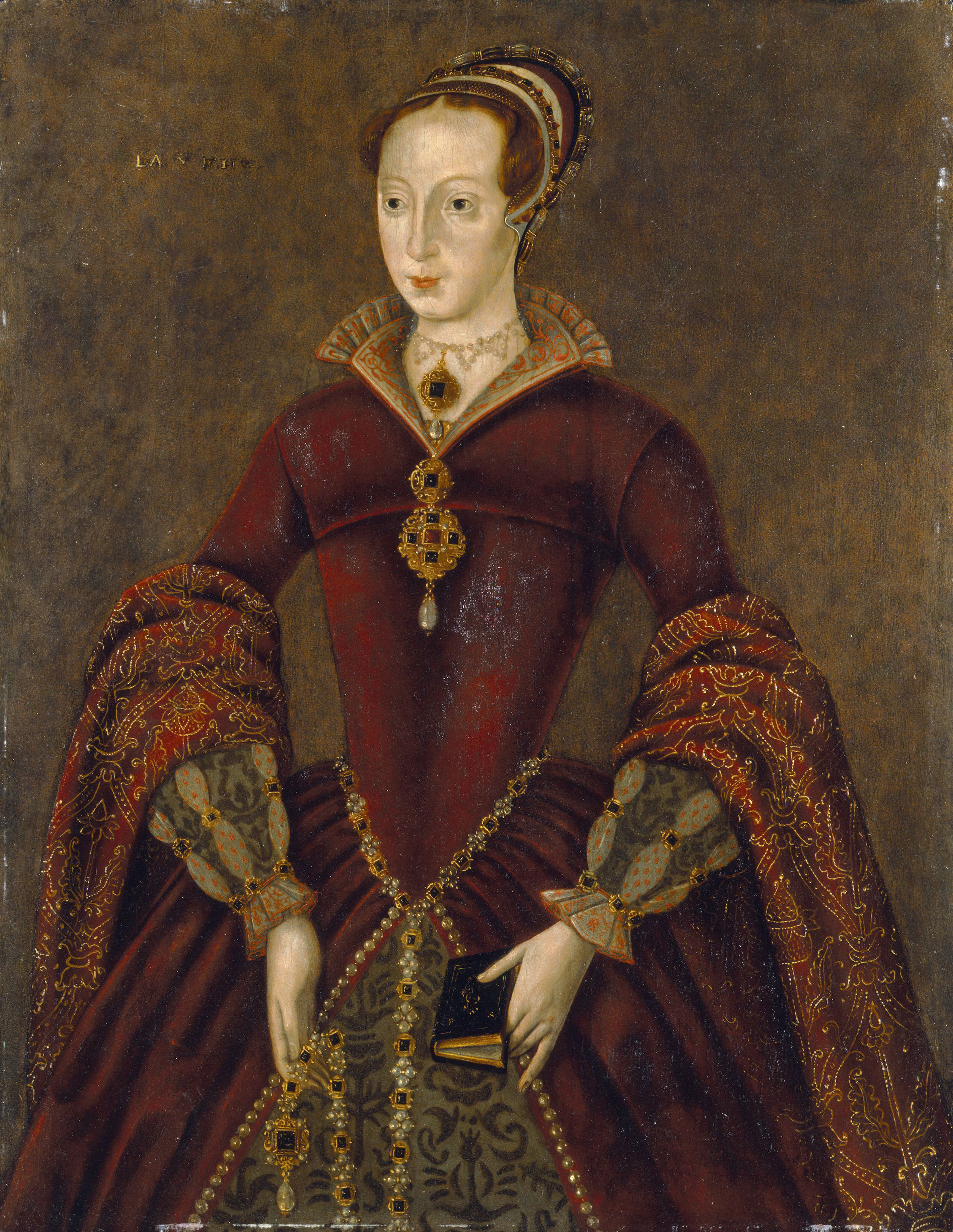
Above: Lady Jane Grey or Queen Katherine Parr?

A portrait above shows a superbly dressed noblewoman, dated to the early-to-mid 1540s. It was initially identified as portraying Lady Jane Grey, England's first queen regnant, in 1965 by Roy Strong. This occurred due to Strong's perception of similarities between this portrait and an engraving of Jane published in 1620. Yet, as Susan E. James has convincingly suggested, the portrait actually portrays Katherine Parr, sixth queen consort of Henry VIII. This seems all the more convincing since Katherine was queen in the period 1543-1547, when this portrait was executed, and since Lady Jane was born in around 1537, she would have been only eight years old, or thereabouts, when this woman sat for  the portrait. This is clearly not a portrait of an eight year old girl. The fact that this sitter wears jewellery which other queen consorts of the period, such as Katherine Howard, adorned, indicates that it represents Katherine Parr, who would have obtained this jewellery in her right as queen. Yet, once again, a misidentification of a portrait has influenced judgements about the sitter. Frequently, this portrait is advertised in both written works (ie books) and online as showing the tragic Nine-Day queen. It probably represents her one time great-aunt, Katherine.

Tudor portraiture is therefore precarious. Whether one uses it as a source in interpretations or not, it must be carefully scrutinised before making grandiose claims. The game of Guess the Sitter is, unfortunately, a very frequently occurring one in terms of Tudor portraiture, yet it serves to show how mysterious and yet compelling this period continues to remain.