Showing posts with label john dudley. Show all posts

Sunday, 13 November 2016

13 November 1553: The Trials of Queen Jane, Archbishop Cranmer, and the Dudley Brothers


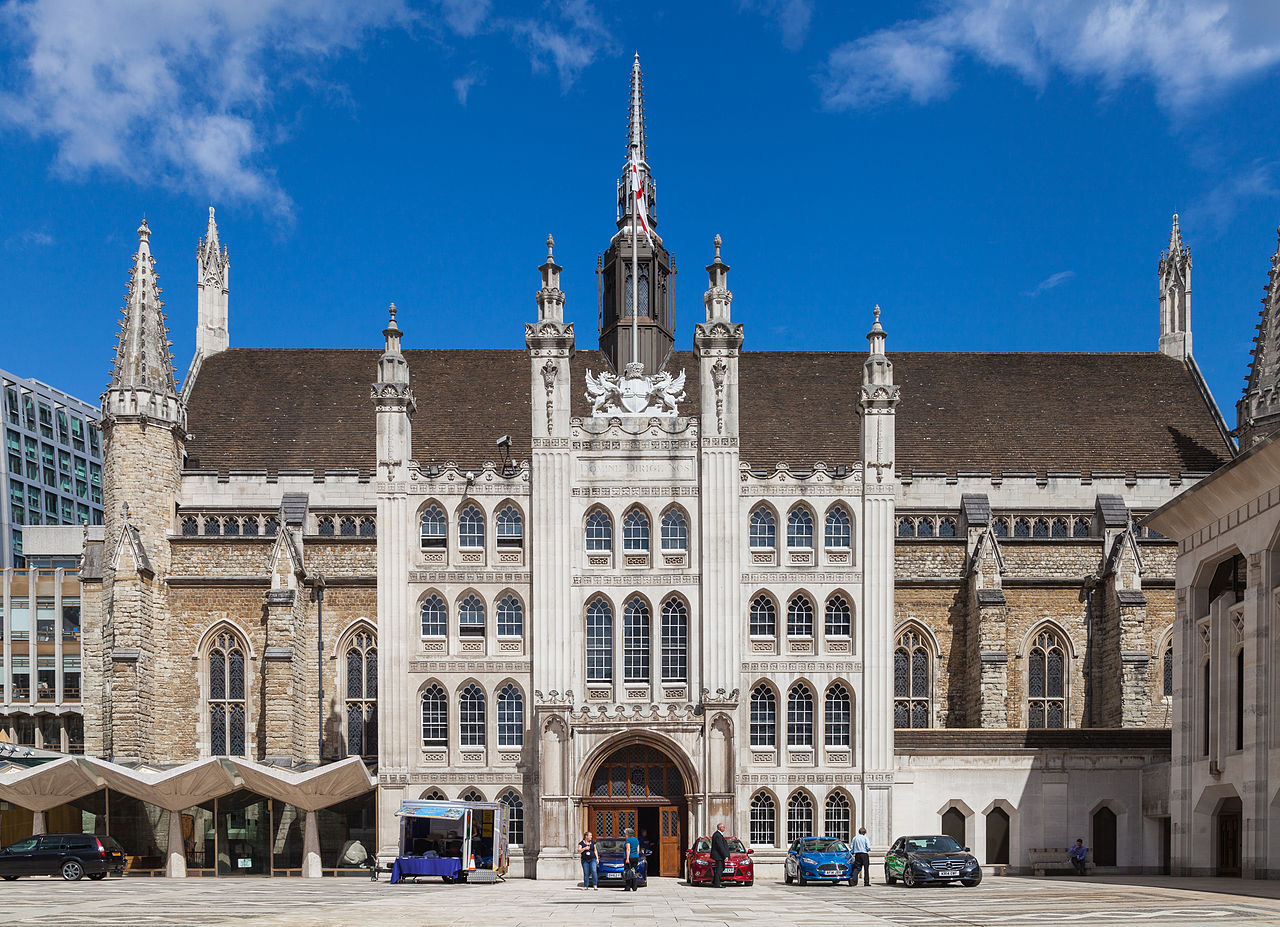
At London's Guildhall on 13 November 1553, five individuals were tried for high treason: Lady Jane Grey, the so-called 'Nine Days Queen'; her husband Guildford Dudley; his brothers Ambrose and Henry; and Thomas Cranmer, archbishop of Canterbury. Cranmer was charged with helping to seize the Tower for Jane and of levying troops for the duke of Northumberland's expeditionary force against Mary I (Northumberland himself had been executed in August that year). The beleaguered archbishop allegedly 'openly confessed his crime', although he himself later clarified that he had 'confessed more... than was true'. 

The Guildhall was the venue of several notable treason trials during the Tudor period. Francis Dereham and Thomas Culpeper, the reputed lovers of Katherine Howard, were tried and convicted at the Guildhall in 1541, while Anne Askew was tried for heresy at the same venue five years later. The five tried on 13 November 1553 proceeded from the Tower of London through the streets on foot to the Guildhall. Lady Jane - or Queen Jane; her exact title continues to rouse debate - was dressed in a sombre gown of black cloth and a black French hood. 

The commission was headed by the lord mayor, Sir Thomas White. Eric Ives notes that the commission was 'overwhelmingly Catholic in sentiment', which was surely a calculated move on Queen Mary's part, as a sign of the new order that was to be a feature of her reign. The 'Nine Days Queen' was charged with taking possession of the Tower, alongside her husband, and 'signing various writings'. In short, she had unlawfully usurped the sovereign's authority. 

Image result for lady jane greyImage result for thomas cranmer

All five were found guilty of high treason. The four men were sentenced to suffer a traitor's death: hanging, drawing and quartering. Jane was sentenced to be burned alive or beheaded according to the Queen's pleasure. The teenager faced news of her sentence bravely; she was sustained during those bleak months of imprisonment by her devout reformist faith. No date was given for the executions, and it appears that Queen Mary was, at least initially, willing to show mercy to the defendants, with the exception of Cranmer. 

The outbreak of rebellion in early 1554, however, changed that. Whether or not she was pressured by the Spanish envoys, with the promise of marriage to Philip of Spain, or by her Privy Council, Mary elected to order the executions of Guildford Dudley and Lady Jane Grey, for she feared that her security would be compromised as long as they remained alive and a focus for reformers. On 12 February, Guildford and Jane were executed. Both died bravely. Jane was subsequently represented in cultural works as an innocent victim of her scheming parents, or as a virtuous Protestant martyr. Guildford was viewed with sympathy by his contemporaries, but modern writers tend to depict him negatively as an abusive, weak-willed and vicious adolescent, a portrayal that is essentially fictional in basis.

Ambrose and Henry, Guildford's brothers, were more fortunate. Ambrose was released from the Tower in late 1554 and went on to serve Elizabeth I as her Master of the Ordnance. In 1561, he was created earl of Warwick. He died in 1590. His younger brother Henry participated with Ambrose in several tournaments held by Philip of Spain, as a demonstration of Anglo-Spanish amity. Henry participated in the Battle of St. Quentin in 1557, where he died. Archbishop Cranmer fared less well. He was tried for heresy in 1555 and went to the stake on 21 March 1556. 

Monday, 26 September 2016

Almost A King: Lord Guildford Dudley

Lord Guilford Dudley.jpg

Lord Guildford Dudley, son of the duke of Northumberland, is not usually depicted positively either in fiction or non-fiction. Often, Guildford is presented as a weak-willed, snivelling adolescent who sobbed on the scaffold, or as an abusive sociopath capable of bullying his gentle wife, Lady Jane Grey. In her study of the so-called nine days queen, Hester Chapman described Guildford as 'a spoilt, conceited and disagreeable young man', while in her novel Innocent Traitor, Alison Weir portrayed Guildford as a vicious abuser who mistreated Jane on their wedding night.

Guildford, who married Jane in 1553, could have become king of England, had events turned out differently. Little is known of him, but it is likely that he was well educated and was brought up to favour the reformist faith. It is possible that he was younger than his wife Jane, who was probably born in the spring of 1537. The Dudleys had a newborn son in March 1537, while one of Guildford's godfathers, Diego de Mendoza, visited England between the spring of 1537 and the summer of 1538. Thus making it likely that Guildford was born in 1537 or 1538 and inherently probable that he was younger than his wife. According to Grafton, Guildford was 'a comely, virtuous and godly gentleman'.

In the spring of 1553, Guildford married Jane Grey, the cousin of Edward VI. For the Dudleys, the Grey marriage was a notable triumph, for it allied them with the ducal house of Suffolk as well as to the Tudor dynasty. There is no evidence that John Dudley, duke of Northumberland, schemed to marry his son to Jane as part of his plan to have Jane made queen in the wake of Edward VI's death. Traditionally, it has been reported that Jane was bullied into marrying Guildford by her scheming family; some alleged that she had been physically beaten until she had submitted to the will of her parents. These stories are questionable. Certainly there is no evidence that she objected to Guildford on personal terms, although it could be said that the duke and duchess of Suffolk, Jane's parents, might have hoped for a more noble bridegroom for their daughter. After all, rumours had circulated in some quarters that Edward VI himself hoped to marry Jane. Once it became apparent that the king's demise was imminent, the Dudleys surely realised that Guildford might very well become king of England as the husband of Queen Jane, if the coup against Mary Tudor succeeded.

Image result for lady jane grey
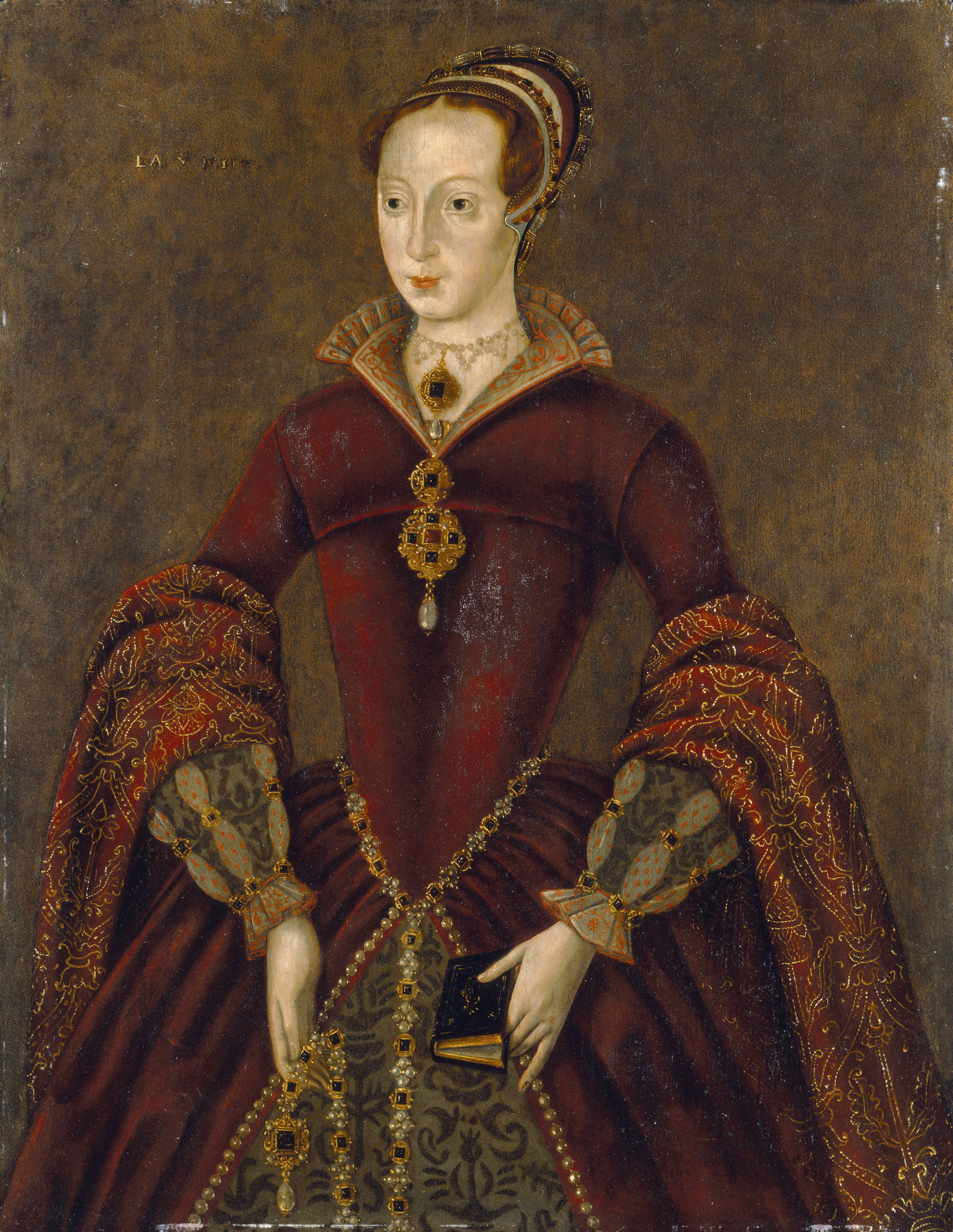
Above: Lady Jane Grey. After her marriage, Jane referred to herself as 'Lady Jane Dudley'. There is no evidence that she objected to the marriage with Guildford on personal grounds.

Unfortunately for both the Greys and the Dudleys, Mary Tudor was highly popular in the country at large, and following Edward VI's death on 6 July, the displaced Mary immediately acted to ensure that she was accepted, and then crowned, as England's queen. Jane had arrived at the Tower of London shortly after the king's death, and she was presented with the crown jewels by the Marquess of Winchester. Reportedly, Jane explained that she did not wish her husband to be presented with a crown, because she wished to make him a duke, rather than honour him with the title of king consort. This was not because of personal feelings on her behalf, given that she was 'loving of my husband'. Indeed, after her marriage Jane consistently referred to herself as 'Lady Jane Dudley'. On 19 July, the last day of her 'reign', Jane acted as godmother to a son born to one of the Tower guards. The child was named Guildford.

Mary Tudor took the throne with triumph. Eric Ives and Leanda de Lisle have explained, in detail, how Mary seized the throne from Jane; whether or not she should be viewed as the rightful queen and Jane the usurper, or vice versa, continues to be disputed. On 22 August, Guildford's father, the duke of Northumberland, was executed. Three months later, both Jane and Guildford were tried and found guilty of treason, but the queen made known her wish that the two prisoners should be spared death. 

However, Sir Thomas Wyatt's rebellion in early 1554, which involved Jane's father, sealed the fates of both Jane and Guildford. Both wrote letters to the duke; Guildford signed himself 'youre lovyng and obedynent son', while Jane described herself as 'youre gracys humble daughter Jane Duddley'. On the day of their execution, 12 February 1554, it is reported that Guildford wished to see Jane one last time, 'desiring to give her the last kisses, and the last embrace'. Jane refused, however, because 'their sight would increase the misery in both, and bring much more suffering'. After their deaths, Jane believed, they would 'live perpetually joined in an indissoluble bond'.

Evidence suggests that Guildford, at  the age of only fifteen or sixteen, went to his death with dignity. He made a short, unrecorded speech on the scaffold and prayed without losing control of his emotions. No mention, in this contemporary account, of Guildford's supposed sobbing in the moments before his execution. 

Lord Guildford Dudley has traditionally been viewed as a weak-willed, vicious adolescent, who was loathed by his gentle, victimised wife Lady Jane Grey. There is no evidence of this, and the couple's closeness and loyalty to one another emerges from the sources even during the last hours of their lives. Had the events of the summer of 1553 gone differently, had Jane been blessed by fortune, Guildford could have become king of England as the husband of Jane I. It was not to be, and history has not been kind to him in the centuries since his passing. 

Monday, 6 July 2015

6 July 1553: The Death of Edward VI


Above: King Edward VI of England.

July was usually a joyous month in early modern England. Before the advent of the Protestant Reformation, communities across the country participated in joyous summer pastimes that included village ales and games on the green. Edward VI's Reformation, of course, had swept away remnants of England's Catholic past. Yet, to those who remained superstitious, if the weather was anything to go by the early days of July 1553 were not fortuitous. Unseasonably chilly weather augured ill for the welfare of a kingdom that was already precarious. Those in the capital would have been privy to vague reports circulating of King Edward VI's alarmingly 'thin and wasted' condition. Although modern historians have convincingly dismissed the traditional view of Edward as an individual that was sickly from birth, forever close to death, it cannot be denied that the last year of the teenage king's life was agonising and painful. 


Early in the year, the king had fallen ill with a fever and cough that worsened with the passing of time. The imperial ambassador reported: 'He suffers a good deal when the fever is upon him, especially from a difficulty in drawing his breath, which is due to the compression of the organs on the right side'. Although the king's health briefly improved in April, by June his doctors were openly voicing doubts that he would ever recover from what they called 'a suppurating tumour'. Edward's legs became so swollen that he had to lie on his back. He allegedly informed his tutor John Cheke: "I am glad to die".


The end, when it came, came suddenly. Between eight and nine pm on the evening of 6 July at Greenwich Palace, the fifteen-year-old king's fragile life drew to a close. The martyrologist John Foxe later stated that Edward died in the arms of his Chief Gentleman of the Privy Chamber, Sir Henry Sidney, to whom he whispered: "I am faint, Lord have mercy upon me, and take my spirit". Historians have debated what it was that the teenage king died of. The Venetian ambassador had opined that Edward's cause of death was tuberculosis, a view which historians have generally agreed with, although Loach suspects that he may have died of acute bronchopneumonia, which led to a 'suppurating pulmonary infection'. 


Above: Lady Jane Grey (left) and Mary Tudor (right).

Several months earlier, in his "Devise for the Succession", Edward had stipulated that the crown was to pass to the male heirs of Lady Jane Grey, his cousin. As his health increasingly took a turn for the worse, and it remained apparent that Jane would not bear a son anytime soon, Edward altered the wording so that Jane herself could succeed him as queen following his death. Consequently, she was proclaimed queen in the aftermath of Edward's death. Four days after her cousin's passing, she travelled to the Tower of London in preparation for her coronation. It never occurred. Supported by the majority of the former king's subjects, Mary Tudor successfully took the crown and declared herself queen. On 19 July Mary was proclaimed queen by the Privy Council, and she was eventually crowned in October of that year.


Edward VI was king of England for only six years. Given his age upon succeeding to the throne, power was concentrated in the hands of the Privy Council and, more specifically, Edward Seymour, earl of Hertford and later duke of Somerset. Upon Somerset's fall from grace, the earl of Warwick (later duke of Northumberland) wrested control of the Council and was virtual ruler of the country until Edward's untimely death. Historians have debated whether it was Edward or Northumberland who masterminded the "Devise for the Succession", but more recently, it has compellingly been demonstrated that it was the determined king who commanded that his cousin Jane, rather than his sister Mary, should inherit the crown upon his death. In the end his wishes proved of no avail. Mary became queen and the teenaged Jane was executed alongside her husband in February 1554. Edward's reign is best known for the intensity of the Protestant Reformation. Had he lived longer, and wielded power himself rather than being controlled by the likes of Somerset and Northumberland (as he would have done in time), then Edward's reign might be remembered very differently. Instead, he remains one of the more shadowy of the Tudors, a boy king who died before his sixteenth birthday. 


Thursday, 4 June 2015

4 June 1550: The Wedding of Robert Dudley and Amy Robsart


Above left: Lord Robert Dudley, later earl of Leicester.
Above right: Portrait of an unknown woman, c. 1550, thought by some to be Amy Robsart.

On 4 June 1550, Robert Dudley married Amy Robsart at the royal palace of Sheen. The couple were both several days short of their eighteenth birthday, Amy celebrating her birthday on 7 June and Robert celebrating his on 24 June. Amy's father had made a marriage contract on 24 May with Robert's father John Dudley, earl of Warwick and later duke of Northumberland. In it, Robsart granted his daughter and her husband an annuity of £20 per annum until they inherited the Robsart estate after his and his wife's death. Warwick obtained for his son and daughter-in-law the lands of Coxford Priory. While Warwick might have hoped for a more ambitious marriage for his son, the marriage was beneficial in that it strengthened the earl's influence in Norfolk. As Simon Adams has written, 'the two estates combined would make the couple major figures in the county'. 

Born in June 1532, Amy was the daughter of Sir John Robsart and his wife Elizabeth. Her father was a Norfolk landowner and she was probably born at Stanfield Hall in Norfolk. Robert was the fifth son of John Dudley (1504?-1553), an ambitious nobleman who became earl of Warwick and later duke of Northumberland. Robert was reputed to be gifted at languages and writing and, after growing up in the court of Henry VIII, served as a companion to the teenage king Edward VI. He was handsome, charismatic, flirtatious, outspoken and charming. 

Historians have conjectured that Robert and Amy probably met during the campaign against Ket's Rebellion in 1549, when the earl of Warwick and his sons stayed near Stanfield, Amy's family residence. Evidence suggests that the young couple fell in love and decided to marry in their passion for one another. William Cecil disapprovingly remarked of the union: 'Carnal marriages begin in joy and end in weeping'. 

On their wedding day, the couple were honoured by the attendance of Edward VI, the twelve-year old king of England. Scarce evidence survives of their married life together. We do not know if they were happy with one another after the initial passion of their courtship. At the time of the young king's death in 1553, Robert and Amy were residing at Somerset House, the former residence of the disgraced Earl of Somerset. That year, Robert was imprisoned in the Tower of London by Mary I on account of the support he gave for Lady Jane Grey's usurpation. His father was beheaded in August 1553, but Robert was fortunate enough to escape this grisly fate. Amy is known to have visited him while he was incarcerated in the Tower. Only in 1557, with the death of her mother (her father had died in 1554) was Amy able to inherit the Robsart estate. 


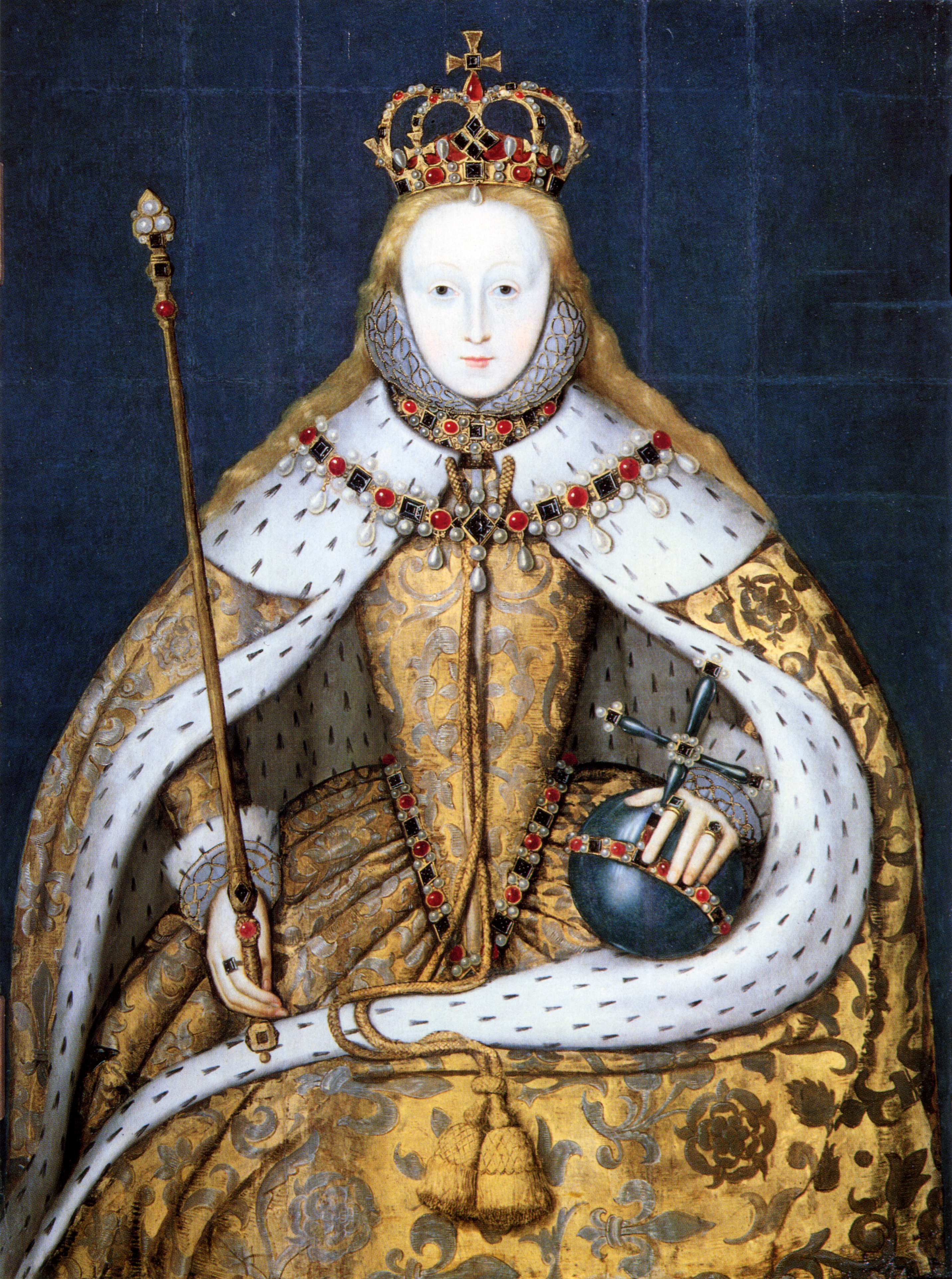
Above: Elizabeth I acceded to the throne in 1558.

Elizabeth's accession in 1558, however, can be viewed as effecting a turning point in the Dudleys' marriage. As is well known, Robert Dudley was an intimate favourite of the new queen, and spent considerable time at court. Amy did not accompany her husband to court following Elizabeth's accession, but spent her time at Throcking, Hertfordshire. By December 1559 she had departed for Cumnor Place, Berkshire. Nine months later, on 8 September, she was found dead at the foot of a pair of stairs. Mystery surrounds the events of her death. It is still debated today whether she was murdered, suffered an accidental death, or committed suicide. According to contemporary evidence, Amy's death caused 'grievous and dangerous suspicion, and muttering' in the country.

Click for large image of "Cumner Place"!
Above: Engraving of Cumnor Place. 

On 4 June 1550, however, all of this was well in the future. Evidence suggests that Robert and Amy's marriage was a love match. Tragically, their marriage was not fated to be a long-lasting one.

Tuesday, 16 December 2014

Frances Grey, Duchess of Suffolk: History's Scapegoat?


Above: A portrait identified by some as Frances Grey, duchess of Suffolk.

History remembers Lady Jane Grey, the so-called 'nine days queen', as an innocent teenager brutally sacrificed on the altar of ambition, greed and political treachery. This interpretation runs concurrently with the belief that Jane's family, the Greys, and her Dudley in-laws, were mercilessly ambitious, cold-hearted, scheming and brutal in their quest for power and position. In particular, Jane's mother, Frances Grey, duchess of Suffolk, is usually presented as the mother from hell: physically abusive, she allegedly took delight in bullying her young daughter and treating her with calculated cruelty. But is there any evidence for this dark view of Frances Grey?


High-born Tudor women were prone to misrepresentation and character assassination in their own lifetimes and have been savagely condemned up until the present day. Prominent examples include Anne Boleyn and Anne Stanhope, duchess of Somerset. Frances Grey is a notable example of this trend. Yet, as historical fiction writer Susan Higginbotham notes: 'the real Frances Grey bears no resemblance to the lurid tales about her. Only in our own time has she become a controversial and loathed figure'. Indeed, in her own lifetime, the Duchess of Suffolk was a respected, popular and influential woman who occupied a central place at court. Who then, exactly, was the real Frances Grey, niece of Henry VIII, mother of Lady Jane Grey and wife of the Duke of Suffolk?


Suffolk, Charles Brandon, 1st Duke of, Viscount Lisle

Above: Frances's parents: Charles Brandon, duke of Suffolk (left), and his wife Mary Tudor, formerly queen consort of France (right).

Frances Brandon was born on 16 July 1517 at Hatfield, Hertfordshire, the seat of the bishops of Ely. She was the eldest daughter of Henry VIII's close friend and brother-in-law Charles Brandon, duke of Suffolk, by his wife Mary Tudor, younger sister of the king. Frances grew up and was educated at Westhorpe in Suffolk. In the spring of 1533 at Suffolk House in London, sixteen-year-old Frances married Henry Grey, marquis of Dorset. Her mother died at the end of June that same year. Frances served as principal mourner at her funeral in July. It is impossible to know how close she had been to Mary, but Frances surely mourned her mother's death. 


After four years of marriage, Frances gave birth to her first daughter, Jane, probably in the spring of 1537 (although Jane's exact date of birth is not known). In novels such as Alison Weir's Innocent Traitor (2006), the ruthlessly ambitious Grey parents react with disappointment and anger to the birth of a daughter, but it is unlikely that this would have been the case in reality. The birth of a daughter might have been disappointing, but Frances was only twenty years old and had many years of childbearing ahead of her. As historian Eric Ives correctly notes, the Grey parents were not in the public eye when their first daughter was born, and neither Jane's date nor her place of birth have been recorded, much less her parents' response to her birth. In August 1540, a second daughter, Catherine, followed, and five years later, Mary was born in 1545. That same year, Frances's father, Charles Brandon, died. 


Frances occupied an important place at court during these years. At this time, she attended Queen Katherine Parr, who was her aunt by marriage. She enjoyed a close relationship with Lady Mary, eldest daughter of Henry VIII. Frances's relationship with Queen Katherine is significant, because the queen famously enjoyed close relations with Jane Grey, Frances's eldest daughter. Jane lived in the household of Katherine Parr following the death of Henry VIII, but upon Katherine's death in 1548 Jane returned to her family home at Bradgate in Leicestershire to live with her parents.


Above: Frances's eldest daughters: Jane (left) and Catherine (right).

Frances's relations with her eldest daughter have been, to say the least, controversial. Cultural depictions present Frances as a bullying and cruel mother who treated Jane harshly and mercilessly, physically beating her into submission. This antipathy towards Frances, which stemmed from a belief that she was a poor mother, first emerged in the eighteenth-century, at the same time in which Lady Jane Grey was cast as an innocent martyr and angelic figure, incapable of sin. As Higginbotham notes, however, it was the thirteen-year-old Jane's complaint about her parents to her tutor Roger Ascham in 1550 that has caused the greatest damage to Frances's reputation. Jane complained:


For when I am in presence either of father or mother; whether I speak, keep silence, sit, stand, or go, eat, drink, be merry, or sad, be sewing, playing, dancing, or doing any thing else; I must do it, as it were, in such weight, measure, and number, even so perfectly, as God made the world; or else I am so sharply taunted, so cruelly threatened, yea presently sometimes with pinches, nips, and bobs, and other ways (which I will not name for the honour I bear them) so without measure misordered, that I think myself in hell...


Higginbotham suggests that 'the impact of Ascham's recollection on Frances's reputation simply cannot be understated', for historians and novelists have used this quote from Jane to construct an image of the Grey parents as abusive and tyrannical monsters who inflicted misery on their daughters. Yet, as Frank Prochaska noted, 'Ascham may have 'overblown' Jane's comments to create additional support for his argument that teachers should not take on the role of parents and use corporal punishment to motivate their students to study' (Warnicke). Undoubtedly, Ascham may have exaggerated or even distorted what Jane actually said about her parents. Moreover, as Warnicke notes, it is significant that Ascham's account was published only after the deaths of both Jane and her parents, when he felt it was safe to do so. 


Thus, Frances has been characterised as a cruel and abusive mother, and her daughter Jane an innocent and sinless victim of her mother's wrath and hatred. But Alison Plowden is right to point out that Jane's complaints about her parents may actually reflect 'the attitude of a priggish, opinionated teenager, openly scornful of her parents' conventional, old-fashioned tastes'. It is surely going too far to use this 'evidence' to construct such a dark view of Frances Grey, without any other supporting evidence. In fact, the Duchess appears to have been a well-respected and popular figure in society, and there is no evidence that her relations with her younger daughters Catherine and Mary were difficult or problematic. 


Moreover, even if Jane's parents did discipline her, it seems to be going too far to characterise Jane as the victim of 'child abuse', as some historians and novelists have. In early modern England, parents were admonished to use corporeal punishment as last resort. Lloyd deMause, an American psychologist, famously put forward the suggestion in his The History of Childhood (1974) that 'the further back in history one goes, the lower the level of child care, and the more likely children are to be killed, abandoned, beaten [and] terrorized'. Other noted scholars, such as Lawrence Stone and Philippe Aries, have provided evidence in support of this. Therefore, even if Jane was physically disciplined by Frances, it does not mean that Frances was 'a child abuser' or 'a bad mother'. To condemn her as such is to apply modern values to a premodern society that had very different views and understandings of childhood.


Above: A portrait for centuries identified as a depiction of Frances Grey (left) and her second husband Adrian Stokes (right), but which actually shows Lady Mary Dacre and her son Gregory Fiennes.

Belief in Frances's supposedly cruel nature has been encouraged by a portrait thought to depict Frances alongside her second husband, Adrian Stokes, whom she married in 1555. The female figure appears greedy, unattractive, grasping and uncaring. Historians have utilised the picture as 'evidence' of the Duchess's unfavourable character. Hester Chapman, believing that the portrait depicted Frances, commented that the woman appears 'greedy', 'actively cruel' and 'coldly indifferent'. Yet the portrait is not of Frances at all, but of Lady Mary Dacre. 


Above: A depiction of the execution of Lady Jane Grey. Frances Grey pleaded with Queen Mary to show mercy for both her daughter and husband.

1553 was a momentous year for the Grey family. In May of that year, sixteen-year-old Jane wed Guildford Dudley, a younger son of the Earl of Warwick, and twelve-year-old Catherine married Henry Herbert, son of the earl of Pembroke. Traditionally, it has been assumed that the reluctant Jane was physically beaten by her parents until she agreed to marry Guildford. Only continental sources put forward this story, and as such were probably reflecting sensational rumour rather than fact. English sources make no mention of any coercion. Jane was a member of the aristocracy, and would have been well aware that her marriage was politically motivated to benefit and enhance her family. When writing to Mary Tudor later on, Jane did not blame her parents.


Scholars have debated endlessly about whether the Greys allied with the Dudleys in a conspiracy to usurp the throne from Mary Tudor and replace her with the Protestant Jane. Evidence compellingly indicates that Edward VI, determined to prevent the Catholic Mary from becoming queen, masterminded a 'devise' which proposed that his Protestant cousin Jane succeed to the throne, in place of his illegitimate sisters Mary and Elizabeth. Following Edward's death on 6 July, Jane was proclaimed queen, although a lack of support for her cause amidst the remarkable disorganisation of her regime meant that she was swiftly deposed by Mary, whom many regarded as the rightful queen. Jane was imprisoned in the Tower alongside her husband and her father-in-law Warwick (now duke of Northumberland).


Frances had traditionally enjoyed a close relationship with Queen Mary, and certainly pleaded for her husband's freedom, and perhaps also for that of her imprisoned daughter. On 22 August 1553, Northumberland was executed on Tower Hill. Jane and her husband were found guilty of high treason in November, although the queen was inclined to mercy and intended to spare both from execution. Frances continued to reside at court. How she felt about her daughter's plight can only be imagined. Given the flawed and distorted nature of the 'evidence' for her relations with Jane, it is impossible to tell what the real nature of the relationship between the two was like, but Frances surely experienced considerable emotional turmoil and distress.


Jane almost certainly would have been spared, had it not been for the outbreak of Wyatt's Rebellion in early 1554, an uprising seeking to prevent the queen's planned marriage to the Catholic prince, Philip of Spain. The involvement of Jane's father, the duke of Suffolk, sealed Jane's fate. On 12 February, the sixteen-year-old was put to death on Tower Green, shortly after her husband Guildford's execution on Tower Hill. Eleven days later, Frances's husband was beheaded. In the space of less than two weeks, Frances had lost both her husband and eldest daughter. Her grief, distress and pain can only be imagined. 


Frances was now placed in a very difficult position. She pleaded with the queen for clemency, and was allowed to remain at court with her two daughters. Catherine and Mary were respectively thirteen and nine years old when they lost their sister and father. These devastating events must have overshadowed their childhoods and caused both of them considerable emotional pain and torment. In March 1555, the thirty-eight year old Frances remarried. Because Frances had royal blood, that her second husband, Adrian Stokes, was merely her master of the horse, seems to indicate that her remarriage was motivated not by political ambition, but by love. Alternatively, it has been suggested that Frances deliberately chose Stokes as her second husband in a shrewd attempt to ensure that any children she had with her second husband would be too lowborn to be viewed as potential claimants to the throne. Frances remained on good terms with Queen Mary, who allowed her to reside at Richmond, while Catherine and Mary served as maids of honour to their cousin the queen. Frances had a daughter, Elizabeth, by her second husband, who died in 1556.


On 20 November 1559, Frances died at forty-two years of age. She was buried at Westminster Abbey. Her second daughter Catherine acted as chief mourner. Adrian erected a tomb with a recumbent figure in Frances's memory. Frances's funeral was actually the first Protestant service at the abbey after the reconstitution of its chapter. The inscription on Frances's grave reads (in Latin):


Nor grace, nor splendour, nor a royal name,

Nor widespread fame can aught avail; 
All, all have vanished here.
True worth alone Survives the funeral pyre and silent tomb. 

As Higginbotham relates, Frances Grey, duchess of Suffolk, was not a controversial woman in her own lifetime. She was respected, revered and liked. She has been more slandered in modern times than she ever was in her lifetime. As historian Leanda de Lisle notes, however:


'Since the eighteenth century she [Frances] has been used as the shadow that casts into brilliant light the eroticised figure of female helplessness that Jane came to represent. While Jane is the abused child-woman of these myths, Frances has been turned into an archetype of female wickedness; powerful, domineering and cruel.'


It is time to separate fact from fiction in the turbulent, extraordinary life of Frances Grey, duchess of Suffolk. We lack  evidence for how she felt; how she interacted with her daughters; what her relationship with her husband Henry Grey was like. It seems unfair to condemn and disparage her, when there is no evidence to support this negative treatment. Frances was an esteemed and respected figure in her lifetime, and although she may certainly have experienced difficult relations with her eldest daughter, Lady Jane Grey, it seems to be going much too far to view Frances as an abusive mother who cruelly tyrannised her children. If anything, Frances deserves our sympathy and compassion for enduring a life replete with suffering. 

Saturday, 12 October 2013

Edward VI, king of England


Above: Edward VI, portrait by William Scrots, c. 1550.

On this day in history, 12 October 1537, Henry VIII's third wife Jane Seymour gave birth to her only child, Edward, at Hampton Court Palace in Surrey. After twenty-eight years, the beginnings of the Reformation, a brutal and excruciating break from the Roman Church and the rejection of two queens, Henry finally had what he believed was essential to preserving peace and stability in England: a male heir. Tragically, however, Jane's efforts were ultimately fatal, for 12 days later, she died aged twenty-nine, a common fate of Tudor women. Henry apparently wept with joy when he held the baby Edward following his birth.

From the onset Edward was accorded a lavish lifestyle and excellent education afforded by his rank and status. He was initially placed in the care of Lady Margaret Bryan, who had also served his elder sisters, Mary and Elizabeth, during their childhoods. Until the age of six Edward was brought up 'among the women', although he was later taught by Richard Cox, Roger Ascham and John Cheke, as well as others, who instructed him in languages, philosophy, scripture, mathematics, music and liberal sciences. During these years he was close to his sisters, particularly Mary - despite the age difference of twenty-one years - and he is known to have informed her in a letter written aged nine: 'I love you most'.

Henry's marriage to Katherine Parr in 1543 changed Edward's life somewhat, for she became the only mother Edward had ever really known. As Dale Hoak writes: 'Queen Katherine brought Edward and his sisters into the royal household as members of an intimate family, providing Edward especially with an affection and attention that found endearing reflection in his frequent letters to her'. Her Protestant faith probably also had an important influence on Edward's religious beliefs and experiences. Under the influence of his Cambridge-educated humanist tutors, at an early age Edward was brought up in the Protestant religion.

On 28 January 1547, Henry VIII died aged fifty-five, and Edward, only nine years of age, became England's king. On Sunday 20 February, Edward was crowned at Westminster Abbey in a lavish coronation, wearing a crimson satin robe trimmed with gold silk lace, before showing himself to his people dressed in white velvet and cloth of silver and gold, set with patterned knots of diamonds and pearls. Because of the king's youth, it was arranged that the 16 executors named in Henry's will should act in a Regency Council on behalf of Edward until he reached the age of 18, when he would rule independently. However, the will was ignored and Edward Seymour, duke of Somerset, uncle of the king, became Protector of the Realm. The Council was Protestant-dominated following the removal of Catholic figures such as Stephen Gardiner, bishop of Winchester. Somerset was reported to 'govern everything absolutely' following his promotion.

A history of Edward VI's reign from the perspective of the king himself is difficult, for he died only fifteen before he could fully assume the mantles of government and kingship. As such, a history of his reign can be regarded as a history of Somerset's, and later Northumberland's, rule. During the early years of Edward's rule the Protestant Reformation was fully inaugurated in England. Archbishop Cranmer encouraged the king to destroy idolatry, particularly in the form of images. In July 1547 candles and shrines were banned, and by February 1548 stained-glass images and in wood and stone had gone the same way. Windows were reglazed, while chantries, processions, mystery plays, maypoles, church ales, and medieval rituals disappeared. It was an austere and forbidding environment.

In 1549, the first real challenge to Edward's rule appeared in what has come to be known as 'the year of rebellions'. These were motivated not solely by religious conservatism, but also by social unrest. By the early summer, a series of armed revolts broke out, the worst of them taking place in the southwest (Devon and Cornwall) and in Norfolk. The Prayer Book Rebellion, occurring in Devon/Cornwall, was motivated by hostility to the Protestant Reformation, while the Norfolk uprising occurred due to the encroachment of landlords on common grazing ground. Although Somerset appeared sympathetic to the rebels, the uprisings were eventually quashed, but the rebellions were perceived to be indicative of an unstable and corrupt government, thus setting the seeds for Somerset's eventual downfall.

By the autumn of 1549 Somerset was in real trouble and he was arrested in October. Edward showed little regret and did not lift a finger to save his uncle or restore his authority. In February 1550 John Dudley, duke of Northumberland, became the leader of the Council in Somerset's place. Eventually, Somerset was executed in 1552 following his initial release from the Tower of London. The only thing which Edward had to say about the affair was made in his diary: 'the duke of Somerset had his head cut off upon Tower Hill between eight and nine o'clock in the morning'. This passage perhaps supports the view of the king as a cold, unfeeling figure, who did nothing to support his uncle.

Northumberland was far more appropriate as Protector than Somerset. His administrative and economic achievements, in particular, have oft been recognised by modern historians. During these years, as he aged, Edward became more closely involved in government. The degree of his actual involvement has been controversially debated, but it seems possible that his greatest influence came in the field of religion, as the Protestant Reformation continued to flourish. Hoak believes that 'at fifteen [he was] an exceptionally capable student who was following, not directing royal affairs'. The king was depicted as a young Josiah, a godly king appointed by God to rid England of idolatry and superstition and restore truth to the realm. In context, Edward's relationship with his sister Mary became increasingly contentious, for her Catholic religion was abhorrent to him.

By February 1553, the fifteen-year old Edward, after barely six years on the throne, became seriously ill. The previous year he had fallen ill with measles and smallpox. Historians still debate what it was that killed him, with conflicting ideas of tuberculosis (consumption) or a pulmonary infection which led to septicaemia and renal failure. But it is also known that measles suppresses immunity to tuberculosis. By March, a Venetian envoy confirmed that the king was slowly dying.

Around this time, Edward drafted a 'Devise' for the English succession. Since he had never married nor fathered children, the crown by law on his death would pass to his eldest sister, the thirty-seven year old Mary. But her Catholic religion rendered her an unacceptable queen in the eyes of both Edward and his Council. In this line of thinking, if the crown should not pass to Mary, then it should go to twenty-year old Elizabeth, who, suitably, was a Protestant. But Edward subscribed to his father's will, which did not legitimate either sister - both were, despite their places in the succession, still officially bastards. Passing over the claims of his half-sisters, Edward instead willed that the crown should go to his cousin Lady Jane Grey, who was both legitimate and a Protestant.

Many historians formerly believed that Northumberland directed the whole 'Devise', because one of his sons Guildford was married to Lady Jane in May 1553, meaning that, by having a son on the throne of England, he would conceivably be the real power behind the throne. But this is an unlikely view in view of Edward's personal zeal and involvement in the affair, suggesting it was motivated by his own wishes, and in view of that Jane only married Guildford in May when the events behind the 'Devise' probably started a few months earlier.

On 1 July, Edward made his final appearance in public when he showed himself at his window in Greenwich Palace, horrifying onlookers with his 'thin and wasted' appearance. On 6 July, he died, three months before his sixteenth birthday. On 8 August he was buried in Henry VII Lady Chapel within Westminster Abbey.

Edward's reign was too short and his death at an early age means that is very difficult to tell what sort of king he would have become had he lived longer. But his greatest legacy was undoubtedly that of the Protestant Reformation, which was continued by his sister Elizabeth following Queen Mary's unsuccessful attempt at restoring Catholicism to England. Dale Hoak concludes his article with the passage:

'Edward's youth and unfulfilled promise have given rise to a number of misconceptions. But in one respect, at least, image and achievement have been found to coincide, in the perception of his image as having seen the foundations laid, with his encouragement, of one of the greatest transformations of English society and English-speaking culture, namely the Protestant Reformation'.