Wednesday, 12 August 2015

The Death of Ursula Pole, Baroness Stafford


A month before Queen Elizabeth I celebrated her thirty-seventh birthday, her distant kinswoman Ursula Pole, Baroness Stafford died at the age of sixty-six. Where the wealthy baroness died is unknown, although it is possible that she passed away at one of the properties of her disgraced father-in-law Edward Stafford, the late duke of Buckingham. 

Born about 1504, Ursula was the youngest child and only surviving daughter born to Margaret Pole, countess of Salisbury, by her husband Richard Pole, a loyal friend to Henry VII. The countess was the daughter of George, duke of Clarence, who was brother to the two Yorkist kings Edward IV and Richard III. Thus Ursula was both the duke of Clarence's granddaughter and the grandniece of two kings. She was related to Henry VII by his marriage to her relative Elizabeth of York. Margaret, countess of Salisbury was held in high esteem by Henry VII. She was close to Katherine of Aragon, whose household she served in during the princess's short marriage to Arthur Tudor. When Ursula was probably less than one year old, her father died. This impacted negatively on her mother, for the countess was left in difficult financial circumstances given how meagre her jointure was and because her husband's salary had come to an end. When Henry VIII became king in 1509, Margaret's position improved somewhat, for she became a member of Queen Katherine of Aragon's household and she was restored to the earldom of Salisbury in 1512. Her lands were worth worth over £2000, a significant sum in those days.

Unknown woman, formerly known as Margaret Pole, Countess of Salisbury from NPG retouched.jpg
Above: Ursula's mother, Margaret Pole, countess of Salisbury. By virtue of her mother, Ursula was grandniece of both Edward IV and Richard III.

Ursula spent her formative years at Warblington Castle in Hampshire, a residence that had been granted by Henry VIII to her mother around 1513. Her four brothers were Henry (later first Baron Montagu); Reginald (later a cardinal and vocal opponent of Henry VIII); Geoffrey; and Arthur. Whether or not Ursula was close to her siblings cannot now be known. Historian Hazel Pierce has conjectured, however, that Ursula was close to her second brother Reginald. Certainly it is possible that she both loved and admired her mother. Margaret, countess of Salisbury was pious and learned, dignified and gracious. Unfortunately for her, however, the Tudor dynasty was suspicious to the point of paranoia when it came to the subject of the house of York. While Margaret had enjoyed good fortune during the reign of Henry VII, and prospered early on in the reign of his son, events were to take a dark turn following Henry's decision to annul his marriage to Katherine of Aragon. The countess came to be viewed by Henry as a double threat, on account of both her royal blood and her position as Katherine's close friend and confidant. Ursula, who was a married gentlewoman during these turbulent years, must have been well aware of the king's dark suspicions that were directed towards her mother's family.

In the autumn of 1518, aged fourteen, Ursula made an excellent marriage. Her husband was Henry Stafford, son and heir of the duke of Buckingham, who would be executed for treason in the spring of 1521. Her father-in-law's disgrace impacted negatively on Ursula and her husband, although they managed to obtain several of the duke's confiscated lands and manors in both 1522 and 1531. Ursula and Henry seem to have enjoyed a contented marriage, in which Ursula gave birth to fourteen children. One daughter, Dorothy (born in 1526) would later serve as Mistress of the Robes to her kinswoman Elizabeth I. Baroness Stafford appears to have been on good terms with her sister-in-law Elizabeth Stafford, duchess of Norfolk, for the duchess later bequeathed to her several costly items of jewellery and apparel.

Image result for warblington castle

Above: The remains of Warblington Castle. Ursula grew up here during the 1510s.

By the later 1530s, however, Ursula's natal family found itself in dire straits. Henry VIII became convinced that the Poles, on account of their Yorkist blood, intended to unlawfully seize the throne from him and his heir Edward. This paranoia was fed in part by the king's hostility towards Cardinal Reginald Pole, who had vocally condemned Henry's decision to break with the Roman Catholic Church. In the summer of 1538, Geoffrey Pole was arrested on account of the discovery that he had been in communication with his brother Reginald, an unforgivable act in the eyes of Henry VIII given his belief that Reginald was a traitor. Henry Pole was executed in January 1539 alongside the marquess of Exeter.

In November of that year, Ursula's mother, the countess of Salisbury, was interrogated. She convincingly attested to her innocence, to the grudging admiration of her interrogator William Fitzwilliam, earl of Southampton. Margaret's steadfastness proved, however, to be of no avail. In November 1539 she was incarcerated in the Tower of London, and she was found guilty of aiding and abetting her sons Henry and Reginald and of committing 'detestable... treasons'. In May 1541, the countess was executed in the most appalling manner. She was literally hacked to death by 'a wretched and blundering youth', a grisly death that shocked even the hardened courtiers at Henry VIII's court. 

In the space of two years, Ursula had lost both her mother and her eldest brother. It was fortunate for her that her brother Geoffrey was pardoned and managed to escape abroad; notwithstanding this fortune, Ursula surely experienced considerable grief and emotional turmoil. The impact of knowing that her mother had been brutally massacred in the most appalling of circumstances can only be imagined. Luckily, Ursula managed to escape the bloodbath of the Pole family. 

Ursula died on 12 August 1570. Her life had been eventful, but she managed to keep her head at a time when Tudor fear and paranoia was rife. She enjoyed greater fortune in the reign of Edward VI, when her husband was promoted to the barony, and as aforementioned her daughter was warmly received at the court of Elizabeth I. Ursula seems to have died in obscure circumstances. We cannot even be sure of where she was buried. She is one of the forgotten royal women of Tudor England, a Yorkist lady perhaps regarded by some as the rightful princess of England. 

Sunday, 2 August 2015

Edward IV's Secret Bride

Elizabeth Woodville (c.1437–1492), 2nd Foundress of Queens' College, Wife of Edward IV
Above: King Edward IV's secret union with Lady Eleanor Talbot was to have a serious impact on the legality of his marriage to Elizabeth Wydeville (right).


Before he married the beautiful widow Elizabeth Wydeville, King Edward IV of England is said to have secretly married Lady Eleanor Talbot who was, like Elizabeth, a widow. In his study of Eleanor, historian John Ashdown-Hill speculates that the couple wed in secret in the spring of 1461, shortly before the first Yorkist king's coronation. Rumours of Edward's secret first marriage gained momentum following his unexpected death in 1483. His younger brother Richard duke of Gloucester, as is well known, seized the throne that summer, claiming that Edward's bigamous marriage to Queen Elizabeth rendered their children illegitimate. By virtue of the late king's first marriage to Eleanor Talbot, his children by Elizabeth were bastards, and as such had no right to inherit the crown. The majority of modern historians have dismissed this allegation, viewing it as evidence of Gloucester's depravity as well as his remorseless desire to attain kingship at whatever the cost, but Ashdown-Hill takes these allegations seriously. He concludes that King Edward probably did clandestinely marry Eleanor some three years before he wed Elizabeth. 

Following his unexpected accession to the throne, Richard III's first Parliament was responsible for passing an Act that declared that 'King Edward was and stood married and troth plight to one Dame Eleanor Butler, daughter of the old Earl of Shrewsbury'. The Burgundian diplomat Philippe de Commines was to report in c. 1490 that Robert Stillington, bishop of Bath and Wells, 'married them [Edward and Eleanor] when only he and they were present'. Indeed, the eminent nineteenth-century historian James Gairdner found the extant evidence so compelling that he was to conclude that the marriage between Edward and Eleanor cannot be regarded 'as a mere political invention... Perhaps rather an evidence of the truth of the story is the care afterwards taken to suppress and to pervert it'. It is also entirely possible that Queen Elizabeth herself eventually discovered that her husband had married another before her. Dominico Mancini was to report that Elizabeth was well aware of 'the calumnies with which she was reproached, namely that according to established usage she was not the legitimate wife of the king'. 

George Plantagenet, Duke of Clarence.jpg
Above: If Edward IV truly was married to Eleanor Talbot before his marriage to Elizabeth Wydeville, then the true king of England was, by right, his younger brother George duke of Clarence (left) and, following George's execution, Richard duke of Gloucester (right). 

Who was Lady Eleanor Talbot, the woman who was allegedly Edward IV's secret bride? Born perhaps in 1436, Eleanor was perhaps the fourth child of John Talbot, first earl of Shrewsbury, by his second wife Lady Margaret Beauchamp, a formidable and enterprising woman who was not afraid to ensure the protection of her rights. Eleanor's childhood was probably entirely orthodox. She learnt the fundamental female skills of embroidery and housewifery, and was perhaps taught to both read and write. She was probably taught to dance, to sing and to play a musical instrument. Certainly, that she attracted Edward IV indicates that she possessed the requisite social graces and accomplishments viewed at the time as desirable. As the daughter of an earl, Eleanor's education would not have been neglected. She almost certainly learnt French, although it is less likely that she would have been taught Latin. Eleanor's relationships with her siblings is unknown, although evidence suggests that she was close to her younger sister Elizabeth, later duchess of Norfolk. We have no knowledge of Eleanor's appearance, although Commines later described her as 'a beautiful young lady'.

At the age of thirteen, Eleanor married Sir Thomas Butler, son of Ralph Butler, lord Sudeley. We have virtually no evidence of their married life together. As an arranged marriage, personal feelings would have counted for very little, but that is not to say that Eleanor and Thomas did not grow to love one another. At an unknown date (certainly before 1460), Sir Thomas died, perhaps from injuries sustained at the battle of Blore Heath, as Ashdown-Hill conjectures. Eleanor herself died at the age of thirty-four on 30 June 1468. She was buried in Norwich in the monastic church of the white Carmelites, to whom she had supported during her lifetime as benefactress. 

Whether Eleanor Talbot truly married Edward IV in about 1461 is an issue of considerable historical importance. If she was, then she was the king's true wife and any subsequent marriage he made was invalid. His second marriage to Elizabeth Wydeville would have been bigamous and their children illegitimate. Historians, however, have largely regarded Richard's suggestion that Edward was legitimately married to Eleanor Talbot with scepticism. John A. Wagner explained that 'most modern historians believe the precontract to be a fabrication devised to give Richard III's usurpation a veneer of legitimacy. The betrothal cannot be documented beyond the account rehearsed in Titulus Regius, and Richard never attempted to have the precontract authenticated by a church court, the proper venue for such a case'. However, as we have seen, there is indeed evidence beyond the act of 1484 for Edward's marriage to Eleanor. 

Historian Anne Crawford believes that Edward IV did not truly marry Eleanor Talbot. She draws attention to the fact that Eleanor Talbot did not come forward when news of Edward's marriage to Elizabeth Wydeville became public. Crawford also noted that it is significant that the Talbot family failed to support Richard of Gloucester's claims about the precontract. If Edward was truly married to Eleanor before his later union with Elizabeth, then he could have applied for a papal dispensation that would have invalidated the match with Eleanor. Modern historians remain divided as to whether Eleanor was truly Edward's wife. It seems certain, however, that she was the king's lover at some point early in his reign and unknowingly provided the basis for which Richard seized the crown in the aftermath of his brother's death, leading to the eventual overthrow of the Yorkist dynasty.

Saturday, 25 July 2015

Queen Mary I's Wedding to Philip II of Spain

July 25, 1554 was a monumental day for England's first queen regnant, Mary Tudor. On the feast of St. James at Winchester Cathedral, the English queen married her cousin Philip of Spain. At thirty-eight years of age, Queen Mary was no longer the radiant beauty of her youth. Her famously beautiful golden-red hair was now streaked with gray, while the first lines were beginning to mark her earnest face. Notwithstanding this, the queen was attired magnificently in 'rich apparel', including a golden robe and a gown of rich tissue embroidered upon purple satin (purple being the colour of royalty) set with pearls and lined with purple taffeta, and a kirtle of white satin embroidered with silver. Mary was accompanied by loyal members of the nobility. Her soon-to-be husband was also splendidly attired in gold. The earl of Derby carried the sword of state before her, while her train was borne by the marquess of Winchester. Notable attendees included the bishops of Winchester, London, Ely, Durham, Chichester and Lincoln.  

The wedding was attended by vast numbers of observers, who 'gave a great shout' of joy upon witnessing their sovereign's marriage. The queen's absence of close male relatives meant that she was given away by the marquess of Winchester and the earls of Derby, Bedford and Pembroke. Following a nuptial mass, Philip and Mary proceeded to the bishop's palace under the canopy of state. The couple spent several joyous days in Winchester following their summer wedding. They then departed for Windsor and then to London, in order for the capital's inhabitants to welcome their queen and new king. Several weeks later, it was confirmed that the queen was pregnant. This could rightly be viewed as the happiest period of Queen Mary's tumultuous life. Sadly for her, however, she did not prove to be with child, and her 'pregnancy' ended in humiliation in the late summer of 1555, when it was confirmed that the queen had instead suffered from 'long-standing menstrual problems and a great deal of wishful thinking' (Weikel). 

Although Mary had joyfully anticipated her wedding to Philip, it proved to be a volatile marriage that was marked by the queen's love and loyalty to her husband on her part and restlessness and exasperation on his part. It is questionable whether Philip ever loved his wife. Almost certainly ambition played a greater role in his decision to marry the queen of England. At her death in the winter of 1558, he remarked that he felt only minor regret. Their marriage was marked by frequent absences from one another, and tragically for both king and queen, their union was never to be blessed by the birth of an heir with which to inherit the crowns of England and Spain.

Thursday, 16 July 2015

16 July 1557: The Death of Anne of Cleves


Only weeks before her forty-second birthday, Anne of Cleves died at the manor of Chelsea on 16 July 1557. The second daughter of Duke William of Cleves, Anne had famously been queen of England for only six months, from January to July 1540. She had spent the remaining seventeen years of her life residing at one of her many properties, which included Richmond, Bletchingley and Hever Castle, the childhood home of her predecessor Anne Boleyn. Anne's final years were marked by obscurity, so much so that we cannot be sure of the cause of her death. 

In popular culture, Anne continues to be thought of as the 'Flanders mare', the ugliest of Henry VIII's wives. However, contemporary evidence indicates that she was a beautiful, charming and pleasant young woman, rather than a frumpy, unattractive and dull matron. Even the French ambassador, who wrote disparagingly of her costume and manners, reported that she possessed 'middling beauty' and was 'of very assured and resolute countenance'. She was reputed to be kind, sweet-natured and polite, qualities which were borne out by the care she showed towards her stepdaughter Elizabeth Tudor and the interest she took in her servants' lives. Indeed, so popular was Anne as queen that an ambassador at court spoke of the widespread regret felt among her subjects that they were to lose 'the sweetest, most gracious and kindest queen they ever had or would desire'.

Although nowadays Anne of Cleves is regarded as the luckiest of Henry's unfortunate queens, she might not have agreed with this verdict herself. It is clear that she regarded the annulment of her marriage with humiliation and shame, and on more than one occasion she attempted to persuade the king to consider remarrying her. In the wake of Katherine Howard's downfall, Anne and her brother, the duke of Cleves, unsuccessfully pressed Henry to remarry her. She greeted Henry's final marriage to Katherine Parr with disapproval, and became depressed when the king did not communicate with her. Henry continued to treat her kindly, and the two appear to have enjoyed a warm relationship following their failed marriage. He subsequently granted her three manors in Kent (Kemsing, Seal and Hever) and continued to assist her financially. She was welcomed at court in 1543 and 1546, but following her former husband's death she desired to return home to Cleves.


Anne continued to feature in important public ceremonies, including the coronation of her former stepdaughter Mary Tudor in the autumn of 1553. However, her later life was marked by hardship and conflict with the government. Edward VI's Privy Council confiscated several of her properties, and an unpleasant household dispute between her servants reached the attention of her powerful brother. It is also possible that her previously close relationship with Queen Mary was damaged by Anne's rumoured involvement in Wyatt's Rebellion in 1554. The Imperial ambassador alleged that Anne 'was of the plot and intrigued with the Duke of Cleves to obtain help for Elizabeth', and whether or not this was true, the former queen was never again invited to court after 1554. Alternatively, this may have been because of Anne's failing health. She spent the last stage of her life at the manor of Chelsea, the former residence of her successor Katherine Parr. She bequeathed her jewellery to her former stepdaughters Mary and Elizabeth. On 4 August Anne was buried at Westminster Abbey, the only consort of Henry VIII to be interred there. 

Anne was praised by Thomas Becon for her 'accustomed gentleness', while the chronicler Holinshed described her as 'a ladie of right commendable regards, courteous, gentle, a good housekeeper and verie bountifull to hir seruants'. Although she spent most of her life following the annulment of her marriage as a private person, she would have preferred to be remembered as queen of England, however briefly she occupied that position. 

Sunday, 12 July 2015

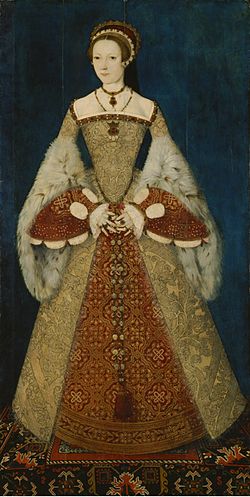
12 July 1543: Henry VIII Marries Katherine Parr


On 12 July 1543 at Hampton Court Palace, King Henry VIII of England married for the sixth and final time. His bride was thirty-one year old Katherine Parr, the eldest daughter of Thomas and Maud Parr. Unlike Anne Boleyn, Jane Seymour or Katherine Howard, Katherine Parr had not spent time in royal service, although both her siblings had operated in court circles for a number of years. Known as the most married queen of England, Katherine was marrying for the third time.

Although she was not rated for her beauty, Katherine's intelligence, charisma, and deep-rooted passion for the Protestant religion were to become well known at court. She reigned until January 1547, when her mercurial husband died aged fifty-five. Katherine was not the dull, dowdy figure of Victorian historiography. She was not only a devout Protestant but an author, a literary patron, a lover of fashion and a patron of the arts. She enjoyed warm relationships with her three stepchildren and was particularly influential on her stepdaughter Elizabeth.

I recently wrote an article exploring whether Katherine Parr could be said to have espoused feminist ideas in her written works. Of course, it is anachronistic to interpret these opinions as feminist, but Katherine certainly believed with some conviction that women, as well as men, could play indispensable roles in advancing the Protestant faith. You can read the article here. 

Monday, 6 July 2015

6 July 1553: The Death of Edward VI


Above: King Edward VI of England.

July was usually a joyous month in early modern England. Before the advent of the Protestant Reformation, communities across the country participated in joyous summer pastimes that included village ales and games on the green. Edward VI's Reformation, of course, had swept away remnants of England's Catholic past. Yet, to those who remained superstitious, if the weather was anything to go by the early days of July 1553 were not fortuitous. Unseasonably chilly weather augured ill for the welfare of a kingdom that was already precarious. Those in the capital would have been privy to vague reports circulating of King Edward VI's alarmingly 'thin and wasted' condition. Although modern historians have convincingly dismissed the traditional view of Edward as an individual that was sickly from birth, forever close to death, it cannot be denied that the last year of the teenage king's life was agonising and painful. 


Early in the year, the king had fallen ill with a fever and cough that worsened with the passing of time. The imperial ambassador reported: 'He suffers a good deal when the fever is upon him, especially from a difficulty in drawing his breath, which is due to the compression of the organs on the right side'. Although the king's health briefly improved in April, by June his doctors were openly voicing doubts that he would ever recover from what they called 'a suppurating tumour'. Edward's legs became so swollen that he had to lie on his back. He allegedly informed his tutor John Cheke: "I am glad to die".


The end, when it came, came suddenly. Between eight and nine pm on the evening of 6 July at Greenwich Palace, the fifteen-year-old king's fragile life drew to a close. The martyrologist John Foxe later stated that Edward died in the arms of his Chief Gentleman of the Privy Chamber, Sir Henry Sidney, to whom he whispered: "I am faint, Lord have mercy upon me, and take my spirit". Historians have debated what it was that the teenage king died of. The Venetian ambassador had opined that Edward's cause of death was tuberculosis, a view which historians have generally agreed with, although Loach suspects that he may have died of acute bronchopneumonia, which led to a 'suppurating pulmonary infection'. 


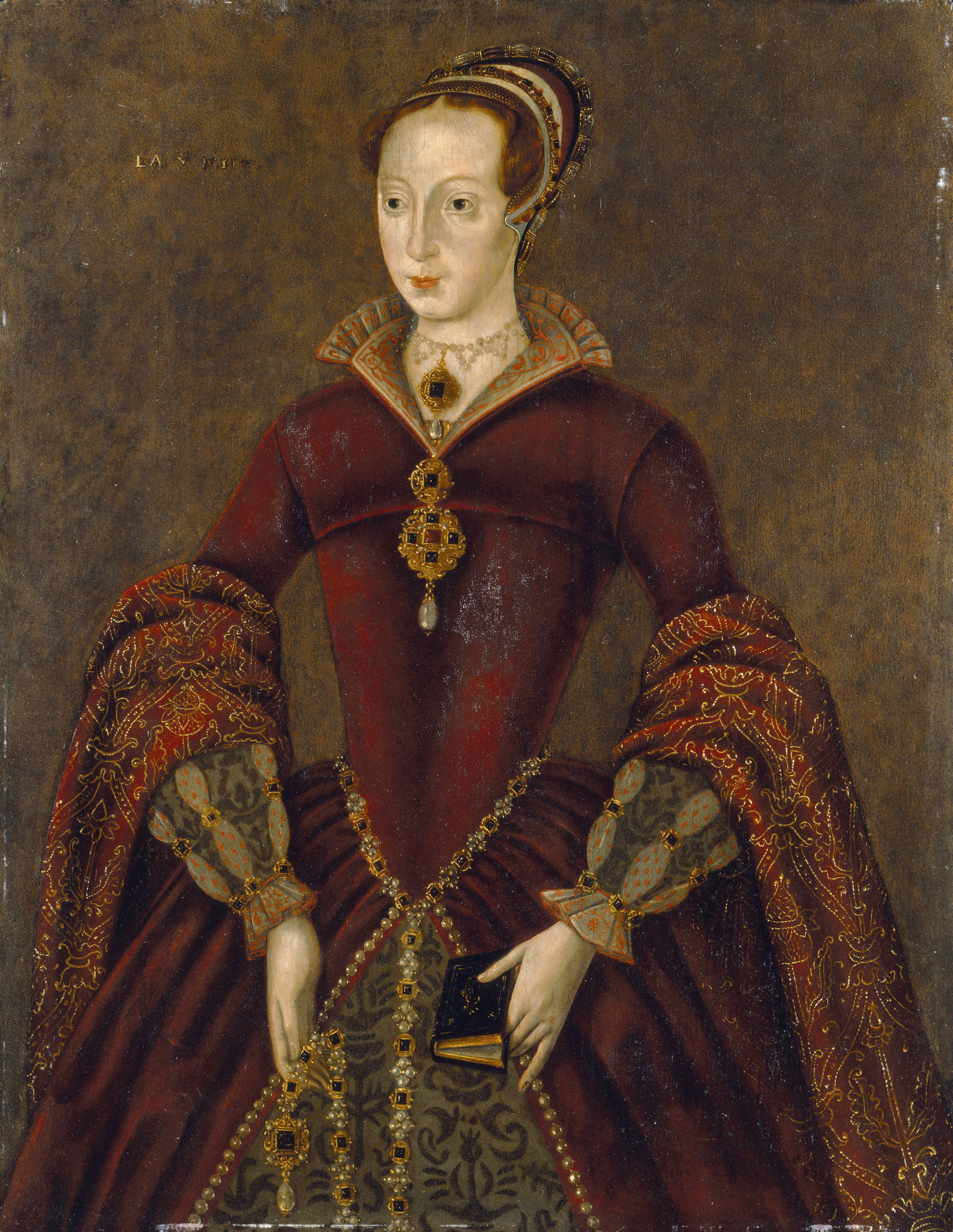
Above: Lady Jane Grey (left) and Mary Tudor (right).

Several months earlier, in his "Devise for the Succession", Edward had stipulated that the crown was to pass to the male heirs of Lady Jane Grey, his cousin. As his health increasingly took a turn for the worse, and it remained apparent that Jane would not bear a son anytime soon, Edward altered the wording so that Jane herself could succeed him as queen following his death. Consequently, she was proclaimed queen in the aftermath of Edward's death. Four days after her cousin's passing, she travelled to the Tower of London in preparation for her coronation. It never occurred. Supported by the majority of the former king's subjects, Mary Tudor successfully took the crown and declared herself queen. On 19 July Mary was proclaimed queen by the Privy Council, and she was eventually crowned in October of that year.


Edward VI was king of England for only six years. Given his age upon succeeding to the throne, power was concentrated in the hands of the Privy Council and, more specifically, Edward Seymour, earl of Hertford and later duke of Somerset. Upon Somerset's fall from grace, the earl of Warwick (later duke of Northumberland) wrested control of the Council and was virtual ruler of the country until Edward's untimely death. Historians have debated whether it was Edward or Northumberland who masterminded the "Devise for the Succession", but more recently, it has compellingly been demonstrated that it was the determined king who commanded that his cousin Jane, rather than his sister Mary, should inherit the crown upon his death. In the end his wishes proved of no avail. Mary became queen and the teenaged Jane was executed alongside her husband in February 1554. Edward's reign is best known for the intensity of the Protestant Reformation. Had he lived longer, and wielded power himself rather than being controlled by the likes of Somerset and Northumberland (as he would have done in time), then Edward's reign might be remembered very differently. Instead, he remains one of the more shadowy of the Tudors, a boy king who died before his sixteenth birthday. 


Thursday, 25 June 2015

25 June 1533: The Death of Mary Tudor, Queen of France


On a midsummer day in late June, the former queen of France lay dying at her residence of Westhorpe Hall in Suffolk. Mary Tudor, the universally acknowledged beautiful younger sister of Henry VIII, was only thirty-seven years of age at the time of her death. Fiery, charismatic and passionate, Mary is perhaps better known for being the beautiful duchess of Suffolk rather than queen of France, a position she occupied for only three months. The 'white queen', as Mary has sometimes been known, was surrounded by only a few attendants in the gentle seclusion of her Suffolk estate. It is entirely possible that her husband was not at her side in her last hours. 


In her youth, Mary had been described as 'a Paradise - tall, slender, grey-eyed, possessing an extreme pallor'. She was born at the palace of Sheen in March 1496, the youngest surviving child of Henry VII and Elizabeth of York. When she was only six years old, her eldest brother Arthur died and her mother followed Arthur to the grave only ten months later. Mary appears to have been close with her brother Henry, later Henry VIII. He was to name his only surviving child after her, a princess born in 1516. 


Mary had been married to Charles, duke of Suffolk since May 1515. Their marriage had scandalised Europe and had outraged King Henry, who was furious with the couple's failure to secure royal permission for their marriage. The couple were fortunate to escape with a heavy fine: by the standards of the time, Henry's honour had been disparaged by his sister's actions, and her husband the duke could have been imprisoned or even executed. Although the king and his younger sister had traditionally been close, their relationship was further strained after 1527, when Henry pursued marriage with Anne Boleyn. Mary was close to his wife, Katherine of Aragon, whom she had known since her early years. As David Loades writes, Mary and Anne 'exchanged insults of a semi-public nature'. Henry's annoyance with his sister's behaviour means that he seems to have failed to mourn her death. He left no comment when informed of her demise, although this reaction is perhaps explained by the fact that he had just remarried and was spending time with his new consort. 


Mary's widower, Charles Brandon, was left with three children: Frances (born in 1517; she married Henry Grey the same year); Eleanor (born in 1519); and Henry (who was to die the following year). Less than three months after his wife's passing, the duke remarried. His second wife was fourteen-year-old Katherine Willoughby. The thirty-five year age difference between the duke and his teenage bride did not pass without comment, but the marriage was a successful one.


In the story of the early Tudors, Mary tends to be overshadowed by her volatile brother and the drama of his six marriages. Yet she was a passionate, intelligent and charismatic woman who was a teenaged Queen of France and who caused considerable controversy when she decided to marry her husband's favourite without seeking royal permission. Two decades after Mary's death, her granddaughter Lady Jane Grey briefly became queen of England, an event that Mary could never have foreseen.