Thursday, 14 April 2016

The Children of Edward IV and Elizabeth Wydeville


The marriage between the first Yorkist king, Edward IV, and Elizabeth Wydeville was highly controversial in the fifteenth-century. There were doubts over its legitimacy, and some modern historians believe that Edward's first marriage to Lady Eleanor Butler rendered the Wydeville marriage invalid. This blog post does not seek to explore whether Edward's marriage to Elizabeth was valid or not. Rather, it is concerned with the offspring of the Wydeville marriage. 

Queen Elizabeth proved to be a fertile bride. In nineteen years of marriage, she gave birth to ten children: seven daughters and three sons. All of the sons died young, and two of the daughters did not live to adulthood. The eldest child, Elizabeth, became Queen of England in the summer of 1485, when she married Henry VII, the first Tudor king. Her brother was Edward V, who had been imprisoned in the Tower of London with his younger brother Richard when their uncle, the duke of Gloucester, usurped the throne in 1483. Mystery surrounds the fates of the 'Princes in the Tower', as they came to be known. Most modern historians believe that they were likely dead by the autumn of 1483. 

Queen Elizabeth Wydeville was close to her children, particularly her eldest daughter Elizabeth. This blog post explores the lives of the children of King Edward IV and Queen Elizabeth. 

Elizabeth of York (1466-1503)

The eldest child of King Edward and Queen Elizabeth was a daughter. She was born at Westminster Palace on 11 February 1466, and was named for her mother. While young, Elizabeth was briefly betrothed to George Neville, first duke of Bedford. This was not the match that the king and queen had envisaged for their eldest daughter, but the match was proposed with a view to continuing the friendship between the house of York and the Neville earls of Warwick. When George's father joined forces with his brother, the 'Kingmaker' duke of Warwick, the betrothal was called off. In 1475, in alliance with Louis XI of France, King Edward arranged a betrothal between his daughter and Charles, the French dauphin. It would have been a splendid marriage for Elizabeth, had it have gone ahead, and it would have enabled her to become Queen of France. However, it was not to be. Elizabeth's father died in 1483, and following the accession of her uncle Richard, Elizabeth accompanied her mother into sanctuary, with her other siblings. A year later, Elizabeth left sanctuary with her sisters, and they arrived at court. It is likely that they resided in the household of Queen Anne. Rumours of the queen's imminent demise fuelled speculation that King Richard was planning on marrying his niece. Whether Elizabeth truly considered marrying Richard is a mystery, and has been furiously debated by historians. It is entirely likely that she did scheme to marry her uncle, but ultimately his death at Bosworth in 1485 compelled her to honour her prior agreement to marry Henry Tudor, who had become king. 

Elizabeth and Henry, to all appearances, enjoyed a warm and loving marriage. Elizabeth gave birth to seven children; three of them survived to adulthood. She appears to have been a popular queen consort and was praised for her acts of intercession. Mystery surrounds much of Elizabeth's life. We do not know the true nature of her relations with her resourceful mother-in-law, Lady Margaret Beaufort. Nor do we know whether she really believed that her younger brothers had been murdered. Whether she loved Henry or not, she was a dutiful wife and a loving mother to their children. She died in 1503, on her thirty-seventh birthday. Her son, who later became Henry VIII, was said to have been devastated by her death.

Mary of York.JPG
Mary of York (1467-1482)

Mary was the second child of Edward and Elizabeth. She was born on 11 August 1467 at Windsor Castle. Very little is known about her. There were rumours during her childhood that she would marry John, the Danish king. In 1480, at the age of thirteen, she became a Lady of the Garter alongside her younger sister Cecily. Mary died on 23 May 1482 at the age of fourteen. She was buried at St. George's Chapel at Windsor Castle, where her parents would later be buried. Her early death meant that Mary did not experience the drama of the following year, when her father died, her brother was deposed and her uncle became king.

Cecily of York (1469-1507)

Cecily of York's life is one of drama. The events of her life suggest that she seems to have been a strong-minded, impulsive woman. Cecily was born at Westminster Palace on 20 March 1469, and was likely named after her grandmother, the duchess of York. At the age of seven, she was betrothed to the future James IV of Scotland. Cecily would have grown up believing, at least for a time, that it was her destiny to be Queen of Scotland. However, it was not to be. In 1482, when Cecily was thirteen, she was betrothed to Alexander Stewart, duke of Albany. However, the death of Edward IV the following year put paid to any hopes Cecily may have had of marrying Albany. On her uncle Richard III's orders, she and her siblings were declared illegitimate, on the grounds that the marriage of Edward and Elizabeth Wydeville was invalid. However, Richard knew that Cecily remained attractive as a prospective bride. To counter this, he arranged for her to marry Ralph Scrope of Upsall, a younger brother of Richard's supporter Thomas Scrope. It was surely not a match that Cecily had desired; given that she had been betrothed at one time to the heir to the Scottish crown, it is entirely possible that she was bitterly disappointed, perhaps even resentful. 

Henry VII's accession, however, changed Cecily's fortunes. The Scrope marriage was annulled and, two years after Richard III's death, Cecily remarried. Her second husband was John Welles, first Viscount Welles, who was a maternal half-brother of Lady Margaret Beaufort and was, therefore, half-uncle to Henry VII. Again, it was probably not the match that Cecily had wanted, but it is possible that the couple were happy. They had two daughters, Elizabeth and Anne, both of whom died young. Viscount Welles died in around 1498. 

It is in the aftermath of her second husband's death that we are able to gain an insight into Cecily's personality. One commentator reported that she chose to marry for a third time for 'comfort': perhaps she sought love, or stability. Her third husband was an obscure Lincolnshire esquire, Thomas Kyme. It seems to have been a love match. However, Cecily was reckless in failing to secure Henry VII's consent to the marriage, which she was required to do, as a member of the royal family. The king was furious and banished his sister-in-law from court. Lady Margaret, who appears to have been fond of Cecily, interceded for her and some of Cecily's lands were restored to her. Cecily died in 1507 at the age of thirty-eight, and she was buried at Hatfield, Hertfordshire. 
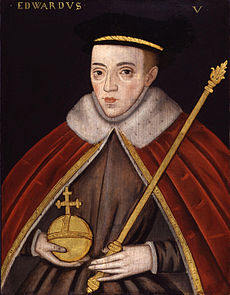
King Edward V from NPG.jpg
Edward V (1470-1483?)

The eldest son of King Edward and Queen Elizabeth was born on 2 November 1470 in Westminster Abbey. The queen had sought sanctuary after the Lancastrians had forced the king to flee his realm. However, King Edward emerged victorious and the prince was brought out of sanctuary. He was created Prince of Wales the following year. Prince Edward was reputedly learned, diligent, and dignified.

The birth of a son to the royal couple was highly important: it brought security to them, and offered the promise of future prosperity as well as the continuation of the dynasty. However, it was not to be. When he was only twelve years old, Prince Edward became King Edward V, upon the unexpected death of his father. However, his uncle Richard seized the throne. Edward was lodged in the Tower of London alongside his younger brother Richard, duke of York. Like his siblings, the new king was declared illegitimate and unfit to succeed to the throne. 

Mystery surrounds Edward's fate. Contemporaries speculated a great deal about what had happened to him. Some outright accused King Richard of murdering him and his brother. Others believed that the king had died in the Tower from illness. The majority of modern historians believe that Edward was dead by late 1483, which if true would mean that he never reached his fourteenth birthday (and possibly not his thirteenth). Edward V is one of the shortest reigning monarchs in English history.

Richard of Shrewsbury.jpg
Richard, duke of York (1473-1483?)

Richard was born on 17 August 1473 in Shrewsbury, and may have been named for his grandfather Richard, duke of York; alternatively, he may have been named for his uncle, Richard, duke of Gloucester. At the age of four, Prince Richard married the five-year-old Anne Mowbray, countess of Norfolk, at Westminster in January 1478. This appears utterly bizarre to modern readers. The marriage occurred on account of the king's determination to secure the Mowbray estates. Anne died in 1481, and her estates should have passed to William, Viscount Berkeley and to John, Lord Howard. However, an act was passed in 1483 that granted the Mowbray estates to Prince Richard for his lifetime, and to his heirs, if he had any, when he died. The whole episode was an example of King Edward IV's capacity for rapacity and ruthlessness when it came to acquiring greater wealth.

The declaration made in the spring of 1483, following Edward IV's death, that the children of the Wydeville marriage were illegitimate on account of their father's previous marriage to Lady Eleanor Talbot, rendered Prince Richard a bastard. The prince was escorted to the Tower of London, to join his brother, Edward V. Most historians believe that Richard was killed on the orders of King Richard; others suggest that he was put to death, but on another individual's orders: possibly Henry Tudor; possibly the duke of Buckingham; or possibly Lady Margaret Beaufort. 

However, others believe that Richard escaped abroad. One line of thought posits that the pretender Perkin Warbeck, who was a menace to Henry VII, was actually Richard, duke of York, come back to claim his inheritance.

The Daughters of Edward IV.jpg
Anne of York (1475-1511)

Anne was born on 2 November 1475 at Westminster Palace. In the summer of 1480, her father signed a treaty agreement with Maximilian I, duke of Austria, and it was agreed that Anne would marry the duke's eldest son Philip. This would have been a most prestigious marriage for Anne, for it would have enabled her to become duchess of Burgundy. Following Richard III's accession, the nine-year-old Anne was betrothed to Thomas Howard (later the uncle of Anne Boleyn and Katherine Howard) in 1484. Even after Richard's death, Howard remained eager to marry Anne. They married at Westminster Abbey on 4 February 1495. None of their children survived. 

Anne was close to her sister Queen Elizabeth, and like her sister Cecily, she played an important role in court ceremonies. She carried the chrisom at the christenings of her nephew Arthur, in 1486, and niece Margaret in 1489. Anne died on 23 November 1511 and was buried at Thetford Priory in Norfolk. Later, her body was moved to the Church of St Michael the Archangel in Framlingham.
Katherine of York.jpg
Katherine of York (1479-1527)

Aside from her sister Elizabeth, Katherine of York made the best marriage of any of the York children. She was born on 14 August 1479 at Eltham Palace. In childhood, Katherine had been betrothed to Juan, the heir to the kingdoms of Castile and Aragon (he was the older brother of Katherine of Aragon). Upon Henry VII's accession, Katherine was betrothed to James Stewart, duke of Ross. The same agreement envisaged marrying Katherine's mother, the dowager queen Elizabeth Wydeville, to James III of Scotland. These plans came to nothing, and in 1495, the same year her sister Anne married Howard, Katherine married William Courtenay, earl of Devon. 

Again, it may not have been the marriage that Katherine had wanted, but it ensured that she was a countess. They had three children: Henry (who was executed in 1539 for plotting against Henry VIII); Edward (who died young); and Margaret (who married Henry Somerset, earl of Worcester). Her husband died in 1511. Following his death, Katherine swore a voluntary vow of chastity in the presence of the bishop of London. She was reportedly favoured by her nephew Henry VIII, who 'brought her into a sure estate'. Katherine died on 15 November 1527 at Tiverton Castle, the last of Edward IV's children to die.

BrigĂ­daYork01.JPG
Bridget of York (1480-1517)

Bridget was the youngest child of King Edward and Queen Elizabeth. She was born on 10 November 1480 at Eltham Palace. It is likely that Bridget was named after St. Bridget of Sweden. It seems that the king and queen decided, while Bridget was still young, that their youngest daughter would follow a religious life. At an unknown date between 1486 and 1492, when she was between the ages of six and twelve, Bridget was entrusted to Dartford Priory in Kent. Her sister, Queen Elizabeth of York, continued to write to her and send messengers. Bridget attended the funeral of her mother, Elizabeth Wydeville, in 1492. She died in 1517, and in some respects is the most obscure of Edward IV's daughters.

Children who died young
Margaret of York (born and died 1472)
George, duke of Bedford (1477-1479)

Margaret of York was born on 10 April 1472 at Winchester Castle in Hampshire. She was likely named for her aunt, Margaret, duchess of Burgundy. Tragically, Margaret died at the age of only eight months, on 11 December 1472. She was buried in Westminster Abbey.

George of York was born in March 1477 at Windsor Castle. The following year, he was created duke of Bedford. The dukedom of Bedford had long been associated with the royal family. That same year, George was appointed lord lieutenant of Ireland. He died in 1479 at the age of two, perhaps from plague, and was buried in St George's Chapel at Windsor Castle, where his parents were later buried. 

Thursday, 10 March 2016

Katherine Swynford: Enduring Interest


Above: Katherine by Anya Seton. 

Katherine Swynford, duchess of Lancaster, is one of the most fascinating women in medieval English history. Most people know Katherine from Anya Seton's novel, published in 1954. Anya's Katherine is passionate, beguiling and ultimately loveable. The novel ripples with emotion, and its heroine is charismatic and memorable. At heart, it is a romantic novel, and the legendary relationship between Katherine and John of Gaunt is presented as one of passion. Whether this fictional depiction can be viewed as historically accurate is impossible to say, but Seton's reading is plausible, given that we know Katherine was John's mistress for many years before he finally married her. She became his third, and perhaps most beloved, wife.

As far as facts go, we know very little about the real woman, which is unsurprising given that she lived over six hundred years ago. Katherine Swynford was the daughter of the herald Paon de Roet, and she was born around 1350. Seton's novel depicts her as only having one sister, Philippa, but it is likely that she in fact had two (the other being Isabel). Katherine's sister Philippa, who may have been younger than Katherine, went on to marry the poet Geoffrey Chaucer, who is best known for his work The Canterbury Tales, a stunning insight into medieval English life that is replete with humour and wit. 

KTombDugdale67.jpg
Above: The tomb of Katherine next to that of her daughter Joan.

Katherine's first marriage was to the knight Hugh Swynford; their wedding probably occurred in 1366, when she was about sixteen. After their wedding, Hugh and Katherine resided at the manor of Kettlethorpe in Lincolnshire. By him, Katherine had three children. In the novel Katherine, the relationship between Hugh and Katherine is complex. They do experience affection for one another, but it is clear that Katherine's love for John of Gaunt takes precedence over any feelings she has for her husband Hugh. Later, Katherine became the governess of Philippa of Lancaster and Elizabeth of Lancaster, the daughters of John of Gaunt. 

The love affair between Katherine and John is swathed in mystery, but it has been the subject of considerable attention ever since it took place. Artists, novelists and filmmakers have endlessly speculated about Katherine's relationship with John. In the novel, the two are acquainted at court and experience an instant, powerful attraction for one another that ends only with death. The truth, however, is much less certain. It may only have been when she became governess to his daughters that Katherine fell in love with John. It is entirely possible, moreover, that Katherine was more ambitious than has been traditionally thought. John of Gaunt was the third surviving son of King Edward III. While it may not have seemed likely that he would ever become king himself, he was Duke of Lancaster, probably the most powerful and influential nobleman in the kingdom. Wealth and riches were at his fingertips. 

Johnofgaunt.jpg
Above: A later portrait of John of Gaunt, duke of Lancaster.

By this time, John's first wife Blanche had died. The first duchess of Lancaster had been much-beloved; in life she had been strikingly beautiful, gracious and virtuous. Her young death was viewed as a sorrowful tragedy, and John was believed to have felt deep grief at her passing. His second marriage, to the Infanta Constance of Castile, was an entirely political match. John married her because he was ambitiously hoping to become King of Castile. The marriage ensured that the duke obtained a kingdom of his own, perhaps because he was aware that it was unlikely that he would become king of England. Constance died in 1394.

Katherine's love affair with John had begun shortly after Blanche's death. It was, however, to ruin Katherine's reputation: she was slandered as a 'scandalous' whore. The duke was highly unpopular himself, for he was viewed as unscrupulous and scheming. At some point, Katherine's husband died, and the unmarried Katherine's reputation suffered as a result of her relations with John. By him, she bore four children. Following Constance's death, John took the momentous step of marrying Katherine, thus legitimising their children. It was a true triumph for Katherine. No longer a disgraced whore, but a duchess by marriage, she attained what few royal mistresses could hope for: marriage with her royal lover. Tragically for the couple, John died only three years after their marriage. Katherine herself lived until 1403, when she died at the age of about fifty-three.

Above: Katherine Swynford's tomb.

Katherine Swynford's life is extraordinary, not simply because of her love affair with one of the most powerful men in the kingdom. She lived at a remarkable time. Katherine lived through the flowering of English literature; her brother-in-law was the famed poet Geoffrey Chaucer, and it is reasonable to expect that she read his works herself. She was a young woman growing up during the celebrated reign of Edward III, who has been seen as one of England's greatest monarchs. And she experienced momentous political conflict, as embodied in the Peasant's Revolt of 1381. 

Perhaps Katherine's real importance and fascination, however, lies in her legacy. Through her marriage to John of Gaunt, which ensured that their children were declared legitimate, Katherine was the ancestress of the Tudor dynasty. We may know very little about the real woman's life, but Katherine Swynford has been immortalised in fiction as a passionate, charismatic and determined woman. A royal mistress and later duchess of Lancaster, her life will likely forever remain one of enduring interest. 

Saturday, 13 February 2016

Katherine Howard and Hampton Court Palace


Above: Portrait of an unknown woman, possibly Katherine Howard (left).
The Haunted Gallery at Hampton Court Palace (right).

On 13 February 1542, two women were executed for treason within the walls of the Tower of London. On the same spot on which Anne Boleyn had been beheaded six years earlier, Katherine Howard was executed after making a short speech. Mercifully, her head was removed with a single blow of the axe. Following her death, it was the turn of her attendant Jane, viscountess Rochford. The viscountess had allegedly gone insane during her imprisonment; yet so determined was Henry VIII for her to die that he had her nursed back to health. Like the former queen, Jane was decapitated with a single strike. Both ladies were buried in the chapel of St. Peter ad Vincula. 

It is often believed that Katherine was executed for committing adultery with Thomas Culpeper, a groom of the privy chamber, but the Bill of Attainder passed against her clarified that she was condemned for having lived 'an old abominable life'. The attainder explained that Katherine's decision to appoint a former lover, Francis Dereham, to the position of secretary was 'proof of her will' to return to her 'vicious life'. In this respect, it was Katherine's unchaste childhood that counted against her. When it was discovered that she was not a virgin when she married Henry VIII, her meetings with Thomas Culpeper took on a sinister light. The Bill of Attainder became law on 11 February, a day after the queen had been taken to the Tower. Two days later, she and Jane Rochford were beheaded. Neither had been given the right to a trial, as Anne Boleyn had in 1536. The Act of Attainder was later repealed in the reign of Mary I.

Having endured imprisonment for two months, Katherine's end came astonishingly quickly. Within three days she was imprisoned in the Tower and then executed. The Spanish ambassador Eustace Chapuys reported that Katherine had to be forced onto the barge 'with some difficulty and resistance' when it arrived to transport her to the Tower. Although both she and Jane were to die with dignity, rumours abounded both then and now that Katherine Howard's spirit was restless. This idea soon became legend with the story of Katherine's ghost haunting a gallery at Hampton Court Palace.

Joanna Denny, in her biography of Katherine, explains this legend:

'There is a legend at Hampton Court Palace that Katherine Howard made one last, desperate attempt to see her husband. The story goes that, knowing Henry was at service in the Chapel Royal, she broke free of her rooms and ran down the long gallery to try and talk to him and convince him of her innocence. 

...It is said that Katherine's ghost is seen here, running and screaming in her panic as she calls Henry's name... She was presumably caught long before she came anywhere near the King and dragged away by her guards'.

Hampton Court Palace, on its website, provides 'anecdotal evidence' to confirm that the story is true: visitors to the gallery are often unsettled by a strange presence in the gallery, and some have fainted before. The story has moved into the realm of popular culture, and the link between Katherine Howard and the Haunted Gallery is well-known. 

It's not hard to see why. The image of a teenage queen, paralysed by fear and terror, running and begging for her life is a haunting one. The legend is often included in modern novels, such as Jean Plaidy's Rose Without a Thorn, and it is occasionally referenced in television, as in the Showtime series The Tudors (2007-10). But historians have, by and large, demonstrated that the myth is exactly that: a myth. There is no contemporary evidence that Katherine Howard ran down the gallery screaming for her life; none of the court ambassadors, including the well-informed Chapuys, reported it. 

Hampton Court Palace is central to the story of Katherine Howard. Its setting was the centre piece of her spectacular rise and was to prove the site of her calamitous downfall. Unsurprisingly, then, Katherine's ghost is almost never linked with the Tower of London, but it is always associated with Hampton Court. As a young maid of honour to Queen Anne of Cleves, Katherine had captivated the ageing Henry VIII; perhaps their first meeting occurred at Hampton Court. In August 1540, less than two weeks after Katherine married Henry at Oatlands Palace, she was acknowledged as queen for the first time at Hampton Court. Formerly in the hands of Cardinal Wolsey, it had become, by the 1540s, Henry VIII's main residence. 

As it had been the main setting for her rise to queenship, so Hampton Court was to be the setting for Katherine's downfall. Returning from the northern progress in the autumn of 1541, Henry VIII was confronted with a letter placed in the Chapel Royal informing him of his wife's unchaste childhood. Devastated, he departed the palace, never to see her again. The disgraced queen was eventually moved from Hampton Court to Syon, before making her final journey to the Tower of London.

In January 2016, I visited Hampton Court Palace for a ghost tour held one evening. The final stop on the tour was at the Haunted Gallery, where the story of Katherine Howard's ghost was recounted by the guide. Undeniably, the Gallery has an unsettling atmosphere, especially at night. One's imagination can run away; it is easy to imagine a frightened girl frantically running down the Gallery, screaming and begging for her life before being seized by her guards and taken back to her rooms. While the story of Katherine's ghost has no basis in reality, it does provide a poignant, chilling reminder of the speed of her downfall and death. For Katherine Howard, Hampton Court Palace was initially associated with happiness, glory and possibility, but it later became for her a site of fear, terror and destruction.

Friday, 12 February 2016

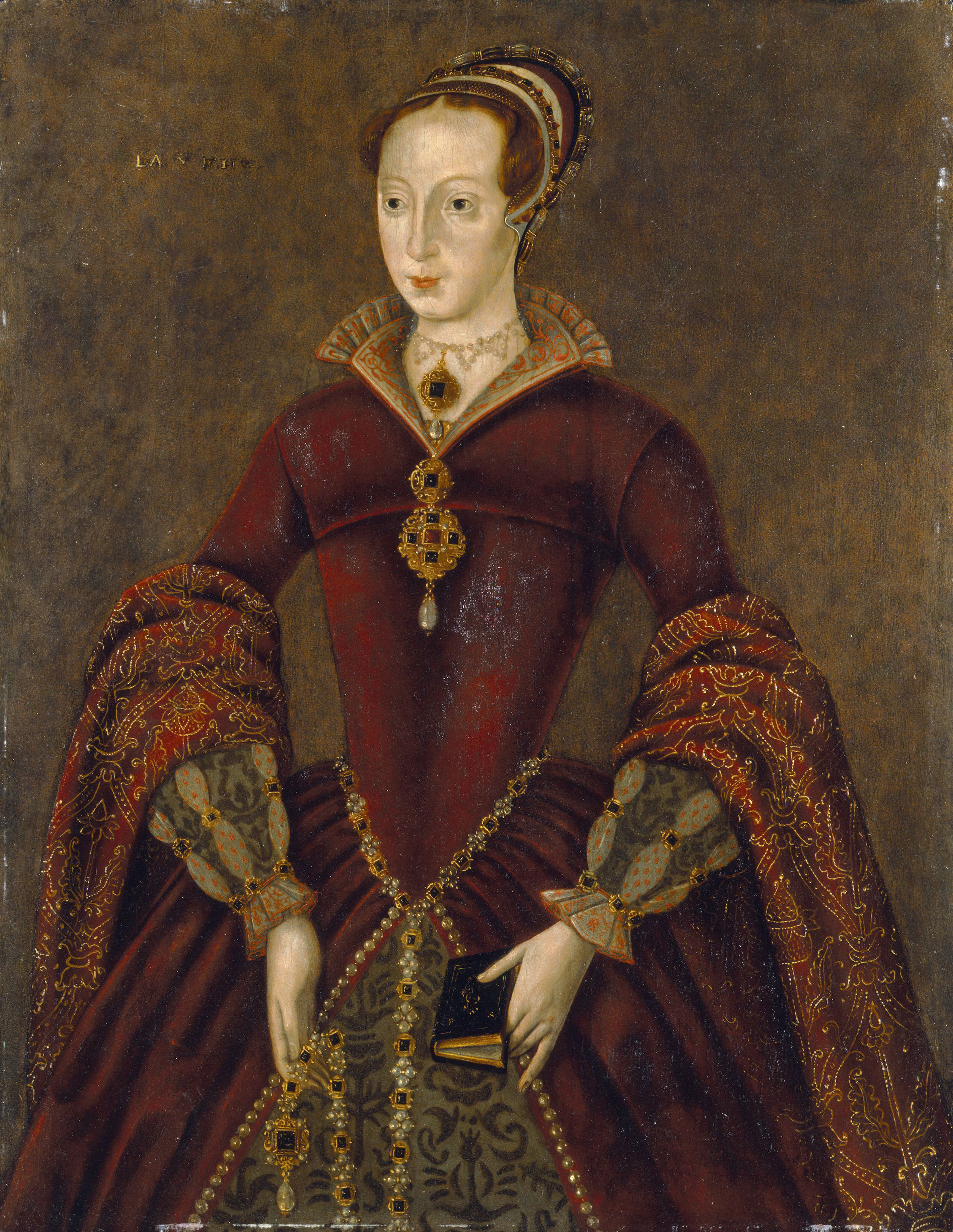
Remembering Lady Jane Grey


On 12 February 1554, Lady Jane Grey was executed within the walls of the Tower of London. Three months earlier, she and her husband Guildford Dudley had been found guilty of high treason. They had unlawfully usurped the throne from the rightful queen, Mary I. Traditionally, historians presented Lady Jane as an unwilling innocent, a much wronged young girl who had no desire whatsoever to be Queen of England. Recent research has disproved this legend. In actuality, Lady Jane was an intelligent, stubborn and resilient woman who was fiercely devoted to her Protestant faith. She regarded herself as appointed by God to rule England, and she likely regarded her Catholic cousin Mary Tudor as ungodly, even abominable in the eyes of God. He had chosen Jane to be Queen, and she believed it was her destiny to be sovereign of England.

Having been selected as Edward VI's heir, Jane was proclaimed queen in July 1553. As is well known, Jane's regime collapsed within days, and Mary was declared queen on 19 July. Jane's trial followed in November, and although she and her husband were found guilty, Queen Mary showed no desire to have them put to death. However, the outbreak of rebellion in early 1554, motivated by dislike of Mary's decision to marry Philip of Spain, coupled with the decision to reinstate the medieval heresy laws, sealed Jane's fate. Her own father was involved in the plot against the queen, and he followed Jane to the scaffold a few days after her own death. A courageous and resourceful young woman, Jane accepted her fate and bravely prepared for death.

Above: The traditional view of Lady Jane Grey, as portrayed in Paul Delaroche's nineteenth-century painting, as a wronged innocent.

Guildford Dudley was executed on the morning of 12 February 1554 on Tower Hill, where his father, the duke of Northumberland, had died the previous August. Guildford was himself still a teenager, perhaps no more than nineteen years old, and has been the victim of notable slanders. Modern historians have usually depicted him as a snivelling, weak-willed and vicious adolescent, loathed by Jane, but Leanda de Lisle's research questions whether this portrayal is accurate, as no contemporary source describes Guildford in such a negative way. Whatever the truth of Guildford's character, his end was tragic. Like Jane, he was the victim of his father's plotting, and he duly resigned himself to his fate. His wife was confronted by the sight of her husband's headless corpse, the fabric stained with his blood, returning on a cart from Tower Hill. She knew that her own demise was imminent.

Shortly afterwards, around ten in the morning, Lady Jane Grey walked out of her apartments and mounted the scaffold that had been built within the walls of the Tower. Onlookers commented on her braveness and her piety. Two versions of her scaffold speech survive, both of which confirm that she acknowledged that she was to die under the law, having been condemned by it. She confirmed that she had offended the queen and had behaved unlawfully. Most importantly, particularly for her posthumous reputation, Jane proclaimed that she died a true Christian woman, and looked to be saved only by Christ's mercy. This confirmed her commitment to the Protestant faith, for Catholics traditionally believed that good works also played an important part in one's salvation. She then asked the onlookers to pray for her.

Above: Queen Mary I, who ordered her cousin Lady Jane Grey's execution in February 1554.

Lady Jane's female attendants then helped her off with her gown and gave her a handkerchief to use as a blindfold. Groping about in the dark, she could not find the scaffold, and cried, "Where is it? What shall I do?" Someone came forward to guide her and she rested her head upon the block. Mercifully, she was decapitated with one blow, probably just a few months short of her seventeenth birthday. Her remains were interred in the nearby chapel of St. Peter ad Vincula. With her passing, Lady Jane Grey's story became the stuff of legend. In Protestant works, most notably John Foxe's Book of Martyrs, she was depicted as a pious, virtuous Protestant maiden who had died for her faith, condemned by the cruel Catholic tyrant, Mary I. Victorian historians depicted her as an innocent victim of her grasping, scheming family, and portrayed Jane's mother, Lady Frances Brandon, as a tyrannical woman and an abusive mother. Modern historians have usually followed this version of events. But modern research has demonstrated that reality was more complex. Lady Jane Grey was far more than merely an innocent child, and there is no contemporary evidence to suggest that Frances was cruel to her daughters.

Lady Jane Grey remains, in many respects, a mystery. Her beheading was the first of several calamities to befall the Grey family. Her father followed her to the scaffold only eleven days after her own death; like her, he was executed as a traitor to his queen. In spite of this, Jane's mother, Frances, remained close to Queen Mary, and her younger daughters Catherine and Mary were resident at court. However, Elizabeth I's accession proved to be the final undoing of the Grey family. While she did not behead either of the Grey sisters, as Mary had done, Elizabeth had both Catherine and Mary Grey imprisoned for their clandestine marriages, and the distraught Catherine died in 1568 while still in her twenties, deprived of her husband and children. Mary followed her to the grave ten years later, her own husband having predeceased her. Lady Jane Grey's story has been represented as a great tragedy, but her younger sisters were as much victims of their birth as she was.

Wednesday, 27 January 2016

The Death of Lady Catherine Grey


Above: Portrait of Lady Catherine Grey and her son Edward Seymour.


Even by sixteenth-century standards, the demise of Lady Catherine Grey, countess of Hertford, was tragic. On 27 January 1568 (some sources suggest the 26th), the middle daughter of the disgraced Henry Grey, duke of Suffolk died at Cockfield Hall in Suffolk at the age of twenty-seven. There has been considerable speculation about the cause of the countess' untimely death. Some have suggested that she died of tuberculosis (then known as consumption), while others have speculated that she had starved herself to death. Whatever the cause, Lady Catherine's death was greeted by her cousin Elizabeth I with relief, perhaps even joy, for it removed a serious threat to Elizabeth's throne. 

In many respects, Catherine was a victim of her inheritance. Her mother was the daughter of Mary Tudor, queen of France, and niece of Henry VIII. Catherine was therefore Henry's grandniece and was probably named for his fifth wife, who married Henry in 1540 (Catherine Grey was born in August of that year). In 1553, at the age of only twelve, Catherine's world fell apart. Her elder sister Jane was nominated heir to the throne by their cousin Edward VI and, following his death in July, Jane was proclaimed Queen of England. Few accepted her accession, however, and Jane's regime collapsed when Mary Tudor successfully claimed the throne. Jane was imprisoned alongside her husband Guildford Dudley, who like her was probably no more than sixteen or seventeen years old. Queen Mary refused to order her cousin's execution despite considerable pressure from the Spanish envoys. However, following the outbreak of rebellion in early 1554 - motivated in large part by antipathy to the queen's proposed marriage to Philip of Spain and the anticipated restoration of the Catholic religion - Mary decided to have Jane and Guildford executed. Catherine's father Henry Grey followed Jane to the scaffold eleven days later, following his treasonous involvement in the rebellion.

Catherine, therefore, had suffered considerably by her early teenage years. Her father and sister had both died a shameful death, and she would have grown accustomed to her position as the member of a traitorous family. Popular history has portrayed Catherine's mother, Frances, as a tyrannical, cruel woman who bullied her daughters; however, there is no evidence of this, and it seems that both Catherine and her younger sister Mary were close to their mother. Frances died in 1559, a year after Elizabeth I came to the throne.

Edward Seymour, Earl of Hertford, Attributed to Hans Eworth (1515 - 1574).jpg
Above: Edward Seymour, earl of Hertford.

Elizabeth's accession complicated Catherine's life. According to Henry VIII's will, Catherine was Elizabeth's heir presumptive and, given the queen's unwillingness to marry and have children, Catherine stood a very real chance of becoming Queen. This fact was not lost on English Protestants, many of whom placed their hopes in Catherine and looked to her as their future monarch. Foreign rulers were also interested in Catherine, including Elizabeth I's former brother-in-law Philip of Spain. Rumours circulated that Philip was intending to have Catherine spirited abroad and married to his son. 

These rumours were regarded with fear and resentment by Queen Elizabeth. Some historians have speculated that she personally disliked Catherine. Undoubtedly she feared her as a potential claimant to her throne, and the queen would never have forgotten that her brother had disinherited both herself and her half-sister Mary in preference for the Grey claim. In 1561, Elizabeth found herself with an opportunity to prevent Catherine ever becoming queen. 

The following year, Catherine had secretly wed Edward Seymour, earl of Hertford. The couple were passionately in love, and their testimony graphically described their lovemaking in different palaces. However, unfortunately for the couple, the only witnesses to their marriage were either dead (Hertford's younger sister, Lady Jane) or disappeared (the priest who performed the service). This meant that the legality of the marriage could not be proved. Catherine, who was forced to confess that she was pregnant, was incarcerated in the Tower of London. Her father and sister had both died there only seven years earlier. Elizabeth also ordered the imprisonment of Hertford, and both he and his wife were rigorously interrogated. Their marriage was declared invalid and, when Catherine gave birth to a son, Edward, on 24 September, the child was declared a bastard. Elizabeth was determined that Catherine should not succeed her as queen. Her fear and loathing only increased when the countess gave birth to a second son, Thomas, in 1563.

Above: Cockfield Hall, where Catherine was imprisoned and later died.

Catherine remained imprisoned for the rest of her life. Elizabeth never forgave her, although her husband was later received at court. The queen's actions appear cruel and merciless to us today, but her actions are understandable when her fears are given attention. Elizabeth had been the subject of many plots in Mary I's reign; disaffected traitors had plotted to incarcerate, or even assassinate, their monarch and install Elizabeth as queen instead. Now, Elizabeth feared that the same threat would befall her. She reacted aggressively, as she was to react when Mary, Queen of Scots became a figurehead for Catholic disaffection among English subjects.

In her isolation, Catherine succumbed to despair and depression. She never saw her husband and sons again, and her household voiced concerns that she would kill herself in her misery. Following her death in January 1568, she was buried at Yoxford, although her remains were subsequently interred at Salisbury Cathedral. Later, her husband Edward Seymour was buried alongside her. The Latin inscription celebrates the couple as 'Incomparable Consorts Who, experienced in the vicissitudes of changing fortune At length, in the concord which marked their lives, Here rest together'.

Although her subjects could understand Elizabeth I's actions, that did not mean that they all agreed with her. Evidence suggests that many believed that Catherine and Edward were legally married and their children were legitimate. In view of this, English Protestants continued to regard Catherine Grey as the rightful heir to Elizabeth's throne and, following Catherine's death, they argued that the throne should pass to her sons Edward and Thomas. The MP John Hales was imprisoned for writing a tract that proclaimed the marriage was legal. Those who did not wish to see Mary, Queen of Scots as queen of England argued that Catherine's son Edward should succeed Elizabeth following her death. Finally, in 1606, the marriage of Catherine and Edward was declared valid, in the reign of James I.


Friday, 15 January 2016

The Coronation of Elizabeth I


On 15 January 1559, Elizabeth Tudor was crowned Queen of England and Ireland at Westminster Abbey. The new queen was striking in her coronation robes, which drew attention to her famously pale skin, her flame-red hair and her sparkling dark eyes. Elizabeth had been wholeheartedly welcomed by her English subjects on her progress through the city of London. As had occurred at the coronation of Mary I, the public were enthusiastic about their queen, but Elizabeth was well aware that her subjects' affection for Mary had gradually been replaced with fear and hatred. She was determined not to make the same mistake as her sister. As yet, there was no sign that the public would grow disillusioned with Queen Elizabeth. The pageants welcomed the queen, and her gracious, considerate responses endeared her to the spectators, who were 'wonderfully ravished' at the sight of their new queen. 

The date of the coronation had been planned in advance, and had been selected because it was viewed as auspicious, a good omen for the new reign. The renowned scholar, mathematician, astrologer and astronomer John Dee had consulted an 'electional chart' and had determined that the date of 15 January was that on which Elizabeth should be crowned. Inside Westminster Abbey, where English monarchs were traditionally crowned, Elizabeth was proclaimed queen in each of the four corners of the abbey by Owen Oglethorpe, Bishop of Carlisle. At each corner, the congregation were asked if they would assent to Elizabeth being their queen, and responded with enthusiastic cries of "Yea! Yea!" Elizabeth made the traditional offerings at the altar, before a sermon took place. Dressed in cloth of gold, she was then anointed after the Lords Prayer had been read and she had taken an oath.

Bishop Oglethorpe had been the only English bishop to be prepared to officiate at Elizabeth's coronation, which was troubling for the new queen. It reminded her that there was much work to do to ensure that a favourable religious settlement was achieved. The previous reign had been marked by religious bloodshed, which Elizabeth had personally been appalled by. For now, however, she was determined to enjoy her coronation. Having been anointed, Queen Elizabeth sat in St Edward's Chair and was kissed by her Lords Spiritual and Temporal, who had knelt to her in homage. A mass took place before the queen kissed the Bible. Following the ceremony, the queen changed her dress and departed to Westminster Hall to enjoy her coronation banquet. Queen Elizabeth would reign until 1603 and she has been immortalised as one of Britain's most successful monarchs.

Friday, 8 January 2016

Elizabeth's Heir: Margaret Stanley, Countess of Derby


Image result for eleanor brandon
Above: A portrait thought to be of Lady Margaret Stanley, countess of Derby or her mother Lady Eleanor Brandon.


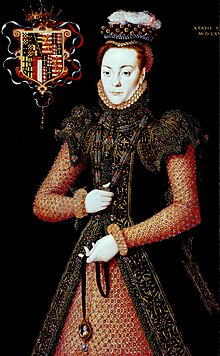
In recent years there has been an explosion of interest in the Elizabethan succession and, in particular, the extraordinary lives of Lady Jane, Catherine and Mary Grey. These women were, according to the will of Henry VIII, to inherit the throne of England in the event that Elizabeth I died with no heirs. Lady Jane was executed in 1554 for her role in seizing the throne unlawfully from the rightful queen, Mary I. As is well known, the fearful Elizabeth reacted furiously to news of the clandestine marriages of Catherine and Mary, and punished them both accordingly. Both Grey sisters were imprisoned, and Catherine's two sons by Edward Seymour, earl of Hertford, were declared illegitimate. Both sisters died fairly young, even by the standards of the time (Catherine was twenty-seven and Mary thirty-three). Their lives were undoubtedly highly tragic, but the public at large regarded the Greys as the rightful successors to Elizabeth, particularly in the wake of intensified concerns regarding Mary Queen of Scots.

After the deaths of Jane, Catherine and Mary, and the bastardisation of Catherine's sons, Elizabeth I's heir was, according to Henry VIII's will, Margaret Stanley, countess of Derby. The countess has received far less attention, both from academic historians and popular writers, regarding her role as a claimant to the English throne. However, Margaret's life was every bit as tragic, as tumultuous and as unpredictable as that of her Grey cousins. 

Above: Margaret's cousins: Jane, Catherine and Mary Grey (left to right).

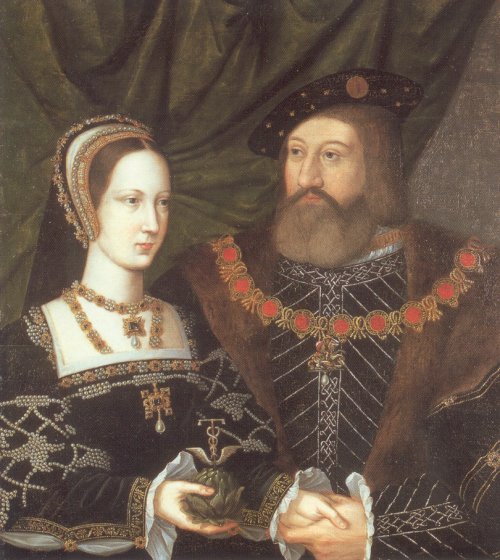
Margaret was the daughter of Lady Eleanor Brandon, who was in turn the youngest daughter of Mary Tudor and Charles Brandon, duke of Suffolk. Eleanor was Henry VIII's niece and granddaughter of Henry VII. Her daughter Margaret, therefore, was Henry VIII's great-niece. She was born in 1540, the same year her cousin Catherine Grey was born. Her mother had married Henry Clifford, earl of Cumberland. He came from a respected northern family and the union between Brandon and Clifford meant that Margaret Stanley grew up amidst considerable luxury and wealth. Until her mother gave birth to a son, she was heiress to the Cumberland title. Eleanor did give birth to two sons, Henry and Charles, but both died in childhood.

Above: Margaret Stanley's grandparents, Mary Tudor and Charles Brandon, duke of Suffolk. 

From an early age, Margaret was educated to view herself as a most important lady. She would have been proud of her position as Henry VIII's great-niece. Her cousins Jane, Catherine and Mary Grey were erudite, educated and opinionated young women, and like them Margaret was aware of her important position within the Tudor dynasty. There is no surviving evidence that her parents provided her with as remarkable an education as that enjoyed by her cousins, but undoubtedly she would have been brought up with skills regarded as fundamental in Tudor gentlewomen: needlework; embroidery; dancing; music; hunting; good manners; reading; and writing. 

When Margaret was seven years old, her mother died. That was a tumultuous year, given that Henry VIII also died at the age of fifty-five. Margaret first came to play an important role in political events in 1552, when the Duke of Northumberland proposed that the twelve-year-old marry his youngest son Guildford. The marriage came to nothing, and Guildford instead married Margaret's sixteen-year-old cousin Jane Grey. There were later rumours voiced at court that Margaret was to marry instead Northumberland's brother Andrew, but again the match came to nothing, perhaps because Margaret's father had voiced opposition. 

The year 1553 was a turning point for Margaret and her family. The young Edward VI had died while still a teenager. The determined king had refused to countenance the possibility of either of his sisters succeeding him, because he believed that both were illegitimate. Instead, he willed the crown to go to the heirs of Lady Jane Grey. Because Lady Jane had not yet given birth to children, she herself became queen upon his death. Margaret's cousin was now first lady in the land. However, she was dethroned and executed seven months later by Mary I. 

How Margaret felt about her cousin's brutal execution is unknown, but it is possible that she did not give much thought to it. Five days earlier, the fourteen-year-old had married Henry Stanley, earl of Derby. It was a highly significant marriage. Stanley, who was nine years Margaret's senior, was a kinsman of Queen Anne Boleyn and Queen Katherine Howard (his maternal grandfather was Thomas Howard, duke of Norfolk). The marriage took place at Whitehall and was attended by Queen Mary. The couple seem to have experienced a volatile marriage, for the countess later confirmed that there were 'breaches and reconciliations' between herself and Stanley. They had four children together: Edward, Ferdinando, William, and Francis.

Above: Henry Stanley, earl of Derby, husband of Margaret Clifford.

How Margaret regarded her dynastic position during the reigns of Mary I and Elizabeth I cannot be known with certainty, but she was surely aware that she had a strong claim to the throne if her cousins Mary and Elizabeth died without heirs. During these years, the countess occupied an important place at court, although she spent much of her time on her estates in childbirth. In the early 1560s, however, Margaret's life was changed forever. 

Her cousin Catherine Grey clandestinely married Edward Seymour, earl of Hertford, in late 1560. Hertford was of royal blood (he was the nephew of Queen Jane Seymour and son of the Lord Protector). Catherine subsequently fell pregnant, and was forced to inform Elizabeth I of what had happened. The queen was understandably furious: not only were her councillors pressuring her to name a successor in the event that she did not marry and provide an heir herself, but she seems to have personally disliked and feared Catherine. Elizabeth was well aware that Catherine was regarded by English Protestants (and some Catholics) as her heir, and in falling pregnant Catherine had strengthened her claim. The irate queen ordered her cousin's imprisonment in the Tower of London, and her husband was recalled from Europe and incarcerated there as well. The stricken Catherine, who was only twenty-one, gave birth to their first son Edward at the Tower in the autumn of 1561.

Elizabeth never forgave Catherine. She almost certainly remembered the treachery of the Greys in the reign of Mary I, and she remembered that she had been a figurehead for rebellion during her sister's reign. Elizabeth viewed her Grey cousins with suspicion and fear, and was determined to prevent their succession in the wake of her death. Catherine remained under house arrest at a succession of different houses until her untimely death in January 1568 at the age of twenty-seven, leaving two young sons and a bereaved husband. Only a few years previously, Catherine's younger sister Mary had also been incarcerated for her clandestine marriage to Thomas Keyes, a Sergeant Porter. With her disgrace and death in 1578, Margaret Stanley's dynastic importance increased tenfold. 

According to Henry VIII's will, Margaret Stanley was her cousin Elizabeth's heir. Despite the urgent entreaties of her Privy Councillors and her own passionate love for Robert Dudley, earl of Leicester, Elizabeth refused to marry. Historians have endlessly debated about the reasons behind her decision. Undoubtedly these reasons were political, psychological and personal. Regardless, Elizabeth's decision not to marry caused considerable uncertainty in England about who would succeed upon her death. Margaret's great-uncle, King Henry, had nominated her as her cousin's heir, and it is entirely likely that, by the late 1570s, the countess had began to view herself as a possible future Queen of England.

Above: Mary Queen of Scots, Lady Margaret Stanley's kinswoman and potential rival claimant. Some historians have suggested that Queen Elizabeth always preferred the claim of the Scottish queen to the claim of the descendants of Mary duchess of Suffolk.

However, any potential ambitions for the crown that Lady Margaret had were to remain unfulfilled. The countess landed herself in deep trouble and caused her own ruin through her rash actions. In 1579, just a year after the death of her cousin and potential rival Lady Mary Grey, Margaret was accused of sorcery and arrested. She had allegedly used sorcery to predict how long Elizabeth would live, and there were even rumours that she had plotted to poison her cousin. Furthermore, she had allegedly spoken out about the queen's proposed marriage to the Duke of Alencon because it threatened her own position as Elizabeth's heir. Like her cousins Catherine and Mary Grey, the countess was punished with house arrest. Her fellow accused William Randall, whom the countess claimed was her physician, was executed. No charges were brought against Margaret, but she was banished from court. She wrote highly emotional letters to Elizabeth, claiming that she was in a 'black dungeon of sorrow and despair'. If she hoped for forgiveness and a return to royal favour, she was to be sorely disappointed.

In 1596, Lady Margaret died at the age of about fifty-six. Her sons Edward and Francis had died in childhood, and her second son Ferdinando, who had inherited the earldom of Derby, had died two years earlier. Ferdinando's son, Lady Anne Stanley, was Margaret's heiress presumptive upon the countess's death. The will of Henry VIII stipulated that Anne Stanley was Elizabeth's heir following the death of her grandmother Margaret, but the queen preferred the claim of Mary Queen of Scots' son James VI, and upon her death in 1603 James duly became King James I of England.

Much of the life of Margaret Stanley, countess of Derby, remains shadowy and elusive. It is not difficult to understand why historians have focused their attention on her Grey cousins, because greater evidence survives for their lives, and their status as claimants to the throne was more viable than Margaret's claim. It is usually forgotten that, upon the death of Mary Grey in 1578, Margaret Stanley was heir to the throne according to the will of Henry VIII. Her disgrace in 1579 seems to indicate that she was a highly ambitious woman who was determined to enforce her claim as Elizabeth's heir. Realising that her cousin would never marry and give birth to heirs, Margaret seems to have hoped and dreamed that she would one day become Queen herself. It was not to be. The disgraced countess never recovered her place at court, for she had invited the suspicion and hostility of Queen Elizabeth, who was never particularly warm towards the descendants of Mary, duchess of Suffolk at the best of times. The queen's antipathy to her Brandon kin was demonstrated in her decision to appoint Mary Queen of Scots' son James her successor upon her death, rather than Margaret Stanley's granddaughter Anne Stanley, despite the fact that Anne was, according to Henry VIII's will, the rightful heir.