Thursday, 29 August 2013

Tess of the d'Urbervilles & the Fallen Woman in Victorian England

The Outcast
Above: Nastassja Kinski as Tess.
The Outcast, Richard Redgrave (1851).

The Victorian era (1837-1901) famously espoused oppressive, even stifling, moral values concerning domesticity, sexuality, and femininity. Building on ancient and medieval ideals of sinfulness and the seductiveness of Eve, women were expected to be chaste, virginal, silent and fair - as Coventry Patmore immortalised in his 1854 poem, they should be an 'angel in the house'. Those who rejected these values were viewed as a threat to respectable society and became known as 'fallen women'. They became outcast, shunned, because they were viewed as tainted and spoiled. Richard Redgrave's famous painting, The Outcast, illuminatingly explores these issues. The painting illustrates a father casting out his daughter from the family home because she has allowed herself to be seduced and has borne an illegitimate infant which she holds in her arms. Other family members weep, plead with the father, and beat the walls with frustration. We cannot tell if they are sympathetic towards the outcast woman, or whether they feel shame and dishonour. This painting serves as a warning to other young women of the dangers of male seduction.

Victorian authors explored the theme of the fallen woman in their novels. It is worth considering, therefore, whether or not they perceived the fallen woman to be a threat to society, by virtue of her corrupted social position, or whether they discerned her to be a greater threat to ideals of femininity and respectability. Perhaps the two were intertwined and connected. These authors were usually sympathetic. Gabriel Rossetti, William Holman Hunt and Ford Madox Brown recognised the complex and powerful emotions which the fallen woman experienced by virtue of her fall from grace. These particular painters portrayed the fallen woman in a tragic light, with Rossetti presenting the fallen woman in his painting Found as a prostitute who is too ashamed to return to her former lover, who attempts to carry her off. Rossetti questions whether the fallen woman should so easily be condemned and judged when her situation was often a great deal more complicated and less clear-cut. Holman Hunt even more controversially presented the fallen woman in Awakening Conscience as a redeemer, a repentant sinner. Ford Madox Brown castigated men for their irresponsibility and warned them to aid their lovers when they fell from grace.

Authors were similarly quick to recognise the complexities of the situation. Perhaps most famously, Thomas Hardy centralised the theme of the fallen woman in his classic novel Tess of the d'Urbervilles, published in 1891. The novel's subtitle, A Pure Woman, infuriated and scandalised critics when the novel was first published, for they perceived the novel's heroine Tess to be anything but a pure woman. The novel's plot is well known. The daughter of an impoverished villager dwelling in rural Wessex during the nineteenth century, Tess Durbeyfield discovers, in a dramatic chain of events which will lead to her early death, that she may be descended from the ancient and renowned family of d'Urberville. Her family, determined to recover their fortunes, encourage her to approach her 'cousin' Alec d'Urberville who, they hope, will assist her in obtaining the family fortunes. However, the sly and menacing Alec proceeds to seduce the innocent Tess, culminating in the controversial but eerie scene of Chapter 11 which is renowned for its ambiguity - does Alec rape Tess, or does she willingly allow sexual intercourse with him? The narrator presents her in an innocent and victimised light through the use of colour imagery to emphasise her purity: 'the white muslin figure', 'this beautiful feminine tissue, sensitive as gossamer, and practically blank as snow yet, there should have been traced such a coarse pattern as it was doomed to receive...' We are left in doubt that Tess, an innocent and sexually inexperienced maiden, is relentlessly and unwillingly seduced by the amorous Alec. Tess later gives birth to an illegitimate son, who dies several weeks later. As a fallen woman, like so many other women of her time and class Tess is forced to seek employment outside her home, and journeys to Talbothays Dairy where she meets and falls in love with Angel Clare, an apprentice farmer.


Above: Angel and Tess (1891 illustration, Joseph Syddall).

When Angel asks Tess to marry him, this naturally puts her in a difficult position, for Angel is unaware that Tess is not a virgin and has borne an illegitimate child. Although he disavows religion and seems unconventional, Angel in fact adheres to contemporary gender and social prejudices pervading his era. Growing increasingly troubled and alarmed, Tess decides to inform Angel about her past, although her mother warns her not to. Believing that he will prove understanding and sympathetic, Tess is devastated to learn that Angel, like most Victorian men, views her as corrupted and tainted by virtue of her past: 'O Tess, forgiveness does not apply to the case! You were one person; now you are another', 'the woman I have been loving is not you... another woman in your shape'. Cruelly, he informs her that she is 'another' person. The couple later separate, and Angel journeys to Brazil to begin a new life. She is later reacquainted with Alec d'Urberville, who begs her not to tempt him again (adhering to contemporary values which blamed the woman for sexual transgressions) but then professes his desire to be with her. At this point, Angel begins to repent of his treatment of Tess. Eventually, the couple are reacquainted. When Angel begs her forgiveness, Tess admits that she has become Alec's mistress since she believed that Angel would never return to her. In a fit of anger and sorrow, Tess stabs Alec to death and runs away with Angel. They travel to Stonehenge, where Tess is discovered by the police and arrested. She is later executed, and Angel marries her sister.

The novel explores the unfairness of the sexual double standard pervading Victorian society. But does Hardy suggest that the fallen woman is perceived to be a greater threat to her society, or to ideals regarding the ideal woman? Of course, the two might not be completely independent from one another, but it seems likely that Tess is viewed by her male contemporaries as a greater threat to ideals of femininity. Angel admonishes her for appearing to be pure and chaste, when in fact she is not a virgin and has already borne an illegitimate child. Alec blames her for apparently seducing him, ignoring the fact that he probably raped her in the eerie setting of the Chase. On the other hand, Tess clearly fears that she will be viewed as threatening the values and ideals of the society in which she lives. She remains silent about her past life when she seeks new employment at the dairy, because of the fear that if found out she will be thrown out of respectable society, and her family warn her not to reveal her past to other individuals. Finally, the actual ending of the novel and Tess' eventual fate - execution in a Wessex prison - serves as a warning of how the fallen woman, by virtue of her actions, is believed to dangerously threaten respectable Victorian society, and is deserving of severe punishment for her actions. While Tess is executed as a murderess, this chain of events ultimately begins and ends with the belief that she is a fallen woman, seduced and corrupted at an early age, and outcast from her society.

The unfairness of the position of the fallen woman was recognised by other eminent Victorian authors. Charlotte Bronte's Jane Eyre evidences Jane's rebelliousness and fury with ideals concerning femininity and warning against the dangers of female sexuality and transgression, while rejecting the ideal of the 'angel in the house'. As Beth Kalikoff notes in her article The Falling Woman in Three Victorian Novels (1987), 'both popular fiction and nonfiction barely conceal a genuine dread of female sexual, social, and economic autonomy'.

The fallen woman was a pressing issue in Victorian society. Playing on contemporary ideals of femininity and sexuality derived from ancient understandings, the fallen woman was perceived as transgressive, corrupting, and irresponsible. She was shameful to her family, repulsive to her society, and threatening to other women. Victorian authors such as Hardy and Bronte portrayed the theme of the fallen woman in a positive light, but the ultimate fate of women such as Tess demonstrates the dangers in rejecting ideal female values and qualities. As Tess' case, albeit fictional, discerns, the harshest of punishments could be meted to fallen women. But the medium of literature and art allowed individuals to criticise and condemn the harshness and cruelty of punishing fallen women because of the devastating impact these actions had on their lives.

Thursday, 22 August 2013

The Battle of Bosworth


Although the Wars of the Roses - known in the fifteenth century as the Cousins' War - had been raging intermittently and violently for the last 30 years, encompassing horrific battles at Towton, Barnet and Tewkesbury and more minor skirmishes across the country, the Battle of Bosworth on this day in history, 22 August 1485, was unquestionably the most significant battle of the lot. The Wars had seen three usurpations (Edward IV usurping Henry VI; Henry usurping Edward; and Richard III usurping Edward V), and Bosworth threatened a fourth usurpation: that of the relatively unknown Henry Tudor, earl of Richmond, who prepared to face England's controversial king, Richard III.

For many years the exact location of the Battle was controversially debated and questioned by both archaeologists and historians. Danny Williams, in 1974, developing the research of eighteenth-century historians, theorised that Richard's army gathered on the western slopes of Ambion Hill and marshes on the southern slopes, while Henry Tudor's forces approached from Whitemoors. The Stanley forces arrived from Near Coton. Williams suggested that the forces clashed west of Ambion Hill, near Shenton, where the Yorkist king eventually died.

However, Peter Foss (1985) disagreed with Williams' conclusions and believed that the battle occurred on low lying ground, Redesmore, which was situated between Ambion, Dadlington, Stoke Golding, Upton and Shenton. Richard's army assembled on a ridge southwest of Ambion Hill while Henry's troops gathered on Fenn Lane; the Stanley forces, meanwhile, gathered at Stoke Golding and Dadlington. Foss placed the actual battle north of Stoke Golding, on Fenn Lane. Michael K Jones, writing in 2002, disagreed, placing Henry's camp at Merevale since the Crowland Chronicle reported that Henry Tudor had provided compensation to Mancetter, Witherley, Atterton and Fenny Drayton for damage caused to crops during the battle. He put Richard's army between Merevale and Ratcliffe Culey. Jones concluded that the actual battle occurred in the area south and east of Ratcliffe Culey.

These conclusions were undermined by the 2010 archaeological survey funded by the Heritage Lottery Fund, using metal detecting, in which Glenn Foard, a Battlefields Trust archaeologist, located evidence to provide the true location of the battle: "the site, never before suggested as the battlefield, straddles the Roman road known as the Fenn Lane, near Fenn lane farm. It is three kilometres south-west of Ambion Hill and a kilometre west of the site suggested by Peter Foss." A silver gilt-boar, Richard's badge, was discovered, probably worn by a knight in the king's retinue during the battle. Silver coins belonging to Charles of Burgundy and the largest collection of round shot found on a medieval battlefield were also discovered.

Richard III had endured a controversial and difficult reign since first usurping the throne 2 years previously, following the premature death of his elder brother Edward IV. Whether Richard was ultimately responsible or not for the deaths of his two nephews, the 'Princes in the Tower', his unlawful usurpation of the Crown had caused scandal and outrage in England. While Richard had been successful in restoring law and order, and enacted successful financial and legal reforms, he continued to face rebellion and threats during his brief reign. These were headed by Henry Tudor, the young earl of Richmond who had been groomed by his uncle Jasper Tudor, with the assistance of Henry's ambitious and notorious mother Margaret Beaufort, with the intention of, one day, making him King of England. In promising to marry Elizabeth of York, daughter of Edward IV, once he had become king of England, Henry was able to enjoy support from English Yorkists, many of whom were disaffected with Richard and desired his usurpation.

Henry had first attempted to invade England in 1483, during the Duke of Buckingham's rebellion against King Richard, but stormy weather frustrated his attempts. However, Henry refused to give up, and on 7 August 1485 successfully arrived on the south-west coast of Wales, determined to claim his crown. Henry gathered crucial support on his journey through the country, although the support and allegiance of his mother's husband, Thomas Stanley, and his family proved less certain, even during the battle itself. As Henry was to recognise, their support was essential to his cause.

Richard, however, refused to renounce his throne without a fight, and mustered his own troops, which vastly outnumbered those of the Tudor pretender. He intercepted Henry's army south of Market Bosworth in Leicestershire in late August. John Howard, duke of Norfolk, and Henry Percy, earl of Northumberland, were among several powerful nobles who supported Richard's cause and served in his army. By contrast, Henry was able to rely on the support of John de Vere, earl of Oxford. Wary of the Stanleys, Richard took Lord Strange, son of Thomas Stanley, as hostage for his father's support during the battle.

The Yorkist army, which probably numbered around 10,000, assembled on the battlefield, with Norfolk's group of spearmen assembled on the right flank, protecting the cannon and 1,200 archers. Richard's group, encompassing 3000 infantry, formed the centre. Northumberland's 4000 men, most of them mounted, guarded the left flank. In contrast, Henry probably had fewer than 1000 English men in his army; historian John Mackie suggested in 1983 that 1800 French mercenaries, led by Philibert de Chandee, formed the core of the Tudor army. John Mair, writing in c1520, argued that many of the force were Scottish. In total, Henry's army encompassed some 5000 men. The earl of Oxford commanded his army and retired to the rear with his bodyguards.

During the battle, Richard's army held sway for much of it, and a Yorkist victory appeared inevitable during the early stages. Henry's troops were harassed by Richard's cannon as they sought to manoeuvre around the marsh. Norfolk's men and contingents of Richard's group advanced, with arrows attacking both sides as they advanced. Norfolk's men fled the field as Oxford's men proved steadier in hand-to-hand combat. Crucially, Northumberland's men refused to assist Richard's forces when the King sought to engage their help, recognising his army's weaknesses. Why Northumberland refused to help has been debated by modern historians.

Richard himself decided to attack Henry's group after witnessing Henry's departure to the Stanleys. While Richard killed Henry's standard-bearer William Brandon, and managed to unhorse Edward IV's former standard-bearer John Cheyne, Richard was defeated by the crucial decision of Sir William Stanley, kin to Henry Tudor, to lead in his men to fight at Henry's side. The king's group was outnumbered and surrounded by enemies. Richard's banner man Sir Percival Thirwell lost both his legs but, admirably, managed to hold the Yorkist banner aloft until he was hacked to death. Richard's horse was mired in the soft ground, forcing him to fight on foot. While his followers offered him horses in order to escape, the king refused. Although, as contemporary chroniclers agree, Richard fought valiantly to the end, he was overwhelmed by the numbers of Welsh spearmen around him and was killed on the battlefield. Richard's forces disintegrated on news of his death - the duke of Norfolk was killed, while Northumberland and his men, who had refused to intercede on Richard's behalf, fled north.

Although there is no evidence to support the legend that Richard's crown was eventually found in a hawthorn bush, Richard's circlet itself was found and brought to Henry, who was crowned King on Crown Hill, near the village of Stoke Golding. The Yorkist king's corpse was stripped naked and strapped across a horse, before being brought to Leicester and openly exhibited in a church to prove his death. The corpse was eventually placed in an unmarked tomb in Greyfriars Church. Discovered in 2012, it is possible that Richard's body will be reinterred in York Minster. Since he was extremely popular in the North, where he exercised formidable power, enjoyed widespread loyalty and because his family were the Yorkists, this would be a fitting place for him to be buried.

Henry eventually married the nineteen-year old Elizabeth of York, ending the bloody feud between the Yorkists and Lancastrians and ushering in a new ruling house, the Tudors, who would rule England for 118 years, bringing in alternatively peace, prosperity, bloodshed, rebellion, and murder. Henry VII actively presented the Battle of Bosworth as a symbol for a new beginning for England, hiring chroniclers such as Polydore Vergil to portray the Tudors in the best possible light. For many, Bosworth symbolises the end of the medieval period and the beginning of 'modernity'.


Sunday, 18 August 2013

A Formative Childhood?: A Comparison of the Reigns of Mary Stuart & Elizabeth Tudor


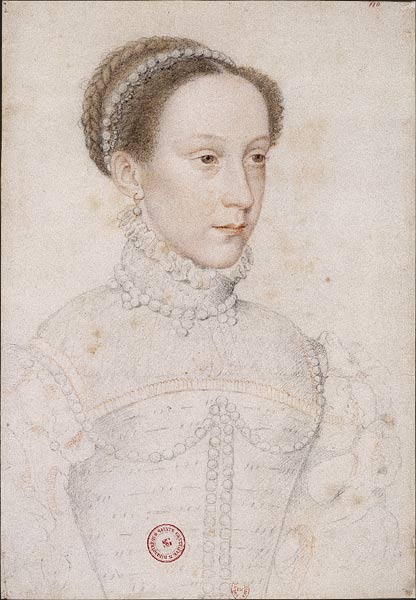
Above: queens, cousins, rivals. Mary Stuart, queen consort of France and queen regnant of Scotland (left) and Elizabeth Tudor, queen regnant of England (right).

Being a queen regnant in sixteenth-century Europe was no easy task. Prevailing misogynistic notions questioned whether women, as the inferior sex, had the right to rule over their male superiors. John Knox, the vehement Scottish Protestant preacher, opined in his The first blast of the trumpet against the monstrous regiment of women, attacking the rule of female monarchs such as Mary Tudor and Mary of Guise and published in 1558, that female rule was contrary to Biblical law. He bitterly concluded: 'For their [women's] sight in ciulie regiment, is but blindnes: their strength, weakness: their counsel, foolishenes: and judgement, phrenesie, if it be rightlie considered'. In view of this, the experiences of the queens regnant Mary Stuart, queen of Scotland, and Elizabeth Tudor, queen of England, should be considered in light of the customary expectations of figures such as Knox. 

Modern psychologists often suggest that childhood experiences are formative in governing later choices, actions and motives. Alfred Adler believed that people develop desires and drives during the childhood phase which later affects adulthood. Ann Smith concluded, in her article published by Psychology Today, that 'our own childhood experiences, which include parents, combined with our own personalities, our reaction to siblings and peers and the context of our lives send us off on a path with a particular set of beliefs and patterns that have a huge impact on our future relationships'. Although the psychology of queen regnants such as Mary and Elizabeth, living four hundred years ago, can only be guessed at, it is credible that the childhood experiences of these two queens, which were vastly different, dictated significantly their later actions and beliefs, particularly in relation to queenship and authority.


Above: John Knox's The first blast of the trumpet (1558) was aimed at attacking female rulers such as Mary Stuart and Mary Tudor (right). 

Both women descended from the first Tudor king, Henry VII, who had attained the crown of England through his defeat of the last Yorkist king, Richard III, at the Battle of Bosworth in August 1485. Elizabeth Tudor's birth had only been brought about by the annulment of her father's first marriage and his subsequent marriage to Anne Boleyn in 1533, with her birth occurring in September of that year. This marriage and the accompanied break with the Roman Church proved highly significant in European politics, particularly later on in the sixteenth century, for Catholic powers such as France and Spain viewed Henry VIII's divorce as illegal and his remarriage void, rendering his second daughter Elizabeth a bastard with no right to accede to the throne of England. Mary Stuart, by contrast, was the grand-niece of Henry VIII since she was the daughter of the Scottish king, James V (nephew of Henry), and his French queen Mary of Guise. Her line of descent and her claim to the English throne came through Henry's eldest sister Margaret Tudor, second child of Henry VII.

Elizabeth Tudor's childhood was extremely complex and must be viewed as, at best, topsy turvy. For the first three years of her life, she had occupied a central place in her father's affections as the heir to his throne following the bastardisation of her elder sister Mary. Besotted with his new wife Anne, the English king continued to hope, however, that she would bear him the much longed-for son to succeed Henry on the throne of England. Like most European rulers, Henry adhered to prevailing ideas that female rulers were unacceptable and contrary to God. This idea had, of course, provided the context for the annulment of his first marriage and his belief that his daughter Mary was illegitimate. Elizabeth enjoyed the luxury and splendour befitting an English princess, with her own household and servants, but because this occurred in the first three years of her life it is questionable to what extent she remembered or fully appreciated these luxurious early years.

In 1536, before her third birthday, Elizabeth's fortunes changed dramatically with her mother's loss of favour and eventual execution on charges of treason, adultery, and incest. While most historians firmly believe in Anne's innocence, her daughter was presumably shattered by the news of her mother's death, although at two years old how much she understood of the situation was very limited. Historians such as Sarah Gristwood and Maria Perry question how closely Elizabeth had bonded with her mother, for she had never resided with her. Following the custom of sixteenth century royal practice, Elizabeth had been nourished by a wet nurse and had been assigned her own household at Hatfield. Her visits to court had been relatively infrequent. Perhaps, as John Neale suggests, Elizabeth's 'emotional life was unaffected by her mother's fortunes'.

But this is slightly dubious. Following her mother's execution, Elizabeth was also, like Mary, declared a bastard, no longer in line to the English throne. Her title of princess was stripped from her, and it is probable that her father, by virtue of who her mother was, viewed her with considerable disfavour for a time. Probably Henry neglected Elizabeth in the immediate aftermath of her mother's death, for in the late summer of 1536 her governess Lady Bryan was forced to beg Cromwell for new clothes for the toddler. Later that year, however, she had returned to court and the Cardinal du Bellay observed the king's affection for his youngest daughter. By all accounts, during her life Elizabeth revered her father's memory and proudly proclaimed her parentage. By contrast, she is said to have mentioned Anne Boleyn's name only three times in her seventy-year long life. Does this indicate suspicion or even hostility towards her mother, who had been executed for the foulest of crimes? Historians such as Alison Weir think not, believing that she may have, as queen, commissioned George Wyatt to write a secret defence of her mother.

Although Elizabeth was probably not severely affected personally in the immediate aftermath of this event, it is likely that her mother's execution 'must have overshadowed Elizabeth's childhood. Over the years, guarded revelations, gossip, rumour and innuendo... and the growing awareness of her bastard status, must have caused the maturing Elizabeth recurring distress and enduring insecurities, and certainly affected her emotional development' (Weir, 2009). The executions of both Katherine Howard (1542) and Lady Jane Grey (1554, by her sister Queen Mary) likely caused Elizabeth considerable distress, bringing back painful memories of her own mother's brutal end. But how did these early childhood experiences govern Elizabeth's decisions and choices as a ruler?

For one thing, as Antonia Fraser suggests, she learned from a very early age to hide her true feelings. Although Elizabeth was notoriously prone to fits of anger, distress, and annoyance, her own personal feelings regarding, for instance, personages such as Anne and her cousin Mary Stuart, queen of Scots, remain mysterious, as do her personal feelings for Robert Dudley, earl of Leicester and her lifelong suitor. Wisely, Elizabeth chose not to become embroiled in plots against her sister Queen Mary, although she was imprisoned in the Tower of London for a time. When Thomas Seymour tried to seduce her in 1549 during the reign of her brother Edward as a means of pursuing power at court, Elizabeth wisely refused to have nothing to do with him, and at the news of his execution she noted his 'very little judgement'. 
In other ways, too, the impact of Elizabeth's early childhood experiences can be clearly discerned. She was notoriously touchy about her status, and reacted furiously to allegations that she was a bastard and thus no rightful queen of England. 

Elizabeth's reign was characterised by her caution and indecisiveness. She sought to placate foreign powers such as Spain while cautiously supporting fellow Protestants in the Netherlands, who sought to free themselves from the tyranny of the Spanish monarchy. Nevertheless, she did not seek to invade Scotland or France as a means of asserting her authority as her father, Henry VIII, sought to do. Her own horror of bloodshed and her desire for clemency can also be explained as a result of her personal aversion to the bloody experiences of her youth. Famously, she spent weeks, even months, agonising over her duty to sign the death warrant of Mary Stuart, and unlike her Catholic sister, refused to instigate a full scale Holocaust of religious deviants during her throne. Notwithstanding this, English Catholics were, of course, harshly persecuted from the 1570s on in light of the menacing threat of Spain and, to a lesser extent, France.

But above all the impact of Elizabeth's childhood can most illuminatingly be seen in her attitudes to marriage and her decision to remain unmarried as England's Virgin Queen. Her father had not prioritised her marriage in her youth, although suggestions of a betrothal to the son of the French king had surfaced during her early years. Later, when Mary Tudor sought to marry Elizabeth to the duke of Savoy, Elizabeth personally refused, on grounds of her decision, already made in her early twenties, to remain single, a decision which revolted her unhappily married sister. Why she chose to do so can only be guessed at, although most historians attribute her momentous decision to the bloody experiences of marriage suffered by her mother Anne and her stepmother Katherine Howard. Potentially, the death in childhood of two of her stepmothers, Jane Seymour and Katherine Parr, also influenced Elizabeth's aversion to marriage, for she may have come to associate the married position with an early death, pain, even bloodshed. Others argue that she feared the loss of both personal and political power if she had to give way to a husband, while some contended that she refused to marry because she was physically unable to bear children.

In her illuminating article 'Why Elizabeth I Never Married', Retha Warnicke suggests that political issues were far more important, for 'every British queen regnant who married soon discovered that her husband and his family complicated her life politically'. The unsuccessful marriages of three other queen regnants at this time, Lady Jane Grey, Mary Tudor and Mary Stuart, probably influenced Elizabeth's marital beliefs. Jane's Dudley in-laws were unpopular, while Mary Tudor's Spanish husband was so hated that a popular rebellion was directed against him in 1554. Mary Stuart's second marriage to Henry lord Darnley had, of course, ended in his brutal murder, attributed by hostile individuals to the Scottish queen herself. Her third husband brutally raped her and left her alone in a hostile Scotland. In view of Warnicke's arguments, it is extremely likely that both Elizabeth's childhood experiences and the experiences of later queen regnants in relation to marriage governed her momentous decision to remain unmarried.


Above: Queens Elizabeth Tudor and Mary Stuart in their youth.

It is clear that Queen Elizabeth's personal views and decisions regarding foreign policy, marriage, and the shedding of bloodshed were strongly governed by her formative childhood experiences. Is the same notion true for Mary Stuart, queen regnant of Scotland and, at one stage, queen consort of France? As second cousin to the English queen, Mary Stuart had enjoyed a far different childhood to Elizabeth. While Mary as dauphiness of France was to enjoy a life of luxury and splendour similar to that of the English princess before the execution of her mother, beforehand her birth in 1542 to the Scottish king James V occurred at a time of political and foreign difficulties in Scotland. The hostility of Henry VIII, directed in continuing invasions of Scotland, was worsened by the death of James six days after his daughter's birth. At 6 days old, therefore, Mary Stuart became queen of Scotland. Her mother, Queen Mary, became regent of Scotland during her daughter's minority, but her French lineage and her Catholic faith rendered her an unpopular figure to Scottish Protestants. It is significant that the Scottish Reformation occurred from this time.

The hostile misadventures of the English king encouraged the Scottish dowager queen's decision to send her infant daughter to the land of her own birth, France, where she would be brought up by her Guise relatives and groomed for a splendid marriage to the French dauphin, Francois, who would day accede to the crown of France. Although, like Elizabeth, Mary's infant years had been traumatic and complex, during her adolescence she enjoyed a life of luxury and fulfilment as a princess of France. She grew into a tall, striking, charming woman who enjoyed poetry, music, and dancing, and who sought personal satisfaction in outdoor physical exercise. While she was of the Catholic faith, during her teenage years she was not devout. However, the year 1558 was significant for Mary and the course of her life. Aged fifteen at the time, Mary's position in Europe was immeasurably strengthened by the death of her cousin Queen Mary Tudor, ruler of England, in November. Because Catholic powers, as mentioned, identified Elizabeth as a bastard, in the eyes of Europe, Mary Stuart was now the rightful queen of England. Elizabeth's Protestant faith rendered her a heretic, and her illegitimacy was proclaimed to be a pressing reason why she should never accede to the crown of England. Accordingly, Mary and her French husband, whom she had married in April of that year in Paris, began using the royal arms of England alongside those of France and Scotland and it was ordered that they should be referred to as the king and queen of France, Scotland and England.

Mary's childhood and adolescence had encouraged her to believe that, by virtue of her excellent lineage and her Catholic faith, she was the rightful queen of England. But her future became uncertain in 1560 when, aged only seventeen, the French dauphin died prematurely. No longer queen consort of France, Mary decided to return home to Scotland as its queen regnant, although not after considering a second marriage alliance with a powerful nation such as Spain. Once in Scotland, Mary's political decisions and choices as queen are intriguing in view of her childhood experiences. Her religious policy was famously fair and liberal, for although she was a Catholic, the Scottish Reformation had progressed so extensively that she quickly discerned that it would be unwise to press for Catholicism to become the state religion. Her own mother had faced mounting hostility in view of her Catholic faith, culminating in an invasion. Wisely, Mary learned from her childhood experiences in accordance with the political and religious situation prevailing in Scotland. Like Elizabeth in the early years of her reign, who famously desired not 'to make windows into men's souls', Queen Mary sought peace and stability in a kingdom which was slowly experiencing increasing inner tensions. She may also have been influenced by the religious violence in France between Catholics and Huguenots during her childhood. As Fraser contends, she seems to have had a personal aversion to bloodshed and violence, like her cousin Elizabeth.

Mary's beliefs regarding marriage and motherhood were significantly different to those of Elizabeth, most likely because of her own childhood experiences in that regard. While Elizabeth may have equated motherhood and marriage with bloodshed and an early death, Mary's acquaintance with the fertility of the French royal family, coupled with her own maternal feelings, meant that marriage was a promising prospect for her. She also regarded it as essential in order to preserve dynastic and political stability in Scotland. Unlike Elizabeth, who feared the loss of her authority through marriage, Mary naturally desired a strong ruling hand to aid her in her queenship. In view of this, in 1565 Mary, having fallen in love with the dashing but volatile Henry Stewart, lord Darnley, chose to marry once more. Her choice, aside from his own personal failings, was a wise one, for Henry had royal blood by virtue of being the son of Lady Margaret Douglas, niece of Henry VIII as the daughter of Margaret Tudor. Since Mary Stuart was the granddaughter of Margaret Tudor, she was first cousin to Lord Darnley.

Mary's political decisions and views were dictated entirely by her childhood experiences in France. There, absolutism reigned, and the monarchy was entirely respected with its due reverence. By contrast, the Scottish monarchy was beset with difficulties in view of increasing religious conflict among the Scottish lords. They were violent and sought only to pursue their own interests. Abduction and rape of rich widows was commonly used as a means of achieving power and greater wealth. It was therefore impossible for Mary to appreciate the tensions and resentment prevalent among her nobility. Despite her religious tolerance, her Catholic faith rendered her unacceptable to hostile Protestants such as John Knox and her brother, the earl of Moray. Her husband, Lord Darnley, soon proved to be a disastrous choice as consort. Immature, jealous and easily manipulated, he was soon embroiled in a plot to kill Mary's beloved secretary Riccio, who was blamed for causing the Queen's disillusionment with her second husband. Less than a year after Riccio's brutal end, Darnley himself had been murdered, his strangled body found at Kirk o'Field. His house had been blown up in a plot to kill him, probably governed largely by the Earl of Bothwell who subsequently abducted the Scottish queen and raped her. Their marriage ceremony followed shortly afterwards. Mary now totally lost any support she had formerly enjoyed from the nobility. Viewing her as an adulteress and whore, they imprisoned her at Lochleven, and forced her to abdicate in favour of her infant son James. Months later, she managed to escape to England, where she would endure 19 years of imprisonment before Queen Elizabeth signed her death warrant, when evidence gradually but quickly emerged that Mary had been involved in a number of plots against her. Mary's life came to an end at the hands of the executioner's axe in Fotheringhay Castle in February 1587.

While Elizabeth's decisions were governed by caution and indecision, Mary's have often been considered reckless and impulsive, although her early religious policies were tolerant and well-considered. She also sought to pursue a policy of conciliation with the nobility, in order to avoid bloodshed and violence at the Scottish court. Both women were influenced supremely by their childhood experiences. In relation to marriage, Elizabeth shrunk from the prospect due to her own psychological views and her political awareness, while Mary's association of marriage with lineage and power, formed at the court of France, governed her decisions to remarry once in Scotland. Both women pursued strong alliances with European powers as a means of strengthening their positions politically and personally; Elizabeth because of the experiences of her father and sister in their reigns and because of England's own insecurities; and Mary because she was aware that Scotland's conflict could only be assuaged by the helping hand of a loyal Catholic ally. Both women also sought conciliating religious policies since both had a horror of bloodshed and violence. But in the most important decisions, it seems clear that Elizabeth was both more politically astute and more aware of the importance of her people's opinions. Consequently, she refused to marry Robert Dudley in 1560 following the mysterious death of his wife because she was aware that she was implicated by some in Amy Robsart's death; she refused to go to war with fellow Protestants because she feared England's loss of security at the hands of hostile powers such as Spain; and she refused to suffer the loss of her virgin status. Elizabeth was understandably reluctant to place her political and personal authority in doubt were she to marry an overbearing husband. Her own sister's example had demonstrated such a risk. 

By contrast, Mary Stuart's decision to marry Darnley appears singularly misguided even if, at the time, it was considered a strong alliance. But her own decision to marry Bothwell scandalised her people and alienated her nobility, although it seems hardly fair to blame Mary since he had both abducted and raped her and it is certain that she had very little choice. But the belief that she was a constant schemer and plotter against the English queen, whatever the truths of it, and the association of her name with murder blackened her reputation irretrievably. Unlike Elizabeth, who at an early age by virtue of her childhood experiences became cautious and indecisive, Mary was more impulsive and reckless by virtue of the fact that her childhood had not prepared her in the same manner for a successful queenship. Her sense of absolutism political sense and her views regarding marriage were significantly different to those of Queen Elizabeth.

Queen regnants faced hostility and suspicion in the sixteenth century, when it was believed that women were inferior to men and as such had no right to rule over them. The example of Queen Elizabeth proved that a woman could rule successfully, while that of Mary Stuart indicated the difficulties a female ruler faced by virtue of her gender. Both women's childhoods dictated their decisions later in life and their own personal characteristics, but while Elizabeth has been generally praised as a successful ruler and perhaps even England's greatest monarch, Mary has often been condemned, as a result of her political and religious decisions, as a failure, notwithstanding the prevailing image of her as a religious martyr or tragic figure.


Thursday, 25 July 2013

Katherine Howard, Jane Boleyn, and Sexual Violence


Top: Were Queen Katherine Howard (above) and her lady-in-waiting Lady Jane Boleyn victims of what we would now term sexual violence?

The mysterious relationship between Queen Katherine Howard and Jane Boleyn, formerly Viscountess Rochford, has long perplexed and confused modern historians. Both would die by the axe in February 1542 for committing treasonous acts against the state, after it was alleged by the Crown that Queen Katherine had committed adultery with Thomas Culpeper, a gentleman of Henry VIII's privy chamber. She had apparently been aided and abetted by the experienced Lady Rochford, who acted personally for mysterious reasons which historians have been unable to trace. In my book, which will hopefully soon be published, I have found intriguing evidence to suggest that Queen Katherine was a victim of what would today be termed sexual violence during her childhood at the hands of Francis Dereham. Controversially, there might be evidence to indicate that her lady-in-waiting, Jane, suffered similar horrific experiences.

George Cavendish, who formerly served in the household of Cardinal Thomas Wolsey and who was thus admittedly hostile to the Boleyn family, provided disturbing evidence regarding Jane's husband, George Boleyn, who was executed for supposed incest with his sister Queen Anne. Cavendish's verses regarding George's vices read thus:

My lyfe not chast, my lyvyng bestyall,
I fforced wydowes, maydens I did deflower,
All was oon to me, I spared non at all
My appetit was all women to devoure
My study was bothe day and hower.
My onleafull lecherey, howe I myght it fulfill
Sparyng no woman to have on hyr my wyll.

Modern historians such as Retha M. Warnicke and Alison Weir have interpreted Cavendish's hostile verses to mean that George committed not only rape and buggery but also sodomy, sparing neither men or women in his pursuit of sexual gratification. Personally, I am sceptical - of course, it is possible that George did enjoy homosexual sexual intercourse alongside heterosexual sex, which could explain Cavendish's references to his 'onleafull lecherey' and 'all was oon to me'. However, I believe that the verses are intentioned to relate to how no women were spared from Rochford's licentiousness: 'I spared non at all, My appetit was all women to devoure', 'sparyng no woman'. Perhaps these verses have been misinterpreted. Rather than emphasising 'unnatural' homosexual 'perversions', Cavendish seeks to describe in horror and revulsion George's sexual violence, not stopping even at rape, using force on women to pursue sexual pleasure.

Of course, we cannot know if this relates to Jane, George's wife. Historians have traditionally believed that the marriage was singularly unhappy, perhaps even a catastrophic failure. They suggest that Jane as an earnest supporter of Queen Katherine of Aragon was resentful or jealous of Anne, George's glamorous elder sister, and it also seems likely that Jane's traditional Catholic religion led her to be hostile of the reformist Boleyns, who were identified by their enemies as Lutherans. In 1536, the Boleyn family spectacularly fell from power, as the Queen and her brother alongside four other gentlemen were accused, condemned and executed for sexual perversions, including adultery and incest. While Jane Rochford probably did not supply the crucial evidence for her husband's incestuous relations with his sister, as was traditionally believed by historians, she does appear to have assisted the Crown's case, detailing how Queen Anne had confided in her that her husband, Henry VIII, was impotent and unable to father a son on her.

It is also unlikely that Lady Rochford was assisted by Cromwell, or rewarded for providing evidence. As Warnicke notes: '... her status as his wife did not exempt her from revealing information about his treasonable activities.... she seems not to have made any deal with the crown in exchange for her testimony'. In a letter to Cromwell, she beseeched God to pardon George. But, interestingly: 'Had Rochford's attentions to other women been the cause, her contemporaries would have viewed her behaviour as a grave over-reaction because of the prevailing double standard that condoned a husband's extra-marital liaisons. Given this custom, she must have been greatly provoked to condemn him'.

Rather than believing, as Warnicke and Weir do, that Lady Rochford moved against her husband because she was revolted at his homosexual relations with other men, I believe that Cavendish's verses may insightfully supply intriguing evidence as to Lady Rochford's decision to provide assistance. If George had sexually assaulted her, or forced her to undergo sexual intercourse, she could have been personally affronted, even horrified. While women were identified as licentious, even evil in their carnal appetites, rape was to become a capital offence and during Elizabeth's reign was to become punishable by the death penalty. If Lady Rochford had been violently forced by her husband to have sex, perhaps even raped, it could explain, rather than his supposed homosexuality, her revulsion towards him and why she decided to assist Cromwell.

On a different note, there is tantalising evidence to suggest that her future queen, Katherine Howard, also endured sexual violence at the hands of Francis Dereham, who resided in the household of her step-grandmother the Dowager Duchess of Norfolk. Aged around fourteen when Dereham began pursuing her, Katherine later emphasised his use of 'force' and his 'vicious purpose', while her statement that he used her 'as a man doth his wife' could imply that he was violent towards her, for wife-beating was a serious problem particularly in London during this period. A more detailed explanation and interpretation is to be found in my full-length study. Admitting that she had not enjoyed the sexual experience, Katherine suggested that she had been unable to conceive a child because of her revulsion. When she was forced to employ Dereham in her household in 1541 in order to try and keep him quiet about their relationship, his aggressive and controlling behaviour in boasting about his intention to marry the Queen when the King died and his boasts about his acquaintance with her confirm the likelihood that he was aggressive both verbally and physically towards a girl probably at least a decade younger than him.

Around the same time that Dereham threateningly promised to marry Katherine following Henry VIII's death, the Queen became involved with Thomas Culpeper, a handsome favourite of the king who served as a gentleman of the privy chamber. Although she never committed adultery with him, Katherine was later to admit that she had become friends with Culpeper, and he also admitted his liking for the Queen. There is no evidence that Culpeper, like Dereham, was aggressive and physically violent. The association of rape and murder with him probably relate to his elder brother, confusingly also called Thomas. Lady Jane Rochford's assistance in this affair was crucial. Katherine's ladies in waiting seemed to confirm that she had encouraged Katherine from the very beginning.

While Jane's motives for helping the Queen remain obscure, this reinterpretation of both Jane's marriage and Katherine's childhood sexual experiences indicate that both women may have suffered what in the twenty-first century would be termed sexual violence. Although their contemporaries did not regard such experiences as such, they were aware of rape and sexual assault, which were classified as sexual deviance and abominable to God. Churchmen warned that sexual intercourse should be utilised only for the purpose of conceiving children. Lust was unthinkable and viewed as offensive, with women identified as licentious and eager to entrap men in unnatural perversions. Consequently, the experiences these women may have undergone would be classified as deviant, for lust was turned on its head and the purpose of conceiving children inverted for the sake of inflicting harm.

If both Jane and Katherine had endured such horrors, it may have brought the two women together. Interestingly, Jane seems to have become the Queen's confidant and favourite lady-in-waiting, despite the fact that she was aged around twenty years older than her new mistress. Aware of Katherine's marital difficulties in the spring and summer of 1541, she appears to have encouraged Katherine's blossoming friendship with Thomas, as the Queen's position was increasingly endangered by the resentful Dereham and his foolish comments. Never the pathological monster or sociopath she is often presented in modern portrayals as, Jane Rochford had perhaps been the victim of unnatural sexual force and wished to assist her Queen, who may have suffered similar experiences, as best she could.

Later, these women were associated with carnal licentiousness and treason against the king. Following their executions in 1542, Katherine has been universally condemned as a flighty and adulterous trollop and Jane Rochford a revolting abetter of the foulest of crimes. Perhaps reading their experiences in light of prevailing cultural customs and prejudices about women and sexuality should clarify and explain their actions. Their male contemporaries were unable to believe that women did not enjoy sexual intercourse, since they almost universally subscribed to the view that women, as accomplices of the Devil, eagerly and happily embraced all forms of sexual perversions, no matter how unnatural.

Sunday, 14 July 2013

The Princes in the Tower


The fate of the two Princes in the Tower, the eldest sons of Edward IV and his queen Elizabeth Woodville, is one of the greatest mysteries in history. Shrouded in controversy and mystery, historians and researchers fiercely disagree as to who was responsible for their deaths; debating as to whether both princes died; whether one, or both, in fact survived; and, unsurprisingly, this scandal has impacted profoundly on those associated with it, including two English kings, Richard III and Henry VII.

This article will examine the events which led to Richard III's accession and will explore the fate of the two Princes, considering the main suspects for their murders - if, that is, they were even murdered at all. The surviving evidence is intriguing, but entirely contradictory, and one has to take into account the political, social and dynastic bias of the writer, whether it was a Tudor apologist bent on demonising Richard, or a contemporary observer writing in a foreign country, detached from English events.

It was a shock for everyone when Edward IV died aged forty-one in April 1483, allegedly of a fever. This Yorkist king's reign had seen comparative peace and tranquillity in England following the dynastic troubles which had plagued the 1460s and 1470s, known by the later name Wars of the Roses. Edward had fathered at least 8 children with his queen Elizabeth, of whom his eldest son, Edward, aged twelve, had been heir and now England's king. However, the fact that the new king was a minor spelt trouble for contemporaries, for the rule of minor kings led inevitably to greater factional conflict and fierce rivalry over control of the child king. This, perhaps, may have greatly influenced the actions of both Edward's mother and his uncle, Richard duke of Gloucester.

In May 1483 the new king arrived in London for his coronation, weeks after the death of his father, and was accommodated in the royal residence of the Tower of London, while his younger brother Richard resided in sanctuary with his mother the queen and several of his sisters. They had journeyed there after hearing alarming news which suggested that Elizabeth's brother-in-law, Richard of Gloucester, had intercepted the king's journey from Ludlow in Wales and had seized the king's uncle Anthony Woodville and the queen's youngest son by her first marriage Richard Grey.

It seems certain that Richard of Gloucester feared for his own future, for the Woodvilles were powerful, greedy and notoriously intolerant. He may also have genuinely believed that his brother Edward's marriage to Elizabeth was invalid, for he claimed that it had been brought about by witchcraft and sorcery, and also suggested that Edward had in fact been previously precontracted to one Eleanor Butler, which meant that Elizabeth Woodville was never his lawful wife. Consequently, their children were illegitimate and not fit to inherit the throne of England. By this thinking, then, Richard of Gloucester was England's rightful king.

It is essential to critically examine later Tudor propaganda, which alleged that Richard III was a monster and a murderer. I, personally, do not believe that the moment King Edward died, Richard, as a scheming and essentially evil character, decided to seize the throne of England and murder his nephews. I believe that he genuinely feared the Woodvilles and, consequently, was scared for his own future, and it is entirely possible that he did believe that his brother's marriage to Elizabeth was invalid by reason of his earlier pre-contract. If this was true, then Richard was entitled to be king of England, as shocking as it may seem.

As Sarah Gristwood writes in her book Blood Sisters (2012):

"The majority of historians from Vergil and More onwards have believed that Richard III murdered his nephews; and thanks largely to Shakespeare, it has become the accepted view among many who care nothing for history. A vocal minority are utterly convinced he was not guilty, while propounding various alternative versions of the boys' fate. Others again believe it is virtually impossible to be certain, which makes it wrong to declare Richard guilty. In that uncertainty the writer's most honourable option is simply to present both the few known facts, and the relevant theories".

Contemporary historians fiercely and angrily dispute who killed the Princes in the Tower - as Gristwood says, most continue to believe, subscribing to persuasive Tudor propaganda, that it was their evil uncle, the hunchbacked and deformed Richard III (although the recent excavation at Leicester somewhat disproves this). Others, however, suggest it was someone entirely different. So what is the 'truth', if that can even ever be recovered?

One needs to put the events in context. Having seized the throne, Richard ordered it to be preached by a Dr Shaa at St Paul's Cross that Edward IV's marriage was invalid, rendering all his children (including his daughters living in sanctuary) illegitimate. By all accounts, what we know is that the Princes were last seen, for certain, playing in the grounds of the Tower in the summer of 1483 (the younger prince, Richard, having been sent out of sanctuary by a very reluctant Queen Elizabeth to join his brother in the Tower). Dominic Mancini stated that both princes 'were withdrawn in the inner apartments of the Tower proper, and day by day began to be seen more rarely behind the bars and windows, till at length they ceased to appear altogether'. In 1674, ominously, two skeletons were discovered under the staircase leading to the chapel within the Tower of London, and in 1933 the grave was opened (the two bodies having been buried, on the orders of Charles II, in Westminster Abbey), and the skeletons were determined to be those of two young children, aged about seven to eleven and eleven to thirteen. The two princes, if they died in 1483, would have been aged 12 and 10. Moreover, the fact that they were buried in Westminster Abbey, where royals were traditionally buried, indicates that, at least in the seventeenth century, the king and others believed the bodies to be of the princes.

So, firstly, it would be wise to consider the main suspect: Richard III. Some have argued that he had no need to kill his nephews, for he had already had them declared illegitimate - since they were bastards, neither could inherit the throne, so why should he need to have them dead when they were safely imprisoned? But, as historian Amy Licence notes: '... the princes' royal blood made them dangerous claimants to the throne, to whom many of their father's former staff would prove unfailingly loyal... Richard may have hoped that the problem of the two little boys may simply have disappeared. They did, but the problem didn't.'

Those who believe that Richard had no need to kill his nephews are somewhat misguided, for one needs only to consider the bloodshed of the Wars of the Roses to understand just why he may have felt he would only be secure with both boys dead. While they were alive and imprisoned, they would always be the focus for future rebellions which aimed to restore either boy to the throne as the rightful king, and one only needs to look at the example of Richard's brother Edward, who had had King Henry VI killed on his orders, obviously not feeling secure enough about his own claim to the throne. Edward had also had his own brother George duke of Clarence executed for treason - family connections did not prevent execution. It is possible that Richard ordered a loyal servant to dispose of his two princes, as suggested in Shakespeare's play. The suspect, for a long time, has been Sir James Tyrell, for he is known to have made a confession in 1502 which admitted that he had killed the two princes. This Tyrell was actually in London in the late summer and early autumn of 1483, when the boys were last seen alive for certain. Moreover, Licence suggests that, when Richard discovered that a loyal servant, perhaps Tyrell, had murdered both boys, he may have visited Canterbury Cathedral soon afterwards to make his peace with God, as a highly religious man.

There is evidence to suggest that Tyrell was the murderer of the princes, although since it was produced much later by observers writing in the Tudor age and thus hostile to Richard, it must be regarded as suspect. Polydore Vergil, who loathed Richard, claimed that Tyrell 'rode sorrowfully to London' to commit the deed on the orders of King Richard, while Richard himself later spread rumours of his nephews' deaths in the hope that it would discourage future rebellion. Thomas More, who vilified Richard to a shocking degree, also claimed that Tyrell had murdered the boys on Richard's orders, before confessing to his crime in the reign of Henry VII.

It seems that the most compelling reason to believe Richard was guilty of his nephews' deaths was the simple fact that he never publicly produced them, to prove that they were still alive, and to counter rumours which spoke of their murders. Furthermore, Richard promised the safety and security of the princes' sisters, but he gave no such assurances for their brothers, which suggests that they had been done away with by this time. Henry VII, when he acceded to the throne, accused the former king of "shedding of Infants blood" in a Bill of Attainder brought against the dead Richard, which probably directly accuses him of the Princes' murders. The Danzig Chronicle of 1483 alleged that 'Later this summer [1483] Richard the king's brother seized power and had his brother's children killed, and the queen secretly put away'. The French chancellor Guillame de Rochefort, in a speech on 15 January 1484, recounted how Edward IV's sons 'have been put to death with impunity, and the royal crown transferred to their murderer by the favour of the people'.

Many modern historians, including Alison Weir, Michael Hicks, and David Starkey, agree that Richard was the culprit. Further rumours alleged: Richard 'put to death the children of King Edward, for which cause he lost the hearts of the people. And thereupon many gentlemen intended his destruction'. The major problem is, however, that much of the surviving evidence which suggests Richard was the culprit was produced in the Tudor age, when Richard was vilified as a tyrant and a monster, and was therefore hardly objective. For instance, the historian Bernard Andre, writing in the sixteenth century, claimed: 'the entire land was convulsed with sobbing and anguish. The nobles of the kingdom, fearful of their lives, wondered what might be done against the danger. Faithful to the tyrant [Richard] in word, they remained distant in heart'. Philippe de Commines categorically confirmed that Richard III was responsible for the princes' deaths.

The fifteenth century was a troubled age, comprised of dynastic conflict, murder, treason and betrayal. Richard III would not have been unusual had he put to death his own relatives. Let us consider the fact that there were at least 5 other monarchs around this time who did the same thing:

Edward IV - put to death his own brother, George duke of Clarence, and probably ordered Henry VI's murder.
Henry VII - put to death his wife's relatives Edward earl of Warwick and Edmund earl of Suffolk.
Henry VIII - executed the 'White Rose' faction (members of the Pole family); also executed 2 of his queens.
Mary I - executed her own cousin, Lady Jane Grey.
Elizabeth I - executed her cousin and rival Mary Queen of Scots.

It would not have been unusual if Richard had ordered the murder of his 2 nephews. I do not subscribe to the Tudor propaganda which presents Richard as evil, deformed, corrupt and ungodly. But I do think that, in this period, a person did not have to be evil to commit an act of murder.

However, there might be other evidence which intriguingly suggests that Richard was not, in fact, the culprit for the murders of his nephews. Some have suggested that it was, in fact, Margaret Beaufort, mother of Henry VII. She would clearly have had a motive, for if the two princes were to die, then her son would have an even stronger claim to the English throne. He was betrothed to their sister Elizabeth of York, yet if they remained alive, they would both have a greater claim to be king than he would, even if he were to marry their sister. The seventeenth-century antiquary George Buck apparently read 'in an old manuscript book' how it was believed that Margaret and her friend Bishop Morton 'conspiring the deaths of the sons of King Edward and some others, resolved that  these treacheries should be executed by poison and by sorcery'. Helen Maurer, a historian, also favours Margaret as the culprit.

However, Buck was one of Richard III's earliest and most vocal defenders, and so would have claimed that it was someone from the enemy camp who had committed such a shocking deed. It is also noteworthy, as Weir notes, that Richard's own relatives never accused Margaret of murdering the princes - Margaret of York, his elder sister and former Duchess of Burgundy, who loathed Henry VII, never accused Margaret, while she was not even named by other contemporaries. Furthermore, we do not even know Margaret's whereabouts during the summer of 1483 for certain - she may not have been in London at the time. Margaret also, at this time, was probably in a secret alliance with Queen Elizabeth, plotting to marry her son Henry to Elizabeth's daughter, and if Margaret was simultaneously planning to murder Elizabeth's sons, it is inconceivable that the Queen would have co-operated and worked together with Margaret.

Was the murderer in fact Henry Tudor, future king of England? He was not actually residing in England in the summer and autumn of 1483, instead being a fugitive in Brittany as he plotted to usurp the throne from Richard with the aid of his mother. Gristwood seems to believe that he may possibly be responsible:

'If Henry were to bolster his own genealogically weak claim with that of Elizabeth of York, he needed the princes dead. If the whole family were declared illegitimate, then Elizabeth had no claim. If they were legitimate, her brothers' claim would take precedence over hers for as long as they lived. What is more, while the assumption of Richard's guilt depends on a posthumous reputation for savagery it was Henry VII (and later Henry VIII) who would, one by one, eliminate all the rival Yorkist line with chilling efficiency'.

Gristwood certainly had a point, for Henry VII would later order the executions of the nephew of Richard, Edward earl of Warwick, and also had executed Perkin Warbeck, a pretender (but whom, some believe, may actually have been the younger of the two Princes). Henry VIII was similarly ruthless in the 1530s. However, no surviving source material from the time actually suggests that Henry was believed to be the culprit. True, Tudor historians would hardly have dared to have challenged their king and accused him of murder, but no foreign sources written on the Continent connected Henry Tudor with the Princes' murders. Even Margaret of Burgundy, who continually plotted against him, never accused him of her nephews' deaths.
Some actually believed that Henry avenged the princes' deaths. The Crowland Chronicler, for instance, wrote how 'the children of King Edward' had been 'avenged' at Bosworth in 1485 through Henry's victory and Richard's death.

Furthermore, Henry's only real opportunity to murder the two Princes would have been on his accession in 1485, for he had been dwelling in Europe prior to that. By all accounts, however, the two boys were last seen in the autumn of 1483 - almost 2 years previously. It is, admittedly, possible that Henry ordered one of his servants or a loyal supporter to travel to England and commit the deed, but there is no evidence of this.

Others suspect that it was Richard's former supporter, the Duke of Buckingham, who had the Princes murdered. The contemporary Historical notes of a London citizen stated that 'King Edward the Vth, late called Prince of Wales and Richard Duke of York, his brother... were put to death in the Tower of London by the vise [advice] of the Duke of Buckingham' (although this does not actually mean that Buckingham himself killed the princes). The private secretary to the king of Portugal, Alfonso V, recounted how '...after the passing away of king Edward in the year of 83, another one of his brothers, the Duke of Gloucester, had in his power the Prince of Wales and the Duke of York, the young sons of the said king his brother, and turned them to the Duke of Buckingham, under whose custody the said Princes were starved to death'. Yet Buckingham had left the court on progress at Gloucester in early August, travelling to his residence, before leading a rebellion in Wales - there is no evidence that he was in London at the time.

Buckingham had become increasingly disaffected with Richard and had rebelled against him in the autumn of 1483, before being executed on 2 November. However, the rebellion may have been aimed at actually freeing the princes - so why would he then have killed them? But this becomes murkier when one considers that Buckingham himself had royal blood (he had also been the husband of one of Elizabeth Woodville's younger sisters, who he resented). Yet, as Weir notes, Richard never accused Buckingham of murdering his nephews before his execution for treason, which would have been a crime, and which he surely would have done if evidence had come forth suggesting Buckingham was responsible, thus deflecting from the rumours which linked Richard with their deaths. Moreover, The Great Chronicle suggested that rumours of the Princes' deaths did not circulate in London until Easter 1484, which if true, meaning that the Princes were still alive at the end of 1483, removes the possibility of Buckingham's culpability, for he had been executed in November 1483.

Overall, the evidence thus far seems to indicate that the traditional assumption that Richard was the culprit is probably correct. However, some revisionist historians believe that one, or both, of the Princes actually survived. A visitor from Silesia in 1484, Nicolaus von Popplau, recorded: 'many people say - and I agree with them - that they are still alive and kept in a very dark cellar', but of course, they might have been killed shortly afterwards. One might question, furthermore, how Poppau and 'many people' knew specifically that the princes were alive and kept in a cellar. Vergil reported rumours which suggested that they had been exiled to 'some secret land'. Historians such as David Baldwin believe that the younger prince, Richard Duke of York, actually survived, and became a bricklayer in Essex. Yet his evidence has not proved compelling.

Audrey Williamson, author of The Mystery of the Princes, suggested that Elizabeth Woodville left sanctuary because she was promised by Richard that both, or her younger son, would be allowed to join her and live with her. Williamson believes that the younger Prince may have later dwelt at Gipping Hall in Suffolk, along with other royal children. More intriguingly, this was the seat of the Tyrell family, whom Tudor historians believed was responsible for their deaths. But as has been stated, if either, or both of, the princes was sent to Gipping Hall, 'someone would surely have got to know about it... It is likely that several of those who served the Queen could have recognised her sons. Thus it would have been virtually impossible to keep the existence of the Princes a secret, especially in the face of rumours of their deaths'.

Other historians have suggested that one of the pretenders in the reign of Henry VII, Perkin Warbeck, may actually have been the younger prince, Richard. Throughout the 1490s, Warbeck invaded England, hoping to gain support for 'his' crown, supported by many European powers including Margaret of Burgundy, the Scottish king, and King Maximilian I. Margaret personally tutored Warbeck in the ways of the Yorkist court - of course, if this was actually her nephew, it explains her actions; but it is more likely that she knew he was an imposter but supported his venture against her sworn enemy Henry VII. Warbeck was reported to resemble Richard of York in his appearance (although one might question when anyone had last seen Richard alive, especially since he had only been a child of 10, whereas Warbeck was somewhat older). However, Warbeck later confessed to being an imposter, being of Flemish origin. This is somewhat confirmed by the fact that many of the family ties he recounted in his later confession have been backed up by the municipal archives of Tournai.

Certainly, by the autumn of 1483, it is likely that the elder prince was dead. Evidence suggests that he had been gravely ill, possibly suffering osteomyelitis, a bone disease. More seems to suggest that he may have suffered depression. Possibly, then, he died of natural causes, but his murder cannot be ruled out. It is significant that no pretenders ever claimed to be him - instead, it was his younger brother they chose to represent.

The evidence put forward here indicates that it is impossible to be certain what happened. Rumours are often untrustworthy, the evidence is contradictory, and much of it was compiled significantly later, in the age of the Tudors, by those hostile to Richard III and his legacy. However, it seems likely that both Princes died in the Tower by the end of 1483. Theories of one Prince's survival, or indeed both, are not convincing and do not put forward compelling evidence. For me, the most convincing evidence which suggests that both died within the Tower was the discovery of two corpses in 1674, clearly of children, who were about the same age as the Princes would have been. The only problem, of course, is the sex - they were not definitively known to be male. But then, who else could they be?

We will never know for certain just what happened to the Princes. But, taking everything into account, I would still tentatively put Richard as the culprit, believing that both boys were dead by the end of 1483. At least five other monarchs put to death people who they feared would take the succession from them. His own brother, Edward, ordered his brother George's execution. Henry VIII executed 2 of his wives, and several maternal relatives. His two daughters, Mary and Elizabeth, each executed a fellow queen and cousin. I do not think Richard was evil or corrupt, as Shakespeare presents him. But I think that he strongly wanted to be King of England. He was aware of his brother's popularity, and knew that, as long as his 2 nephews lived, they would always have the stronger claims to the throne, and would always be the focus for rebellion and dissent against his regime. Their deaths were necessary, even if he regretted them.


Saturday, 13 July 2013

Jacquetta of Luxembourg


Above: Janet McTeer as Jacquetta Woodville in The White Queen (2013).
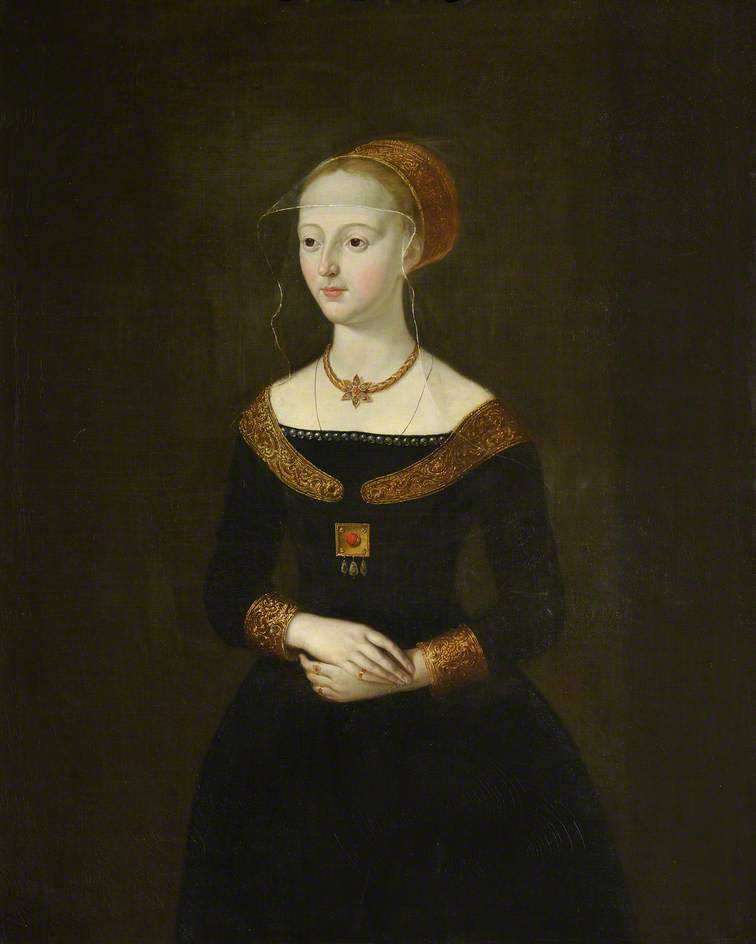
Portrait of Queen Elizabeth Woodville.

The BBC television series The White Queen, based on three of bestselling fictional novelist Philippa Gregory's novels set in the times of the Wars of the Roses, has sparked much greater interest in the extraordinary lives of royal English women who lived in context of ferocious battles, murder, bloodshed, and treachery. The TV series, of course, is horrendously inaccurate, with critics noting the appearance of zips on dresses, modern stair-rails, and quick to rage against the very modern language. I personally cannot understand why these medieval women do not wear headdresses and instead walk around dressed like prostitutes!

Queen Elizabeth Woodville, of course, was a notorious woman who was adored by her husband, Edward IV, much praised for her beauty, fairness and other qualities, but loathed by English nobles who perceived her to be arrogant, cold, ruthless, and vain. However, the life of Elizabeth's mother, Jacquetta of Luxembourg, is perhaps even more astounding than that of her eldest daughter.

Portrayed by Janet McTeer in the television series, Jacquetta had lived a life of almost unimaginable luxury and privilege before she married into the Woodville family. Perhaps born around 1416, Jacquetta was the eldest of nine children born to Pierre of Luxembourg, count of St. Pol, Conversano and Brienne and vicomte of Lille, and his wife Marguerite, daughter of the duke of Andrea. In 1433, aged seventeen, she married John duke of Bedford, who was uncle to the infant king of England, Henry VI. Thus, having been born into the European aristocracy, Jacquetta married essentially into the English royal family, cementing further her family's illustrious prestige and lineage. This marriage was not a love match, for the duke was aged around 27 years older than his new bride and had previously been married already. Instead, it was a marriage made by politics, to suit prevailing English interests in French lands at the time.

However, Jacquetta's husband John died only two years after the marriage, leaving her a widow aged 19, without children. She was, however, left extremely rich, for she was entitled to a third of her husband's lands and annuities. Just two years later, in 1437, Jacquetta married again, to her social inferior Sir Richard Woodville, who was not at all wealthy or highly ranked. Since she had, a year previously, agreed that she could not marry again without the consent of King Henry VI, she was forced to pay £1000 as a royal pardon for her transgression. This marriage clearly seems to have been a love match, for Jacquetta was willing to sacrifice her wealth, her lineage and royal connections in marrying a humble squire. Further evidence of the passionate love between them can be seen in the fact that she bore Richard at least 14 children.


Above: Were Jacquetta and her daughter Elizabeth witches, as The White Queen so controversially suggests?

Jacquetta and her new husband spent the first few years of their marriage in France, for Jacquetta was negotiating there to secure her dower lands, while Richard served there. They dwelled at Grafton, Northamptonshire, as their main English residence following their return. Their first daughter, Elizabeth Woodville, was born around 1437, and was followed by a further seven girls and seven boys, including Anthony and John. Elizabeth would prove like her mother to be extremely fertile.

In 1444, Jacquetta participated in the retinue which brought the new queen, Margaret of Anjou, to England, and it seems that the two became close friends. Jacquetta and her Woodville family were, initially, Lancastrians who supported Henry VI's regime, for the Woodvilles had been connected with the duke of Bedford, uncle to the king. However, several years later, the political and dynastic troubles which came to be known as The Wars of the Roses transformed Jacquetta's life forever. At the Battle of Towton, her husband and eldest son were arrested and imprisoned in the Tower of London, although they were later released. At this point, the Woodville family probably transferred their allegiance to the Yorkists.

Most infamously, Elizabeth, Jacquetta's eldest daughter, allegedly seduced the new Yorkist king, Edward IV, in 1464, leading him to marry her since she had, apparently, refused to become his concubine. Later stories dramatically suggested that she had held a dagger to her throat and promised to kill herself were he to attempt to use force on her. Regardless of the circumstances, Edward married Elizabeth at the Woodville's family home at Grafton on 1 May 1464, with only Jacquetta, a priest, and two gentlewomen present. This, of course, transformed the Woodville's fortunes. Jacquetta's husband became Earl Rivers and treasurer of England, while her children were married into the English nobility, causing much resentment and anger among other nobles. For instance, her 20-year old son John was, shockingly, married to Katherine Neville, the elderly dowager duchess of Norfolk, who was at least in her late 60s. Katherine Woodville married the young Duke of Buckingham, who was apparently furious, believing his new wife to be grossly inferior to himself.

Jacquetta and Elizabeth have often been linked in the public consciousness with witchcraft and sorcery. The White Queen supports these allegations, in both the TV series and in the book, by suggesting that both women engage in witchcraft to fulfil their ambitions - thus sorcery is practised to make Edward fall in love with and marry Elizabeth; to change the outcomes of battles; to wreak vengeance on enemies. Certainly, at the time rumours of witchcraft were linked to the new queen and her family. Contemporaries found it scarcely credible that their Yorkist king had married a woman so far beneath him, who had no royal blood and was, in fact, from a Lancastrian family. Richard III, brother-in-law to Elizabeth, and the Earl of Warwick both insinuated that Jacquetta and Elizabeth had inflicted sorcery on the king, rendering his marriage invalid. Thomas Wake, a Northamptonshire esquire, claimed in 1469 that Jacquetta had brought about the marriage of Edward and Elizabeth by witchcraft, having found two lead figures, one for the king and one for the queen. Jacquetta, however, when brought to trial proved her innocence and the case against her collapsed.

As with earlier medieval women such as Joan of Navarre and Eleanor duchess of Gloucester, witchcraft was often used to irrevocably damage the reputations of powerful women. There is no evidence to suggest that Elizabeth and Jacquetta were witches. Jacquetta's family was linked to Melusina, a water goddess or 'serpent woman'. However, there is no conclusive evidence to show that Elizabeth or Jacquetta strongly celebrated their links with such a legend, despite Philippa Gregory's claims to the contrary. While Jacquetta did own a copy of the ancestral romance Melusine, other fifteenth-century ladies did too, which hardly suggests that she was unique.

The main reason why Elizabeth was believed to be a witch was because other nobles could not believe that she, a mere gentlewoman of no social standing, was genuinely worthy of the king of England and had caused him to fall in love with her by natural means. Certainly, Edward's cousin and former supporter the earl of Warwick was furious, for he had been negotiating for Edward to marry a foreign princess, who was believed to be far worthier of Edward. Warwick personally resented and hated the Woodvilles, mainly because, by virtue of their relatives marrying almost all the other nobles, there were no suitable nobles left for his two daughters Isabel and Anne to marry.

The marriage between Edward and Elizabeth culminated in Warwick's defection to the Lancastrian cause, resentful of his loss of influence and power with the rise of the queen's family. He married his eldest daughter Isabel to the king's younger brother George duke of Clarence, who had become similarly angered and hostile towards his brother. Matters came to a head when Warwick left England, accompanied by his wife, his two daughters and his new son-in-law, and journeyed to visit the former queen Margaret of Anjou, promising his support of her and allegiance to the Lancastrian cause. Agreeing that his younger daughter Anne should marry Margaret's son Edward of Lancaster, a new alliance was struck up by which it was agreed that the Lancastrian king, Henry VI, should be returned to the English throne, and Edward IV forcibly removed from it.

Meanwhile, Jacquetta's personal influence with Queen Elizabeth remained firmly entrenched. She participated in her daughter's coronation, and in 1466 took part in Elizabeth's churching following the birth of her first child, the future Elizabeth of York. Misfortune overtook her, when her husband Richard and her son John were executed in 1470 on the orders of Warwick, who had returned to England in an attempt to restore Henry VI to the throne. Edward IV escaped to Europe, leaving his young wife to seek sanctuary in Westminster Abbey where, accompanied by her mother, she gave birth to the future Edward V in November 1470.

Jacquetta did not long survive the brutal deaths of her husband and son, dying on 30 May 1472, aged around 56. Where she was buried is unknown. She was an immensely powerful and wealthy woman who had been born into European royalty, marrying into the English royalty in her teens before becoming, by virtue of her second marriage, the mother of England's queen and thus grandmother of a later queen, Elizabeth of York, and great-grandmother of Henry VIII.

Rather than being a scheming and ambitious woman who only relied on witchcraft and sorcery to bring about her triumphs, it is likely that Jacquetta was, as Lucia Diaz Pascual intriguingly writes: 'a formidable woman who understood how to navigate the corridors of power and was capable of great resilience, strength, and determination to achieve her objectives'.


Friday, 28 June 2013

Why Do We Hate "The Other Boleyn Girl"'s Anne Boleyn?


Above: Natalie Portman as Anne Boleyn in The Other Boleyn Girl (2008).
A late sixteenth-century portrait of Anne Boleyn from a lost original; artist unknown.
Were they really so different...?

Those who are serious about Tudor history often view Philippa Gregory's bodice ripper of a novel, The Other Boleyn Girl (2001), with little more than contempt, dismissing the book curtly and cuttingly. Susan Bordo, who has recently written an intriguing book on Henry VIII's infamous second wife, The Creation of Anne Boleyn, states categorically: 'many of the details, and indeed the whole premise of the book, cannot be defended as anything other than pure imagination'. Claire Ridgway, of The Anne Boleyn Files, warns her readers that 'The Other Boleyn Girl is not a factual retelling of Anne Boleyn's life or even that of Mary Boleyn... there are many, many inaccuracies in the book, along with fallacies and story-lines that have no factual basis'. The late Irene Rheinwald, a historian of Anne Boleyn, complains: 'I have no idea how this travesty was foisted upon an unsuspecting public with such extraordinary success'.

Surely it's obvious, first and foremost, that the novel is just that: a novel. It is fiction. Perhaps historians and researchers get far too worried that the general public cannot tell the difference between a novel and a serious academic study. Anyone with an ounce of sense would recognise the sheer melodrama in this book, the exaggerations, and above all the very prominent distortions. The film, of course, was even worse. But, hang on a second. Isn't The Tudors just the same - fiction? And yet that TV series has been sensationally popular amongst the general public, and has not nearly been as condemned by historians and researchers as The Other Boleyn Girl. Indeed, Gareth Russell likens it, when comparing it to Philippa Gregory's novel, to a historical documentary. But The Tudors is also rife with errors and misconceptions. At least the women in The Other Boleyn Girl dress like Tudors, which is more than can be said for The Tudors.

It is possible that historians and Tudor writers are so resentful and emotional when it comes to The Other Boleyn Girl, it will be suggested here, because the portrayal of Anne Boleyn is simply what they do not want to see, they cannot accept that Anne was ever like that. An article in The Guardian questioned why Anne was presented as nothing more than 'a scheming trollop'. Writers castigate Gregory for presenting an Anne Boleyn who is sadistic, cruel, vain, ruthless, ambitious, scheming, spiteful, arrogant, and merciless. The one-dimensional characterisation is, for many, completely unconvincing and downright insulting. Historians take serious issue with such presentations of Anne. Retha M. Warnicke, in her study The Rise and Fall of Anne Boleyn, (who ironically Gregory relies heavily on for her novel), bemoans how simple gender stereotypes and hostility towards women in the Tudor period encouraged dark portrayals of Anne Boleyn, presenting her as a murderess, witch and adulteress, which have endured to the present day.

The book has serious flaws, and writers are right to point out the numerous errors and the wild storylines. The rivalry between Anne and Mary, for instance, is certainly exaggerated and distorted; in reality, the two girls were separated as teenagers when they went abroad to serve European queens and probably had little to do with one another thereafter, until a very public fall out when Mary married beneath her in 1534. The story line of incest between Anne and George is similarly wild and inaccurate, as is the portrayal of the Boleyn family, the heavy emphasis on witchcraft and sorcery, and the suggestion that Anne was involved in poisoning her enemies.

But the simple fact is this: Anne Boleyn lived almost 500 years ago. As with all controversial personalities, every source which is concerned with her life is unquestionably biased, reflecting the author's own religious and political interests, and, above all, how they perceive women. Gender stereotypes filter to us through sources produced in the Tudor age. If one follows the Protestant tradition preserved by writers such as John Foxe, Anne Boleyn was a highly virtuous, religious, and charitable queen who was blessed by God and personally selected by Him to marry Henry VIII and lead him away from superstition and corruption embodied by the Catholic Church. She thus fulfilled God's mission in leading to the break from Rome. Capping off her sensational success, Anne then gave birth to the ultra Protestant queen, Elizabeth I. For Protestants, Anne could no wrong, and her very name symbolised virtue and goodness, although these writers carefully avoided the issues of Anne's downfall and execution on charges of adultery, incest, and treason.

Catholics, however, wrote very differently about Anne. Eustace Chapuys, Spanish ambassador at Henry VIII's court during the time of Anne Boleyn, presented a monstrous portrayal of Anne. Referring to her consistently as 'the concubine' or 'the whore', Chapuys perceived Anne to be cruel, vicious, avaricious, scheming and immoral, and held her personally to blame for the ill-treatment of her stepdaughter Princess Mary, and suspected that not only had she bewitched Henry VIII, but had also poisoned Katherine of Aragon. This tradition was preserved in Nicholas Sander's notorious account, which suggested that Anne was actually the daughter of Henry VIII (and so eventually married her own father), and presented her as physically deformed, believing her to be a witch and evil sorceress who had enchanted the King and inflicted evil on the kingdom of England through causing a schism with the Roman Church. Other Catholic writers, such as the anonymous Spanish author of The Chronicle of Henry VIII, depicted Anne as immoral and licentious, taking numerous lovers behind her husband's back. These Catholic accounts, obviously, are very similar to Gregory's portrayal of Anne in The Other Boleyn Girl.

Because of the inherent bias, the political, social and religious agendas, and the persistent prevalence of simple gender stereotypes, it is impossible to know what Anne Boleyn was like. People are rarely black and white, and so it is certain that the real woman was a lot more complex and multifaceted than either Catholic or Protestant writers allow.

It is necessary to recognise the situation Anne was in. The king first proposed marriage to her in 1527, but she only married him in 1533, six years later, aged 32. She was under extreme stress, facing European powers who personally detested her and revered Katherine, and subjected to unrelenting hostility from the English people, who insisted that she was both a whore and a witch. I am wholly unconvinced that Anne Boleyn was nothing more than the almost perfect, submissive, idealistic and wholly religious woman presented by both Protestant writers in the reign of her daughter Elizabeth, and favoured in serious historical works written by Warnicke and Joanna Denny. As Jenny Wormald rightly writes in her scathing criticism of Warnicke's book, it is quite an achievement, 'to make Anne Boleyn a bore'.

Taking into account the very real hostility and hatred directed towards powerful women in the sixteenth-century, the references in letters written by courtiers, including both Anne's cousin and Cardinal Wolsey, to Anne's 'displeasure', means that it is NOT simply Chapuys who presents a woman who clearly had a temper. While Alison Weir might be slightly overstating her case in characterising Anne as 'an ambitious adventuress with a penchant for vengeance', and David Starkey singularly exaggerating in describing Anne as a 'brutal' predator who hunted down her 'prey', the Anne Boleyn of The Other Boleyn Girl might not be as far from the truth as we might like to think.

Anne was surely not a poisoner. She did not engage in murder; she did not tempt her brother with incest; she did not inflict misery and cruelty on her sister and relatives; nor did she use witchcraft to preserve her power. These are the real problems with The Other Boleyn Girl. But, if one looks critically and sceptically at sources preserved by the likes of Chapuys, which can to an extent be supported with other contemporary sources, and if one bears in mind the very real stresses and problems which plagued Anne and took on a toll on her for over six years, it is quite likely that she could be aggressive, highly strung, cruel and ruthless.

Anne Boleyn was certainly not 'a bore'. Nor was she perfect, saint-like, in fact. But neither was she the heartless poisoner, sorceress, and adulteress preserved in Catholic works. But it is quite possible that, in terms of her personality traits, The Other Boleyn Girl's Anne is not as far from the truth as we believe.